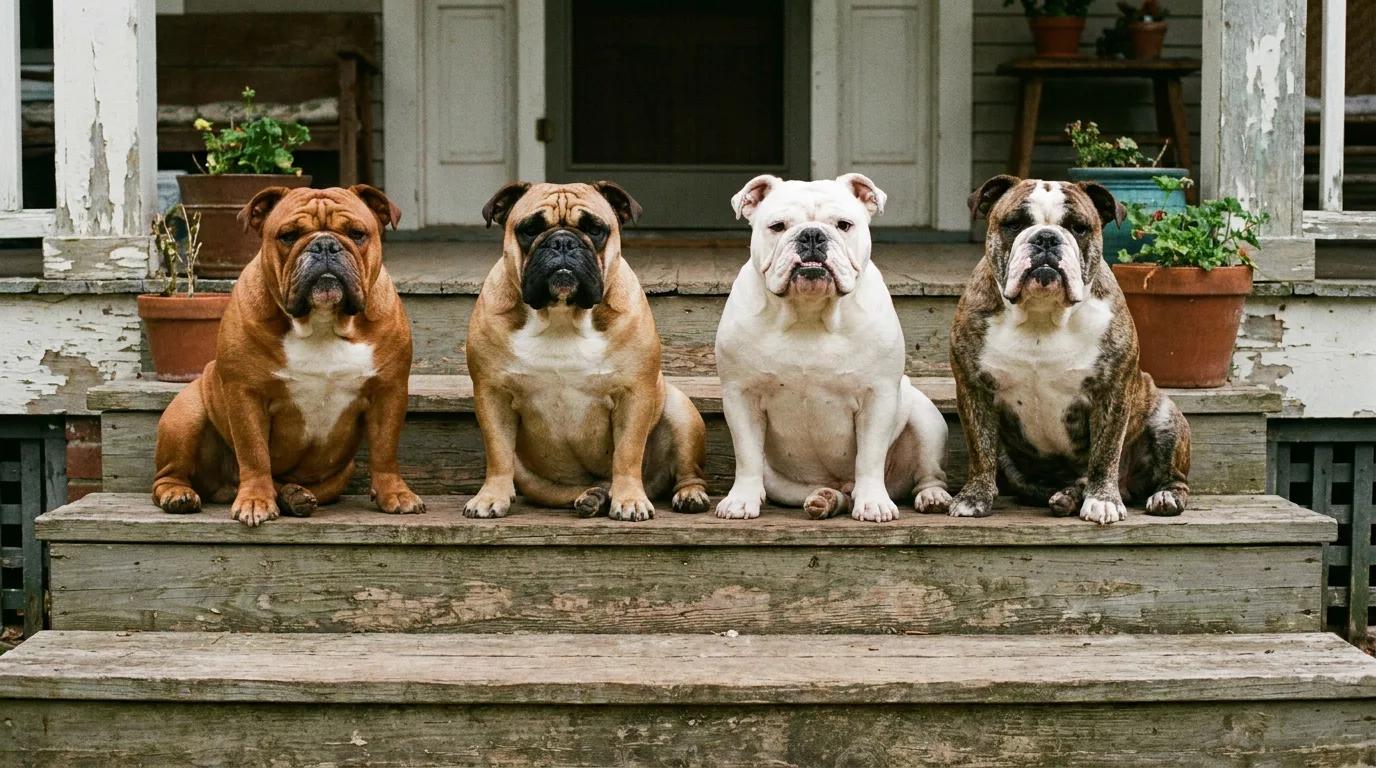
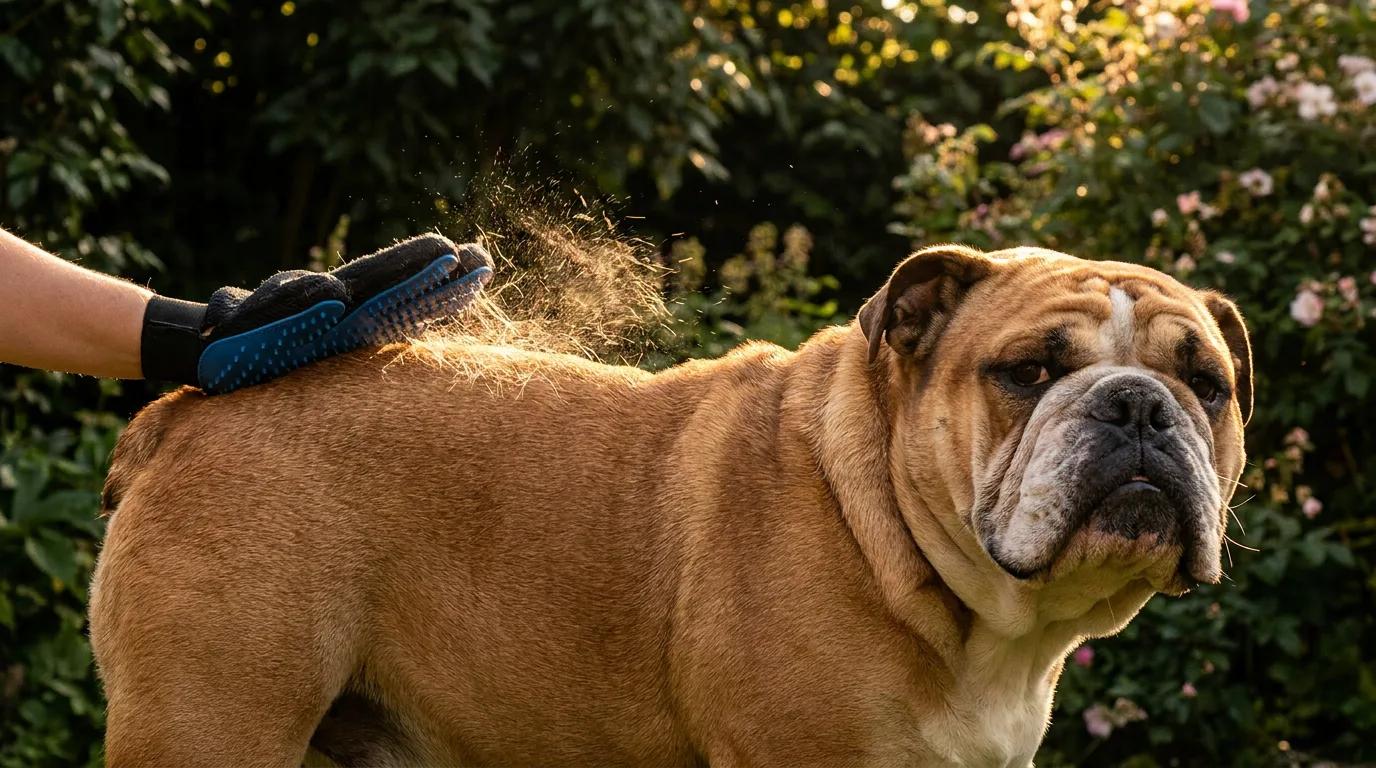
English Bulldog Temperament and Training Guide
English Bulldog temperament varies by individual, health and learning history. Use observable behavior, reward-based training, low-impact enrichment, cooperative care and a household fit scorecard.
Petful is reader supported. As an affiliate of platforms like Amazon and Chewy, we may earn a commission when you buy through links on this page. There is no extra cost to you.
English Bulldog temperament is often summarized as affectionate, courageous and calm. Those words are useful only when translated into behavior a household can observe and support. One Bulldog may settle beside visitors, another may need distance; one may enjoy gentle play, another may frustrate quickly; either may behave differently when uncomfortable.
This guide provides an observable-behavior scorecard, reward-based priorities, a low-impact enrichment plan and cooperative-care steps. It keeps behavior and physical welfare connected because breathing, heat tolerance, skin, eyes, ears and joints can all influence how a dog responds. Enrichment tools such as a snuffle mat can support calm scent work once breathing and heat limits are respected.

Sign up for expert-backed reviews and safety alerts all in one place.
English Bulldog temperament: the short answer
English Bulldog temperament is usually friendly, calm, courageous and strongly people-oriented. The AKC breed standard asks for a disposition that is "equable and kind, resolute and courageous (not vicious or aggressive)." On the AKC’s 1 to 5 trait scale the breed scores high for affection and trainability and low for barking, as the table below shows. Those English Bulldog traits describe tendencies, not promises: genetics, early experience, health, learning and the situation all shape what one dog actually does.
| Trait | AKC rating | What it tends to mean at home |
|---|---|---|
| Affectionate with family | 4 | Seeks closeness, though many dislike being held |
| Openness to strangers | 4 | Many greet visitors calmly when introduced well |
| Playfulness | 4 | Short play bursts, then long rests |
| Trainability | 4 | Learns well in short, food-motivated sessions |
| Energy | 3 | Moderate; heat and breathing set the limit |
| Good with young children | 3 | Needs active supervision and a retreat |
| Good with other dogs | 3 | Gradual, managed introductions |
| Barking | 2 | Mostly alert or demand barking |
- Use the same observable-behavior scorecard across calm, social and mildly challenging contexts. Record posture, distance, recovery and response to guidance. A label such as stubborn, protective or aggressive cannot replace direct observation or a safety plan.
Who is more aggressive, a pitbull or a Bulldog? A breed label cannot answer that for an individual dog. Pit bull covers several breeds and types, both labels hide wide variation, and surveys of the most aggressive dogs and dog bite statistics by breed describe populations, not the dog in your living room. Judge the specific dog by how it recovers after a surprise, accepts handling, behaves around food and toys and acts at a safe distance from people or animals.
In daily life, English Bulldog personality usually shows up as a dog that follows its people from room to room, enjoys short bursts of play and then sleeps for long stretches. Pain, breathing difficulty, heat stress and poor early experiences can change that picture, so watch what the dog does, how intense it becomes and how quickly it returns to baseline.
- 1Treat breed temperament as a hypothesis, not a guarantee.
- 2Reward the behaviors you want before frustration builds.
- 3Keep activity low impact and protect breathing and heat tolerance.
- 4Supervise children and manage introductions.
- 5Investigate sudden behavior change medically.
Describe behavior without a label
A dog that plants on a walk may be afraid, tired, hot, in pain or simply rewarded in the past for stopping. Words such as stubborn, dominant or sweet compress all of those causes into one verdict. Instead, write what happened immediately before and after, the dog’s posture, distance, movement and vocalization, and the weather, surface and people involved, so another caregiver could picture the event without sharing your interpretation.
Use recovery as the temperament metric
How long the dog needs to resume normal breathing, posture, exploration or rest after something new is often more telling than the first startle or bark. A dog that notices a trigger and returns to ordinary behavior within seconds is coping; one whose arousal builds across several events, or whose breathing becomes effortful, needs more distance and a shorter session. Time recovery, note what helped and end the session if recovery does not come.
Health belongs in every behavior assessment
Discomfort reduces patience, interrupts sleep and makes ordinary handling unpleasant, and Bulldogs carry above-average risk of skin, eye and airway problems. A sudden new growl or refusal is therefore a clinical clue, not proof of bad character. Note changes in breathing, gait, appetite, sleep, skin, eyes, ears and tolerance of touch alongside the behavior, avoid the trigger in the meantime and book a veterinary check for any abrupt or unexplained change.
Build the baseline in calm moments
A crisis is the worst time to discover what calm looks like for your dog. Watch ordinary rest, gentle play, handling, meals, doorway movement and response to a familiar cue, and note which rewards the dog values in each. Practice new skills only when the dog is comfortable and the room is quiet, keep sessions short, end with an easy success and put the results on a one-page profile every caregiver can read.
Build a two-week observation record
For fourteen ordinary days, record one calm event and one challenging event without deliberately provoking either. Describe the setting, the dog’s posture and movement, the response and the recovery. Include physical context such as heat, activity, sleep or handling. This sample is long enough to reveal recurring situations while remaining practical for a household. It also reduces the temptation to let one dramatic moment define the whole dog.
Petful may earn a commission when you click through to Chewy, at no extra cost to you.
Review the entries for patterns instead of counting good and bad days. A dog may cope well in the morning and struggle after a noisy afternoon, or greet familiar adults comfortably while needing more distance from fast movement. Those differences suggest where management and training should begin. They also show when a medical question belongs beside the behavior question.
- Write observable actions, not personality verdicts.
- Record the earliest sign, not only the peak behavior.
- Time recovery and note what helped.
- Share sudden or concerning changes with the veterinarian.
At the end of the period, choose one target that improves safety or comfort and define it in visible terms. “Settle on the mat for thirty relaxed seconds while dinner is prepared” is trainable. “Be less stubborn” is not. Keep the rest of the record as the individual baseline and update it after a health or household change.
Affection, confidence and independence
Do English Bulldogs like to cuddle? Many seek close contact, but affection varies by individual and moment. Offer an open hand, invite rather than restrain and watch whether the dog approaches, leans in, stays loose and can leave freely. A dog that turns away, stiffens, licks its lips, shows the whites of its eyes or moves off is asking for space. Teach children and visitors to respect that choice. Comfortable consent builds trust more reliably than assuming every Bulldog wants to be held.
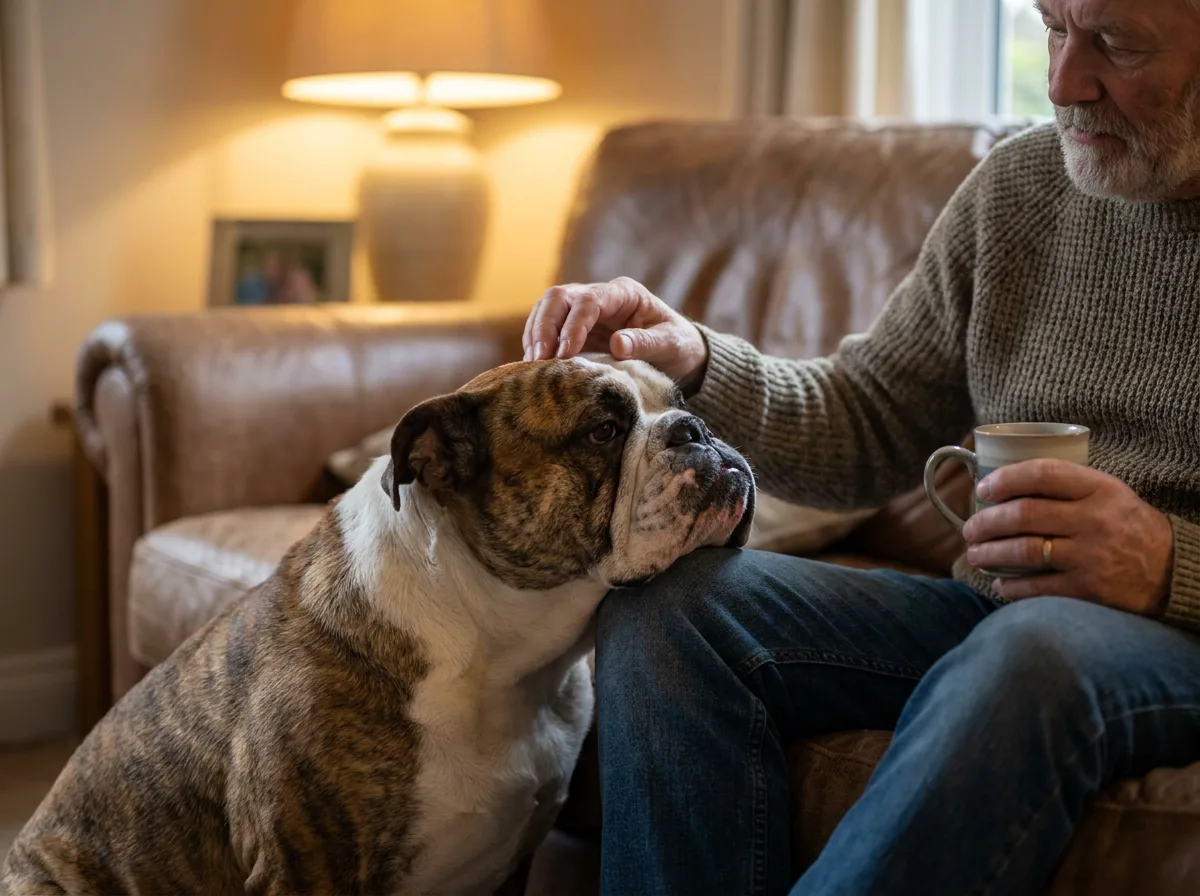
Many Bulldogs seek physical closeness and follow familiar people from room to room. Others prefer nearby rest without constant touch. Affection should never be measured by how much restraint a dog tolerates. A dog can love company and still dislike hugs, face-to-face contact or being moved while asleep. Confidence likewise means flexible engagement, not charging into every situation.
Distinguish confidence from overarousal
Fast approach, jumping or barking can reflect arousal rather than comfort. A confident Bulldog investigates a new object or person, still responds to the handler and can step back and return without pressure. Offer space and reward check-ins rather than luring the dog closer than it would choose, and give a break when it becomes rigid, frantic or unable to look away.
Teach independence in very small doses
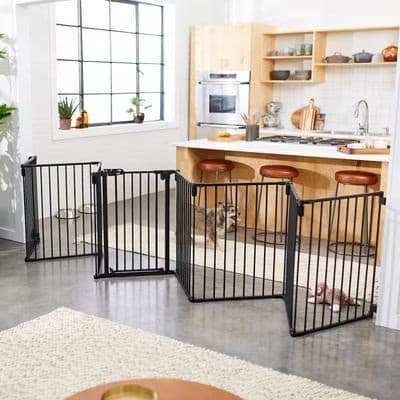
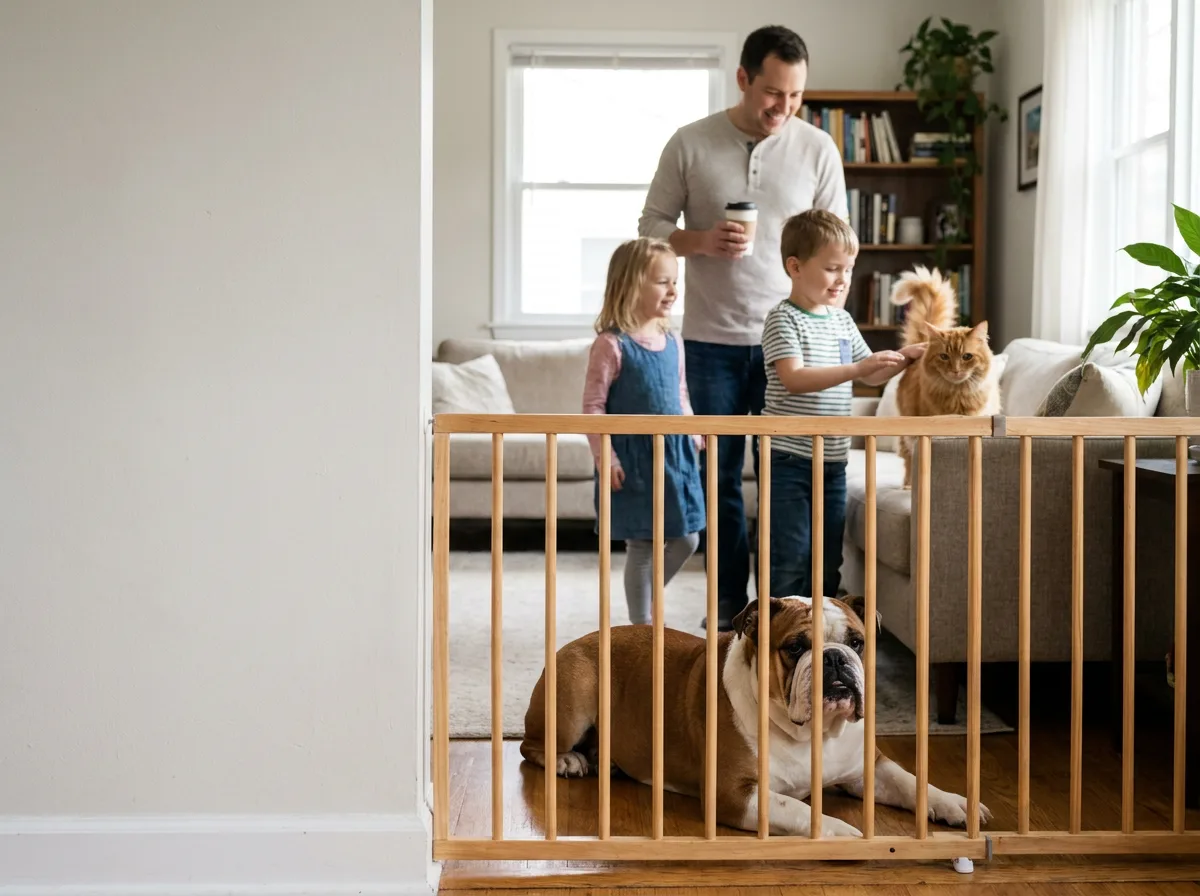
A people-oriented dog may need explicit practice with safe separation. Start with seconds: the dog rests behind a gate, stays with another trusted adult or relaxes while you step briefly out of sight, and you return before any distress appears. Vary the easy repetitions, track the earliest stress sign and slow down if vocalizing, escape attempts or refusing food start to build. A configurable dog gate across a doorway lets the dog see and hear you while these first separations stay short.
Reward voluntary check-ins
Connection built by choice is more reliable than constant physical control, especially with a compact, strong dog. Mark and reward every spontaneous glance back, response to the dog’s name or choice of you over a mild distraction. A properly fitted PetSafe Easy Walk Dog Harness can make walks easier to manage without pressure on the throat, but it does not teach attention by itself, and any rubbing means the fit needs adjusting.
Protect rest from social pressure
A social dog still needs an undisturbed retreat, because interrupted rest increases irritability and reduces learning. Make the dog’s bed or mat off-limits to children and visitors, call the dog away instead of reaching into the retreat and post that rule where guests can see it. An orthopedic dog bed in a quiet corner gives a heavy Bulldog a retreat that also supports its joints during long naps.
Respecting that choice matters most in households that want a cuddly dog. A dog who can say no safely is often easier to handle because warning signals remain visible. Chosen closeness and practiced independence can both be signs of a secure relationship, while constant following deserves a closer look when the dog cannot rest or cope with even a brief barrier.

Petful may earn a commission when you click through to Chewy, at no extra cost to you.
Energy, play and settling
A low-impact enrichment plan balances sniffing, food puzzles, short skill sessions and calm social time with planned recovery. Choose activities the dog can finish without frantic effort, overheating or prolonged respiratory recovery. End while breathing and coordination remain comfortable, provide water and a cool rest area and adjust the next session from the dog's response. Mental work can enrich the day without chasing exhaustion.
- A Bulldog that remains excited may still be physically tired. Alternate a short low-impact activity with cool rest, then check breathing, gait and ability to settle before offering another round.
Bulldogs are often described as low energy, yet many have lively bursts, enthusiastic play and difficulty stopping when aroused. Physical capacity and motivation are different. A dog may want to continue even when heat, airway function or joints make more activity unsafe. A good routine alternates short movement, scent or training tasks and genuine recovery. An elevated cot-style dog bed in the shade gives the recovery part of that routine a cooler surface than a padded bed.
| Context | Green pattern | Yellow pattern | Red pattern |
|---|---|---|---|
| After short play | Chooses water or rest and returns to baseline | Needs help disengaging or recovery is lengthening | Breathing distress, collapse or altered gum color |
| At the door | Can orient to handler and move away | Repeated jumping or barking with slow recovery | Biting, escape attempts or unsafe respiratory effort |
| Quiet evening | Settles after needs are met | Paces, mouths or repeatedly solicits activity | Sudden agitation, pain signs or inability to rest |
| Food enrichment | Engages and finishes calmly | Guards, shreds or becomes frantic | Swallows unsafe material or conflict escalates |
Use an activity sandwich
Clear transitions make settling a taught part of play. A useful sequence is sniff, tug for a few seconds, trade the toy for food, drink water and move to the mat. Cue the end while the dog is still responsive, reward the move to the rest station and shorten the active part if the dog cannot take food, release the toy or settle within a minute or two. A tug toy with a long rope handle keeps hands away from the mouth and makes the release easy to see.
Make sniffing count
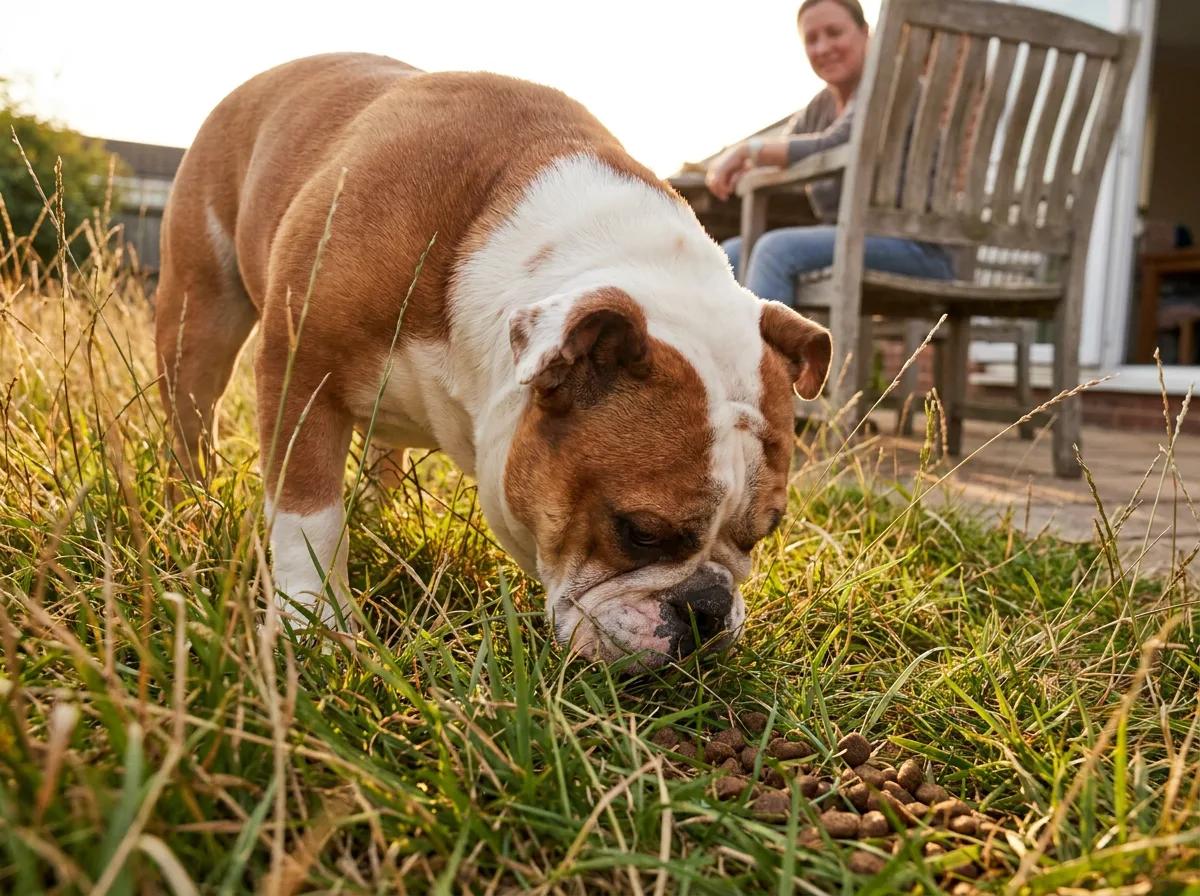
Scent work gives a Bulldog real mental exercise without speed or impact. A slow, sniffy outing in cool weather, with the dog choosing the route and pausing often, can satisfy more than a forced distance walk. The dog should come home interested, not depleted; if panting, lagging or heat builds, shorten the next outing. A long training leash gives the dog room to choose the route on a sniff walk while you keep it away from roads.
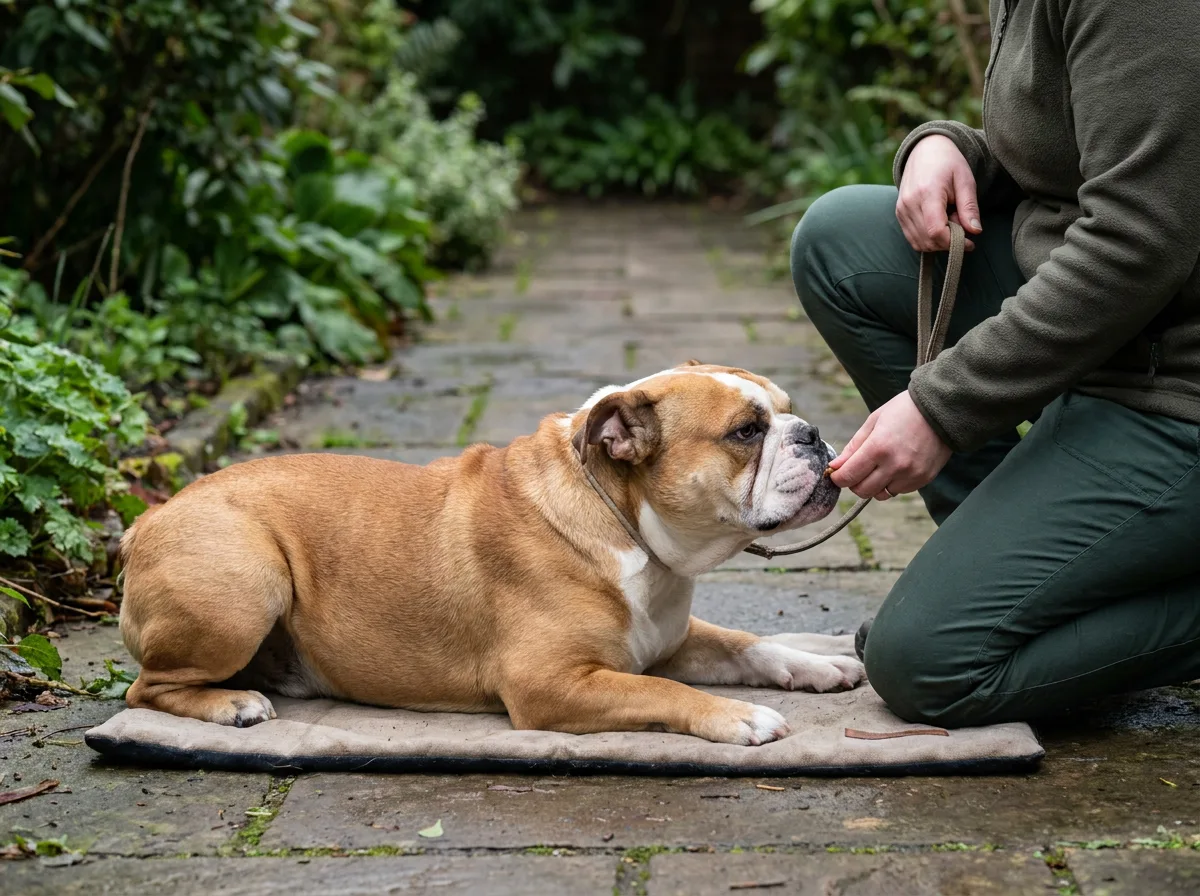
Teach a mat as an active skill
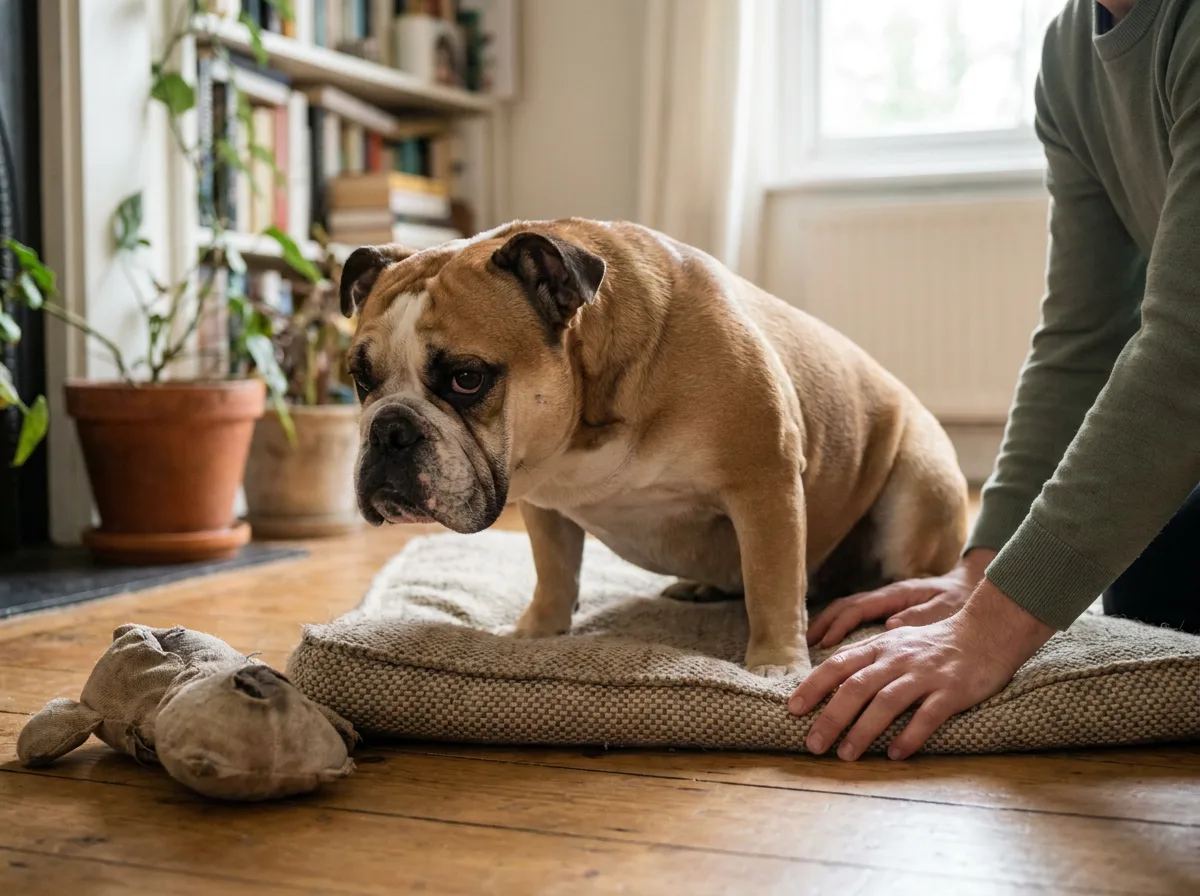
Settling is easier when the dog knows a concrete behavior rather than only hearing no. Away from visitors and meals, reward each step:
- Approaching the mat.
- Placing paws on it.
- Lying down.
- Relaxing on the mat.
Release the dog before it gets up on its own, then add mild distractions one at a time. The mat should be a place the dog chooses, never a place it is trapped. A folded waterproof dog blanket used only for settling makes the mat easy to carry from room to room.
Choose enrichment the dog can finish safely
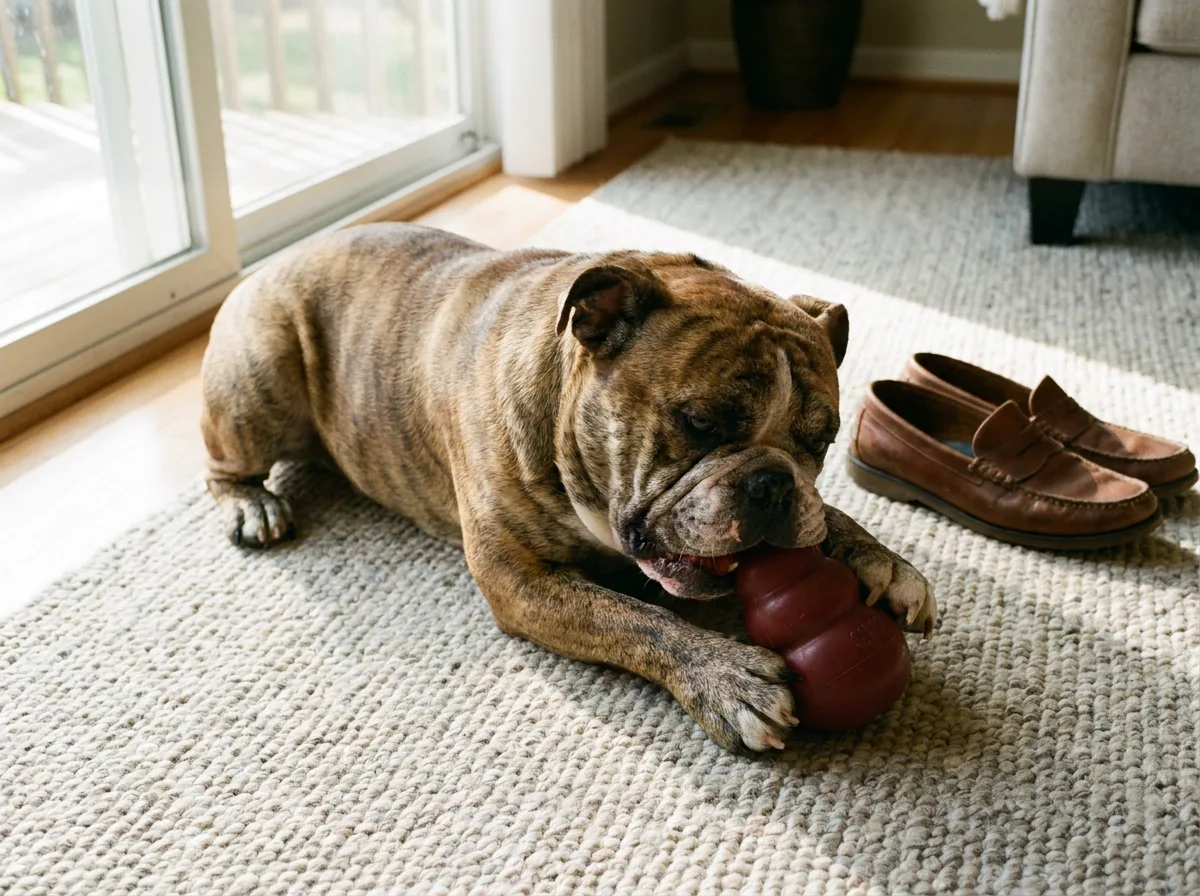
An activity that creates frantic effort is not restorative. Match the item to the dog’s chewing style and breathing, supervise and remove anything that cracks or loosens. A KONG Classic Dog Toy stuffed with part of the measured daily ration works for many adult Bulldogs; stop if the dog guards it, swallows pieces or breathes hard while working at it.
Design a weekly low-impact rhythm
Plan several short daily opportunities rather than one demanding exercise block. Rotate cool sniff walks, brief reward sessions, gentle play, food searches and uninterrupted rest. The exact mix should respond to weather, airway function, joints, age and what the dog did the previous day. A schedule is a starting framework, not a distance quota, and an enthusiastic Bulldog may still need the person to end an activity early.
Pair every active category with a recovery rule. Decide what ordinary breathing looks like, where the dog cools down and how long recovery usually takes. Stop earlier when humidity, excitement or unfamiliar terrain adds load. If recovery lengthens across the week, reduce intensity and discuss a meaningful change with the veterinary team instead of trying to improve fitness through harder work.
- Use sniff time instead of adding speed.
- Keep play bursts short enough for an easy release.
- Place calm practice before high-traffic household periods.
- Protect sleep after activity and appointments.
Evaluate the week by comfort, engagement and recovery, not by miles or exhaustion. A successful plan leaves the Bulldog willing to participate and able to settle. Restlessness after excessive stimulation is not proof that the dog needs even harder exercise. It may mean the sequence, environment or recovery window needs adjustment.
Reward-based training priorities
Can English Bulldogs bite hard? Any medium, muscular dog can cause injury, so prevention matters more than debating jaw-strength claims. Teach trading, handling consent, calm food routines and safe separation with rewards. If a dog freezes, guards, snaps or bites, stop the provoking setup, protect people and animals and seek qualified behavior and veterinary help. English Bulldog traits such as persistence or low activity are individual tendencies, not reasons to use force. Reward-based training should make the desired response easy and comfortable.
The first skills should make daily life and care safer: name response, coming indoors, loose-leash walking, trading objects, moving through doors, settling, waiting briefly and accepting routine handling. Reward-based training does not mean the dog gets everything immediately. It means the handler arranges consequences and the environment without pain, fear or intimidation. Soft training treats that can be swallowed without long chewing keep these short sessions moving.
Find rewards that preserve comfort
Motivation changes with the setting and the dog’s physical state. Test two safe rewards in a quiet room, such as small food pieces, a sniff, a toy or permission to greet, and deliver them low so the dog never has to jump or strain. A treat pouch keeps rewards ready for well-timed delivery; count heavy food use in the daily ration and switch rewards if the dog starts grabbing frantically.
Train one criterion at a time
A five-second settle in the kitchen is not the same task as a settle beside guests. Distance, duration and distraction are separate variables; raising all three at once makes failure likely and hides what the dog understands. Increase one after several comfortable repetitions, return to an easier step when performance changes and never correct the dog for a jump in difficulty it was not taught.
Use management during situations that exceed the current training step. A gate during a delivery or extra distance from another dog prevents unsafe rehearsal. Management is not cheating. It preserves a learning environment where the trained response can later succeed. Reduce difficulty whenever posture tightens, response slows or the dog can no longer use the reward calmly.
Generalization takes repetition because dogs notice context. A mat skill in the kitchen will not automatically appear beside a crowded patio, and that may not be a sensible environment for this dog at all. Build only the settings that serve the household’s real life and the dog’s welfare. Reliability grows from appropriate practice, not from forcing a response in every possible place.
Use the leash as safety, not persuasion
A strong, compact dog can create pressure quickly in either direction, and jerking does not teach the desired path. Reward movement into a slack leash, pause before tension builds and practice indoors before busier routes. A Frisco Traffic Leash adds a short handle for close control near roads, and coughing, rubbing or conflict means the setup or distance needs to change. A front-clip harness keeps leash pressure on the chest rather than on a Bulldog’s throat and airway.
Teach trading before taking
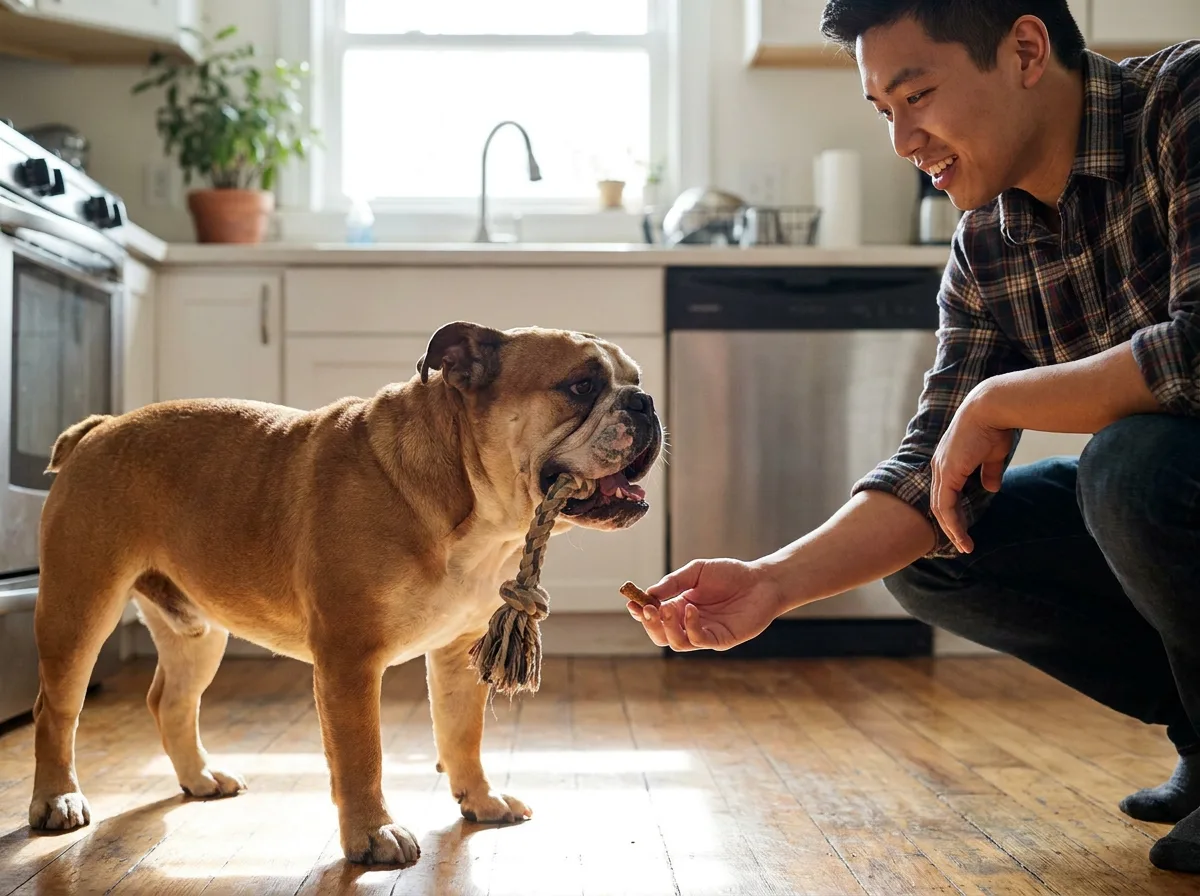
Forced removal can create avoidance or guarding. Start with low-value objects: present a reward, mark the moment the dog lets go and pick the item up only after the dog disengages, sometimes handing the safe item back. Prompt release with loose posture is the goal. Manage access to hazards rather than relying on an unfinished cue, and get qualified help if stiffening, freezing or snapping appears.
End sessions while learning is strong
Fatigue and heat can look like disobedience in a Bulldog. Several one-minute sessions usually outperform one long lesson, so stop after a clear success, give a cool rest and note the session length that works in each setting. If performance drops while the handler keeps repeating the cue, the session has already gone on too long.
Barking, chewing and frustration
Do English Bulldogs bark a lot? Usually not. The AKC rates the breed 2 on its 1 to 5 barking scale, toward the quiet end, so most Bulldogs bark mainly to alert or to demand something. Individuals may still bark at a door, at visitors or when frustrated, and snorting, snoring and grumbling are often louder than the barking. Map the pattern first: door barking, demand barking and alone-time distress need different plans.
Are Bulldogs prone to biting? Breed identity alone does not answer that question. Pain, fear, guarding, frustration, rough handling and learned history can raise risk in any dog. Watch for freezing, hard staring, retreat, growling and rapid escalation, then create distance before conflict. Do not punish a warning signal. Manage access, change the setup and work with qualified veterinary and behavior professionals when risk is present.
Do Bulldogs have behavior problems? Some individuals struggle with barking, chewing, frustration, handling or alone time, but these are not inevitable breed defects. Before assuming disobedience, check:
- Sleep and exercise balance.
- Pain, breathing, skin and eyes.
- Recent routine changes.
Prevent rehearsal, reward an alternative behavior and teach in short steps the dog can complete calmly. Sudden behavior change warrants a veterinary assessment.
- New irritability, restlessness, handling sensitivity, night waking or refusal can accompany pain, skin disease, eye or ear problems and breathing difficulty. Arrange veterinary assessment before treating an abrupt change as a training failure.
Map the barking sequence
For each episode, note the trigger, the distance, the first body change, the sound and what ended it, because the ending often maintains the behavior without anyone meaning it to. Reduce exposure while teaching a reachable alternative such as turning to you or going to a mat, and count events and recovery time rather than judging loudness alone.
Meet chewing needs safely
Chewing may be normal exploration, a calming activity, frustration or a response to being alone. No chew is indestructible or right for every mouth, so match texture to the dog’s bite, supervise new items and remove anything damaged or small enough to swallow. Block access to household hazards and agree a discard rule every caregiver follows; fractured teeth or bleeding gums mean the item is too hard. A firm rubber chew toy too large to fit fully in the mouth suits many adult Bulldogs.
Teach frustration recovery
Settling and frustration recovery can be taught without provoking frustration on purpose. Use tiny, predictable delays, such as a two-second pause before the door opens or the bowl goes down, and mark the first sign of recovery: a glance away, a breath, a shake-off or a return to a known behavior. Make the task easier before vocalizing or grabbing escalates and track the delay that stays comfortable.
Prevent doorway explosions
Management keeps the dog below threshold while training develops. Before a visitor arrives, set the dog’s station away from the entry with a closed door, gate or leash, and ask guests to ignore the dog until the plan allows a greeting. Rehearse with a familiar helper first, and rethink the setup if a barrier fails or the dog ends up trapped near the visitor.

Petful may earn a commission when you click through to Chewy, at no extra cost to you.
Address alone-time distress carefully
Panic is not resolved by letting the dog cry it out. A pet camera can show pacing, vocalizing, drooling, destruction, toileting or refusal of food that has ended by the time you return. Keep absences within the dog’s present coping ability, use the recording and a departure log to separate boredom from distress, and bring in a qualified professional if escape attempts or self-injury appear.
Use an antecedent-behavior-consequence worksheet
For a recurring behavior, write what happened immediately before it, the exact behavior and what followed. A doorbell may predict rushing, which makes the visitor speak to the dog. A person closing a laptop may predict demand barking, which starts play. The worksheet does not assign blame. It identifies leverage points for changing the environment and teaching another route.
Change the earliest workable part of the sequence. Lower the doorbell volume during practice, position the mat farther away or provide an appropriate chewing activity before the predictable restless period. Then reward the replacement behavior while it is still easy. If the dog is already frantic, create safety and recovery rather than drilling a cue the dog cannot perform in that state. A lick mat spread with part of a meal is a quiet option before a predictable restless period.
- Track frequency and duration separately.
- Include sleep, pain and physical signs in the context.
- Prevent access to swallowed or breakable hazards.
- Ask for qualified help when safety is uncertain.
Recheck the worksheet after a week. A lower peak with faster recovery can be meaningful progress even before the behavior disappears. No improvement, rapid escalation or a sudden new pattern deserves a wider review that includes health, environment and training mechanics. The goal is not silence at any cost; it is a safe, understandable behavior pattern with humane alternatives.
Children, visitors and other pets
Are English Bulldogs considered aggressive breeds? No breed label can substitute for assessment of an individual dog's behavior and history. Children, pets and visitor fit depends on active supervision, safe separation, gradual introductions and adults who recognize stress signals. Protect food, resting areas and exits, and never require contact when the dog or visitor needs space.
Are Bulldogs protective dogs? Some alert, bark or position themselves near familiar people, but protective behavior is not guaranteed and should not be encouraged through confrontation. Teach a predictable visitor routine, reward moving to a mat and use gates or another room when the dog cannot settle. A household safety plan is more reliable than expecting the dog to judge threats.
- Gates, leashes, distance and a quiet room prevent rehearsal while adults assess the dog's posture and recovery. Children and visitors should never be asked to test whether a dog is friendly or protective.
A family-friendly reputation never replaces supervision. Children should not climb on, hug, corner or disturb a resting or eating dog. The dog needs a retreat children do not enter, while adults control every close interaction. Visitors and other animals should be introduced with distance and a clear exit, not forced into nose-to-nose contact. A wire dog crate with the door left open can serve as that retreat when the dog already enjoys using it.
Use active adult supervision
Proximity alone is not supervision. An adult must be close enough to intervene and watching both dog and child, not a phone. Keep contact short and calm, teach children to invite, pause and let the dog leave, and separate dog and child whenever active watching stops or the child pursues or restrains the dog.
Give visitors a script
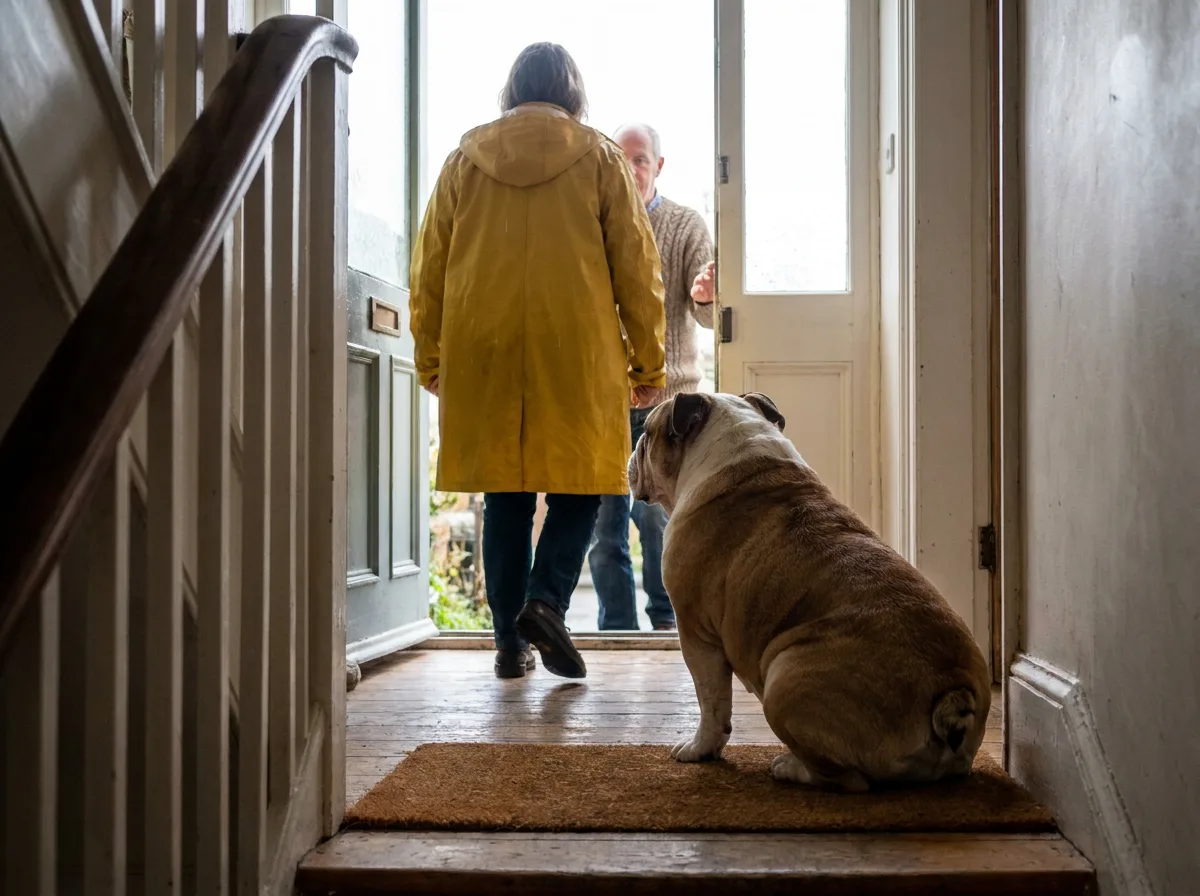
The dog does not need to greet every person. Decide where the guest enters, where the dog waits and who controls movement, then share that plan before arrival. Guests should ignore the dog, angle away and wait for direction; a guest who reaches over, stares at or corners the dog ends the greeting.
Introduce dogs by stages
A calm first second does not establish compatibility around food or excitement. Use neutral ground, skilled handlers and short exposures, and try parallel walking before any direct greeting. Look for soft movement, curved approaches and the ability to disengage. Feed separately and keep chews and beds apart at home at first, and stop if stiffness, pinning or repeated pursuit appears.
Protect cats and small animals
A friendly label does not remove chase behavior. A cat needs elevated routes and dog-free zones, and the dog should meet it only at a distance where it can still look away. Watch for staring, stalking and arousal, use physical separation while working gradually, never hold the cat for inspection and get help before access expands if fixation grows.
Manage resources explicitly
Multi-pet conflict tends to appear around predictable valuables: food, toys, beds and favorite people. Body tension, blocking, hovering or gulping food are early signs. Feed animals separately, provide several rest areas, teach trades to each pet on its own first and never punish a warning, since that removes the signal without removing the worry. A slow feeder bowl in a separate room also keeps a fast-eating Bulldog from finishing early and hovering over another pet’s meal.
How puppies become stable adults
Puppy development needs safe exposure, not maximum exposure. The goal is a series of manageable experiences with people, surfaces, sounds, gentle care and short separations. Quality matters more than a checklist count. A frightened puppy should get distance and support rather than being held in place until the event ends.
Build positive novelty
One frightening event can outweigh several neutral repetitions. Present low-intensity novelty with an escape route, pair exploration with food and end before the puppy tires. A puppy that approaches, eats and recovers quickly after a mild surprise is learning; freezing, hiding or frantic escape means the next attempt should be easier. Soft puppy treats broken into tiny pieces keep that pairing quick without filling the puppy up.

A durable rubber dog toy that can be stuffed with treats and selected by the manufacturer's size guide; supervise use and retire it when damaged.
Petful may earn a commission when you click through to Chewy, at no extra cost to you.

Handle for future care
Routine Bulldog care touches sensitive areas for life: paws, ears, lips, skin folds and the tail area. Pair one-second touches with a reward and build slowly, stopping when pain or fear appears. A chin rest on your hand can become the puppy’s consent position, letting it pause the procedure instead of being restrained. Unscented grooming wipes make a good first practice item for folds and paws because they are quiet and soft.
Teach calm around food
Repeated bowl interference creates worry rather than preventing guarding. Leave an eating puppy in peace, occasionally drop a better item in from a safe distance and practice trades away from meals so a person’s approach predicts something good. Children should never run food exercises, and stiffening or faster eating is a reason to get help early.
Practice brief separation
Independence develops through tolerable repetitions, not sudden long absences. Once sleep, toileting and hunger are covered, give the puppy a safe chew, step behind a barrier for a few seconds and return while it is still calm. Lengthen the time gradually on different days and in different rooms, and cut back if distress starts before you return.
Protect growing bodies
Enthusiasm does not prove physical safety. Growing Bulldogs need free, short play on surfaces with good traction, no repeated high jumps or stair runs and no play in the heat. Stop early, let the puppy rest afterward and talk to the veterinarian about limping, weakness or prolonged panting rather than training through them.
Development is uneven. Adolescence may temporarily change attention or confidence, so return to easier versions instead of assuming prior learning vanished. The stable adult goal is not a dog who never reacts. It is a dog with safe support, flexible recovery and a long history of successful coping. Record which setups helped so future caregivers can reproduce them.
Handling and cooperative care
A cooperative-care training sequence begins with a voluntary start signal, then adds one easy component at a time:
- Brief touch, lift or look.
- Wipe, brush or clip preparation.
Reward stillness and the choice to return, stop before distress and practice when the dog is comfortable. If handling suddenly becomes difficult, ask the veterinarian about pain, skin, ear, eye or breathing problems.
- Practice one brief handling action, reward, release and record the response. Progress only while posture stays loose and the dog willingly returns. Veterinary care should not be delayed when pain or disease may be driving avoidance.
Cooperative care teaches the dog to participate in necessary grooming and examination. It does not eliminate every need for restraint in urgent medicine, but it reduces routine conflict and creates clearer communication. Bulldogs benefit because skin folds, ears, eyes, teeth, nails and body condition need recurring attention. A finger toothbrush is a gentle first step for teeth because the dog feels a fingertip before any bristles.
Break nail care into components
Clipping is several learned events, not one task: paw touch, toe separation, the sight and sound of the tool and brief contact. Train each piece for a few successful seconds at a time, using a quiet tool such as a Millers Forge nail clipper with a guard. Pain or past frightening restraint slows progress, and overdue nails or a struggling dog are a job for a groomer or veterinary team.
Make fold checks visible and brief
Inspection catches moisture or soreness before extensive cleaning is needed. Under good light, separate a fold for a second, reward, release and follow the care plan your veterinarian has given you rather than scrubbing or improvising products. Inflamed skin can be painful to touch, so odor, discharge, redness or flinching means a clinic visit, and a photo helps the clinic track change.
Prepare for eye and ear exams
Familiar component behaviors make clinical exams safer. Reward tolerance of a hand near the cheek, a lifted ear flap and a small light moving nearby, pairing each approach and retreat with food. Never place anything in the eye or ear canal during practice, and stop at the first sign of discomfort: squinting, discharge, odor or pain need assessment, not more practice.
Rehearse clinic logistics
Stress begins before the examination room. Practice getting into the car, waiting calmly and stepping onto a scale, and ask whether the clinic allows short happy visits, a quiet waiting spot or direct entry. Bring high-value rewards, share the handling cues the dog knows and tell the staff what setup worked last time. Freeze-dried liver treats are a compact high-value option for the waiting room.
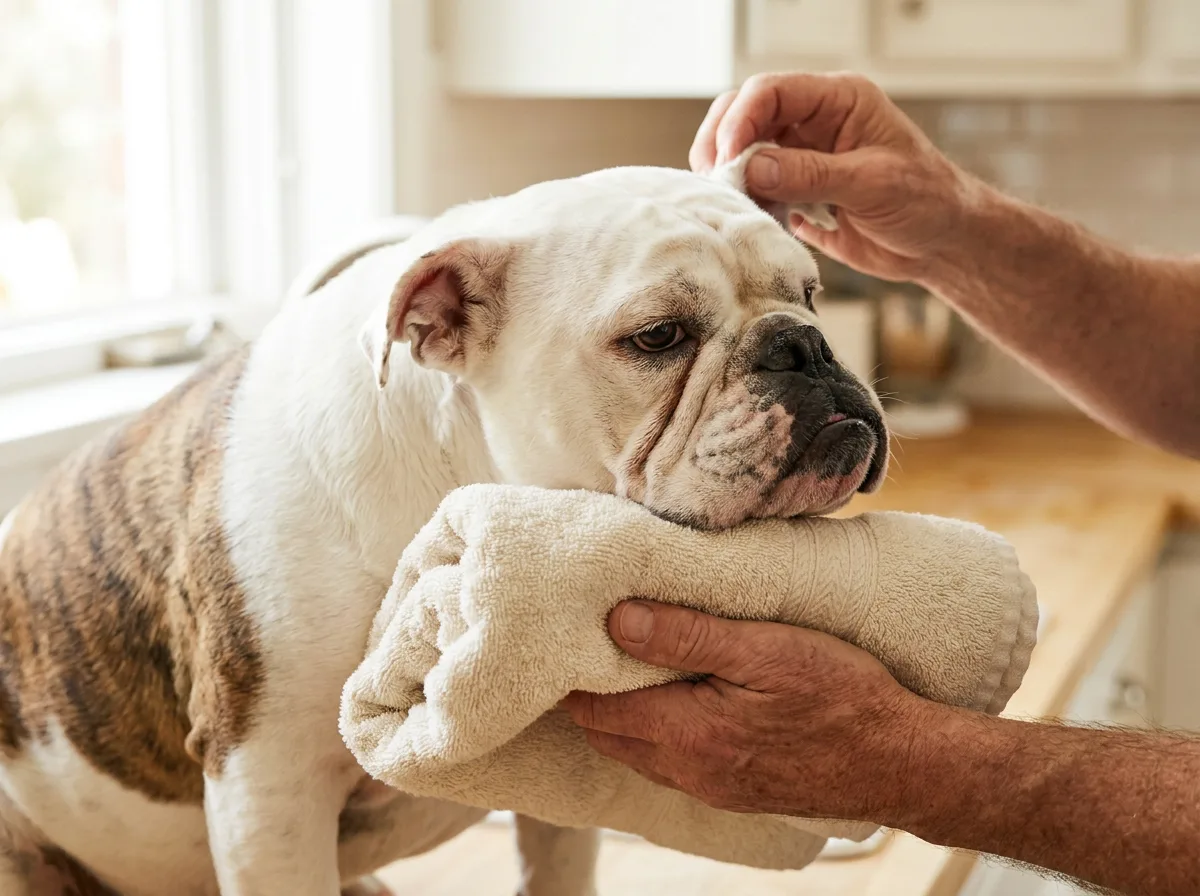
Progress a chin-rest consent behavior
Begin by rewarding the dog for placing the chin on an open hand, towel or low support. Release immediately. Once the position is offered easily, add one second of duration. Next move the other hand near a non-sensitive area without touching. Add touch only when the dog remains comfortable and can lift the chin to pause.
Build separate plans for paws, folds, ears, lips and standing. Combining them too early makes it hard to know what worried the dog. Practice with the harmless versions of tools but never imitate painful procedures. When care cannot wait, ask the veterinary team about safe handling and medication support rather than sacrificing trust through a struggle.
- Reward the start position before every new step.
- Pause when the dog withdraws consent.
- Train for seconds, then provide a break.
- Treat pain signs as medical information.
A cooperative-care behavior is useful only when caregivers honor it during practice. That history gives the dog a predictable way to participate and gives the person earlier warning that comfort has changed. It can also make a clinical visit more efficient when the same signals are shared with staff, even though urgent treatment may still require a different safety plan.
The household fit scorecard
Score how the dog recovers from:
- Visitors, gentle play and handling.
- Brief separation and ordinary novelty.
Compare those observations with the home’s climate, schedule, children, animals and management capacity. A fit is stronger when adults can provide cool rest, reward-based training, cooperative care and reliable separation.
A household fit decision should be written before emotion takes over. Rate the actual home on cool indoor recovery, daily companionship, training time, visitor management, child supervision, pet separation, stairs, grooming cooperation and access to veterinary care. Then rate the individual dog on observed behavior, not on the Bulldog’s reputation.
Score climate and physical access
The environment can magnify airway and mobility risk every day. Rate air conditioning reliability, shaded toilet access, stairs, floor traction and how the dog would be moved in an emergency, then write a backup plan for heat and evacuation that does not depend on carrying a heavy dog beyond an adult’s ability. Foam dog stairs beside the sofa or bed cut the repeated jumping that strains a heavy, short-legged dog.
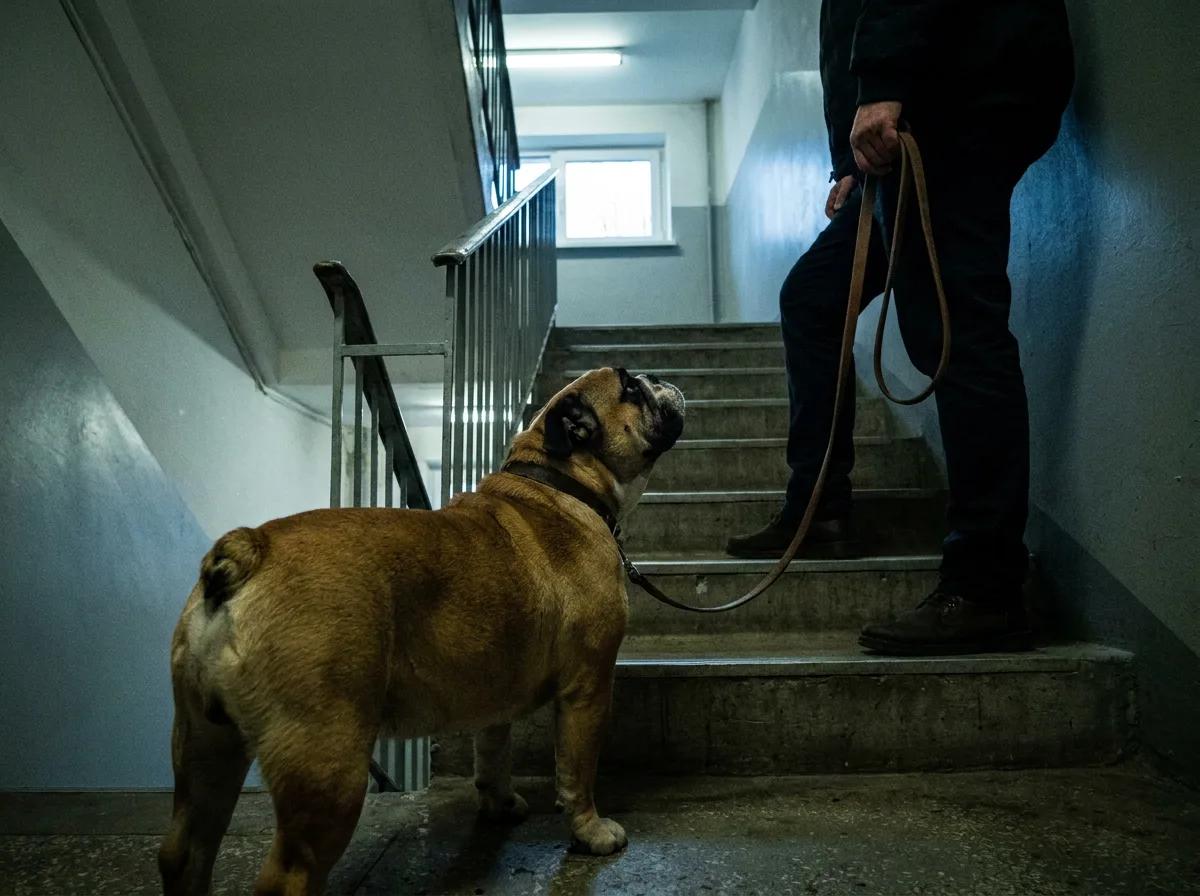
Score time and social expectations
A companionship mismatch creates stress even when exercise needs are low. Compare hours alone, desired cuddling, visitor frequency and the time adults can give to structured interaction with the dog’s observed comfort, and use your least flexible week as the test. Include gradual alone-time training rather than assuming today’s work-from-home schedule will last. As a guide, the veterinary charity PDSA advises that most dogs should not be left for much longer than four hours at a time. A pet camera during a trial workday shows how the dog actually copes with the hours alone.
Score training and management capacity
Management is a legitimate welfare tool, not evidence of failure, but one person cannot compensate for daily contradictions. Assign who handles walks, gates, visitors and practice sessions, keep cues and rules simple and written, and check that the plan still works when the main caregiver is away. Resolve any disagreement about force or ignoring warnings before the dog comes home.
Score child and pet safety
Good intentions do not create physical separation. List children’s ages and impulse control, how resident animals behave, where the dog can retreat and which adults can actively supervise, then mark permanent dog-free and child-free zones. Compatibility can change around food, illness and maturity, so decide in advance what happens at the first sign of tension.
Score the real dog, then decide
Individual variation is larger than a short breed description suggests. Watch recovery, handling, settling, sociability, frustration, health and movement in more than one context, compare what you see with the non-negotiable limits in your scorecard and ask qualified professionals about gaps before you commit. Red flags should not be reframed as quirks because the decision already feels made.
Turn the scorecard into a decision
Mark each category green, yellow or red. Green means the resource already exists, such as reliable cooling or an experienced adult who can supervise. Yellow means a specific change is feasible and assigned. Red means the home cannot safely meet the need. Do not average away a red item that concerns breathing, emergency access, child safety or humane handling.
Then add the dog’s evidence. Use several observations from the foster home, breeder, shelter, veterinary record or direct meetings. State what remains unknown. A calm ten-minute meeting cannot answer how the dog handles a full workday or another animal around food, so the plan must manage uncertainty rather than invent reassurance.
- Resolve every safety-critical red item before commitment.
- Give each yellow item an owner and deadline.
- Budget for health as well as routine supplies.
- Choose based on the actual dog, not the most flattering description.
A decline to adopt or purchase can be a responsible result. A good scorecard protects the household from a mismatch and protects the dog from preventable stress or rehoming. When the evidence supports the fit, the same document becomes a practical first-month plan rather than disappearing after the decision. Review it after arrival because observed needs may change the assignments.
Use the scorecard during the first month
During the first three days, prioritize decompression, predictable meals, toilet access, sleep and a cool quiet area. Limit visitors and avoid demanding public outings. Learn the dog’s resting breathing, preferred distance and response to routine movement before adding challenges. Keep introductions to resident animals managed through barriers and separate resources. This period is not a test of the final personality; it is a chance to establish safety while the dog processes a new environment.
During the remainder of the first week, establish simple household cues and handling consent. Reward a name response, movement through doors, settling on a mat and brief comfortable checks of paws or folds. Walk only in suitable weather and let the dog’s function set distance. Record appetite, stool, sleep, recovery and any physical concern. Schedule the baseline veterinary visit according to the dog’s records and current needs rather than waiting for a problem to become obvious.
In the second week, add one controlled social or environmental variable at a time. That could mean seeing a visitor at a distance, walking a different quiet route or practicing behind a gate while another adult moves around the home. Do not combine a new person, new dog, busy location and longer duration into one event. The observation scorecard should make it clear which change the dog handled and which change needs a smaller step.
Weeks three and four can broaden the routine only where the evidence supports it. Increase one training criterion, extend an easy separation by a small amount or add a calm visitor who follows the protocol. Preserve rest days after demanding events. A Bulldog who appears socially eager may still need active help disengaging, and a dog who stays very still may be overwhelmed rather than relaxed. Look at the whole body and the recovery that follows.
At the end of the month, review every original yellow and red scorecard item. Mark what has been resolved, what needs professional help and what requires permanent management. Some limits should remain. A dog may never enjoy busy dog parks, prolonged outdoor heat or handling by unfamiliar people, and a successful home does not need those activities. The plan should support the dog in front of you, not chase a generic picture of sociability.
- Keep one fully protected retreat available every day.
- Continue separate feeding and valuable-item management around other pets.
- Compare recovery with the individual baseline after each new experience.
- Reduce difficulty immediately when breathing, movement or behavior deteriorates.
- Contact the veterinarian about physical signs or sudden changes.
Reassess fit after a household change
A new work schedule, move, baby, visitor pattern, pet or health diagnosis can alter a fit that previously worked.
Reopen the scorecard before the change when possible, then identify:
- Which quiet spaces, supervision periods, walking times and care duties will shift.
- Which reliable anchors to preserve, including familiar sleep, food, toilet and recovery routines.
Introduce the new element in manageable pieces.
Watch the first behavior change as information. Pacing, difficulty settling, doorway vigilance, avoidance or handling sensitivity may show that the transition is moving too quickly, but similar signs can also have a medical cause. Reduce environmental pressure and involve the veterinarian when the change is sudden, persistent or accompanied by physical signs. Do not wait for a major incident before adding support.
- Keep the retreat protected through the transition.
- Assign new duties in writing rather than assuming someone will cover them.
- Use gates and distance before the dog becomes overwhelmed.
- Review recovery time and physical comfort every day.
Fit is a living agreement between the dog and the home. Reassessment is not a failure. It is how a responsible household notices that circumstances have changed and adjusts training, management or professional support before welfare or safety erodes.
Related English Bulldog guides
Place temperament beside physical welfare with the English Bulldog health and lifespan guide, then use the English Bulldog breed profile, English Bulldog puppy guide and English Bulldog price guide for the remaining cluster decisions.
Sources
- American Kennel Club Bulldog breed page: breed description and standard context, not an individual behavior prediction
- Royal Veterinary College VetCompass Bulldog health summary: health and welfare context relevant to behavior change
- Bulldog Club of America health testing: health-screening context for prospective owners
- OFA CHIC programs: public screening framework and definitions
Questions readers ask
Typically friendly, calm, courageous and people-oriented. The AKC standard asks for a disposition that is equable, kind and resolute without being vicious or aggressive, and the AKC rates the breed 4 out of 5 for affection with family and 3 out of 5 for energy. Many Bulldogs follow their people around the house, enjoy short play bursts and then rest for long stretches. Individuals still differ, so meet the actual dog before deciding.
Not usually. The AKC rates Bulldogs 2 out of 5 for barking, toward the quiet end of its scale. Most bark to alert at a door or a visitor, or when they want something and are being made to wait. Snorting, snoring and grumbling are more common than sustained barking, and a sudden rise in noise, or noisy breathing at rest, is worth mentioning to your veterinarian.
Moderately. The AKC gives the breed 4 out of 5 for trainability, but Bulldogs tend to do best in short, food-motivated sessions and can lose interest or overheat during long drills. Teach one skill at a time in a cool, quiet room, end on an easy success and use gates or a leash to manage situations the dog has not learned yet. Force tends to produce shutdown rather than cooperation.
Neither breed label can tell you. English Bulldog temperament is usually mellow, and the AKC standard calls for a Bulldog that is not vicious or aggressive, but aggression in any dog depends on the individual’s genetics, early socialization, pain, learning history and the situation. Visual identification of pit bull type dogs is often unreliable. Compare individuals instead: how quickly each dog recovers from a surprise, how it behaves around food and toys and whether it accepts handling.
Most enjoy being close to their people, and the AKC rates them highly for affection with family. Many prefer leaning against you or resting at your feet to being hugged, lifted or held on a lap, partly because a heavy body and short airway make restraint uncomfortable. Let the dog come to you, pause petting every few seconds and continue only if it leans back in.
No. The AKC breed standard specifically calls for a dog that is not vicious or aggressive, and most Bulldogs are known for a mellow, people-friendly manner. That does not make every individual safe in every situation. Guarding food or resting spots, rough handling by children and pain from skin, eye or joint problems are common triggers for growling or snapping in otherwise easygoing dogs.
They are not known as a high-bite breed, but any dog can bite when frightened, hurting, cornered or guarding something it values. In Bulldogs, sore skin folds, ears or eyes can make handling uncomfortable, so a dog that suddenly snaps during grooming may be in pain. Learn the early warnings, such as freezing, a hard stare and lip licking, and back off before they escalate.
Yes. An adult Bulldog weighs about 40 to 50 pounds, with a broad, muscular head and an undershot jaw, so a bite can cause real injury even from a dog that rarely uses its mouth. Prevention matters more than any bite-force figure: teach trading for objects, keep children away from food and beds, and get qualified help early when warning signs appear.
Some are mildly watchful and will bark or plant themselves near family when someone arrives, but Bulldogs are generally better companions than guard dogs. The AKC rates the breed 4 out of 5 for openness to strangers, so many greet visitors happily. Avoid encouraging guarding through confrontation games; a calm visitor routine and a mat or gate give the dog a predictable job instead.
Not inevitably, but some show up often: demand barking, chewing, leash frustration, resistance to handling and distress when left alone. Heat, boredom, skin or joint discomfort and overlong training sessions can all make them worse. Record when the behavior happens, prevent repeat rehearsal, reward a calmer alternative and ask your veterinarian to rule out pain before treating a sudden change as disobedience.
Often, for families who supervise. The AKC rates the breed 4 of 5 for affection with family but 3 of 5 for being good with young children, a middle score that reflects a heavy, strong dog that can be knocked into, crowded or startled. Give the dog a retreat children do not enter, keep an adult actively watching every interaction and stop climbing, hugging and disturbing a dog that is resting or eating.
Not routinely, and no breed is a good choice for a dog that will be alone all day. The UK veterinary charity PDSA advises that most dogs should not be left for much longer than about four hours. Adult Bulldogs are often happy to nap, but they are people-oriented and need a midday break, a cool room and gradual alone-time training. If you work long days, budget for a dog walker or day care.

Coreen Saito is a pet writer and longtime shelter volunteer with more than a decade in animal rescue. She covers cat behavior, breed care, and the small, ordinary science of sharing a life with companion animals, with a particular focus on honest takes about the products and decisions that actually matter. At home in Arizona, she's outranked by Mac (a dog with the loudest opinion in the house), Rebel (a cat who governs by quiet authority), and Meri (an orange tabby who runs the late shift and the laundry basket). She writes about all three, plus the rescues that keep coming through her life, at LifeWithMinty.com.
Sign up for expert-backed reviews and safety alerts all in one place.