American Bulldog Types: Johnson, Scott, and Their Differences
Understand Johnson, Scott and blended American Bulldog lines, compare their general proportions, and learn which pedigree, health and behavior checks matter more than a type label.

BVMS, MRCVS
Petful is reader supported. As an affiliate of platforms like Amazon and Chewy, we may earn a commission when you buy through links on this page. There is no extra cost to you.
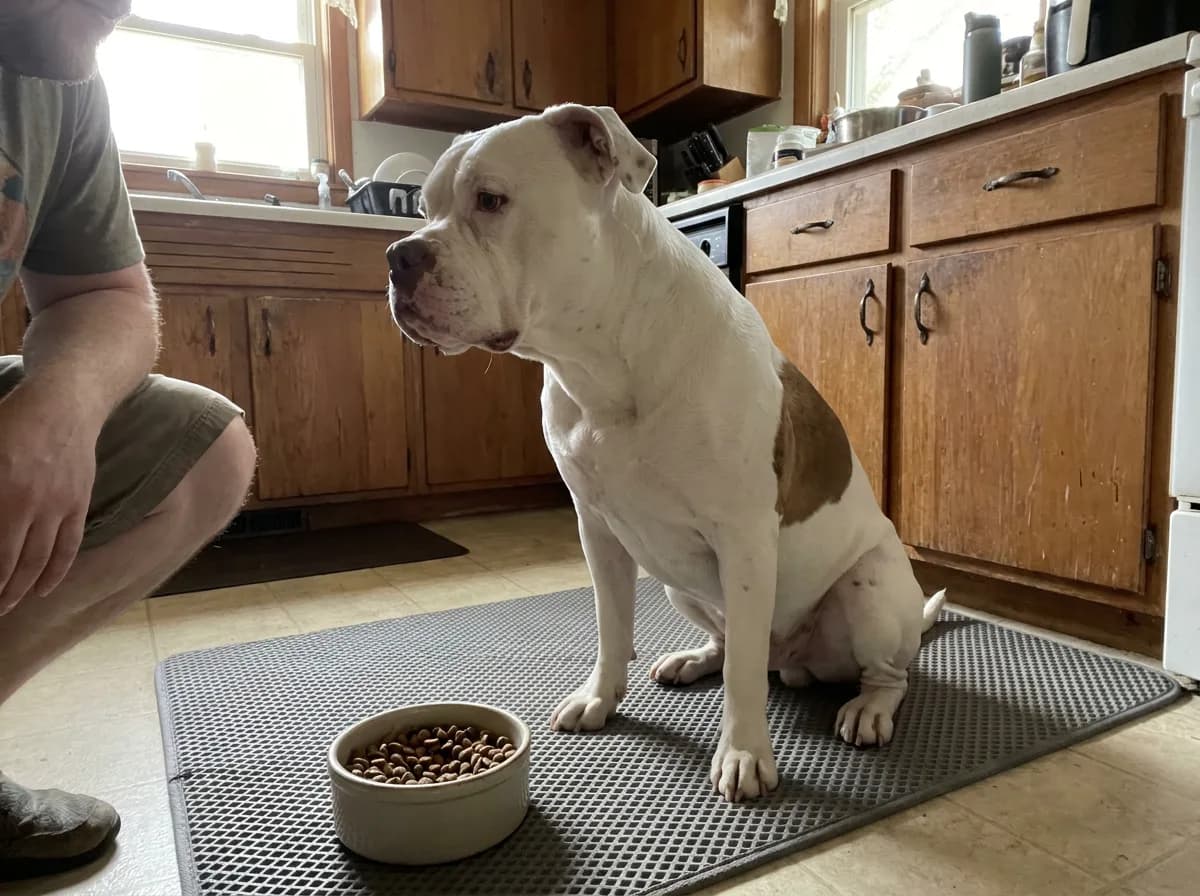
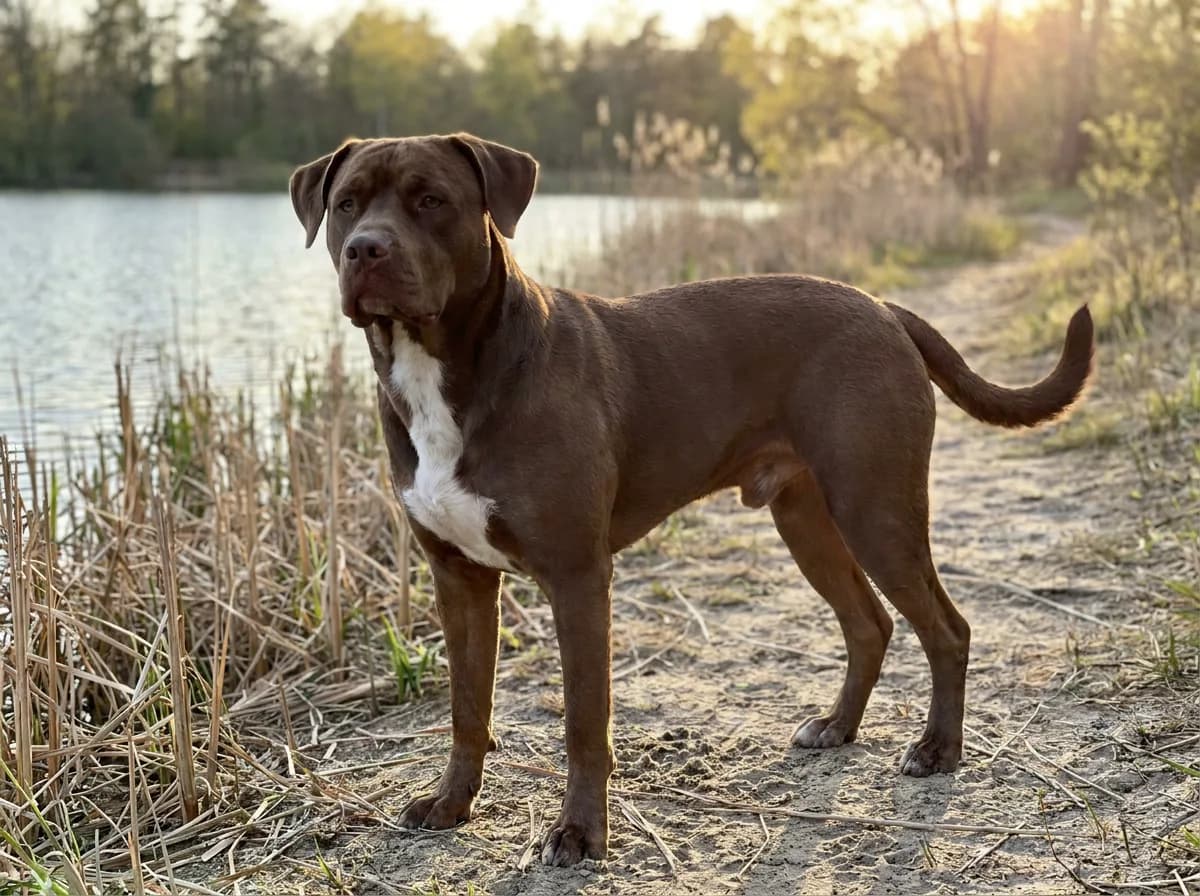
The two main American Bulldog types are usually called Johnson or Classic and Scott or Standard. They are influential lines within one breed, with general differences in build and muzzle proportions. Many American Bulldogs combine those lines, so a photograph rarely supports a neat either-or classification.
Type labels can help you understand a breeder's description. They cannot guarantee temperament, health, adult size or suitability for your home. Start with the distinction, then ask what the available records and the individual dog actually show.

Sign up for expert-backed reviews and safety alerts all in one place.
The two main American Bulldog types and blended lines
| Label | General description | What to verify |
|---|---|---|
| Classic or Johnson | Heavier bone and broader build; relatively shorter muzzle | Parentage, comfortable movement and individual health records |
| Standard or Scott | More athletic frame; relatively longer muzzle | Parentage, working structure and individual behavior |
| Blended lines | Features may combine both types | What the breeder means by hybrid and what the pedigree supports |
What are the different types of American Bulldogs?
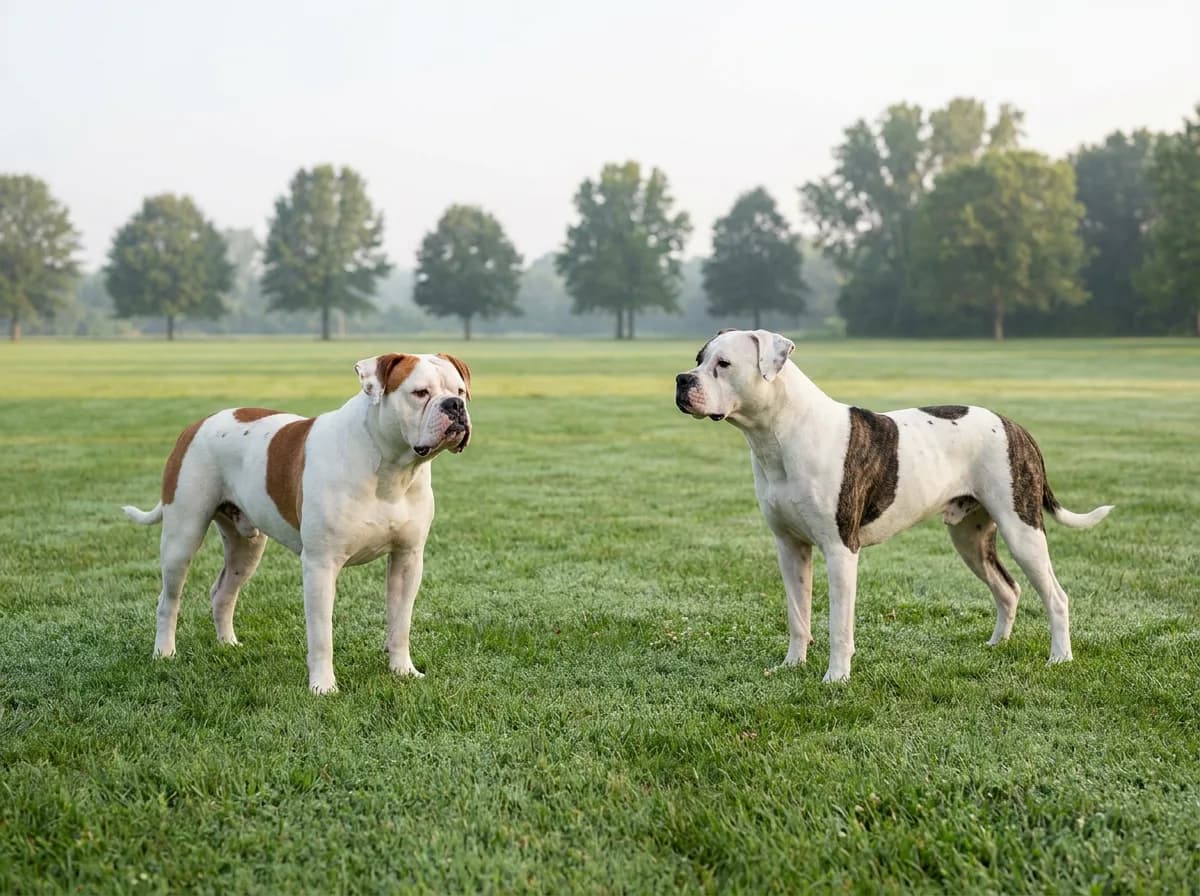
The United Kennel Club American Bulldog standard recognizes the distinction associated with John D. Johnson and Alan Scott. Classic or Johnson dogs generally have a heavier build, while Standard or Scott dogs generally have a more athletic outline. UKC also acknowledges dogs blending the two types.
“Hybrid” in this setting may mean a blend of American Bulldog lines, not a cross with an American Bully or another breed. Ask the breeder to explain the term and identify the parents. A percentage claim needs supporting pedigree information; it cannot be read from a puppy's head or chest.
Different builds can require different equipment sizes. Compare chest measurements with the PetSafe Easy Walk Medium/Large harness size guide before choosing it; neither a Johnson nor a Scott label establishes that this version will fit.

Choose this Medium/Large harness by chest measurements rather than Johnson or Scott terminology. Check strap position and movement on the individual dog.
Petful may earn a commission when you click through to Chewy, at no extra cost to you.
- Both types have a short coat. Coat type, white markings or brindle coloring do not establish a bloodline. If you are comparing American Bulldog types with pictures, look for natural standing profiles of mature dogs rather than dramatic close-ups that enlarge the head or chest.
- Other names, including Painter, appear in discussions of American Bulldog bloodlines. The UKC standard used here does not establish Painter as a separate conformation type with its own measurements. Ask for documented lineage rather than accepting a separate size or personality profile built around that label. There is no single best bloodline for every household.
Johnson or Classic American Bulldogs
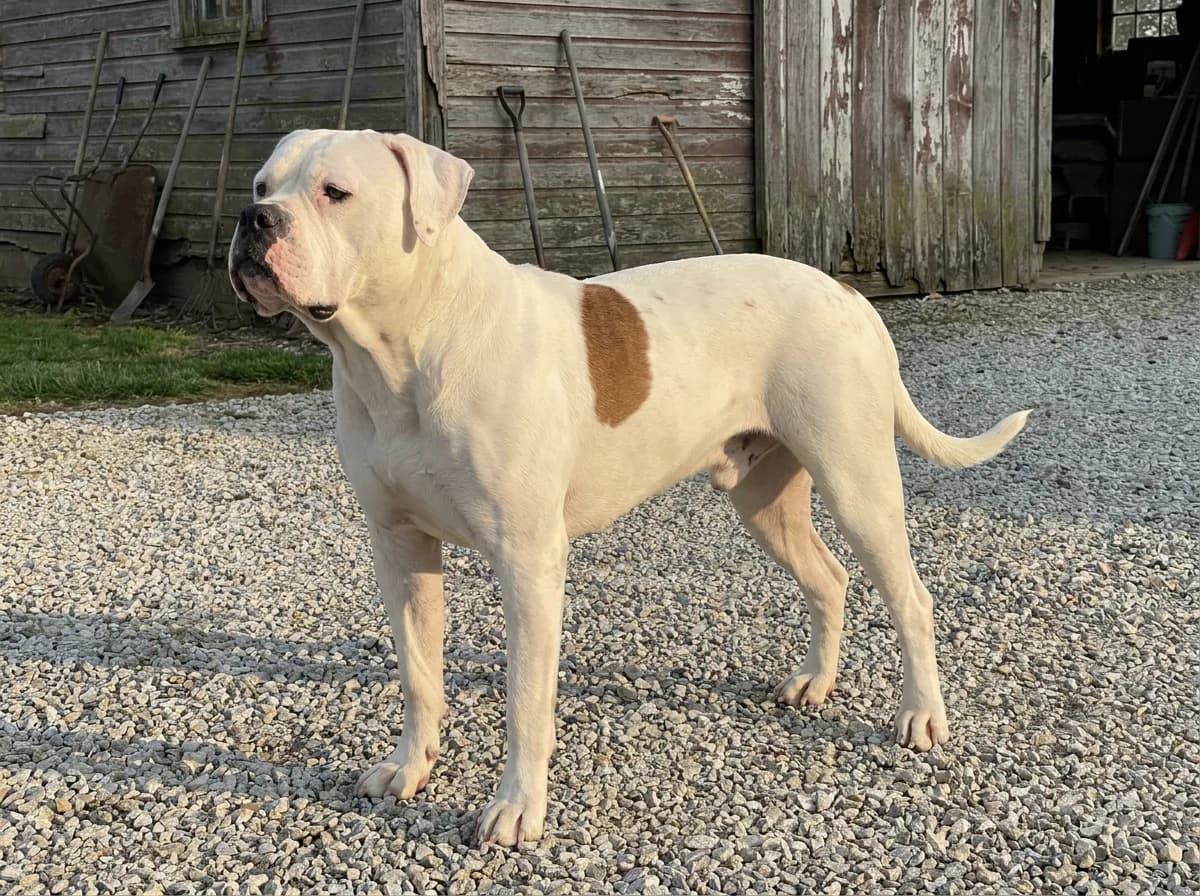
The Johnson name refers to John D. Johnson's influence on the breed. Classic American Bulldogs commonly show the more substantial build people associate with the term “bully type.” Here, bully describes an American Bulldog's type; it does not change the breed to American Bully.
- 1Classic or Johnson and Standard or Scott describe types within the same breed.
- 2A blended American Bulldog line does not automatically mean a cross with another breed.
- 3Ask for documented parentage and assess the dog rather than treating a type label as a guarantee.
Either type's short coat can be maintained with a gentle tool such as the Four Paws Magic Coat glove and curry brush. Work lightly and stop over sore skin. Grooming can help you observe the dog comfortably without implying anything about its pedigree.
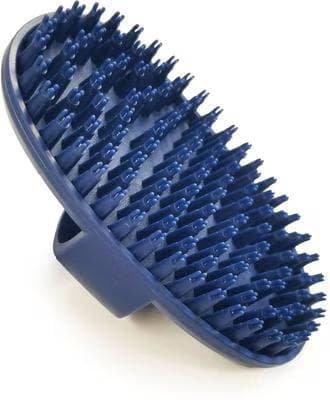
A glove and curry brush for gentle maintenance of either type's short coat. Stop if the dog or its skin is uncomfortable.
Petful may earn a commission when you click through to Chewy, at no extra cost to you.
What are the key differences between a Scott American Bulldog and a Johnson American Bulldog?
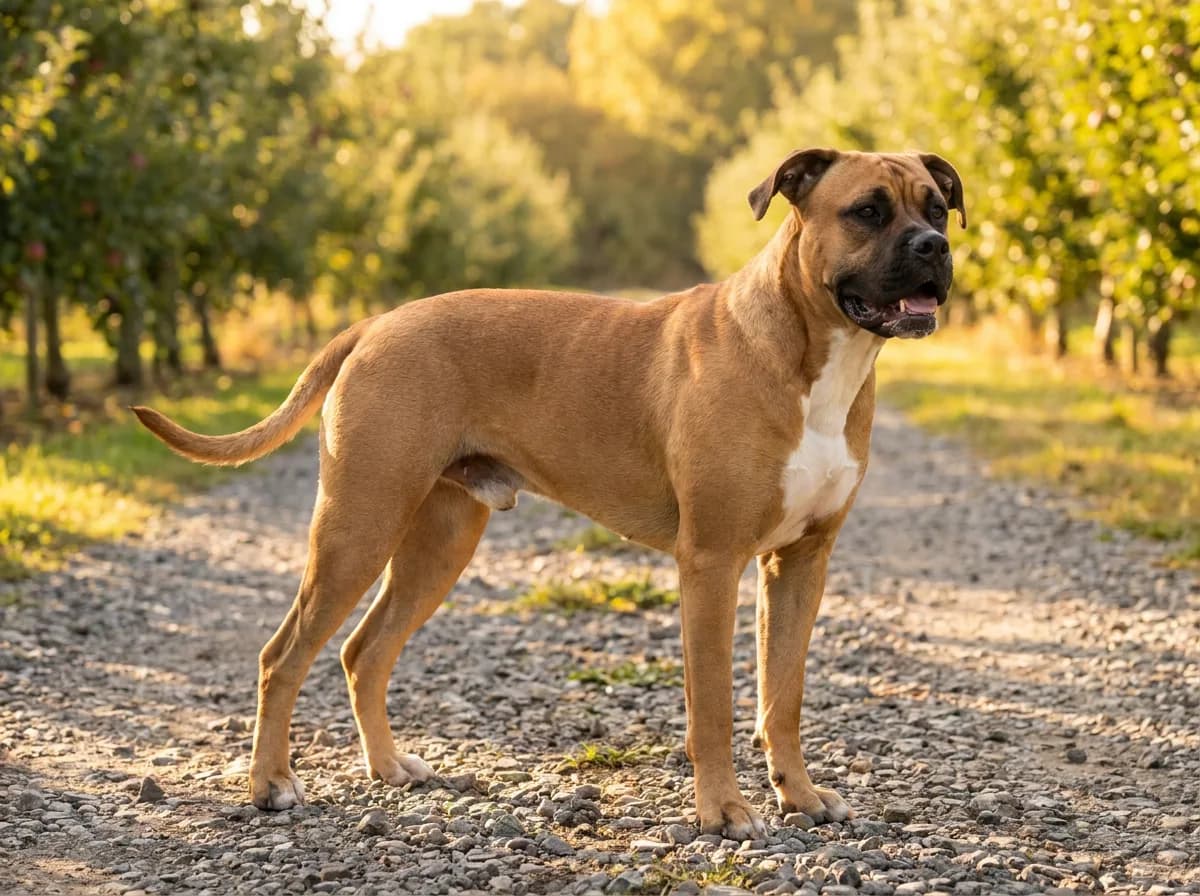
The usual comparison is a heavier, broader Johnson dog with a relatively shorter muzzle versus a more athletic Scott dog with a relatively longer muzzle. These are general differences in proportions, not a test that certifies ancestry. Blended lines can have intermediate features, and individual variation exists within either description.
Observe the whole dog rather than judging the width of its head alone. A full-grown Johnson American Bulldog should be able to move comfortably, and a Scott dog should not be valued solely for looking leaner. Neither type deserves exaggerated features that interfere with ordinary activity.
- Look at balanced proportions in a relaxed standing position.
- Watch the dog walk and turn without being pulled into a pose.
- Ask about any breathing, mobility or handling concerns already recorded.
- Compare parentage records with the seller's precise type claim.
Johnson size, weight and puppy claims
A large Johnson American Bulldog is not automatically a better example or a more suitable pet. Breed-wide size guidance is not a separate Johnson growth chart. Male and female dogs vary, and a puppy's eventual weight cannot be guaranteed from its type label or a photograph.
When a breeder offers “100 percent Johnson” puppies, ask what that percentage refers to and how the pedigree supports it. Ask about the adults' measured size and health history, but do not assume that the puppy must duplicate either parent's dimensions. Avoid feeding toward an advertised weight goal.
- Request the actual names and records of the parents, not just a kennel slogan.
- Ask how the puppy has been raised, handled and introduced to everyday experiences.
- Review the contract, return arrangements and ongoing support before paying.
- Compare what a price includes instead of treating a high price as proof of quality.
Finding a Johnson dog responsibly
When looking for Classic or Johnson American Bulldog puppies for sale, verify the advertised bloodline with the actual parent records. A “100 percent Johnson” claim requires pedigree support; it does not guarantee the puppy's final size or suitability. There is no verified universal price for a Johnson American Bulldog in this guide, and a “top breeders” list would require current evidence about each kennel. Evaluate a breeder or rescue directly. Ask to review relevant health records and discuss the dog's needs without pressure to buy immediately.
White or brindle markings do not verify Johnson ancestry. Nor should a claim such as “blue Johnson” or “black Johnson” be treated as proof of a rare, superior line; check how the claimed color relates to the registry standard and what supports the pedigree. Forums, message boards and pictures can introduce questions, but they do not validate a seller's claims.
When meeting a prospective dog, ask the caregiver how it responds to ordinary reward-based practice. Small Pet Botanics chicken training rewards may be useful if the caregiver agrees and the dog tolerates them; one treat-taking moment does not establish overall temperament. Keep food rewards within the daily allowance.
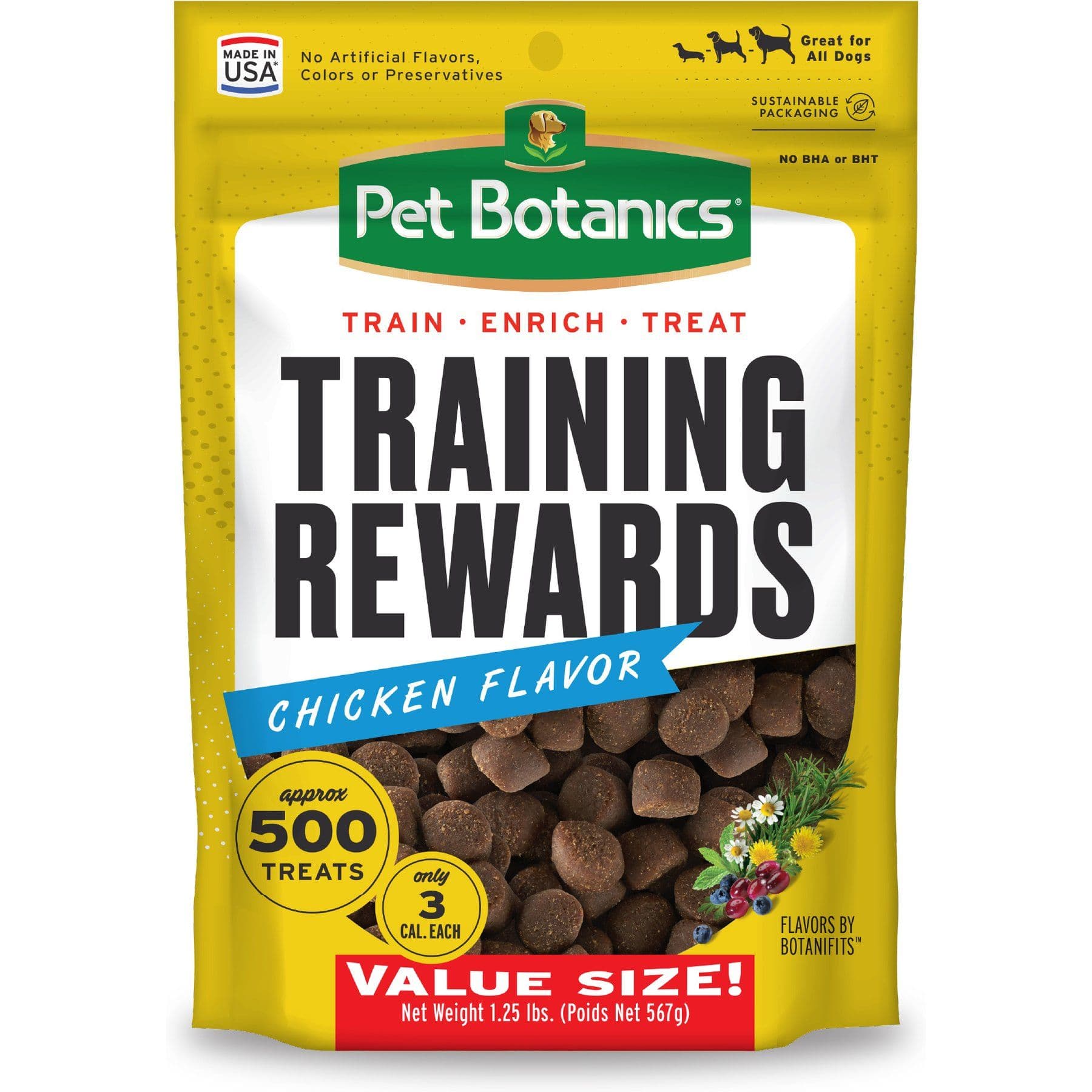
Chicken-flavor rewards for caregiver-approved training practice with a prospective or resident dog. A response to food cannot certify temperament.
Petful may earn a commission when you click through to Chewy, at no extra cost to you.
Scott or Standard American Bulldogs
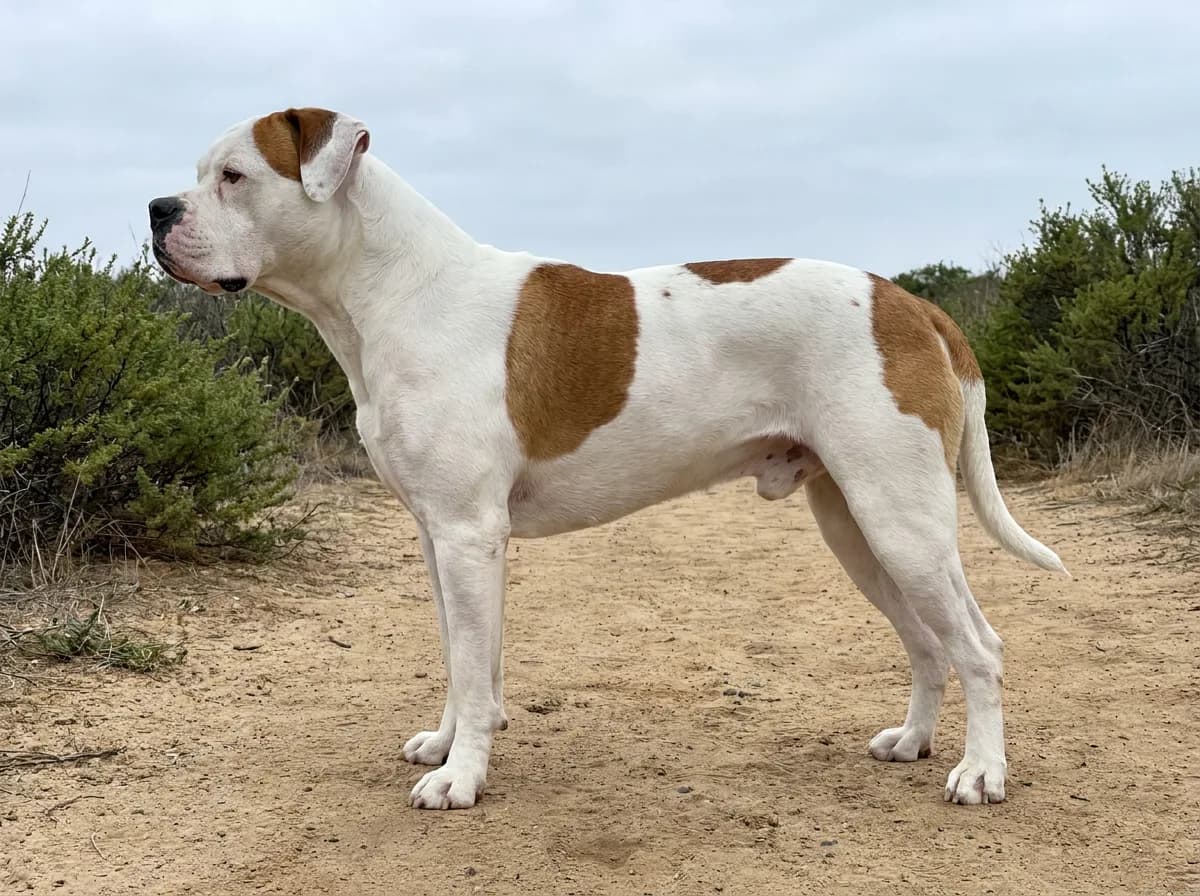
The Scott name is associated with Alan Scott and the more athletic type, often described as Standard or Performance. Those words describe a tendency in structure and emphasis. They do not mean every Scott puppy is a ready-made sport dog, or that a Standard dog is more authentic than a Classic dog.
The word standard also has another meaning: the written description used by a registry to assess the breed. A person discussing the “American Bulldog breed standard” may mean that document rather than the Scott type. Ask which registry and which meaning are intended before comparing requirements.
Scott size, temperament and working structure
Do not turn the more athletic outline into a guaranteed weight, temperament or activity level. Ask how a mature dog behaves at home and during handling, not just what a breeder says about the line's drive. For puppies, parent behavior and early experience are useful information, but they do not remove uncertainty about adulthood.
A Scott American Bulldog can still be a powerful dog needing capable handling. Fit walking equipment to the actual chest and check that it allows comfortable movement. For ordinary walks, the Frisco six-foot traffic leash provides regular and shorter handles. Practise a consistent reward-based walking routine rather than relying on a performance label to imply trainability.
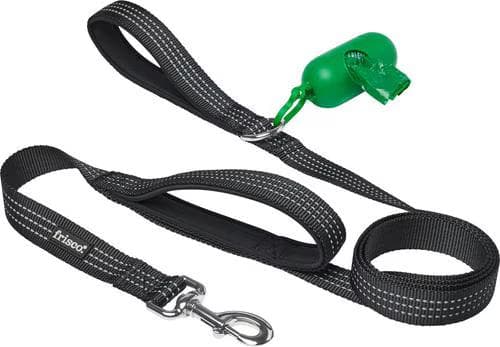
A six-foot walking leash with two handle positions for everyday handling. A performance label does not replace taught leash skills.
Petful may earn a commission when you click through to Chewy, at no extra cost to you.
- Discuss realistic daily activity and quiet rest with the current caregiver.
- Ask about responses to visitors, unfamiliar dogs and being left alone.
- Check whether the dog's history matches the environment you can provide.
- Seek professional help when behavior or physical limitations exceed your experience.
The National Kennel Club American Bulldog standard separately describes Standard and Bully types. Its preferred Standard muzzle is longer in proportion to the head than its Bully muzzle, and its ideal weight ranges differ by type and sex. These are NKC judging criteria, not UKC rules or growth targets. Check the named registry’s current standard before interpreting show or registration claims.
Evaluating Scott puppies and breeders
The same evidence matters when looking for Scott or Standard American Bulldog puppies for sale. Request parentage, relevant health test results and veterinary records. A kennel's use of “performance” does not demonstrate that every dog is healthy, comfortable or suited to your household.
There is no separate dependable Scott price or growth range established here. Ask what a quote includes and compare the support offered after the dog comes home. A white or brindle Scott dog is not a different temperament category, and photographs cannot certify the claimed bloodline. For an adult rescue dog, a documented current routine may be more useful than an uncertain line name.
Choosing an American Bulldog beyond the label
Treat the type description as the beginning of a conversation. Before you commit, compare the dog's actual needs with your available time, transport, space and handling ability. A clear account of limitations is more valuable than a promise that one line is always healthier, calmer or better with children.
- 1Verify parentage and relevant health testing behind a line claim.
- 2Meet adult dogs and ask about ordinary household behavior.
- 3Choose a manageable daily routine rather than the biggest body or most impressive label.
Health checks matter more than the line name
A Johnson, Scott or blended label does not establish a separate lifespan or rule out inherited disease. Ask to see the actual test results relevant to the parents, including the identities of the dogs tested. The Orthopedic Foundation for Animals explains different health evaluations; your veterinarian can help interpret which records apply to the dog you are considering.
For breed health context and the limits of life-expectancy estimates, see American Bulldog lifespan and common health problems. Skin changes, discomfort or poor mobility need individual assessment. A line name cannot explain a symptom or establish a treatment.
American Bulldog types are not American Bully classes
Classic and Standard appear in more than one breed's terminology, which makes shortened labels confusing. Within this article, Johnson and Scott refer to American Bulldogs. American Bully classifications belong to a separate breed and should not be treated as interchangeable with these lines.
Our American Bulldog vs. American Bully comparison explains the identity difference and household considerations. Neither breed is universally better, and neither a type nor a class provides a reliable aggression ranking. Ask about the actual dog's behavior and care requirements.
The American Bully versus Pitbull guide resolves that separate naming question and aggression comparisons. For identifying an American Bulldog versus an APBT, use the specific breed comparison and the dog’s records rather than inferring identity from a Johnson or Scott label.
The American Bulldog beyond type labels
The American Bulldog breed guide provides the wider history and care context behind these labels. Use it to understand the breed's working background without assuming that every individual shares the same interests or responses. Daily training, appropriate activity and predictable handling still need to be tailored to the dog. A supervised search in a Pet Parents Forager snuffle mat can be one quiet activity using part of the normal food allowance; remove it if the dog chews the material.
If someone calls the dog a Pitbull or an American Bully instead, clarify what supports that identification before deciding which breed information applies. The names are not interchangeable, and appearance cannot settle every case. Questions about aggression should focus on known behavior and management needs, rather than treating a broad label as a verdict about an individual.
Puppy growth and handover
Johnson and Scott labels do not establish when a puppy will finish growing. The American Bulldog puppy guide covers growth records, teething preparation and breeder or rehoming checks. Use dated measurements and individual body condition rather than forcing either sex to match a chart.
Questions about american bulldog types
A Johnson American Bulldog is the Classic type associated with John D. Johnson, generally described as heavier and broader-headed than the Scott type. It is part of the American Bulldog breed, not a separate breed registration. Ask which pedigree records support a seller’s claim: a broad head, heavy build or “100 percent Johnson” advertisement cannot verify ancestry on its own.
A Scott American Bulldog is the Standard or Performance type associated with Alan Scott, generally described as more athletic and longer-muzzled than the Johnson type. It remains an American Bulldog. These are tendencies in structure, not promises of sporting ability, health or temperament; compare the actual dog’s movement, records and everyday behavior.
The American Bulldog developed from historical working bulldogs brought to the United States, not a prescribed modern two-breed cross. Johnson and Scott helped preserve influential lines within that breed. Combining those lines is different from deliberately crossing an American Bulldog with another breed, and the term hybrid should be clarified whenever a seller uses it.
BVMS, MRCVS
Dr. Pippa Elliott, BVMS, MRCVS, is a veterinarian with nearly 30 years of experience in companion animal practice. Dr. Elliott earned her Bachelor of Veterinary Medicine and Surgery from the University of Glasgow. She was also designated a Member of the Royal College of Veterinary Surgeons. Married with 2 grown-up kids, Dr. Elliott has a naughty Puggle named Poggle, 3 cats and a bearded dragon.
Sign up for expert-backed reviews and safety alerts all in one place.