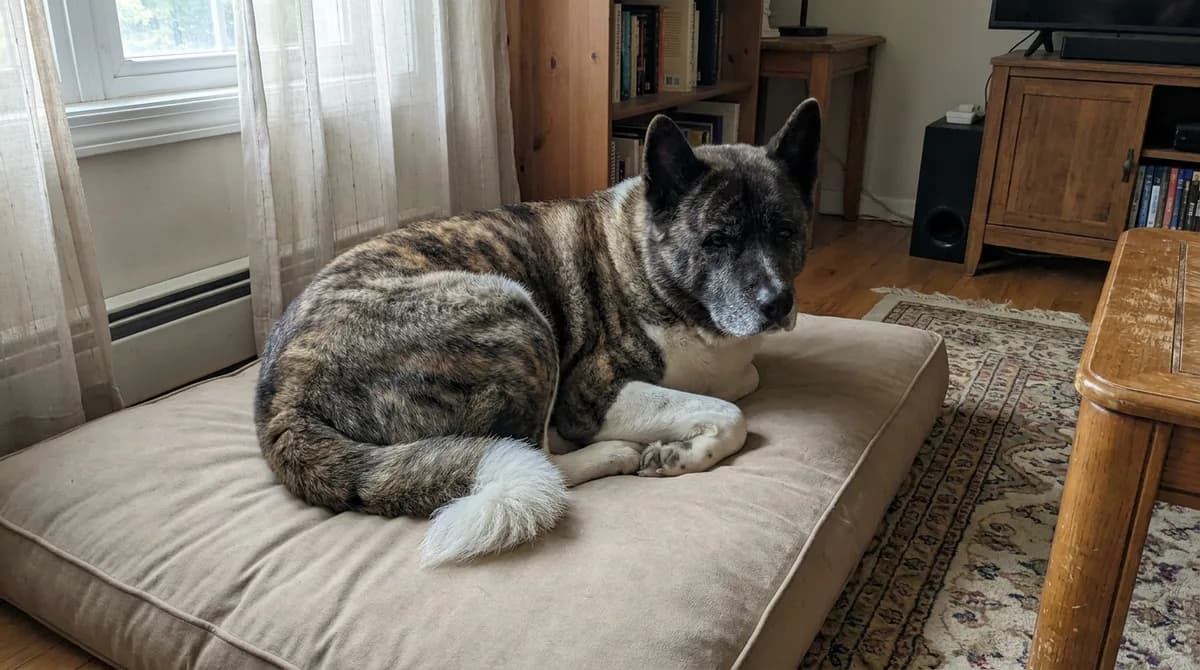
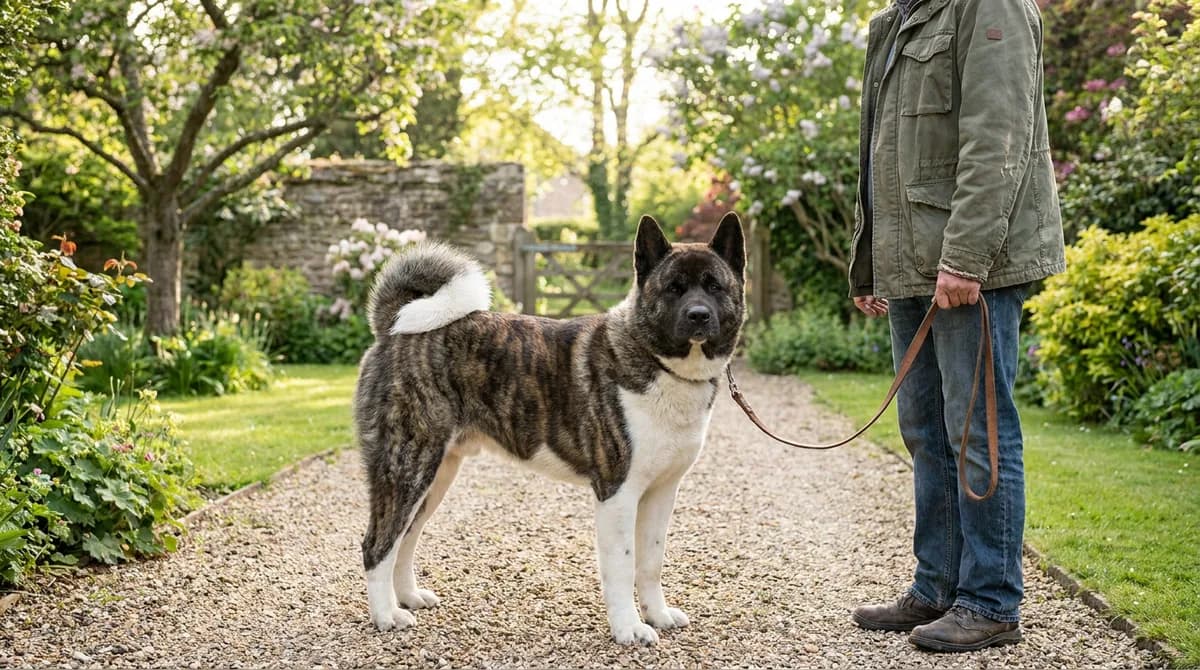
American Bully vs Pitbull: Key Differences Explained
American Bullies and American Pit Bull Terriers are related but distinct registry breeds. Compare their standards, body type, size, care, temperament, and why visual identification is unreliable.
Petful is reader supported. As an affiliate of platforms like Amazon and Chewy, we may earn a commission when you buy through links on this page. There is no extra cost to you.
The american bully vs pitbull comparison starts with a naming problem: the American Bully and American Pit Bull Terrier are distinct registered breeds, while lowercase "pit bull" is also used as an imprecise umbrella label for several breeds and mixes. A broad head or muscular body cannot prove ancestry, temperament, or legal status. Petful’s guide to blue nose pitbulls covers the coat genetics, health, and price.
This guide compares the two registered breeds first, then explains where the umbrella term changes the answer. For a deeper profile of the newer companion breed, read Petful's American Bully guide.

Sign up for expert-backed reviews and safety alerts all in one place.
American Bully vs. pit bull at a glance
- 1The American Bully and American Pit Bull Terrier are separate UKC-recognized breeds with related ancestry and different standards.
- 2"Pit bull" may instead be an umbrella label based on appearance, policy, or local law.
- 3American Bullies are generally broader and heavier-boned, while the APBT standard favors a leaner athletic build.
- 4Breed alone does not predict aggression, household fit, or an individual dog's legal classification.
The shortest accurate answer is no, an American Bully is not the same registered breed as an American Pit Bull Terrier. The United Kennel Club American Bully standard and UKC American Pit Bull Terrier standard give each breed its own history, purpose, proportions, and judging requirements.
The confusion persists because UKC describes the American Bully as a natural extension of the American Pit Bull Terrier that was influenced by the American Pit Bull Terrier, American Bulldog, English Bulldog, and Olde English Bulldogge. Informal pit bull labels are also assigned by appearance. A landlord, insurer, shelter, municipality, registry, and DNA company may not use the same definition.
The American Bulldog is a separate breed. Compare it directly with the American Pit Bull Terrier or English Bulldog if those names also appear in your search.
| Feature | American Bully | American Pit Bull Terrier |
|---|---|---|
| Registry identity | Separate UKC breed; also central to ABKC registry | Separate UKC breed |
| Historical development | Modern companion breed developed from bull-and-terrier and bulldog-type influences | Older bull-and-terrier breed developed for strength, athleticism, and working versatility |
| Typical build in the standard | Compact, broad, heavy-boned, muscular without impaired movement | Powerful but agile, leaner, balanced, and never bulky |
| Height | Varies by recognized class; Standard overlaps the APBT | UKC males 18 to 21 inches, females 17 to 20 inches |
| Temperament ideal | Confident companion with a gentle, friendly demeanor | Confident, eager, enthusiastic, and people-oriented |
| Identification limit | Appearance suggests type but does not prove pedigree | Appearance suggests type but does not prove pedigree |
Is an American Bully the same as a pitbull?
Not as a registry question. The American Bully and American Pit Bull Terrier have separate UKC breed standards. However, an American Bully may still be called a pit bull under an informal umbrella definition or a written housing or legal rule. Always ask which definition is being used before treating yes or no as a complete answer.
Are bullies as aggressive as pitbulls?
There is no defensible breed-wide aggression score that lets you rank American Bullies against dogs called pit bulls. The pit bull label itself may cover several breeds and mixes. Behavior assessment should use the individual dog's history, context, handling, pain status, social experience, and observed responses. A registry ideal is useful background, but it cannot guarantee one dog's behavior.
Petful may earn a commission when you click through to Chewy, at no extra cost to you.
How can you tell a Bully from a pit bull?
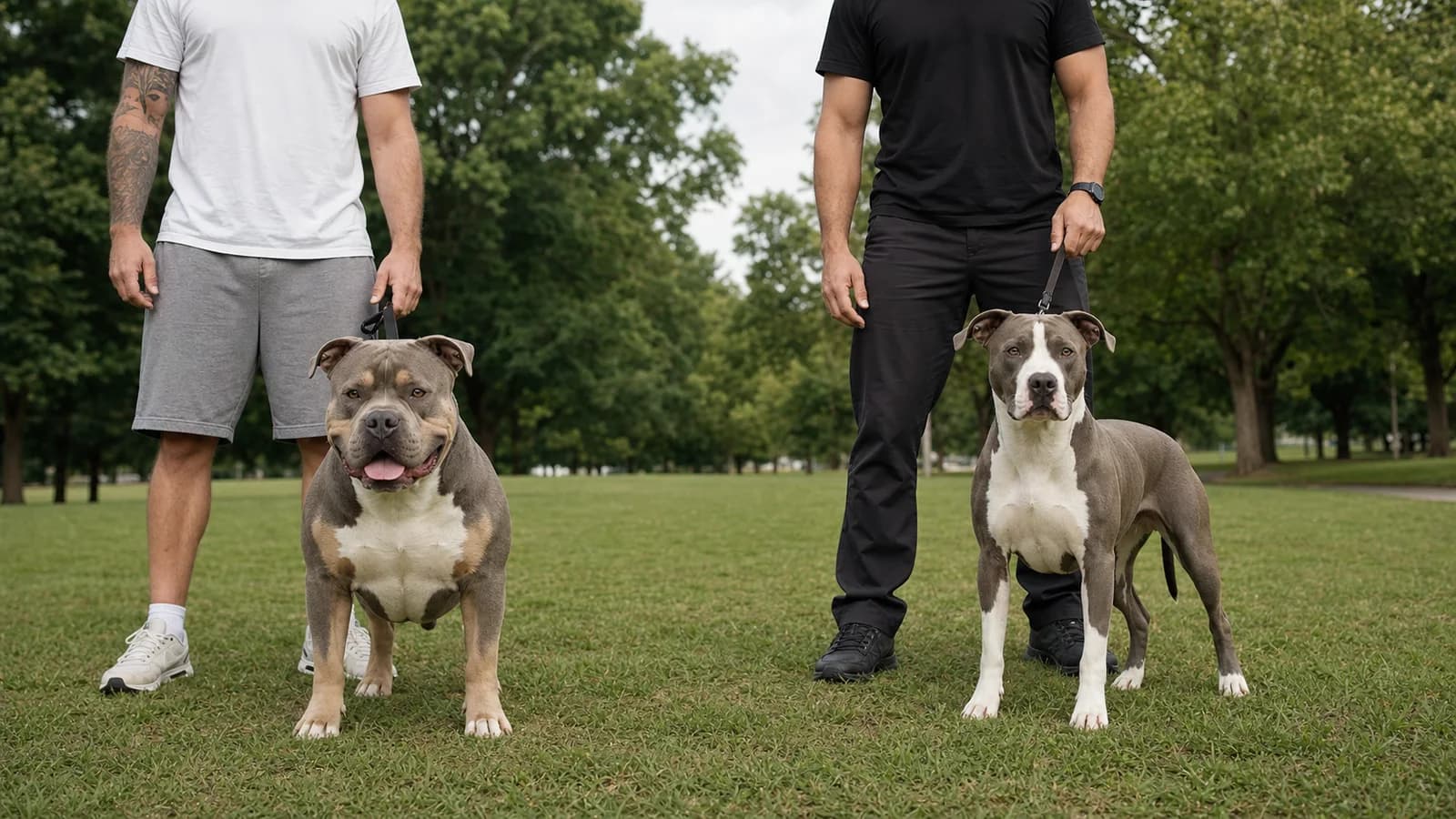
A registered American Bully often looks broader, shorter-coupled, heavier-boned, and more compact than a registered APBT, whose standard favors visible athleticism and agility. Those are tendencies, not an identification test. Mixed ancestry, class variation, conditioning, age, and camera angle create overlap, so records are stronger evidence than a visual guess.
What two dogs make an American Bully?
The breed did not arise from one simple two-dog recipe. UKC describes it as a natural extension of the American Pit Bull Terrier influenced by the American Pit Bull Terrier, American Bulldog, English Bulldog, and Olde English Bulldogge. Modern registered dogs come from established American Bully lines, not a prescribed first-generation cross that owners can reproduce by pairing any two breeds.
Is an American Bully aggressive?
The UKC standard says the American Bully was developed as a companion and makes viciousness or extreme shyness a disqualification. That describes the desired breed temperament, not a promise about every dog. Genetics, early learning, health, fear, resource guarding, environment, and owner management all matter, so evaluate the actual dog instead of assuming friendliness or danger from appearance.
Can an American Bully beat a pitbull?
Comparing which dog could win a fight is unsafe and has no place in responsible ownership. It ignores individual size, health, motivation, and the serious injury risk to both animals and people. The useful comparison is whether a handler can safely meet each dog's exercise, training, social, housing, and veterinary needs while preventing conflict and unplanned access to other animals.
What are the top three aggressive dog breeds?
There is no scientifically responsible universal top-three list. Studies use different definitions of aggression, reporting systems are affected by exposure and identification error, and breed names cannot capture an individual's history, health, learning, management, or context. A visual label may also be wrong. The AVSAB position on breed-specific legislation favors behavior- and owner-focused risk measures over breed bans.
Are American Bullies pit bulls?
The answer depends on whether you are discussing registry identity, everyday language, or a rule. Using a three-label framework prevents most contradictions.
1. American Bully
American Bully is the name of a modern registered breed. It has its own standard, pedigree system, and recognized size or build classes depending on the registry. A dog with documented American Bully registration is not thereby registered as an APBT.
2. American Pit Bull Terrier
American Pit Bull Terrier is also a specific registered breed. "Pit bull" is commonly used as its shortened name, but dropping the full breed name can create ambiguity.
3. Pit bull-type or pit bull umbrella
In shelters, media, housing policies, ordinances, and ordinary conversation, pit bull may mean a visual type that includes American Pit Bull Terriers, American Staffordshire Terriers, Staffordshire Bull Terriers, American Bullies, and mixes. The exact list changes by speaker or rule.
- Before arguing that a dog is or is not a pit bull, ask whether the question concerns registry pedigree, ancestry, shelter description, housing policy, insurance underwriting, or local law. The same dog may receive different labels in those systems.
What the AKC recognizes
The American Kennel Club does not recognize the American Bully or American Pit Bull Terrier as AKC breeds. It recognizes related but distinct breeds, including the American Staffordshire Terrier and Staffordshire Bull Terrier.
That does not make UKC registration invalid or turn an APBT into an AmStaff. Registries maintain different stud books and standards, and some historical lines have had cross-registration relationships.

Petful may earn a commission when you click through to Chewy, at no extra cost to you.
Ancestry and original purpose
The American Pit Bull Terrier predates the American Bully. The UKC describes the APBT as descending from nineteenth-century bull-and-terrier dogs and emphasizes strength, confidence, agility, and eagerness to please.
The American Bully was developed in the United States beginning in the late twentieth century. Breeders selected toward a companion-oriented dog with heavier bone, a broader frame, and a distinct bully-breed appearance. The UKC recognized it as a breed in 2013, while the American Bully Kennel Club had organized around the breed earlier.
Related ancestry explains why some dogs look similar. It does not make the standards interchangeable.
Purpose does not dictate every pet
A breed's historical purpose can inform likely physical and behavioral tendencies, but it is not destiny. A registered APBT may be a calm household companion. An American Bully may be highly athletic. Health, age, conditioning, reinforcement, and individual temperament change daily needs.
When choosing a dog, ask for specific evidence:
- How does this dog recover after excitement?
- What happens around unfamiliar dogs, visitors, children, food, and handling?
- Can the dog disengage and respond to the handler?
- What exercise has the dog actually tolerated?
- Are there pain, airway, skin, or mobility concerns?
- What housing or insurance rules apply at the address?
Size and build differences
The American Bully generally carries more bone and width. The APBT generally presents a leaner, more athletic outline. There is substantial height overlap, especially when comparing a Standard American Bully with an APBT, so build and records matter more than height alone.
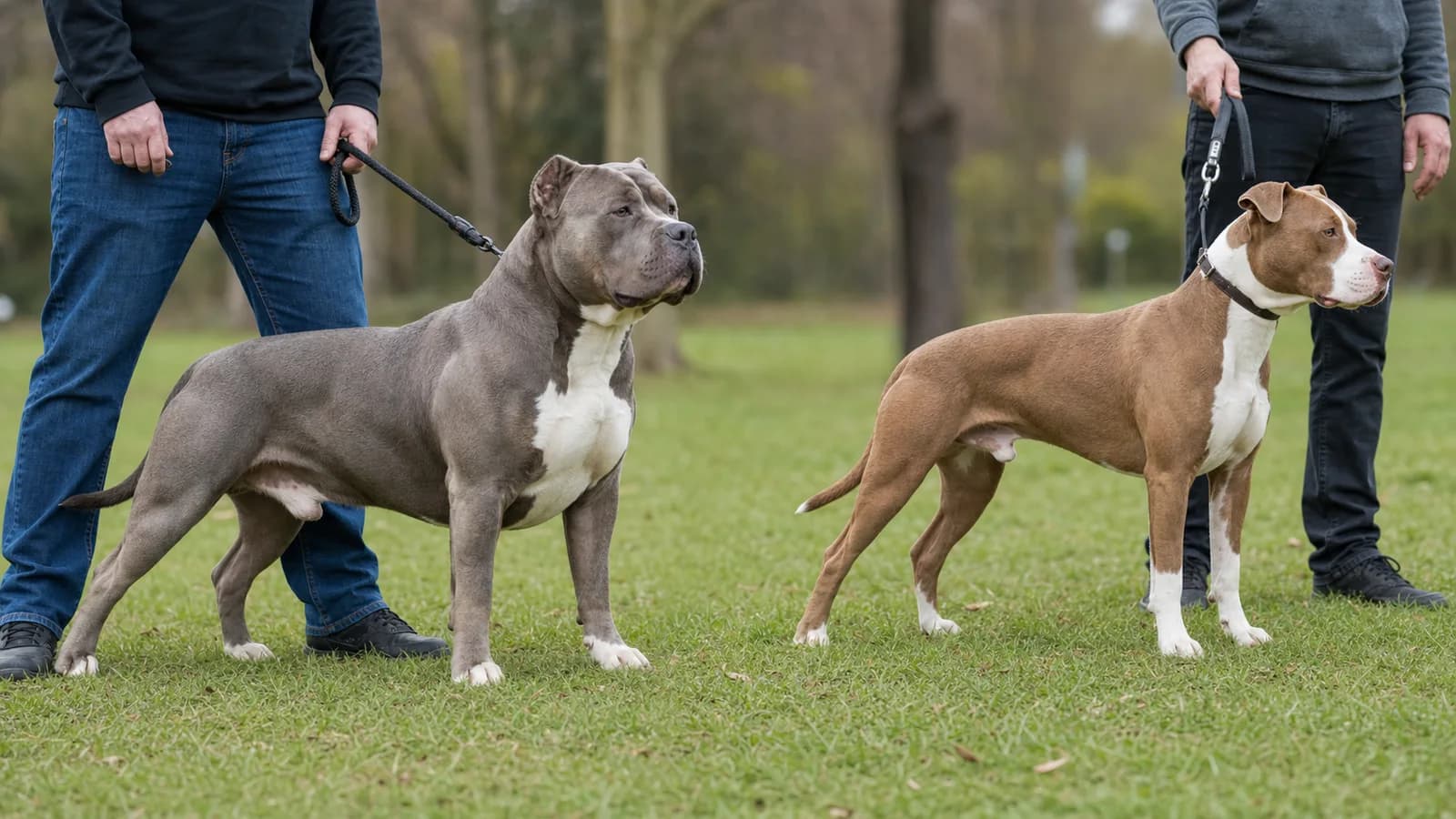
The ABKC breed standard recognizes four American Bully varieties:
- Pocket: males 14 to under 17 inches; females 13 to under 16 inches.
- Standard: males 17 to 20 inches; females 16 to 19 inches.
- Classic: the Standard height range with a lighter frame and less overall mass.
- XL: males over 20 to 23 inches; females over 19 to 22 inches.
The UKC APBT standard gives males a desirable height of 18 to 21 inches and females 17 to 20 inches, with weight proportionate to build. It explicitly warns that dogs should be powerful and athletic, never bulky or muscle-bound.
For the Husky–Pit Bull cross, our Pitsky full-grown size guide explains how to assess parent measurements and the individual dog.
Why photographs mislead
Wide-angle phone lenses enlarge the head and chest. A low camera position shortens the legs. Obesity can be mistaken for breed mass, while heavy conditioning can make an APBT look broader. Puppies and adolescents also change markedly as they mature.
Do not identify from:
- One face photograph.
- Head width alone.
- Coat color or pattern.
- Cropped or natural ears.
- A rescue listing without records.
- A seller's use of pocket, micro, exotic, or pit bull.
How to tell a Bully from a pitbull? Use appearance only as a tentative description. For a practical decision, move to records, known parents, microchip history, and a transparent ancestry estimate.
Temperament, exercise, and household fit
Neither breed comes with a guaranteed personality. Both can be strong, affectionate, trainable dogs, and both require early social learning, humane handling, secure management, and enough physical and mental activity.
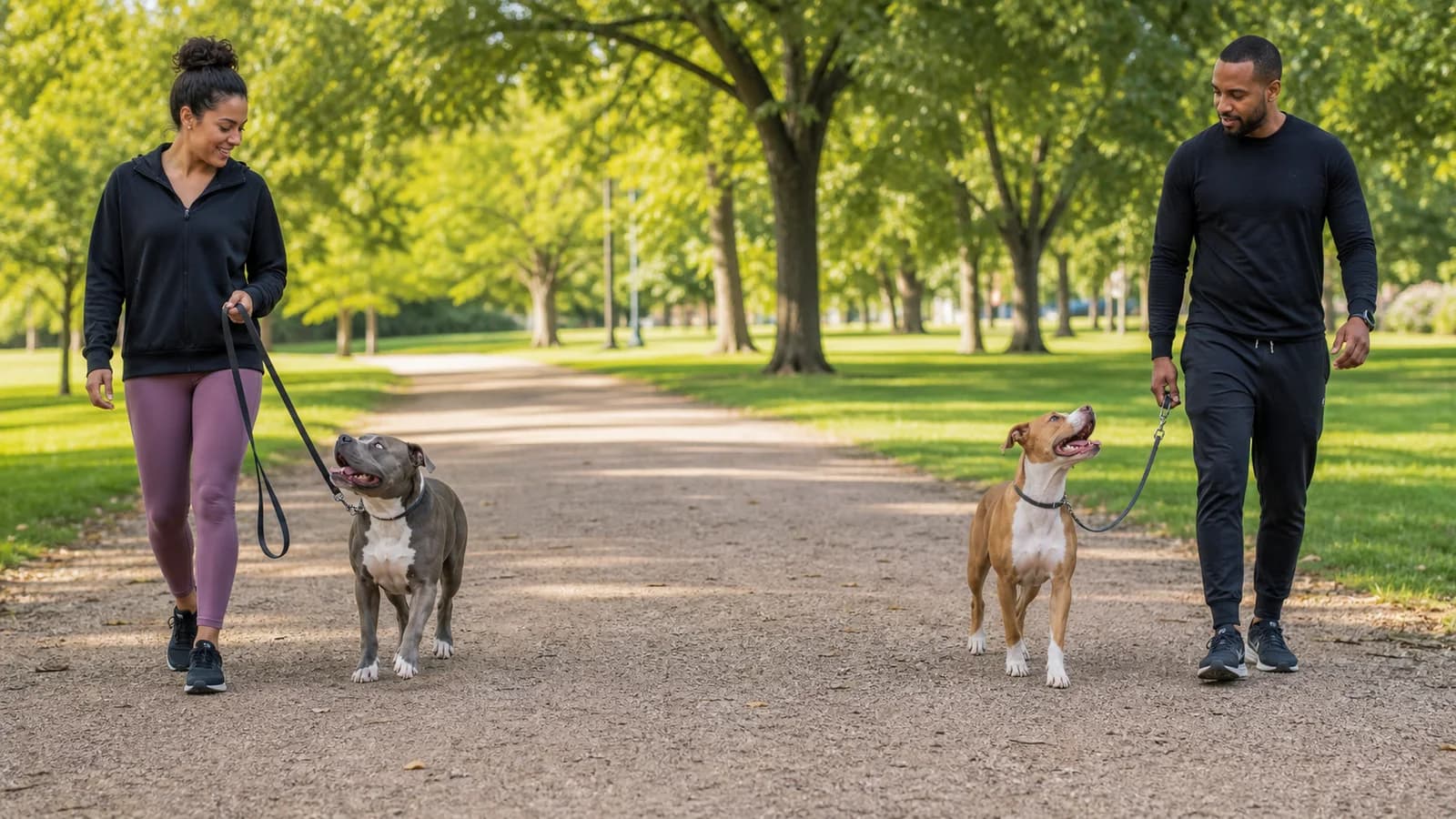
The APBT standard emphasizes confidence, enthusiasm, and athleticism. Many individuals enjoy vigorous walking, training games, tug, scent work, or dog sports. The American Bully standard emphasizes companion temperament, but size class, airway function, joints, body condition, and conditioning can produce very different exercise capacities.
Start with the dog in front of you:
- Obtain a veterinary baseline before intense exercise.
- Build duration gradually over several weeks.
- Stop for limping, distress, unusual noise, or delayed recovery.
- Avoid heat and humidity when the dog struggles to cool.
- Use reward-based training and teach an emergency turn-away.
- Manage greetings rather than forcing every dog to socialize.
A properly fitted front-clip option such as the PetSafe Easy Walk harness may help some handlers manage pulling while training. Fit must leave the shoulders free and prevent rubbing, and equipment does not replace reinforcement or physical control.

Petful may earn a commission when you click through to Chewy, at no extra cost to you.
A Frisco dual-handle traffic leash can give an adult handler a closer control point for short transitions or managed greetings. Use the close handle briefly and without jerking, and keep training focused on behavior rather than force.
Children and other animals
No breed label guarantees safe interaction. Supervise children and dogs actively, provide retreat space, and prevent climbing, hugging, food interference, or unsupervised play. Teach adults to notice stiffness, freezing, avoidance, lip licking, hard staring, and escalating arousal.
Dog-to-dog behavior varies widely. A dog that enjoys familiar housemates may still dislike unfamiliar dogs. Use controlled introductions, avoid crowded dog parks when history is uncertain, and separate animals around high-value food or chews until compatibility is well established.
Durable food-stuffable toys can support calm solo enrichment. Choose a size the dog cannot swallow, supervise the first uses, and replace damaged rubber. The large KONG Classic is one option, but powerful chewers may need a different size or material.

A durable rubber dog toy that can be stuffed with treats and selected by the manufacturer's size guide; supervise use and retire it when damaged.
Petful may earn a commission when you click through to Chewy, at no extra cost to you.
A measured FurHaven orthopedic sofa bed can provide a predictable retreat for an adult dog that prefers more support. Place it outside busy traffic, supervise dogs that chew bedding, and do not use the bed as a reason to ignore stiffness or pain.
Health and care differences
Neither breed is automatically healthier. Responsible care begins with moderate, functional structure, a lean body condition, documented family health, and early attention to symptoms. For American Bullies, extreme mass, very short muzzles, severely bowed limbs, or proportions that impair movement can increase welfare concern.
The UKC standard specifically rejects exaggerations that interfere with breathing, movement, or physical activity. Petful's American Bully lifespan and health guide covers orthopedic, airway, skin, eye, heart, and preventive-care questions.
For APBTs, athletic appearance does not remove the need for hip, skin, cardiac, eye, dental, and general veterinary care. Exercise injuries and obesity can occur in either breed. Ask a breeder or rescue for:
- Veterinary records and current medications.
- Parent health screening where known.
- Gait and exercise-recovery videos.
- History of skin, ear, digestive, eye, cardiac, or orthopedic problems.
- Behavior history across several settings.
- Current body and muscle condition.
For the larger class, our XL American Bully guide explains height, handling, movement, and legal context.
If pet insurance is part of the budget, compare policies before a diagnosis is documented. A Lemonade breed-based pet insurance quote is one sponsored starting point; read the actual exclusions, waiting periods, reimbursement terms, and limits.
How to identify an individual dog
When identity affects medical history, housing, insurance, travel, or law, use an evidence ladder. Start with the most direct records and treat appearance as the weakest layer.
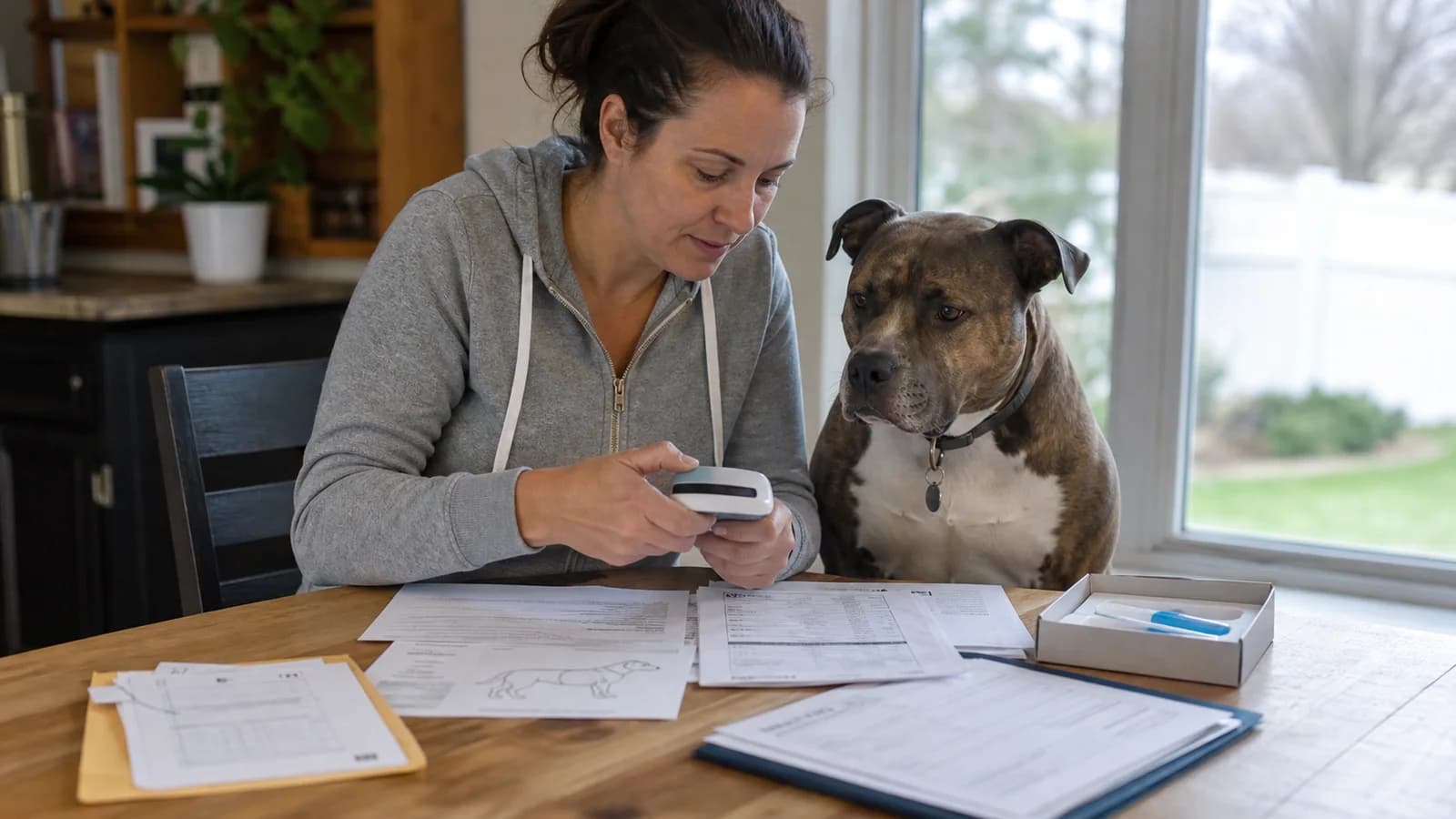
Identity decision tree
- Check the microchip and existing records. Link the dog to veterinary, breeder, rescue, import, and ownership documents.
- Review a registry pedigree. Confirm the registry, registered names, numbers, and transfer history.
- Confirm known parents. Parentage records are stronger than resemblance.
- Use DNA as an ancestry estimate. Read the company's breed database and confidence language.
- Read the governing rule. A policy or ordinance may define dogs independently of pedigree or DNA.
- Get qualified advice when consequences are serious. Use the insurer, housing provider, local authority, or lawyer rather than an online photo poll.
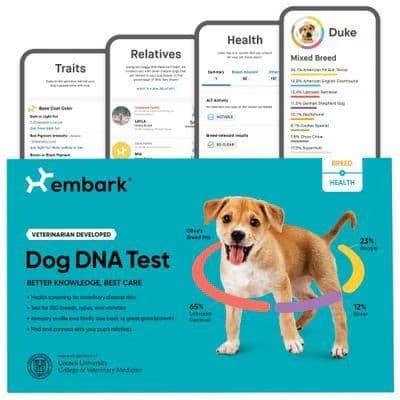
Two widely available options are the Embark Breed and Health kit and Wisdom Panel Essential. Compare their current databases and report scope before buying. Neither kit creates registry papers, guarantees behavior, diagnoses disease, or overrides a law or private policy.
- Visual labels are especially unreliable for mixed-ancestry dogs. A photograph can support a descriptive note, but it cannot establish pedigree, predict temperament, or settle a housing or legal definition. Preserve records and ask the decision-maker what evidence it accepts.
A 2015 shelter study found substantial disagreement between visual breed identification and DNA results for pit bull-type dogs. DNA has its own database and reference-population limits, but the study illustrates why certainty from appearance is misplaced.
What each kind of identity evidence can prove
A pedigree or registration certificate is the strongest ordinary evidence of registry identity when the document can be matched to the dog and issuing organization. It shows how that registry records the dog and its ancestors. It does not guarantee that every entry is error-free, predict behavior, certify health, or force a landlord, insurer, or government to accept the registry's definition.
Known parents and litter records add context, especially when the source retains microchip numbers, veterinary records, and photographs over time. A rescue or shelter may have only a transfer history and intake description. Those records can still be valuable even when they cannot establish ancestry.
DNA estimates and photographs
A DNA breed estimate compares the dog's markers with a company's reference populations. The result may support or complicate a history, but different databases and methods can produce different percentages. Treat an ancestry report as an evidence layer, not registry papers or a legal ruling.
Photographs are the weakest identity evidence when used alone. A low camera angle, excess weight, cropped ears, age, muscle condition, and the natural overlap among related dogs can make one animal resemble another. Even trained observers may disagree when records are absent. A photograph is useful for documenting the individual, not proving a precise pedigree.
The practical evidence hierarchy is:
- Match the physical dog to a microchip, tattoo, or continuous records.
- Verify registry documents directly with the issuing registry when pedigree matters.
- Add known-parent, veterinary, transfer, and shelter records.
- Use DNA estimates cautiously and read the provider's limitations.
- Describe visible structure without converting appearance into certainty.
This hierarchy also prevents a common safety error. If a dog displays guarding, fear, reactivity, predatory behavior, or handling distress, proving a breed name does not resolve the behavior. Record the triggers, distance, body language, recovery, injuries, and management conditions, then involve a veterinarian and qualified reward-based behavior professional.
Why the answer can change across systems
Breed identity and policy classification are different questions. A registry asks whether the dog meets its documentation rules. A shelter may use a visual description when ancestry is unknown. A housing or insurance policy may list several named breeds plus mixes or dogs with similar characteristics. A law may define a prohibited type through measurements or appearance instead of pedigree.
Ask the decision-maker for the exact written definition, evidence it accepts, appeal route, and deadline. Do not rely on a verbal assurance that a DNA test, registration paper, or veterinarian letter will control the result. Keep copies of communications and resolve the question before signing a lease, buying travel, or committing to a dog.
For everyday conversation, precision still helps. Say "registered American Bully" or "registered American Pit Bull Terrier" when records support it. Say "pit bull-type dog" or "bully-type dog" when using a broad appearance label. That small distinction reduces overclaiming and makes comparisons about size, care, temperament, and rules easier to evaluate.
Housing, insurance, and breed-specific laws
Policies may name American Pit Bull Terriers, pit bulls, American Bullies, Staffordshire breeds, mixes, or any dog with a certain appearance. Definitions can change by jurisdiction and contract, so registry status alone may not resolve eligibility.
Before signing a lease, policy, or travel booking:
- Request the complete written definition and exclusions.
- Ask whether mixed ancestry, appearance, registry, or DNA is used.
- Get any approval in writing.
- Keep license, microchip, veterinary, training, and insurance records together.
- Verify local rules with the responsible government office.
- Seek legal advice when housing, seizure, or liability consequences are possible.
Do not conceal a dog's identity or submit altered records. If a policy is ambiguous, ask for a written interpretation before money or housing depends on it.
Breed-specific legislation is not behavior assessment
Breed-specific legislation applies a category rule rather than evaluating each dog solely on behavior. The AVSAB position statement explains why breed is a poor stand-alone proxy for aggression risk and supports dangerous-dog policies focused on owner conduct and individual behavior.
Regardless of local labels, owners reduce risk through:
- Secure fencing and leashes.
- Supervision and safe separation.
- Reward-based training.
- Prompt attention to pain or behavior change.
- Prevention of roaming and unplanned breeding.
- Honest disclosure to housing and insurance decision-makers.
American Bully vs. pit bull FAQs
It is not the same registered breed as the American Pit Bull Terrier. However, some people, housing policies, insurers, shelters, and laws use pit bull as an umbrella label that may include American Bullies. Ask whether the question concerns registry identity, ancestry, appearance, or a written rule.
UKC describes the breed as a natural extension of the American Pit Bull Terrier influenced by the American Pit Bull Terrier, American Bulldog, English Bulldog, and Olde English Bulldogge. It is not one fixed two-breed cross. Modern registered American Bullies come from established lines selected to the breed standard.
It depends on the American Bully class and what pit bull means. Pocket Bullies are shorter, Standard and Classic Bullies overlap APBT height, and XL Bullies are taller. American Bullies generally carry more width and bone, while the registered APBT standard favors a leaner athletic build.
You can notice tendencies, but appearance alone cannot reliably prove ancestry. American Bullies are often broader and heavier-boned, while APBTs are usually leaner and more athletic. Mixed ancestry, conditioning, age, camera angle, and class variation create overlap. Use pedigree, parentage, records, and transparent DNA estimates when identity matters.
No reliable evidence supports a simple breed-wide ranking. Pit bull may cover several breeds and mixes, and behavior varies within every group. Assess the individual dog's history, context, health, social experience, handling, and observed responses. Breed standards describe ideals but do not guarantee behavior.
The AKC recognizes neither the American Bully nor the American Pit Bull Terrier as an AKC breed. The UKC recognizes both as separate breeds. The AKC does recognize related but distinct breeds such as the American Staffordshire Terrier and Staffordshire Bull Terrier.
A DNA test may estimate American Bully or related ancestry depending on its reference database, but results are not registry papers and can differ among companies. Use the report as one evidence layer alongside known parents, microchip history, veterinary records, and pedigree. It may not override a housing policy or legal definition.
Sometimes, but not always. A rule may name American Bullies separately, include them under a pit bull umbrella, rely on appearance, or use another definition. Request the exact written policy and accepted evidence before signing or paying. Registry status or DNA does not automatically control a private contract or ordinance.
Bottom line
The registered American Bully and registered American Pit Bull Terrier are related but distinct breeds. American Bullies generally have more width, bone, and class variation, while APBTs are standardized as leaner athletic dogs. Those differences help describe breed ideals, not prove one dog's ancestry or predict its temperament.
When "pit bull" is used as an umbrella label, the answer changes. Use records, pedigree, known parents, a cautious DNA estimate, and the exact written policy or law. For everyday ownership, judge the individual dog's health, behavior, training needs, and household fit.

Coreen Saito is a pet writer and longtime shelter volunteer with more than a decade in animal rescue. She covers cat behavior, breed care, and the small, ordinary science of sharing a life with companion animals, with a particular focus on honest takes about the products and decisions that actually matter. At home in Arizona, she's outranked by Mac (a dog with the loudest opinion in the house), Rebel (a cat who governs by quiet authority), and Meri (an orange tabby who runs the late shift and the laundry basket). She writes about all three, plus the rescues that keep coming through her life, at LifeWithMinty.com.
Sign up for expert-backed reviews and safety alerts all in one place.