American Bully: Temperament, Size, Care, and Breed Guide
The American Bully is a modern companion breed with several recognized size varieties. Learn what responsible ownership involves, from temperament and training to health and daily care.
Petful is reader supported. As an affiliate of platforms like Amazon and Chewy, we may earn a commission when you buy through links on this page. There is no extra cost to you.
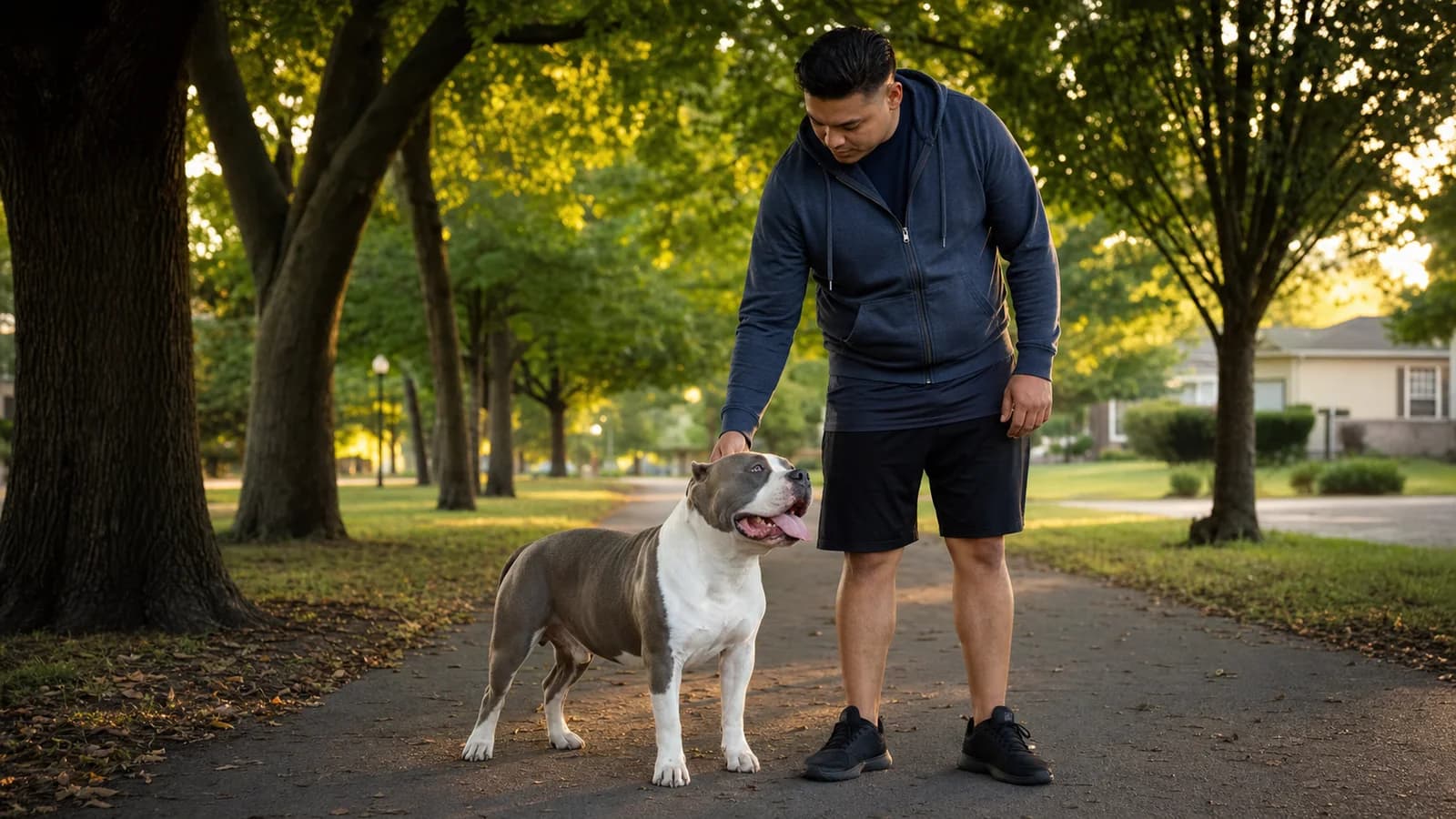
The American Bully is a modern companion breed known for a muscular build, confident presence, and strong attachment to people. It can be a rewarding family dog when the household is ready for its physical strength, training needs, housing restrictions, health care, and daily companionship. It is not a guaranteed guard dog, a guaranteed gentle dog, or simply another name for every pit bull-type dog.
This guide covers the broad breed decision: identity, temperament, official size varieties, exercise, training, grooming, health, and legal planning. For narrower questions, follow Petful's dedicated guides to the Pocket American Bully, Micro American Bully, American Bully puppies, XL American Bully, American Bully price, lifespan and health, American Bully vs. pit bull, and food selection for American Bullies.

Sign up for expert-backed reviews and safety alerts all in one place.
American Bully at a glance
- 1The American Bully is a companion breed recognized by the United Kennel Club and American Bully Kennel Club.
- 2UKC groups Pocket, Standard/Classic, and XL size or style divisions; ABKC lists Pocket, Standard, Classic, and XL varieties.
- 3A breed standard describes an ideal, not a promise about an individual dog's temperament or health.
- 4Before bringing one home, check housing and insurance rules, evaluate comfortable breathing and movement, and plan for reward-based training.
The United Kennel Club American Bully standard says UKC recognized the breed in 2013. The American Bully Kennel Club, or ABKC, also publishes an official breed standard. Both organizations frame the American Bully as one breed with size or style divisions, not as four unrelated breeds.
Is an American Bully a safe dog? No breed label can answer that by itself. The standard calls for a companion temperament, but behavior depends on genetics, early experience, learning history, health, supervision, and the situation. The CDC notes that any dog can bite, especially when scared, nervous, eating, guarding something, or protecting puppies. Safe ownership means choosing carefully, socializing thoughtfully, supervising children, reading body language, and preventing situations the dog cannot handle.
Is an American Bully a pit bull? The precise answer depends on what the speaker means. American Bully is a recognized breed name under UKC and ABKC. "Pit bull" may refer specifically to the American Pit Bull Terrier, or it may be used as a broad visual or legal label for several muscular dogs. That distinction matters because a registry identity, a shelter description, a landlord's policy, and a law may use different definitions.
Are bullies as aggressive as pitbulls?
Searchers also ask whether American Bullies or pit bulls are more aggressive. There is no defensible breed-label answer: broad labels, different populations, and different definitions make a simple ranking misleading, while genetics, health, learning, management, and context shape the behavior of an individual dog. For the same reason, a list of the "top three aggressive dogs" is not a responsible safety tool.
Restrictions and household fit
Is an American Bully restricted? There is no single U.S. federal rule that universally bans the breed, but a city, county, housing provider, insurer, or other private organization may use its own breed or visual definition. Check every rule that applies to the exact address and dog before committing.
Which is better, a pit bull or an American Bully? Neither label is automatically better. The right match is the individual dog whose size, energy, behavior, health, legal status, and care needs fit the household.
Quick breed facts
- Breed purpose: Companion dog.
- Registry divisions: UKC groups Pocket, Standard/Classic, and XL size or style divisions; ABKC lists Pocket, Standard, Classic, and XL varieties.
- Coat: Short, close, and generally straightforward to maintain.
- Activity: Moderate daily exercise plus training and enrichment, adjusted for the individual.
- Best fit: Owners prepared for a powerful dog, consistent training, routine veterinary care, and possible housing restrictions.
- Poor fit: A household choosing mainly for an exaggerated body, expecting effortless behavior, or unable to manage strength and local rules.

Petful may earn a commission when you click through to Lemonade, at no extra cost to you.
American Bully history and identity
The breed was developed in the United States as a companion dog using established bull-breed lines. Its family resemblance to the American Pit Bull Terrier and American Staffordshire Terrier helps explain common confusion, but resemblance does not erase the American Bully's separate identity in registries that recognize it.
A pedigree can document the registered family line. It cannot guarantee health, behavior, adult dimensions, or legal treatment. A DNA panel may add information about ancestry and screened variants. The Embark Breed & Health Dog DNA Test is one available sponsored option, but a result is not a breed-registration certificate, a complete health clearance, or a substitute for a veterinary examination.
The distinction is practical. If you need to satisfy a landlord, insurer, airline, municipality, or registry, ask which definition and documentation that organization accepts. Do not assume that an app, seller's label, visual guess, or DNA percentage automatically controls the decision.
American Bully size varieties
The American Bully has no single official height because its standards divide adults by variety and sex. Height is measured at the withers, the highest point of the shoulder blades, while the dog stands naturally on level ground. The standards emphasize balance and function, not weight targets or maximum bulk.
| Variety | Mature male height at withers | Mature female height at withers | How to understand it |
|---|---|---|---|
| 14 inches to under 17 inches | 13 inches to under 16 inches | Shorter height while retaining the same basic breed type | |
| Standard | 17 to 20 inches | 16 to 19 inches | The central height range and substantial breed type |
| Classic | 17 to 20 inches | 16 to 19 inches | Standard height with a lighter frame and less overall mass |
| XL | Over 20 to 23 inches | Over 19 to 22 inches | Taller range, with adult classification determined after maturity |

These ranges come from the cited UKC and ABKC standards. Neither gives one universal adult weight for each variety. Two dogs at the same height can differ substantially in bone, muscle, sex, conditioning, and body fat. A seller's promised weight is therefore less useful than adult height, family records, body condition, and comfortable function.
Pocket, Standard, Classic, and XL
The Pocket American Bully is the shorter recognized variety, not a toy breed. Standard and Classic occupy the same height ranges, while Classic should have a comparatively lighter frame. The XL American Bully guide explains the taller official range and the extra management and legal questions that can come with a larger, stronger dog.
"Micro" is not a UKC or ABKC size variety. It is a marketing label without one official measurement. If that term appears in a listing, do not infer a guaranteed adult size or registry status. Read the veterinarian-authored Micro American Bully welfare guide before rewarding selection for extreme compactness.
Weight and body condition
There is no benefit to making an American Bully as heavy as possible. Excess fat increases the load on joints, makes heat management harder, and can hide a loss of fitness. Ask your veterinarian to show you how to assess ribs, waist, abdominal tuck, gait, and muscle condition on the individual dog.
Judge a growing puppy over time rather than forcing rapid weight gain. Steady development on a complete growth diet is safer than supplementing for bulk. The dedicated American Bully puppies guide covers growth, socialization, records, and responsible-source questions.
American Bully temperament and daily life
The desired American Bully temperament is stable, social, and companionable. Many individuals are affectionate, playful, eager to engage, and physically close with their families. Those tendencies are reasons people love the breed, but they are not a temperament warranty.
Aggression comparisons between American Bullies and pit bulls are not meaningful without defining the dogs, the behavior, the population, and the context. A ranking based on breed labels cannot predict whether one dog will bite. Evaluate the individual dog's response to handling, novelty, frustration, visitors, other animals, and recovery after excitement.
Look for relaxed, flexible behavior rather than forced stillness. A comfortable dog can move away, take food gently, disengage from a trigger, and recover after surprise. Stiff posture, freezing, hard staring, lip lifting, repeated escape attempts, and escalating arousal are information. Punishing warnings may suppress communication without changing the emotion underneath.
Children and family fit
An American Bully can live successfully with respectful children when adults supervise and the dog has a safe place to rest. Strength matters even in friendly play. A large head, heavy shoulder, or fast turn can knock down a child without aggressive intent.
Teach children not to climb on the dog, grab skin, approach while it is eating, take toys, interrupt sleep, or corner it. Adults should manage gates, food, chews, visitors, and high-energy play. The dog should always have an exit from interaction.
Other dogs and animals
Compatibility varies widely. Early socialization can build useful skills, but it does not guarantee lifelong sociability with every dog. Use neutral introductions, parallel walking, separate feeding, and close observation. Do not use a crowded dog park as a temperament test.
Small pets may require permanent separation depending on the individual dog's prey interest. Cats and dogs can coexist, but controlled introductions and protected resources matter. A breeder's or rescue's observations are helpful only when paired with your own careful transition plan.
Exercise and enrichment
Most healthy adults need daily movement, sniffing, training, play, and time with their people. The amount should be individualized for age, body condition, weather, airway function, joints, and recovery. A compact muscular dog may look athletic while still struggling in heat or after sustained exertion.
Useful activities include:
- Two or more moderate walks at cooler times of day.
- Sniffing and exploration at the dog's pace.
- Short reward-based training sessions.
- Food puzzles and supervised chewing.
- Controlled tug, retrieve, and search games.
- Low-impact conditioning recommended by a veterinarian or qualified canine fitness professional.
A durable food-stuffable toy such as the sponsored large KONG Classic can slow part of a meal and support calm enrichment. Choose a size the dog cannot swallow, supervise early use, inspect it often, and remove damaged toys. No toy replaces walking, training, or human contact.
Avoid forced roadwork, heavy pulling, weighted equipment, repeated high jumps, or exercise intended mainly to create more mass. Puppies need age-appropriate movement, not adult conditioning. Stop activity for unusual slowing, weakness, repeated sitting, lameness, excessive noise while breathing, or failure to recover promptly.

Petful may earn a commission when you click through to Chewy, at no extra cost to you.
Training and socialization
Start with leash skills, recall, leave it, drop, mat settling, polite greetings, cooperative handling, and comfortable alone time. Reward the behavior you want and arrange the environment so the dog does not repeatedly practice pulling, door rushing, or chaotic greetings.

Because the breed can be strong, equipment fit and handler technique matter. A front-clip harness such as the sponsored PetSafe Easy Walk Dog Harness may help some owners manage pulling while training proceeds. Measure the chest, follow the maker's fit directions, check for rubbing, and remember that equipment does not teach loose-leash behavior by itself.
Socialization is not forced exposure
Good socialization pairs manageable experiences with safety and choice. It may include different surfaces, sounds, people, calm dogs, veterinary handling, vehicle rides, and quiet observation from a comfortable distance. Flooding a worried puppy with strangers can create fear rather than confidence.
Let the dog opt out. Reward checking in with the handler and calm recovery. If fear, guarding, reactivity, or handling distress is already present, consult a credentialed reward-based professional and a veterinarian to rule out pain or illness.
Maturity changes the picture
Adolescence can bring more strength, persistence, environmental interest, and selective dog tolerance. Continue management after puppy class ends. Revisit recall, leash skills, door manners, visitor routines, and cooperative care in progressively realistic settings.
Neutering or spaying is not a universal behavior cure. Discuss timing and health considerations with the dog's veterinarian. Training, prevention, and addressing the function of a behavior remain necessary.
Grooming and American Bully colors
The short coat usually needs weekly brushing with a soft rubber tool or grooming mitt. A Four Paws Magic Coat grooming glove is one sponsored option for routine loose-hair removal. Bathe when dirty with a dog-safe product, dry skin folds and spaces between toes, keep nails short, inspect ears, and brush teeth.
Increased odor, redness, hair loss, greasy skin, recurrent ear debris, or persistent licking deserves veterinary assessment rather than repeated product changes.
- Use products for measured feeding, safe handling, enrichment, grooming, and comfortable rest. New breathing noise, lameness, skin disease, or pain needs veterinary assessment rather than another product.
For routine brushing when the mouth is comfortable, Virbac C.E.T. Enzymatic Toothpaste can be paired with a dog toothbrush. Stop and arrange an examination if brushing is painful or the mouth bleeds.
American Bully colors and patterns vary. Color should never outrank health, temperament, movement, breathing, or responsible breeding. Claims that a rare color improves quality, makes a dog healthier, or justifies ignoring health records are sales language, not evidence.
Registry color rules
Registry rules differ materially: the current UKC standard disqualifies merle, while the ABKC public standard permits all colors and patterns. That is a registry distinction, not evidence that any color predicts health or quality.
Check skin where friction and moisture collect, including under the collar or harness, armpits, groin, facial folds if present, and between toes. A coat can look glossy while allergy, infection, or pain develops underneath.
Choosing food
The best dog food depends on life stage, body condition, activity, health, calorie needs, and veterinary advice. Choose a complete and balanced diet labeled for the appropriate life stage. Measure portions, count treats, and adjust using body-condition trends rather than an advertised breed weight.
Puppies expected to become large adults may need a growth diet formulated for large-size dogs. Adults selected for a bulky look are especially vulnerable to overfeeding because extra fat can be mistaken for substance. Petful's veterinarian-authored guide to the best dog food for American Bullies explains how to compare formulas without relying on muscle-building claims.
Sudden diet changes can upset digestion. Transition gradually unless a veterinarian instructs otherwise, and seek care for repeated vomiting, persistent diarrhea, abdominal swelling, weakness, pain, or refusal to eat.

A durable rubber dog toy that can be stuffed with treats and selected by the manufacturer's size guide; supervise use and retire it when damaged.
Petful may earn a commission when you click through to Chewy, at no extra cost to you.
American Bully lifespan and health
No single lifespan number applies to every American Bully, and data may mix varieties, registries, and loosely applied labels. Health depends on inherited risk, body shape, source, preventive care, environment, and chance. The American Bully lifespan and health guide examines the evidence and its limits in detail.
Owners and prospective buyers should pay attention to:
- Comfortable breathing at rest and during ordinary activity.
- Free, balanced movement without persistent lameness or unusual rolling.
- Healthy skin, ears, feet, and coat.
- Eyes that are protected, comfortable, and free of chronic irritation.
- A functional bite and manageable dental crowding.
- Healthy body condition without deliberate over-bulking.
- Reproductive history and any need for assisted mating or delivery.
- Documented health screening relevant to the family line.

Petful may earn a commission when you click through to Chewy, at no extra cost to you.
The Orthopedic Foundation for Animals disease resources explain screening programs and searchable records. A seller saying "vet checked" is not the same as showing named test results for the parents. Ask what was tested, by whom, at what age, what the result was, and whether the result can be independently verified.
When to call a veterinarian
Urgent signs include struggling to breathe, blue or gray gums, collapse, severe heat distress, repeated unproductive retching with abdominal swelling, inability to use a limb, sudden severe pain, or an eye that is painful or protruding. Call ahead to an emergency clinic while arranging transport.
Routine appointments still matter. Weight gain, noisy sleep, declining stamina, recurrent skin trouble, reluctance on stairs, or changed behavior may develop gradually. Baseline videos of normal walking and breathing can make change easier to describe.
Comparing insurance before disease is documented may be useful because policies differ in waiting periods, exclusions, limits, and reimbursement. The sponsored Lemonade pet insurance information page is one starting point, not a recommendation for every household. Read the actual policy and compare it with a dedicated emergency fund.
American Bully price and responsible sourcing
Purchase price changes with region, age, source, registry paperwork, demand, and marketing. A high price does not prove ethical breeding, and a low price does not reveal the total cost of care. The American Bully price guide separates acquisition price from health screening, equipment, food, training, housing, insurance, and emergency planning.
A responsible source should:
- Let you see where dogs are raised and meet the dam when appropriate.
- Provide veterinary records and independently verifiable parent health results.
- Explain temperament, socialization, adult size uncertainty, and return terms.
- Ask detailed questions about your home and experience.
- Avoid guaranteed size, color, muscle, temperament, or health claims.
- Prioritize comfortable breathing, normal movement, and stable behavior over exaggeration.
- Remain available if placement fails.
Walk away from pressure to send unprotected payment, meet in a parking lot, buy immediately, or pay extra for an allegedly health-enhancing color. Rescue and foster organizations can also be good sources when they are transparent about known behavior, health, and support.
American Bully vs. pit bull
American Bully and American Pit Bull Terrier are not interchangeable registry terms. They may share ancestry and visible traits, and "pit bull" may be used as an umbrella label in public conversation. For an owner, the correct answer depends on whether the question concerns pedigree, identification, behavior, housing, insurance, or law.
Neither breed is universally "better" or "more aggressive." Compare the individual dog's needs and behavior with the household's capacity. The dedicated American Bully vs. pit bull guide explains the identity and fit differences without turning appearance into a behavior forecast.
Legal, housing, and insurance checks
Breed-specific legislation, leases, homeowners associations, insurers, boarding facilities, and travel providers can all use different wording. A policy may name American Bullies, pit bull-type dogs, mixes, or dogs that meet a visual definition. Rules also change.
Check before acquiring or moving with the dog:
- City, county, state, provincial, and national rules.
- Lease, landlord, and homeowners association terms.
- Home or renter insurance exclusions.
- Boarding, day-care, airline, and destination rules.
- Requirements for licensing, microchipping, muzzling, neutering, or liability coverage.
The UK example shows why precision matters. Government guidance covers the ban on XL Bully dogs in England and Wales and links to an official physical definition. It is type-specific and jurisdiction-specific. A Pocket label or registry paper is not a universal legal exemption, and those rules should not be generalized to the United States.
Is an American Bully right for you?

- Confirm housing and insurance permission in writing. Make sure an adult can physically handle the dog. Budget for training, preventive care, emergency treatment, and possible skin or orthopedic needs. Choose free breathing and movement over extreme bulk. Arrange supervision around children and animals. If any of these pieces is missing, pause the decision.
An American Bully is often a good fit when the household wants a close companion, enjoys structured training, can provide moderate daily activity, and accepts management of a visibly powerful dog. A yard is optional. Time, skill, legal certainty, financial capacity, and safe handling are not.
Think twice if appearance is the main reason for choosing the breed, if the dog will routinely be alone all day, if no adult can manage pulling, or if housing permission is uncertain. Also reconsider any seller who makes discomfort look desirable or treats veterinary intervention as proof of prestige.
A realistic weekday
A workable routine includes an early bathroom break and walk, breakfast used partly for training or enrichment, safe rest, midday care when the day is long, another walk and interaction after work, grooming or body checks, and a quiet settling period. Puppies need substantially more supervision and bathroom access.
Plan support before a crisis. Identify a reward-based trainer, primary veterinarian, emergency clinic, reliable sitter, and a person who can handle the dog if the owner is ill. Keep the microchip, vaccine history, medication list, insurance details, and recent photographs together.
The decision in one sentence
Choose an American Bully for a compatible individual dog and the relationship you can build, not for maximum mass, guaranteed temperament, a rare color, or a label that you hope will bypass a rule.
American Bully FAQs
No, not as a precise breed identity. UKC and ABKC recognize the American Bully as a breed, while American Pit Bull Terrier is a separate registry name. However, "pit bull" is also used informally or legally for multiple muscular dog types, so a landlord, insurer, shelter, or law may apply it differently.
A breed label cannot predict aggression in an individual. The official standards call for a companion temperament, but genetics, health, learning, socialization, management, and context all affect behavior. Evaluate the individual dog and supervise responsibly.
Many are affectionate family companions, but success requires adult supervision around children, reward-based training, safe handling of a strong dog, and respect for the dog's rest and resources. No dog should be expected to tolerate climbing, grabbing, or unsupervised child interaction.
Size depends on variety and sex. Pocket adults are shorter, Standard and Classic share central height ranges, and XL adults are taller. The cited UKC and ABKC standards classify by mature height at the withers rather than one guaranteed weight.
The American Bully is recognized by UKC and ABKC. It is not currently listed as an AKC-recognized breed. Registry recognition should not be confused with a health guarantee, legal classification, or prediction of an individual dog's behavior.
The short coat sheds, usually at a manageable level with weekly brushing. Shedding can increase seasonally. Sudden thinning, bald patches, odor, itching, redness, or recurrent ear trouble needs veterinary attention rather than more brushing alone.
Most healthy adults need moderate daily walks, sniffing, play, training, and enrichment. Adjust for age, fitness, weather, joints, and breathing. Stop for distress or poor recovery, and avoid conditioning designed mainly to add bulk.
Yes, some can if the lease and insurance permit the dog and the owner provides reliable bathroom breaks, daily activity, training, and noise management. Square footage matters less than routine, legal certainty, handling capacity, and sufficient human contact.

Coreen Saito is a pet writer and longtime shelter volunteer with more than a decade in animal rescue. She covers cat behavior, breed care, and the small, ordinary science of sharing a life with companion animals, with a particular focus on honest takes about the products and decisions that actually matter. At home in Arizona, she's outranked by Mac (a dog with the loudest opinion in the house), Rebel (a cat who governs by quiet authority), and Meri (an orange tabby who runs the late shift and the laundry basket). She writes about all three, plus the rescues that keep coming through her life, at LifeWithMinty.com.
Sign up for expert-backed reviews and safety alerts all in one place.