Pocket American Bully: Size, Temperament, and Care
Pocket American Bullies share the breed type of the Standard variety in a shorter height range. Learn what the label means and how to evaluate health, fit, and care.
Petful is reader supported. As an affiliate of platforms like Amazon and Chewy, we may earn a commission when you buy through links on this page. There is no extra cost to you.
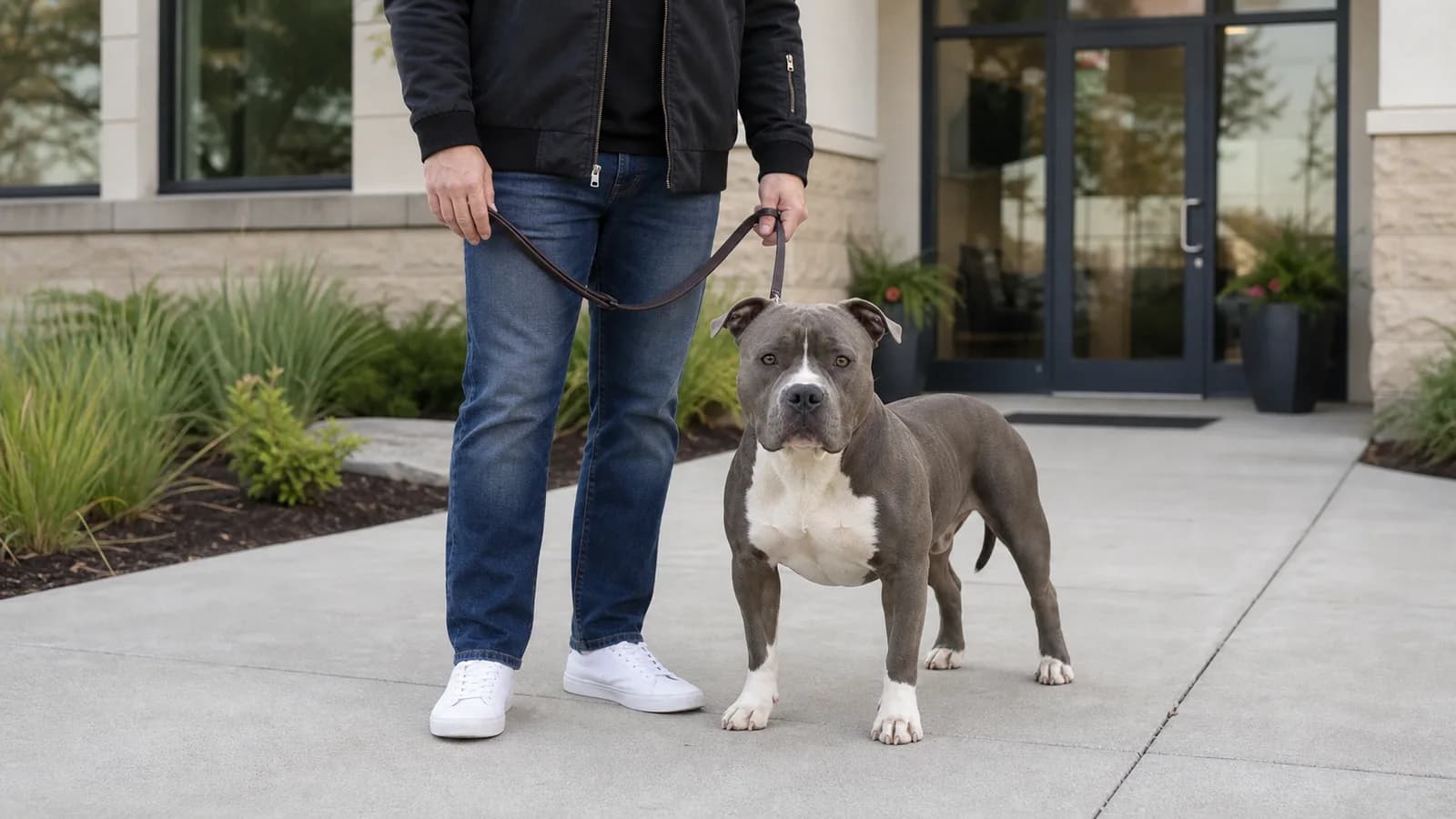
A Pocket American Bully is the official shorter type of the American Bully, not a toy dog, separate miniature breed, or guaranteed lightweight companion. Mature males measure 14 inches to under 17 inches at the withers, and mature females measure 13 inches to under 16 inches under the United Kennel Club and American Bully Kennel Club standards. The dog should retain functional American Bully type at that shorter height.
For an owner, height is only the beginning. A Pocket Bully is compact but can be broad, muscular, and physically strong. Good decisions depend on comfortable breathing and movement, body condition, temperament, training, documented health screening, housing rules, and the household's ability to provide daily care.

Sign up for expert-backed reviews and safety alerts all in one place.
What is a Pocket American Bully?
- 1ABKC lists Pocket as an official American Bully variety, while UKC treats Pocket as a size or style division determined by mature height at the withers.
- 2Males are 14 inches to under 17 inches; females are 13 inches to under 16 inches.
- 3Pocket dogs should retain the same basic breed type as Standard American Bullies, not achieve shortness through exaggerated dwarf-like proportions.
- 4There is no official universal Pocket Bully weight, and "Micro" is not the next recognized size below Pocket.
The UKC American Bully standard places Pocket within its size or style groupings, while the ABKC breed standard lists Pocket as a variety. Both describe one American Bully breed with height divisions. Neither defines the Pocket as a cross with a Patterdale Terrier, a toy version, or a different breed.
Are Pocket Bullies aggressive?
Are Pocket Bullies aggressive? The label cannot predict an individual dog's behavior. Genetics, health, socialization, learning, supervision, and context matter more than the height division.
How much does a Pocket Bully cost?
How much does a Pocket Bully cost or what is one "worth"? There is no dependable universal number. Region, age, source, records, support, and marketing change asking prices, while a high price does not prove health or temperament. Petful's American Bully price guide explains how to compare current offers.
Is a Pocket American Bully a pit bull?
Is a Pocket American Bully a pit bull? American Bully is a recognized breed identity, while "pit bull" may mean the American Pit Bull Terrier or a broader visual or legal category. The answer can therefore differ for a registry, landlord, insurer, or law. Petful’s guide to blue nose pitbulls covers the coat genetics, health, and price.
Do Pocket Bullies bark a lot?
Do Pocket Bullies bark a lot? The size label does not establish a barking rate. Some alert to visitors or excitement, while others are quiet; reinforcement history, unmet needs, anxiety, environment, and the individual dog are more useful predictors.
Family fit and lifespan
Is a Pocket Bully a good dog, and how long does one live? Many can be affectionate companions in a prepared home, but strength, health, training, supervision, and housing fit still matter. No strong evidence supports one guaranteed Pocket-specific lifespan, so treat seller ranges as estimates and evaluate the actual dog and family records.
That corrects a common search-result problem. Sales pages and social posts often mix Pocket, Micro, Exotic, "mini," and crossbreed claims as though they were official synonyms. They are not. A registered Pocket American Bully should be classified by mature standing height and breed type, while a seller's creative label may have no agreed definition at all.
Read Petful's complete American Bully breed guide for the breed's broader temperament, history, Standard, Classic, and XL varieties, legal planning, and family fit.
Pocket does not mean pocket-sized
The name describes height relative to the Standard variety. It does not mean a dog can be carried in a pocket, will remain puppy-sized, or will be easy for every adult to restrain. A short, heavily built dog can place considerable force through a leash and may be awkward to lift safely.
Before bringing one home, handle a healthy adult rather than judging from puppy photographs. Practice walking, entering a car, standing for an examination, and settling indoors. Ask whether every adult in the home can manage the dog without relying on pain, intimidation, or strength contests.

Petful may earn a commission when you click through to Chewy, at no extra cost to you.
Pocket Bully height and weight
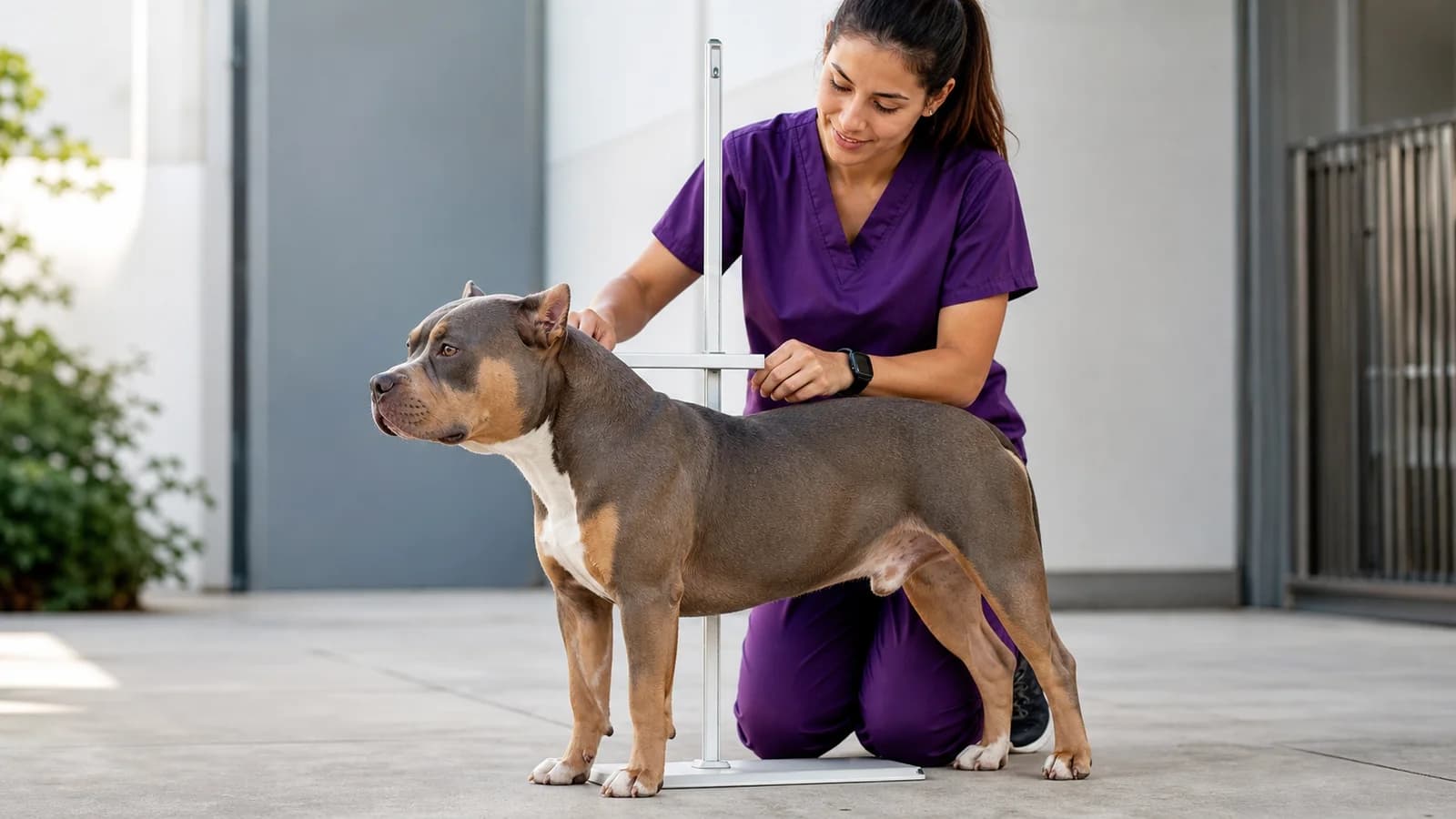
Height is measured at the withers, the highest point of the shoulder blades. The dog should stand squarely on a firm, level surface with the head in a natural position. Measure vertically from the floor to the top of the withers, not along the neck, head, or curved back.
| Label | Mature male height | Mature female height | What the label means |
|---|---|---|---|
| Pocket American Bully | 14 inches to under 17 inches | 13 inches to under 16 inches | An ABKC variety and UKC size or style division classified by height at the withers |
| Standard American Bully | 17 to 20 inches | 16 to 19 inches | The central recognized height range with the breed's substantial build |
| Micro Bully | No official range | No official range | A marketing label absent from the cited UKC and ABKC classifications |
How to measure at the withers
- Wait until the dog is mature if the question is official variety classification.
- Use a nonslip, level floor.
- Let the dog stand naturally, with weight distributed across all four feet.
- Locate the top of the shoulder blades rather than the neck.
- Use a rigid measuring stick or level across the withers and measure straight down.
- Repeat on another day if posture or handling affected the reading.
Puppy height cannot guarantee adult classification. Growth rate, parents, sex, nutrition, health, and ordinary genetic variation all matter. A seller promising that a young puppy will finish at an exact height is offering more certainty than biology supports.
How much does a Pocket Bully weigh?
There is no single official Pocket American Bully weight in the cited standards. Online ranges are often based on anecdotes, sales listings, or mixtures of differently built dogs. Height defines the variety; weight reflects height plus bone, muscle, body fat, sex, and individual build.
This is why body condition is more useful than a target number. You should be able to assess the ribs under a light tissue covering, see a waist from above, and notice an abdominal tuck from the side, while accounting for the dog's naturally broad chest. Ask your veterinarian to demonstrate on the actual dog.
Do not deliberately overfeed to create a heavier appearance. Added fat increases joint loading and heat burden without improving breed quality. Supplements cannot safely override genetics, and a complete diet should not need random additions for "mass."
Pocket Bully appearance and colors
A Pocket American Bully should look compact, muscular, and balanced, with enough leg and angulation to move freely. A broad head and chest do not excuse pinched nostrils, a severely shortened muzzle, bowed limbs, feet that turn dramatically, a swaying gait, or proportions that interfere with ordinary life.
Coat colors and patterns vary. Color does not determine variety, adult size, temperament, or health. "Rare" colors are not a reason to accept missing health records or poor structure, and no coat color makes a dog more muscular or better suited to a family.
The easiest comparison is function. Can the dog walk, trot, turn, lie down, rise, play, and breathe quietly? Can the skin stay clean and dry? Can the eyes close and remain protected? Can the mouth accommodate the teeth? A healthy outline serves the dog rather than a trend.
Pocket Bully temperament and daily care
Pocket Bullies share the American Bully's intended companion temperament. Many are affectionate, confident, playful, people-focused, and eager to participate in family routines. Those are tendencies, not promises. An individual dog's genetics, pain, health, early socialization, learning, and environment all affect behavior.
Are Pocket Bullies aggressive? No honest answer can classify every dog by variety. The CDC explains that any dog can bite. Evaluate the individual around handling, food, visitors, other animals, frustration, and recovery after excitement. A shorter dog is not automatically safer, calmer, or easier to manage.
Family life and children
A well-matched Pocket Bully can be a loving family dog. Adult supervision is still essential. Compact dogs can be powerful, and enthusiastic play may knock over a child even without aggression.
Teach children not to sit on the dog, hug tightly, take food or toys, disturb sleep, or block an exit. Give the dog a protected rest area. Adults should manage gates, greetings, chews, and high-arousal play rather than asking children to enforce rules.
Other dogs and pets
Dog sociability varies. Use gradual introductions, parallel walks, separate meals, and realistic management. Puppy playfulness does not guarantee that an adult will enjoy every dog. Crowded dog parks can overwhelm even a social individual.
Cats may coexist with a compatible dog after slow introductions and protected resources. Small pets may require permanent physical separation. Choose based on observed behavior and safe management, not an assumption attached to the Pocket label.
Petful may earn a commission when you click through to Chewy, at no extra cost to you.
Exercise and training
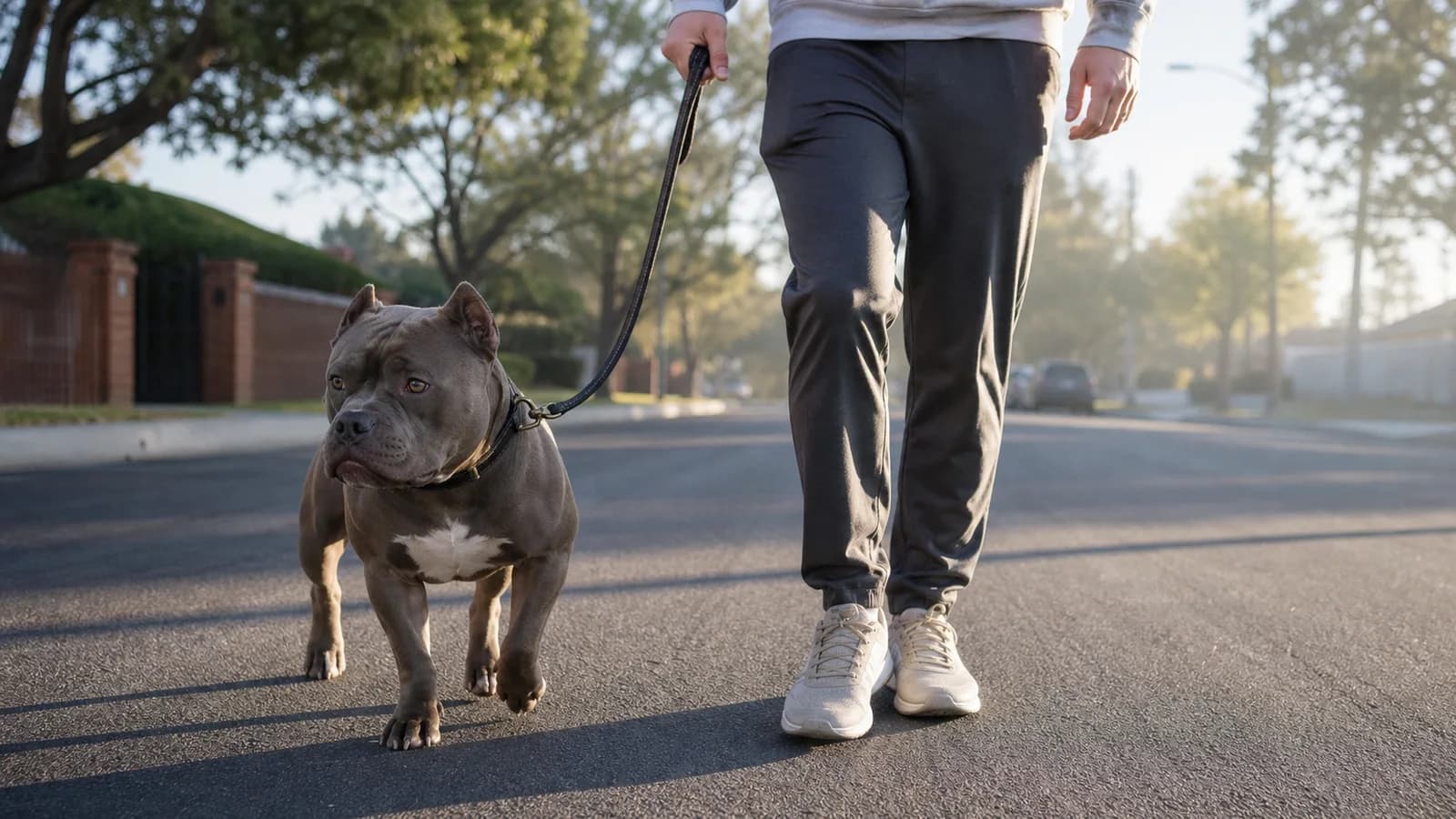
A healthy Pocket American Bully needs regular walks, sniffing, play, training, and companionship. Shorter legs do not eliminate exercise needs. They do make gait, heat tolerance, airway comfort, and joint health especially important when choosing intensity.
Start with practical cues:
- Walking on a loose leash.
- Coming when called.
- Waiting at doors.
- Going to a mat.
- Dropping and leaving items.
- Accepting veterinary and grooming handling.
- Settling alone for gradually increased periods.
- Wearing a basket muzzle comfortably if local rules or emergencies require one.
A sponsored PetSafe Easy Walk Dog Harness is one front-clip option for an appropriately measured dog while loose-leash training develops. Check that the straps do not restrict shoulder movement or rub the armpits. A harness manages force; it does not teach the skill.
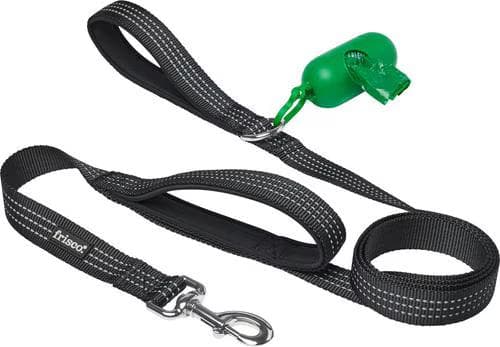
For busy streets or controlled greetings, a sponsored Frisco dual-handle traffic leash gives the handler both a regular walking length and a closer handle. Use the close handle briefly and without jerking. Never leave a leash attached to an unsupervised dog where it can snag.
A sensible activity plan
Most adults benefit from two or more daily outings rather than one weekend burst. Add sniffing, search games, food puzzles, brief skill sessions, and calm chewing. Increase time or difficulty gradually and adjust for age, fitness, weather, body condition, and veterinary advice.
Stop for unusual slowing, repeated sitting, weakness, lameness, excessive panting, noisy or labored breathing, or poor recovery. Exercise during cooler parts of the day, carry water, and avoid forcing a compact dog to keep pace with a bicycle or distance runner.
Puppies need free movement and exploration, not weighted vests, forced roadwork, heavy pulling, or repeated high-impact jumping. Growth should build coordination and confidence rather than maximum bulk.
Socialization without flooding
Socialization means safe, positive exposure with choice. Let a puppy observe new people, dogs, surfaces, sounds, vehicles, and handling from a distance where it can eat, explore, and recover. Do not force greetings or allow strangers to crowd the dog.
If fear, guarding, reactivity, or distress appears, reduce difficulty and seek qualified reward-based help. Pain and skin, ear, dental, or orthopedic problems can change behavior, so a veterinary check belongs in the plan.
Grooming and routine care
The short coat is usually low effort compared with a long-coated breed, but the dog still needs weekly brushing, occasional bathing, nail care, ear checks, skin inspection, and daily dental care. Dry any folds after bathing or swimming, and check friction areas beneath harness straps.
Persistent itching, odor, greasy skin, hair loss, red paws, ear debris, or recurrent bumps deserves veterinary assessment. Repeated home treatment without a diagnosis can delay care and worsen irritation.
Keep nails short enough for the toes to bear weight naturally. Train handling with tiny steps and rewards before restraint becomes necessary. Cooperative care is especially valuable for a strong dog that may need repeated skin, ear, or joint examinations.
Health before compactness
The word "Pocket" should describe height, not a goal of making every feature as short, wide, or heavy as possible. Both UKC and ABKC standards emphasize function. The UKC standard penalizes exaggerations and states that dogs should not have features that interfere with breathing or movement.

- Look for open nostrils, quiet breathing, free movement, straight load-bearing limbs, protected eyes, manageable skin folds, a functional mouth, and healthy body condition. Walk away from sellers who celebrate breathing noise, inability to exercise, bowed legs, chronic skin trouble, or planned surgical delivery as proof of type.
Breathing and heat
A dog should breathe comfortably at rest and recover promptly after ordinary activity. Persistent snorting, sleep disruption, gagging, blue or gray gums, collapse, or marked heat intolerance is not harmless because the dog is compact. Emergency breathing difficulty needs immediate veterinary care.
Keep exercise conservative in heat and humidity. Use shade, cool indoor space, and water. Never leave a dog in a parked vehicle, and do not rely on a fan alone in dangerous heat.
Movement, joints, and body condition
Watch the dog walk away, toward you, and from the side. The stride should be balanced and purposeful, not a shuffle with obvious pain, dramatic rolling, crossing limbs, or repeated skipping. Ask about orthopedic screening in the family and have persistent limping or reluctance to rise examined.
The Orthopedic Foundation for Animals disease resources describe screening programs and searchable results. "Health tested" should mean named, verifiable tests, not merely one general veterinary visit.
A supportive resting area can help any dog settle, especially an older or sore individual. The sponsored FurHaven orthopedic sofa bed has a foam base and bolstered sides. Select the bed by the dog's stretched-out measurements, keep it dry and clean, and remember that bedding does not treat orthopedic disease.
Skin, eyes, and mouth
Skin folds that trap moisture may develop irritation or infection. Eyes should close fully and remain free from chronic rubbing or discharge. Crowded teeth and an abnormal bite can make cleaning difficult and contribute to periodontal disease.
Brush teeth with dog-safe toothpaste, check the mouth and face during routine care, and arrange veterinary dental assessment when recommended. Seek prompt care for a painful eye, facial swelling, inability to eat, marked odor, or bleeding gums.
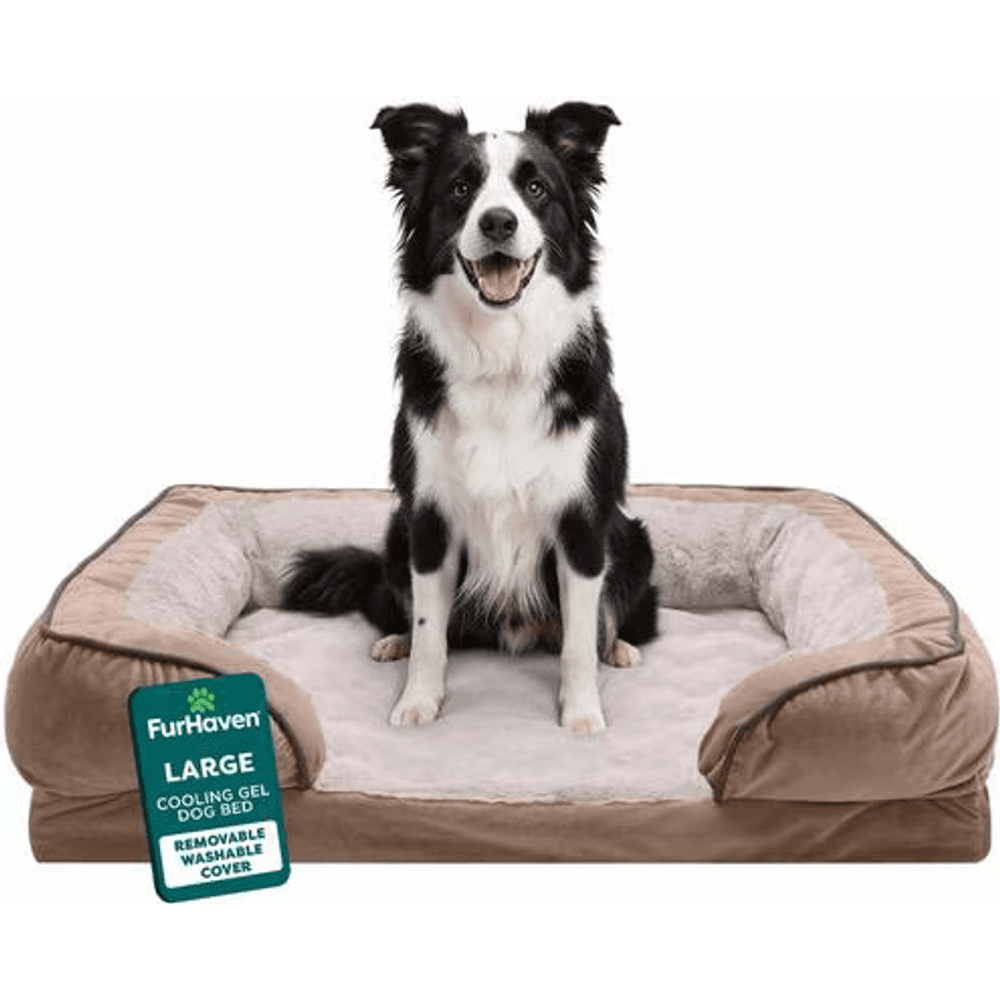
An orthopedic sofa bed with three bolstered sides for dogs who like to rest their head and joints against a cushion. The supportive foam base cradles hips and elbows, a comforting spot for an older or shaky dog to settle.
Petful may earn a commission when you click through to Chewy, at no extra cost to you.
Pocket Bully health and lifespan
There is no reliable lifespan promise for every dog sold under this variety name. Published numbers online may not identify registry status, body shape, health screening, or source. Individual longevity depends on inherited risk, conformation, preventive care, body condition, environment, and chance.
Petful's American Bully lifespan and health guide reviews the broader evidence and practical health plan. For a Pocket Bully, prioritize:
- Verifiable health results for both parents.
- Comfortable airway function and heat tolerance.
- Balanced gait and joint evaluation.
- Healthy skin, ears, eyes, and mouth.
- A lean, stable body condition.
- Appropriate vaccination, parasite prevention, and dental care.
- Prompt assessment of pain, behavior change, or declining stamina.
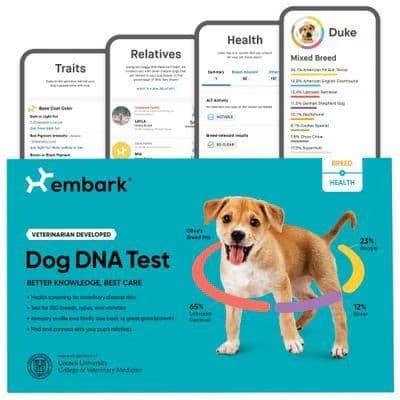
A DNA panel can screen for a defined set of variants and provide ancestry clues. The sponsored Embark Breed & Health Dog DNA Test cannot rule out all inherited disease, verify every pedigree claim, or replace physical examinations and parent screening. Discuss any result with a veterinarian before changing care or breeding decisions.
Petful may earn a commission when you click through to Chewy, at no extra cost to you.
Urgent warning signs
Seek urgent veterinary help for struggling to breathe, blue or gray gums, collapse, severe heat illness, repeated unproductive retching with abdominal swelling, inability to bear weight, sudden severe pain, or a painful protruding eye. Call ahead and transport the dog as calmly as possible.
Less dramatic changes still matter. New snoring, reduced stamina, repeated ear or skin trouble, stiffness after rest, difficulty jumping, changed appetite, or altered behavior can be early signs of discomfort.
- Pocket describes mature height, not guaranteed weight or strength. Measure chest girth, neck, resting length, doorways, and travel space before choosing walking gear, beds, crates, or restraints.
What a Pocket Bully costs
Pocket American Bully prices vary greatly by region, age, source, pedigree, demand, and marketing. There is no price that proves health or ethical breeding. A premium for a rare color, exact predicted weight, "micro" ancestry, or extreme body does not improve welfare.
The American Bully price guide covers acquisition and ongoing costs. Budget beyond the purchase:
- Veterinary intake, preventive care, and dental care.
- Food and measured treats.
- Training and safe walking equipment.
- Secure fencing, gates, travel restraints, and a measured bed.
- Insurance or emergency savings.
- Possible dermatology, airway, orthopedic, or reproductive care.
- Boarding or pet care by someone able to handle a strong dog.
Ask a seller for the parents' registered names, mature measurements, health results, veterinary history, and the contract before sending money. Verify records independently. Meet the dam and observe adult relatives when possible.
Responsible-source checklist
A responsible breeder should prioritize temperament and function, raise puppies in a clean enriched setting, use appropriate health screening, match puppies carefully, explain adult-size uncertainty, and take a dog back if placement fails. A rescue should be candid about what is known and unknown and provide behavior and medical records.
Red flags include:
- Guaranteed exact height, weight, head size, color, or temperament.
- No verifiable parent testing.
- Dogs that cannot breathe or walk comfortably.
- Pressure to pay immediately or meet away from the dogs' living area.
- Multiple conflicting breed labels in one advertisement.
- Claims that DNA testing replaces health screening.
- Routine assisted reproduction presented as a status symbol.
- A contract with no return support.
Pocket Bully vs. Micro Bully
Pocket is an ABKC American Bully variety and a UKC size or style division with official adult height ranges. Micro is a marketing label with no UKC or ABKC height range. Some dogs sold as Micro may be below the Pocket range, while others may simply be compact Pocket dogs advertised differently.
The label alone does not reveal parentage, adult size, structure, or health. It can also create an incentive to select for extreme conformation. Read the veterinarian-authored Micro American Bully guide for a function-first evaluation of breathing, gait, skin, eyes, teeth, and reproduction.
If choosing between two dogs, do not pick the shortest. Pick the individual with more comfortable breathing and movement, better records, stable behavior, healthier body condition, and a source willing to discuss limitations honestly.
Housing and legal checks
A shorter American Bully may still fall under a lease, insurer, homeowners association, or local rule that uses the breed name, a pit bull-type category, ancestry, or physical appearance. Never assume the Pocket label creates an exemption.
Get written answers before acquiring or moving:
- Does the lease or association allow this dog?
- Will the insurer cover the household and what documentation is required?
- Do local laws use breed, type, measurements, or behavior?
- Do boarding, day-care, travel, or destination providers impose restrictions?
- Is a muzzle, license, microchip, enclosure, or liability policy required?
Rules change, and an internet discussion from another city is not authority for yours. Keep copies of licenses, microchip records, registry documents, veterinary records, and written permissions, but understand that paperwork may not override a physical-type law.
Is a Pocket American Bully right for you?
A Pocket Bully may fit an owner who wants a close, interactive companion, can train consistently, can physically manage a strong compact dog, and will choose health over exaggeration. The home does not need to be large if exercise, bathroom breaks, enrichment, and housing permission are reliable.
Think twice if the main attraction is the shortest possible adult, if long workdays leave little companionship, if children are expected to handle the dog unsupervised, or if the budget does not include training and veterinary care. A compact dog is not a shortcut around responsibility.
A practical first-month plan
Book a veterinary intake, verify identification and records, establish a measured feeding plan, and create a quiet sleep area. Begin house training, alone-time practice, handling, leash skills, and calm observation of the neighborhood. Keep introductions small and predictable.
Record baseline weight, body condition, gait, breathing at rest, and recovery after a normal walk. Videos can help a veterinarian understand later changes. Confirm the nearest emergency clinic and decide who can safely care for the dog if the primary owner is unavailable.
The best deciding question
Ask, "Will this dog's body and temperament support a comfortable ordinary life in my home?" That question is more useful than asking whether the dog is the smallest, widest, rarest, or most expensive.
Pocket American Bully FAQs
Under UKC and ABKC standards, mature males measure 14 inches to under 17 inches at the withers and mature females measure 13 inches to under 16 inches. The standards do not assign one universal weight, so build and body condition vary.
ABKC lists Pocket as an American Bully variety, while UKC treats it as a size or style division of the breed. "Pit bull" can mean the American Pit Bull Terrier or a broad visual or legal category, so the answer may differ for pedigree, housing, insurance, or law.
The size label does not predict aggression. Intended breed temperament, genetics, socialization, health, learning, supervision, and context all matter. Evaluate the individual and use responsible management around children, visitors, and other animals.
Many are affectionate family companions when carefully selected, trained, and supervised. Adults must manage the dog's strength, protect rest and food, teach children respectful interaction, and provide daily company and activity.
No strong evidence supports one guaranteed lifespan for every Pocket Bully. Longevity varies with inherited risk, conformation, source, body condition, preventive care, environment, and chance. Treat seller lifespan claims as estimates, not warranties.
Most healthy adults need moderate daily walks, sniffing, play, training, and enrichment. Adjust for age, weather, fitness, joints, and breathing. Short height does not remove exercise needs, but extreme heat or forced conditioning can be unsafe.
Pocket has official adult height ranges in UKC and ABKC standards. Micro has no official range in those standards and is a marketing label. A Micro claim does not guarantee parentage, adult size, health, or recognition.
Prices vary by region, age, source, pedigree, and marketing. A higher price does not prove health. Compare verifiable parent testing, temperament, function, contract support, and lifetime care costs rather than paying for rare color or guaranteed size.

Coreen Saito is a pet writer and longtime shelter volunteer with more than a decade in animal rescue. She covers cat behavior, breed care, and the small, ordinary science of sharing a life with companion animals, with a particular focus on honest takes about the products and decisions that actually matter. At home in Arizona, she's outranked by Mac (a dog with the loudest opinion in the house), Rebel (a cat who governs by quiet authority), and Meri (an orange tabby who runs the late shift and the laundry basket). She writes about all three, plus the rescues that keep coming through her life, at LifeWithMinty.com.
Sign up for expert-backed reviews and safety alerts all in one place.