American Bully Lifespan, Health Problems, and Care
Published breed-specific longevity evidence for American Bullies is limited. Learn how to interpret lifespan ranges and protect breathing, joints, skin, heart, weight, and quality of life.

BVMS, MRCVS
Petful is reader supported. As an affiliate of platforms like Amazon and Chewy, we may earn a commission when you buy through links on this page. There is no extra cost to you.
The often-cited american bully lifespan is 8 to 13 years, but that is a planning range from breed and commerce pages, not a lifespan measured in a large American Bully population. Published breed-specific longevity data are limited. Your dog's structure, inherited risks, body condition, environment, and veterinary history matter more to an individual prognosis than one number online.
This veterinarian-authored guide separates what is documented from what is repeated. It explains the health concerns worth watching, the screening records worth requesting, and the changes that deserve prompt care. For the broader history, temperament, size, and ownership picture, start with Petful's American Bully breed guide.

Sign up for expert-backed reviews and safety alerts all in one place.
How long do American Bullies live?
- 1Many breed pages cite an 8-to-13-year American Bully life expectancy, but no large breed-specific cohort has established that range.
- 2A range is useful for long-term planning, not a promise or an individual prognosis.
- 3Track changes against your dog's own healthy baseline.
- 4New slowing, breathing difficulty, weight change, pain, or behavior change deserves veterinary assessment rather than being dismissed as age.
The honest answer is that we do not yet have a robust American Bully life table. The breed is relatively young, labels are used inconsistently, and many available numbers come from registries, breeder sites, retailers, or owner reports rather than population-level veterinary records. An 8-to-13-year estimate can help with budgeting and planning, but it should not be presented as an average proven by a representative study.
A 2024 UK companion-dog longevity study found meaningful differences by size, skull shape, and breed, but it did not provide a defensible American Bully estimate. That research is useful context, not a substitute for missing breed-specific evidence. Larger body size and more extreme conformation may influence risk, yet an individual dog can fall well outside any general range.

Petful may earn a commission when you click through to Lemonade, at no extra cost to you.
Range versus prognosis
A population range describes what has been reported or expected across many dogs. A prognosis is a veterinarian's evolving judgment about one dog, based on examination findings, diagnoses, function, treatment response, and quality of life.
Use the range to plan for:
- A decade or more of food, veterinary care, training, housing, and insurance decisions.
- Preventive care that continues after puppyhood.
- Possible orthopedic, skin, airway, dental, eye, or cardiac costs.
- Senior-friendly changes before mobility or sensory loss becomes severe.
Do not use the range to decide that a 7-year-old dog is old, that a 10-year-old dog is near death, or that a young dog cannot be seriously ill. Calendar age matters, but trends in comfort and function are often more informative.
A personal healthy-aging baseline
Record what normal looks like while your American Bully feels well. A monthly note or short video can make gradual change easier to recognize and gives the veterinary team a better history.
| Area | Healthy baseline to record | Change worth discussing |
|---|---|---|
| Weight and body condition | Weight, visible waist, ribs felt under a light fat cover | Unplanned gain or loss, disappearing waist, prominent ribs |
| Muscle | Thigh and shoulder fullness, ability to rise | Thinning thighs, weakness, repeated slipping |
| Breathing | Quiet sleep, normal exercise recovery, heat tolerance | Louder breathing, longer recovery, gagging, blue or gray gums |
| Movement | Even stride, comfortable stairs and turns | Limping, shortened stride, reluctance, stiffness |
| Skin and ears | Normal odor, color, scratching, and coat | Recurrent redness, sores, odor, hair loss, head shaking |
| Appetite and digestion | Usual appetite, stool, water intake | Persistent vomiting or diarrhea, marked thirst, refusal to eat |
| Sleep and behavior | Normal rest, social interest, response to family | Night pacing, withdrawal, confusion, irritability |
Repeat the same observations under similar conditions. A single slow walk after an unusually active day means less than a steady decline across several weeks, but sudden or severe change should not wait for a trend.
Which dog can live 25 years?
No dog breed should be chosen with an expectation of living 25 years. Exceptional individual dogs have been reported at very advanced ages, but those outliers do not establish a breed's normal life expectancy. For an American Bully, plan around the more conservative published range, then focus on current health, preventive care, and quality of life rather than pursuing a record age.
What age do American Bullies slow down?
There is no fixed age when every American Bully slows down. Some remain active well into later life, while another dog may reduce activity earlier because of weight, arthritis, heart disease, airway limitation, pain, or an unrelated illness. A new decline should trigger an examination. Do not assume reluctance to walk, climb, play, or rise is normal aging without checking for treatable causes.

 Sponsored
Have a health question about your pet?
Talk to a licensed vet at Dutch over video or message, including nights and weekends.
Use code Pets60
Plans start at $12/month · covers up to 5 pets
- Licensed vets in most states
- Rx for 150+ conditions
- 4.7 on Trustpilot
Do any dogs live 30 years?
Claims of dogs reaching 30 are extraordinary and usually difficult to verify with lifelong records. Even when an individual dog truly lives far beyond the usual range, that event does not change the expected lifespan for a breed or predict another dog's future. Good care aims for comfortable, functional years, not a particular birthday that biology cannot guarantee.
Does intelligence affect lifespan?
There is no scientifically useful single ranking for the dog with the "highest IQ," and intelligence is not a shortcut to longevity. Trainability, problem-solving, social behavior, and working aptitude measure different things. Mental enrichment is valuable because it supports welfare and can reveal cognitive change, but it does not replace weight control, preventive medicine, safe exercise, or treatment of disease.
Is an American Bully aggressive?
An American Bully is not made aggressive by its name, and a breed label cannot predict one dog's behavior. The UKC American Bully standard describes the breed as a companion and makes viciousness a disqualification, but standards are ideals, not guarantees. Evaluate social history, handling, training, pain, environment, and the individual response around people and animals.
Are American Bullies calmer than pit bulls?
You cannot reliably choose between an American Bully and a dog labeled pit bull by assuming one will always be calmer. "Pit bull" may mean the registered American Pit Bull Terrier or an informal visual category covering several breeds and mixes. Individual temperament, early experience, reinforcement, health, and context matter. Petful's American Bully versus pit bull comparison explains that naming problem in detail.
What can influence American Bully life expectancy?
Longevity is shaped by interacting factors rather than one miracle food, supplement, or exercise routine. Some are inherited, some are environmental, and some can be modified after a problem appears.
The most useful owner-controlled priorities are:
- Keep the dog lean enough to feel ribs and see a waist.
- Protect normal breathing and avoid heat stress.
- Build regular, joint-friendly movement instead of weekend overload.
- Treat recurring skin, ear, dental, digestive, or mobility signs early.
- Maintain preventive visits and age-appropriate screening.
- Choose breeding sources that document health testing and functional structure.
Weight and longevity
Excess body fat is not protective muscle. It adds mechanical load to joints, increases the work of movement and cooling, and can make an already broad dog look closer to an exaggerated show or social-media ideal.
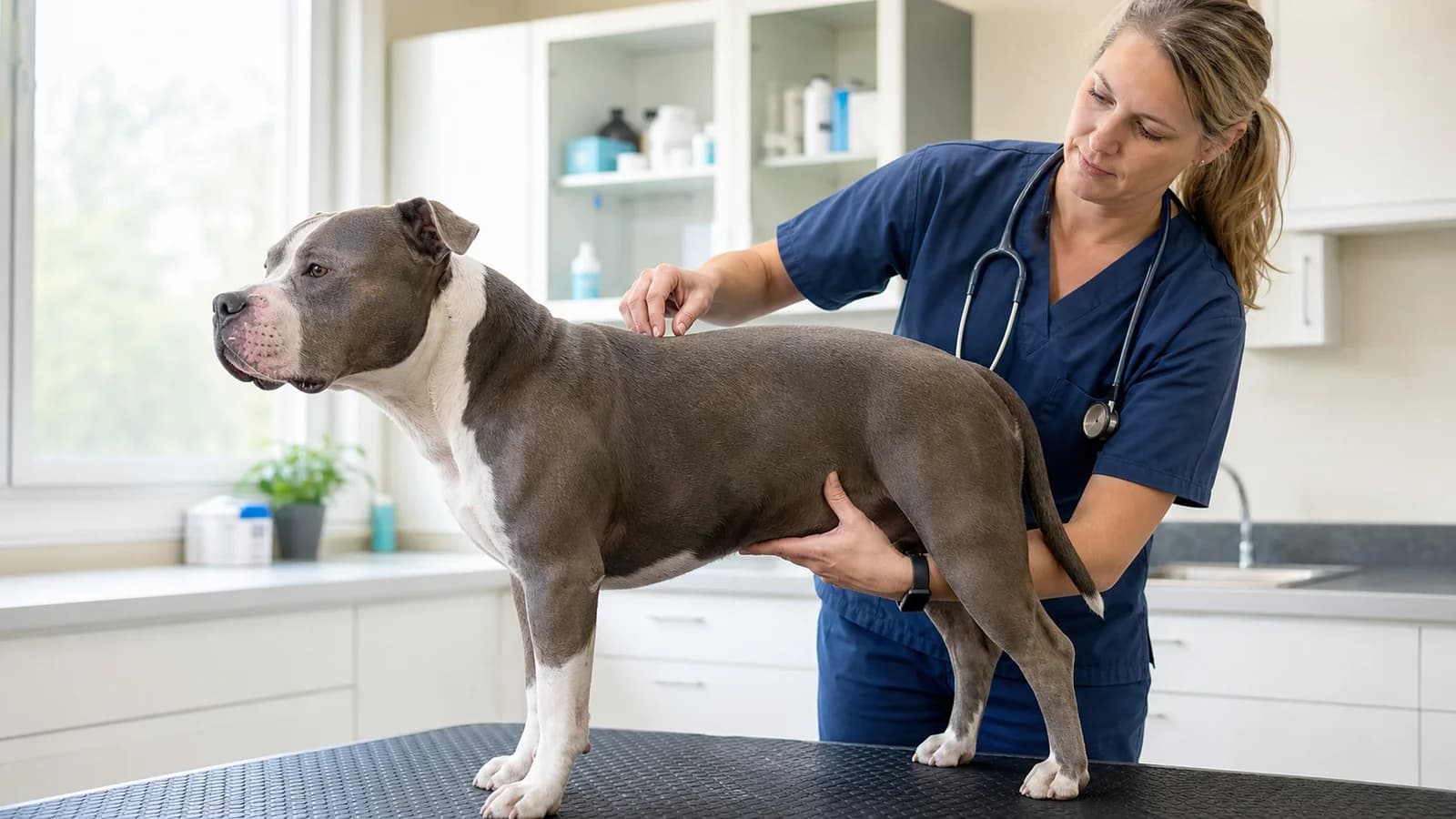
A multi-breed study of more than 50,000 dogs found that overweight dogs had shorter median lifespans than dogs in normal body condition across the 12 breeds studied. American Bullies were not one of those breeds, so the result should be applied as general canine evidence rather than a Bully-specific number.
Ask the veterinary team to show you both body condition score and muscle condition score. Weight alone cannot distinguish fat from muscle or reveal age-related muscle loss.
At home:
- Weigh monthly during a diet change and every one to three months when stable.
- Feel ribs instead of judging through photographs.
- Look for a waist from above and an abdominal tuck from the side.
- Track treats, chews, table food, and supplements as part of total calories.
- Recheck unexplained loss even if the dog was previously overweight.
Our American Bully food guide explains calorie labels, portions, puppy growth wording, and diet transitions without promoting bulking.
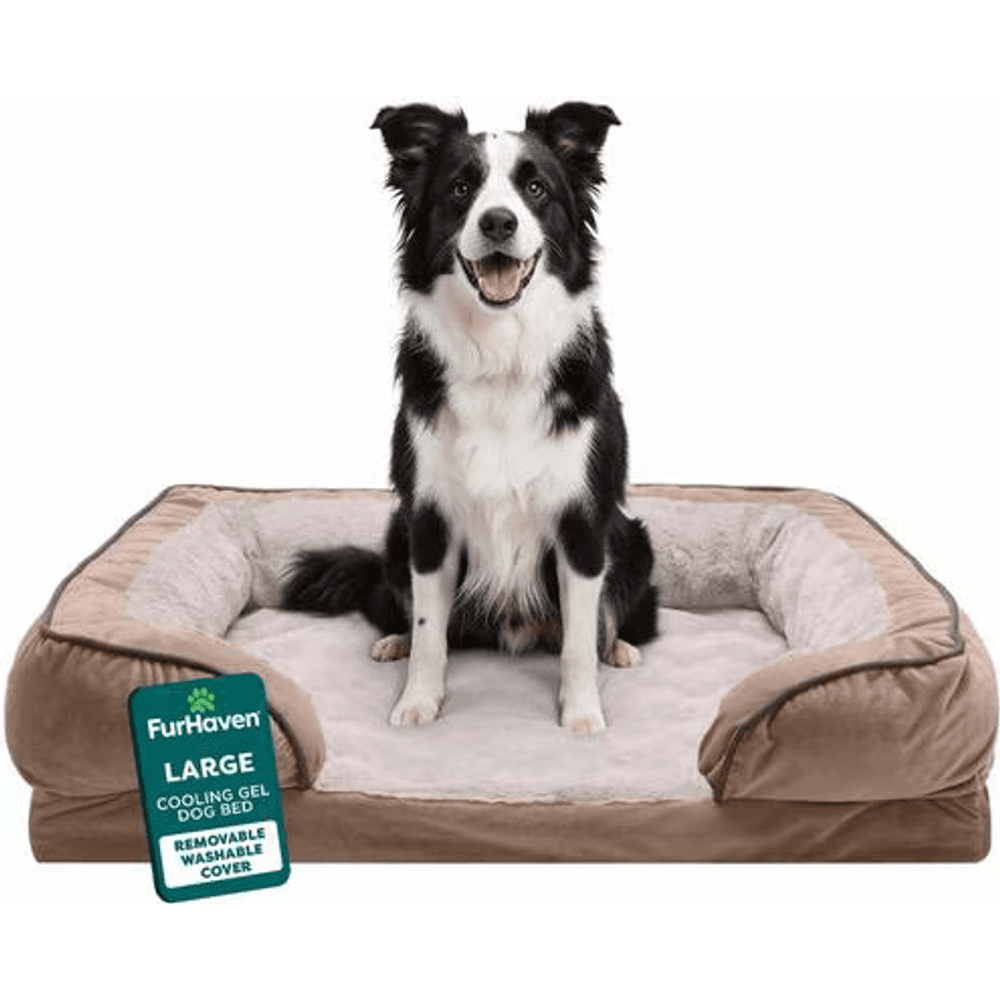
An orthopedic sofa bed with three bolstered sides for dogs who like to rest their head and joints against a cushion. The supportive foam base cradles hips and elbows, a comforting spot for an older or shaky dog to settle.
Petful may earn a commission when you click through to Chewy, at no extra cost to you.
Genetics, structure, and breeding choices
Genes affect disease risk, but conformation affects daily function too. The UKC standard explicitly says exaggerations that interfere with physical activity, movement, or breathing are unacceptable. That warning matters because a very heavy front, severely bowed limbs, very short muzzle, or excessive mass can create functional problems even when the dog is young.
When evaluating a puppy or breeding program, ask for:
- Registered names and verifiable results for both parents.
- Hip and elbow evaluation records, not only "vet checked."
- A recent eye examination by a veterinary ophthalmologist.
- Cardiac screening appropriate to the line and veterinarian's advice.
- Patellar evaluation where compact size or gait raises concern.
- An explanation of any DNA results and their limitations.
- Videos showing each parent walking, trotting, breathing, and recovering from ordinary activity.
DNA panels can identify some inherited variants, but they do not replace hip radiographs, an eye examination, a cardiac examination, or assessment of functional structure. A clear DNA panel is not an all-clear health certificate.
Daily environment
Traction, temperature, exercise pattern, dental care, parasite prevention, and access to hazards all influence health. These factors are ordinary, which is precisely why they are easy to overlook.
Choose gradual conditioning on forgiving surfaces. Use rugs on slippery floors, ramps when jumping has become uncomfortable, shade and water in warm weather, and secure restraint in vehicles. Avoid forcing exercise through lameness or loud breathing.
- Beds, harnesses, toothbrushes, and supplements can support daily care only when they fit the individual dog. They cannot diagnose breathing trouble, correct dysplasia, remove dental disease, or replace pain control.
For an older dog who seeks more support, an appropriately sized orthopedic sofa bed can make resting and rising easier. It does not treat arthritis, so persistent stiffness still needs examination and a pain-management plan.
For ordinary comfortable walks, a properly fitted PetSafe Easy Walk harness can help manage leverage while training. It should leave the shoulders free and must not be used to push a dog through breathing difficulty, heat stress, or lameness.
American Bully health problems
Yes, American Bullies can have health issues, but published prevalence estimates for the breed are sparse. The practical approach is to understand plausible orthopedic, airway, skin, heart, eye, and dental concerns without claiming every dog will develop them. Screening and early evaluation matter because the same visible sign can have several causes, and a treatable problem should not be dismissed as a breed trait.
| Area | Signs an owner may notice | Useful veterinary or screening step |
|---|---|---|
| Joints and movement | Limping, stiffness, bunny hopping, difficulty rising, reluctance on stairs | Orthopedic examination; hip, elbow, or patellar assessment as indicated |
| Breathing and heat | Noisy breathing, poor heat tolerance, gagging, prolonged recovery | Airway and heart assessment; urgent care for distress or blue-gray gums |
| Skin and ears | Itching, redness, odor, recurrent ear debris, sores, hair loss | Skin and ear examination, cytology, parasite check, structured allergy workup |
| Heart | Fainting, cough, weakness, exercise intolerance, fast resting breathing | Cardiac examination and diagnostic testing based on findings |
| Eyes | Squinting, discharge, rubbing, cloudiness, visual change | Prompt examination; breeding dogs screened by an ophthalmologist |
| Mouth | Bad breath, red gums, broken teeth, dropped food, facial swelling | Dental examination and treatment, often including dental radiographs |
This table is a triage aid, not a diagnostic tool. Similar signs can have many causes, and several conditions can occur at once.
Joints and movement
Hip dysplasia, elbow dysplasia, and patellar luxation are reasonable concerns to screen for in a muscular, variably sized breed. However, concern is not the same as a proven breed prevalence. Pain can also arise from cruciate ligament injury, osteoarthritis, spinal disease, soft-tissue injury, or foot problems.
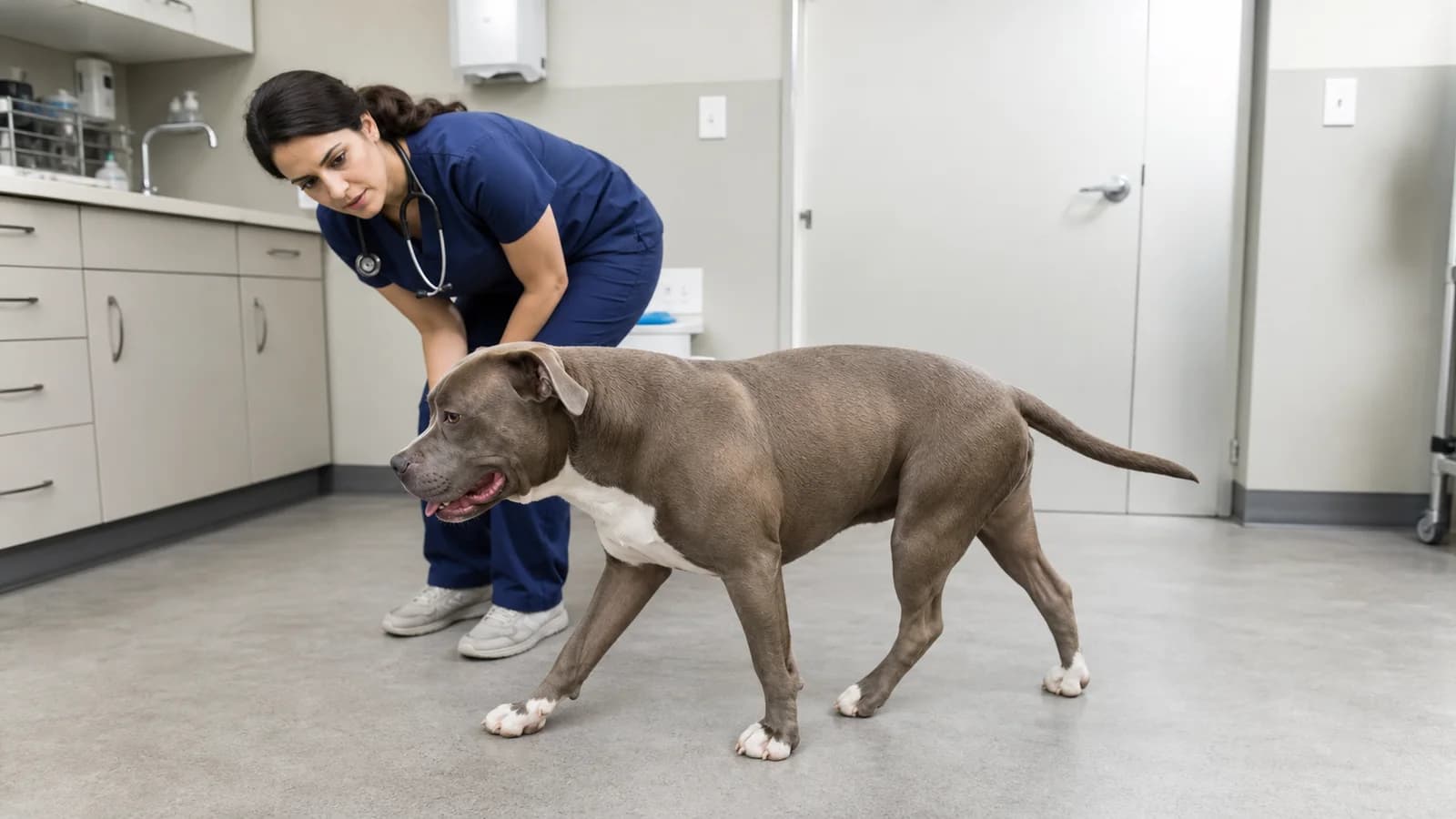
Watch the dog walk away, toward you, and in profile on level ground. Record:
- Stride length and symmetry.
- Head bobbing or hip hiking.
- Toes turning markedly inward or outward.
- Repeated sitting during a walk.
- Hesitation before stairs, jumping, or getting into a car.
- Stiffness after rest or reduced willingness to play.
Do not give human pain medicines. If the veterinary team recommends a joint-support product as part of a broader plan, an option such as Cosequin chewable tablets should still be checked for dose, interactions, calories, and suitability for that dog. Supplements do not correct dysplasia or replace pain control.
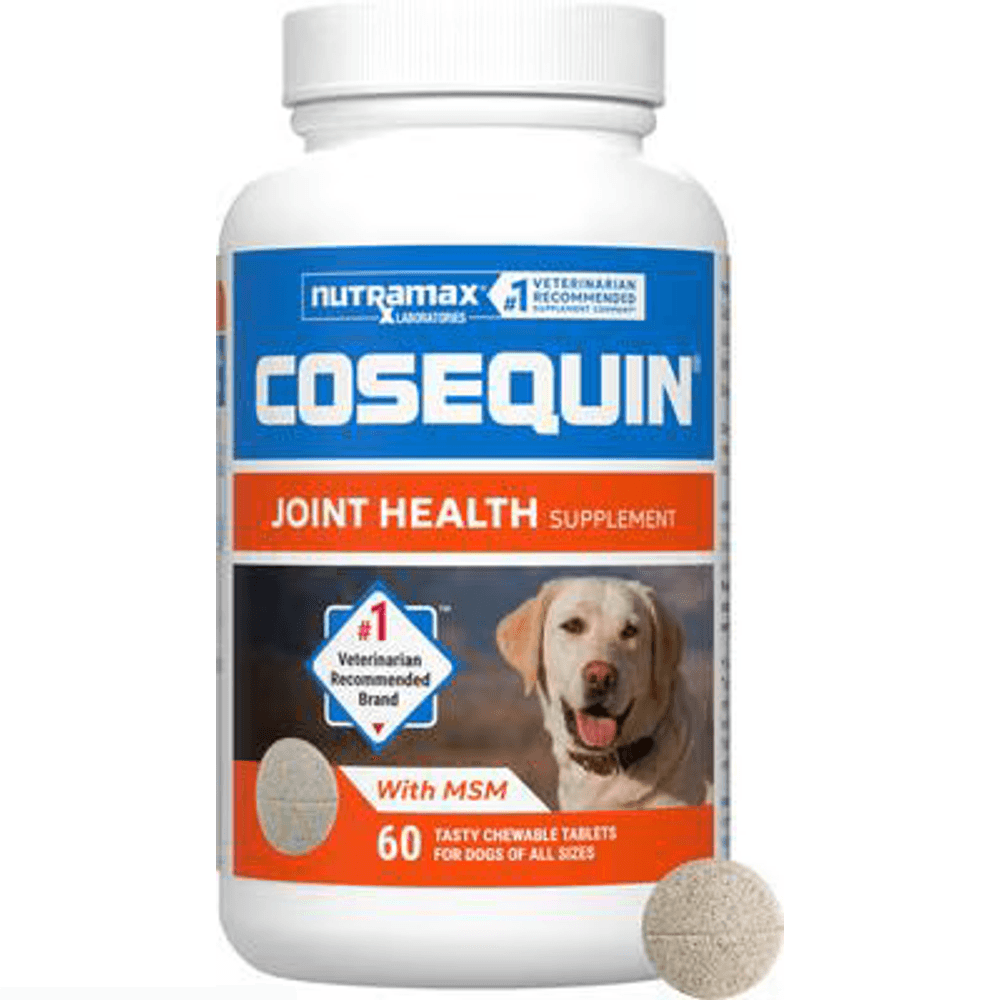
The number-one veterinarian-recommended joint supplement brand. Glucosamine, chondroitin, and MSM support cartilage and cushion the joints, easing the stiffness and hind-end weakness that can leave an older or arthritic dog trembling.
Petful may earn a commission when you click through to Chewy, at no extra cost to you.
Breathing and heat
Some American Bullies have a shorter muzzle and broad head, but not every dog has brachycephalic obstructive airway syndrome. Risk must be assessed from the individual airway, breathing sounds, exercise recovery, sleep, temperature tolerance, and anatomy.
Concerning signs include:
- Noisy breathing while awake and resting.
- Repeated gagging, retching, or regurgitation.
- Sleep-disordered breathing or frequent waking.
- Poor tolerance of mild exercise.
- A long recovery after activity.
- Collapse, panic, or blue-gray gums in heat.
Use a harness that does not compress the throat, maintain a lean condition, avoid hot and humid exertion, and stop before the dog struggles. Equipment is management, not treatment. Any dog with persistent airway signs needs veterinary assessment.
Skin, ears, and allergies
Itching is a symptom, not proof of a food allergy. Fleas, environmental allergy, mites, bacterial or yeast overgrowth, contact irritation, and other diseases can look similar. Repeatedly changing food without a diagnosis can blur the history and expose the dog to more ingredients.
A useful appointment record includes:
- When itching began and whether it is seasonal.
- Which feet, ears, folds, belly, or back are affected.
- Current flea prevention and all household pets.
- Every food, treat, chew, flavored medicine, and supplement.
- Photographs taken before bathing or topical treatment.
- Previous tests, medications, and response.
Food allergy is diagnosed with a veterinarian-directed elimination diet followed by a controlled challenge, not by a mail-in intolerance test or one improved week. Secondary infection may need treatment while the underlying cause is investigated.
Heart and eyes
Fainting, collapse, reduced stamina, coughing, a faster sleeping respiratory rate, or abdominal swelling can be associated with heart disease, but they are not specific. A murmur may be harmless or significant depending on its cause, so the examination determines whether imaging, electrocardiography, or referral is appropriate.
The American College of Veterinary Ophthalmologists Blue Book lists breeding guidance for inherited eye disease. That guidance is not a statement that most American Bullies have a particular condition. Squinting, sudden cloudiness, discharge, a visibly injured eye, or abrupt vision change deserves prompt care because eye problems can worsen quickly.
Dental health
Dental disease can cause chronic pain while a dog continues eating. Look for red gums, bad breath, broken teeth, one-sided chewing, dropped food, pawing at the mouth, or facial swelling.
Daily brushing is the most useful home habit when the dog is comfortable and trained gradually. A soft 360-degree finger toothbrush may be easier for some handlers, but use dog-safe toothpaste and stop if the mouth is painful. Existing disease needs professional assessment, often including dental radiographs under anesthesia.
For routine brushing when the mouth is comfortable, Virbac C.E.T. Enzymatic Toothpaste can pair with the toothbrush. Stop and arrange an examination if brushing is painful or the mouth bleeds.
 Sponsored
Vet care that's always there
Unlimited video calls and messaging with licensed vets for less than a typical vet visit. One membership covers up to five pets.
Use code Pets60
Plans start at $12/month · covers up to 5 pets
- Licensed vets in most states
- Rx for 150+ conditions
- 4.7 on Trustpilot
What is the healthiest small dog to have?
There is no universally healthiest small breed, and a Pocket or Micro-labeled Bully should not be chosen on the assumption that smaller always means healthier. Look for moderate, functional anatomy, documented parental screening, comfortable breathing, free movement, sound temperament, and a breeder or rescue willing to share records. The individual dog's health and structure matter more than a size label.
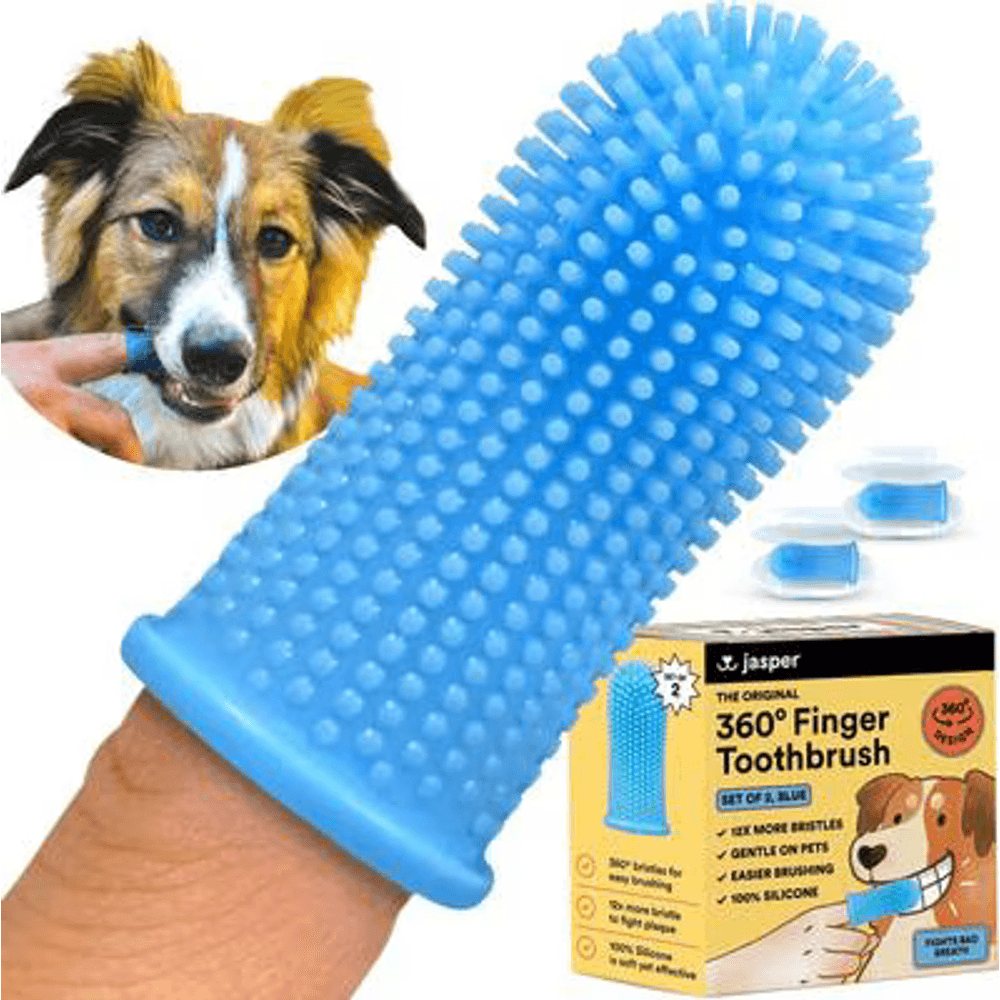
A 360-degree silicone finger toothbrush that brushes every side of a tooth at once. Gentle on gums and ideal for dogs new to brushing or owners who find a handled brush awkward.
Petful may earn a commission when you click through to Chewy, at no extra cost to you.
Do lifespan and health differ by variety?
There is not enough population evidence to assign reliable separate lifespan averages to Pocket, Standard, Classic, XL, or Micro-labeled American Bullies. Size and structure can change the pattern of concern, but an online chart that gives each variety a neat number is more precise than the evidence allows.
Pocket American Bully
A Pocket American Bully is a recognized shorter height variety, not a toy breed. Shorter stature does not automatically mean longer life. Evaluate limb alignment, patellas, breathing, body condition, skin, and the same health-screening records requested for any American Bully.
XL American Bully
An XL Bully is taller and may be heavier, so orthopedic load, safe handling, calorie control, and age-related muscle loss deserve close attention. That does not prove a shorter XL Bully lifespan. Petful's XL American Bully guide covers the official height definition and practical care boundaries.
Micro Bully
Micro is not a UKC or ABKC recognized American Bully variety. Extremely compact proportions may increase concern about breathing, movement, skin folds, spinal function, and reproduction, depending on the individual. Our Micro American Bully welfare guide explains why a tiny marketing label is not evidence of health.
Health testing and preventive care
Health testing before breeding and preventive care after adoption solve different problems. Screening helps inform breeding choices and identify some inherited or structural risks. Preventive care monitors the living dog for disease, parasites, dental problems, weight change, and age-related decline.
Screening records to request
The Orthopedic Foundation for Animals explains that health screening results are tied to identified dogs and can include orthopedic, eye, cardiac, and other evaluations. Search the parents by registered name or number and verify what was actually performed.
A responsible record review asks:
- Is the dog old enough for the type of final certification shown?
- Does the name or registration number match the parent?
- Was the test phenotypic, such as a hip radiograph, or genetic?
- Is the result current when repeat screening is recommended?
- Are both parents documented?
- Does the breeder explain affected, carrier, and clear results accurately?
"Health tested" can mean one inexpensive DNA panel or a comprehensive program. Ask for the test names, dates, laboratories, and results rather than accepting the phrase.
How to interpret health records without overpromising
A screening result describes a defined finding at a particular time. It does not certify that a dog is free of every disease or guarantee how long a puppy will live. Hip and elbow evaluations address the structures imaged, an eye examination addresses the conditions observable during that examination, and a DNA result covers only the variants included in that laboratory's panel.
Ask the source to connect every document to the exact dog. The registered name, microchip or tattoo when recorded, date of birth, and registration number should be consistent across the pedigree, laboratory report, veterinary record, and public database. A screenshot without an identifying number is weaker evidence than a result you can verify independently.
The timing matters too. Some orthopedic evaluations are preliminary when performed before the certifying age. Eye findings can change, so breeding programs may repeat examinations. A cardiac screening performed with a stethoscope is not the same procedure as an echocardiogram performed by a cardiologist. These are not reasons to dismiss a record; they are reasons to ask exactly what question the record answers.
What genetic labels mean
Genetic results require careful interpretation:
- Clear usually means the tested variant was not detected. It does not mean genetically perfect.
- Carrier usually means one copy of a recessive variant was detected. A carrier may remain clinically unaffected but should be paired using informed breeding strategy.
- At risk or affected needs interpretation based on the condition, inheritance, penetrance, and the dog's clinical findings.
- Not tested is not the same as clear.
When a seller says the parents are "clear by parentage," ask which variant, which generations, and what documents support the chain. Recombination, record errors, and untested conditions remain outside that narrow claim. A veterinarian or veterinary geneticist can help interpret a result that may influence care or breeding.
Family history adds information that one test cannot. Ask about comfortable breathing, allergies, orthopedic surgery, seizures, heart disease, eye disease, reproductive difficulty, cause and age of death, and temperament in parents, siblings, grandparents, and previous litters. A breeder may not know every answer, but candid records and follow-up are more useful than a promise that a line has "never had a problem."
Build a lifetime baseline for the individual dog
The most useful health file continues after the dog comes home. Keep the adoption or purchase records, pedigree when available, microchip information, vaccine history, laboratory results, imaging reports, medication list, insurance policy, diet and calorie notes, and contact information for regular and emergency clinics. Photograph or scan paper records and retain the original files.
At home, record a few ordinary baselines while the dog is well:
- Resting or sleeping breathing rate as instructed by the veterinarian.
- Body weight, body condition, and muscle condition over time.
- Clear side, front, rear, and overhead photographs on a level surface.
- A short video of normal walking, trotting, rising, and using stairs.
- Typical appetite, water intake, stool, sleep, exercise recovery, and behavior.
These observations are not home diagnostic tests. Their value is comparison. A gradual loss of muscle, slower recovery, repeated skipping, a rising sleeping respiratory rate, or a change in appetite is easier to communicate when the owner can describe what was normal and when it changed.
Bring the timeline and videos to the veterinary team rather than waiting for a dramatic crisis. Early assessment may reveal pain, dental disease, skin infection, weight gain, heart disease, airway limitation, endocrine disease, or another treatable contributor. It also creates a more honest prognosis than applying a generic lifespan number to every dog with the same label.
A practical preventive-care plan
Wellness intervals should be individualized. Many healthy adults are examined at least yearly, while puppies, seniors, and dogs with chronic conditions often need more frequent visits. Your veterinarian can set the cadence after considering age, risks, medications, and previous findings.
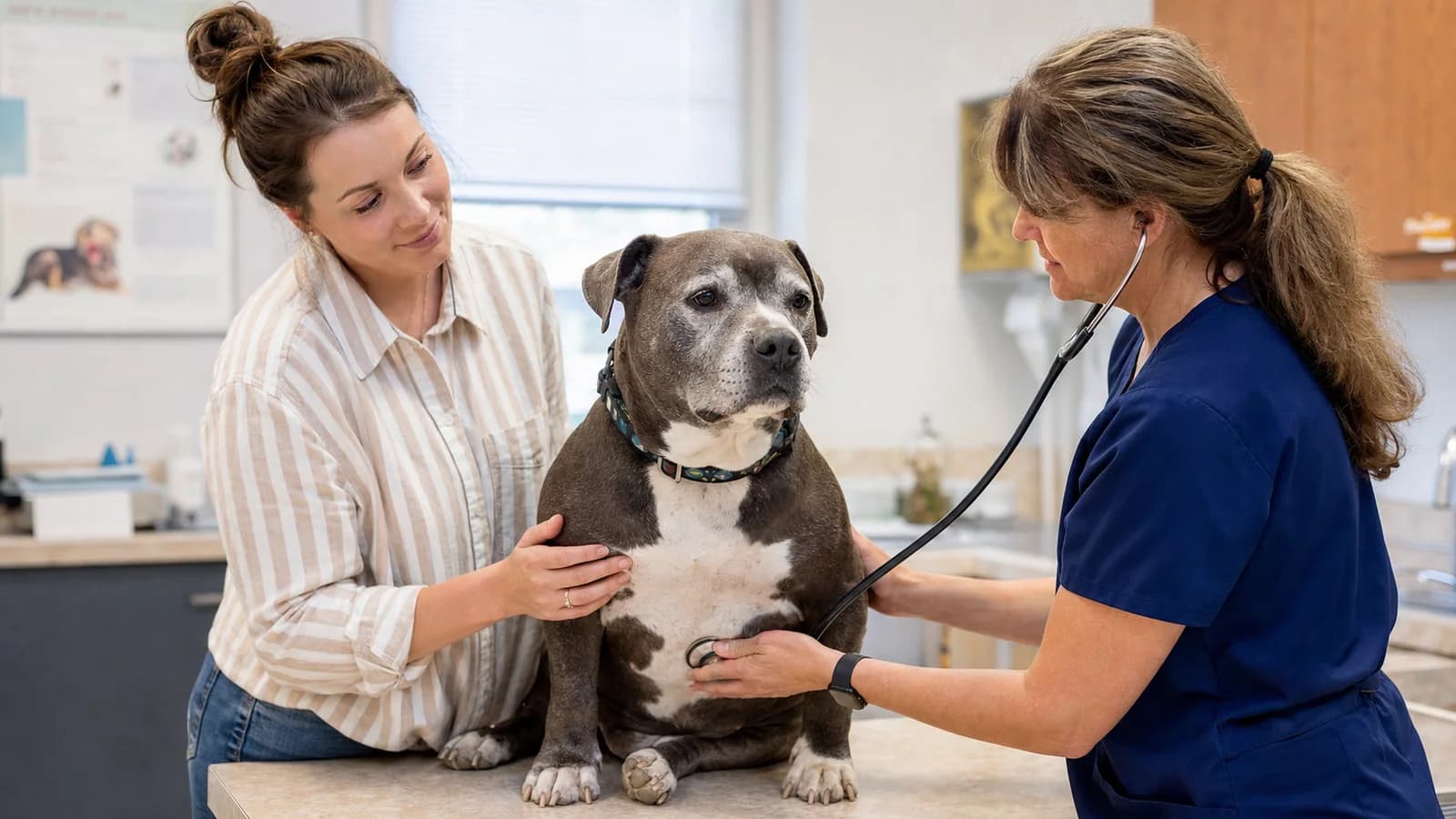
At routine visits, discuss:
- Weight, body condition score, and muscle condition score.
- Heart and lung sounds, resting breathing, and exercise recovery.
- Gait, joint comfort, feet, and nail length.
- Skin, ears, folds, and parasite prevention.
- Teeth, gums, chewing comfort, and home dental care.
- Vaccination based on lifestyle and local risk.
- Stool, urine, thirst, appetite, and digestive signs.
- Behavior, sleep, sensory change, and quality of life.
What age do American Bullies slow down? The preventive-care answer is not to wait for a birthday. Establish a baseline early and investigate meaningful change whenever it occurs.
Senior care without a fixed birthday
Start senior-oriented monitoring before severe decline. A larger dog or one with chronic disease may benefit from earlier and more frequent assessment than a smaller, exceptionally healthy individual.
Useful home adaptations include:
- Non-slip pathways between bed, door, food, and water.
- Raised or repositioned resources only when they improve comfort.
- Ramps or controlled assistance for vehicles.
- Shorter, more frequent walks with sniffing time.
- Warm, supportive rest away from household traffic.
- Easy access to toileting and water.
- Regular nail care to preserve traction.
Do not reduce all activity simply because the dog is older. Appropriate movement helps preserve muscle and confidence. The plan should change when pain, heart disease, airway limitation, heat, or another diagnosis changes what is safe.
When to call a veterinarian
- Seek urgent veterinary care for labored breathing at rest, blue or gray gums, collapse, suspected heatstroke, repeated unproductive retching, a swollen painful abdomen, sudden inability to stand, uncontrolled bleeding, seizure activity, major trauma, or severe unrelenting pain. Call ahead when possible so the clinic can prepare.
Arrange a prompt appointment for persistent limping, reduced appetite, repeated vomiting or diarrhea, unexplained weight change, new cough, increased thirst or urination, recurrent skin or ear disease, a painful eye, a new lump, behavior change, or a decline in exercise tolerance.
Bring:
- A medication and supplement list.
- Videos of gait, breathing, coughing, or episodes.
- A timeline with dates and frequency.
- Food, treat, and calorie amounts.
- Recent weight and body-condition observations.
- Relevant breeder screening and previous medical records.
Never delay care because the dog is younger than an online lifespan range. Never assume an older dog's pain, confusion, or breathlessness is untreatable merely because of age.
American Bully lifespan FAQs
Many breed pages cite 8 to 13 years, but no large published American Bully cohort has established a reliable breed average. Treat that figure as a planning range, not a promise. An individual prognosis depends on current health, structure, body condition, inherited risks, environment, and response to veterinary care.
There is no strong population evidence proving that Pocket Bullies outlive XL Bullies. Size can influence orthopedic load and aging patterns, but variety labels do not determine one dog's future. Compare functional structure, screening records, body condition, breathing, movement, and health history instead of assuming smaller always means longer-lived.
No credible population study provides a Micro Bully average. Micro is an informal marketing label, not a UKC or ABKC recognized variety, and dogs sold under it vary widely. Extreme compactness may create welfare risks in some individuals, so breathing, movement, spinal function, skin, and parental screening matter more than a claimed range.
Owners and breeders should be alert to orthopedic problems, airway and heat intolerance, skin and ear disease, eye conditions, cardiac concerns, and dental disease. Published breed-specific prevalence is limited, so these are concerns to screen and monitor rather than diagnoses every dog will receive.
Ask for verifiable hip and elbow results, a current ophthalmologist eye examination, cardiac screening appropriate to the line, and patellar evaluation when indicated, plus relevant DNA tests. The exact plan should reflect pedigree and veterinary advice. A clear DNA panel alone does not replace structural and specialist examinations.
There is no single senior birthday for every American Bully. Size, chronic disease, mobility, body condition, and individual aging all matter. Begin baseline monitoring during adulthood and ask the veterinarian when to increase visit frequency, laboratory screening, dental review, mobility support, and quality-of-life tracking for that dog.
Yes, weight and body condition can affect health, movement, breathing workload, and disease management. Multi-breed canine research links overweight condition with shorter median lifespan, although it did not specifically measure American Bullies. Aim for a visible waist, palpable ribs, preserved muscle, and a veterinarian-guided calorie plan rather than maximum bulk.
Labored breathing, blue or gray gums, collapse, suspected heatstroke, repeated unproductive retching, a swollen painful abdomen, sudden paralysis or inability to stand, major trauma, seizure activity, uncontrolled bleeding, or severe pain can be emergencies. Contact an emergency clinic immediately instead of trying food, supplements, rest, or internet remedies first.
Bottom line
An 8-to-13-year American Bully lifespan estimate is useful for broad planning, but the evidence does not justify presenting it as a measured breed average or a personal deadline. Protect the years you have by favoring functional structure, verified screening, lean body condition, safe conditioning, dental and skin care, heat awareness, and timely veterinary evaluation.
Track the dog's normal weight, muscle, breathing, gait, skin, appetite, sleep, and behavior. When something changes, investigate the change instead of explaining it away with a breed label or age.
BVMS, MRCVS
Dr. Pippa Elliott, BVMS, MRCVS, is a veterinarian with nearly 30 years of experience in companion animal practice. Dr. Elliott earned her Bachelor of Veterinary Medicine and Surgery from the University of Glasgow. She was also designated a Member of the Royal College of Veterinary Surgeons. Married with 2 grown-up kids, Dr. Elliott has a naughty Puggle named Poggle, 3 cats and a bearded dragon.
Sign up for expert-backed reviews and safety alerts all in one place.