American Bully Puppies: Care, Training, and Buyer Guide
Bring home an American Bully puppy with a realistic plan for socialization, house training, feeding, handling, veterinary care, and responsible breeder or rescue screening.
Petful is reader supported. As an affiliate of platforms like Amazon and Chewy, we may earn a commission when you buy through links on this page. There is no extra cost to you.
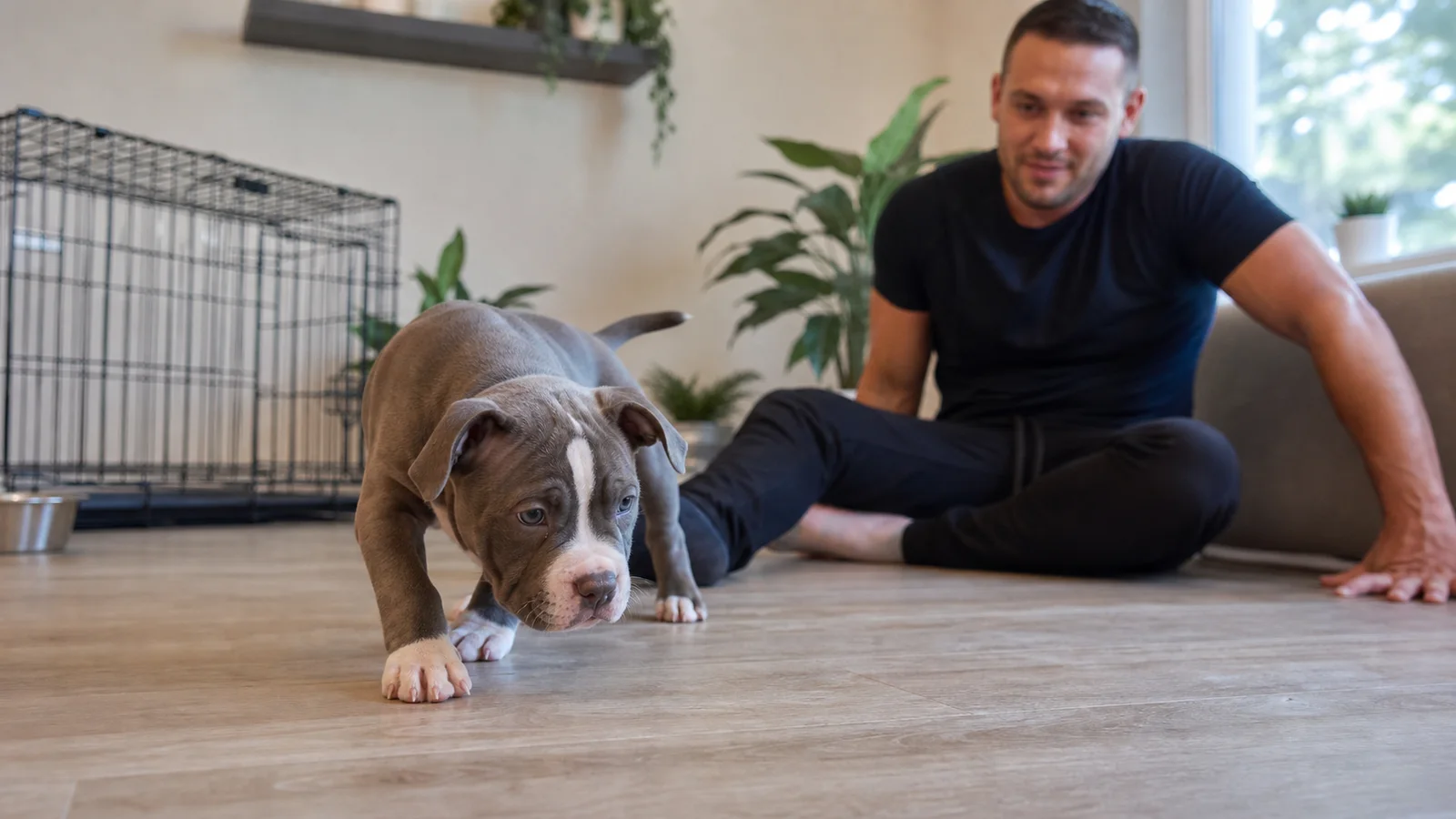
American Bully puppies need a plan before pickup: the USDA generally requires puppies in covered commercial transport to be at least 8 weeks old and weaned. The right puppy is not the one with the rarest color or biggest projected head. It is the one whose source can document health, early care, stable behavior, and a safe transition into a home prepared for a strong adult dog.

Sign up for expert-backed reviews and safety alerts all in one place.
Before you bring a puppy home
- 1Screen the source and documents before paying a deposit
- 2Plan socialization, house training, sleep, food, and veterinary care before pickup
- 3Protect developing growth plates with controlled activity and a lean body condition
- 4Expect adult size to remain uncertain until the puppy matures
Start with the adult dog, not the appealing puppy photo. An American Bully may mature into a compact or tall, substantially built companion that needs reliable handling, reward-based training, secure housing, and an owner who can manage its strength without intimidation.
Read Petful's complete American Bully breed guide before making a deposit. It explains the recognized varieties and broader ownership needs that a sales listing usually leaves out.
Confirm these household questions first:
- Does the lease, homeowners association, insurer, or local ordinance restrict American Bullies or dogs classified as pit-bull types?
- Can every regular handler safely control the expected adult dog on a leash?
- Is there time for short training sessions, supervised socialization, toilet trips, and gradual alone-time practice every day?
- Can the budget absorb veterinary care, training, durable equipment, and an emergency?
- Is there a safe plan for children, resident animals, visitors, travel, and boarding?
In July 2026, there is no single nationwide U.S. federal law that bans the XL American Bully by name. Local rules can still use breed names, a broader pit-bull definition, or physical type, and housing and insurance restrictions may be stricter than public law. Check the current city, county, state, landlord, insurer, and transport rules before paying.
If insurance is part of the plan, compare exclusions, waiting periods, reimbursement, deductible, annual limits, and the exact state policy rather than a headline premium. A current Lemonade puppy insurance quote is one sponsored starting point, but no policy replaces an emergency fund or guarantees that a claim will be covered.
Petful may earn a commission when you click through to Lemonade, at no extra cost to you.
Finding an American Bully puppy responsibly
Choose a source that welcomes verification. A responsible breeder should be able to explain why a pairing was made, show where the puppies are raised, identify the mother, discuss temperament honestly, and provide records that can be checked independently. A responsible rescue should disclose what it knows, what remains unknown, and how the puppy behaved in its care.
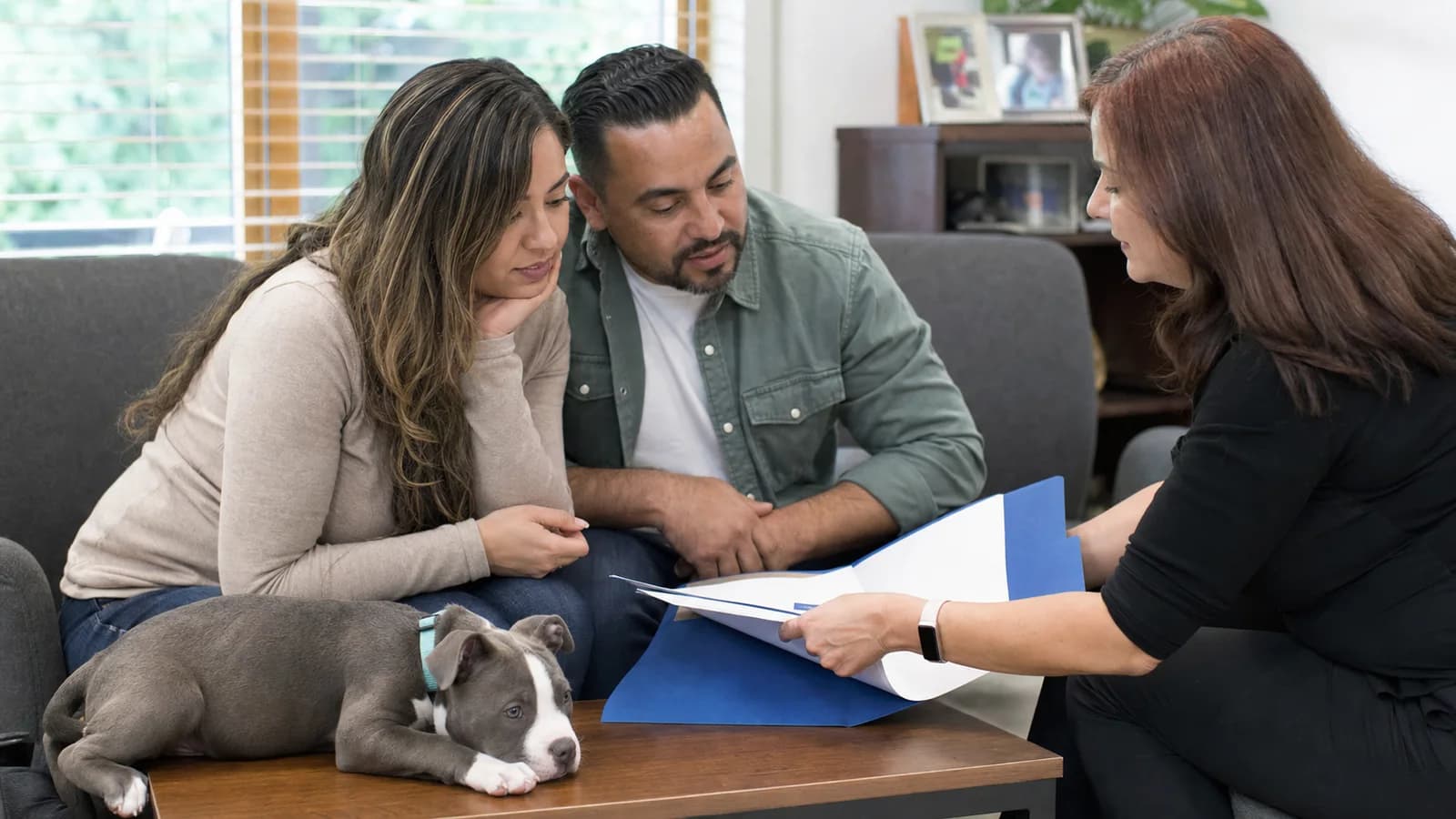
Documents to verify before a deposit
Do not treat registry papers as proof of health. The American Bully Kennel Club code of ethics calls for health testing, DNA profiling, microchipping, and selection for sound structure and temperament, but buyers still need to verify what an individual breeder actually completed.
Ask for:
- The registered names and identification of both parents.
- Searchable health results for both parents, such as records in the Orthopedic Foundation for Animals database.
- The puppy's dated veterinary records, vaccine and deworming history, and microchip details.
- A written sales or adoption contract, health terms, return policy, and any pet-only or breeding restrictions.
- The source's full name, physical location, references, and applicable licence information.
- A clear pickup or transport plan that complies with age and import rules.
OFA offers several screening databases, but the presence of one result does not mean every relevant test was done, and there is no reason to invent a universal American Bully testing package. Search each parent by registered name or number, read the result and date, and ask a veterinarian which findings matter for that particular family line.
- Walk away if the seller will not show the mother or living environment, refuses independently verifiable health records, guarantees adult size or temperament, pressures immediate payment, or changes the price after a deposit.
How to reduce puppy-scam risk
The Federal Trade Commission's pet-scam guidance recommends researching the seller, searching images, and avoiding payment methods with weak recovery options. A polished website, registration logo, social following, or copied testimonial does not prove that a puppy exists.
Use a verification sequence:
- Reverse-image-search the puppy photos and look for the same images under other names.
- Request a live video call that shows the puppy, mother, litter, and a handwritten date or requested action.
- Verify the address, veterinary clinic, registry information, and any claimed USDA licence independently.
- Read the contract before sending money and pay by a method that offers dispute protection.
- Refuse gift cards, cryptocurrency, wire transfers, and surprise shipping, crate, quarantine, or insurance charges.
The USDA Animal Welfare Act public search can show licences, inspection reports, and enforcement records for regulated businesses. Not every small breeder who sells directly to buyers must hold a USDA licence, so a missing record is a question to investigate, not automatic proof of fraud.
Is American Bully just a pitbull?
No. The American Bully is recognized as a distinct breed by the United Kennel Club and American Bully Kennel Club, while the American Pit Bull Terrier has its own breed standard. In everyday language, however, people may use "pit bull" for several blocky-headed dogs, and some laws classify dogs by physical type instead of pedigree.
That distinction matters before purchase. Do not promise that registration papers will override an ordinance, housing rule, insurer decision, or government conformation assessment. Petful's American Bully versus pit bull comparison owns the full breed-by-breed explanation.
Are bullies as aggressive as pitbulls?
There is no responsible way to rank an individual American Bully puppy's future behavior from a breed label alone. Behavior develops through genetics, prenatal and early conditions, health, socialization, learning history, handling, and the situations in which the dog is placed. A calm parent and thoughtful rearing are useful evidence, not guarantees.
Evaluate the puppy in context. Look for recovery after a mild surprise, willingness to engage, comfort with gentle handling, and a source that does not reward fear, frantic arousal, or conflict. Continue planned socialization and reward-based training after pickup instead of assuming a companion-breed label makes training optional.
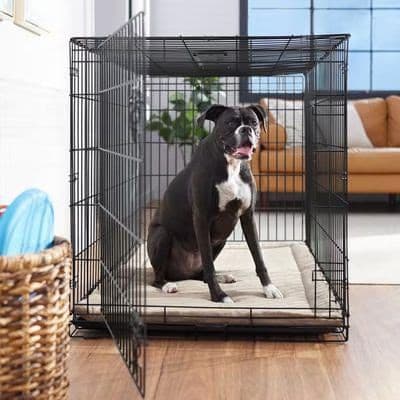
Petful may earn a commission when you click through to Chewy, at no extra cost to you.
Is American Bully a good dog?
An American Bully can be a good companion for a household prepared for its strength, training, exercise, and legal or housing constraints. "Good" is a fit decision, not a universal breed verdict. The same affectionate, people-oriented dog may be manageable for an experienced owner and overwhelming for a home without time, secure housing, or physical control.
Meet the puppy and, when possible, adult relatives. Ask how the dogs respond to visitors, restraint, other dogs, frustration, and recovery after excitement. Choose function and stable behavior over color, bulk, or a dramatic sales video.
What is the lifespan of a Bully dog?
No seller can predict an individual puppy's lifespan. Published breed pages and commerce sites often give broad ranges, but longevity depends on genetics, conformation, body condition, preventive care, environment, and access to veterinary treatment. A puppy contract should not turn a population estimate into a promise.
Use lifespan as a long-term planning question. Petful's dedicated American Bully lifespan and health guide covers the evidence and health considerations in depth. For this buying decision, focus on verifiable parent health information and a budget for years of routine and unexpected care.
Is American Bully aggressive?
An American Bully is not automatically aggressive, and no ethical source should guarantee that a puppy can never show aggression. Aggression is behavior expressed in context. Pain, fear, guarding, frustration, poor socialization, coercive handling, and uncontrolled dog-to-dog interactions can all change risk.
Ask the source about any bite, fight, severe fear, or guarding history in the parents and older relatives. After adoption, use management, early reward-based training, and professional help at the first sign of escalating concern. Do not test a puppy by provoking it or forcing interactions.
What two breeds make a Bully?
The modern American Bully was developed from American Pit Bull Terrier roots with influence from other bull-type breeds, but it is now bred as an established breed rather than recreated by making one simple two-breed cross. A seller who calls any two-breed mix an American Bully should be asked for pedigree and registration evidence.
Parentage still does not answer every welfare or legal question. A DNA breed estimate can provide ancestry information, but it does not replace registry records, health testing, or a local authority's legal definition.
What are the top 3 aggressive dog breeds?
There is no scientifically sound "top three" list that can predict which individual dogs will be aggressive. Bite reporting is affected by population size, identification errors, exposure, ownership practices, reporting systems, and the severity threshold used. A ranking copied from a viral list is weak evidence for a puppy decision.
The practical safety screen is broader: evaluate the individual, its family behavior, early environment, recovery, health, handler skill, supervision, and the consequences of the adult dog's size and strength. Breed is one data point, not a temperament certificate.
Puppy age, pickup, and import rules
For covered commercial movement, the USDA's minimum-age transport guidance explains that puppies generally must be at least 8 weeks old and weaned before transport. State laws and airline policies may impose additional requirements, and a good source may keep puppies longer when that better supports development.
Every dog entering or returning to the United States must meet current CDC dog import requirements. As of the CDC update dated April 28, 2026, the dog must appear healthy, be microchipped, be at least 6 months old, and have a CDC Dog Import Form receipt, with additional rabies documentation based on travel history and vaccination.
- A foreign seller promising legal U.S. delivery of a puppy younger than 6 months conflicts with the current CDC entry age. Stop payment and verify the route directly with CDC before proceeding.
Pickup-day handoff
The handoff should close evidence gaps before the puppy leaves. Compare the microchip and paperwork with the actual puppy, photograph or copy every signed page, and confirm who to contact if the puppy becomes ill or the placement fails.
Collect:
- The final signed contract and an itemized payment receipt.
- Veterinary records with clinic name, dates, products, and puppy identity.
- Vaccine labels and parasite-treatment details rather than a seller-created summary alone.
- Microchip number, registry instructions, and transfer paperwork.
- Current food name, amount, schedule, treats, and any recent digestive changes.
- A familiar scent item and a safe transport restraint.
- Written return, emergency, and after-hours contact instructions.
Keep the first trip quiet and direct. Do not stop at a dog park, pet-store floor, or busy gathering to "start socialization." The immediate goals are safe transport, a low-stress arrival, toilet opportunity, water, the familiar meal plan, and sleep.
If the puppy's identity, condition, records, or contract differs materially from what was promised, pause the transfer. Urgency at pickup is not a reason to accept a different puppy, missing documents, or newly imposed fees.

Petful may earn a commission when you click through to Chewy, at no extra cost to you.
Your puppy's first 30 days
The first month is not a race to expose a puppy to everything. It is a controlled transition that protects sleep, digestion, disease prevention, confidence, and the new relationship. Keep routines predictable while introducing the world in small, positive doses.
| Period | Environment and routine | Training and socialization | Health and growth |
|---|---|---|---|
| Days 1 to 3 | Quiet home base, frequent toilet trips, same food, generous sleep | Name response, gentle handling, reward calm check-ins | Review records, schedule veterinary exam, watch eating and stool |
| Days 4 to 7 | Add short rooms and predictable crate rests | Start house-training pattern and one new surface or sound at a time | Confirm vaccine plan and measure meals |
| Week 2 | Brief safe outings carried or in low-risk settings as advised | Short leash introduction, recall games, calm visitor pairing | Track body condition and avoid forced exercise |
| Weeks 3 to 4 | Gradually increase routine and short alone periods | Puppy class if health protocol allows, cooperative care, calm dog selection | Recheck growth, parasite plan, food tolerance, and equipment fit |
Use the table as a sequence, not a deadline. A worried puppy may need more time at one stage, while a confident puppy still needs sleep and protection from chaotic interactions.
First-week setup
Prepare a small, easy-to-clean home base before pickup. It should allow the puppy to rest without being isolated from normal household life and should keep cords, medicines, trash, children's toys, toxic plants, and swallowable objects out of reach.
Useful setup items include:
- A correctly sized crate or pen with room to stand, turn, and lie comfortably.
- Washable bedding and a separate cool resting surface.
- The same food the puppy is already eating, plus a scale or measuring cup.
- Food and water bowls that are stable and easy to clean.
- A flat collar, identification, secure leash, and properly fitted harness.
- Durable, size-appropriate chew and food-stuffing toys.
- Enzymatic cleaner, waste supplies, gates, and a record folder.
An extra-large Frisco wire crate is a sponsored option for households planning around adult size, but use a divider for a small puppy and never select a crate solely from an advertised XL label. Measure the actual dog and keep the crate a safe resting place, not a long-duration substitute for care.
House and crate training
House training works through prevention, repetition, and immediate reinforcement. Take the puppy to the chosen toilet area after waking, eating, drinking, play, and active training, as well as at frequent intervals suited to age. Reward after elimination and clean mistakes without punishment.
Crate training should be gradual:
- Feed treats or meals near and then inside the open crate.
- Pair short closed-door periods with a safe chew while the puppy is relaxed.
- Return before distress becomes panic and build duration in small steps.
- Keep nighttime and daytime expectations realistic for bladder capacity.
- Never use the crate for intimidation, anger, or prolonged isolation.
Training and socialization
Socialization means building positive, manageable experiences, not forcing greetings. The American Veterinary Society of Animal Behavior puppy socialization statement supports starting appropriate socialization before the vaccine series is complete when disease precautions are used.
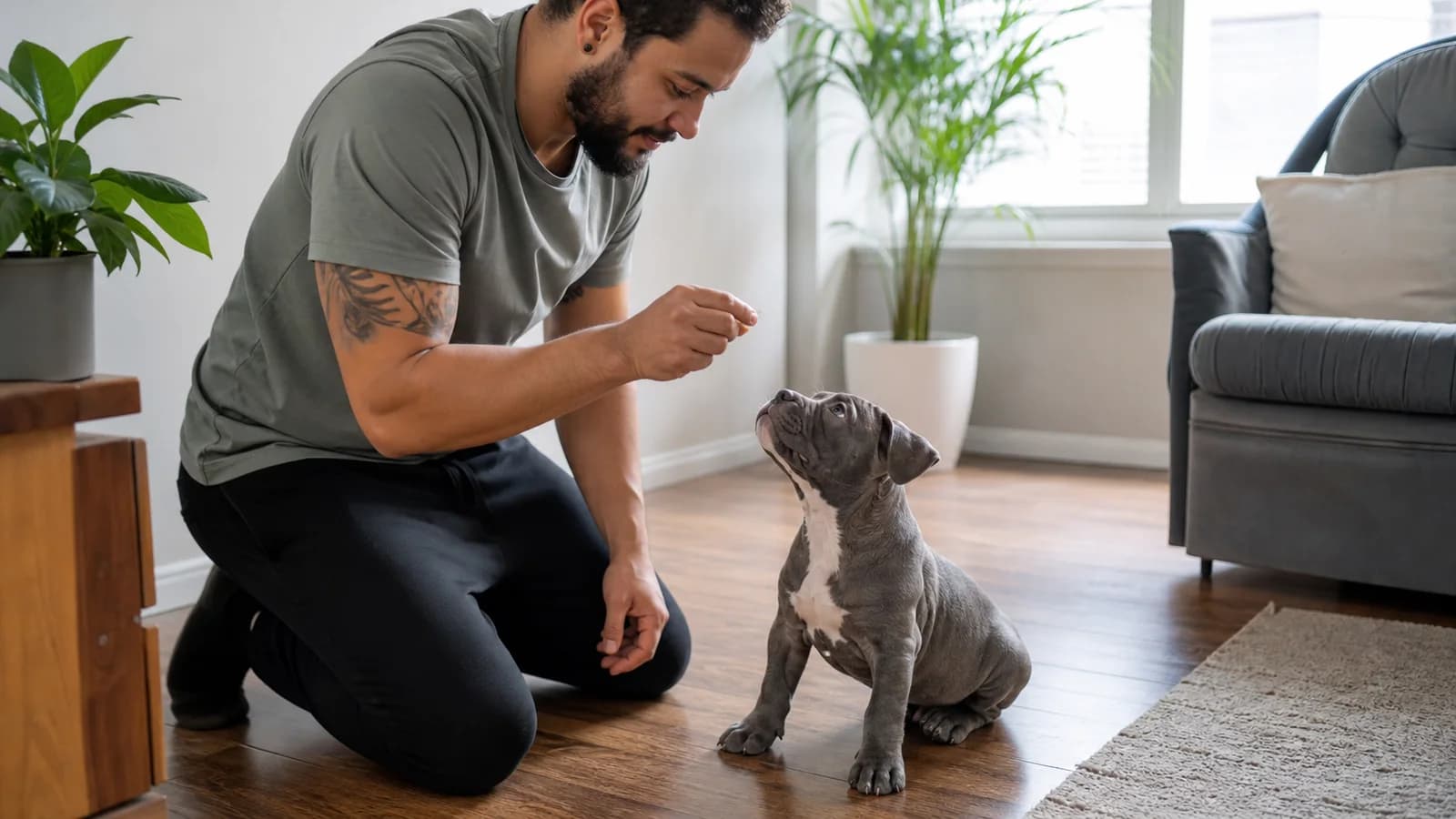
Prioritize:
- Calm exposure to people of varied appearances without requiring contact.
- Safe surfaces, household sounds, car rides, handling, grooming, and veterinary-style touch.
- Carefully selected healthy dogs with known behavior and vaccination status.
- Name response, recall, trade, settle, leash skills, and cooperative care.
- The ability to watch something and disengage instead of rushing toward it.
Comparing breed labels cannot predict this puppy. Socialization should improve coping and recovery, while house training and controlled routines reduce frustration. A puppy who is fearful, persistently frozen, frantic, or unable to recover deserves distance and qualified help, not more forced exposure.
For loose-leash foundations, a PetSafe Easy Walk harness is one sponsored option. Fit it so straps do not rub the armpits, recheck it during growth, and remember that equipment manages leverage while reward-based training teaches the skill.
Exercise and handling
Puppies need movement, play, exploration, and sleep, but not forced conditioning for muscle. Developing growth plates and soft tissues are not helped by repetitive road running, high jumps, weighted pulling, slippery wrestling, or endless stair sessions.
Choose:
- Several short, self-paced play and exploration periods.
- Sniffing, simple training, food-search games, and low-impact surfaces.
- Calm handling of paws, ears, mouth, collar, and body with rewards.
- Rest after activity and an immediate stop when the puppy becomes tired or uncoordinated.
A large KONG Classic is a sponsored enrichment option for an appropriately sized puppy that does not damage or swallow it. Supervise use, select the size for the actual mouth, and replace any toy that cracks or sheds pieces.

A durable rubber dog toy that can be stuffed with treats and selected by the manufacturer's size guide; supervise use and retire it when damaged.
Petful may earn a commission when you click through to Chewy, at no extra cost to you.
Size uncertainty and healthy growth
No one can guarantee the mature class, height, weight, head size, or muscle of a young American Bully puppy. Parent measurements and pedigree can improve an estimate, but sex, genetics, nutrition, health, and individual development still create uncertainty. Buy equipment with adjustability and revise the plan as the actual dog grows.
Growth should look steady and functional, not maximized. A puppy carrying excess fat may appear impressively heavy while placing unnecessary load on developing tissues, and a very muscular adult sales photo does not establish what the puppy should weigh at 4, 6, or 10 months.
Track useful evidence:
- Weigh the puppy on the same reliable scale at reasonable intervals.
- Photograph a natural side and top view rather than a flexed pose.
- Ask the veterinarian to record body condition at each visit.
- Watch whether ribs can be felt beneath a light covering and whether a waist remains visible.
- Record appetite, stool, activity, breathing, and movement alongside the number.
- Adjust portions with veterinary guidance instead of comparing the puppy with social-media dogs.
What adult class can a puppy become?
The recognized variety names depend on mature height and other registry criteria, not a breeder's promise about a very young puppy. Pocket, Standard, Classic, and XL describe different portions of the American Bully standard, while Micro and XXL are commonly used marketing labels rather than additional UKC varieties.
Ask for the parents' mature height measured at the withers and check the registry standard yourself. Even then, write the purchase decision so it still works if the puppy finishes taller, shorter, lighter, or heavier than hoped.
- Select housing, training, transport, and durable equipment for a safe range of adult outcomes. A guaranteed class or weight should never be the reason to accept weak health records or exaggerated structure.
Signs that the growth plan needs review
A puppy should receive veterinary attention when growth is accompanied by persistent lameness, reluctance to move, pain, breathing difficulty, collapse, repeated digestive problems, a sudden appetite change, or loss of body condition. These signs have many possible causes and cannot be diagnosed from a size chart.
Bring the full record to the appointment:
- Food name, label, amount, meal schedule, treats, and supplements.
- Weight and body-condition history.
- Activity, training, and any recent injury.
- Vaccine, parasite-control, and medication records.
- Parent health information and the contract.
Do not add calcium, muscle products, or high-calorie supplements simply because a seller recommends faster growth. A complete growth diet is designed around nutrient balance, and unnecessary additions can disrupt that balance.
Feeding an American Bully puppy
Feed a complete and balanced growth diet appropriate to the puppy's expected adult size, then use measured portions to maintain a lean, steady body condition. "High protein" and "bulking" claims do not replace nutritional adequacy, and extra calories do not create a healthier frame.
The label should carry an AAFCO nutritional adequacy statement for growth. If the puppy is expected to become a large adult, ask the veterinarian whether a food formulated for growth including growth of large-size dogs is appropriate. Petful's guide to the best dog food for American Bullies owns the detailed food comparison.
Use these controls:
- Keep the current food for the first several days unless a veterinarian advises a change.
- Transition gradually while monitoring appetite, stool, skin, and weight.
- Measure the full daily amount, including training rewards and food toys.
- Recheck ribs, waist, abdominal tuck, and growth rather than chasing a scale target.
- Bring the food label and growth record to veterinary visits.
Is the American Bully a good dog? Food does not answer that question, and supplements cannot manufacture stable temperament or sound structure. Good ownership supports socialization, house training, appropriate body condition, and a functional adult rather than trying to maximize weight.
Veterinary care in the first year
Arrange an examination soon after pickup, ideally within the contract window. The veterinarian can review records, examine the puppy, identify missing preventive care, discuss nutrition and body condition, and build a schedule based on age, location, exposure, and current health.
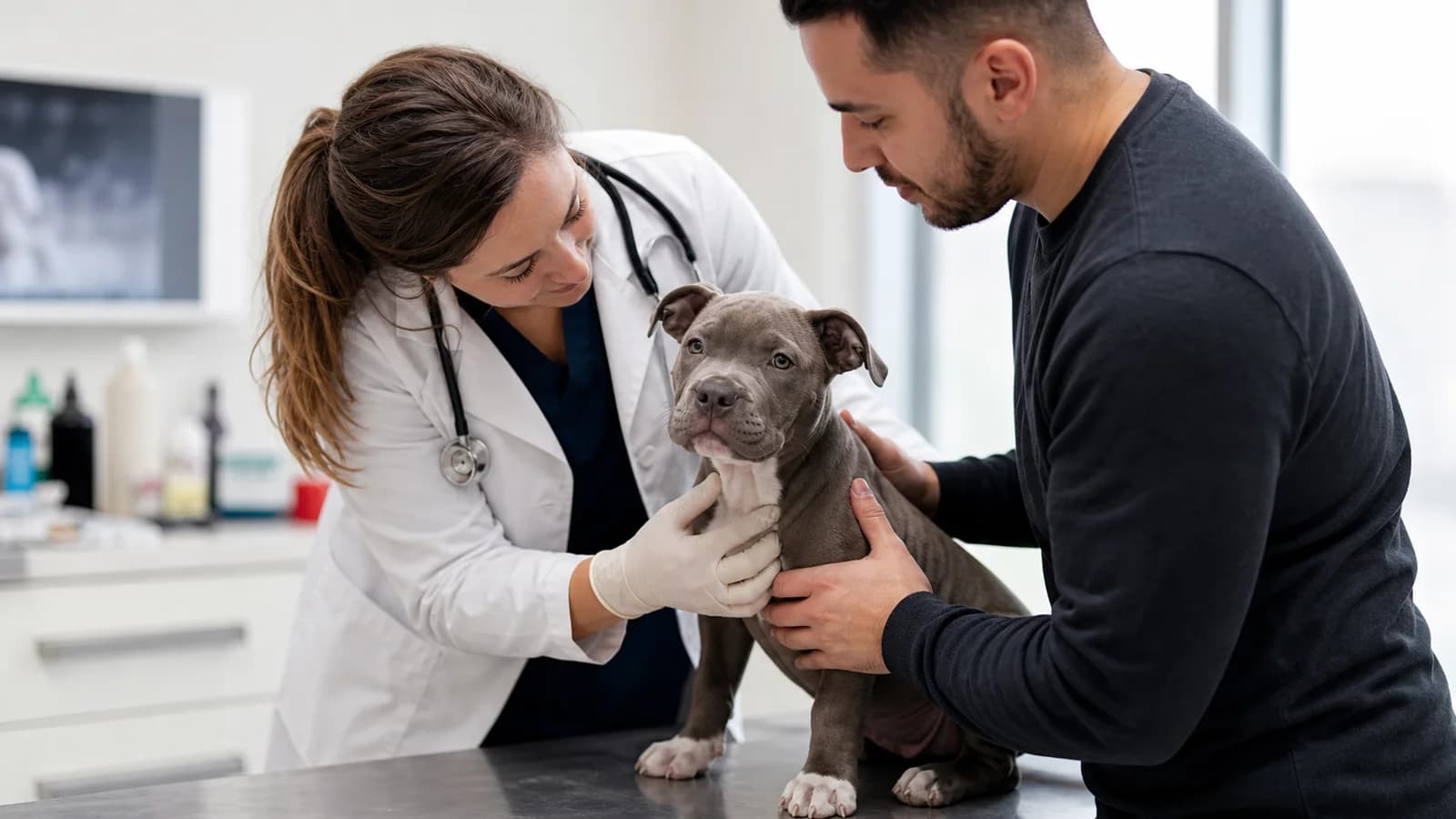
The plan may include:
- Core and risk-based vaccination.
- Intestinal parasite testing and control.
- Flea, tick, and heartworm prevention appropriate to the region.
- Microchip registration and identification review.
- Growth, body-condition, dental, skin, heart, gait, and joint checks.
- A discussion of sterilization timing based on the individual dog.
Do not copy another puppy's vaccine dates or medication doses. Records from a breeder or rescue are the starting evidence, and the veterinarian should reconcile product names, dates, age, and local risk.
- Keep the contract, pedigree or rescue file, parent health results, vaccine labels, parasite treatments, microchip registration, food history, weights, insurance policy, and veterinary notes together.
American Bully puppy price
There is no single trustworthy national American Bully puppy price. July 2026 search results show seller asking prices that vary widely by source, location, variety label, pedigree marketing, and contract terms, but advertised prices are not audited transaction data and do not prove health or quality.
Budget beyond the deposit:
- Veterinary exam, vaccines, parasite control, and microchip work.
- Crate, gates, bedding, leash, harness, food, and safe enrichment.
- Training and socialization support.
- Housing deposits, insurance, transport, and boarding.
- An emergency fund and possible return travel.
Petful's transparent American Bully price guide separates observed asking prices from adoption, setup, annual, emergency, and lifetime costs. It also explains why a high price, rare color, registry paper, or projected size is not a quality score.
Because ownership spans many years rather than one promised number, price planning should cover a long horizon. Food, preventive care, training refreshers, housing, and medical needs continue after the attractive first-year purchases are finished.
American Bully puppy FAQs
Adult size depends on sex, genetics, variety, nutrition, and individual development. Compare the parents and pedigree, but do not accept a guaranteed height or weight. Plan equipment and handling for a substantial adult, then track body condition rather than trying to force a size target.
Height, frame, and muscle do not finish on one universal birthday. Many dogs approach adult height before they finish filling out, and larger individuals may mature later. Protect growth plates with controlled exercise, keep the puppy lean, and let a veterinarian assess development.
Use several short periods of self-paced play, sniffing, exploration, and reward-based training rather than forced mileage. The right amount changes with age, health, weather, and recovery. Stop before fatigue alters movement, and avoid repetitive jumping, weighted work, and road running during growth.
Many are food-motivated and people-oriented, but trainability varies by individual and environment. Start name response, recall, house training, calm handling, trade, settle, and leash skills immediately. Brief reward-based sessions are more productive than physical corrections or drilling after the puppy loses focus.
Feed a complete and balanced growth diet with an AAFCO adequacy statement, using a large-size growth formula when appropriate for expected adult size and veterinary advice. Measure meals, include training rewards in the daily total, and maintain a lean body condition instead of feeding for bulk.
Schedule an exam soon after pickup and follow the veterinarian's individual vaccine, parasite, growth, and preventive-care plan. Visits are commonly more frequent during the initial puppy series, but timing depends on age, prior records, health, location, and exposure. Seek care sooner for illness or injury.
Pair controlled exposure to people, surfaces, sounds, handling, travel, and carefully selected dogs with food, play, and choice. Avoid dog parks and unknown dogs while disease protection is incomplete. The goal is calm recovery and confidence, not contact with everyone.
Asking prices vary widely by source, region, pedigree marketing, variety label, and contract. Use current July 2026 listings only as dated asking-price evidence, not a national average. Compare adoption and breeder costs, then add setup, veterinary care, training, insurance, housing, and emergency savings.

Coreen Saito is a pet writer and longtime shelter volunteer with more than a decade in animal rescue. She covers cat behavior, breed care, and the small, ordinary science of sharing a life with companion animals, with a particular focus on honest takes about the products and decisions that actually matter. At home in Arizona, she's outranked by Mac (a dog with the loudest opinion in the house), Rebel (a cat who governs by quiet authority), and Meri (an orange tabby who runs the late shift and the laundry basket). She writes about all three, plus the rescues that keep coming through her life, at LifeWithMinty.com.
Sign up for expert-backed reviews and safety alerts all in one place.