American Bulldog vs. Pitbull: Appearance, Size, and Temperament
Compare American Bulldogs with American Pit Bull Terriers, understand the broader pit bull label, and weigh adult size, everyday handling and individual behavior before choosing a dog.

BVMS, MRCVS
Petful is reader supported. As an affiliate of platforms like Amazon and Chewy, we may earn a commission when you buy through links on this page. There is no extra cost to you.
An American Bulldog vs. Pitbull comparison needs one clarification before you compare the dogs: American Bulldog names a particular breed, while “pit bull” can be used as a broader label. Here, the comparison is with the American Pit Bull Terrier, a distinct breed recognized by the United Kennel Club, or UKC.
Both can be muscular, short-coated companions, but similar looks do not make them interchangeable. Adult size, household routines and the behavior of the actual dog are more useful decision points than a photograph or a promise that one breed is automatically easier to manage.

Sign up for expert-backed reviews and safety alerts all in one place.
American Bulldog vs. Pitbull: what the names mean
Using an American Pit Bull Terrier baseline makes the comparison specific. It also helps when a shelter listing, insurance form or conversation uses the pit bull label differently. Ask which breed, mix or identification method the person means before assuming that two descriptions refer to the same dog.
The UKC American Bulldog standard and American Pit Bull Terrier standard describe separate breeds. American Bulldogs developed as working farm dogs in the United States. The American Pit Bull Terrier has its own history and standard. Shared bulldog ancestry does not mean that the modern American Bulldog is simply another name for an APBT.
Breed identity also does not settle a temperament comparison. Ask how each dog handles ordinary visitors, walking, rest and other animals, and what support its caregiver currently provides. A record of those situations is more useful for choosing a companion than assuming either breed name guarantees a safer or friendlier dog.
- 1Use an American Pit Bull Terrier baseline when comparing these two breeds.
- 2Confirm what a listing means by the pit bull label before judging size or suitability.
- 3Individual behavior, known history and your ability to manage the dog matter more than a broad label.
For an owner comparing two available dogs, equipment fit is an immediate practical difference. Measure each dog's chest and check the manufacturer's fit instructions before choosing a harness such as the PetSafe Easy Walk in Medium/Large. This linked size is suitable only when the individual measurements match it. A harness that sits correctly on one stocky adult may fit another dog poorly, even when both listings use the same breed label.

Compare the actual chest measurements of either dog before choosing this Medium/Large harness. Similar breed labels do not guarantee the same fit.
Petful may earn a commission when you click through to Chewy, at no extra cost to you.
Read the description before trusting the label
A listing headed “pitbull American Bulldog puppy” can mean a claimed cross, an uncertain identification or a seller combining familiar search terms. Those possibilities are different. Ask for the puppy's parentage, veterinary records and the actual names on any registration documents. Appearance alone cannot settle the question, and a registry document is not a health or temperament guarantee.
- “American Bulldog” should identify the breed being claimed, with supporting history where available.
- “American Pit Bull Terrier” names the specific breed used in this comparison.
- “Pit bull type” may describe an appearance or a broader category rather than verified parentage.
- “American Bulldog and pit bull mix” describes a claimed cross, which cannot be evaluated as a predictable halfway point between two standards.
A color description is no shortcut. “Blue pitbull American Bulldog,” for example, does not establish which breed or mix a dog is. Nor should a puppies-for-sale advertisement substitute for a conversation about the parents, housing, social experience and lifelong support. If a seller cannot explain the identity claim clearly, keep that uncertainty in the decision rather than filling it in yourself.
For a meeting with either prospective dog, ask the caregiver to demonstrate the usual walking setup. A Frisco Traffic Leash provides a shorter handle option as well as its regular handle, but hardware cannot supply leash skills. Choose the length and attachment arrangement for the dog's size and surroundings; avoid wrapping any leash around your hand.
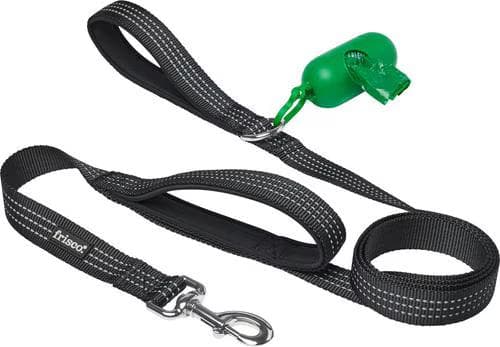
A six-foot leash with two handle positions for supervised everyday walking. Assess the individual dog's leash skills as well as the equipment.
Petful may earn a commission when you click through to Chewy, at no extra cost to you.
If different records use different breed names, ask how each identification was made. The answer may simply be that one description was based on appearance. Record that uncertainty accurately when talking with a veterinarian, landlord or prospective caregiver. You do not need to invent a more definite identity to give the dog appropriate care.
Size, build and visible differences

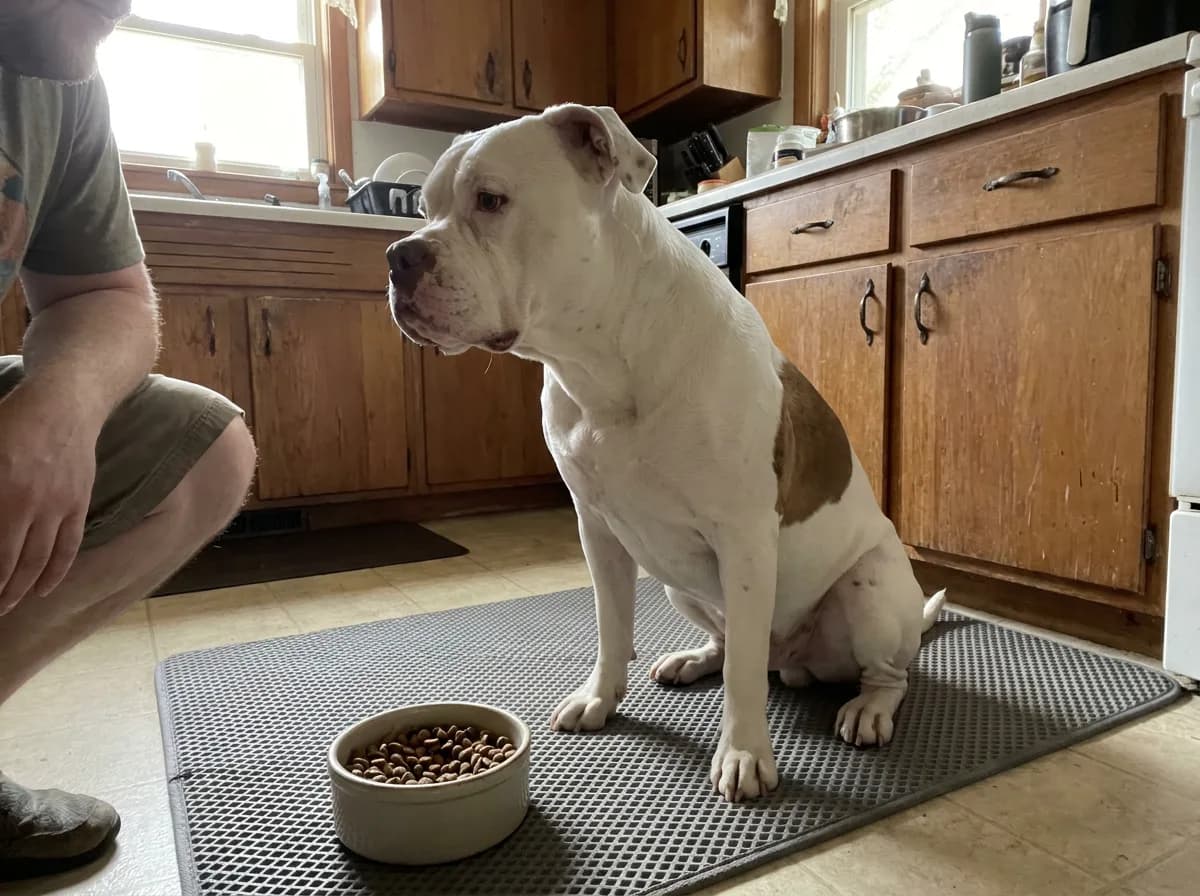
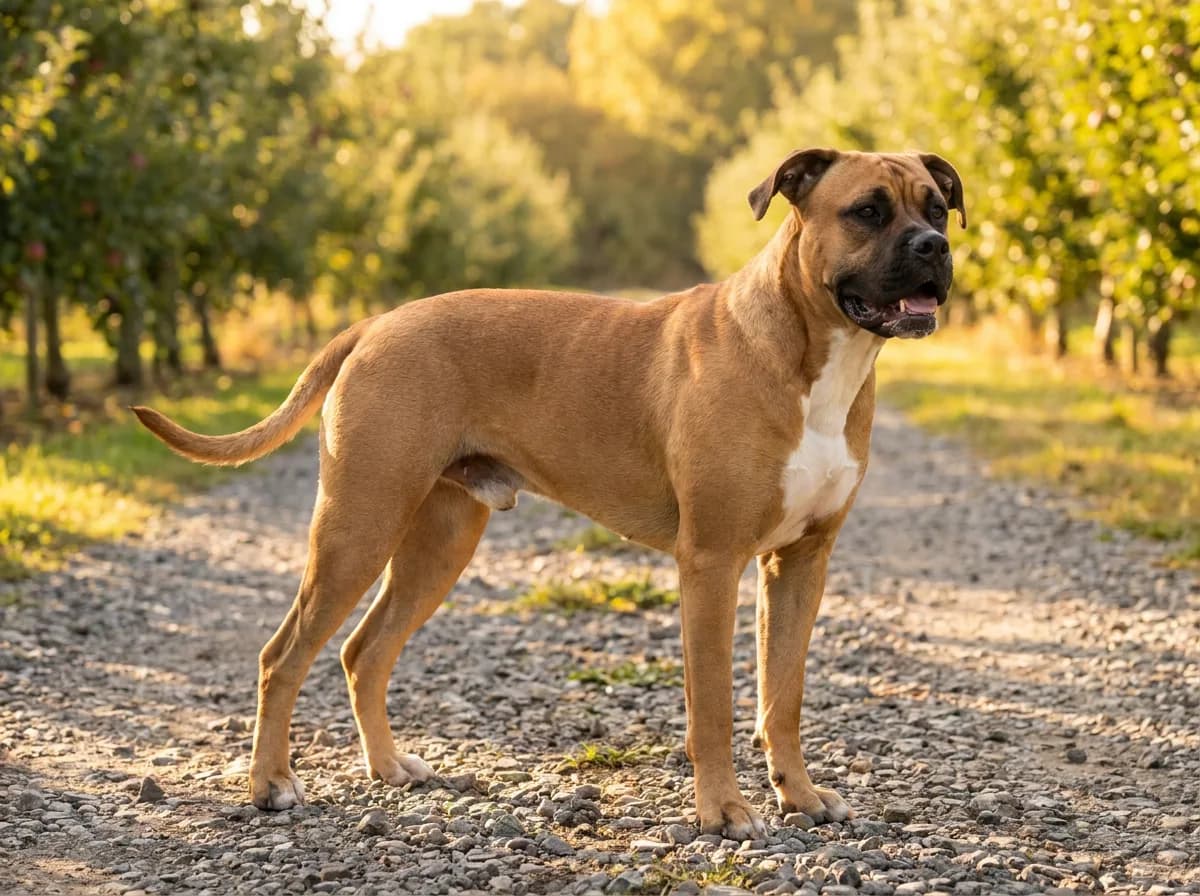
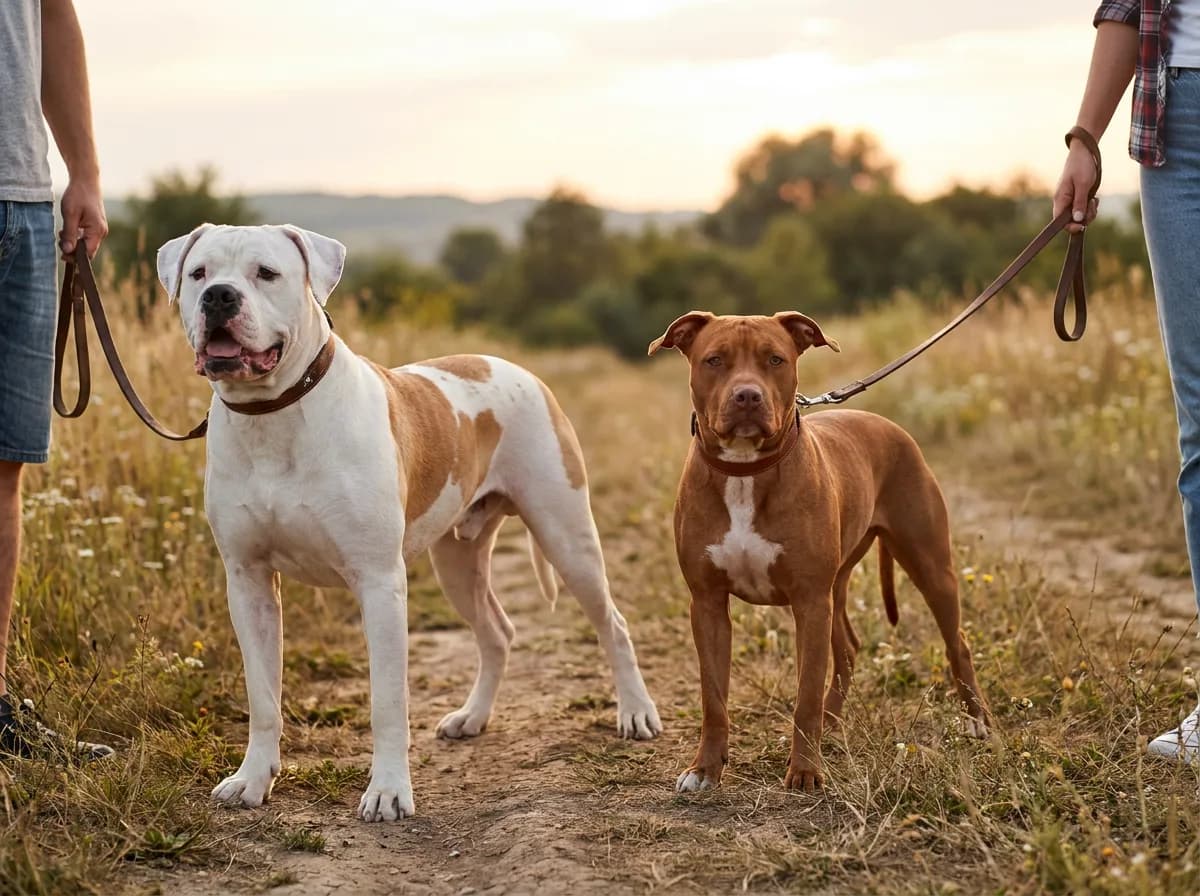
An adult American Bulldog is generally the larger, heavier-framed dog in this comparison. An APBT should be athletic and balanced rather than exaggeratedly bulky. The overlap in muscular bodies and short coats explains why an American Bulldog can look like a pitbull to a casual observer, but individual proportions vary and mixed ancestry makes visual identification less reliable still.
Published size ranges also depend on the source. The AKC American Bulldog profile lists males at 75–100 pounds and females at 60–80 pounds. UKC does not set the same fixed weight range for that breed; it emphasizes weight in proportion to height. Its APBT standard gives desirable mature weights of 35–60 pounds for males and 30–50 pounds for females, while prioritizing balance over a number alone.
| Decision | American Bulldog | American Pit Bull Terrier baseline |
|---|---|---|
| Typical adult build | Larger working dog; proportions vary by type | Athletic, medium-sized dog; excessive bulk is undesirable |
| Published adult weight guidance | AKC: males 75–100 lb; females 60–80 lb | UKC: males 35–60 lb; females 30–50 lb |
| Identification | History and documentation help establish the breed claim | Confirm that Pitbull actually means APBT |
| Home assessment | Measure the actual dog and assess individual behavior | Measure the actual dog and assess individual behavior |
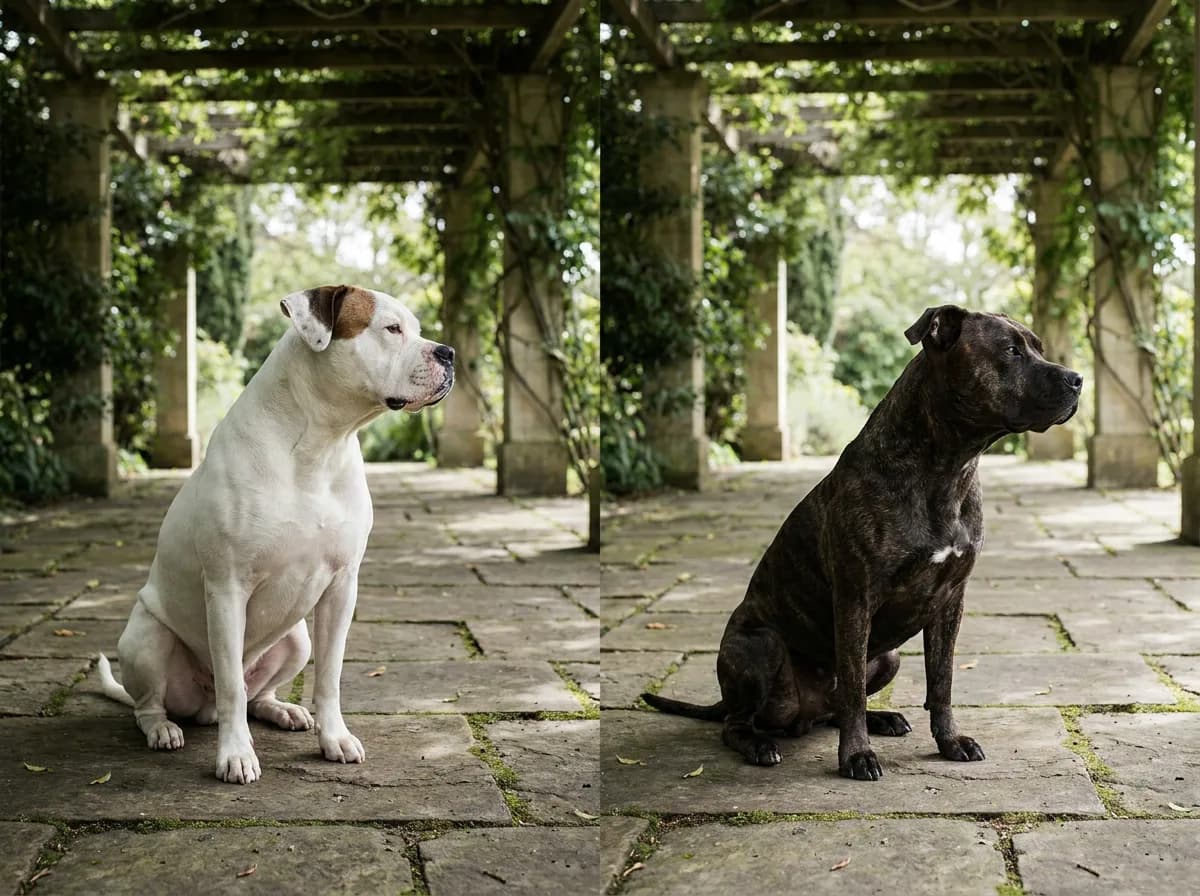
What size changes at home
Think beyond whether a dog fits on the sofa. A larger adult changes the force you may need to manage during an unexpected pull, the space needed for safe transport and the practicality of helping the dog when injured. A smaller APBT can still be powerful and energetic. Neither dog should be chosen on the assumption that an adult family member can simply hold on harder.
Look at the routine you can provide on an ordinary weekday. A household with narrow shared entrances, unreliable fencing or a walker who cannot safely manage a sudden lunge needs a realistic plan. The answer might be a different individual dog with an established calm history rather than a different breed name.
- Check vehicle access and space for a secured crate or appropriate travel restraint.
- Measure doors, resting areas and any barriers instead of guessing from puppy size.
- Have every regular adult handler practice the planned walking routine with the prospective dog where feasible.
- Arrange practical help for lifting or transporting a large dog during illness or recovery.
For an adult adoption, use the dog's current measured weight and dimensions when pricing equipment. For a puppy, ask about the parents' adult sizes but allow for uncertainty, particularly when ancestry is unclear. A puppy's large paws are not a reliable shopping guide for the adult crate, harness or bed.
Food, transport and replacement equipment are recurring commitments. Obtain estimates that reflect the actual dog rather than assuming that all muscular short-coated dogs cost the same to keep. Also consider whether your regular sitter or boarding service can accommodate the dog's handling needs. Availability matters as much as the quoted rate when you need reliable care.
Heads, coats and the limits of photographs
Both breeds have short coats, which makes grooming relatively straightforward compared with maintaining a long or profuse coat. Short hair still sheds, and skin should be checked during routine handling. Groom gently enough that the dog remains comfortable. The Four Paws Magic Coat glove and curry brush is one option for routine loose-hair removal on a short coat. Use light pressure and stop if the skin looks sore or touch seems uncomfortable.

Gentle glove and curry brushing for the short coat of either breed. Routine grooming does not treat sore skin or determine breed identity.
Petful may earn a commission when you click through to Chewy, at no extra cost to you.
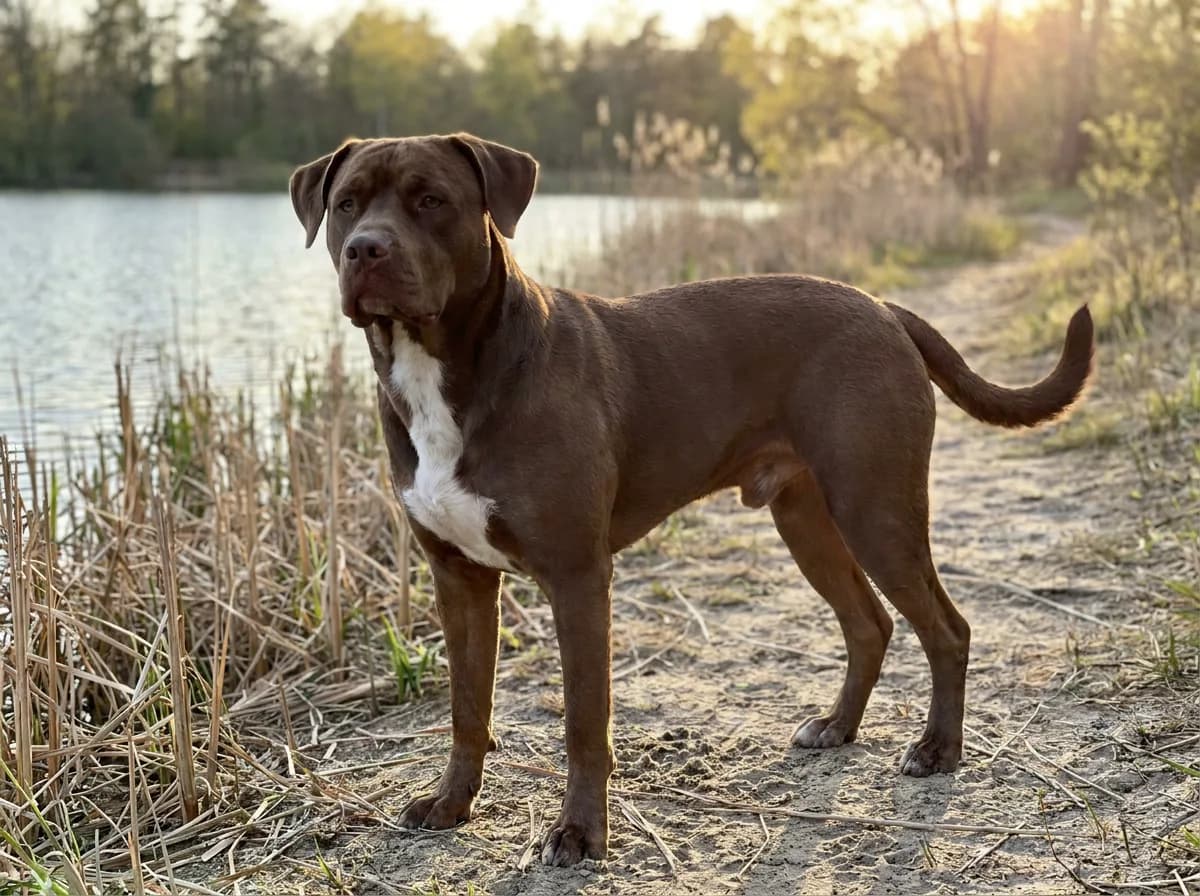
The American Bulldog often has a broad head and substantial muzzle, with variation between its recognized types. The APBT also has a broad head, but the whole dog should retain balanced, athletic proportions. A cropped ear, a particular facial expression or a wide chest is not proof of breed identity.
When comparing photographs:
- Look for relaxed full-body views of mature dogs standing naturally.
- Remember that a close camera can enlarge a head, a low angle can exaggerate a chest, and puppies change as they grow.
- Ask how the dog moves and behaves in daily life; pictures chosen to emphasize bulk offer little help with that decision.
Do not treat a coat color, head shape or unusually large size as evidence of superior health or temperament. If an advertised dog falls well outside a breed description, ask what supports its identification and what its veterinarian has recorded. A pet need not resemble a show example to be a good companion, but the sales claim should still be honest.
Temperament, handling and care needs
For American Bulldog vs. Pitbull temperament, the most useful distinction is between a breed description and an individual assessment. Standards describe desired traits; they do not certify how a particular dog will respond to visitors, unfamiliar dogs, handling or frustration. History, learning and the current environment all matter alongside inherited tendencies.
Neither breed label supplies a reliable aggression ranking. Questions framed as fighting contests or bite-force competitions also do not help a family choose and care for a pet. Concentrate instead on observable behavior, known incidents, management needs and whether you can keep the dog and others comfortable and safe.
Reward the behaviors you want to live with: checking in on a walk, keeping four paws on the floor, settling on a mat and responding to a recall cue in a secure area. Small Pet Botanics chicken training rewards can make practice convenient when the dog tolerates them, although it may also value play or access to a sniffing spot. Account for training treats within the daily food allowance rather than adding unlimited extras.

Chicken-flavor rewards for teaching check-ins, calm greetings and settling. Tailor portions and training to the individual dog's needs.
Petful may earn a commission when you click through to Chewy, at no extra cost to you.
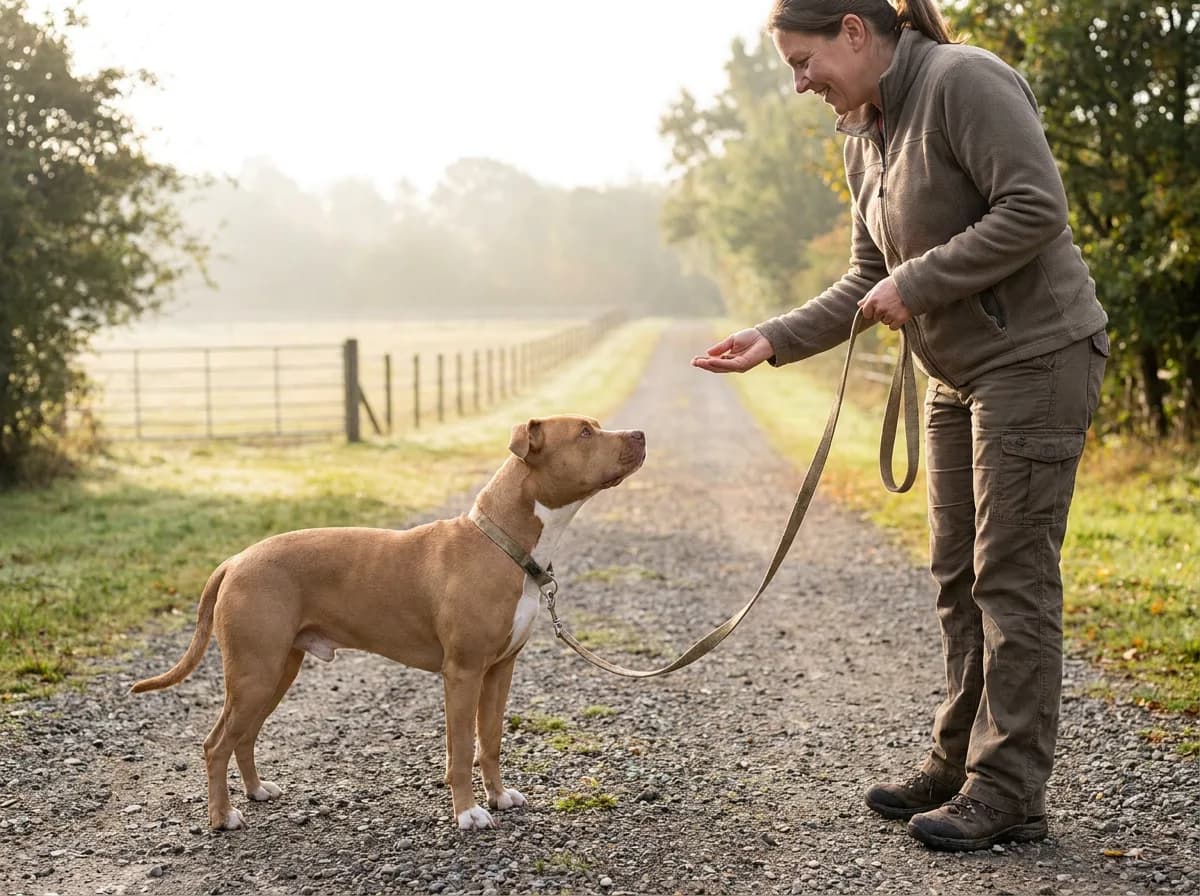
Ask for examples of ordinary behavior
Meet an available adult more than once when possible, and ask the current caregiver for specific descriptions. “Friendly” is less informative than an account of how the dog behaves when a visitor enters, another dog passes at a distance or someone handles its paws. A calm meeting is useful information, but it is still one meeting.
- Ask about previous homes, known bite incidents and situations that prompt fear, guarding or overexcitement.
- Ask how the dog settles after activity and what happens when it is left alone.
- Discuss interactions with children and other animals without treating supervision as optional.
- Request veterinary and training records, including any current behavior-management plan.
- Ask a qualified reward-based professional to help assess a match when the history is complicated or your experience is limited.
The American Veterinary Society of Animal Behavior recommends reward-based training. Equipment and escalating corrections are not substitutes for teaching a skill. If the dog is repeatedly over threshold, increase distance or change the situation so learning is possible. Persistent fear, sudden behavior changes or a bite history warrant individualized professional help.
Exercise is a routine, not a contest
Plan for daily opportunities to move, explore and use the brain, tailored to age, health and the actual dog. A fenced yard can support activity but does not tell you whether a dog's needs are met. Walks, sniffing, short training sessions and interactive games can serve different purposes; exhausting the dog is not the sole goal.
Watch what happens afterward. A workable routine leaves room for recovery and settling. An adult who struggles with stairs, slows abruptly or appears uncomfortable needs veterinary assessment rather than pressure to keep pace. Growing puppies and dogs returning from injury also need activity choices suited to their stage of life.
- Begin with manageable outings and adjust using the dog's response.
- Include quiet time and a comfortable place to rest away from household traffic.
- Use secure spaces for off-leash activity only when appropriate for the dog and location.
- Practise in a secure area before adding difficult distractions. When you do introduce them, keep enough distance for the dog to respond to you.
Consider housing before committing
Read your actual lease, insurer's terms and local rules before bringing a dog home. Definitions may use broad labels, appearance or named breeds, and they do not necessarily match a kennel club's terminology. Ask the relevant organization to clarify its own wording in writing. A breed-registration document cannot guarantee that a particular policy will accept the dog.
Daily logistics deserve the same attention. Consider shared elevators, visiting relatives, pet sitters and any resident pets. A plan that depends on constant perfect obedience is fragile. Gates, separate resting spaces, a secure lead arrangement and adults who follow the same handling routine make a more workable starting point.
Plan introductions around the actual household
An affectionate relationship with people does not prove compatibility with every other animal. Ask specifically about the prospective dog's experience with dogs of different sizes, cats and smaller pets. A claim that the dog has “been around” them is less useful than a description of shared living arrangements, supervision and any separation that was needed.
If another dog already lives with you, discuss an introduction plan with the rescue, breeder or a qualified behavior professional. Avoid making a crowded dog park the first test. Give each animal a way to rest separately, and do not assume they must share food, toys or sleeping spaces simply because they have met without incident.
- Identify who will supervise early interactions and when the animals will be separated.
- Put food bowls and valuable chews in separate areas while learning each dog's responses.
- Teach children to leave resting or eating dogs alone and to ask an adult before approaching.
- Choose a management arrangement every caregiver can maintain consistently.
Prepare for veterinary handling, too. Reward calm contact with paws, ears and the body in brief sessions the dog tolerates. Ask your veterinary team for help before an appointment if handling has been difficult in the past. The goal is a workable care plan for this individual, regardless of which name appears on the intake form.
When two dogs both seem plausible, favor the match supported by the clearest history and a routine you can sustain. An adult with documented home experience may offer more information than a puppy whose eventual size and behavior are still developing. That does not make one age universally better; it helps you choose the kind of uncertainty your household can reasonably manage.
How this fits the American Bulldog breed
If the American Bulldog is your preferred option, our American Bulldog breed guide explains its history, general traits and everyday care in more detail. It also addresses the mistaken idea that the modern breed can be reduced to two present-day parent breeds. This is an established breed with a working history, not a recipe inferred from a dog's appearance.
Use that background to prepare questions, not to guarantee a personality. An American Bulldog's strength makes thoughtful handling important, but “aggressive breed” is too vague to replace an assessment of the dog in front of you. Match your household to known behavior, realistic care needs and the support available throughout the dog's life.
Questions from prospective owners
There is no dependable breed-level ranking that answers this for a prospective pet. A breed standard describes desired characteristics, while individual differences include history, learning, health and responses to particular situations. Ask about documented behavior and previous incidents, then assess whether your household can meet that dog's management needs. Individual behavior is more useful than a promise based on either label.
An American Bulldog is a separate breed from the American Pit Bull Terrier. The broader term pit bull may be applied differently in everyday speech or policies, so ask what it means in that setting. Using an American Pit Bull Terrier baseline allows comparison against a specific breed standard; individual differences and mixed ancestry still limit what appearance can tell you about a particular dog.
Generally, yes. AKC lists American Bulldog males at 75–100 pounds and females at 60–80 pounds; UKC gives desirable APBT weights of 35–60 pounds for males and 30–50 pounds for females. These are source-specific breed ranges, not individual guarantees. Measure the actual dog when planning transport, equipment, and who can manage it safely.
BVMS, MRCVS
Dr. Pippa Elliott, BVMS, MRCVS, is a veterinarian with nearly 30 years of experience in companion animal practice. Dr. Elliott earned her Bachelor of Veterinary Medicine and Surgery from the University of Glasgow. She was also designated a Member of the Royal College of Veterinary Surgeons. Married with 2 grown-up kids, Dr. Elliott has a naughty Puggle named Poggle, 3 cats and a bearded dragon.
Sign up for expert-backed reviews and safety alerts all in one place.