Pitsky Full Grown: Adult Size, Growth and Parent Differences
Explore Pitsky adult size, growth uncertainty and parent differences, with practical measurement and equipment guidance that keeps individual health and body condition in view.
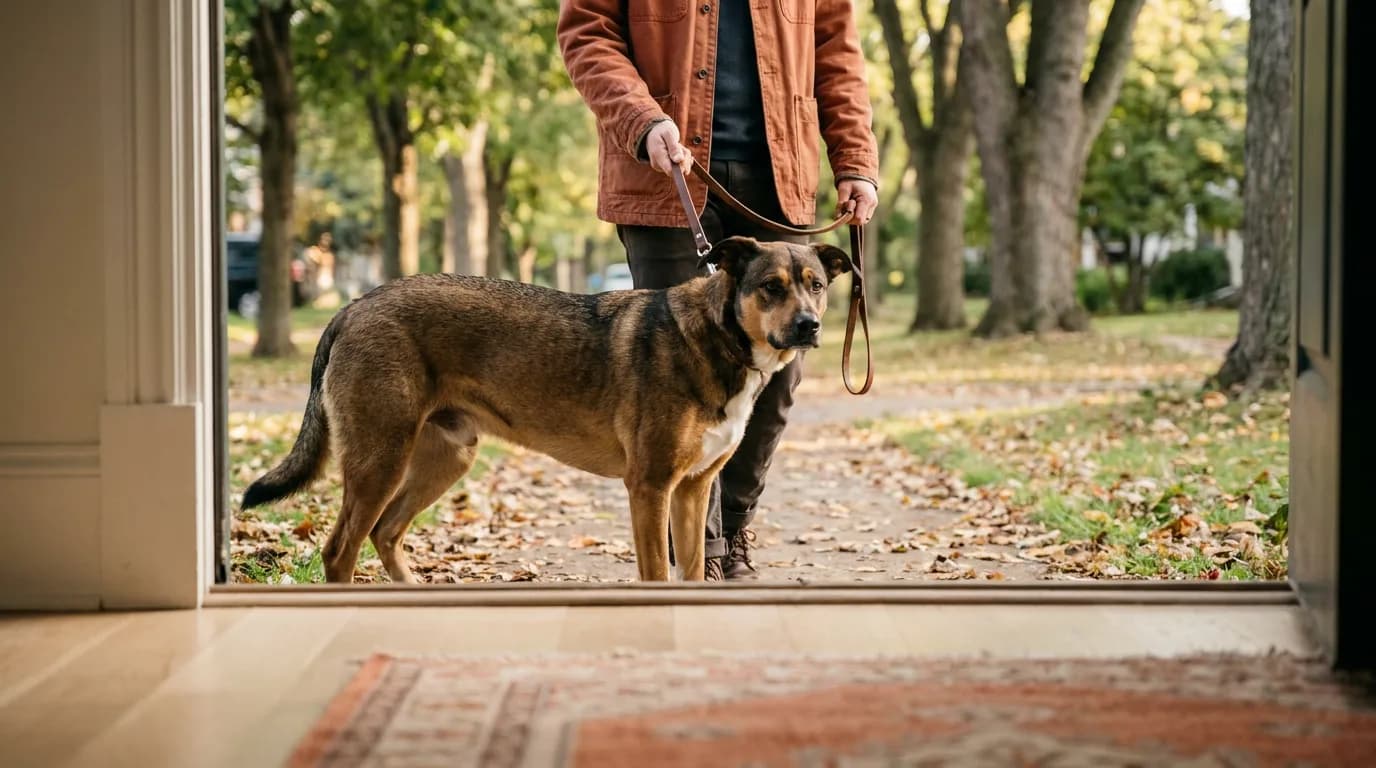
Adult measurements vary; fit care and equipment to the individual dog.
Petful is reader supported. As an affiliate of platforms like Amazon and Chewy, we may earn a commission when you buy through links on this page. There is no extra cost to you.
A Pitsky full grown is usually a medium-to-large dog, but the name cannot tell you exactly how tall or heavy your puppy will become. A Pitbull Husky mix can inherit different proportions from either parent, and a dog described as a Pitsky may have an uncertain family history. Parent records, a growth record and your dog's actual measurements give you more useful information than a photograph or a promised adult weight.
For a practical starting point, Adopt a Pet's Pitsky size guide lists approximately 35–75 pounds and 16–25 inches tall. Treat those numbers as a published estimate, not an official breed standard or a healthy-weight target. A dog outside that range does not automatically have a health problem, and a dog inside it can still carry too much or too little body fat.

Sign up for expert-backed reviews and safety alerts all in one place.
How Big Will a Pitsky Get?
A Husky Pitbull mix size estimate is the same question as Pitsky adult size. Reversing the parent names does not create a different growth standard.
Most descriptions place adult Pitskies in the medium-to-large category. The broad published range above is useful when deciding whether you can accommodate an energetic, substantial dog. It is much less useful for ordering a harness, estimating an individual puppy's final weight or deciding what that dog should weigh when healthy.
Use published size ranges for planning, parent size for context and individual measurements for decisions. None of these replaces your veterinarian's assessment of healthy body condition.
An adult dog might have a relatively lean outline, a broad chest, a substantial head or a combination of those features. Height and weight also describe different things: two dogs of the same shoulder height can have different frames, muscle mass and body-fat levels. Comparing only their weight leaves out most of the explanation.
Size ranges inform shopping, but they cannot choose an appropriate toy for the individual. Choose enrichment that can adjust with your puppy. A KONG Classic is one option for supervised food-based enrichment, but this linked product is the Large size. Check the maker's current size guidance and your dog's chewing behavior instead of assuming every Pitsky needs that version. Count food used in enrichment as part of the daily intake.
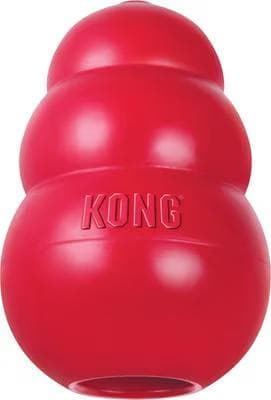
A durable rubber dog toy that can be stuffed with treats and selected by the manufacturer's size guide; supervise use and retire it when damaged.
Petful may earn a commission when you click through to Chewy, at no extra cost to you.
| Information you have | What it helps you decide | What it cannot establish |
|---|---|---|
| Published Pitsky size estimates | Whether to plan for a medium-to-large adult dog | An individual puppy's final weight or ideal body condition |
| Documented parent size | The family's general proportions and the uncertainty around a puppy estimate | A guaranteed midpoint between the two parents |
| Repeated weights and shoulder-height measurements | How your own dog changes over time | A diagnosis from one measurement |
| A veterinary body-condition assessment | Whether the dog's current fat stores fit its frame and health | An exact eventual adult height |
| Chest circumference and body length | Which manufacturer size chart to consult | The fit of every harness or crate labeled medium or large |
There is no verified record identifying the biggest Pitsky in the evidence used here. A striking photograph or an unusually high weight claim cannot establish a breed maximum.
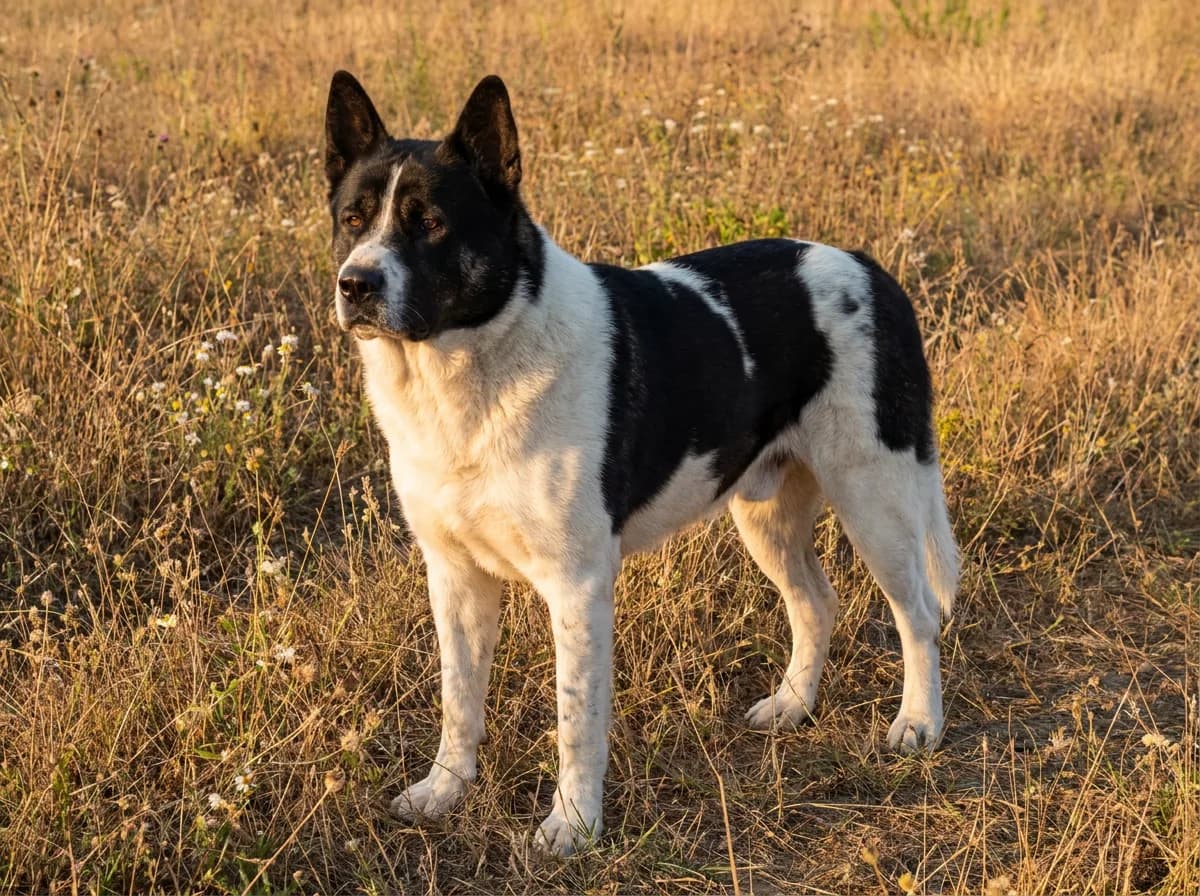
Checking a size prediction
Ask anyone making a precise size promise what it is based on. Have they measured both parents? Do they have weights from related adult dogs? Is the puppy's age documented? A useful answer includes the records and admits uncertainty. A confident number without that information remains a guess.
Consider two hypothetical conversations. One seller says a puppy will weigh exactly 50 pounds because its paws look large. Another provides the parents' records, explains how much their related adults vary and says the puppy's outcome is still uncertain. The second answer helps you plan, even though it sounds less definite. Neither answer establishes a healthy target for that puppy without later assessment.
Translating size into household fit
Translate the uncertainty into a practical home check. Can every regular caregiver handle the possible adult size on walks? Is there comfortable space for the dog to rest away from household traffic? Can you transport it for routine appointments? These questions are more useful before adoption than trying to distinguish a forecast of 55 pounds from one of 60 pounds.
If adult size is a firm housing or handling constraint, meeting an adult rescue dog can remove much of the puppy-size uncertainty. It does not remove the need to learn about that dog's behavior, health and daily routine. Check your home's actual pet rules as well; a label or estimated weight is not a substitute for the agreement that applies to your property.
How Long Does It Take for a Pitsky to Be Fully Grown?
A full-grown Pitbull Husky mix is an adult Pitsky, but a five-month-old Pitsky is still growing. Neither label supplies a validated weight-for-age chart.
There is no validated Pitsky-specific growth calendar that can assign every puppy an exact adult weight at each month. Adopt a Pet's guide describes adult height around one year and adult weight around 18 months. Those are broad published guideposts. Your puppy may mature differently, particularly when parentage or age is uncertain, so use the growth record and veterinary checkups to interpret the change.
Height, filling out and maturity
“Fully grown” can also mean different things. Getting close to adult height, filling out through the chest and developing adult behavior do not happen on a single birthday. A dog may look tall and mature while still needing adolescent training and age-appropriate activity. Looking muscular does not establish skeletal maturity or readiness for repetitive impact exercise.
Changing body dimensions are a reason to reassess walking equipment as a puppy develops. A PetSafe Easy Walk harness may be worth comparing when you want a front-attachment walking option. The linked offer is Medium/Large, not a universal Pitsky size. Match the product's current chart to your dog's measurements, check the fit while the dog moves and follow the manufacturer's instructions. A harness does not replace loose-leash training or make an unmanageable walking situation safe by itself.

Petful may earn a commission when you click through to Chewy, at no extra cost to you.
Start a simple growth record:
- Date and known age.
- Measured weight.
- Approximate shoulder height.
- Changes in food, activity or health. Keep the method consistent. Different household scales, a dog shifting position or a heavy harness can make a small apparent change difficult to interpret. A veterinary clinic can help establish a reliable weighing routine when your dog is too large for a home scale.
Use plain observations rather than labeling every entry normal or abnormal. For example, record that the dog weighed a certain amount at a clinic visit and that its walking harness has become snug at the chest. If your vet has agreed on a monitoring interval, follow it. Repeated weighing several times a day will usually add noise to the record rather than help you understand growth.
Keep the age information beside the measurements. A birth date supplied with reliable records offers different context from a rescue's estimated age. In the latter case, write “estimated age” instead of quietly treating it as exact. That small distinction prevents a guessed birthday from turning into an apparent growth problem when you compare your dog with an online timetable.
Reviewing the growth record with your veterinarian
Bring the pattern to a checkup instead of trying to match a generic online chart. A steady increase may be expected in a growing dog; a sudden unexplained change deserves a different conversation. Let your veterinarian know about a reduced appetite, vomiting, diarrhea, pain, exercise intolerance or a noticeable loss of muscle. Those details matter more than whether the dog matches someone else's photograph at the same stated age.
Food changes should follow the dog's life stage and veterinary advice, not an arbitrary deadline from a mixed-breed growth table. Equally, adding food to make a puppy “catch up” to an internet weight can be the wrong response. Growth monitoring means watching the whole dog, not pushing the number upward.
Parent Size and the Limits of Prediction
The Pitsky name commonly describes an American Pit Bull Terrier and Husky mix. In everyday listings, however, “Pitbull” can be used more loosely, and Husky ancestry may also be described imprecisely. That makes the quality of the family information important. Our American Bully versus Pitbull guide explains why related names and visual impressions are not interchangeable records of identity.
For home equipment, actual dimensions are more useful than resemblance to a parent breed. For a crate, evaluate the dog's ability to stand normally, turn around and lie comfortably, then compare its measurements with the maker's dimensions. The Frisco heavy-duty wire crate linked here is X-Large. It may be unnecessarily large for some Pitskies and unsuitable for a dog that panics in confinement. Choose the space and design for the individual dog rather than the largest size you can buy.
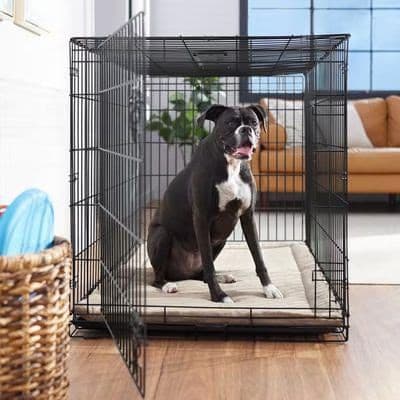
Petful may earn a commission when you click through to Chewy, at no extra cost to you.
For context, the United Kennel Club publishes these adult parent-breed ranges in its American Pit Bull Terrier standard and Siberian Husky standard. They describe those parent breeds, not a forecast for a Pitsky puppy.
| UKC parent-breed reference | Male shoulder height and weight | Female shoulder height and weight |
|---|---|---|
| American Pit Bull Terrier | 18–21 inches; 35–60 pounds | 17–20 inches; 30–50 pounds |
| Siberian Husky | 21–23.5 inches; 45–60 pounds | 20–22 inches; 35–50 pounds |
These ranges overlap in weight while differing in height. The APBT standard describes a solidly built, muscular dog and emphasizes balance and proportion over an exact number. The Husky standard requires weight in proportion to height. Neither standard tells you to average two figures to predict a mixed puppy's adult dimensions.
A documented Siberian Husky parent gives useful background, but actual family records are more informative than representative breed pictures. Ask for each parent's measured adult height and weight, when those measurements were taken and whether the weight reflected healthy body condition. Related dogs and previous litter records may add context; littermates still need not develop the same build, coat or size. If the parents are unknown, keep that uncertainty in your planning.
- Parent records help with planning, but they do not establish an exact adult weight. Ask when height and weight were measured and whether the parent was in healthy body condition.
Appearance and body dimensions
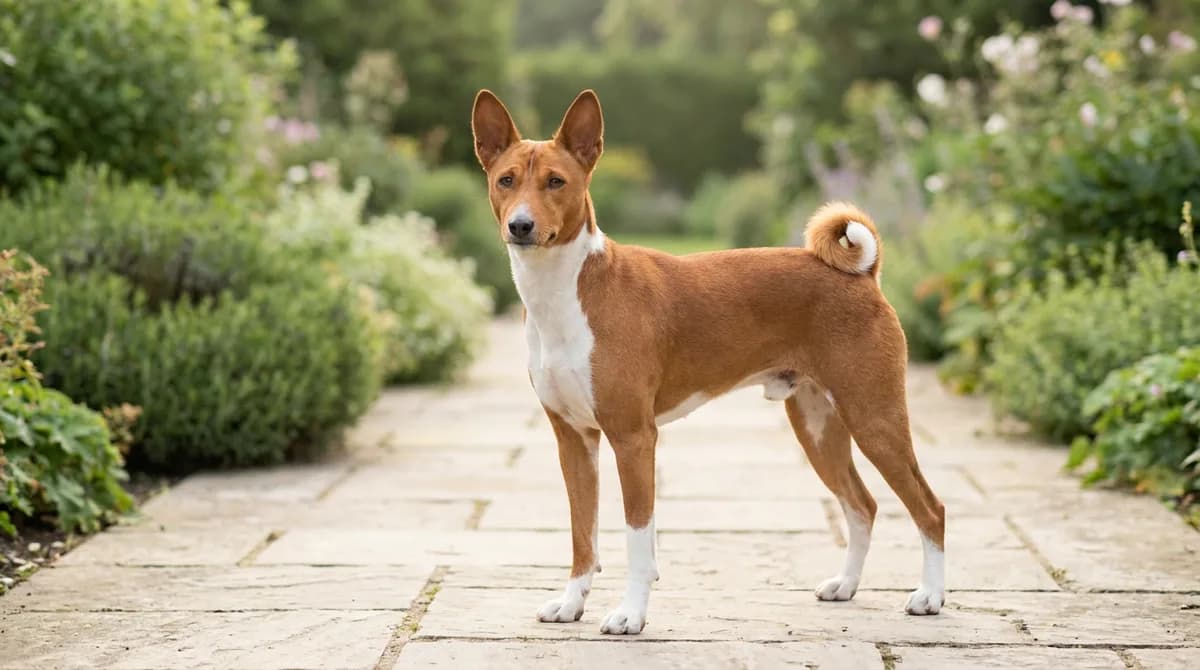
An individual adult photograph can illustrate variation; it cannot establish a universal Pitsky appearance. Upright ears, blue eyes, a broad head or a short coat do not prove a particular ancestry. They also do not tell you the dog's measured weight. If you are evaluating an adult dog, ask to meet it and review its available records rather than trying to solve its identity from a picture.
Coat volume can affect your visual impression of size; inspect the actual coat when choosing care tools. Coat care should follow the coat your dog has. A short-coated dog and a dog with a denser Husky-like coat may need different tools. For a medium-to-long coat, the Frisco deshedding brush is an option to compare against the product's intended coat types. It is not the default tool for every Pitsky. Use gentle handling and stop if the skin looks irritated or the dog is uncomfortable.
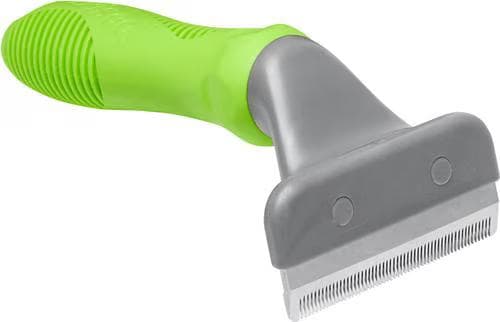
Petful may earn a commission when you click through to Chewy, at no extra cost to you.
Be especially cautious with labels such as “mini,” “giant” or “teacup” attached to a Pitsky. Ask what actual parentage and measurements the seller means. The label alone does not create an established size division. A useful discussion centers on the dog's known history, likely care requirements and the uncertainty that remains.
DNA ancestry information can sometimes add context, but an ancestry estimate and an exact adult-size guarantee are different claims. Even when a report supplies a weight estimate, use it alongside the dog's actual growth and veterinary assessment. Avoid averaging two breed weights and presenting the result as a dependable prediction for your puppy.
Measuring Your Dog and Choosing Equipment
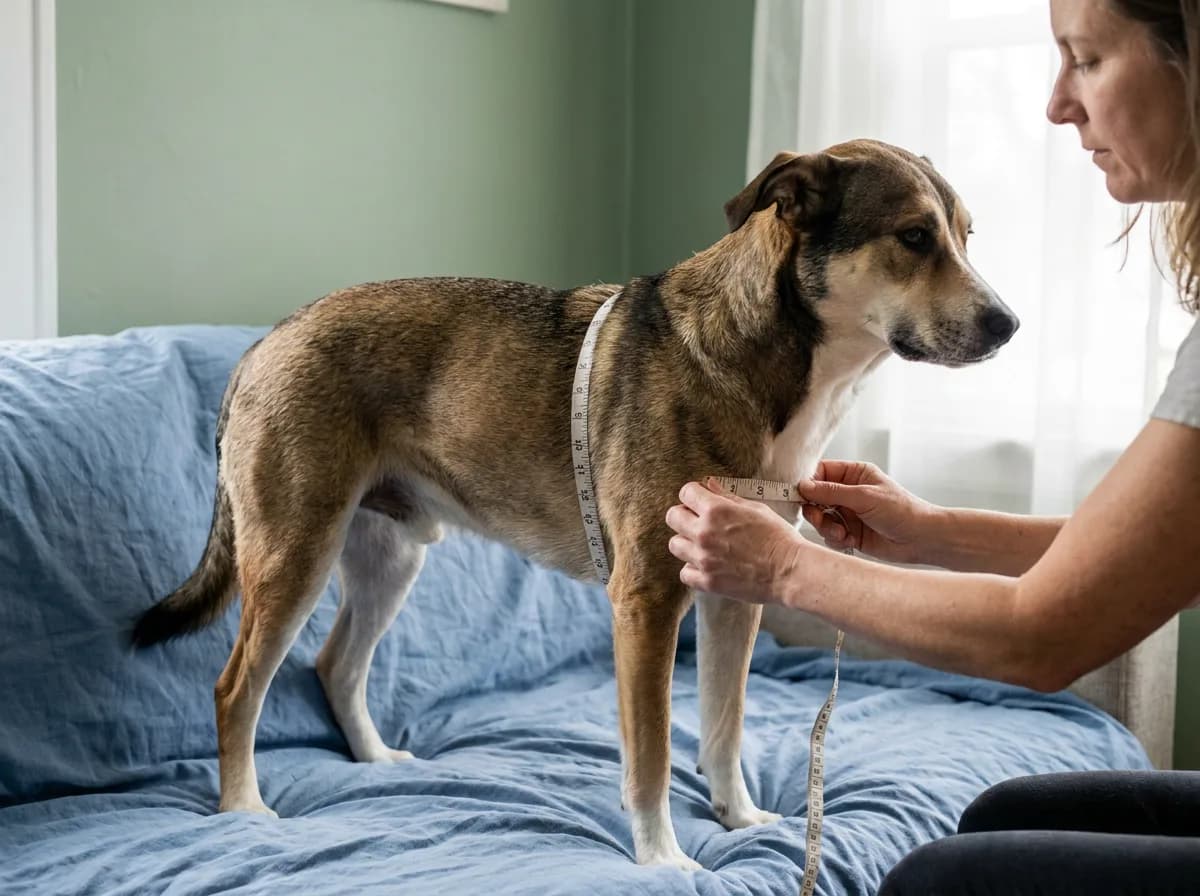
Equipment is one place where a real measurement immediately improves a decision. Measure your dog while it stands naturally and comfortably. Use a soft tape for chest circumference, and follow the individual manufacturer's diagram: brands can define their measurement points and fit allowances differently. Do not tighten the tape to make a desired size appear to fit.
For shoulder height, measure from the floor to the highest point of the shoulders while the dog stands on a level surface. Measure body length only as the equipment maker instructs. Keep your dog relaxed, reward cooperation and stop if handling causes distress. You can practice brief, pleasant contact before attempting the complete measurement.
Chest circumference and repeat measurements
Chest circumference usually refers to the distance around the chest rather than across its front. Follow the harness diagram to find the specified position, commonly around the broad area behind the front legs, and keep the tape flat instead of twisted. Record the unit with the number. A measurement written as “25” is easy to misread later if one chart uses inches and another uses centimeters.
If two measurements disagree, check the dog's stance and the tape position before deciding it has changed size. Do not substitute a collar measurement for chest girth. When your dog falls between sizes, use the maker's guidance or ask its support team; automatically rounding down can create an uncomfortable fit. Keep the packaging until you have checked the fit calmly at home.
Checking comfort as your puppy grows
Recheck fit as your puppy grows. Look for rubbing, restricted movement, straps moving into the armpits or a dog slipping backward out of the equipment. Those observations call for a fit adjustment or a different design, not simply pulling the straps tighter. A comfortable fit needs to work during ordinary movement, not only in a posed photograph.
Introduce any crate gradually with positive experiences and appropriate supervision. Crating is not a treatment for distress when left alone. If your dog becomes frantic, injures itself or cannot settle, discuss the behavior with your veterinarian and use WebVet's separation-anxiety guidance to understand the next steps. More robust equipment does not resolve the underlying distress.
Healthy Weight Is More Than a Number
An adult Pitsky's healthy weight depends on its frame, muscle and medical situation. The WSAVA nutrition guidelines distinguish body condition, which evaluates fat stores, from muscle condition, which evaluates muscle. Both add information that a scale alone cannot provide. A broad published breed estimate should never become a reason to ignore those assessments.
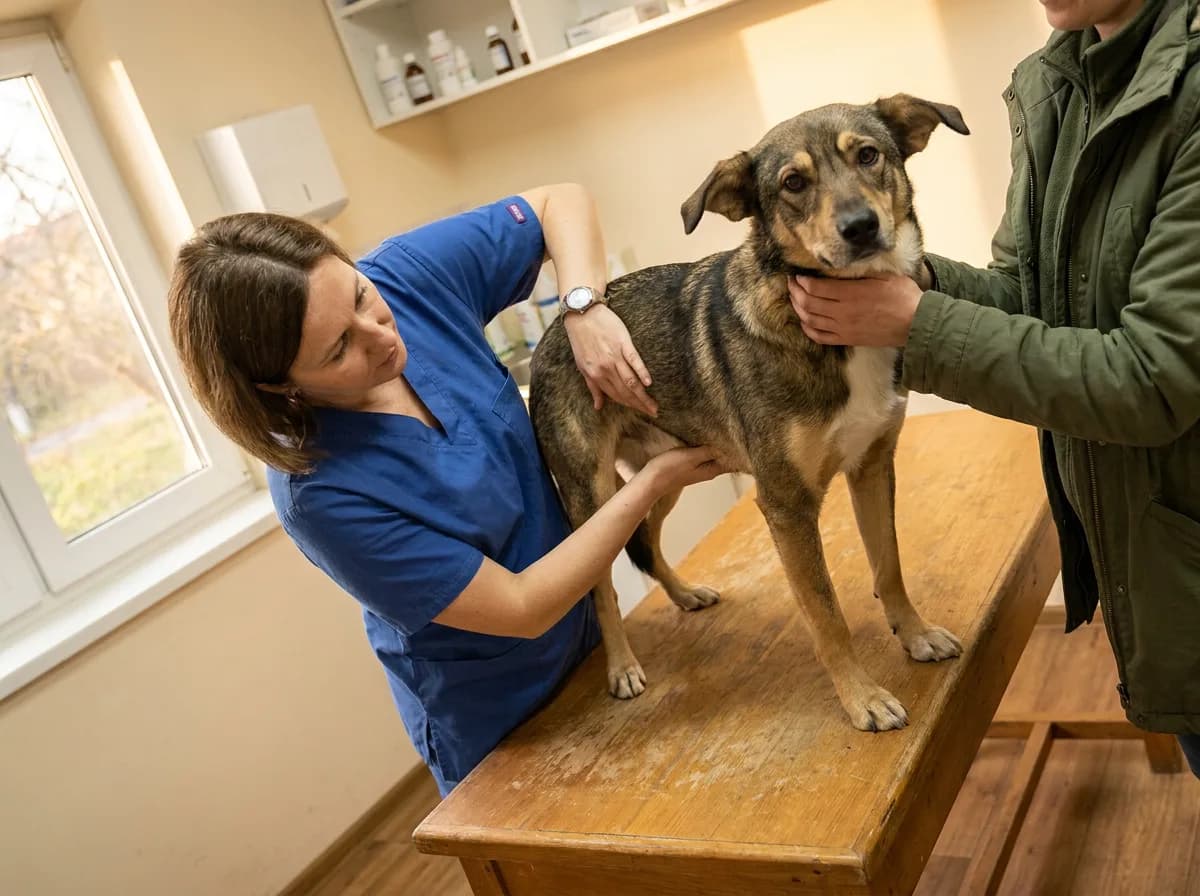
Ask your veterinarian to show you how to assess your dog's ribs, waist and abdominal outline. Coat thickness can make visual judgment difficult, and a muscular-looking dog may still carry excess fat. Conversely, a lower weight is not automatically a healthy outcome if the dog is losing muscle or has become unwell. Your veterinarian can explain which changes to monitor and when to return for a recheck.
Keep a record of all food, including training rewards, edible chews and food placed in a stuffable enrichment toy. That makes a feeding discussion more accurate. Avoid a fixed “cups per day for every Pitsky” rule: foods differ in calorie density, and individual needs change with age, activity and health.
Do not try to correct unexpected weight gain or loss with intense exercise or a drastic food change on your own. First establish what is happening. Pain, illness, medication and changes in routine can affect weight or willingness to move. AAHA's body and muscle condition guidance reinforces why those assessments belong in the wider health picture.
Temperament and Everyday Care
Size is only one part of household fit for a Pitbull Husky mix. Ask about the individual dog's behavior around visitors, children and cats; barking or howling; time alone; and recovery after excitement. Neither manageable weight nor appearance answers those questions. Our Pitsky temperament and care guide considers those observations alongside training, comfortable handling, activity and rest, health records, lifespan, feeding and shedding.
Practicing everyday care
Build skills progressively while your puppy is still easy to handle. Cooperative measurement, settling on a mat and walking without constant tension remain useful as the dog gets stronger. WebVet's dog-training schedule can help you organize practice. The American Veterinary Society of Animal Behavior recommends reward-based methods; intimidation is not a necessary response to a strong or energetic dog.
Make grooming a chance to notice change, not to judge size through fur. A brush full of loose coat can change the dog's outline without changing its frame. Record measured weight and discuss persistent skin changes, patchy hair loss or an unexplained change in appearance with your veterinarian. If you replace a walking harness during a growth spurt, keep the old measurements so you can see what actually changed.
Budgeting for an Adult Pitsky
Adult size affects purchases, but avoid buying every “large dog” item in advance. Plan for measurements to change, compare return policies and prioritize comfortable, correctly fitted essentials. A crate selected by dimensions, a suitable walking setup and enrichment your dog can use safely are more useful than a collection chosen from a breed label.
Our Pitsky price and ownership-budget guide separates acquisition costs from ongoing care. Keep routine veterinary care, food, training, grooming supplies and unexpected needs in that plan. The purchase price does not tell you how large a puppy will become or how much support the individual dog will need.
Frequently Asked Questions
An individual can fall outside a general published range, and the parents may not match the averages used in a breed comparison. Verify the age and documented parents before interpreting size. If growth seems to have changed unexpectedly, bring the dog's record to your veterinarian rather than assuming the difference proves a particular ancestry.
Head shape alone is not a reliable adult-weight forecast. Different proportions can create a substantial-looking head on a more moderate frame, and photographs can exaggerate that impression. A growth record, documented parent information and current body measurements provide better context than a single feature or a seller's visual prediction.
No. Measure chest circumference, height or length as the product requires, then consult that manufacturer's sizing instructions. The same size name can mean different dimensions across brands. Recheck the fit during movement and as a puppy grows; an item that fits one Pitsky may not fit another with a different frame.
Weight by itself cannot answer that question. A heavier dog may have a larger frame, more muscle, excess fat or a medical issue. Your veterinarian can assess body condition and give advice that accounts for pain, health and current fitness. Do not suddenly increase or restrict activity solely to match a breed-weight estimate.
An ancestry estimate is not an exact adult-weight guarantee. Some reports may provide size-related estimates, but those still need to be interpreted alongside the dog's growth, parent information when available and veterinary assessment. Use the report as additional context; do not let an estimated number override actual measurements or a change in health.

Coreen Saito is a pet writer and longtime shelter volunteer with more than a decade in animal rescue. She covers cat behavior, breed care, and the small, ordinary science of sharing a life with companion animals, with a particular focus on honest takes about the products and decisions that actually matter. At home in Arizona, she's outranked by Mac (a dog with the loudest opinion in the house), Rebel (a cat who governs by quiet authority), and Meri (an orange tabby who runs the late shift and the laundry basket). She writes about all three, plus the rescues that keep coming through her life, at LifeWithMinty.com.
Sign up for expert-backed reviews and safety alerts all in one place.