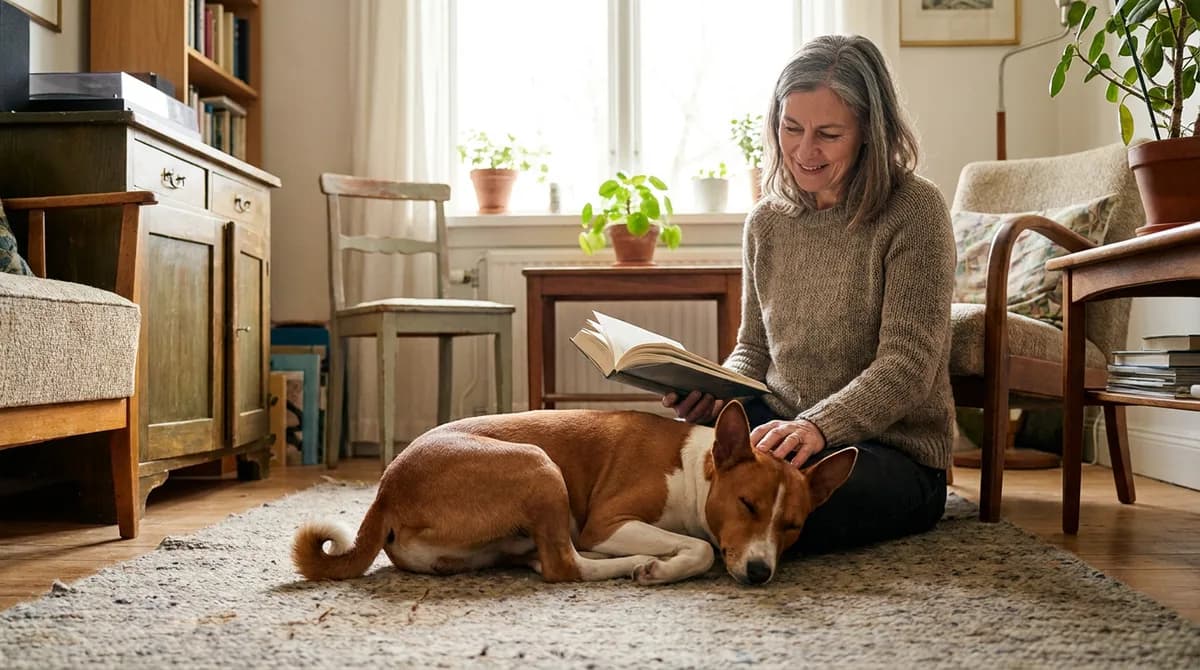
Pitsky (Pitbull Husky Mix): Temperament, Care and Family Fit
Understand Pitbull Husky mix identity, temperament, training, grooming and care. Use records and individual behavior to decide whether a Pitsky fits your household.
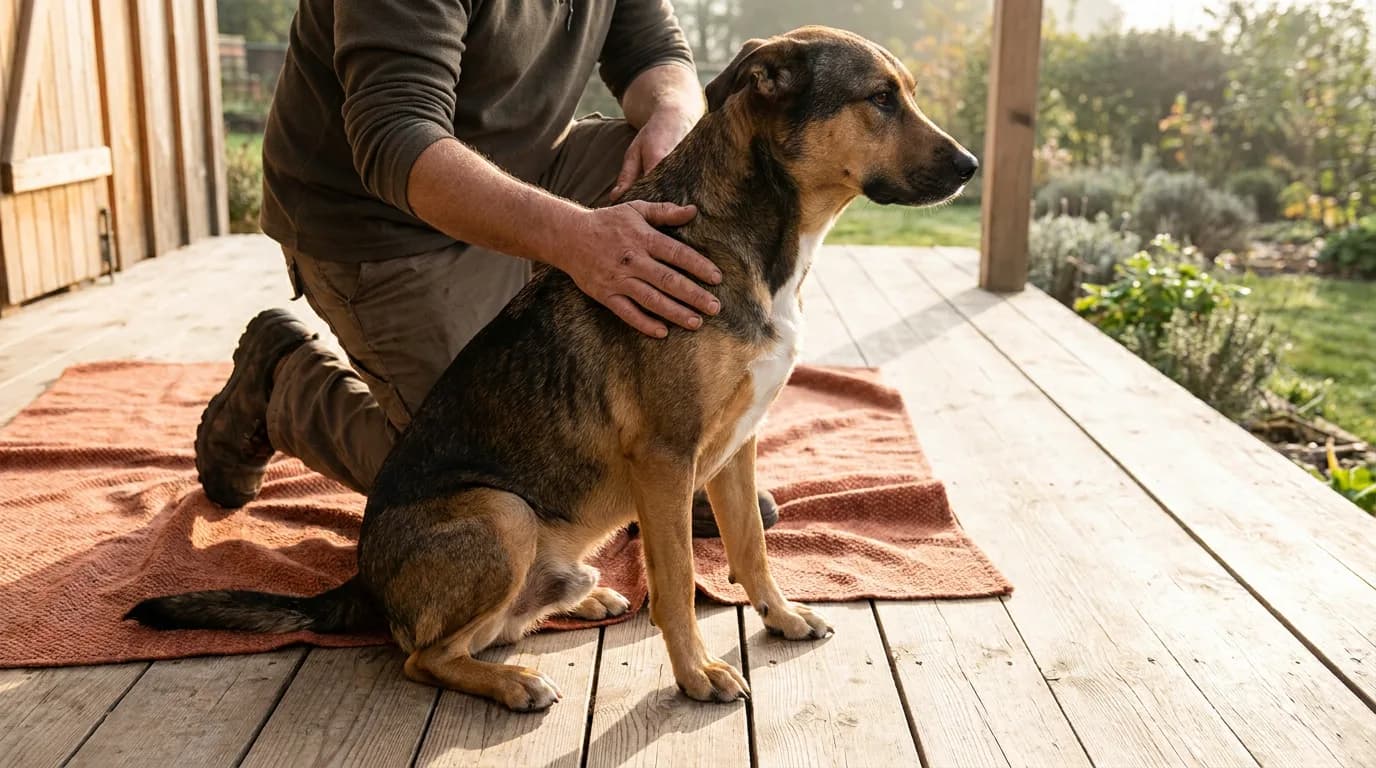
Practice calm pauses alongside activity and enrichment.
Petful is reader supported. As an affiliate of platforms like Amazon and Chewy, we may earn a commission when you buy through links on this page. There is no extra cost to you.
A Pitbull Husky mix, often called a Pitsky, can appeal to someone looking for an active companion with a distinctive appearance. The useful question is whether the particular dog fits your life. A mixed-breed name cannot guarantee temperament, adult size, coat type or health, and some dogs receive the label from appearance rather than documented parentage.
Start with the dog's history, observed behavior and care needs. Ask how it responds to ordinary household situations, what exercise and training it already knows, and whether its parent information is reliable. Those answers tell you more about the commitment than a promise that a Pitsky combines the “best of both breeds.”

Sign up for expert-backed reviews and safety alerts all in one place.
What Is a Pitbull Husky Mix?
Pitsky commonly refers to a dog with American Pit Bull Terrier and Husky ancestry. Descriptions sometimes specify Siberian or Alaskan Husky, and everyday use of “Pitbull” can be broader than one documented breed. Ask what the name means in the actual dog's records rather than treating every listing as the same cross.
Our Siberian Husky profile explains one commonly named parent's background. The American Bully versus Pitbull guide helps separate names that people sometimes use interchangeably. Parent-breed information is useful context, but it does not prove the ancestry or predict the complete personality of an individual mixed dog.
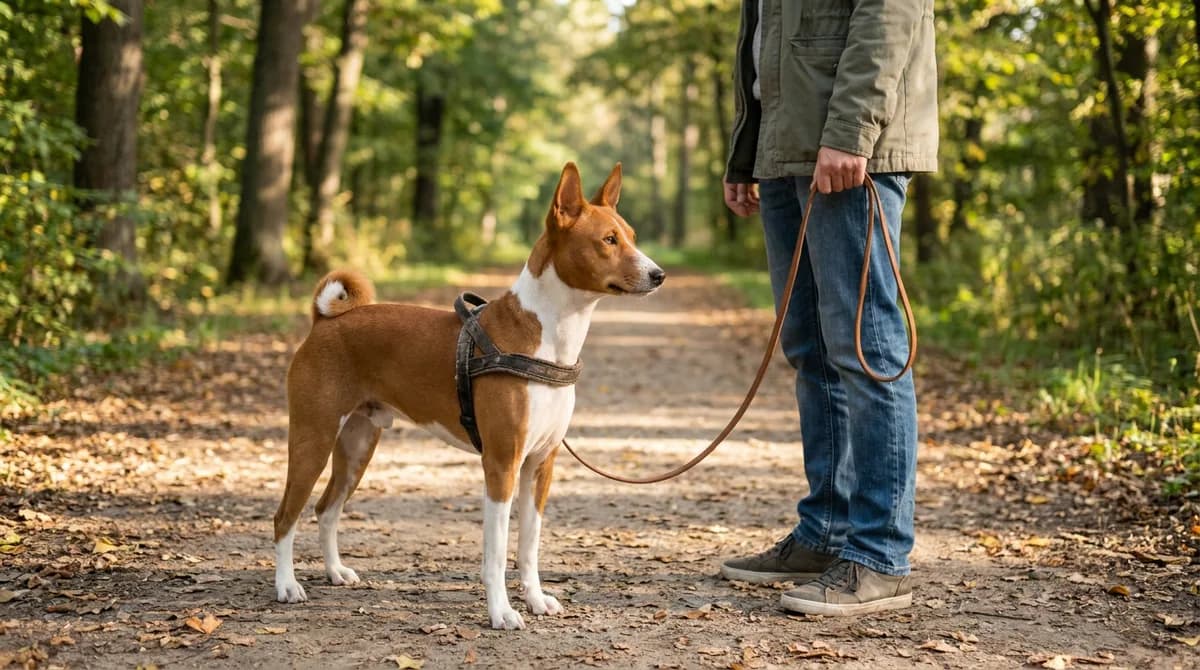
Practical care choices also depend on the individual rather than the label. A PetSafe Easy Walk harness is one front-attachment option to compare for walking. This offer is Medium/Large, so measure first and consult the current sizing instructions. Check that the fit allows comfortable movement. Equipment can support management, but it does not replace teaching or solve a situation in which the handler cannot safely control the dog.

Petful may earn a commission when you click through to Chewy, at no extra cost to you.
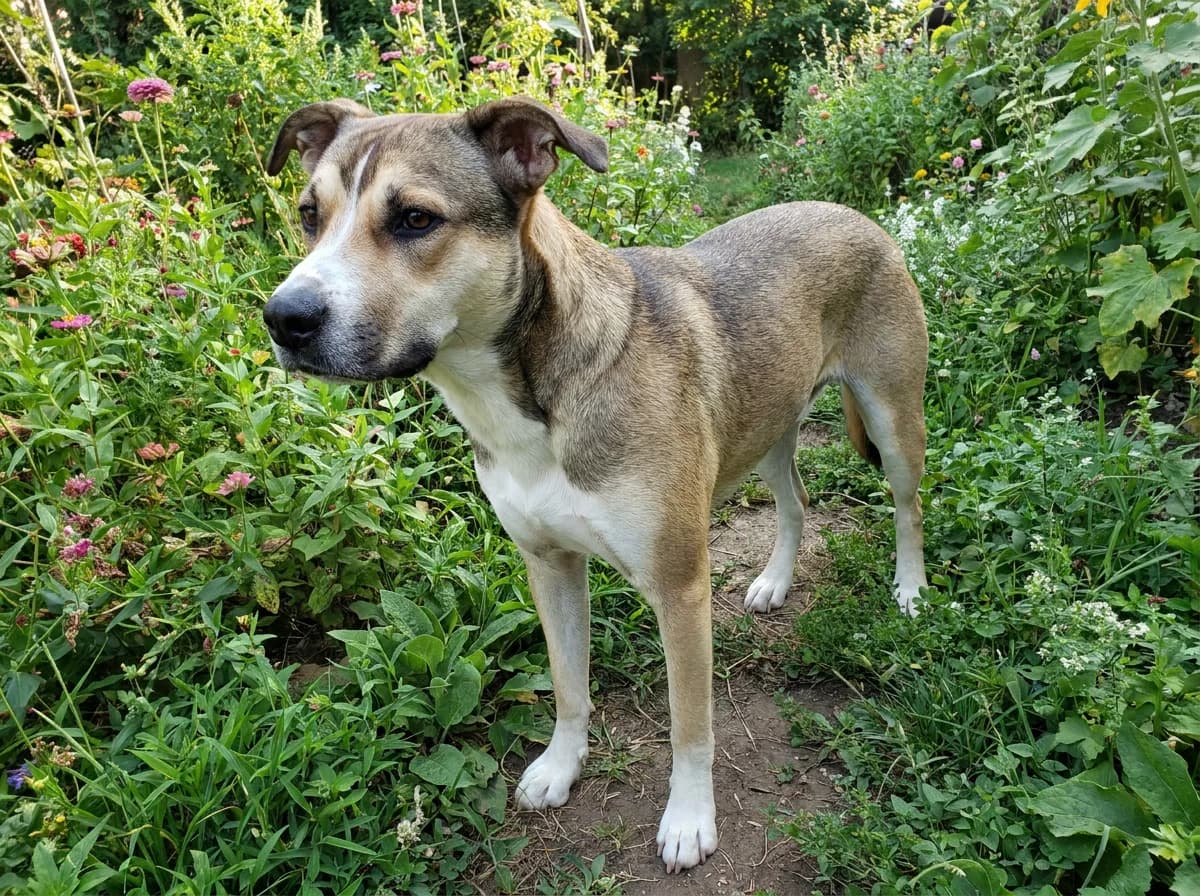
Use documented parentage and individual temperament to guide the decision. Plan for activity and training, then assess the actual dog rather than buying a guaranteed personality attached to a mixed-breed name.
| Decision | Evidence that helps | Assumption to avoid |
|---|---|---|
| Parentage | Records identifying the actual parents; appropriately interpreted ancestry information | Blue eyes or a broad head prove the cross |
| Household fit | Observed behavior, history and carefully managed meetings | Every Pitsky is automatically suited to children or pets |
| Adult size | Actual adult measurements or documented parent size and growth records | A puppy's paws predict an exact final weight |
| Coat care | The dog's actual coat and skin comfort | Every Pitsky needs the same brush or sheds the same amount |
| Health planning | Veterinary records and relevant parent screening | A cross cannot inherit health problems |
| Price | A written quote and clearly stated inclusions | An unusual color guarantees greater quality |
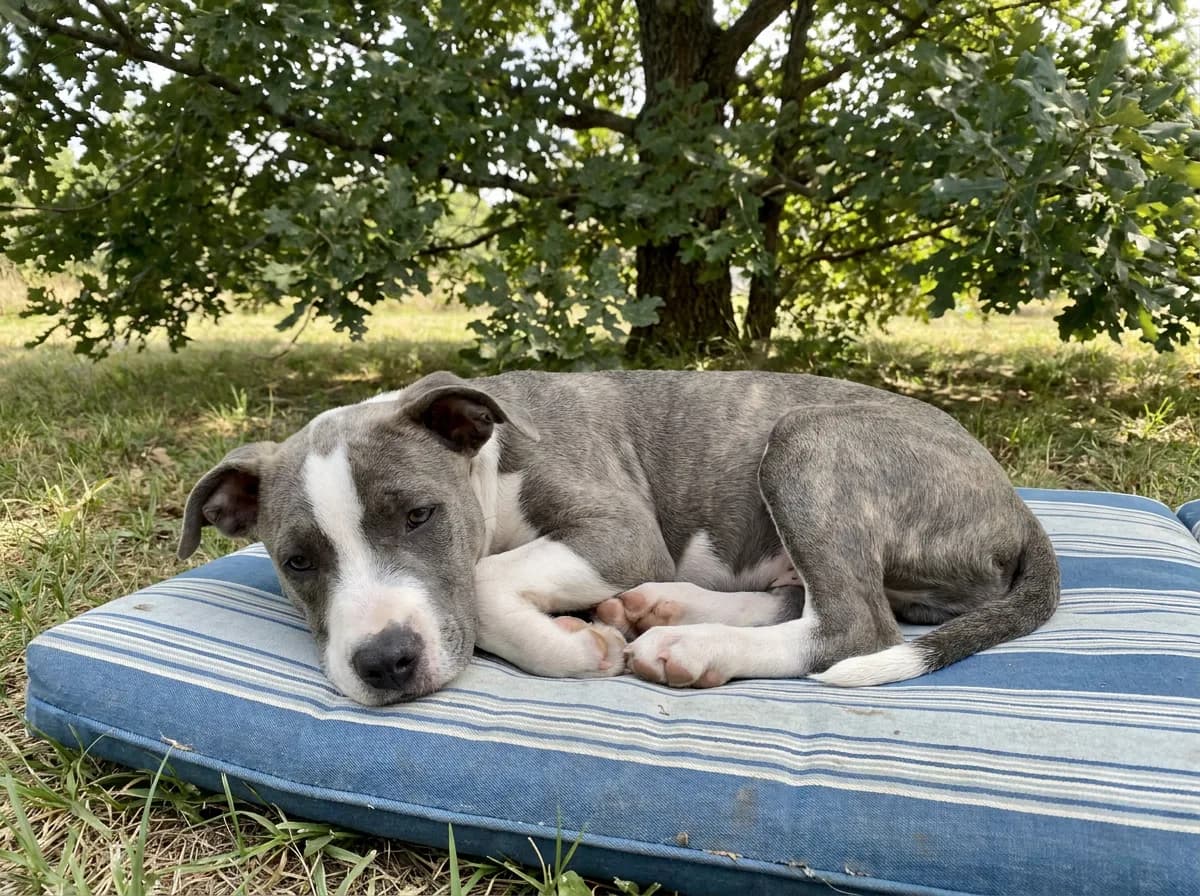
“Rare Pitsky” is a seller description, not proof of a recognized rarity category or added value.
Documented parents versus a visual label
For a puppy, ask whether the parents are known and what records support the description. For an adopted adult, ask which parts of its history are confirmed and which are estimates. Both can be reasonable routes to finding a companion, but the uncertainty should remain visible. There is no need to convert a best guess into a confident pedigree story.
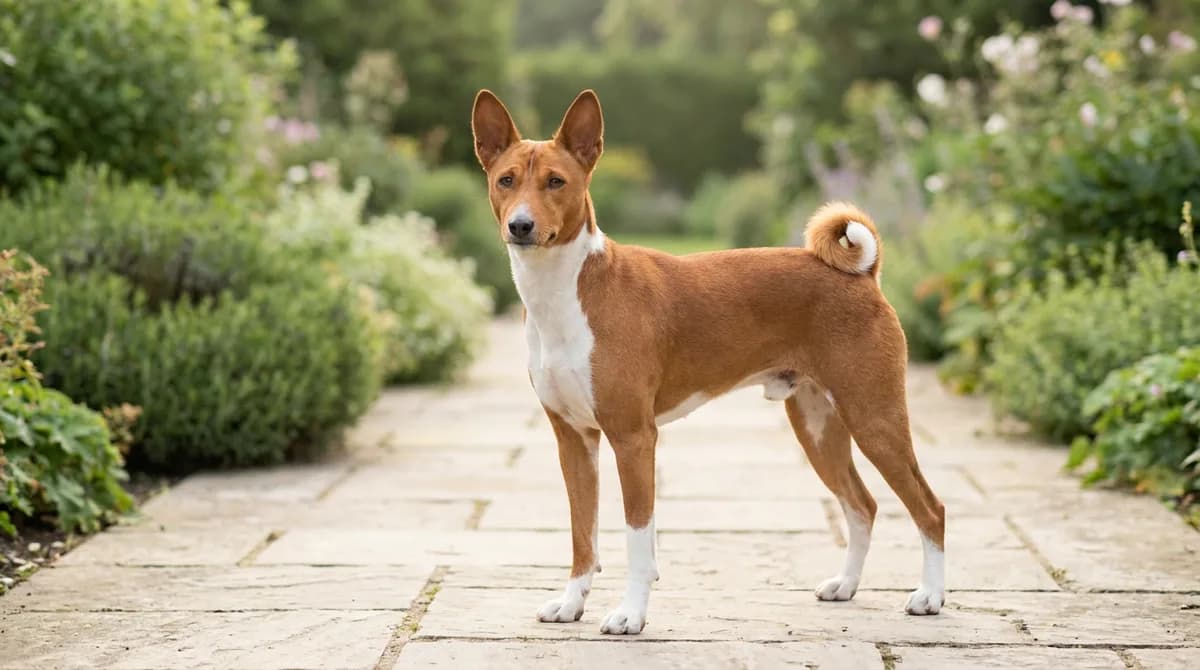
Pitsky photos can show coat and body variation, but cannot verify the ancestry of a puppy or adult. Even littermates may have different coat density, ear carriage and head or body proportions; a fluffy coat can also make a dog look larger. Red, tan, brown, black, white and brindle describe appearance, while red nose and blue nose labels do not establish a separate cross or predict temperament.
Temperament and Household Fit
Pitsky traits can include vocal behavior such as howling, but frequency and triggers vary. Observe the actual dog, ask about noise during absence and distinguish ordinary vocalizing from distress. A Pitsky can be a good family dog when its individual needs, behavior and household match. There is no validated Pitsky bite-force figure that can determine whether it is safe, and a guard-dog label does not replace behavior history or safe management.
Assess how the dog behaves, how it recovers from excitement or surprise, and what support your household can provide. Breed ancestry can supply context, but individual behavior is complex. A large ancestry-inclusive dog-genomics study found substantial individual variation and limits to predicting behavior from breed labels. That does not mean ancestry is irrelevant; it means a label is not a personality guarantee.
Ask a breeder, rescue or current caregiver for specific examples:
- Does the dog settle after a walk?
- How does it respond to visitors, passing dogs and quiet periods alone?
- What has been observed around cats?
- What has been observed around children?
A useful answer describes situations and management, not simply “friendly,” “protective” or “stubborn.”
Ask about familiar enrichment activities as part of that behavior history. A KONG Classic can be one supervised enrichment option. The linked version is Large; select it according to the manufacturer's size advice and your dog's chewing behavior. Count any food used inside it toward daily intake. Check for damage, and do not leave a dog with a product it cannot use safely.

A durable rubber dog toy that can be stuffed with treats and selected by the manufacturer's size guide; supervise use and retire it when damaged.
Petful may earn a commission when you click through to Chewy, at no extra cost to you.
Children, visitors and other animals
Plan supervision and a comfortable retreat from activity. Children should learn not to disturb a dog while eating, resting or trying to move away. A dog that seeks attention at one moment may need space later. The AVMA's dog-bite-prevention guidance emphasizes that any dog can bite and that young children should not be left alone with dogs.
With other animals, consider the dog's actual experience and behavior rather than assuming early exposure creates lifelong compatibility. Introduce gradually, use barriers or separation where appropriate and seek qualified help if interactions are tense or difficult to manage. A dog tolerating one familiar cat does not automatically respond the same way to a running unfamiliar animal.
Visitors can also need a plan. Give the dog enough space to observe, avoid forcing contact and reward calm behavior at a manageable distance. If the dog repeatedly struggles, obtain professional advice rather than asking every new visitor to “help socialize” it through an uncomfortable greeting.
Are Pitskies dangerous or aggressive?
Neither a reassuring breed slogan nor a frightening one can assess an individual dog. Review its behavior and bite history, consider its size and your ability to manage situations, and take warning signs seriously. Pain, fear and distress can affect behavior. Sudden changes, growling during handling or escalating reactions deserve veterinary and qualified behavior assessment.
Do not punish a warning in the hope that silence means comfort. Create space, stop the difficult interaction and investigate why the dog is struggling. Responsible management is a practical part of living with any substantial dog; it should not depend on declaring a whole mixed-breed group automatically safe or unsafe.
Exercise, Enrichment and Training
Expect to provide regular shared activity and mental engagement, then adjust to the dog's age, health, fitness and response. A single rule such as “two hours for every Pitsky” is not an individualized plan. A growing puppy, an adult accustomed to long walks and an older dog with pain may need very different activities.
Build variety into the routine: sniffing walks, brief skill practice, suitable play and opportunities to rest. Watch how the dog responds afterward. Useful activity should not require pushing through discomfort or keeping the dog constantly excited. Discuss suitable exercise with your veterinarian if the dog is young, unfit, has a medical condition or shows difficulty recovering.
Include comfortable handling practice in the routine, using coat tools suited to the dog. The Frisco deshedding brush linked here is designed for medium-to-long hair. Consider it only when the actual coat suits that tool. It is not the universal Pitsky brush. Stop if the skin becomes irritated or grooming seems painful, and ask a professional to demonstrate a comfortable method when needed.
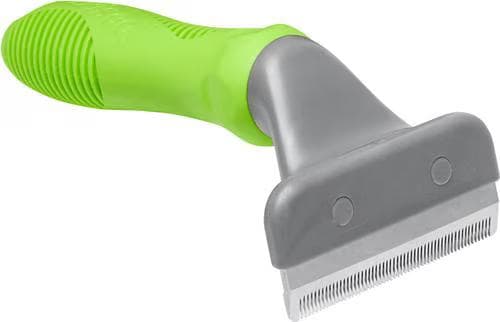
Petful may earn a commission when you click through to Chewy, at no extra cost to you.
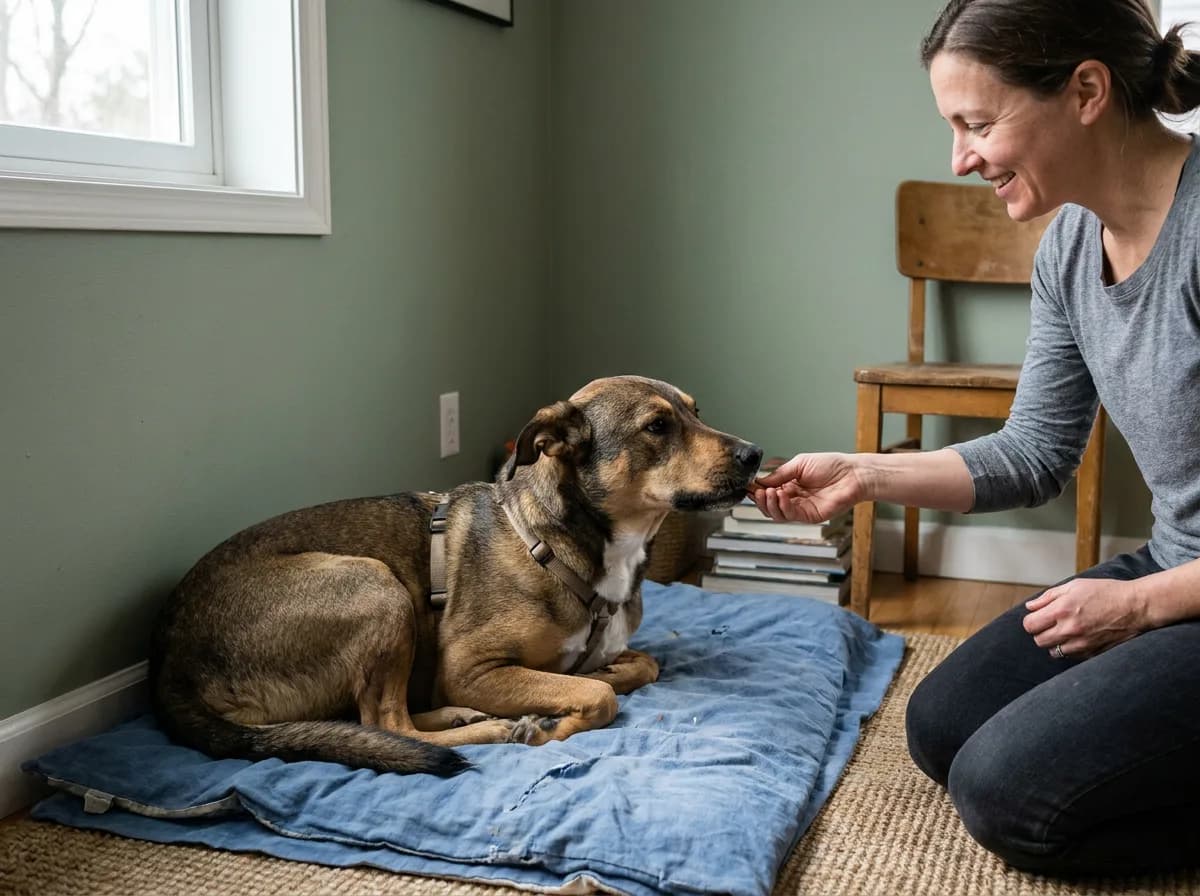
Teach the skills you need at home
Prioritize coming when called, responding to a familiar cue around mild distractions, walking comfortably and settling in a designated place. Practice at a difficulty the dog can manage, then increase distractions gradually. A dog struggling outdoors may need easier practice and a clearer reward history, not a more intimidating handler.
The American Veterinary Society of Animal Behavior recommends reward-based training methods. Our practical advice follows that approach. “Pack leader” explanations do not give you the step-by-step teaching plan your dog needs. WebVet's dog-training schedule can help structure short, repeatable sessions around everyday skills.
Rest, alone time and secure space
Teach calm behavior deliberately instead of hoping the dog will become exhausted enough to settle. Reward resting on a mat, provide quiet spaces and build predictable transitions between activity and downtime. A yard can offer useful space, but it does not supply companionship, training or every form of enrichment by itself.
Check your fence, gates and doors against the individual dog's behavior. An attractive outdoor space is not secure if the dog can escape from it or is left rehearsing frantic reactions at the boundary. Supervision and management matter, particularly while you are learning about a newly adopted dog.
Toilet routines and time alone
For Pitsky potty training, provide frequent appropriate toilet opportunities, reward elimination in the chosen place and supervise between outings. Adjust the routine to age and health. Punishment after an accident does not explain the desired behavior; persistent changes or discomfort need veterinary advice.
Introduce time alone gradually and watch the response. Distress, repeated escape attempts or panic-like behavior require more than a new toy or stronger crate. WebVet's separation-anxiety guide explains why those signs need a suitable plan. Consult your veterinarian and qualified behavior support instead of assuming the dog is being deliberately destructive.
Coat Care and Shedding
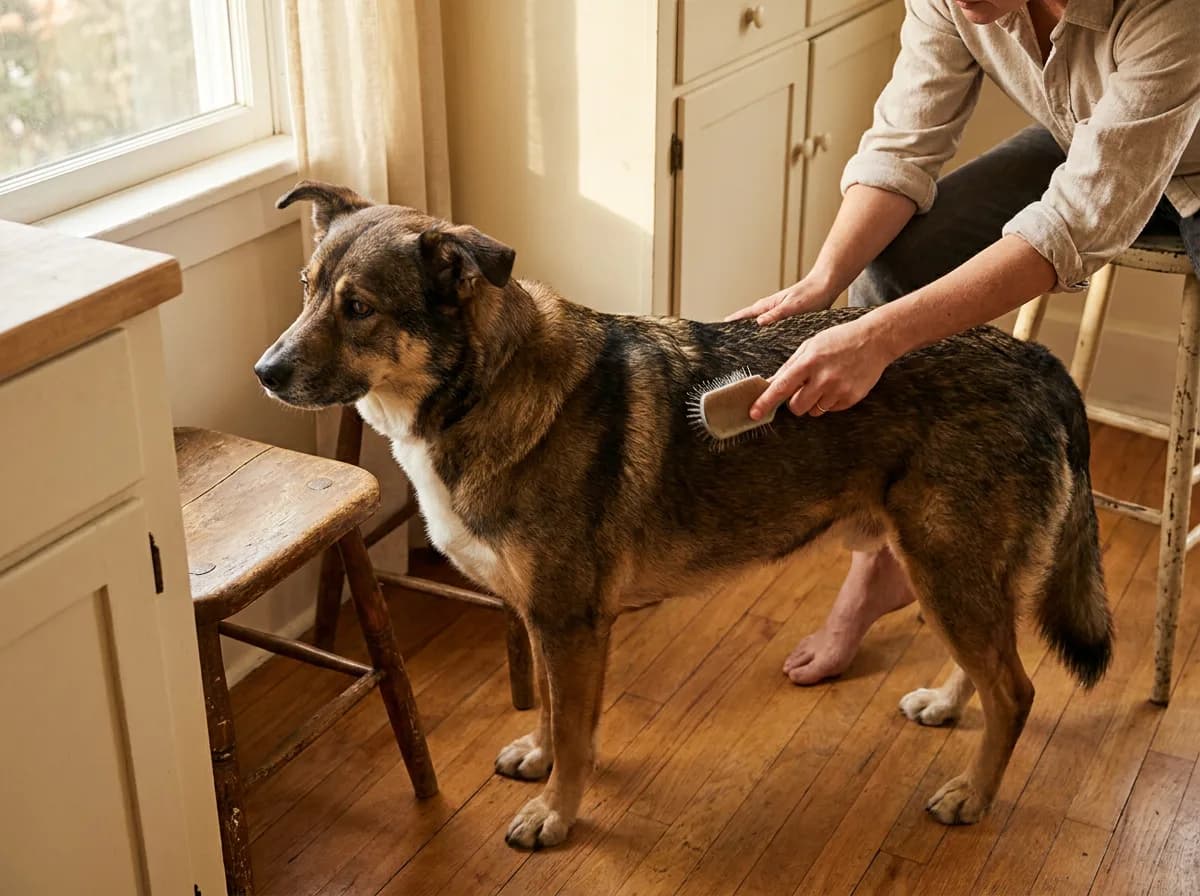
A long-haired Pitsky may need a different grooming approach from a short-coated individual; examine the actual coat rather than buying tools for the mixed-breed label.
Look at the coat in front of you. A shorter, smoother coat and a denser, Husky-like coat can require different tools and amounts of brushing. Check the skin, work gently and adjust the routine as you learn how much loose hair and debris your dog collects. Seasonal or individual variation makes a fixed grooming schedule less useful than observation.
Include nails, ears and oral care in routine checkups. A Virbac dual-ended toothbrush is an option for gradual brushing when the size is appropriate and the dog is comfortable with handling. Ask your veterinarian about technique and suitable toothpaste. A painful mouth should be assessed rather than repeatedly handled in the hope that the dog will get used to it.

A dual-ended toothbrush with a large and a small head to fit different mouth sizes and reach the back molars where plaque hides. Soft bristles angled for the gumline.
Petful may earn a commission when you click through to Chewy, at no extra cost to you.
Bathing needs depend on the dog's activities, coat and any veterinary instructions. Avoid interpreting smell, persistent itching or patchy hair loss as a routine grooming problem without investigating. More brushing or bathing is not a diagnosis. Your veterinarian can help distinguish ordinary coat care from a skin condition that needs attention.
If allergies affect your household, do not choose a Pitsky because someone promises that a short coat will make it hypoallergenic. Consult an appropriate health professional and evaluate real exposure before committing. Coat length or appearance does not provide a reliable personal allergy guarantee.
Health, Lifespan and Feeding
Whether a Pitsky likes the cold depends on its actual coat, age, health and acclimatization. Do not assume Husky ancestry makes exposure safe. In warm weather, choose cooler activity times, provide water and shade, and watch comfort; a dense coat is not permission to ignore heat risk.
A mixed dog can still have inherited or acquired health problems. Review its veterinary history, ask what is known about its parents and obtain an initial examination after bringing it home. A statement such as “hybrid vigor” does not replace relevant health screening or establish that a particular puppy will remain healthy.
Be careful with online Pitsky disease lists. Repeating every condition mentioned for either parent can imply that prevalence is known in this particular mix when it is not. Ask your veterinarian which issues are relevant to the dog's documented background, examination and symptoms. The appropriate next step may be reviewing parent records, monitoring a finding or conducting a specific test; it is not automatically buying supplements.
Make health claims specific
When a breeder says the parents are “tested,” ask which tests, which dogs, what dates and what results. A puppy's routine examination and screening of the parents answer different questions. Similarly, a genetic result only addresses the condition or variant assessed; it does not function as a comprehensive guarantee of future health.
For lifespan, online breed guides commonly provide a broad estimate. No Pitsky-specific longitudinal dataset was identified for this guide, so a precise expected age would overstate the evidence. Treat longevity as a long-term care commitment and discuss the individual's health with your veterinarian. Family history can add context without predicting exactly how many years a particular dog will live.
Feeding by life stage and body condition
Choose a diet appropriate to the dog's life stage, then review its weight, body condition, activity and medical needs with your veterinarian. The WSAVA nutrition guidelines provide tools for nutritional assessment, including the distinction between fat stores and muscle condition. A number on the scale alone cannot describe the whole dog.
Avoid a fixed cups-per-day prescription for the mix. Foods differ in calorie density, and individual needs change with growth, activity and health. Include training rewards and food inside a stuffable toy in the daily total. Bring the food label and a record of what you feed to appointments when you want help making the plan more precise.
Keep changes in appetite, thirst, stool, mobility, skin or behavior on your radar. These are reasons to discuss the individual dog, not to search for a breed explanation that makes an ongoing problem seem normal. Routine care and timely follow-up give you more useful protection than a list of supposed breed strengths and weaknesses.
Adult Size and Parent Differences
Published descriptions generally place the Pitsky among medium-to-large dogs, but actual parent size and ancestry matter. Our Pitsky full-grown guide explains the broad estimates, growth uncertainty and how to measure height and chest circumference. Do not buy equipment or set a healthy-weight goal from a puppy photo alone.
If size is a firm constraint, meet an adult dog or ask for reliable parent and growth records before choosing a puppy. A Pitsky versus Husky or Pitsky versus Pitbull comparison should separate the known parent-breed background from what has actually been observed in the mixed dog. The mix is not a predictable halfway point on every characteristic.
Recheck the fit of a walking harness as the dog changes, and choose a coat-care tool after examining the coat rather than guessing what a puppy will inherit. Practical measurements and observations remain useful long after the excitement of choosing a breed name has passed.
Pitsky Price and Adoption
Our Pitsky price guide separates published acquisition estimates, actual quotes and ongoing ownership costs. Compare medical records, included care, written terms and the dog's fit for your home. Neither a low fee nor a high price can independently establish health or temperament.
For an adoption, ask which parts of the dog's identity and history are documented, and what the organization has observed. For a puppy, ask about the actual parents and the conditions in which it is being raised. Meet the dog when possible and verify the person or organization handling the placement before relying on a listing.
Prepare a routine you can sustain. Make time for activity, training, rest and veterinary care, with appropriate supplies such as a suitable toothbrush introduced gradually. The strongest reason to choose a Pitsky is that the individual dog's needs fit the life you can provide, not that its label promises a perfect combination.
Frequently Asked Questions
The name alone does not establish that. Some dogs may have documented parents from the named breeds, while others have more mixed ancestry or an appearance-based label. Ask for parent records when generation matters to you. Do not assume a listing proves a first-generation cross merely because it uses a familiar mixed-breed name.
Some individuals may, but compatibility cannot be guaranteed from the breed label. Ask about the dog's actual history, use carefully managed introductions and provide separation when needed. Behavior around a familiar resting cat may differ from behavior around a running unfamiliar animal, so continue supervising rather than treating one calm meeting as conclusive.
No. A yard offers space, but it does not automatically provide varied activity, enrichment, training or interaction. Plan shared experiences appropriate to the dog's health and development, and teach rest as well as active skills. Supervise the dog's use of the yard and check whether the fence and gates are secure for that individual.
No. Coat length does not provide a reliable guarantee that a particular person will not react to a dog. If allergies are important to your decision, speak with an appropriate health professional and consider real exposure before committing. Do not rely on a seller's description of short fur or low shedding as a medical assurance.
No reliable household assessment comes from a color label alone. Evaluate the dog's observed behavior, history, health and response to ordinary situations. A black, white, brindle or other coat description does not tell you whether the dog will settle comfortably, enjoy visitors or coexist with your other animals. Request concrete examples instead.
A Pitsky, also called a Pitbull Husky mix, can be a rewarding companion when the individual dog and household are well matched. Both names describe the same mixed-dog category. “Good” needs a practical definition: consider behavior history, handling, activity, noise tolerance, other animals and time alone. Ask what has actually been observed and whether you can meet those needs rather than expecting either name to supply the answer.
Pitsky commonly describes Pitbull and Husky ancestry, while “Pit Bull” itself is sometimes used broadly in everyday conversation. Clarify whether a source means a documented American Pit Bull Terrier or a looser visual category. The names alone do not establish equivalent ancestry, appearance or behavior; review the records of the particular dog.
It is commonly a dog described as having Pitbull and Husky ancestry. The term is a mixed-dog label, so ask which parents are known and which parts of the description are estimates. Some dogs have documented parentage; others receive a label based on appearance. That distinction helps you interpret claims about size, coat and behavior.
Innovet’s Pitsky guide publishes a 12–15-year estimate, but a Pitsky-specific longitudinal study was not identified here. That range should not be presented as an individual prognosis. Ask about family history when available, maintain veterinary care and discuss the dog's actual health rather than treating a general breed estimate as a countdown.
Appearance varies. Different individuals can have shorter or denser coats, varied ear carriage and different head and body proportions. A photograph can show one dog, but blue eyes, coat color or a broad head do not prove parentage or predict adult weight. Use documented identity and measurements where those details matter to your decision.

Coreen Saito is a pet writer and longtime shelter volunteer with more than a decade in animal rescue. She covers cat behavior, breed care, and the small, ordinary science of sharing a life with companion animals, with a particular focus on honest takes about the products and decisions that actually matter. At home in Arizona, she's outranked by Mac (a dog with the loudest opinion in the house), Rebel (a cat who governs by quiet authority), and Meri (an orange tabby who runs the late shift and the laundry basket). She writes about all three, plus the rescues that keep coming through her life, at LifeWithMinty.com.
Sign up for expert-backed reviews and safety alerts all in one place.