Pitsky Price: Adoption Fees, Puppy Costs and First-Year Budget
Compare Pitsky adoption and puppy price estimates, verify written quotes and plan a first-year budget for veterinary care, food, training, equipment and unexpected needs.

Separate the acquisition fee from the continuing cost of ownership.
Petful is reader supported. As an affiliate of platforms like Amazon and Chewy, we may earn a commission when you buy through links on this page. There is no extra cost to you.
Pitsky price estimates are often presented as though every Pitbull Husky mix comes from the same market. In reality, an adoption fee, an advertised puppy price and the total cost of the first year describe different things. The dog's location, included care, age and individual needs can change your budget substantially.
As one published U.S. reference checked September 28, 2026, Adopt a Pet's Pitsky cost answer gives adoption costs around $200 and breeder prices around $500–$1,000. Those are that publisher's estimates, not a representative market survey or a quote for a currently available dog. Use them to start questions, then obtain the actual organization's or seller's written terms.

Sign up for expert-backed reviews and safety alerts all in one place.
What Does a Pitsky Cost?
A Pitbull Husky mix price and a Pitsky price concern the same mixed-dog decision; some listings reverse the wording to Husky Pitbull mix. The useful number is the one attached to the dog and arrangement you are actually considering. Ask for the total acquisition price and exactly what it includes. If a deposit is involved, find out whether it is credited toward the balance, when the rest is due and what the written terms say about changes or cancellation.
A low purchase price does not establish a low-cost first year. Use a written quote to compare dated price examples, included veterinary care, recurring costs and your own ability to cover unexpected needs.
Equipment can add to the acquisition quote, and it should fit the actual dog. Choose equipment from measurements rather than the breed label. The PetSafe Easy Walk harness linked here is Medium/Large. Compare your dog's measurements with the manufacturer's current chart and check comfortable movement before choosing that size. Our Pitsky full-grown guide explains why parent size and actual measurement are more useful than an exact puppy-weight promise.

Petful may earn a commission when you click through to Chewy, at no extra cost to you.
A source from another country can be informative without being a U.S. price guide. For example, Wamiz's U.K. Pitsky profile lists a £400–£1,500 purchase range. Differences in the market, included care and location mean simply converting that range into dollars would not create a reliable U.S. estimate.
| Price information | Useful interpretation | What to verify next |
|---|---|---|
| Adopt a Pet's published adoption estimate, around $200 | One U.S. publisher's broad reference | The actual organization's fee and included veterinary care |
| Adopt a Pet's published breeder estimate, $500–$1,000 | A starting point for questions, not a current inventory survey | The seller's written quote, identity and records |
| A seller's deposit request | One payment within a specific proposed arrangement | Total price, application to the balance and written terms |
| An overseas price range | Information about a different market | Currency, local requirements and any travel arrangements |
| A low asking price with no records | An incomplete picture | Age, medical history, parent information and care still needed |
Do not add the adoption and breeder estimates together; they describe different routes. Likewise, avoid adding a deposit twice if it is already part of the total price. Write down the amount paid, the remaining balance and which expenses are separate. That simple record can prevent a surprisingly common budget misunderstanding.
Comparing Adoption and Breeder Quotes
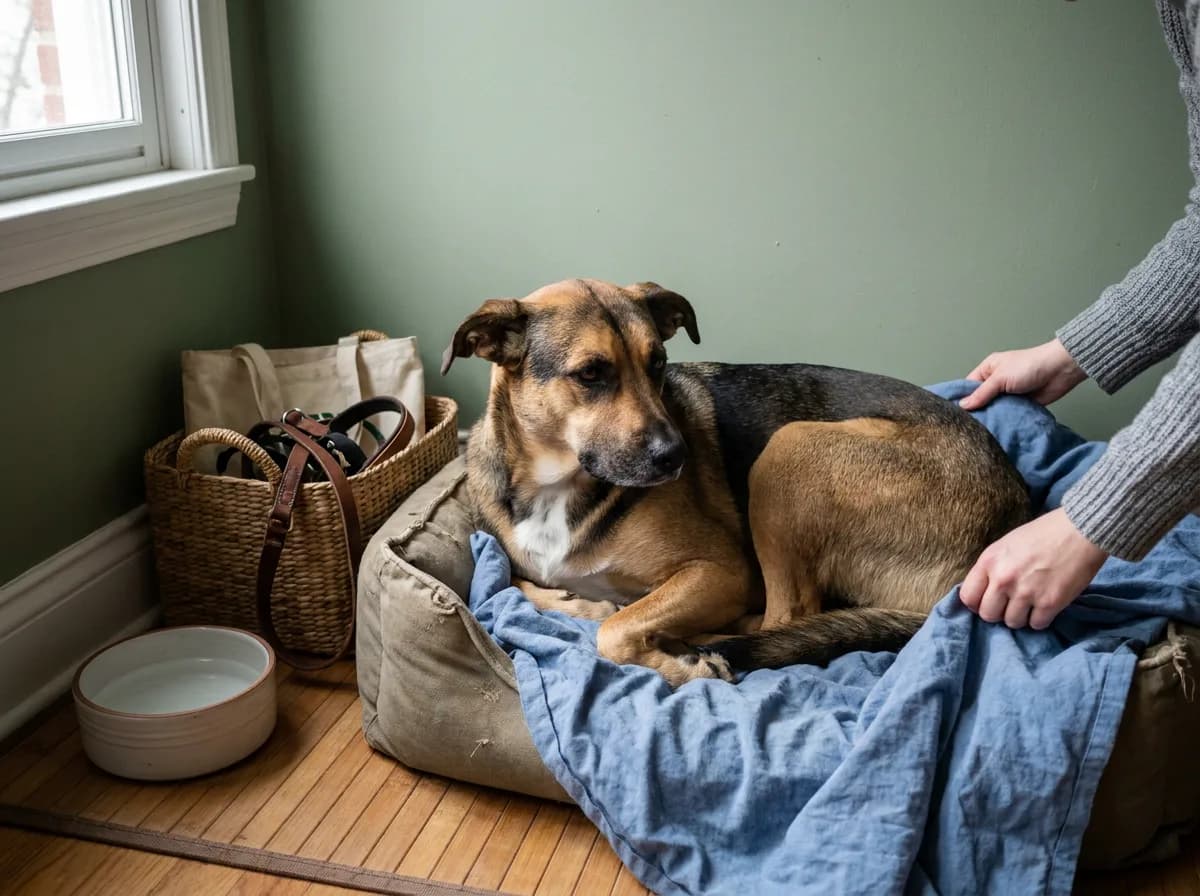
A Husky Pitbull mix puppy price needs different context from an adult adoption fee. Compare the actual dog, not only the route by which it reaches your home. An adult rescue dog may have an established history, while a young puppy may involve more uncertainty about adult size and behavior. Neither route automatically eliminates veterinary costs or guarantees a perfect household match.
For Husky Pitbull mix adoption, ask the organization for:
- Its fee and available medical records.
- Observed behavior and the dog's known history.
- Support and return arrangements.
Keep a copy of the information you receive. Find out whether any care is included before placement and what your own veterinarian will need to continue afterward. If a dog is described as a Pitsky based on appearance, keep that uncertainty in mind rather than treating the label as documented parentage.
Ask whether appropriate home equipment is included or must be budgeted separately. If you choose a crate, buy for the dog's dimensions and behavior. The Frisco heavy-duty wire crate in this offer is X-Large. It may be too large or otherwise unsuitable for your dog. Check that the dog can stand normally, turn and lie comfortably, and introduce the space gradually with positive experiences rather than assuming confinement will solve every problem.

Petful may earn a commission when you click through to Chewy, at no extra cost to you.
Comparing a puppy seller’s records
For a puppy seller, request information about the actual parents, their relevant health records, the puppy's age and its care so far. A parent's screening result, a puppy examination and a statement that the dog “looks healthy” are different kinds of evidence. Ask for the underlying record when a claim matters to your decision.
Breeder support can be useful, but get clear about what is offered. Will the breeder answer care questions, discuss the dog's development or help if the placement fails? What does the contract require from each party? Promised support should be specific enough that you understand it before making a payment.
Compare quotes using the same categories: dog price, deposit, travel or collection, completed veterinary care, remaining care and equipment. An apparently higher fee may include services that another arrangement leaves to you. Conversely, expensive marketing language may add no practical value at all. You cannot tell which situation applies without asking for the details.
The First-Year Budget
| Hypothetical budget input | Example amount | How to replace it |
|---|---|---|
| Acquisition | $200 | Use your dated written quote |
| Collection and initial equipment | $400 | Add your actual travel and suitable supplies |
| First-year veterinary care | $800 | Request a local estimate based on the dog's records |
| Food | $600 | Calculate from the chosen food and feeding plan |
| Training and paid care | $900 | Add services your household expects to use |
| Accessible contingency | $1,000 | Choose an amount and funding plan that you can access |
| Example first-year cash target | $3,900 | Replace every assumption before committing |
This is a hypothetical arithmetic example, not a typical-cost estimate or a recommendation for how much veterinary care to buy. The $200 acquisition input uses the publisher estimate above; the other inputs are invented planning assumptions. The $1,000 contingency is money reserved, not a prediction that it will all be spent. Without that reserve, this example's planned spending is $2,900. If your actual paid-care quote is $1,800 instead of $900, add $900 to the total. A deposit already included in the acquisition price is not added a second time.
Start with acquisition + collection or travel + equipment + veterinary care + food + training + paid care + contingency. Fill those categories using your own quotes and likely routine. Keep a separate column for items you already own safely so you do not mistake a generic shopping list for necessary spending.
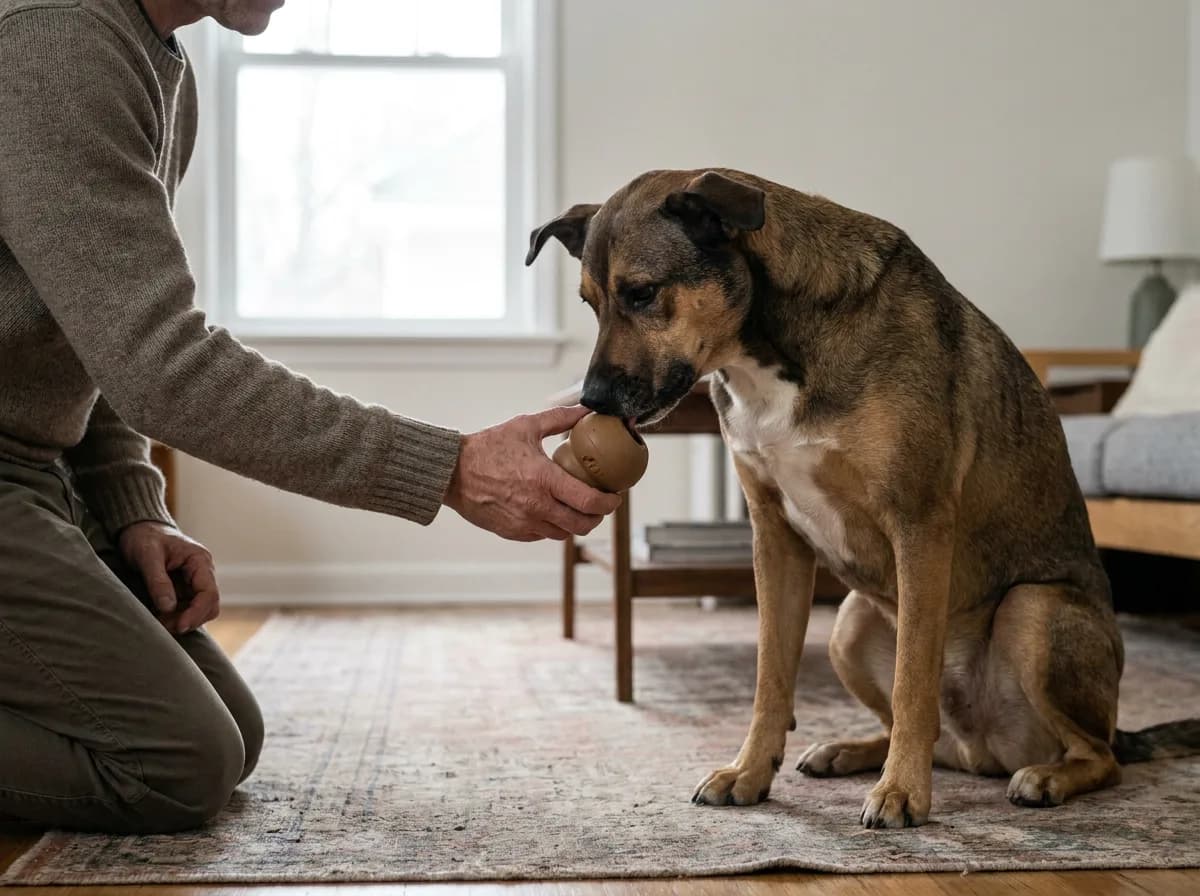
An enrichment purchase is one example to include only when it suits the dog. A KONG Classic is one option for supervised enrichment. The linked offer is Large, so check its current size guidance and your dog's chewing behavior. Count food used inside it toward daily intake and replace damaged equipment. Durable does not mean indestructible, and buying a toy does not replace the time needed for training and interaction.

A durable rubber dog toy that can be stuffed with treats and selected by the manufacturer's size guide; supervise use and retire it when damaged.
Petful may earn a commission when you click through to Chewy, at no extra cost to you.
Getting care and food estimates
Before choosing a dog, ask a local veterinary practice about the first visit and the care likely to follow based on the records you will receive. The dog's age, health, previous care and local risks determine that plan. A breed-price article cannot prescribe a universal vaccination, parasite-prevention or diagnostic package.
Food is a recurring expense whose amount depends on the food selected and the dog's needs. Compare the package's feeding information and calorie density, then discuss an appropriate plan with your veterinarian. Do not multiply a fixed number of “Pitsky cups” by twelve months; that hides differences in puppy growth, adult size, activity and the food itself.
Replacing assumptions with real quotes
For a worked method, imagine that you have obtained an adoption quote and a written veterinary estimate. Enter those actual amounts, add the cost of the food you intend to use and the equipment that fits the dog, then separately add any trainer or walker quotes. You now have a personal working total with identifiable inputs. If an input is unknown, mark it as unknown instead of entering zero and calling the budget complete.
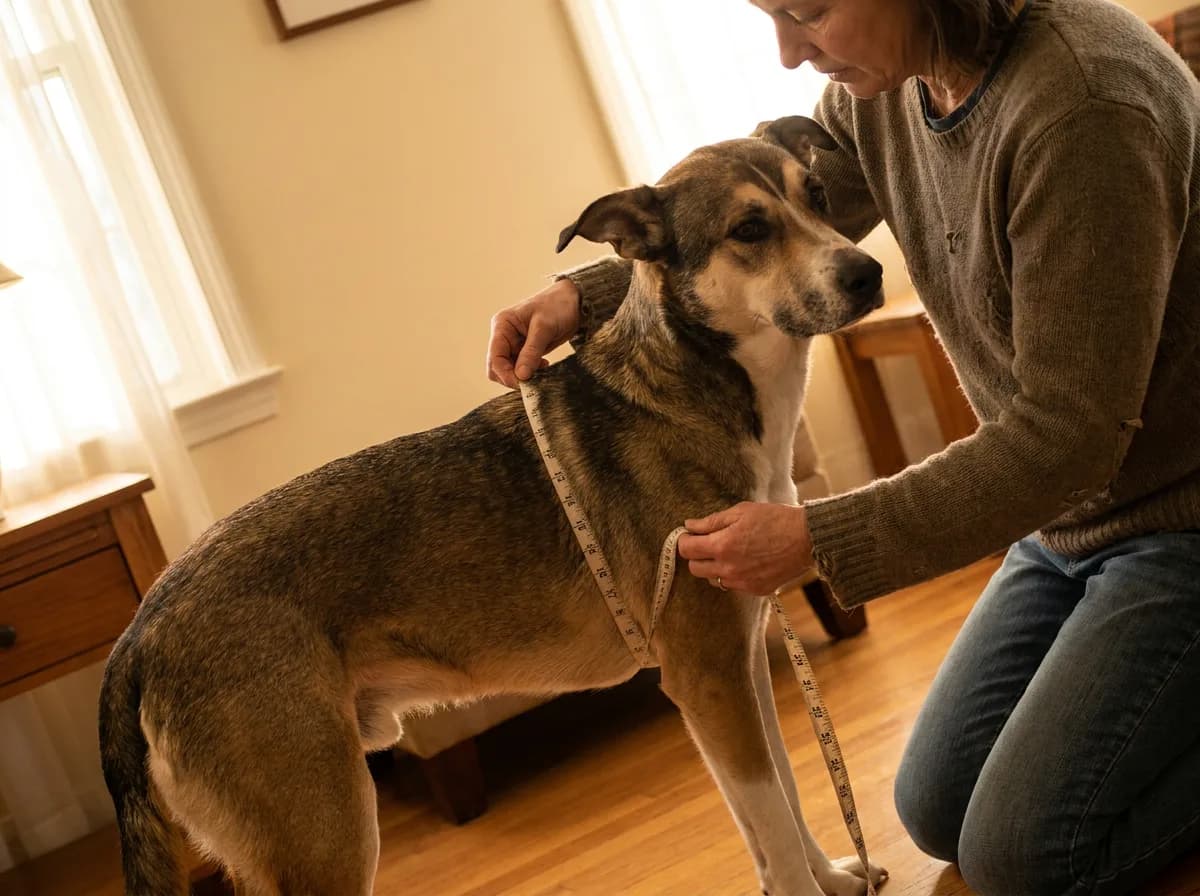
Training belongs in the plan alongside physical supplies. Compare instructors' methods, what the quoted fee includes and whether the format fits your dog's age and experience. WebVet's dog-training schedule can help organize the skills you want to practice. A well-fitting harness supports walking practice; it does not teach loose-leash behavior by itself.
Grooming purchases should reflect the dog's actual coat. The Frisco deshedding brush linked here is intended for medium-to-long hair. It may suit a denser coat but should not be chosen automatically for a short-coated Pitsky. Ask for help choosing a tool when you are uncertain, and avoid repeated brushing over uncomfortable or irritated skin.

Petful may earn a commission when you click through to Chewy, at no extra cost to you.
Recurring Costs and Emergency Planning
Separate predictable repeat purchases from occasional expenses. Food, preventive care, routine supplies and any paid walking or boarding may recur. Veterinary procedures, replacement equipment or extra behavior support can make some months more expensive. A budget is more useful when it shows both patterns instead of hiding them inside one reassuring monthly average.

Plan for access to funds when something unexpected happens. WebVet’s emergency veterinary cost breakdown provides examples of bill components to discuss when planning your reserve; your actual costs will depend on the care required. If comparing insurance or another financial arrangement, read its actual terms for waiting periods, exclusions, deductibles and reimbursement. Your decision depends on those details and your own resources, not merely the cheapest advertised monthly payment. There is no universal emergency-fund figure that fits every medical situation and household.
Do not treat a low acquisition price as evidence of poor health, or a high price as protection from future illness. Keep records, establish veterinary care and discuss changes in appetite, comfort, mobility or behavior. Preventive care matters, but no seller can guarantee that a dog will never need additional treatment.
Avoiding Unsupported Price Premiums
Identity evidence means records and a verifiable history, not proof supplied by an attractive photograph. Pitsky is a mixed-dog name, not a certificate of a particular pedigree, size or temperament. Ask what supports any claim that is being used to justify a premium. “Rare color,” “miniature” and “guaranteed gentle” are not interchangeable with parent records, measured size or an observed behavior history.
Our blue-nose Pitbull guide explains why a color label should not be treated as a separate breed. The same buying principle applies here: evaluate the dog's care, records and fit rather than assuming a coat description establishes greater value. A photograph cannot prove healthy ancestry or predict how a puppy will behave in your home.
Be equally cautious about guaranteed adult-size claims. A seller who gives the actual parents' measurements and explains uncertainty provides more useful information than one who promises an exact future weight from a puppy photo. If size is a firm constraint, consider meeting an adult dog whose dimensions are already known.
Size, Temperament and Care Commitments
The best-priced Pitsky is not necessarily the best match. Read our Pitsky temperament and care guide and discuss the individual dog's energy, behavior around other animals, ability to settle and history of being left alone. Those factors affect both daily life and whether you may need paid support.
An American Pit Bull Terrier parent is one commonly intended meaning of the Pitbull label, but actual records matter. Our Pitsky adult size guide explains how measurements inform equipment choices. The Siberian Husky profile supplies parent-breed background, while our American Bully versus Pitbull comparison helps separate commonly confused names. Neither parent history nor a similar-looking breed can substitute for the records of the actual dog you are considering.
Planning paid care and time alone
If your work schedule means paying for walking, daycare or boarding, obtain those local quotes before committing. Ask how the service evaluates dogs and what it can accommodate. A plan that relies on a dog enjoying every group environment may need adjustment once you know the individual.
Distress during absence also deserves a real plan. WebVet's separation-anxiety guidance explains why buying a stronger crate is not a treatment for a panicking dog. Appropriate veterinary and behavior support may matter more than additional equipment.
Choose purchases incrementally. Recheck the harness fit as a puppy grows, use a food toy that suits its chewing behavior and select a brush for the coat you actually have. That approach helps you avoid spending money on supplies selected for an imagined adult dog.
Checking a Pitsky Listing
Before paying, reconcile the seller's identity, the dog's identity, the records and the written terms. Use independently verified contact details where possible, arrange an appropriate live conversation or visit, and resolve discrepancies in the payment recipient or handover plan. Attractive photographs and a rushed deadline do not establish that a listing is genuine.
Keep copies of the dated quote and the documents you receive. If promised medical records or parent information are missing, ask for them before relying on the claim. A seller who cannot establish ancestry may still have a dog needing a home, but uncertainty should remain uncertainty; it should not become a reason to charge for an unverified pedigree.
Finally, compare the complete commitments rather than only the headline fee. The right acquisition route gives you a dog whose needs you can meet, understandable terms and enough information to prepare. Price is part of that decision, not a substitute for it.
Frequently Asked Questions
Not by itself. Organization policy and circumstances affect fees, and the amount does not establish an individual dog's medical condition. Request the actual medical records, ask about any known concerns and arrange appropriate veterinary follow-up. Compare included care and the dog's needs rather than interpreting a lower fee as a diagnosis.
A seller may price dogs differently, but coat color alone does not establish better health, temperament or household fit. Ask what documented care or other concrete value supports the quote. If the explanation rests entirely on a rare-color claim, you still need the same identity checks, medical information and clear purchase terms.
A listing can provide claims and documents to investigate; a photograph or breed label alone cannot prove parentage. Ask for parent records linking the puppy to the actual parents and verify the seller's identity. When ancestry remains uncertain, make your decision with that uncertainty visible instead of treating a visual resemblance as confirmation.
Adopt a Pet publishes an adoption estimate around $200 and a breeder estimate around $500–$1,000. These dated price examples are reference estimates, not a current national survey. Obtain a written quote for the dog you are considering. Get the actual seller's or organization's terms, then add the care, equipment, food, training and contingency needed for your particular dog and household.

Coreen Saito is a pet writer and longtime shelter volunteer with more than a decade in animal rescue. She covers cat behavior, breed care, and the small, ordinary science of sharing a life with companion animals, with a particular focus on honest takes about the products and decisions that actually matter. At home in Arizona, she's outranked by Mac (a dog with the loudest opinion in the house), Rebel (a cat who governs by quiet authority), and Meri (an orange tabby who runs the late shift and the laundry basket). She writes about all three, plus the rescues that keep coming through her life, at LifeWithMinty.com.
Sign up for expert-backed reviews and safety alerts all in one place.