American Bulldog Lifespan and Common Health Problems
Understand the American Bulldog's general life expectancy, distinguish inherited screening from current symptoms, and learn which joint, skin and daily health changes need veterinary attention.

BVMS, MRCVS
Petful is reader supported. As an affiliate of platforms like Amazon and Chewy, we may earn a commission when you buy through links on this page. There is no extra cost to you.
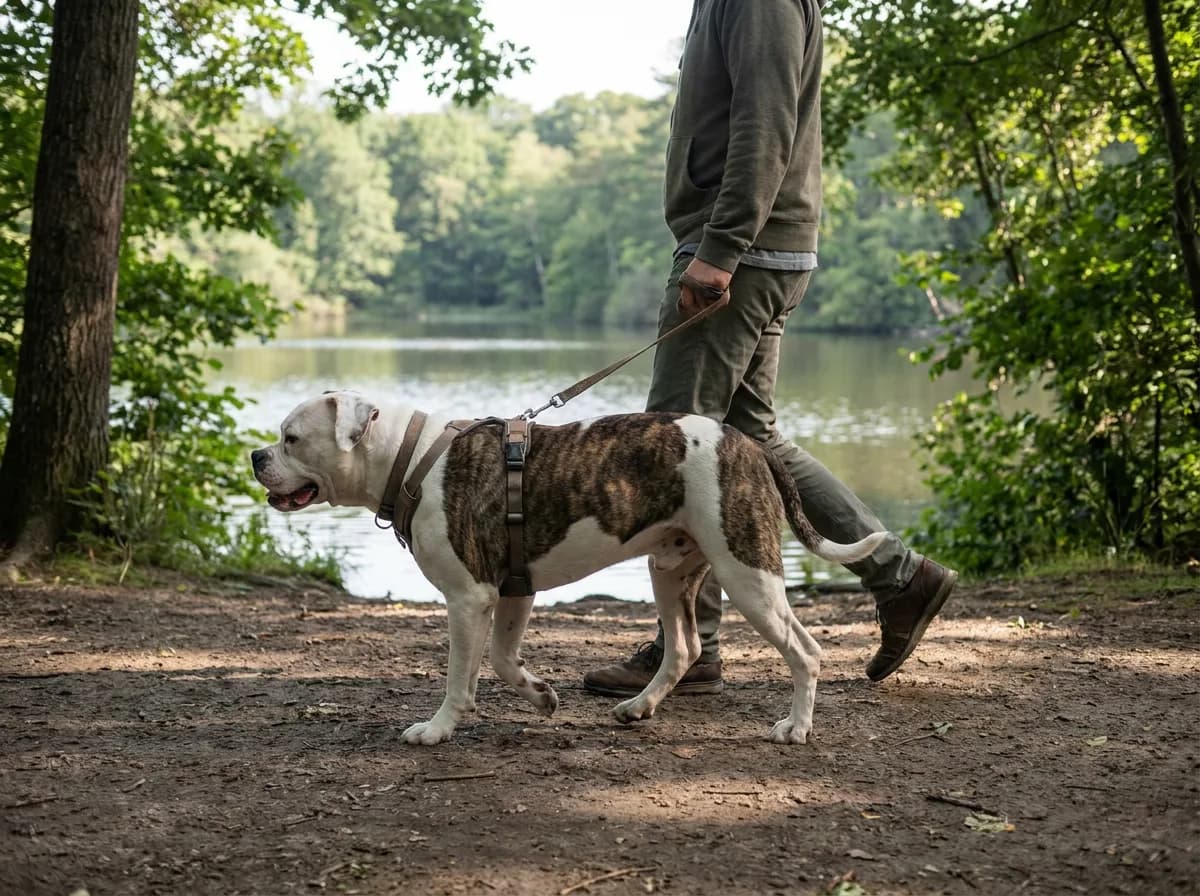
The American Bulldog lifespan is commonly described as about 10–12 years in the American Kennel Club's breed profile. That is a general reference range, not a prediction for your dog. Health history, inherited risks, body condition and access to appropriate care all belong in a more individual discussion with your veterinarian.
The most useful health plan separates screening from symptoms. A parent health certificate, a DNA result and an examination of a limping or itchy dog answer different questions. None replaces the others, and a long list of possible conditions does not mean every American Bulldog will develop them.

Sign up for expert-backed reviews and safety alerts all in one place.
How long American Bulldogs live
The AKC American Bulldog profile lists a life expectancy of 10–12 years. Treat this as a broad breed description rather than a precisely measured average for every population. A dog may live outside that range, and age alone does not tell you how comfortable or active it is.
The sources used here do not establish separate, dependable lifespan ranges for male and female American Bulldogs or for Johnson and Scott lines. A claimed “English American Bulldog” cross also cannot inherit a predictable lifespan by averaging two breed descriptions. Discuss the actual dog's health and function instead of treating a label as a forecast.
Planning financially before a problem arises can help you consider care options. If you compare Lemonade pet insurance, read the current policy terms, exclusions, waiting periods and payment arrangements for your situation. Do not assume that an existing condition or every hereditary problem will be covered.

Compare coverage choices for your pet, then request a quote directly on Lemonade.
- Check a price for your pet
- Review available coverage choices
- See the terms before you decide
Eligibility, waiting periods, limits and exclusions apply.
Petful may earn a commission when you click through to Lemonade, at no extra cost to you.
| Concern | Evidence to ask about | Next action |
|---|---|---|
| Hips and elbows | Parental orthopedic screening and the dog's own examination history | Discuss appropriate imaging or assessment with your veterinarian |
| NIPAL4 ichthyosis | Disease-specific laboratory report | Ask what the result means for this dog and any skin signs |
| CTSD-associated NCL | Applicable disease-specific genetic result | Review the result with the veterinary team; assess neurological changes promptly |
| New itch, lump or lameness | History and clinical examination | Investigate the current problem; a genetic result is not a diagnosis of every symptom |
Who is the oldest American Bulldog ever known?
The primary breed and veterinary sources used for this guide do not establish a verified oldest American Bulldog record. Individual stories online may describe unusually old dogs, but without reliable identity and age documentation they should not be presented as a breed record.
For your own dog, tracking comfortable daily function is more useful than comparing with an exceptional anecdote. Note appetite, mobility, sleep, interaction and any changes from its normal routine. Bring those observations to regular veterinary appointments, especially as the dog ages.
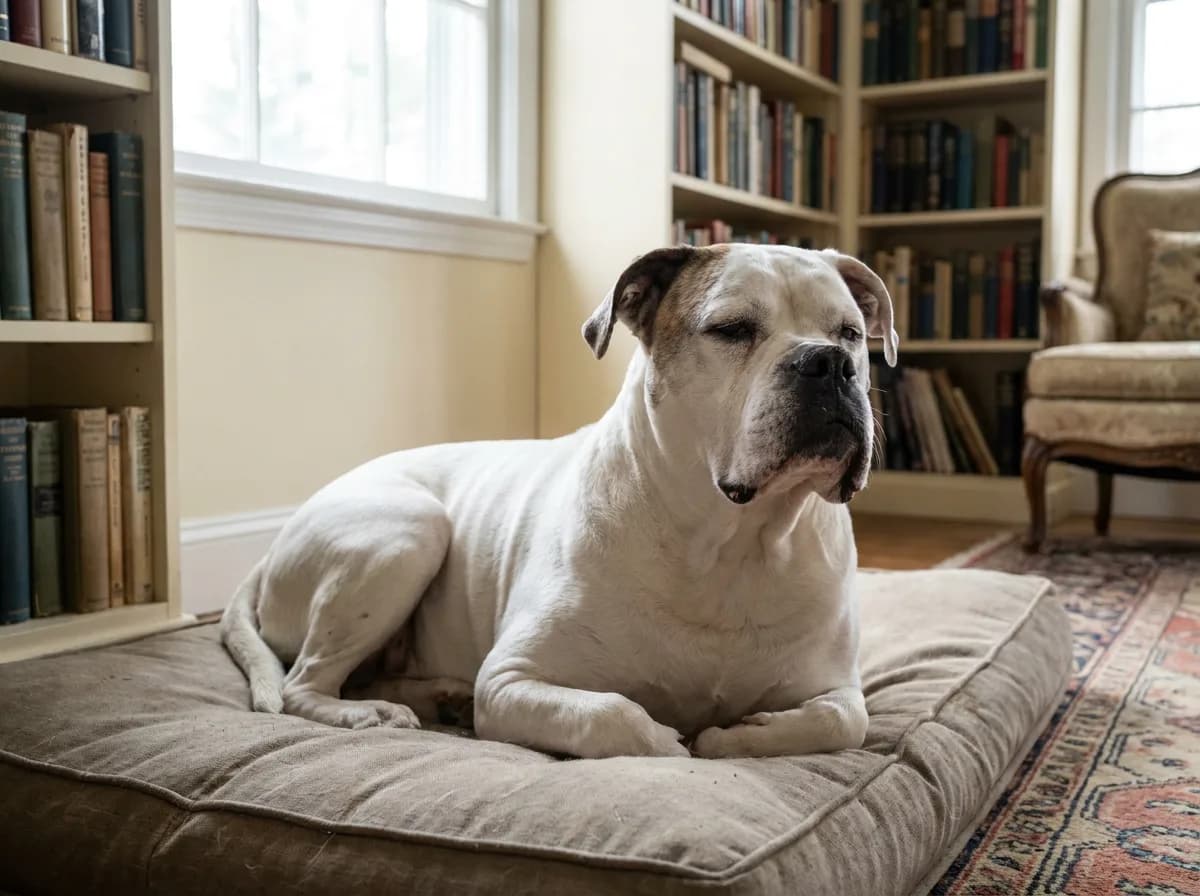
A resting surface should let the dog stretch out and rise comfortably. The FurHaven NAP Jumbo orthopedic bed is one flat foam-bed option to compare with your dog's dimensions and usual sleeping position. A bed can provide a resting place; it does not diagnose or treat joint pain.
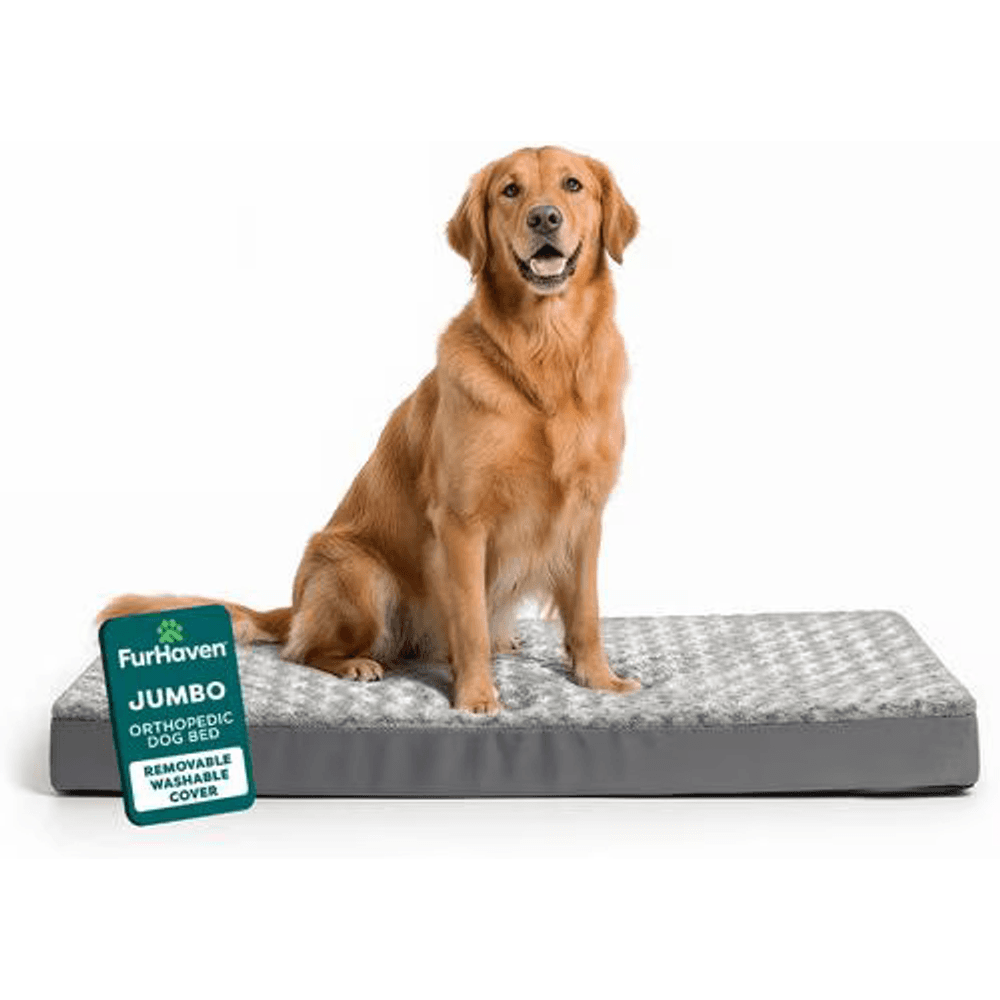
A Jumbo flat foam bed with a removable cover; check your American Bulldog's resting dimensions. Bedding does not replace assessment of pain or mobility changes.
Petful may earn a commission when you click through to Chewy, at no extra cost to you.
Inherited conditions and joint problems to discuss with your vet
American Bulldogs can develop joint, skin and other medical problems. Some conditions have a documented inherited variant that a laboratory can test for; others require examination, imaging or additional investigation. Breed membership alone does not establish a diagnosis or a reliable probability for an individual dog.
- 1Ask for parental orthopedic screening as well as relevant disease-specific DNA results.
- 2A genetic result is not a diagnosis of every current symptom or a complete health assessment.
- 3New discomfort or loss of function needs its own veterinary evaluation, even after reassuring screening results.
Read the record, not just the summary
The Orthopedic Foundation for Animals provides information about different health evaluations. When someone says a parent is “health tested,” ask for the actual reports and identify what was evaluated. A general veterinary examination, an orthopedic image and a DNA test are different forms of evidence. One should not be presented as if it includes all the others.
Check that the report identifies the correct dog and the test performed. Ask your veterinarian to explain unfamiliar terminology, the age at evaluation and whether any follow-up is relevant. Save a copy with your dog's records so later decisions can use the result accurately instead of relying on a seller's recollection.
- Which parent or puppy was tested, and how was its identity recorded?
- What specific condition or anatomical area did the evaluation assess?
- Does the report describe an affected dog, a carrier, a risk finding or a normal result for that test?
- What does the laboratory or examining veterinarian say the result does not exclude?
- Is there a separate recommendation for the puppy's own examinations or screening?
A disease-specific genetic result can be important diagnostic evidence. It still does not explain every symptom or test for every possible disorder. If a dog with a reassuring result becomes itchy, weak or lame, investigate that change normally. Conversely, an unexpected positive result should lead to a veterinary discussion about confirmation, interpretation and care, not a prognosis guessed from an internet summary.
Hip and elbow dysplasia
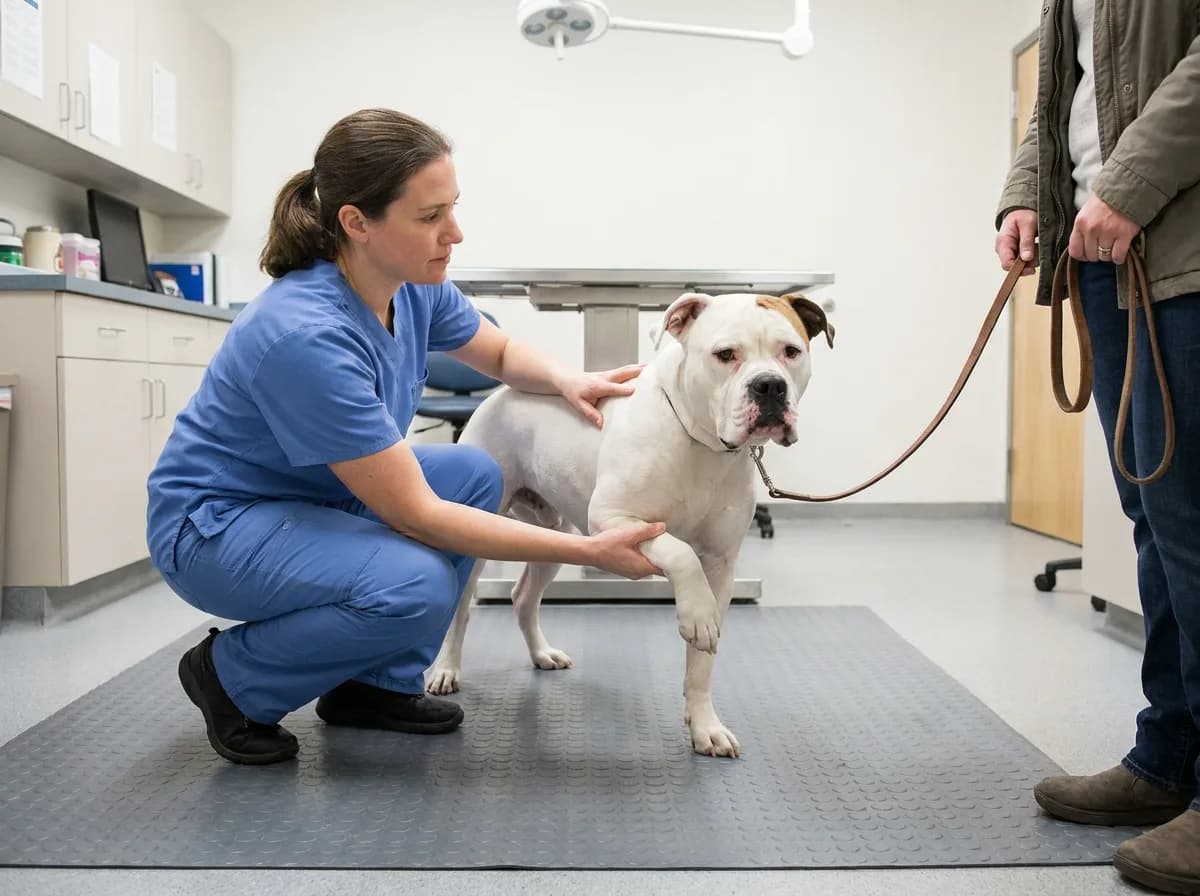
Hip dysplasia involves abnormal looseness and development of the hip joint, which can lead to painful changes. The American College of Veterinary Surgeons describes signs such as limping, reluctance to rise or jump and reduced hind-leg muscle. Some affected dogs show few obvious signs, so apparent athleticism is not a substitute for screening.
Hip dysplasia treatment depends on age, clinical findings and the dog's needs. Veterinary options may include weight management, adjusted activity, pain treatment, rehabilitation or surgery. Do not select a supplement or exercise program as a substitute for diagnosing persistent lameness. Early assessment can matter because some treatment choices depend on the stage of development.
Elbow dysplasia includes developmental abnormalities of the elbow joint and can cause forelimb lameness and arthritis. Both front legs may be affected, making an obvious one-sided limp less apparent. A veterinarian may assess movement and use imaging to investigate the problem.
- Ask which orthopedic evaluations were performed on each parent and request the results.
- Tell your veterinarian about reluctance to walk, stiffness or a change in how your dog rises.
- Bring a short video of ordinary movement if the problem is intermittent and recording it is safe.
- Avoid giving human pain medication or changing prescribed treatment without veterinary direction.
NIPAL4-associated ichthyosis
PennGen at the University of Pennsylvania lists a DNA test for NIPAL4-associated ichthyosis in American Bulldogs. This inherited skin disorder can cause marked scaling from an early age. It should not be confused with assuming that every dog with dry skin or dandruff has the same genetic disease.
The test concerns a specific autosomal recessive variant. A carrier result is different from having two copies of the disease variant, and a clear result applies to what that test examined. Ask your veterinarian or the laboratory to interpret the report in context, including the dog's identity and clinical signs. A report that simply says “DNA tested” is incomplete information.
Prepare for ordinary veterinary handling with brief, comfortable practice at home. Small Pet Botanics training rewards may help reinforce voluntary cooperation when your dog tolerates them. Check with the clinic about food restrictions before an appointment and avoid changing a prescribed diet.
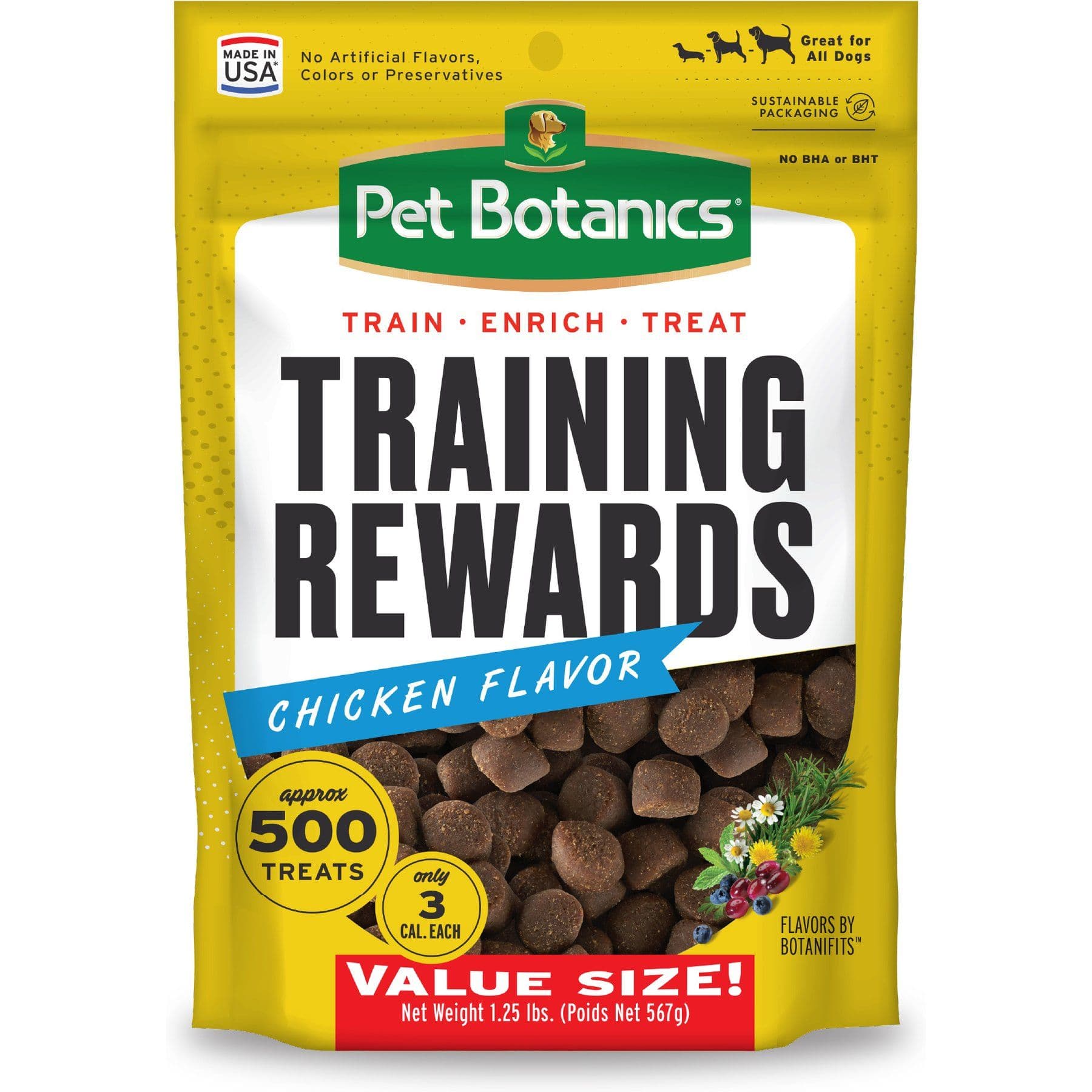
Chicken-flavor rewards for comfortable, voluntary handling practice. Respect dietary restrictions and the clinic's instructions before an examination.
Petful may earn a commission when you click through to Chewy, at no extra cost to you.
CTSD-associated neuronal ceroid lipofuscinosis
The University of Missouri describes CLN10 in American Bulldogs, a form of neuronal ceroid lipofuscinosis associated with the CTSD gene. It is a progressive neurological disorder; the laboratory describes affected dogs developing movement and coordination problems, typically beginning in young adulthood.
This is a specific inherited condition, not an explanation for every stumble or behavior change. Confirm that a report concerns the applicable American Bulldog variant rather than a different form of NCL tested in another breed. New weakness, loss of balance, seizures or other neurological changes need prompt veterinary attention rather than waiting for a consumer test result.
Lumps, skin cancer and bone concerns
New skin bumps or lumps under the skin need assessment; appearance alone cannot reliably identify a tumor. The ACVS mast cell tumor guidance illustrates why sampling may be needed to identify a skin mass and why laboratory examination informs further decisions. A small or movable lump is not automatically harmless.
Persistent lameness or a painful swelling can have several causes. Bone tumors are one reason a veterinarian may recommend imaging and, in some cases, tissue sampling. This does not mean every limp is cancer, or that an American Bulldog's breed alone establishes a cancer diagnosis.
- Record when you first noticed a lump and whether it is changing.
- Tell the practice about bleeding, ulceration, discomfort or other illness signs.
- Do not squeeze a lump or apply an unprescribed skin treatment to identify it.
- Ask what the recommended sample or imaging can establish and what the next decision will be.
White American Bulldog health problems cannot be inferred from coat color alone. Ask about the individual dog's skin, pigment and medical history rather than assuming that every white dog has the same risks. The sources here do not provide an American Bulldog-specific cancer prevalence or a ranking of causes of death, so neither is asserted.
Skin concerns and a preventive care plan
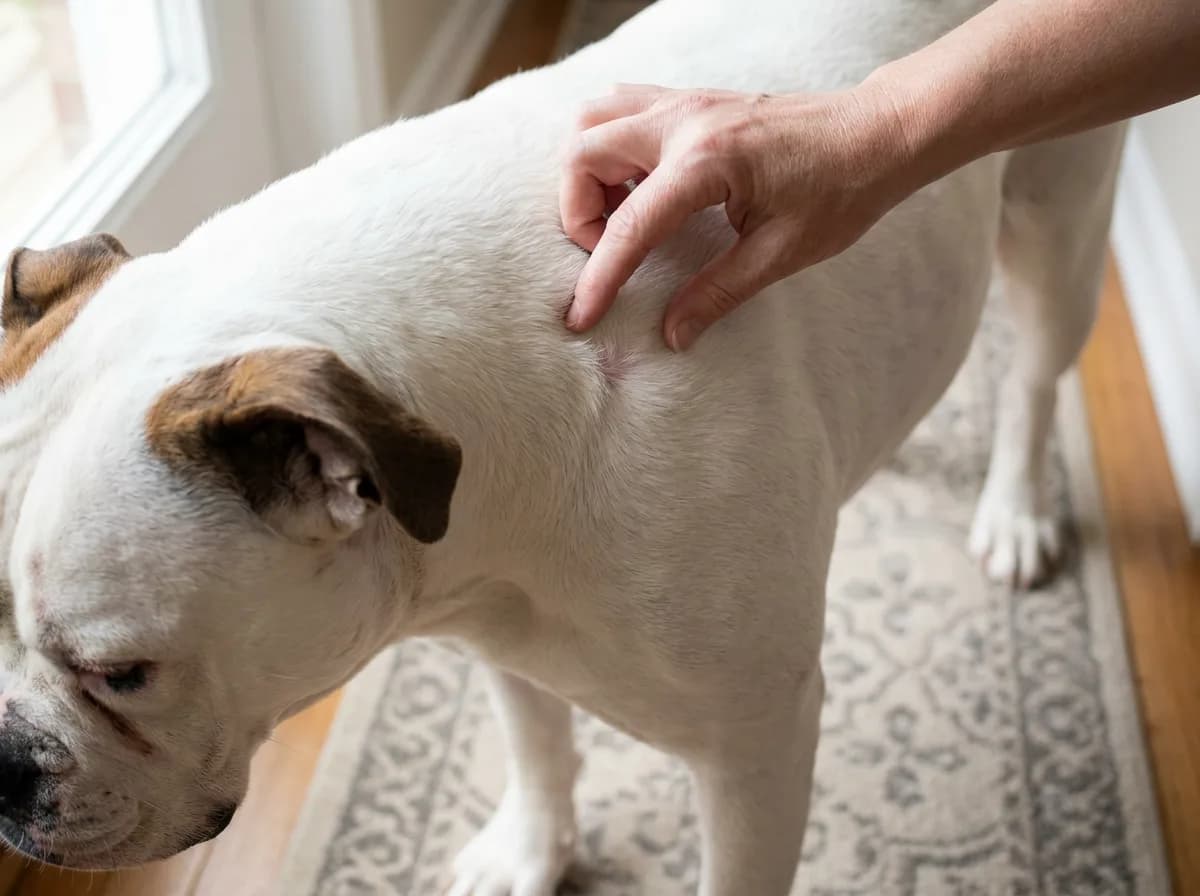
Itchy skin, a rash, scabs, bumps or irritation are descriptions of a problem, not a diagnosis. The AAHA allergic skin disease guidelines emphasize history, examination and appropriate skin testing. Parasites, infections and allergic disease can require different approaches, and more than one problem may be present.
For loose hair on comfortable, intact skin, the Four Paws Magic Coat glove and curry brush is an everyday grooming option. Use light pressure and stop over inflamed or painful areas. Persistent skin signs need assessment; a grooming tool is not a treatment.
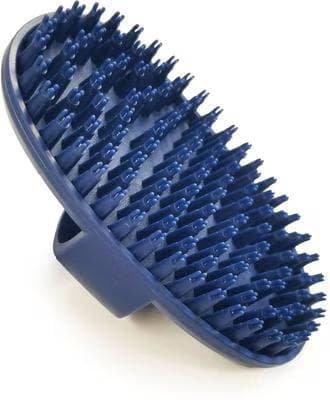
A glove and curry brush for gentle loose-hair removal on intact, comfortable skin. Stop at irritation or pain and seek veterinary advice.
Petful may earn a commission when you click through to Chewy, at no extra cost to you.
- 1Seek urgent help for breathing difficulty, collapse, sudden severe pain or major neurological change.
- 2Record new symptoms and changes in daily function for your veterinarian.
- 3Screening results reduce uncertainty; they do not guarantee a disease-free life.
Avoid treating every rash as a food allergy
American Bulldog skin allergies cannot be confirmed from pictures alone. Skin problems that look similar may have different causes. If food allergy is suspected, your veterinarian may recommend a controlled elimination diet and subsequent challenge; casual changes among foods are not equivalent to that diagnostic process.
There is no universal American Bulldog skin-problems cure. Some conditions require ongoing management and reassessment. Give your veterinarian a clear history of itching, products used, parasite prevention and previous treatment response. Include treats, supplements and flavored medicines when discussing food exposure.
- Note whether the problem is new, seasonal or present throughout the year.
- Photograph changes for the veterinary record without delaying care for a painful dog.
- Report ear discomfort, repeated licking or changes in sleep as well as visible skin lesions.
- Follow the agreed recheck plan, even if initial treatment makes the skin look better.
Pink skin visible through a pale coat, dark pigment spots and inflamed red skin are not interchangeable descriptions. Mention any new color change, thickening, hair loss, odor or discomfort. A photograph can help document a change but cannot replace examination or establish that it is normal pigment.
Hives and urgent changes
If raised welts or suspected hives appear, contact your veterinarian for advice. Breathing difficulty, collapse or rapidly worsening illness requires urgent care. Do not wait to see whether changing shampoo or food helps when the dog is struggling to breathe or appears severely unwell.
The AAHA emergency guide identifies breathing distress and major changes in function as reasons to act promptly. Call the nearest veterinary emergency service for instructions and transport guidance if your regular practice is closed.
American Bulldogs and human allergies
“Hypoallergenic” does not mean that an American Bulldog's short coat cannot trigger a person's allergies. The American Academy of Allergy, Asthma & Immunology explains that allergenic proteins occur in dander, saliva and urine, and that no dog breed is truly hypoallergenic.
This is separate from the dog having itchy skin or an allergy itself. A person with suspected pet allergy should discuss their symptoms with a medical professional. Do not assume that a particular coat color, frequent brushing or a seller's low-shedding claim makes a dog reliably tolerable for your household.
Body condition and regular care
A muscular breed should not be kept overweight to create a bulkier appearance. A dog who looks skinny, loses weight unexpectedly or loses muscle also needs assessment rather than an automatic increase in food. Ask your veterinary team to record weight, body condition and muscle condition, and compare changes over time.
Build preventive care around the individual dog's age, lifestyle and medical history. Keep vaccination and parasite-prevention discussions current, include dental care such as gradual toothbrushing practice and discuss any change in comfort or behavior. A normal result last year is useful history, but it cannot rule out a new problem today. For routine brushing once your dog is comfortable with mouth handling, a Virbac dual-ended dog toothbrush and Virbac C.E.T. poultry dog toothpaste are equipment options to discuss with your veterinary team.
- Eyes, ears and nose: Describe redness, discharge, odor, rubbing or changes in comfort to your veterinarian. Record when they began and whether one or both sides are affected. These signs do not identify one breed-specific disease.
- Paws and persistent odor: Note licking, damaged skin, limping and where an unusual smell seems to originate. Repeated bathing should not replace assessment of a persistent change.
- Stomach concerns: Bring a record of appetite, vomiting, stool changes and everything the dog eats, including treats and recent diet changes. Ask the clinic how promptly the dog should be seen rather than choosing a treatment from the breed name alone.
- An American Bulldog’s first heat does not have one breed-wide deadline. Merck’s veterinary guidance explains that puberty varies with breed and size, with larger dogs generally maturing later. Discuss pregnancy prevention and the timing of spaying with your veterinarian rather than using a predicted first heat as a breeding recommendation.
Choosing food for age and body condition
There is no single best food or fixed daily cup amount for every American Bulldog. Life stage, energy needs, current body condition and any diagnosed disease affect the choice. Bring the food's calorie information and your actual feeding amounts to the veterinary discussion, including treats and extras.
Our guide to choosing dog food for American Bulldogs explains the life-stage decision. A diet marketed as raw or natural does not by itself establish nutritional adequacy or suitability. If a dog has a medical problem, discuss the diet with the veterinary team rather than assuming a breed-specific marketing claim resolves it.
Checking a puppy breeder and health records
Ask for identifiable parent records and the exact tests performed. A broad commercial DNA panel may include useful variants, but it does not replace orthopedic evaluations, clinical examinations or verification that the relevant disease-specific tests were included. “All clear” should be explained test by test.
The American Bulldog puppy guide covers selection and preparation. Health screening reduces uncertainty; it cannot guarantee a puppy will never become ill. Ask what support the breeder or rescue provides if a problem appears, and arrange your own veterinary assessment after the dog comes home.
Everyday American Bulldog temperament and care
Our American Bulldog breed guide covers the broader advantages and demands of living with this strong working breed, including size and daily engagement. Use measured weight and body condition for your own dog rather than trying to match a single advertised average.
Barking and other behavior vary between individuals and situations. A new change may deserve a health discussion as well as a review of routine and training. Make activity manageable for the dog's current comfort, and tell the veterinarian when the dog stops enjoying familiar parts of daily life.
Questions about american bulldog lifespan
Ten falls within the AKC’s general 10–12-year American Bulldog lifespan range, so a senior assessment is sensible. It is not an expiry date. Review comfort, mobility, appetite, sleep and engagement with your veterinarian, and ask how often this dog should be examined. New difficulties deserve assessment rather than being dismissed as normal aging.
Yes. Concerns discussed here include hip and elbow dysplasia, skin disease, NIPAL4-associated ichthyosis and CTSD-associated neuronal ceroid lipofuscinosis. The inherited variants have disease-specific tests; an examination or orthopedic evaluation answers different questions. Ask for named results for the correct dog, and investigate new symptoms even after reassuring screening. This list does not mean every American Bulldog will develop these conditions.
Persistent pain or distress, difficulty moving comfortably, and loss of interest in food or usual activities are examples that warrant prompt veterinary assessment. They are not a diagnostic test or a complete list. Breathing difficulty, collapse, sudden severe pain or major neurological changes require urgent help. Your veterinarian can assess the cause and discuss ways to improve comfort.
BVMS, MRCVS
Dr. Pippa Elliott, BVMS, MRCVS, is a veterinarian with nearly 30 years of experience in companion animal practice. Dr. Elliott earned her Bachelor of Veterinary Medicine and Surgery from the University of Glasgow. She was also designated a Member of the Royal College of Veterinary Surgeons. Married with 2 grown-up kids, Dr. Elliott has a naughty Puggle named Poggle, 3 cats and a bearded dragon.
Sign up for expert-backed reviews and safety alerts all in one place.