American Bulldog Puppies: Price, Breeders, and Ownership Costs
Compare American Bulldog puppy listings with a clear checklist for parent health testing, price, written terms, and first-year care costs. Learn what to verify before paying a breeder or adopting.

BVMS, MRCVS

Petful is reader supported. As an affiliate of platforms like Amazon and Chewy, we may earn a commission when you buy through links on this page. There is no extra cost to you.
American Bulldog puppies need more than room to grow. Before paying a deposit, establish what breed the seller is describing, what the parents' health records actually show, and whether you can afford the dog's care after the purchase. A striking photograph or a high price cannot answer those questions.
The best starting point is a written comparison of the individual puppy, its records, and the full cost of bringing it home. Keep acquisition costs separate from recurring expenses so a seemingly affordable puppy does not leave you short of money for veterinary care, food, and training.

Sign up for expert-backed reviews and safety alerts all in one place.
Finding American Bulldog puppies
For all American Bulldog puppies offered for sale, confirm that the listing concerns American Bulldogs. English Bulldogs, American Bullies, and American Bulldog crosses can appear in broad searches for “bulldog puppies,” but they are not interchangeable. Ask for the parents' full registered names and the registry involved, then compare those details with the puppy's paperwork.
The UKC American Bulldog standard describes a substantial, athletic working dog. Terms such as standard or performance may refer to type or breeding goals. Micro, pocket, miniature, teacup, and XXL advertising deserves clarification, especially if the promised adult dog looks very different from that description.
- 1Request the parents' identities and specific health-test results before a deposit.
- 2Ask how the puppy has been raised and what has actually been observed about its behavior.
- 3Read written return terms, payment conditions, and what happens if the proposed placement cannot proceed.
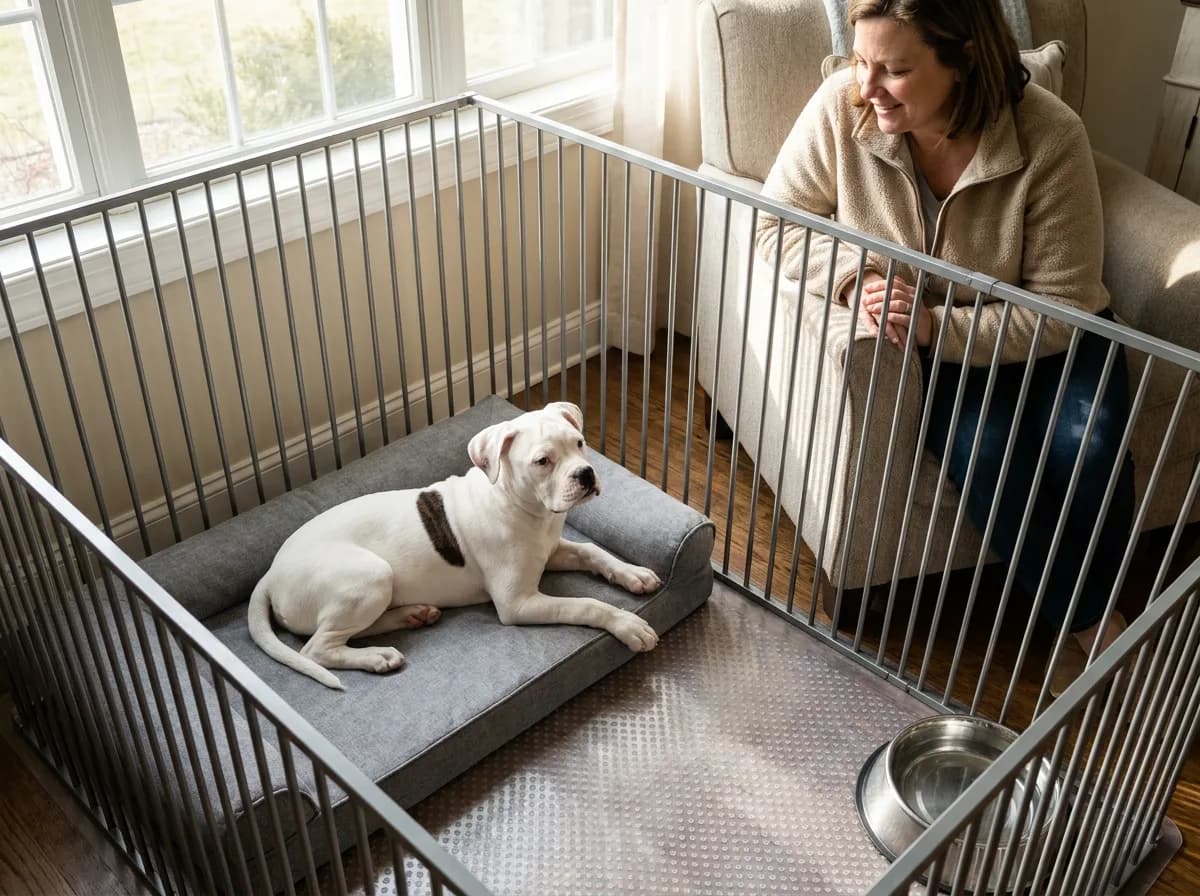
Prepare a secure rest space while you evaluate a possible match. A configurable gate or pen, such as the Frisco eight-panel playpen, may help organize supervised time at home. Check height, stability, gaps, and your puppy's ability to climb; a pen is not a guarantee that a growing dog can safely be left unattended.

A 30-inch configurable gate and pen for a supervised puppy rest area. Check stability, gaps and climbing ability as an American Bulldog grows.
Petful may earn a commission when you click through to Chewy, at no extra cost to you.
Find a dog you can evaluate, not just a listing
Begin with breeders willing to discuss their dogs in detail, or rescue organizations that can explain what is known and unknown about a puppy. A registry listing is a starting point for questions. It is not an independent endorsement of a seller, a health guarantee, or confirmation that the puppy is right for your home.
Ask for current photographs and a real-time conversation that identifies the puppy you are considering. If a gallery contains puppies of different ages, establish which litter is available now. An old page mentioning 2018, 2020, or another past litter should not be treated as proof of current availability.
- Match the puppy's date of birth and identifying details across the records and agreement.
- Compare male and female puppies by their observed behavior and care needs, rather than assuming sex alone determines the better match.
- Ask whether the listed dog is purebred, a documented cross, or identified from appearance.
- Clarify what registration papers are included and when they will be transferred.
- Keep a copy of the agreed description and payment terms before money changes hands.
- When comparing collars for sale, measure the puppy now, follow the maker’s fit instructions and recheck during growth. An adult breed-size label is not a safe shortcut for puppy equipment.
Consider age and the work already done
The American Veterinary Medical Association describes eight to ten weeks as an ideal period for a puppy to move to a new home. A newborn litter can be discussed with a breeder, but a newborn puppy is not ready for ordinary rehoming. Ask about the planned handover and the care provided until then.
- For a 12- or 14-week-old puppy, ask what experiences have happened so far.
- For a five- or six-month-old youngster, request details about house training, comfortable separation, leash practice, and how the dog copes with unfamiliar people. An older puppy is not automatically easier or harder; its history helps you plan the transition.

Soft puppy treats for brief handling and learning sessions. Tear into appropriate pieces, check the puppy's tolerance and count them in daily intake.
Petful may earn a commission when you click through to Chewy, at no extra cost to you.
For early handling practice, Wellness Soft Puppy Bites can be torn into portions the puppy can comfortably eat. Include treats in both the food budget and daily food allowance. Rewarding a brief successful interaction is more productive than stretching a session until the puppy is tired or overexcited.
Puppy weight charts and adult-weight predictors are estimates, not standards an individual must reach. Record growth with your veterinarian and ask about the parents' adult size without treating it as a guarantee. A large head, oversized paws, or being the heaviest in the litter does not prove that a puppy is healthier or more valuable.
For questions about growth stages, spurts or when your puppy will stop growing, compare dated weights and body-condition assessments instead of using a single birthday as a deadline. A female growth chart is still only a reference, not a target for every female puppy. Keep feeding and equipment decisions tied to the dog in front of you.
Check whether your routine fits a puppy
Plan who will supervise and provide toilet breaks during the day. A puppy advertised as trained still needs time to learn a new home. Ask what “trained” means in observable terms: where the puppy toilets, how long it has comfortably rested alone, and what walking practice has actually occurred.
- Build house training around regular trips outside, including after waking, eating and active play. Reward toileting in the intended place promptly, and supervise indoors between trips.
- Ask which suitable chew toys the puppy uses during teething, then supervise their use and replace damaged items. Discuss signs of mouth pain or difficulty eating with your veterinarian rather than assuming every problem is ordinary puppy chewing.
- Arrange safe transport and an early veterinary appointment before collection.
- Prepare washable bedding, suitable chew toys, bowls, and equipment fitted to the puppy's current size.
- Decide how to separate the puppy from resident pets when no adult is supervising.
- Make sure every caregiver uses the same simple routines and cues.
American Bulldog puppy price and first-year costs
Compare like-for-like quotes. A purchase price can include different services, paperwork, or transport arrangements, while an adoption fee may cover some care already provided. Ask for an itemized explanation. Do not assume a more expensive puppy has better health testing, or that a lower adoption fee means the dog has lower future care needs.
A useful comparison records both the amount and the evidence behind it. “Health guaranteed” needs written terms; “parents tested” needs the actual results. Keep the source of each figure visible so you can replace estimates with local quotes rather than mistaking a generic budget for your own likely bill.
| Budget or evidence item | What to obtain | Why it changes the decision |
|---|---|---|
| Puppy price or adoption fee | A written quote identifying the individual dog and included services | Prevents confusing the advertised price with the amount due at collection. |
| Parent screening | Specific health-test results linked to the parents' identities | Testing claims can be assessed separately from the asking price. |
| Return agreement | Written return terms and any refund or replacement conditions | Clarifies the responsibilities if the placement or a health issue requires follow-up. |
| Veterinary care | Local quotes based on the puppy's existing records and planned appointments | Avoids paying for assumed inclusions or overlooking unfinished care. |
| Food and equipment | Current food amount, bag price, fitted equipment, and replacement needs | Converts a shopping list into recurring and one-time costs. |
| Training and backup care | Class fees and realistic walker, sitter, or boarding quotes | Accounts for the time your household cannot personally provide. |
Build the budget in three parts
Start with the amount required before the puppy arrives. Then list predictable monthly expenses and costs that occur less often. A large dog's food, equipment, and care needs can change substantially during growth, so revisit the plan instead of multiplying the first month's puppy expenses by twelve and assuming the total is settled.
One growth-stage option to discuss with your veterinarian is Purina Pro Plan Large Breed Puppy Chicken & Rice, specifically the puppy formula rather than the similarly named adult recipe. For budgeting, divide the bag's usable weight by the amount your puppy eats each day to estimate how long it will last. Use the actual feeding plan and calorie information, not a breed-wide cup allowance. Ask your veterinary team about an appropriate large-breed growth diet before selecting food solely because a puppy looks unusually big or muscular.
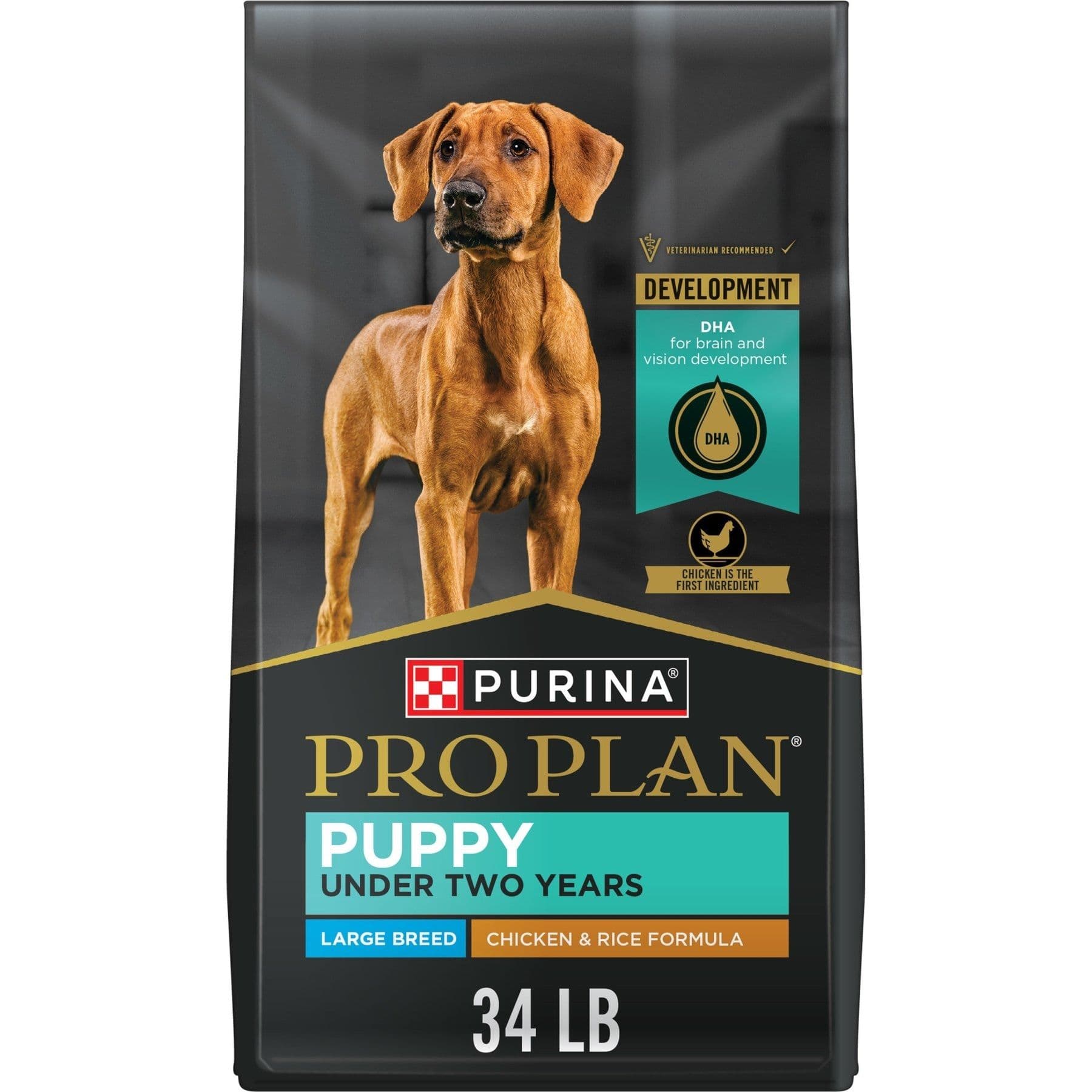
The large-breed puppy Chicken & Rice formula for a growth-stage feeding discussion with your veterinarian. Budget from the puppy's actual daily ration, not a promised adult size.
Petful may earn a commission when you click through to Chewy, at no extra cost to you.
- Initial costs: Purchase or adoption, agreed transport, an initial examination, identification, bedding, bowls, and appropriate containment.
- Recurring costs: Food, veterinarian-recommended parasite prevention, training rewards, replacement chews, and any regular dog-care help.
- Periodic or unexpected costs: Vaccinations and other planned veterinary care, equipment replacement, boarding, illness, injury, and behavior support if needed.
Get care quotes for your location and expected needs. A dog walker might charge differently for a brief visit and a longer walk; boarding may have its own assessment requirements. Budget using the service you would actually book rather than the least expensive price advertised for a different situation.
If considering insurance, compare its exclusions, waiting periods, deductible, and reimbursement terms before assuming it replaces accessible savings. Ask the provider to explain the policy for the individual puppy. The useful question is how you would pay for care when a bill arrives, including anything the policy does not cover.
Treat cheap and premium listings with the same scrutiny
A listing under $500, a free-to-good-home post, or a discounted older puppy does not remove the need for records and a careful handover. Conversely, a “most expensive,” micro, miniature, rare-color, or giant puppy is not proven better because of its premium. Price reflects what a seller asks, not an independent assessment of quality.
Separate a lower acquisition cost from lifetime affordability. If the purchase uses all your available money, the budget is incomplete. It can be sensible to wait, consider an adult with better-known needs, or revisit what care you can consistently provide instead of stretching for a particular look or type label.
Evaluating breeders, rescue and parent health records
Reputable American Bulldog breeders should be able to explain why a particular pairing was made and show the supporting records. Ask about parent health testing directly. A routine examination and a statement that a parent “looks healthy” are not equivalent to a named screening test with an identifiable result.
Grooming supplies also belong in the handover budget. For a puppy at least 12 weeks old, TropiClean Gentle Coconut Puppy Shampoo is an option for ordinary bathing according to the label. It does not treat itchy or inflamed skin. For a younger puppy or any skin concern, ask your veterinary team what care is appropriate before buying a shampoo.
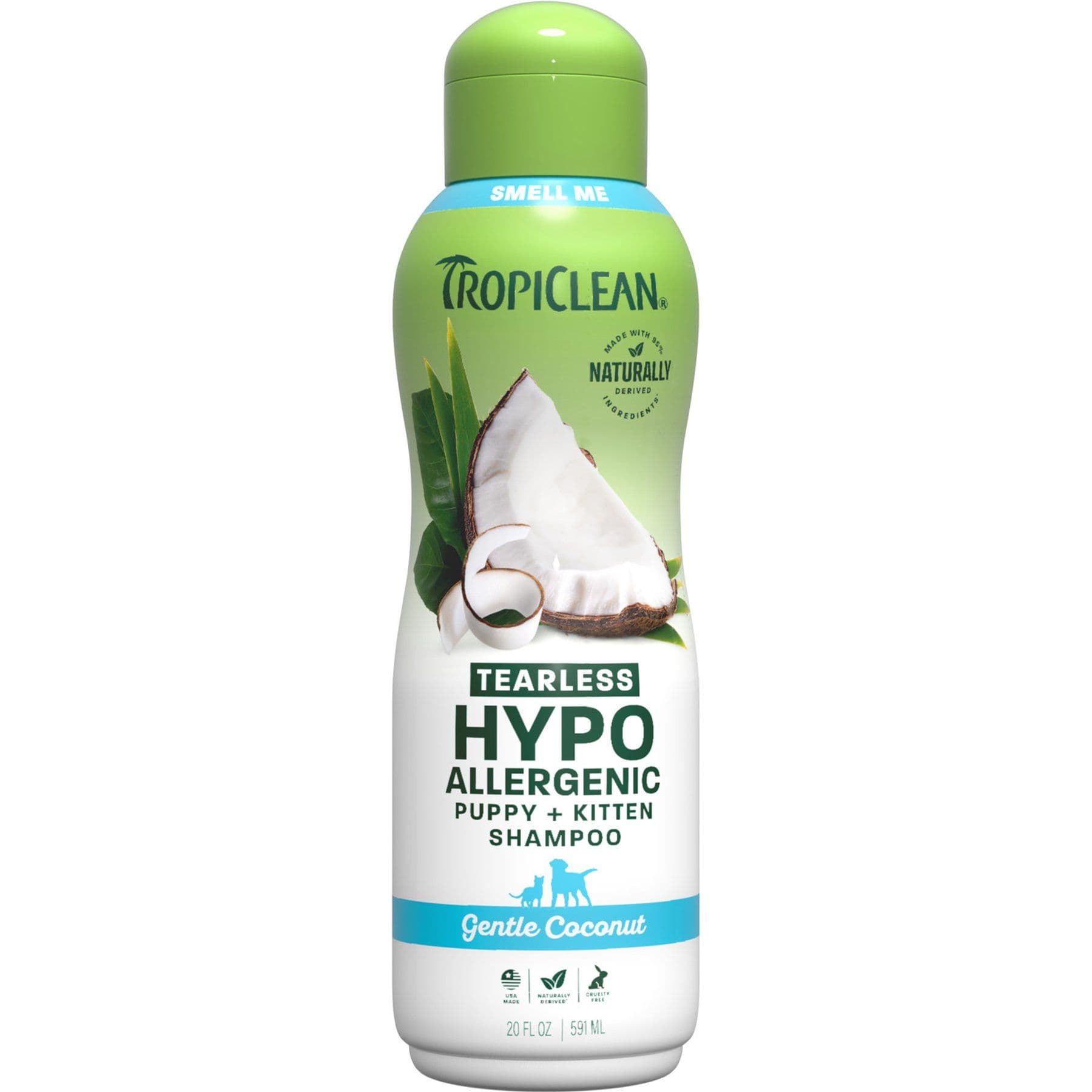
A gentle bathing option for puppies 12 weeks and older. Follow its label for ordinary cleaning; new irritation needs veterinary advice rather than repeated washing.
Petful may earn a commission when you click through to Chewy, at no extra cost to you.
Look for a record that connects the dog, the test, the date, and the finding. If an original report is unclear, ask your veterinarian to help interpret it. Screenshots without identifying information are harder to assess than complete reports, and a list of tests advertised by a laboratory does not prove either parent received them.
- Obtain the parents' registered names and identification or registration numbers.
- Request the actual orthopedic and other health-screening reports the breeder says were performed.
- Ask which DNA conditions were tested and how the results affected the breeding decision.
- Request an explanation of any missing, pending, abnormal, or outdated results.

Understand what a test result can establish
The Orthopedic Foundation for Animals provides searchable health-screening information. Use the dog's identity to locate applicable records and read the findings, rather than treating a database entry as a blanket health certificate. Ask which screenings are relevant to the parents and which limitations remain after testing.
One breed-relevant example is neuronal ceroid lipofuscinosis: the University of Missouri Canine Genetics Laboratory lists an American Bulldog CLN10 test. The practical buyer question is whether a claimed test is the correct test for the breed and what the parents' actual reports show. A generic statement that a broad DNA panel was clear is less useful.
No screening program guarantees a puppy will never develop a health problem. Parent results support a more informed decision; they do not replace the puppy's examination or ongoing care. Keep those two kinds of records separate so you can tell whether a document describes inherited-risk screening or the puppy's current condition.
Bring a useful handover record to the first appointment
Request the puppy's vaccination history and next-due dates and deworming history, including dates and products, along with any examination findings or treatment instructions. Bring the records to your veterinary appointment rather than relying on “all shots done.” Your veterinary team can decide what care is still appropriate from the documented history and the puppy's circumstances.
- Record the current food, daily amount, and feeding schedule.
- Note any medication or supplement and who prescribed or recommended it.
- Keep the caregiver's contact details available for questions about missing information.
- Ask how identification records will be updated to your contact information.
Meet the dogs and discuss ordinary behavior
When possible, meet the mother and observe the puppy where it has been raised. If the father lives elsewhere, ask how to learn about him and why the pairing was selected. A breeder should be able to distinguish first-hand observations from expectations based on a pedigree or reputation.
Ask about a normal day rather than requesting a performance. How does the puppy settle after play? What happens during gentle handling? Which household sounds and people has it encountered? A quiet moment in a photograph cannot establish a calm temperament, and a lively moment during a visit does not describe every hour of the day.
- Ask for examples of comfortable contact with different people, not just “well socialized.”
- Discuss any persistent fear, difficulty settling, or biting that the caregiver has noticed.
- Learn which routines help the puppy rest, toilet, and eat comfortably.
- Check that you can contact the caregiver after collection if a question arises.
Early learning should continue at home. The AVSAB training guidance recommends reward-based methods. Redirect ordinary puppy mouthing toward suitable toys and manage the setting so children are not left to handle an overexcited puppy alone. If biting is intense, escalating, or associated with fear, ask your veterinarian and a qualified trainer for individual help.
Read the agreement before reserving a puppy
Ask for written return terms before you pay, not at the handover. The agreement should make clear which puppy or litter the deposit concerns, what is included, and what happens if either party cannot proceed. Read any health-related conditions carefully, including the timing of an examination and whom to contact if a concern is found.
- Confirm whether the deposit is refundable and what circumstances affect that decision.
- Clarify transport arrangements and who is responsible for each stage of the handover.
- Ask how registration and identification records will be transferred.
- Establish what help or return process is available if you can no longer keep the dog.
Do not let a countdown, a claim that another buyer is waiting, or an impressive registry logo replace these checks. An opportunity that requires payment before basic questions can be answered is a reason to pause. You are evaluating a long-term commitment, not merely securing the last item in a sale.
Ask a rescue about the individual dog's history
American Bulldog rescue organizations may have puppies, adolescents, adults, or mixes. Availability changes, and a breed label may be estimated if parentage is unknown. Ask what the organization has directly observed, what veterinary care has been completed, and what support is provided after adoption.
A foster home may offer useful information about daily routines, though it cannot predict every response in a new environment. Request the medical records and discuss introductions to your resident animals. “For adoption” and “for sale” describe different acquisition routes; neither removes the need to match the dog's needs with your household.
How this fits the American Bulldog breed
The adult American Bulldog is a strong dog whose care needs extend well beyond puppyhood. For temperament, barking, exercise, and household-fit questions, read our American Bulldog breed guide. Affection and sociability vary, and no breed label guarantees behavior with owners or strangers. Our American Bulldog vs. Pitbull comparison also explains the naming distinction without ranking breeds by supposed aggression. Use the individual dog's records and behavior to guide your decision.
Questions from prospective owners
The American Bulldog Registry and Archives publishes breeder-puppy guidance of $1,500–$4,000 on its puppy page, checked in October 2026. That is the registry's guidance, not a measured national average or an endorsement of any seller. Obtain a written quote for the individual puppy, review its health records and specific health-test results, and read written return terms. Adoption fees and included care vary by organization. Food, veterinary care, equipment, training, and backup care are additional costs. See the registry's current puppy information: ABRA puppy guidance.
No. Start with what the youngster already knows and use reward-based practice to teach your household routines. Ask about house training, leash experience, comfortable separation, and handling before collection. An older puppy may have useful foundations or habits to work on; age alone does not tell you which. Plan a gradual transition instead of expecting instant obedience.
No. The puppy’s examination describes its current condition, while parent screening can provide information about inherited risks. Request both kinds of records and match each report to the named dog. Ask which tests were performed and what the actual results show; a general “healthy parents” claim or a clear-looking puppy is not equivalent evidence.
BVMS, MRCVS
Dr. Pippa Elliott, BVMS, MRCVS, is a veterinarian with nearly 30 years of experience in companion animal practice. Dr. Elliott earned her Bachelor of Veterinary Medicine and Surgery from the University of Glasgow. She was also designated a Member of the Royal College of Veterinary Surgeons. Married with 2 grown-up kids, Dr. Elliott has a naughty Puggle named Poggle, 3 cats and a bearded dragon.
Sign up for expert-backed reviews and safety alerts all in one place.