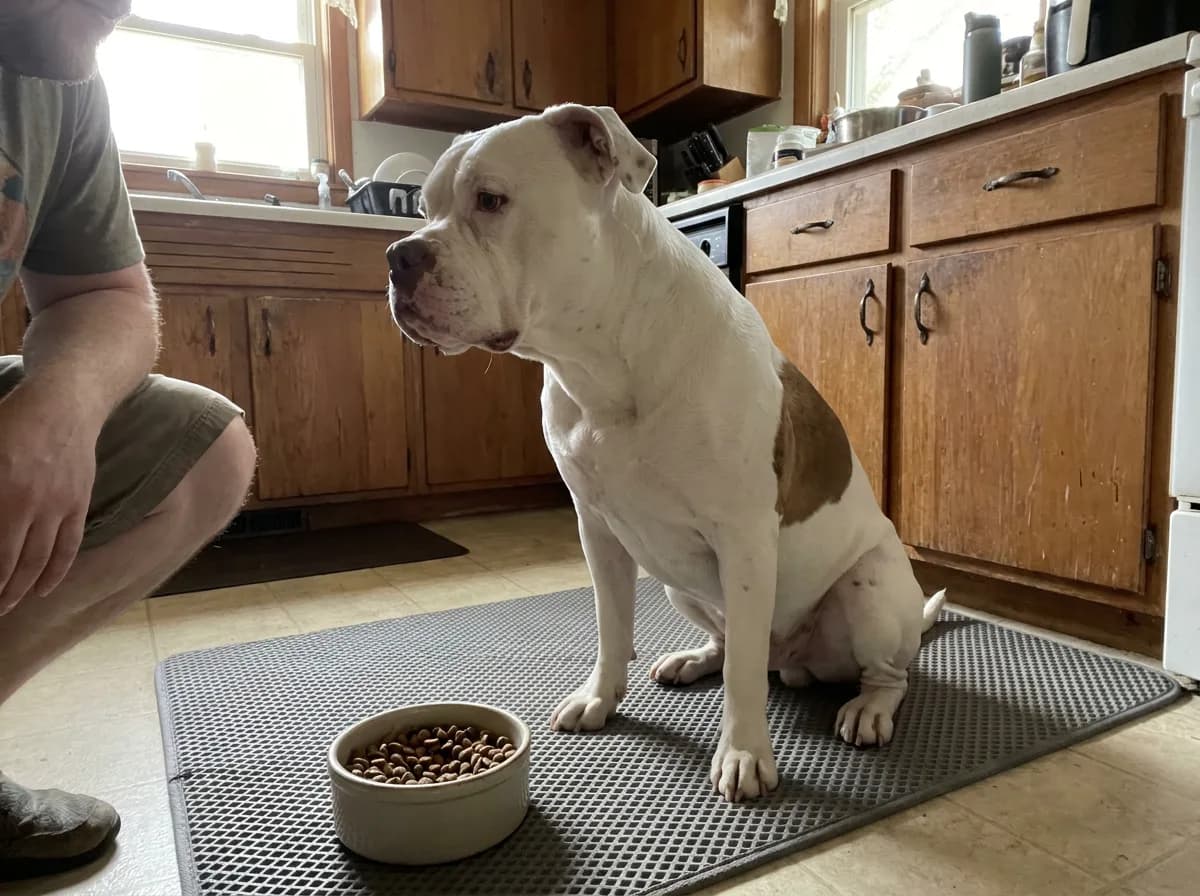
American Bulldog vs. American Bully: How They Differ
Learn how American Bulldogs and American Bullies differ, what XL and Pocket labels mean, and how to compare an individual dog's behavior, size and care needs with your household.

BVMS, MRCVS
Petful is reader supported. As an affiliate of platforms like Amazon and Chewy, we may earn a commission when you buy through links on this page. There is no extra cost to you.
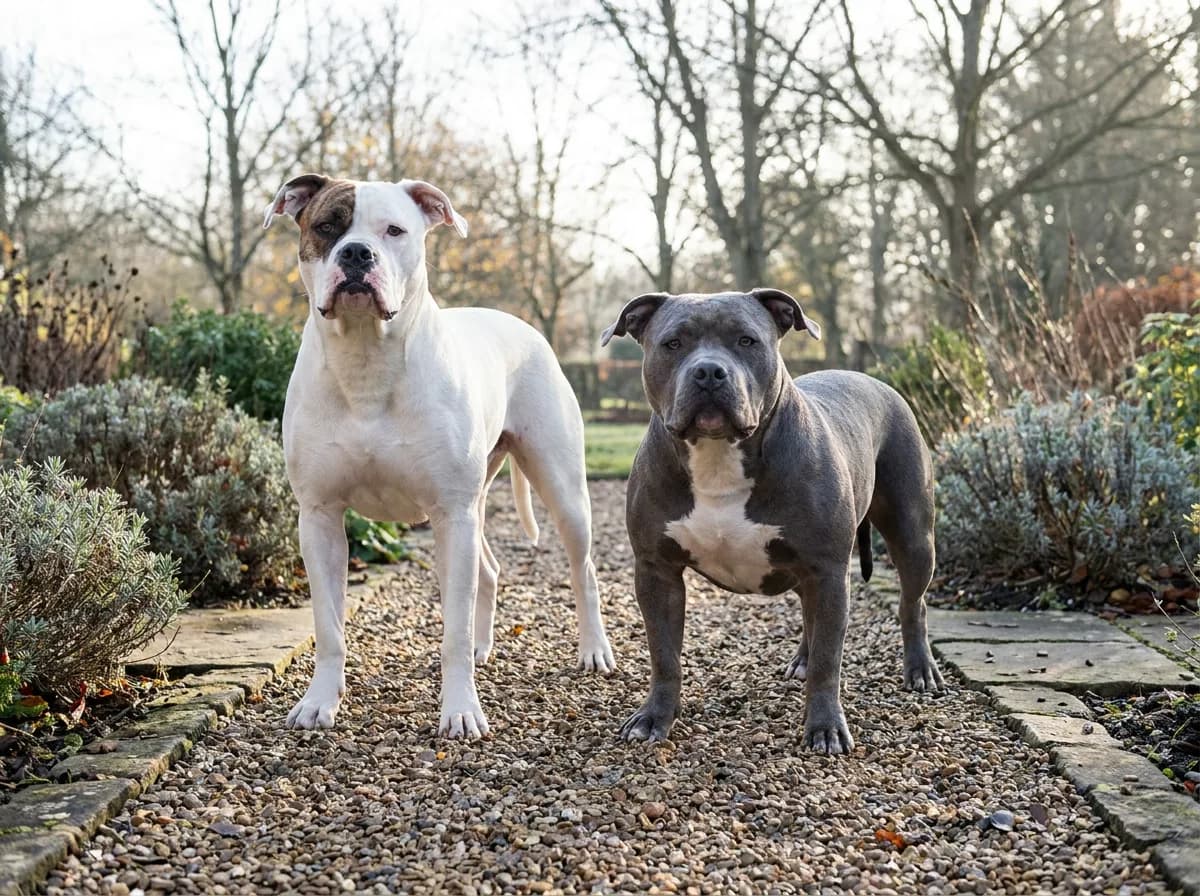
The American Bulldog vs. American Bully comparison starts with two separate breeds. The American Bulldog has a working farm-dog background; the American Bully developed as a distinct companion breed with a broad, muscular build. Neither the shared word “American” nor the casual label “bully” makes them the same dog.
For a prospective owner, confirming identity is only the first step. Adult size, comfortable movement, known behavior and the care you can provide matter more than choosing a name that sounds stronger, friendlier or easier.

Sign up for expert-backed reviews and safety alerts all in one place.
American Bulldog vs. American Bully at a glance
The United Kennel Club recognizes the American Bulldog and American Bully under separate standards. Check the breed name on registration documents where available, then compare that information with the history supplied by the breeder, rescue or current owner. A clear identity claim should not depend solely on how a photograph looks.
An adult behavior assessment answers a different question: can this particular dog fit your household? Registration cannot certify comfort with visitors, children, other dogs or being left alone. Keep the paperwork and the practical assessment separate so that one does not stand in for the other.
| Question | American Bulldog | American Bully |
|---|---|---|
| Breed name on registration | American Bulldog | American Bully |
| General outline | Athletic working-dog structure; variation between types | Broad, compact structure; variation between size categories |
| Adult behavior assessment | Review history and everyday responses | Review history and everyday responses |
| Equipment choice | Measure the individual chest and body | Measure the individual chest and body |
| Home decision | Match handling, activity and care needs | Match handling, activity and care needs |
Walking equipment should fit the individual chest, not a breed stereotype. Measure carefully before choosing a PetSafe Easy Walk Medium/Large harness. Follow that size guide and check that straps do not rub or restrict movement. A stockier outline does not automatically call for a larger size, and a growing puppy needs repeated fit checks.

Fit this Medium/Large harness to measured chest dimensions, whether the dog is an American Bulldog or American Bully. A breed or size-class label is not a fit guide.
Petful may earn a commission when you click through to Chewy, at no extra cost to you.

If you are comparing an American Bully, American Bulldog and Pitbull together, first ask what “Pitbull” means in that conversation. It may be a broad label rather than a specific breed identification. That terminology deserves clarification before you compare measurements or make assumptions about personality.
Size, body structure, and the XL Bully distinction
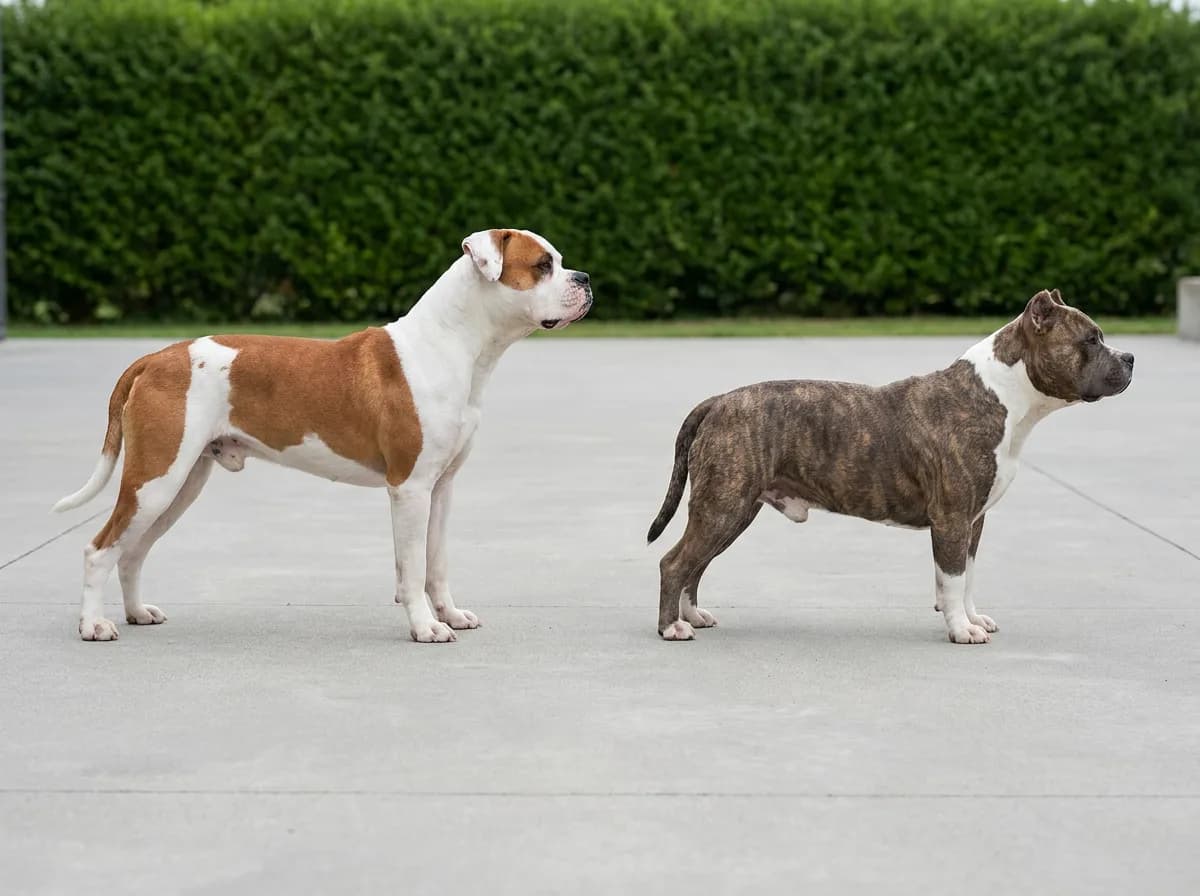
American Bulldogs often have a taller working-dog outline. American Bullies have a more compact, broad structure, but their height varies by category. An unusually large head, very wide chest or exaggerated muscle does not establish quality. The UKC standard explicitly prioritizes sound structure over excessive size and mass.
A suitable leash and a taught walking routine matter for both builds. The Frisco Traffic Leash offers a regular handle and a shorter handle for closer management when appropriate. It is a six-foot everyday leash, not a long training line, and it does not replace teaching the dog to move with you on a loose lead.
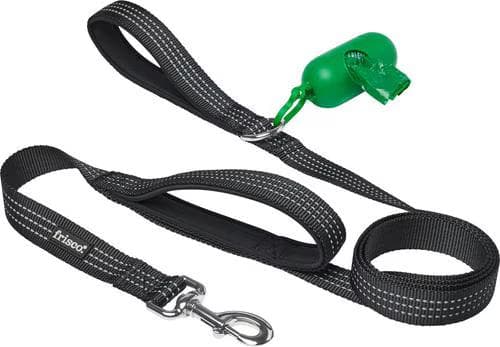
A six-foot everyday leash with two handles for different walking situations. Teach loose-leash skills and avoid constant tension.
Petful may earn a commission when you click through to Chewy, at no extra cost to you.
- 1XL is an American Bully category, not a synonym for American Bulldog.
- 2Check the breed name on registration rather than classifying a dog by bulk.
- 3Combine measured adult size with an adult behavior assessment before deciding on a home match.
What are the differences between an American Bulldog and an XL Bully?
An XL Bully is an American Bully size category, not another name for an American Bulldog. UKC lists mature XL males at over 20 to 23 inches at the withers and females at over 19 to 22 inches. These are height classifications within the American Bully breed; a tall American Bulldog does not become an XL Bully by reaching the same measurement.
The useful comparison is therefore breed identity plus the actual dog's dimensions and abilities. Measure for transport and equipment, observe comfortable movement and ask about health history. Do not rely on a promised adult weight as proof of an XL classification or as a reason to feed a puppy toward a particular size.
What is a pocket bulldog?
“Pocket bulldog” is an imprecise phrase. Someone may mean a Pocket American Bully, which is a smaller adult-height category of the American Bully, or may be using an informal sales label. Ask which breed and registry standard the person means. Pocket does not identify an official miniature American Bulldog.
A shorter dog can still be heavy, strong and demanding to handle. Before choosing one for a small home, consider the dog's measured size, walking skills and care needs. A compact outline does not guarantee easy lifting, comfortable breathing or low exercise needs, and marketing language is not a substitute for veterinary records.
Why American Bulldog and American Bully are different breeds
Separate standards reflect different breed development and intended structure. The American Bulldog retained a working role associated with farm tasks. The American Bully became a distinct breed with a companion emphasis and its own appearance. Shared historical influences do not erase those differences or make one a size version of the other.
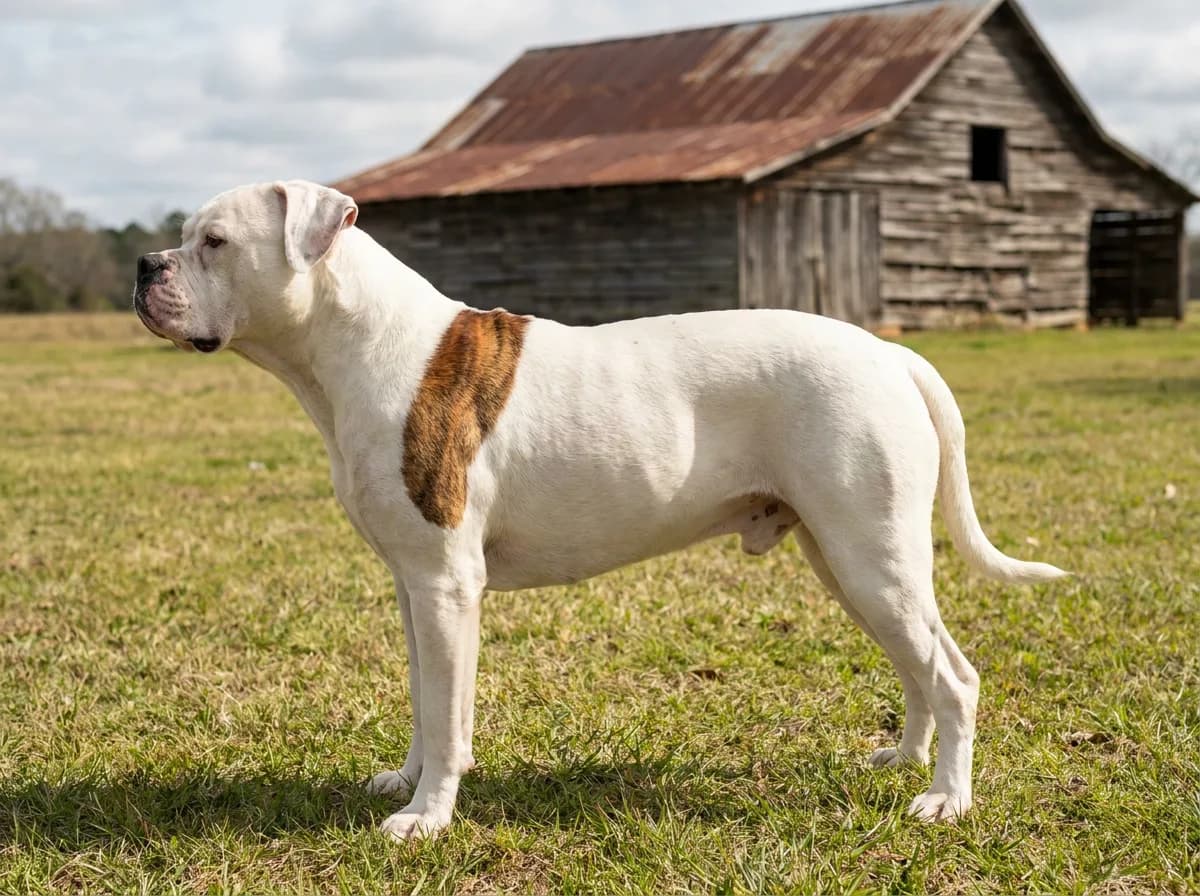
This distinction also explains why “bully type American Bulldog” needs context. Within American Bulldogs, that description may refer to a more substantial type. It does not automatically mean the separate American Bully breed. Ask for the full name and supporting history whenever a listing uses shortened labels.
Johnson and Scott are American Bulldog types
Johnson and Scott describe important types within the American Bulldog, often associated with different proportions and working emphasis. They are not the same classification system as Pocket, Standard or XL American Bullies. A seller's use of “standard” therefore needs a breed name attached to be meaningful.
Our guide to American Bulldog types explains those distinctions and the limits of identifying a line from appearance. Use the type as background for questions about the individual dog's parentage, movement and daily needs, rather than as a temperament guarantee.
Temperament, training, and everyday management
Both comparisons become more useful when you ask about ordinary behavior. Can the dog settle after a walk? How does it respond to a visitor, a passing dog or necessary handling? A caregiver's specific examples are more valuable than a sweeping promise that every member of a breed loves everyone.
The American Veterinary Society of Animal Behavior recommends reward-based training. Practise useful skills such as checking in on walks, waiting at doors and resting on a mat. Small Pet Botanics training rewards can help with repeated practice; include them in the dog's overall food allowance rather than treating them as unlimited extras.
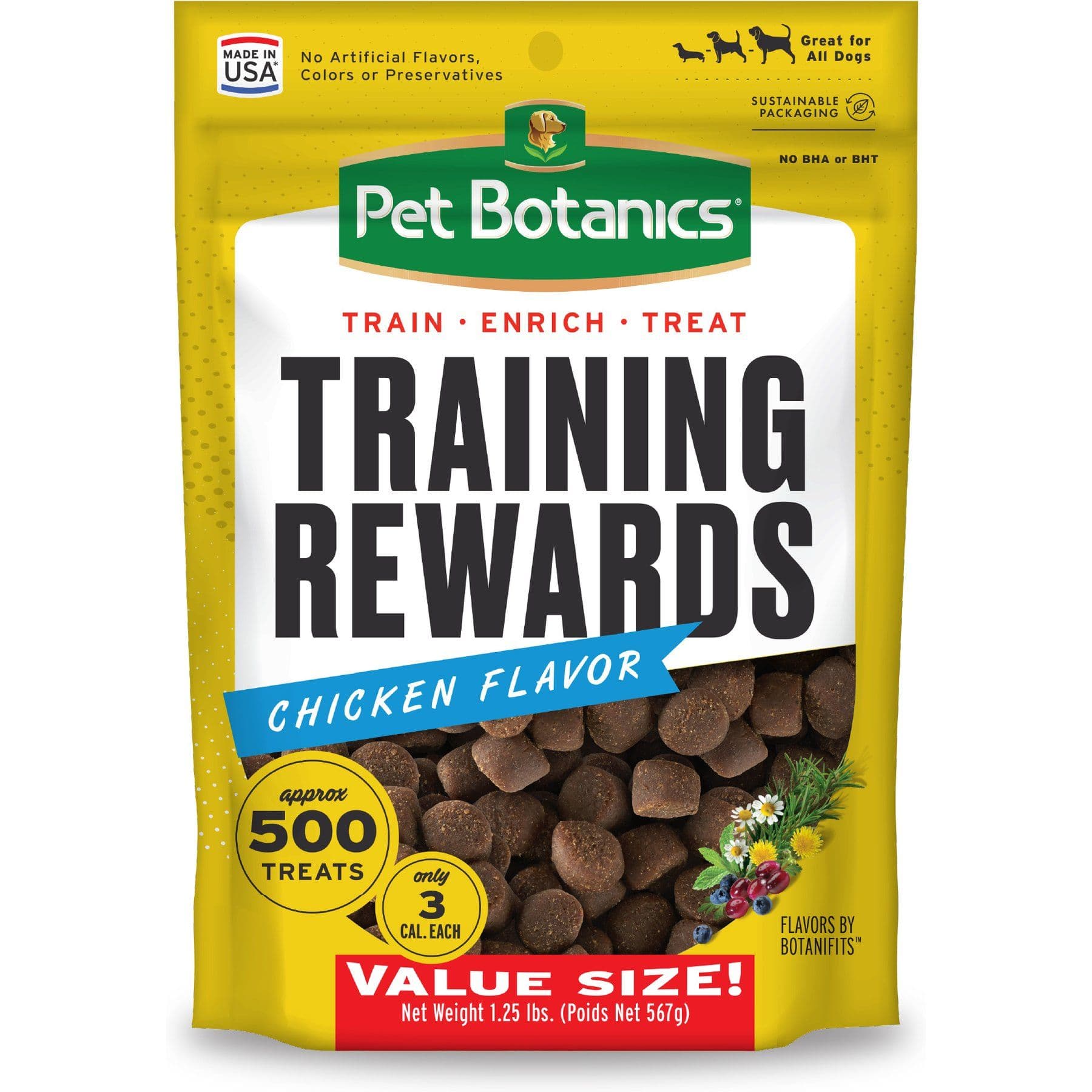
Chicken-flavor training rewards for check-ins, doorway manners and settling. Match portions to the individual and account for treats in daily intake.
Petful may earn a commission when you click through to Chewy, at no extra cost to you.
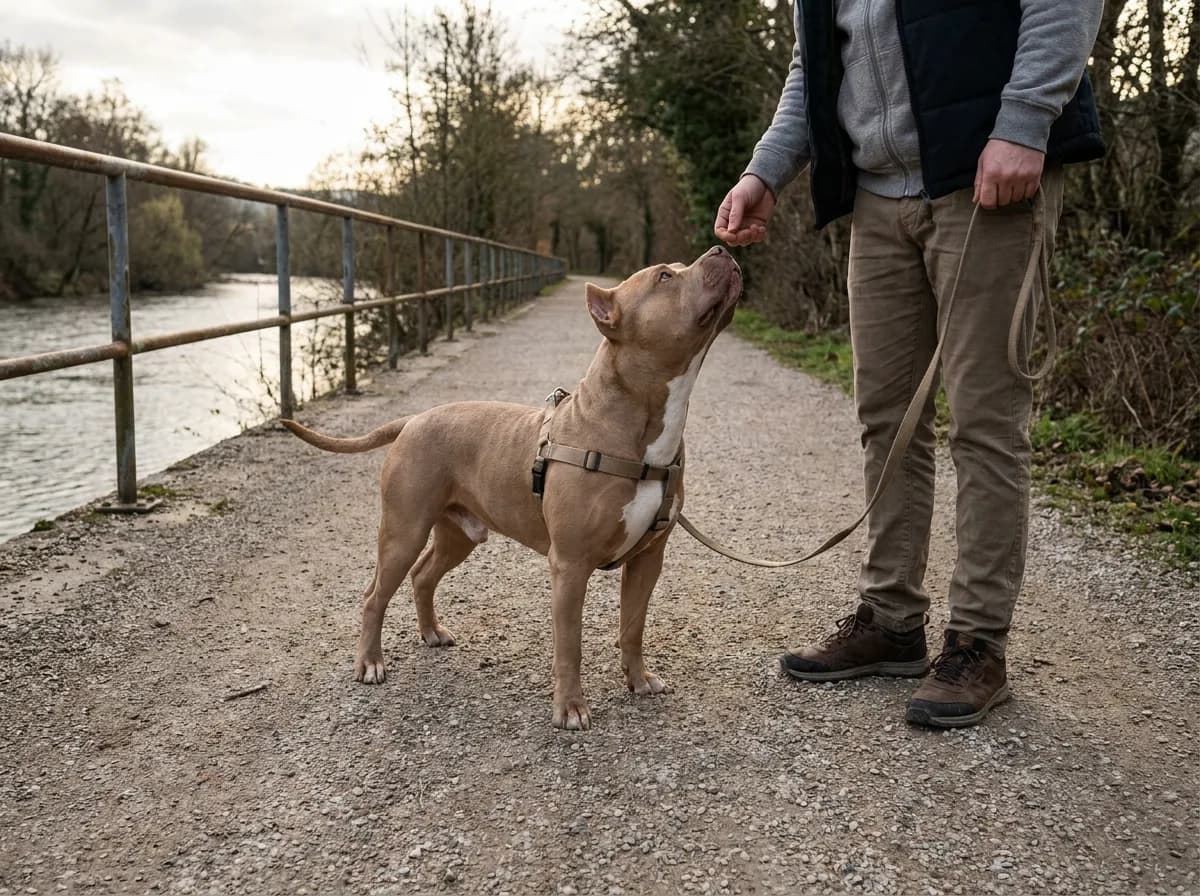
Are American bulldogs considered aggressive breeds?
The label depends on the context, but it does not predict an individual dog's behavior. Some policies use breed categories; an owner's practical assessment should examine known incidents, triggers, learning history and management needs. Read your actual lease or insurer's wording when a restriction may affect you, rather than assuming that a kennel club definition controls it.
Ask directly about guarding, fear, reactivity and bite history. If the available history is complicated, seek qualified behavior help before committing. Strength makes safe handling important, but strength and aggression are not interchangeable descriptions.
Do American Bullies get aggressive?
An American Bully can show aggression, just as an individual of another breed can. A standard describing a desirable companion temperament is not a guarantee about every dog. Take concerning behavior seriously without deciding that the label alone explains the cause or determines the outcome.
Avoid setting up stressful encounters to “test” the dog. Use distance, barriers and a qualified professional's guidance when needed. Sudden changes in behavior should also prompt a veterinary discussion, because discomfort or illness may affect responses to handling and everyday situations.
See the American Bully aggression discussion for the distinction between a registry’s temperament ideal and assessment of an individual dog.
Will an American Bulldog protect you?
Do not acquire an American Bulldog expecting reliable protection. A dog's response to an unfamiliar person or alarming event is not predictable from its breed name, and encouraging suspicion can create serious management problems. For a family companion, prioritize calm behavior, safe visitor routines and the ability to respond to familiar cues.
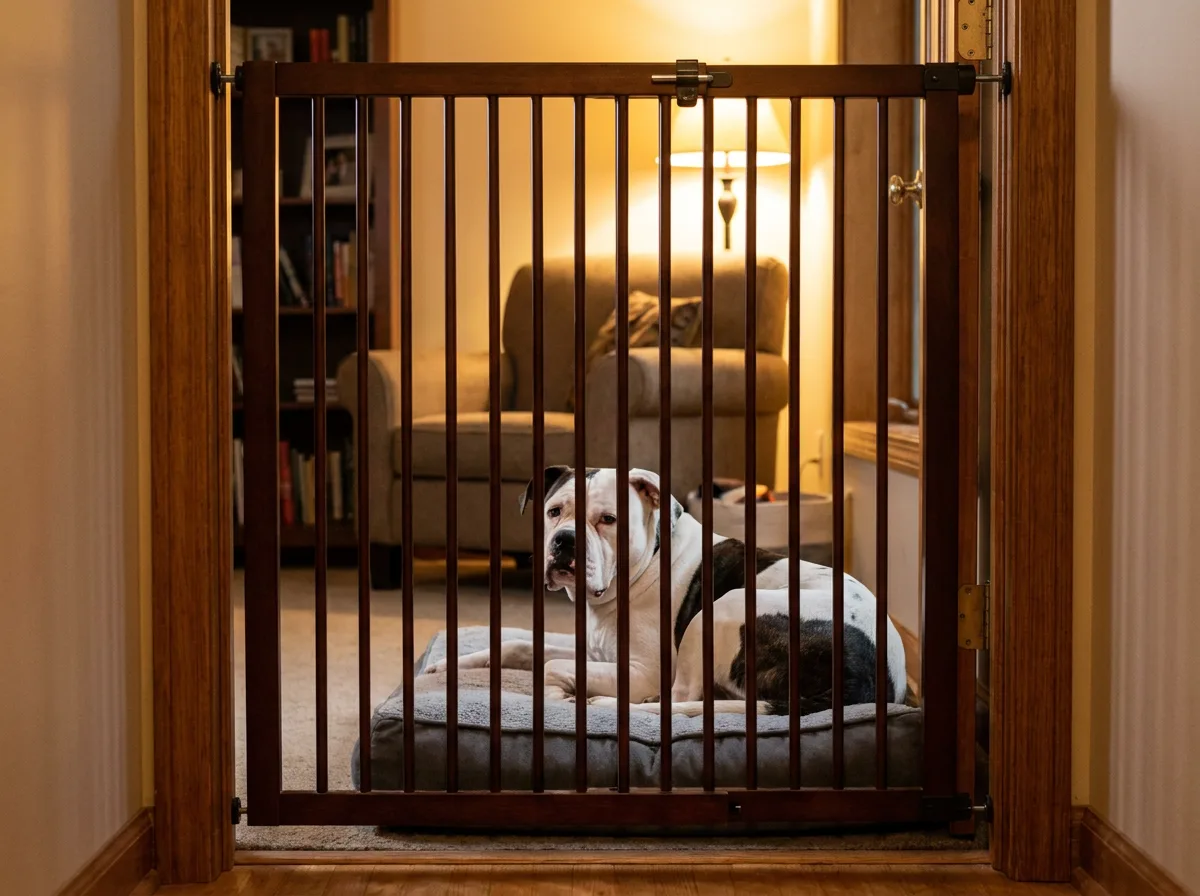
Teach the dog where to settle when someone enters and provide a separate space when an interaction would be difficult. A gate such as the Frisco 30-inch configurable gate and playpen can help organize supervised household spaces, but select its height, installation and strength for the individual dog. A freestanding pen that suits one dog may be easy for another to push over or climb.

A 30-inch configurable barrier for suitable supervised rest and introductions. Check stability and climbing ability; it cannot contain every powerful adult.
Petful may earn a commission when you click through to Chewy, at no extra cost to you.
Choosing a dog for your household
Meet adult dogs where possible and compare known routines with your own. Include regular exercise, mental engagement, rest, grooming and veterinary care. An energetic dog needs more than access to a yard; a quieter dog still needs suitable activity and opportunities to engage with people and its surroundings. For supervised food searching, a Pet Parents Forager snuffle mat is an optional way to use part of a measured meal; put it away if the dog tries to chew the fabric.
- Ask who will walk the dog and whether every regular handler can manage its strength.
- Discuss experience with children, resident pets and visitors using specific examples.
- Plan separate feeding and resting areas when introducing another animal.
- Obtain health records and estimates for existing care needs.
- Check housing, transport and caregiver arrangements before bringing the dog home.
Both dogs have short coats, but grooming still gives you a chance to notice sore skin, uncomfortable paws or areas where equipment rubs. Build tolerance for gentle handling gradually. A dog who cannot comfortably accept routine care needs a plan, not stronger restraint or the assumption that resistance is part of the breed. For loose hair on a comfortable short coat, consider the Four Paws glove and curry brush and use light pressure.
Discuss feeding and body condition with your veterinary team. Select food for the dog's life stage and needs, and measure portions rather than trying to build the biggest possible body. Budget for preventive care, any current treatment and reliable help during travel. A clear account of existing problems is more useful than a seller's broad claim that a line is healthy. Ask to see the records behind that claim and have your own veterinarian explain what they establish.
Which breed is better, an American Bully or an American Bulldog?
Neither is universally better. A suitable choice is the individual whose needs fit the care, handling and environment you can consistently provide. If one prospective dog has a clear history that matches your home and the other has unresolved needs beyond your experience, that difference matters more than the breed preference you began with.
Avoid choosing by the most dramatic photograph or the promise of an especially large adult. Look for comfortable movement, transparent records and a caregiver who discusses limitations honestly. Consider an adult adoption when an established size and observed home routine would make the decision easier.
Living with an American Bulldog
Our American Bulldog guide covers the breed's history and broader care needs. The working background helps explain why daily engagement and capable handling matter, but it does not mean every individual wants the same activity or responds identically to training.
Use that overview to prepare a realistic routine, then adapt it to age, health and behavior. Ask the veterinary team about physical limitations and the current caregiver about ordinary home life. A well-matched dog should fit the household you have, with achievable support, rather than an idealized routine you cannot maintain.
Puppy growth and preparation
When choosing the American Bulldog option, the puppy guide covers growth records, teething and breeder or rehoming checks. Adult proportions develop individually; do not treat a female growth chart or a promised growth spurt as a target.
Health records for the American Bulldog option
The American Bulldog health guide explains lifespan context and parent screening. Eye, ear, paw, odor or stomach concerns should be discussed using the actual dog’s history and current signs, not assumed from a comparison label.
Where Pitbull terminology fits
The term pit bull may be used broadly, while American Pit Bull Terrier identifies a particular breed. Our American Bulldog vs. Pitbull comparison makes that baseline explicit. It avoids using labels as a substitute for evaluating the dog.
For the separate American Bully identity question, see American Bully vs. Pitbull. Neither a shared historical influence nor a broad label supplies a dependable aggression ranking. Compare known behavior and management needs instead of assuming that one name guarantees a safer or more affectionate companion.
For the separate American Bully versus Pitbull decision, distinguish registered breeds from informal labels. That comparison also explains why a breed label cannot rank an individual dog’s aggression or establish household suitability.
Questions about American Bulldog vs. American Bully
The American Bully is an established breed, not a first-generation cross defined by two current parent breeds. UKC describes an American Pit Bull Terrier foundation with influence from several bulldog breeds. That development history does not mean that crossing any two of those breeds produces a registered American Bully or predicts a puppy's eventual traits.
A registration pedigree and reliable parentage records can support a breed identification. Appearance cannot confirm ancestry: a broad head, muscular body or short coat may also occur in other breeds and mixes. Ask how the identification was made, and retain uncertainty where records are missing rather than presenting a visual guess as a documented fact.
Many enjoy close contact, but cuddling is an individual preference. Let the dog approach, notice when it chooses to move away and respect resting space. A dog can enjoy companionship without wanting to be hugged or held. Children should have adult guidance and should not disturb a sleeping or eating dog to seek affection.
No. XL is an American Bully size category, not an American Bulldog type or a guarantee of a particular weight. Ask which breed and registry the seller means, then compare adult measurements, handling needs and known household behavior. Measure the individual dog for equipment; a size label does not tell you whether it can settle during your workday or live comfortably with other pets.
BVMS, MRCVS
Dr. Pippa Elliott, BVMS, MRCVS, is a veterinarian with nearly 30 years of experience in companion animal practice. Dr. Elliott earned her Bachelor of Veterinary Medicine and Surgery from the University of Glasgow. She was also designated a Member of the Royal College of Veterinary Surgeons. Married with 2 grown-up kids, Dr. Elliott has a naughty Puggle named Poggle, 3 cats and a bearded dragon.
Sign up for expert-backed reviews and safety alerts all in one place.