Full-Grown Puggle: Size, Weight, and Appearance
Adult Puggles vary in size and proportions. Use a broad breed range as context, then measure the individual for everyday equipment and assess body condition separately.

BVMS, MRCVS
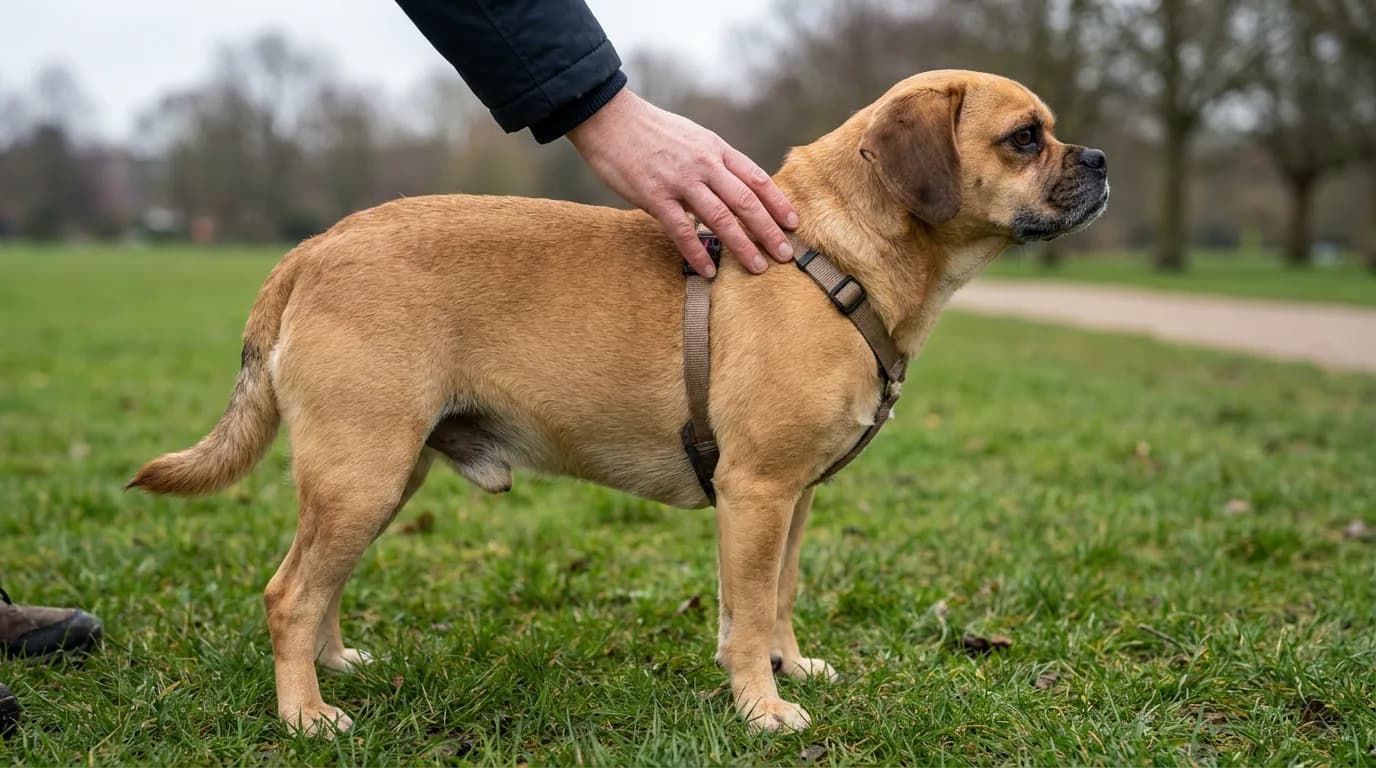
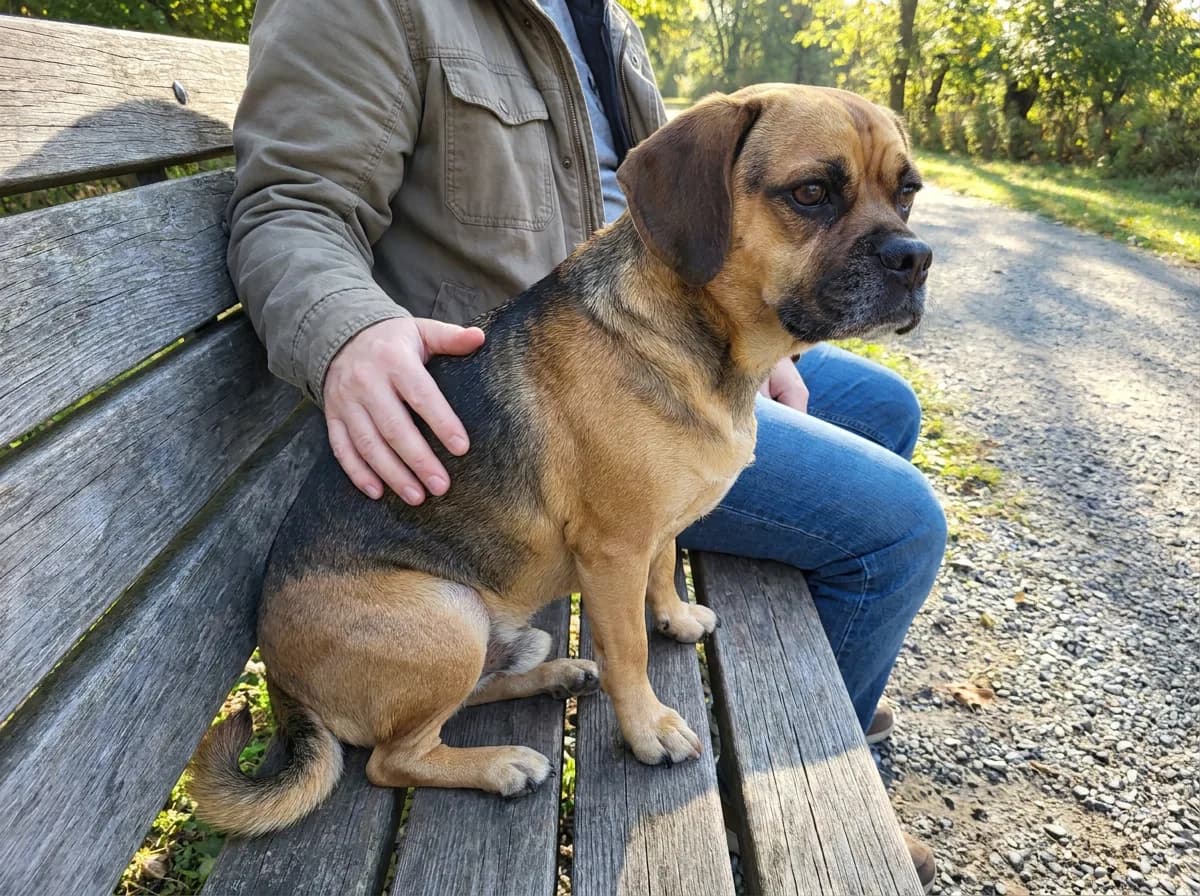
Adult fawn Puggle standing in profile on grass.
Petful is reader supported. As an affiliate of platforms like Amazon and Chewy, we may earn a commission when you buy through links on this page. There is no extra cost to you.
A full-grown Puggle is a Pug–Beagle mix whose adult size and appearance can lean toward either parent. PetMD gives a broad weight range of 14–30 pounds, but the individual dog’s build matters more than fitting a single ideal number. Muzzle length, leg length, ears and body proportions also vary.
Use a breed range to understand the general scale, then measure the dog for equipment and assess body condition separately. A harness that fits a dog of the same weight may still be the wrong shape for yours, and a fluffy or stocky outline cannot establish a healthy weight.

Sign up for expert-backed reviews and safety alerts all in one place.
How big is a full-grown Puggle?
An average weight would require a defined, measured Puggle population. The 14–30-pound profile range is not a measured population average, and its midpoint should not become a feeding target. Compare your adult Puggle’s frame and body condition with its own records. Fit measurements for a harness or carrier answer a different question from whether a stocky outline reflects a healthy weight.
- 1Puggles vary because they are a mix of Pug and Beagle ancestry rather than a single uniform size.
- 2A broad adult weight range is a reference, not a feeding target.
- 3Measure chest girth, body length and standing height when choosing equipment.
PetMD’s Puggle profile places the mix around 14–30 pounds. Some individuals may fall outside a published breed-profile range. Parent size, ancestry and the dog’s own growth help explain variation, so a seller’s “mini” or “pocket” label should not be treated as a guarantee of adult dimensions.
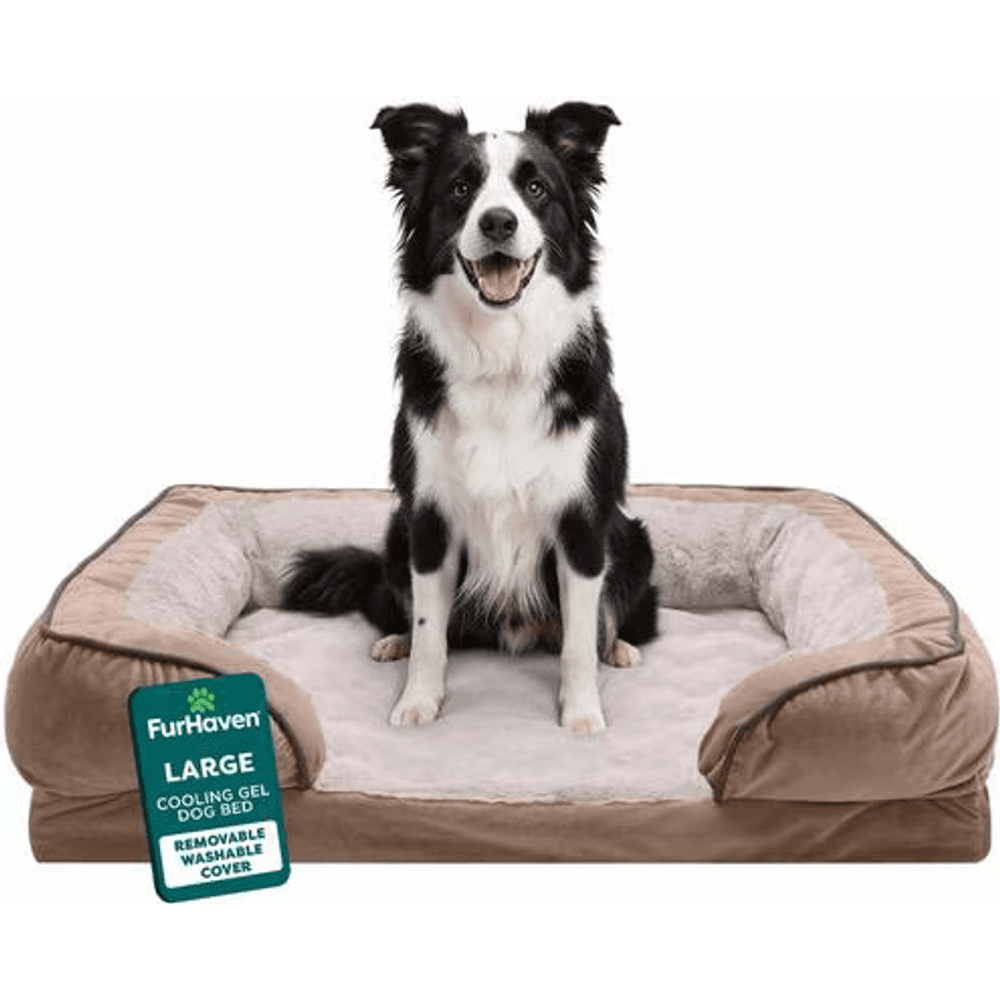
An orthopedic sofa bed with three bolstered sides for dogs who like to rest their head and joints against a cushion. The supportive foam base cradles hips and elbows, a comforting spot for an older or shaky dog to settle.
Petful may earn a commission when you click through to Chewy, at no extra cost to you.
Ask to see the parents’ actual measurements and discuss the puppy’s growth at routine veterinary visits. A weight taken on one day is less informative than a consistent record over time. It also cannot distinguish growing taller from carrying additional body fat.
For rest, compare a FurHaven Velvet Waves orthopedic sofa bed with how the adult dog actually sleeps. A curled sleeper and one who stretches out may need different usable space even at the same weight. Check the sleeping area inside bolsters, not only the product’s outer dimensions.
Height, weight and parent-breed proportions
Weight describes mass; shoulder height describes the frame's vertical scale. Neither tells you the whole shape. A Puggle with relatively long legs can weigh the same as a shorter, broad-chested dog, while requiring a different carrier height. For a useful comparison, record shoulder height, chest girth and body length alongside the scale reading.
Beagle ancestry helps explain why a Puggle may have a longer-legged outline than a Pug. The AKC Beagle standard recognizes two height varieties, which is another reason to ask about the actual Beagle parent rather than treating every pairing as equivalent. These parent-breed categories describe ancestry; they do not create official Puggle size classes.
Mini, pocket and standard Puggle labels
'Pocket Puggle' and 'mini Puggle' are seller descriptions, not standardized divisions with a universal adult-weight limit. Ask which parents produced the puppy and what evidence supports the advertised estimate. A seller should be able to explain the description without relying only on the current puppy's small appearance.
If a landlord, travel provider or other arrangement imposes a strict limit, a puppy prediction carries uncertainty. An adult whose actual measurements and behavior are known may be a more practical choice. Check the written requirement itself: some limits refer to body weight, others to carrier dimensions, and one does not substitute for the other.
Embrace's Puggle profile gives an adult shoulder-height estimate of 13–15 inches and a weight range of 15–30 pounds. PetMD separately gives 14–30 pounds. These are attributed profile estimates, not a standardized size requirement or a guarantee for a particular puppy. Check the parents and the growing dog rather than combining the figures into a falsely precise prediction. Our black Pug guide separates a parent's coat color from breed identity; color likewise does not define a different Puggle size category.
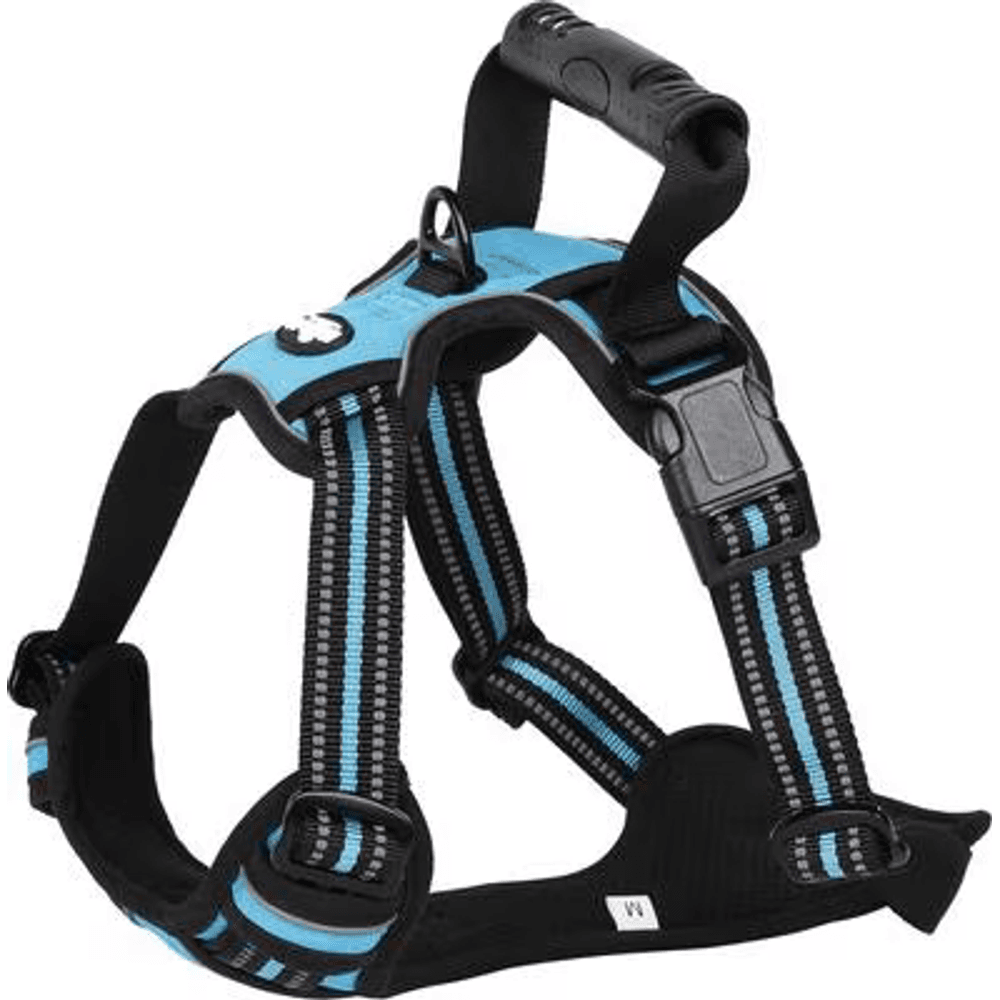
A padded, reflective no-pull harness that spreads leash pressure across the chest instead of the throat, the switch most vets recommend for a dog with a cough, a collapsing trachea, or any airway irritation so the leash never presses on
Petful may earn a commission when you click through to Chewy, at no extra cost to you.
When does a Puggle stop growing?
The American Kennel Club’s puppyhood guide places adult size for small breeds at about 12 months. That is general developmental context rather than a validated Puggle growth schedule. Your veterinarian can interpret the individual’s growth, body condition and maturity together. Do not rely on a fixed month-by-month table that has no documented sample behind it.
Body shape can continue to change after a dog reaches most of its height. Muscle, coat and body condition affect appearance, while excess weight is not evidence of healthy ongoing growth. Keep feeding decisions tied to the dog’s life stage and assessment rather than increasing portions simply because it still looks youthful.
Use a simple log:
- Record weight on a consistent scale when feasible.
- Note standing height and chest girth using the same technique.
- Record diet and major routine changes that could explain a shift.
- Bring the trend to the veterinary practice rather than diagnosing from one entry.
What does an adult Puggle look like?
A Puggle often combines a sturdy body and short coat with floppy ears and a muzzle that may be longer than a Pug’s. The balance differs between individuals. A dog may look more Beagle-like through the face or legs, while another has more of a Pug-like outline.

Color is another variable rather than a size predictor. A black coat, fawn coat or darker facial markings do not tell you what the adult dog should weigh. Compare the whole dog in a natural standing posture rather than inferring size from a close portrait or a photograph without a scale reference.
An adult appearance also cannot confirm ancestry by itself. If parentage matters to your decision, ask for reliable records and what is known about the parents. A label on an advertisement is not a substitute for that history, especially when the seller describes an unusually tiny size.
What changes from puppy pictures to adult appearance
Puppy proportions can make the head look large relative to the body. As a dog develops, the chest, legs and overall outline can look different even when distinctive markings remain recognizable. Compare photographs taken from similar angles with the dog standing on level ground, rather than a close face portrait and a distant adult picture.
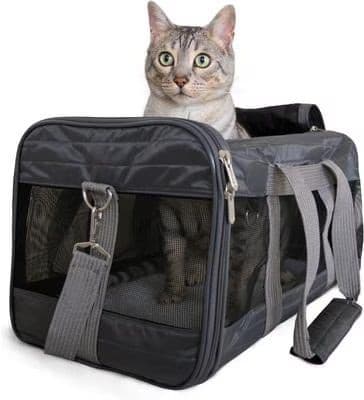
An airline-approved soft-sided carrier with mesh ventilation windows, a top-rated travel pick for cats and small dogs.
Petful may earn a commission when you click through to Chewy, at no extra cost to you.
Adult coat color and facial markings are useful descriptions, but they are not growth measurements. A black Puggle does not have a separate size chart, and a darker mask does not establish more Pug ancestry. Identify the dog from its records where possible rather than trying to infer a percentage of each breed from one feature.
Size does not measure breathing comfort
A small dog can still have important airway limitations, and a longer muzzle does not by itself prove normal breathing. Notice how comfortably your dog manages its usual activity and report new noise or effort. Do not use a breed-size chart to decide that exercise intolerance is normal. The Puggle health guide explains the parent-breed context and which changes need attention.
Measuring for a harness, bed and carrier
Take measurements when the dog is relaxed and standing naturally. Use a flexible tape without pulling it tight into the coat. Repeat the measurement if the dog moves, and compare the result with the instructions for the exact product, not a different brand’s size names.
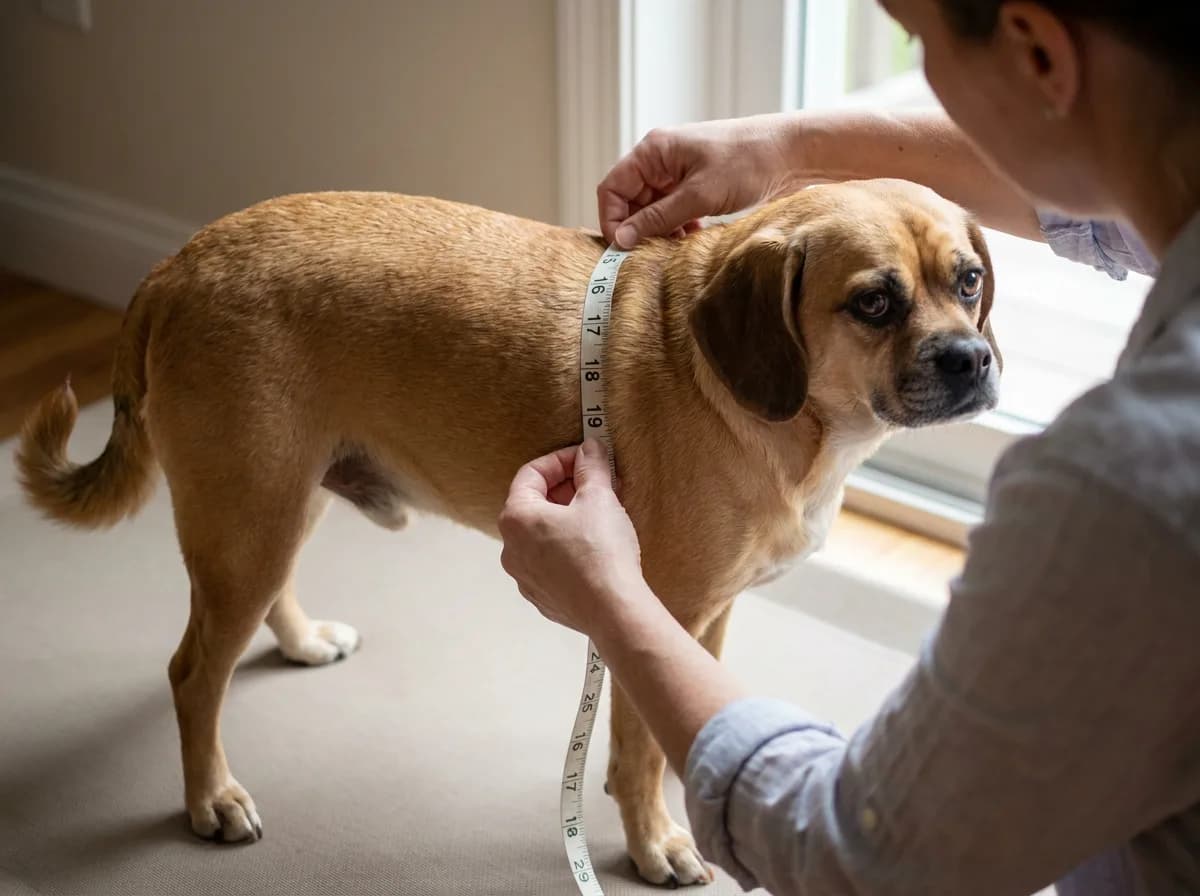
| Measurement | How to use it | Final fit check |
|---|---|---|
| Chest girth | Follow the harness maker’s specified measuring point | Straps stay secure without restricting movement |
| Neck measurement | Compare with the exact collar or harness instructions | The dog cannot slip out and the fit is comfortable |
| Body length | Compare with bed and carrier usable space | The dog can lie in a natural position |
| Standing height | Compare with carrier interior height | The dog can stand as required by the product and transport arrangement |
| Current weight | Check a product’s load or weight limit | Confirm dimensions as well; weight alone is insufficient |
The EliteField padded reflective small-dog harness is an option to assess against current measurements. “Small” is a product category, not a promise that it fits every Puggle. After adjustment, check the buckles and lead attachment and watch the dog walk and turn in a secure area before relying on it outdoors.
WebVet’s harness-versus-collar guide explains practical differences in walking equipment. A harness does not replace loose-lead training or veterinary assessment of breathing concerns. Choose equipment for fit and purpose, then check it regularly as the dog changes shape.
Carrier fit takes more than a weight limit
A Sherpa Original Deluxe carrier may suit some smaller individuals in the correct size, but many adult Puggles may not fit comfortably. Compare the actual internal dimensions before buying and let the dog stand, turn and lie naturally during a supervised fit check. Do not compress a dog into a soft carrier because it is below the advertised weight limit.
Petful may earn a commission when you click through to Chewy, at no extra cost to you.
For travel, check the provider’s current requirements for the exact route and carrier. Product wording such as “airline approved” does not guarantee acceptance by every airline or for every dog. Fit and transport rules are separate checks.
A repeatable measuring session
Have the tape and product chart ready before asking the dog to stand. Work on a nonslip floor and use calm assistance if needed, without holding the dog in an uncomfortable position. Take each measurement twice if the dog moves. Note the unit clearly so inches are not compared with centimeters on a different chart.
- Shoulder height: floor to the top of the shoulders in a natural stance.
- Chest girth: the exact position specified by the harness maker, usually around the broadest chest area.
- Body length: the product's requested landmarks, which can differ between clothing, beds and carriers.
- Weight: a suitable scale reading, recorded separately from the dimensions.
For a bed with bolsters, lay out the usable sleeping area before buying. A dog who usually stretches on its side needs room for that posture. For a harness, check the adjustment range and then watch a few steps and turns in a secure space. Correct measurements are the starting point; comfortable, secure use is the final check.
Recheck after a change in routine
Measure again when the dog grows, gains or loses weight, or the fit begins to change. Look for rubbed areas, shifted straps or limited movement rather than tightening automatically. If a product no longer fits within its intended adjustment range, choose another size instead of improvising an extra fastening.
Keep a simple equipment note with product, size, measurement date and adjustment. This saves repeating a poor purchase and helps another carer use the same setup. Reaching adulthood is not a reason to replace a comfortable item; the decision should follow fit and condition.
Size versus body condition
Two Puggles can weigh the same and carry that weight differently. Frame, muscle and body fat all contribute. A published adult range should not become a reason to feed a dog up to its upper end or dismiss a rising weight as normal for a stocky mix.
Ask the veterinary team to show you how they assess body condition and what an appropriate trend looks like for your dog. Bring feeding amounts and treat information to the discussion. Measuring portions is more useful than describing the diet only as “one bowl,” because bowls and foods vary.
Grooming offers a chance to notice changes without turning them into a diagnosis. A Four Paws Magic Coat grooming glove can remove loose hair from a short coat if the dog enjoys it. Use light pressure and pause if handling seems uncomfortable. A new sensitivity or change in body shape belongs in the care discussion, not in an assumption that more grooming will solve it.
A scale reading is not an ideal-weight prescription
The WSAVA body-condition resources use assessment of the ribs and body outline alongside weight. Ask the veterinary team to demonstrate the method on your dog and record the assessment. It is more informative than deciding that every Puggle should reach the same midpoint in a published range.
If weight is changing, write down the current food, measured portion, treats and activity. Keep those observations factual: 'three short walks' and 'this many grams of this food' are easier to interpret than 'active' and 'a small bowl.' Do not put a growing puppy on a restriction plan based on an adult breed chart; seek an individual feeding assessment.
Growth, aging and health
Maturity and aging bring different questions from equipment sizing. A dog who suddenly slows down, struggles with a familiar route or appears uncomfortable needs an individual assessment; a breed chart cannot explain the change. Keep notes on appetite, activity and movement when something differs from the usual routine.
Our Puggle lifespan and health guide explains the limits of longevity estimates and how parent-breed risks should be interpreted. A mixed-breed label does not guarantee freedom from inherited problems, and a Pug study cannot automatically supply a risk percentage for Puggles.
As needs change, reassess the height of the bed entry, traction on familiar floors and access to resting places. An appropriately sized supportive bed can provide a comfortable place to rest, but equipment is not a substitute for investigating pain or reduced mobility.
Family fit and daily care
Adult size is only one part of choosing a Puggle. A small-to-medium dog can still need substantial attention to training, scent-led exploration and daily activity. Our Puggle breed guide covers temperament, household fit and care beyond the measuring tape.
If you are adopting an adult, ask about its current walking routine, response to handling, time alone and interaction with people or animals. Known adult behavior can be more useful than a prediction based on a puppy’s appearance. Choose the individual whose needs fit your household, then buy equipment to match that dog.
Adult Puggle questions
Some smaller individuals may fit a suitable carrier, but many adult Puggles may not. Check the dog’s dimensions, comfortable movement inside and the airline’s current requirements for the route. A product weight limit or “airline approved” label is not a universal acceptance guarantee.
No. Muzzle length and overall body size are separate features influenced by ancestry. Look at the parents, the individual’s growth and current measurements rather than using face shape to predict adult weight or equipment size.
No. Pocket and mini are descriptions used in listings, not universal Puggle size categories. Ask about the actual parents, adult relatives and the basis for the estimate. If a precise size limit matters for your housing or travel, a seller’s label is not sufficient evidence.
An individual can fall outside a published profile range. That does not by itself show whether the dog is overweight or simply has a larger frame. Ask the veterinary team to assess body and muscle condition alongside measurements and growth history rather than judging health from the range alone.
No. Fawn, black or darker facial markings do not supply a different growth chart. Use parent information and actual measurements. A photograph can also distort apparent scale, so a dark coat or close-up portrait should not become evidence that the dog is unusually small or large.
BVMS, MRCVS
Dr. Pippa Elliott, BVMS, MRCVS, is a veterinarian with nearly 30 years of experience in companion animal practice. Dr. Elliott earned her Bachelor of Veterinary Medicine and Surgery from the University of Glasgow. She was also designated a Member of the Royal College of Veterinary Surgeons. Married with 2 grown-up kids, Dr. Elliott has a naughty Puggle named Poggle, 3 cats and a bearded dragon.
Sign up for expert-backed reviews and safety alerts all in one place.