Miniature Pinscher: Size, Temperament, Care and Cost
A practical Miniature Pinscher breed guide covering household fit, adult size, coat colors, training, everyday care, health screening, and ownership costs.
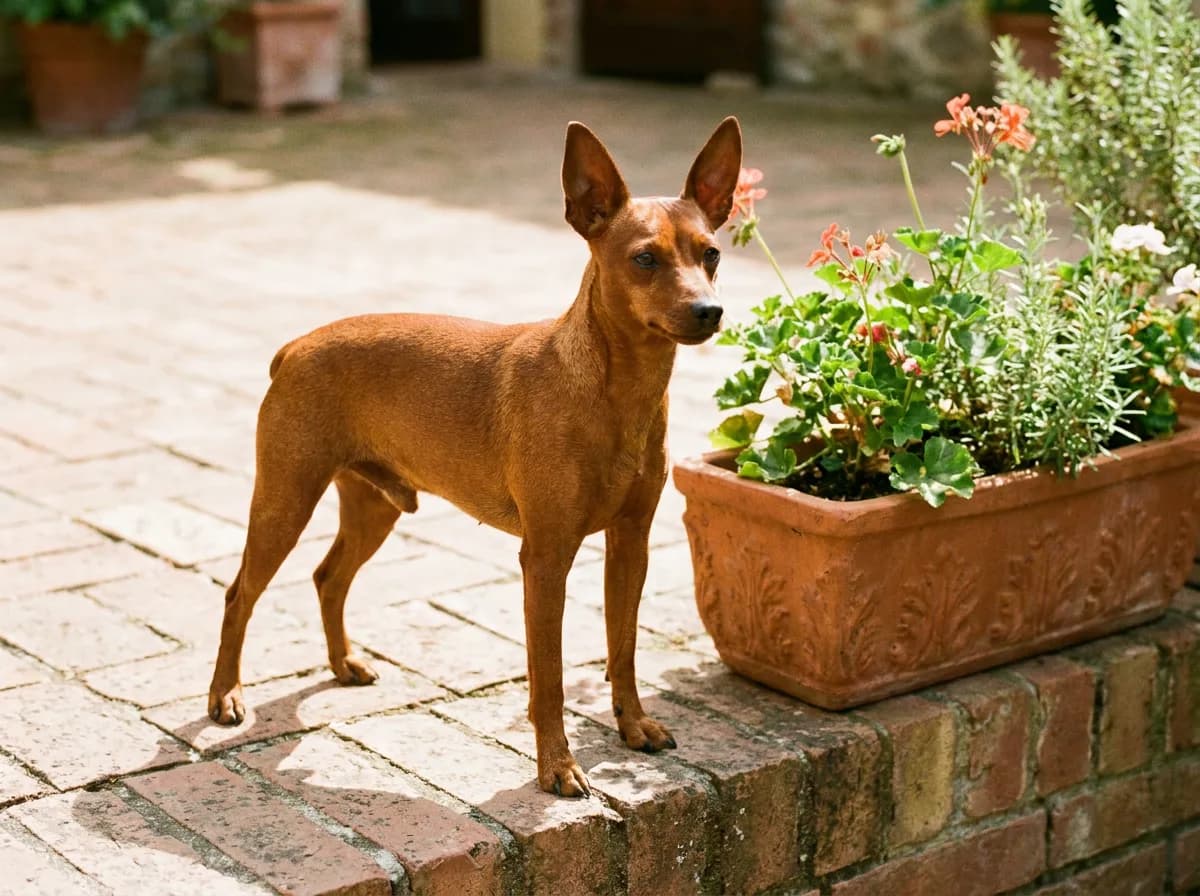
The short red coat and small, square outline are visible in the full-body view.
Petful is reader supported. As an affiliate of platforms like Amazon and Chewy, we may earn a commission when you buy through links on this page. There is no extra cost to you.
The Miniature Pinscher is a small, active dog for a household that enjoys training, can manage barking, and takes secure containment seriously. Its short coat is relatively simple to maintain, but its curiosity and energy need daily attention. A Min Pin can live comfortably in a compact home when that home offers a dependable routine, safe boundaries, and gentle handling.

Sign up for expert-backed reviews and safety alerts all in one place.
What is a Miniature Pinscher?
A Miniature Pinscher, often shortened to Min Pin, is a German breed in the American Kennel Club's Toy Group. An adult stands 10–12.5 inches at the shoulder. The breed has a compact, nearly square outline, a smooth short coat, alert expression, and a distinctive high-stepping movement known as a hackney-like gait.
The nickname “King of Toys” suits the Min Pin's confident presence. This is a dog that often wants to investigate an open cupboard, a visitor, or activity outside a window. Choosing one because it fits on a lap misses much of what living with the breed involves. Its small body and lively interests need to be considered together.
The AKC's Miniature Pinscher profile provides the breed overview. The sections below translate the main traits into practical decisions about family life, care, and choosing an individual dog.
Is a Miniature Pinscher a small Doberman?
No. The Miniature Pinscher is a separate breed, not a Doberman deliberately bred down to toy size. Both developed in Germany, and their dark coats with rust markings can look similar, but that resemblance does not make the Min Pin a miniature version of the larger dog.

The difference is substantial when you see the breeds together: a Min Pin's shoulder height is 10–12.5 inches, while a Doberman's standard height is 24–28 inches. Their separate origins also matter; the Miniature Pinscher's history predates the development of the Doberman.
Our Miniature Pinscher versus Doberman comparison covers the full two-breed decision. The Doberman Pinscher profile explains the larger breed's needs. If a seller uses “miniature Doberman,” ask whether they mean a purebred Min Pin, a cross, or simply a dog that resembles a Doberman.
Miniature Pinscher vs Manchester Terrier, Chihuahua and other lookalikes
A black-and-tan dog with upright ears is not necessarily a Min Pin. Manchester Terriers share a sleek outline and dark coat with tan markings; Chihuahuas may also have similar colors. Breed records, adult proportions, movement, and head shape provide more context than color alone. For more, see Petful’s guide to Chihuahua colors.
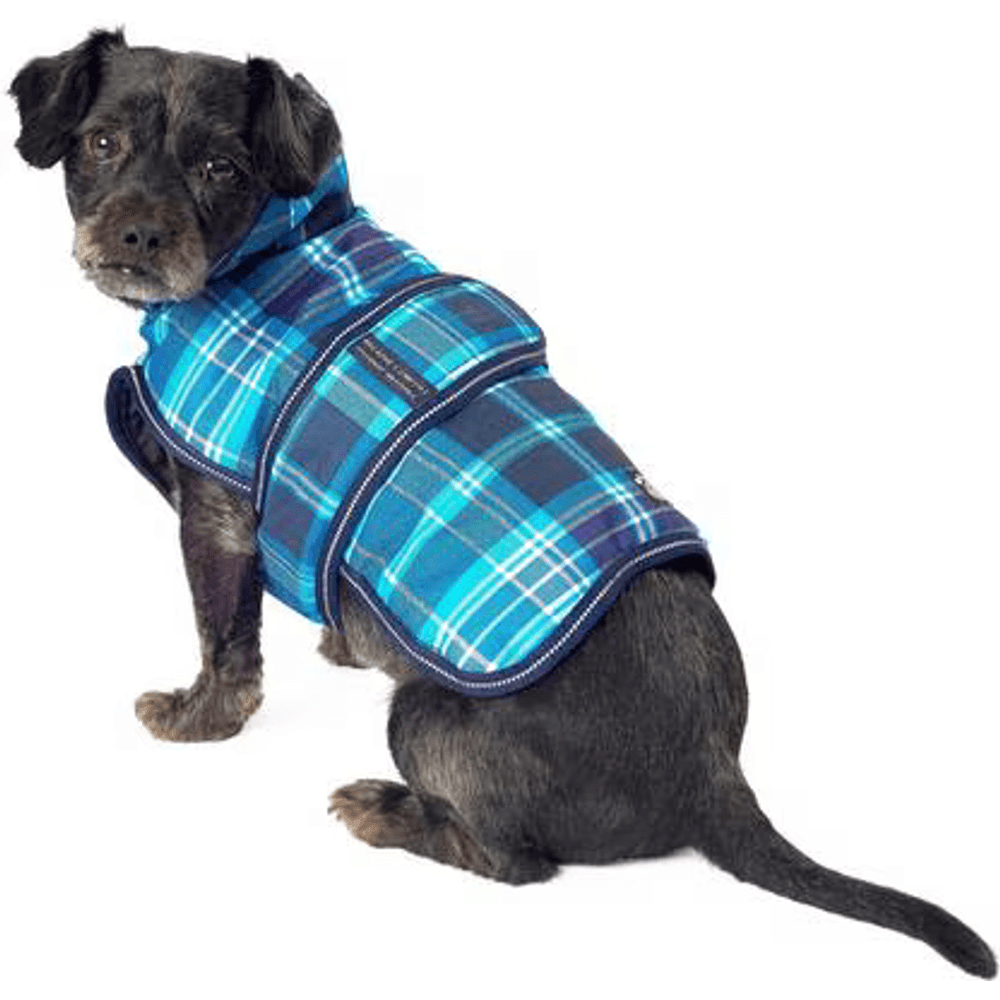
An insulated coat to consider when the dog’s measurements match the size chart; check movement, comfort and weather conditions.
Petful may earn a commission when you click through to Chewy, at no extra cost to you.
When comparing a Miniature Pinscher with a Manchester Terrier, first establish which Manchester variety you are considering. Toy and Standard Manchester Terriers differ in size. When comparing a Min Pin with a Chihuahua, remember that Chihuahua coats and appearances vary too. Meet individual dogs and compare activity, handling comfort, and behavior in a household like yours.
The Miniature Schnauzer is another small breed a prospective owner might consider, but its beard and coat require a different grooming plan. Choosing among small dogs works better when you compare daily needs rather than assuming similar size means similar care.
When ancestry is unknown
For a rescue dog with unknown ancestry, an appearance-based label is a starting description. Ask what is known, what is inferred, and what caregivers have actually observed. The dog's current size and temperament can still help you make a sensible placement decision without certainty about every ancestor.
Miniature Pinscher size, weight and the teacup myth
The AKC breed standard allows an adult height of 10–12.5 inches, measured at the highest point of the shoulder blades. The AKC's breed history gives an adult weight of about 8–10 pounds. These are breed reference points; an individual dog's healthy weight also depends on its frame and body condition.
| Measure | Reference or record to keep |
|---|---|
| Adult height | 10–12.5 inches at the shoulder under the breed standard |
| Adult weight | About 8–10 pounds in the AKC breed history; assess individual body condition |
| Growth checkpoint: 8 weeks | Record actual weight, date, appetite, and veterinary advice; no universal puppy weight assigned |
| Growth checkpoint: 16 weeks | Compare the puppy's own records and ask about growth or body-condition concerns |
| Growth checkpoint: 52 weeks | Record current size and discuss the transition to adult care; this is a recordkeeping example, not a required maturity date |
The growth checkpoints show how to keep useful records, not how much every puppy should weigh at those ages. Bring the record to veterinary visits and ask about changes that concern you. A single photograph or a breeder's prediction cannot guarantee exact adult weight. Male and female Min Pins both fall under the same breed-standard height limits.
“Teacup,” “micro,” and “toy Miniature Pinscher” do not identify separate recognized size varieties. Min Pins already belong to the Toy Group. The German name Zwergpinscher is often translated as dwarf pinscher; that breed name does not turn a “micro” sales claim into a separate standard.
- A teacup label or runt marketing does not establish health or adult size. Ask for age and weight records, the parents' sizes, veterinary findings, and the puppy's care plan. Smallness alone is not a diagnosis, and a premium price is not a health guarantee.
Miniature Pinscher colors, markings and coat
The recognized colors in the AKC standard are solid red, stag red, black with rust-red markings, and chocolate with rust-red markings. Stag red means red with black hairs intermingled through the coat. It is a color description rather than a separate Min Pin variety.
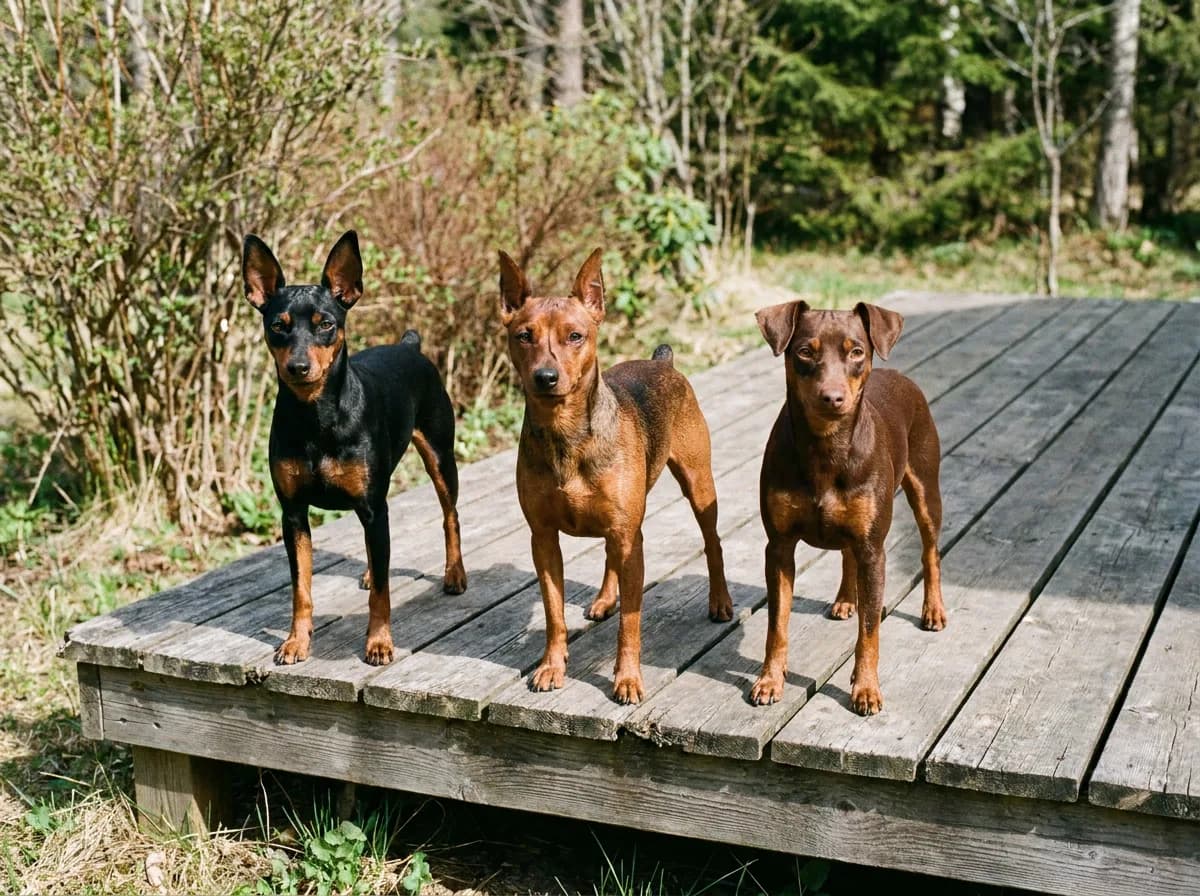
The photograph shows black and rust, stag red, and chocolate and rust examples. In everyday descriptions, “brown and tan” may be used loosely for chocolate with lighter markings. Ask to see the dog's actual appearance and registration description when precise color matters to you.
Blue, gray, fawn, white, black-and-white, merle, and brindle labels do not appear among the standard's recognized color descriptions. A nonstandard color does not, by itself, tell you the dog's ancestry or overall health. It does mean a seller should explain the claim instead of presenting “rare” as proof of higher quality.
- Color dilution alopecia can affect dilute-colored dogs, including Miniature Pinschers. Coat thinning, patches of hair loss, or irritated skin need veterinary assessment. A blue or fawn coat is not itself a diagnosis, but a rare-color premium should not replace a health discussion.
VCA's veterinary explanation of color dilution alopecia describes the association with dilute coats and the need to assess skin changes. Keep that health question separate from whether you personally like a color. A comfortable dog and honest records matter more than a fashionable label.
Cropped ears and docked tails in Miniature Pinschers
Min Pins can have natural ears that stand or fold. Cropping changes the ear through surgery; docking shortens the tail. Those alterations explain why dogs of the same breed may look different, but a family companion does not need cosmetic surgery to be a Miniature Pinscher.

Petful may earn a commission when you click through to Chewy, at no extra cost to you.
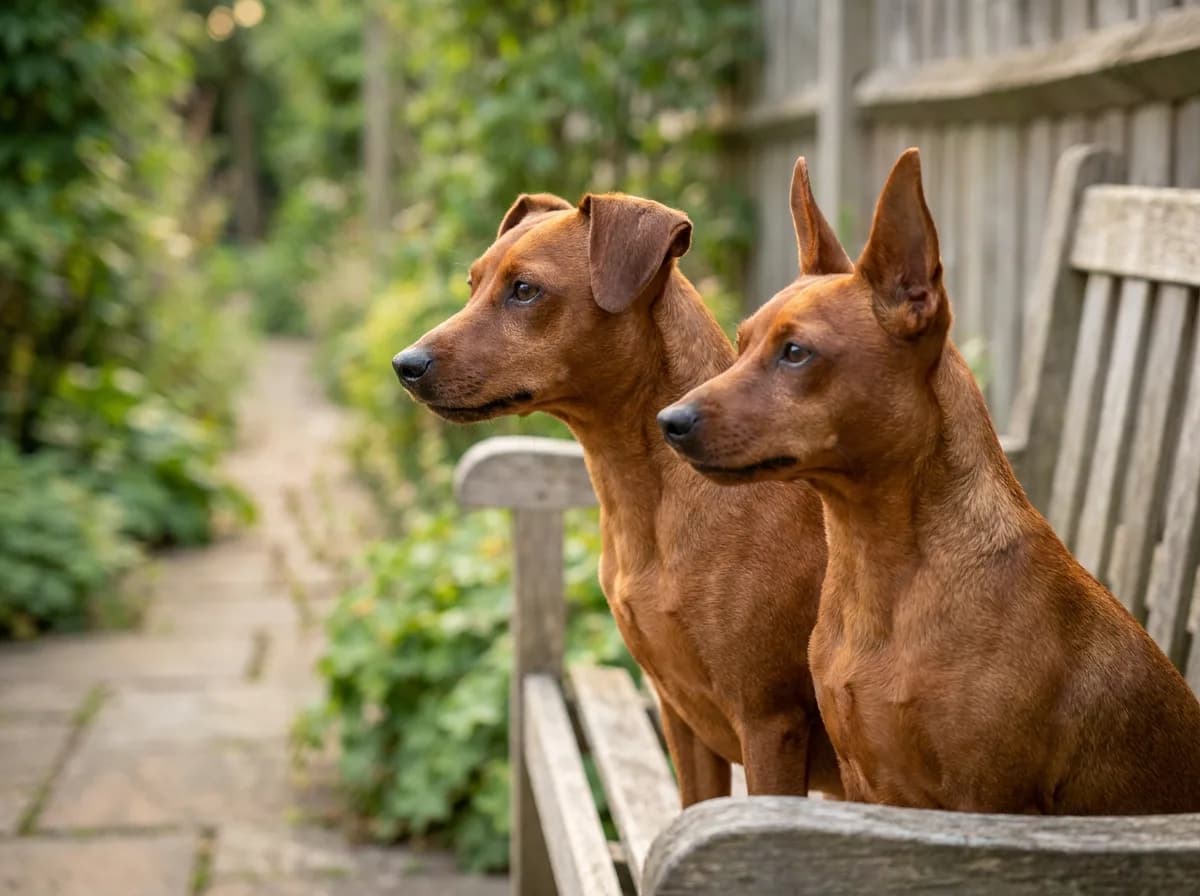
The ear comparison illustrates natural folded ears and the upright appearance of cropped ears. Upright ears alone do not prove that cropping took place, because some natural ears stand. Ask for the dog's history instead of trying to determine a procedure from one picture.
- Ear cropping or tail docking for appearance is an elective procedure. The American Animal Hospital Association opposes these procedures for cosmetic or breed-standard purposes. Discuss any medical concern with your veterinarian; a show tradition is not a medical need.
AAHA's position statement explains that veterinary position. If adopting a dog already cropped or docked, focus on its present comfort, health, and care. Its appearance does not change its need for a suitable home.
Miniature Pinscher temperament and personality
Min Pins tend to be curious, busy, and alert. Their confidence can be entertaining when it leads to learning a new game, and challenging when it leads to exploring gaps in a fence. Plan for a dog that notices opportunities rather than assuming a small pet will stay where you put it.
Do Min Pins bark a lot? Many are vocal alert dogs, especially around visitors, outdoor movement, or unfamiliar sounds. The useful question is whether your household can manage those triggers. A home beside a busy corridor may require window coverings, a quieter resting area, and practice responding calmly to passing activity.
Notice the difference between a brief alert and sustained distress. If barking occurs mainly when the dog is alone, simply trying to tire it out may not solve the problem. Keep a record of when it happens and seek qualified behavior help when needed. Sudden changes in behavior also warrant a veterinary conversation.
Exercise and outings
Daily walks, sniffing, play, and short training sessions give a Min Pin appropriate outlets. Exercise should match the individual dog's age, fitness, health, and weather conditions. Running around the living room is useful movement, but it does not replace all the experiences and learning available on a thoughtful outing.
A Frisco collapsible travel bowl is a practical option for offering your own fresh water during walks and car trips. It folds for carrying and has a carabiner. Bring water as well as the bowl, clean it between uses, and take breaks appropriate to the weather and the dog.
Are Miniature Pinschers aggressive, and can they be trained?
Being a Miniature Pinscher does not make a dog automatically aggressive. Fear, discomfort, guarding, frustration, learning history, and the situation can all affect behavior. A loud warning is a reason to understand what the dog is reacting to, not a reason to dismiss it as a joke because the dog is small.
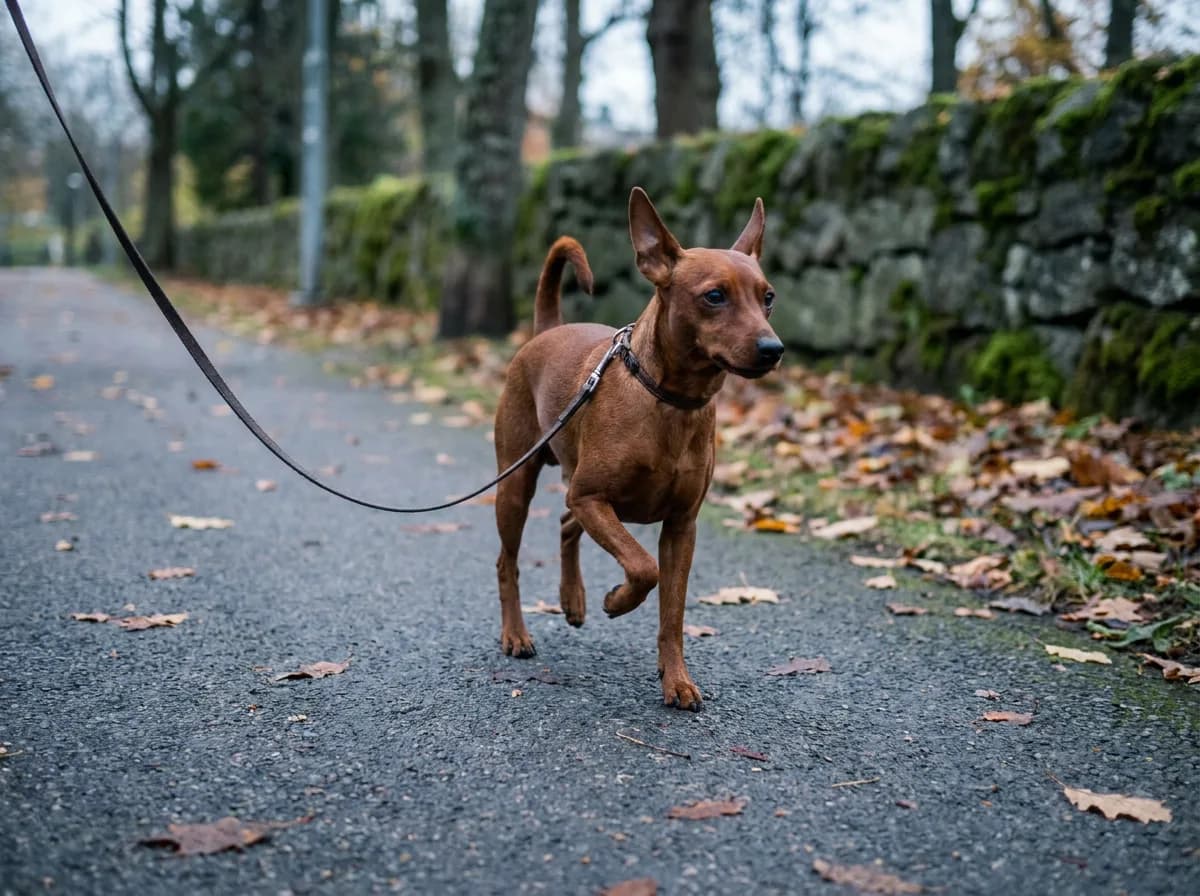
Teach the everyday behaviors that make life easier: coming when called, waiting at doors, walking on a loose leash, settling on a mat, and allowing gentle handling. Use brief sessions and rewards the dog values. Practice in quiet surroundings before expecting the same response beside traffic, visitors, or another excited dog.
A Min Pin may be a watchful companion, but encouraging it to act as a guard dog can create problems with normal visitors and handling. Teach a calm alternative after an alert, such as moving away from the doorway to a mat. Manage access while the skill develops so the dog does not rehearse rushing every arrival.
Containment is part of training, not a substitute for it. Before giving the dog more freedom:
- Inspect low gaps and loose screens.
- Check gate latches and objects that create a route over a barrier.
- Clip on a leash before opening an exterior door when needed.
- Use a secure area for free running and continue supervision.
A familiar yard can still contain new opportunities to escape.
For toilet training, provide frequent opportunities suited to the dog's age and routine. Reward at the chosen spot after the dog finishes, supervise indoors, and adjust the schedule if accidents show a pattern. Do not punish a dog for an accident discovered later. If a previously reliable dog starts having accidents, check for a medical explanation.
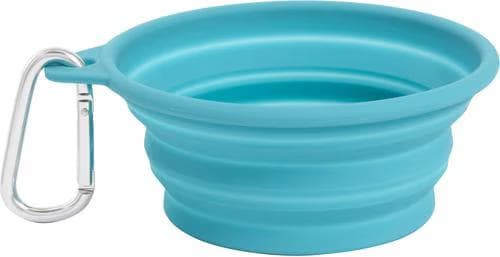
Collapsible silicone travel bowl with a carabiner that clips to a leash or bag, so your dog always has fresh water on walks, hikes, and car trips.
Petful may earn a commission when you click through to Chewy, at no extra cost to you.
Are Miniature Pinschers good family dogs?
Min Pins can be good family dogs when the household enjoys an active companion and understands how to handle a small body. They can also be good house dogs in apartments. The limiting factors are often noise, supervision, and safe access to the outdoors, rather than the home's floor area alone.
- 1Containment: Can you reduce escape risk at doors, gates, windows, and garden boundaries?
- 2Sound: Does your noise tolerance allow for alert barking while you teach calmer routines?
- 3Other animals: Can you prevent chasing and provide separation where needed?
- 4Climate and household fit: Can you offer indoor comfort, suitable winter care, and gentle supervised handling?
The Miniature Pinscher's pros and cons need to fit the household: compact size and an easy coat are advantages, while barking, chasing, and escape prevention require daily attention.
The Miniature Pinscher Club of America's owner leaflet emphasizes the importance of gentle treatment around children. Teach children to let the dog approach, keep interactions on the floor, and leave meals and sleep undisturbed. An adult should supervise; small size does not make either rough handling or defensive biting harmless.
| Potential advantage | Practical obligation |
|---|---|
| Compact and apartment tolerant with appropriate care | Manage alert barking and provide daily outings |
| Short coat with relatively simple upkeep | Maintain nails, teeth, skin checks, and cold-weather comfort |
| Curious and responsive to engaging activities | Provide training and safe outlets for energy |
| Small companion that can join everyday life | Protect against rough handling and falls |
| Enthusiastic interest in movement | Account for high prey drive and supervise around small animals |
With other dogs, manage size and play-style differences. A cat that stands its ground is not a reason to permit repeated chasing, and a small caged pet needs secure separation. Introduce animals gradually and make sure each has a place to rest without being followed.
If you work long hours away from home, decide who provides toilet breaks and supervision. Build comfort with time alone in manageable steps. A second dog is not guaranteed to prevent boredom or separation-related distress. Households that expect a consistently silent, low-activity companion may find a different individual or breed a more comfortable fit.
Grooming, coats and everyday gear for a Min Pin
A short, close coat makes routine Min Pin grooming relatively straightforward. Use a soft brush or grooming mitt to remove loose hair and check the skin as you work. The breed sheds, so a short coat should not be mistaken for a shed-free one. Bathe when needed with an appropriate dog product, and investigate recurring odor, irritation, or hair loss.
Earth Rated unscented grooming wipes can help with ordinary surface dirt on paws or coat between baths. Follow the directions and avoid the eyes and irritated skin. Wipes are a convenience for cleanup, not a treatment for an unexplained skin condition.
Check nail length, ears, and teeth regularly. Introduce feet and mouth handling gradually instead of leaving it until a long grooming session is unavoidable. If you are unsure how much nail to remove, ask a groomer or veterinary team to demonstrate. Painful ears, discharge, or a sudden dislike of touch need assessment rather than more forceful cleaning.
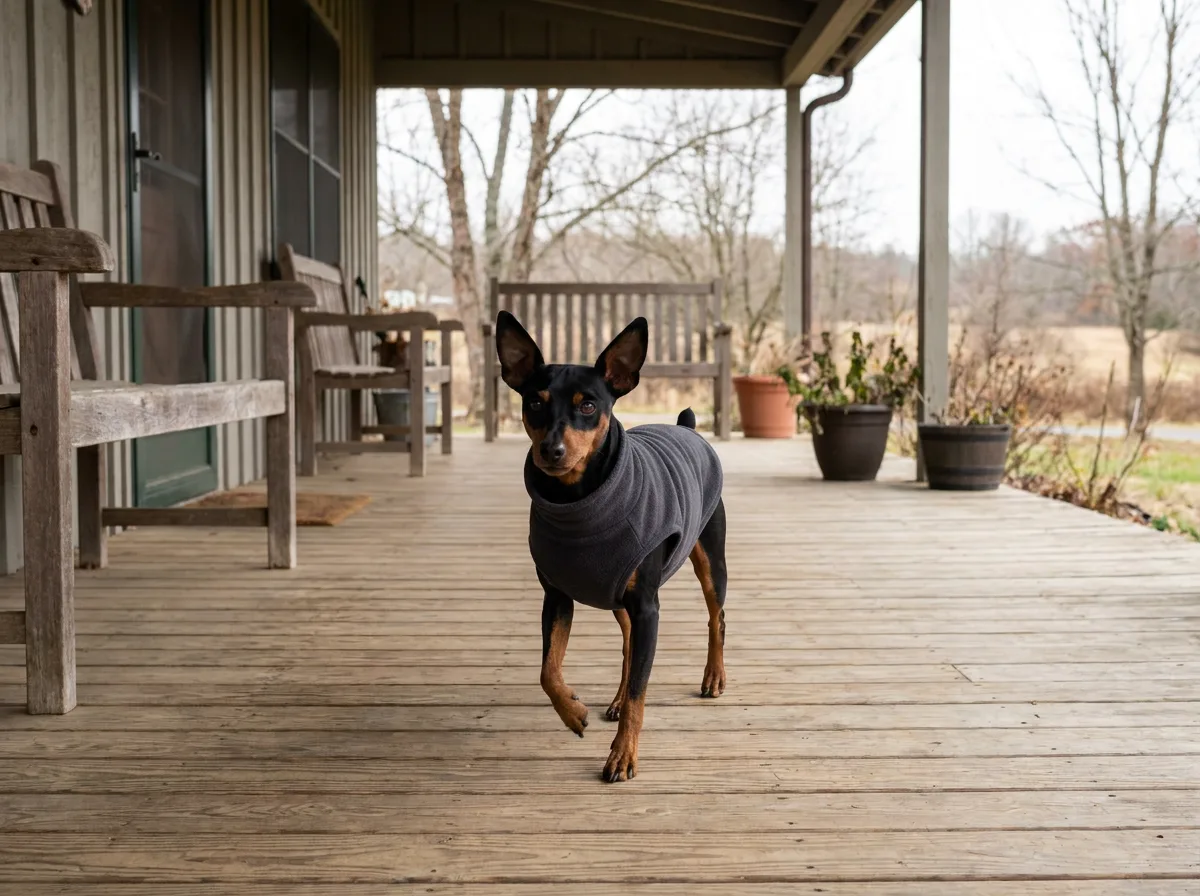
A Min Pin's short coat makes cold sensitivity an everyday care consideration. A winter coat can help on cold outings, provided it fits and conditions remain comfortable for the dog. Whether it needs clothing depends on wind, wetness, activity, age, health, and the particular dog; there is no single temperature cutoff that works for every situation. A coat should allow normal movement and comfortable toileting, and it should be removed if the dog becomes too warm.
The PetRageous Designs Kodiak insulated coat is one option when your dog's measurements match its size chart. Measure the chest, neck, and back and check the fit while the dog walks. Do not rely on the product's “small” size name or assume a coat makes an uncomfortable outing safe. Shorten the walk or return indoors when conditions require it.
Boots may be useful for a particular surface or weather exposure if they fit and the dog tolerates them, but they are not an automatic requirement for every Min Pin. Introduce them indoors and watch for rubbing or altered movement. Check and clean paws after outings as appropriate.
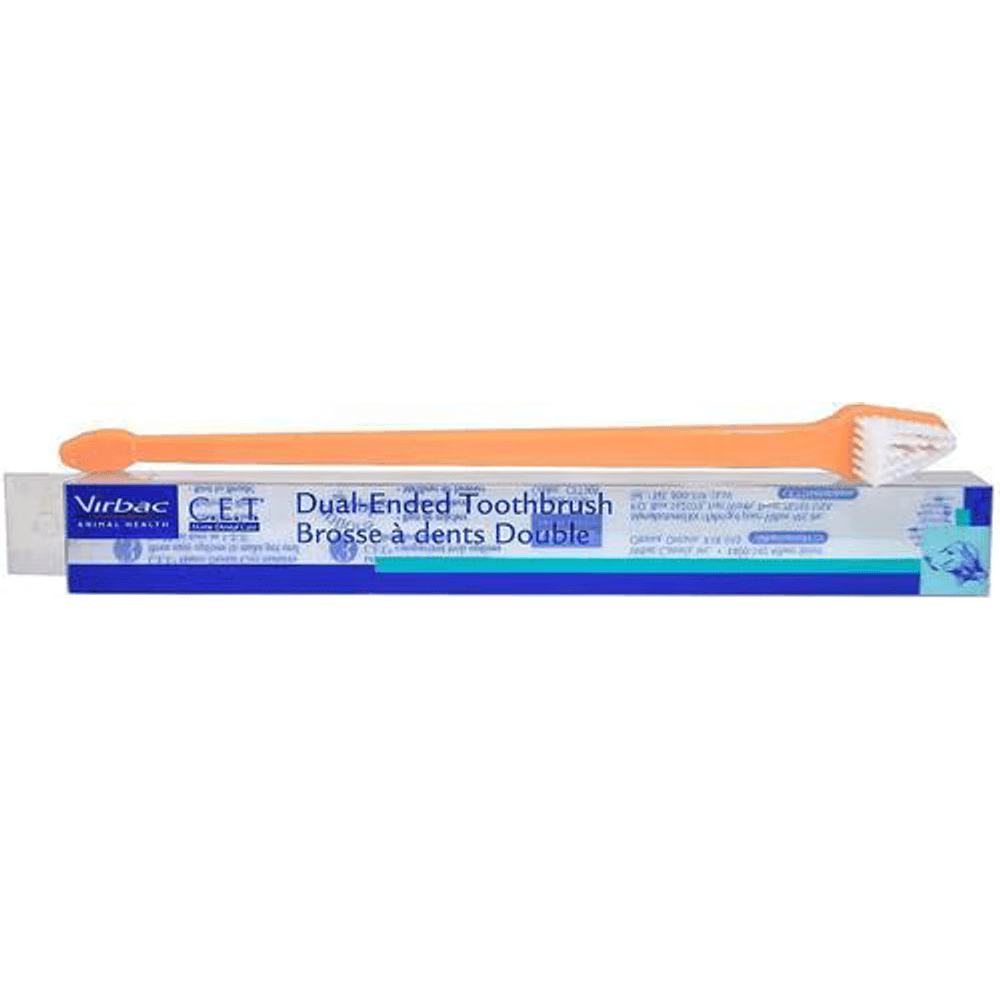
A dual-ended toothbrush with a large and a small head to fit different mouth sizes and reach the back molars where plaque hides. Soft bristles angled for the gumline.
Petful may earn a commission when you click through to Chewy, at no extra cost to you.
Check walking equipment
For harnesses and dog collars, use the dog's actual measurements and confirm that it cannot back out. Recheck equipment as a puppy grows. Clothing must not obstruct harness attachment or interfere with normal movement. A product chosen because it looks good on a similar dog can still fit yours poorly.
Feeding a Miniature Pinscher
The best dog food for a Miniature Pinscher is an appropriate complete and balanced diet for that individual dog's life stage and health needs. A puppy needs food suitable for growth; an adult's feeding plan should reflect body condition and activity. There is no single brand that becomes best simply because the dog is a Min Pin.
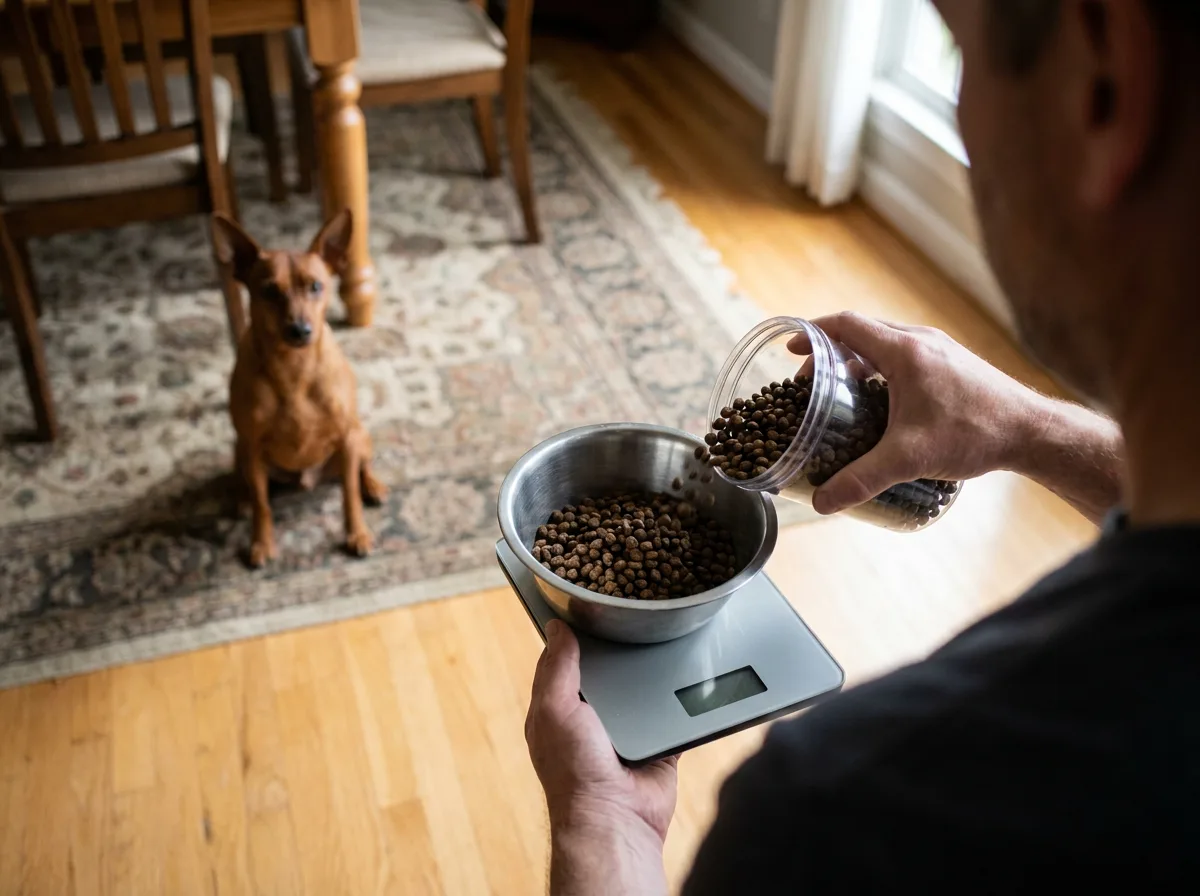
Use package feeding guidance as a starting point to discuss with your veterinarian. Measure portions consistently and note what the dog actually eats, including treats, table scraps, and food given by other family members. If multiple people feed the dog, one shared daily plan can prevent accidental double meals.
Why might a Min Pin gain weight? A small dog's extras can add up quickly when nobody counts them. Reduced activity, changes in the feeding routine, or a medical issue may also matter. Assess the individual dog rather than assuming every Min Pin is naturally prone to being overweight. Bring unexplained changes in weight or appetite to the veterinarian.
Fresh drinking water should be available, and exercise rewards should come from a sensible portion of the daily food allowance. Avoid abrupt diet changes merely to chase a “best breed food” label. If the dog has digestive signs, a diagnosed condition, or growth concerns, those needs take priority over a general recommendation.
Miniature Pinscher lifespan and health problems
Miniature Pinschers can live around 12–16 years; Zoetis Petcare's breed profile uses that range. It is a planning reference, not a prediction for an individual male or female. Medical history, genetics, safe handling, and ongoing care all matter to the dog's life and comfort.
- 1Treat the 12–16-year lifespan range as breed guidance, not an individual guarantee.
- 2Ask for a documented patellar luxation evaluation on breeding dogs.
- 3The parent club's 2024 CHIC statement specifies patella evaluation plus two elective tests from its list.
- 4Discuss Legg-Calve-Perthes and other family health history with the breeder and your veterinarian.
The parent club's health page identifies concerns including patellar luxation, Legg-Calve-Perthes disease, eye problems, thyroid disease, heart defects, and epilepsy. This list describes issues worth discussing; it does not mean that each dog will develop them.
Patellar luxation affects the kneecap, while Legg-Calve-Perthes involves the hip. A dog that skips, limps, avoids using a leg, or becomes reluctant to exercise needs a veterinary examination. Do not assume that every unusual step is the breed's characteristic gait. Home observation can identify a change, but it cannot establish the diagnosis.
Understand the screening records
The 2024 Miniature Pinscher Club of America health statement specifies a patella evaluation and two electives for its CHIC protocol. The elective list includes thyroid, cardiac, eye, Legg-Calve-Perthes, and MPS VI testing. Ask which tests were performed, see the results, and clarify what they do and do not establish. “Vet checked” is not an equivalent description of parental screening.
Dental care belongs in the routine as well. A Virbac C.E.T. dual-ended toothbrush provides a smaller brush head to consider for a small mouth. Introduce brushing gradually with dog toothpaste, and consult the veterinary team if the mouth seems painful. WebVet's guide to brushing a dog's teeth explains how to build the habit.
How much does a Miniature Pinscher cost?
A Min Pin puppy costs about $1,500–$2,500 in Good Dog's Miniature Pinscher buyer guide, checked in September 2026. That is the marketplace's published estimate, not a guarantee for every breeder or an independent national price survey. Obtain a written quote for the individual puppy and confirm what it includes.
Adoption fees vary by organization and dog. Ask the rescue for its current fee, completed veterinary care, known needs, and the agreement. A smaller initial payment does not remove the ongoing responsibility for food, veterinary care, training, and supervision.
The model below separates the first year cost from the recurring annual cost. Every dollar figure is a hypothetical planning assumption. It demonstrates how to build a budget; replace the amounts with your own quotes and record expenses outside the model separately.
| Cost line | Example assumption | Yearly amount |
|---|---|---|
| Acquisition | $2,000 once | $2,000 in the first year |
| Initial equipment | $300 once | $300 in the first year |
| Food and routine supplies | $45 monthly | $540 |
| Routine veterinary and prevention allowance | $60 monthly | $720 |
| Insurance premium | $40 monthly | $480 |
| Grooming and equipment replacement | $20 monthly | $240 |
| Selected recurring annual cost | $165 monthly multiplied by 12 | $1,980 |
| Selected first year cost | $2,000 plus $300 plus $1,980 | $4,280 |
Under those assumptions, selected recurring expenses are $165 a month, or $1,980 a year. Adding the assumed acquisition and initial equipment produces $4,280 in year one. The model excludes emergency treatment, major dental procedures, any needed spay or neuter procedure, paid care, training classes, transport, taxes, and other individual costs. Those exclusions are not assumed to be free.
Plan for bills outside the example
Keep emergency savings separate from bills already paid. Insurance may leave deductibles, exclusions, and an upfront payment to the clinic, so compare the actual policy rather than relying on the premium alone. If a routine-care package already includes a preventive product, do not count that same expense twice.
Ask how your work schedule changes the budget. A modest daily dog-walking charge multiplied across a month may matter more than an optional bed or toy. With a puppy, plan both the money and the time needed for early care. Treat a “teacup Miniature Pinscher price” premium as a marketing question to investigate, not as evidence that the smallest puppy is the best value.
Miniature Pinscher puppies, rescue and adoption
The Miniature Pinscher Club of America is a starting point for breed education and breeder referrals. Internet Miniature Pinscher Service provides a breed-rescue route. Individual dogs may also be available through local shelters or other established rescues. Confirm current availability directly with the organization.
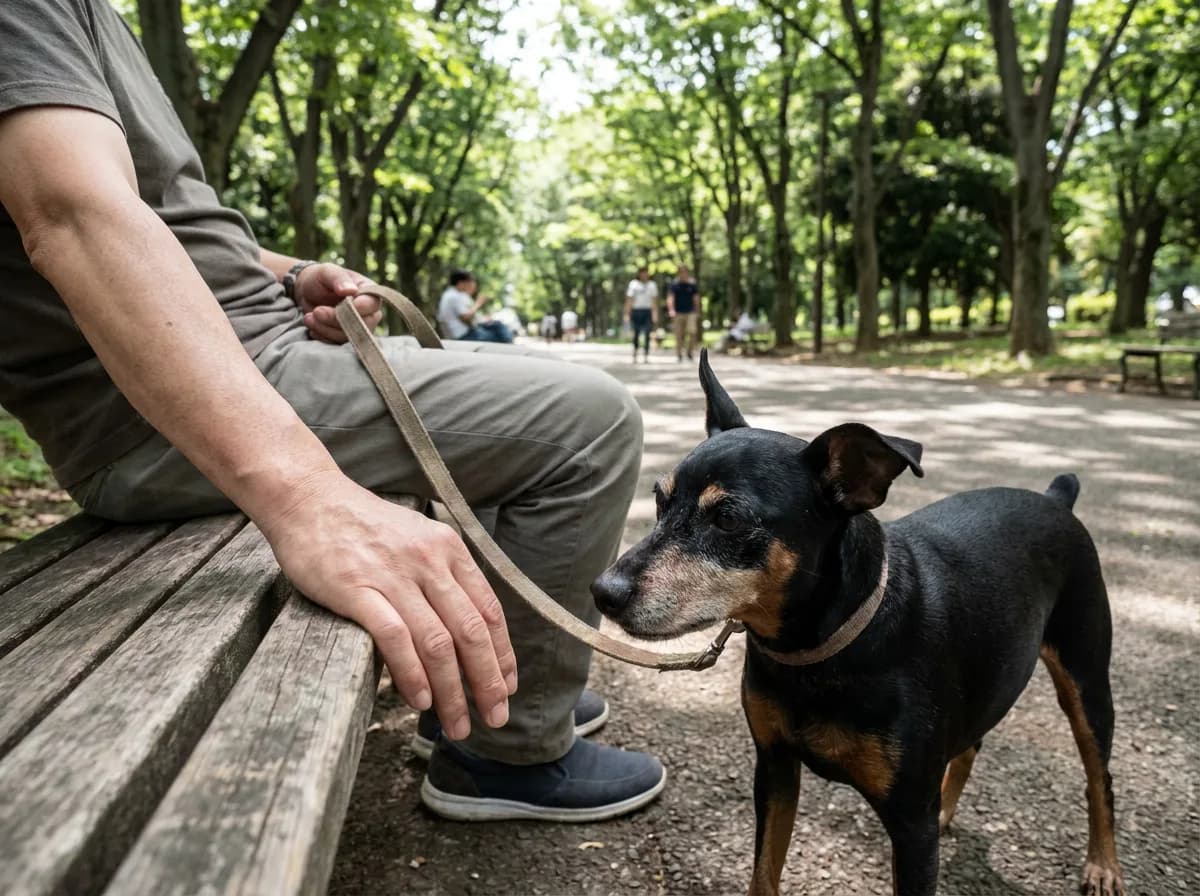
For a puppy, request parental screening results, veterinary records, details of early social experiences, and the feeding routine. Ask what support is available after placement and read the agreement before paying. A responsible conversation should allow time for questions about the dog and your household.
For an adult rescue, ask which behaviors have been observed in a foster home: comfort with children, other pets, time alone, grooming, and walking. Clarify where the history is unknown. An adult's current size and coat are easier to assess than a puppy's eventual appearance, but the dog will still need time and support to settle in.
Prepare the home before arrival:
- Check barriers and remove accessible hazards.
- Arrange a quiet resting space.
- Agree on who opens doors and provides toilet breaks.
- Keep early days predictable rather than scheduling many exciting introductions.
- Arrange a veterinary visit and bring the records you received.
Common Miniature Pinscher mixes
A Miniature Pinscher mix can inherit a range of traits from either parent. Cross names are informal descriptions, and an unknown dog's appearance cannot reliably identify its exact ancestry. A full-grown dog gives you actual size and coat information; a puppy requires more allowance for uncertainty.
| Other parent breed | Common description | Possible parent influence to assess |
|---|---|---|
| Chihuahua | Min Pin–Chihuahua mix or Chipin | Adult size, handling confidence, teeth and knee history |
| Dachshund | Doxie-Pin or Min Pin–Dachshund mix | Body proportions, back history and safe activity |
| Rat Terrier | Min Pin–Rat Terrier mix | Chasing interests, activity and containment needs |
| Shih Tzu or Yorkshire Terrier | Min Pin mixed with a long-coated toy breed | Actual coat texture and grooming needs |
| Poodle or Pomeranian | Min Pin–Poodle or Min Pin–Pomeranian mix | Coat maintenance and eventual size |
| Beagle or Jack Russell Terrier | Min Pin crossed with a hound or terrier | Scent interests, chasing and training needs |
| Pug | Min Pin–Pug mix | Individual muzzle shape, breathing comfort and heat tolerance |
| Pit bull-type dog, German Shepherd or Doberman | Min Pin mixed with a larger dog | Actual adult size, strength, temperament and both parents' health history |
The table identifies questions to investigate, not a guaranteed trait contributed by the other parent. A mix is not an exact average of two breed descriptions. For a Min Pin–Chihuahua mix's lifespan or health problems, review the individual records and both family histories rather than averaging published breed lifespans.
For the Dachshund side of a Doxie-Pin, our Miniature Dachshund guide explains the parent's care considerations. Ask about observed movement and comfort, not simply whether the puppy has short legs. Apply the same individual assessment to any cross, including an adoption label based on appearance.
Miniature Pinscher history and breed recognition
Germany is the Miniature Pinscher's country of origin. Its background includes small dogs used to catch vermin around farms and stables. Dachshund and Italian Greyhound ancestry is commonly described, with German Pinscher influence also part of the breed's history.
The AKC recognized the breed in 1925, initially under Pinscher naming. It moved from the Terrier Group to the Toy Group in 1930, and “Miniature” was added to its name in 1972. The AKC's breed history follows those changes and the development of the breed in the United States.
That working background helps explain why the modern Min Pin offers more than a decorative appearance. Its interest in movement, alertness, and lively presence can be rewarding in a home that provides activity and clear boundaries. Meet the individual dog, build a realistic routine, and choose for the companion you can care for consistently.
Miniature Pinscher questions owners still ask
A Miniature Pinscher can potentially be a service dog. Under the U.S. ADA, breed and size do not automatically exclude a dog; it must be trained for a task related to a person's disability. The individual dog's task training capacity, physical suitability, and ability to remain under control matter. Noise reactivity can limit suitability. Comfort from the dog's presence alone is different from a trained disability-related task.
Harlequin is not a recognized color in the AKC Miniature Pinscher standard. Ask a seller to explain the dog's parentage and records before paying a rare color premium. A sales label alone cannot establish that information.
Individual lifespan can exceed a commonly cited breed range, but a claim about the oldest dog needs verified records of identity and age. This guide does not name a record-holder without that evidence. Plan care around the individual dog's health and comfort rather than an unverified longevity story.
ADA.gov's service-animal guidance explains the U.S. task-training requirement and the distinction between service work and comfort alone.

Kristine Lacoste has been researching dog and cat breeds for nearly a decade and has observed the animals up close at dog shows in both the United States and the United Kingdom. She is the author of the book One Unforgettable Journey, which was named as a finalist for a Maxwell Award from the Dog Writers Association of America, and was host of a weekly pet news segment on the National K-9 Academy Radio Show. In addition, she was the New Orleans coordinator for Dogs on Deployment, a nonprofit that helps military members and their pets, for 3 years. Kristine has researched and written about pet behaviors and care for many years. She holds a bachelor’s degree in psychology, another bachelor’s degree in English and a Master of Business Administration degree.
Sign up for expert-backed reviews and safety alerts all in one place.