Boxer Mixes: 10 Crosses, Traits and Care Needs
Explore ten Boxer crosses, compare useful parent-breed context with individual needs, and plan for activity, handling, coat care and household fit, with links to detailed cross guides.

Compare the individual dog's build, coat and daily care needs.
Petful is reader supported. As an affiliate of platforms like Amazon and Chewy, we may earn a commission when you buy through links on this page. There is no extra cost to you.
A boxer mix may combine the Boxer's familiar athletic outline with a different coat, build or style of play. The other parent gives you useful background, but the most helpful comparison connects that background to everyday life: walking, grooming, training, rest and sharing a home.
This guide compares ten selected crosses. Five receive fuller explanations, while five link to Petful guides that cover those combinations in detail. Use the photographs to explore possible appearances and the practical comparisons to decide what you need to learn about a particular dog.

Sign up for expert-backed reviews and safety alerts all in one place.
Read cross names and photographs carefully
A cross name can describe different levels of knowledge. Someone may know both parents, have records reporting a dog's ancestry, or be making an educated guess from appearance. Those are different starting points, even when the same nickname appears in an adoption description.
Keep three kinds of information separate:
- Documented parentage: Records identify the parents and their relationship to the dog.
- Reported ancestry: A previous owner, organization or ancestry report supplies a description.
- Appearance-based identification: Someone thinks the dog resembles one or more breeds.
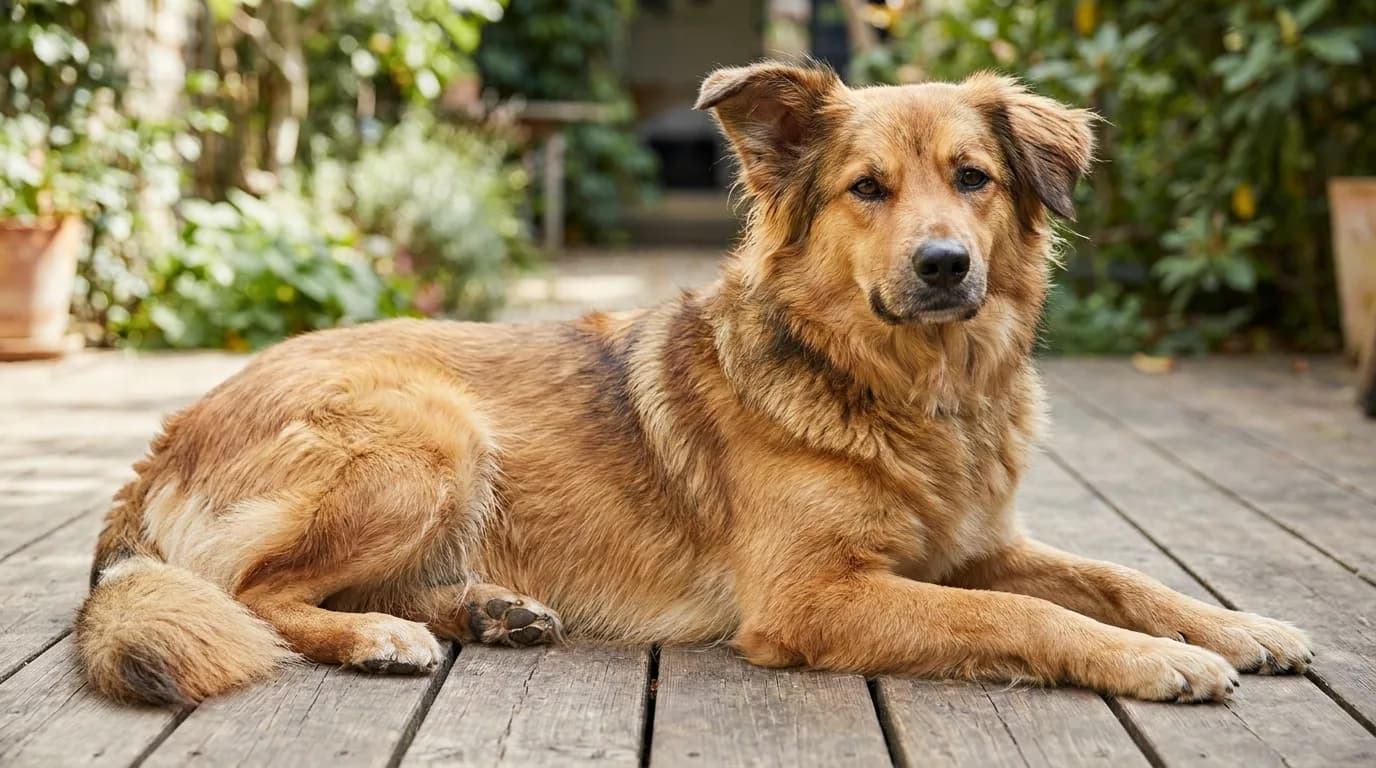
A black Boxer dog mix, for example, has a visible coat color. That observation does not identify its other parent. A broad head, white chest or athletic body also cannot establish an exact pairing. Photographs in a cross guide illustrate possible looks; they do not provide a reliable way to identify your own dog.
- 1Use parent context to understand useful possibilities, then assess individual traits through records and ordinary experience.
- 2Keep documented parentage, reported ancestry and visual guesses separate.
- 3Choose equipment and routines for the dog in front of you rather than a cross nickname.
The Boxer is an established breed developed in Germany, not a current two-breed cross. Historical accounts connect it with Bullenbeisser ancestry and Bulldog influence; that history does not identify a modern mixed dog from its appearance. Our Boxer breed and puppy profile explains that background, puppy selection, and names such as Boxane, Boxerman and Boxweiler. This comparison concentrates on the ten crosses below.
Clear wording helps throughout the process. “The rescue describes her as a Boxer mix” communicates what you know more accurately than turning an uncertain label into a detailed family tree. You can still make good decisions about housing, handling and care when ancestry is incomplete, provided those decisions rest on the dog's actual needs.
Compare 10 Boxer mixes
We selected these ten crosses for their useful differences in size, coat, activity and handling, and to connect readers with detailed Petful coverage of established combinations. These selection criteria support a practical comparison, not a popularity ranking or a recommendation to breed particular dogs together. Parent traits provide context; they are not promises about an individual offspring's appearance or behavior.
Most of the ten crosses below carry a short to medium coat, so one double-sided tool such as the CHI Double Sided Ball Tip Pin & Bristle Dog Brush covers the bristle side for short coats and the pin side for the longer-coated pairings in the table.
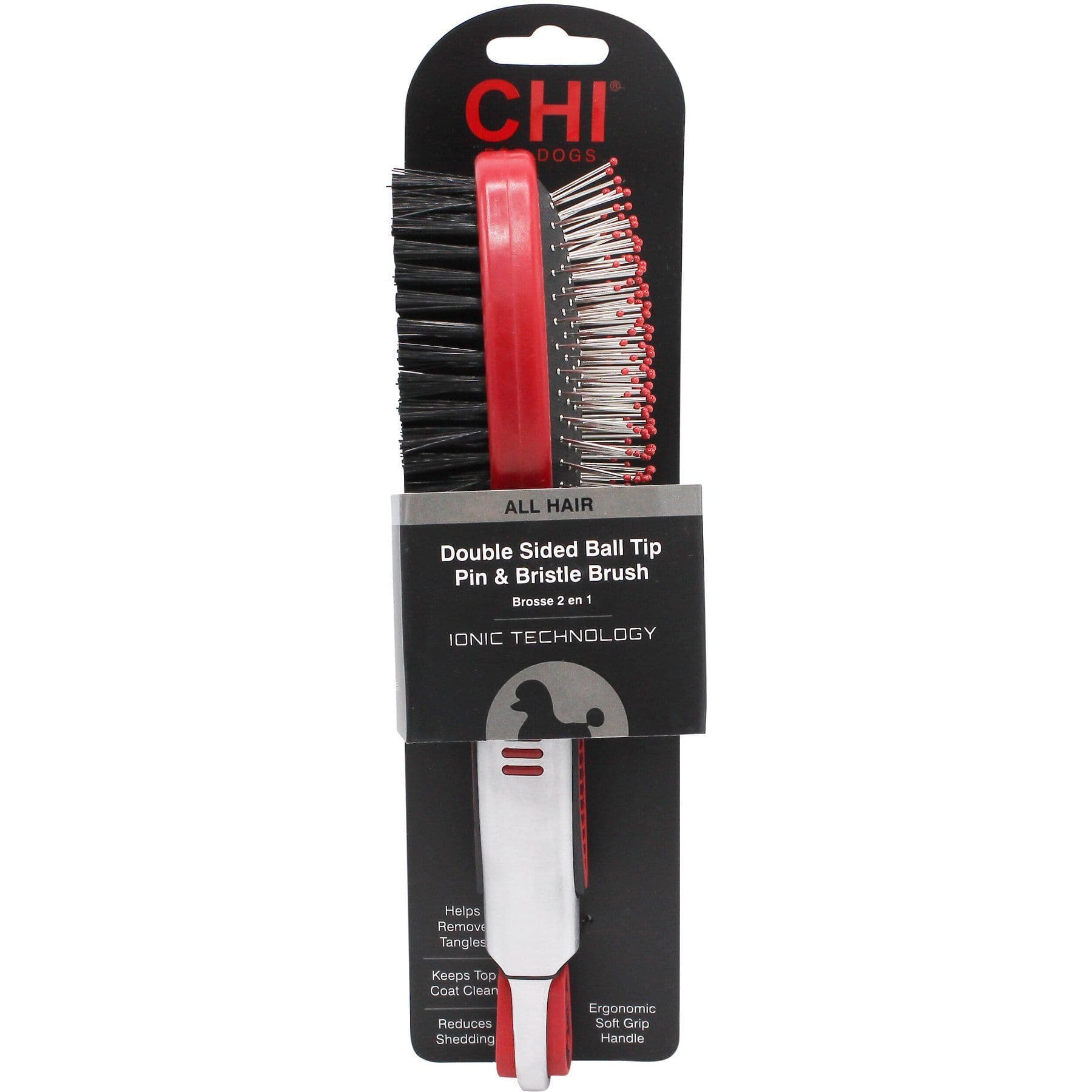
Ball-tip nylon pins work through tangles on one side while bristles smooth the coat and lift loose hair on the other. Ergonomic grip, with CHI ionic technology to reduce static.
Petful may earn a commission when you click through to Chewy, at no extra cost to you.
The size column gives the other parent breed's published standard as context; the Boxer parent stands 21½ to 25 inches (American Boxer Club) and weighs about 55 to 70 pounds (Royal Kennel Club). A cross can land anywhere between those ranges or outside them, so treat the column as parent context, not a prediction for an individual dog.
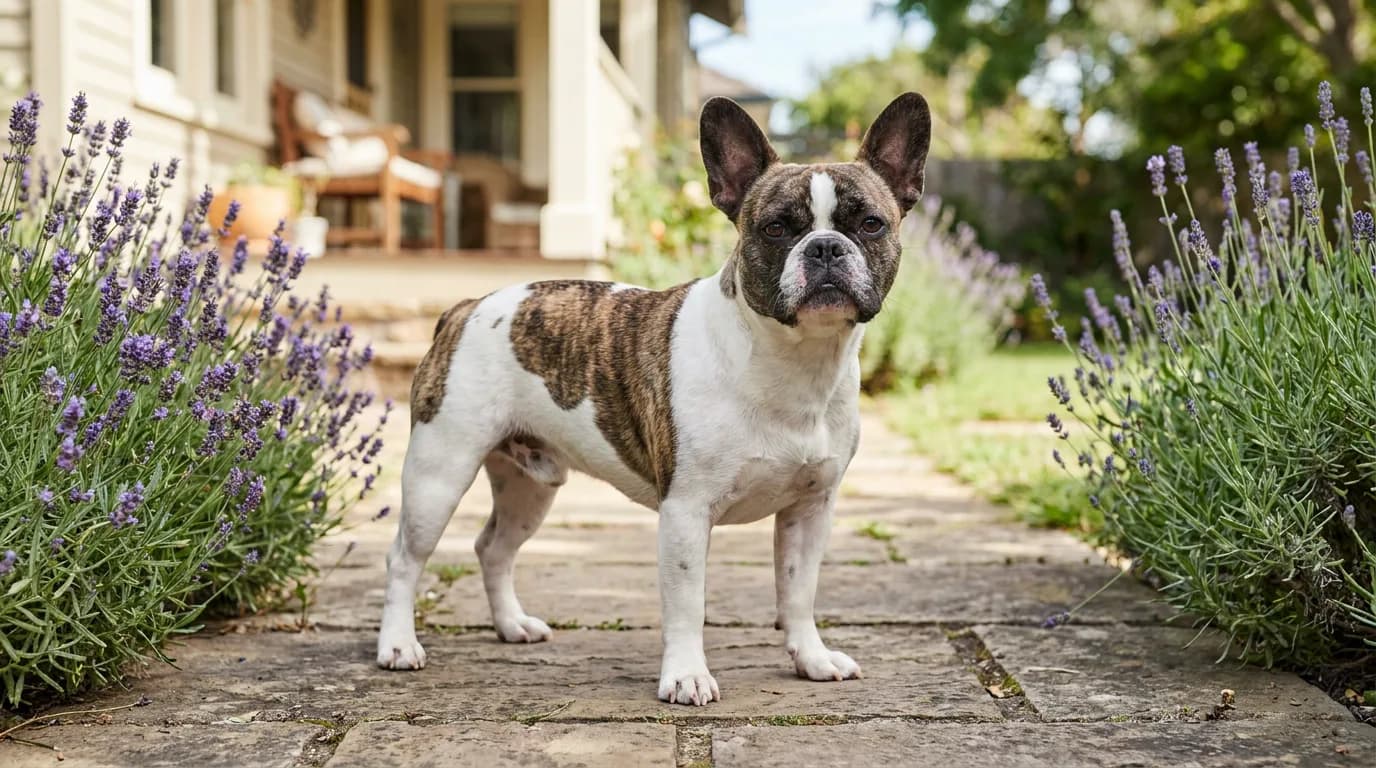
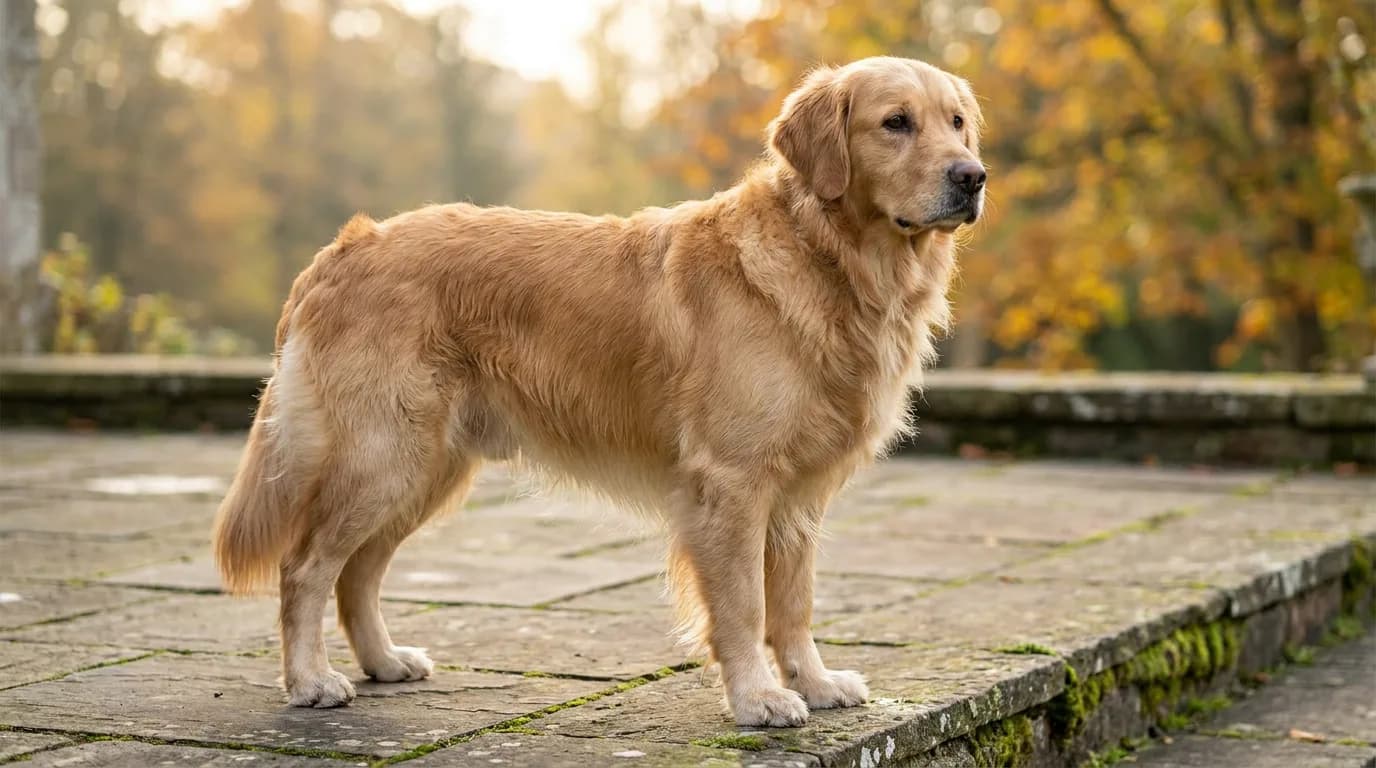
Each entry below has a distinct photograph showing a possible appearance. Compare coat variation and equipment fit using the individual dog's visible coat, current measurements and care records, then follow the detailed guide where one is available.
| Cross | Useful parent context | Other parent's standard size | Practical comparison | Detailed guide |
|---|---|---|---|---|
| Labrador Retriever | Retrieving background and dense short double coat | 22½–24½ in; 55–80 lb (AKC) | Balance active games, walking, rest and actual coat care | Fuller entry below |
| Pit bull-type dog | Exact parent identity may be unclear | APBT 17–21 in; 30–60 lb (UKC); depends on the actual breed | Separate human greetings, dog compatibility and manageable activities | Fuller entry below |
| Rhodesian Ridgeback | Athletic hound background | 24–27 in; about 70–85 lb (AKC) | Distinguish exercise, recall and everyday cooperation | Fuller entry below |
| Staffordshire Bull Terrier | A defined breed with a muscular, agile build | 14–16 in; 24–38 lb (AKC) | Clarify the Staffy label and develop cooperative play skills | Fuller entry below |
| Chihuahua | Much smaller parent with two coat varieties | Up to 6 lb (AKC) | Plan for uncertain adult size and individual equipment fit | Fuller entry below |
| American Bulldog | Potentially substantial build | 20–27 in; weight in proportion (UKC) | Assess movement, space and handling | American Bulldog Boxer mix guide |
| Beagle | Scent-oriented parent background | Up to 13 in, or 13–15 in (AKC) | Include sniffing and manageable searching activities | Beagle mixes guide |
| German Shepherd | Working-breed parent context | 22–26 in (AKC) | Compare play with the ability to transition into rest | German Shepherd mixes guide |
| Golden Retriever | Retriever parent context and possible coat differences | 21½–24 in; 55–75 lb (AKC) | Assess greetings, play and actual grooming needs | Golden Retriever mixes guide |
| Dogo Argentino | Athletic parent context | 24–26½ in (AKC) | Check ancestry evidence, dimensions and household handling | Dogo Argentino mix guide |
A mixed dog does not need to resemble both parents equally. Nor does a neat combined name make it a separate standardized breed. The table is most useful when it helps you notice a question you would otherwise miss, such as whether a short-looking coat has substantial undercoat or whether a lively dog has an established quiet routine.
How the other parent changes the comparison
The five fuller entries below focus on different applications of parent background. A Labrador cross raises useful questions about retrieving games and coat density. A Ridgeback cross brings athletic activity and training cooperation into the comparison. A Boxer dog crossed with a Staffy requires a precise explanation of the parent label, while a Boxer dog mix with Chihuahua ancestry makes size assumptions especially unhelpful.
Start with the features that affect your ordinary day:
- The activities the dog currently enjoys.
- How its body and equipment fit your home.
- The care its actual coat requires.
- Which everyday skills are established.
- What experience it has with people and other animals.
A useful description connects a trait to something observable. “Enjoys carrying a toy and returns it during a game” tells you more about a potential routine than “has the best of both breeds.” Likewise, a dog that can relax while a household member works offers more relevant information than a claim that its parent breeds are intelligent.
Boxer and Labrador Retriever
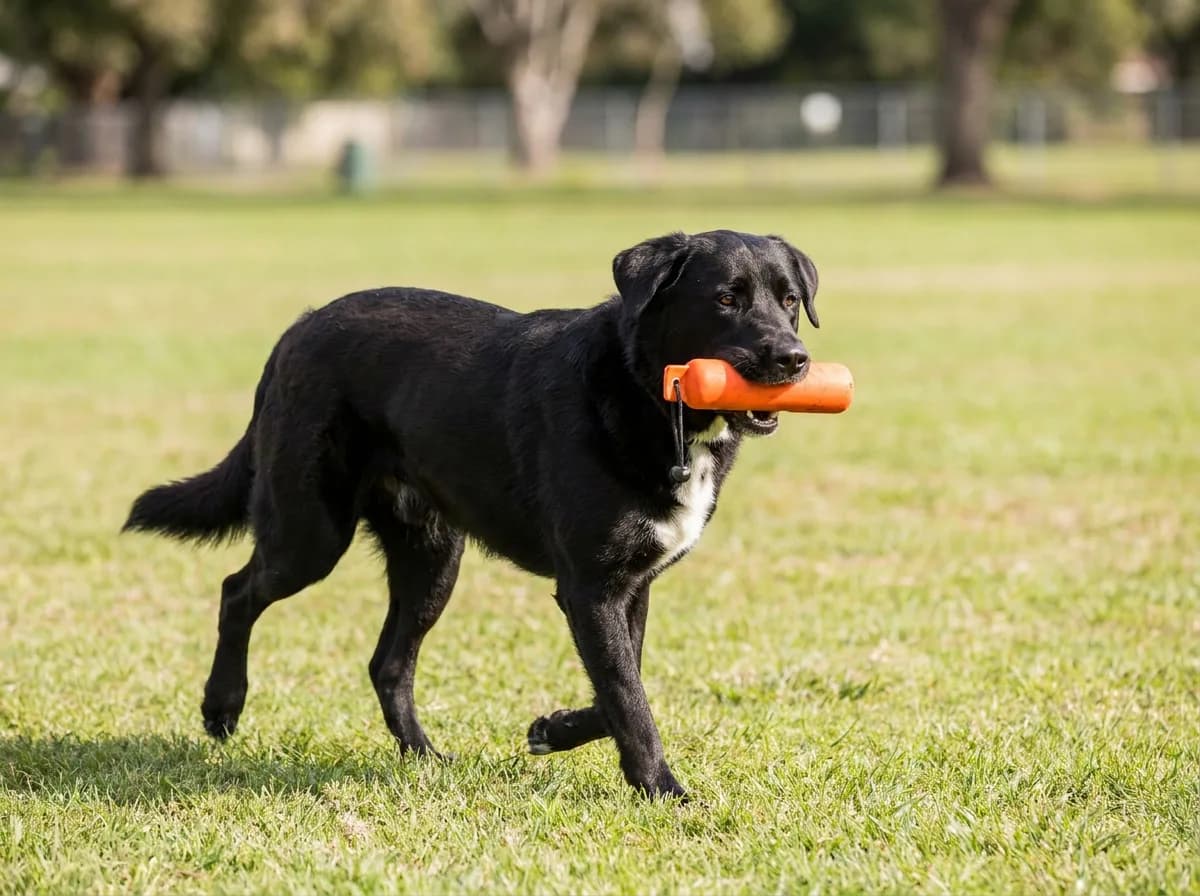
A Boxer and Labrador Retriever mix, usually shortened to Boxer Lab mix or Boxador, pairs the Boxer with a retrieving dog. The Labrador parent brings that retrieving background and an active disposition into the comparison. The AKC's Labrador guide describes a breed that enjoys activities such as fetch and has a dense, short double coat.
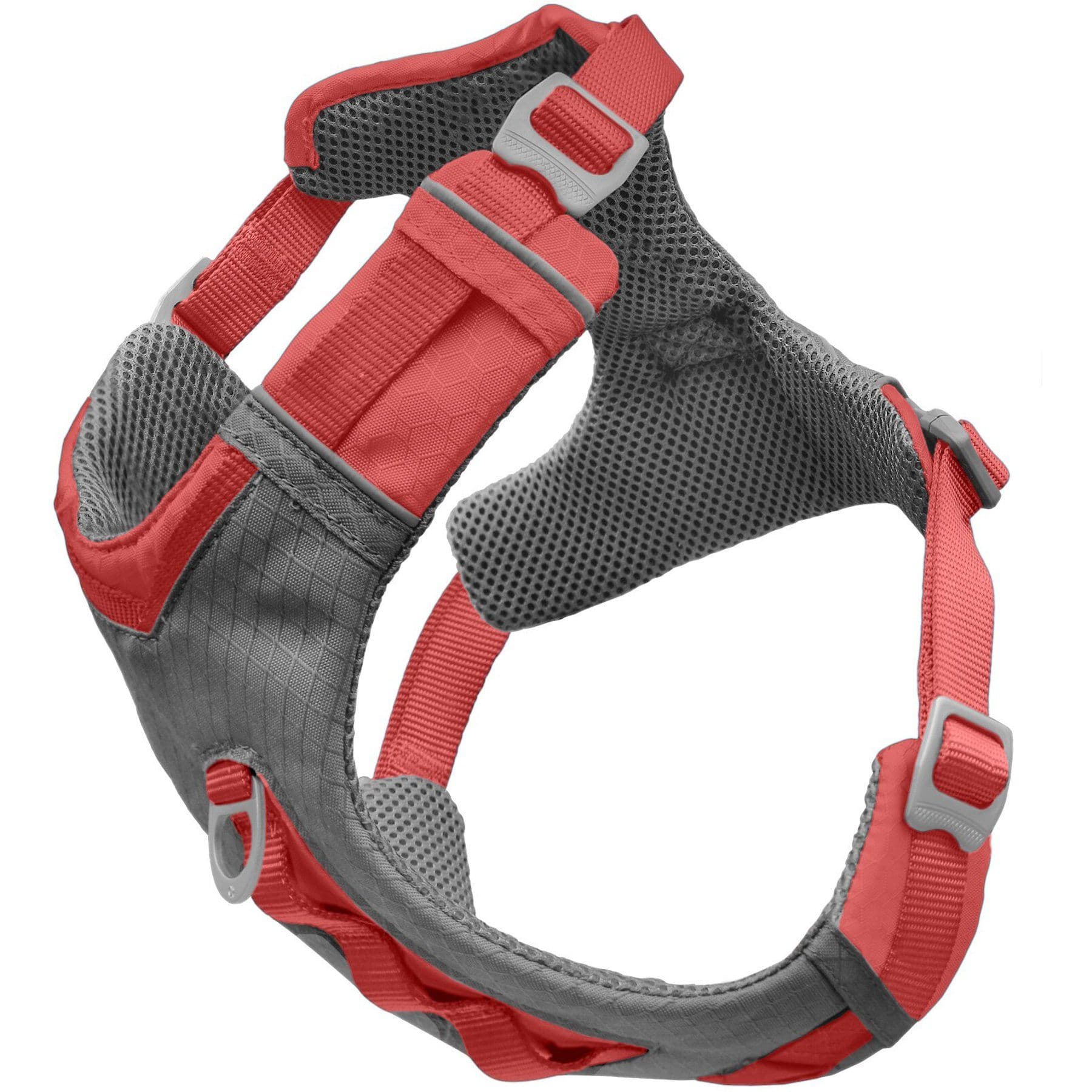
Breathable material, deep V-neck with padded chest plate, back handle, four adjustment points, reflective trim and front and back leash attachments, per the listing.
Petful may earn a commission when you click through to Chewy, at no extra cost to you.
Begin walking-equipment decisions with measurements. A Kurgo Journey Air harness is one option to assess against the current size chart. The linked Medium variant is not a universal Boxador size; secure adjustment and comfortable movement matter more than the name on the dog's description.
A varied routine can include several kinds of activity:
- A walk with opportunities to explore.
- A manageable retrieving game, if the dog enjoys it.
- A brief session practicing a familiar skill.
- A quiet period in a comfortable resting place.
The coat deserves an equally practical assessment. Short hair is not the same as minimal shedding. Look at the actual density, loose hair and comfort with gentle handling before choosing grooming tools. The Labrador's double coat explains why a short-coated cross may still require regular attention, but it does not tell you exactly what every Boxador will inherit.
Boxer and a pit bull-type dog
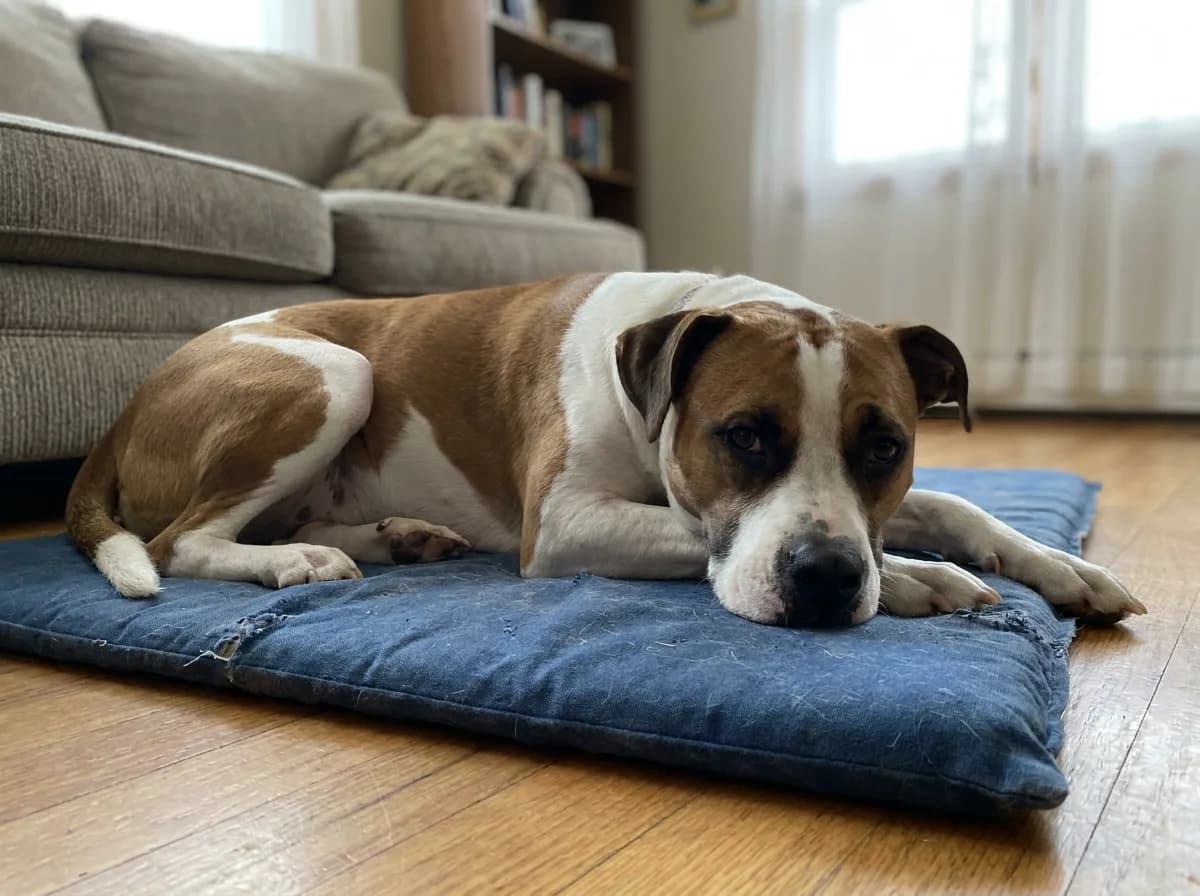
A Boxer Pitbull mix description needs one clarification at the outset: what does “pit bull” mean in that particular record? It may refer to a known American Pit Bull Terrier parent or be used more broadly for a dog with certain visible features.
- Documented breed identity: The United Kennel Club's American Pit Bull Terrier standard describes a defined athletic, short-coated breed, which is more specific than a general pit bull-type label.
- Distinct parent breeds: An American Bulldog, a Staffordshire Bull Terrier and an American Staffordshire Terrier should not simply be substituted for one another.
For a dog that enjoys appropriate chewing or food-based enrichment, a KONG Extreme toy in Large is one supervised option to evaluate. Select its size for the dog and inspect it during use. The cross label does not establish chewing strength, and no toy is indestructible.
The most useful behavioral distinction is between different situations. A Boxer dog Pitbull mix may greet a person warmly, but that meeting does not answer how it behaves with another dog, around food or during excited play. The ASPCA's position statement explains that substantial individual variation exists and that inherited tendencies interact with the environment.
Compare the circumstances behind any description:
- Was the interaction with a familiar person or a stranger?
- Were other dogs present, and how were they introduced?
- Were toys or food involved?
- Could the dogs take breaks and move apart?
- What happened after the exciting part ended?
These distinctions help you prepare the home. If another dog already lives there, plan separate resting and feeding areas and discuss introductions with the people responsible for the prospective dog's care. Do not use an uncontrolled meeting as a test of whether the two dogs will “work it out.”
Physical handling is another separate decision. Consider whether the adults responsible for walks can comfortably manage the individual at doorways, beside traffic and during an unexpected distraction. Equipment can support handling, but it does not replace teaching useful skills or arranging a manageable environment.
For play, select activities that fit the dog's current abilities. Find things you can do together successfully, then build a routine around them. Alternatives to constant high-arousal games may include:
- A controlled toy exchange.
- A simple search activity.
- A quiet chew.
Avoid treating this cross as either a protection promise or a predetermined behavior problem. Both approaches obscure the information you actually need. A detailed account of previous interactions, current skills and support needs gives you a stronger basis for a household decision than a reassuring or alarming nickname.
If an adoption description is uncertain about ancestry, preserve that uncertainty in your own records. You can describe the dog accurately, follow its care needs and enjoy its company without claiming a specific parent breed that has not been established.
Boxer and Rhodesian Ridgeback
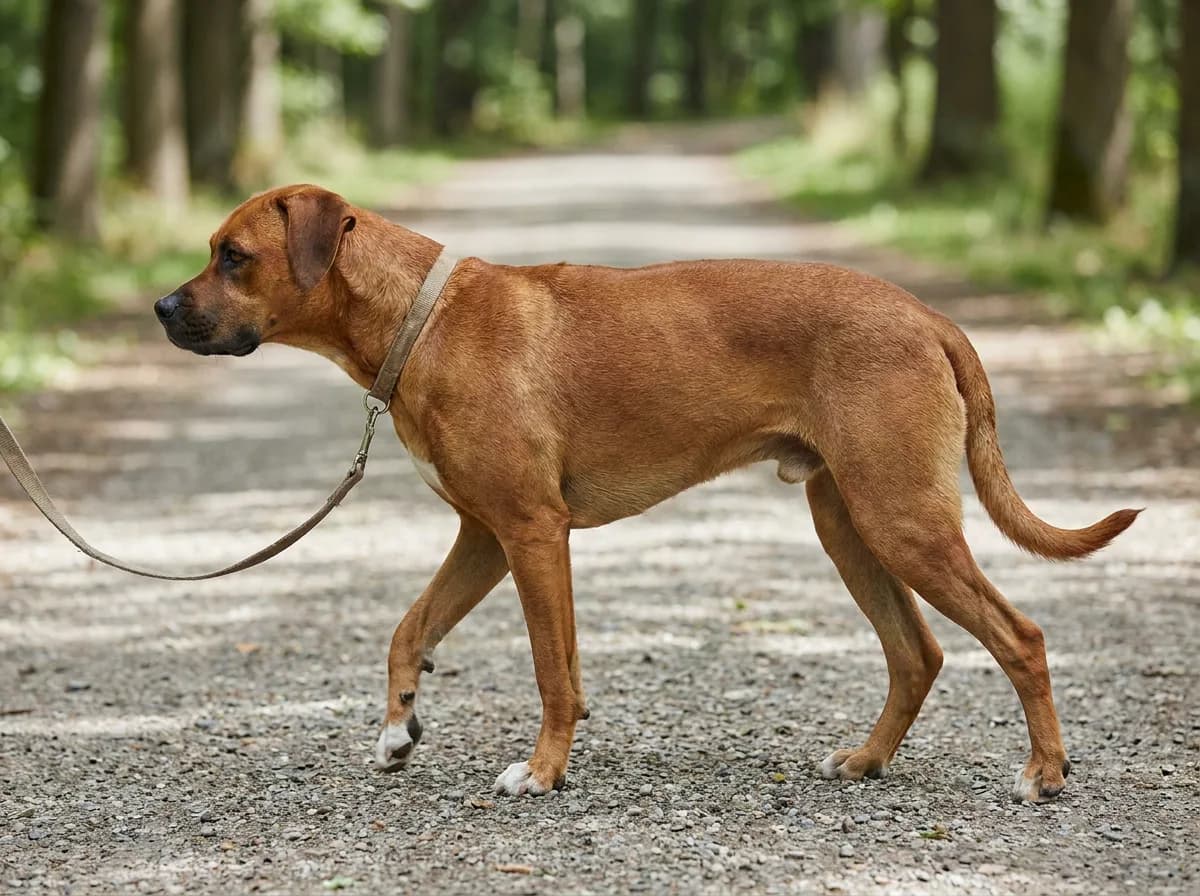
A Boxer and Rhodesian Ridgeback combination invites a useful distinction between being athletic and being trained. The Ridgeback is a hound with an active background. The AKC's Ridgeback overview also describes an independent streak and the importance of patient, consistent training with positive motivation.
That parent context can help you plan for a Ridgeback Boxer dog mix without assigning it a fixed personality. A dog may enjoy a brisk outing yet still need practice responding to a cue, walking through a gate or settling when an activity ends. Those are different tasks.
Separate three parts of the routine:
- Physical activity: Appropriate opportunities to move and explore.
- Learning: Practice that makes useful responses clear and rewarding.
- Rest: A predictable opportunity to stop interacting and relax.
Outdoor freedom is a separate decision from enthusiasm for running. Use a lead and appropriate secure spaces while you establish what the dog can reliably do. A parent breed's athletic reputation does not demonstrate recall around wildlife, unfamiliar dogs or a new environment.
- Appearance: The Ridgeback's distinctive appearance can draw attention, but a ridge, wheaten shade or strong outline is not an ancestry test. Those observations describe a dog; they do not establish the complete family history.
- Breed background: Our Rhodesian Ridgeback parent profile provides the fuller context for the parent breed.
Boxer and Staffordshire Bull Terrier
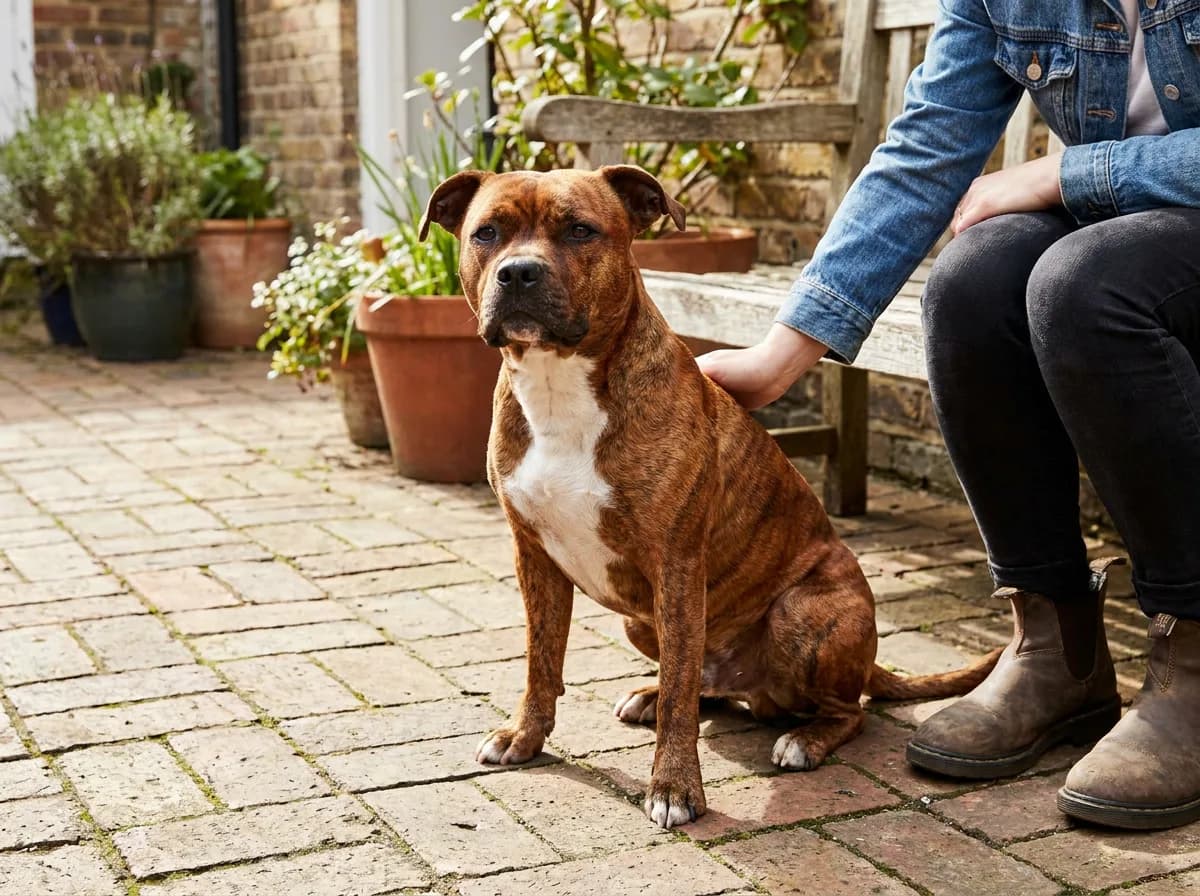
A Boxer dog cross Staffy description should identify the intended parent. Here, Staffy means Staffordshire Bull Terrier. An American Staffordshire Terrier is a different breed, and a general pit bull-type description is less specific still.
The AKC's Staffordshire Bull Terrier introduction describes a muscular, agile dog. In a cross comparison, that background makes physical play and cooperative everyday skills useful subjects to explore. It does not tell you that a particular mixed dog will behave the same way as a breed description.
Think about the small transitions that make shared activities easier:
- Waiting while walking equipment is prepared.
- Moving through a doorway without crowding someone.
- Releasing an appropriate toy in exchange for a reward.
- Taking a pause before another game.
- Settling while people turn to another task.
A quieter activity can follow more energetic interaction. A Frisco Snuffle Mat is one optional supervised food-search activity. Introduce it individually, use appropriate portions and remove it if the dog starts chewing or swallowing the material.
If children share the home, adults should organize interactions and provide rest space. A reputation attached to either parent breed is not a substitute for supervision. The useful comparison is whether the actual household can support the dog's activity, handling and quiet time.
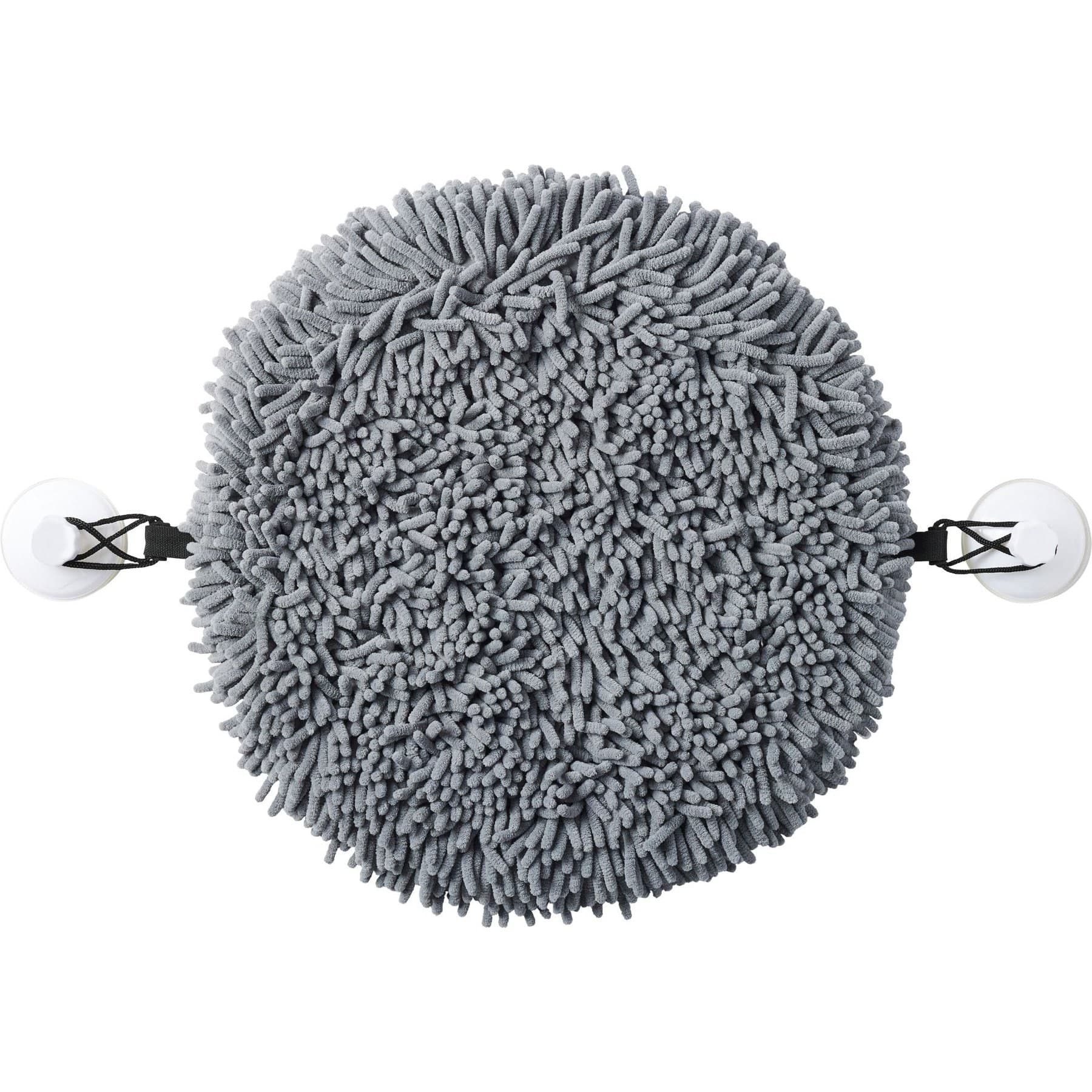
Machine-washable shaggy mat with attachable suction cups for smooth floors.
Petful may earn a commission when you click through to Chewy, at no extra cost to you.
Boxer and Chihuahua
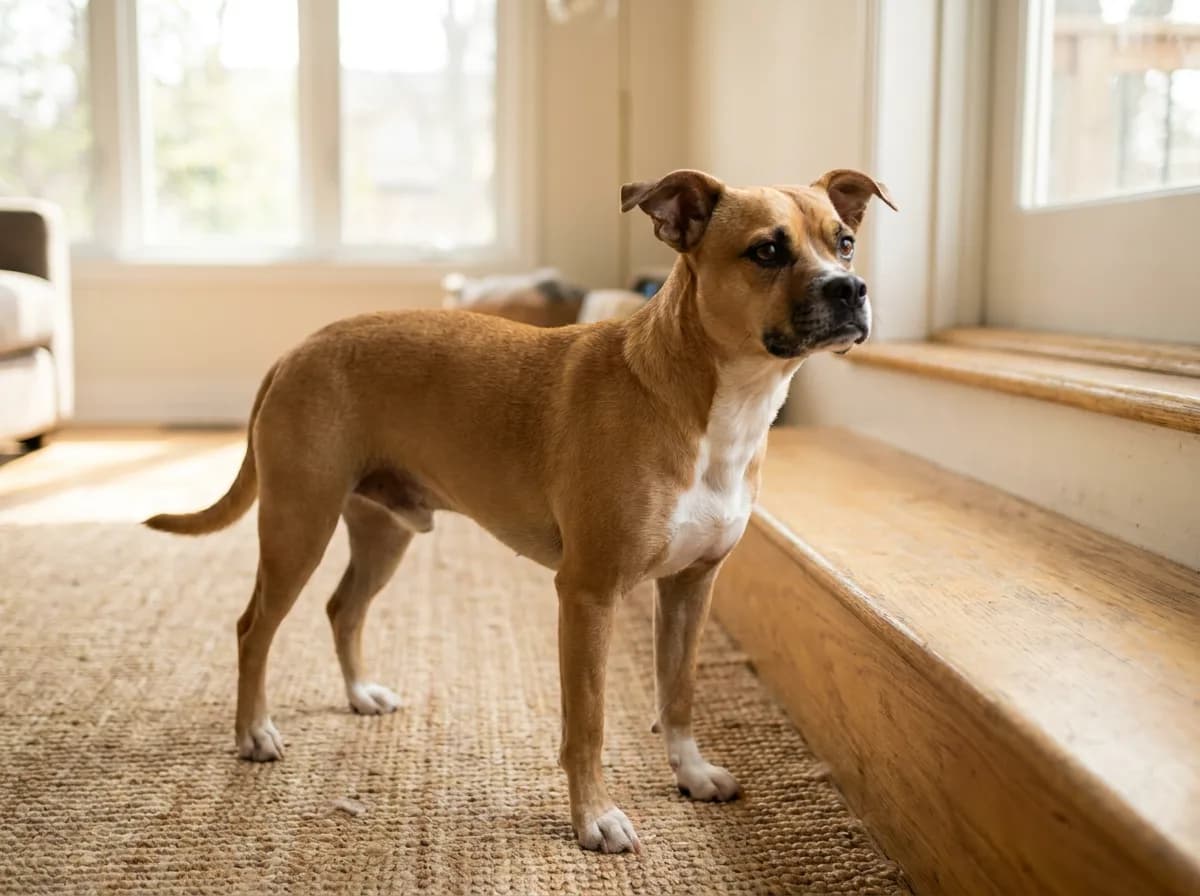
A Boxer and Chihuahua mix is sometimes called a Boxachi. The name may sound like a neatly defined small dog, but the substantial difference between the parent breeds makes that assumption especially unhelpful.
The Chihuahua is a small breed, while the Boxer is considerably larger. A puppy photograph cannot tell you the adult dimensions of their cross, and averaging two breed descriptions does not produce a dependable shopping list. If adult size is central to your housing or handling decision, an adult dog's actual measurements provide clearer information.
Check the dimensions that affect daily life:
- Chest and neck measurements for walking equipment.
- Standing and resting space.
- The size of gaps beneath gates or beside barriers.
- The height and arrangement of steps.
- Whether household members can handle the dog comfortably.
A gate suitable for a larger dog may have openings that a smaller individual can pass through. A bed chosen from a nickname may be unnecessarily small. Look at the actual arrangement in your home, including the route to an outside area and where the dog will rest when rooms are busy.
Coat assumptions can also mislead. The UKC Chihuahua standard describes smooth and long coat varieties and notes that an undercoat may be present. That gives useful parent context, but the mixed dog's coat needs to be assessed on its own.
A CHI double-sided brush is one tool to consider when it suits the coat. Its bristle side may be useful for an ordinary smooth coat; the presence of another side does not mean both should be used on every dog.
More Boxer crosses with detailed Petful guides
These five crosses already have detailed Petful guides. The short entries below explain a useful comparison and link to those existing guides without duplicating their full profiles.
Boxer and American Bulldog
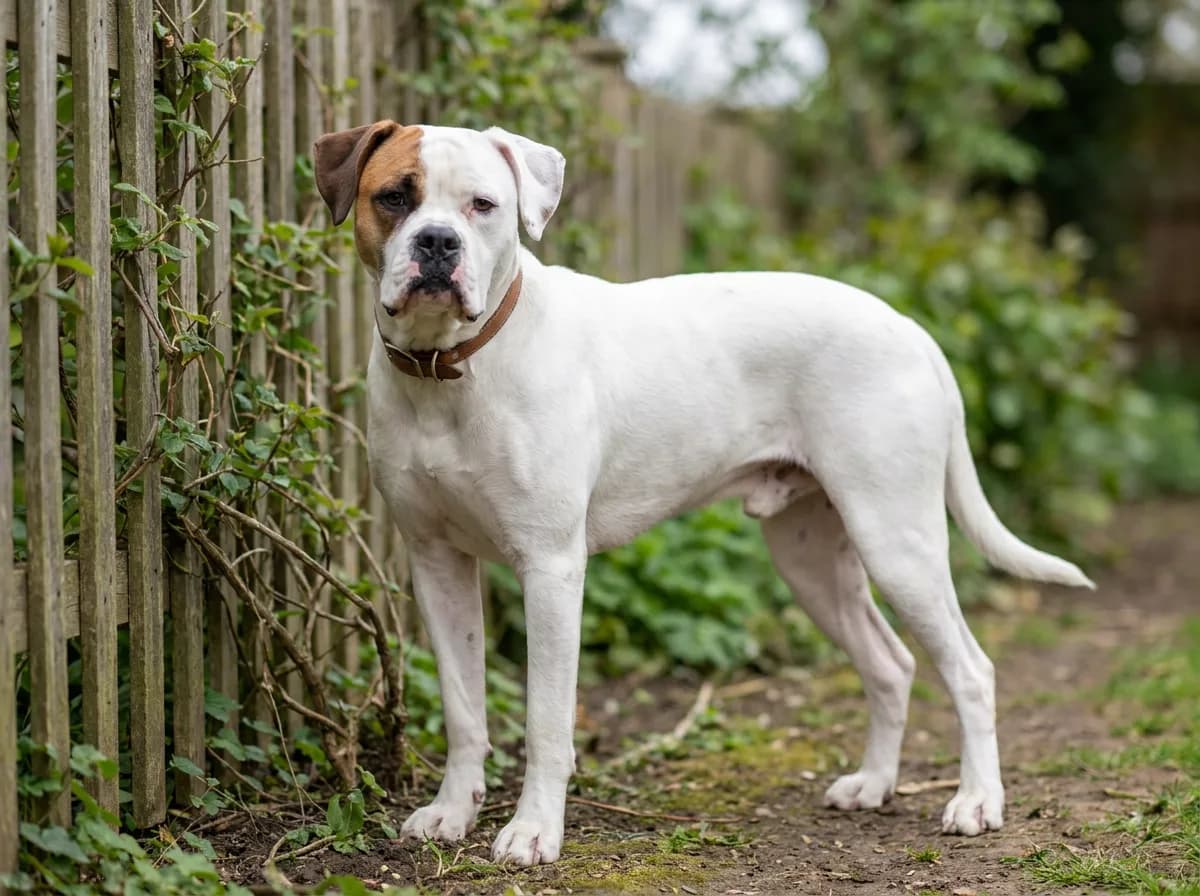
An American Bulldog Boxer mix is often called a Bulloxer. It is a different pairing from a Staffy Boxer or a loosely described pit bull-type cross.
A useful starting point is how the dog's build works in ordinary spaces. Consider comfortable movement, turning room and the equipment needed for manageable walks. Substantial muscles or a broad head do not establish fitness or tell you how the dog feels during activity. Measure the individual and look at the arrangement of the home. A resting area should allow the dog to settle comfortably without blocking a busy passage, and walking equipment should be selected from actual dimensions.
Our American Bulldog Boxer mix guide covers size variation, care, records and household assessment in more detail. It also explains why the Bulloxer name should not replace a clear account of known or reported parentage.
Boxer and Beagle
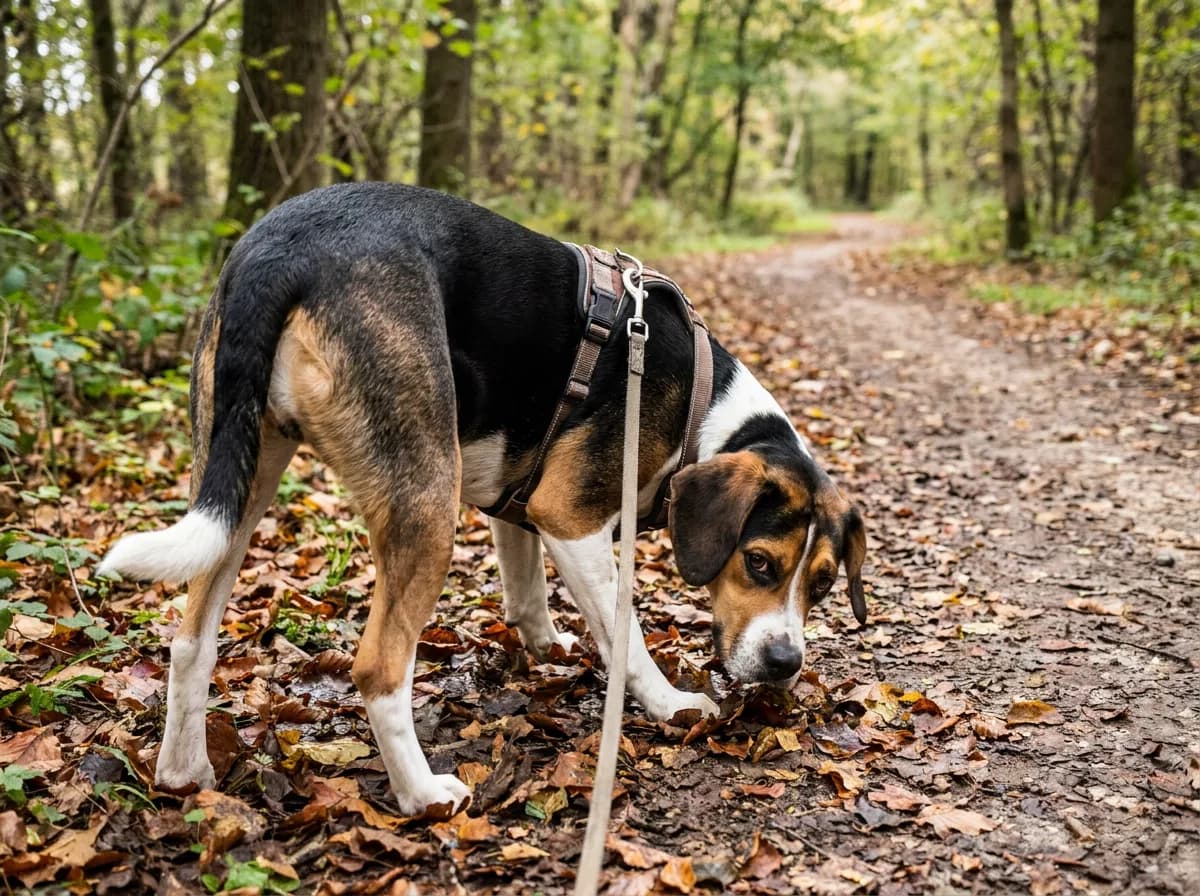
The Beagle Boxer mix is commonly called a Bogle. The Beagle's scent-oriented background makes sniffing and searching useful activities to consider alongside more physical play.
A walk does not have to consist entirely of covering ground at a steady pace. In a suitable setting, time spent investigating scents may be part of the activity. Keep the dog on appropriate equipment and choose a route you can manage. For an individual that enjoys supervised food searching, a snuffle mat offers one indoor option. Stop if the activity becomes chewing the material.
See the Bogle entry in our Beagle mixes guide for the fuller comparison. Use the actual dog's measurements when choosing equipment rather than assuming its adult size must fall neatly between two breed ranges.
Boxer and German Shepherd
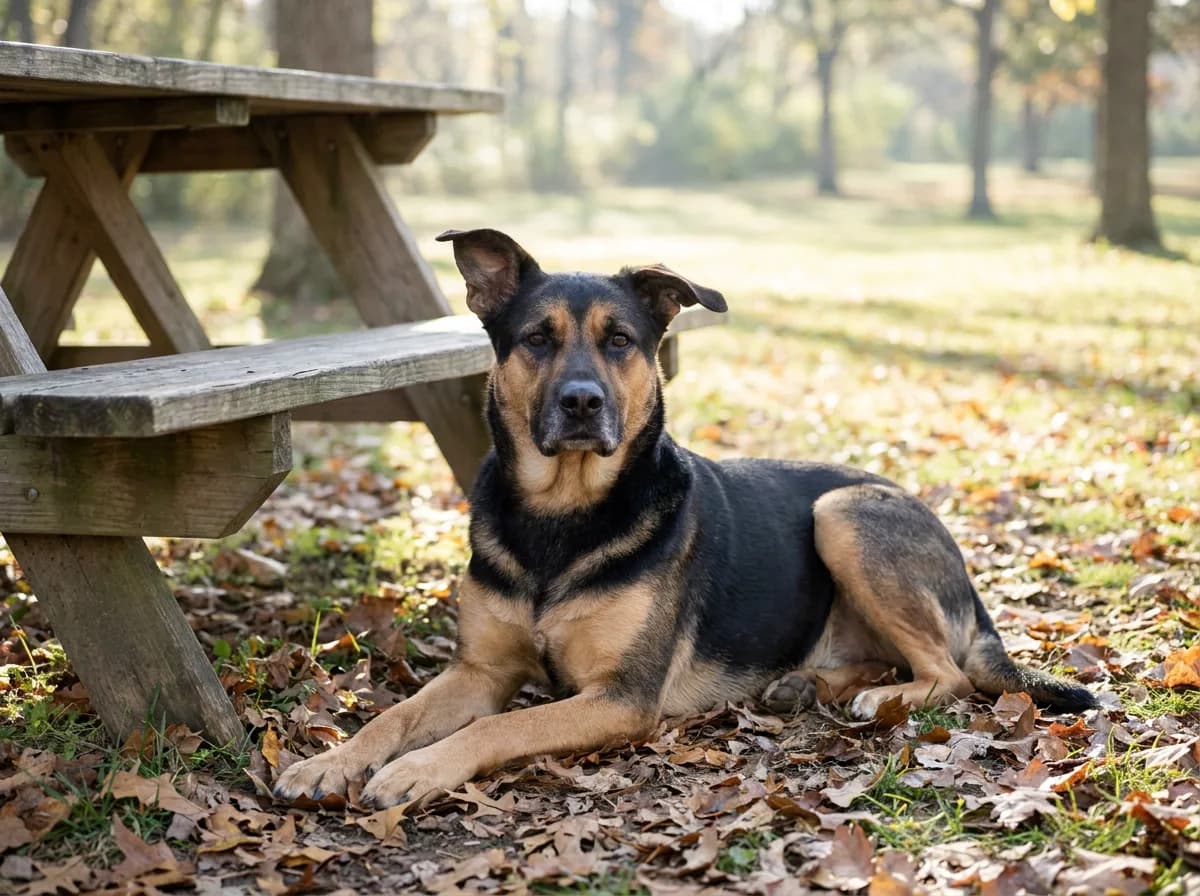
For a German Shepherd Boxer mix, compare lively activity with what happens when that activity ends. A dog that enjoys a game may still need a clear routine for putting toys away and settling while people do something else.
Look at familiar, ordinary circumstances. Resting after a walk at home gives different information from sitting briefly during an exciting visit. Neither moment tells you everything, but together they help explain the routine already in place. The practical question is whether that routine works for your household. Consider the space available for rest and who will provide activity on less convenient days.
Our German Shepherd mixes guide covers this cross's play and settling comparison in greater detail. For a dog that settles with a chew after play, a supervised KONG Extreme toy in Large is one optional enrichment item; size it for the individual and remember that no toy is indestructible.
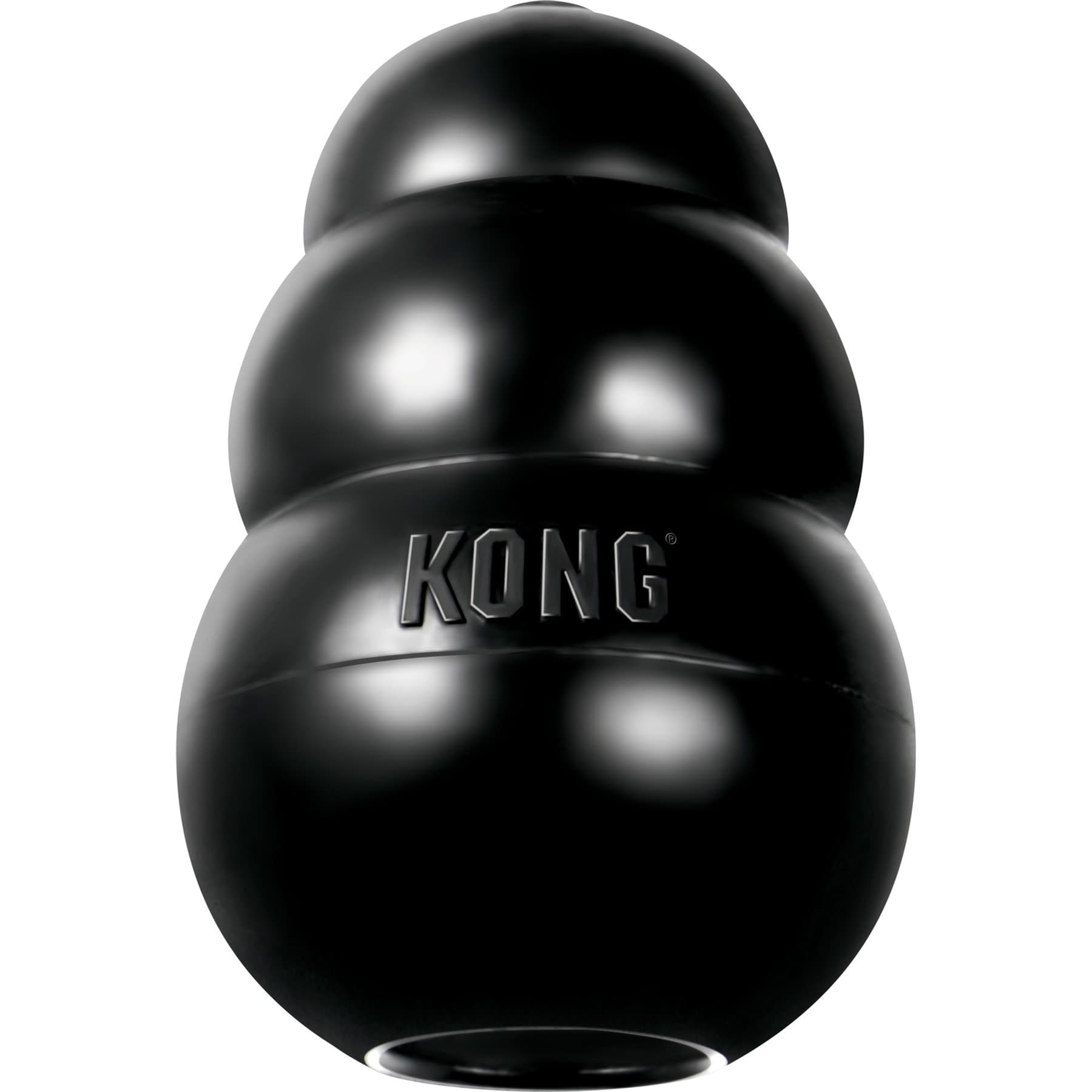
Black ultra-durable natural rubber, stuffable, the reference toy for power chewers; sizes 53358 Small and 53362 XX-Large named inline for other dogs.
Petful may earn a commission when you click through to Chewy, at no extra cost to you.
Boxer and Golden Retriever
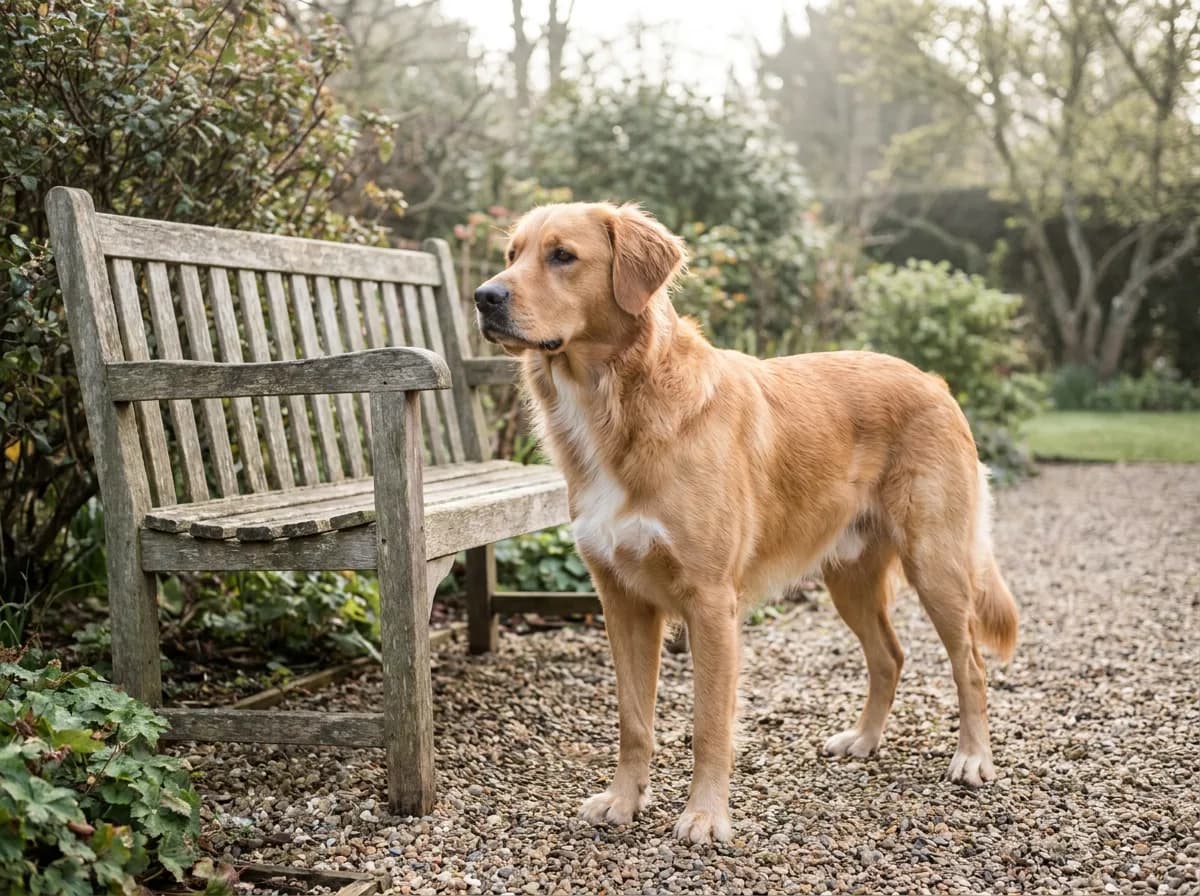
A Boxer Golden Retriever mix may prompt expectations about friendliness and family life. Turn those expectations into practical observations about greetings, play and how the dog shares space with people. A warm greeting is enjoyable, but notice its physical effect. Can the adults responsible for care manage the interaction comfortably? Is there an established way to begin a quieter activity afterward?
Inspect the coat too. Its density, length and any feathering determine useful grooming choices more directly than the cross name. Avoid buying tools solely because one parent breed appears in the description.
The Golden Retriever mixes guide provides the fuller Boxer-cross entry. It discusses greetings and the transition from play into rest without promising that Golden ancestry makes every dog automatically gentle or easy to manage.
Boxer and Dogo Argentino
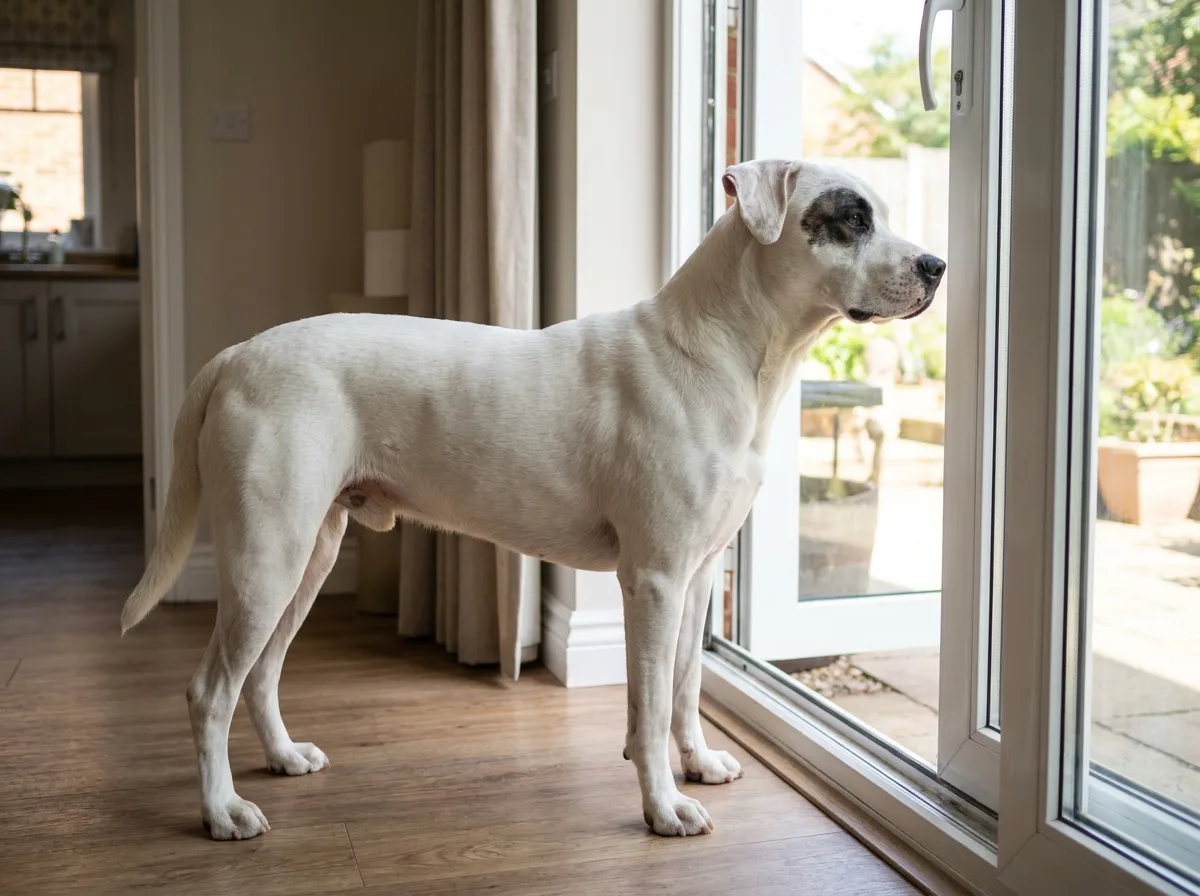
A Boxer Dogo mix description should be supported by more than a white coat and an athletic outline. Those visible features do not verify Dogo Argentino parentage.
For the household comparison, concentrate on measured dimensions and practical handling. Can the dog move comfortably through the spaces it will use? Can the responsible adults manage ordinary walks, equipment checks and transitions through doorways? Keep the ancestry account separate from those observations. A reported label may remain uncertain while the dog's current size and routines are clear enough to plan around.
Our Dogo Argentino mix guide explains the evidence behind cross labels and provides a fuller framework for dimensions, household compatibility and care. It is the detailed resource for the Dogo Argentino Boxer combination.
Other large Boxer crosses
Beyond the ten crosses compared above, four large pairings come up in searches and rescue listings. Each note gives the other parent's AKC size standard as context, not a prediction.
Boxer and Mastiff or Bullmastiff
A Mastiff Boxer mix pairs a 21½- to 25-inch Boxer with one of the heaviest breeds: the AKC Mastiff standard sets minimum heights of 30 inches for males and 27½ inches for females, and the Bullmastiff standard calls for 24 to 27 inches and 100 to 130 pounds. Plan space, transport and walking equipment for a dog that may outweigh an adult handler.
Boxer and Great Dane (Boxane)
The Great Dane standard sets a 30-inch minimum for males and 28 inches for females, so a Boxane can stand well above either Boxer height range. AKC notes giant breeds keep growing until 12 to 18 months, so hold off on jogging and size the crate from current measurements.
Boxer and Doberman (Boxerman)
Doberman Pinschers stand 24 to 28 inches under the AKC standard, which describes an energetic, watchful and alert dog. Expect a Boxerman to need daily activity and calm practice around visitors.
Boxer and Rottweiler (Boxweiler)
The Rottweiler standard sets 24 to 27 inches for males and 22 to 25 inches for females, with heavy bone and muscle. Confident adult handling and early lead skills matter more for a Boxweiler than the nickname.
Which Boxer mix fits your household?
For an active, outdoor household, the Labrador cross is the closest match in size and energy: the AKC Lab standard describes a 55- to 80-pound working retriever. For a quieter home with less handling strength, a Staffordshire Bull Terrier cross starts from a parent that stands 14 to 16 inches and weighs 24 to 38 pounds (AKC standard), while a Chihuahua cross is the most size-uncertain pairing here. In every case, the useful choice is the individual dog whose needs fit your weekday routine and handling capacity.
Start with the arrangements you can sustain on an ordinary day. Weekend enthusiasm is valuable, yet weekday care is where the plan has to work. Include everyone who will share responsibility, and distinguish a firm commitment from a hopeful possibility.
For example, consider two households:
- A household that enjoys outdoor activities may have ample walking time but little experience teaching a dog to settle while people work.
- A quieter household may offer consistent company and a calm environment but need a dog whose size and handling requirements are manageable for its members.
The first household should assess rest and transitions as carefully as activity. The second should not assume that choosing a smaller-looking cross settles questions about training, grooming or companionship. Both can make a good match by comparing their actual capacity with the individual dog.
| Decision | Observed need | Household capacity | Useful next step |
|---|---|---|---|
| Physical handling | Current size, walking skills and comfort with equipment | Adults available for walks and routine care | Practice a manageable familiar outing |
| Daily activity | Activities enjoyed and ability to rest afterward | Time and suitable spaces on ordinary days | Write a realistic weekday routine |
| Other animals | Known interactions and circumstances | Separate spaces and supervised introduction options | Review the history with the placement organization |
| Children | Experience and response during familiar interactions | Adult supervision and quiet resting space | Plan boundaries before arrival |
| Coat care | Actual coat, loose hair and handling comfort | Time, suitable tools and help if needed | Demonstrate a comfortable grooming interaction |
| Time apart | What is known about previous absences | Work schedule and backup care | Clarify the existing routine and support needs |
| Housing | Dimensions, access and rest arrangements | Gates, steps, room layout and outside access | Check the home against actual measurements |
| Household support | Tasks requiring help | Reliable people and services available | Agree who handles each responsibility |
A worksheet is useful when it leads to a decision. If a row exposes a gap, decide whether you can realistically close it. That might mean arranging a walker, changing a room layout, planning training support or considering a different individual dog. Leaving the gap as “we will work it out” makes the comparison less informative.
Ordinary movement adds information that a portrait cannot provide. Watching a dog walk through a familiar space, turn, lie down and rise shows how it currently uses its body. A quiet transition after play can show which routines are established. These observations are not a medical examination or a guarantee of behavior in a new home, but they make the discussion more concrete.
- Choose manageable, familiar activities when learning about the dog. An appropriately sized KONG Extreme may be one option if it is already suitable for that individual.
- Avoid complicating the observation unnecessarily. Introducing unfamiliar equipment or a crowded setting can make it harder to understand the existing routine.
Household compatibility also involves preferences that are easy to overlook. Think about whether you enjoy regular coat care, whether you want to spend time teaching games and whether the dog's preferred activities appeal to you. A workable match should allow both the people and the dog to have a satisfying ordinary life.
Prepare the practical care plan
Once a particular dog looks like a suitable match, turn the comparison into a simple care plan. Equipment fit, coat care, activity and rest should connect to what you have learned, not to a generic package sold for a cross name.
Prepare the essentials first:
- A comfortable place to rest away from busy traffic.
- Secure walking equipment fitted to the dog.
- Food and water arrangements consistent with the current care plan.
- A small selection of suitable supervised activities.
- Grooming tools appropriate to the actual coat.
- Contact details and records for ongoing care.
Check whether the placement organization supplies any equipment before buying duplicates. If you are considering a Kurgo Journey Air harness, compare the current measurements with its size chart and assess the fit in use. Recheck growing dogs rather than treating the first fitting as permanent.
Keep training consistent across the household. The American Veterinary Society of Animal Behavior's current position recommends reward-based training. Choose useful behaviors to teach, make the task achievable and reward responses you want to see again. If a situation is beyond the dog's current skills, change the setup and seek suitable help rather than escalating pressure.
Agree on a few practical details:
- Which cues everyone will use.
- Where the dog can rest without interruption.
- How walks and meals will be shared.
- Which activities require supervision.
- Who will arrange backup care.
Ordinary activity is not a substitute for an individualized medical plan. If health, recovery or physical comfort affects exercise, discuss appropriate activity with the veterinarian rather than following a cross-specific duration from a list.
Budget for the arrangement you intend to use, including walking, boarding, training and replacement equipment. For acquisition context, Houston Boxer Rescue charges mixes the same age-based adoption fees as purebred Boxers; ask for the actual mixed dog's fee and included care. Our Boxer price and ownership-cost guide compares named purchase and adoption examples with a worked first-year budget.
Use the individual dog's records
Keep the dog's veterinary history separate from information about its parents. A record describing treatment or an examination of the individual answers a different question from screening performed on a breeding parent.
Organize the available information into three groups:
- Individual records: Examinations, care already provided, medications and any current recommendations.
- Known parent records: Identified parents and relevant documented screening.
- Unverified claims: Descriptions or assurances for which supporting records are unavailable.
- The individual dog's veterinary history, known parent screening and an ancestry description provide different kinds of information. Keep each attached to the dog or claim it actually concerns.
The American Boxer Club's screening recommendations apply to dogs in active breeding programs. They distinguish different tests and emphasize dates and professional interpretation. They are not a universal testing panel to order for every mixed pet. Another known parent may have different relevant screening information. Bring the actual records to the veterinary discussion rather than trying to turn two breed lists into a diagnosis. Ask what the existing information establishes, what remains unknown and what matters for the individual dog's present care.
An ancestry claim also does not establish hearing, comfortable breathing or future health. Neither a photograph nor an appealing parent combination answers those questions. Focus on the individual history and examination without assuming that mixed ancestry guarantees an advantage or disadvantage.
Before the first appointment, collect the records in one place and note practical observations you want to discuss. Include changes in activity, comfort or routine without assigning a cause yourself. This gives the veterinarian useful context and helps you leave with a care plan tied to the actual dog.
Boxer mix questions
There is no single winner, but the Labrador Retriever is the closest match for an active home, since the AKC Lab standard's 55- to 80-pound athletic retriever is similar to a Boxer in size and energy. For a quieter home, a Staffordshire Bull Terrier cross starts from a smaller 24- to 38-pound parent. Choose the individual adult dog whose observed behavior fits your routine over any pairing.
Look for parent records first; without them, a DNA breed-ancestry test is the clearest evidence. A broad blunt muzzle, underbite, square build and fawn or brindle coat suggest Boxer ancestry but are shared with other bully breeds. Our Boxer breed profile explains the breed standard to compare against.
Many are, when the individual fits the home: a Boxer mix pairs Boxer playfulness and strength with the other parent's size and energy. Ask the rescue or breeder about the dog's observed behavior with people and other animals. Our Boxer breed profile covers the Boxer parent's temperament and care in depth.

Coreen Saito is a pet writer and longtime shelter volunteer with more than a decade in animal rescue. She covers cat behavior, breed care, and the small, ordinary science of sharing a life with companion animals, with a particular focus on honest takes about the products and decisions that actually matter. At home in Arizona, she's outranked by Mac (a dog with the loudest opinion in the house), Rebel (a cat who governs by quiet authority), and Meri (an orange tabby who runs the late shift and the laundry basket). She writes about all three, plus the rescues that keep coming through her life, at LifeWithMinty.com.
Sign up for expert-backed reviews and safety alerts all in one place.