Dogo Argentino Mix: Crosses, Traits and Adoption Checks
Understand common Dogo Argentino cross labels, distinguish documented ancestry from visual guesses, and assess an individual dog's size, behavior, records and adoption needs.
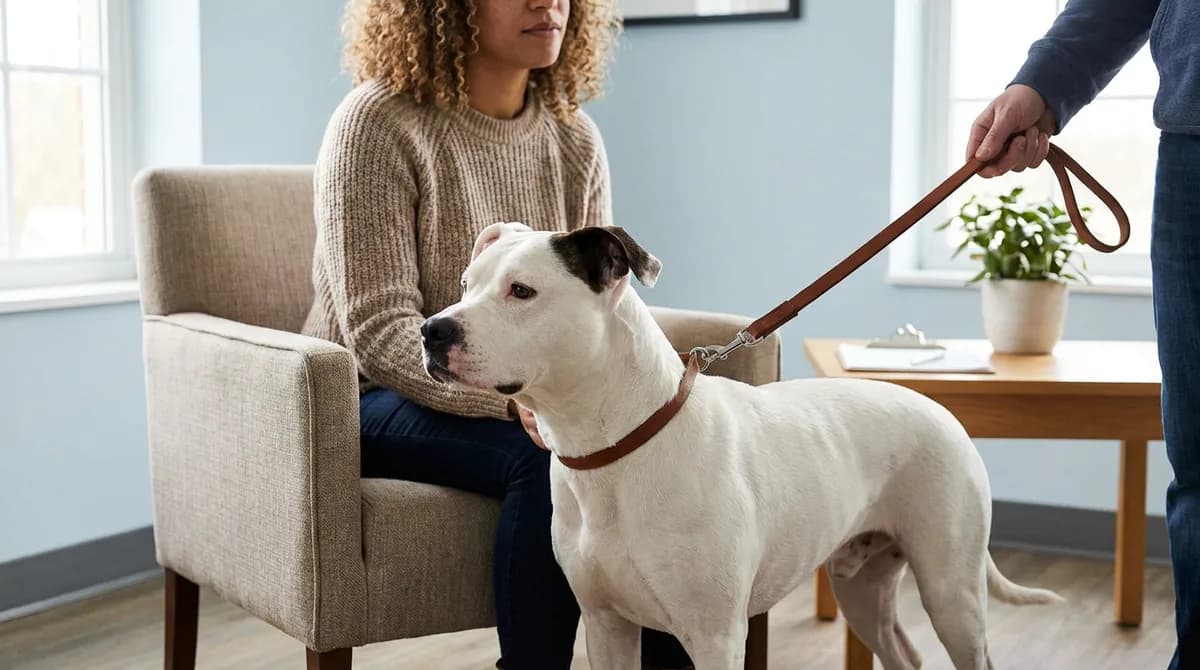
Coat and build alone do not establish Dogo Argentino ancestry.
Petful is reader supported. As an affiliate of platforms like Amazon and Chewy, we may earn a commission when you buy through links on this page. There is no extra cost to you.
A Dogo Argentino mix label may describe documented parents, a DNA ancestry estimate or someone's best guess about appearance. Find out which kind of evidence supports it before using the name to predict size, temperament or care needs. The most useful adoption decision combines that background with the individual dog's measurements, records and observed behavior.

Sign up for expert-backed reviews and safety alerts all in one place.
What a Dogo Argentino mix label means
“Dogo Argentino mix” usually means the dog is thought to have Dogo ancestry along with another breed or several breeds. It does not identify one standardized type of dog. Ask what the Dogo Argentino is mixed with, how that conclusion was reached and whether both parents are actually known.
Is Dogo Argentino a pitbull breed? No. The Dogo Argentino is a distinct breed. Historical crosses used during its development do not make today's purebred Dogo a contemporary Pit Bull mix. A present-day cross is a separate question about the particular dog's ancestry. The AKC's Dogo history explains the breed's development.
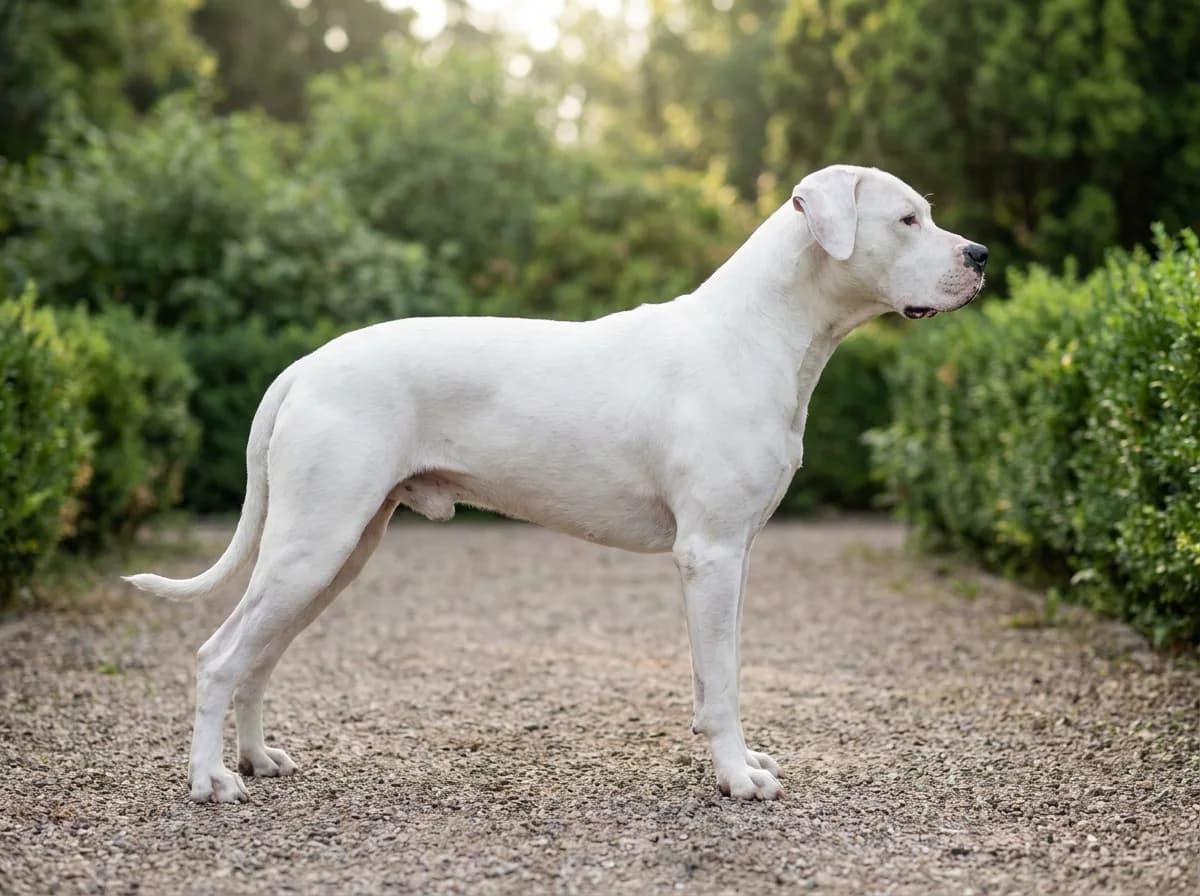
When a listing uses a mixed-breed name, ask for the original source of the description. A caregiver may know the mother but not the father, or may have inherited a label from an earlier record. Keeping that distinction visible is more useful than turning an uncertain name into a detailed breed biography.
If parent records exist, ask how they connect to this dog. A photograph of two adults is not the same as a record identifying the litter and its parents. Check dates, names and available identification, and ask the caregiver to explain any mismatch. You do not need to resolve every historical detail to consider adoption, but you should know which statements are documented and which were passed along without supporting records.
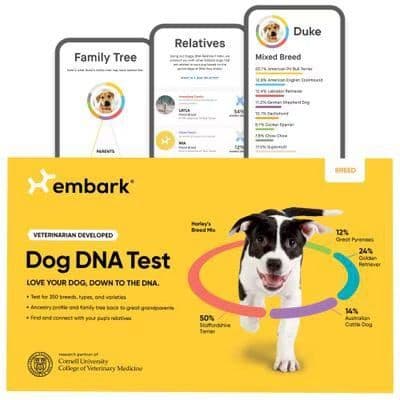
An optional breed-identification test for an ancestry estimate, without a promise about behavior or adult size.
Petful may earn a commission when you click through to Chewy, at no extra cost to you.
Dogo Argentino: Breed Facts, Care and Owner Fit
The Dogo Argentino breed guide describes the recognized breed's history, appearance and care. It can provide context when Dogo ancestry is documented, but a mixed dog does not automatically inherit every characteristic in the profile. Use the breed information to generate questions, then answer those questions through the individual dog's history, current needs and professional assessment where appropriate.
Why appearance cannot confirm ancestry
A broad head, white coat, muscular body or hanging ears can occur in dogs with different backgrounds. Appearance is not ancestry proof. University of Florida research on visual breed identification illustrates the limitations of identifying shelter dogs from photographs. That research was not a validation study of Dogo crosses.
An optional Embark Breed Identification DNA Test Kit can provide an ancestry estimate. Treat its result as a different kind of evidence from a visual guess, while recognizing that a breed-identification result is not a pedigree certificate, behavior assessment or clinical examination.
| Evidence | What it can tell you | What remains uncertain |
|---|---|---|
| Documented parentage | Identified parents supported by reliable records | The puppy's exact adult size, behavior and health |
| DNA estimate | Estimated breed ancestry from the tested sample | Pedigree certification, exact mature traits and future behavior |
| Shelter label | The description used by that organization | Whether the name comes from records, testing or appearance |
| Appearance guess | Visible coat, build and features | Which breeds contributed to the dog |
Ask for the report or record itself rather than relying on a retelling. Keep the wording accurate if you later describe the dog to a trainer, veterinarian or insurer. For example, “the shelter listed this mix” communicates something different from “both parents are documented.” You can provide good care while some ancestry questions remain unresolved.

A fixed-length lead for supervised walks and observing the individual dog's everyday responses.
Petful may earn a commission when you click through to Chewy, at no extra cost to you.
When reviewing a DNA result, distinguish the ancestry question from the health question. A breed-identification kit is not automatically a health-screening panel, and a report of breed ancestry does not show that recommended clinical examinations have occurred. Read what the particular test includes. If the result differs from an earlier description, retain both the original history and the report rather than rewriting the dog's known experiences to fit the new name.
Dogo Pit Bull and Cane Corso mix labels
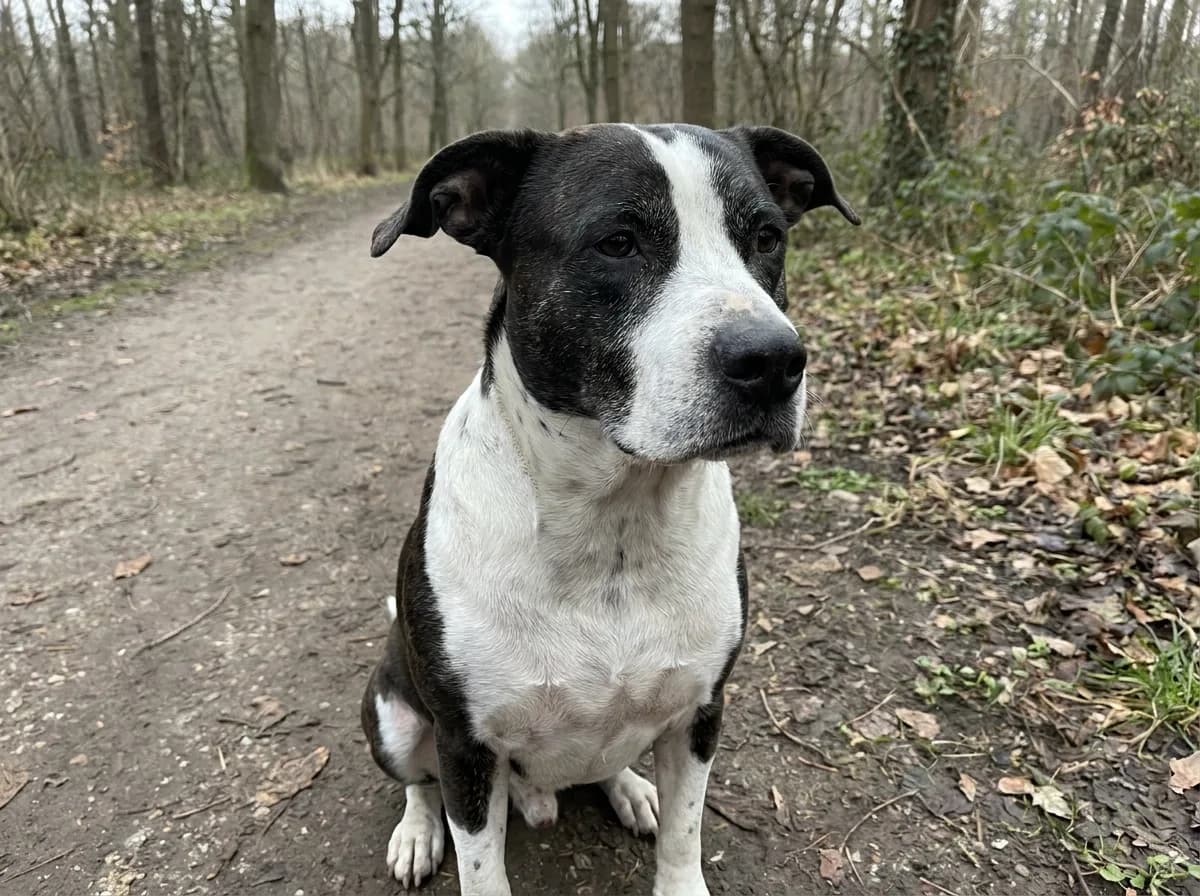
A Dogo Argentino Pit Bull mix may be advertised as a Dogo Pit, Dogo Pitbull or Dogo Pit mix. “Pit Bull-type dog” can itself be a broad description, so ask which parent breed is claimed and what supports it. A puppy's broad head does not establish that combination or predict its eventual size.
Brindle, black-and-white coloring or a red nose also cannot confirm a Dogo Argentino Pitbull mix. Those descriptions concern visible features. If a seller presents them as proof of ancestry, request the parent information or test evidence rather than treating a color photograph as verification.
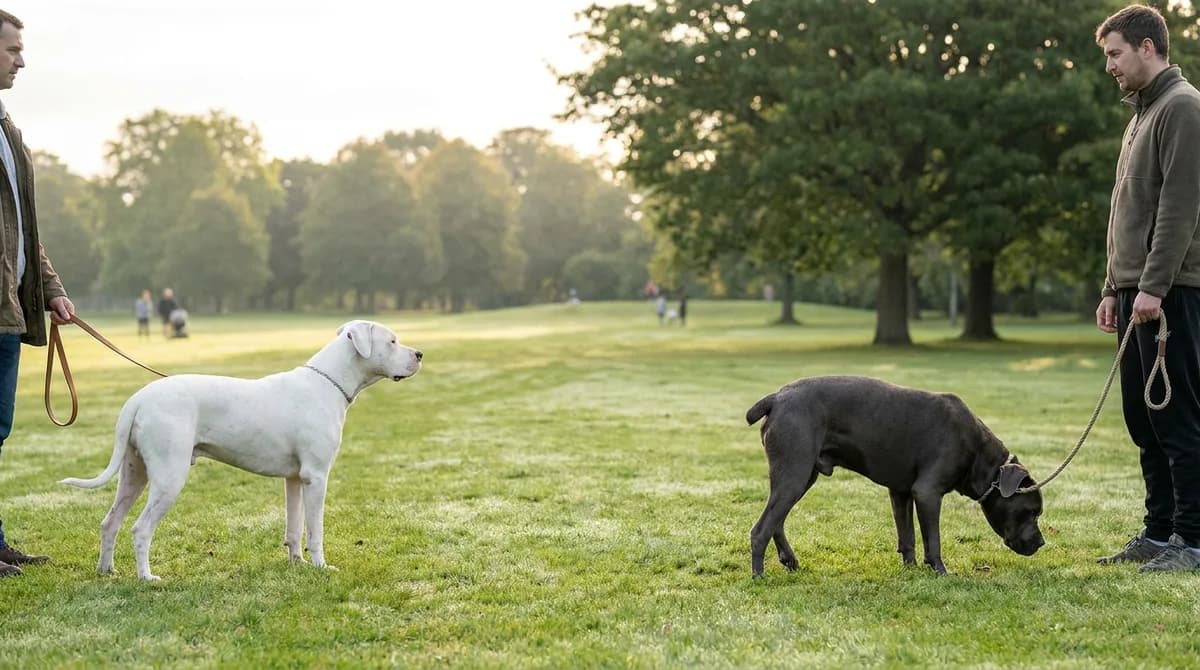
Managed walks can help you learn about a dog's responses without deliberately provoking a reaction. A Frisco Traffic Leash is one option to assess with the caregiver alongside the dog's fitted equipment. Choose the setup for the actual dog, not the strength implied by a cross name.
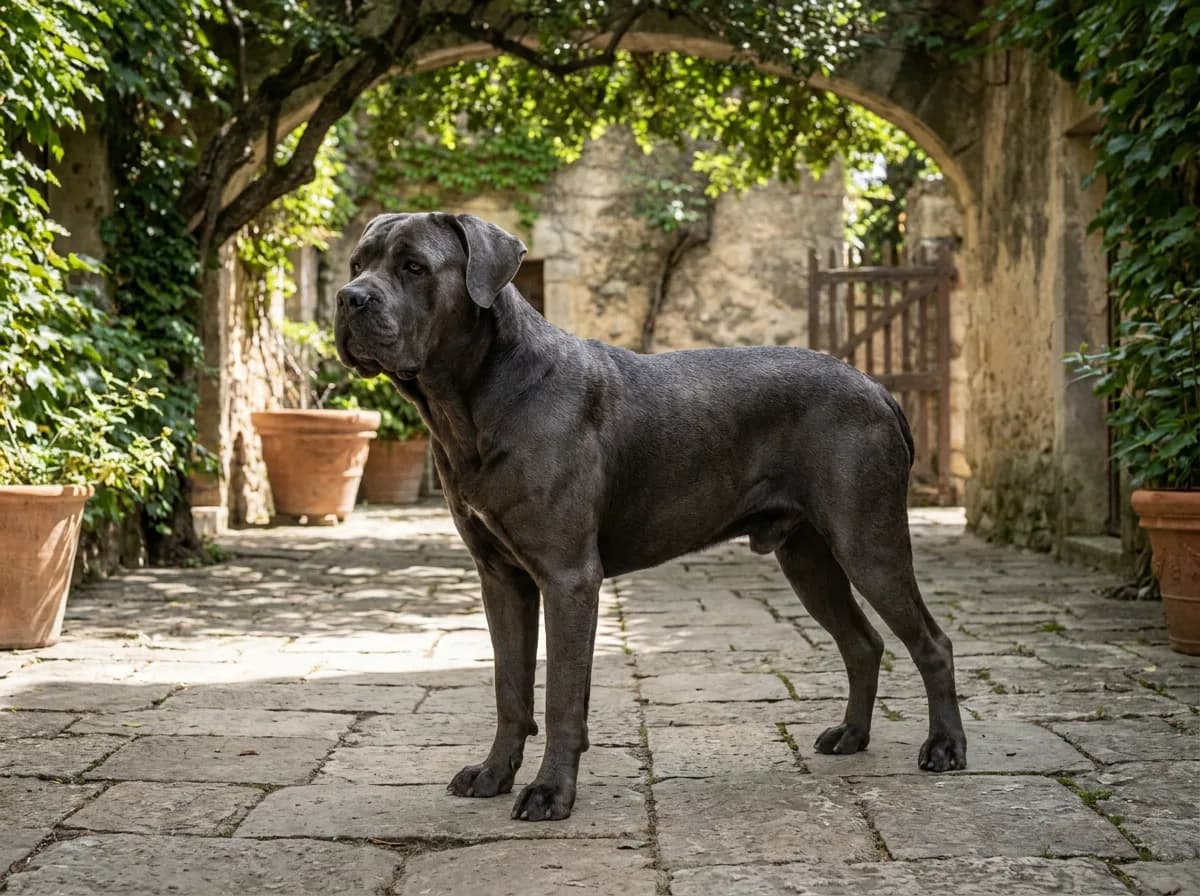
Is a Dogo Argentino a Cane Corso? No. They are different breeds. A Dogo Argentino and Cane Corso mix, sometimes called a Dogo Corso, is a claim about a cross between them. A Cane Corso Dogo Argentino mix puppy offered for sale should come with an explanation of how its parents were identified.
Neither two large parent labels nor a puppy's current build supplies an exact adult forecast. When documented parents are available, their information can help the discussion, but do not calculate the puppy's future weight, lifespan or temperament by averaging the parents. An adult dog's actual measurements provide firmer equipment guidance than a predicted blend.
Other Dogo Argentino cross labels
Other listings pair Dogo Argentino with a wide range of claimed parents. The names below are a reference to those labels, not a catalogue of standardized crosses with proven adult traits. For each one, establish the evidence behind the name and evaluate the particular dog.
| Claimed parent label | Evidence to request | Individual assessment |
|---|---|---|
| American Bulldog, French Bulldog or Bulldog | Exact parent identity and basis for the label | Actual build, movement and care needs |
| Staffordshire Terrier, American Bully or XL Bully | Original record or ancestry report with its exact wording | Handling and household compatibility |
| Rottweiler, Boxer or Doberman | Documented parentage or the available ancestry evidence | Observed behavior, movement and current needs |
| Mastiff, Great Dane or Presa Canario | Specific parent identity rather than a general large-dog label | Measured dimensions and equipment fit |
| Labrador Retriever or Lab | Parent records or the actual DNA estimate | Growth, activity and settling |
| German Shepherd, Belgian Malinois or Border Collie | Specific claimed ancestry rather than a general Shepherd label | Responses to learning, movement and household activity |
| Husky, Great Pyrenees or Poodle | Parent records or ancestry report | Current coat and grooming needs |
| Dalmatian or Catahoula | Evidence beyond visible spots or patches | The individual dog's history and care |
| Pointer, Jack Russell or Bull Terrier | Clear identification of the claimed parent | Responses to animals, movement and handling |
A detailed cross name does not add evidence by itself. If you are comparing several dogs, keep a separate note for each dog's source information, known needs and unanswered questions. That makes the choice more useful than ranking the labels by an imagined combination of their parents' best qualities.
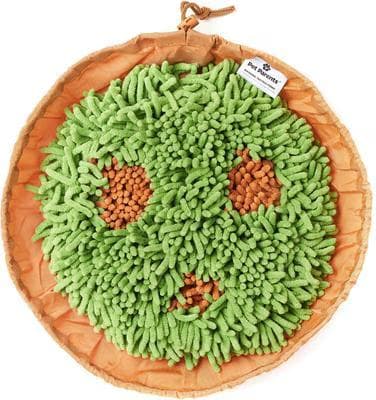
A supervised food-search activity to try according to the individual dog's behavior.
Petful may earn a commission when you click through to Chewy, at no extra cost to you.
Assess size, behavior and household compatibility
A Dogo Argentino can be a good family companion when the individual and household match, but a Dogo mix label cannot guarantee that result. Look at the age of children, other animals, the adults' handling ability and the time available for care. Ask what the dog has actually experienced rather than translating a breed description into a promise.
Observed behavior should guide practical arrangements. If the dog enjoys searching for food, a Pet Parents Forager Snuffle Mat is one supervised activity to consider. Introduce it individually and remove it if the dog chews or swallows the material. A cross label does not establish how the dog will use it.
Is Dogo Argentino aggressive? A breed label does not provide an individual aggression assessment. Ask about specific behavior toward people and animals, including any bite or conflict history and the circumstances involved. Seek qualified support for concerns, rather than staging a close encounter to see whether the dog reacts.
During a suitable meeting, discuss:
- How the dog walks with its usual caregiver and responds to ordinary distractions.
- How it handles visitors, familiar handling and changes in routine.
- Whether it can rest separately and what helps it settle.
- Its known experience with children, dogs and smaller animals.
- The arrangements the current caregiver uses to prevent difficult situations.
One meeting supplies only part of the picture. Ask the caregiver how the dog behaves on an ordinary day and, where the organization allows it, arrange another suitable visit or a supported transition. Notice whether the environment is quiet or busy and whether the dog is with familiar people. Keep those conditions with your observations. This helps you avoid interpreting either a very relaxed moment or an unusually stressful one as the dog's complete personality.

Compare coverage choices for your pet, then request a quote directly on Lemonade.
- Check a price for your pet
- Review available coverage choices
- See the terms before you decide
Eligibility, waiting periods, limits and exclusions apply.
Petful may earn a commission when you click through to Lemonade, at no extra cost to you.
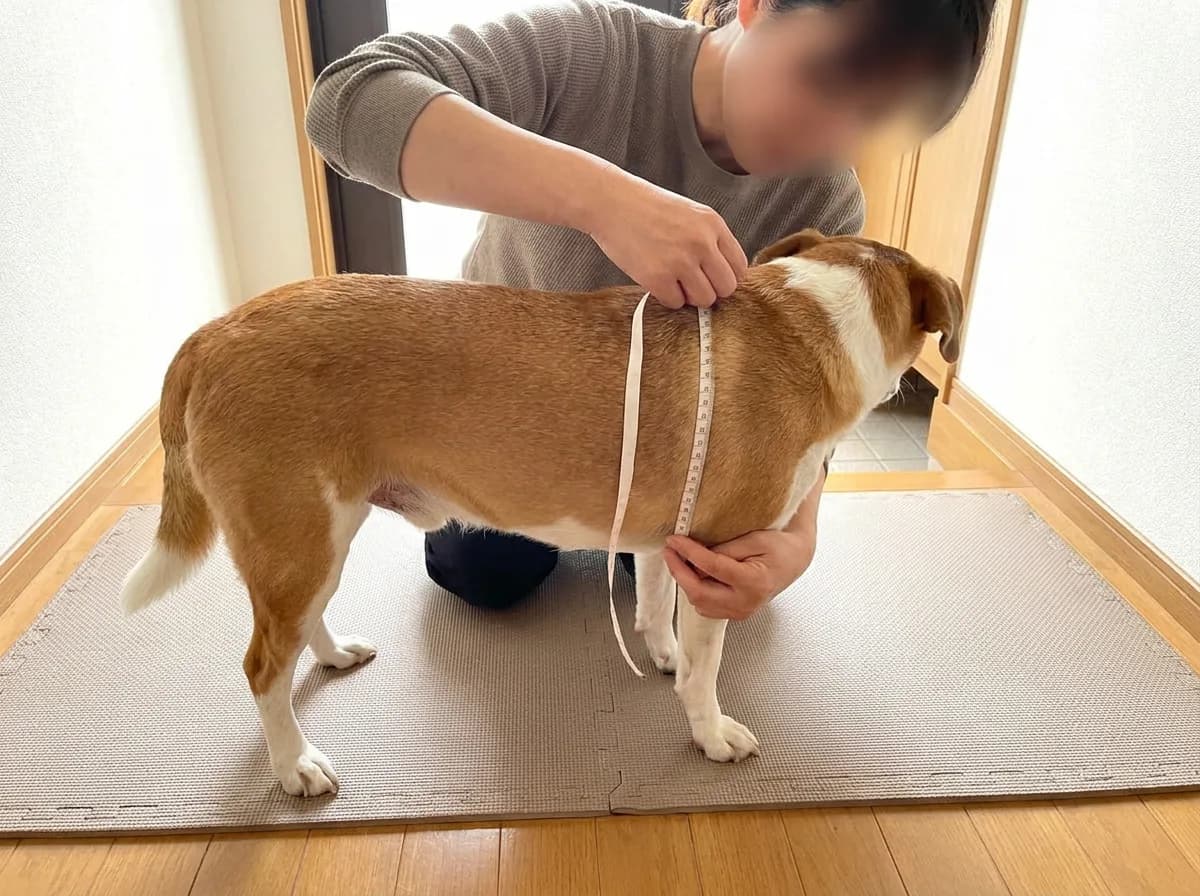
For an adult, record individual adult measurements for chest circumference, body length and other relevant equipment dimensions. For a puppy, expect to reassess fit as it grows. Track weight with dates and discuss changes with your veterinarian. WebVet's guide to dog weight loss or gain helps put those changes in context.
Dogo Argentino Size: Height, Weight and Measuring Guide
The Dogo Argentino size guide explains how to measure shoulder height, chest and body length. Dogo Argentino size and weight standards describe the recognized breed, not every dog with some Dogo ancestry. Use the measuring technique for practical decisions, but do not assign a mixed dog the standard's adult weight range or manufacture a growth target from two parent profiles.
Dogo Argentino Temperament: Training and Family Fit
Dogo Argentino temperament information can suggest questions about handling and household routines, but neither male nor female Dogo Argentino temperament predicts a mixed dog's behavior. The temperament guide also explains checking local rules, housing and insurance. If you are asking whether a Dogo is illegal in the US, investigate the requirements for the actual address and how they apply to the dog, rather than relying on an assumed ancestry label.
Dogo Argentino vs Cane Corso: Size, Care and Family Fit
A Dogo Argentino vs Cane Corso comparison provides context about the two recognized breeds. Their size ranges overlap, and there is no useful universal ranking of which breed is more aggressive. Dogo Argentino vs Cane Corso size figures also do not predict a cross's proportions. Keep the comparison separate from the mixed dog's actual measurements, records and observed behavior.
Health records and adoption questions
Ask for the individual dog's records even when ancestry is uncertain. A vaccination record, examination finding or hearing result concerns that animal in a way that an unverified mix label does not. Find out what care has been completed, what is currently needed and which information is genuinely unavailable.
A personalized Lemonade pet insurance quote can be part of planning for veterinary expenses. Supply accurate information and review eligibility, waiting periods and exclusions. A quote does not establish the dog's ancestry or guarantee coverage for an existing condition.
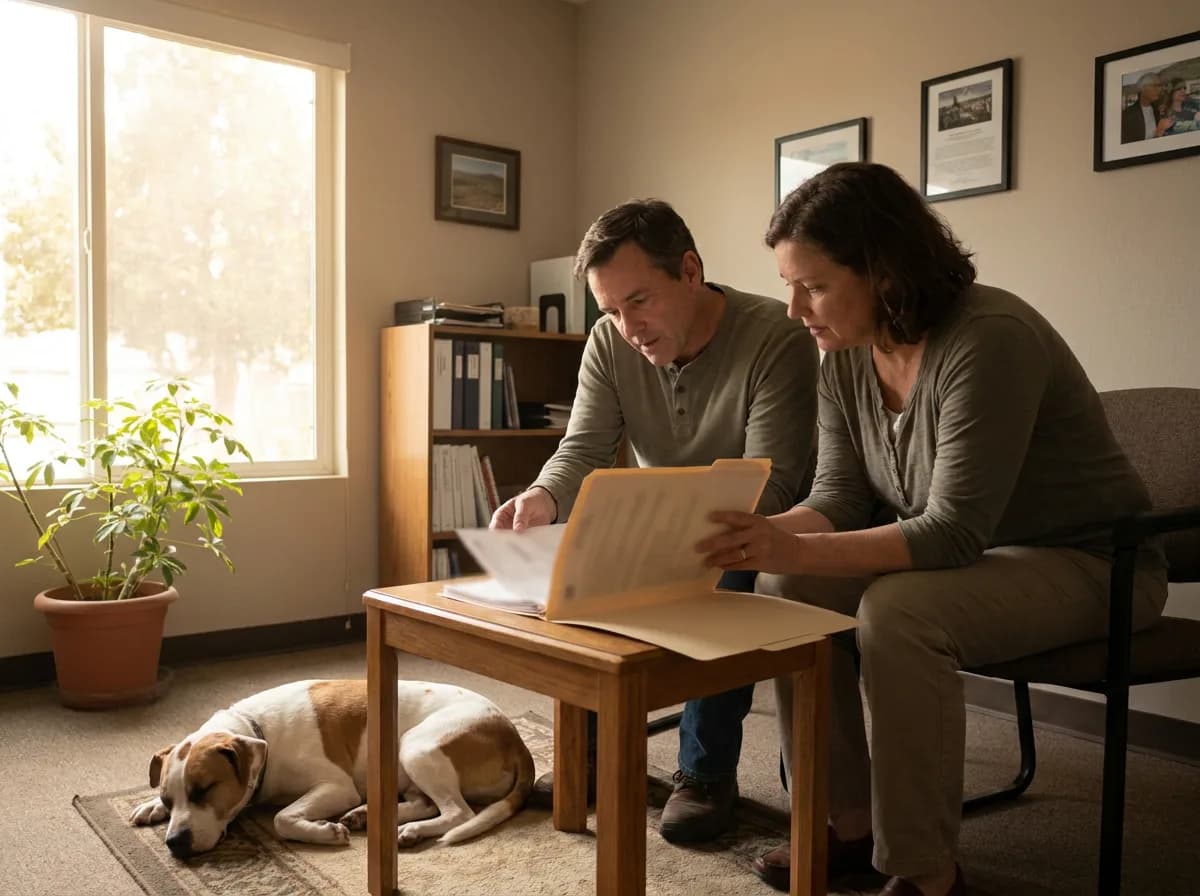
Before committing to adoption, request:
- The available veterinary records and the dog's identifying details.
- Any ancestry report and the source of the breed description.
- Known medication, hearing information and expected follow-up care.
- A concrete account of behavioral history and current management.
- The adoption agreement, support offered and process if difficulties arise.
If a young dog joins your home, arrange positive experiences at a manageable pace. WebVet's puppy socialization checklist provides a practical starting point, with health guidance from your veterinarian. An adult also needs time and predictable arrangements during the transition. Do not assume an unknown past can be resolved by immediately exposing the dog to every situation.
Build the first weeks around the information you actually receive. Keep the familiar feeding and care instructions available, arrange the recommended follow-up and decide who will handle transport and appointments. If a record is missing, ask whether the organization can obtain it or whether your veterinarian recommends another way to address the question. Separate those practical next steps from optional curiosity about the dog's ancestry.
Read the agreement before bringing the dog home, including whom to contact if the transition is difficult. Confirm whether support involves advice, a trainer referral or another service, and whether any costs fall to you. Save the contact details where everyone sharing care can find them.
Dogo Argentino Lifespan: Estimates, Health and Care
The Dogo Argentino lifespan guide explains reference ranges and screening questions for the breed. Those figures should not be averaged with another breed's lifespan to predict a mix. A deaf Dogo Argentino or mixed dog needs an individual communication and care plan. Ask about hearing information and the support the dog already uses rather than deciding from coat color or a label.
An everyday feeding and grooming routine
Keep a record of the food, measured portions and training treats the dog receives. Check that its main food is complete and appropriate for its life stage, and review portions as weight and body condition change. WSAVA's food-selection guide explains how to check nutritional adequacy, calorie content and the manufacturer's expertise without relying on the mix label.
Match brushing to the coat actually present. A smooth coat and a longer or denser coat may need different tools and schedules. During gentle brushing, check for tangles, debris and irritated skin. Inspect nails regularly and ask a groomer to demonstrate trimming if needed; the AKC's grooming guide recommends gradual foot-handling practice rather than forcing a full trim.
Include ear and dental care in the routine. Look for redness, discharge or an unusual ear odor, and have those changes checked by your veterinarian. Clean only the visible outer ear without inserting tools into the canal. Build toward daily toothbrushing with a dog toothbrush and dog toothpaste, introducing handling gradually.
Dogo Argentino mix questions
Is Dogo Argentino fearless? No dog is incapable of fear. A breed standard's ideal of courage does not establish how a particular dog will respond to unfamiliar handling, noise or an animal approaching. The same applies to a mix. Traits vary, and there is no behavior guarantee attached to the name.
Keep the decision grounded in documented parentage where available, individual adult measurements and observed behavior. Appearance is not ancestry proof. You can acknowledge uncertain background while still making specific, informed arrangements for the dog's equipment, household and care.
No. Coat inheritance varies, and color cannot confirm parentage. White, brindle, black-and-white or another appearance does not establish or rule out a claimed pairing by itself. Ask what supports the ancestry description and describe visible features separately from any conclusion about breed.
A DNA test provides an ancestry estimate, while behavior assessment remains individual. It does not tell you exactly how a dog will respond to visitors, children or other animals. Combine available history with appropriate observation and professional help for concerns. An ancestry result should not be used to promise compatibility or dismiss an actual behavioral problem.
Measure the dog and follow the manufacturer's fit and strength requirements for the item you are considering. A label does not establish chest shape, body length or how the dog uses equipment. Check fit during normal movement and reassess as a puppy grows or the dog's condition changes.
Fear responses vary, and the label is not a temperament test. Give the dog room to retreat from uncomfortable situations and use positive, manageable experiences rather than attempting to prove bravery. A calm response in one setting does not guarantee the same response somewhere else.

Coreen Saito is a pet writer and longtime shelter volunteer with more than a decade in animal rescue. She covers cat behavior, breed care, and the small, ordinary science of sharing a life with companion animals, with a particular focus on honest takes about the products and decisions that actually matter. At home in Arizona, she's outranked by Mac (a dog with the loudest opinion in the house), Rebel (a cat who governs by quiet authority), and Meri (an orange tabby who runs the late shift and the laundry basket). She writes about all three, plus the rescues that keep coming through her life, at LifeWithMinty.com.
Sign up for expert-backed reviews and safety alerts all in one place.