Dogo Argentino: Breed Facts, Care and Owner Fit
Explore the Dogo Argentino’s appearance, hunting history and daily care, with practical guidance on household fit, health records, natural ears and choosing a puppy or rescue.
Petful is reader supported. As an affiliate of platforms like Amazon and Chewy, we may earn a commission when you buy through links on this page. There is no extra cost to you.
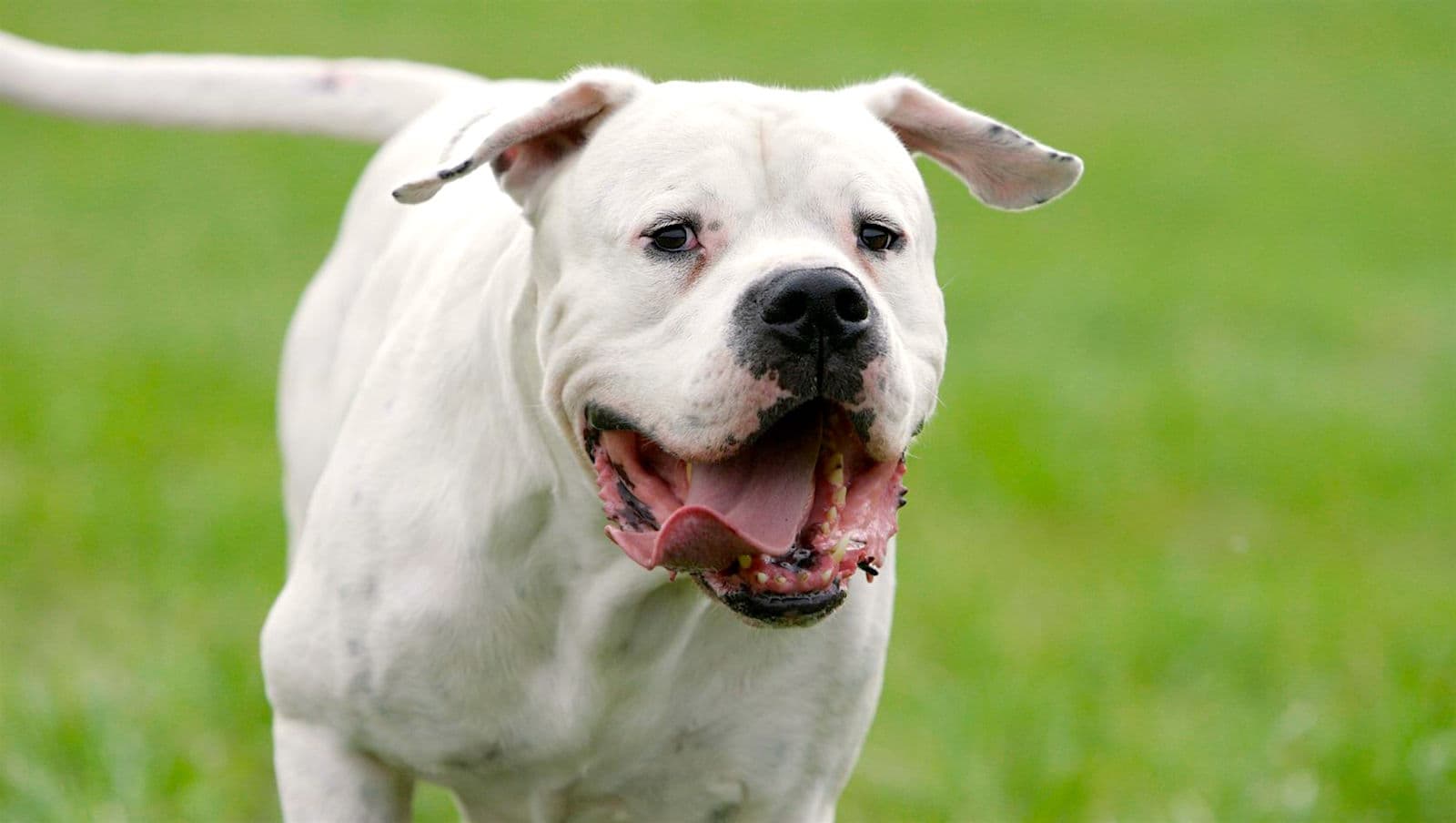
The Dogo Argentino is a large, athletic dog from Argentina, recognizable by its short white coat, muscular body and broad head. Developed for big-game hunting, it can be a devoted companion, but choosing one means planning for its strength, activity, training and health screening.
Start with the life you can offer an adult dog: supervised exercise, consistent handling, household boundaries and veterinary care. Appearance alone tells you little about whether a particular puppy or rescue will fit your family.

Sign up for expert-backed reviews and safety alerts all in one place.
Dogo Argentino facts at a glance
Developed in Argentina, the Dogo Argentino is a distinct South American breed, sometimes called the Argentine Dogo or Argentine Mastiff. Its mastiff-type background does not make it interchangeable with every other mastiff, and it is not another name for a pit bull. The American Kennel Club recognized the breed in 2020.
An adult Dogo's defining traits combine substantial muscle with an agile, balanced build. Descriptions such as “Argentinian Dogo” refer to the same breed; “Australian Dogo Argentino” does not identify a separate Australian variety. When a listing uses unfamiliar names, ask for records rather than relying on its wording.
Separate preferences from requirements when assessing the breed. You may like the white coat and athletic outline, but the nonnegotiable questions concern daily care, secure access and handling. Everyone responsible for the dog should agree on those arrangements before choosing a puppy.
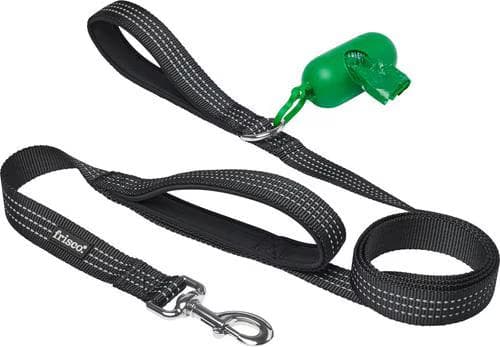
A fixed-length traffic leash with two padded handles for supervised walks and everyday handling practice.
Petful may earn a commission when you click through to Chewy, at no extra cost to you.
| Breed trait | Practical decision |
|---|---|
| Hunting heritage | Provide a secure exercise area and supervised outlets for activity |
| Large athletic build | Plan for leash skills, transport and an adult handler who can manage the individual dog |
| Short white coat | Allow time for routine grooming and skin checks |
| Health screening needs | Request the puppy's BAER hearing result and the parents' actual health records |
| Faithful companionship | Include the dog in a consistent household routine |
Good household fit starts before the dog arrives. Decide who handles walks, where the dog rests when visitors come over, and how you will separate pets when needed. A six-foot Frisco Traffic Leash is one option for supervised walking, alongside appropriate training and a properly fitted collar or harness.
Size, white coat and breed identification
A Dogo Argentino has a strong head, muscular neck, deep chest and athletic body. Its tail is thick at the base and tapers toward the end. The Dogo Argentino Club of America breed standard describes the complete appearance, including both cropped and uncropped ears.
Natural ears are broad, rounded at the tips and hang beside the cheeks. They can lift somewhat when the dog becomes alert. Photos of a Dogo with floppy ears and photos of one with cropped ears can therefore look strikingly different without depicting different breeds.
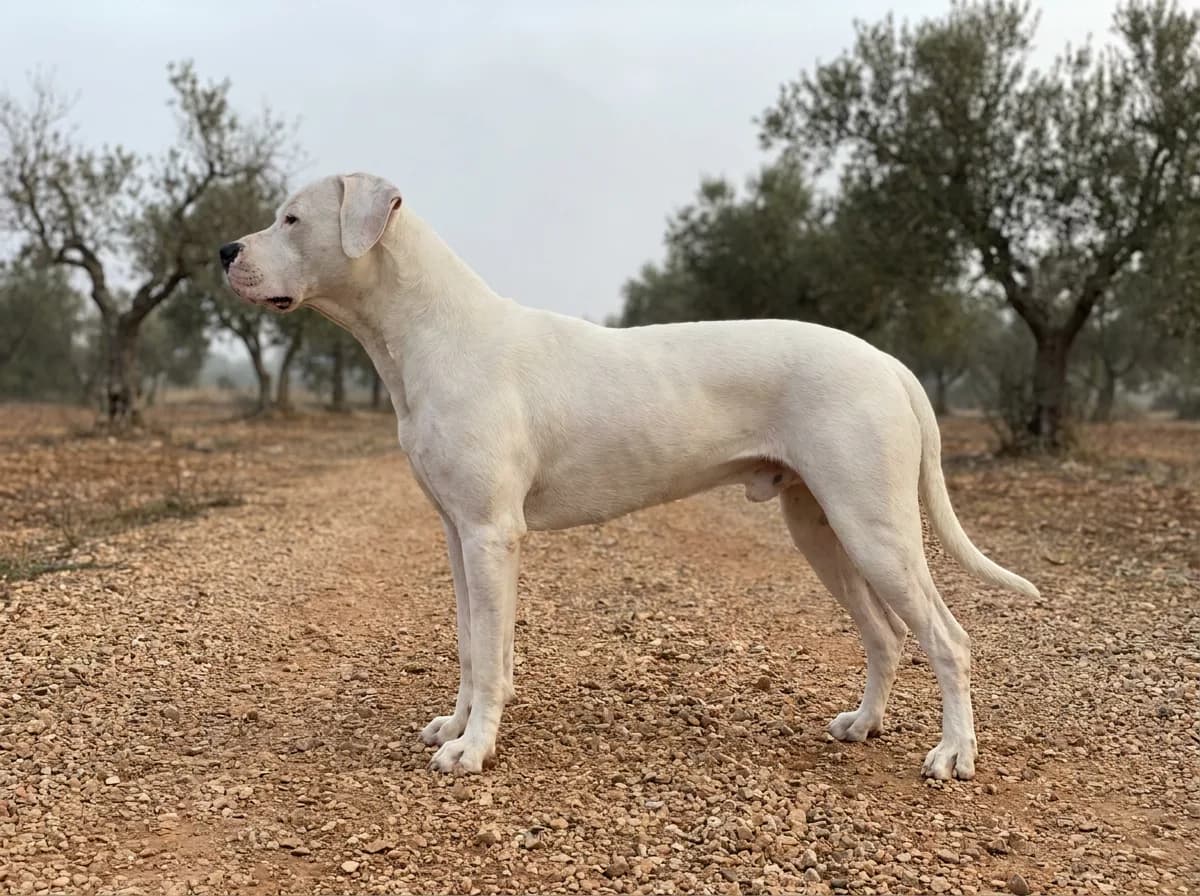
The standard calls for a short, smooth white coat. It permits one black or dark patch on the head, including around one eye or on one ear, provided it does not exceed 10 percent of the head. It also allows very small dark spots on the ears. Dark skin pigment under white hair is different from a dark patch of coat.

A rubber grooming glove and curry brush for gently loosening hair from the Dogo's short coat.
Petful may earn a commission when you click through to Chewy, at no extra cost to you.
A solid black, blue, brown, grey, brindle or merle dog does not match that coat standard. A seller's “rare color” description cannot establish purebred ancestry. Likewise, white hair alone does not establish albinism. Look at the full dog and its documentation, not just a photograph or the color entered in a listing. A close-up of the head can help distinguish a dark patch around one eye from shadow or skin pigment. It still cannot establish the dog's registered identity, medical history or likely behavior.

Is a Dogo Argentino a pitbull breed? No. The Dogo is a separately developed breed. A broad head and muscular body are not enough to identify a pit bull, a Dogo, a Cane Corso or a Presa Canario. A black-and-white or spotted dog labeled “Dogo” may require closer assessment; its markings alone cannot tell you its ancestry.
Dogo Argentino size guide
The club standard gives males a height of 24–26.5 inches and females 24–25.5 inches at the withers. Its approximate weights are 88–100 pounds for males and 88–95 pounds for females. These describe the standard, not measured population averages or targets every dog should reach. The Dogo Argentino size guide explains measurements, individual variation and puppy growth without treating a monthly weight chart as a promise.
Dogo Argentino mixes
A modern purebred Dogo's historical development is different from a present-day crossbred dog. For a dog described as a Dogo Argentino mix, ask what supports that description: documented parents, an ancestry estimate or a visual guess. Those are different kinds of evidence. Assess the individual dog's adult build, behavior and care needs rather than assuming it will inherit a predictable half of each parent's traits.
What the Dogo Argentino was bred to do
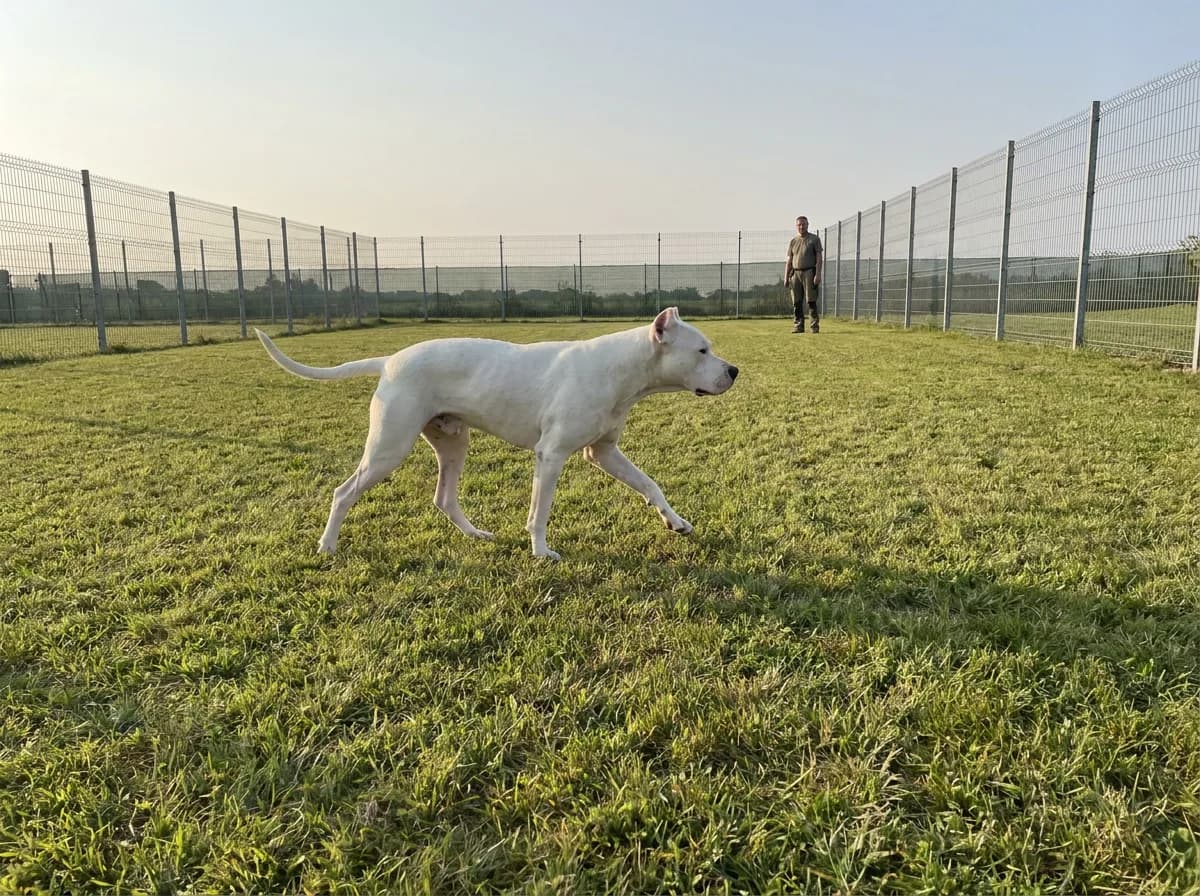
The Dogo's hunting history explains much of its athletic build. According to the AKC's breed history, Antonio Nores Martinez began developing the breed in Argentina in the 1920s, with help from his brother Agustín. The aim was a capable pack hunter for large game, including wild boar and puma.
The foundation included the old fighting dog of Córdoba. The breeding program added other dogs to develop the desired hunting qualities. The AKC account names Pointer, Great Dane, Bull Terrier, Pyrenean Mastiff, Boxer and Bulldog contributions. That history is not a formula for predicting the behavior of today's individual Dogo, nor does it make a registered Dogo a current designer cross.
Its working background has practical implications:
- Chasing movement can matter more than a dog's relaxed behavior indoors.
- A secure exercise area provides more control than an open space near wildlife.
- Reliable everyday handling should be taught before the dog reaches adult strength.
- Gates should be checked before opening another door into an unsecured area.
- Practice turning away from distractions at a manageable distance, rather than waiting until the dog is pulling hard.
- Arrange activities around safe participation, not reenacting the breed's historical work.
- Hunting ability does not establish compatibility with unfamiliar pets.
Is the Dogo Argentino fearless? Courage is a breed-standard ideal, but no individual dog is incapable of fear. A Dogo can become worried, startled or overwhelmed like another dog. Its historical role as a hunting or catch dog does not justify exposing it to frightening situations to “test” bravery. Reward-based training, careful introductions and attention to body language remain useful even when a dog looks confident.
Temperament and household fit
The breed standard describes a faithful companion, but that is a starting point rather than a promise about every Dogo. Meet the individual dog, ask about its daily routine and observe how it responds to handling, unfamiliar people and changes in its surroundings.
A good family match depends on more than affection. Consider children's ages, other animals, the adults' handling ability and the time available for training. A strong dog can knock someone over without intending harm. Children need active supervision, and the dog needs somewhere to rest without being climbed on or disturbed. For an adult rescue, ask for concrete examples of previous interactions rather than a label such as “friendly.” Behavior in one familiar home may not tell you how the dog will respond during a new introduction.
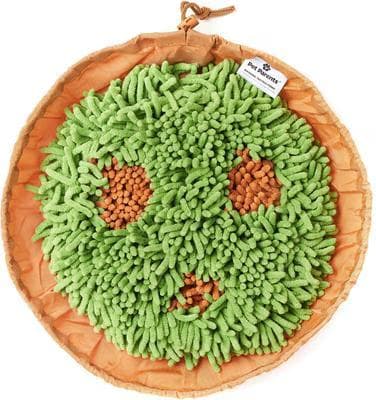
A supervised food-search mat for using part of a meal as indoor enrichment; remove it if the dog chews the material.
Petful may earn a commission when you click through to Chewy, at no extra cost to you.
Calm indoor activities can complement outdoor exercise. For example, hide part of a meal in a Pet Parents Forager Snuffle Mat and supervise the search. Put it away if the dog starts pulling or swallowing the material. Food activities should happen separately if pets compete over access.
Before committing, picture an ordinary weekday rather than an ideal weekend:
- Who provides exercise and training when your schedule changes?
- Can you manage gates and doors when visitors arrive?
- Is there a reliable way to separate animals without isolating the dog all day?
- Who can help if you are ill or away?
Dogo Argentino temperament guide
A Dogo can be a good family companion when the individual dog's needs and the household match. Breed reputation alone cannot establish safety with children or other pets. If you are asking whether Dogos are legal in the US, check the rules for your exact location and any applicable housing or insurance terms before acquiring one. The Dogo Argentino temperament guide explores family fit, introductions, training and the questions to investigate locally.
Price, breeders and rescue
A puppy's purchase price is only part of the commitment. Before comparing offers, find out what the agreement includes, what health records are available and what support continues after the dog goes home. Avoid treating a high price as evidence of better health or a low price as a bargain.
The club's code of ethics calls for written contracts, care instructions, vaccination and worming records, and a provision for contacting the breeder if the owner can no longer keep the dog. Ask a rescue for the dog's known medical and behavioral history, while recognizing that some background may be unavailable. Read any deposit, cancellation and return provisions before paying. Confirm which documents arrive with the dog and which are promised later. A clear written answer is easier to compare and follow up than a reassuring conversation that leaves the details undecided.
Dogo Argentino price and budget
There is no useful single budget for every household. Add acquisition, equipment, food, training, routine veterinary care and a separate plan for unexpected costs. The Dogo Argentino price guide explains how to compare documented quotes and ongoing expenses. A personalized Lemonade quote can inform that comparison, but check eligibility, waiting periods, limits and exclusions before relying on a policy.

Compare coverage choices for your pet, then request a quote directly on Lemonade.
- Check a price for your pet
- Review available coverage choices
- See the terms before you decide
Eligibility, waiting periods, limits and exclusions apply.
Petful may earn a commission when you click through to Lemonade, at no extra cost to you.
Health screening and lifespan
Health records are more useful than a general statement that the parents are “vet checked.” The Dogo Argentino Club of America health program describes its CHIC testing profile: BAER hearing evaluation, hip evaluation through OFA or PennHIP, a cardiac examination by a cardiologist at 12 months or older, and one elective test from its listed options.
BAER evaluates hearing. The club's ethics guidance calls for testing every litter, so ask for your puppy's individual result rather than assuming the parents' records answer the question. Everyday reactions to voices or household sounds are not a substitute for that document.
- 1A CHIC number means the required testing was completed and the results made public; it does not confirm normal results.
- 2Ask for the puppy's individual BAER hearing result.
- 3Review the parents' actual reports, identification and examination dates with your veterinarian.
When reviewing records, check that each report belongs to the dog being discussed. A name, permanent identification and test date help connect the paperwork to the animal. Ask what any abnormal or incomplete result means, rather than relying on a seller's summary. Screening informs decisions; it cannot guarantee that a puppy will never develop an illness.
For an adopted adult with incomplete records, begin with the information available and a veterinary examination. Missing paperwork does not tell you whether the dog has a particular condition. It tells you which questions still need attention. Bring copies to the appointment and keep a dated record of subsequent findings. If two documents seem inconsistent, ask the issuing clinic to clarify what was examined and when. A puppy hearing result, an adult hip report and a general examination describe different things; none should be substituted for another simply because all appear in a folder labeled health checks.
Dogo Argentino lifespan and health
The AKC breed profile lists a lifespan reference range of 9–15 years. That is not a measured average for every Dogo or a prediction for an individual. The Dogo Argentino lifespan guide explains the health context and screening questions in more detail. Keep vaccination, parasite prevention, dental care and changes in weight or activity on your regular veterinary agenda, with the plan adjusted to your dog.
Exercise, training and everyday care
Plan for daily opportunities to move, investigate and learn, along with uninterrupted sleep. A Dogo Argentino's athleticism does not establish a universal exercise duration, and an adult running routine should not become a puppy's compulsory workout. Ask your veterinarian how age, condition and weather should shape activity.
Use short reward-based training sessions to build leash manners, settling and comfortable handling, following the American Veterinary Society of Animal Behavior guidance. Practice in an easy environment before adding distractions. The goal is a dog that understands what earns a reward, rather than one that must be physically overpowered. Begin a handling exercise with something the dog already tolerates, such as briefly touching a shoulder, then reward and release. Do not rush from that step to restraining a paw or inspecting the mouth. Small successful repetitions make the routine easier for both of you. WebVet's puppy socialization checklist offers a structured starting point for gradual new experiences.
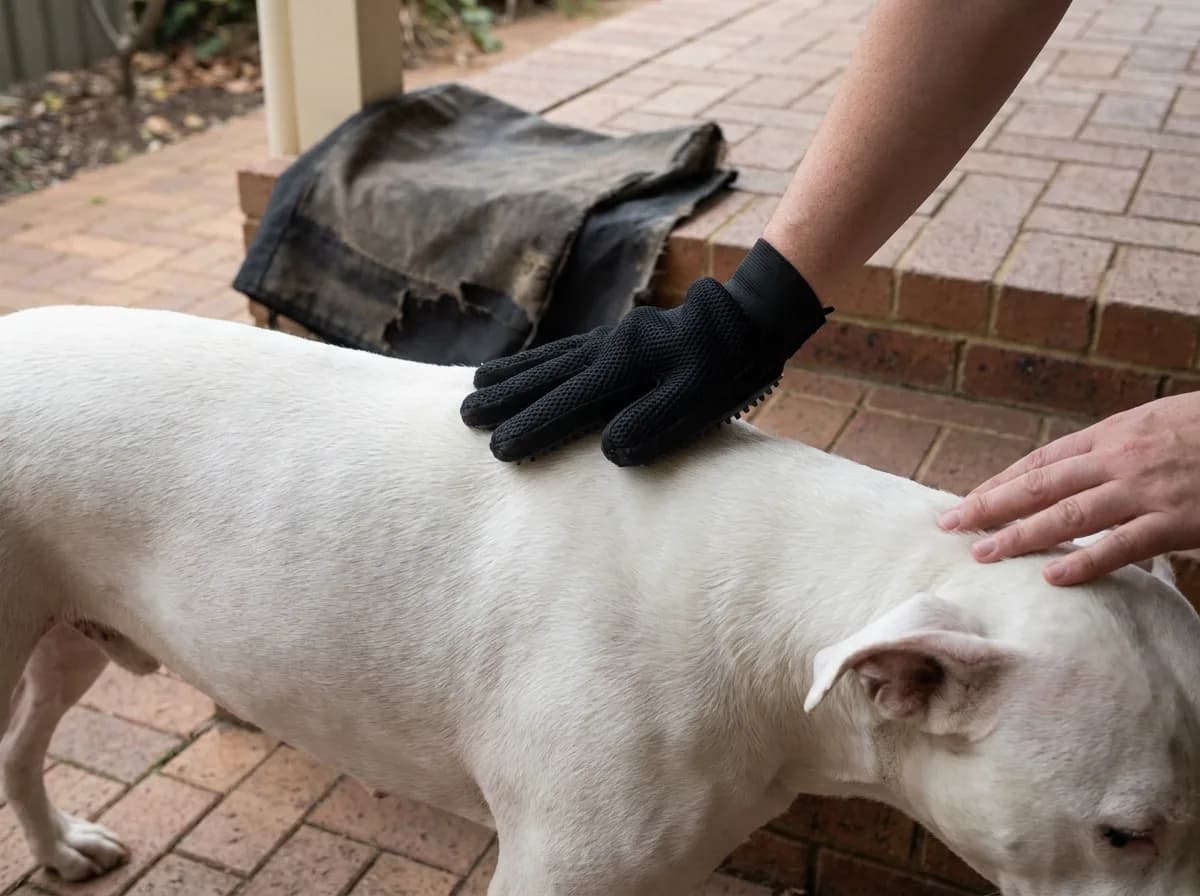
The short coat sheds, and the amount of loose hair varies by dog and season. Use gentle grooming sessions to collect it and check the skin rather than assuming a short coat means no shedding. A Four Paws grooming glove and curry brush is one option. Avoid scrubbing irritated areas; persistent redness, itching or hair loss needs assessment rather than progressively harder brushing.
Build a care routine around a few repeatable tasks:
- Check nails and paws, and introduce handling gradually.
- Brush teeth with dog-appropriate equipment and toothpaste.
- Follow a feeding plan suited to life stage and body condition.
- Provide a comfortable sleeping area away from constant interruptions.
- Notice changes in appetite, movement, skin or behavior and discuss them with your veterinarian.
There is no single best dog food for every Dogo Argentino. For a puppy, select food appropriate for growth and discuss large-breed needs with your veterinarian. For an adult, monitor body condition rather than adding food simply to produce a more muscular appearance. Treats and training rewards are part of the daily intake, too.
Healthy teeth need attention even when they look strong. Start with brief, comfortable mouth-handling practice and build toward brushing. WebVet's dog dental health guide explains routine care and signs that warrant a veterinary visit.
Barking and drooling vary between individuals and situations. Look at the context rather than assuming either is fixed by breed: excitement, anticipation and discomfort can change what you observe. A sudden change deserves attention. Likewise, a Dogo's muscular appearance and quick running gait do not establish a verified top speed. Choose safe activities for the individual dog instead of a miles-per-hour target.
Dogo Argentino questions
Online descriptions often reduce a Dogo to jaw strength or a bite-force figure. The breed standard describes powerful jaws, but it does not provide a validated breed-wide bite pressure in PSI. An unsupported number is not a useful guide to training, household fit or safe handling.
There is no reliable breed-wide strength ranking that settles this comparison. “Pitbull” can also refer to different dogs. Individual size and handling, conditioning and the task being measured matter. Jaw strength should not be treated as a temperament score or a reason to test dogs against each other.
Yes, the short coat sheds. Routine brushing helps collect loose hair, but it cannot make the dog nonshedding. New bald patches or persistent itching are different from normal loose hair and deserve veterinary attention.
Yes. The club standard describes natural ears as hanging beside the cheeks. This appearance does not require surgery, and an uncropped Dogo is still recognizable by its overall head, body and coat. Natural ears alone do not establish pedigree.
Dogo Argentino vs Cane Corso
Neither breed is invariably bigger: their standard height ranges overlap, and individual sex and build matter. There is also no reliable basis here for declaring one breed universally more aggressive. The Dogo Argentino vs Cane Corso comparison separates size, coat, care and household decisions. Those differences help you choose a companion more meaningfully than a proposed fighting winner or an unsupported bite-force contest.

Melissa Smith has been researching and writing about pet behaviors for several years. Her work has been recognized with Certificates of Excellence from both the Dog Writers Association of America and the Cat Writers’ Association. A longtime animal lover, Melissa is a professional pet sitter on Cape Cod through her company, Fresh Start Services.
Sign up for expert-backed reviews and safety alerts all in one place.