Dogo Argentino Size: Height, Weight and Measuring Guide
Compare adult Dogo Argentino height and weight standards, learn how to measure your dog, and separate healthy body condition from size when choosing equipment and tracking growth.
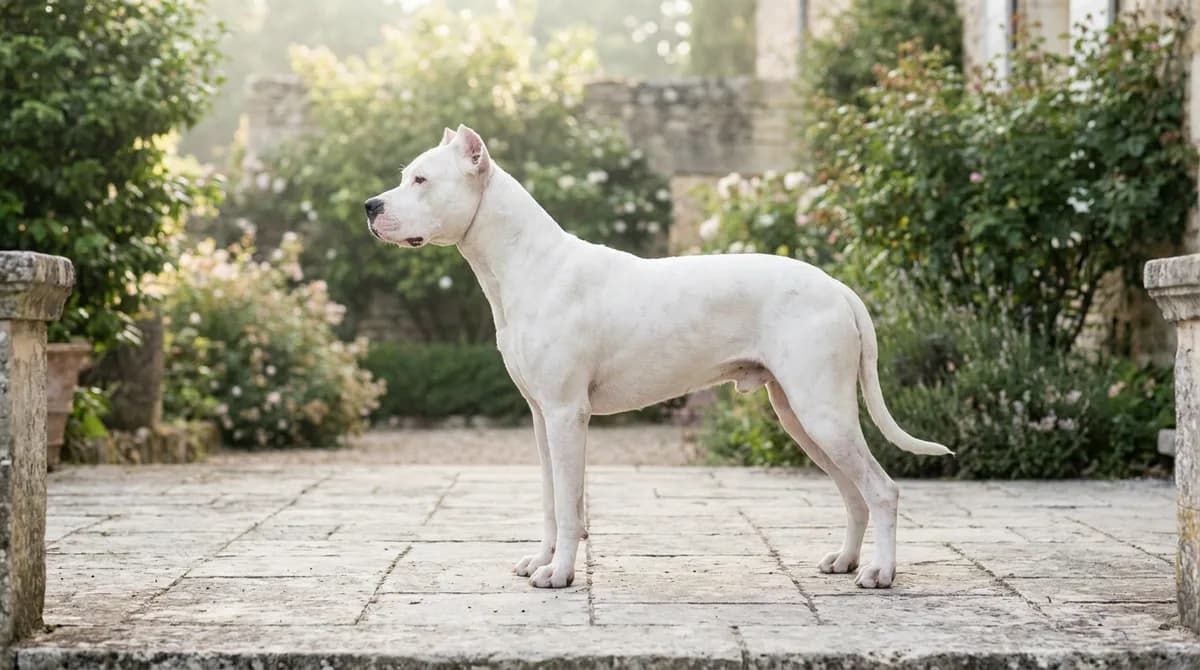
Adult measurements are more useful than a photograph for choosing equipment.
Petful is reader supported. As an affiliate of platforms like Amazon and Chewy, we may earn a commission when you buy through links on this page. There is no extra cost to you.
Adult Dogo Argentino size is defined by height and approximate weight, not by how imposing a dog looks in a photograph. The breed club's standard lists males at 24–26.5 inches tall and females at 24–25.5 inches, measured at the withers. For everyday decisions, your dog's own measurements matter most.

Sign up for expert-backed reviews and safety alerts all in one place.
Adult Dogo Argentino height and weight
To compare adult size, record height and weight separately. A big Dogo Argentino is not necessarily taller than a lighter dog, and camera angles can exaggerate apparent size.
How heavy is a Dogo Argentino? The Dogo Argentino Club of America breed standard gives approximate adult weights of 88–100 pounds for males and 88–95 pounds for females. The AKC breed profile lists a broader 80–100-pound reference. These are attributed breed figures, not a measured average weight for every Dogo or a target an individual must reach.
A full-grown Dogo Argentino is large, muscular and athletic. Its substantial head and chest can make it look especially big, but visual impact does not establish height or weight. Reports about the largest Dogo Argentino, including claims about the biggest dog in the world, need independently documented measurements. An oversized dog in a seller's photograph is not a reliable reference for the breed.
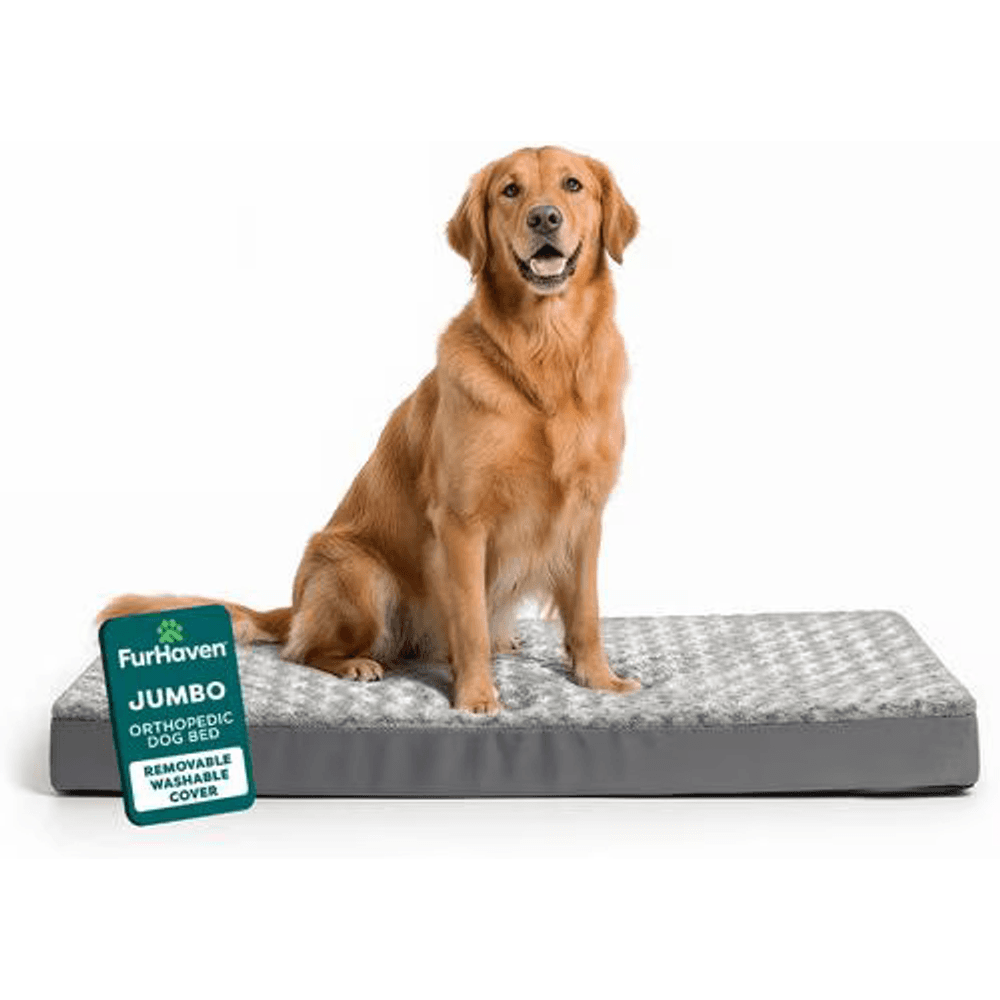
Compare this bed's usable sleeping surface with the individual dog's resting dimensions.
Petful may earn a commission when you click through to Chewy, at no extra cost to you.
Keep three questions separate when comparing full-grown size:
- What does the adult breed standard describe?
- What are this dog's actual height and weight?
- What do its body condition, movement and veterinary assessment indicate?
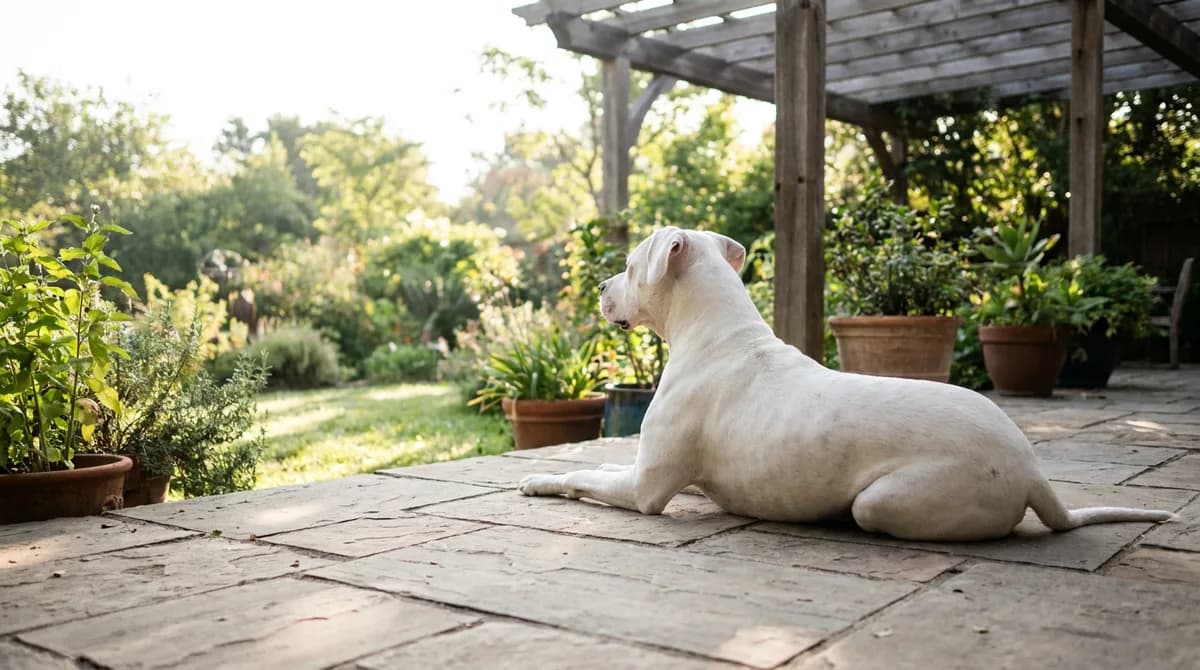
For a bed purchase, use the dog's resting measurements rather than the upper end of the breed range. The FurHaven NAP bed with a removable cover is one option to compare against those measurements; its Jumbo label alone cannot establish fit.
Dogo Argentino: Breed Facts, Care and Owner Fit
The Dogo Argentino's build developed alongside its working history, but size is only one part of ownership. A powerful adult needs suitable handling, opportunities for activity and a home routine that works for the individual. The Dogo Argentino breed guide explains those broader decisions. Measuring a dog helps you choose equipment; it cannot establish how that dog will behave around visitors, children or other animals.
Male and female Dogo Argentino size
The DACA breed standard separates the permitted height ranges from narrower ideal heights. Male height runs slightly higher at the upper limit, while the male and female ranges overlap substantially. A female Dogo Argentino is not automatically shorter or lighter than every male. These figures describe adult breeding ideals, not a ranking of individual dogs.

A fixed-length lead for supervised handling, with fit and condition checked before use.
Petful may earn a commission when you click through to Chewy, at no extra cost to you.
| Measurement | Male | Female |
|---|---|---|
| Height at the withers | 24–26.5 inches | 24–25.5 inches |
| Ideal height within the standard | 25–25.5 inches | 24.5–25 inches |
| Approximate adult weight | 88–100 pounds | 88–95 pounds |
| Meaning of the figures | Adult standard, not a measured population average | Adult standard, not a monthly growth chart |
A muscular Dogo Argentino should not be judged by bulk alone. Muscle, skeletal structure and body fat contribute differently to weight and appearance. Trying to make a male heavier or a female more muscular simply to match a photograph misses the point of the standard's emphasis on balance. Record the dog's measurements, then discuss its individual condition rather than treating the top of the weight range as the best result.
How to measure height, chest and body length
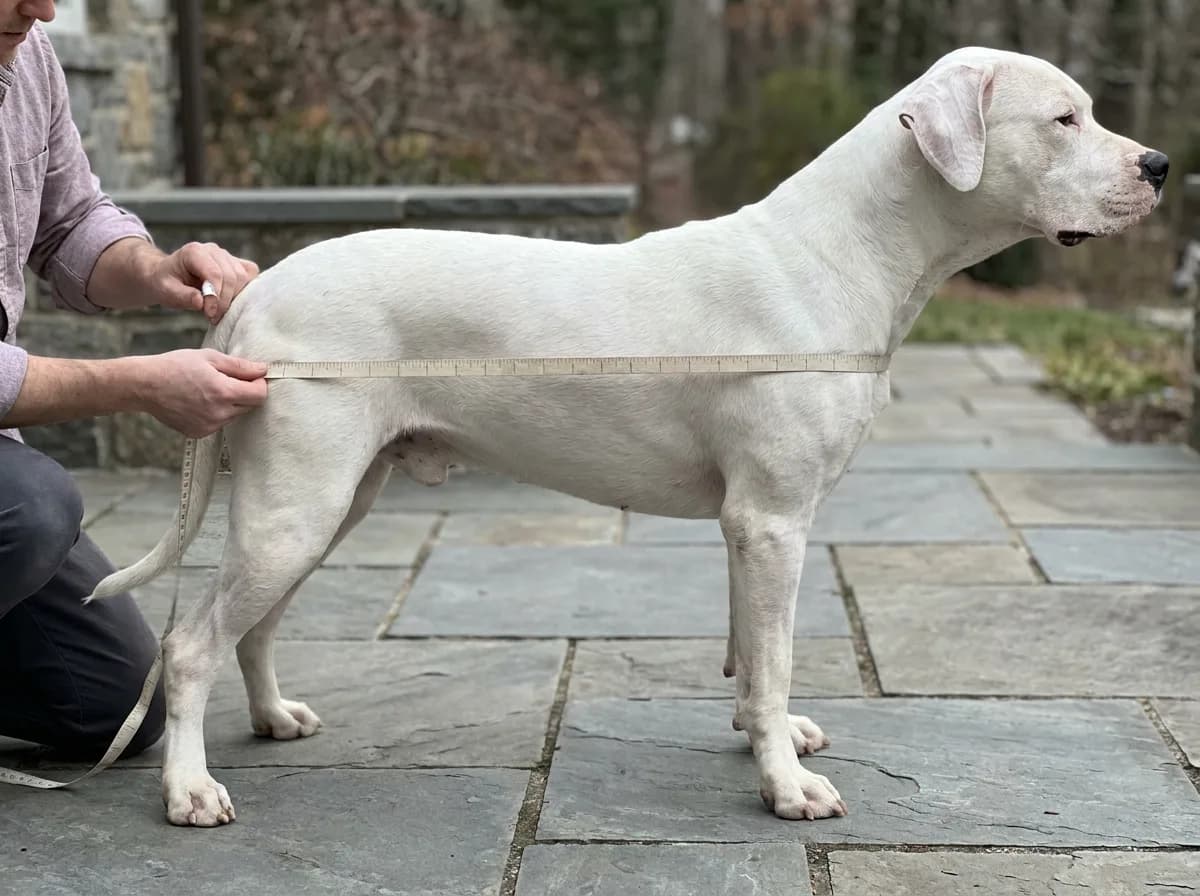
Use a level, nonslip surface and let the dog stand comfortably. Have another person help if that makes the dog more relaxed, and stop if the measuring equipment causes distress. Height, chest circumference and body length answer different questions, so record each measurement with its units and the landmarks you used.
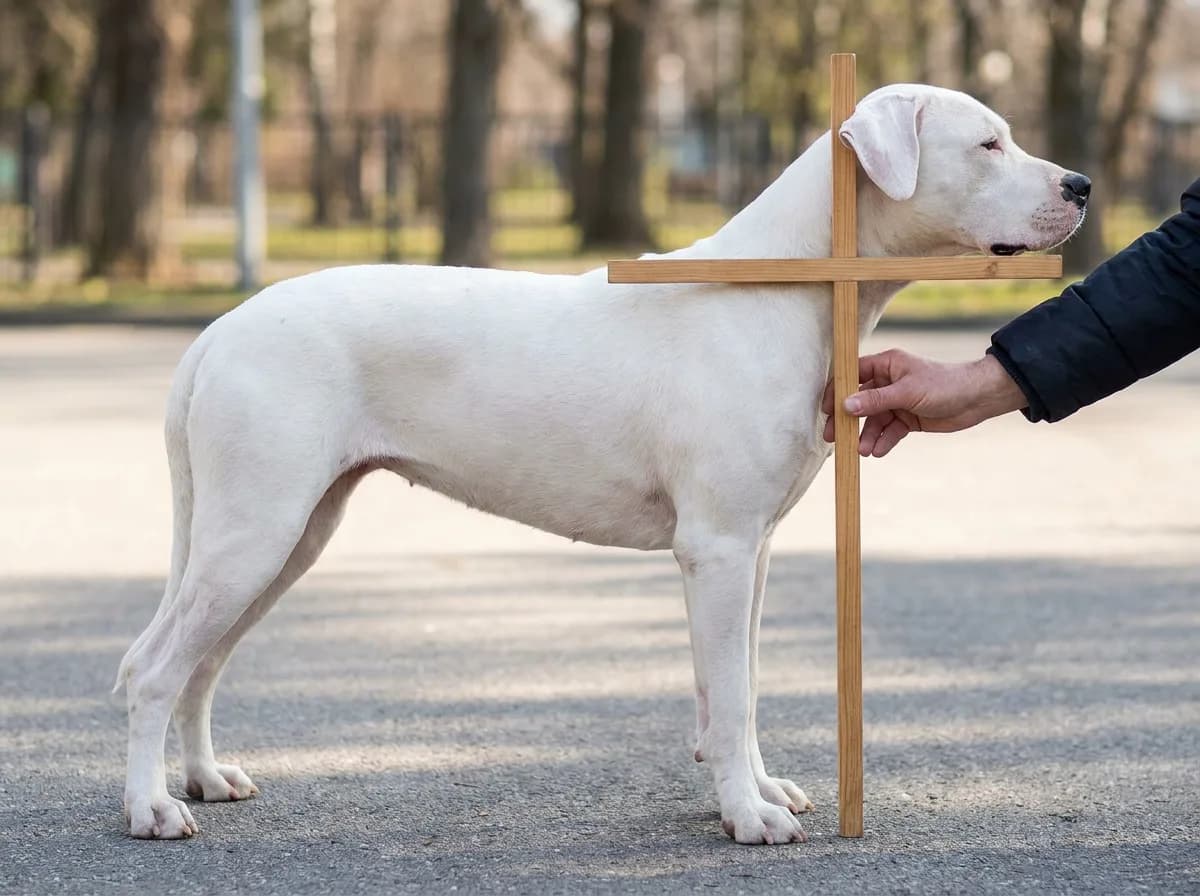
Height at the withers means the distance from the ground to the shoulder landmark, not to the top of the head or ears. Keep the dog standing naturally with all four feet supporting it. A measuring stick with a level crosspiece helps connect the shoulder landmark to a vertical reading. A tape following the curve of the dog's body measures a different distance.
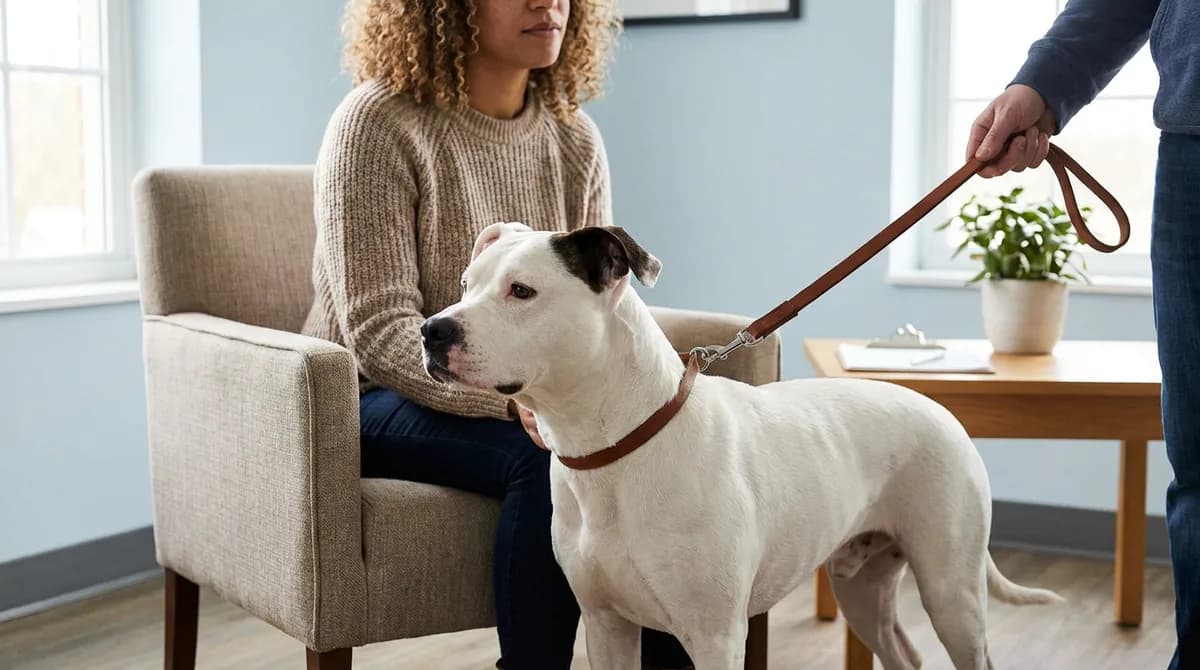
A fixed-length lead can help a handler maintain a calm, familiar setup, but it should not be used to pull the dog into an artificial stance. The Frisco Traffic Leash is one handling option. Check the attachment and existing collar or harness, keep the lead relaxed, and reward cooperation rather than forcing a measurement.
For a repeatable height measurement:
- Choose the same level surface each time and let the dog settle into a natural standing position.
- Locate the withers near the top of the shoulder blades rather than measuring to a raised head.
- Keep the measuring stick vertical and its crosspiece level at the landmark.
- Record the result and units, then repeat after the dog repositions to check whether your readings are consistent.
If the readings differ noticeably, first check stance and technique. A crouched dog, uneven floor or tilted stick can create an apparent change without any change in the dog's actual height. Do not keep taking readings until you get the number you expected. Note uncertainty and ask for help with the technique when needed.
Chest circumference is the measurement around the rib cage. For many harnesses, the relevant location is just behind the front legs, but the product's instructions determine exactly where its measurement belongs. Keep a flexible tape level around the dog without twisting it or compressing the body. Read the instructions before measuring so you are not comparing different landmarks.
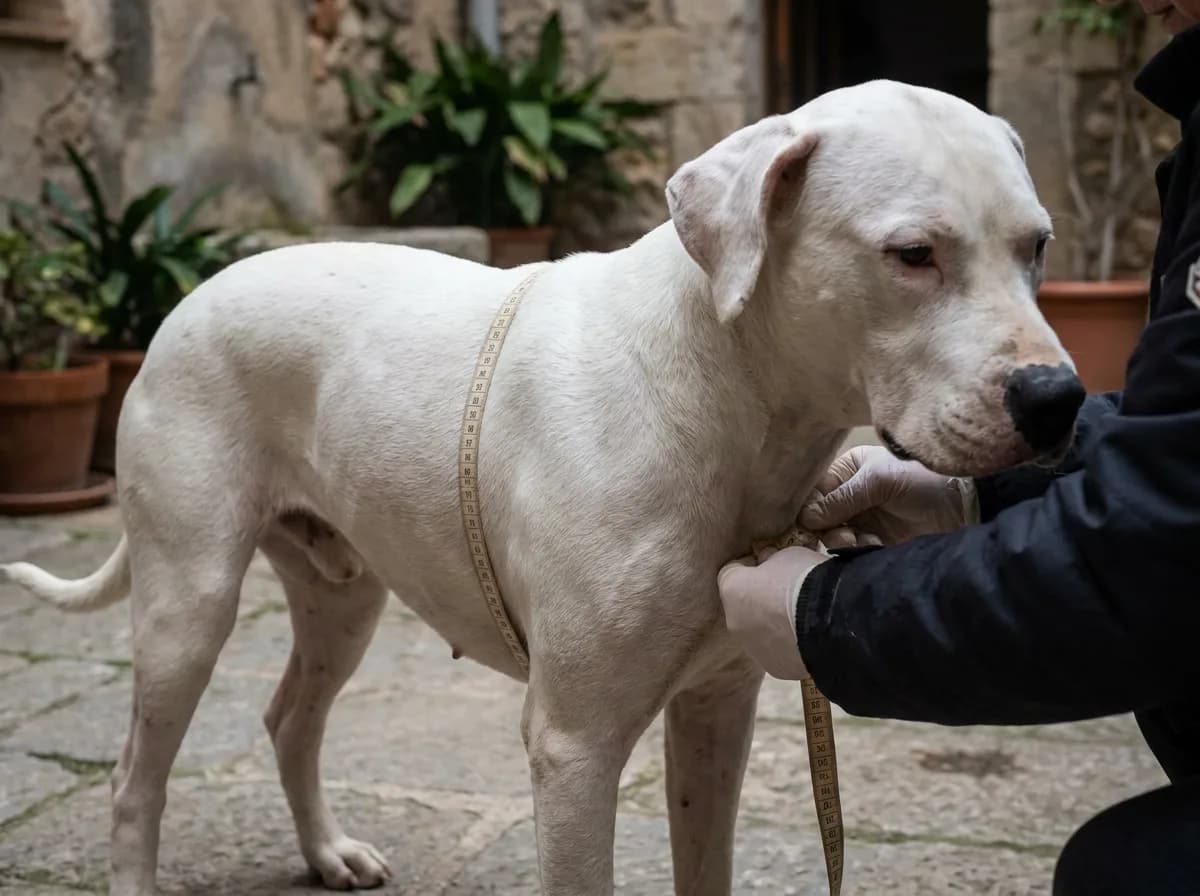
Write down the measured circumference before adding any allowance. Some manufacturers build adjustment room into their sizing guidance; others explain how much space to allow. Adding your own margin and then adding the manufacturer's allowance again can produce the wrong fit. When the dog falls between sizes, follow the seller's instructions or ask which adjustable range is appropriate.
Body length also depends on the purpose of the measurement. The DACA standard measures from the point of the shoulder to the point of the buttock. A coat or another piece of equipment may instead request a back measurement using different landmarks. Neither measurement is the same as shoulder height, and a product's length should not be chosen from the dog's weight alone.
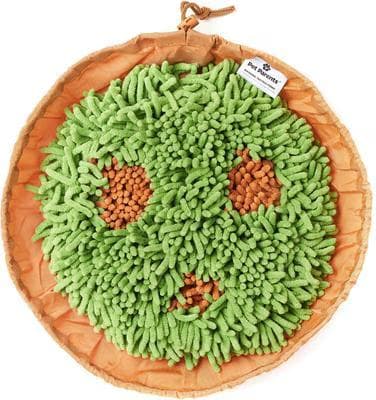
A supervised food-search mat to assess for floor space and the individual dog's manner of use.
Petful may earn a commission when you click through to Chewy, at no extra cost to you.
For a useful equipment record, keep:
- The product or purpose of the measurement.
- The exact start and end landmarks.
- The dog's standing or resting position.
- The measured length or circumference and its units.
- The date, especially for a growing puppy.
A Dogo Argentino next to a human provides a visual impression, not a dependable size comparison. The person's height, posture, footwear and distance from the camera all affect the result. A dog closer to the lens can look disproportionately large. When comparing a Dogo Argentino to a human, keep that perspective limitation in mind and return to actual measurements for practical decisions.
Floor space matters for activity equipment as well. A Pet Parents Forager Snuffle Mat should have room to lie in a suitable area where the dog can use it under supervision. Its size or the dog's size does not establish that it can withstand chewing; remove it if the dog starts pulling apart or swallowing material.
Puppy growth and adult body condition
A breed standard is not a growth chart. An adult height or approximate weight cannot tell you what every 4-month Dogo Argentino puppy should weigh, nor does it provide a guaranteed target for a 6-month-old Dogo Argentino. The sources used here do not establish a validated monthly weight curve for the breed, so a table of invented age-by-age targets would be misleading.
Use a Dogo Argentino weight chart as a record of your own dog's measurements rather than a prediction copied from unrelated puppies. Record the date and measured weight, then interpret the pattern with your veterinarian. If a measurement seems surprising, check whether a different scale, unit or weighing method explains the difference before drawing a conclusion.
| Date | Age | Measured weight and units | Body condition observations | Veterinarian notes |
|---|---|---|---|---|
Alongside weight, note observations that help your veterinarian understand the dog as a whole. These can include changes in appetite, activity, movement and the outline of the waist. Keep descriptions factual: what changed, when you noticed it and whether the change persists. A photograph can document an appearance, but it cannot by itself diagnose an appropriate weight or a medical problem.

A glove and curry brush for gentle short-coat grooming as part of the regular care routine.
Petful may earn a commission when you click through to Chewy, at no extra cost to you.
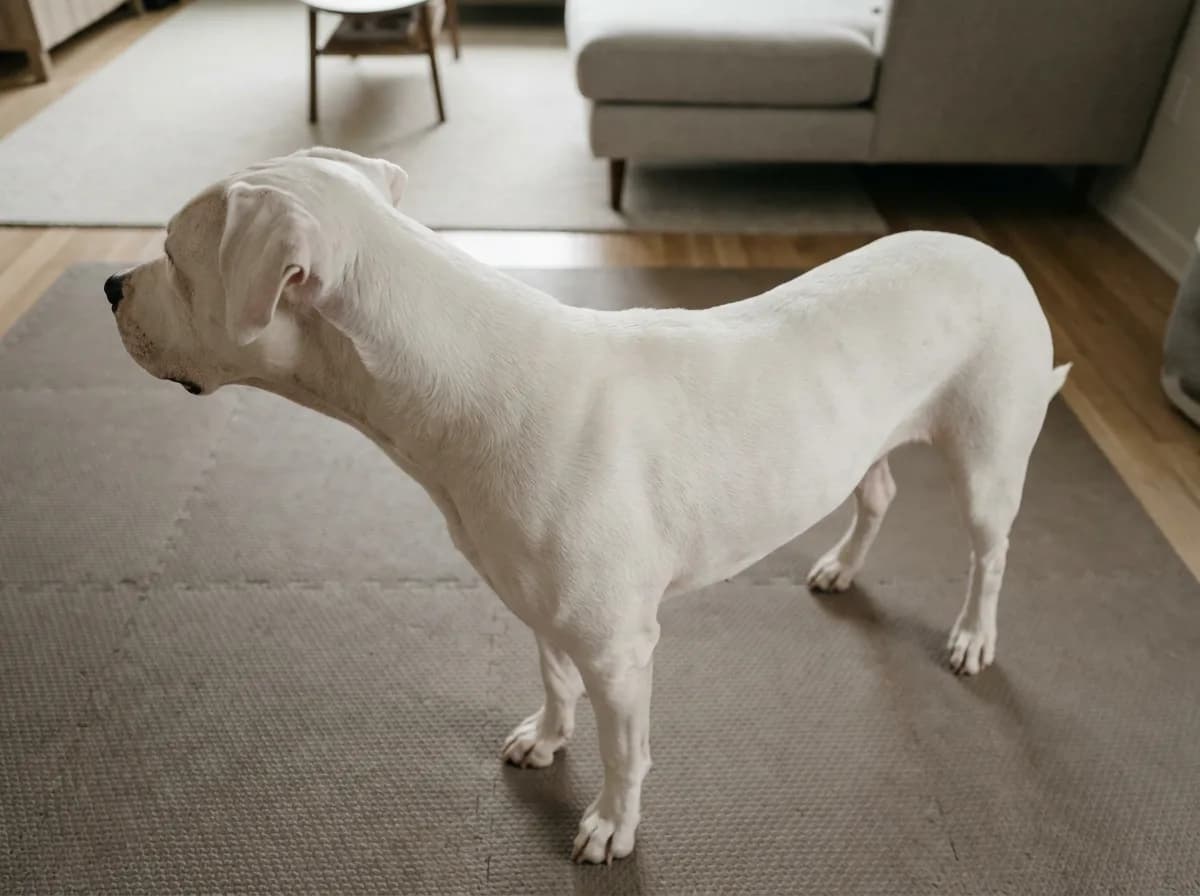
Individual body condition is different from conformity to a breed-standard range. Two dogs at the same weight can have different frames and different proportions of muscle and fat. Ask your veterinarian to show you how to assess your dog's condition through observation and appropriate hands-on checks. WebVet's guide to dog weight loss or gain explains why a change deserves context rather than an automatic attempt to reach a breed number.
Routine grooming gives you a familiar opportunity to notice changes in the dog's outline and skin without making the grooming session a diagnosis. Use gentle handling and equipment suited to the short coat. A grooming glove is a care supply, not a way to measure muscle or determine a target weight.
Keep growth monitoring useful by avoiding a few common mistakes:
- Do not increase food simply because another puppy of the same age weighs more.
- Do not treat an adult standard as a deadline that a puppy must reach early.
- Do not label every increase in weight as muscle development.
- Do not ignore an unexplained change because the dog's weight remains within a published range.
- Bring your actual record and observations to appointments rather than relying on a remembered number.
The aim is a consistent record that supports individual assessment. Update equipment measurements as well as weight, because a growing dog can move beyond a harness adjustment range even when the gear still fastens. Check the fit according to the product instructions instead of waiting until you notice obvious restriction or damage.
Dogo Argentino size compared with Cane Corso
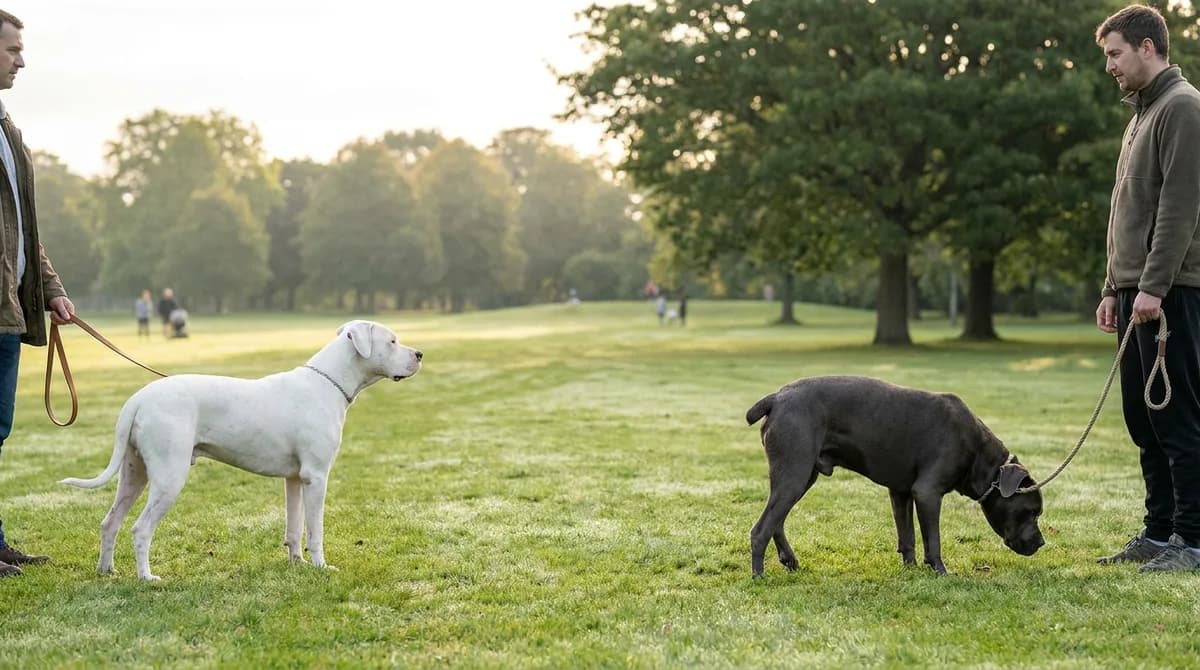
A Dogo Argentino is not invariably bigger than a Cane Corso. Their published adult height ranges overlap, and comparing one male with one female can produce a different impression from comparing two dogs of the same sex. Weight descriptions also need their source and context: approximate standard figures, a registry summary and an individual breeder's dogs are not interchangeable measurements.
Dogo Argentino vs Cane Corso: Size, Care and Family Fit
For a Dogo Argentino vs Cane Corso size comparison, look at actual height, build and the particular dogs involved. Neither a heavier body nor a broader head establishes which breed is more aggressive. There is no supported universal aggression ranking in these measurements. The Dogo Argentino vs Cane Corso guide compares care and household decisions alongside size, so the choice does not depend on which photograph looks more imposing.
Choose equipment for the individual dog
Use the measurement that the product actually needs. A bed depends on resting space; a harness needs the specified body dimensions and adjustment range; a transport setup needs room and suitability for the journey. A label saying “large dog” or naming the breed is a starting point for browsing, not confirmation that the product fits your Dogo.
Check the equipment while the dog moves normally. A harness that looks acceptable in a still photograph may shift, rub or restrict movement during use. Follow the manufacturer's fitting instructions, inspect the attachment points and check again after adjustment. For a puppy, repeat these checks as the dog grows rather than buying an oversized item and assuming it will remain usable throughout growth.
Before ordering, compare:
- The measurement method used in the product's fit chart with the method you used on your dog.
- The usable dimensions, not only the item's overall outside dimensions.
- The available adjustment range and the dog's current measurements.
- The intended use, care instructions and return conditions.
- The space available in your home or vehicle for the item and the dog using it.
For a bed, observe whether the dog tends to curl up, stretch out or change positions. Compare the extended resting length with the usable sleeping surface, including any raised edges that reduce that space. For a lead, assess the attachment, condition and your handling arrangement. Buying an item marketed for powerful dogs does not replace practice with calm walking and everyday cues.
Dogo Argentino Price: Puppy Costs and Ownership Budget
How much does an Argentine Dogo cost? The answer depends on the specific purchase or adoption agreement, plus the care and equipment you need. Size can affect practical purchases, but it does not justify assuming a universal price. The Dogo Argentino price guide separates dated seller quotations from a personal ownership budget, including items you may need to replace as a puppy grows.
Dogo Argentino Temperament: Training and Family Fit
Dogo Argentino temperament cannot be read from body weight, and female Dogo Argentino temperament is not guaranteed by smaller size. Some individuals can fit family life well, but supervision, training and the particular household matter. Do not assume a muscular dog will protect you predictably. For questions about US legality, check the rules at your exact location and applicable housing terms. The Dogo Argentino temperament guide explains the broader fit questions.
Dogo Argentino size questions
Use height at the withers for adult height, chest circumference for the relevant equipment measurement, and individual body condition to put weight in context. The standard is not a growth chart. Those distinctions make the numbers useful without turning them into a competition to produce the biggest dog.
No. Size is not a health score. Body condition, comfortable movement and the individual dog's assessment matter more than reaching the top of a weight range. A very large dog may be healthy or may have concerns that a photograph cannot reveal. Do not choose a puppy or change a feeding plan simply to pursue maximum adult size.
No. Individual growth varies, and one measurement cannot establish an exact adult result. Veterinary growth monitoring uses the dog's pattern over time alongside condition, history and other observations. Record actual weights with dates and units, then ask how to interpret that record. Avoid treating a calculator or an unsupported breed chart as a promise about your puppy.
Use the manufacturer's fit chart and the measurements it requests, including chest circumference where specified. Breed name and body weight alone cannot establish the shape or adjustment range your dog needs. Measure at the stated landmarks, follow the fitting instructions and reassess after growth or a change in body condition. If the dog falls between sizes, ask the manufacturer rather than guessing.

Coreen Saito is a pet writer and longtime shelter volunteer with more than a decade in animal rescue. She covers cat behavior, breed care, and the small, ordinary science of sharing a life with companion animals, with a particular focus on honest takes about the products and decisions that actually matter. At home in Arizona, she's outranked by Mac (a dog with the loudest opinion in the house), Rebel (a cat who governs by quiet authority), and Meri (an orange tabby who runs the late shift and the laundry basket). She writes about all three, plus the rescues that keep coming through her life, at LifeWithMinty.com.
Sign up for expert-backed reviews and safety alerts all in one place.