Dogo Argentino Temperament: Training and Family Fit
Explore Dogo Argentino temperament through everyday situations, with practical guidance for training, children, visitors, other animals and a household routine that suits the individual dog.
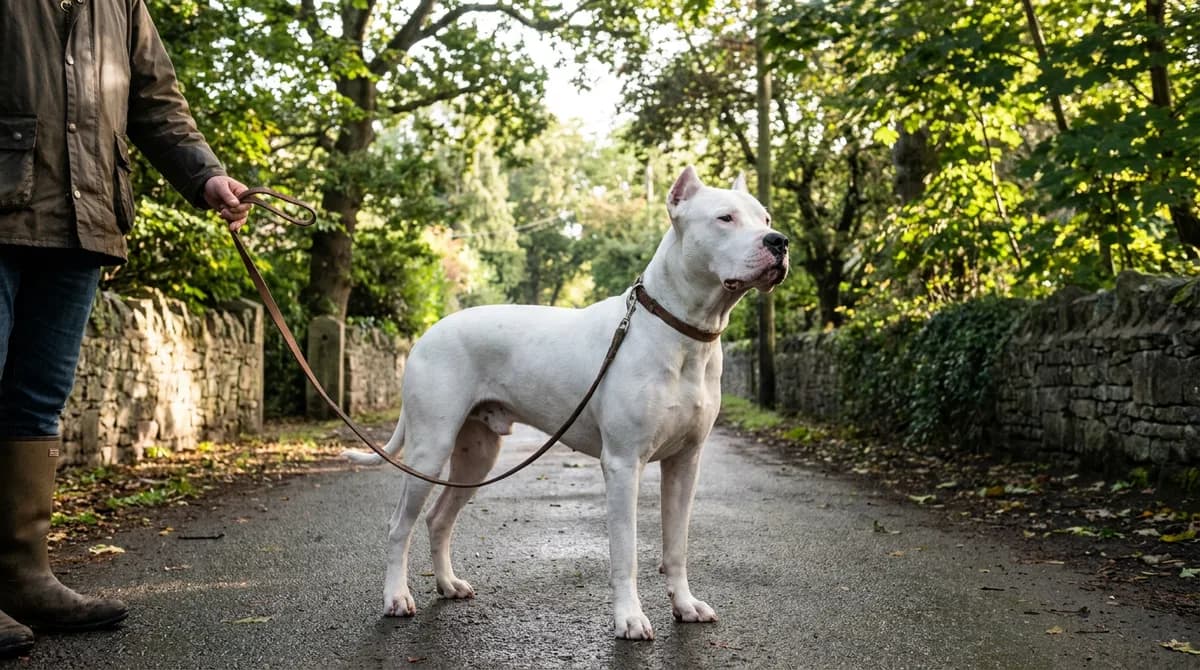
A quiet walking route leaves room to observe the surroundings.
Petful is reader supported. As an affiliate of platforms like Amazon and Chewy, we may earn a commission when you buy through links on this page. There is no extra cost to you.
Dogo Argentino temperament can combine affection, alertness and a strong interest in activity, but the breed name cannot promise a particular dog's behavior. Choosing one means assessing the individual and planning for everyday situations: visitors arriving, children moving around, other animals appearing and the dog needing to rest.
A workable routine matters more than a description such as “protective” or “good with families.” Start with the dog's history and observable responses, then arrange the home and training so the behavior you want is possible.

Sign up for expert-backed reviews and safety alerts all in one place.
Dogo Argentino temperament in everyday life
A Dogo Argentino can be dangerous to humans if it bites or cannot be managed safely. That possibility calls for an individual assessment of behavior and circumstances, not a claim that every Dogo is aggressive. Take threatening behavior and any bite history seriously, and arrange separation and qualified help instead of testing the dog’s tolerance.
The Dogo Argentino Club of America breed standard describes an athletic hunting dog and faithful companion. Those are breeding ideals, not a safety certificate. A Dogo Argentino at home may seek affection and enjoy familiar company while responding differently to an unfamiliar dog, a visitor or something moving beyond the fence.
Calling a Dogo aggressive, angry or scary without describing the situation gives you little to work with. Ask what happened before the behavior, what the dog did and how the situation ended. A bite or attack history needs serious, individual assessment; a muscular appearance does not establish that history. Equally, friendliness during one meeting does not rule out difficulty in another setting.

A fixed-length lead for managed walks and practice at comfortable distances.
Petful may earn a commission when you click through to Chewy, at no extra cost to you.
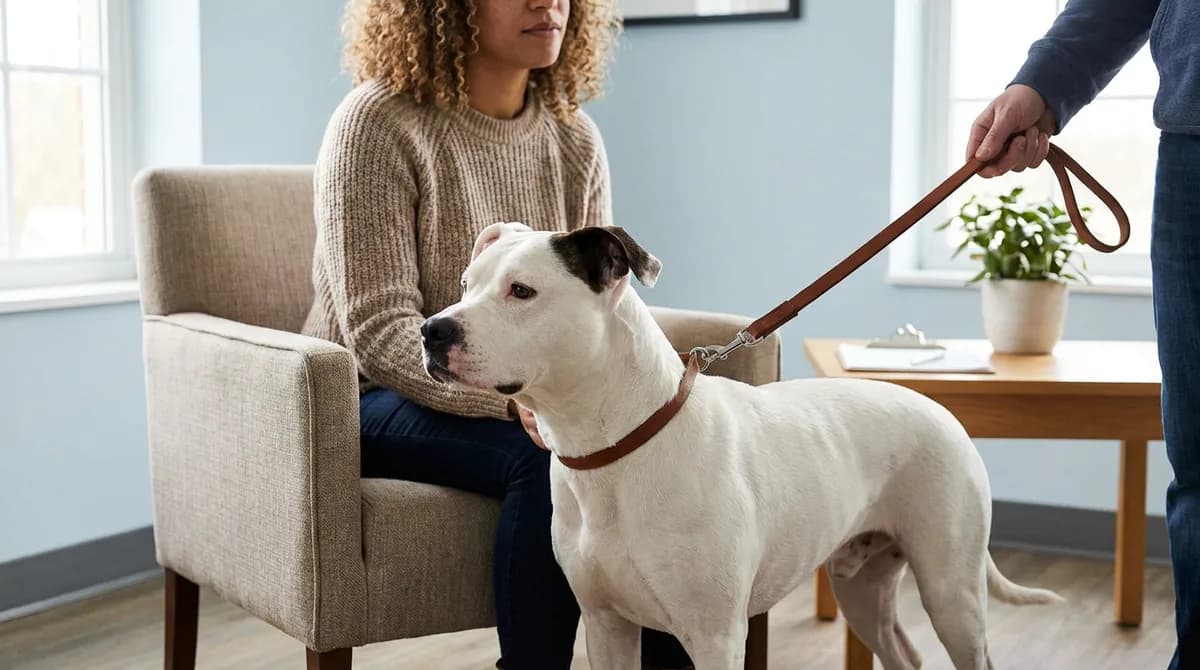
Changes between settings can be informative. A dog described as friendly may be comfortable with seated adults but uneasy when someone reaches over its head. Ask the caregiver to explain those differences rather than choosing one label for the whole dog. You are looking for the conditions in which the dog succeeds and the arrangements it currently needs. Avoid staging a surprise or provoking a reaction for the sake of an assessment.
- How does the dog respond when a visitor enters rather than when someone is already seated?
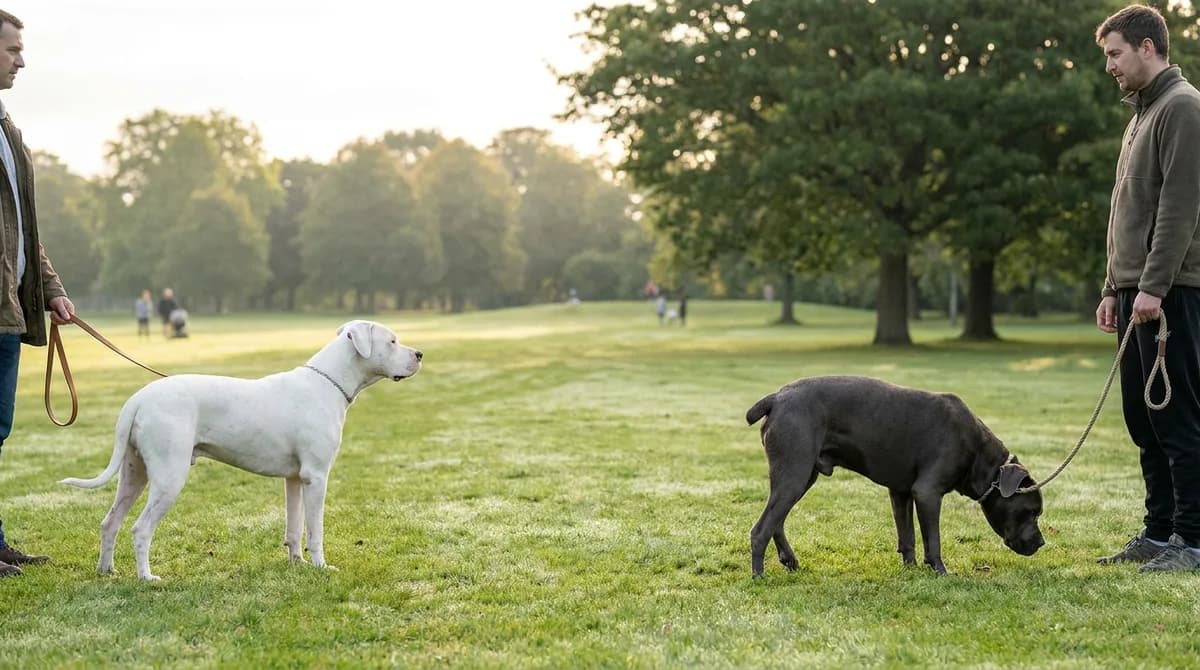
- What happens when another dog passes during a walk?
- Can the dog rest separately while people eat or move around?
- What is known about handling, veterinary visits, children and other animals?
- Has there been a bite, attempted bite, threatening behavior or an incident requiring intervention?
Female Dogo Argentino temperament cannot be assumed to be softer or easier than male temperament. Background, health, learning and the current environment all belong in the assessment. If an answer is unknown, record it as unknown rather than filling the gap with a breed stereotype. Arrange professional help before deliberately recreating a concerning situation to find out what happens.
A fixed-length Frisco Traffic Leash can support supervised walking and controlled practice. Check its attachment and your dog's fitted equipment before use. A lead helps you manage space; it does not treat aggression or make a difficult encounter safe by itself.
Dogo Argentino: Breed Facts, Care and Owner Fit
The Dogo Argentino's strength and hunting background make consistent household management important, even when an individual is affectionate. Think about who can handle the dog, how you will provide activity and where it can rest without interruption. The Dogo Argentino breed guide puts temperament alongside care and breed history. A suitable match depends on those everyday arrangements as well as your first impression of the dog.
Dogo Argentino vs Cane Corso: Size, Care and Family Fit
There is no reliable universal answer to whether a Cane Corso or Dogo Argentino is more aggressive. Individual behavior and the situation matter, and Dogo Argentino vs Cane Corso size does not supply an aggression ranking. Their standard height ranges overlap. The Dogo Argentino vs Cane Corso comparison explores practical differences without treating either breed's reputation as a prediction about a particular companion.
Reward-based training and socialization
Are Dogo Argentinos hard to train? There is no single difficulty level that fits every Dogo. A strong dog reacting to a distraction can be difficult to handle, but that does not mean training requires a contest of strength. Start where the dog can pay attention, teach a clear behavior and make the next repetition manageable. Training becomes less useful when the setup repeatedly overwhelms the learner.

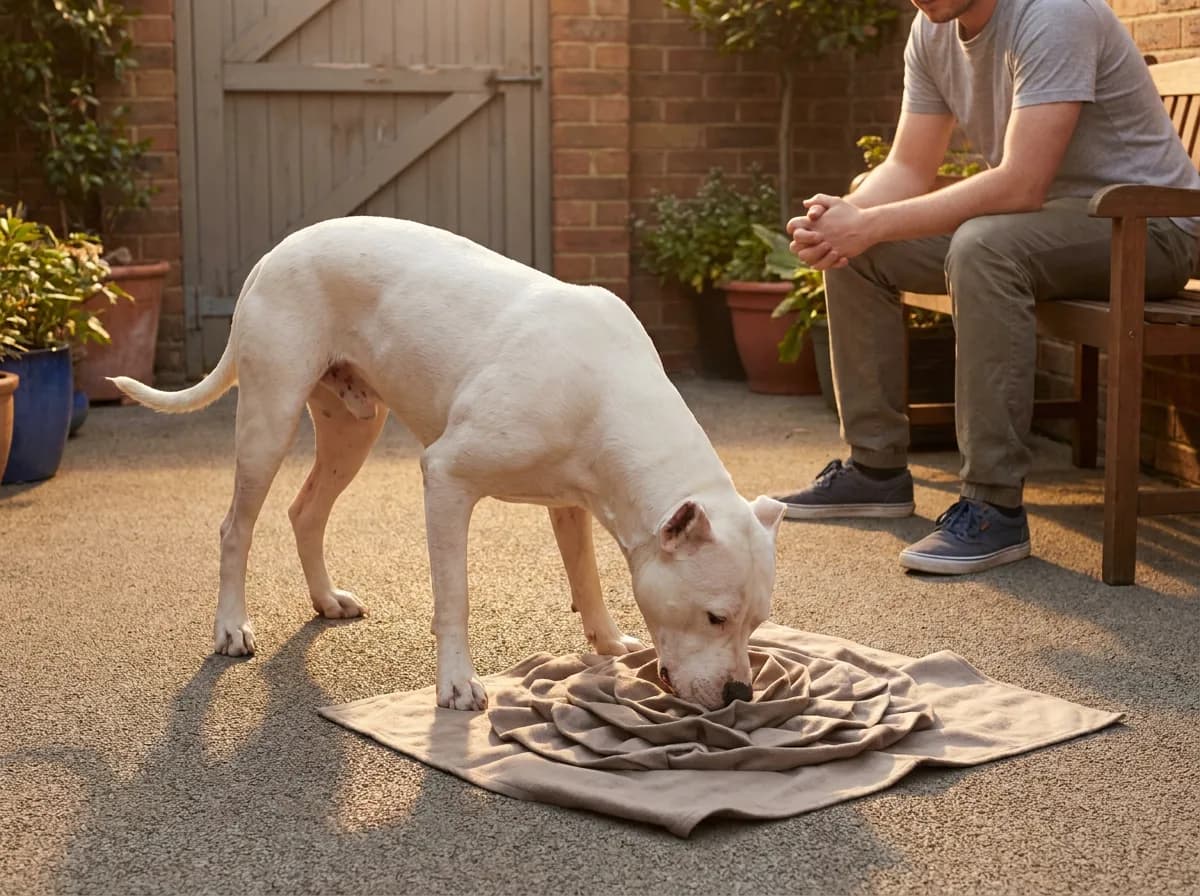
A supervised food-search activity that can complement a predictable routine without promising to resolve behavior problems.
Petful may earn a commission when you click through to Chewy, at no extra cost to you.
The American Veterinary Society of Animal Behavior's position statements recommend reward-based training for dog training and behavior modification. AVSAB reaffirmed its humane-training position in 2025 and rejects aversive methods, including physical or psychological punishment. A Dogo's size is not a reason to replace that guidance with dominance exercises, intimidation or increasingly forceful corrections.
Agree on one cue for each familiar action and use it consistently. Say it once, then give the dog a reasonable opportunity to respond. If the task is too difficult, change the setup instead of repeating the word more loudly. Practice with each adult who will share handling.
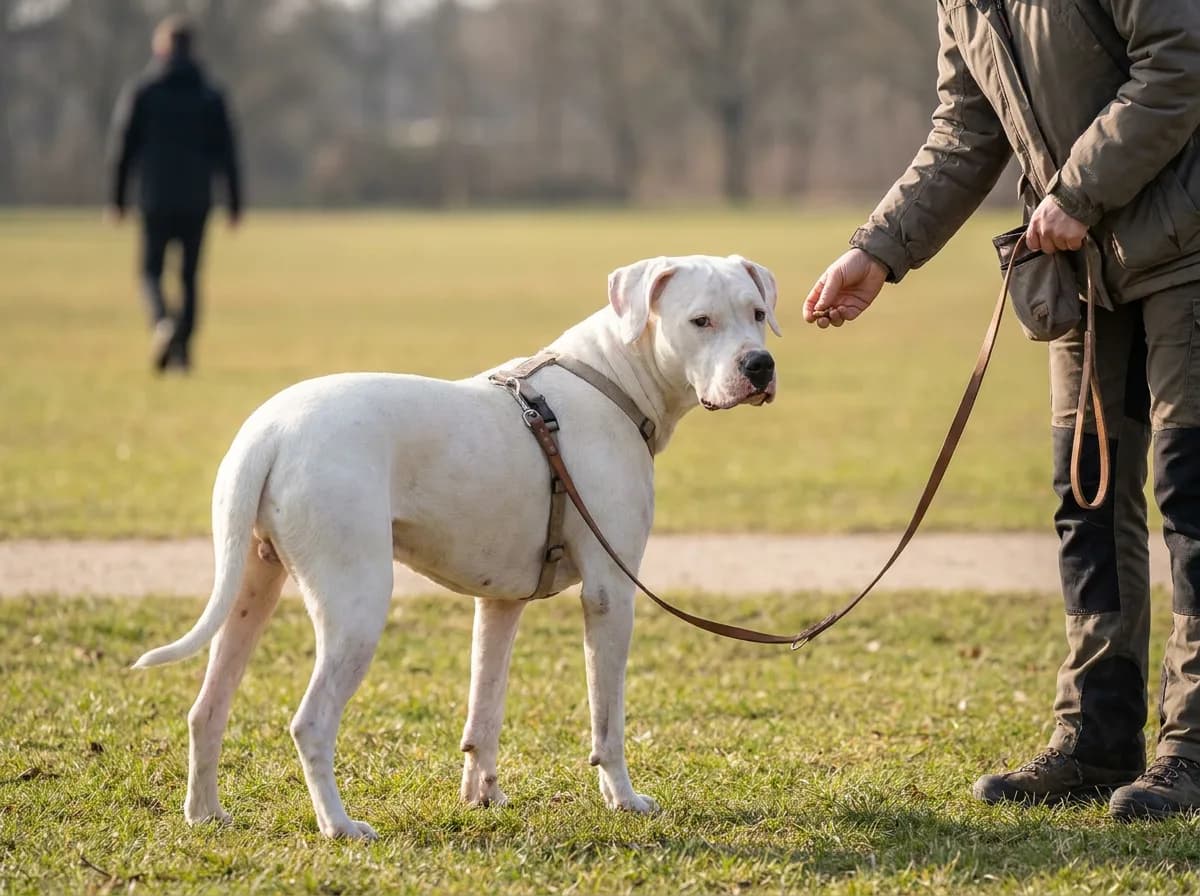
Begin with a check-in in a quiet setting. When the dog voluntarily looks toward you, mark the moment with a consistent word and provide a reward it values. Practice briefly, then let the dog disengage. Once that is familiar, try an easier version of the same exercise outside. Add distance from distractions before asking for more concentration.
Make the reward easy to deliver without drawing the dog into unwanted contact. You can reward beside your leg, then move together, instead of asking a stranger to feed the dog by hand. If the exercise involves a visitor, tell that person what to do before the dog enters the space. One person can manage the environment while the handler concentrates on timing. A simple plan is easier to repeat consistently than several people calling different cues.
A supervised food-search activity can also be one part of a calm routine between practice sessions. A Pet Parents Forager Snuffle Mat offers a place to search for part of a meal. Introduce it when the dog can use it comfortably, supervise, and remove it if the dog starts chewing or swallowing material.
A visual communication routine for a deaf Dogo
If your Dogo is deaf, replace the spoken marker in the check-in exercise with a visible signal. First pair a thumbs-up with a reward so the gesture gains meaning. Then, when the dog voluntarily looks toward you, give that marker and reward the attention. The AKC's deaf-dog training guide recommends building this focus before relying on hand signals: the dog needs to be looking at you to see the next cue.
Choose distinct hand signals for familiar actions and have every caregiver use the same ones. For an attention cue, begin while the dog is awake and watching you: gently touch the same spot, such as the shoulder, then offer a reward. Once that pairing is familiar, practice when the dog is looking slightly away. This gives you a way to request attention before showing the next hand signal, rather than depending on a louder voice or an unexpected grab.
Practice a simple walking exercise
- Choose a quiet location with enough room to turn away from activity.
- Reward voluntary attention before the lead becomes tight.
- Introduce a manageable distraction at a comfortable distance.
- Reward a check-in or another already learned response.
- Move farther away or end the exercise if the dog cannot comfortably participate.
The aim is not to make the dog stare at you throughout every walk. Build a useful response that helps you move together when necessary. If passing a particular gate is repeatedly too difficult, change the route while you work on the skill in easier places. Preventing repeated lunging is part of training, not evidence that training has failed.
Socialization means arranging positive, controlled experiences, not requiring the puppy to greet every person or dog. Let the dog observe from a distance, allow breaks and avoid forcing contact. Coordinate puppy outings and classes with your veterinarian's health guidance. WebVet's puppy socialization checklist offers a way to organize experiences without treating the list as a quota to finish regardless of the puppy's response.
Choose one part of an exercise to make harder at a time. For example, practice a familiar response in a new quiet location before adding a busy walkway as well. If the response disappears, return to an easier version rather than assuming refusal. You can shorten the task, increase distance or return to a familiar setting. Those adjustments help you identify what changed without turning a training session into an argument.
- Record what the dog handled comfortably and what was too much, including the location and distance from activity.
- Adjust the time of day, length of the visit or distance to make the next experience manageable. Another dog's enjoyment is not your dog's training target.
- For persistent concerns, choose qualified help that explains its reward-based approach and the management needed between sessions.
Family life, children and visitors
Dogo Argentinos can be family companions, but “good with kids” needs a specific meaning. A dog comfortable with one familiar child may not respond the same way to a visiting toddler, excited group or unfamiliar handling. Large size also matters during friendly behavior: jumping or sudden movement can knock someone over without aggression.
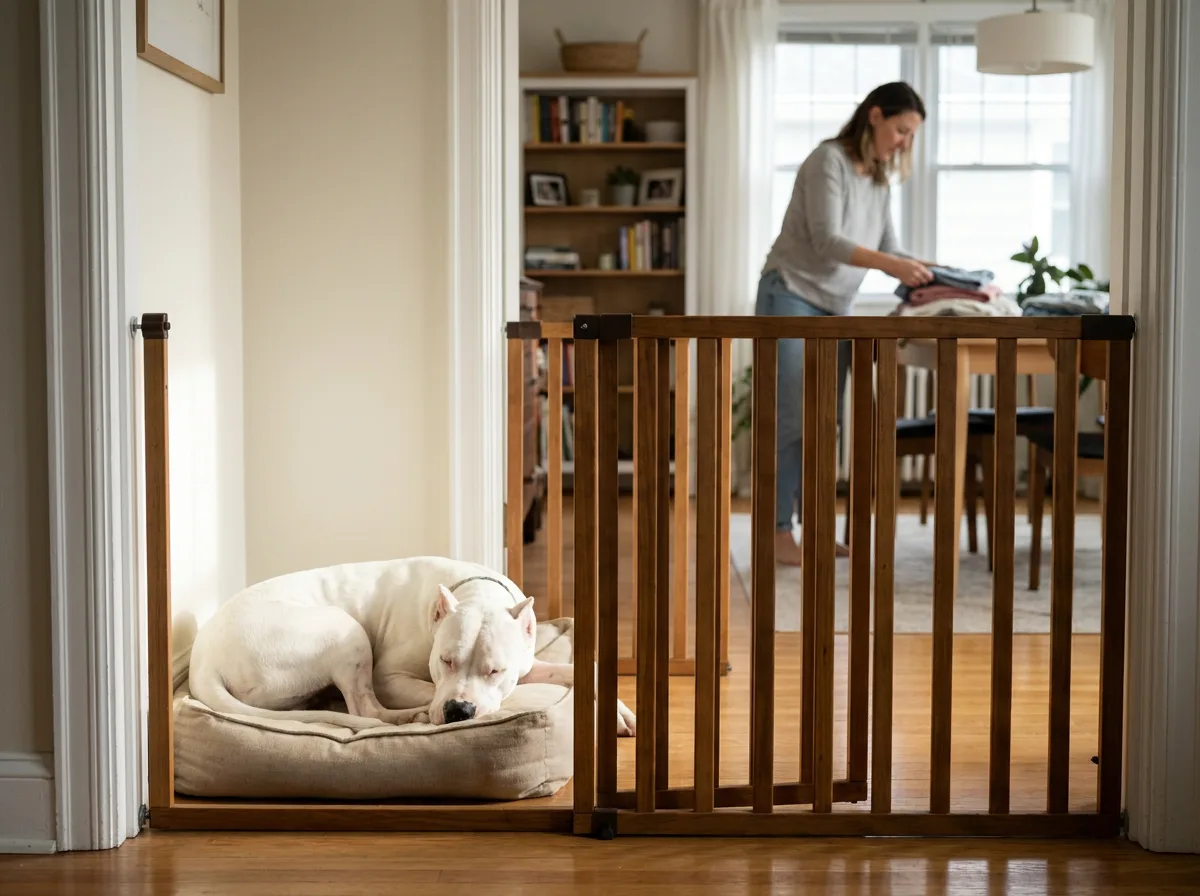
Adults need a practical supervision plan. Being in the same house is different from actively watching an interaction and being able to intervene early. When you are cooking, answering the door or concentrating on another task, separate the dog and children appropriately. Give the dog a resting place children do not enter, and teach children to leave eating and sleeping dogs alone.
Build a visitor arrival routine before a busy gathering:
- Put the dog in its comfortable separate area before opening the outside door.
- Ask visitors to enter calmly and avoid reaching toward or crowding the dog.
- Let the household settle before deciding whether an introduction is appropriate.
- Keep the interaction brief, with an adult responsible for the dog.
- End or pause the interaction if either the dog or the person is uncomfortable.
Give children a role they can carry out without managing the dog physically. They can ask an adult before approaching, leave the resting area undisturbed and put their own food away. Adults retain responsibility for supervision and separation. Do not assign a child the job of holding the lead during an exciting arrival or taking an item from a dog that does not want to release it.
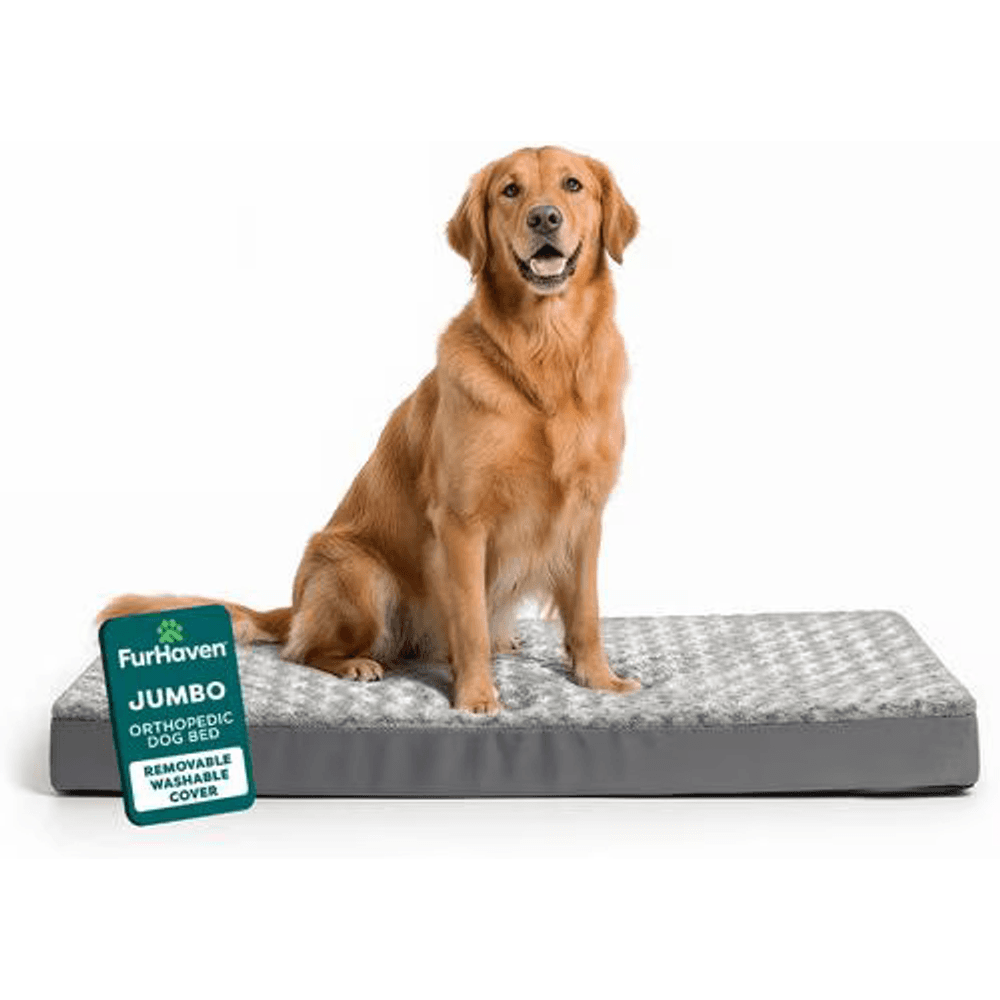
A resting bed to size for the dog and place away from busy household traffic.
Petful may earn a commission when you click through to Chewy, at no extra cost to you.
An introduction does not need to happen simply because a visitor wants it. A dog resting separately during a party can be a successful outcome. If the dog is uncomfortable with separation, practice the arrangement during quiet periods and seek help rather than using the first crowded event as the test.
Include the visitors' comfort in your decision. Someone who is afraid of a large dog should not have to participate in training or tolerate an approach. Agree on the arrangement before the visit and provide a route through the home that keeps everyone comfortable. Respecting that boundary also removes pressure to rush the dog's introduction for the sake of politeness.
| Situation | Set up the space | Behavior to support | Reward or next step | When to stop |
|---|---|---|---|---|
| Visitor arrival | Separate resting space before the door opens | Settling away from the entrance | Reward calm behavior; introduce only if appropriate | The dog cannot settle or people cannot follow the plan |
| Children playing | Adult supervision with room to separate | Comfortable observation or rest elsewhere | Quietly reinforce the dog's chosen rest | Activity overwhelms the dog or supervision becomes divided |
| Leash distraction | Comfortable distance and a clear route away | Checking in with the handler | Reward and move together | The dog cannot respond comfortably |
| Small animal nearby | Secure separation and distance | Turning away with the handler | Leave the area and reinforce disengagement | Fixation or pursuit increases; do not test closer contact |
Make household instructions consistent. If one person encourages jumping while another tries to prevent it, the dog receives conflicting information. Agree on what a greeting should look like and how you will arrange it. Use barriers and distance to make the desired response easier rather than expecting a verbal cue to solve every situation immediately.
Consider how the arrangement works for visitors who cannot follow a complicated routine. A delivery, a repair appointment or a crowded family event may call for the dog to remain comfortably apart throughout. Prepare that space before people arrive, including water and an appropriate resting surface. Check that someone can open an outside door without also opening the dog's area. This makes the plan less dependent on perfect timing from everyone involved.
A correctly sized bed can help define a separate resting space. Compare the usable sleeping surface of a FurHaven NAP bed with a removable cover with your dog's resting dimensions. The location and household rules matter more than the bed's name: the dog needs to be able to rest without visitors or children repeatedly approaching.
Practice the routine when nothing exciting is happening. Reward the dog for choosing the resting area, build comfortable duration gradually and release it before it becomes distressed. Do not use the bed as a place for punishment. A separate area should be a predictable, comfortable option, not somewhere the dog only goes when people are upset.
Check local rules, housing and insurance
Are Dogo Argentinos illegal in the US? A nationwide yes-or-no answer is not a useful clearance for a particular household. Check the state and local rules that apply to the actual address, then check private housing and insurance terms separately. An online list of banned states or a seller's assurance cannot establish every condition that applies to your home.
Are Dogo Argentinos legal in Texas? Texas Health and Safety Code section 822.047 says additional county or municipal restrictions on dangerous dogs must not be specific to one or several breeds. That is a specific rule about local dangerous-dog regulation. It should not be expanded into a promise that every lease, insurance policy or individual dog's circumstances permit ownership.

Compare coverage choices for your pet, then request a quote directly on Lemonade.
- Check a price for your pet
- Review available coverage choices
- See the terms before you decide
Eligibility, waiting periods, limits and exclusions apply.
Petful may earn a commission when you click through to Lemonade, at no extra cost to you.
When contacting an authority or provider, identify the breed, the proposed address and the question you need answered. Ask where to find the applicable written rule or policy term. Keep the answer specific to your circumstances. Before acquiring or moving with a Dogo:
- Ask the animal-control authority serving your address which ownership, containment and registration requirements apply.
- Read your lease and obtain any required written permission from the housing provider.
- Ask the relevant insurer about the actual policy, including any liability exclusions or conditions.
- Check rules at destinations you will use, such as boarding facilities.
- Recheck requirements before a move, including official import rules if relocating overseas to a country such as Australia.
Pet insurance for veterinary expenses is a different question from homeowners or renters liability coverage. A personalized Lemonade pet insurance quote can help you compare a care-budget option, but it does not confirm permission to keep the dog or liability coverage for an incident. Read eligibility, waiting periods, limits and exclusions for the policy being offered.
Keep the responses and relevant documents together. Record which address and policy were discussed, and ask for clarification when a restriction is ambiguous. Public-law requirements and private agreements should not be assumed to answer each other's questions. Complete those checks before paying a deposit or making travel arrangements that depend on the dog being accepted.
If someone says the dog is allowed, ask what that answer covers. Permission from a landlord does not describe an insurer's liability terms, and a veterinary-expense policy does not interpret animal-control rules. Identify the relevant decision-maker for each question. That avoids making several commitments based on a single reassuring conversation that addressed only part of the situation.
Dogo Argentino Price: Puppy Costs and Ownership Budget
How much does a Dogo Argentino cost? The initial purchase or adoption payment is only part of the commitment. Include training support, suitable equipment, veterinary care and any paid help your routine requires. The Dogo Argentino price guide compares dated seller quotations and provides a personal budget worksheet. A lower acquisition price does not remove the need to fund a workable care and management plan.
Exercise, enrichment and settling at home
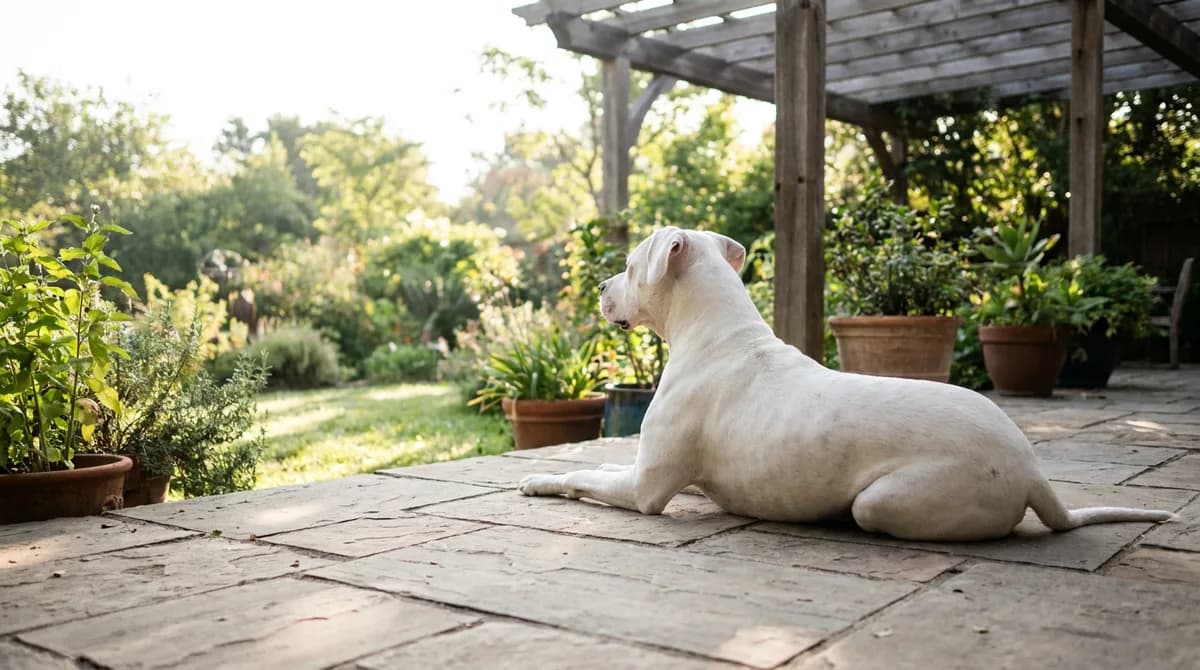
Plan for activity and rest as complementary parts of daily life. A Dogo's athletic build does not establish a universal exercise duration, and running the dog until it is exhausted is not a complete behavior plan. Age, health, weather, fitness and the particular activity all affect what is appropriate. Discuss those factors with your veterinarian rather than copying another owner's mileage or timetable.
A predictable routine gives you opportunities to practice small skills throughout the day. Reward a check-in before a walk, rehearse waiting while you prepare equipment and reinforce relaxed behavior when the household is quiet. WebVet's dog training schedule can help organize consistent practice, with the pace adjusted to the individual.
Useful activities can include:
- Sniffing during a managed walk where the surroundings are appropriate.
- Searching for part of a meal in a supervised, suitable setup.
- Practicing a familiar cue for a few successful repetitions.
- Exploring a secure area with attention to gates and other animals.
- Resting in a comfortable place after activity rather than moving directly into another exciting game.
Food-search enrichment should match the dog's behavior. A dog that investigates calmly may use an activity differently from one that grabs and tears the material. Stay present, put the equipment away after use and separate animals that compete over food. Do not leave a food activity in a group simply because each dog has used it successfully alone.
Settling is worth noticing and reinforcing. Choose moments when the dog is already beginning to relax, keep your response quiet and avoid turning every reward into a new game. If a resting area is beside a busy doorway, moving it may help more than repeating a cue. Consider noise, traffic and interruption before describing the dog as unable to switch off.
Watch how the whole routine is working. If the dog is repeatedly unsettled, look at the timing of activity, access to rest and the situations that precede the difficulty. A sudden change from the dog's usual behavior also deserves veterinary attention. More exercise is not automatically the answer to discomfort, fear, frustration or a routine that offers little uninterrupted sleep.
Make the plan sustainable for ordinary days. Decide who handles the dog when work runs late, who checks gates and where it rests during deliveries or repairs. A routine that depends on one person always being available needs a backup. Consistent arrangements reduce the number of situations in which someone must improvise while managing a strong, excited dog.
Review the routine with everyone who shares care. A short written note about feeding separately, shutting a gate or putting the dog in its resting area before a visitor arrives can prevent misunderstandings. Include what to do when the planned arrangement is unavailable. If a caregiver cannot safely carry out part of the routine, change the arrangement instead of assuming affection for the dog will make the task manageable.
Prey drive and living with other animals
The Dogo's hunting background makes prey-drive management an important household question. Interest in chasing an animal is not the same assessment as friendliness toward familiar people. A dog can be affectionate with its family and still require strict management around smaller animals. Do not use its relaxed behavior on the sofa as evidence that an unsupervised encounter will be safe.
Dogo Argentino temperament with other dogs also varies. Ask about the actual dogs involved, the setting and the history of their interactions. “Good with other dogs” might describe one familiar companion, a particular walking arrangement or a brief encounter. Those experiences do not automatically establish compatibility with every dog, shared food or close quarters.
Assess individual history rather than assuming breed-wide compatibility. Prey drive may require lasting management around smaller animals. Controlled introductions need appropriate distance, supervision and a plan to separate safely.
Ask how the proposed arrangement will work when nobody is actively supervising. Separate feeding or resting places are useful only if people can maintain them throughout ordinary household activity. Account for children opening doors, visitors moving through the home and the time needed to give each animal attention. If the plan requires constant close intervention to prevent conflict, discuss its sustainability with a qualified professional before proceeding.
Before bringing animals together, consider the setup:
- Can doors or secure barriers keep them separated without constant improvisation?
- Can each animal eat, sleep and receive attention without competition?
- Is there enough space to avoid forcing close contact?
- Does someone know the relevant behavioral history of each animal?
- Is qualified help available if an introduction requires more than ordinary management?
Controlled introductions should not become a test of how much discomfort the animals will tolerate. Choose an arrangement appropriate to their histories, preserve room to move away and seek professional help where there is concern. Do not hold a small animal close to the Dogo to see whether it reacts. Physical proximity is not proof that an introduction is progressing well.
Keep a factual record of difficult encounters for the professional helping you: the setting, distance, activity and what the dog did. Record changes to the setup and their outcome as well. Do not move closer to obtain a more dramatic video. Useful observation should support a safer plan, not create another risky encounter. On walks, identify an exit before approaching a setting with wildlife or unfamiliar animals. Turn away while the dog can still move with you, and reward disengagement at a manageable distance. If fixation, pulling or pursuit repeatedly increases, reduce exposure and obtain help with a plan rather than moving closer to “get the dog used to it.”
A secure enclosure remains important even when training is going well. Check latches, openings and the way doors are used during deliveries or visits. No recall claim makes every off-leash situation safe, and a previous successful encounter does not guarantee the next one. Some households will need permanent separation between certain animals; that possibility belongs in the ownership decision.
Dogo Argentino temperament questions
A protective temperament description should not be treated as a promise that a Dogo Argentino will make the right decision during a threat. Choosing a guard dog or an “attack dog” is a different premise from choosing a manageable companion. For family life, prioritize reliable everyday handling, an appropriate visitor arrival routine and clear arrangements for rest and other animals.
The practical aims remain consistent: provide a separate resting space, reward calm behavior and use prey-drive management where needed. Training does not remove the need for supervision, and management does not mean the dog has failed. The useful question is whether the household can maintain arrangements that work for the individual dog and everyone sharing the space.
Some individuals show watchful behavior, but there is no protection guarantee that a Dogo will recognize a threat accurately or respond safely. Do not encourage threatening behavior toward visitors to test that idea. For a companion, prioritize predictable handling, controlled access and appropriate training. A breed description is not evidence of a particular dog's judgment in an emergency.
Sex is not a behavior guarantee. Individual history, health, learning and the present environment all matter. Ask about the particular dog's responses to handling, visitors, other animals and changes in routine. A broad male-versus-female description cannot replace those observations, and it should not be used to dismiss a concerning behavior or promise an easier family match.
Yes. Positive controlled experiences and adolescent practice help the dog keep learning as its environment and daily life change. Preserve choice, distance and rest instead of assuming early friendliness means every later encounter will be comfortable. Continue positive experiences at a manageable level, and adjust the plan when the dog shows difficulty rather than forcing the same interaction.
Seek help for escalating fear or threats, a bite or attempted bite, repeated conflict with another animal, or situations the household cannot manage safely. Arrange management before rehearsal of the concerning behavior: separate as needed and stop setting up difficult encounters. Your veterinarian can assess possible health contributors and help direct you to a qualified professional using reward-based methods.

Coreen Saito is a pet writer and longtime shelter volunteer with more than a decade in animal rescue. She covers cat behavior, breed care, and the small, ordinary science of sharing a life with companion animals, with a particular focus on honest takes about the products and decisions that actually matter. At home in Arizona, she's outranked by Mac (a dog with the loudest opinion in the house), Rebel (a cat who governs by quiet authority), and Meri (an orange tabby who runs the late shift and the laundry basket). She writes about all three, plus the rescues that keep coming through her life, at LifeWithMinty.com.
Sign up for expert-backed reviews and safety alerts all in one place.