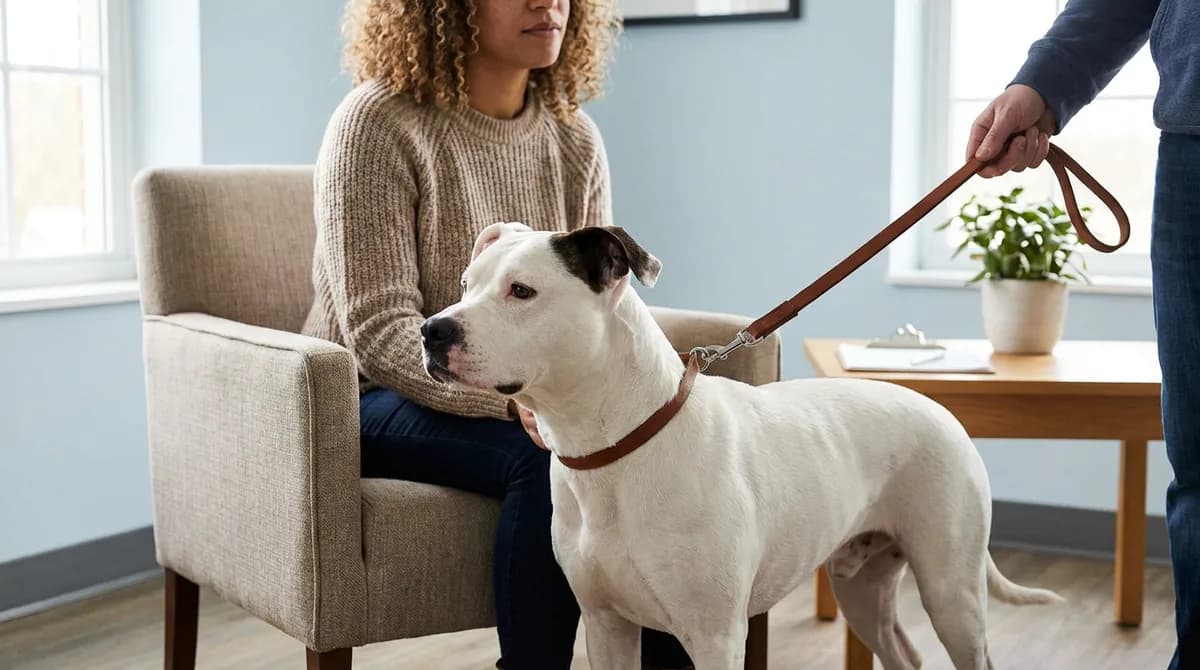
Dogo Argentino Lifespan: Estimates, Health and Care
Understand the Dogo Argentino's published lifespan range, read hearing and health-screening records, and build practical routines for comfort, veterinary visits and care through adulthood and later life.

BVMS, MRCVS

Care planning follows the individual dog’s needs throughout life.
Petful is reader supported. As an affiliate of platforms like Amazon and Chewy, we may earn a commission when you buy through links on this page. There is no extra cost to you.
Dogo Argentino lifespan is commonly listed as 9–15 years. That is the American Kennel Club's published reference range, not a measured breed average or a forecast for your dog. The more useful questions are what your dog's records show, what has changed recently, and what care they need now.
For a prospective owner, start with documented hearing, hip and cardiac screening. For someone already living with a Dogo, build a routine that makes changes in eating, movement, comfort and behavior easier to notice. A birthday or a breed label cannot tell you whether a particular dog is doing well.

Sign up for expert-backed reviews and safety alerts all in one place.
How long do Dogo Argentinos live?
The AKC Dogo Argentino profile lists 9–15 years. Use that span when thinking about a long-term commitment, while recognizing that individual dogs can die earlier or live longer. It is not a minimum a breeder can promise, a deadline for an older dog, or evidence that a dog halfway through the range has reached a particular stage of health.
Dogo Argentino life expectancy is often presented with more precision than the source supports. Calculating the midpoint of nine and fifteen would produce twelve, but it would not establish an average lifespan. That would require observations from a defined population, with information about which dogs were included and how their lives were followed.
- Plan for care throughout puppyhood, adulthood and later life.
- Let examinations and your dog's condition guide care decisions.
- Keep long-term arrangements for housing, handling and veterinary expenses.
- Treat an unexpected change as something to assess, even in a young dog.
Dogo Argentino: Breed Facts, Care and Owner Fit
A Dogo Argentino is a large, athletic working breed whose everyday needs extend beyond a lifespan number. Secure handling, appropriate activity and consistent training remain important as those needs change with age. Our Dogo Argentino breed guide explains the breed's background and owner fit. Before choosing one, consider who could help with walks, transport and care if your circumstances change during the dog's life.
Everyday care through adult and senior life
Start with the parts of the day your dog repeats: getting up, eating, going outside, walking and settling to sleep. These routines offer practical opportunities to support comfort and notice difficulties. They also make it easier for everyone in the household to follow the same care plan.
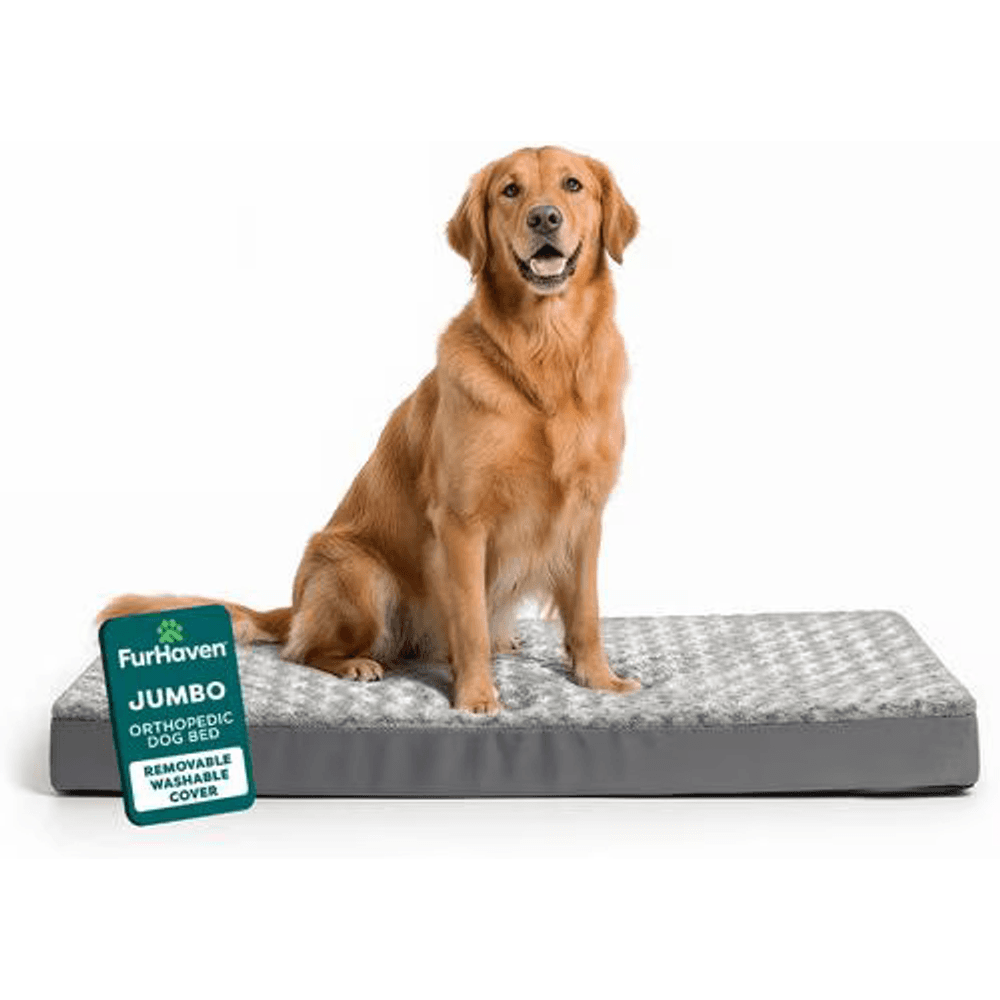
Check the FurHaven bed's usable sleeping area and low access against your Dogo's resting position. Its removable cover simplifies washing.
Petful may earn a commission when you click through to Chewy, at no extra cost to you.
Choose resting space by usable dimensions and access. Your Dogo should be able to lie in a preferred position without being squeezed against furniture, and approach the bed without crossing a slippery or cluttered area. The FurHaven NAP Ultra Plush Orthopedic Deluxe bed is one option with a removable cover; check its sleeping surface against your dog's actual measurements.
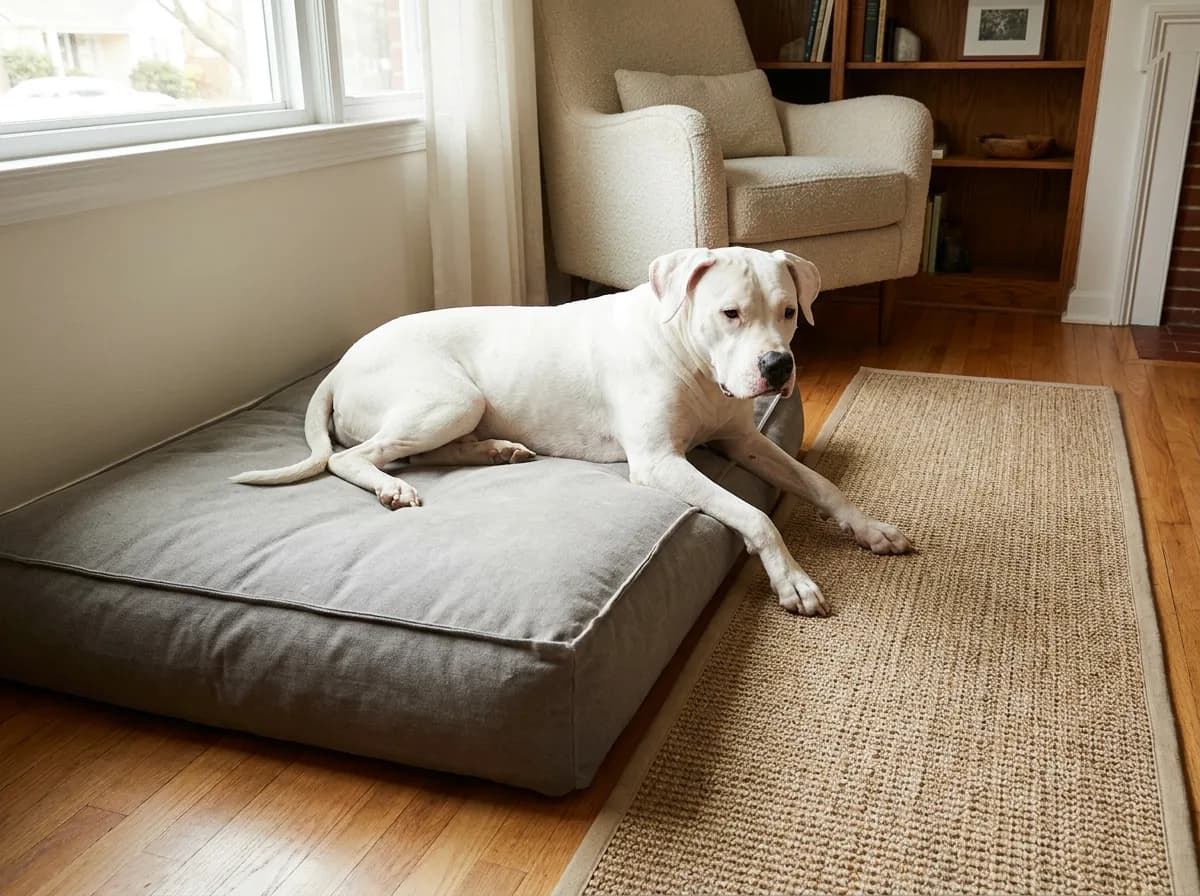
A comfortable bed is a home arrangement, not an assessment of joint pain. If your dog struggles to lower onto it, repeatedly changes position or hesitates to stand, describe that pattern to your veterinarian. Buying a thicker cushion does not answer why movement has become difficult.
Build a manageable daily routine rather than an ambitious schedule that is difficult to sustain. Different household members can share tasks, but they need a clear handoff so meals, medication or walks are not duplicated. A simple written plan is especially useful when a sitter takes over.
- Name the person responsible for each meal and any prescribed medication.
- Keep fresh water accessible without requiring an awkward climb.
- Check walking equipment and doors before taking the dog outside.
- Put washing instructions and spare bedding where caregivers can find them.
- Keep the veterinary clinic and out-of-hours contact details together.
- Explain which changes should prompt a call rather than waiting for your return.
Make the handoff usable for someone who does not know your dog well. Write down where the leash, food and prescribed medicines are kept, and demonstrate any handling routine before you need help. Tell the caregiver how your dog usually settles and which spaces are off limits. A list of instructions works best when the person has also practiced the task. If several people care for the dog, choose one place to note completed medication doses and significant events. Use the veterinary label for the dose rather than relying on a remembered description. When an instruction is unclear or a dose is missed, call the clinic for advice; do not improvise a replacement or double the next dose.
Dental care belongs in that routine. Ask your veterinarian to demonstrate a suitable technique and check whether your dog's mouth is comfortable before building a brushing habit. Start with brief, calm handling and reward cooperation. Forcing access to a painful mouth can make the dog more reluctant and puts your hands at risk.
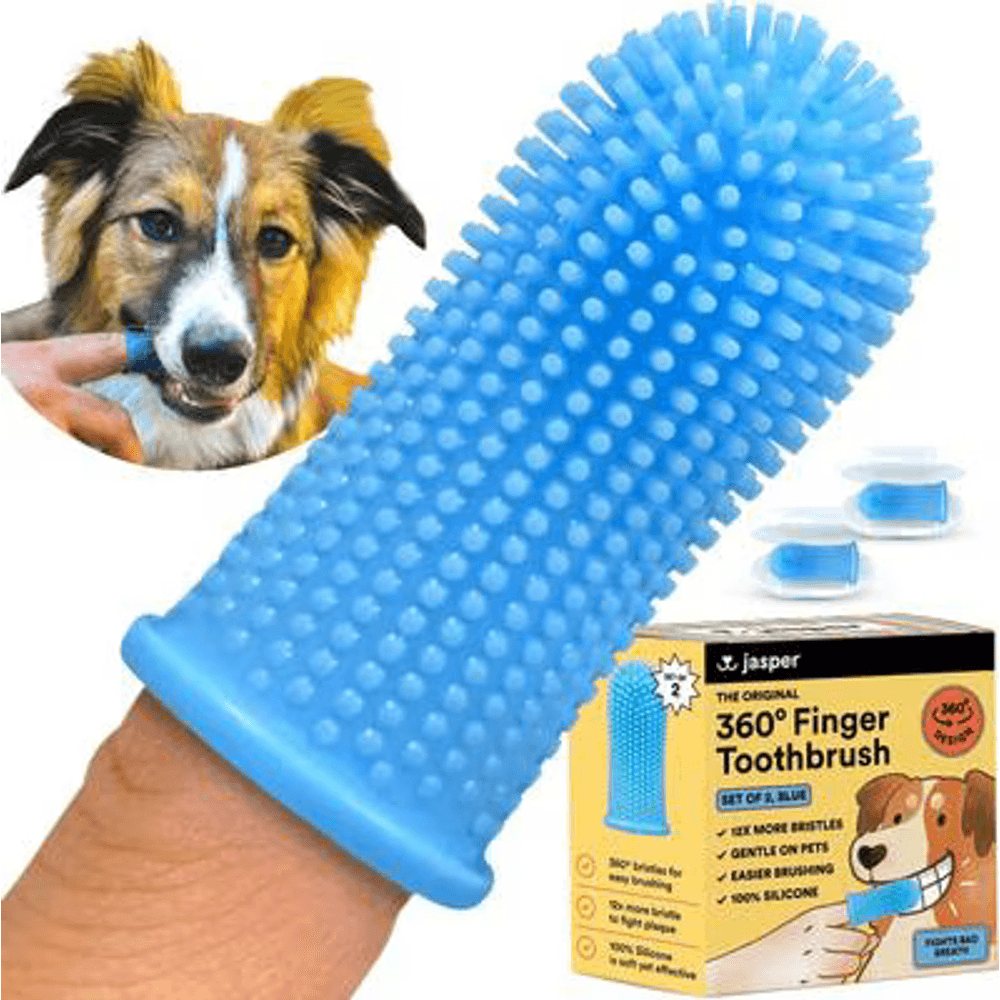
Consider the Jasper finger toothbrush for a dog comfortable with mouth handling. Introduce it gently and ask your veterinary team to demonstrate.
Petful may earn a commission when you click through to Chewy, at no extra cost to you.
The Jasper 360 finger toothbrush is an option for a dog already comfortable with this kind of handling. Use dog toothpaste and a technique recommended by your veterinary team. If your Dogo pulls away, guards the mouth or seems painful, stop and arrange advice instead of trying to finish the session.
Brushing is only one part of oral care. A dog that keeps eating may still have a dental problem, so mention new odor, bleeding, chewing changes or resistance to face handling. WebVet's dog dental health guide provides broader context for discussing home care and professional assessment with your veterinarian.
Feeding and body condition
For feeding, choose a complete and balanced food appropriate to your dog's life stage and follow an individualized portion plan. A growing large-breed puppy and a less active adult have different needs. Review the amount when activity, body condition or health changes instead of automatically continuing the same scoop throughout life.
Keep an accurate picture of everything your dog eats. Treats from training, food used for enrichment and extras from family members can be easy to overlook. Measuring the day's allowance before dividing it among meals and activities helps you see the whole amount. If your veterinarian prescribes a diet, ask what can be used as rewards within that plan.
- Confirm which food and daily amount the household is using.
- Identify who gives treats, chews and table extras.
- Include training and enrichment food in the daily allowance.
- Ask the clinic how to track body condition alongside weight.
- Review an unexpected gain or loss before making major diet changes.
Activity should fit the dog in front of you. An adult accustomed to substantial exercise and an older dog recovering from illness need different plans. Start with the veterinarian's advice when there is pain, reduced stamina or an existing diagnosis. Avoid using a fixed number of minutes as proof that every Dogo has had enough exercise.
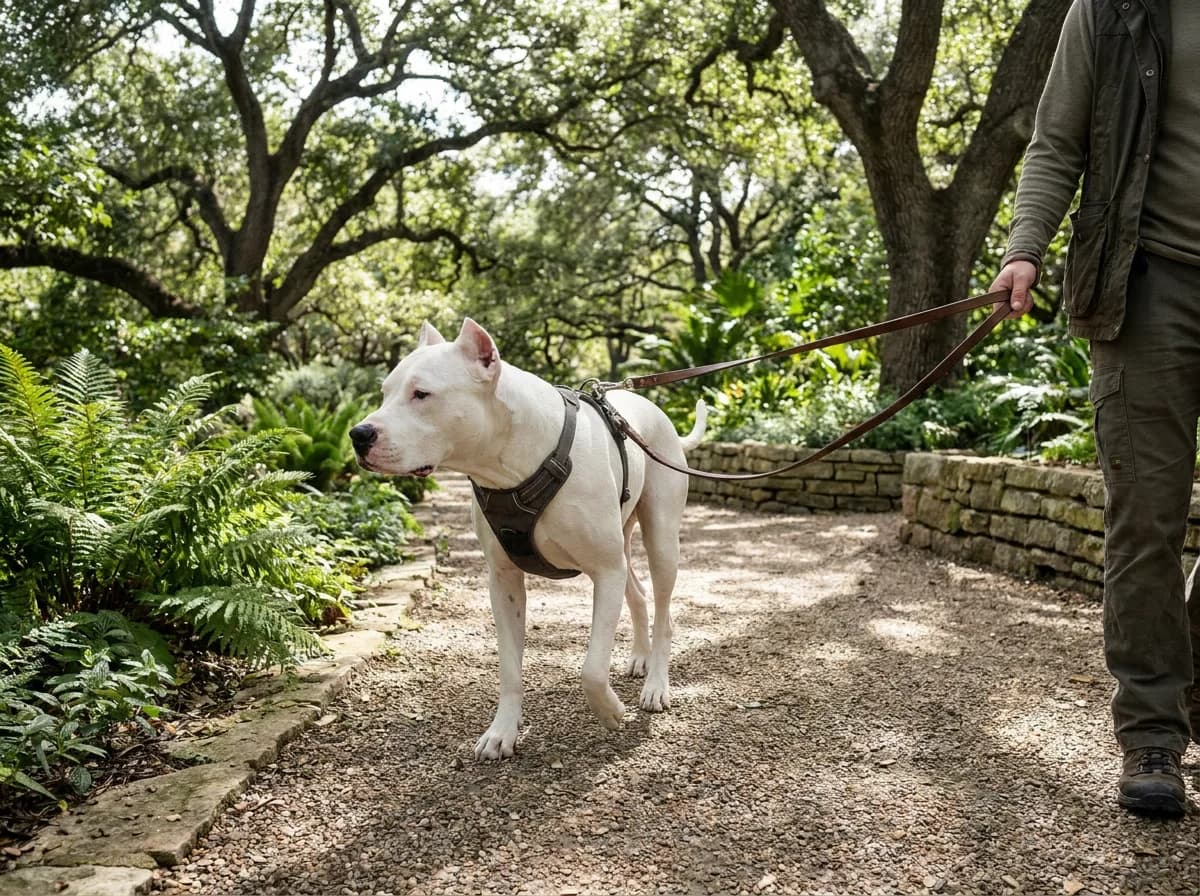
Choose routes with suitable footing and opportunities to turn back. A shorter route close to home can be easier to adjust than a long outward walk that leaves the return journey unavoidable. Keep a secure leash connection, allow comfortable pauses, and notice whether your dog recovers as usual afterward. If a familiar walk suddenly becomes difficult, do not solve the problem simply by pushing through or giving up all activity. Describe when the change happens: immediately on starting, after several minutes, on a slope, or after getting home. That practical detail helps the veterinary team decide what to assess and how to guide activity.
Adjust home arrangements around how your dog actually moves:
- Move essential items to a convenient floor where practical.
- Keep routes clear and offer a quiet resting place away from busy doorways.
- Let the dog choose between suitable resting spots when possible.
- Observe whether the change makes access easier rather than assuming an expensive item is an improvement.
For a broader discussion of changing needs, WebVet's senior dog health guide is a useful companion. Ask your own veterinarian when to change examination frequency or monitoring for your Dogo. The right schedule depends on history and findings, not a universal senior birthday.
Walk through the home from your dog's perspective before changing the setup. Look at the turn between a bed and doorway, the surface beneath the water bowl and the route to the yard. A narrow gap or movable rug may be more relevant than the softness of the bed itself. Test changes while you are present and observe how your dog uses the space.
Dogo Argentino Size: Height, Weight and Measuring Guide
Dogo Argentino size and weight matter when choosing beds, transport and handling arrangements. A scale reading alone does not show whether a dog is carrying an appropriate amount of body fat or muscle. Our Dogo Argentino size guide separates breed-standard measurements from practical measuring advice. Use the individual dog's dimensions for equipment and the veterinary team's assessment for body condition, rather than feeding toward a breed maximum.
Dogo Argentino Price: Puppy Costs and Ownership Budget
How much does a Dogo Argentino cost? The acquisition price is only the first part of the answer. Ask for a written quote and its inclusions, then plan separately for food, routine appointments, training, transport and unexpected care. Our Dogo Argentino price guide explains seller-specific examples and a personal budget worksheet. Use local quotes for your household rather than treating another owner's spending as a forecast.
Dogo Argentino vs Cane Corso: Size, Care and Family Fit
If you are comparing these breeds, neither a lifespan range nor a claim about which is more aggressive establishes the better fit. Individual behavior, health records and the household's handling capacity deserve direct attention. Our Dogo Argentino vs Cane Corso comparison explains size overlap and care differences. Meeting suitable adult dogs and discussing your daily routine is more informative than choosing on an imagined toughness ranking.
Low-impact enrichment can give a dog something enjoyable to do without turning every activity into vigorous exercise. Try a short food search at a comfortable level, a familiar reward-based cue, or a quiet exploration of a secure space. Keep the task easy enough for the dog to succeed and stop before frustration replaces interest.
A Pet Parents Forager snuffle mat offers one supervised food-search option. Put it on stable footing, use food already allowed in the diet, and check that reaching it is comfortable. Stay present and remove it if the dog chews or swallows the material. A dog that dislikes searching does not need to be persuaded to enjoy it.
What lifespan estimates can and cannot tell you
A published lifespan range describes a broad expectation. A measured population average would answer a different question: how long dogs in a particular study lived. The sources available for this guide do not establish a Dogo-specific population mean or median. Combining unrelated website figures does not fill that gap.

Use the Pet Parents Forager for a short, supervised food search. Keep footing stable and count the food within your dog's daily allowance.
Petful may earn a commission when you click through to Chewy, at no extra cost to you.
When comparing numbers, look past the figure to its definition. An estimate without a sample size, study period or explanation of how deaths were recorded cannot tell you how representative it is. Likewise, the age of the oldest dog someone remembers says little about the typical outcome.
| Type of information | What it supports | What it cannot establish |
|---|---|---|
| AKC's published range of 9–15 years | A general reference for long-term planning | It is not a measured breed average |
| A defined population study | An estimate for the dogs and period studied | A guaranteed individual outcome |
| A breeder's family history | Questions about those related dogs and their records | A representative survey of the whole breed |
| One unusually old dog | That particular dog's documented age | What another puppy will experience |
For your own dog, age is most useful alongside clinical information. A record of comfortable movement, stable body condition and normal daily habits gives your veterinarian context. A lifespan range cannot explain why a dog has stopped wanting breakfast, started avoiding stairs or become restless at night. Those changes deserve their own assessment rather than an assumption about how much time remains.
Health conditions and screening to discuss with your veterinarian
Health changes to discuss with your veterinarian
Dogo Argentino allergies and skin problems cannot be diagnosed from the breed name or a photograph. Itching, redness, hair loss and repeated licking are useful observations, but they are not interchangeable diagnoses. Tell your veterinarian where the problem started, how it has changed and what you have already applied or fed.
For suspected Dogo Argentino skin allergies, avoid starting several new foods, shampoos and supplements at once. That makes it harder to understand what happened and may delay appropriate care. Bring product names and a timeline to the appointment. Ask which parts of the current routine to continue while the problem is assessed.
- Identify affected areas, including paws, ears, belly or other skin.
- Note whether scratching interrupts sleep or normal activity.
- Describe any odor, discharge, sores or changes in the coat.
- List current parasite prevention and recent changes in products.
- Mention whether signs recur in a particular setting or season.
- Take clear photographs over time if doing so does not delay care.
Skin issues are only one reason to call. Reduced willingness to walk, difficulty rising, persistent changes in eating or drinking, and new breathing sounds also deserve discussion. The PetMD Dogo care overview describes several conditions that can affect these dogs. A list of possibilities is a starting point for assessment, not evidence that your dog has each condition or that one disorder explains every change.
Plan payment arrangements while your dog is well. Ask the clinic how estimates, follow-up appointments and out-of-hours care work. If considering insurance, compare eligibility, exclusions, deductibles, reimbursement and waiting periods before selecting a policy. Existing symptoms and pre-existing conditions need particular attention in the terms; buying a policy is not a way to secure immediate coverage for a problem already underway.

Compare coverage choices for your pet, then request a quote directly on Lemonade.
- Check a price for your pet
- Review available coverage choices
- See the terms before you decide
Eligibility, waiting periods, limits and exclusions apply.
Petful may earn a commission when you click through to Lemonade, at no extra cost to you.
When to seek urgent care
Keep financial planning separate from decisions about urgency. Trouble breathing, collapse, or repeated unsuccessful retching with abdominal swelling calls for emergency veterinary attention. Do not wait for a routine appointment or spend time trying a home remedy. Contact an emergency clinic promptly and follow its transport instructions.
For changes that are not an emergency, call the clinic and describe what is different rather than deciding alone that it is normal aging. Give the onset, frequency and effect on daily activities. Ask how soon your dog should be seen and what would make the situation more urgent while you wait.
A concise description helps the clinic more than a conclusion such as “just getting old.” Useful examples include:
- The dog stopped halfway along a familiar route on two consecutive walks.
- The dog now waits at a step previously taken readily.
- Appetite stayed normal, but getting up after resting became more difficult.
Include what remained normal as well as what changed. This gives the team a clearer picture of the problem's extent.
If the clinic asks for a video, capture ordinary movement from a safe position without making the dog repeat an uncomfortable action. Do not provoke coughing, force a jump or walk farther to demonstrate a problem. The point is to show a naturally occurring change, not to reproduce distress for the camera.
After an appointment, confirm the next step before leaving. Know what each prescribed treatment is for, when the clinic expects an update, and whom to contact if the plan is not going well. A clear follow-up plan is more useful than trying to judge progress from memory several weeks later.
Health screening before choosing a Dogo
The Dogo Argentino Club of America's health program describes four components of its CHIC testing profile: hearing, hips, cardiac evaluation and one elective. Ask for the actual reports on the relevant dogs, not just a statement that a breeder “health tests.” Parent screening and a puppy's individual records answer different questions.
Start by matching identity. The registered name and permanent identification on a report should belong to the dog being discussed. Confirm the examination date and age, then read the result and any qualification. If a screenshot leaves out those details, request the complete report. A veterinarian can help explain unfamiliar terminology.

| Screening component | Required documentation | Details to check |
|---|---|---|
| BAER hearing | OFA evaluation based on BAER testing | Dog identity, date and the result for each ear |
| Hips | OFA or PennHIP evaluation | Identity, age at evaluation, method and actual findings |
| Cardiac examination | Examination at 12 months or older by a cardiologist | Date, age, specialist and recorded result |
| One elective test | OFA elbows, approved thyroid testing, CAER eye examination or CHIC DNA repository participation | Which option was completed and what its record establishes |
| CHIC number | Completion and public release of the required records | Open the individual reports rather than treating the number as a summary result |
The elective options are not interchangeable diagnoses. An elbow evaluation concerns a different part of the dog from an eye examination, and DNA repository participation is not a report saying that every genetic condition was excluded. Ask which option was used so you understand what information is available and what remains unassessed.
For hips, note whether the evaluation is OFA or PennHIP and have the report interpreted on its own terms. Do not turn unfamiliar scores or terminology into a homemade pass/fail system. For cardiac screening, check the stated minimum age and the cardiologist requirement rather than assuming any mention of a heartbeat is equivalent.
Use the paperwork to organize a conversation before committing:
- Request the parents' registered identities and the relevant screening reports.
- Match the permanent identification where it appears.
- Check dates, ages, methods and the actual findings.
- Ask which elective was completed and why.
- Request the puppy's own hearing and routine veterinary records.
- Discuss unclear findings with your veterinarian before deciding.
Keep unresolved questions separate from reassuring findings. A useful report on one system does not answer a missing question about another. Write down the specific item you still need, who can provide it and whether a veterinarian needs to interpret it. That makes follow-up more productive than asking repeatedly whether the dog is generally “healthy.” Before bringing a puppy home, also confirm the routine care already given and the next planned veterinary visit. Screening reports do not replace a vaccination and parasite-treatment record or clear feeding instructions. Give the new clinic copies in advance when possible so the first appointment can address the dog's current needs as well as the paperwork.
An adult rescue may arrive with incomplete family information. Record what is known, what documents are available and which claims cannot be checked. Then ask the veterinary team what assessment makes sense for that particular dog. Missing ancestral records do not tell you how long the dog will live, and a new examination cannot reconstruct every detail of its history.
Keep the adoption or purchase agreement alongside the health file, including the contact for future support. The DACA code of ethics addresses written care information, veterinary records and breeder responsibilities. Read the actual agreement you receive; do not assume that every seller's arrangements are identical to club guidance.
Dogo Argentino Temperament: Training and Family Fit
A health file does not establish Dogo Argentino temperament or guarantee that a particular dog fits your household. Discuss handling, recovery from excitement and experience around people or other animals. Female Dogo Argentino temperament also varies individually. Our temperament and training guide covers those decisions and the need to check rules where you live. Questions about whether Dogos are illegal in the US require location-specific checks, including applicable housing arrangements, rather than a blanket answer.
Deafness and BAER hearing results
BAER stands for brainstem auditory evoked response. For Dogo owners, the useful document is a BAER hearing result matched to the individual dog, with clear findings for the ears tested. The DACA code of ethics calls for BAER testing of every litter. Ask specifically for your puppy's report rather than relying on another puppy's result or a general description of the litter.
If a result is unclear, ask the testing clinic or your veterinarian to explain the terminology and any follow-up recommendation. Keep the report in the dog's permanent file and give a copy to a new clinic when transferring care. That avoids having important hearing information disappear into an old email chain.
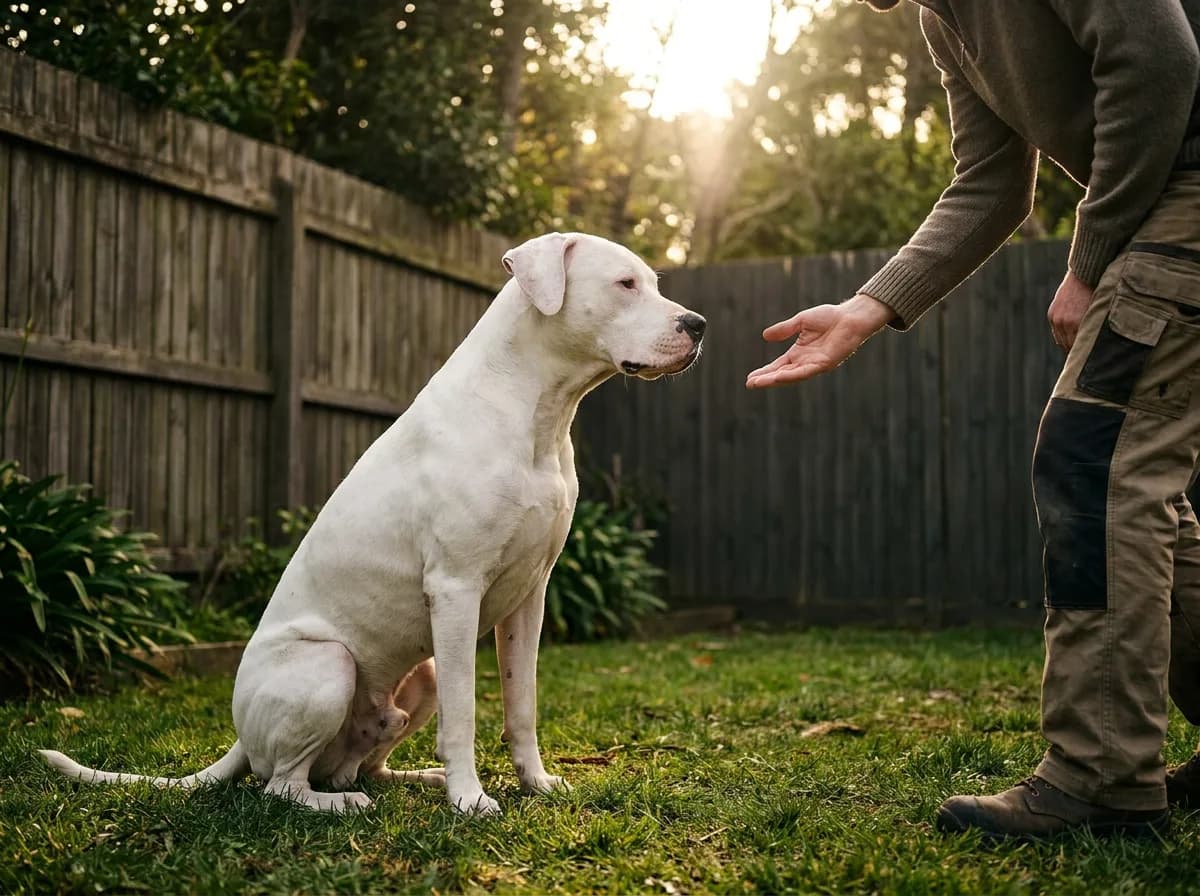
For a deaf Dogo Argentino, plan communication around what the dog can perceive. Use consistent visual cues, reward attention and teach household members the same approach. Avoid surprising a resting dog with unexpected handling. A qualified reward-based trainer can help make the routine clear and comfortable for both dog and caregiver.
Secure management is especially important where an audible warning may not reach the dog. Keep outdoor areas enclosed, use appropriate walking equipment and explain the communication routine to sitters. Do not test recall near traffic or let a seemingly attentive moment stand in for a secure boundary.
- Show each caregiver the cues the dog already knows.
- Approach where the dog can see you whenever practical.
- Practice attention in a quiet, enclosed setting.
- Keep identification details and emergency contacts current.
- Tell veterinary and boarding staff about the hearing result.
Be careful with breed deafness percentages found online. LSU's deafness incidence table marks its Dogo data as based on insufficient tested numbers for a meaningful percentage. It cannot support a reliable breed-wide rate. The individual report is the relevant starting point for your dog's care.
If an older dog seems less responsive after previously hearing well, arrange an assessment rather than assuming the original puppy result explains the change. Describe when you notice it and any accompanying ear discomfort or other signs. Historical screening and a current clinical examination serve different purposes.
Dogo Argentino lifespan questions
Keep the source of each claim in view: a published lifespan range is not a measured breed average, and an individual BAER hearing result describes that dog's test. The questions below address how to use those distinctions when making care decisions.
No. A reaction to a sound does not provide the same information as a formal hearing test with each ear evaluated. Dogs can respond to visual cues, movement or hearing in one ear. Ask for the individual BAER report and have unclear findings explained by the testing clinic or your veterinarian.
No. It records completed documented testing and public availability of the required information. The results must be read because the number itself does not mean every finding was normal. Screening is not a guarantee against future illness, and routine examinations remain important throughout the dog's life.
Deafness alone does not provide enough information to calculate an individual's remaining years. There should be no unsupported lifespan prediction based solely on a hearing result. Focus on safe management and individualized care, including any other health conditions, the home environment and a communication routine suited to the dog.
No. Breeder-specific experience may help you ask about relatives, documented ages and causes of death, but it is not a population estimate. Ask how many dogs the claim includes and whether younger dogs still living were counted. Do not substitute that account for a measured study of the wider breed.
No. There is no longevity guarantee from a food, supplement or care product. Appropriate nutrition and veterinary care support a dog's needs, but cannot promise a specific lifespan. Discuss supplements with your veterinarian, particularly when your dog already takes medication or eats a prescribed diet.
Bring weight and appetite changes, mobility and medication history, previous reports, and any relevant photographs or short videos. Record changes with dates and explain how they affect daily life. Include all supplements and doses so the veterinary team can review the complete routine rather than a partial list.
BVMS, MRCVS
Dr. Pippa Elliott, BVMS, MRCVS, is a veterinarian with nearly 30 years of experience in companion animal practice. Dr. Elliott earned her Bachelor of Veterinary Medicine and Surgery from the University of Glasgow. She was also designated a Member of the Royal College of Veterinary Surgeons. Married with 2 grown-up kids, Dr. Elliott has a naughty Puggle named Poggle, 3 cats and a bearded dragon.
Sign up for expert-backed reviews and safety alerts all in one place.