Aussiedoodle: Size, Coat, Temperament and Cost Guide
An Aussiedoodle is an Australian Shepherd crossed with a Poodle, bred for a low shedding coat and a working brain. This hub covers generations, sizes, colors, shedding, temperament, exercise, grooming, health and cost.
Petful is reader supported. As an affiliate of platforms like Amazon and Chewy, we may earn a commission when you buy through links on this page. There is no extra cost to you.
The Aussiedoodle is an Australian Shepherd crossed with a Poodle, and it is one of the brightest, busiest and most demanding doodles you can bring home. If you have landed here, you probably want the honest version before you commit: what the cross actually produces, how big it gets, whether the coat really stays clean of loose hair, how much work that herding brain needs every single day, and what one costs from the purchase price through to old age.
This guide is the hub for the whole breed. It gives you the complete picture in one place, then hands you to a dedicated deep dive whenever you want more on a single topic such as colors, sizes, the mini variety, temperament, grooming, health or price. Read it top to bottom to decide whether the cross fits your household, or jump straight to the part you need right now.
- 1An Aussiedoodle is an Australian Shepherd bred to a Poodle, a designer crossbreed with no kennel club recognition and no fixed standard
- 2Generation (F1, F1b, F2) is the single best predictor of coat texture and how much the dog sheds
- 3Adult size runs from roughly 10 pounds for a toy to 70 pounds for a standard, driven by which Poodle was used
- 4These are working dogs in a soft coat: plan on 60 to 90 minutes of exercise plus daily mental work, and professional grooming every six to eight weeks

Sign up for expert-backed reviews and safety alerts all in one place.
What is an Aussiedoodle?
An Aussiedoodle is an Australian Shepherd Poodle cross, a designer crossbreed produced by mating an Australian Shepherd with a Poodle to pair the Aussie's working intelligence with the Poodle's low shedding coat. The defining traits are consistent enough to summarize:
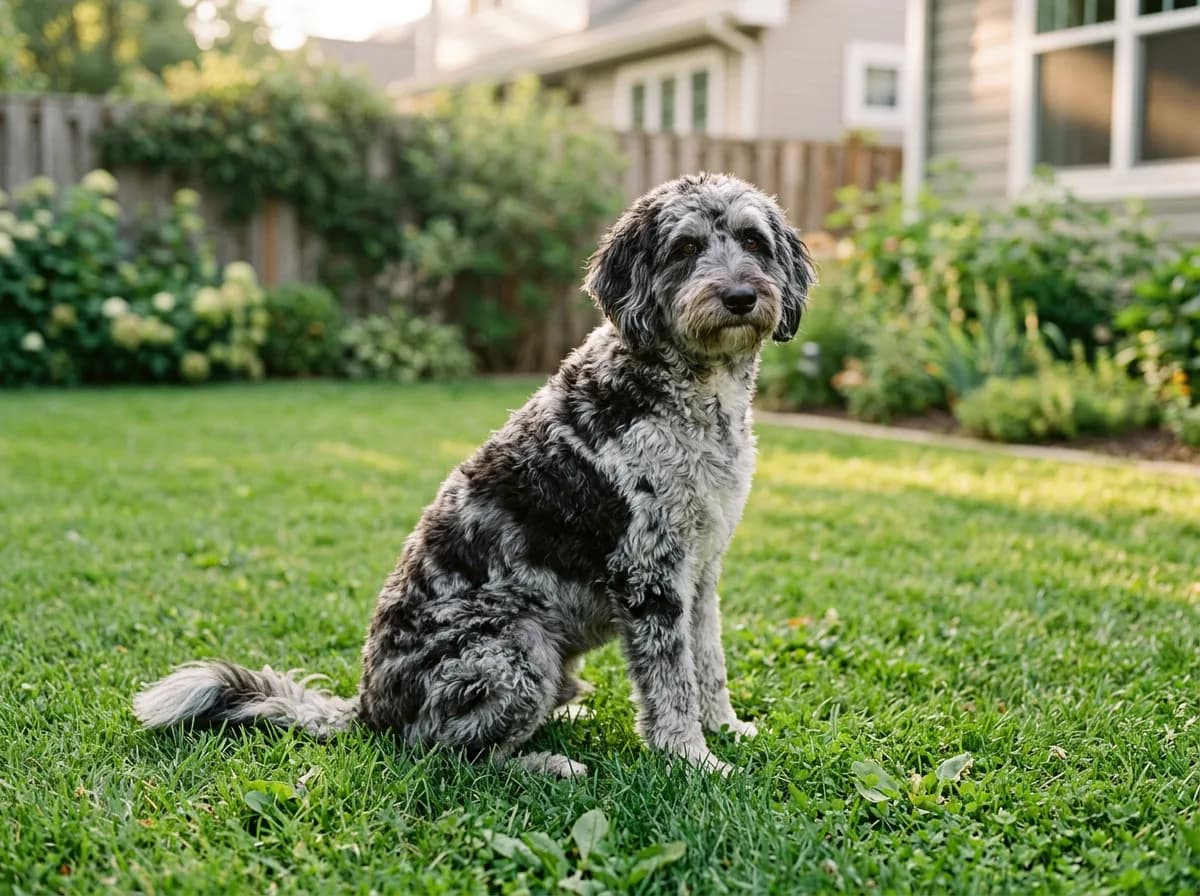
- A herding parent and a retrieving parent, so the dog is bred from two of the smartest working breeds in the world.
- A wavy to curly coat that sheds far less than an Australian Shepherd but is not shed free.
- Adult weights from about 10 to 70 pounds depending on the Poodle used.
- High energy, high biddability, and a strong need for a job.
- Frequently merle, because the Australian Shepherd side carries the merle gene.
Searchers type both "what is an Aussiedoodle" and "what is a Aussiedoodle," and the answer does not change: the Aussiedoodle dog breed is a first generation or later cross, not a purebred, and no major registry recognizes it. That matters more than it sounds. There is no written standard telling breeders what an Aussiedoodle should weigh, how its coat should fall, or how it should behave, so the Aussiedoodle breed is best understood as a range of outcomes rather than a fixed template. Two puppies in the same litter can differ in coat, size and drive.
To understand the range, look at the parents. The Australian Shepherd is a genuine herding dog: fast, biddable, intensely people focused, and famously unhappy without work, which the Australian Shepherd breed standard reflects in its emphasis on stamina and working ability. The Poodle is not the fussy show dog its haircuts imply either. It was bred as a water retriever and ranks among the most trainable breeds there is, with a dense curly coat that traps shed hair instead of dropping it. Cross the two and you get Aussiedoodle dogs that are clever, athletic and closely bonded, wrapped in a coat that most homes find far easier to live with than a full Aussie coat.
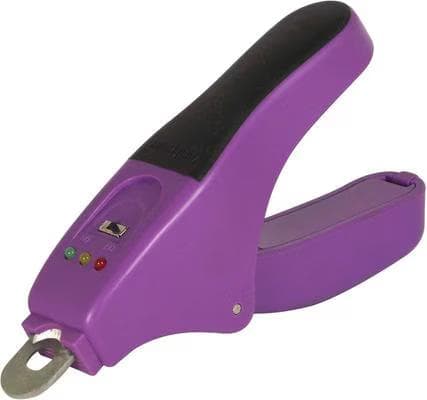
Petful may earn a commission when you click through to Chewy, at no extra cost to you.
- Because the Aussiedoodle Australian Shepherd Poodle mix has no breed standard, the words on the puppy listing tell you almost nothing about the adult dog. The generation, the Poodle size used, and the breeder's screening decisions tell you nearly everything.
One more definitional point, because it changes what you should expect from a breeder. The Aussiedoodle is a designer crossbreed rather than a recognized breed, and calling it a designer crossbreed is not an insult: it simply means a deliberate Australian Shepherd Poodle cross with no closed studbook and no written standard behind it. A purebred sells you a predictable adult. This cross sells you a probable one, so every claim a breeder makes about coat, adult size or temperament should be checked against the two parents standing in front of you rather than against the label on the litter.
Aussiedoodle generations explained
Generation is the most useful piece of technical vocabulary in Aussiedoodle breeding, and it is the one most buyers skip. The label tells you how much Poodle is in the mix, and Poodle percentage is the closest thing to a reliable coat prediction tool that exists for this cross. Get the generation right and your shedding expectation will usually be met. Ignore it and you are buying blind.
| Generation | The pairing | Approximate Poodle share | Coat and shedding tendency |
|---|---|---|---|
| F1 | Australian Shepherd bred to Poodle | About 50 percent | Wavy to loosely curled, most variable across a litter, light to moderate shedding |
| F1b | An F1 Aussiedoodle bred back to a Poodle | About 75 percent | Curlier and tighter, lowest shedding, the usual pick for allergy sensitive homes |
| F1b (Aussie back-cross) | An F1 bred back to an Australian Shepherd | About 25 percent | Straighter and heavier shedding, closer to an Aussie coat |
| F2 | Two F1 Aussiedoodles bred together | About 50 percent | Least predictable of all, coats range widely in one litter |
| Multigen | Later generation Aussiedoodles bred to each other | Usually 60 to 75 percent | Most consistent coat when the program selects for it |
The F1 Aussiedoodle is the direct cross: one purebred Australian Shepherd to one purebred Poodle. Ask a breeder what is an F1 Aussiedoodle and you should hear exactly that, along with an honest warning that F1 litters are the most variable. Some F1 puppies inherit a loose wave that sheds noticeably; littermates come out with tight curls that barely drop a hair. Breeders answer the f1 vs f1b Aussiedoodle question by breeding an F1 back to a Poodle, which produces the F1b generation at roughly three quarters Poodle. That is the version most often marketed to allergy sensitive buyers, and for good reason, though it also inherits the Poodle's tighter, faster matting coat.
The F2 Aussiedoodle, produced by breeding two F1 dogs together, is where genetics stops cooperating. The parents are each half and half, so the puppies can land anywhere on the spectrum, which is why careful programs tend to skip F2 and move to multigenerational pairings instead. A few practical rules follow from all of this:
- If low shedding is your priority, ask for an F1b bred back to a Poodle and confirm which parent was the Poodle.
- If you want the Aussie look and do not mind hair, an F1 or an Aussie back-cross will get you there.
- Avoid buying an F2 sight unseen, because the litter range is genuinely wide.
- Ask to see the adult coats of both parents, not just puppy photos, since puppy coats change at around eight to twelve months.
Almost no other breed page explains that connection plainly, which is why so many buyers pick a puppy blind and get ambushed by the first adult coat change at eight to twelve months. Generation choice is the closest thing to a coat forecast this cross offers: an F1b generation reliably predicts a curlier coat type and the lowest shedding of the three, an F1 predicts a wave and a real chance of visible hair on the sofa, and anything past that predicts a range rather than a result. If a breeder cannot tell you the generation, they cannot tell you the coat, and you should treat the two answers as the same answer.
What Aussiedoodles look like
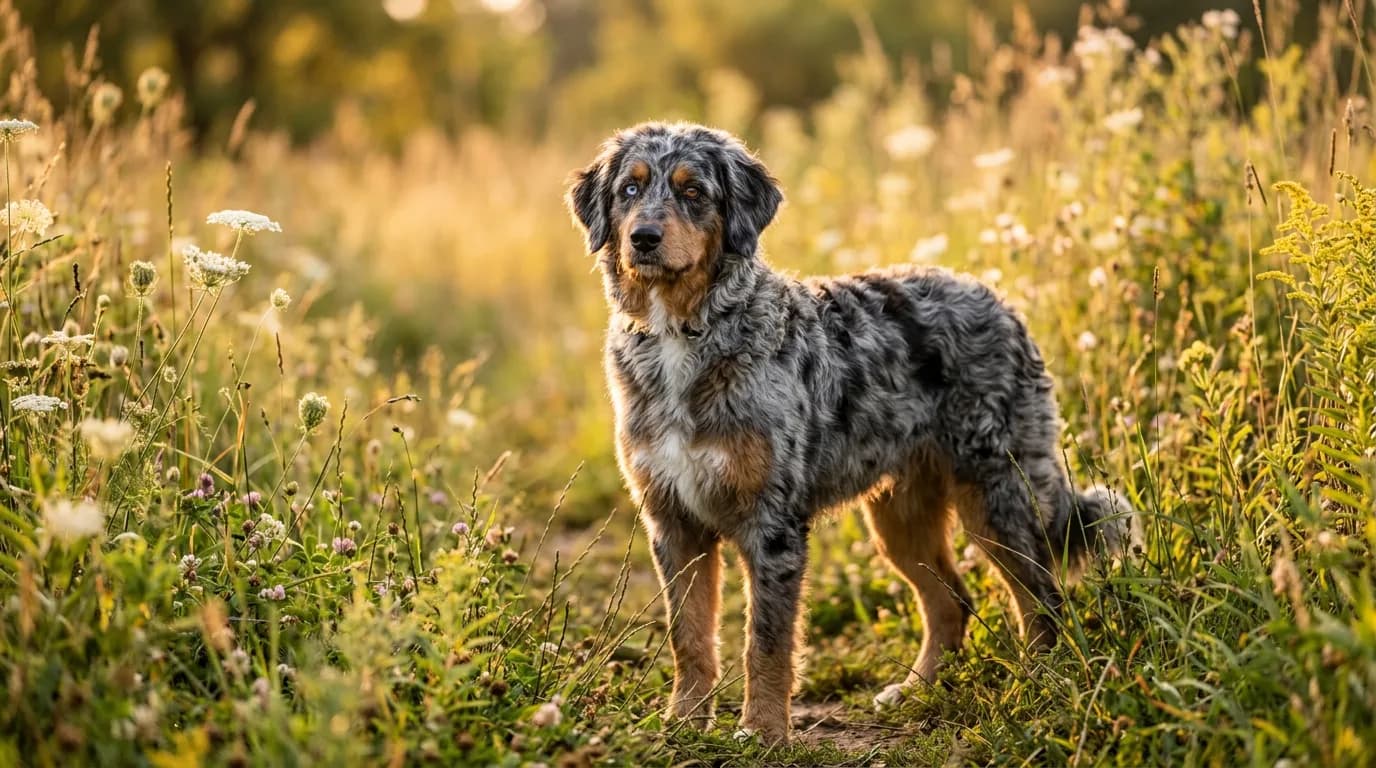
If you want to know what does an Aussiedoodle look like without falling for one flattering photo, look past the color and study three things: coat texture, facial furnishings and build. The typical adult has a rectangular, athletic frame from the Aussie side, a slightly longer muzzle than a Goldendoodle, expressive eyes that are often amber, brown, blue or two different colors, and a coat that falls somewhere between a soft wave and a dense curl.
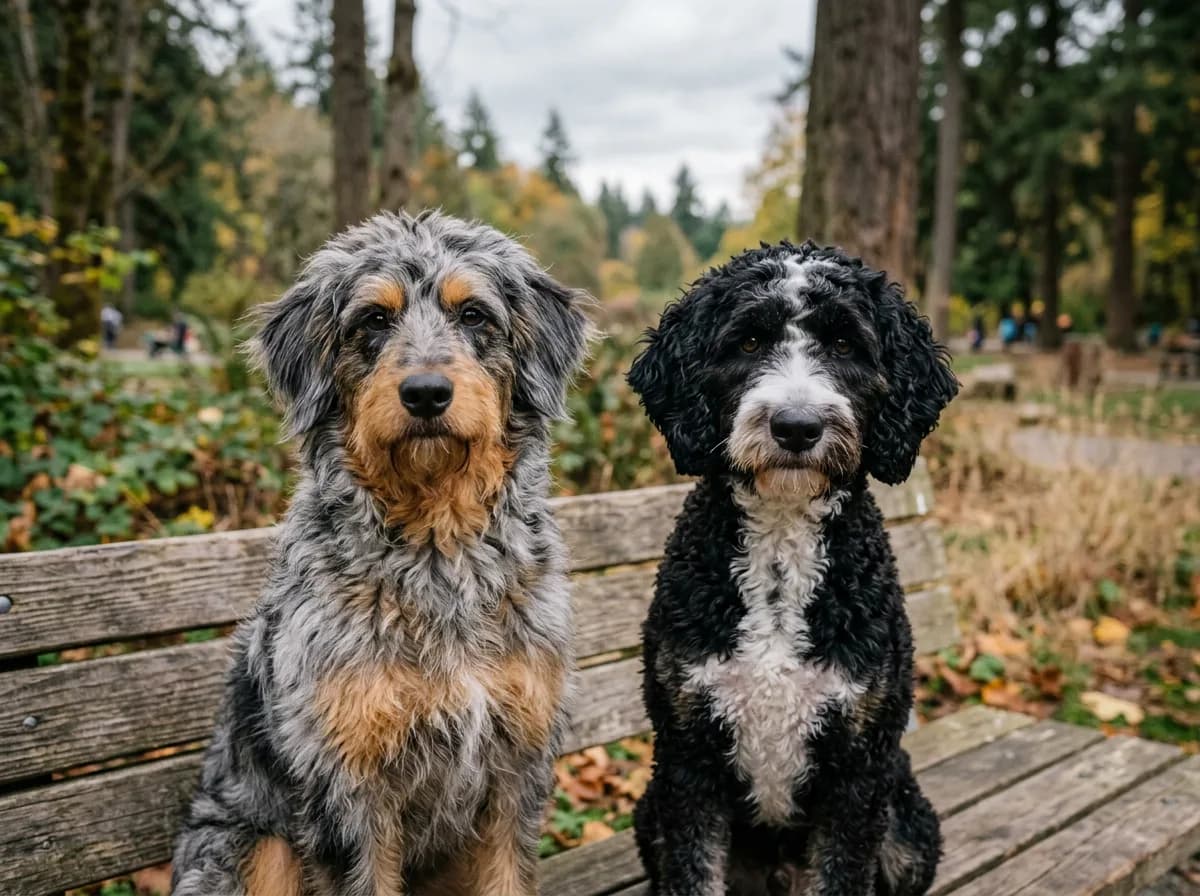
Aussiedoodle coat types sort into three practical categories, and they behave very differently in the house:
- Straight or flat coat: the most Australian Shepherd like. Easiest to brush, sheds the most, needs the least professional work.
- Wavy or fleece coat: the classic doodle look. Low shedding, soft, and the middle ground on maintenance. Most F1 dogs land here.
- Curly or wool coat: closest to the Poodle. Sheds least, mats fastest, and demands the most disciplined brushing. Most common in F1b dogs.
Furnishings are the other giveaway. These are the longer hairs of the eyebrows, beard and muzzle that give doodles their scruffy face, and they are genetically controlled. A puppy without furnishings inherits a smooth, open Aussie face instead, which surprises buyers who expected a teddy bear. The Aussiedoodle tail is worth flagging too, because the Australian Shepherd side may carry a natural bobtail gene and is also traditionally docked in some lines. That means one Aussiedoodle can have a full plumed tail carried in a gentle curve while its half sibling has a natural stub. Neither is a fault, but if you have a preference, ask before you reserve a puppy.
Scroll enough Aussiedoodle pictures and a pattern emerges: the dogs that look most like the marketing images are usually higher generation, well groomed, and photographed in coat. A real Aussiedoodle at month ten, mid coat change, looks scruffier than the brochure. The Aussiedoodle traits that stay constant across all of them are the alert expression, the athletic outline and the coat that keeps growing until you cut it.
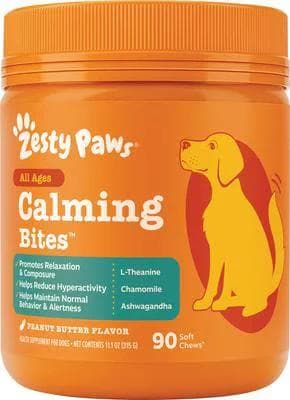
Peanut butter soft chews with L-theanine, chamomile, and ashwagandha to ease hyperactivity and support calm, relaxed behavior.
Petful may earn a commission when you click through to Chewy, at no extra cost to you.
Aussiedoodle colors and merle patterns
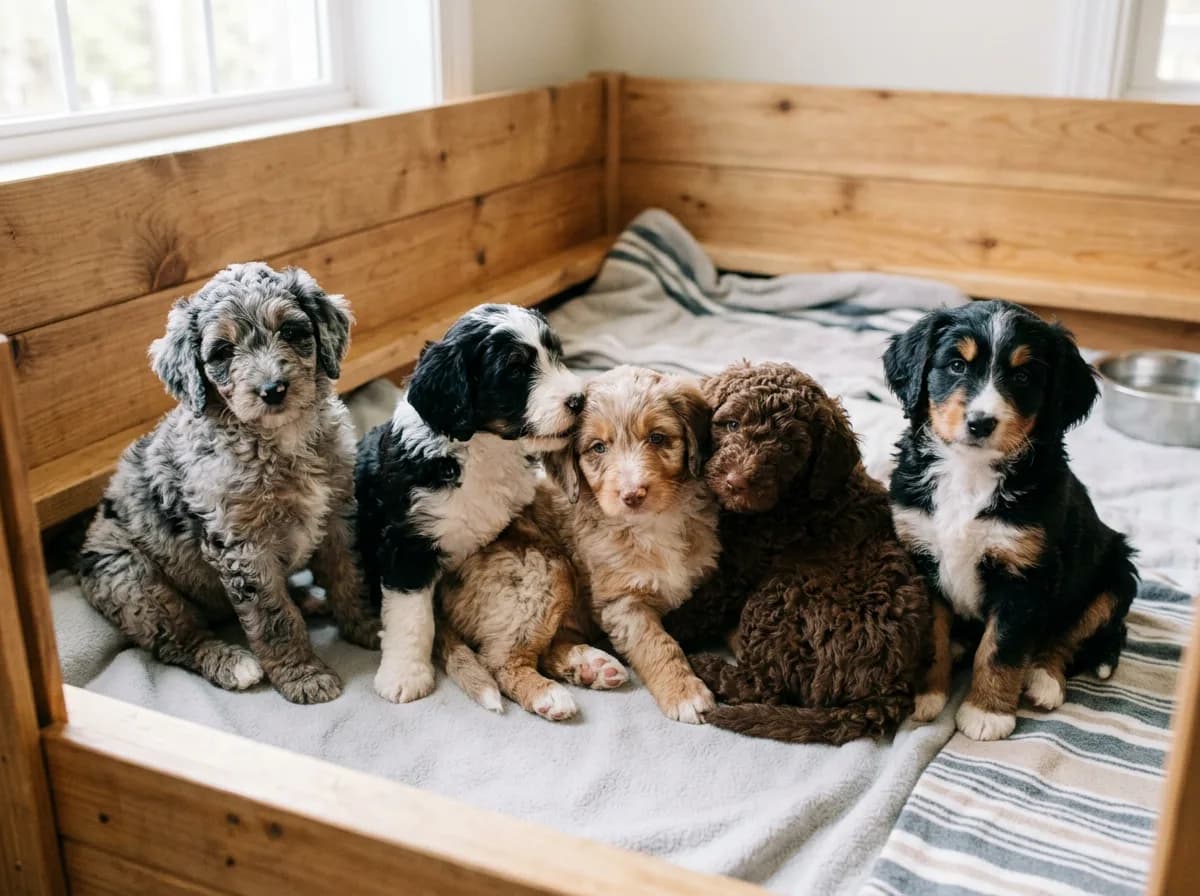
Color is where this cross pulls away from every other doodle, because the Australian Shepherd contributes the merle gene. Merle produces the mottled, marbled patterning that drives most of the search demand around the breed. Blue merle Aussiedoodle puppies (grey and black marbling, often with copper points and white trim) and red merle Aussiedoodle puppies (cinnamon and cream marbling) command the highest prices in most litters, while a solid black Aussiedoodle, a chocolate, a tricolor, a parti and a golden Aussiedoodle round out the common palette. Aussiedoodle colors also shift with age, since the Poodle side carries fading genes that can lighten a dark puppy considerably by adulthood. Breeders and buyers usually shorten all of the marbled variants to Aussiedoodle merle, which blurs a genuinely important distinction between a dog carrying one copy of the gene and a dog carrying two.
There is a serious genetics point buried under the pretty coats. Merle is a dominant modifier, so one merle parent is enough to produce merle puppies. When two merle parents are bred together, roughly a quarter of the litter inherits two copies and is born double merle, and those puppies carry a high risk of deafness, serious eye defects and blindness. Double merle breeding is never acceptable, and any breeder pairing two merle dogs to maximize flashy puppies is telling you what they prioritize. The merle genetics risk is well documented in the veterinary literature on canine inherited health and genetics, and a responsible breeder will happily show you the coat color genetics panel proving only one parent carries merle.
- Breeding merle to merle produces double merle puppies at high risk of deafness and permanent eye defects. A reputable Aussiedoodle program pairs one merle parent with a solid coated partner and tests to prove it. Walk away from any litter advertised as merle to merle, whatever the price.
For the full color inventory, how each pattern is inherited, which colors fade and what merle testing actually reports, read our dedicated guide to Aussiedoodle colors and merle patterns. If you want to see where the pattern originates, the parent breed page on the blue merle Australian Shepherd shows the same genetics in the purebred.
Merle is also the commercial engine of this cross, which is the part color-led breed pages leave out. Merle puppies routinely list $500 to $1,000 above a solid littermate from the same breeding, so merle patterning is driving a large share of Aussiedoodle demand, and that price pressure is exactly why the genetics deserve a warning rather than a gallery. Every responsible program warns against pairing two merle parents, and a breeder who covers the question honestly will show you the color panel before you think to ask. Despite the premium a marbled coat commands, breeding two merle dogs together is a welfare decision rather than a color decision, and the entire cost of it lands on the puppies.
Aussiedoodle sizes at a glance
Aussiedoodle size is set almost entirely by which Poodle was used, since Australian Shepherds are a fairly consistent medium breed. Breeders sort Aussiedoodle sizes into toy, mini and standard, and the gap between the extremes is large enough that they are functionally different dogs to own.
| Variety | Poodle parent used | Typical height at shoulder | Typical adult weight |
|---|---|---|---|
| Toy | Toy Poodle | 10 to 12 inches | 10 to 15 pounds |
| Mini | Miniature Poodle | 12 to 18 inches | 15 to 35 pounds |
| Standard | Standard Poodle | 18 to 23 inches | 40 to 70 pounds |
Buyers ask how big do Aussiedoodle get more often than almost any other question about the cross, and the honest answer is that a full grown Aussiedoodle can be a 12 pound lap dog or a 65 pound athlete. A standard Aussiedoodle usually finishes growing around 12 to 16 months, while the smaller varieties reach adult Aussiedoodle weight closer to 10 or 11 months. Treat every published range as typical rather than guaranteed, and ask the breeder for both parents' adult weights, which is the single best predictor available. Our full guide to Aussiedoodle size ranges has the month by month growth charts and the arithmetic for predicting an individual puppy's adult size.
Mini and toy Aussiedoodles
The mini Aussiedoodle is the most searched variety of the whole cross, and it deserves a clear definition: it is an Aussiedoodle bred using a Miniature Poodle, typically finishing at 12 to 18 inches and 15 to 35 pounds. A toy Aussiedoodle goes a step smaller by using a Toy Poodle and lands nearer 10 to 15 pounds. Some breeders market the same dogs as a miniature Aussiedoodle or simply an Aussiedoodle mini, and the naming is not standardized, so always ask for the parents' weights instead of trusting the label.
Smaller does not mean calmer. Mini Aussiedoodle size makes apartment living realistic, but the herding brain arrives at full strength in the small package, and a bored mini is every bit as inventive as a bored standard. Growth is also less predictable at the small end, because Toy Poodle genetics introduce more variability. The dedicated mini Aussiedoodle guide covers growth expectations, apartment suitability, the health notes specific to the small varieties, and how mini pricing differs from standard.
Do Aussiedoodles shed?
Yes, Aussiedoodles shed, just far less than an Australian Shepherd. Question variants like do Aussiedoodle shed, does Aussiedoodle shed and Aussiedoodle shed a lot all resolve the same way: this is a low shedding coat, not a non shedding one. Rather than dropping hair around the house, a curly or wavy Aussiedoodle coat traps most loose hair against the body, which is why the shedding you never see turns into the mats you eventually pay for. Aussiedoodle shedding is lightest in tightly curled F1b dogs, moderate in wavy F1 dogs, and heaviest in the flat coated puppies that took after the Aussie parent.
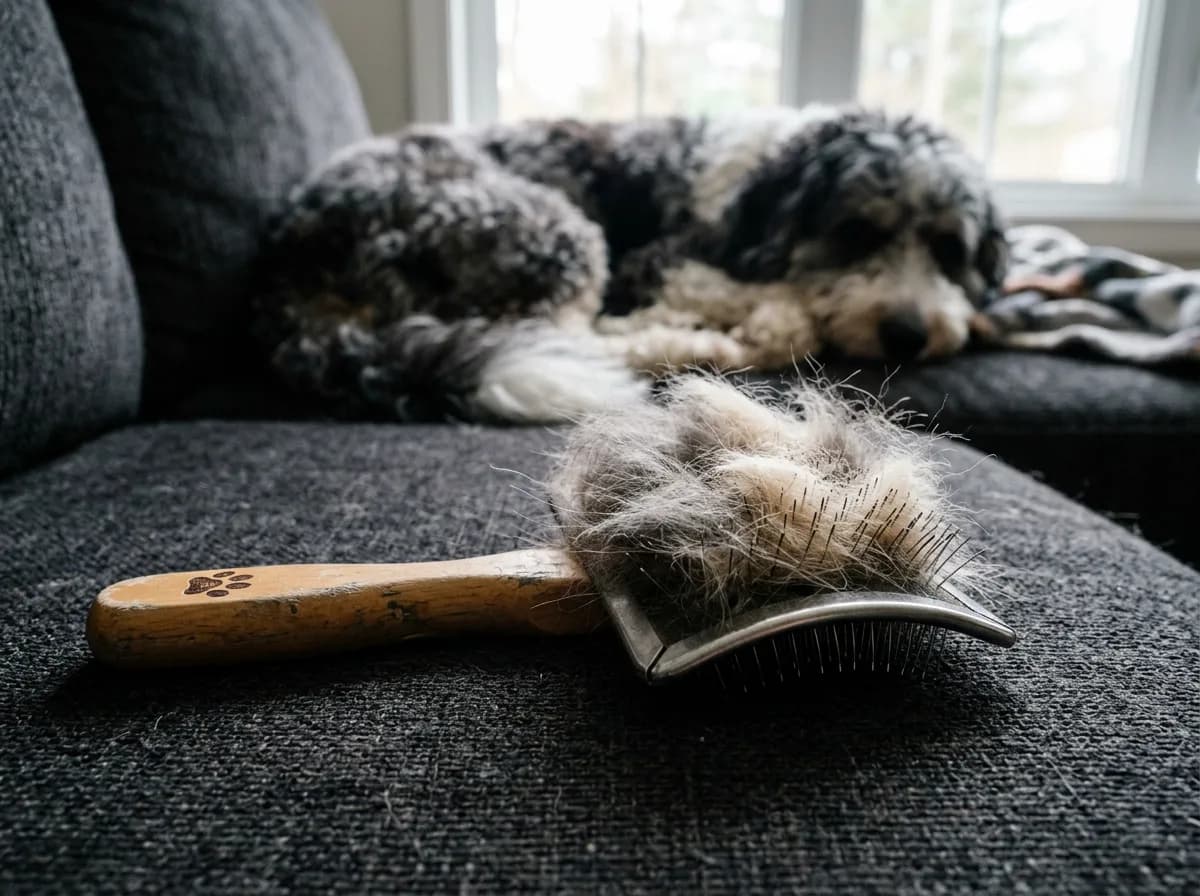
The related question, are Aussiedoodle hypoallergenic, needs a blunter answer. No dog is truly hypoallergenic. The Aussiedoodle hypoallergenic claim you see on breeder sites is marketing shorthand, and the actual allergens are proteins in dander, saliva and urine, not the hair itself. What a low shedding coat genuinely does is release less hair and less dander into your home, which many people with mild Aussiedoodle allergies tolerate noticeably better than a heavy shedding breed.
- Higher Poodle percentage generally means less shed hair and less airborne dander.
- Curly coats hold dander close to the skin, so bathing and brushing matter more than coat type alone.
- Nobody can promise an allergy outcome from a photo. Spend an hour with the specific adult dog, or with the dam, before you commit.
- Allergy sufferers should ask about the litter's coat types at eight weeks and again at the first adult coat change.
- An Aussiedoodle is not truly hypoallergenic. If someone in your household has a diagnosed dog allergy, treat the coat as a possible improvement and never as a cure, and test your reaction to the individual dog before any money changes hands.
Set your shedding and allergy expectations from the individual dog in front of you, not from the hypoallergenic myth printed on a breeder's homepage. A practical test beats any label: an allergy sufferer who reacts to a Labrador inside ten minutes will often sit comfortably with a curly coated F1b for a full hour, and still react to that dog's flat coated littermate. Visit twice, at least a week apart, spend an hour on the floor with the actual puppy or the dam, and skip antihistamines beforehand so the result tells you something you can trust.
Petful may earn a commission when you click through to Chewy, at no extra cost to you.
Aussiedoodle temperament in brief
Aussiedoodle temperament is the cross's biggest selling point and its biggest trap. Expect an affectionate, hyper attentive dog that learns fast, watches you constantly, and bonds hard to one or two people. Common Aussiedoodle personality traits include intense biddability, sensitivity to tone, a strong play drive, wariness of strangers inherited from the Aussie side, and a herding instinct that can show up as circling or gentle nipping at running children. The Aussiedoodle personality is not a low key one.
That is the summary. The temperament of Aussiedoodle dogs deserves far more room than a hub can give it, including how the herding drive presents week by week, what reactivity looks like and how to socialize it out early, and how the cross behaves with cats, toddlers and other dogs. Our full guide to Aussiedoodle temperament covers all of it.
Exercise and training needs
This is the section that decides whether the cross works for you. Both parent breeds were built to work all day, and the cross did not dilute that. Realistic Aussiedoodle energy level expectations start at 60 to 90 minutes of real physical activity daily for a standard, plus deliberate mental work, and a mini needs closer to 45 to 60 minutes rather than the token walk buyers hope for. A walk around the block does not touch it.
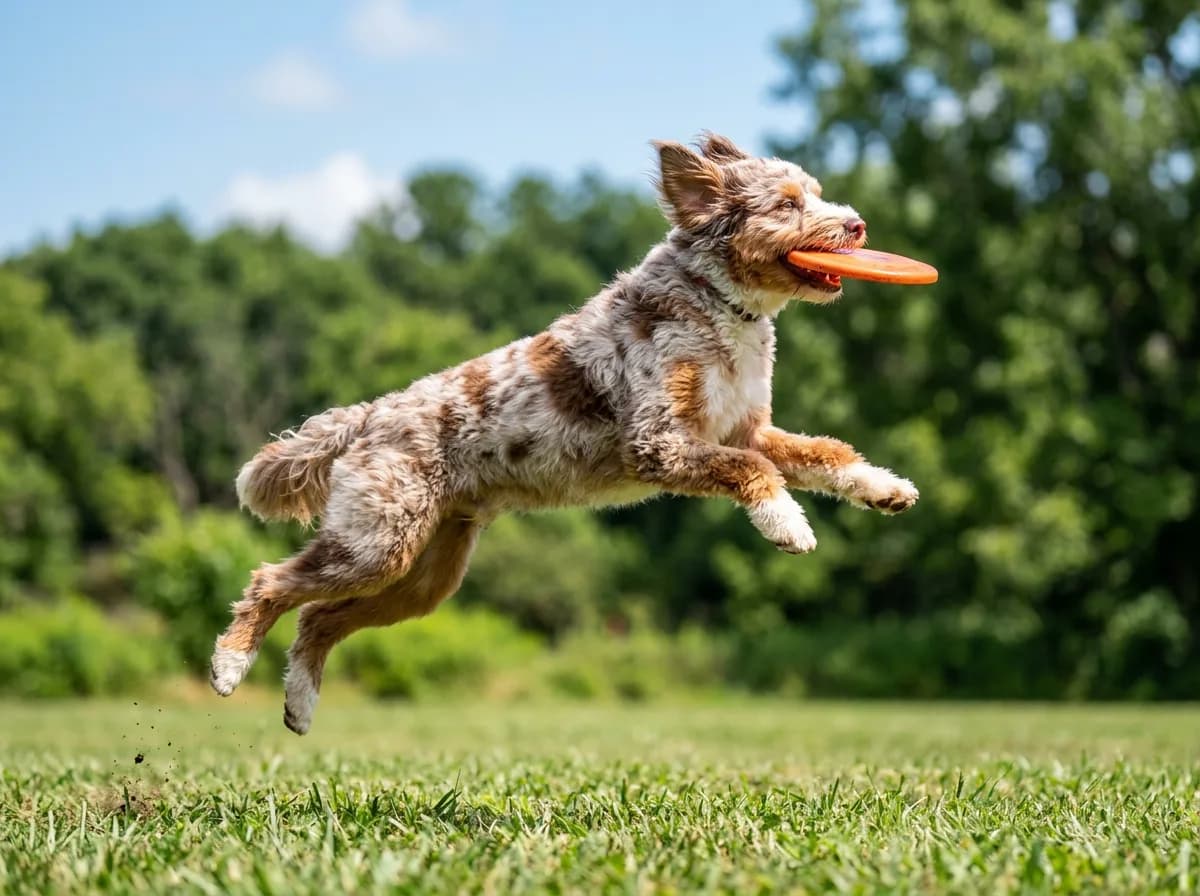
Aussiedoodle training is the easy part, because these dogs want to work with you. Reward based methods suit them far better than corrections, which this sensitive cross tends to shut down under. If you are working out how to train an Aussiedoodle from scratch, the priorities are simple and they do not change much:
- From eight weeks: start Aussiedoodle puppy training with name response, a settle cue and crate comfort.
- Through the first four months: socialize deliberately to strangers, surfaces, sounds, handling of feet and ears, and calm exposure to children.
- Early, before it becomes a problem: teach an off switch, because training an Aussiedoodle to be busy is easy and teaching it to be still is not.
- By six months: add a real job, whether that is scent games, a flirt pole, trick chains, herding balls, agility foundations or advanced obedience.
- From day one, ongoing: practice alone time in small increments so independence is normal rather than frightening.
- A no-pull harness takes the strain out of the adolescent months, when the herding drive arrives before the manners do.
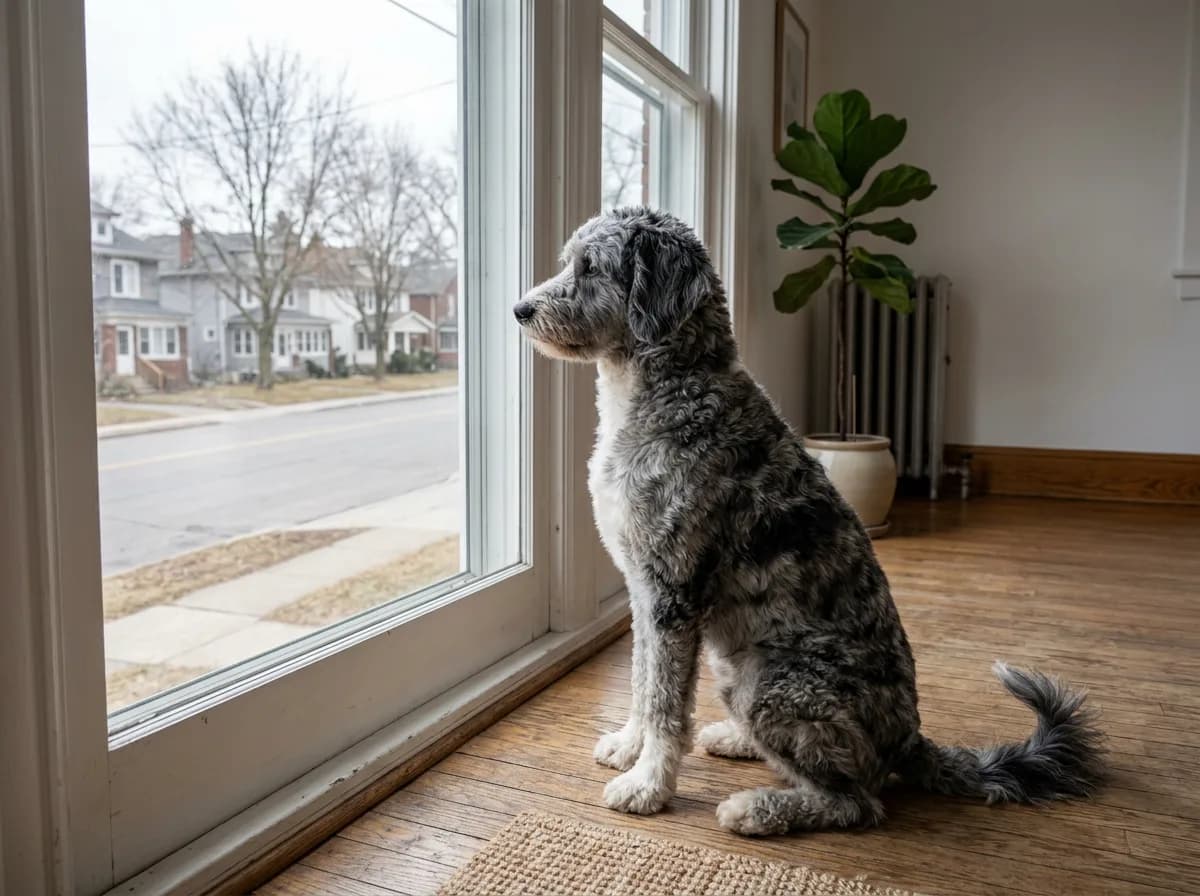
Do Aussiedoodles bark a lot? They can, and it is one of the most common complaints from unprepared owners. The Australian Shepherd is a vocal, alert herding breed, so Aussiedoodle barking often shows up as watchdog announcements at the window, demand barking when the dog is understimulated, and excitement barking during play. It is not constant in a well exercised dog, but it is louder than the average doodle. The fix is almost always upstream: meet the exercise and mental work requirement, teach a quiet cue and a place cue, block the window view that triggers patrol barking, and never reward the demand bark with attention. Homes with close neighbors and thin walls should take this seriously before buying.
Add the week up honestly before you commit, because the daily exercise and mental work the herding parent demands is not a weekend project. Budget roughly 10 hours a week for a standard Aussiedoodle across walks, off-lead running, training reps and enrichment, and expect the thinking half to matter more than the mileage. Fifteen minutes of scent work or one hard shaping session will settle this dog further than an extra half hour of fetch, because repetitive fetch winds a herding cross up rather than down. Owners who fail with this breed are almost always meeting the miles and skipping the brain.
Is an Aussiedoodle a good family dog?
Is an Aussiedoodle a good house dog? Yes, for the right house. This is an indoor dog that wants to live with its people, follows you room to room, settles well once its needs are met, and is generally clean and low odor thanks to the coat. What it is not is a low input house dog. Left alone all day in a yard or crated through a full workday without an outlet, an Aussiedoodle gets loud, destructive and anxious, and that failure mode is far more common than any temperament flaw in the breed itself.
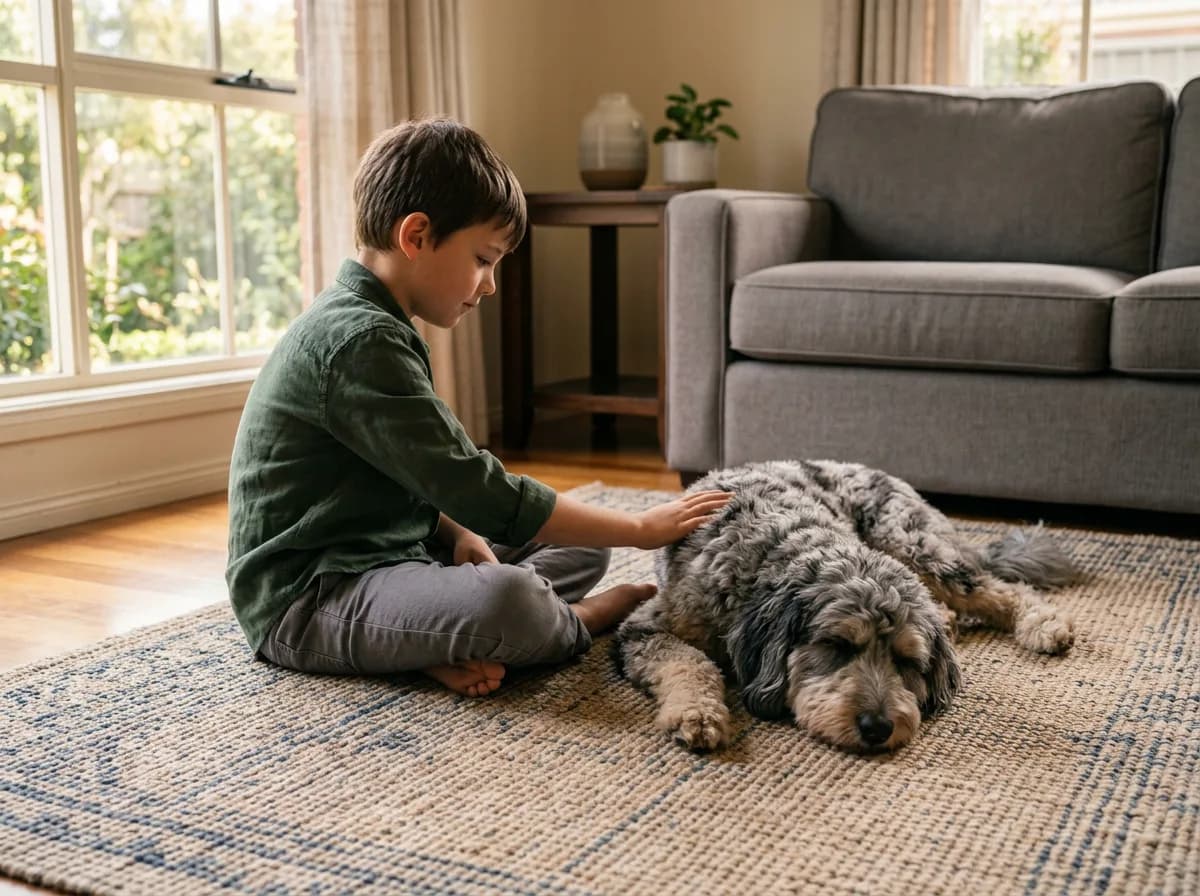
With children the picture is good with one asterisk. Aussiedoodle behavior around kids is typically gentle, patient and playful, but the herding instinct means some dogs circle, shadow or nip at the heels of running children. It is not aggression, it is a job instinct with no sheep available, and it responds well to early redirection.
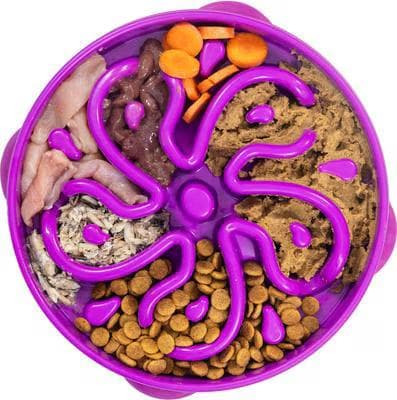
A maze-pattern slow-feeder bowl that makes fast eaters work for each bite, reducing the gulping and swallowed air that trigger regurgitation and vomiting. Holds up to 4 cups.
Petful may earn a commission when you click through to Chewy, at no extra cost to you.
- Best fit: active households, older children, homes with a yard or a committed daily routine, owners who want to train.
- Workable fit: apartments with a genuinely active owner, first time owners who will hire a trainer, homes with cats when raised together.
- Poor fit: full workday absences with no dog walker, owners wanting a calm low effort companion, households with no time for grooming.
- Watch for: heel nipping with toddlers, resource guarding if not managed early, and velcro attachment that turns into separation distress.
So is an Aussiedoodle a good dog for a family? For a family that trains, exercises and grooms, it is one of the best companions available. For a family that wants a dog to fit around an already full life without changing anything, it is the wrong pick.
One household-level warning decides more rehoming cases than temperament ever does: Aussiedoodle barking is a family-life problem before it is a training problem. This cross announces the mail carrier, the neighbor's front door and the child coming home, and in a semi-detached house, a townhouse or an apartment that noise lands on somebody else's evening. Work out before you buy where the dog will settle, whether it can see the street from that spot, and who is home to interrupt the patrol. Families that solve the layout question in advance rarely report a barking complaint at all.
The downsides of an Aussiedoodle
Every honest Aussiedoodle pros and cons list has to name the real costs, and the downsides here cluster around workload rather than character. The main downside to Aussiedoodles is the grooming commitment: a wavy or curly coat mats within days if it is neglected, needs brushing several times a week to the skin, and needs a professional groom every six to eight weeks for the life of the dog. The second is high exercise needs, since a herding cross that is under exercised reliably invents work you did not want. Add unpredictable coat and size outcomes, a high purchase price, herding behaviors around children, real separation sensitivity, and inherited conditions from both parent lines, and you have a dog that rewards prepared owners and punishes casual ones.
- The grooming commitment never ends: brushing several times a week plus a professional groom every six to eight weeks, for 12 or more years.
- High exercise needs are non negotiable: 60 to 90 minutes daily for a standard, plus mental work.
- Nothing is guaranteed: coat, shedding, adult size and drive all vary, especially in F1 and F2 litters.
- Separation sensitivity is common: this cross bonds hard and does poorly with long solo days.
- Herding behavior surfaces around movement: circling and heel nipping with running children or cyclists.
- Cost is high at both ends: purchase price plus grooming, food, training and veterinary care over a long life.
- A correctly sized wire crate gives an over-tired dog somewhere to switch off, which matters more with a herding cross than with a placid breed.
Two things worth putting to rest. The typical Aussiedoodle behavior problems people report (barking, chewing, counter surfing, escaping, nipping) are almost always symptoms of an unmet exercise or enrichment need rather than a defect in the cross. And the recurring question about Aussiedoodle bite force has no useful answer: there is no measured, breed specific figure for a crossbreed with no standard, published bite force numbers circulating online are largely invented, and body size would predict more than breed anyway. This is not a guarding breed and bite strength is not a meaningful metric for choosing one. The honest pros and cons of Aussiedoodle ownership come down to time, not temperament.
Grooming an Aussiedoodle
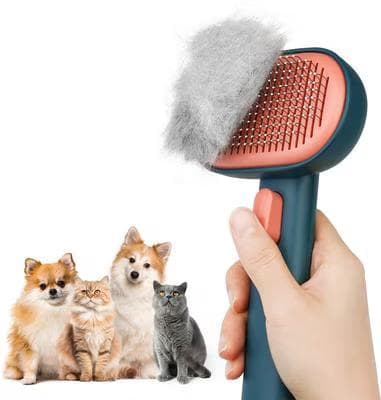
Aussiedoodle grooming is the running cost buyers most often underestimate. The coat grows continuously, traps shed hair, and mats quickly at the friction points: behind the ears, in the armpits, under the collar and along the back legs. Working out how to groom an Aussiedoodle at home means brushing to the skin with a slicker and a metal comb three or four times a week, drying the coat fully after baths, and keeping the ears clean, since hairy drop ears trap moisture.
Popular Aussiedoodle haircuts include the Aussiedoodle teddy bear cut (rounded face, even one to two inch body length), the puppy cut, the summer or kennel cut for hot climates, and the lion cut for dogs whose coats have gone past saving. Choosing an Aussiedoodle haircut is partly aesthetic and partly a maintenance decision, because a shorter clip buys you weeks of easier brushing. Our full guide to grooming an Aussiedoodle covers tools, brushing technique, cut styles with photos, bathing cadence and what to tell your groomer.
Aussiedoodle health and lifespan
Aussiedoodle lifespan typically runs 10 to 13 years, with the smaller varieties living toward the top of that band and standards nearer the bottom. Published Aussiedoodle life expectancy figures vary because there is no breed registry collecting the data, so treat any single number cautiously. What is clear is that the Aussiedoodle life span you actually get depends heavily on healthy weight, dental care and preventive veterinary attention, not just genetics.
Because a crossbreed inherits from both sides, the known Aussiedoodle health issues are the union of two lists rather than a shorter one. The conditions worth screening for include hip dysplasia and elbow dysplasia from both parents, progressive retinal atrophy and other inherited eye conditions, the MDR1 gene mutation (a drug sensitivity carried by the Australian Shepherd that changes how the dog metabolizes several common medications), epilepsy, autoimmune thyroiditis, and skin and ear conditions driven by the coat. Merle related deafness and eye defects are a risk only when breeding is careless.
- Ask for OFA or PennHIP hip results and an eye certification on both parents.
- Ask specifically about MDR1 testing, since it is Aussie specific and easily skipped.
- Ask what the breeder does with dogs that fail screening.
- Budget for insurance or a savings buffer early, before anything goes wrong.
Our full guide to Aussiedoodle health and lifespan covers each condition, the genetic screening panels worth paying for, and the symptoms that warrant a same day vet visit.
One last thing to be clear about before you talk to a breeder: a crossbreed does not average out its inherited health risks. It draws them from both parent breeds at once, so a single Aussiedoodle can carry the Australian Shepherd's MDR1 drug sensitivity and the Poodle's eye and hip problems in the same body. Hybrid vigor genuinely helps with the recessive conditions that come from a narrow purebred gene pool, and it does nothing whatever for a dominant risk like MDR1. That is why you want screening paperwork on both parents rather than a breeder's assurance that mixed dogs are healthier by default.
What an Aussiedoodle costs
Aussiedoodle price from a reputable breeder generally runs from about $1,500 to $5,000, with merle patterning, mini and toy sizing, and multigenerational lines sitting at the top of that band. When people search how much does an Aussiedoodle cost, the purchase figure is only the opening line. Aussiedoodle pricing also varies sharply by region and waitlist length, and a suspiciously low Aussiedoodle puppy price usually signals skipped health testing rather than a bargain.
The bigger number is the ongoing one. Grooming alone runs roughly $70 to $120 per visit every six to eight weeks, which compounds into thousands over a long life, and that sits on top of food, routine veterinary care, training and insurance. First year Aussiedoodle cost commonly lands between $3,000 and $6,000 all in once supplies, vaccinations, neutering and training are counted. Compare quoted Aussiedoodle prices against what the breeder actually tested for rather than against each other. The dedicated Aussiedoodle price guide breaks down purchase price by size and color, first year budgets and lifetime cost of ownership.
- Feed a complete adult dry food matched to the size class the dog will finish at, because a standard and a toy have very different growth needs.
Aussiedoodle vs Bernedoodle, Goldendoodle and Labradoodle
Almost nobody shops for this cross in isolation, and the doodle comparison table below answers the cross-shopping question directly. The short version: the Aussiedoodle is the highest drive and most work oriented of the four, the Bernedoodle is the calmest and largest, the Goldendoodle is the most reliably easygoing, and the Labradoodle sits between the Golden and the Aussie on energy.
| Cross | Non-Poodle parent | Typical adult weight | Energy level | Grooming load | Best for |
|---|---|---|---|---|---|
| Aussiedoodle | Australian Shepherd | 10 to 70 lb | Very high, herding drive | High | Active owners who want to train daily |
| Bernedoodle | Bernese Mountain Dog | 25 to 90 lb | Low to moderate | High | Families wanting a calmer, larger companion |
| Goldendoodle | Golden Retriever | 15 to 90 lb | Moderate to high | High | First time owners wanting an easygoing dog |
| Labradoodle | Labrador Retriever | 15 to 65 lb | Moderate to high | Moderate to high | Active families wanting a sturdy all-rounder |
Which is better, an Aussiedoodle or a Goldendoodle? Neither is better outright, and the right answer depends entirely on how much work you want. Choose the Goldendoodle if you want the softer, more forgiving, more consistently sociable dog, which is the safer pick for a first time owner or a busy family. Choose the Aussiedoodle if you want a sharper, more driven dog that will thrive on training, dog sports and daily jobs, and you actually have the hours for it. The Aussiedoodle versus Goldendoodle decision comes down to drive rather than looks or size, and buyers who start from Goldendoodle vs Aussiedoodle tend to underestimate that gap. The same framing settles Aussiedoodle vs Goldendoodle debates in either direction.
On Aussiedoodle vs Bernedoodle, the Bernese side brings size and a notably lower energy setting, so shoppers weighing Bernedoodle vs Aussiedoodle are usually really choosing between a couch companion and a working partner. Our Bernedoodle guide covers that cross in full. On Aussiedoodle vs Labradoodle, the Labrador side is friendlier with strangers and less prone to herding behavior, so Labradoodle vs Aussiedoodle usually favors the Labradoodle for busy family homes, and our Labradoodle guide has the detail. Finally, Aussiedoodle vs Australian Shepherd is a coat and shedding question more than a temperament one: the drive is comparable, but the purebred Australian Shepherd sheds heavily year round while the cross usually does not.
- Choose the Aussiedoodle if you want a training partner, enjoy dog sports, and can give the dog a real job most days.
- Choose the Bernedoodle if you want the largest and calmest of the four, and can absorb a shorter lifespan and the biggest grooming bill.
- Choose the Goldendoodle if you want the most forgiving family dog and the most predictable temperament, especially as a first dog.
- Choose the Labradoodle if you want an outgoing dog that is easier with strangers and far less likely to herd running children.
Set side by side like that, the cross-shop question mostly answers itself. Buyers who ask directly how the Aussiedoodle compares against the Bernedoodle, the Goldendoodle and the Labradoodle are usually asking one thing underneath: how much of my week does this dog want? A live doodle search asks the same four questions every time, and the questions people also ask almost never get a straight ranking, so here is one. On weekly time commitment the order runs Aussiedoodle first, Labradoodle second, Goldendoodle third and Bernedoodle last. Pick one of the other doodles if you want a companion; pick this one if you want a partner.
Finding an Aussiedoodle: breeders and rescue
Because there is no registry policing this cross, choosing among Aussiedoodle breeders is the most consequential decision you will make. Reputable Aussiedoodle breeders are easy to identify once you know what to look for, and the difference between a good program and a broker with a website is visible within one conversation.
- Health testing results you can verify for both parents, including hips, eyes and MDR1.
- Coat color genetics testing proving no merle to merle pairing.
- A willingness to let you meet the dam and see where the puppies are raised.
- Straight answers on generation and expected adult size, including the downsides.
- A written health guarantee and a take-back clause for the dog's whole life.
- No pressure, no deposits before you have spoken, and a waitlist rather than instant availability.
Treat any listing advertising an Aussiedoodle for sale with immediate availability, multiple litters always ready, or shipping without a video call as a warning sign. A good Aussiedoodle breeder screens you nearly as hard as you screen them. Adoption is also more realistic than most buyers expect, because doodles surrender at meaningful rates once the grooming bills and exercise demands land. Aussiedoodle rescue groups and doodle specific rescues regularly place adults and occasional puppies, and general shelter searches turn up the cross more often than people assume. Aussiedoodle adoption typically costs a few hundred dollars rather than a few thousand, and adopting an adult has the underrated advantage of showing you the finished coat, size and temperament instead of asking you to gamble on a puppy.
- Ask what they do with a dog that fails health screening. A serious program will tell you it is spayed or neutered and placed as a pet. A broker will change the subject.
Cross-shopping the doodles is normal at this stage. The Sheepadoodle is the Old English Sheepdog version of the same idea, and it lands larger and shaggier than an Aussiedoodle.
- Sheepadoodle temperament: the same herding-parent question, answered for the Old English Sheepdog cross.
- Sheepadoodle health issues: what each parent breed contributes, and which screening to ask a breeder for.
- Sheepadoodle puppies: pricing, ethical breeders, and the listing red flags worth knowing.
- Sheepadoodle vs Bernedoodle: the other big-doodle matchup buyers cross-shop.
Frequently asked questions
It depends entirely on the Poodle parent. A toy Aussiedoodle finishes around 10 to 15 pounds and 10 to 12 inches, a mini lands at 15 to 35 pounds and 12 to 18 inches, and a standard reaches 40 to 70 pounds and 18 to 23 inches. Standards typically finish growing at 12 to 16 months, smaller varieties closer to 10 months.
Most live 10 to 13 years, with the mini and toy varieties trending toward the upper end and standards toward the lower end. Keeping the dog lean, staying current on dental and preventive veterinary care, and buying from a breeder who screens both parents all push the number up.
An F1b is a first generation Aussiedoodle bred back to one of the parent breeds. Bred back to a Poodle, it is roughly 75 percent Poodle and produces the curliest, lowest shedding coats, which is why it is the usual recommendation for allergy sensitive homes. Bred back to an Australian Shepherd, it is about 25 percent Poodle and sheds considerably more.
Yes. Plan on brushing to the skin three or four times a week and a professional groom every six to eight weeks at roughly $70 to $120 per visit. The coat traps shed hair rather than dropping it, so neglected coats mat quickly behind the ears, under the collar and in the armpits.
They are among the most trainable crossbreeds, since both parents were bred to work closely with people. The catch is that they are sensitive to harsh handling and get bored fast, so short reward based sessions, early socialization and a genuine job work far better than repetition or correction.
A mini or toy can do well in an apartment provided the exercise and enrichment requirement is met every day, not just on weekends. Barking is the usual friction point with neighbors, so teach a quiet cue early and block the window views that trigger patrol barking.

Coreen Saito is a pet writer and longtime shelter volunteer with more than a decade in animal rescue. She covers cat behavior, breed care, and the small, ordinary science of sharing a life with companion animals, with a particular focus on honest takes about the products and decisions that actually matter. At home in Arizona, she's outranked by Mac (a dog with the loudest opinion in the house), Rebel (a cat who governs by quiet authority), and Meri (an orange tabby who runs the late shift and the laundry basket). She writes about all three, plus the rescues that keep coming through her life, at LifeWithMinty.com.
Sign up for expert-backed reviews and safety alerts all in one place.