Sheepadoodle: Size, Temperament, Cost, and Care
A sheepadoodle is an Old English Sheepdog crossed with a Poodle, bred for a low-shedding coat and a steady family temperament. This hub covers generations, size, colors, shedding, lifespan, health, and cost.
Petful is reader supported. As an affiliate of platforms like Amazon and Chewy, we may earn a commission when you buy through links on this page. There is no extra cost to you.
The Sheepadoodle is an Old English Sheepdog crossed with a Poodle, and the result is a large, shaggy, unusually gentle dog wrapped in a coat that most families underestimate. If you are reading this before you contact a breeder, you probably want the unvarnished version: what the cross actually produces, how big it finishes, whether that coat really keeps hair off your floors, how long these dogs live, and what one costs once the purchase price stops being the only number that matters.
This guide is the hub for the whole breed. It answers the core questions in one place, then hands you to a dedicated deep dive whenever you want more on a single topic, whether that is adult size, the miniature version, puppies and breeders, personality, coat care, health screening, or how the cross compares with the other popular doodles.
- 1A sheepadoodle is an Old English Sheepdog bred to a Poodle, a designer crossbreed with no kennel club recognition and no fixed standard
- 2Generation is the single best predictor of coat texture and shedding, and the F1B backcross produces the curliest, lowest shedding coats
- 3Most standard adults finish at 55 to 85 pounds and 20 to 27 inches, while minis land far smaller
- 4Expect 11 to 15 years of life depending on adult size, professional grooming every 6 to 8 weeks, and a lifetime cost several times the sticker price

Sign up for expert-backed reviews and safety alerts all in one place.
What Is a Sheepadoodle?
A sheepadoodle is a designer crossbreed produced by mating an Old English Sheepdog with a Poodle, almost always a Standard Poodle, pairing the sheepdog's calm bulk and biddability with the Poodle's low-shedding coat and quick brain. Most standard adults stand 20 to 27 inches at the shoulder and weigh 55 to 85 pounds. No major kennel club recognizes the sheepadoodle breed, so there is no written standard telling breeders what the dog should weigh, how the coat should fall, or how it should behave.
Searchers type what is a sheepadoodle expecting one tidy answer, and the honest reply is that the sheepadoodle dog breed is a range of outcomes rather than a fixed template. Two puppies from the same litter can differ in coat texture, adult weight, and drive. What stays consistent across the cross is worth knowing before you shop:
Petful may earn a commission when you click through to Chewy, at no extra cost to you.
- A herding parent and a water-retrieving parent, so the dog is bred from two genuinely capable working breeds.
- A wavy to curly coat that sheds far less than an Old English Sheepdog coat but is not shed free.
- Adult weights from roughly 25 to 85 pounds, driven almost entirely by which Poodle was used.
- Moderate energy with a strong social need, plus a herding instinct that can show up as circling or nudging.
- A shaggy, heavily furnished face that has to be cut back to keep the eyes clear.
To understand the range, look at the parents. The Old English Sheepdog is a drover: heavy boned, slow to mature, famously affectionate with children, and carrying a profuse double coat that sheds constantly and mats without daily work. The Standard Poodle is not the fussy show dog its haircuts suggest either, having been bred as a water retriever, and it ranks among the most trainable breeds in the world. Cross the two and the sheepadoodle dog most people meet is a big, soft, people-obsessed animal with a coat that traps loose hair instead of dropping it around the house.
That parentage is also the answer to the old english sheepdog vs sheepadoodle question. The purebred is heavier, more thickly coated, shorter lived on average, and a considerably bigger shedding and grooming commitment. Put the sheepadoodle vs old english sheepdog side by side and the cross is usually lighter on its feet, easier to train, and far easier to keep hair-free, while giving up some of the purebred's predictability. If you are comparing across the wider doodle family, our Labradoodle guide covers the cross that made this whole category popular.
- Because the sheepadoodle mix has no breed standard, the label on a puppy advertisement tells you very little about the adult dog. The generation, the size of the Poodle used, and the health screening the breeder actually paid for tell you nearly everything.
Sheepadoodle Generations: F1, F1B, and Australian Lines
Generation is the most useful piece of vocabulary in this cross, and it is the one buyers skip most often. The label tells you how much Poodle is in the mix, and Poodle percentage is the closest thing to a reliable coat and shedding prediction that exists here. Every ranking page treats these dogs as one animal, which is exactly why buyers cannot predict what they are getting.
| Generation | The pairing | Approximate Poodle share | Coat and shedding tendency |
|---|---|---|---|
| F1 | Old English Sheepdog bred to a Poodle | About 50 percent | Wavy to loosely curled, most variable across a litter, light to moderate shedding |
| F1B | An F1 sheepadoodle bred back to a Poodle | About 75 percent | Tighter curl, lowest shedding, the usual pick for allergy sensitive homes |
| F1B (sheepdog back-cross) | An F1 bred back to an Old English Sheepdog | About 25 percent | Straighter, heavier, sheds noticeably more |
| F2 | Two F1 sheepadoodles bred together | About 50 percent | Least predictable of all, coats range widely in one litter |
| Multigen | Later generation sheepadoodles bred to each other | Usually 60 to 75 percent | Most consistent coat when a program selects for it |
The F1 sheepadoodle is the direct cross, one purebred Old English Sheepdog to one purebred Poodle. Ask about a sheepadoodle F1 litter and a good breeder will warn you up front that F1 is the most variable option: some puppies inherit a loose wave that drops visible hair, while littermates come out in tight curls that barely shed at all. Breeders answer that unpredictability with the F1B backcross, breeding an F1 back to a Poodle to land near three quarters Poodle. That is the F1B sheepadoodle marketed to allergy sensitive buyers, and it earns the reputation, though it also inherits the Poodle's faster matting coat.
Two other labels cause real confusion on breeder listings:
- Australian sheepadoodle: usually a sheepadoodle bred to an Australian Labradoodle, which quietly brings Cocker Spaniel and other lines into the pedigree. Ask for the full parentage in writing rather than trusting the name.
- Golden sheepadoodle: either a sheepadoodle carrying an apricot or cream coat from the Poodle side, or a three-breed mix with a Golden Retriever somewhere in the pedigree. These are two very different dogs sold under one word.
- F2 and beyond: breeding two F1 dogs together is where genetics stops cooperating, because both parents are half and half and the puppies can land anywhere on the spectrum.
- Multigen: the most predictable coats in the cross, produced by programs that select deliberately across several generations.
A mini sheepadoodle and a standard are the same cross at two sizes, but an Australian sheepadoodle is not the same breed combination at all, and treating those labels as interchangeable is how buyers end up surprised by an adult coat. Size class and generation are separate axes, and you need both answered before you reserve a puppy.
So what should you realistically expect from each label? Treat the generation as a probability, not a promise. An F1 litter is a coin toss on coat: some puppies carry a loose wave that sheds visibly, others a tight curl that barely does. An F1B narrows that spread toward the curly, low-shedding end, which is why allergy-sensitive buyers are steered there. Neither label makes a dog safe for a severe allergy sufferer, and no generation removes shed hair entirely. Ask what the adult coats in the previous litter actually turned out to be.
- F1: plan for light to moderate shedding, and accept that you will not know the real coat until the adult coat comes in between eight and twelve months. If shedding is a dealbreaker, this is the wrong bet.
- F1B: the most reliably low-shedding outcome available in this cross, and the sensible pick for a mildly allergic household. You pay for it in brushing, because that curl packs down every other day.
- F2: both parents are half and half, so shedding and allergy outcomes scatter widest here. Never accept an allergy assurance on an F2 litter.
- Australian lines: coat behavior tracks the specific program rather than the letter code, so ask what the adults in that line shed like instead of reading across from an F1B.
- Whatever the label, test it. Spend an hour with an adult from the same line on a day it has not just been bathed, since a fresh bath temporarily strips the dander that triggers most reactions.
The confusion is understandable, because most pages ranking for this breed treat all sheepadoodles as one dog, leaving buyers unable to predict coat type or shedding from the generation label alone. Read the label as a percentage question instead. F1 means half Poodle and the widest possible spread of adult coats. F1B means roughly three quarters Poodle and the tightest, lowest-shedding curl available in the cross. Australian sheepadoodles are not a percentage at all, since a third breed has entered the pedigree, so a letter code from that kind of program does not compare with a letter code from anyone else's. Get the full pedigree in writing before the deposit rather than the initials.
- Ask for the sire and dam by breed and by recorded adult weight, not by letter. An F1B with no named Poodle variety tells you nothing about finished size.
- Ask for photos of adults from the previous litter of the same pairing, in full coat rather than freshly groomed.
- If a program uses the word Australian, ask which breeds are in the pedigree and how many generations back they sit.
- Coat texture is only settled at the adult coat change between eight and twelve months, whatever the label promised at eight weeks.
What Does a Sheepadoodle Look Like?
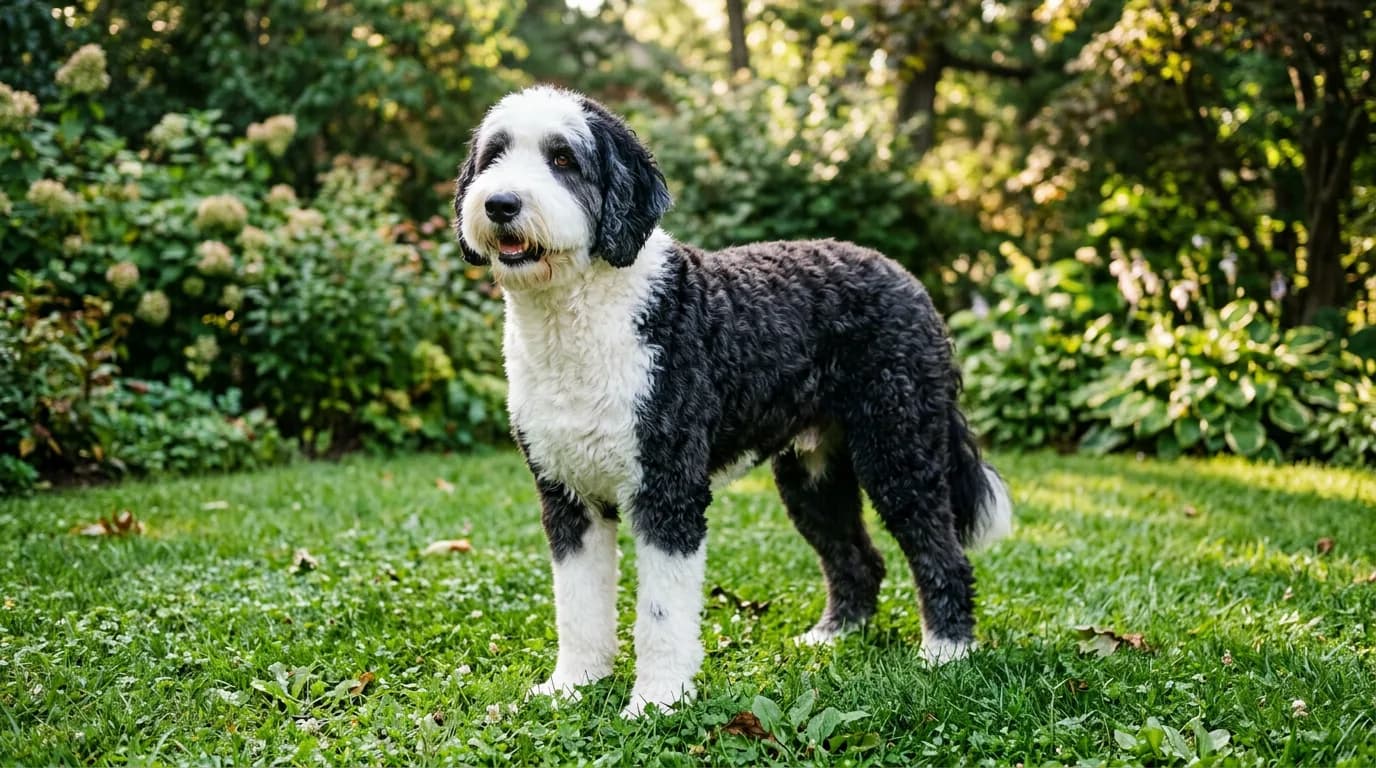
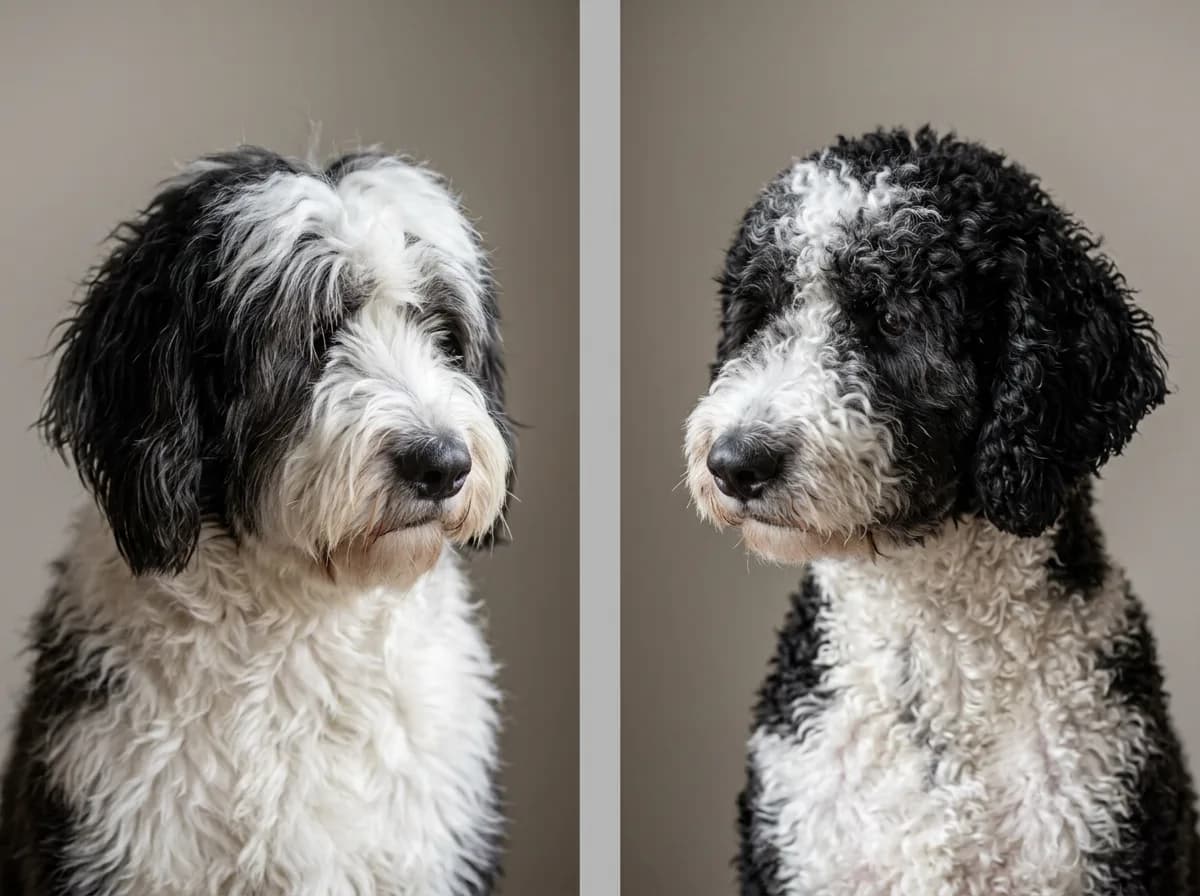
The classic look is a rectangular, sturdy dog with a broad head, a heavily bearded muzzle, a soft fall of hair over the eyes, and a coat that keeps growing until you cut it. Puppy coats change substantially at around eight to twelve months, so the fluffy black-and-white bundle in the breeder's photos will not look the same at a year old. A full grown sheepadoodle carries a longer, denser, more textured coat than the puppy pictures suggest.
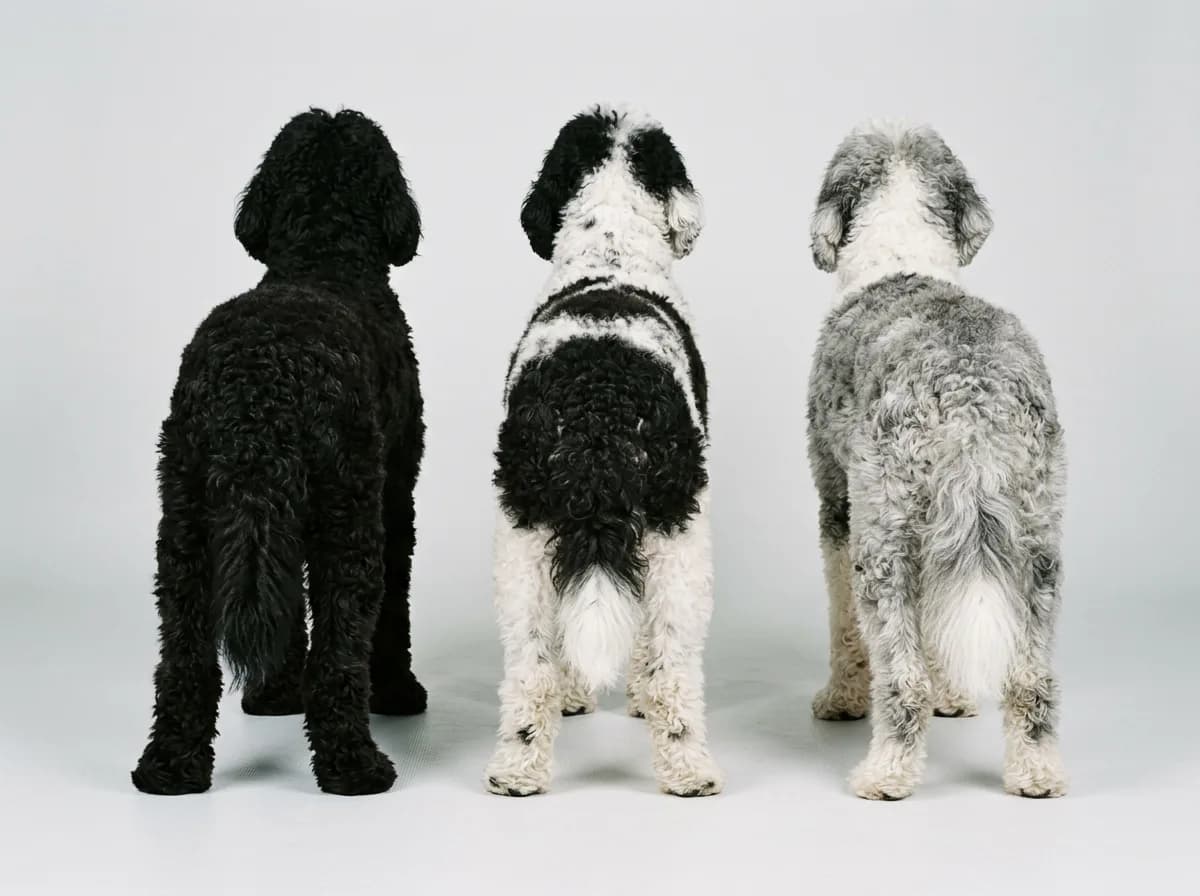
Color is where this cross earns its image searches. Scroll enough sheepadoodle pictures and the same handful of patterns comes up again and again:
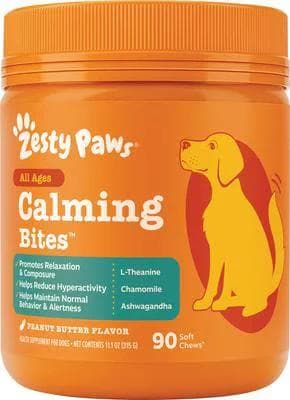
Peanut butter soft chews with L-theanine, chamomile, and ashwagandha to ease hyperactivity and support calm, relaxed behavior.
Petful may earn a commission when you click through to Chewy, at no extra cost to you.
- Black and white: the signature pattern, and the one most buyers picture. A black and white sheepadoodle carries the parti markings of the Old English Sheepdog on a Poodle-textured coat.
- Solid black: a black sheepadoodle is common where a black Poodle was used, and many fade toward charcoal with age.
- Gray and silver: a gray sheepadoodle usually starts life black and grays out as the Poodle fading gene expresses, which can take two full years.
- White and cream: a white sheepadoodle is less common and tends to show tear staining and dirt far more obviously.
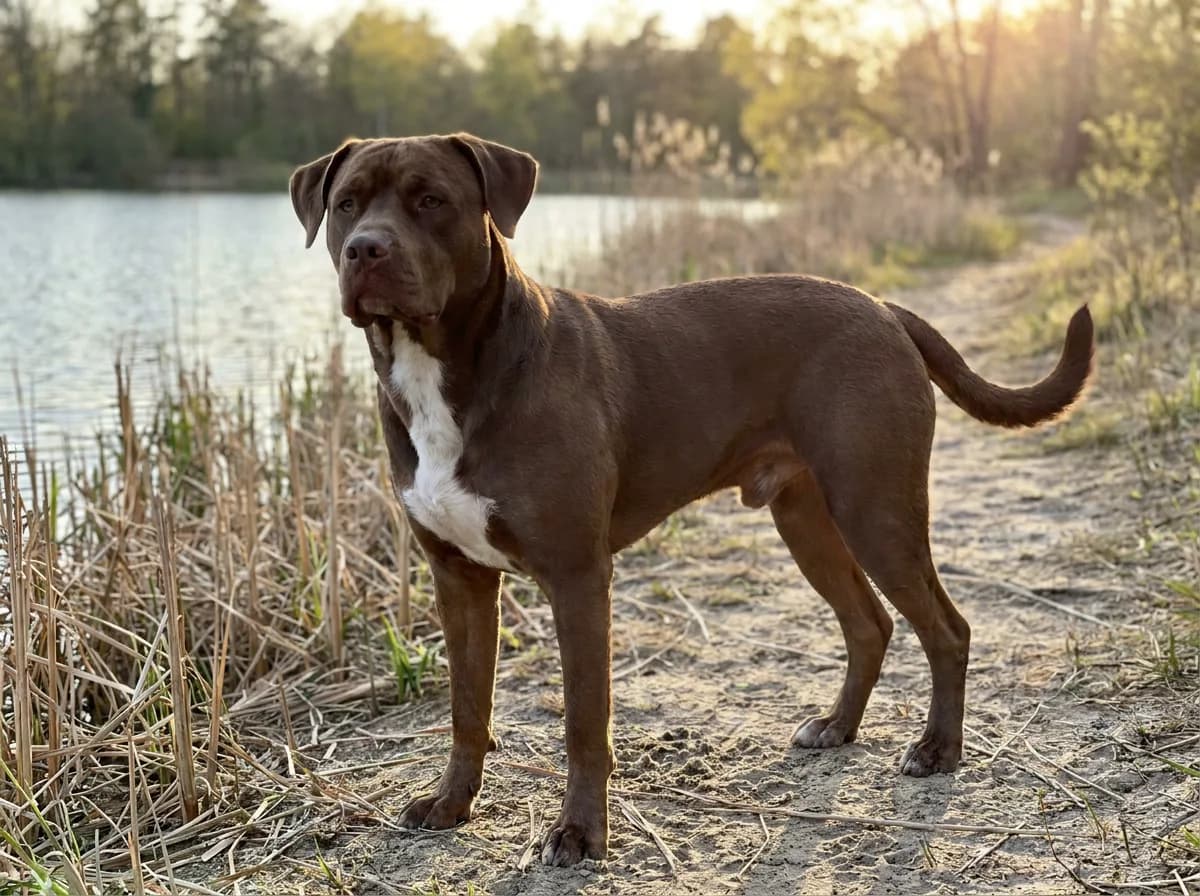
- Brown and chocolate: a brown sheepadoodle depends entirely on a brown Poodle parent, since the sheepdog side does not contribute it.
- Merle: a merle coat is mottled and marbled, and it does not come from the Old English Sheepdog at all. It enters through a merle-carrying Poodle or through added herding lines.
- White and cream coats show staining under the eyes within weeks, and a daily pass with tear stain wipes keeps the pigment from setting permanently into pale hair.
That last one needs a warning rather than a caption. Merle is a dominant modifier, so a single merle parent is enough to produce merle puppies, and there is never a reason to pair two of them.
- Breeding merle to merle produces double merle puppies at high risk of deafness and permanent eye defects. A responsible program pairs one merle parent with a solid coated partner and can show you the genetic test proving it. Walk away from any litter advertised as merle to merle, whatever the price.
Two patterns dominate the photographs people scroll before they buy, and they are worth telling apart. The black and white sheepadoodle carries solid patches on a white ground, usually a dark head and saddle with a white blaze, chest, and feet, and it is the pattern most buyers picture. A merle coat looks nothing like it up close: the black is broken into irregular marbled patches of diluted gray and blue-gray, scattered rather than blocked. Merle can also mask what the dog would otherwise have been.
- A merle coat often comes with blue or partly blue eyes and patches of pink on the nose or lips. Those are pattern effects rather than faults on their own.
- Photographs mislead on both patterns. Black fades toward charcoal and gray with age, and a merle can read far more or far less mottled after a haircut than it did in full coat.
- Tan or copper points on the face and legs are not a sheepadoodle marking. That combination usually means a Bernedoodle or another cross has been sold under the wrong name.
- Judge color in daylight and not in the week after a groom. Freshly clipped hair shows the undercoat shade, so a dog can look much lighter than it will a month later.
- Cryptic or phantom merle can hide inside a coat that looks solid, which is why a program producing merle litters should be testing genetically rather than sorting by eye.
A quick note on spelling, because it splits the listings you will search: a grey Sheepadoodle and a gray Sheepadoodle are the same dog, and breeders use both spellings interchangeably. The color itself is usually a blue merle or a silvering black, and it often arrives late. Plenty of puppies that look solidly black at eight weeks lighten into a soft grey through the coat change, so a grey Sheepadoodle advertised at a few weeks old may simply be a black puppy whose adult color has not shown up yet.
How Big Do Sheepadoodles Get?
Sheepadoodle size is set almost entirely by which Poodle was used, since the Old English Sheepdog side is a fairly consistent large breed. Breeders sort sheepadoodle sizes into micro, mini, standard, and what marketing calls a giant sheepadoodle, and the gap between the extremes is wide enough that they are functionally different dogs to live with. A standard sheepadoodle typically finishes at 20 to 27 inches and 55 to 85 pounds, while the largest lines from oversized Poodle stock push past 90 pounds.
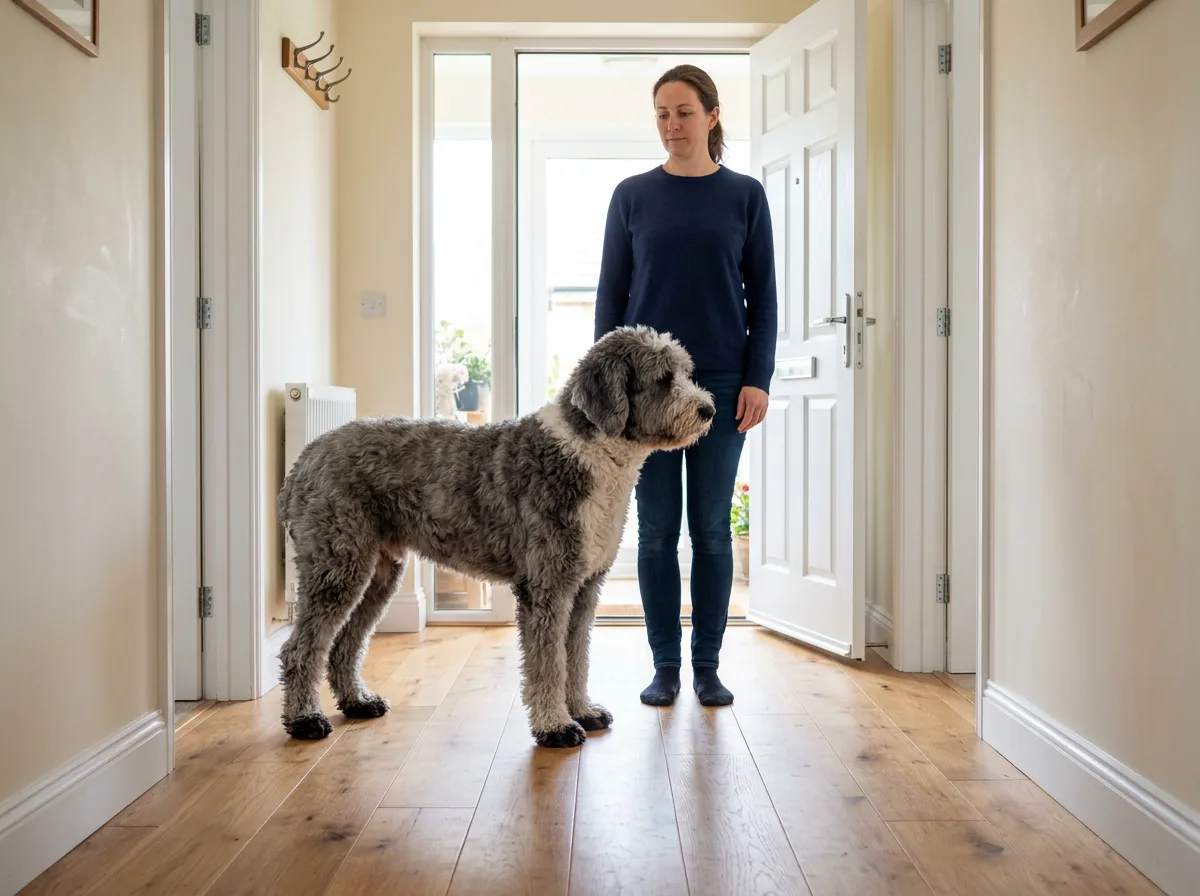
Buyers ask how big does a sheepadoodle get more than almost any other question about the cross, and a full size sheepadoodle usually stops growing between 12 and 18 months, later than smaller doodles. The single best predictor available is the adult weight of both parents, so ask for it before you ask about color. Our dedicated sheepadoodle size chart has the month-by-month growth tables, the height and weight ranges for every size class, and the arithmetic for projecting an individual puppy's adult size.
Put the adult size range for all three classes side by side and the spread is the whole story. A standard sheepadoodle finishes at 20 to 27 inches and 55 to 85 pounds, with oversized lines pushing past 90. A mini finishes at roughly 25 to 45 pounds. A micro, bred down through a Toy Poodle, usually lands under 25 pounds. Those are not three versions of one dog to live with. They are three different crate sizes, three different food bills, and three different answers to whether you can lift the dog into a car.
- Micro, under about 25 pounds: fits a 30-inch crate, travels easily, and is the only class that stays liftable with one arm at the end of a muddy walk.
- Mini, 25 to 45 pounds: a 36-inch crate, a normal hatchback, and a dog most adults can carry upstairs if it is injured.
- Standard, 55 to 85 pounds: a 42-inch or 48-inch crate, genuine cargo room in the car, and a two-person lift onto a grooming table or into a truck bed.
- Sex splits every band. Males usually sit in the upper half of a class and females in the lower half, so read the range as two overlapping halves rather than one average.
- Coat inflates all three classes visually. A groomed sheepadoodle can look considerably heavier than it weighs, so judge condition by ribs under your fingers rather than by outline.
Mini and Micro Sheepadoodles
The mini sheepadoodle is the most searched variation of the cross, and the definition is simple: it is a sheepadoodle bred using a Miniature Poodle, usually finishing between 25 and 45 pounds. A micro sheepadoodle goes smaller again by using a Toy Poodle, and a teacup sheepadoodle is a marketing term rather than a real category, often applied to runts or to dogs bred deliberately undersized. A mini sheepadoodle full grown is still a substantial, coated dog that needs the same grooming discipline as a standard.
Some breeders sell the identical dogs as a miniature sheepadoodle, and the naming is not standardized anywhere, so always ask for both parents' adult weights instead of trusting the word. A mini sheepadoodle is a size class within the same cross, not a separate breed. For mini sheepadoodle size charts, growth expectations, apartment suitability, and how to vet mini sheepadoodle breeders and miniature sheepadoodle breeders against the smaller-dog health risks, read our full guide to the mini sheepadoodle.
Do Sheepadoodles Shed? The Hypoallergenic Question
Yes, sheepadoodles shed, just far less than an Old English Sheepdog does. This is a low-shedding coat, not a shed-free one. Instead of dropping hair on your floors, a wavy or curly sheepadoodle coat holds most loose hair against the body until you brush it out, which is why the shedding you never see becomes the matting you eventually pay a groomer to fix. Sheepadoodle shedding is lightest in tightly curled F1B dogs, moderate in wavy F1 dogs, and heaviest in flat-coated puppies that took after the sheepdog parent.
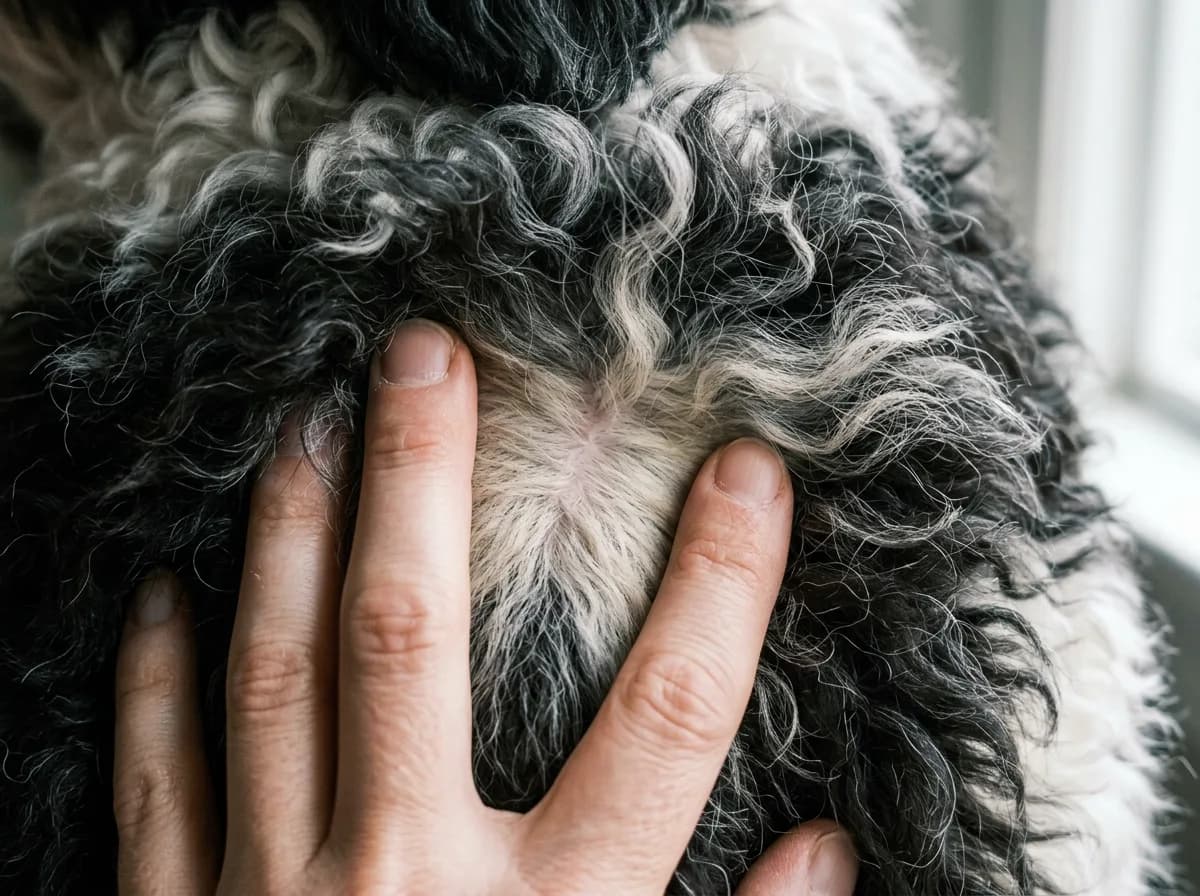
The related search, are sheepadoodle hypoallergenic, needs a blunter answer. No dog is truly hypoallergenic. The allergens that trigger people are proteins in dander, saliva, and urine, not the hair itself, and a coat that holds hair in also traps dander close to the skin rather than releasing it. That is genuinely better for many mild allergy sufferers and genuinely irrelevant to a severe one. A short reality check before anyone signs a deposit:
Petful may earn a commission when you click through to Chewy, at no extra cost to you.
- Higher Poodle percentage generally means less shed hair and less airborne dander in the house.
- Because the coat traps dander rather than shedding it out, regular bathing and brushing matter as much as coat type.
- Nobody can promise an allergy outcome from a photograph. Spend an hour with the specific adult dog or the dam first.
- Ask what coat types the litter is showing at eight weeks, then again at the adult coat change.
- Because this coat holds dander instead of dropping it, bathe every three to four weeks with an oatmeal shampoo; washing much more often than that strips the coat oils and leaves the skin flaking instead.
- A sheepadoodle is not a hypoallergenic dog. If someone in your household has a diagnosed dog allergy, treat the coat as a possible improvement and never as a cure, and test your reaction against the individual animal before any money changes hands.
It helps to set realistic expectations in household terms rather than in labels. A low-shedding coat means you will not be pulling hair off the sofa every day, and it also means the loose hair stays in the coat until you take it out, so you get tumbleweeds in the brush instead of on the floor. On the allergy side, the realistic outcome for a mildly reactive adult is fewer symptoms in a house that is brushed and bathed on a schedule, not a symptom-free one. Shedding and allergy expectations are the two things buyers get wrong most often, and both are cheaper to correct before the deposit than after the dog is home.
- The adult coat arrives between eight and twelve months. Whatever the puppy is doing at ten weeks is not your answer.
- A wavy F1 coat leaves visible hair on dark clothing. A tight F1B coat mostly does not, and neither one stops producing dander.
- Vacuum load drops, laundry and brushing load does not. The hair still exists, it just ends up in the slicker brush instead of the carpet.
- If anyone in the house has asthma or a diagnosed dog allergy, get that person into a room with an adult from the same line before money moves, not after.
Sheepadoodle Grooming and Coat Care
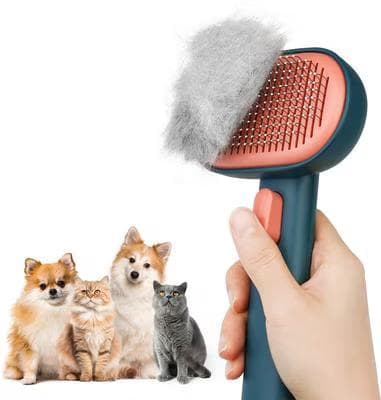
Sheepadoodle grooming is the commitment most owners underestimate, because the coat that spares your furniture demands your calendar instead. Plan on brushing to the skin three or four times a week with a slicker brush and a metal comb, paying attention to the friction points behind the ears, under the collar, in the armpits, and around the rear, where mats form first. Neglect it for a month and a groomer will have no option but to shave the dog down.
A sheepadoodle haircut is a real decision rather than a detail, and sheepadoodle haircuts fall into a few recognizable families:
- Teddy bear: the most requested of the sheepadoodle grooming styles, keeping an even one to two inches all over with a rounded face. Teddy bear sheepadoodle haircuts look adorable and mat fastest.
- Puppy cut: shorter and uniform, the low-maintenance default between full grooms.
- Summer or kennel cut: taken down close for heat and comfort, easiest to maintain and hardest on the classic look.
- Lamb or show-style trim: longer body coat with shorter legs and face, the highest-effort option by far.
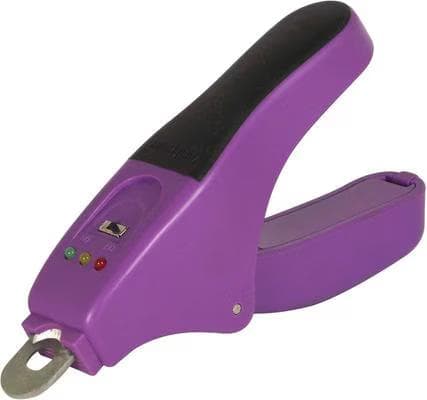
- Heavily furnished feet hide long nails until you hear them click, so shorten them every two to three weeks. A rotary nail grinder is slower than clippers but far easier on a dog that has learned to pull its paw back.
- Drop ears plus hair in the canal trap moisture after every bath, so wipe the outer ear weekly with ear wipes instead of waiting until you can smell a problem.
Our complete sheepadoodle grooming guide walks through each cut, the tools that actually work on this coat, the brushing schedule by coat type, and what to say to a groomer so you get the length you meant.
Sheepadoodle Temperament and Personality
Sheepadoodle temperament is the strongest argument for the cross. Expect an affectionate, steady, closely bonded dog that wants to be in the room with you, tolerates children unusually well, and takes training readily from both parent breeds. The common sheepadoodle personality traits are a soft mouth, a goofy streak that lasts well past puppyhood, sensitivity to raised voices, and a herding instinct that can appear as circling or gently nudging running children.
The sheepadoodle personality is not a low-maintenance one, though. These dogs do poorly left alone for long workdays, they mature slowly, and owners regularly ask two questions the hub cannot do justice to: whether sheepadoodles ever calm down, and whether they bark much. Both deserve real depth on the energy curve by age and the specific triggers behind the barking. Buyers also search do sheepadoodles bark a lot expecting a yes or no, when the honest answer depends on herding drive, boredom, and window access. Our full guide to sheepadoodle temperament covers the maturation timeline, barking triggers and how to manage them, separation anxiety risk, and how the cross behaves with cats, toddlers, and other dogs.
Is a Sheepadoodle Right for Your Family?
Are sheepadoodles good dogs? For the right household, they are among the best family crossbreeds available: patient with children, low aggression, highly trainable, and genuinely companionable. For the wrong household they are a large, expensive, hair-matting animal that grieves being left alone. The honest downside of a sheepadoodle is the total workload rather than any single flaw. You are signing up for relentless coat maintenance, a grooming bill that never stops, a dog too big to easily rehome or travel with, slow emotional maturity that stretches adolescence past two years, and a strong tendency toward separation distress in homes that are empty all day.
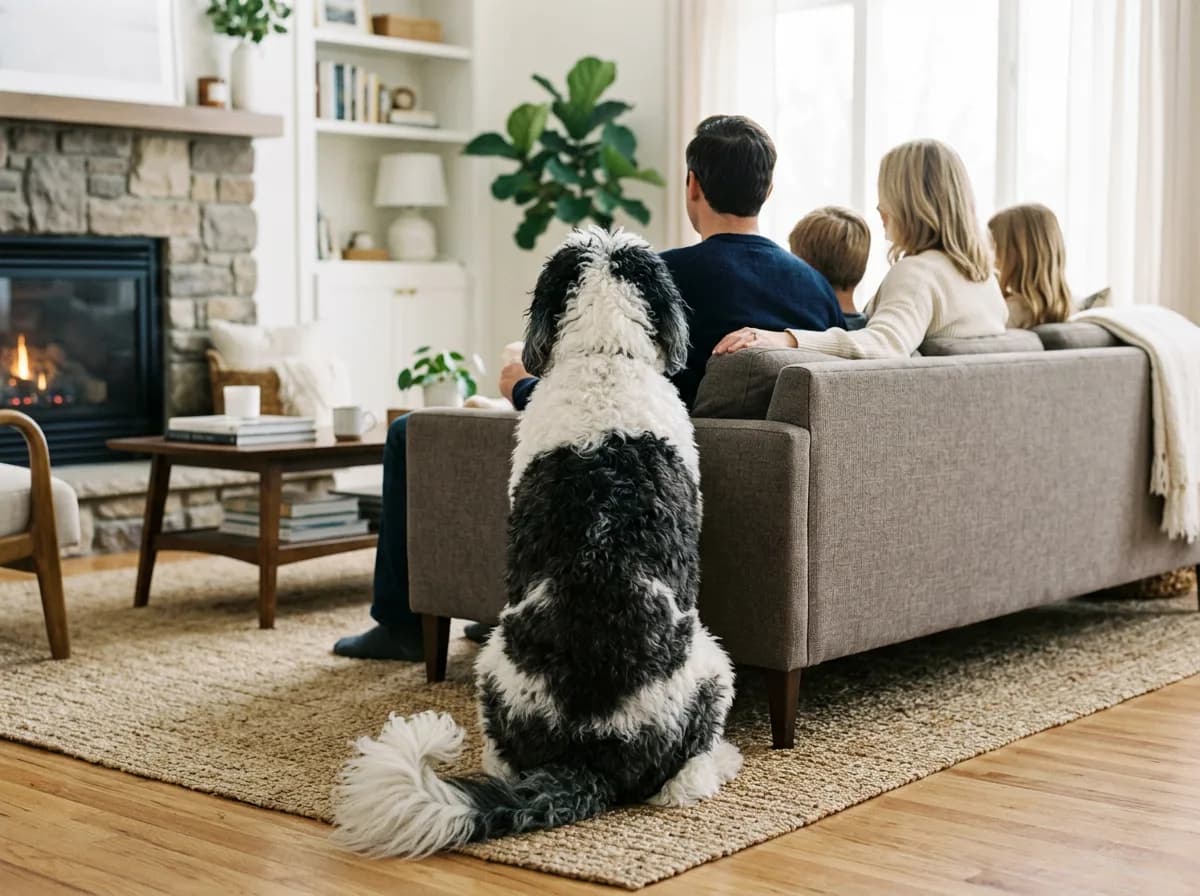
Sheepadoodle training is the easy half of ownership, because both parents were bred to work with people. Reward-based methods suit this cross far better than corrections, which a sensitive dog tends to shut down under. If you are planning out training a sheepadoodle from the day it comes home, the priorities barely change:
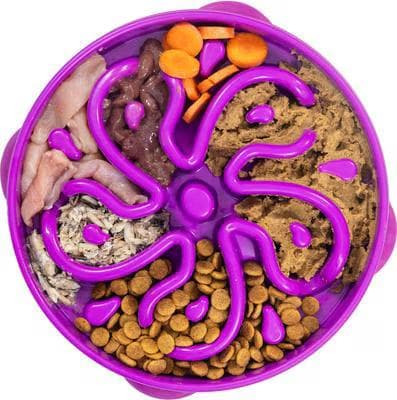
A maze-pattern slow-feeder bowl that makes fast eaters work for each bite, reducing the gulping and swallowed air that trigger regurgitation and vomiting. Holds up to 4 cups.
Petful may earn a commission when you click through to Chewy, at no extra cost to you.
- From eight weeks: name response, a settle cue, crate comfort, and daily handling of feet, ears, and face so grooming is never a fight.
- Through four months: deliberate socialization to strangers, surfaces, noises, and calm exposure to children and other dogs.
- Early and often: practice alone time in small increments, because this is the cross most likely to struggle with being left.
- By six months: redirect the herding instinct into a real outlet such as scent games, a flirt pole, trick chains, or agility foundations.
- Ongoing: 45 to 60 minutes of real exercise a day for a standard, plus mental work, not a token walk around the block.
- Feeding breakfast in a snuffle mat turns five minutes of eating into fifteen minutes of scent work, which tires a herding brain faster than adding another lap around the block.
- Put an orthopedic bed in the room the family actually uses, because a 60-pound dog that has somewhere of its own to settle learns alone time far more easily than one that only rests against your feet.
- Ask honestly how many hours the dog will be alone on a normal weekday, and whether you will pay a groomer roughly every six weeks for the next decade. If either answer is uncomfortable, this is the wrong breed for your household, however good the temperament is.
Here is the honest verdict on the households that should not get one. If your home is empty from eight to six with nobody coming back at lunch, this is the wrong dog, and no amount of exercise beforehand fixes it. If the grooming budget is the line you plan to trim when money is tight, it is the wrong dog. If you want a low-effort family pet that mostly looks after itself, the coat alone rules it out. Wanting one is not the same as being set up for one.
- Households out of the house more than eight hours with no walker, daycare, or midday break. Separation distress is the most common reason this cross gets rehomed.
- First-time owners who want an easy dog. Sheepadoodles are easy to train and hard to maintain, and those are not the same thing.
- Homes where nobody has agreed to own the brushing. If it is not on someone's calendar three or four times a week, the dog gets shaved down instead of groomed.
- Buyers who cannot absorb a recurring grooming bill on top of food and veterinary care for the next decade.
- Anyone who needs a guaranteed allergy outcome, or who wants a dog that will be emotionally mature at a year old. This cross delivers neither.
- Frequent movers, renters with tight size limits, and households that fly with the dog. A 55 to 85 pound animal in full coat is a genuine logistics problem.
Sheepadoodle Lifespan: How Long Do They Live?
Sheepadoodle lifespan generally runs 11 to 15 years, with the smaller varieties trending toward the upper end and the largest dogs toward the lower end, as is true across every size range in dogs. That figure sits above the Old English Sheepdog average and reflects the hybrid vigor a first-generation cross can bring when both parents are screened. Anyone asking how long does a sheepadoodle live should treat published ranges as an average rather than a promise, because sheepadoodle life expectancy is influenced far more by weight management and preventive care than by pedigree alone.
The variables that move the number are not mysterious, and most of them are within an owner's control:
- Body condition: keeping the dog lean is the single best-evidenced way to extend life in any breed, and this cross gains weight easily as it slows down.
- Parent screening: a breeder who tests hips, elbows, eyes, and heart removes the conditions that end lives early.
- Dental care: untreated periodontal disease drives systemic inflammation and is chronically ignored in coated breeds.
- Joint protection: a large, slow-maturing dog should not be doing forced running or stair repetition before the growth plates close.
- Early veterinary attention: deep-chested large dogs carry bloat risk, and hours matter when it happens.
- Brushing beats everything, but daily dental chews carrying the VOHC seal are the realistic backup in a household that is never going to brush a bearded dog's teeth seven nights a week.
- A 55 to 85 pound dog that will not finish growing until 18 months is worth starting on a joint supplement in early adulthood rather than waiting until stiffness shows up at nine or ten.
- Deep-chested dogs that inhale a meal in 30 seconds are the ones that end up at the emergency clinic, so serve dinner in a slow feeder bowl and keep hard exercise an hour clear on either side of it.
Life expectancy of sheepadoodle lines also varies with size class, since a 90-pound dog simply ages faster than a 30-pound one. If you are weighing the lifespan of sheepadoodle stock against another doodle, expect a year or two of difference at most, and expect husbandry to matter more than the comparison does.
It is worth naming what actually shortens a sheepadoodle lifespan, because the list is short and mostly preventable. Carried weight through middle age is the biggest one, and it is easy to miss under a coat this thick. An untreated bloat episode can end a deep-chested dog in hours. Undiagnosed thyroid or adrenal disease erodes years quietly. So does an adverse drug reaction in an MDR1-affected dog that was never tested. None of these are exotic, and all of them are catchable at a routine appointment.
- Run your hands over the ribs monthly. A heavily coated dog can put on meaningful weight before it looks any different in a photograph.
- Learn the bloat picture before you need it: unproductive retching, a hard swelling behind the ribs, restlessness, and pale gums. That is an emergency drive, not a wait-and-see.
- Ask for an MDR1 result in writing before any surgery or parasite treatment, because the mutation changes which drugs are safe and at what dose.
- Hypothyroidism and Addison's disease both open with vague signs such as lethargy, coat change, or intermittent gut upset. Bloodwork settles it, and both are manageable once named.
- Heat is a real risk under a dense coat. Walk early or late in summer, and treat heavy panting with a wide stance and bright red gums as an emergency rather than thirst.
Common Sheepadoodle Health Problems
Sheepadoodle health problems come from both sides of the pedigree, and a cross is only as healthy as the screening behind it. Hip dysplasia is the headline concern from the sheepdog side, alongside hypothyroidism, progressive retinal atrophy, and cataracts. The Poodle side contributes bloat risk, Addison's disease, and sebaceous adenitis. The item almost no ranking page mentions is the MDR1 mutation, a drug sensitivity carried in Old English Sheepdog lines that changes which medications are safe to give and at what dose.
- Ask any breeder for documented results on both parents covering hips and elbows, a current eye examination, thyroid function, cardiac evaluation, and an MDR1 test. Ask specifically what they do with a dog that fails screening. A serious program neuters it and places it as a pet. A broker changes the subject.
Our dedicated guide to sheepadoodle health issues covers each inherited condition in detail, the exact genetic panels worth paying for, the signs that warrant a same-day veterinary visit, and how insurance stacks up against a savings buffer for this cross.
How Much Does a Sheepadoodle Cost?
A sheepadoodle costs roughly $1,500 to $4,500 from a reputable breeder, with merle patterning, mini sizing, and multigenerational lines sitting at the top of that band and regional demand moving it further. That price range is the opening line rather than the answer. A suspiciously cheap sheepadoodle price almost always signals skipped health testing rather than a bargain, and the sticker is a fraction of what the dog actually costs you over its life.
| Cost line | First year | Each year after |
|---|---|---|
| Purchase from a screened breeder | $1,500 to $4,500 | Not applicable |
| Professional grooming | $700 to $1,300 | $700 to $1,300 |
| Food for a 55 to 85 pound dog | $600 to $1,000 | $600 to $1,000 |
| Routine veterinary care and vaccinations | $500 to $900 | $300 to $600 |
| Spay or neuter | $300 to $800 | Not applicable |
| Training classes | $200 to $600 | $0 to $300 |
| Crate, bed, grooming tools, and supplies | $400 to $700 | $100 to $200 |
| Pet insurance or savings buffer | $500 to $900 | $500 to $900 |
| Running total excluding purchase | $3,200 to $6,200 | $2,200 to $4,300 |
The line that surprises people is grooming cost. Professional grooming every 6 to 8 weeks at $80 to $140 a visit is not optional on this coat, and across a 12 year life it alone runs into five figures over the dog's life. Add food, veterinary care, and insurance and the lifetime cost of a standard sheepadoodle comfortably clears $25,000, which is the number that should decide the purchase rather than the deposit. Anyone asking how much is a sheepadoodle or how much does a sheepadoodle cost is usually pricing the puppy when they should be pricing the decade.
Three practical rules follow from the cost of a sheepadoodle:
- Compare quoted prices against what each breeder actually tested for, never against each other.
- Budget the grooming line before you budget anything else, because it is the one you cannot skip or postpone.
- Set up the insurance or the savings account in the first month, before anything goes wrong.
- At $80 to $140 every 6 to 8 weeks, a cordless clipper kit pays for itself inside two visits if you are willing to do face, feet, and sanitary touch-ups yourself between full grooms.
Puppy-specific pricing, deposit structures, waitlist practices, and how much are sheepadoodle puppies at different points in a breeding season are all covered in our sheepadoodle puppies guide.
The purchase price is a one-time number and everything after it recurs for a decade. A $1,500 to $4,500 puppy is followed by grooming every 6 to 8 weeks, food for a 55 to 85 pound dog, annual wellness care and vaccines, year-round parasite prevention, dental work, and either insurance premiums or a savings buffer you actually fund. Spread across an 11 to 15 year life, those recurring lines dwarf the deposit. Price the decade before you price the puppy, because the recurring cost is what people quietly cannot sustain.
- Grooming every 6 to 8 weeks works out to six to nine full appointments a year, every year, and there is no season where the coat stops growing.
- Food scales with size class. A standard at the top of the weight range eats roughly twice what a mini does, and that gap compounds across more than a decade.
- Routine veterinary care is annual until roughly age seven and usually twice a year after that, plus year-round flea, tick, and heartworm prevention.
- Dental cleaning under anesthesia is a periodic cost almost nobody budgets for, and skipping it is expensive later rather than free now.
- Decide between insurance and a dedicated savings account in the first month. Either way, a large deep-chested dog can present a four-figure emergency with no warning at all.
Comparison shopping is where this goes wrong. The pages ranking for this breed quote a purchase price and then leave you to discover the rest, and the rest is where the money actually goes. Convert everything into a monthly figure before you commit: grooming spread across six to nine appointments a year, food for a 55 to 85 pound dog, routine veterinary care, parasite prevention, and a set-aside for emergencies. Total those recurring lines and the real cost lands as a monthly number most families did not picture, which makes this a far more expensive dog to keep than the sticker suggests. Run that arithmetic on a spreadsheet before you run it on a deposit.
- Grooming is the largest recurring line: six to nine appointments a year at $80 to $140, for the whole life of the dog.
- Food scales with the size class you pick. A standard at the top of the band eats roughly twice what a mini does, every month, for a decade.
- Test your monthly figure against the tightest month you had last year, not an average one. Average months are not what breaks a budget.
- A lower purchase price does not reduce a single recurring line. It usually just means less was spent on the parents.
Finding a Sheepadoodle Puppy
Because no registry polices this cross, choosing among sheepadoodle breeders is the most consequential decision in the whole process. Reputable sheepadoodle breeders are easy to identify once you know the tells, and the difference between a real program and a broker with a good website usually shows up inside one conversation. A sheepadoodle puppy from a screened litter costs more up front and costs dramatically less over the following decade.
- Verifiable health testing on both parents, including hips, eyes, thyroid, cardiac, and MDR1.
- Willingness to let you meet the dam and see where the sheepadoodle puppies are being raised.
- Straight answers on generation, expected adult size, and the downsides of the cross.
- A written health guarantee and a lifetime take-back clause.
- A waitlist rather than instant availability, and no deposit demanded before you have actually spoken.
Adoption is more realistic here than most buyers expect, because doodles are surrendered at meaningful rates once the grooming bills and separation issues land. Sheepadoodle rescue groups and doodle-specific rescues regularly place adults, and sheepadoodle adoption typically costs a few hundred dollars rather than a few thousand. Adopting an adult also has the underrated advantage of showing you the finished coat, size, and temperament instead of asking you to gamble on a puppy.
Our full guide to sheepadoodle puppies covers breeder vetting question by question, contract and health-guarantee red flags, deposit and waitlist norms, the rescue routes worth trying first, and exactly what to look at during the first visit to a litter.
Sheepadoodle vs Bernedoodle and Other Doodles
Almost nobody shops this cross in isolation. On sheepadoodle vs bernedoodle, the Bernese side brings more bulk, a shorter average lifespan, and a slightly calmer default setting, while the sheepdog side brings a livelier, more playful dog that usually lives a little longer. Shoppers framing it as bernedoodle vs sheepadoodle are generally choosing between a heavier couch companion and a more animated family dog.
On sheepadoodle vs goldendoodle, the Golden Retriever side produces the more consistently outgoing, easier-to-read dog and the safer pick for a first-time owner, while the sheepadoodle is calmer indoors, more physically substantial, and more prone to herding behavior around children. The goldendoodle vs sheepadoodle decision comes down to sociability against steadiness rather than size or coat, since both need the same grooming commitment. Our full sheepadoodle vs bernedoodle comparison puts all three crosses side by side on size, energy, lifespan, grooming load, health screening, and price.
Frequently Asked Questions
The Old English Sheepdog is a purebred with a heavy double coat that sheds year round and needs daily work to stay mat free. The sheepadoodle adds Poodle genetics, which usually produces a lighter, easier-to-train dog with a coat that traps loose hair instead of dropping it. The trade is predictability: the purebred has a written standard, the cross does not.
Most live 11 to 15 years, with smaller dogs trending toward the top of that range and the largest lines toward the bottom. Keeping the dog lean, staying current on dental and preventive care, and buying from a breeder who screens both parents all push the number up.
An F1B is a first-generation sheepadoodle bred back to a Poodle, landing near 75 percent Poodle. It produces the curliest and lowest shedding coats in the cross, which is why it is the usual recommendation for allergy sensitive homes, though it also mats faster and needs more disciplined brushing.
Yes, by crossbreed standards. Both parent breeds were selected to work with people, so short reward-based sessions land well. The catch is sensitivity: harsh handling shuts this cross down quickly, and slow maturity means adolescent lapses can stretch past two years.
A mini can, provided the exercise and enrichment happen every day rather than on weekends. A standard is a large dog that needs room and a real daily outlet. In either case the deciding factor is how many hours the dog is left alone, not the square footage.
Usually yes, when socialized early. The herding instinct is the thing to watch, since circling and nudging can unsettle a cat or a small dog. Introduce slowly, supervise the first weeks, and redirect herding behavior into a game rather than punishing it.

Coreen Saito is a pet writer and longtime shelter volunteer with more than a decade in animal rescue. She covers cat behavior, breed care, and the small, ordinary science of sharing a life with companion animals, with a particular focus on honest takes about the products and decisions that actually matter. At home in Arizona, she's outranked by Mac (a dog with the loudest opinion in the house), Rebel (a cat who governs by quiet authority), and Meri (an orange tabby who runs the late shift and the laundry basket). She writes about all three, plus the rescues that keep coming through her life, at LifeWithMinty.com.
Sign up for expert-backed reviews and safety alerts all in one place.