Sheepadoodle Health Issues: A Vet's Guide to Lifespan
A veterinary guide to Sheepadoodle health issues: what the Old English Sheepdog and Poodle sides each contribute, lifespan by adult size, the exact breeder screening panel to demand, and the signs that need a vet the same day.

BVMS, MRCVS

Petful is reader supported. As an affiliate of platforms like Amazon and Chewy, we may earn a commission when you buy through links on this page. There is no extra cost to you.
Sheepadoodle health issues come from two parent breeds that fail in completely different ways, and almost every breed guide online blurs them into one generic doodle list. The Old English Sheepdog contributes hip dysplasia at rates that put it among the worst-scoring large breeds in the Orthopedic Foundation for Animals database, along with congenital deafness, hypothyroidism and a well-documented tendency toward immune-mediated blood disease. The Standard Poodle contributes Addison's disease, sebaceous adenitis, progressive retinal atrophy and a deep, narrow chest that carries real bloat risk. Cross the two and your puppy can draw from either list, or both.
I have written this the way I explain it in the consulting room, to two different people. The first is the buyer deciding whether to put a deposit on a litter and wanting to know what to ask for. The second is the owner who already has the dog at home and wants to know what to watch for and when it is an emergency.
- 1A Sheepadoodle is an Old English Sheepdog crossed with a Poodle, so it can inherit hip dysplasia, hypothyroidism, congenital deafness and immune-mediated anemia from one side, and Addison's disease, sebaceous adenitis, progressive retinal atrophy and bloat from the other
- 2Typical lifespan is 12 to 15 years for a Mini Sheepadoodle and 11 to 13 years for a large standard, with adult body size the single strongest predictor
- 3Hip dysplasia and gastric dilatation volvulus are the two conditions most likely to shorten a big Sheepadoodle's life, and both track with adult size
- 4The screening panel to demand covers OFA hips and elbows, an annual ophthalmologist eye exam, an OFA thyroid panel, prcd-PRA, von Willebrand disease, BAER hearing and an MDR1 test
- 5Crossbreeding is not a health guarantee, and any condition both parent breeds carry passes straight through the cross untouched

Sign up for expert-backed reviews and safety alerts all in one place.
Sheepadoodle health issues at a glance
The most common conditions in this cross are hip dysplasia, hypothyroidism, progressive retinal atrophy, cataracts, congenital deafness, sebaceous adenitis, Addison's disease and gastric dilatation volvulus, and the useful thing a buyer needs is not the list itself but what is inherited from each parent. Roughly speaking, the joint, thyroid, hearing and immune-mediated problems arrive from the Old English Sheepdog, while the endocrine, skin and retinal problems arrive from the Poodle. Hip dysplasia, hypothyroidism, cataracts and bloat sit on both lists, which is exactly why they are the ones I see most often.

Most Sheepadoodles from screened parents live full, uneventful lives and never need more than routine care. The dogs that struggle are overwhelmingly the ones whose parents were never tested, because nearly every condition on this page is screenable, DNA-testable or preventable at the breeding stage rather than the owning stage.
People searching sheepadoodle pros and cons usually want the downsides stated plainly, so here they are. The honest downside of a Sheepadoodle is not a single dramatic disease. It is the combination of four things:
- Coat maintenance is relentless and expensive. This is a genuinely high-maintenance coat that mats down to the skin if it is neglected, and professional grooming every six to eight weeks is a permanent line item, not an optional luxury.
- Adult size is unpredictable. A single litter can produce dogs 20 pounds apart, which matters clinically because joint loading and bloat risk both scale with body size.
- Two parent breeds means two risk lists. Buyers who assume a cross is automatically healthier than a purebred are working from a myth, and the sections below explain why.
- The breeding market has outrun the testing. High demand has pulled in volume breeders who skip screening entirely, so the burden of due diligence falls on you.
On the other side of the ledger, this is a sound, athletic, long-lived dog when it comes from tested parents. There is no condition on this page that is untreatable, and several of the worst are eliminated outright by one DNA test on the sire and dam.
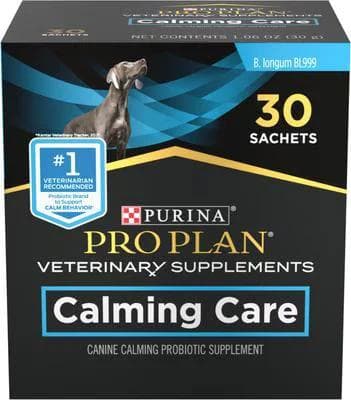
A vet-recommended probiotic supplement that helps dogs manage anxious behaviors and stay calm during stressful events like fireworks.
Petful may earn a commission when you click through to Chewy, at no extra cost to you.
- Most Sheepadoodle health issues trace back to one of the two parent breeds rather than to the cross itself, which is why the screening a breeder can show you matters more than the hybrid label.
 Sponsored
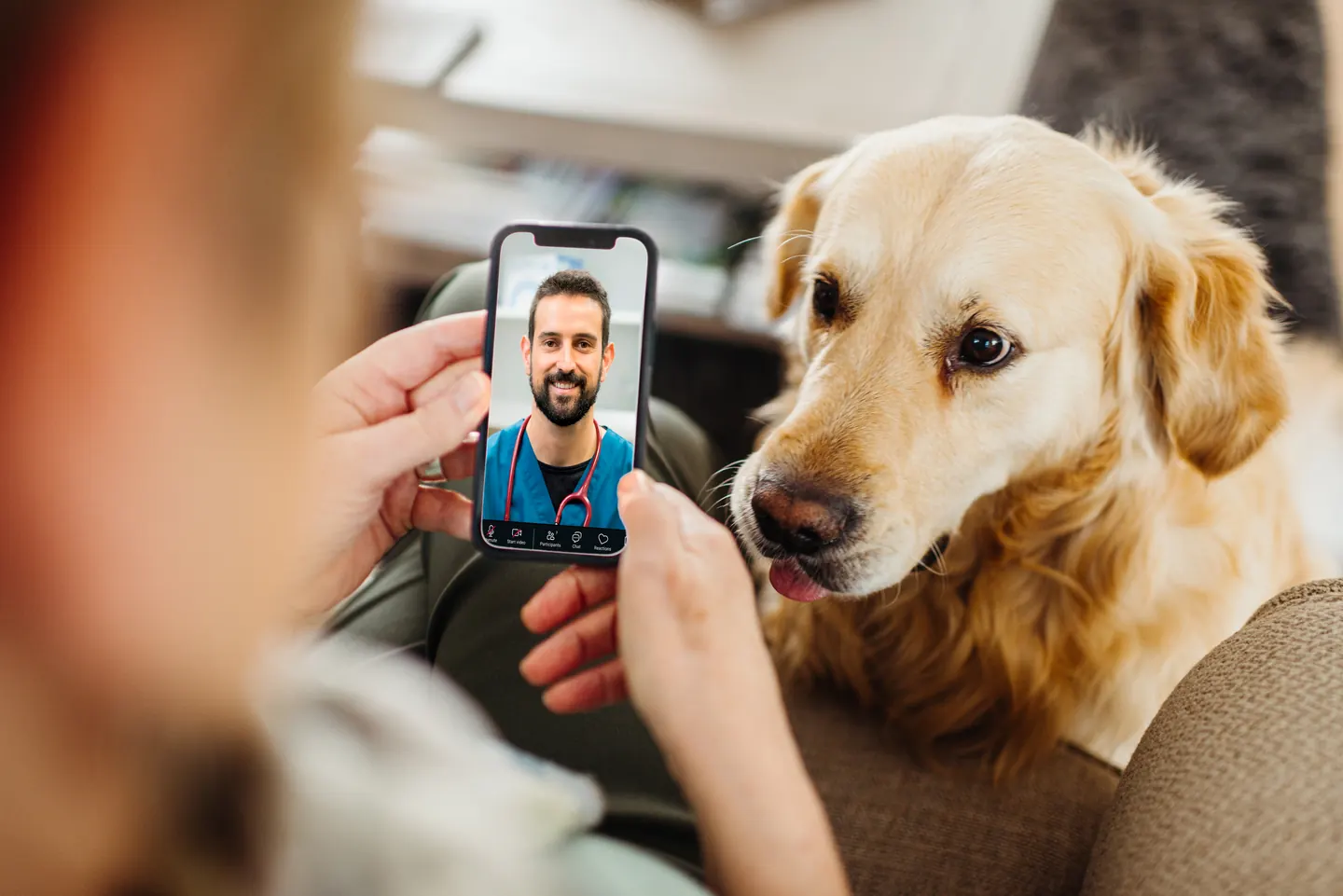
Have a health question about your pet?
Talk to a licensed vet at Dutch over video or message, including nights and weekends.
Use code Pets30
Plans start at $11/month · covers up to 5 pets
- Licensed vets in most states
- Rx for 150+ conditions
- 4.7 on Trustpilot
Inherited conditions from the Old English Sheepdog and Poodle sides
This is the section no ranking page gets right. Competitors give you an undifferentiated list of doodle problems. What actually helps a buyer is knowing which parent contributes which risk, because that tells you which certificates to ask for from which dog.

| Condition | Which Parent Contributes It | How It Is Screened |
|---|---|---|
| Hip dysplasia | Both, heavily weighted to the Old English Sheepdog | OFA hip radiograph from 24 months, or PennHIP distraction index from 16 weeks |
| Elbow dysplasia | Both | OFA elbow radiograph from 24 months |
| Congenital sensorineural deafness | Old English Sheepdog | BAER hearing test from about 5 weeks |
| Hypothyroidism and autoimmune thyroiditis | Both | OFA thyroid panel, annually on breeding dogs |
| Immune-mediated hemolytic anemia and thrombocytopenia | Old English Sheepdog | No DNA test, family history only |
| Cerebellar ataxia | Old English Sheepdog | Family history and neurological examination |
| Primary ciliary dyskinesia | Old English Sheepdog | Specialist testing, rare |
| Addison's disease (hypoadrenocorticism) | Poodle | No DNA test, family history and clinical monitoring |
| Sebaceous adenitis | Poodle | Skin biopsy on breeding stock |
| Progressive retinal atrophy (prcd form) | Both | prcd-PRA DNA test on both parents |
| Hereditary cataracts | Both | Annual board-certified ophthalmologist examination |
| Von Willebrand disease type I | Poodle | DNA test, any age |
| Gastric dilatation volvulus (bloat) | Both, driven by chest conformation | No test, managed by conformation awareness and gastropexy |
| Patellar luxation and dental crowding | Poodle, mini and toy lines | Orthopedic examination, dental examination |
| MDR1 (ABCB1) drug sensitivity | Old English Sheepdog, at low frequency | Cheek swab DNA test, once per dog |
Hip issues in dogs of this size are developmental rather than traumatic. The ball of the femur and the socket of the pelvis do not seat together properly, the joint moves abnormally, cartilage wears early and arthritis follows, often years before the dog is old. The Old English Sheepdog ranks poorly on hip screening statistics, and the Standard Poodle is far from clear either, so this is the one risk the cross does nothing to dilute. What owners notice first is rarely obvious lameness. Watch for a bunny-hopping gait where both hind legs move together at speed, reluctance to jump into the car, stiffness after rest that eases with warming up, or sitting with one leg kicked out sideways.
Thyroid problems in dogs are easy to miss because the signs read as ordinary middle age rather than as disease. Hypothyroidism is diagnosed on a thyroid panel and treated with inexpensive daily levothyroxine, and treated dogs do very well, so the only real obstacle is recognising it. Because autoimmune thyroiditis is heritable, an annual thyroid panel on breeding stock belongs on the screening list rather than being left to chance. These are the signs owners tend to explain away:
- Weight gain on an unchanged diet, often the first thing noticed and the most commonly misattributed.
- Lethargy and cold intolerance, with the dog seeking warmth and tiring earlier on the same walk.
- A dull, thinning coat and symmetrical hair loss along the flanks and tail.
- Recurrent skin and ear infections that clear on antibiotics and come straight back.
Dog teeth problems deserve more attention than they get on breed pages, because periodontal disease is the most common diagnosis in adult dogs of every breed and it is a genuine lifespan issue rather than a cosmetic one. It matters more at the small end of this cross, where a Miniature Poodle jaw carries a full complement of teeth in less space, producing crowding, retained deciduous teeth and early tartar. Daily toothbrushing and scheduled dental cleaning under anesthesia are the interventions that work.
The eye picture is worth separating out, because both parents contribute:
- Progressive retinal atrophy (prcd form) is an inherited degeneration of the photoreceptors causing gradual, irreversible blindness. Night blindness comes first, often months before daytime vision is affected. It is recessive and DNA-testable, so a single tested-clear parent removes the risk of an affected puppy entirely.
- Hereditary cataracts cloud the lens and can appear in young adults rather than seniors. Unlike retinal atrophy they are surgically treatable, and lens replacement restores useful vision in well-selected cases.
- Glaucoma and lens luxation are documented in Poodle lines and present as a painful, red, cloudy or bulging eye. This is a same-day emergency, not a wait-and-see problem.
The Old English Sheepdog also brings two conditions that rarely appear on doodle pages at all. Immune-mediated hemolytic anemia and immune-mediated thrombocytopenia, in which the immune system destroys the dog's own red cells or platelets, are over-represented in the breed. There is no screening test, which is precisely why family history matters and why a breeder who cannot tell you what their previous litters died of has not given you the information you need. The Cornell Riney Canine Health Center is a reliable university-level reference if you want to read further on inherited canine disease, and their material is written for owners rather than clinicians.
Split the risk list by parent and it stops being a list of doodle problems and becomes two shorter, testable ones. The Old English Sheepdog contribution shows up in joints, thyroid, hearing and the immune system. The Poodle contribution shows up in the adrenal glands, the skin, the retina and a deep chest that can twist. That split also tells you which failures arrive quietly over months and which arrive in an afternoon, because a handful of these conditions present as an emergency that needs same-day veterinary care.
- From the Poodle side, a bloat emergency: unproductive retching with a hard or distended abdomen in a deep-chested dog. That is a same-day drive to a clinic, not a wait-and-see.
- From the Poodle side, an Addisonian crisis: sudden weakness or collapse in a young adult that has had months of intermittent vomiting, lethargy and poor appetite.
- From the Old English Sheepdog side, immune-mediated blood disease: pale or yellow gums, labored breathing, sudden weakness or unexplained bruising appearing over a day or two.
- From either side, an eye emergency: a red, cloudy, bulging or obviously painful eye, or a dog that suddenly cannot navigate familiar rooms.
- Regardless of parentage: a seizure, an inability to urinate, or sudden severe pain. Call the clinic and describe what you are seeing rather than deciding at home whether it counts.
How long do Sheepadoodles live?
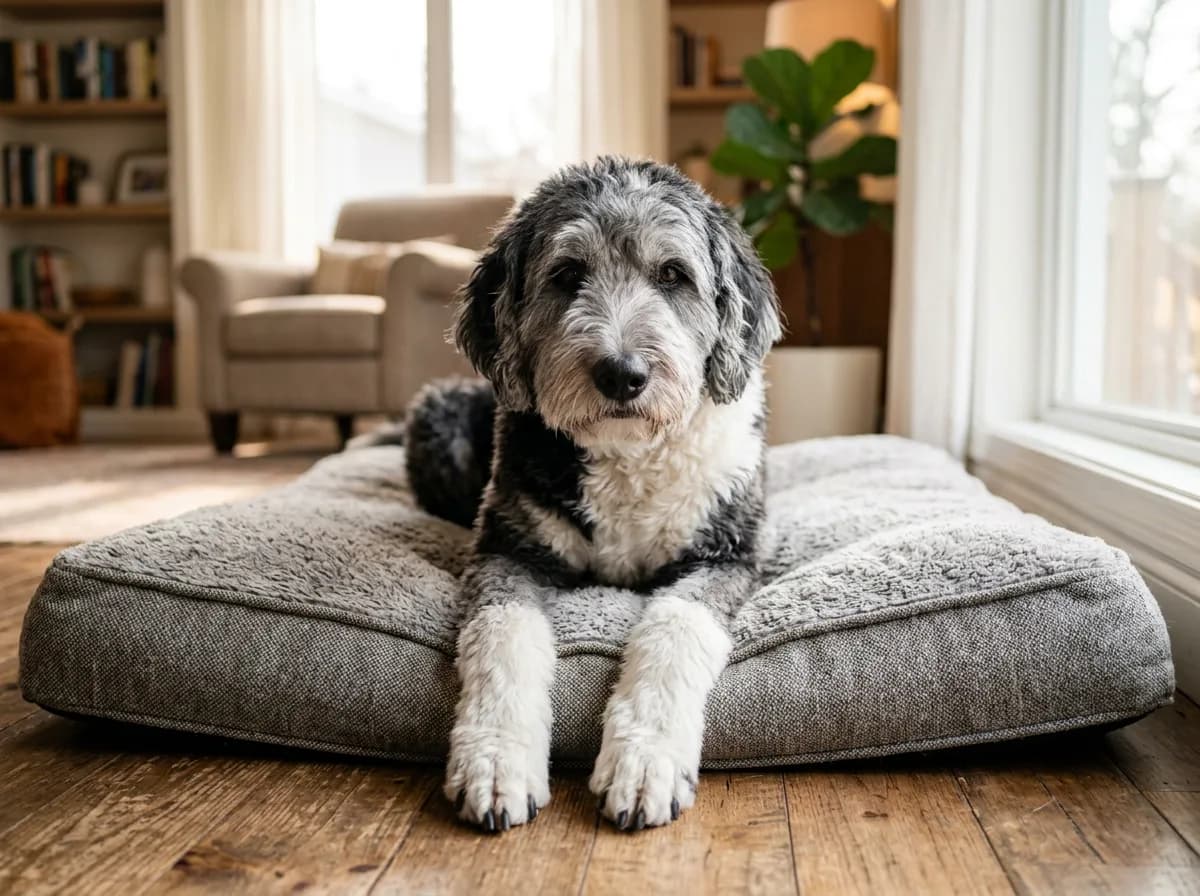
How long does the average Sheepadoodle live? Most live 11 to 15 years, and the honest answer is that adult size moves that number more than anything else on this page. Smaller dogs live longer, so a mini sits at the upper end of the range while a heavy standard sits nearer the bottom. Two dogs from the same litter can land years apart depending on what they finish weighing and how lean they are kept. The figure is a range rather than a promise, and the things that shorten it are largely the things an owner controls.
- Keep the dog lean. Carrying extra weight under a thick coat is easy to miss and is the single biggest controllable factor.
- Screen the parents. Inherited disease is what removes years at the front of the curve rather than the back.
- Know the bloat signs in a deep-chested dog, because that emergency is measured in hours.
- Stay current on dental care, which is routinely underestimated in long-coated breeds.
The honest average lifespan range across the whole cross is 11 to 15 years once you account for how much adult size varies within it. That headline figure is generous for the biggest dogs and slightly conservative for the smallest ones, which is why a single number has limited value here.
For context, the overall average dog lifespan across all breeds and sizes sits in the region of 10 to 13 years, and dog lifespan tracks body size more tightly than almost any other variable. Large dogs age faster and die earlier, and that relationship holds inside a single cross just as it does across the species. The parent breeds set the boundaries: an Old English Sheepdog typically lives 10 to 12 years and a Standard Poodle 10 to 13, so a Sheepadoodle that reaches 15 is doing better than either side of its own pedigree. By comparison, the commonly quoted goldendoodle lifespan of 10 to 15 years covers a similar spread for the same reason, because that cross also ranges from miniature to large. For more, see Petful’s guide to mini Goldendoodle.
Four things genuinely move the number, and none of them are exotic:
Petful may earn a commission when you click through to Chewy, at no extra cost to you.
- Keep the dog lean for its entire life. Body condition is the most consistently proven longevity lever in dogs, and it is the one entirely under your control.
- Brush the teeth. Periodontal disease drives chronic systemic inflammation, and it is preventable.
- Buy from screened parents. Most of what shortens a Sheepadoodle's life is inherited and decided before the puppy is born.
- Keep preventive care current. Vaccination and parasite prevention on a schedule set by your veterinarian, following recognized standards such as the WSAVA global guidelines.
Most breed pages answer this with a single lifespan number and then move on. Competitors give that figure, and they never break life expectancy down by adult size, which is the one variable that changes the answer most inside this cross. A 25-pound Sheepadoodle and an 80-pound one are the same cross on paper and two different propositions in the exam room, because growth rate, joint loading and chest depth all scale with body weight. So use the headline range as a starting point, then read it against the size class your dog is actually going to finish at. Weigh the puppy as it grows and settle on that adult figure before you decide which end of the band applies to you.
- Standards at 55 to 85 pounds: read the lower end of the 11 to 15 year band.
- Minis at 25 to 45 pounds: read the upper end of that same band.
- Two to three years separate the biggest and smallest dogs out of one breeding program.
- Parent breeds set the outer limits: Old English Sheepdog 10 to 12 years, Standard Poodle 10 to 13.
- Re-check the estimate at 12 to 18 months, once adult weight has essentially settled.
Life expectancy by size: standard, medium, and mini
The life expectancy of a Sheepadoodle depends on which size class the dog lands in, and this life expectancy by size breakdown is the part competitors leave out entirely.
| Size Class | Typical Adult Weight | Expected Lifespan | Main Age-Related Limiter |
|---|---|---|---|
| Standard | 55 to 85 pounds | 11 to 13 years | Hip and elbow arthritis, bloat, mass-related disease |
| Medium | 35 to 55 pounds | 11 to 14 years | Joint disease, allergic skin disease |
| Mini | 25 to 45 pounds | 12 to 15 years | Dental disease, patellar luxation |
| Micro mini | Under 25 pounds | 12 to 15 years | Dental disease, tracheal and orthopedic issues |
Two mechanisms explain the pattern rather than one. Larger dogs grow faster and for longer, which extends the window in which over-exercise on hard surfaces or an over-rich growth diet can damage developing joints, and they carry more weight across those joints for the rest of their lives. Larger dogs also have deeper chests, which is the anatomical driver of bloat risk. That combination is why the biggest Sheepadoodles lose two to three years against the smallest ones from the same breeding program.
- Breeder listings routinely quote 15 to 18 years for Sheepadoodles, particularly for the smaller sizes. Neither parent breed supports that figure, and no published data does either. A well-bred Mini Sheepadoodle reaching 15 is an excellent outcome, not a baseline expectation.
A single average lifespan number hides the thing that actually predicts how long your dog lives, which is the adult size it finishes at. Across this cross, life expectancy runs from roughly 11 years at the heaviest end to about 15 at the lightest, and the gap between the biggest and smallest dogs out of one breeding program is two to three years. That is a bigger spread than most buyers expect from a single cross, and it is largely decided before the puppy comes home. For more, see Petful’s guide to Maltipoo lifespan.
- Standard dogs at 55 to 85 pounds sit at the bottom of the 11 to 15 year band, because joint loading and chest depth both scale with body weight.
- Medium dogs at 35 to 55 pounds sit in the middle and are the least likely of the three classes to be limited by either mechanism.
- Minis at 25 to 45 pounds sit at the top of the band, helped most by a shallower chest and a markedly lower bloat risk.
- Ask the breeder for both parents' recorded adult weights rather than the litter's advertised size class, because that is what actually predicts where your dog lands.
- Size sets the average, not the outcome for your individual dog. Body condition and parent screening both move the number within any size class.
What each parent breed contributes to Sheepadoodle health
The Old English Sheepdog is a heavy-boned, deep-chested herding dog bred for stamina and bulk rather than for longevity, and it brings the structural and immune-mediated risks. The Standard Poodle is a lean, athletic water retriever with a well-documented set of endocrine and skin problems of its own, and the idea that it is the healthy half of any doodle cross is a comfortable story rather than an accurate one.

From the Old English Sheepdog side, expect:
- Hip and elbow dysplasia, at rates that make formal OFA screening of both parents non-negotiable rather than nice to have.
- Congenital sensorineural deafness, present from birth and detectable only on a BAER test, since a unilaterally deaf puppy behaves almost normally.
- Hypothyroidism, common enough in the breed to justify an annual panel on breeding dogs.
- Immune-mediated hemolytic anemia and thrombocytopenia, which typically strike young to middle-aged adults and present as sudden weakness, pale or yellow gums, or unexplained bruising.
- Cerebellar ataxia, an inherited degeneration of the cerebellum causing progressive incoordination in young dogs.
- MDR1 drug sensitivity, reported at low frequency in the breed, which matters because the consequences of missing it are severe.
Old English Sheepdog puppies also grow into a large, slow-maturing frame, and that slow growth curve is part of why joint screening on the parents matters so much. From the Poodle side, expect:
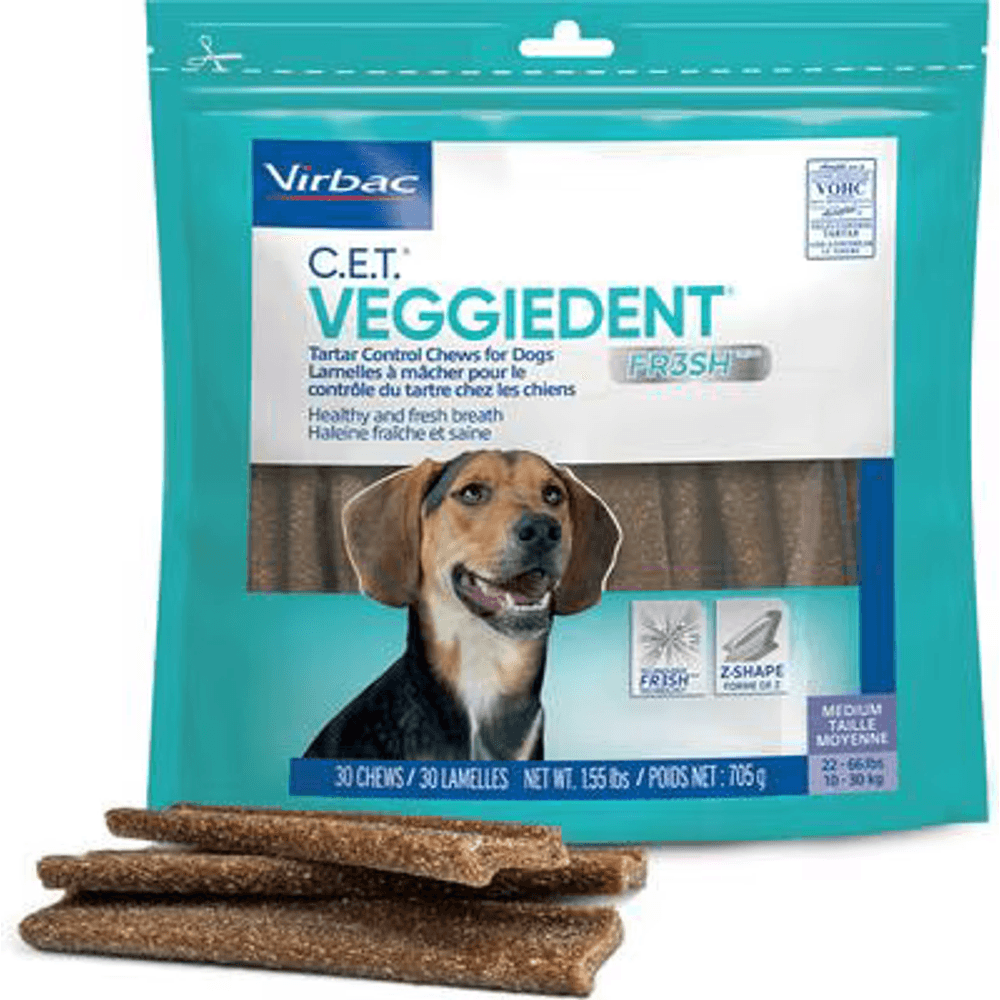
VOHC-accepted dental chews clinically shown to reduce plaque and tartar. The Z-shape and texture clean as your dog chews and freshen breath. A plant-based daily chew for medium dogs.
Petful may earn a commission when you click through to Chewy, at no extra cost to you.
- Addison's disease, in which the adrenal glands underproduce cortisol and aldosterone. It is the great mimic, presenting as intermittent vomiting, lethargy and poor appetite for months before it becomes a collapse emergency.
- Sebaceous adenitis, immune-mediated destruction of the skin's oil glands, producing scaling, follicular casts and symmetrical hair loss along the topline. It is diagnosed on skin biopsy, not by a DNA test.
- Progressive retinal atrophy in the prcd form, shared with the other parent, meaning both sides can contribute the same recessive fault.
- Gastric dilatation volvulus, because the Standard Poodle's deep, narrow chest places it among the higher-risk breeds for bloat.
- Von Willebrand disease type I, an inherited clotting disorder that matters most on the day your dog needs surgery.
- Idiopathic epilepsy, with onset typically between one and five years of age.
Note the overlap, because it is the whole point. Hip dysplasia, hypothyroidism, cataracts, progressive retinal atrophy and bloat appear on both lists. Where both parent breeds carry the same fault, crossing them protects the puppy not at all, which is why DNA testing both parents matters more in this cross than in a purebred litter where the breeder already knows the family lines. The AKC Canine Health Foundation maintains an accessible research library on inherited canine disease if you want to go deeper on any single condition.
A list of conditions written generically, without separating which parent breed each risk comes from, is no more useful in the exam room than it is at the breeder's. Your veterinarian sees a doodle of unknown make-up unless you say otherwise, so name both parent breeds at the first appointment and ask for them in the record. That one sentence changes what gets considered and when. It flags a deep chest before any conversation about bloat, it puts an MDR1 result in the file before the first sedation rather than after it, it makes a hearing check a reasonable request in a puppy that seems to ignore you, and it gives an early thyroid result something to be compared against years later.
- Say it plainly at the first visit: Old English Sheepdog crossed with a Standard Poodle. Written into the record, it travels with the dog to any emergency clinic.
- Bring the parents' screening paperwork to that visit, not just the puppy's vaccination card. Hip, eye, thyroid and DNA results tell your vet which risks are already excluded.
- Get the MDR1 result on file before any procedure involving sedation, since the entire value of that test is having it before the drug is chosen.
- Ask which baselines are worth recording while the dog is young and well, so a later result has something to be measured against.
- Revisit the split at each life stage. The joint and thyroid questions belong to middle age, while the emergency conditions on this page can arrive at any age.
 Sponsored
Vet care that's always there
Unlimited video calls and messaging with licensed vets for less than a typical vet visit. One membership covers up to five pets.
Use code Pets30
Plans start at $11/month · covers up to 5 pets
- Licensed vets in most states
- Rx for 150+ conditions
- 4.7 on Trustpilot
Why some vets are cautious about doodle crosses
Vets do not dislike doodles, and the framing that we refuse to recommend them is wrong. What many of us are cautious about is the market that grew up around them, which is a different objection and a fair one. The concerns are specific:
- Unregulated breeding. Doodle crosses sit outside any breed club structure, so there is no registry requiring health testing, no code of ethics and no mechanism to stop a dog with failing hips from producing litters. A purebred breeder answers to a parent club. Most doodle breeders answer to nobody.
- Shared recessive disease. The hybrid vigor argument assumes the two parent breeds carry different faults. When they carry the same one, and here they carry several, the cross offers no protection whatsoever.
- Unpredictable outcomes. Coat type, adult size and risk profile all vary within one litter, so a buyer cannot reliably plan around what they are getting.
- Price without proof. Puppies sell for purebred money, and buyers reasonably assume that price reflects screening. Frequently it does not.
- Crossing two breeds lowers the odds of a puppy inheriting two copies of the same recessive fault, which is a genuine advantage for conditions only one parent breed carries. It does nothing for faults both breeds share, and nothing at all for complex traits like hip dysplasia. A Sheepadoodle is not the same breed as either parent and is not a closed breed of its own, so there is no breed standard, no registry health scheme and no guarantee behind the label. Merle is not native to the Old English Sheepdog and enters these lines through merle-patterned Poodles. Breeding merle to merle produces double merle puppies with a high rate of congenital deafness and serious eye defects, and no reputable breeder makes that pairing under any circumstances.
The practical conclusion is not to avoid the cross. It is that the buyer has to do the work that a breed club would otherwise do, and the screening section below is exactly that work written out.
So why don't vets recommend doodles more enthusiastically? The objection is almost never to the dog on the table. It is to unregulated breeding, which leaves no body requiring a health test before a dog is bred, and to shared recessive disease, which is the quiet reason hybrid vigor does less work in this cross than buyers assume. Both objections are answerable. A breeder who runs the full screening panel and hands over verifiable certificate numbers has answered them, and most of us will say so plainly.
- Unregulated breeding in practice: no parent club, no code of ethics, no registry that can refuse a litter, and no mechanism to retire a dog with failing hips from a breeding program.
- Shared recessive disease in practice: when both parents carry one copy of the same recessive fault, a proportion of the litter is affected, and it makes no difference that the parents are different breeds.
- Progressive retinal atrophy in the prcd form is the clearest example here, because both parent breeds carry it and one DNA-tested-clear parent removes affected puppies entirely.
- Ask which specific faults both parents tested clear for, not whether they were health tested. That phrase covers everything from a full panel to a vet glancing at a puppy.
- Veterinary caution scales with the program, not the cross. Two Sheepadoodle puppies from different breeders can carry completely different risk, and the paperwork is the only thing that tells them apart.
Coat care and the skin problems it prevents
Coat management is a clinical issue in this breed, not a cosmetic one. Both parents contribute dense, non-shedding or low-shedding hair, and the question of do Sheepadoodles shed has a clinical answer as well as a cosmetic one: because the coat holds shed hair instead of dropping it, that hair mats down against the skin, traps moisture, and sets up hot spots, folliculitis and secondary bacterial infection underneath a coat that looks fine from a distance.

The ears follow the same logic. A pendulous ear flap with hair growing inside the canal holds warmth and moisture, and recurrent otitis externa is one of the most common reasons a Sheepadoodle ends up as a regular at the clinic. If your dog has had three or more ear infections in a year, the ears are not the problem. Recurrent otitis is usually the visible end of underlying allergic skin disease or, less often, hypothyroidism, and it needs a diagnostic workup rather than another round of drops.
Color questions such as sheepadoodle puppies brown, black and white, or merle come up constantly, and coat color has no bearing on health in this cross apart from the merle warning above. The full brushing schedule, clipping intervals, line-brushing technique and ear-hair routine belong to our dedicated guide to Sheepadoodle grooming and coat care, which this page defers to entirely on technique.
How adult size changes joint and bloat risk
Adult size is not a disease, but it changes the odds on the two conditions most likely to end a Sheepadoodle's life early. Standard sheepadoodle size runs 55 to 85 pounds, medium sheepadoodle size 35 to 55 pounds, and the smaller classes below that, and sheepadoodle size varies more within this cross than buyers expect.

Two clinical consequences follow directly from adult weight and chest shape:
The number-one veterinarian-recommended joint supplement brand. Glucosamine, chondroitin, and MSM support cartilage and cushion the joints, easing the stiffness and hind-end weakness that can leave an older or arthritic dog trembling.
Petful may earn a commission when you click through to Chewy, at no extra cost to you.
- Joint loading. Every extra pound is carried by hips and elbows that may already be dysplastic. In a large, fast-growing puppy, over-exercise on hard surfaces and an over-rich growth diet during the first year do damage that shows up as arthritis years later. A large-breed puppy formula that controls calcium and energy density is a real intervention, not a marketing claim.
- Chest depth and bloat. Gastric dilatation volvulus is a surgical emergency in which the stomach fills with gas and rotates on its axis, cutting off its own blood supply. Deep, narrow-chested dogs are at markedly higher risk, and that conformation comes from both parent breeds. Feed two or three smaller meals rather than one large one, slow fast eaters with a maze-style bowl, and discuss prophylactic gastropexy with your veterinarian if your dog is at the large end.
If you are still choosing a size class, our Sheepadoodle size chart carries the full growth curves, the adult weight ranges and the sheepadoodle size comparison across every class. This page uses size only to frame the clinical consequences.
Do Mini Sheepadoodles have different health risks?
Yes, and the shift is predictable. A Mini Sheepadoodle is produced by using a Miniature Poodle rather than a Standard on the Poodle side, so the smaller dog inherits the smaller Poodle's problem list along with its frame. A mini sheepadoodle full grown typically weighs 25 to 45 pounds, and mini sheepadoodle size sits well below the standard while still being a solidly built dog.
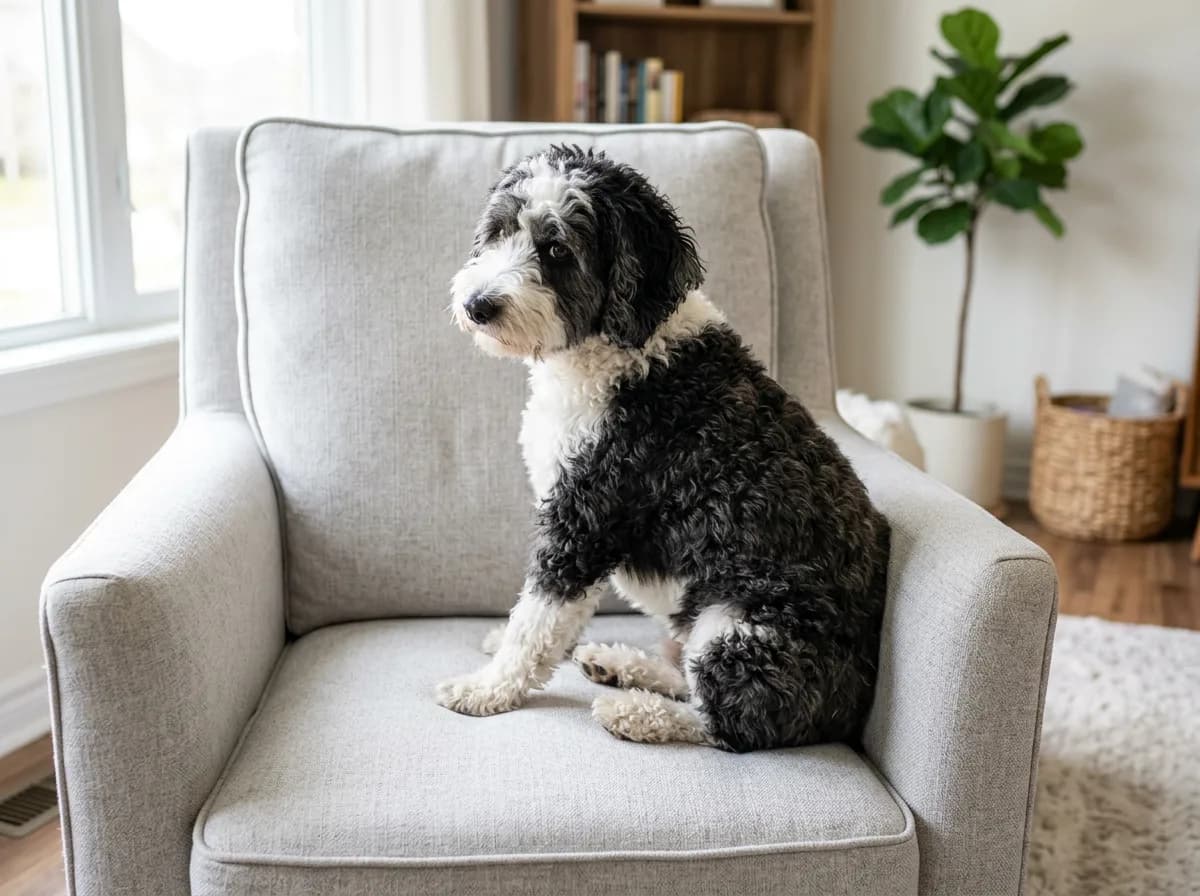
What changes with size:
- Bloat risk drops sharply, because the chest is shallower and the conformation less extreme.
- Joint loading falls, so hip and elbow dysplasia, while still screenable and still worth testing for, cause less clinical disease.
- Patellar luxation rises, inherited from the Miniature Poodle side, where the kneecap slips out of its groove.
- Dental crowding and retained deciduous teeth rise, which makes early dental care more important, not less.
- Tracheal and orthopedic fragility increase at the very small end, particularly in dogs marketed as micro mini Sheepadoodle, where breeders may be selecting aggressively for size using Toy Poodle lines.
- Crowded small jaws make home dental care the deciding factor rather than a nice-to-have: a finger toothbrush reaches the back molars where crowding traps plaque first, and brushing on most days pushes the first anesthetic cleaning years later than a mini would otherwise need it.
- A narrow trachea takes the full load a neck collar applies, so walk a mini on a no-pull harness instead and move that pressure to the chest. It matters most in the under-35-pound dogs that pull, which is precisely the group where tracheal fragility is already higher.
The gene-level risks do not shrink with body size. Progressive retinal atrophy, congenital deafness, hypothyroidism, Addison's disease and MDR1 status are inherited independently of how big the dog grows, so a smaller dog is not a shortcut around the screening panel. Our full guide to the Mini Sheepadoodle covers the growth curve, the adult weight and the practical differences in detail.
Choosing a puppy from health-tested parents
This is the section to print out and take with you. Telling a buyer to find a good breeder is advice a dishonest breeder can satisfy with a sentence. A named screening panel is different, because every line below has an issuing body, a certificate and a number you can verify yourself.
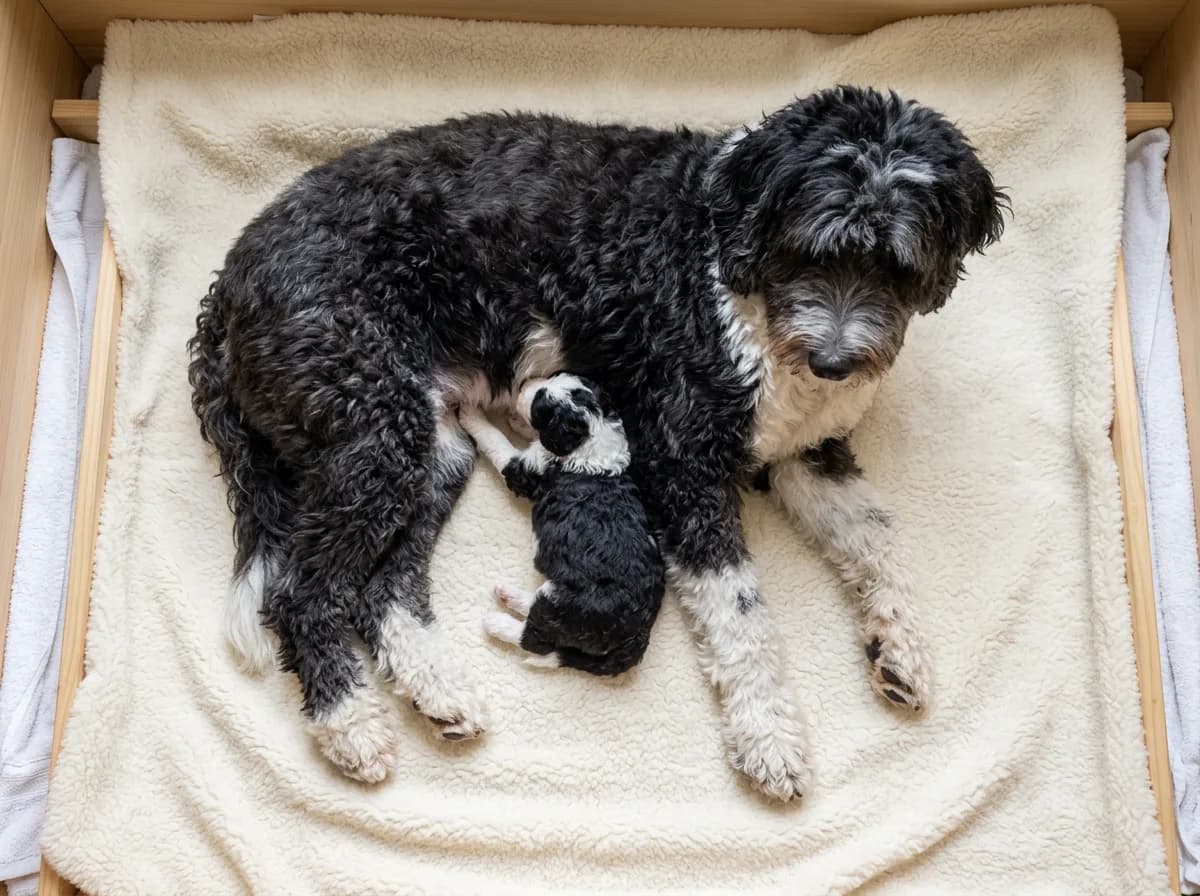
Ask for these results on both parents, before a deposit rather than after:
- The OFA hip score on both parents, graded Excellent, Good or Fair to pass, or Borderline, Mild, Moderate or Severe to fail. Final certification requires the dog to be at least 24 months old, so a preliminary result on an 11-month-old dog is not a certificate. PennHIP is the alternative, reporting a numeric distraction index from 16 weeks.
- OFA elbow evaluation, graded Normal or grades I to III, also from 24 months.
- An annual eye examination by a board-certified veterinary ophthalmologist, filed with the OFA Eye Certification Registry, which catches conditions no DNA test exists for.
- A prcd-PRA DNA test on both parents, since one tested-clear parent eliminates affected puppies entirely.
- An OFA thyroid panel on breeding dogs from 12 months, repeated annually.
- A von Willebrand disease type I DNA test, inherited from the Poodle side.
- A BAER hearing test on the puppies, essential given the deafness risk on the Old English Sheepdog side.
- An MDR1 test, a single cheek swab whose result never changes and which tells your veterinarian which drugs are unsafe for the rest of your dog's life.
Ask for certificate numbers rather than photographs of certificates, because OFA results are public and searchable in under a minute. Ask for DNA panel PDFs showing the laboratory name, the date and the microchip or registration number tying the result to the actual dog. The full disease and screening reference lives with the Orthopedic Foundation for Animals, and it is worth reading before you make any calls.
- A vet check is a physical examination of a puppy and finds nothing about inherited disease. A health certificate from a general examination and a genetic screening certificate from OFA or a DNA laboratory are completely different documents. A breeder who conflates the two, or who becomes defensive when you ask for certificate numbers, has told you what you need to know.
Sourcing questions sit outside this clinical page. How much is a Sheepadoodle, how to evaluate mini sheepadoodle breeders, what a fair deposit and contract look like, and how to spot a broker posing as a breeder are all covered in our guide to Sheepadoodle puppies. Read it alongside this one, because the screening panel above is only useful if you can also tell who is genuinely running it.
Here is the specific screening panel a buyer should demand, because no ranking page gives it plainly: OFA or PennHIP hips on both parents, an annual eye exam by a veterinary ophthalmologist, a thyroid panel, and MDR1 genotyping on the Old English Sheepdog side. Ask the breeder for the certificate numbers rather than a verbal assurance, and check them yourself in the public OFA database. A breeder who has done the work will hand these over without being pushed. Vagueness here is the answer: if a breeder cannot produce hips, eye, thyroid and MDR1 results for both parents, treat that as the finding rather than an oversight.
- Hips: OFA or PennHIP on both parents. OFA final ratings are only issued at 24 months, so a preliminary rating on a young parent is not the same thing.
- Eyes: a yearly ophthalmologist exam, not a one-time puppy check, because progressive retinal atrophy shows up later in life.
- Thyroid: a full panel rather than a single T4, since the Old English Sheepdog side carries hypothyroidism risk.
- MDR1: a genotype result, not a breed assumption. The result changes which drugs are safe and belongs in your own vet file from day one.
- Hearing: a BAER test where the line has any history of congenital deafness.
Behavior changes that can signal a health problem
A sudden change in behavior in an adult Sheepadoodle is a clinical sign, not a training failure, and the distinction is simple. A gradual pattern present since puppyhood is behavioral. A change that appears over days or weeks in a previously settled adult is medical until proven otherwise.
Changes worth a veterinary appointment rather than a training session:
- New aggression or snapping when handled, which usually means pain, most often from a joint, an ear or a mouth.
- Sudden house-soiling in a reliably clean adult, which can indicate a urinary tract infection, kidney disease or diabetes.
- Staring at walls, getting stuck in corners or stopping greeting you at the door, which can be vision loss or, in an older dog, canine cognitive dysfunction.
- New night-time restlessness, which very often traces back to arthritis.
- A sudden drop in stamina or reluctance to exercise, which warrants a cardiac and thyroid check.
Normal breed behavior is a separate subject. Questions like do Sheepadoodles bark a lot, how the mini sheepadoodle temperament differs from the standard, and how the herding drive from one parent meets the biddability of the other all belong to our guide to Sheepadoodle temperament, which owns the behavior, settling-age and separation questions in full. Sheepadoodle temperament is generally stable and people-oriented, so a genuine personality change in an adult should raise a clinical flag rather than a training one.
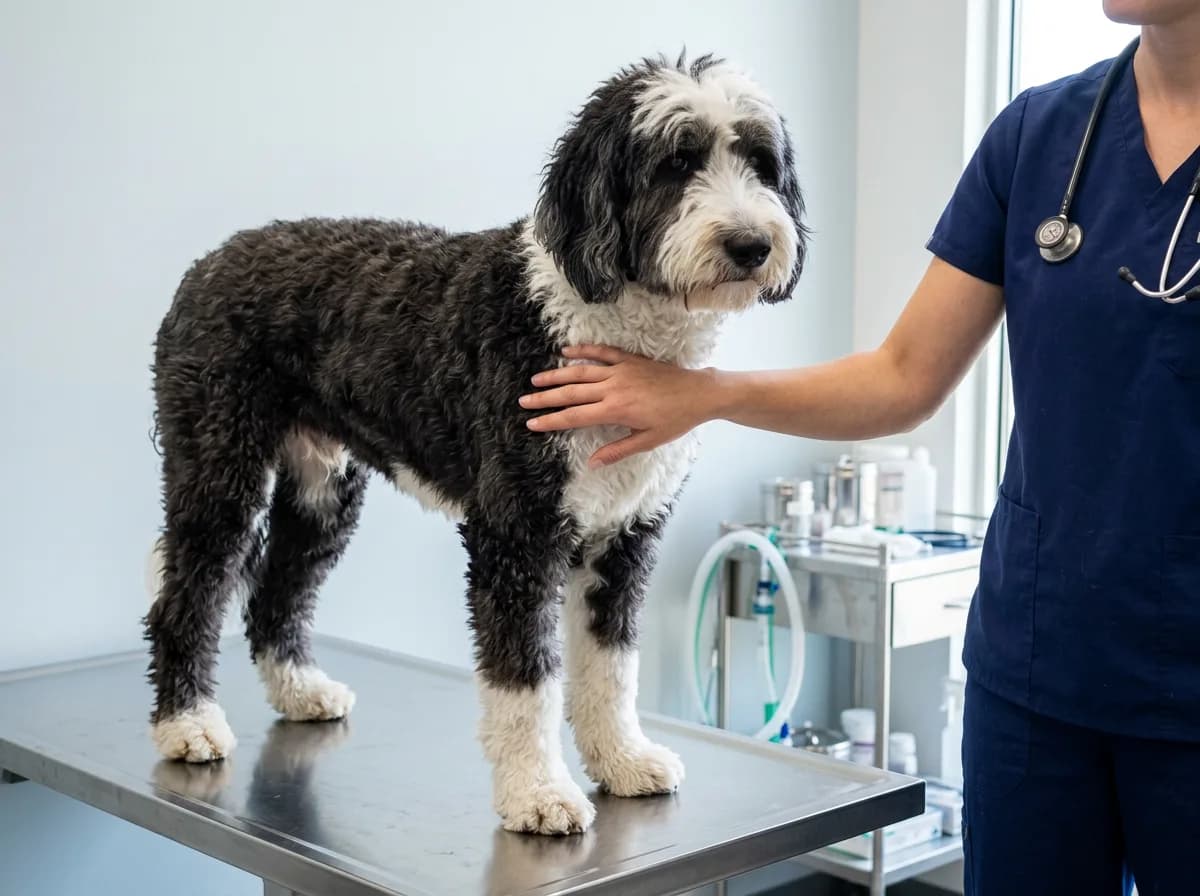
When to call a vet right away
Most of what is on this page is handled at a routine appointment. These situations are not:
- Repeated unproductive retching with a swollen, tight abdomen. Suspect bloat and travel immediately. Untreated gastric dilatation volvulus is fatal within hours.
- Sudden collapse, pale or yellow gums, or labored breathing, which can indicate immune-mediated anemia or shock.
- Vomiting or diarrhea with marked weakness in a young adult, which can be an Addison's crisis and is rapidly fatal if missed.
- A seizure lasting more than five minutes, or two or more seizures within 24 hours.
- A painful, cloudy, red or bulging eye, or sudden apparent blindness.
- Any known exposure to ivermectin at high dose, loperamide or a sedative in a dog whose MDR1 status is unknown.
- Non-weight-bearing lameness that has not improved within 24 hours.
If you are unsure whether something qualifies, call the clinic and describe it rather than waiting to see. The AVMA maintains straightforward owner-facing guidance on when to seek veterinary care, and no reasonable veterinarian minds a phone call about a dog that turns out to be fine.
For the wider breed picture, including origins, exercise needs and what daily life with this cross actually looks like, start with our full Sheepadoodle breed guide. If you are weighing this cross against the other big doodle, our Sheepadoodle vs Bernedoodle comparison sets the two risk profiles side by side.
Frequently Asked Questions
Not as a rule. A complete, well-formulated diet appropriate to the dog's life stage and adult size covers the vast majority of dogs. A large standard puppy benefits from a large-breed puppy formula that controls calcium and energy density during growth, because that genuinely protects developing joints. Therapeutic skin or joint diets should be chosen with your veterinarian for a diagnosed problem, not bought preemptively.
Annually for a healthy adult, twice yearly from about eight years of age, and on the puppy vaccination schedule for the first four months. Older dogs benefit from annual bloodwork including a thyroid panel, since hypothyroidism and early kidney disease are both found on routine screening long before an owner notices anything wrong.
Sometimes, and only for specific conditions. Crossing two breeds lowers the odds a puppy inherits two copies of the same recessive fault, which genuinely helps where only one parent breed carries the risk. It offers no protection where both breeds share a fault, and hip dysplasia, hypothyroidism, cataracts and bloat all appear on both parent lists. Screened parents predict health far better than crossbreeding does.
It depends on the condition. Congenital deafness is present from birth. Hip and elbow dysplasia usually declare between six and 18 months. Idiopathic epilepsy typically starts between one and five years. Immune-mediated anemia and Addison's disease tend to appear in young to middle-aged adults. Progressive retinal atrophy, hypothyroidism and cataracts are more often middle-aged findings.
Yes, and it is the most important orthopedic risk in the cross. The Old English Sheepdog scores poorly on hip screening statistics and the Standard Poodle is also affected, so hip dysplasia passes through the cross rather than being diluted by it. Insist on final OFA hip results from both parents at 24 months or older, or a PennHIP distraction index, and verify the certificate numbers yourself.
It is worth doing. The MDR1 mutation is reported at low frequency in Old English Sheepdogs, so a Sheepadoodle can inherit it. The test is a single cheek swab, the result never changes, and it tells your veterinarian which antiparasitics, sedatives and chemotherapy agents need dose adjustment or avoidance. Do it before your dog's first sedation or dental procedure.
For most owners, yes, and the value comes from low-probability, high-cost events rather than routine care. Bloat surgery, hip replacement, cataract surgery, an immune-mediated anemia workup and lifelong Addison's medication are the scenarios that justify a policy. Insure while the dog is young, because pre-existing condition exclusions apply from the moment a problem is recorded in the notes.
BVMS, MRCVS
Dr. Pippa Elliott, BVMS, MRCVS, is a veterinarian with nearly 30 years of experience in companion animal practice. Dr. Elliott earned her Bachelor of Veterinary Medicine and Surgery from the University of Glasgow. She was also designated a Member of the Royal College of Veterinary Surgeons. Married with 2 grown-up kids, Dr. Elliott has a naughty Puggle named Poggle, 3 cats and a bearded dragon.
Sign up for expert-backed reviews and safety alerts all in one place.