Sheepadoodle vs Bernedoodle: Which Doodle Fits Your Home?
Sheepadoodle vs Bernedoodle compared across size, coat, shedding, temperament, health, grooming and a five-year cost model, ending with a household match guide that names one breed for each type of home instead of leaving the choice open.
Petful is reader supported. As an affiliate of platforms like Amazon and Chewy, we may earn a commission when you buy through links on this page. There is no extra cost to you.
Sheepadoodle vs Bernedoodle looks like a coin flip on paper and rarely is one in practice, because the two crosses ask very different things of a household. Both are large, shaggy, low-shedding Poodle mixes with a reputation for patience around children. The gap opens in the daily details: how much dog you are actually bringing home, how much energy you have to burn off before dinner, how many hours a month disappear into coat care, and what the whole commitment costs once you look past the puppy invoice.
This comparison puts the two breeds side by side on size, coat, shedding, temperament, health, grooming and cost, then does the thing almost every ranking page avoids. It picks one for each type of household instead of closing with a shrug. If you have already settled on a breed, our full Sheepadoodle breed guide and the Bernedoodle breed guide go deeper on each one.
- 1The Bernedoodle is the bigger and calmer of the two, at 23 to 29 inches and 70 to 90 pounds, while the Sheepadoodle is leaner and more athletic at 20 to 27 inches and 55 to 85 pounds
- 2The Sheepadoodle costs less to buy and less to feed, but the Bernedoodle asks for less exercise, which is the trade most families are really choosing between
- 3Both are heavy-coated dogs that need professional grooming every six to eight weeks, so neither is a low-maintenance breed no matter what a breeder listing says

Sign up for expert-backed reviews and safety alerts all in one place.
Sheepadoodle vs Bernedoodle at a Glance
Neither breed wins in the abstract, so the honest answer to which is better, a Sheepadoodle or a Bernedoodle, comes down to your energy budget rather than the dog. A Sheepadoodle is the better choice for active households that want a playful, athletic dog and can commit to an hour or more of genuine exercise every day. A Bernedoodle is the better choice for calmer homes that want a large, steady companion and can absorb a higher purchase price, a heavier coat and more sensitivity to heat. Families with young children do well with either, and the deciding factor is almost always schedule rather than sentiment. For more, see Petful’s guide to Bernedoodle prices.
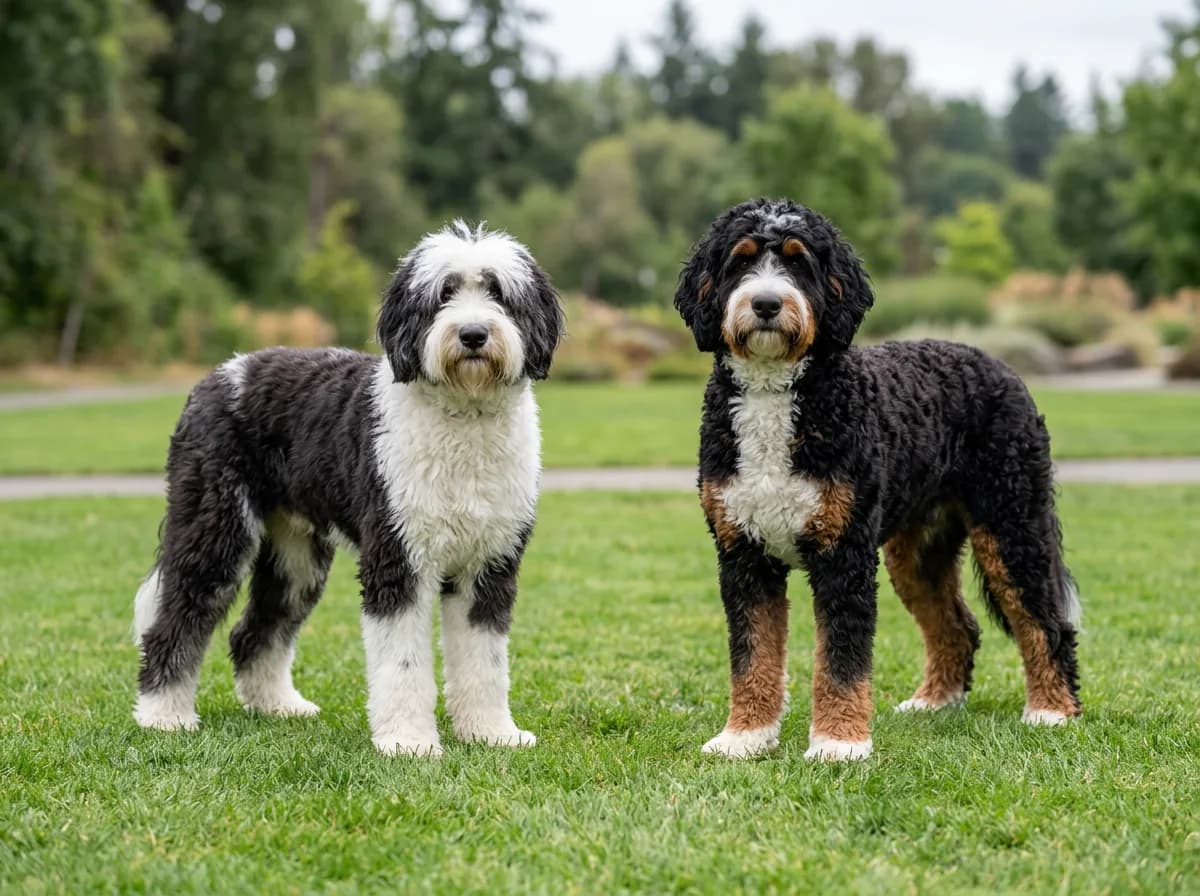
They are also not the same breed wearing different coats, which is the assumption that sends the most buyers to the wrong breeder. A Sheepadoodle is an Old English Sheepdog crossed with a Poodle, so it inherits a herding dog's drive to move, circle and stay busy. A Bernedoodle is a Bernese Mountain Dog crossed with a Poodle, so it inherits a Swiss draft breed's heavier frame, slower gears and thicker double coat. Those two parent breeds were bred for opposite jobs, and the crosses behave accordingly.
For the fast comparison: a standard Sheepadoodle stands 20 to 27 inches tall with an adult weight range of 55 to 85 pounds, while a standard Bernedoodle stands 23 to 29 inches tall with an adult weight range of 70 to 90 pounds. Both live 12 to 15 years, both shed lightly, and both need a groomer on retainer.
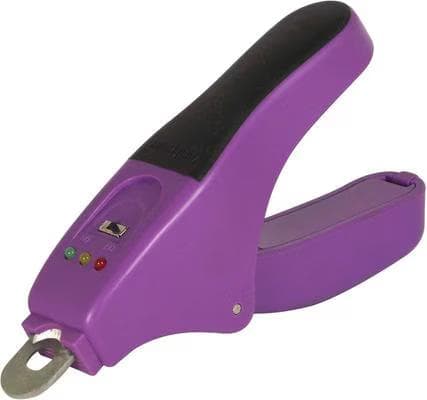
Petful may earn a commission when you click through to Chewy, at no extra cost to you.
- Parent stock: Old English Sheepdog and Poodle versus Bernese Mountain Dog and Poodle
- Build: the Sheepadoodle is taller for its weight and more athletic; the Bernedoodle is broader, heavier and more solidly built
- Energy: the Sheepadoodle needs 60 to 90 minutes daily; the Bernedoodle is content with 45 to 60
- Coat color: the Sheepadoodle is usually black and white; the Bernedoodle is most often tricolor
- Price: Sheepadoodle puppies typically start lower and Bernedoodle puppies typically finish higher
| Trait | Sheepadoodle | Bernedoodle |
|---|---|---|
| Parent breeds | Old English Sheepdog x Poodle | Bernese Mountain Dog x Poodle |
| Standard height | 20 to 27 in (51 to 69 cm) | 23 to 29 in (58 to 74 cm) |
| Standard weight | 55 to 85 lbs (25 to 39 kg) | 70 to 90 lbs (32 to 41 kg) |
| Lifespan | 12 to 15 years | 12 to 15 years standard, 14 to 17 mini |
| Daily exercise | 60 to 90 minutes | 45 to 60 minutes |
| Shedding | Light | Light to minimal |
| Typical coat | Black and white, wavy to curly | Tricolor black, white and rust |
| Grooming visits | Every 6 to 8 weeks | Every 6 to 8 weeks |
| Typical puppy price | $1,500 to $3,000 | $2,500 to $5,000 |
| Best for | Active families, runners, hikers | Calmer households, first-time large-dog owners |
One more identity question worth clearing up before the detail sections: a sheepadoodle bernedoodle mix is a real but uncommon triple cross, usually produced by breeding a Sheepadoodle to a Bernedoodle rather than by any recognized program. Because it stacks three parent breeds, it is the least predictable option on this page for size, coat and temperament alike, and it is not a shortcut to getting the best of both. Owner discussion in sheepadoodle vs bernedoodle Reddit threads keeps circling back to the same two variables that decide satisfaction with either breed: how much daily exercise the dog actually got, and whether the household budgeted honestly for grooming.
Size and Weight: Which Doodle Runs Bigger?
The sheepadoodle vs bernedoodle size question has a clear winner, and it is the Bernedoodle. A standard Bernedoodle is both taller and substantially heavier than a standard Sheepadoodle, with the widest gap sitting at the lighter end of each range. Where a large Sheepadoodle tops out around 85 pounds, a large Bernedoodle can push past 90, and a few from heavy Bernese lines land closer to 100.
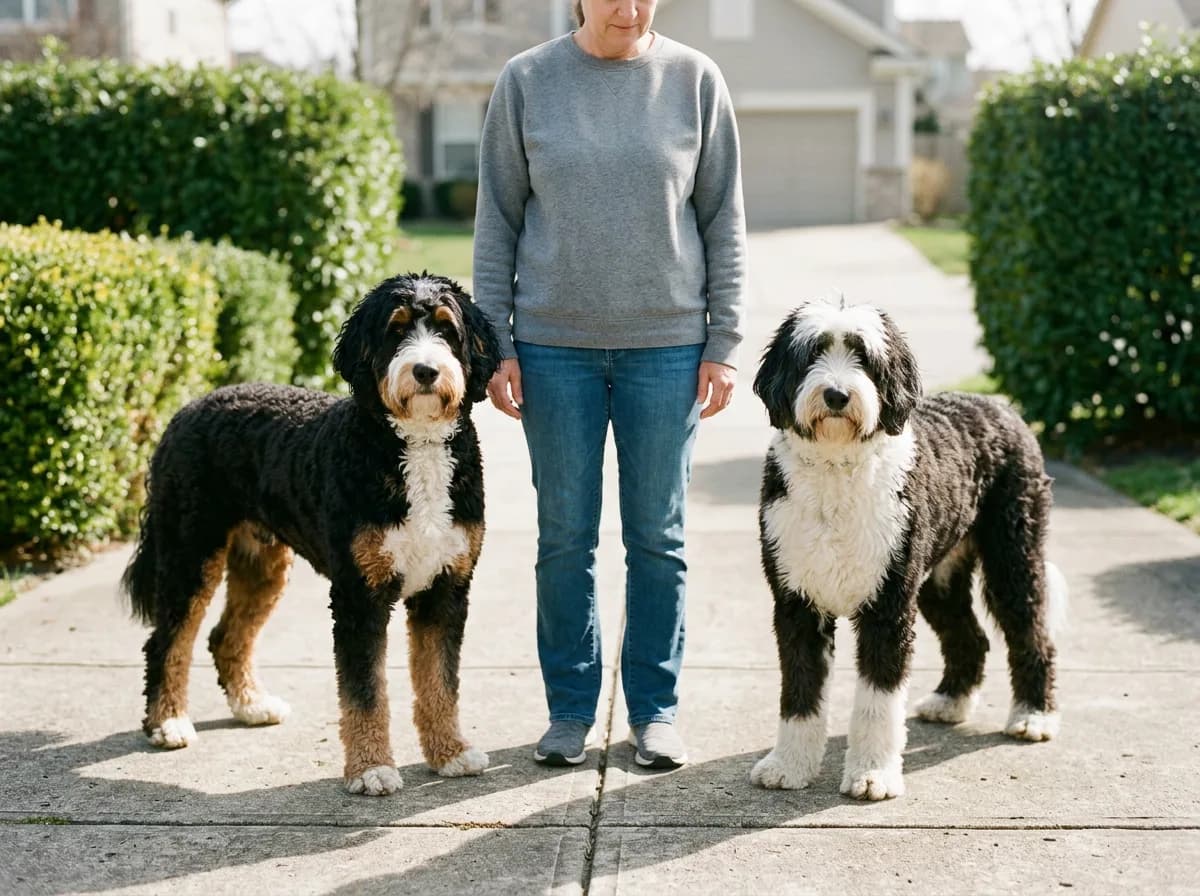
So how big do Bernedoodles get in practical terms? A standard reaches 23 to 29 inches at the withers and 70 to 90 pounds, which is genuinely large-breed territory. That means a 48-inch crate, a vehicle with real cargo space, and furniture decisions you cannot undo later. Typical bernedoodle weight at one year old sits around 85 percent of adult figures, with the last chest and shoulder mass arriving between 18 and 24 months.
- Standard Sheepadoodle: 20 to 27 inches, 55 to 85 pounds, most commonly 22 to 24 inches and 60 to 70 pounds
- Standard Bernedoodle: 23 to 29 inches, 70 to 90 pounds, most commonly 24 to 26 inches and 75 to 85 pounds
- Mini Sheepadoodle: 15 to 20 inches, 25 to 45 pounds
- Mini Bernedoodle: 18 to 22 inches, 25 to 49 pounds
- Males in both breeds sit in the upper half of their range and females in the lower half, a spread of roughly 10 percent
- An 85-pound adolescent outmuscles most handlers, so fit a front-clip no-pull harness before the dog passes 60 pounds rather than after the pulling starts
Size interacts with more than crate shopping. A 60-pound Sheepadoodle can be physically redirected by most adults during adolescence; an 85-pound Bernedoodle at the same training stage cannot, which is why loose-leash work matters more in the larger breed and matters earlier. Weight also sets the price band for flea, tick and heartworm preventatives, so the heavier breed costs more to protect every single month of its life.
Neither cross is a recognized breed, which means no registry enforces any of these figures. Both parents' recorded adult weights predict a puppy's finished size far better than the label on a listing, and any breeder who will not share those numbers has answered a different question than the one you asked. The American Kennel Club's parent breed traits resources are the steadier reference point for what each purebred contributes.
- Breeder size labels are marketing conventions with no registry behind them. One program's standard is another's medium. The sire and dam weights are biology, and averaging them gets you closer to your puppy's adult frame than any category name on a website.
Bernedoodle Size Classes in Brief
Bernedoodles are sold in three bands rather than one, and buyers comparing them against a single Sheepadoodle figure often end up mismatched. Tiny Bernedoodles run roughly 12 to 17 inches and 10 to 24 pounds, minis run 18 to 22 inches and 25 to 49 pounds, and standards run 23 to 29 inches and 70 to 90 pounds. The class is set by which Poodle variety stood at the other end of the cross, and the same litter line can produce very different dogs across generations.
That means a mini Bernedoodle and a standard Sheepadoodle are not remotely the same purchase, even though both get described as medium-large family dogs. If you are working through bernedoodle sizes in detail, comparing a bernedoodle size chart across generations, or trying to predict where a specific puppy will land, our dedicated bernedoodle size classes guide owns that breakdown with the full month-by-month figures.
Coat, Color and Shedding Compared
Coat is where these two breeds look most alike in photographs and behave most differently in a living room. Both inherit a Poodle coat that traps loose hair rather than dropping it, so both shed far less than their non-Poodle parent. The difference is density. The Bernese Mountain Dog contributes a genuine double coat, so a Bernedoodle's fleece is thicker, warmer and slower to dry than a Sheepadoodle's.
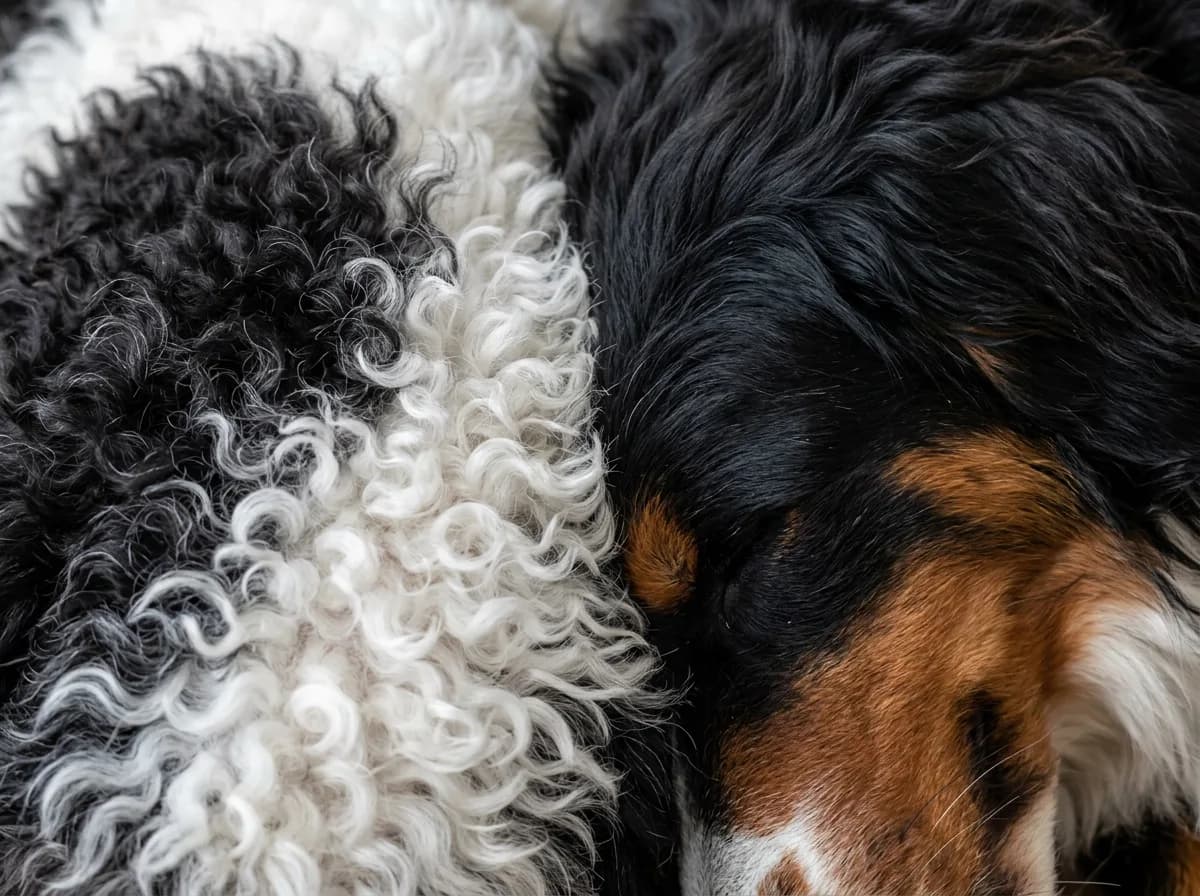
So do Bernedoodles shed? Yes, but lightly, and how lightly depends almost entirely on generation. An F1 Bernedoodle, meaning a first cross of a purebred Bernese Mountain Dog and a purebred Poodle, sheds a modest amount and can throw a straighter, looser coat. A dog from the F1b generation, which takes an F1 back to a Poodle, carries a curlier coat and sheds the least of any version. Sheepadoodles follow the same pattern, and a curly F1b Sheepadoodle is close to a non-shedding dog in day-to-day terms.
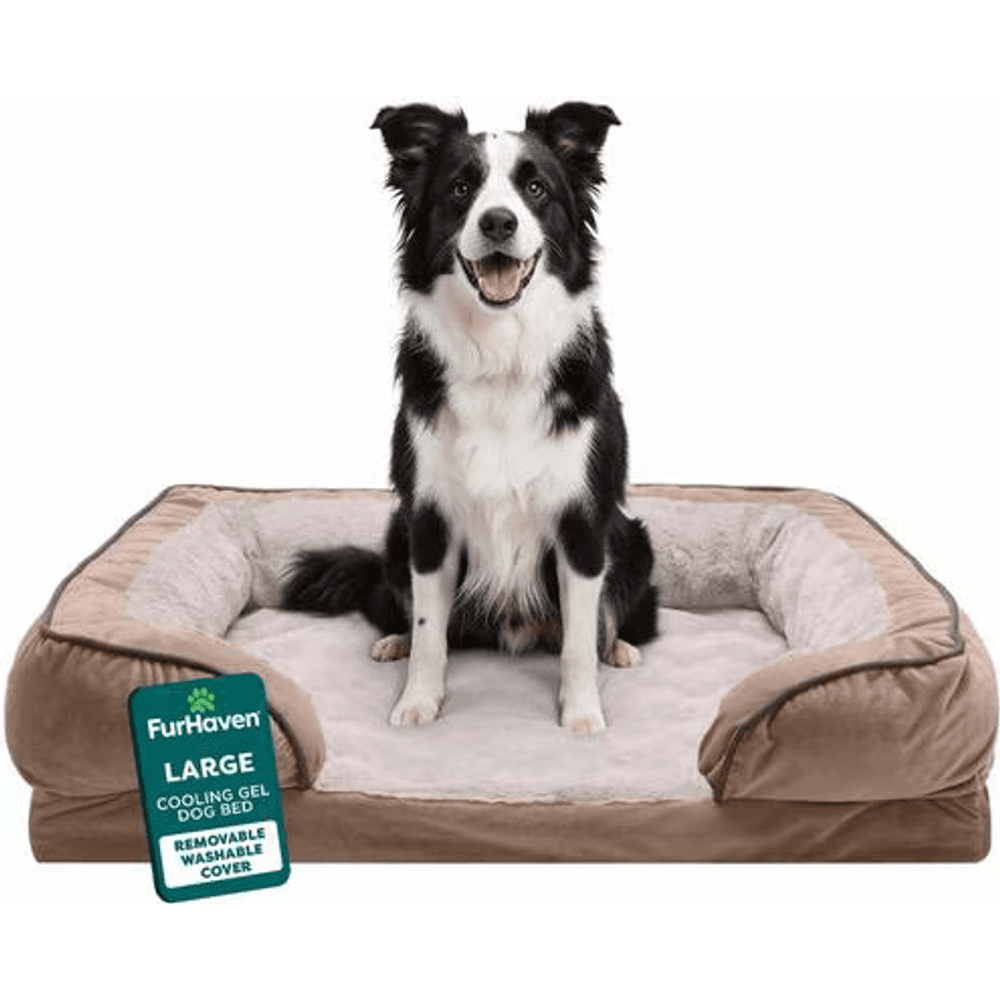
An orthopedic sofa bed with three bolstered sides for dogs who like to rest their head and joints against a cushion. The supportive foam base cradles hips and elbows, a comforting spot for an older or shaky dog to settle.
Petful may earn a commission when you click through to Chewy, at no extra cost to you.
- An F1b of either breed is curlier, lower shedding and higher maintenance than an F1 of the same breed. If shedding is your deciding factor, ask which generation the litter is before you ask which breed it is.
Are Bernedoodle hypoallergenic? No dog is, and that claim should end a conversation with a breeder rather than start one. Allergies react to dander and saliva proteins, not hair, and every dog produces both. What a curly-coated F1b Bernedoodle offers is less loose hair circulating through the house and therefore less dander distribution, which is a real reduction in exposure for many allergy sufferers without being a guarantee. The same qualified answer applies to the Sheepadoodle.
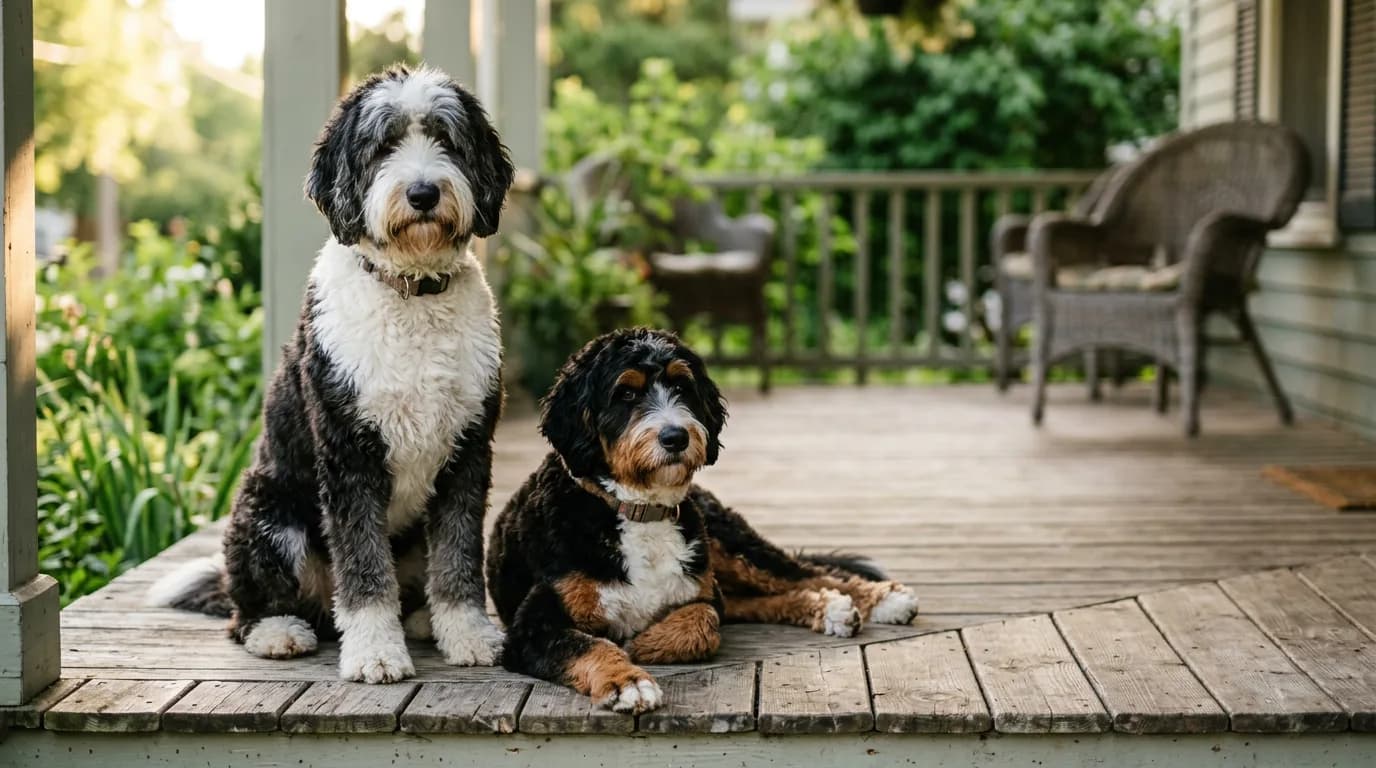
Color is the most visible split between the two. Sheepadoodles come almost exclusively in black and white, inheriting the Old English Sheepdog's classic gray-and-white pattern filtered through Poodle solids, with occasional parti and phantom variations. Bernedoodles carry the Bernese tricolor pattern, and the tri color bernedoodle, black with white chest and rust points, is both the most requested and the most expensive version of the breed. Bicolor, sable and phantom Bernedoodles exist and typically cost less.
- Sheepadoodle coat texture: wavy to loosely curly, single-layered, faster to dry, black and white in most litters
- Bernedoodle coat texture: wavy to tightly curly over a denser undercoat, slower to dry, tricolor in most sought-after litters
- Heat tolerance: the Bernedoodle's heavier coat makes it the poorer choice in hot climates
- Mat risk: both mat readily at the collar line, behind the ears and in the armpits, with the Bernedoodle worse because of undercoat volume
- Merle Sheepadoodles and merle Bernedoodles come from merle Poodle lines. Breeding two merle-carrying parents together is not an acceptable practice: roughly a quarter of the resulting puppies inherit two copies and are at high risk of deafness, blindness and serious eye defects. A responsible breeder pairs a merle dog only with a non-merle mate and can show you the genetic testing that proves it.
Telling these two apart in a photograph takes about three seconds once you know where to look. Check the color first. A Sheepadoodle is black and white, sometimes closer to gray and white as the coat silvers with age, with no warm tones anywhere on the dog. Rust or copper points above the eyes, on the cheeks and down the legs mean you are looking at a Bernedoodle. Coat texture is the second tell, because the Bernedoodle's is denser and heavier over an undercoat.
- Rust or copper points above the eyes and on the legs are the fastest tell in any photo. Sheepadoodles do not carry them.
- Parti and phantom Sheepadoodles exist and can complicate the color check, but the white sits against black or gray rather than against tan.
- Judge coat texture from a dog in full coat rather than a fresh groom, because clipping either breed to an inch makes them look nearly identical.
- Look at the outline as well as the color. Undercoat volume fills out a Bernedoodle's silhouette, while a single-layered Sheepadoodle coat follows the frame underneath it.
- Wet photos give away density. A Bernedoodle still looks heavy soaked and takes far longer to dry.
Grooming Workload Side by Side
Neither breed is low maintenance, and grooming is where owners of both most often say they underestimated the commitment. Both need brushing several times a week and a professional appointment every six to eight weeks. The Bernedoodle takes longer on the table because there is simply more coat and a denser undercoat beneath it, which is why the same salon usually charges 15 to 25 percent more for one.
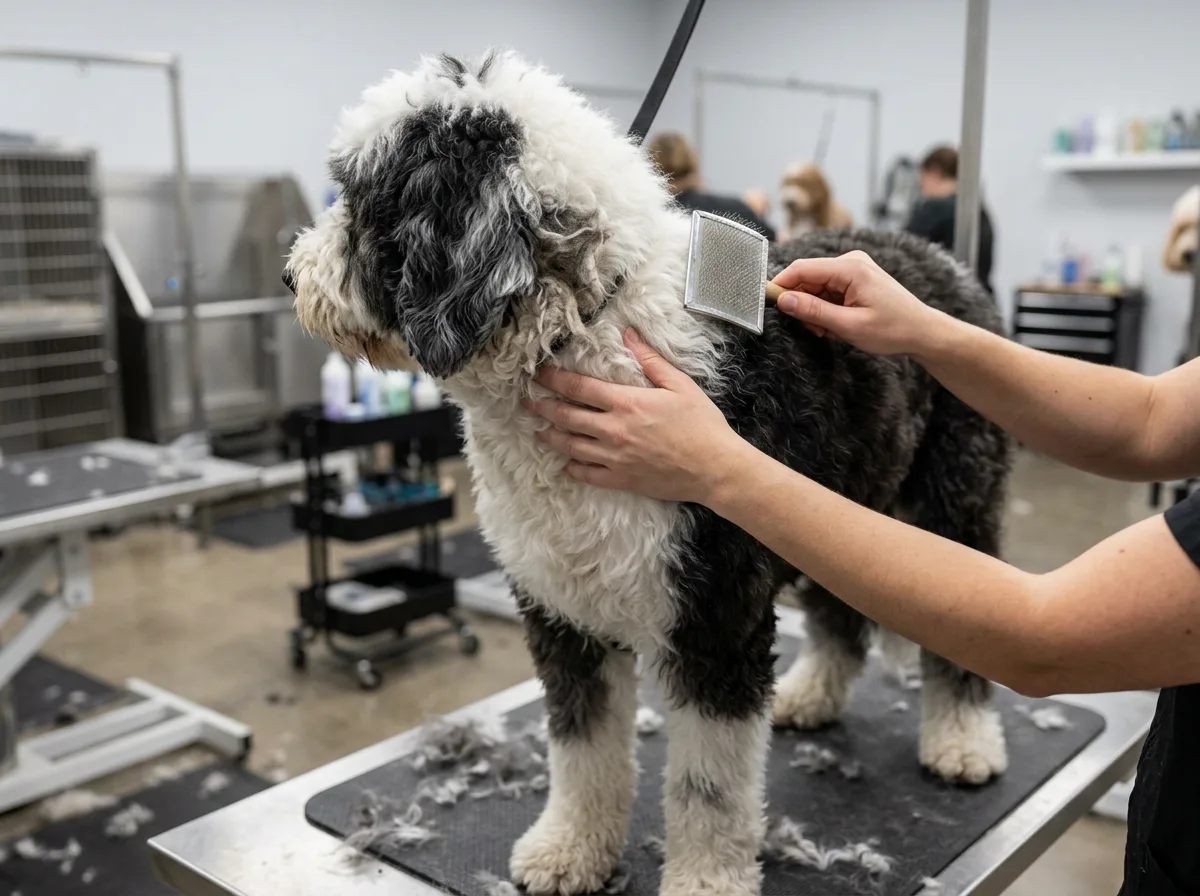
Grooming a Bernedoodle at home means working down to the skin rather than skimming the surface, because the topcoat can look perfectly brushed while a mat sets underneath. A slicker brush followed by a metal comb is the standard method: if the comb will not pass cleanly from skin to tip, the area is not finished. Grooming Bernedoodle coats through the coat change between 8 and 14 months is the hardest stretch, when the puppy fleece is being pushed out by the adult coat and mats form in days rather than weeks.
- Brushing: three to four sessions a week for a Sheepadoodle, four to five for a Bernedoodle
- Professional visits: every six to eight weeks for both, at $80 to $120 for a Sheepadoodle and $95 to $150 for a Bernedoodle
- Bath and dry: the Bernedoodle takes noticeably longer to dry, which matters if you bathe at home
- Trouble spots: behind the ears, under the collar, the armpits, the rear feathering and the tail base
- Annual grooming budget: roughly $650 to $960 for a Sheepadoodle and $760 to $1,200 for a Bernedoodle
- Bathing at home goes better with a rinse-clean oatmeal shampoo, because product residue left in a dense doodle coat is what turns a clean dog into a matted one inside a week
- Feathered feet hide the nail line on both breeds, so a rotary nail grinder takes length off gradually instead of guessing at a dark nail with clippers
Sheepadoodle coat care is documented in full in our Sheepadoodle grooming guide, including the brush-out method and how to talk to a groomer about clip length. The short version for anyone comparing the two breeds: budget the same routine for both, then add about 20 percent of time and money for the Bernedoodle.
Temperament and Family Fit
Which is calmer, a Bernedoodle or a Sheepadoodle? The Bernedoodle is the calmer breed, and it is not close once both dogs are past adolescence. The Bernese Mountain Dog was bred to pull carts and stay settled beside its people, so a mature Bernedoodle typically defaults to lying down when nothing is happening. The Old English Sheepdog was bred to move livestock all day, so a Sheepadoodle's baseline energy level stays higher into adulthood and it looks for a job when it does not have one. The caveat is timing: Bernedoodle puppies can be as boisterous as any doodle until roughly age two, at which point they downshift noticeably, while Sheepadoodles mellow more gradually and never drop as far.
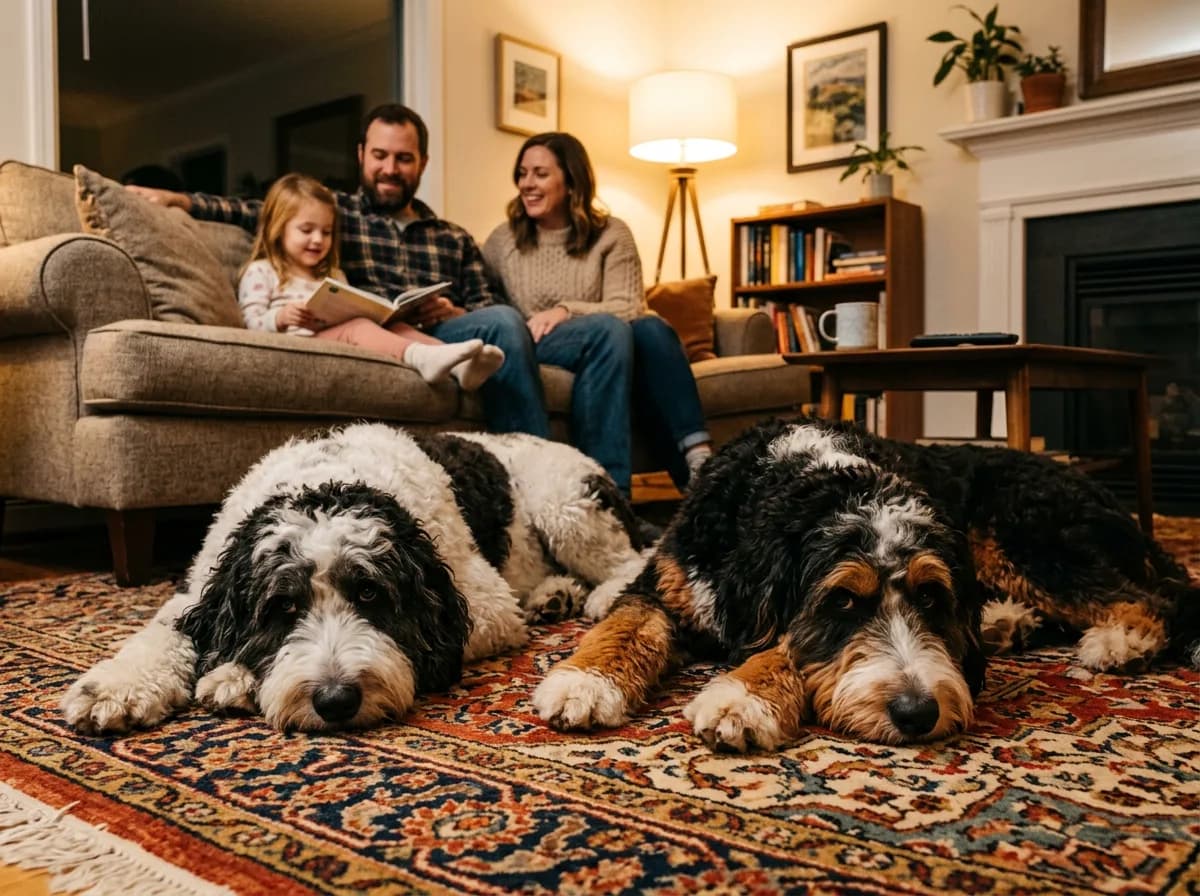
Bernedoodle personality is best described as affectionate, slightly goofy and more reserved with strangers than most doodles. That reserve is the Bernese contribution and it means early socialization matters, because an under-socialized Bernedoodle becomes watchful rather than friendly. They are also famously stubborn as puppies, so training works better in short sessions with high-value food than in long repetitive drills. Mini bernedoodle temperament tracks the standard closely with slightly more terrier-like busyness, and mini owners routinely report more barking than standard owners do.
The Sheepadoodle is more overtly playful, more physically demonstrative and more prone to the herding behaviors that come with its parent breed. Many will circle running children, nudge them toward the group, or lean against legs to move people around. That behavior is manageable with redirection and it is not aggression, but families with toddlers should know it is coming. Sheepadoodles also bond intensely to one household and are more likely than Bernedoodles to struggle when left alone for long stretches.
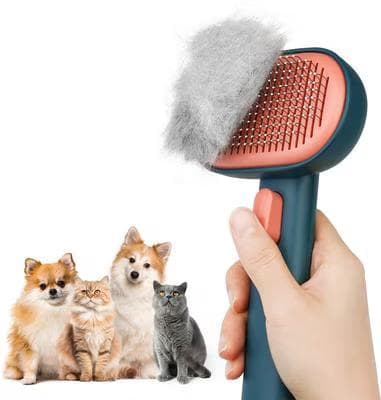
Petful may earn a commission when you click through to Chewy, at no extra cost to you.
- Best with young children: both, with the Bernedoodle marginally steadier around toddlers
- Best for first-time large-dog owners: the Bernedoodle, because the lower drive is more forgiving of training mistakes
- Best for runners and hikers: the Sheepadoodle, which can genuinely keep up for miles
- Best for apartments: neither at standard size, though a mini Bernedoodle is the more realistic option
- Left alone during a workday: the Bernedoodle copes better; the Sheepadoodle needs a midday break or a companion
- A Sheepadoodle that has already hit its exercise minimum still hunts for a job, and 10 minutes on a snuffle mat before you leave buys more settle than another lap of the block
Household temperament detail for the Sheepadoodle, including barking, separation tolerance and the herding instinct in full, lives in our Sheepadoodle temperament guide.
The temperament differences between these two crosses matter less as personality traits and more as household constraints. A Sheepadoodle's herding drive and low tolerance for being alone dictate who needs to be home and how the day is structured. A Bernedoodle's slower gears and reserve with strangers dictate how much early socialization you owe the dog and how forgiving it will be of a first-time owner's mistakes. Household fit is decided by which of those two demands your week can genuinely absorb.
- Separation tolerance is the single biggest fit difference. A Sheepadoodle left alone 8 to 10 hours on a regular schedule will find an outlet, and it is usually the furniture or the neighbors' patience.
- Herding behavior is not aggression, but it does knock small children over, so households with a toddler should plan on active redirection through the first two years.
- Bernedoodle reserve is a socialization deadline rather than a personality quirk. The window that matters closes early, and an under-socialized adult becomes watchful instead of friendly.
- Stubbornness shows up differently in each. A Bernedoodle declines a request it understands, while a Sheepadoodle complies and then invents its own job ten minutes later.
- Mini Bernedoodles bark more than standards, which changes apartment and shared-wall fit more than the size difference does.
Health and Lifespan: What Each Breed Inherits
Bernedoodle lifespan is 12 to 15 years for a standard and 14 to 17 years for a mini, which is a striking figure given that a purebred Bernese Mountain Dog often lives only 7 to 10 years. That extension is the strongest single argument for the cross, and it is real: adding Poodle genetics widens the gene pool and dilutes some of the cancer risk that shortens Bernese lives. Sheepadoodle lifespan runs 12 to 15 years on a standard and slightly longer on a mini, so the two breeds are broadly matched on longevity even though their parent breeds are not. Petful’s guide to Bernedoodle health problems covers lifespan and the conditions to screen for.
Anyone comparing bernedoodle life expectancy across generations will see minis quoted higher than standards, and that is a size effect rather than a generation effect. Smaller dogs of nearly every breed outlive larger ones, and a 30-pound mini Bernedoodle simply carries less structural load than an 85-pound standard across a decade.
| Condition | Sheepadoodle Risk | Bernedoodle Risk |
|---|---|---|
| Hip dysplasia | Moderate to high | High |
| Elbow dysplasia | Moderate | High |
| Bloat and gastric torsion | Moderate | Moderate to high |
| Von Willebrand disease | Moderate | Moderate to high |
| Progressive retinal atrophy | Moderate | Moderate |
| Histiocytic sarcoma | Low | Elevated via Bernese line |
| Hypothyroidism | Moderate | Moderate |
| Congenital deafness | Elevated via Old English Sheepdog line | Low |
| Addison's disease | Moderate via Poodle line | Moderate via Poodle line |
Bernedoodles health issues cluster around the joints and the blood. Hip dysplasia and elbow dysplasia are the most common orthopedic concerns in both breeds and are more likely in the heavier Bernedoodle, where extra body weight loads a malformed joint harder. Von Willebrand disease, an inherited clotting disorder that both the Poodle and the Bernese carry, is worth screening for specifically because it is silent until a surgery or an injury exposes it. The Bernese line also brings an elevated risk of histiocytic sarcoma, an aggressive cancer that is uncommon in most breeds and disproportionately represented in this one.
Sheepadoodle risk sits slightly lower overall but has its own signature items. The Old English Sheepdog contributes congenital deafness, hypothyroidism and a documented sensitivity to certain drugs in dogs carrying the MDR1 variant, which is worth a test before any anesthesia. Both breeds inherit the Poodle's exposure to progressive retinal atrophy and Addison's disease.
- Ask every breeder for: OFA or PennHIP hip scores on both parents, OFA elbow clearances, a CAER eye exam within the last year, and DNA panels covering von Willebrand disease, progressive retinal atrophy and MDR1
- A dog from the F1b generation is not automatically healthier; a backcross narrows coat variation, not disease risk
- Weight management is the single highest-leverage thing an owner controls, because a lean dog loads dysplastic joints far less
- Pet insurance is more defensible for the Bernedoodle given the cancer and orthopedic exposure
- Any dog projected past 70 pounds is a reasonable candidate for a joint supplement in early adulthood, though it supports normal joint function rather than treating anything, so it never substitutes for the parent hip and elbow scores above
Breed-specific screening, symptom timelines and the full inherited-condition list for the Sheepadoodle are covered in our Sheepadoodle health issues guide, and the American Kennel Club's inherited health conditions material is a solid neutral reference for how these conditions present across breeds.
Expected lifespan and breed-specific health risks are the same conversation, because what shortens each life is different. A standard Bernedoodle's 12 to 15 years is a real gain on the 7 to 10 typical of a purebred Bernese Mountain Dog, but the cross carries that parent's cancer exposure forward at a reduced level rather than removing it. A Sheepadoodle's matching 12 to 15 years comes with a lighter frame, less orthopedic load, and its own inherited list from the Old English Sheepdog side.
- Bernedoodle specific: histiocytic sarcoma from the Bernese line, an aggressive cancer that is uncommon in most breeds and disproportionately represented in this one.
- Bernedoodle specific: heavier orthopedic exposure, because 70 to 90 pounds loads a dysplastic hip or elbow harder than 55 to 85 pounds does.
- Sheepadoodle specific: congenital deafness detectable only on a BAER test, hypothyroidism, and MDR1 drug sensitivity that matters before any anesthesia.
- Shared by both: von Willebrand disease, progressive retinal atrophy and Addison's disease, all reachable through the Poodle on either side of the cross.
- Lifespan tracks size inside both breeds, which is why minis of either cross are quoted two to three years above their standards.
What Veterinarians Say About Both Breeds
What do vets say about Bernedoodles? In clinical practice, the consistent veterinary observations are that Bernedoodles present with more orthopedic complaints than average for their age group, that they are frequently overweight because a heavy coat hides body condition, and that matting-related skin problems are common in dogs whose owners underestimated the grooming load. Most vets also note the genuine longevity gain over a purebred Bernese Mountain Dog and treat that as a legitimate benefit of the cross. The recurring professional caution is not about the dogs themselves but about breeding standards: because neither cross is registry-regulated, health testing varies enormously between programs.
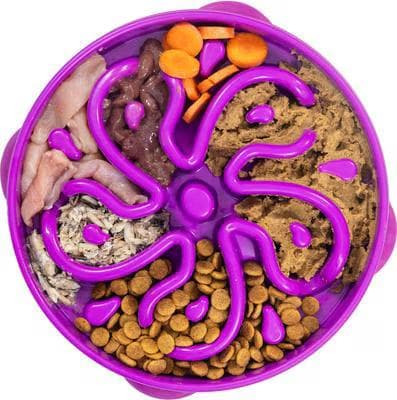
A maze-pattern slow-feeder bowl that makes fast eaters work for each bite, reducing the gulping and swallowed air that trigger regurgitation and vomiting. Holds up to 4 cups.
Petful may earn a commission when you click through to Chewy, at no extra cost to you.
- Body condition scoring beats the scale in both breeds, because coat volume disguises weight gain
- Anesthesia planning should account for clotting disorders and, in Sheepadoodles, MDR1 status
- Early joint monitoring is worth the cost in any dog projected past 70 pounds
- Skin checks under the coat at every visit catch mat-related hot spots before they need sedation to resolve
- Two measured meals from a slow feeder bowl beat one fast bowl a day in deep-chested dogs this size, and a measured portion is the only way to keep body condition honest under that much coat
The broader debate about why some veterinarians are skeptical of doodle crosses in general, including the arguments about unregulated breeding, hybrid vigor claims and health-testing gaps, is a subject in its own right rather than a footnote to a two-breed comparison. We treat that question in full in our Sheepadoodle health issues guide, which lays out the veterinary criticism, the counterarguments and what it means for a buyer choosing a breeder.
Cost: Purchase Price and Lifetime Budget
Bernedoodle cost runs higher than Sheepadoodle cost at every stage, starting with the puppy and continuing through food, grooming and weight-dosed medication. The typical bernedoodle puppy cost from a health-testing breeder is $2,500 to $5,000, with tricolor and mini dogs commanding the top of that band. A Sheepadoodle from an equivalent program runs $1,500 to $3,000. Anyone researching the cost of a bernedoodle puppy in a high-demand metro should expect the upper figure rather than the average.
The purchase price is the part buyers plan for and the smallest part of what they actually spend. A realistic five-year cost model tells a different story, because grooming, food and routine veterinary care compound while the puppy invoice happens once.
| Cost Category | Sheepadoodle | Bernedoodle |
|---|---|---|
| Purchase price | $1,500 to $3,000 | $2,500 to $5,000 |
| Grooming (5 years) | $3,250 to $4,800 | $3,800 to $6,000 |
| Food (5 years) | $3,000 to $4,000 | $3,800 to $5,200 |
| Routine vet and preventatives (5 years) | $3,500 to $4,500 | $4,000 to $5,250 |
| First-year supplies and training | $700 to $1,000 | $800 to $1,100 |
| Five-year total | $11,950 to $17,300 | $14,900 to $22,550 |
That five-year cost gap of roughly $3,000 to $5,000 is the number that should carry weight in the decision, not the difference between two puppy prices. It also understates the spread slightly, because insurance premiums and orthopedic claims skew higher in the heavier breed.
- Grooming is the largest recurring line item for both breeds and the one most often left out of a buyer's budget
- Food scales with body weight, so an 85-pound Bernedoodle eats roughly 30 percent more than a 65-pound Sheepadoodle
- Preventatives are priced by weight band, which pushes most standard Bernedoodles into the top tier
- Pet insurance runs about $55 to $95 a month for a Bernedoodle and $45 to $80 for a Sheepadoodle
- Emergency reserve: keep $2,000 to $3,000 accessible for either breed, given the bloat and orthopedic exposure
- Food scales harder than anything else with body weight, so compare dry dog food on price per pound rather than price per bag before you commit to the heavier breed
- If the weight-band pricing is what stings, an 8-month flea and tick collar works out cheaper per month than top-band monthly doses, at the cost of less flexibility if the dog swims often
- Breeders who skip hip scoring, eye exams and DNA panels charge less because they spend less. The savings evaporate on the first orthopedic consult. Ask to see the clearances before you discuss deposits, in either breed.
Downsides of the Sheepadoodle
The downside of a Sheepadoodle is that it is a working crossbreed sold as a family pet, and the mismatch surfaces around six months old. The herding drive that makes the breed engaging also makes it restless, so an under-exercised Sheepadoodle redirects that energy into chewing, counter-surfing, nuisance barking and circling children. It bonds hard to one household and is more prone to separation distress than most large doodles, which makes a full workday alone a genuine problem rather than an inconvenience. The coat is the second recurring complaint: it mats fast, the coat change between 8 and 14 months is punishing, and owners who skip the every-six-week groomer often end up paying for a shave-down instead.
- Exercise floor is real: 60 to 90 minutes daily, not a walk around the block
- Herding behavior toward running children needs active redirection from puppyhood
- Separation tolerance is low compared with the Bernedoodle
- Coat maintenance is relentless, with a difficult adolescent coat change
- Size is unpredictable in early generations, so a "medium" puppy can finish at 75 pounds
- Boredom chewing usually starts on furniture, so keep a stuffable rubber chew toy in rotation and freeze it filled, which stretches a five-minute distraction into 20 or more
Downsides of the Bernedoodle
The downsides of Bernedoodles start with money and end with heat. They are the more expensive breed to buy and the more expensive breed to keep, with a five-year gap of several thousand dollars over an equivalent Sheepadoodle. The dense double coat that makes them beautiful also makes them poorly suited to hot climates, and a standard Bernedoodle in a southern summer needs genuinely managed exercise timing rather than midday walks. Puppy stubbornness is the training complaint that comes up most, because the Bernese contribution can make a young Bernedoodle simply decline a request it understands perfectly well. The health picture is the serious downside: heavier body weight loads hips and elbows harder, and the Bernese line carries elevated cancer risk that a Poodle outcross reduces without eliminating.
- Highest purchase price of any common doodle cross, particularly in tricolor
- Poor heat tolerance because of the double coat inherited from the Bernese Mountain Dog
- Stubborn adolescence that rewards short training sessions over long ones
- Higher orthopedic and cancer exposure than the Sheepadoodle
- Reserved with strangers unless socialized early and deliberately
- Hard floors are unkind to a 90-pound frame, and an orthopedic bed with at least four inches of real foam is one of the few large-breed purchases worth making on day one rather than year five
What About Mini Sheepadoodles and Mini Bernedoodles?
Both breeds come in reduced sizes, and the mini versions change the comparison enough that many buyers should be weighing those instead. A mini sheepadoodle stands 15 to 20 inches and weighs 25 to 45 pounds, while a mini Bernedoodle stands 18 to 22 inches and weighs 25 to 49 pounds, so the Bernedoodle stays the taller breed even at reduced scale. A mini sheepadoodle full grown reaches adult height around 11 to 13 months and finishes filling out by roughly 14 months, which is considerably faster than either standard.
The mini classes shift more than the numbers. Grooming time drops, food cost drops sharply, apartment living becomes realistic, and expected lifespan rises by two to three years. Mini sheepadoodle size, generation differences, growth timelines and the price premium that comes with the smallest doodles are covered properly in our dedicated mini Sheepadoodle guide, which owns that depth rather than repeating it here.
Which Doodle Should You Choose? A Household Match Guide
Here is the household match framework the ranking pages never commit to. Find the profile closest to yours and take the named breed, weighing three variables in order: climate, daily activity level and grooming budget.
- You run, hike or have a large fenced yard and school-age kids: choose the Sheepadoodle. It is the only one of the two that genuinely wants that much movement.
- You want a large, settled dog that lies down when the house is quiet: choose the Bernedoodle, and accept that you are paying more for that temperament.
- You live somewhere with hot summers: choose the Sheepadoodle. The Bernedoodle's double coat makes real heat a year-round management problem.
- This is your first large dog: choose the Bernedoodle. Lower drive is more forgiving of training mistakes made in the first year.
- Someone is home during the day: either works, but the Sheepadoodle benefits most from the company.
- The house is empty from 8 to 6: choose the Bernedoodle, and arrange a midday break regardless.
- Your grooming budget is under $700 a year: choose the Sheepadoodle, and commit to home brushing between visits. If the grooming budget cannot stretch to roughly $650 minimum, neither breed is the right call.
- Allergy sufferer in the household: choose an F1b of either breed and spend time with an adult dog from the same line before committing.
- You want the longest expected lifespan: choose a mini of either breed rather than a standard.
Whichever way you land, the breeder matters more than the breed. A well-bred Sheepadoodle from a program that scores hips, tests eyes and screens for von Willebrand disease will outlive and outperform a poorly bred Bernedoodle every time, and the reverse is equally true. Ask for the clearances first, meet both parents where possible, and treat any breeder who leads with color or price rather than health testing as a reason to keep looking.
- How many minutes a day will you really spend exercising this dog, and how much can you spend on grooming each year? Answer those two truthfully and the choice between these breeds makes itself. Everything else on this page is supporting detail.
Yes, and it is a common pairing. The energy mismatch usually resolves itself because the Sheepadoodle draws the Bernedoodle into more play than it would seek out alone. Introduce them on neutral ground, feed separately at first, and expect the Bernedoodle to need more undisturbed rest than its housemate does.
The Sheepadoodle picks up new cues faster because the herding parent selected for responsiveness to handler direction. The Bernedoodle learns just as reliably but works more slowly and can be stubborn through adolescence. Short sessions with high-value food suit the Bernedoodle; the Sheepadoodle needs mental work to stay engaged.
Sheepadoodles bark more overall, largely because herding lines are vocal and because a bored Sheepadoodle finds things to announce. Bernedoodles are quieter by default but will alert at the door, and mini Bernedoodles are noticeably more vocal than standards.
A mini Bernedoodle is the most realistic apartment dog of the four size options discussed here, because it combines a lower energy baseline with a manageable footprint. A standard of either breed can live in an apartment only with committed daily outdoor exercise, and a standard Sheepadoodle is the hardest of the group to satisfy indoors.
Bernedoodles generally settle with cats more easily. Sheepadoodles carry a herding instinct that can express itself as chasing or circling a cat, which is manageable with early exposure and consistent redirection but takes more active work in the first year.
A standard Sheepadoodle needs 60 to 90 minutes of real activity, ideally including off-leash running or swimming. A standard Bernedoodle is well served by 45 to 60 minutes at a steadier pace. Both need mental enrichment on top of physical exercise, and both become destructive without it.
Score your household before you read the profiles, because a match guide only works if you answer honestly. Give the Sheepadoodle a point for each of these: hot summers where you live, more than an hour of daily activity you genuinely want to share, someone home during the day, and a grooming budget under roughly $700 a year. Give the Bernedoodle a point for each opposite. Then check the five-year cost comparison, because a $3,000 to $5,000 gap belongs in the decision alongside temperament.
- Four or more Sheepadoodle points and the profiles below will almost always confirm it. A split score means climate and daily activity break the tie, in that order.
- Multi-year math on the puppy: $1,500 to $3,000 for a Sheepadoodle against $2,500 to $5,000 for a Bernedoodle, paid once.
- Multi-year math on grooming: roughly $650 to $960 a year against $760 to $1,200, paid every year for 12 to 15 years.
- Multi-year math on insurance: about $45 to $80 a month against $55 to $95, before any orthopedic or cancer claim moves the premium.
- If the five-year total does not clear the Bernedoodle's higher band with room for a $2,000 to $3,000 emergency reserve, the Sheepadoodle is the answer regardless of which temperament you prefer.
Compare the two on traits alone and you get nowhere. Read in isolation the traits cancel out: one breed wins on coat, the other wins on calm, and a reader who came for an answer is handed a shrug. A scorecard is what actually picks a breed for a real household, because it forces you to weight the traits rather than list them, and the weights are nowhere close to equal. Climate is nearly a veto. Daily activity comes second, since it is the one variable you cannot buy back later. Multi-year cost comes third, and the five-year comparison carries more weight than the puppy price. Answer those three honestly, in that order, and the match guide above stops being a menu and becomes a decision.
- Weight the three in order and stop at the first clear signal. Genuinely hot summers settle it before activity or budget gets a vote.
- A tie across all three usually means the breed is not your constraint. Pick the better breeder and the better litter instead.
- Score the household you have on a bad week, not a good one. The Sunday hike is not the variable that decides this; the Wednesday in February is.
- If both columns fail the grooming budget or the activity floor, the honest answer is a different breed altogether. Neither of these two forgives a skipped coat routine.
- Re-score after you have met adult dogs from both lines. An hour with a 90-pound Bernedoodle in a living room changes more minds than any table.

Coreen Saito is a pet writer and longtime shelter volunteer with more than a decade in animal rescue. She covers cat behavior, breed care, and the small, ordinary science of sharing a life with companion animals, with a particular focus on honest takes about the products and decisions that actually matter. At home in Arizona, she's outranked by Mac (a dog with the loudest opinion in the house), Rebel (a cat who governs by quiet authority), and Meri (an orange tabby who runs the late shift and the laundry basket). She writes about all three, plus the rescues that keep coming through her life, at LifeWithMinty.com.
Sign up for expert-backed reviews and safety alerts all in one place.