Bernedoodle Temperament: Personality Traits and Behavior
A complete guide to the Bernedoodle temperament: affectionate and intelligent personality traits, energy and trainability, good-with-kids behavior, separation anxiety, how generation and socialization shape it, and what these dogs cost.

Petful is reader supported. As an affiliate of platforms like Amazon and Chewy, we may earn a commission when you buy through links on this page. There is no extra cost to you.
The Bernedoodle temperament is the main reason this Bernese Mountain Dog and Poodle cross has become one of the most sought-after designer dogs in the country. Owners describe a goofy, deeply affectionate companion that blends the mellow devotion of the Bernese with the sharp, trainable brain of the Poodle. When people ask what a Bernedoodle is really like to live with, the honest answer is that personality varies more than color or coat, because behavior is shaped by which parent a puppy takes after, the generation it comes from, and how much early socialization it gets.
This guide walks through the core Bernedoodle personality traits, how energy level and trainability play out day to day, whether they are genuinely good with kids and other pets, the separation anxiety tendencies buyers should plan for, and the real downsides nobody mentions on a breeder waitlist. You will also get straight answers to the questions people search most: when Bernedoodles calm down, boy versus girl differences, how they compare to a Goldendoodle, and what they cost.
- 1Bernedoodles are affectionate, intelligent, and family-oriented, but they are velcro dogs prone to separation anxiety.
- 2Generation and the Poodle parent's size shape energy and temperament more than any other single factor.
- 3Early socialization and consistent training turn a smart, sensitive puppy into a calm, well-mannered adult.

Sign up for expert-backed reviews and safety alerts all in one place.
What Is the Bernedoodle Temperament Like?
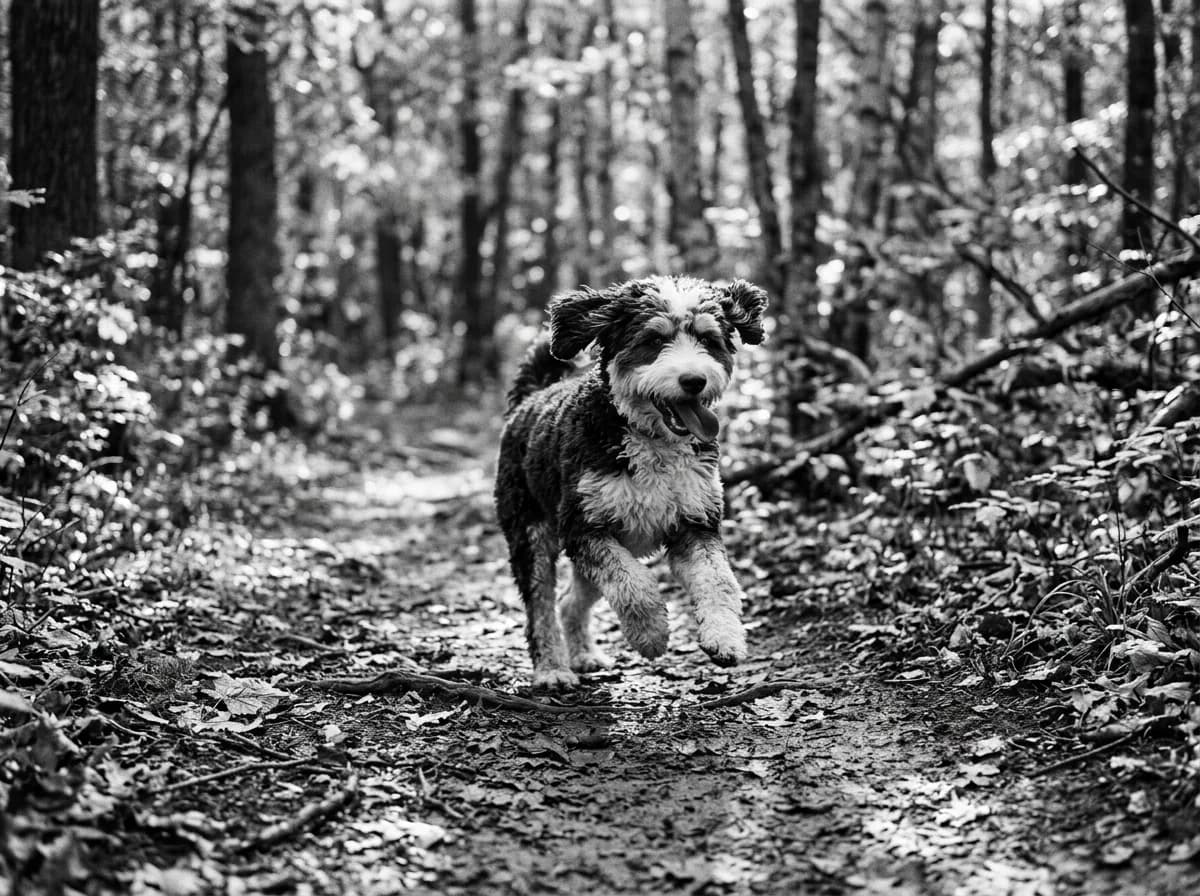
At its best, the Bernedoodle temperament is a happy middle ground between two very different parent breeds. From the Bernese Mountain Dog side comes a calm, loyal, people-loving nature and a fondness for leaning against your legs. From the Poodle side comes intelligence, playfulness, and an eager-to-please streak that makes training feel like a game. Most Bernedoodles land somewhere between the two, though a puppy can tip strongly toward one parent.

Petful may earn a commission when you click through to Chewy, at no extra cost to you.
Affectionate and people-oriented
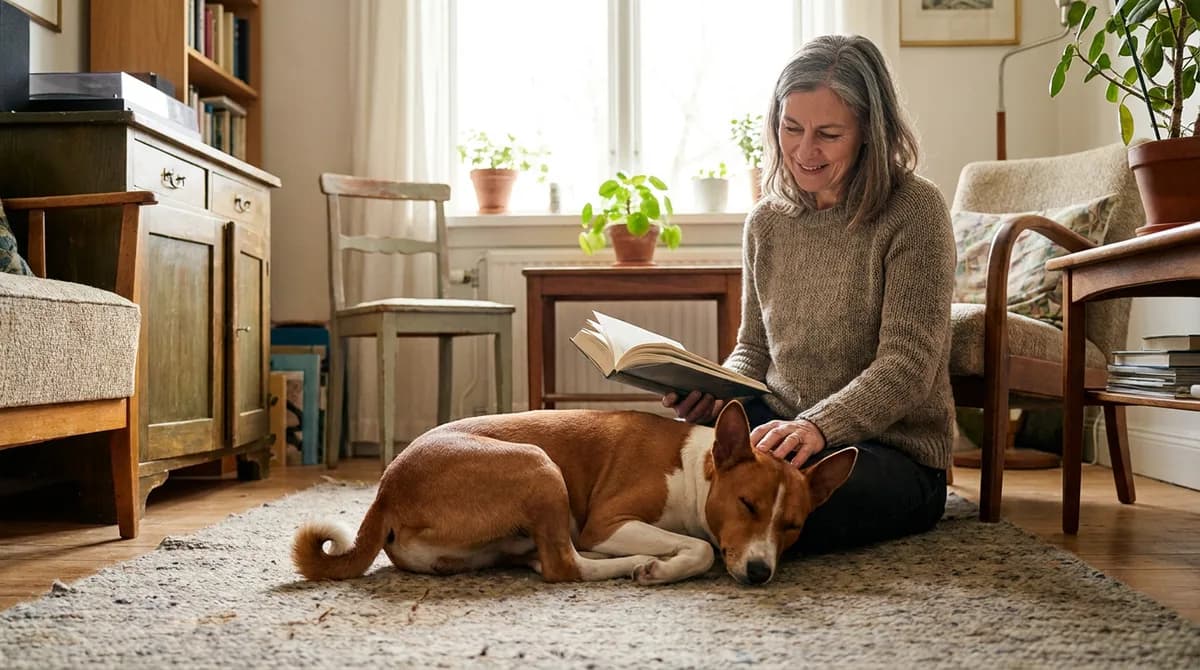
Bernedoodles are classic companion dogs. They want to be in the same room as their humans, follow you from the kitchen to the couch, and are quick to flop into a lap far larger than any lap can hold. This deep attachment is exactly what makes them wonderful family pets, and it is also the root of their biggest behavioral challenge, which is struggling when left alone.
Intelligent and sensitive
The Poodle influence gives Bernedoodles real problem-solving intelligence. They pick up cues fast, read household routines, and notice the emotional temperature of a room. That sensitivity is a gift and a caution: they thrive on gentle, reward-based guidance and shut down under harsh corrections. A Bernedoodle that is yelled at tends to get anxious and stubborn rather than compliant.
- The same clingy affection that makes Bernedoodles such loving companions is what makes them prone to separation distress. Plan for alone-time training from day one rather than waiting for a problem to appear.
Energy Level and Exercise Needs
Bernedoodles are moderately energetic, not hyperactive. Most adults are satisfied with 45 to 60 minutes of activity a day split between a walk, some backyard play, and a training or puzzle session. Puppies and Mini Bernedoodles with more Poodle in them run hotter and need more outlets, while larger Standard Bernedoodles that favor the Bernese side are often content to lounge once their needs are met. For more, see Petful’s guide to Bernedoodle sizes.
Because they are so smart, mental exercise matters as much as physical exercise. A Bernedoodle that gets a long walk but no problem to solve will invent its own entertainment, and that usually means chewing, digging, or barking. Rotating puzzle feeders, short trick-training sessions, and scent games keep the brain tired, which is what actually produces a calm dog on the living-room floor.

Peanut butter soft chews with L-theanine, chamomile, and ashwagandha to ease hyperactivity and support calm, relaxed behavior.
Petful may earn a commission when you click through to Chewy, at no extra cost to you.
Are Bernedoodles Good With Kids and Other Pets?
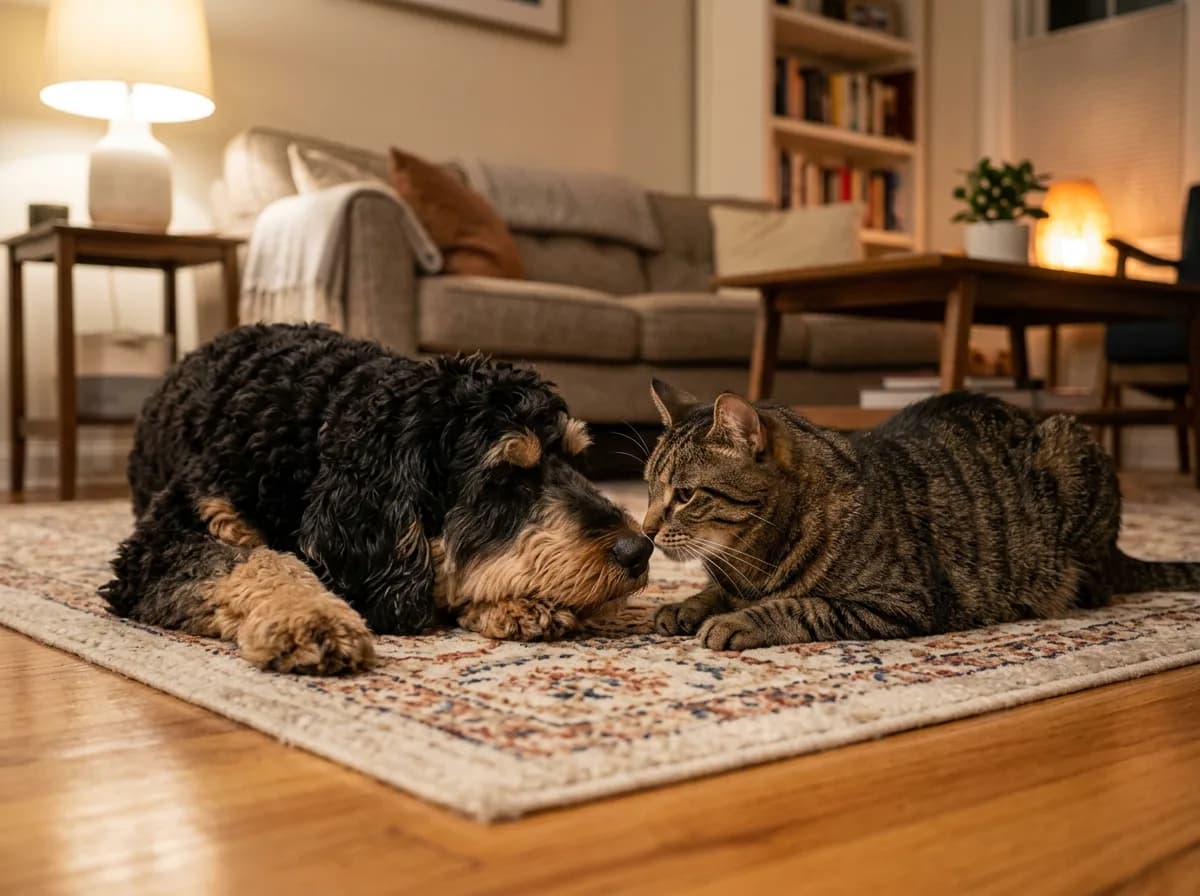
Yes. Good-natured tolerance is one of the breed's strongest selling points, and it traces directly to the Bernese Mountain Dog's history as a gentle farm dog. Well-socialized Bernedoodles are typically patient with children, happy to share space with other dogs, and able to coexist with cats they were raised alongside.
Two caveats keep this from being automatic. First, size and enthusiasm mean a bouncy young Standard can knock over a toddler without a shred of aggression, so supervision matters during the clumsy adolescent months. Second, tolerance is built, not born. A puppy that meets a wide variety of people, dogs, and situations in its first few months grows into the easygoing dog owners hope for. One that is under-socialized can become shy or reactive, which brings us to how much early handling shapes the adult.
- Even the gentlest Bernedoodle should be supervised around very young children, not because the dog is a risk but because a 40 to 90 pound dog and a toddler simply need a referee.
Trainability: How Easy Are Bernedoodles to Train?
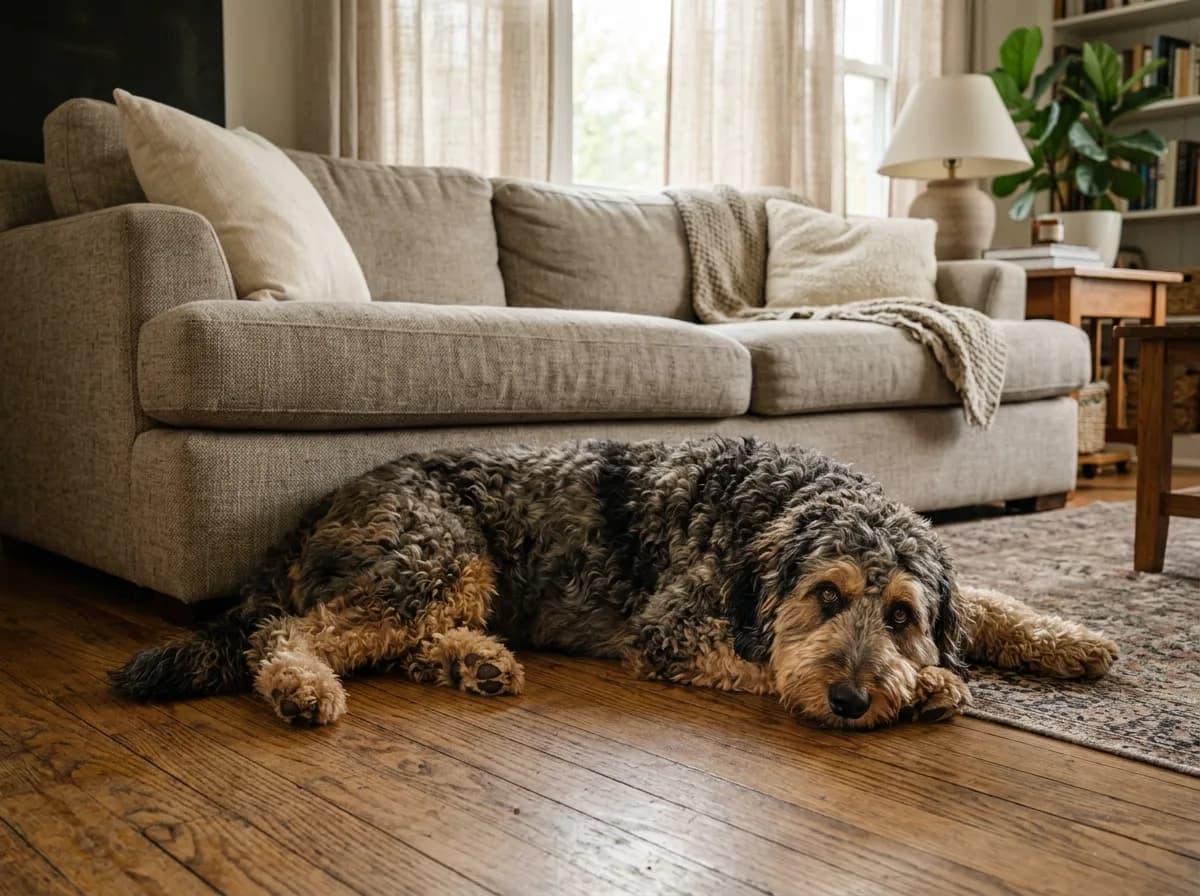
Bernedoodles are highly trainable and rank among the easier designer breeds to teach, thanks to that Poodle intelligence and a genuine desire to please. They respond best to short, upbeat, reward-based sessions. Where owners hit a wall is usually the Bernese stubborn streak: a Bernedoodle that has decided the couch is more interesting than your recall cue will pretend it cannot hear you.
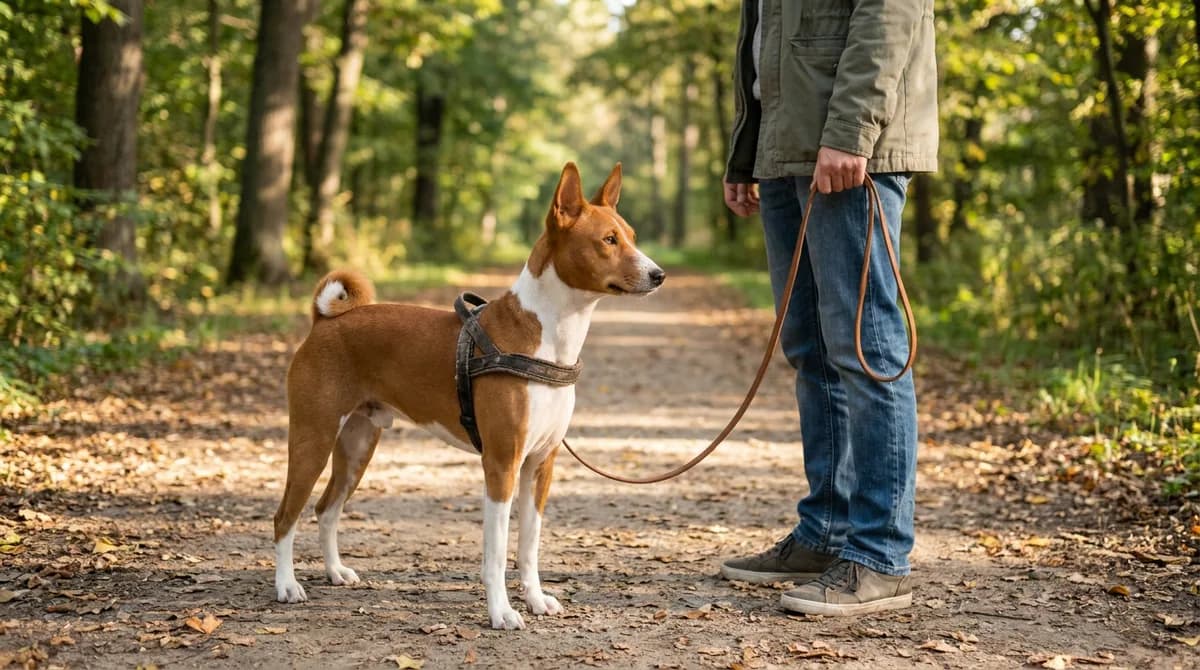
The fix is consistency and motivation rather than force. High-value treats, clear routines, and patience win almost every time. Start basic obedience and crate training early, keep sessions under 10 minutes for puppies, and end on a win. Because they are sensitive, one harsh session can set training back further than several skipped ones, so keeping the tone positive is not just kindness, it is strategy. The American Kennel Club offers solid foundational training guidance worth reading before you bring a puppy home (akc.org).

A durable rubber dog toy that can be stuffed with treats and selected by the manufacturer's size guide; supervise use and retire it when damaged.
Petful may earn a commission when you click through to Chewy, at no extra cost to you.
How Generation Shapes Bernedoodle Temperament
Generation is one of the biggest levers on a Bernedoodle's personality, coat, and shedding, and it is the part most first-time buyers overlook. The generation label describes how much Poodle versus Bernese is in the mix, which in turn nudges everything from energy to how much a dog sheds. None of these are guarantees, because genetics still roll the dice within a litter, but the pattern is reliable enough to plan around.
| Generation | Genetic Makeup | Coat and Shedding | Temperament Tendency |
|---|---|---|---|
| F1 | 50% Bernese, 50% Poodle | Wavy, usually low shedding | Balanced, classic Bernedoodle mix |
| F1B | 25% Bernese, 75% Poodle | Curlier, most allergy-friendly | More Poodle energy and drive |
| F2 | F1 bred to F1 | Most variable in a litter | Least predictable temperament |
| Multigen | Mostly Poodle lineage | Consistent, low shedding | Reliably trainable, Poodle-leaning |
A puppy's DNA is the single best predictor here, and a genetic panel can confirm the parent ratio and screen for health risks that affect behavior later in life. That is one reason many owners run a breed-and-health DNA test on a new Bernedoodle rather than trusting a generation label alone.
How Size and the Poodle Parent Shape Personality
Beyond generation, the size of the Poodle parent (Standard, Miniature, or Toy) sets the Bernedoodle's adult size and colors its temperament. Standard Bernedoodles tend to be calmer, more Bernese-like, and more laid-back once mature. Tiny and Mini Bernedoodles carry more of the Poodle's zip and can be busier, more vocal, and more sensitive. Neither is better, but a family wanting a mellow floor-dog and a family wanting a peppy jogging buddy should choose different sizes on purpose.
Separation Anxiety and Behavior Issues

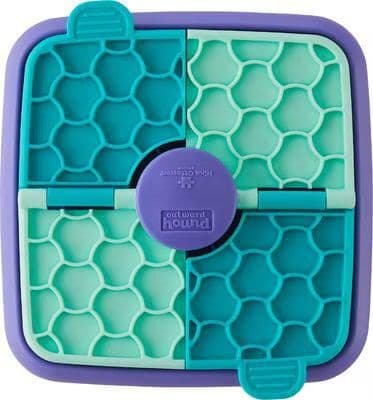
The number one behavior issue with Bernedoodles is separation anxiety. These dogs bond hard and genuinely dislike being alone, so a household that is empty ten hours a day is a poor match unless you plan seriously for it. Signs of trouble include destructive chewing near doors, pacing, house-soiling in a trained dog, and nonstop barking or howling when you leave.
Petful may earn a commission when you click through to Chewy, at no extra cost to you.
Other behavior issues owners report are usually downstream of boredom or under-socialization rather than a bad temperament: nuisance barking, counter-surfing, digging, and adolescent stubbornness between roughly 6 and 18 months. Almost all of these respond to more mental enrichment, consistent structure, and gradual alone-time conditioning. If anxiety is severe, a veterinary behaviorist can build a desensitization plan, and reputable veterinary resources on canine separation anxiety are a good starting point (vet.cornell.edu). Our companion guide on Bernedoodle health covers the medical side of anxiety and stress-related issues in more depth.
- Separation anxiety is the most common reason these dogs end up rehomed. Build up alone time in small increments, use enrichment, and never punish anxiety-driven behavior, which only deepens the fear.
The Downsides of Owning a Bernedoodle
The downside of Bernedoodles is that their biggest strengths come with real costs. That intense attachment means separation anxiety. Their intelligence means they get bored and destructive without a job. Their coat, whatever the generation, needs regular brushing and professional grooming every 6 to 8 weeks or it mats. They are expensive to buy and to maintain, adolescence tests your patience, and because they are a mixed breed from many small breeders, quality and temperament vary widely.
None of this makes them a bad choice. It makes them a poor impulse buy. Buyers who go in expecting a low-effort dog are the ones who get overwhelmed, while those who plan for grooming, training, company, and cost tend to be thrilled. For a sense of how a similar designer cross fits a busy household, our Cavapoo breed guide walks through comparable trade-offs on a smaller scale.
At What Age Does a Bernedoodle Calm Down?
Most Bernedoodles begin to noticeably calm down between 2 and 3 years of age, with the biggest shift happening as they exit adolescence around 18 to 24 months. Puppyhood and the teenage phase (roughly 6 to 18 months) are the wild years, full of zoomies, testing, and selective hearing. Standard Bernedoodles that lean Bernese often settle earlier and harder, while smaller, more Poodle-heavy Bernedoodles can stay playful and busy well into their third year.
You can speed the transition along. Consistent daily exercise, reliable routines, obedience training, and enough mental stimulation all help a young dog regulate itself sooner. A Bernedoodle that is under-exercised and under-stimulated will seem hyper far longer, which is often mistaken for the breed simply being high-energy when it is really an unmet-needs problem.
Bernedoodle vs Goldendoodle: Which Is Calmer?

Bernedoodles are generally the calmer of the two. The Bernese Mountain Dog parent brings a mellower, more laid-back baseline than the Golden Retriever behind a Goldendoodle, which tends to be more consistently outgoing, high-energy, and bouncy. If your priority is a quieter house-dog, the Bernedoodle usually edges it, especially in the Standard size.
That said, the gap is a tendency, not a rule. A Poodle-heavy Mini Bernedoodle can easily be more energetic than a laid-back Goldendoodle, and individual personality plus training swamp the breed average in any single dog. Bernedoodles also tend to be a touch more reserved with strangers and more one-person-attached, while Goldendoodles are often the friendlier, wider social butterfly. Choose on the specific dog and lineage in front of you, not the label.
How Much Do Bernedoodles Cost?
Bernedoodles usually cost between $2,500 and $5,000 from a reputable breeder, with rare colors, Mini and micro sizes, and multigen litters pushing toward the top of that range. That is only the entry ticket. The real number that matters is lifetime cost, because grooming, food, and health care for a dog this size add up fast over 12 to 18 years.
| Cost Type | Typical Range | What Drives It |
|---|---|---|
| Puppy purchase | $2,500 to $5,000 | Size, generation, color, breeder reputation |
| First-year setup | $1,000 to $2,000 | Vet visits, spay or neuter, gear, training |
| Professional grooming | $75 to $120 per visit | Coat type, size, every 6 to 8 weeks |
| Annual upkeep | $1,500 to $3,000 | Food, preventives, grooming, routine vet care |
Budgeting honestly for grooming and health up front is the best predictor of a happy ownership experience. For a full breed overview beyond temperament, see our main Bernedoodle breed guide.
How Socialization Shapes Adult Behavior
If generation loads the dice, socialization rolls them. The first 3 to 4 months of a Bernedoodle's life are a critical window: puppies that meet many people, dogs, surfaces, sounds, and situations during this period grow into the confident, easygoing adults the breed is famous for. Puppies that miss it can turn shy, noise-sensitive, or reactive despite great genetics.
Practical socialization means positive, low-pressure exposure, not overwhelm. Puppy classes, calm greetings with vaccinated dogs, car rides, handling of paws and ears, and short solo stretches all build resilience. Pair this with reward-based training and gradual independence work, and you get the version of the Bernedoodle temperament that lives up to the hype: affectionate, smart, family-friendly, and steady. Skip it, and even a beautifully bred puppy can struggle. Genetics set the range, but what you do in those early months decides where in that range your dog lands.
Mini Bernedoodle Temperament: Calmer or More Hyper Than a Standard?
A mini Bernedoodle is not automatically the calmer choice. Smaller Bernedoodles are usually bred down by pairing a Bernese Mountain Dog line with a Miniature or Toy Poodle, so a mini often carries a higher proportion of Poodle genetics. That tends to push the temperament toward the busier, more alert, more people-focused Poodle end rather than the mellow Bernese end.
In practice, many mini and micro Bernedoodle owners report a dog that is:
- More energetic and quick to react to noise and movement, not a lap-only companion.
- More vocal, with a stronger tendency to bark at the door, the window, or a passing dog.
- Intensely attached, or "velcro," which can raise the risk of separation anxiety when left alone.
- Highly food and praise motivated, so smart but easily bored without daily mental work.
The upside is that a mini needs less raw exercise than a standard, which suits smaller homes. The trade-off is that the missing energy has to go somewhere, so a mini still needs structured play, training games, and enrichment to settle into the calm, affectionate dog most families want.
Are Bernedoodles Aggressive?
Bernedoodles are not an aggressive breed. Both parent breeds sit on the friendly, people-oriented side of the temperament scale: the Bernese Mountain Dog is a gentle family worker, and the Poodle is sociable and eager to please. A well-bred, well-socialized Bernedoodle should default to affectionate and even-tempered, not hostile.
When aggression does appear, it is almost always situational rather than baked into the breed. The usual drivers are:
- Fear or poor early socialization, which can produce reactive barking, lunging, or snapping at strangers and other dogs.
- Resource guarding around food, toys, or a favorite person.
- Pain or illness, which can make any dog snap. A sudden behavior change is a reason to see the vet.
It also helps to separate true aggression from reactivity and rough puppy play, which look alarming but are not the same thing. Early socialization during the first few months, reward-based training, and never punishing growls (they are a warning, not defiance) keep a Bernedoodle on its natural gentle setting. Guarding or bite-risk behavior warrants a certified trainer or behaviorist.
Bernedoodle Puppy Temperament: What to Expect in the First Year
A Bernedoodle puppy is bold, curious, and busy, not the calm couch dog the adult often becomes. Expect a mouthy, high-energy companion that nips during play, chases everything, and follows you room to room. That clingy, "velcro" streak shows up early and is a normal part of the temperament.
The first year runs in rough stages:
- Weeks 8 to 16: the key socialization window. Gentle, positive exposure to people, dogs, sounds, and handling now shapes a confident adult temperament.
- 4 to 6 months: teething and heavy chewing, plus fast learning if you train consistently.
- 6 to 18 months: adolescence, when a previously obedient puppy may "forget" commands, test limits, and get more distractible before settling.
None of this signals a bad temperament. It is a bright, sensitive dog whose behavior is still forming.
- Short daily training sessions, calm handling, and steady socialization in the first months do more to shape a Bernedoodle's adult temperament than its generation or size. The puppy you raise becomes the temperament you live with.
The main downsides are separation anxiety from their strong attachment, high grooming needs (professional trims every 6 to 8 weeks), a stubborn adolescent phase, a high purchase price, and temperament that varies widely because they are a mixed breed from many small breeders. They are a poor impulse buy but a great match for prepared owners.
The most common behavior issue is separation anxiety, shown as destructive chewing, pacing, house-soiling, and nonstop barking when left alone. Others include boredom-driven barking, counter-surfing, digging, and teenage stubbornness between about 6 and 18 months, nearly all of which improve with exercise, mental enrichment, and consistent training.
Bernedoodles are usually calmer because the Bernese Mountain Dog parent has a more mellow, laid-back baseline than the Golden Retriever behind a Goldendoodle. The difference is a tendency, not a guarantee, and a Poodle-heavy Mini Bernedoodle can be more energetic than a relaxed Goldendoodle.
Most Bernedoodles calm down noticeably between 2 and 3 years old, with the biggest change as they leave adolescence around 18 to 24 months. Standard, more Bernese-leaning dogs often settle earlier, while smaller Poodle-heavy Bernedoodles can stay playful into their third year.
Neither is clearly better, and individual personality and training matter far more than sex. Owners often describe males as slightly goofier, more affectionate, and more food-motivated, and females as a touch more independent and quicker to mature. Both make excellent family dogs when well socialized.
Bernedoodles usually cost $2,500 to $5,000 from a reputable breeder, with rare colors and Mini or multigen litters costing more. Budget another $1,000 to $2,000 for first-year setup and $1,500 to $3,000 a year for food, grooming, and vet care over the dog's life.

Coreen Saito is a pet writer and longtime shelter volunteer with more than a decade in animal rescue. She covers cat behavior, breed care, and the small, ordinary science of sharing a life with companion animals, with a particular focus on honest takes about the products and decisions that actually matter. At home in Arizona, she's outranked by Mac (a dog with the loudest opinion in the house), Rebel (a cat who governs by quiet authority), and Meri (an orange tabby who runs the late shift and the laundry basket). She writes about all three, plus the rescues that keep coming through her life, at LifeWithMinty.com.
Sign up for expert-backed reviews and safety alerts all in one place.