Bernedoodle Health Problems and Lifespan
Bernedoodles are generally healthy, but they can inherit conditions from both parent breeds. A veterinarian explains Bernedoodle lifespan, the most common health problems, and how parent testing and hybrid vigor lower the risk.

BVMS, MRCVS
Petful is reader supported. As an affiliate of platforms like Amazon and Chewy, we may earn a commission when you buy through links on this page. There is no extra cost to you.
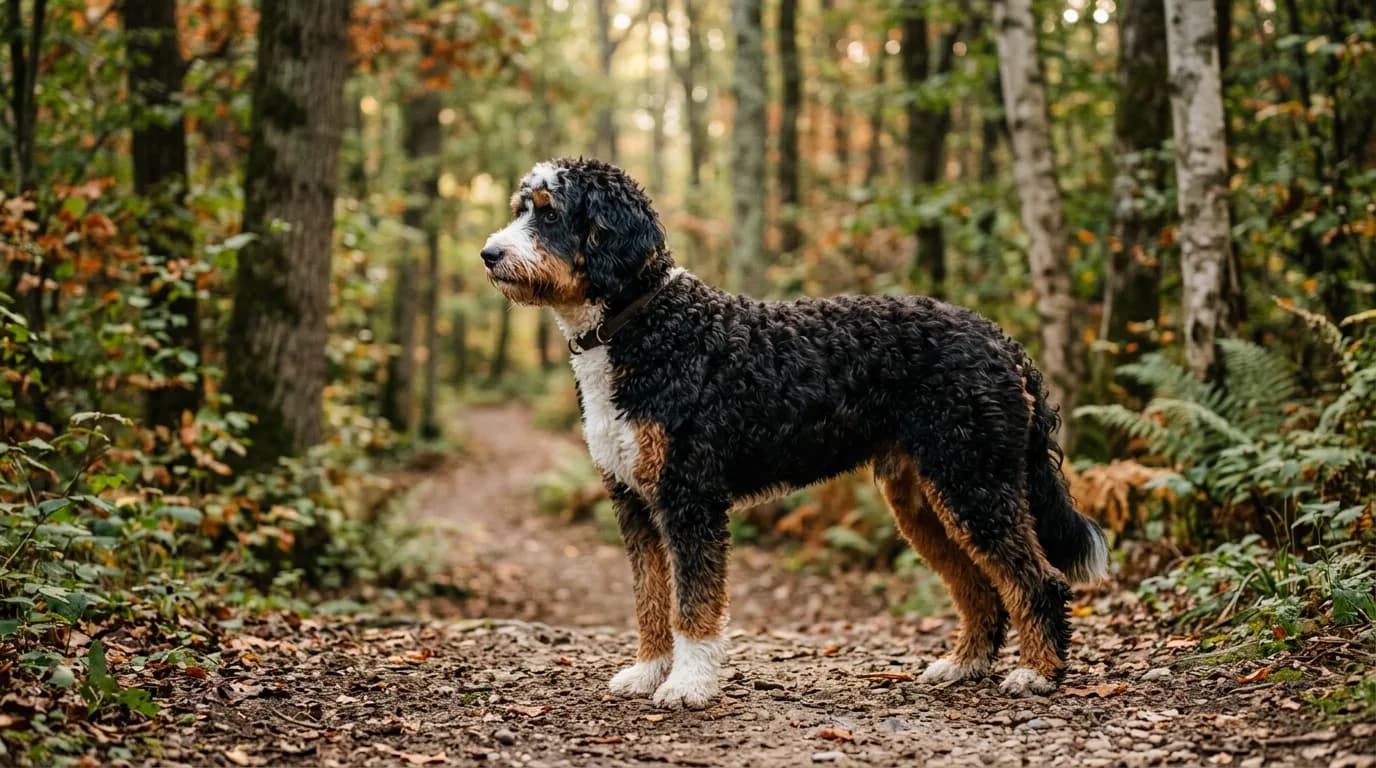
The Bernedoodle, a cross between the Bernese Mountain Dog and the Poodle, is often marketed as a healthier, lower-shedding companion. That reputation is partly earned, but it is not the whole story. Understanding the most common Bernedoodle health problems, from hip and elbow dysplasia to progressive retinal atrophy, allergies, bloat, and hypothyroidism, helps you ask a breeder the right questions and catch issues early. This guide, written from a veterinary perspective, explains Bernedoodle lifespan, the conditions worth watching for, and how hybrid vigor and parent health testing genuinely reduce risk.
A quick but important note before we start: this is an educational overview, not a diagnosis. Every dog is an individual. Inheriting a breed's predispositions is not the same as being sick, and many Bernedoodles live long, comfortable lives with routine preventive care. Think of the conditions below as a checklist for smart questions and early screening, not a list of things your dog is destined to develop.
- 1Bernedoodles typically live 12 to 18 years, with smaller dogs generally living longer than standard sizes
- 2The conditions to watch are hip and elbow dysplasia, progressive retinal atrophy, allergies, bloat, hypothyroidism, and inherited bleeding disorders
- 3Buying from a breeder who health-tests both parents (OFA hips, elbows, eyes, cardiac, plus DNA panels) is the single biggest lever you have on your dog's long-term health

Sign up for expert-backed reviews and safety alerts all in one place.
Bernedoodle Lifespan: How Long Do They Live?
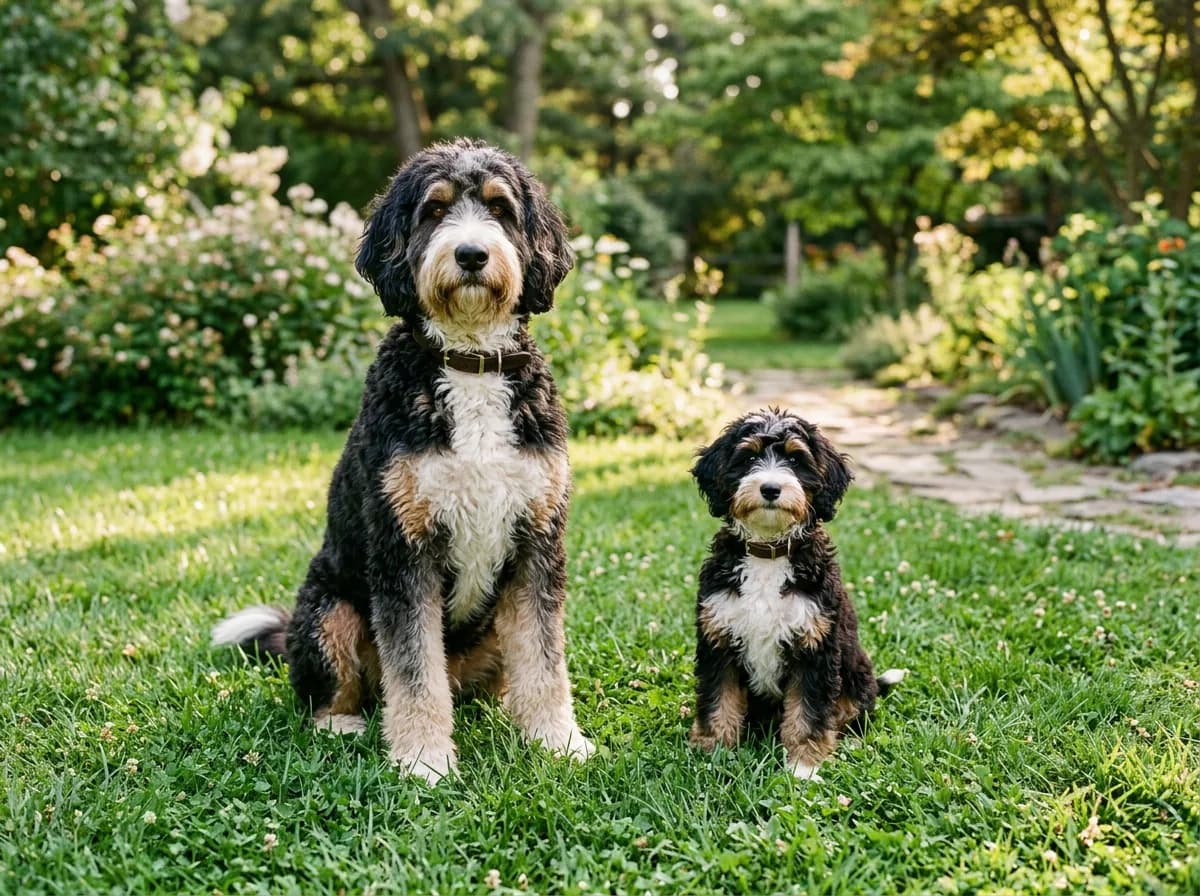
Most Bernedoodles live between 12 and 18 years, which is notably longer than the Bernese Mountain Dog parent, whose average lifespan sits closer to 7 to 10 years according to the American Kennel Club. Size is the biggest single predictor. As a general rule across dogs, smaller bodies age more slowly and carry less orthopedic and cardiac strain, so a tiny or miniature Bernedoodle often reaches the upper end of that range, while a standard Bernedoodle tends to land in the 12 to 15 year window.
Petful may earn a commission when you click through to Chewy, at no extra cost to you.
Genetics set the ceiling, but daily care determines how much of that potential your dog actually reaches. Keeping a Bernedoodle at a lean body condition, feeding an appropriate diet, staying current on preventive veterinary care, and protecting the joints during the fast-growing puppy months all move the needle. The table below gives realistic size and lifespan expectations by generation type, which vary because breeders cross with toy, miniature, or standard Poodles.
| Type | Typical Adult Weight | Height at Shoulder | Average Lifespan |
|---|---|---|---|
| Tiny / Toy | 10 to 24 lbs | 12 to 17 in | 14 to 18 years |
| Miniature | 25 to 49 lbs | 18 to 22 in | 13 to 17 years |
| Standard | 50 to 90 lbs | 23 to 29 in | 12 to 15 years |
It is worth remembering that these are averages drawn from a young hybrid with no formal breed registry tracking longevity data. A Bernedoodle's real life expectancy depends heavily on the health of the specific parents it descended from, which is exactly why parent testing matters so much (more on that below). For a broader look at the breed's personality and daily needs, see our companion guides to the Bernedoodle breed overview and Bernedoodle temperament.

 Sponsored
Have a health question about your pet?
Talk to a licensed vet at Dutch over video or message, including nights and weekends.
Use code Pets60
Plans start at $12/month · covers up to 5 pets
- Licensed vets in most states
- Rx for 150+ conditions
- 4.7 on Trustpilot
What Do Vets Say About Bernedoodles?
Veterinarians generally view the Bernedoodle as a robust, good-natured crossbreed, and most see the outcross to the Poodle as a reasonable strategy for diluting some of the Bernese Mountain Dog's heavier disease burden, particularly its very high rate of cancer. That said, vets are consistent on one point: a designer label is not a health guarantee. A Bernedoodle can inherit the vulnerabilities of both parent breeds, and poorly bred dogs from breeders who skip screening can carry the same hip, eye, and thyroid problems seen in purebreds. Petful’s guide to Bernedoodle prices breaks down breeder, adoption, and lifetime costs.
The practical veterinary advice is straightforward. Choose a breeder who performs and publishes the recommended health tests, insist on lean body condition throughout life, and keep up with annual (or twice-yearly for seniors) wellness exams so that issues such as early arthritis, thyroid changes, or eye disease are caught while they are still manageable. Pet insurance taken out while the dog is young and healthy is also frequently recommended, because the orthopedic and emergency conditions these dogs can face are treatable but expensive.
- A Bernedoodle from health-tested parents is a genuinely good bet for a long-lived family dog. The risk is not the crossbreed itself, it is buying from a breeder who does not screen. Ask to see the parents' OFA and DNA results before you commit, and walk away if they cannot produce them.
The Most Common Bernedoodle Health Problems
Because the Bernedoodle draws from two distinct gene pools, its health risks are essentially the overlap of Bernese Mountain Dog and Poodle predispositions. The conditions below are the ones that most often appear in the breed. Not every dog will develop any of them, but knowing the signs helps you act early, and knowing which screening tests exist helps you choose a responsible breeder.
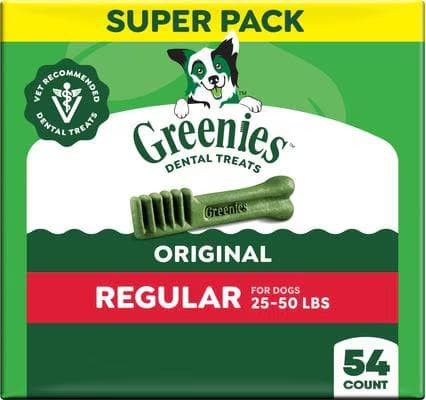
Daily dental chew that cleans teeth, freshens breath, and is accepted by the Veterinary Oral Health Council. Sized for dogs 25 to 50 lbs.
Petful may earn a commission when you click through to Chewy, at no extra cost to you.
Hip and Elbow Dysplasia
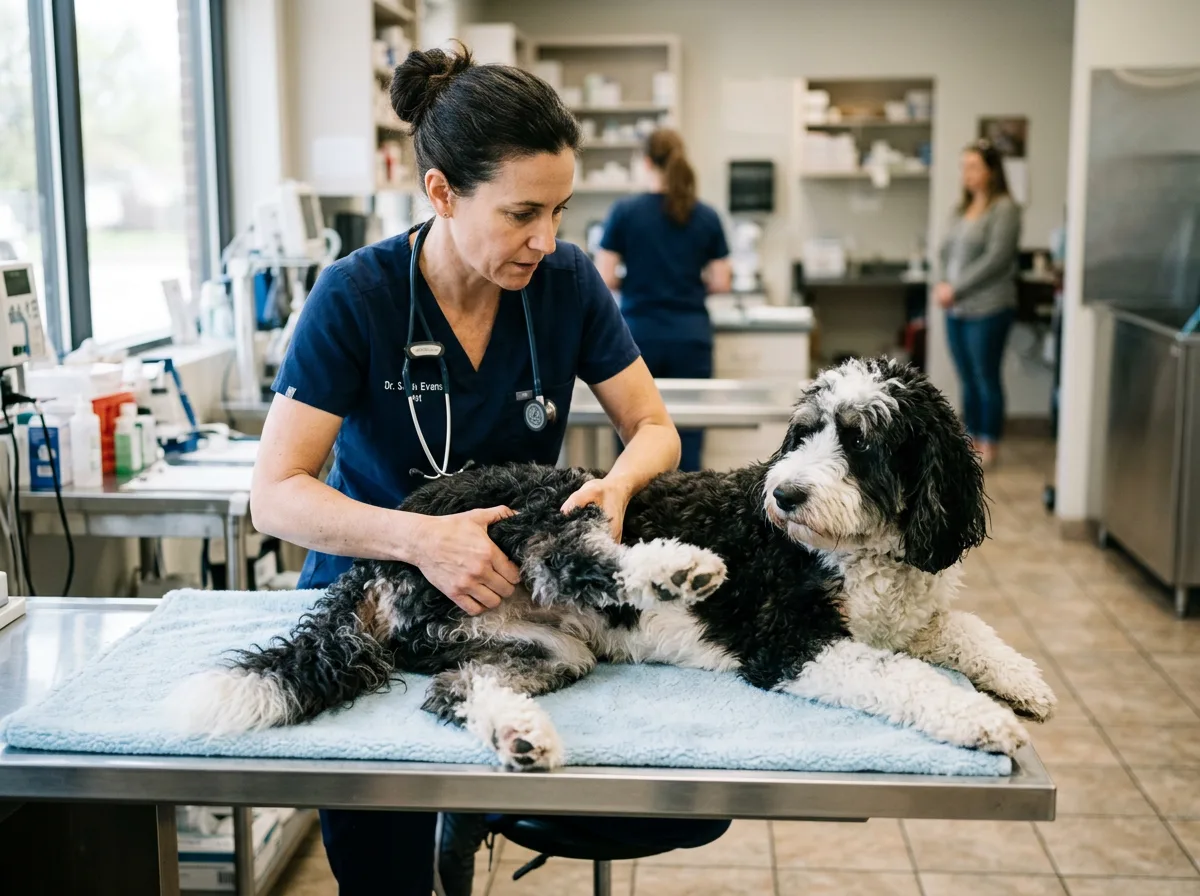
Hip and elbow dysplasia are the most significant orthopedic concerns in the Bernedoodle, and both parent breeds carry the risk. Dysplasia is a developmental malformation of the joint, where the ball and socket (hip) or the three bones of the elbow do not fit together smoothly. The abnormal wear leads to pain, reduced range of motion, and osteoarthritis over time. Larger, faster-growing standard Bernedoodles are more exposed than the tiny and miniature varieties. Petful’s guide to Bernedoodle sizes compares tiny, mini, and standard with a growth chart.
Signs to watch for include a bunny-hopping gait, stiffness after rest, reluctance to jump or climb stairs, and a narrow stance in the back legs. The Orthopedic Foundation for Animals maintains the screening databases that responsible breeders use to evaluate hips and elbows before breeding, which is why you should always ask for OFA hip and elbow clearances on both parents. Management ranges from weight control, joint supplements, and physical therapy in mild cases to surgery in severe ones. Keeping your dog lean is the most powerful thing an owner can do to delay and reduce arthritis pain.
Progressive Retinal Atrophy and Other Eye Conditions
Progressive retinal atrophy (PRA) is an inherited, gradual degeneration of the retina that eventually leads to blindness. It is well documented in Poodles and is therefore a real concern in Bernedoodles. The reassuring part is that PRA is one of the most testable conditions in dogs. A simple DNA test on the parents identifies carriers before breeding, and reputable breeders use it to avoid pairing two carriers, which is what produces affected puppies.
Early signs are subtle and often start with night blindness or hesitancy in dim light, progressing to bumping into furniture and dilated pupils. There is no cure, but dogs are remarkably adaptable and many live full, happy lives with gradual vision loss when their environment is kept consistent. Beyond PRA, Bernedoodles can inherit cataracts and other eye issues, which is why the recommended screening includes an annual CAER eye exam by a veterinary ophthalmologist, a protocol supported by veterinary teaching hospitals such as Cornell University's College of Veterinary Medicine.
Skin Allergies and Sebaceous Adenitis
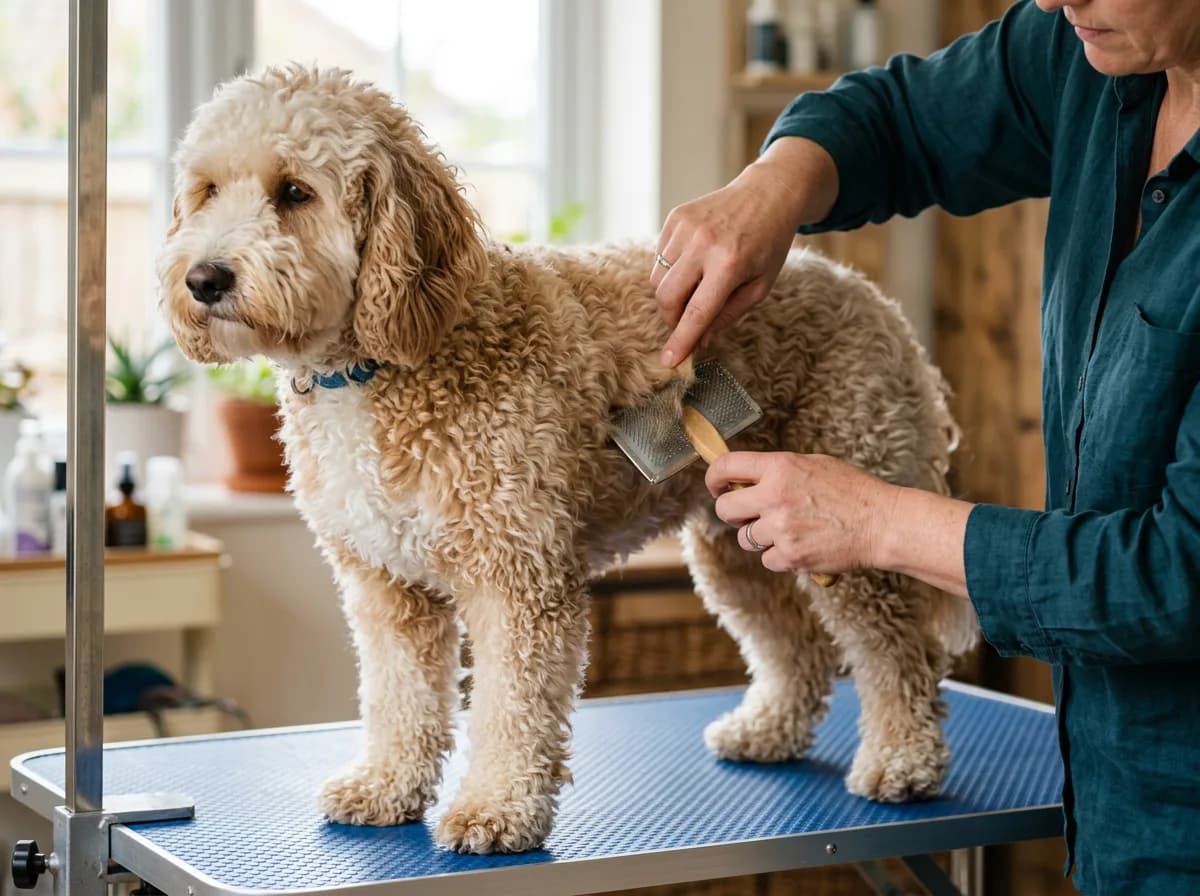
Allergies are among the more common day-to-day complaints in Bernedoodles. They can be environmental (pollen, dust mites, mold), food-related, or triggered by fleas, and they typically show up as itchy skin, recurrent ear infections, paw licking, and hot spots rather than as sneezing. The curly, dense coat that makes the breed appealing also traps moisture and debris, so consistent grooming and skin care matter more than they do for a smooth-coated dog.
Standard Poodles also carry a predisposition to sebaceous adenitis, an inflammatory skin condition that affects the oil glands and can cause flaking, hair loss, and a musty odor. It is manageable but often lifelong. For most Bernedoodles, an allergy management plan built with your veterinarian, regular bathing with a gentle dog-specific shampoo, routine ear cleaning, and year-round flea control keeps the skin comfortable and prevents the secondary infections that make itching worse.

Pumpkin-flavored probiotic soft chews that support healthy gut flora and digestion in dogs.
Petful may earn a commission when you click through to Chewy, at no extra cost to you.
Bloat (Gastric Dilatation-Volvulus)
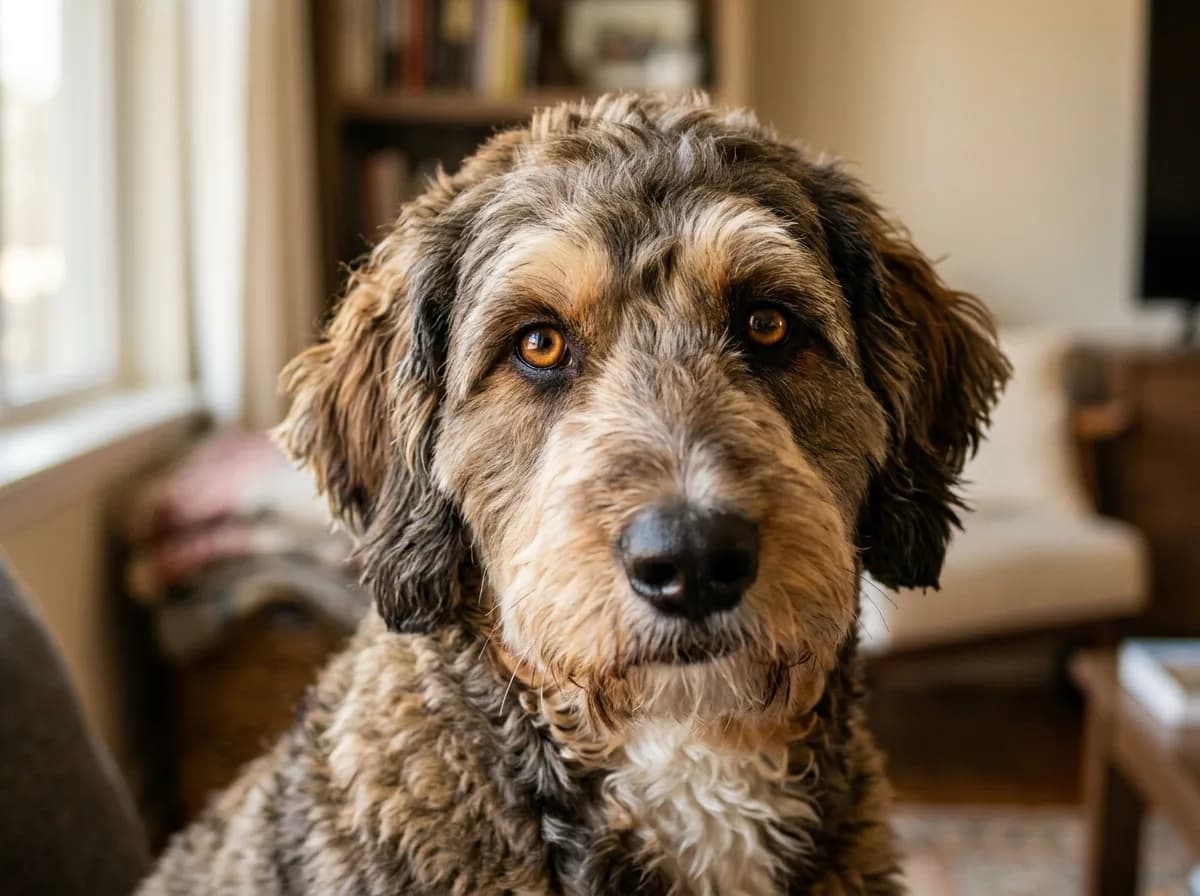
Bloat, known clinically as gastric dilatation-volvulus (GDV), is the most dangerous condition on this list because it can kill a dog within hours. It occurs when the stomach fills with gas and then twists on itself, cutting off blood supply. Deep-chested breeds are at highest risk, and because the Standard Poodle is one of the classic deep-chested breeds, standard Bernedoodles inherit that vulnerability. Tiny and miniature Bernedoodles are at much lower risk.
- If your Bernedoodle has a swollen or hard belly, is retching without producing vomit, drooling heavily, pacing, or collapsing, go to an emergency vet immediately. Do not wait to see if it passes. GDV is fatal without rapid surgical treatment, and every minute counts.
Owners of standard Bernedoodles can lower the risk by feeding two or three smaller meals instead of one large one, avoiding heavy exercise right before and after eating, and discouraging fast gulping. For high-risk dogs, some veterinarians recommend a preventive procedure called a prophylactic gastropexy, which tacks the stomach to the body wall and is often done at the same time as spay or neuter. It is worth discussing with your vet.
Hypothyroidism
Hypothyroidism, an underactive thyroid gland, is seen in both Bernese Mountain Dogs and Poodles and can appear in Bernedoodles, usually in middle age. When the thyroid produces too little hormone, metabolism slows down. Typical signs are unexplained weight gain, lethargy, a dull or thinning coat, skin problems, and intolerance to cold. It is easy to miss because the changes are gradual and easy to attribute to normal aging.
The good news is that hypothyroidism is one of the most manageable conditions a dog can have. It is diagnosed with a simple blood test and treated with an inexpensive daily oral hormone replacement that most dogs take for life with excellent results. Because the signs overlap with other conditions, any middle-aged Bernedoodle showing coat changes, weight gain, or new lethargy deserves a thyroid panel rather than a wait-and-see approach.
Von Willebrand Disease and Degenerative Myelopathy
A few less common inherited conditions round out the picture. Von Willebrand disease (vWD) is a blood-clotting disorder found in Poodles that can cause excessive bleeding, and it is detectable with a DNA test on the parents. Degenerative myelopathy (DM), a progressive spinal cord disease that causes gradual hind-limb weakness in older dogs, is also DNA-testable. Neither is common in well-bred Bernedoodles precisely because both are screenable, which underscores the theme of this guide: responsible breeding removes most of these risks before a puppy is ever born.
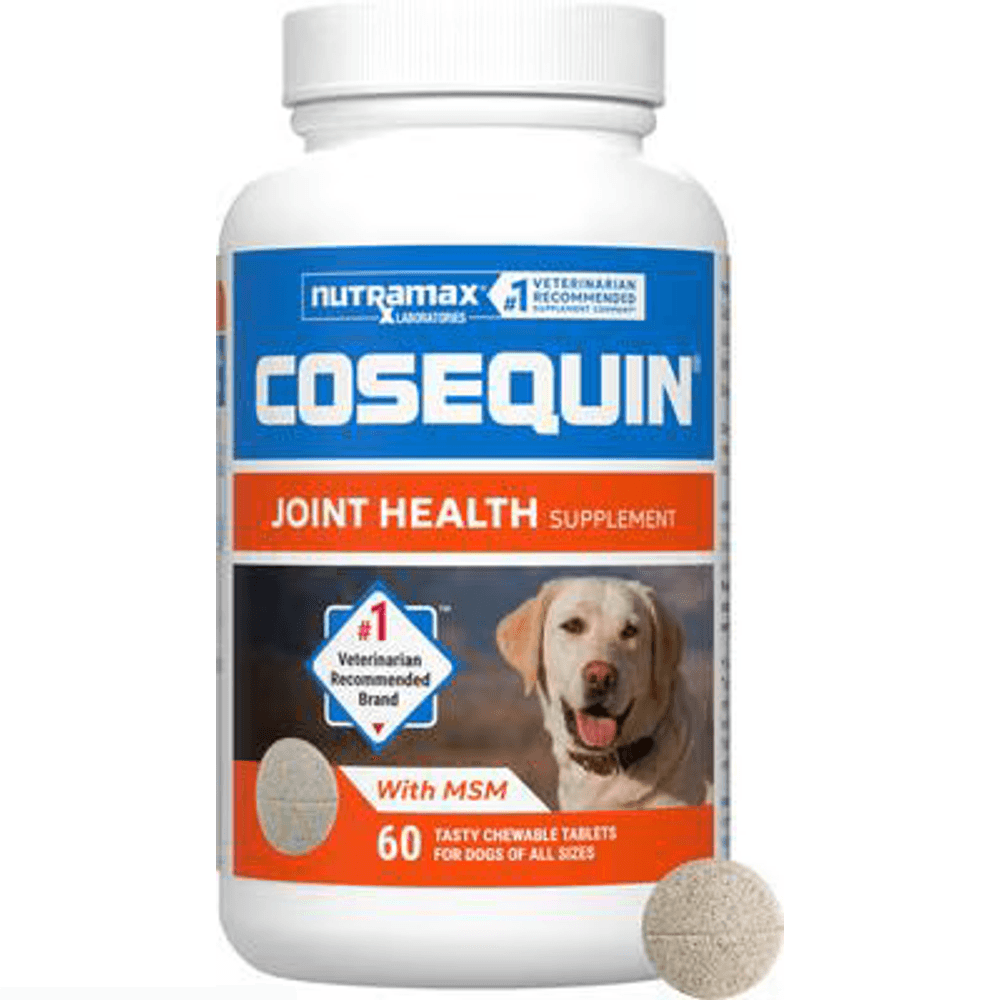
The number-one veterinarian-recommended joint supplement brand. Glucosamine, chondroitin, and MSM support cartilage and cushion the joints, easing the stiffness and hind-end weakness that can leave an older or arthritic dog trembling.
Petful may earn a commission when you click through to Chewy, at no extra cost to you.
How Hybrid Vigor and Health Testing Lower the Risk
Hybrid vigor (the scientific term is heterosis) is the observation that crossing two unrelated breeds can reduce the incidence of the recessive genetic diseases that plague closely bred purebred lines. When you combine two different gene pools, a puppy is statistically less likely to inherit two copies of the same harmful recessive gene, which is what many inherited diseases require to appear. This is the real, legitimate health argument behind the Bernedoodle, and it is why the crossbreed can be a genuinely sound choice.
But hybrid vigor has limits, and it is widely oversold. It reduces the odds of some recessive conditions, it does not erase them, and it does nothing for conditions that both parent breeds share, such as hip dysplasia. Two carrier parents of different breeds can still produce an affected puppy for any disease they both carry. Hybrid vigor is a helpful tailwind, not a force field.
That is where health testing does the heavy lifting. A responsible breeder screens both parents and simply does not breed pairings that would put puppies at risk. This is the difference between a Bernedoodle bred as a health project and one bred to move puppies quickly. Here is what a fully tested pairing looks like:
| Health Test | What It Screens For | Testing Body |
|---|---|---|
| OFA Hip Evaluation | Hip dysplasia | OFA |
| OFA Elbow Evaluation | Elbow dysplasia | OFA |
| CAER Eye Exam | Inherited eye disease, including cataracts | Veterinary ophthalmologist |
| PRA DNA Test | Progressive retinal atrophy | DNA laboratory |
| vWD DNA Test | Von Willebrand bleeding disorder | DNA laboratory |
| Cardiac Exam | Congenital heart disease | OFA or cardiologist |
When you meet a breeder, ask to see documentation for these tests on both the sire and the dam. A breeder who health-tests will be proud to show you the results. One who deflects, claims the tests are unnecessary because the dogs are hybrids, or cannot produce paperwork is telling you something important. The same logic applies across designer breeds, whether you are considering a Bernedoodle or a smaller doodle like the Cavapoo.
 Sponsored
Vet care that's always there
Unlimited video calls and messaging with licensed vets for less than a typical vet visit. One membership covers up to five pets.
Use code Pets60
Plans start at $12/month · covers up to 5 pets
- Licensed vets in most states
- Rx for 150+ conditions
- 4.7 on Trustpilot
Are Bernedoodles Healthier Than Bernese Mountain Dogs?
In most respects, yes, and this is one of the strongest points in the crossbreed's favor. The Bernese Mountain Dog is a beloved breed with a heartbreakingly short average lifespan of roughly 7 to 10 years, driven largely by an exceptionally high rate of cancer, including aggressive forms such as histiocytic sarcoma. Crossing with the longer-lived, generally cancer-resistant Poodle brings genetic diversity that tends to lengthen lifespan and dilute that cancer burden, which is a major reason the Bernedoodle was developed in the first place.
The honest caveat is that the Bernedoodle is a young crossbreed without decades of longevity data, so we cannot claim precise numbers with the confidence we have for established breeds. What we can say is that the mechanism, outcrossing to reduce recessive disease and cancer predisposition, is sound, and that anecdotally and by parent-breed math the Bernedoodle typically outlives the Bernese by a wide margin. It is not immortal, and it still needs the screening described above, but as a strategy for a longer-lived Bernese-type dog, the cross works.
What Are the Downsides of Owning a Bernedoodle?
The health downsides are the inherited conditions covered above, most of which are manageable or avoidable with good breeding. Beyond health, the practical downsides are real and worth naming. The coat is high-maintenance: those beautiful curls mat quickly and require brushing several times a week plus professional grooming every 6 to 8 weeks, which is an ongoing cost and time commitment. Bernedoodles are also intelligent, people-oriented dogs that do not do well left alone for long stretches and can develop separation anxiety.
Cost is another downside. Bernedoodles are expensive to buy from a reputable, health-testing breeder, and the temptation to save money by going to an unscreened backyard breeder or puppy mill is exactly how the avoidable health problems creep back in. Add grooming, quality food for a potentially large dog, and the pet insurance most vets recommend, and the lifetime cost is significant. Finally, size can be unpredictable in early generations, so a "mini" puppy does not always stay mini.
Do Bernedoodles Bond With One Person?

Bernedoodles are known for forming deep attachments, and many do gravitate toward one favored person, often the individual who feeds, walks, and trains them most. That said, they are affectionate, family-oriented dogs rather than strictly one-person dogs, and with proper socialization they bond warmly with the whole household, children and other pets included. The flip side of that devotion is that they crave company and can struggle with being left alone, so early crate training and gradual alone-time practice are worthwhile investments. For a deeper look at the breed's affectionate, velcro-dog personality, see our Bernedoodle temperament guide.
Keeping Your Bernedoodle Healthy
Most of a Bernedoodle's health destiny is set at two moments: the day its parents were paired, and the daily choices you make over its lifetime. You control the first by choosing a health-testing breeder, and the second through weight management, preventive care, and early attention to changes. A lean Bernedoodle with clean ears, a well-maintained coat, current vaccines, year-round parasite prevention, and a vet who knows the breed's watch-list is a dog set up to hit the top of its lifespan range.
- Weigh your dog monthly and keep it lean, brush the coat several times a week to prevent painful mats, clean the ears weekly to head off infections, and book an annual wellness exam (twice yearly for seniors) that includes a thyroid check and, ideally, an eye exam. Small, consistent habits prevent most expensive problems.
None of this needs to be overwhelming. The Bernedoodle earns its popularity honestly: it is a generally healthy, affectionate, long-lived companion when it comes from responsible breeding. Go in informed, choose your breeder carefully, keep your dog lean and groomed, and you have stacked the odds firmly in your favor.
Frequently Asked Questions
Do Mini Bernedoodles Have More Health Problems?
Mini and micro Bernedoodles are not inherently sicker than standard ones, but they trade one set of risks for another. Their smaller Poodle parentage lowers the odds of the large-breed problems this guide flags most heavily. Hip dysplasia risk drops, and the deep-chested bloat danger is far lower, which is part of why smaller Bernedoodles often reach the upper end of the 12 to 18 year range. What rises as body size falls is a different list: patellar luxation (a kneecap that slips out of its groove), dental crowding and periodontal disease in a compact jaw, and, in the tiniest toy or micro crosses, a greater sensitivity to low blood sugar during the early puppy weeks.
The point is that "smaller" means a different watch-list, not a shorter one. When you meet a mini breeder, ask for:
- OFA or DNA patella clearance on the small Poodle parent
- The same eye (PRA, CAER) and cardiac screening a standard pairing receives
- A realistic adult-weight estimate, since a "mini" from an early generation can finish larger than promised
Because crowded teeth are the norm in a small jaw, at-home brushing and routine dental cleanings matter even more for a mini than for a standard Bernedoodle.
Which Bernedoodle Generation Is Healthiest? F1, F1b, and Beyond
No single generation is guaranteed healthiest, because health tracks the parents' test results far more closely than the label on the litter. The generation does shift the genetic odds, though. An F1 Bernedoodle (a purebred Bernese crossed directly with a purebred Poodle) carries the most hybrid vigor and the widest genetic distance between parents, which gives the strongest statistical dilution of recessive disease. F1b dogs (an F1 bred back to a Poodle) and multigenerational pairings lean more heavily on Poodle genetics. That usually buys a more predictable low-shedding coat, but it also allows a partial return of Poodle-line risks such as progressive retinal atrophy, sebaceous adenitis, and von Willebrand disease.
Here is how to read the generation when you shop:
- Treat it as a coat-and-odds signal, not a health promise
- Insist on the same parent testing (OFA hips and elbows, eye and PRA screening, thyroid, vWD, DM) whether the litter is F1, F1b, or F2
- Grow more attentive to Poodle-specific screening as the Poodle percentage climbs
- A fully health-tested F1b from a careful breeder is a safer bet than an untested F1. Documentation on both parents outranks the generation code every time.
Are Bernedoodles Hypoallergenic, and Do They Shed?
No dog is truly hypoallergenic, and the Bernedoodle is no exception, but many shed very little and can suit some allergy-prone households. The Poodle side pushes toward a low-shedding, low-dander coat, while the Bernese side sheds seasonally, so where an individual dog lands depends on its coat type and generation. Curlier, more Poodle-influenced coats (often F1b and multigenerational) tend to shed the least and release the least dander, which is the protein people actually react to. Straighter, more Bernese-leaning coats shed more.
Two health-relevant caveats owners often miss:
- Allergic reactions are unpredictable from person to person, so spend real time with an adult Bernedoodle before committing if allergies are a concern
- A low-shedding coat is a high-maintenance coat. Because the hair does not fall out, it mats against the skin and traps moisture, which can drive the ear infections, hot spots, and skin irritation covered earlier in this guide
The takeaway is that "low-shedding" is a grooming responsibility, not a hands-off feature. Consistent brushing and routine professional grooming are what keep the coat, and the healthy skin underneath it, in good shape.
Most Bernedoodles live 12 to 18 years. Smaller tiny and miniature Bernedoodles generally live longest, often 14 to 18 years, while standard Bernedoodles typically live 12 to 15 years. That is considerably longer than the Bernese Mountain Dog parent, which averages about 7 to 10 years.
The main downsides are a high-maintenance curly coat that needs frequent brushing and professional grooming, a strong need for companionship that can lead to separation anxiety, a high purchase and lifetime cost, and inherited health risks such as hip dysplasia, eye disease, and bloat if you buy from a breeder who does not health-test the parents.
Veterinarians generally regard Bernedoodles as robust, good-natured dogs and view the Poodle outcross as a sensible way to reduce the Bernese Mountain Dog's high cancer risk. Their consistent caution is that a designer label is not a health guarantee: the dog can inherit problems from both parents, so buying from a breeder who screens the parents is essential.
In general, yes. Crossing the Bernese Mountain Dog with the longer-lived, more cancer-resistant Poodle adds genetic diversity that tends to increase lifespan and reduce the very high cancer rate seen in Bernese. Bernedoodles still need parent health testing, but they typically outlive the Bernese by several years.
Bernedoodles often form an especially close bond with one favorite person, usually their primary caregiver, but they are affectionate family dogs that bond with the whole household when properly socialized. Their devotion means they dislike being left alone for long periods, so gradual alone-time training helps.
No doodle is guaranteed healthy, because health depends far more on parent testing than on the specific cross. That said, smaller doodles such as the Cavapoo and Cockapoo tend to avoid the large-breed orthopedic and bloat risks that standard doodles face. Whatever the mix, the healthiest doodles come from breeders who screen both parents with OFA and DNA tests.
BVMS, MRCVS
Dr. Pippa Elliott, BVMS, MRCVS, is a veterinarian with nearly 30 years of experience in companion animal practice. Dr. Elliott earned her Bachelor of Veterinary Medicine and Surgery from the University of Glasgow. She was also designated a Member of the Royal College of Veterinary Surgeons. Married with 2 grown-up kids, Dr. Elliott has a naughty Puggle named Poggle, 3 cats and a bearded dragon.
Sign up for expert-backed reviews and safety alerts all in one place.