Maltipoo Lifespan and Common Health Problems
Most Maltipoos live 12 to 16 years. This vet-reviewed guide covers the average Maltipoo lifespan, common health problems like patellar luxation and PRA, and the daily care that helps your dog live a long, healthy life.

BVMS, MRCVS

Petful is reader supported. As an affiliate of platforms like Amazon and Chewy, we may earn a commission when you buy through links on this page. There is no extra cost to you.
The Maltipoo lifespan is one of the first things families ask about before bringing home this cheerful Maltese and Poodle cross, and the answer is reassuring. Most Maltipoos live 12 to 16 years, and plenty of small, well cared for dogs reach their mid teens in good health. As a small breed, the Maltipoo tends to enjoy a longer life than a large dog, but that longevity is not automatic. It depends on genetics, size, dental care, weight, and how quickly health problems are caught.
This guide walks through what a realistic Maltipoo lifespan looks like, the health conditions this crossbreed is prone to, and the everyday choices that help your dog stay comfortable into old age. It is written to inform, not to diagnose. If you notice a specific symptom in your own dog, your veterinarian is the right person to examine and advise.
- 1Most Maltipoos live 12 to 16 years, longer than many larger breeds
- 2The conditions to know are patellar luxation, progressive retinal atrophy, dental disease, and white shaker syndrome
- 3Choosing a breeder who health tests both parents is one of the strongest ways to protect a long life

Sign up for expert-backed reviews and safety alerts all in one place.
How Long Do Maltipoos Live?

A healthy Maltipoo typically lives 12 to 16 years. That range reflects the two parent breeds behind the cross. According to the American Kennel Club, the Maltese generally lives 12 to 15 years, and the Toy Poodle often lives into the upper teens. Because the Maltipoo blends both, most individuals land squarely in the low to mid teens, and some smaller, carefully bred dogs live longer still.
Size is the single biggest variable. Within the Maltipoo world there is a lot of range, from tiny teacups to sturdier miniature crosses, and that size difference shifts the expected lifespan. The table below shows how type, Poodle parentage, and typical adult weight line up with a realistic life expectancy. For more, see Petful’s guide to Maltipoo size.
| Maltipoo Type | Poodle Parent | Adult Weight | Typical Lifespan |
|---|---|---|---|
| Toy Maltipoo | Toy Poodle | 5 to 12 lb | 12 to 16 years |
| Miniature Maltipoo | Miniature Poodle | 12 to 20 lb | 11 to 15 years |
| Teacup Maltipoo | Toy Poodle (smallest) | Under 5 lb | 10 to 13 years |
Teacup Maltipoos deserve a note of caution. Dogs bred to be extremely tiny carry a higher risk of fragile bones, low blood sugar, dental crowding, and heart problems, which is why their expected lifespan sits at the lower end. A slightly larger, structurally sound Maltipoo is generally the healthier long term bet.
Petful may earn a commission when you click through to Chewy, at no extra cost to you.
What Two Breeds Make Up a Maltipoo?
A Maltipoo is a cross between a Maltese and a Poodle, almost always a Toy or Miniature Poodle. It is a designer crossbreed, not a purebred, so it is not recognized as a breed by the American Kennel Club. That mixed background matters for health. A Maltipoo can inherit conditions from either side, which is exactly why looking at both parent breeds is the smartest way to understand the risks.
From the Maltese side come traits like a long lived small body, a fine white coat, and a tendency toward dental crowding and, in some lines, liver shunts. From the Poodle side come high intelligence, a curly low shedding coat, and an inherited risk of eye disease and kneecap problems. Understanding both halves of the cross gives you a realistic picture of what to watch for over a Maltipoo's life. If you are still deciding on a designer breed, it is worth comparing the Maltipoo with similar crosses such as the Cavapoo, which shares some of the same Poodle traits.

 Sponsored
Have a health question about your pet?
Talk to a licensed vet at Dutch over video or message, including nights and weekends.
Use code Pets60
Plans start at $12/month · covers up to 5 pets
- Licensed vets in most states
- Rx for 150+ conditions
- 4.7 on Trustpilot
What Affects a Maltipoo's Lifespan?
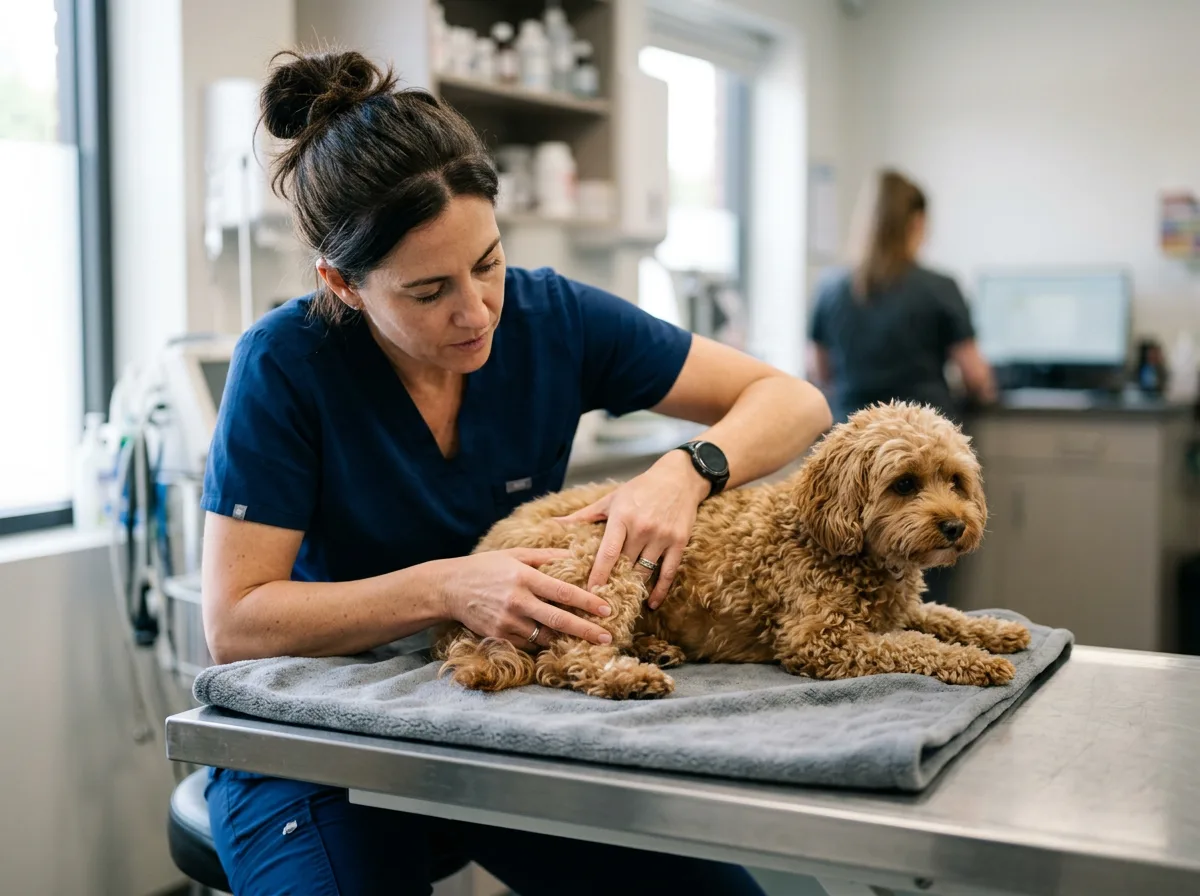
Several factors decide whether a Maltipoo reaches the top of its expected range or falls short of it. None of them are about luck alone, and most are at least partly in your hands.
- Genetics and breeding. Parents that have been health tested and cleared pass on fewer inherited diseases. This is the biggest lever, and it is set before you ever bring the puppy home.
- Body size. Very tiny teacups face more structural and metabolic risk than a standard toy sized Maltipoo.
- Dental health. Small breeds are prone to periodontal disease, and untreated dental infection stresses the heart, kidneys, and liver over time.
- Weight. Even a pound or two of extra weight is a lot on a five to twelve pound frame. Obesity shortens life and worsens joint problems.
- Preventive veterinary care. Regular checkups, vaccines, parasite prevention, and early screening catch problems while they are still manageable.
None of these guarantee a longer life on their own, but together they stack the odds in your dog's favor.
What Health Problems Do Maltipoos Have?
Maltipoos are generally healthy, but as a Maltese and Poodle cross they are predisposed to a handful of specific conditions. Knowing these ahead of time helps you recognize early signs and raise them with your vet rather than waiting. The four below are the ones most closely tied to this cross.

Daily dental chew that cleans teeth, freshens breath, and is accepted by the Veterinary Oral Health Council. Sized for dogs 25 to 50 lbs.
Petful may earn a commission when you click through to Chewy, at no extra cost to you.
Patellar Luxation
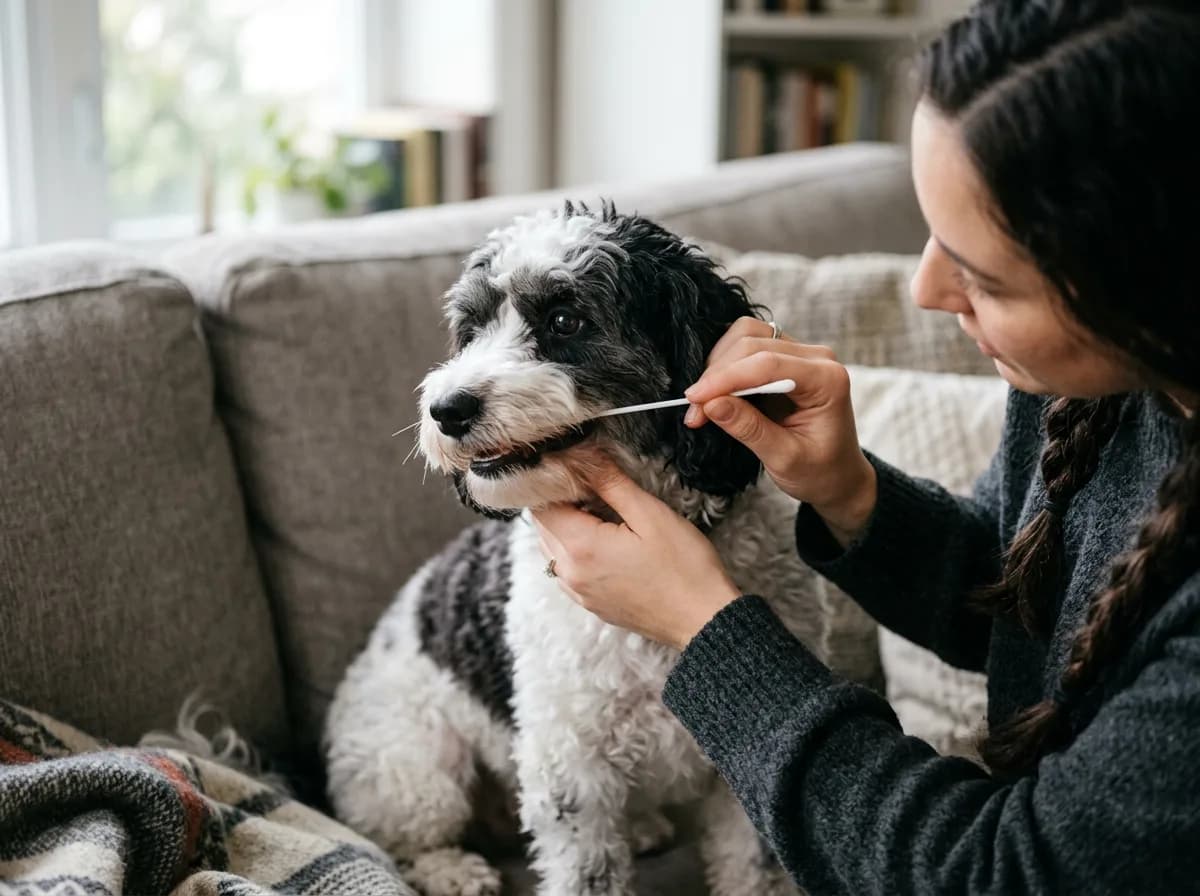
Patellar luxation means the kneecap slips out of its normal groove. It is one of the most common orthopedic problems in small and toy breeds, and both the Maltese and the Poodle are prone to it. According to the American College of Veterinary Surgeons, the condition is graded from 1 (mild, occasional) to 4 (severe, permanently dislocated). Signs include a skipping or hopping step, a leg held up for a stride or two, or a sudden yelp. Mild cases are often managed with weight control and monitoring, while more severe grades may need surgery to keep the dog comfortable and mobile.
Progressive Retinal Atrophy
Progressive retinal atrophy, or PRA, is an inherited degeneration of the retina that gradually reduces vision and can lead to blindness. Poodles carry a form of PRA, so Maltipoos can inherit the risk. There is no cure, but the news is not all bad. A reliable DNA test exists for the Poodle form, which means a responsible breeder can screen parents and avoid producing affected puppies. Early signs owners notice include night blindness and bumping into furniture in dim light. Dogs that do lose vision often adapt remarkably well when their home stays familiar and safe.
Dental Disease
Dental disease is arguably the most underestimated threat to a small dog's long term health. Maltipoos inherit the crowded, delicate teeth common to Maltese and small Poodles, which traps plaque and speeds up periodontal disease. The American Veterinary Medical Association notes that periodontal disease is one of the most common conditions seen in dogs, and small breeds are hit hardest. Beyond bad breath and lost teeth, chronic oral infection can strain the heart and kidneys, which is why dental care is a genuine longevity issue, not just cosmetic.
White Shaker Syndrome

White shaker syndrome, also called shaker dog syndrome or idiopathic cerebellar tremor, causes full body tremors, most often in small, light coated breeds. It usually appears in young adult dogs between about one and two years of age. The tremors can look alarming, but the condition is typically not painful, and most dogs respond well to treatment with corticosteroids under veterinary supervision. Many go on to live full, normal lives. If your Maltipoo develops persistent fine tremors, have a vet evaluate it rather than assuming it is simply cold or excited.
- Maltipoos can also inherit conditions such as luxating knees combined with epilepsy, allergies and skin sensitivity, collapsing trachea, low blood sugar in very young puppies, portosystemic liver shunts from the Maltese side, and heart valve changes in old age. Most are manageable when caught early, which is why routine vet visits matter.
How Parent Health Testing Helps
The most powerful thing that happens for a Maltipoo's health happens before it is born. Because this is a crossbreed that can inherit disease from either parent, screening both the Maltese and the Poodle is how responsible breeders reduce the odds of passing on serious conditions.
Two organizations set the standard here. The Orthopedic Foundation for Animals (OFA) maintains public health databases and evaluations for exactly the problems Maltipoos face. A conscientious breeder should be able to show:

Pumpkin-flavored probiotic soft chews that support healthy gut flora and digestion in dogs.
Petful may earn a commission when you click through to Chewy, at no extra cost to you.
- A patella evaluation for both parents, screening for the kneecap luxation described above.
- An eye examination by a veterinary ophthalmologist, plus a DNA test for the Poodle form of PRA, so affected puppies are not produced.
- A cardiac evaluation to screen for heart murmurs and valve disease.
- General DNA screening that can flag carrier status for inherited diseases before two dogs are ever bred.
If a breeder cannot produce this documentation, treat it as a warning sign. Health testing is not a formality. It is the single clearest signal that the litter was planned to be healthy, and it directly supports a longer Maltipoo lifespan. An at home dog DNA test can also give existing owners a useful read on inherited risk and breed makeup.
Keeping Your Maltipoo Healthy for a Long Life
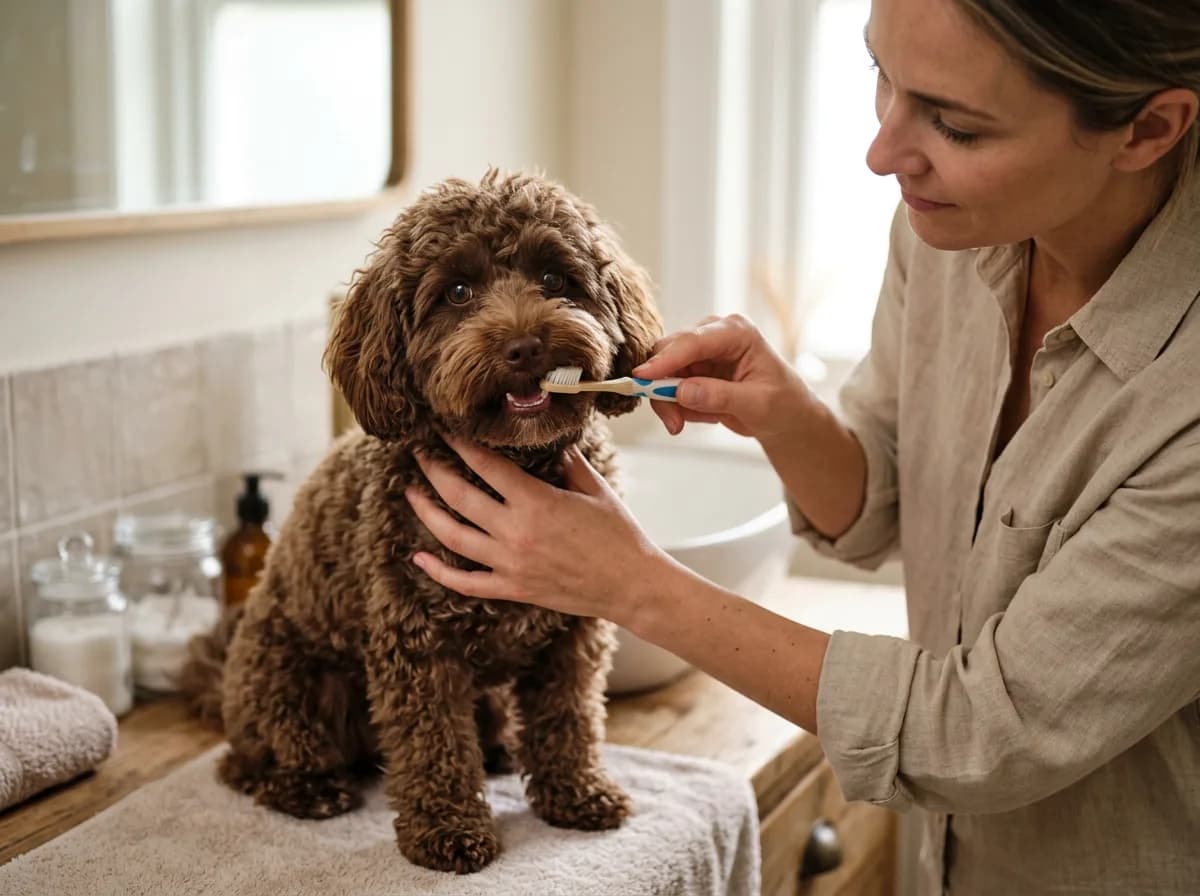
Genetics load the dice, but daily care rolls them. These are the habits that most reliably help a Maltipoo reach the upper end of its lifespan.
Prioritize Dental Care
Given how prone Maltipoos are to dental disease, this is the highest value habit on the list. Brush your dog's teeth several times a week with a canine toothpaste, offer vet approved dental chews, and schedule professional cleanings when your veterinarian recommends them. Starting young, while your dog is a puppy, makes the routine far easier to maintain for life.
Manage Weight and Diet
Feed a complete, life stage appropriate diet and measure portions rather than free feeding. On a small frame, even modest extra weight strains the knees and heart. A lean Maltipoo moves more comfortably, faces fewer joint problems, and statistically tends to live longer.
Provide Exercise and Enrichment
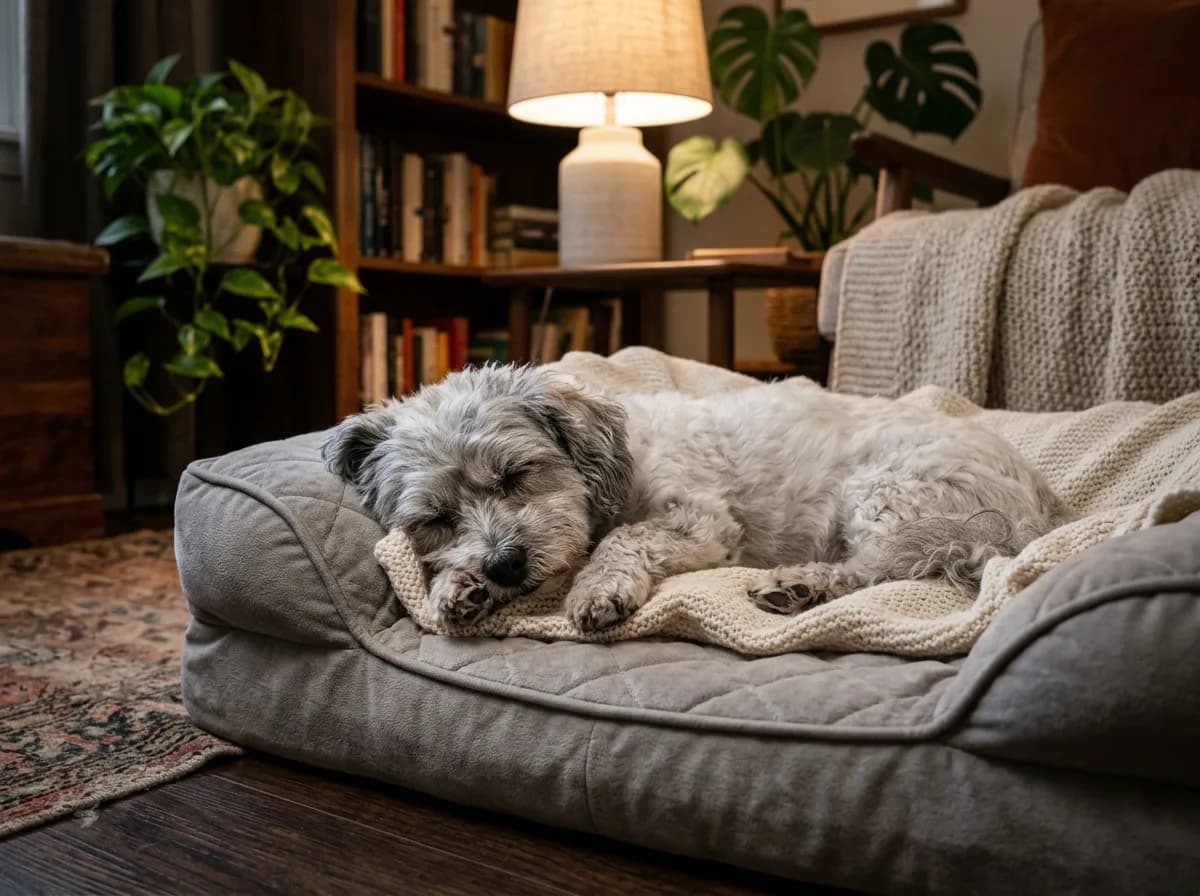
Maltipoos are active and bright and do not need marathon walks, but they do need daily movement and mental stimulation. A couple of short walks plus play and training keeps joints supple, weight in check, and the mind engaged. Enrichment also curbs the boredom behaviors this affectionate breed is prone to when left alone.

Presoaked wipes that gently clean the fur and skin around a dog's or cat's eyes, lifting away tear stains, discharge, and daily debris. A quick, no-rinse way to keep the eye area clean between baths. For routine cleaning only.
Petful may earn a commission when you click through to Chewy, at no extra cost to you.
Stay on Top of Veterinary Care
Routine wellness visits, kept up vaccines, parasite prevention, and age appropriate screening are how problems get caught early. As your Maltipoo ages, your vet may suggest more frequent checkups or senior bloodwork, which is exactly when many treatable conditions first show up.
- If you only build one new habit for your Maltipoo, make it toothbrushing. Small breed dental disease is common, progressive, and genuinely tied to lifespan, yet it is one of the most preventable problems on this entire list.
What Is the Leading Cause of Death in Maltipoos?

There is no single official statistic for the leading cause of death in Maltipoos, because the Maltipoo is a crossbreed rather than a registered breed with long term mortality tracking. The honest answer is drawn from the two parent breeds and from what veterinarians see in small dogs generally.
In old age, small breeds like the Maltipoo most often decline from age related conditions such as heart disease (particularly degenerative mitral valve disease, which is common in the Maltese) and cancer, the same broad categories that affect most senior dogs. Earlier in life, the biggest preventable threats are complications from untreated dental disease and injuries or problems linked to the very small size of teacup dogs. This is not a reason for alarm. It is a reason to keep up dental care, vet visits, and weight management, all of which push those age related problems later and keep quality of life higher for longer.
 Sponsored
Vet care that's always there
Unlimited video calls and messaging with licensed vets for less than a typical vet visit. One membership covers up to five pets.
Use code Pets60
Plans start at $12/month · covers up to 5 pets
- Licensed vets in most states
- Rx for 150+ conditions
- 4.7 on Trustpilot
Signs a Maltipoo Is Nearing the End of Life
When a beloved dog gets close to the end, owners often want to know what to expect so they can keep it comfortable and make informed decisions with their vet. In a Maltipoo, as in most dogs, the signs are usually gradual and centered on comfort and quality of life rather than any single dramatic event. Common signs include:
- A marked drop in appetite and thirst, sometimes refusing food entirely.
- Deep lethargy, sleeping most of the day, and little interest in play or people.
- Loss of mobility, weakness, or difficulty standing and walking.
- Loss of bladder or bowel control.
- Changes in breathing, either labored or irregular.
- Withdrawing to be alone, or in some dogs the opposite, becoming unusually clingy.
- Confusion or disorientation, especially in dogs with cognitive decline.
What do dogs do right before they pass away? Many become quiet and withdrawn, seek out a secluded spot, stop eating and drinking, and show slowed or irregular breathing. Others simply grow very still and sleepy. These changes are not a call to panic, but they are a clear signal to talk with your veterinarian about comfort care, pain management, and an honest quality of life assessment. A vet can help you weigh good days against bad ones and guide humane, loving decisions.
- Any sudden collapse, non stop tremors, seizures, trouble breathing, a hard swollen belly, or a refusal to eat for more than a day warrants prompt veterinary attention rather than waiting. This article is educational and is not a substitute for an exam.
Frequently Asked Questions
Maltipoo Life Stages and What to Expect at Each Age
Knowing where your Maltipoo sits on its life timeline makes it easier to spot changes early and adjust care before problems take hold. The American Animal Hospital Association describes canine life in four broad stages, and because small dogs age more slowly than large ones, a Maltipoo usually reaches each senior milestone later than a big breed of the same calendar age.
| Life Stage | Approximate Age | Care Focus |
|---|---|---|
| Puppy | Birth to about 12 months | Vaccines, socialization, gentle handling, start toothbrushing |
| Young Adult | 1 to 4 years | Lock in dental and weight routines, daily exercise |
| Mature Adult | 4 to 9 years | Watch weight and teeth, note early joint or eye changes |
| Senior | 9 years and older | Senior bloodwork, joint support, more frequent checkups |
Puppy and young adult years
The first year is about building the foundation for a long life: a full vaccine series, careful socialization, and early handling that makes future vet and grooming visits low stress. This is also the ideal window to start toothbrushing, since a puppy accepts the routine far more readily than an adult. Through the young adult years your Maltipoo is at peak energy, so channel it into regular exercise and training that keeps both body and mind fit.
The mature and senior years
Most Maltipoos stay lively well into their mature adult years, but this is when subtle changes can begin, a little extra weight, slightly cloudy eyes, or the first hint of a skipping step. Once your dog reaches roughly nine years, your veterinarian may recommend senior wellness screening, including bloodwork, to catch age related conditions early while they are still manageable.
A note on dog years
The old habit of multiplying a dog's age by seven is not accurate, especially for a small breed. Small dogs mature quickly in their first two years and then age more gradually. A ten year old Maltipoo is roughly comparable to a person in their late fifties rather than their seventies, which is part of why this cheerful cross often stays sprightly well into the double digits.
How Does the Maltipoo Lifespan Compare to Similar Breeds?
Because the Maltipoo is a small Poodle cross, its 12 to 16 year life expectancy sits right in line with other companion sized doodles and their parent breeds. Small dogs as a group tend to outlive large ones, so most of these crosses cluster in the same low to mid teens range. The figures below are typical estimates drawn from each breed and its parent stock, not official registry statistics, since designer crosses are not tracked by the American Kennel Club.
| Breed | Typical Lifespan | Notes |
|---|---|---|
| Maltipoo | 12 to 16 years | Maltese and Poodle cross |
| Maltese | 12 to 15 years | A Maltipoo parent breed |
| Toy Poodle | 12 to 18 years | A Maltipoo parent breed |
| Cavapoo | 12 to 15 years | Cavalier and Poodle cross |
| Cockapoo | 13 to 16 years | Cocker Spaniel and Poodle cross |
| Yorkipoo | 10 to 15 years | Yorkshire Terrier and Poodle cross |
The takeaway is reassuring: the Maltipoo is a comparatively long lived little dog. The same longevity levers apply across all of these crosses, dental care, a lean body weight, routine veterinary visits, and starting with a breeder who health tests both parents.
Does Spaying or Neutering Affect a Maltipoo's Lifespan?
Many owners wonder whether desexing changes how long their dog lives. Large studies of the general dog population find that spayed and neutered dogs, on average, live at least as long as intact ones, in part because the surgery removes the risk of certain reproductive problems such as uterine infection (pyometra) and reduces the risk of some reproductive cancers. What matters most for a small breed like the Maltipoo is timing. The best age to spay or neuter depends on your individual dog, so discuss it with your veterinarian rather than following a fixed rule. The decision itself is not one that shortens a well cared for Maltipoo's life.
Do Male and Female Maltipoos Have Different Lifespans?
Sex has only a small, unproven effect on how long a Maltipoo lives. A Maltipoo's genetics, adult size, reproductive status, weight, and everyday care shape its lifespan far more than whether it is male or female, and no Maltipoo-specific research points to a meaningful gap between the two.
Where owners do notice a difference, it usually traces back to whether the dog is spayed or neutered rather than to sex on its own. Across the broader dog population, desexed dogs of both sexes tend to live at least as long as intact ones, which is why a female's numbers can look different from a male's even though sex itself is not the deciding factor.
Practical points that apply to either sex:
- Keep your Maltipoo at a lean, healthy weight, since extra pounds strain the heart and joints.
- Stay on top of dental care, a common weak spot in small breeds.
- Screen for the inherited conditions the Maltese and Poodle parents can pass down.
In short, a well cared for male and a well cared for female Maltipoo can be expected to live for about the same length of time.
Do Teacup and Toy Maltipoos Live as Long as Standard Maltipoos?
A toy or standard Maltipoo generally shares the same 12 to 16 year range, but dogs sold as "teacup" Maltipoos, bred to be extremely small, tend to face more health problems that can shorten life. How responsibly the dog was bred matters more than the size label on the listing.
There is no official teacup, toy, or standard Maltipoo breed. The Maltipoo is a Maltese and Poodle cross, not an American Kennel Club recognized breed, so these are informal size labels rather than guaranteed categories. A Maltipoo's adult weight, usually somewhere around 5 to 20 pounds depending on whether a toy or miniature Poodle was used, does not by itself dramatically change life expectancy when the dog is otherwise healthy.
The real concern is extreme miniaturization. Puppies bred to stay under roughly 4 pounds are more prone to:
- Hypoglycemia (dangerous drops in blood sugar), especially as young puppies
- Fragile bones and a higher fracture risk
- Dental crowding and early dental disease
- Collapsing trachea, heart murmurs, and liver shunts
- Veterinary groups and reputable breeders discourage breeding dogs for extreme small size because it raises the risk of serious health problems. Ask any breeder about the parents' sizes and their health testing, and treat an unusually small teacup promise as a reason for extra caution, not a selling point.
Yes. Maltipoos are considered very intelligent, thanks largely to the Poodle side of the cross. Poodles rank among the most trainable of all breeds, and Maltipoos are typically quick learners, eager to please, and responsive to positive, reward based training. That intelligence also means they need mental stimulation to stay happy.
The main downsides are high grooming needs (their coat requires regular brushing and trims and is not guaranteed hypoallergenic), a tendency toward separation anxiety and barking when left alone, and a fragile small body that can be injured easily, which makes them less ideal for homes with very young children. They also carry the inherited health risks covered above.
Most Maltipoos live 12 to 16 years. Smaller teacup dogs often live at the lower end of that range, while structurally sound toy sized Maltipoos from health tested parents tend to reach the upper end.
A Maltipoo is a cross between a Maltese and a Poodle, usually a Toy or Miniature Poodle. It is a designer crossbreed and is not recognized as a breed by the American Kennel Club.
You cannot change its genetics, but you can strongly influence the outcome. Consistent dental care, keeping your dog lean, regular veterinary checkups, parasite prevention, and daily exercise all help a Maltipoo reach the top of its expected lifespan. Starting with a breeder who health tests both parents matters most of all.
For more on this cheerful crossbreed, see our full Maltipoo breed guide and our deep dive into Maltipoo temperament and personality.
BVMS, MRCVS
Dr. Pippa Elliott, BVMS, MRCVS, is a veterinarian with nearly 30 years of experience in companion animal practice. Dr. Elliott earned her Bachelor of Veterinary Medicine and Surgery from the University of Glasgow. She was also designated a Member of the Royal College of Veterinary Surgeons. Married with 2 grown-up kids, Dr. Elliott has a naughty Puggle named Poggle, 3 cats and a bearded dragon.
Sign up for expert-backed reviews and safety alerts all in one place.