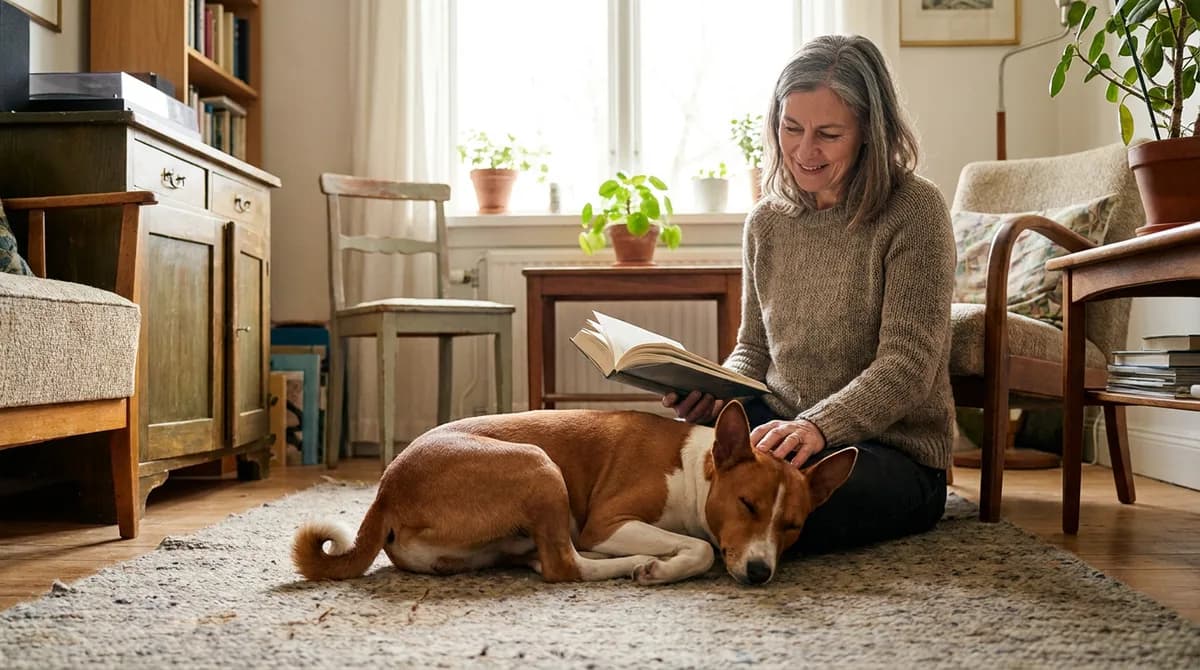
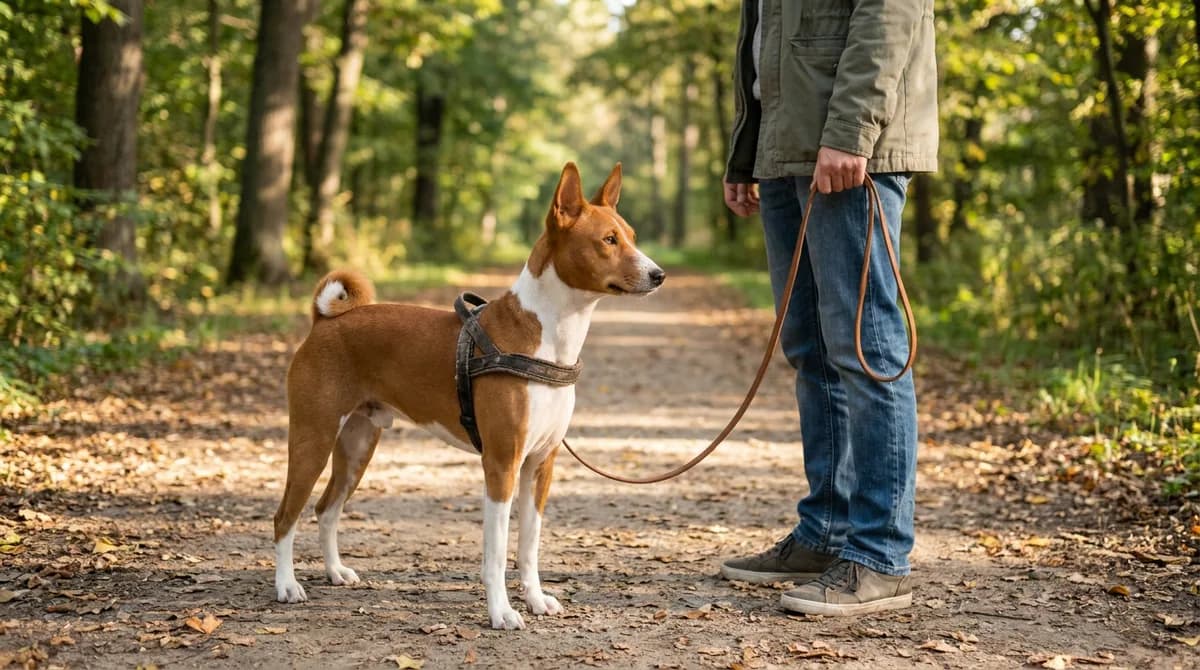
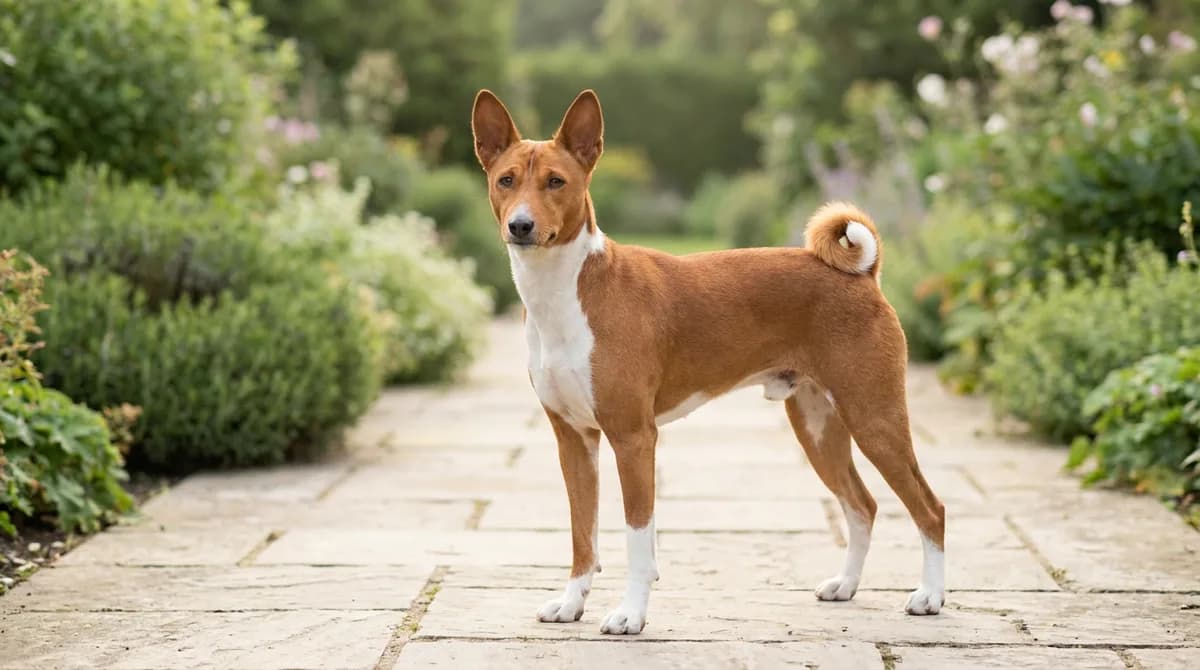
Maltipoo Temperament: Personality and Behavior
Maltipoos are affectionate, intelligent lap dogs that bond hard with their people. Here is the real Maltipoo temperament, including barking and separation anxiety, plus how to socialize and train them well.

Petful is reader supported. As an affiliate of platforms like Amazon and Chewy, we may earn a commission when you buy through links on this page. There is no extra cost to you.
The maltipoo temperament is one of the sunniest in the small-dog world: warm, people-obsessed, quick to learn, and happiest glued to the nearest human lap. This cross between a Maltese and a toy or miniature Poodle blends the Maltese's gentle, affectionate streak with the Poodle's sharp, biddable intelligence. The result is a bright, sociable companion that thrives on closeness and mental stimulation. Understanding how that personality actually behaves day to day, including the barking and separation anxiety that come bundled with all that devotion, is the difference between a dream companion and a frustrated, anxious little dog.
- 1Maltipoos are affectionate, intelligent, people-oriented companions bred for closeness, not independence
- 2Their two most common behavior challenges are nuisance barking and separation anxiety, both rooted in how bonded they get
- 3Early socialization, consistent positive-reinforcement training, and rarely leaving them alone for long stretches bring out the best in the breed

Sign up for expert-backed reviews and safety alerts all in one place.
What Kind of Dog Is a Maltipoo?
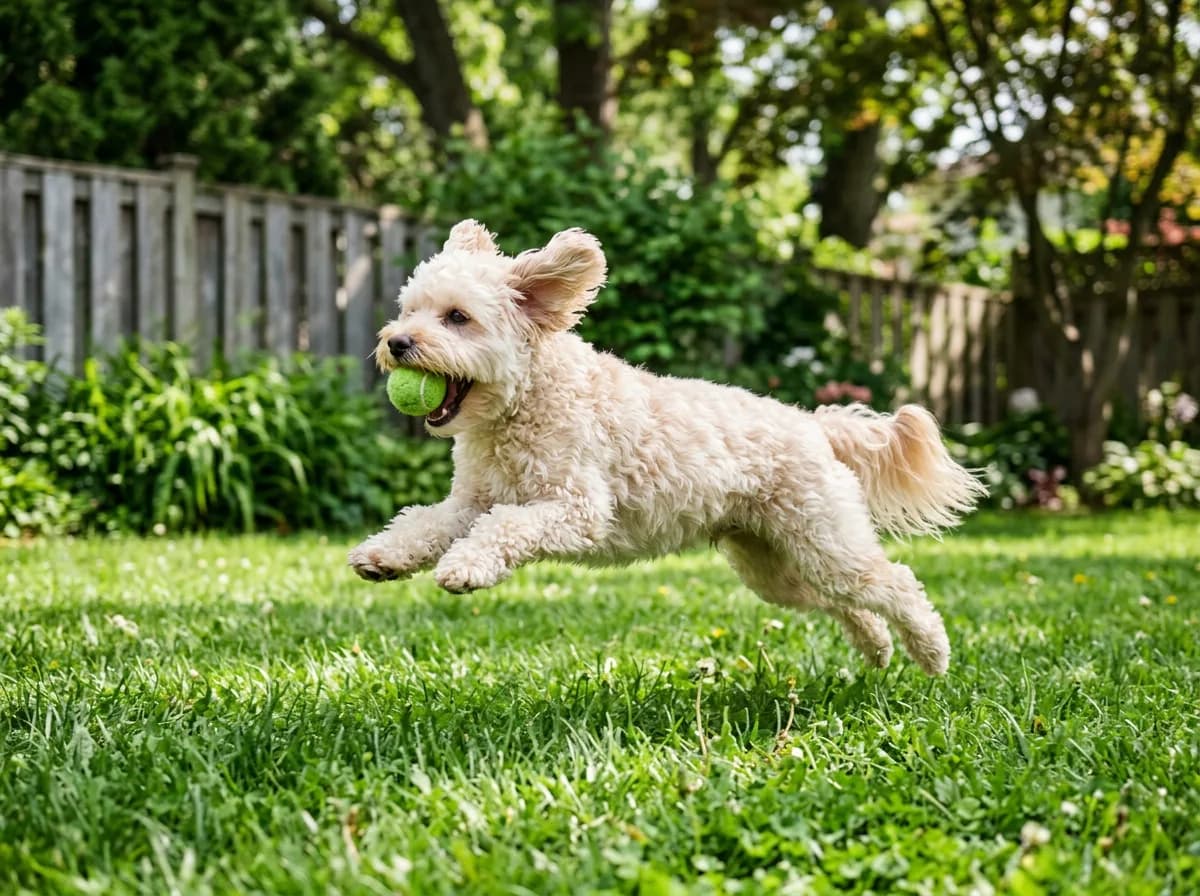
A Maltipoo is a designer crossbreed, not a purebred, so it is not recognized by the American Kennel Club as its own breed. Each puppy inherits a mix of traits from its Maltese and Poodle parents, which means temperament can vary from litter to litter and even puppy to puppy. Still, decades of breeding this particular cross have produced a fairly consistent personality profile: gentle, cheerful, affectionate, and eager to please.
Because both parent breeds are companion dogs at heart (the Maltese was bred for centuries as a lapdog for nobility, and the Poodle, despite its working-water-retriever roots, is intensely people-focused), the Maltipoo is wired to bond hard with its family. This is a dog that wants to be with you, on you, and involved in whatever you are doing. If you want a low-maintenance, aloof dog that entertains itself, this is the wrong breed. If you want a devoted shadow, read on.
For a fuller picture of the crossbreed's health, grooming needs, and life stages, see our complete Maltipoo breed guide and our dedicated look at how long Maltipoos live.
Maltipoo Temperament at a Glance
Before we dig into each trait, here is a quick snapshot of what most Maltipoo owners can expect. Think of these as tendencies rather than guarantees, since the individual dog, its breeding, and its upbringing all shape the final personality.
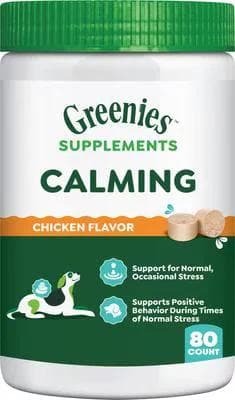
Chicken flavored soft chews that support calm, positive behavior during times of occasional stress like fireworks and storms.
Petful may earn a commission when you click through to Chewy, at no extra cost to you.
| Trait | What It Looks Like | How to Support It |
|---|---|---|
| Affection level | Very high, seeks constant closeness and lap time | Give daily cuddle and downtime together |
| Intelligence | Sharp, learns cues and routines fast | Offer puzzle toys and short training games |
| Energy | Moderate, playful bursts then long naps | Two short walks plus indoor play |
| Trainability | Excellent with rewards, sensitive to harshness | Use positive reinforcement only |
| Alertness | High, quick to announce visitors and noises | Teach a quiet cue early |
| Sociability | Loves people and most other pets | Socialize widely as a puppy |
The headline takeaway from that table is balance. Maltipoos are lively enough to be fun and calm enough to be a genuine couch companion, which is a big part of why they suit apartments, first-time owners, and quieter households so well.
Core Personality Traits
Affectionate to the Core
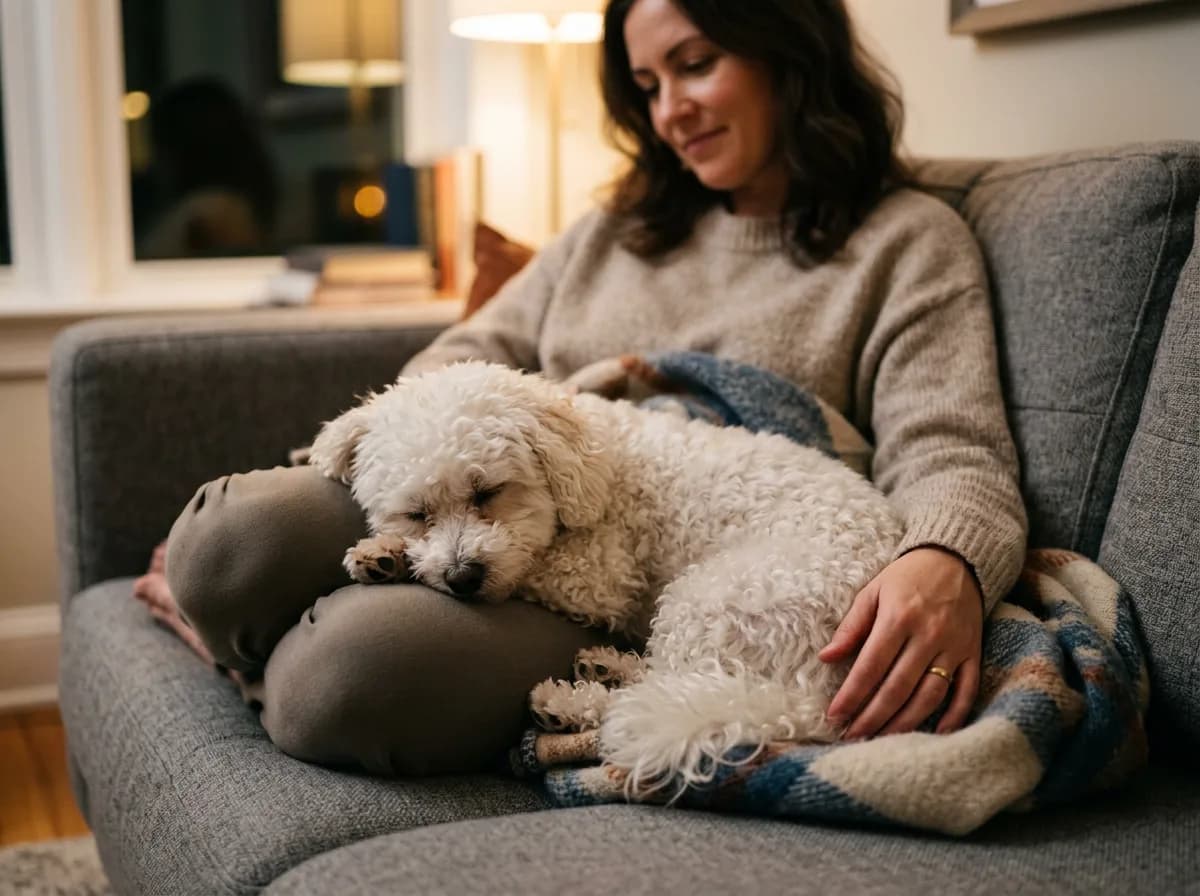
If there is one word owners reach for again and again, it is affectionate. Maltipoos are often called Velcro dogs because they stick to their people. They follow you from room to room, settle in your lap the moment you sit, and would happily spend the entire evening pressed against your side. This closeness is not neediness for its own sake, it is the breed doing exactly what it was created to do: keep a human company.
That devotion makes Maltipoos wonderful emotional-support and companion dogs, especially for people who are home a lot, work remotely, or simply want a dog that is genuinely into them. The flip side, which we cover in the behavior-problems section below, is that a dog this bonded does not cope well with being left alone for long.
Bright and Highly Trainable
The Poodle side of the family brings real brainpower. Poodles are consistently ranked among the most intelligent dog breeds, and that trait carries straight through to the Maltipoo. These dogs pick up house rules, cues, and daily routines quickly, and many learn a solid repertoire of tricks with nothing more than patience and small treats.
That intelligence is a gift and a responsibility. A smart dog that is bored will invent its own entertainment, and a Maltipoo's idea of fun might be barking at the window, shredding a cushion, or learning to open a cabinet. Channel the brains with short daily training sessions, food puzzles, snuffle mats, and new tricks. Five to ten focused minutes a couple of times a day does more good than one long, tiring session. The American Kennel Club's training resources at akc.org are a solid starting point for cue work and puppy foundations.
- Maltipoos are sensitive and lose focus fast, so aim for two or three five-minute reward-based sessions a day rather than one long drill. End every session on a win so your dog stays eager for the next one.
Playful but Not Hyper
Maltipoos have a moderate energy level. Expect cheerful bursts of play, a good game of fetch down the hallway, or the zoomies after a bath, followed by long, contented naps in a sunny spot or on your lap. They are not high-drive working dogs, and they do not need hours of hard exercise, but they are not couch potatoes either.
Two short walks a day plus some indoor play usually keeps a Maltipoo physically satisfied. Mental exercise matters just as much as physical. A dog that has had a training game, a puzzle feeder, and a sniffy walk is a calm, happy dog at home. A dog that has been under-stimulated is the one that barks, paces, and gets clingy.
Are Maltipoos Good With Kids and Other Pets?
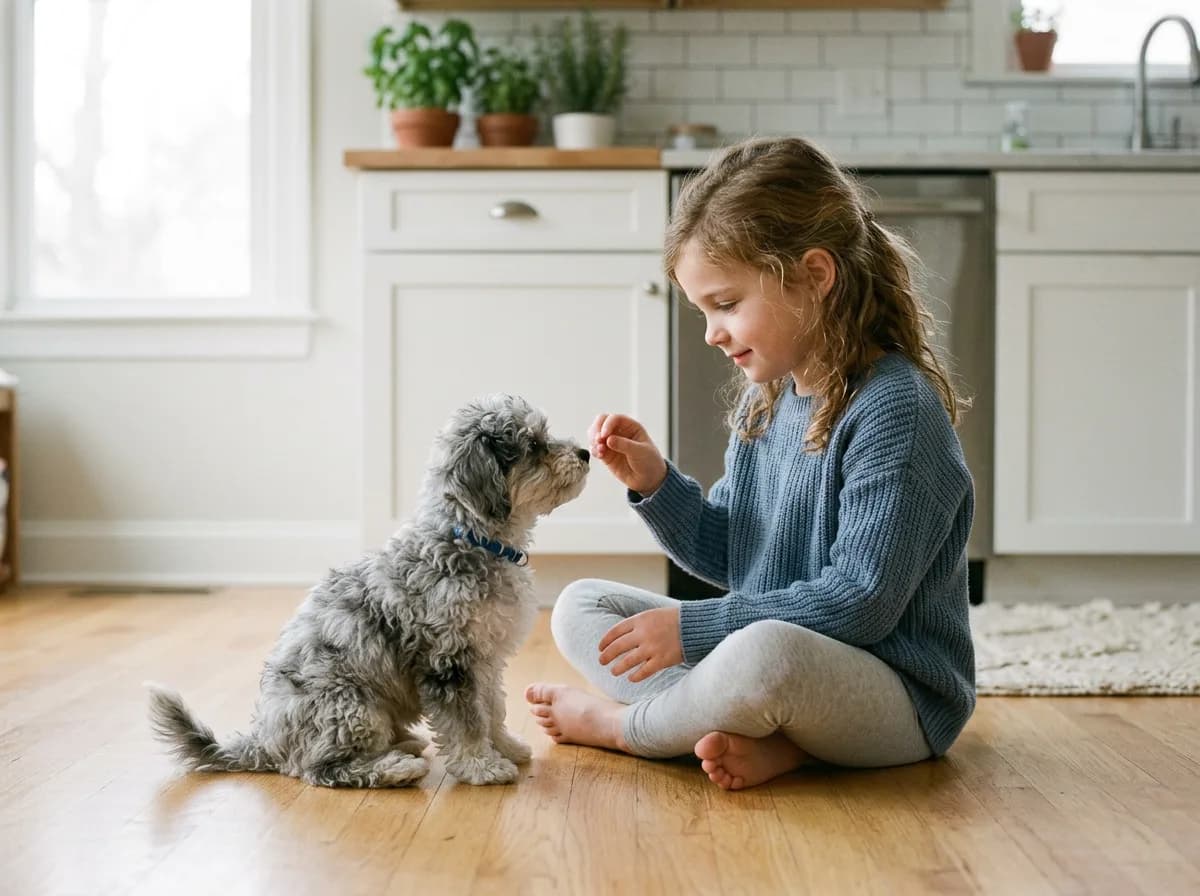
Yes, with the usual caveats. Maltipoos are gentle, friendly, and generally excellent family dogs. Their sweet, tolerant nature makes them good companions for children who know how to handle a dog kindly. The real concern is not temperament, it is size. Maltipoos are small and often fragile, typically weighing between 5 and 20 pounds depending on their Poodle parent, so a well-meaning toddler can accidentally injure one by grabbing, dropping, or falling on it. Petful’s guide to Maltipoo size has growth charts and adult weight ranges.
For that reason, Maltipoos tend to do best with older, calmer children, and every interaction with very young kids should be supervised. Teach children to sit on the floor to hold the dog, to be gentle, and to leave the dog alone when it retreats to its bed. A dog that learns its space will always be respected is a confident, relaxed dog.

A durable rubber dog toy that can be stuffed with treats and selected by the manufacturer's size guide; supervise use and retire it when damaged.
Petful may earn a commission when you click through to Chewy, at no extra cost to you.
With other pets, Maltipoos are usually sociable and adaptable. They typically get along well with other dogs and often with cats, especially when raised alongside them or introduced slowly and positively. Their small prey-size can make interactions with much larger, rougher dogs risky, so play should be size-appropriate. If you love the small designer-companion profile, you will notice the same family-friendly, adaptable temperament in close cousins like the Cavapoo, another Poodle mix bred for gentle companionship.
Do Maltipoos Like to Be Cuddled?
Absolutely. Cuddling is arguably the Maltipoo's favorite activity. This is a breed that was purpose-built for lap time, and most Maltipoos will actively seek out physical contact, curling up against you on the sofa, burrowing under a blanket, or insisting on sleeping pressed to your side. That warmth and softness, combined with a coat that is often low-shedding, is a big part of the breed's appeal.
A word of nuance: while the breed as a whole adores cuddling, individual dogs have preferences. Some want to be held for hours, others enjoy closeness on their own terms and prefer to sit beside you rather than be scooped up. Respect your dog's signals. Forcing a dog that is squirming or leaning away only teaches it that laps are stressful. The goal is a dog that chooses your lap, and with a Maltipoo, that is almost always the natural outcome.
- Because Maltipoos genuinely want closeness, they make some of the most rewarding companion and comfort dogs for people who are home often. That same trait is why they struggle with long hours alone, so the cuddliness is a feature and a responsibility at once.
Common Maltipoo Behavior Problems
No breed is perfect, and the Maltipoo's biggest challenges flow directly from its greatest strength: how deeply it bonds. The two behaviors owners struggle with most are nuisance barking and separation anxiety. Both are manageable, but both need to be addressed early rather than allowed to set in.
Barking

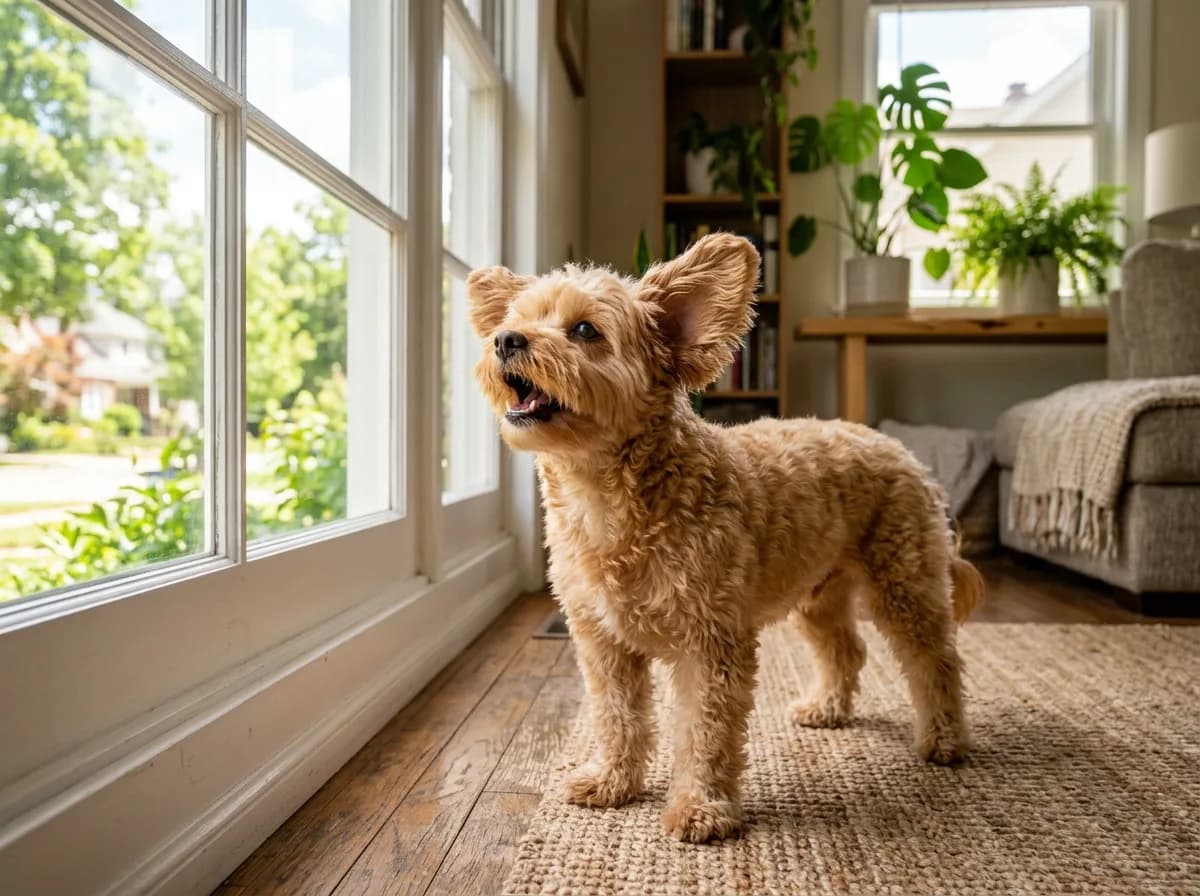
Maltipoos are alert little dogs with a lot to say. They will announce the mail carrier, a knock at the door, a squirrel on the fence, and sometimes just the fact that they are excited or bored. Left unchecked, this alert-barking can become a genuine nuisance, especially in an apartment.
The fix is not to punish the barking, which usually makes an anxious dog worse. Instead, teach a reliable quiet cue, reward calm behavior, and remove the triggers you can (closing blinds to block street views, for instance). Make sure the dog is getting enough mental and physical exercise, because a tired, satisfied Maltipoo has far less reason to bark. Never accidentally reward barking with attention, treats, or door-opening.
Separation Anxiety
This is the single most common serious problem in the breed, and it is worth taking seriously before you bring a Maltipoo home. Because these dogs are so attached to their people, being left alone for long stretches can trigger real distress: nonstop barking or howling, destructive chewing, house-soiling, pacing, and refusal to eat. This is not the dog being naughty, it is genuine anxiety.
The prevention is straightforward but requires commitment. Build up alone-time gradually from puppyhood so being solo feels normal and safe. Leave a puzzle feeder or a long-lasting chew for a positive association with your departure. Keep comings and goings low-key rather than dramatic. And be honest about your lifestyle: a Maltipoo is a poor match for a household where everyone is gone ten hours a day with no midday break, dog walker, or daycare. For dogs with established anxiety, a vet or a certified behaviorist can help, and resources from veterinary schools such as Cornell University College of Veterinary Medicine are a trustworthy place to learn the science behind the behavior.

Clinically tested vet-formulated chews with a colostrum calming complex, L-theanine, and thiamine to quickly ease everyday stress, thunderstorms, and anxiety.
Petful may earn a commission when you click through to Chewy, at no extra cost to you.
- Separation anxiety is the breed's most common serious behavior problem. If your household is empty for long workdays, plan for a dog walker, daycare, or a companion before choosing this breed, and never crate a panicking dog as a fix.
How to Socialize a Maltipoo
Good socialization is the best investment you can make in a happy, confident Maltipoo. The sensitive period for puppies runs roughly from 3 to 14 weeks, and experiences during that window shape how the adult dog handles the world. A well-socialized Maltipoo is friendly and calm, while an under-socialized one can become timid, reactive, or a chronic barker.
Here is what effective socialization looks like in practice:
- Introduce your puppy to a wide variety of people: different ages, sizes, voices, hats, and mobility aids, all paired with treats and calm praise.
- Expose the puppy gently to everyday sounds and sights, such as the vacuum, doorbells, traffic, umbrellas, and the car, so none of them becomes a lifelong fear trigger.
- Arrange positive, supervised meetings with friendly, vaccinated dogs and, where possible, calm cats.
- Handle the paws, ears, mouth, and coat regularly so grooming and vet visits stay stress-free (a real bonus for a breed that needs frequent professional grooming).
- Practice short, happy periods of alone-time from day one to head off separation anxiety before it starts.
- Enroll in a positive-reinforcement puppy class once your vet clears it, both for skills and for structured social exposure.
Socialization is not a one-and-done project. Keep exposing your adult Maltipoo to new experiences throughout its life to maintain that easygoing confidence. The payoff is a dog that is a joy to take anywhere.
The Pros and Cons of a Maltipoo
Every breed is a set of tradeoffs, and being honest about them before you commit is how you end up with the right dog. Here is a balanced look at what you gain and what you take on with a Maltipoo temperament.
| Area | The Pro | The Con |
|---|---|---|
| Companionship | Deeply affectionate and devoted to family | Struggles badly with being left alone |
| Trainability | Bright and quick to learn with rewards | Sensitive, does poorly with harsh correction |
| Living space | Small size suits apartments and small homes | Fragile body needs careful handling around kids |
| Noise | Alert and makes a good little watchdog | Prone to nuisance barking without training |
| Shedding | Often low-shedding coat, good for tidy homes | Coat needs frequent brushing and professional grooming |
| Sociability | Friendly with people and most pets | Can be timid or reactive if under-socialized |
The pattern is clear. The Maltipoo's best qualities (affection, intelligence, small size, low shedding) come paired with responsibilities (companionship needs, grooming, and early training). None of the cons is a dealbreaker for a prepared owner, but a Maltipoo is a genuine commitment of time and attention, not a set-and-forget pet.
How Generation and Size Shape Temperament
One reason Maltipoo personalities vary is that breeders produce different generations, and the Poodle parent may be a toy or a miniature. These factors influence size, coat, and to some degree temperament. Knowing the terminology helps you pick a dog whose likely profile matches your home. For more, see Petful’s guide to Maltipoo prices.
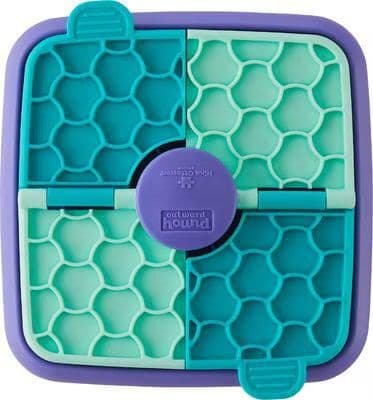
Petful may earn a commission when you click through to Chewy, at no extra cost to you.
| Generation | Parentage | Temperament and Coat Note |
|---|---|---|
| F1 | Maltese bred to Poodle | Most variation between puppies, hybrid vigor, coat can shed a little |
| F1b | F1 Maltipoo bred back to a Poodle | Curlier, more reliably low-shedding, often a touch more Poodle-like drive |
| F2 | Two Maltipoos bred together | Wider range of traits, less predictable coat and personality |
| Multigen | Later generations bred to each other | Most consistent look and temperament when well bred |
Size follows the Poodle parent. A toy Poodle cross tends to produce a smaller, more delicate Maltipoo in the 5 to 12 pound range, while a miniature Poodle cross can yield a sturdier dog closer to 15 to 20 pounds that may handle a busy family a little better. Whatever the generation, always ask a breeder about the parents' health testing. Reputable breeders screen for the eye and joint issues common in both parent breeds, and you can verify results through the Orthopedic Foundation for Animals at ofa.org. Temperament of the parents is the single best predictor of your puppy's adult personality, so meet them if you can.
Bringing Out the Best in Your Maltipoo
Put all of this together and a clear owner's playbook emerges. The Maltipoo is a loving, clever, sensitive companion that gives back exactly what you put in. Meet its needs and you get one of the most delightful small dogs going. Ignore them and you get barking, anxiety, and a stressed little dog.
The essentials are simple. Give it companionship and do not leave it alone for long stretches. Train with kindness and rewards, never harshness. Socialize early and keep it up. Provide daily mental and physical exercise so boredom never turns into mischief. Stay on top of grooming so the coat and the dog stay comfortable. And meet the alert-barking and separation tendencies head-on while your dog is young.
Do those things and the Maltipoo temperament reveals itself at its finest: a joyful, affectionate, endlessly companionable dog that wants nothing more than to be by your side. For many households, especially apartment dwellers, retirees, remote workers, and first-time owners, that is exactly the dog they have been looking for. If you are still comparing designer companions, our Cockapoo profile covers a similar Poodle-mix personality with a slightly higher energy level, which can help you decide which small companion fits your life best.
Frequently Asked Questions
How a Maltipoo's Temperament Changes With Age
The personality you meet in an eight-week-old puppy is not the one you will live with at three years old. A Maltipoo's temperament matures in fairly predictable stages, and knowing what each stage brings keeps you from mistaking a normal phase for a permanent flaw.
Puppyhood (8 weeks to 6 months)
Early on, a Maltipoo is a curious, mouthy sponge. This is the window when it soaks up socialization fastest and when nipping, potty accidents, and short attention spans are completely normal. The dog you shape now, through gentle handling, calm exposure to the world, and the first taste of alone-time, is the confident adult you get later.
Adolescence (6 to 18 months)
This is the stage most owners find hardest and least expected. A previously biddable puppy may suddenly test boundaries, "forget" cues it knew last week, bark more, and get selectively deaf on walks. None of this means your training failed. It means the dog is hitting its teenage phase, and the answer is consistency, not harsher correction. Keep rewarding the behavior you want and this passes.
Adulthood (2 to 8 years)
By roughly two years old a Maltipoo settles into its true self: affectionate, generally calmer, and reliable on the routines you have built. Energy evens out into playful bursts followed by long naps, and the strong bonding that defines the breed is fully formed. This is the long, easy stretch, provided the dog's companionship and exercise needs stay met.
The Senior Years
Small dogs like Maltipoos are long-lived, often reaching 12 to 15 years, so you get many senior years. Older Maltipoos usually grow gentler and sleep more, but they can also become more sound-sensitive, more clingy, or more easily startled as hearing and eyesight fade. Increased nighttime restlessness or new anxiety in an older dog is worth a vet visit rather than a training fix, since pain or cognitive change can drive it.
- A barking adolescent and an anxious senior look similar but need opposite responses. The teenager needs calm, consistent training; the senior needs a vet check for pain or cognitive decline before you treat it as a behavior problem.
Male vs. Female Maltipoo Temperament
One of the most common questions before adoption is whether to choose a male or a female. Honestly, individual personality and upbringing matter far more than sex, and reputable breeders will tell you the same. That said, owners do report some mild, non-guaranteed tendencies:
- Males are often described as a touch goofier, more consistently affectionate, and eager to please without much moodiness. Many owners find them slightly easier to read.
- Females are sometimes a little more independent, occasionally more territorial about their space, and can be quicker to mature mentally.
- Intact males may mark indoors or wander mentally when distracted, and intact females go through heat cycles with related mood shifts. Spaying or neutering, on your veterinarian's timeline, tends to smooth out these sex-linked behaviors in both.
The practical takeaway: do not pick a Maltipoo on sex alone. Meet the individual puppy, ask the breeder about its parents' temperaments, and choose the dog whose energy and confidence fit your home. A well-socialized dog of either sex makes a wonderful companion.
Reading Your Maltipoo's Mood and Body Language
Because Maltipoos are so sensitive and so bonded, learning to read their signals lets you head off stress before it becomes barking or anxiety. These small cues tell you how your dog is actually feeling.
Signs of a Relaxed, Content Maltipoo
- A loose, soft body with a gently wagging tail carried at a natural height
- Ears in a neutral position and a slightly open, easy mouth
- Willingness to roll over, lean in for contact, or flop down near you
- A "play bow," front end down and rear up, inviting a game
Signs of a Stressed or Overwhelmed Maltipoo
- Lip-licking, repeated yawning, or turning the head away when there is no food or tiredness to explain it
- "Whale eye," where the dog shows the whites of its eyes while keeping its head still
- A tucked tail, flattened ears, or trying to make itself small
- Sudden freezing, trembling, or retreating to a bed or under furniture
When you see the stress signals, the right move is to give the dog space and lower the pressure, not to push it through. Forcing a nervous Maltipoo to accept handling or a scary situation teaches it that its warnings do not work, which is exactly how a sweet dog learns to growl or snap. Respect the early signals and you build a trusting, confident companion that rarely needs to escalate.
Are Maltipoos Stubborn or Hard to Train?
Maltipoos are not truly stubborn, but they are bright dogs with an independent streak, and housetraining is the one skill where owners hit a wall. On the intelligence side, the Poodle parent ranks second out of 138 breeds in Stanley Coren's classic obedience-and-working-intelligence study, while the Maltese sits closer to the middle. The cross lands squarely in "smart, with a mind of its own." That mind is why a Maltipoo can learn a trick in minutes yet act deaf the moment a squirrel is more interesting than your treat.
The stubborn reputation almost always traces back to potty training rather than defiance. A tiny bladder, a dislike of going out in cold or wet weather, and plush rugs that feel great underfoot all work against quick success. The answer is structure, not force:
- Keep a tight potty schedule, taking the dog out after every meal, nap, and play session.
- Confine to a crate or pen when you cannot supervise, since dogs avoid soiling their own space.
- Reward the instant the dog finishes outside, and never scold for an accident you find after the fact.
- Small dogs like Maltipoos often take longer than average to become reliable indoors, sometimes not fully there until eight to twelve months old. Stay consistent, expect the odd setback, and treat every outdoor success as a win rather than punishing the misses.
Maltipoo vs. Cavapoo: How Their Temperaments Differ
Maltipoos and Cavapoos are both gentle, affectionate Poodle crosses, so their temperaments overlap far more than they differ. The distinctions are matters of degree. A Cavapoo (Cavalier King Charles Spaniel crossed with a Poodle) tends to be a touch more easygoing and evenly friendly with everyone it meets, and it usually carries a little more outdoor playfulness. A Maltipoo tends to be more alert, more of a one- or two-person Velcro dog, and quicker to sound off at noises, which makes it the better little watchdog of the two.
Both breeds are deeply people-oriented and dislike being left alone, so neither suits a household that is empty all day. The Cavapoo's Cavalier side can make separation distress especially likely, while the Maltipoo's alertness makes nuisance barking the bigger habit to stay ahead of. Intelligence, trainability, and adult size are broadly similar between them.
Pick a Maltipoo if you want a devoted lap companion with a watchful streak. Lean toward a Cavapoo if you want a slightly mellower dog that spreads its affection evenly across a busy family.
The most common behavioral issues are separation anxiety and nuisance barking, both stemming from how strongly the breed bonds to its people. Under-socialized Maltipoos can also become timid or reactive. All three are largely preventable with early socialization, gradual alone-time training, plenty of mental and physical exercise, and consistent positive reinforcement.
The single most common problem is separation anxiety. Because Maltipoos are so attached to their families, being left alone for long periods can cause distress that shows up as constant barking or howling, destructive chewing, house-soiling, and pacing. Building up alone-time from puppyhood and avoiding long solo days is the best prevention.
Pros: deeply affectionate, intelligent and trainable, small and apartment-friendly, often low-shedding, and friendly with people and pets. Cons: they cannot be left alone for long without anxiety, they need frequent grooming, they can bark a lot without training, and their small frame is fragile around young children.
Yes. Cuddling is one of a Maltipoo's favorite things. The breed was developed as a lap companion, and most Maltipoos actively seek out closeness, curling up in laps and pressing against their people. Individual dogs vary, so a few prefer closeness on their own terms, but as a group they are one of the most affectionate small breeds.

Coreen Saito is a pet writer and longtime shelter volunteer with more than a decade in animal rescue. She covers cat behavior, breed care, and the small, ordinary science of sharing a life with companion animals, with a particular focus on honest takes about the products and decisions that actually matter. At home in Arizona, she's outranked by Mac (a dog with the loudest opinion in the house), Rebel (a cat who governs by quiet authority), and Meri (an orange tabby who runs the late shift and the laundry basket). She writes about all three, plus the rescues that keep coming through her life, at LifeWithMinty.com.
Sign up for expert-backed reviews and safety alerts all in one place.