Sheepadoodle Size: Micro, Mini and Standard Growth Chart
Sheepadoodles run from a 10-pound micro to an 85-pound standard. This guide gives height and weight ranges for all four size classes, month by month growth charts, and a repeatable way to predict your puppy's adult size.
Petful is reader supported. As an affiliate of platforms like Amazon and Chewy, we may earn a commission when you buy through links on this page. There is no extra cost to you.
The hardest number to pin down before you bring one home is sheepadoodle size, because an Old English Sheepdog crossed with a Poodle can finish anywhere from a 10-pound lap dog to an 85-pound giant. That spread is not random. It traces almost entirely to which Poodle variety stood at the other end of the cross, and to how many generations a breeder worked through before that litter was born.
This guide gives the real height and weight figures for all four Sheepadoodle classes, month by month growth tables for each one, the age each class stops growing, and a repeatable method for predicting what your own puppy will weigh as an adult. For coat, personality and day to day care, our full Sheepadoodle breed guide covers the rest of the breed.
- 1Sheepadoodles come in four working size classes: micro (10 to 14 in, 10 to 25 lbs), mini (16 to 20 in, 25 to 45 lbs), medium or moyen (16 to 22 in, 35 to 55 lbs) and standard (20 to 27 in, 55 to 85 lbs)
- 2The Poodle parent sets the class, so a Toy Poodle cross and a Standard Poodle cross can finish more than 60 pounds apart
- 3Height finishes between 10 and 16 months in most dogs, while standards keep adding chest and weight until 18 to 24 months

Sign up for expert-backed reviews and safety alerts all in one place.
Sheepadoodle Size Classes: Micro, Mini, Medium and Standard
Breeders sort Sheepadoodles into four classes by the Poodle used in the cross, and the direct answer is this: a micro Sheepadoodle stands 10 to 14 inches tall and carries a weight range of 10 to 25 pounds, a mini stands 16 to 20 inches tall at 25 to 45 pounds, a medium stands 16 to 22 inches tall at 35 to 55 pounds, and a standard Sheepadoodle stands 20 to 27 inches tall at 55 to 85 pounds. Every height figure here is a withers height, taken at the ridge between the shoulder blades rather than to the top of the skull, so a heavily coated dog that looks taller still measures at the shoulder.
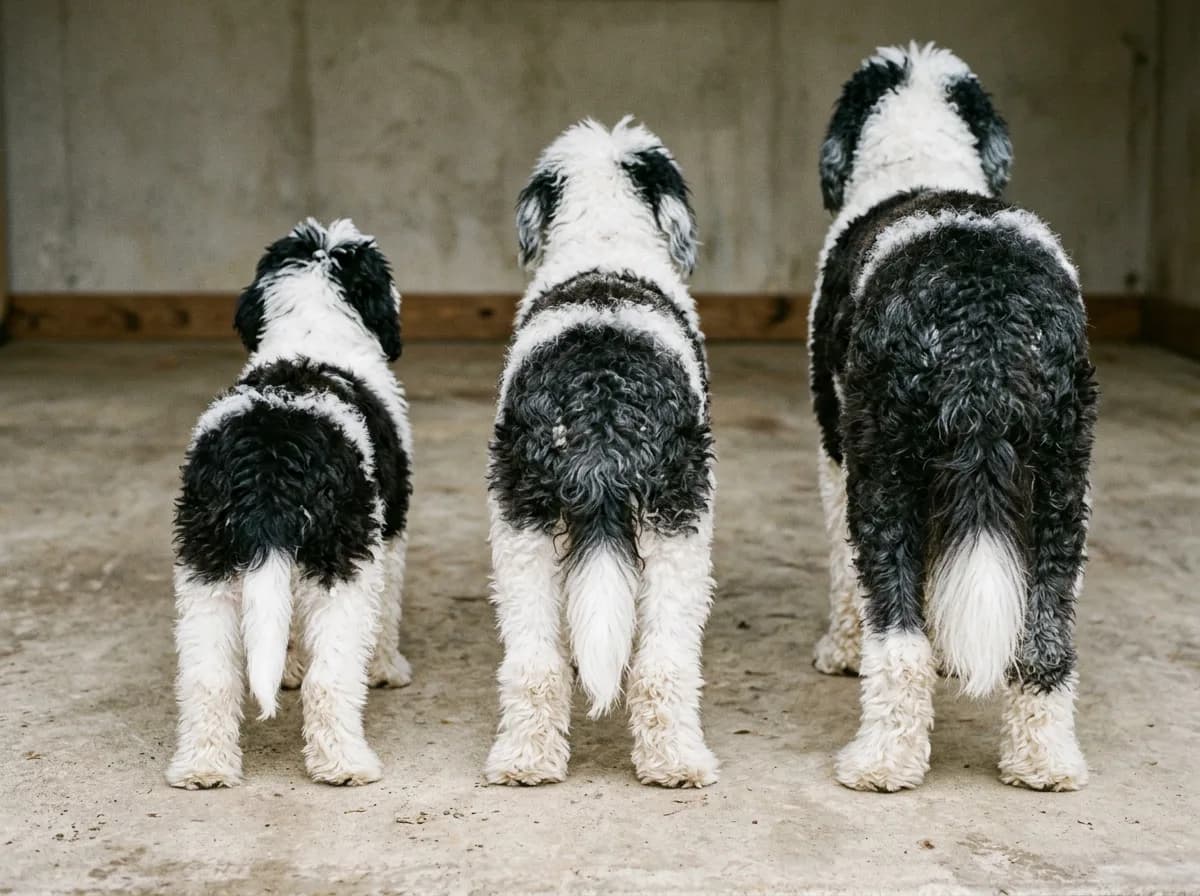
Weight is the looser of the two numbers. The Old English Sheepdog side brings a dense, heavy-boned frame, so a Sheepadoodle often weighs more than its height suggests, and two dogs of identical height can sit eight pounds apart and both be in healthy condition.
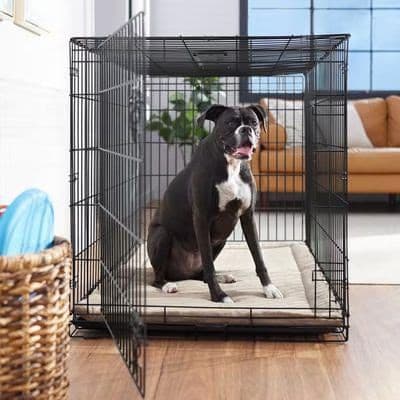
Petful may earn a commission when you click through to Chewy, at no extra cost to you.
- Micro: 10 to 14 inches tall, 10 to 25 pounds. Requires a Toy Poodle or a very small Miniature Poodle in the line, almost always through a back-cross.
- Mini: 16 to 20 inches tall, 25 to 45 pounds. Bred from a Miniature Poodle, usually onto a smaller Old English Sheepdog or an existing mini line.
- Medium or moyen: 16 to 22 inches tall, 35 to 55 pounds. The class most breeder charts skip entirely.
- Standard: 20 to 27 inches tall, 55 to 85 pounds. A full Old English Sheepdog crossed with a Standard Poodle, and the original version of the cross.
A useful sheepadoodle size comparison lines all four classes up against the Poodle parent that produces each one, because that single fact predicts more about a puppy's adult frame than anything else printed on a breeder's website. Readers outside the United States often search sheepadoodle weight kg instead of pounds, so the metric equivalents are worth stating plainly too: micro 5 to 11 kg, mini 11 to 20 kg, medium 16 to 25 kg and standard 25 to 39 kg.
| Size Class | Poodle Parent | Height at Withers | Adult Weight | Metric Weight | Full Grown By |
|---|---|---|---|---|---|
| Micro | Toy Poodle | 10 to 14 in | 10 to 25 lbs | 5 to 11 kg | 10 to 12 months |
| Mini | Miniature Poodle | 16 to 20 in | 25 to 45 lbs | 11 to 20 kg | 12 to 14 months |
| Medium (moyen) | Moyen or small Standard Poodle | 16 to 22 in | 35 to 55 lbs | 16 to 25 kg | 12 to 15 months, weight to 18 months |
| Standard | Standard Poodle | 20 to 27 in | 55 to 85 lbs | 25 to 39 kg | 13 to 16 months, weight to 24 months |
Two things about that table deserve saying out loud, because breeder marketing tends to blur both. First, no kennel club recognizes the Sheepadoodle, so none of these classes is an enforced measurement. They are breeder conventions, and one program's medium is another program's standard. Second, the ranges overlap deliberately. A heavy mini and a light medium can be the same 40-pound dog wearing two different labels and two different price tags.
Standard Sheepadoodle size
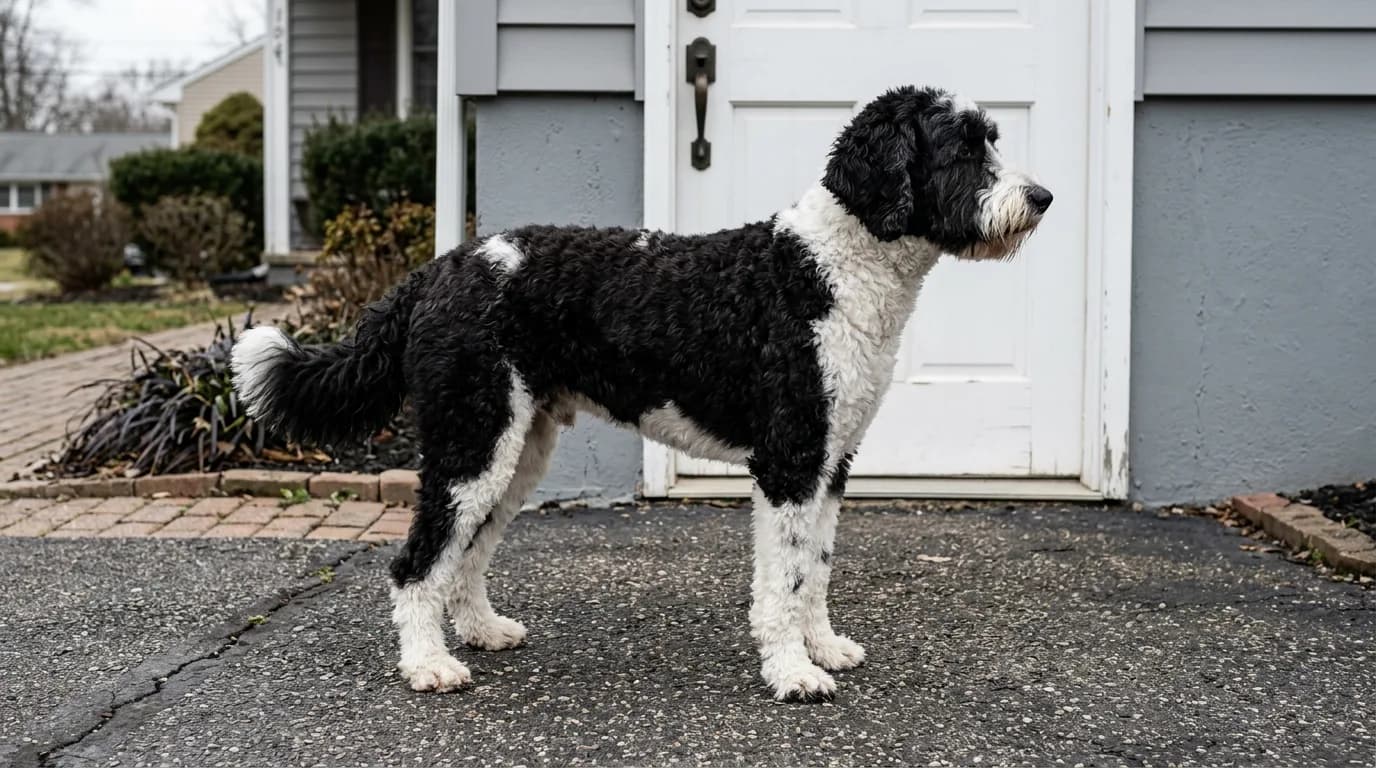
The standard Sheepadoodle is the original cross: a full-sized Old English Sheepdog bred to a Standard Poodle. Standard sheepadoodle size runs 20 to 27 inches at the shoulder and 55 to 85 pounds, with most dogs settling near 22 inches and 65 pounds. Males typically sit in the upper half of both bands and females in the lower half, a gap of roughly 10 percent that holds across every class.
- Needs a 42-inch or 48-inch crate and a vehicle with genuine cargo room
- Eats roughly three times what a micro Sheepadoodle eats over a year
- Carries the Old English Sheepdog's heavy bone, so it feels bigger than its height alone suggests
- Costs more per grooming visit than any other class, simply because there is more coat to work through
Medium and moyen Sheepadoodle size
The medium class sits between the mini and the standard at 16 to 22 inches and 35 to 55 pounds, and it is the class competitor charts routinely leave out. Medium sheepadoodle size is usually produced by pairing a moyen Poodle, the European size between miniature and standard, with an Old English Sheepdog, or by breeding a mini line up. Anyone searching moyen sheepadoodle size is looking at this same dog under its European name, and the numbers are identical.
For most households this is the practical sweet spot. A medium is sturdy enough to hike and swim all day and keep pace with school-age kids, but it still fits a mid-sized car and a normal living room.
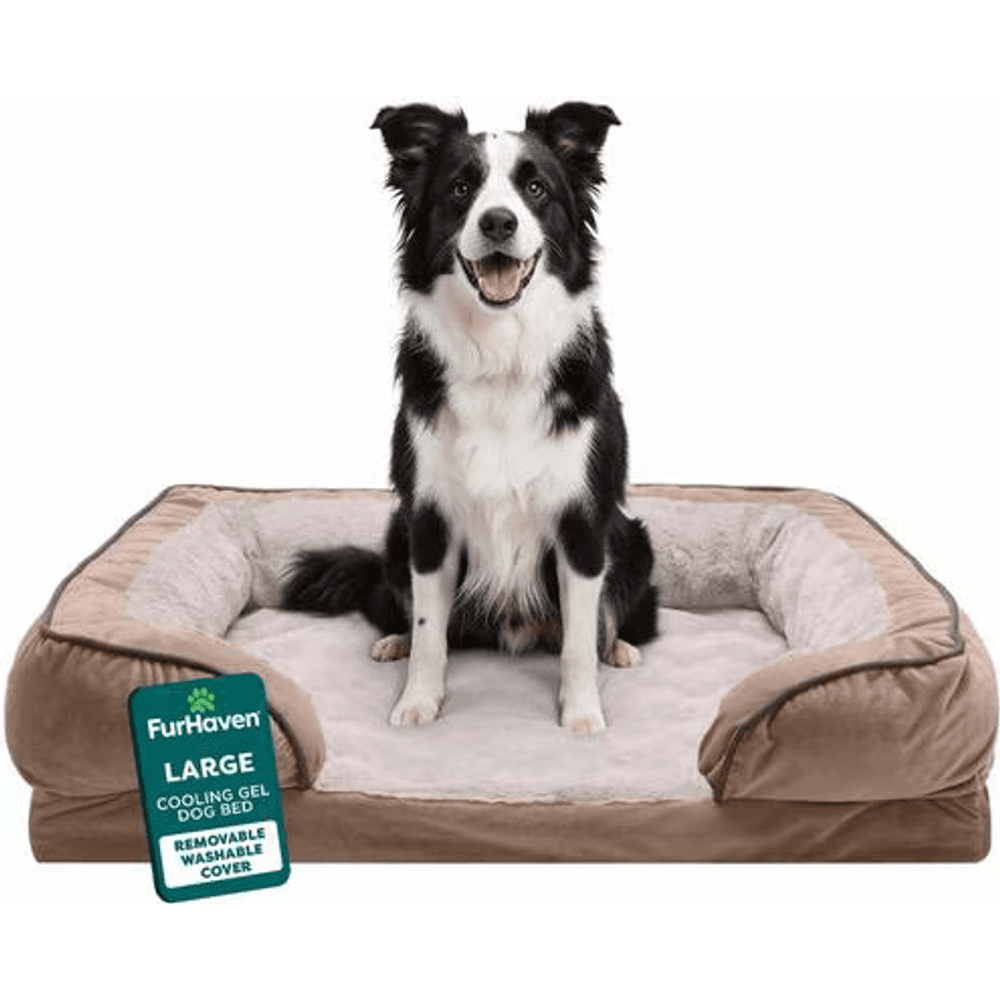
An orthopedic sofa bed with three bolstered sides for dogs who like to rest their head and joints against a cushion. The supportive foam base cradles hips and elbows, a comforting spot for an older or shaky dog to settle.
Petful may earn a commission when you click through to Chewy, at no extra cost to you.
- Size labels are marketing. The Poodle variety is biology. A breeder who can tell you the variety and the recorded adult weight of both the sire and the dam is giving you far better information than one who simply writes medium on a listing.
Sheepadoodle Growth Chart: Weight and Height by Age
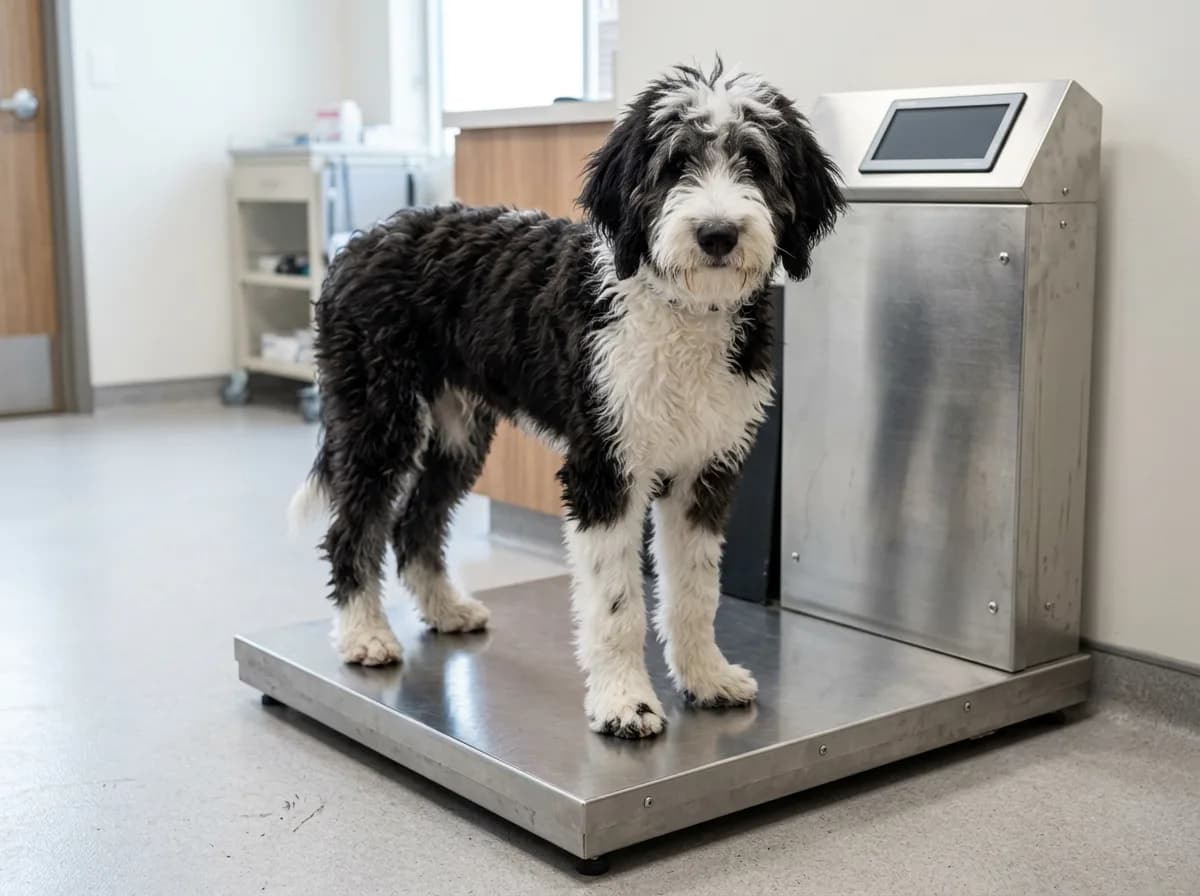
A sheepadoodle size chart is only useful when it separates the classes, because a single blended curve describes no real dog. The four tables below track sheepadoodle weight by month from 8 weeks through 24 months, one table per class, so you can check a puppy against the band it actually belongs to instead of a breed-wide average. Read them as ranges rather than targets. Steady month over month gain and a healthy body condition matter far more than hitting a specific figure on a specific day.
| Age | Weight | Height |
|---|---|---|
| 8 weeks | 2 to 4 lbs | 5 to 7 in |
| 3 months | 5 to 8 lbs | 7 to 9 in |
| 4 months | 6 to 11 lbs | 8 to 10 in |
| 6 months | 9 to 17 lbs | 9 to 12 in |
| 9 months | 10 to 22 lbs | 10 to 13 in |
| 12 months | 10 to 25 lbs | 10 to 14 in |
| 18 months | 10 to 25 lbs | 10 to 14 in |
| 24 months | 10 to 25 lbs | 10 to 14 in |
| Age | Weight | Height |
|---|---|---|
| 8 weeks | 5 to 9 lbs | 7 to 9 in |
| 3 months | 11 to 18 lbs | 10 to 13 in |
| 4 months | 14 to 23 lbs | 11 to 15 in |
| 6 months | 18 to 32 lbs | 13 to 17 in |
| 9 months | 22 to 40 lbs | 14 to 19 in |
| 12 months | 24 to 44 lbs | 16 to 20 in |
| 18 months | 25 to 45 lbs | 16 to 20 in |
| 24 months | 25 to 45 lbs | 16 to 20 in |
| Age | Weight | Height |
|---|---|---|
| 8 weeks | 7 to 12 lbs | 8 to 10 in |
| 3 months | 15 to 24 lbs | 11 to 14 in |
| 4 months | 19 to 30 lbs | 13 to 16 in |
| 6 months | 25 to 40 lbs | 15 to 19 in |
| 9 months | 31 to 49 lbs | 16 to 21 in |
| 12 months | 34 to 53 lbs | 16 to 22 in |
| 18 months | 35 to 55 lbs | 16 to 22 in |
| 24 months | 35 to 55 lbs | 16 to 22 in |
| Age | Weight | Height |
|---|---|---|
| 8 weeks | 10 to 16 lbs | 9 to 12 in |
| 3 months | 22 to 34 lbs | 13 to 16 in |
| 4 months | 28 to 44 lbs | 15 to 18 in |
| 6 months | 38 to 58 lbs | 18 to 22 in |
| 9 months | 47 to 72 lbs | 19 to 25 in |
| 12 months | 51 to 79 lbs | 20 to 27 in |
| 18 months | 55 to 85 lbs | 20 to 27 in |
| 24 months | 55 to 85 lbs | 20 to 27 in |
The standard sheepadoodle weight chart above is the one most readers come for, and the pattern running through all four is the single most useful thing a growth chart teaches: growth is front-loaded. Roughly half of adult weight arrives inside the first four months, the curve flattens hard somewhere between 9 and 12 months old, and the last few pounds trickle on long after height has stopped changing.
- A micro or mini is at about 75 percent of adult weight by six months old
- A medium is at roughly 70 percent at the same point
- A standard is closer to 65 percent, which is why big Sheepadoodles look lanky the longest
- Every class reaches full height before it reaches full weight
- Half of adult weight arrives in the first four months, so puppies eat in a hurry; a slow feeder bowl stretches a two-minute meal closer to eight and is worth using in the deeper-chested medium and standard classes.
Averaged across all four classes, sheepadoodle average weight lands near 50 pounds. That midpoint is worth knowing and almost useless in practice, because it describes a dog that sits between two real classes rather than inside either one. Use the table for your class instead.
The size difference between a 15-pound micro and a 75-pound standard is far easier to judge in person than on paper, which is why the photographs in this guide use real dogs against real reference points rather than a drawn diagram. Two Sheepadoodles at opposite ends of the range share a coat type, a face and a temperament, and essentially nothing about their footprint in a home.
- Puppy portions are set by projected adult weight, and overfeeding a fast-growing large-breed puppy loads developing joints during the exact months the frame is forming. A dog sitting at the very top or the very bottom of its band is a cue to review portions with your vet rather than a problem on its own.
General guidance on healthy growth rates and body condition scoring is available through published veterinary growth guidance resources, and it is worth reading alongside any chart.

Soft-sided travel safety carrier that keeps a stressed cat secure and well-ventilated on the way to the vet, with mesh panels for airflow and a seat-belt loop.
Petful may earn a commission when you click through to Chewy, at no extra cost to you.
Use the tables the way a vet uses them: as four separate curves, not one adult range. Find your dog's size class first, then weigh on the same day each month and plot the number against that class's band. What matters month by month is the shape of the line rather than any single reading. A puppy tracking the low edge of its class and gaining steadily is fine. A puppy that flattens for two consecutive months, or jumps a class, is worth a conversation with your vet.
- Weigh at home between visits. Stand on a bathroom scale holding the puppy, subtract your own weight, and record the date. Accuracy to the pound is plenty.
- Expect the steepest gain between 8 weeks and 4 months in every class, a visible flattening between 9 and 12 months, then a slow fill-out phase that runs longest in the standard class.
- If your puppy sits above its band for three consecutive months, it probably belongs in the next class up rather than being overweight. Re-plot against that table before you cut food.
- If it sits below the band and body condition is good, the smaller Poodle side is simply expressing itself. A lean puppy gaining steadily is not a failing puppy.
- Pair every weigh-in with a hands-on check. Ribs easy to feel under light pressure and a waist visible from above matter more than hitting a number in the table.
It is worth saying why this page gives four tables instead of one. Most pages ranking for this breed cover a single class or give one vague adult range that stretches from 10 to 85 pounds, which is true of the breed and useless for your dog. A blended range cannot tell you whether a 22 pound six-month-old is a finished micro, a mini on track, or a medium running light. Four month by month weight tables, one for each of the size classes, answer that at a glance. Find your class first, then read only the table for it, and treat every figure inside it as a band rather than a target to hit.
- The Poodle parent selects your table: Toy for micro, Miniature for mini, moyen for medium, Standard for standard. Ask which one was used.
- Record the date with every weight. Five weeks between weigh-ins makes the curve look flatter than it really is.
- Read three months of readings as a shape before reacting to any single number.
- F1 littermates can finish in different classes, so a sibling's weight is context rather than a prediction.
How Big Does a Full Grown Sheepadoodle Get?
A full grown Sheepadoodle stands 10 to 27 inches at the shoulder and weighs 10 to 85 pounds, depending entirely on its class. The most common version, the standard, finishes at 20 to 27 inches and 55 to 85 pounds. A full grown medium lands at 16 to 22 inches and 35 to 55 pounds, a mini at 16 to 20 inches and 25 to 45 pounds, and a micro at 10 to 14 inches and 10 to 25 pounds. Adult weight arrives later than adult height in every class, so a dog that has stopped getting taller is very often still filling out.

Searches for sheepadoodle how big and sheepadoodle big are nearly always aimed at the standard class, because that is the version people picture when they think of the breed. A large sheepadoodle is a genuinely substantial dog: knee-height or higher on most adults, strong enough to pull hard on a leash, and heavy enough that lifting it into a car is a two-arm job. Anyone hoping for a big sheepadoodle should plan around that reality rather than the puppy photo.
- Micro full grown: height by 9 to 11 months, final weight by about 12 months
- Mini full grown: height by 11 to 13 months, final weight by 12 to 14 months
- Medium full grown: height by 12 to 15 months, final weight by 15 to 18 months
- Standard full grown: height by 13 to 16 months, final weight by 18 to 24 months
- A full grown standard at 55 to 85 pounds can out-pull most handlers on a flat collar, so fit a no-pull harness by measured chest girth rather than by the weight range printed on the box.
- Skip the raised feeder in the taller classes. Elevated bowls are often sold as an ergonomic upgrade for big dogs, but the largest study of bloat risk factors found raised feeding associated with a higher rate of gastric dilatation volvulus in large and deep-chested breeds, and the Poodle side of this cross already sits high on breed bloat-risk lists. Floor feeding is fine at every size here. If your dog has a reason to eat higher, such as a neck or joint problem, make that call with your vet rather than by default.
The rule underneath those bullets is simple: the bigger the dog, the longer the finish. A standard from a Standard Poodle line can take twice as long to reach its final adult weight as a micro from the very same program.
That timeline matters for more than curiosity. Growth plates, the soft cartilage zones at the ends of the long bones, stay open until a dog has finished growing, and repeated high-impact work on open plates strains developing joints. The window is short in a micro and long in a standard, which is why an adult Sheepadoodle can run trails that a 10-month-old version of the same dog should not. The American Kennel Club's puppy growth and development guidance covers the same principle across breeds.
- Until a Sheepadoodle finishes growing, favor swimming, walking and controlled play over repeated jumping or long runs on hard ground. A standard stays in that careful phase many months longer than a micro does, even though both dogs are technically the same age.
When Do Sheepadoodles Stop Growing?
Sheepadoodles stop growing in two stages, and confusing the two is where most owner worry comes from. Height finishes first, somewhere between 9 and 16 months old depending on class. Weight keeps climbing afterward as the chest broadens and muscle fills in, which is why a dog can measure the same in March and April while still gaining four pounds.
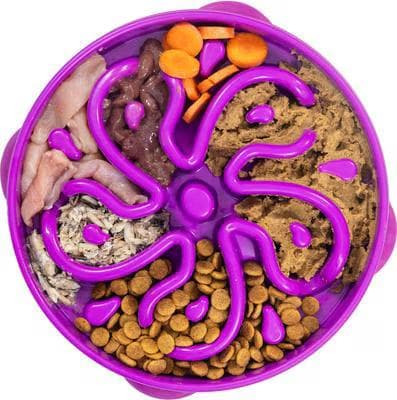
A maze-pattern slow-feeder bowl that makes fast eaters work for each bite, reducing the gulping and swallowed air that trigger regurgitation and vomiting. Holds up to 4 cups.
Petful may earn a commission when you click through to Chewy, at no extra cost to you.
- Micro Sheepadoodles stop growing in height by 9 to 11 months and finish weight near 12 months
- Minis reach full height by 11 to 13 months and finish weight by 12 to 14 months
- Mediums reach full height by 12 to 15 months and finish weight by 15 to 18 months
- Standards reach full height by 13 to 16 months and can keep filling out until 24 months old
- Buy sleeping gear to the finished number, not the current one. A standard still filling out at 20 months will outgrow a 30-inch pad, so size an orthopedic bed to projected adult length plus about six inches.
- Once a standard has finished at 18 to 24 months, ask your vet whether a glucosamine joint supplement is worth adding for a heavy-boned frame; there is no reason to start one while a puppy is still growing.
Owners ask whether Sheepadoodles ever calm down because the body finishes long before the brain does. They do calm down, but on a separate clock from the growth tables above. The busiest stretch usually runs from around six months to fourteen months, impulsiveness drops noticeably through the second year, and most dogs read as settled somewhere between 18 and 30 months, latest of all in the standard class. Calm here means a dog that can switch off indoors, not a dog that stops wanting to play. What moves the date forward is structure rather than patience: predictable exercise, short daily training that makes the dog think, and rest that has actually been practiced.
- Physical size and behavioral maturity are different clocks. A standard can be full height at 14 months and still act adolescent at two.
- Micro and mini dogs generally read as adult several months before a standard does.
- Two structured outings a day plus five to ten minutes of training settles this cross faster than one long walk.
- Do not burn off adolescence with high-impact running while growth plates are still open. That buys quiet now and joint problems later.
Do Sheepadoodles ever calm down?
Yes, and it happens later than the growth chart suggests. Physical growth finishes between 12 and 24 months depending on class, but the adolescent energy that exhausts new owners usually settles between 18 and 30 months old. Standards mature slowest of all. The Old English Sheepdog side stays playful and goofy well into adulthood, so a calm adult Sheepadoodle is settled rather than sedate, and structured daily exercise moves that timeline forward more reliably than waiting does.
How to Predict Your Sheepadoodle's Adult Size
You do not have to wait a year to know what you are raising. Three inputs used together will get you within a few pounds: the parents, the generation label, and a single weigh-in at 16 weeks. No ranking page walks through all three in order, so here is the whole method.
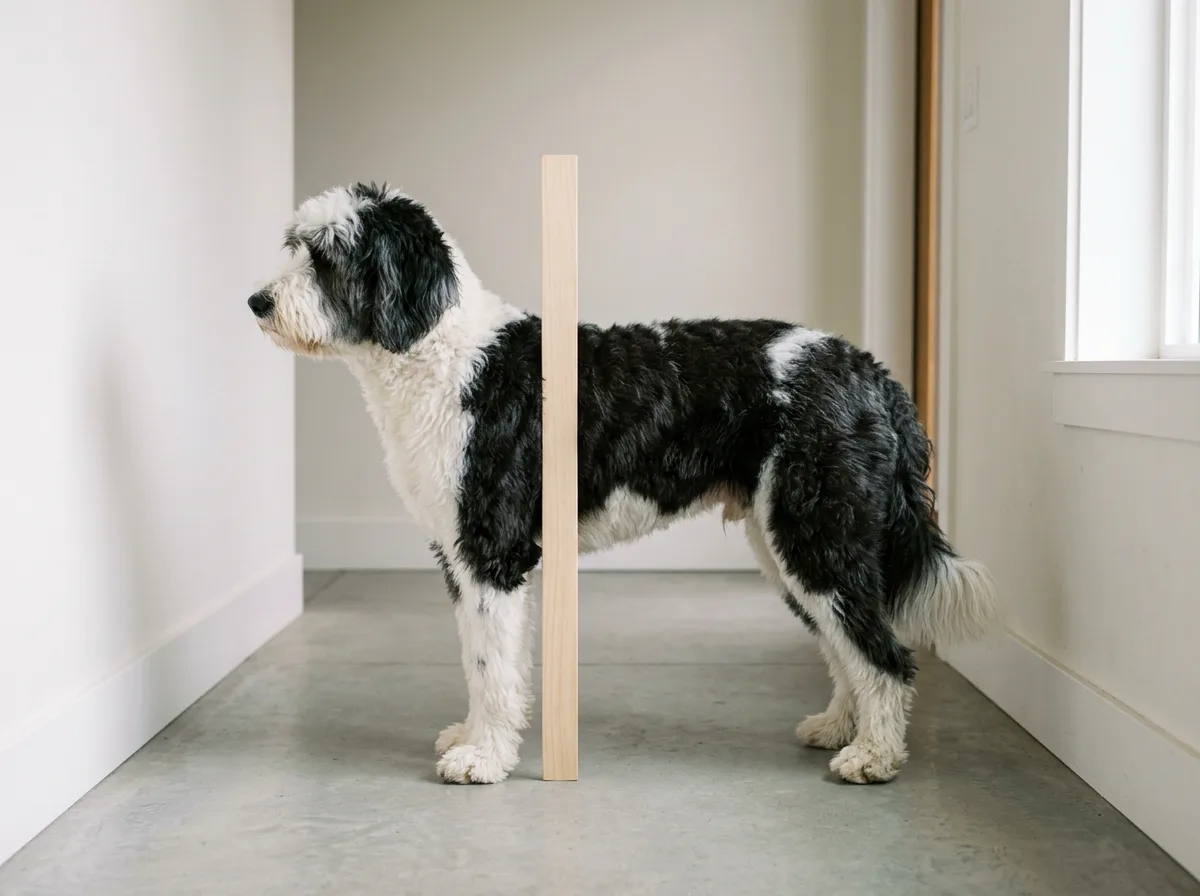
Step 1: Average the parent weights. Ask the breeder for the recorded adult weight of both the sire and the dam, add them together and divide by two. Parent weight is the strongest single predictor available for any crossbred dog, and a breeder unwilling to share those figures is telling you something useful about the program.
Step 2: Adjust for the generation. Sheepadoodle generations describe how the cross was built, and each one shifts the expected adult size in a predictable direction.
- F1 generation: a purebred Old English Sheepdog bred to a purebred Poodle. The most variable of the lot, and usually closest to the parent average.
- F1b generation: an F1 Sheepadoodle bred back to a Poodle. Leans toward the Poodle parent in both size and coat, so an F1b from a Miniature Poodle finishes smaller than the parent average predicts.
- F2 and multigen: two Sheepadoodles bred together, or later generations of the same line. More predictable on size once a program has several generations of recorded adult weights behind it.
- Mini f1 sheepadoodle: a first cross built specifically for the mini band, typically a Miniature Poodle onto a smaller Old English Sheepdog. Expect the widest spread of any mini label.
Step 3: Weigh at 16 weeks and multiply the weight. At 16 weeks, take an accurate weight and multiply the weight by the factor for the expected class. This is exactly the arithmetic that any sheepadoodle size calculator runs behind the scenes, and doing it yourself takes ten seconds and no email address.
| Expected Class | Multiply 16-Week Weight By | Example |
|---|---|---|
| Micro | 2.0 | 8 lbs at 16 weeks becomes about 16 lbs |
| Mini | 2.0 | 17 lbs at 16 weeks becomes about 34 lbs |
| Medium | 1.8 | 25 lbs at 16 weeks becomes about 45 lbs |
| Standard | 2.0 | 35 lbs at 16 weeks becomes about 70 lbs |
Run all three inputs and compare the answers. When the parent average, the generation and the 16-week multiplier land within a few pounds of one another, the estimate is solid. When they disagree sharply, trust the parent weights first, because any online sheepadoodle weight estimator is working from breed averages rather than from your specific litter.
- No breeder can promise an exact adult size, because both parent breeds carry real variation of their own. A good program gives you a range plus the recorded weights of both parents. A program that guarantees under 20 pounds in writing is selling certainty that genetics cannot deliver.
Two inputs do most of the work in that adjustment, and they interact. The Poodle parent variety sets the ceiling: a Toy Poodle produces the micro band, a Miniature the mini band, a moyen the medium band, and a Standard the standard band. The generation label then shifts the expected adult size within that ceiling. This is where the F1b generation is most misread, because F1b only tells you the dog was bred back to a Poodle. Which Poodle decides whether that backcross pulls adult size down or up.
- Ask which Poodle variety stood at each end of the cross in every generation, not just the letter code. An F1b out of a Toy Poodle and an F1b out of a Standard Poodle can finish in completely different size classes.
- An F1b generation dog carries roughly 75 percent Poodle, so it drifts toward the Poodle side of the parent average rather than landing on it. Move your estimate a few pounds in that direction.
- The dam's size matters more than buyers expect on the sheepdog side too. A litter out of a 60 pound Old English Sheepdog dam finishes differently from one out of an 80 pound dam with the identical Poodle sire.
- F2 and multigen litters are only more predictable when the program has recorded adult weights across those generations. Ask to see the figures rather than trusting the label.
- When the Poodle variety and the generation label point in opposite directions, weight the recorded parent figures first. A written adult weight for the sire and the dam beats any letter code.
Micro and Toy Sheepadoodles: What the Smallest Labels Really Mean
Here is the correction the ranking pages leave out: micro is a marketing label, not a size class. There is no registry, no breed standard and no agreed measurement behind it. A micro sheepadoodle is simply a Sheepadoodle a breeder has decided to call micro, and in practice micro sheepadoodle size lands anywhere from 10 to 25 pounds and 10 to 14 inches tall. The same dog is sold as a toy sheepadoodle by one program and a small mini by another.

The word teacup gets used the same way. A sheepadoodle teacup listing is not a recognized category either, and it usually signals a premium price attached to the bottom of an existing mini range rather than a genuinely different dog.
- Micro: typically 10 to 25 lbs. Needs a Toy Poodle in the line, almost always via a back-cross.
- Toy: used interchangeably with micro by most programs. No consistent numbers behind it.
- Teacup: the smallest and least defined of the three labels, and the most likely to carry a price premium.
- Small mini: the honest description of most dogs sold under all three labels above.
- A 10 to 25 pound dog has a nail a fraction the thickness of a standard's, and full-size clippers crush more than they cut, so small-dog nail clippers give a cleaner edge on this band.
- Only the micro band reliably flies in cabin, because most US airlines cap pet plus carrier around 20 pounds, so confirm your dog's finished weight before buying an airline carrier for anything sold as a small mini.
Getting a Sheepadoodle this small takes generations of deliberate downsizing, and that is where the caution sits. Chasing extreme size can push breeders toward very small dams, tight linebreeding or novelty-driven pairings, and merle to merle pairings should never be used at any size because of the well-documented health consequences for the puppies. Ask for the full pedigree and the recorded adult weights behind every dog in it, not just the two parents.
Because none of those labels sits on a breed standard, the only thing you can actually hold a breeder to is a number. Ask what the smallest label on the listing means in pounds, in writing, before any money moves. A program genuinely breeding at that end can tell you what its previous micro and teacup puppies weighed as adults. A program that cannot is repeating a marketing term it picked up from the same listing sites you did, and pricing it accordingly.
- Ask for recorded adult weights of dogs the program has already sold under that label, not the projected range for the current litter.
- Get a weight range written into the sales contract along with the remedy if the adult finishes outside it. A breeder confident in the label will put it on paper.
- Compare programs in pounds, never in adjectives. If a teacup listing costs more than a small mini of the same finished weight with the same clearances, you are paying for the word.
- At this end of the range, ask specifically about patella, eye, and cardiac clearances on both parents. Vet checked is not a clearance.
- Ask what the smallest adult in the pedigree weighed, and how many of those small dogs are related to each other. Repeated downsizing inside one family line is how tight breeding hides behind a cute label.
You will see ranking pages repeat breeder size labels without telling readers where those words came from, so it is worth being blunt about it: micro and teacup are marketing terms with no breed standard behind them. Sellers invented them, listing sites copied them, and content pages copied the listing sites, which is how a made-up word ends up looking official. Nobody measures a dog and certifies it micro. A breeder decides, prices accordingly, and the label travels with the puppy. Treat every one of these words as a claim about price rather than a claim about size, and move the conversation back to pounds as quickly as you can.
- The same 20 pound adult is sold as a micro by one program, a toy by another, and a small mini by a third.
- No kennel club defines micro, toy, or teacup for this cross, so there is no third party to arbitrate the claim if the adult finishes larger.
- A word that adds money should be able to name what it adds. If it only adds a word, it only adds price.
- Check whether the program applies the same label to every litter. A house style is not a measurement.
Mini Sheepadoodle Size at a Glance
The mini sheepadoodle is by far the most searched of the four classes, and the headline numbers belong here before you go deeper. A mini sheepadoodle full grown stands 16 to 20 inches at the withers and weighs 25 to 45 pounds, reaching adult height around 11 to 13 months. Typical mini sheepadoodle weight at one year sits between 24 and 44 pounds. Coat, energy level, grooming load and the realities of shopping a mini sheepadoodle for sale listing all deserve more room than a size reference can give them, and a complete mini sheepadoodle size chart and mini sheepadoodle growth chart live on the dedicated page. For the full breakdown, see our mini Sheepadoodle size guide.
How Fast Sheepadoodle Puppies Grow
Sheepadoodle puppies grow fastest between 8 weeks and 4 months, adding roughly half their adult weight in that stretch before the curve begins to flatten. A standard puppy can gain six to twelve pounds a month through that window, while a micro gains two to four. Feeding, socialization, vet schedules and what to ask before you view mini sheepadoodle puppies are all covered in depth by our dedicated Sheepadoodle puppies guide, which owns the puppy stage across this breed hub.
Choosing the Right Sheepadoodle Size for Your Home
Picking a class is really about matching the dog to your space, your schedule and your budget. A micro or mini suits apartments and frequent travel, a medium fits active families with a yard, and a standard needs room and genuine daily exercise to stay settled. Size interacts with everything else about the breed, so it pays to read across the lanes before committing to a deposit.
- Wondering how much this breed vocalizes, or why Sheepadoodles follow their people from room to room? Barking, clinginess and household fit are covered in our Sheepadoodle temperament guide.
- Concerned about the veterinary criticism aimed at doodle crosses, or the conditions this cross can inherit from either parent? Those questions are answered in our Sheepadoodle health issues guide.
- Still weighing the breed's overall trade-offs and downsides before you commit? The balanced full-breed picture, including where this cross genuinely struggles, sits on the main Sheepadoodle breed guide.
- If space is the deciding factor, a folding exercise pen gives a mini or medium a defined 16 square feet of its own without a permanent crate footprint, and folds flat when you need the room back.
- Coat load scales with the class you pick: a standard takes roughly three times as long to line brush as a micro, so a self-cleaning slicker brush earns its place faster the bigger the dog.
Whichever class you land on, the healthiest Sheepadoodle is the one kept lean for its build. Use these charts as a planning baseline, confirm both parents' recorded weights before you put down a deposit, and lean on your vet's body condition scoring rather than the scale alone as your puppy grows.
The standard is the largest class, at 20 to 27 inches and 55 to 85 pounds. A few programs produce oversized dogs past 90 pounds when both parents sit at the heavy end of their breeds, but that is outside the typical range rather than a separate recognized class.
Height finishes first, between 9 and 16 months depending on class, and weight follows. Micros are done by about 12 months, minis and mediums by 12 to 18 months, and standards keep adding chest and weight until 18 to 24 months.
Yes, by roughly 10 percent. Males typically sit in the upper half of their class range for both height and weight, and females in the lower half. The gap holds across all four classes but is easiest to notice in standards, where it can mean 10 pounds.
Accurate as a range, unreliable as a target. A chart built from one class is a good guide for a puppy in that class, but parent weights beat any chart, because they describe your litter rather than a breed average.
No. The Sheepadoodle is a crossbreed rather than a kennel club recognized breed, so no registry enforces height or weight. Every class name, micro and teacup included, is a breeder convention, which is why parent weights are more reliable than the label on a listing.

Coreen Saito is a pet writer and longtime shelter volunteer with more than a decade in animal rescue. She covers cat behavior, breed care, and the small, ordinary science of sharing a life with companion animals, with a particular focus on honest takes about the products and decisions that actually matter. At home in Arizona, she's outranked by Mac (a dog with the loudest opinion in the house), Rebel (a cat who governs by quiet authority), and Meri (an orange tabby who runs the late shift and the laundry basket). She writes about all three, plus the rescues that keep coming through her life, at LifeWithMinty.com.
Sign up for expert-backed reviews and safety alerts all in one place.