Shih-Poo: Temperament, Puppies, and Daily Care
A Shih-Poo can be an affectionate small companion, but its size, coat, and behavior vary. Learn how to assess household fit, plan daily care, and ask useful questions before choosing a dog.
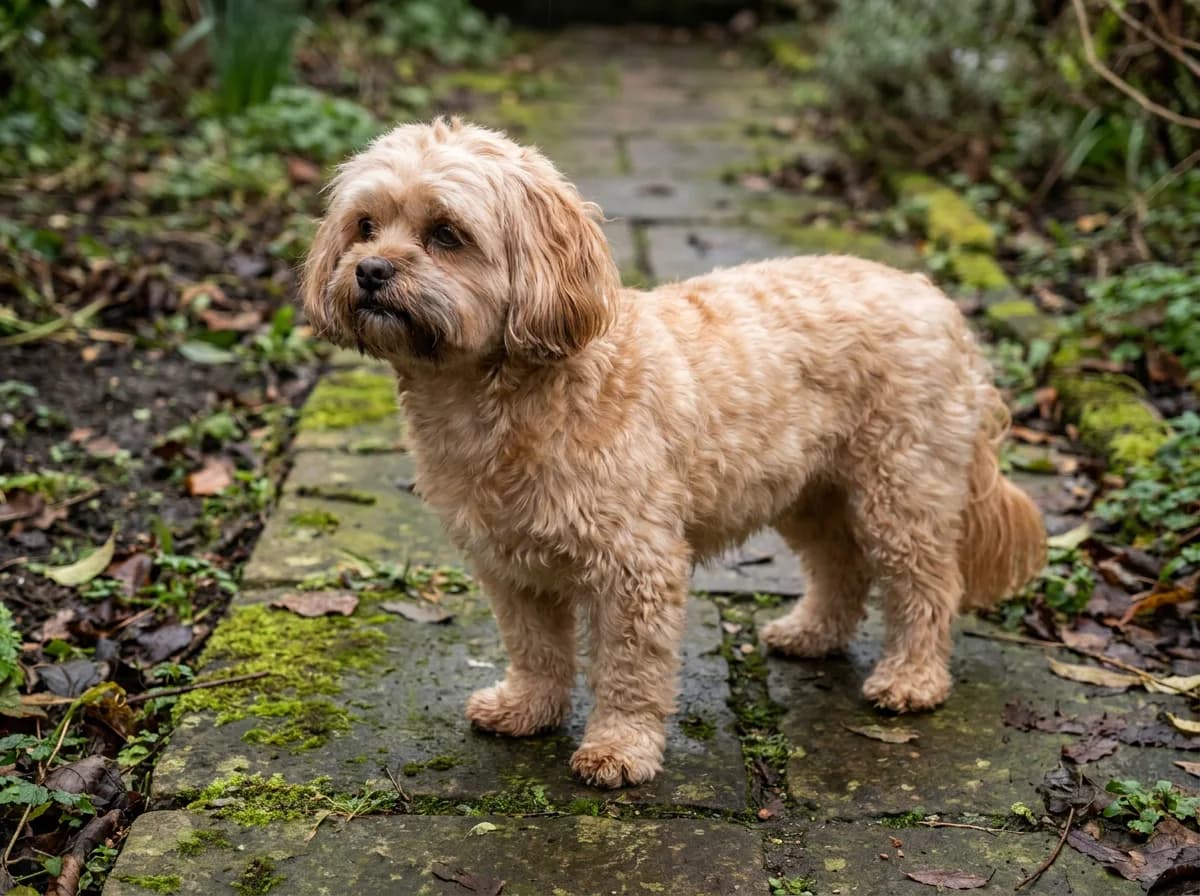
Illustrative photograph; appearance does not verify ancestry or predict an individual dog’s traits.
Petful is reader supported. As an affiliate of platforms like Amazon and Chewy, we may earn a commission when you buy through links on this page. There is no extra cost to you.
A Shih-Poo is a Shih Tzu and Poodle mix, usually with a Toy or Miniature Poodle parent. The attraction is easy to understand: a small companion with an expressive face and a coat that may be silky, wavy, or curly. The important decision is whether you can meet the individual dog's needs for company, training, grooming, and veterinary care. The mix's name cannot guarantee size, personality, or allergy compatibility. There is more on this in Petful’s guide to Shih Tzu mix.

Sign up for expert-backed reviews and safety alerts all in one place.
What is a Shih-Poo?
- 1Start with a household fit check, not a photograph or a promised personality.
- 2Build a daily care budget for grooming, companionship, training, and veterinary care.
- 3Ask about both parents and the actual dog's history; Shih-Poo is a mix, not a standardized breed.
Shih-Poo dogs combine Shih Tzu and Poodle ancestry. You may see the same cross called a Shih Tzu Poodle mix or Shoodle. A Shih-Poo puppy is not a smaller version of a dog with a single recognized breed standard: littermates can differ, and an adult's coat and behavior may not match the breeder's shorthand description. Ask what the seller means by the label and request the parents' identities and records.
The parent breeds explain some possibilities. Shih Tzus have a history as companion dogs; Poodles bring their own long history of trainability and activity. Those histories do not divide neatly into a puppy who is “half calm and half clever.” Inheritance, early experiences, health, and the household's routines all influence the individual. A charming photograph cannot show how a dog handles frustration, unfamiliar people, grooming, or being alone.
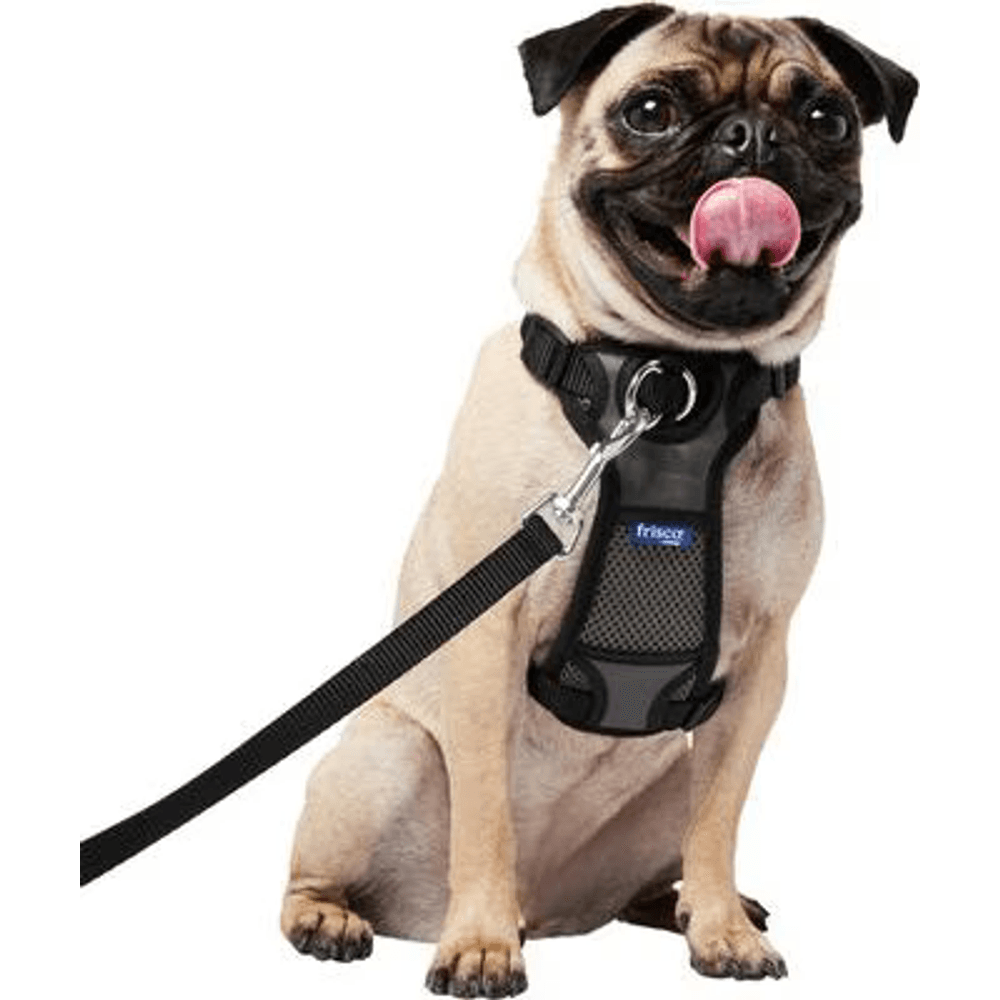
A budget-friendly padded no-pull harness that keeps leash pressure off a coughing dog's neck and windpipe by distributing it across the chest. A simple, affordable way to protect an irritated airway or a collapsing trachea on every walk.
Petful may earn a commission when you click through to Chewy, at no extra cost to you.
Before discussing appearance, establish these basics:
- Which Poodle size is in the family, and are the parents themselves purebreds or mixes?
- Can you see health-screening documentation for the actual parents rather than a generic certificate?
- What has the puppy experienced around handling, surfaces, everyday noise, and short separations?
- For an adult, what does the foster home or previous household report about ordinary daily life?
There is no need to choose a puppy to get this mix. An adult can provide more direct information about size, coat maintenance, and established behavior. Breed ancestry still has limits, especially when a rescue's identification is based mainly on appearance. Treat that uncertainty as information to plan around, not a reason to dismiss a dog who otherwise fits your home.
Shih-Poo temperament and family fit
Shih-Poo temperament is best assessed through the individual dog. Many owners seek an affectionate small companion, but friendliness does not mean the dog will enjoy every visitor, tolerate rough handling, or remain relaxed through a long workday. Watch what the dog chooses to do when it has room to approach and retreat. A willing greeting and an ability to settle tell you more than being placed in someone's arms for a photograph.
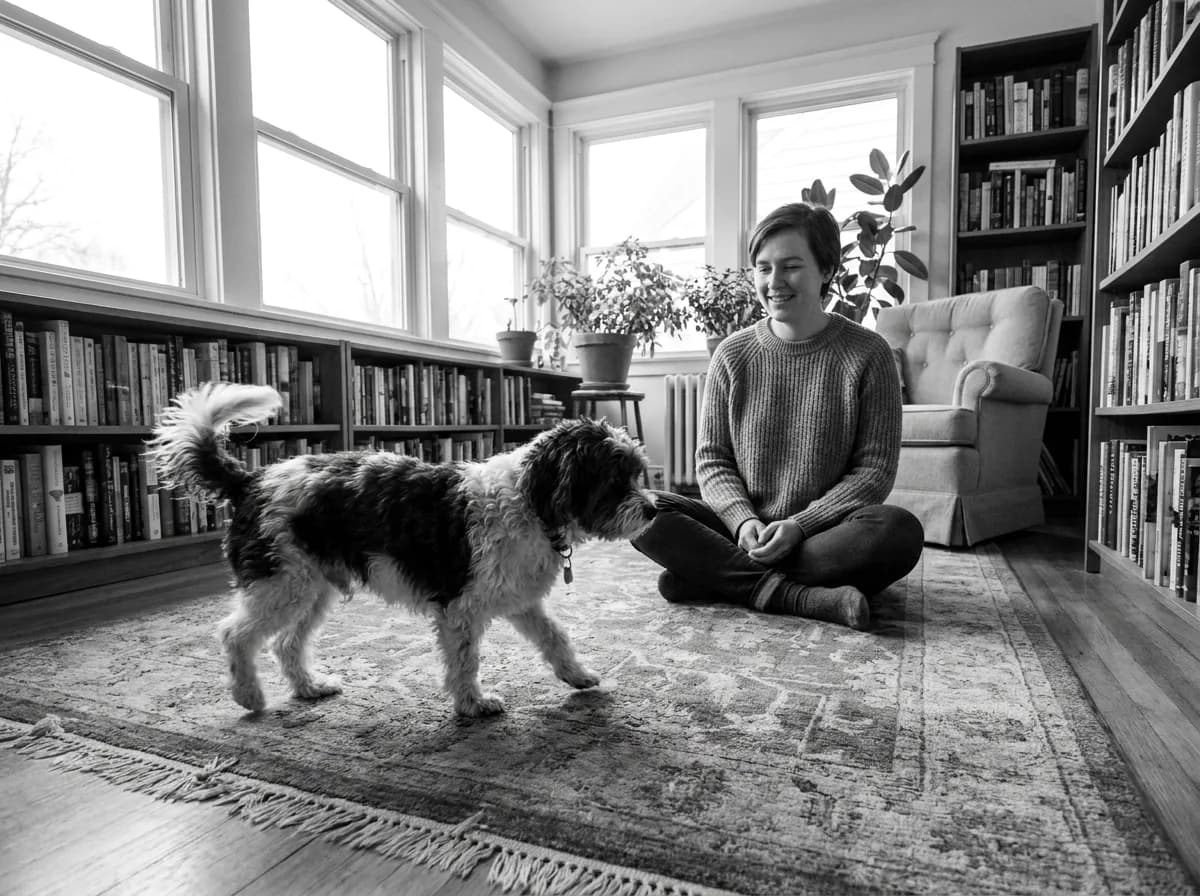
A Shih-Poo can be a good pet when your routine meets its needs; the practical pros and cons depend on that match. A small body can be practical in a modest home, yet a small dog still needs protected rest, movement, and predictable care. A sociable personality may be rewarding for someone at home much of the day and difficult for someone who needs an animal to manage repeated long absences without support. Ask about actual behavior in those situations.
- An individual dog's behavior and needs cannot be guaranteed from its parents' breed names. Meet the parents where possible, ask for records, and evaluate the dog's comfort with your real household routine.
With children, set rules for both sides: invite the dog to approach, keep feet on the floor during greetings, and provide a quiet place children do not enter. Adults should supervise interactions. Small size does not remove the possibility of a bite, and carrying a reluctant dog can make it feel trapped. With another animal, use gradual introductions and separate food and resting spaces while you learn how both respond.
Shih-Poo intelligence is not a ranking that predicts easy ownership. A dog can learn quickly and still need patient teaching about visitors, toileting, or settling. Describe the behaviors you want, then evaluate whether your time and support match that teaching work.
Training, barking, and time alone
Shih-Poo training works best as a set of short, repeatable lessons. Reward the behavior you want while it is happening, keep the environment manageable, and increase difficulty gradually. For example, practice coming to a name in a quiet room before expecting a response outside around dogs and traffic. An error usually means the lesson, timing, or environment needs adjusting; it is not evidence that the dog is trying to dominate you.
Petful may earn a commission when you click through to Chewy, at no extra cost to you.
For Shih-Poo potty training, take a puppy to the chosen toilet area after waking, meals, play, and other predictable transitions. Reward successful toileting promptly, supervise indoors, and clean accidents thoroughly. A written record helps you see patterns. Do not assume a tiny bladder can follow an adult household schedule. New accidents in a previously reliable dog, straining, or obvious discomfort deserve a veterinary conversation.
Use a practical training sequence:
- Choose one observable behavior, such as standing calmly while a harness is presented.
- Reward an easy first step before the dog becomes frustrated.
- Add duration or distraction one change at a time.
- End while the dog can still succeed, and practice again later.
Shih-Poos can bark to alert, seek attention, express excitement, or respond to fear. First identify what happens immediately before the barking. Cover a busy window view, provide a quieter resting area, or teach an alternative response when appropriate. Punishing the noise without understanding its cause can leave the dog just as distressed. A Frisco Padded No Pull Dog Harness in Small is one walking option only if its actual measurements fit; a harness does not teach loose-leash skills by itself.
Shih-Poo separation anxiety and aggressive behaviour need assessment of the individual, rather than a claim that either is inevitable in this mix. Build time alone in small, comfortable increments. Arrange help if your schedule exceeds what the dog can currently handle. Persistent panic, escape attempts, or inability to settle warrant professional advice. Puppy mouthing, biting during handling, and sudden aggression also need different responses; stop the triggering interaction, protect people, and seek veterinary or qualified behavior support when safety is uncertain.
Feeding and an everyday care routine
The best food for a Shih-Poo puppy is a complete and balanced diet appropriate for growth that the individual tolerates and your veterinarian considers suitable. An adult needs an appropriate adult maintenance diet unless its health requires another plan. The cross's name alone does not establish a special nutritional requirement, and a bag labeled for a familiar breed is not automatically the best choice.
How much food a Shih-Poo should eat depends on the food's calorie density, life stage, size, and body condition. Start with the food's feeding guidance and your veterinarian's advice, then adjust using growth, body condition, appetite, and activity. Keep treats within the overall intake. A universal Shih-Poo feeding chart cannot account for different calorie densities, life stages, and body sizes. Measuring food consistently makes adjustments more useful than estimating portions by eye. PetMD’s Shih-Poo guide suggests three or four meals daily for puppies and typically two or three for adults; adjust the schedule and total daily amount with your veterinarian.
| Feeding-chart question | Useful record | How to use it |
|---|---|---|
| Puppy age and life stage | Age, current growth diet, measured portions | Review appropriate growth feeding with the veterinarian |
| Food energy density | Product calorie information and treats | Compare total intake rather than bowl volume alone |
| Body condition and appetite | Dated observations and measured weight | Ask whether the feeding plan needs adjustment |
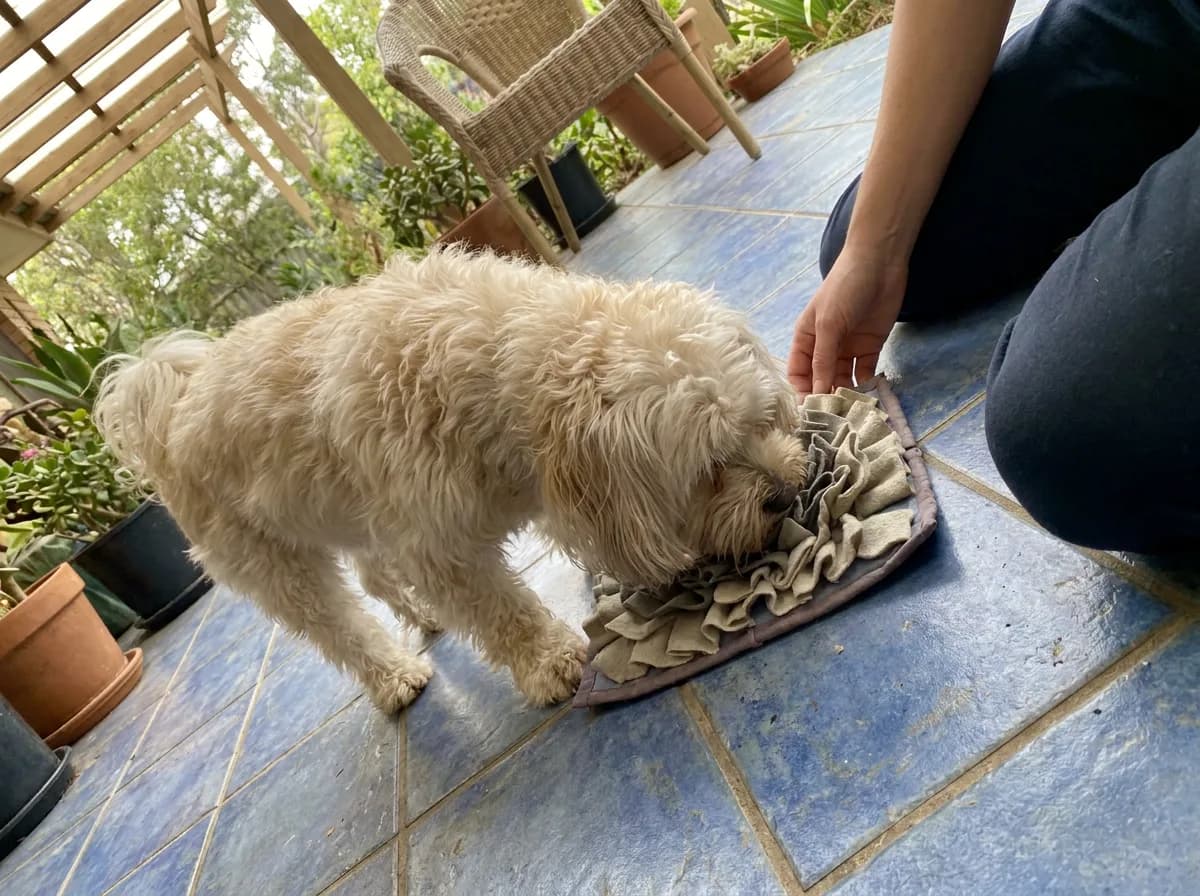
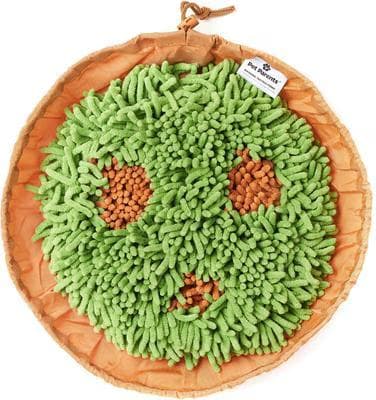
For a dog who comfortably uses its shape, the Outward Hound Mint 0.75-cup Slow Feeder offers a smaller-capacity feeding option; check that the muzzle reaches the food without frustration. A Pet Parents Forager Snuffle Mat can turn part of a measured meal into supervised searching. Remove it if the dog chews or swallows the fabric. Neither product replaces exercise, companionship, or treatment for eating problems.
Meals, movement, and rest
Supervise your Shih-Poo puppy's play and allow rest between activities. If the puppy won't eat, note how long the change has lasted and any other symptoms, and contact your veterinarian for advice, particularly if the dog seems unwell.
Petful may earn a commission when you click through to Chewy, at no extra cost to you.
How far a Shih-Poo can walk depends on age, health, weather, and the individual. Build a routine with activity and undisturbed sleep, and adjust it when comfort or stamina changes. Stop an outing if the dog struggles, and seek advice about new exercise intolerance.
Keep the routine practical:
- Offer fresh water and plan toilet opportunities around the dog's actual schedule.
- Use comfortable walks and play suited to fitness, weather, and breathing, rather than a rigid mileage target.
- Support consistent sleeping habits with undisturbed rest in a safe area away from household traffic; note a marked change from the dog's usual sleep pattern.
- Track appetite or stool changes rather than repeatedly changing foods without a plan.
A small Frisco Silicone Collapsible Travel Bowl can make carrying water on outings easier. Homemade diets need professional formulation; chicken alone is not a complete diet. Suspected food allergies, repeated digestive problems, or a dog refusing food require an individual assessment, particularly in a young puppy. The AAHA nutrition guidelines explain why nutrition is assessed for the patient, not selected solely from a breed label.
Coats, colors, and the grooming commitment
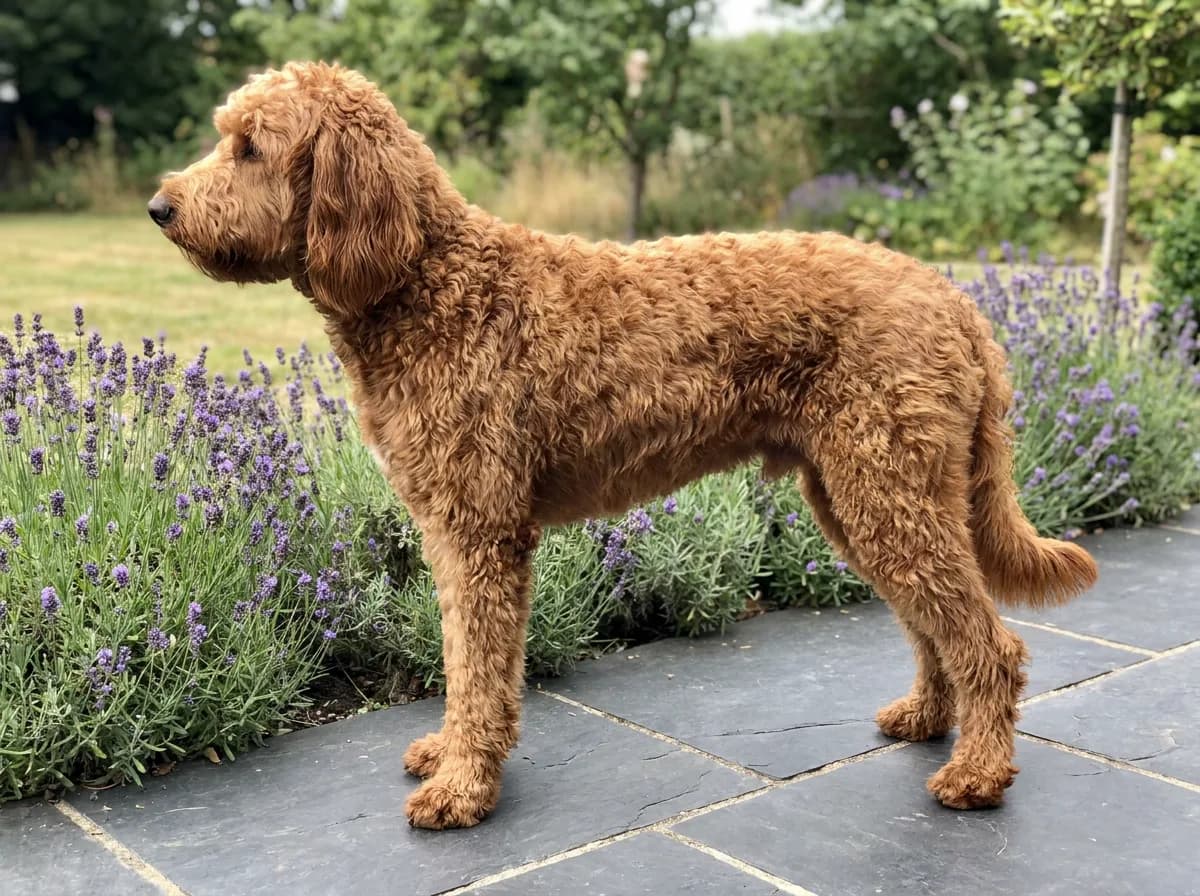
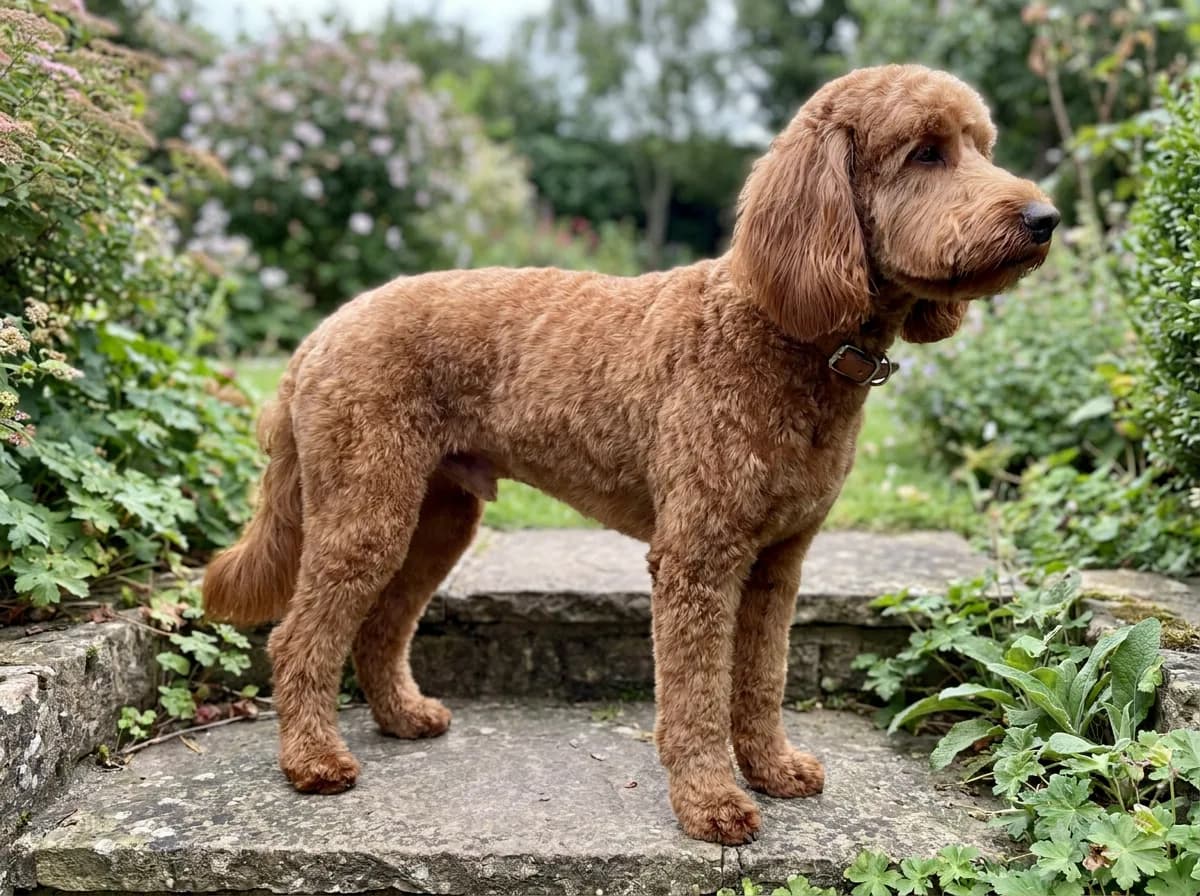
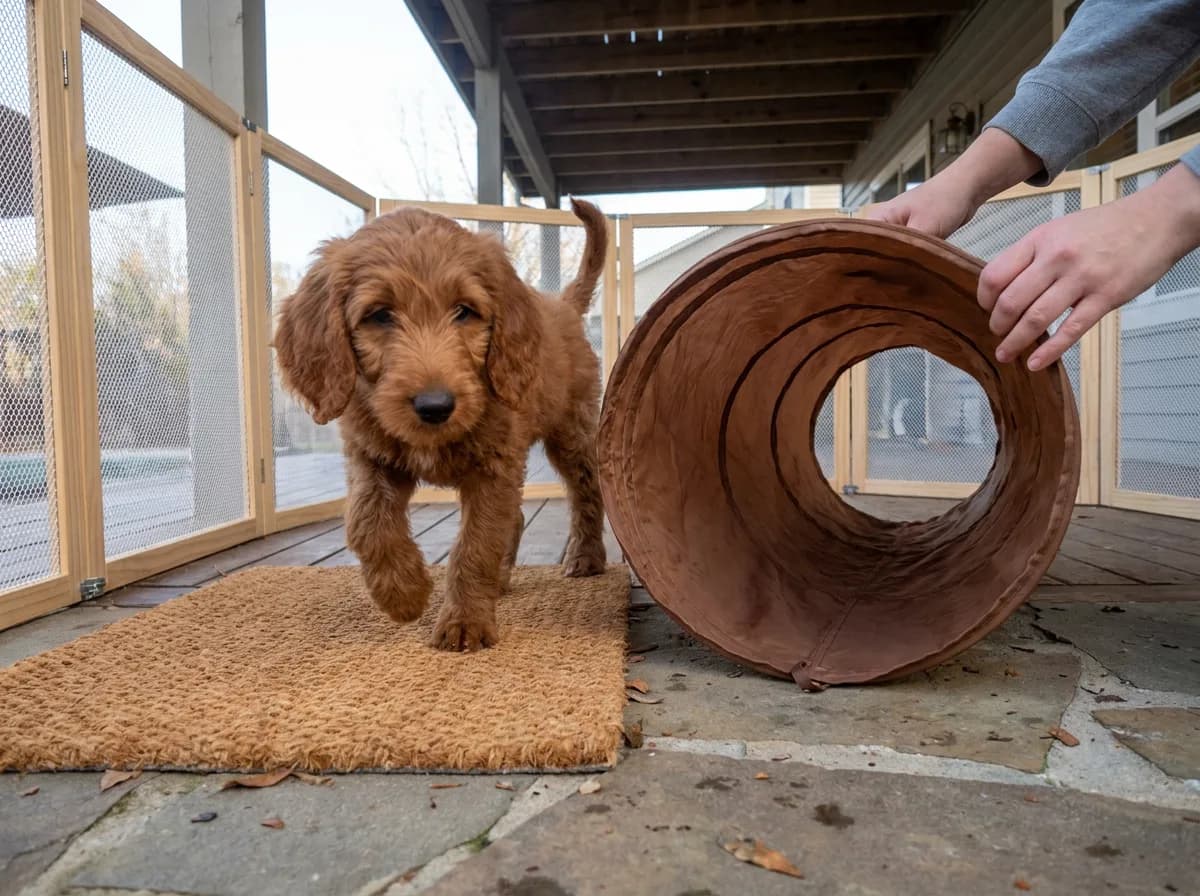
Shih-Poo pictures show a wide range of appearances. Black, white, brown, cream, apricot, gray, and combinations may occur, with straight-looking, wavy, or curly coats. Images of Shih-Poo puppies capture only one stage of development. A Shih-Poo changing colors as it matures is not, by itself, proof of different ancestry. Puppy photographs do not reliably predict an adult coat's texture, shade, or maintenance needs. A black-and-white puppy may also look quite different after a short clip simply because the outline of the face and body becomes visible.
Descriptions such as blonde, light brown, gray or grey, and tri-color can be inconsistent between sellers. Black and brown markings, brown and white patches, or a gray and white coat describe visible appearance; the description does not identify the parents or establish a breeding standard.
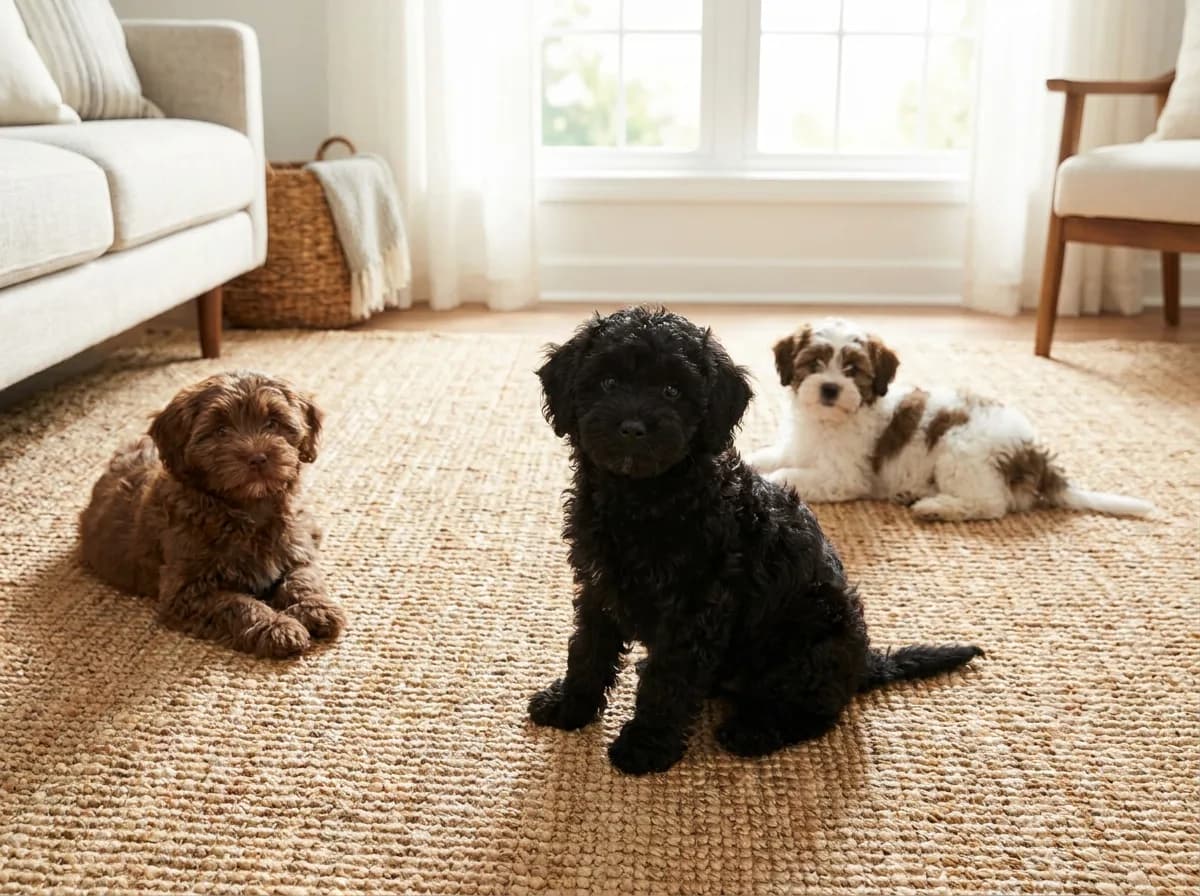
Chocolate describes a brown coat. Sable has darker hair tips, brindle has stripes, and phantom has defined second-color points on areas such as the face, legs, and below the tail. These are coat terms described in the UKC’s Poodle standard, not a standard for Shih-Poo ancestry. Merle describes irregular patches of lighter and darker pigmentation. None of these labels certifies parentage, health, or quality. Ask for accurate records rather than paying for a story about rarity; appearance alone cannot verify two purebred parents.
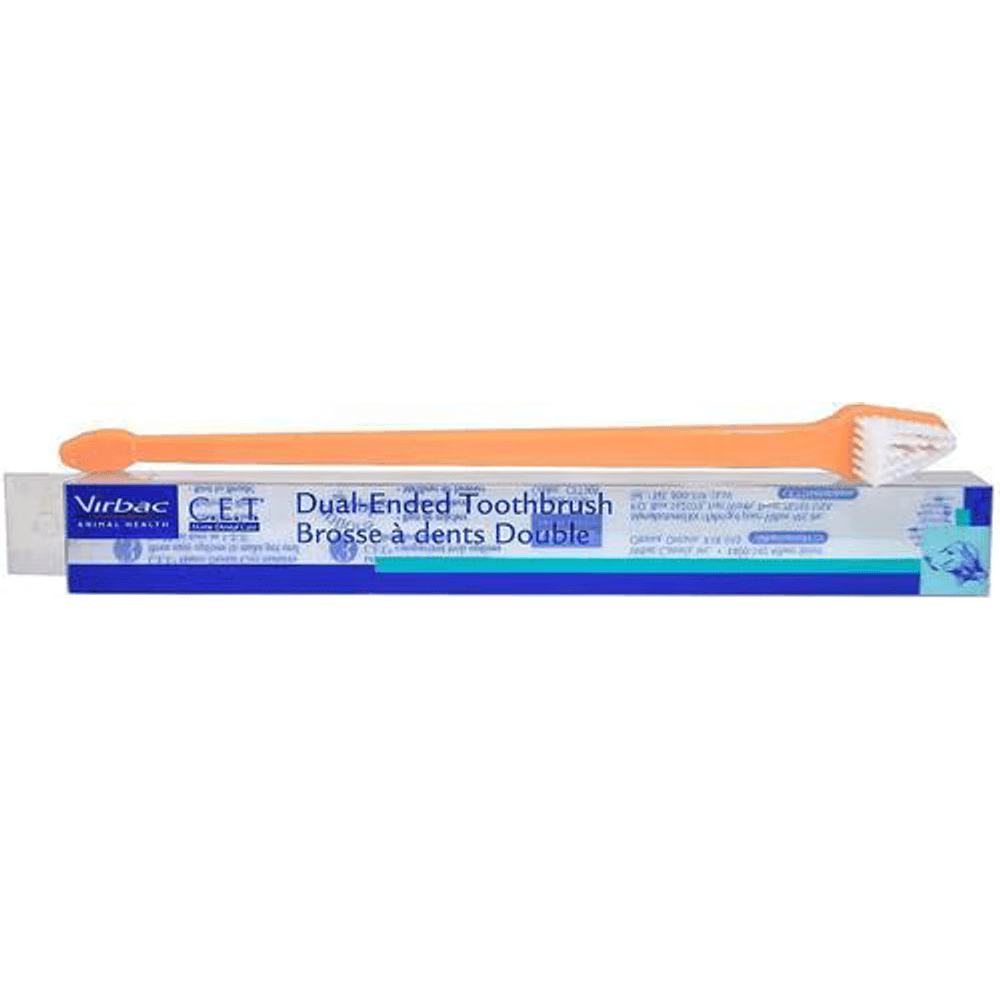
A dual-ended toothbrush with a large and a small head to fit different mouth sizes and reach the back molars where plaque hides. Soft bristles angled for the gumline.
Petful may earn a commission when you click through to Chewy, at no extra cost to you.
The images here are AI-generated illustrations, not a catalog of verified dogs or a prediction of your puppy's adult appearance. A healthy-looking photograph also cannot substitute for records or an examination. Choose the coat you can realistically maintain and the individual you can care for, rather than chasing a particular puppy color that may change with age.
A realistic grooming commitment
Shih-Poo grooming includes regular brushing, comb checks, and a haircut plan appropriate for the actual coat. Shih-Poo dogs can shed, and Shih-Poo puppies are not guaranteed hypoallergenic. Low visible shedding does not mean no grooming or guaranteed allergy compatibility. A teddy bear face, puppy cut, or longer style can each require different upkeep. Our Shih-Poo haircuts and grooming guide explains those choices, including safe boundaries for home care.
Long hair, curly hair, and short hair on a Shih Tzu Poodle mix each need an individual maintenance plan. How often a Shih-Poo should be groomed or bathed depends on coat condition, length, skin health, and activity. The linked haircut guide includes illustrative before-and-after style references; they are not a documented transformation of one dog.
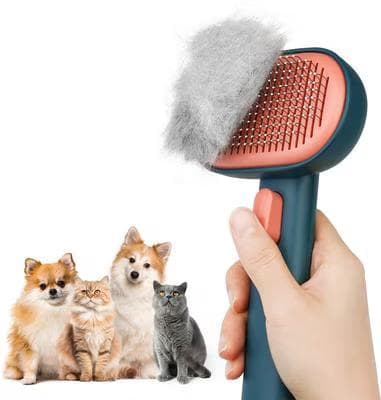
An aumuca Self Cleaning Slicker Brush may suit some coats, but ask a groomer to demonstrate gentle pressure and follow with the appropriate comb. For a discussion of clipping preparation and boundaries, WebVet's dog-clipper guide complements a groomer's hands-on instruction. For routine bathing when a veterinarian has not prescribed another product, Earthbath Oatmeal & Aloe Fragrance Free Shampoo is one dog-labeled option. Read the label, rinse thoroughly, and do not treat a persistent skin problem by shopping for shampoos alone.
Adult size and growth expectations
An adult Shih-Poo’s size can vary because the actual parents and the Poodle size matter. The AKC breed weight chart lists Shih Tzus at 9–16 pounds, Toy Poodles at 4–6 pounds, and Miniature Poodles at 10–15 pounds. Those are parent-breed reference points, not a guaranteed range or a formula for a mixed puppy.
A puppy photograph at eight weeks, ten weeks, or a few months old is only a snapshot. Adult pictures cannot establish when your puppy will stop growing. Repeat measured observations over time rather than using photographs as a weight forecast.
Ask for adult parent measurements and track your puppy's weight with your veterinarian. “Toy,” “mini,” and “teacup” in a Shih-Poo listing do not establish a standardized adult class. Do not restrict food to force a puppy to remain tiny or buy equipment solely for an advertised future weight. The Shih-Poo full-grown guide covers growth records, adult appearance, and measuring the individual for a harness or bed.
Finding a puppy and planning the price
Shih-Poo price depends on the source, location, age, included care, and the seller's practices. Ask what the fee includes, which records accompany the dog, what the contract says, and what support is available if a problem appears. Adoption may involve a different package of completed care rather than a directly comparable puppy quote.
Build a daily care budget before paying a deposit. Grooming, food, preventive care, training support, and help during absences can matter more over time than a one-time price difference. A “teacup” or rare-color premium is not evidence of better health. Use the Shih-Poo price and ownership budget guide to compare written quotes and recurring commitments, rather than treating an online average as a promise.
Health and lifespan: questions to ask
Shih-Poo health issues are possibilities to discuss, not diagnoses attached to every dog. A cross can inherit problems from either side of its family. Ask which parent screenings were completed, what the results mean, and what they cannot rule out. Records for the actual parents are more useful than a claim that a mixed breed automatically avoids inherited disease.
Plan routine examinations, appropriate parasite prevention, oral care, and prompt assessment of changes in comfort or function. For oral-care practice, a Virbac C.E.T. Dual-Ended Toothbrush and Virbac C.E.T. Poultry Toothpaste are examples of dog-compatible tools; introduce handling gradually and use a head size your dog accepts. Painful mouths need veterinary care, not forceful brushing.
Published Shih-Poo lifespan ranges are broad references, not predictions for an individual male or female. The Shih-Poo lifespan and health guide explains that uncertainty and the information to take to veterinary visits. Trouble breathing, collapse, severe pain, or a rapid deterioration require urgent veterinary attention rather than waiting for a routine appointment.
Shih-Poo or another small companion?
A household fit check should compare the care you can consistently provide with the dog's observed needs. Write down your ordinary workday, access to grooming, comfort with daily handling, plans for travel, and support if the dog struggles when left alone. The aim is a workable relationship throughout the dog's life, not the most flattering description of any mix.
| Household fit check | Information to gather | Daily care budget implication |
|---|---|---|
| Time alone | The dog's current response and training history | Arrange help while skills develop |
| Coat care | Groomer assessment of texture and maintenance | Budget time and regular appointments |
| Children or pets | Calm, supervised introductions | Provide separate rest and feeding spaces |
| Long-term care | Records, veterinarian, and emergency plan | Reserve money beyond the purchase fee |
Shih-Poo vs. Maltipoo
A Maltipoo combines Maltese and Poodle ancestry; a Shih-Poo combines Shih Tzu and Poodle ancestry. Both can be small companions with significant coat-care needs, but neither label guarantees a particular adult size, sociability, or tolerance for being alone. In a Shih-Poo vs. Maltipoo comparison, compare the actual parents, individual behavior, and care commitments rather than choosing on a presumed “better” personality.
Shih-Poo vs. Shih Tzu
A Shih Tzu has a recognized breed standard, while a Shih-Poo does not. That changes the amount of variation you should expect, but it does not make every purebred predictable or every mix healthier. The Shih-Poo vs. Shih Tzu guide compares the practical differences, including grooming, muzzle and breathing questions, and the individual assessment to make before committing to either individual dog.
Questions owners ask
A Shih-Poo can be a good match for someone who wants a small companion and can provide grooming, training, social contact, and veterinary care. The individual dog matters more than the mix's reputation. Ask how it behaves during ordinary handling, rest, and time alone, then compare those needs with your real household.
Some Shih-Poos like to cuddle; others prefer sitting nearby or approaching on their own terms. Let the dog choose and watch for relaxed posture rather than assuming stillness means enjoyment. Stop if it stiffens or tries to leave. This is especially important when children want to hold a small dog.
A Shih-Poo can show aggressive behavior when frightened, painful, frustrated, or unable to escape an interaction. Shih-Poo ancestry neither guarantees aggression nor rules it out. Stop the triggering interaction, create safe separation, and seek veterinary help for sudden changes. A qualified reward-based behavior professional can help with an ongoing problem.
It may be possible, depending on both animals. Begin with controlled separation and give the cat escape routes and dog-free resting areas. Reward calm behavior at a manageable distance and prevent chasing. Do not leave them together unsupervised until there is a reliable history of safe interaction; some pairings require continued separation.
No. Shih-Poo describes a Shih Tzu and Poodle cross rather than a recognized purebred with one consistent breed standard. A registration document for a mix is not equivalent to proof that every advertised trait will appear. Ask what any paperwork establishes, who issued it, and whether the individual parents and their health records can be verified.
Some Shih-Poos bark frequently. A Shih-Poo may bark at movement outside, to request attention, during excitement, or when distressed. Record the trigger and what happens afterward before deciding on a response. Environmental changes and reward-based teaching can help; persistent distress or a sudden change needs professional assessment.

Coreen Saito is a pet writer and longtime shelter volunteer with more than a decade in animal rescue. She covers cat behavior, breed care, and the small, ordinary science of sharing a life with companion animals, with a particular focus on honest takes about the products and decisions that actually matter. At home in Arizona, she's outranked by Mac (a dog with the loudest opinion in the house), Rebel (a cat who governs by quiet authority), and Meri (an orange tabby who runs the late shift and the laundry basket). She writes about all three, plus the rescues that keep coming through her life, at LifeWithMinty.com.
Sign up for expert-backed reviews and safety alerts all in one place.