Poodle Lifespan: How Long Do Poodles Live?
Most Poodles live 12 to 15 years, and Toys and Miniatures usually outlive Standards. See lifespan by size, what Poodles die from, the breeder health tests that matter, senior ages and how to help your Poodle live longer.

BVMS, MRCVS
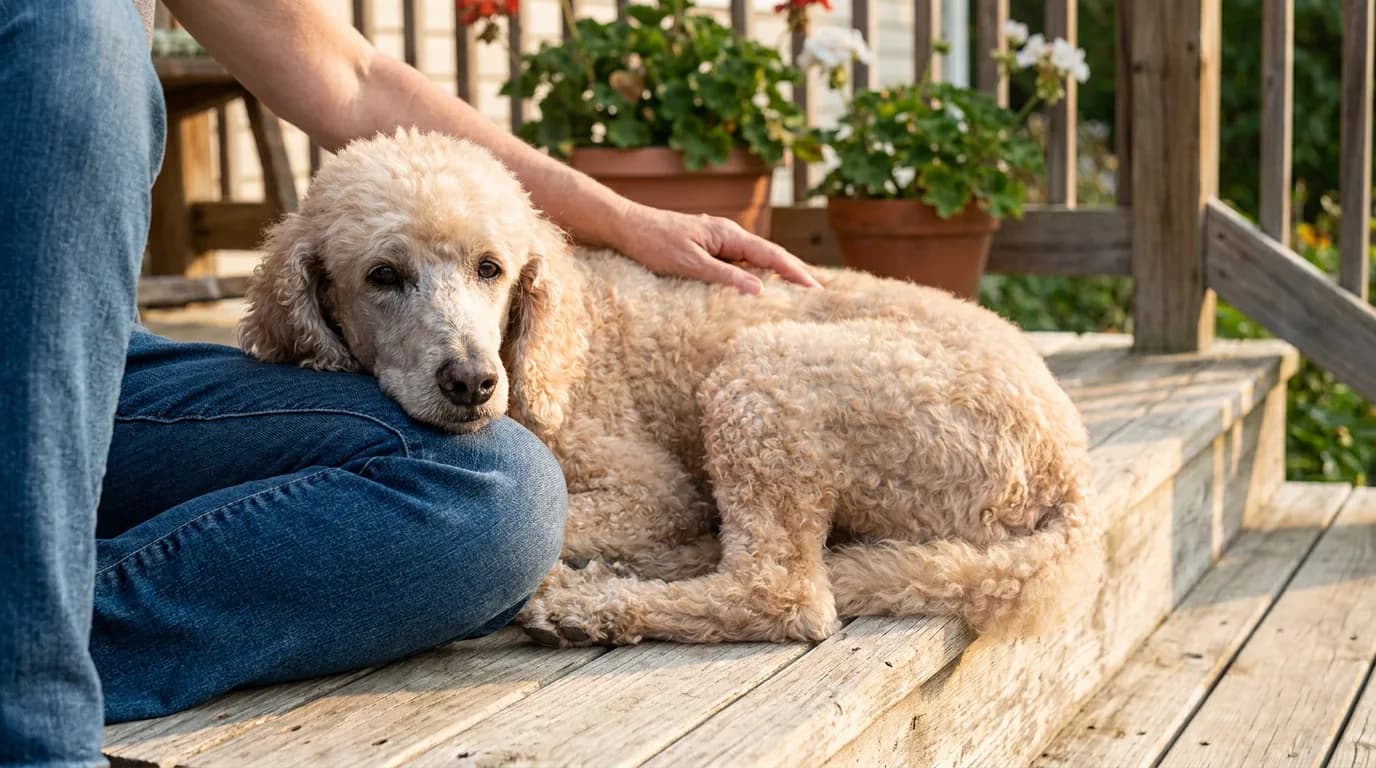
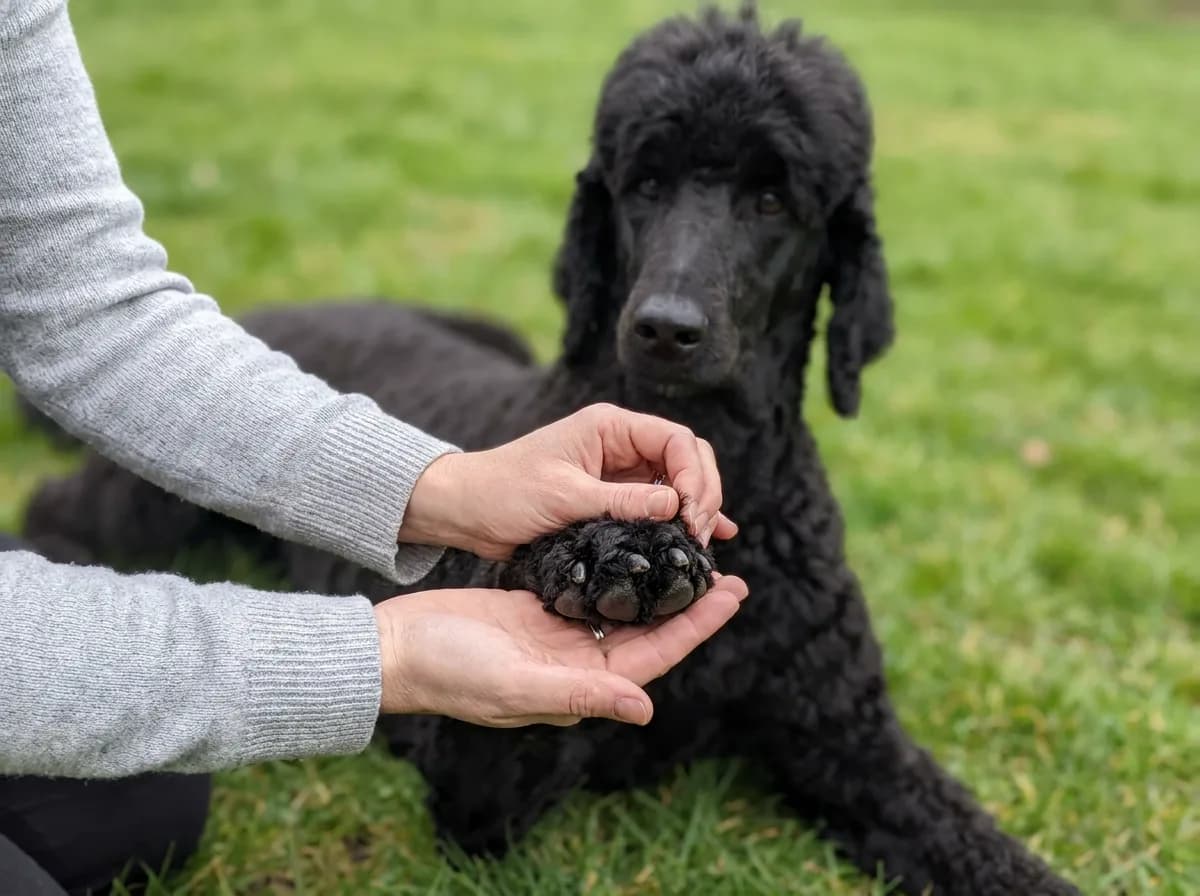
A Standard Poodle's senior years typically begin around age 9, the last quarter of its expected lifespan.
Petful is reader supported. As an affiliate of platforms like Amazon and Chewy, we may earn a commission when you buy through links on this page. There is no extra cost to you.
How long do Poodles live? Usually 12 to 15 years, and the smaller the Poodle, the longer it tends to live. Poodle lifespan figures vary from source to source because each describes a different size or study, so every number below names the dataset behind it, along with the health risks, breeder tests and senior checks that shift an individual dog's odds.

Sign up for expert-backed reviews and safety alerts all in one place.
How long do Poodles live?
The typical lifespan of a Poodle is 12 to 15 years. The best estimate for the breed as a whole is a median survival of 14.0 years, from a 2024 study of UK veterinary and registry records, and smaller Poodles generally outlive Standards by about two years.
- 1Typical lifespan: 12 to 15 years, and half of the Poodles in the largest recent study lived past 14.
- 2Smaller Poodles live longer: in a small UK owner survey, Toys died at a median of 14 years 8 months and Miniatures at 13 years 11 months, Standards at 12.
- 3A lifespan average is not a guarantee: genetics, weight, dental care and early veterinary attention shape each dog's odds.
Published Poodle lifespans disagree because each figure comes from a different group of dogs counted in a different way. A breed-wide median blends small and large Poodles, a survey of a few dozen dogs can swing on a handful of deaths, and some clinic data group dogs by body size instead of breed. Here is what each major dataset measured, and what it cannot tell you about one dog:
| Poodle lifespan dataset | Who was counted | Poodle figure | What it cannot tell you |
|---|---|---|---|
| UK veterinary and registry records, published 2024 | 584,734 UK dogs from 18 sources, including 2,399 Poodle deaths | Median survival of 14.0 years with all three sizes combined, compared with 12.0 years for crossbreeds | How long a Toy, Miniature or Standard lives, because the sizes were not separated |
| Kennel Club and BSAVA owner survey, 2004 | UK owners of purebred dogs, 24% response rate; 20 Toy, 23 Miniature and 118 Standard Poodle deaths | Median age at death of 14 years 8 months for Toys, 13 years 11 months for Miniatures and 12 years for Standards | Precise figures for the small sizes, because a few deaths move the median, and causes were reported by owners |
| US Banfield clinic records, 2013 to 2019 | 13.3 million dogs seen at Banfield hospitals | No Poodle row; purebred toy-size dogs 13.4 years and small dogs 13.5 years at birth, large dogs 11.5 years | A Poodle-specific number, because dogs were grouped by adult body size |
| Japanese pet insurance data, 2013 to 2015 | Dogs insured with Anicom in Japan | Toy Poodle life expectancy at birth of 14.7 years | Anything about Miniatures, Standards or uninsured dogs, and it is an insurer report rather than a peer-reviewed table |
Read together, the data agree on two points: Poodles are one of the longer-lived breeds, and size matters. The 2024 figure comes from a Scientific Reports study of 584,734 UK dogs, the size split from the Kennel Club and BSAVA Purebred Dog Health Survey, and the US body-size figures from Banfield records analyzed in Frontiers in Veterinary Science.
A lifespan average is not a guarantee in either direction. A median of 14 years means half the Poodles counted died before 14 and half lived longer, so a healthy 12-year-old Standard has not outlived its time, and a 14-year-old Toy may have good years left. The American Kennel Club lists 10 to 18 years for all three varieties, a range wide enough to cover that spread but blind to the gap between sizes. The same figures apply to dogs called French Poodles, a common nickname for the breed.
A long life also shapes the budget. A Poodle that lives into its mid-teens can spend three or four years as a senior, when veterinary guidelines call for bloodwork and urinalysis every 6 to 12 months, and inherited conditions such as Addison's disease need lifelong treatment. If you plan to insure, enroll while your Poodle is young and healthy, because policies generally exclude conditions that start before coverage begins; Lemonade pet insurance is one option to compare after reading its waiting periods, limits and exclusions.

Pet insurance
Lemonade’s base policy excludes pre-existing conditions. Review possible coverage for new, unrelated conditions.
- Compare benefits as well as the monthly price
- Review waiting periods and exclusions
- Confirm availability directly with Lemonade
Eligibility, waiting periods, limits and exclusions apply.
Petful may earn a commission when you click through to Lemonade, at no extra cost to you.
Poodle lifespan by size: which Poodle lives the longest?
Toy Poodles usually live the longest, with Miniature Poodles close behind and Standard Poodles about two years shorter on average. The 2004 UK survey medians put Toys at 14 years 8 months, Miniatures at 13 years 11 months and Standards at 12 years, and Japanese insurance data independently gave Toy Poodles a life expectancy at birth of 14.7 years. The pattern matches dogs in general: in both the UK and US datasets, smaller dogs outlived larger ones.
| Variety | Height at shoulder (AKC) | Typical adult weight (AKC) | Median age at death, 2004 UK survey | Senior from about | Main size-specific risks |
|---|---|---|---|---|---|
| Toy Poodle | 10 inches or under | 4 to 6 pounds | 14 years 8 months (20 deaths) | 11 years | Dental disease, tracheal collapse, kneecap and hip problems, inherited eye disease |
| Miniature Poodle | Over 10 inches, up to 15 inches | 10 to 15 pounds | 13 years 11 months (23 deaths) | 10 years | Inherited eye disease, kneecap and hip problems, dwarfism gene, hormonal disease |
| Standard Poodle | Over 15 inches | 40 to 70 pounds | 12 years (118 deaths) | 9 years | Cancer, bloat, Addison's disease, sebaceous adenitis, hip dysplasia |
The American Kennel Club recognizes only these three sizes, but buyers meet other labels, and none has lifespan data of its own:
- Moyen, medium or Klein Poodles: the international kennel federation (FCI) recognizes this fourth size, 35 to 45 centimeters (about 14 to 18 inches) at the shoulder, between the Miniature and the Standard. No study reports a Moyen lifespan. Because longevity falls as body size rises, a figure between the Miniature and Standard medians is a reasonable expectation rather than a measured one, and Moyens share the breed-wide Poodle health issues described below.
- Royal or giant Poodles: marketing names for large Standards, not a separate size. Expect Standard Poodle figures; breeding for extra height has not been shown to add years, and across purebred dogs a larger body goes with a shorter life.
- Mini toy or small Poodles: not an official size. A dog sold under this label is usually a small Miniature or a large Toy, and both sizes had medians of about 14 to 15 years in the UK survey.
- Teacup Poodles: not a recognized size, and there is no reliable lifespan data for dogs bred smaller than the Toy standard. Their particular health concerns are covered in our guide to teacup Poodles.
Toy Poodle lifespan and health risks
Toy Poodles have the longest typical lifespan of the three sizes. The 20 Toys in the 2004 UK survey died at a median age of 14 years 8 months, so about half lived past 14 and a half, and the oldest reached 18 years 11 months. Japanese insurance data gave Toy Poodles a life expectancy at birth of 14.7 years, among the highest of any breed in that report.

A Toy's small frame brings its own risks. Here is what the evidence says about the Toy health problems owners ask about:
- Teeth problems: in a UK study of 22,333 dogs, Toy Poodles had the highest odds of periodontal disease of any breed, nearly four times the odds in crossbreeds, and the odds fell as body weight rose. Dental disease in Toy Poodles is also one of the most preventable problems, starting with daily brushing.
- Collapsed trachea and breathing problems: the American College of Veterinary Surgeons names Poodles among the small breeds prone to tracheal collapse, usually from middle age onward. A harsh, goose-honk cough, especially with excitement, needs a vet check; walk a Toy on a harness rather than a collar and keep it lean.
- Knee, hip and leg problems: kneecaps that slip out of place (patellar luxation) cause a skipping, on-and-off lameness in a back leg, and a patella exam is among the health tests the Poodle Club of America requires for Toys and Miniatures. Legg-Calve-Perthes disease, a loss of blood supply to the hip, usually shows between 4 and 11 months as a worsening back-leg limp; Cornell University lists Toy and Miniature Poodles among the breeds most often affected, and surgery usually restores good use of the leg.
- Back problems: slipped discs are most associated with breeds such as Dachshunds, but any small dog that yelps when picked up, hunches, or wobbles on its back legs needs a same-day vet visit, because a ruptured disc can be a surgical emergency.
- Eye problems: progressive retinal atrophy (prcd-PRA), an inherited cause of gradual blindness, affects Toys and Miniatures, and cataracts occur in all three sizes.
- Liver problems: liver shunts, abnormal vessels that let blood bypass the liver, are more common in toy breeds, although the Merck Veterinary Manual does not name Poodles among the breeds most affected; a related circulation defect, microvascular dysplasia, has been reported in Toy and Miniature Poodles. Signs usually appear young: poor growth and wobbly or dull spells after meals.
- Neurological problems: epilepsy is on the Poodle Club of America's list of Poodle health concerns as a common cause of seizures in all varieties, and it usually starts between 6 months and 6 years of age. A Toy whose seizures are controlled with medication can still live a long life, but a cluster of seizures is an emergency.
- Stomach problems: a Toy with vomiting or diarrhea dehydrates faster than a larger dog, and Toy puppies can develop dangerously low blood sugar if they skip meals, so a tiny dog that stops eating or cannot keep water down needs a vet the same day.
- Ear problems: redness, odor, head shaking or scratching at an ear usually mean infection or allergy and need an exam before any drops go in.
- Skin problems and allergies: itching, paw licking and red skin are common in dogs of every breed, and there is no strong evidence that Toys are more allergic than other dogs. A suspected food allergy is confirmed with a strict elimination diet trial guided by your vet.
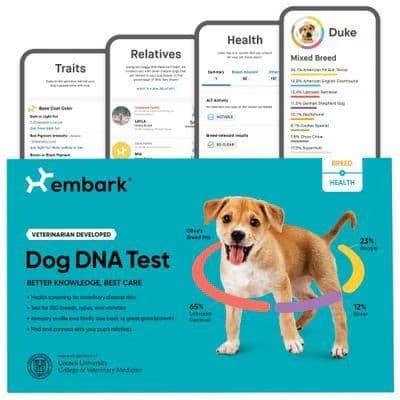
Many of these problems are inherited, which is why the parents' health test results matter more than any average (see the breeder tests below). If your Toy came without them, a consumer DNA panel such as the Embark Breed & Health Dog DNA Test Kit checks for the prcd-PRA gene variant and other Poodle mutations so your vet knows what to watch for, although it cannot assess kneecaps, hips or eyes, which need a physical exam. For size, temperament and everyday care, see our Toy Poodle guide.
Petful may earn a commission when you click through to Chewy, at no extra cost to you.
Miniature Poodle lifespan and health risks
Miniature Poodles live almost as long as Toys. The 23 Miniatures in the 2004 UK survey died at a median age of 13 years 11 months, ranging from 6 years 6 months to 18 years 6 months, and old age was the recorded cause for 9 of them. With a sample that small, one or two dogs can move the median, so treat it as a guide rather than a precise figure.

Are Miniature Poodles healthy? As a group they are long-lived, but they carry specific inherited risks that breeders can screen for:
- Eye disease: Miniatures share the Toy's risk of prcd-PRA, and cataracts occur in all three sizes.
- Kneecap and hip problems: the American College of Veterinary Surgeons names Miniature Poodles among the breeds predisposed to slipping kneecaps, Cornell University lists them among the breeds most often affected by Legg-Calve-Perthes disease, and the Poodle Club of America requires a hip dysplasia evaluation for Miniatures.
- Dwarfism gene: osteochondrodysplasia, an inherited skeletal dwarfism, is a Miniature concern. The Poodle Club of America Foundation estimates that about 10% of Miniatures carry it and strongly recommends a DNA test.
- Hormonal disease: Cushing's disease and diabetes together accounted for 2 of the 23 deaths in the survey. Increased thirst and urination, a big appetite and a pot-bellied look are reasons to have a Miniature tested.
- Dental disease: in the UK periodontal study, the odds of gum disease rose as body weight fell, so Miniatures need the same daily brushing as Toys.
For everything beyond health, from size to temperament, see our Miniature Poodle guide.
Standard Poodle lifespan and health risks
How long do Standard Poodles live? Usually about 12 years, the shortest typical lifespan of the three sizes. The 118 Standards in the 2004 UK survey died at a median age of 12 years, the oldest at 18, and cancer was the leading cause. Their size also brings risks the small varieties rarely face, starting with bloat.
Bloat in Standard Poodles is the most urgent of those risks. In gastric dilatation-volvulus (GDV), the stomach fills with gas and can twist on itself. A prospective study of 1,914 dogs from 11 large and giant breeds, including the Standard Poodle, found that 5.7% developed GDV during follow-up, that risk rose with age, and that 28.6% of the dogs that bloated died. Ask your vet about a preventive gastropexy, which tacks the stomach in place and can be done during a spay or neuter.
- Go to the nearest emergency veterinary hospital at once if your Standard shows unproductive retching (trying to vomit with nothing coming up), a swollen abdomen, restlessness, drooling, repeated stretching, weakness or collapse. Surgery works best early, so do not wait to see whether it passes.
Addison's disease, in which the adrenal glands stop making enough hormones, is the Standard's signature inherited illness. In a research group of 778 Standard Poodles, 8.6% were confirmed Addisonian, a figure from an enrolled study sample rather than a measure of how common the disease is in all Standards. Vomiting, diarrhea, weight loss and lethargy tend to come and go, often after stress, so the disease is easy to miss until a crisis; once treated, most dogs do well.
Sebaceous adenitis, an inherited skin disease that destroys the oil glands, causes scaling and patchy hair loss and can be confirmed only with a skin biopsy. Genetic research on 761 Poodles from North America and Europe traced both sebaceous adenitis and Addison's disease to heavy linebreeding of popular mid-20th-century bloodlines, which is why protecting genetic diversity is part of responsible Standard breeding.
Dark-coated Standards also carry a specific cancer risk. Genetic research found that Standard Poodles with dark coats are at high risk of squamous cell carcinoma of the toe, while light-coated Standards are almost entirely unaffected. Check your dog's toes and nail beds when you groom, and have a swollen toe, a lost nail that does not heal or new limping examined. For how coat color and health are linked more broadly, see our guide to Poodle coat colors.
Standards and Miniatures can also inherit hip dysplasia, so breeding dogs should have hip evaluations. For a Standard with dysplasia or age-related stiffness, the basics are a lean weight, steady exercise without hard jumping and supportive rest: a thick orthopedic mattress such as the FurHaven NAP Ultra Plush Orthopedic Deluxe Cat & Dog Bed with Removable Cover, Gray, Jumbo cushions a large dog's joints better than a thin mat, although it eases rest rather than treating the hip.
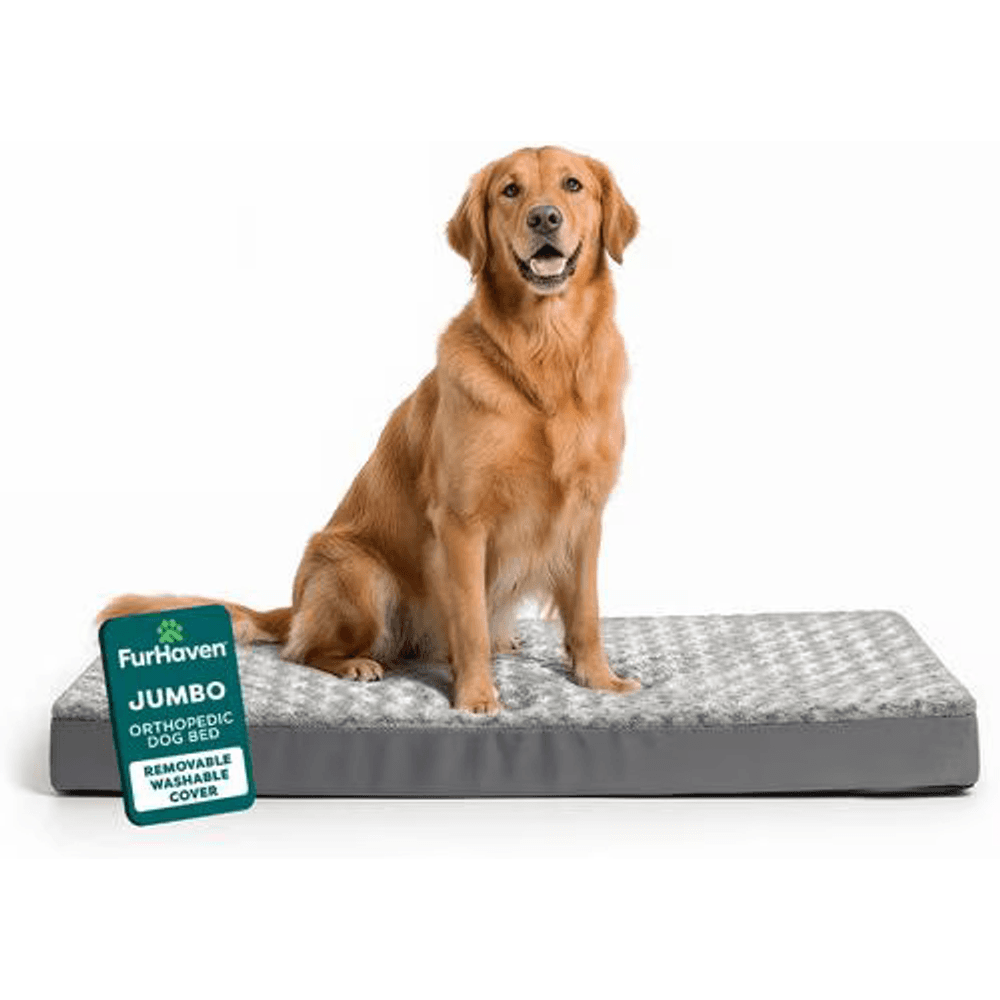
A plush orthopedic foam mattress that cushions aging joints and pressure points, giving a stiff or trembling senior dog warm, supportive rest.
Petful may earn a commission when you click through to Chewy, at no extra cost to you.
Standard Poodle size and downsides
A Standard stands over 15 inches at the shoulder and usually weighs 40 to 70 pounds, with males at the heavier end. Rapid growth usually ends within the first year, while full physical and social maturity comes later, by about 3 to 4 years in most dogs. The downsides that matter for care are practical: the coat grows continuously and needs regular clipping, and this athletic former water retriever needs daily exercise to stay lean. For growth charts and the breed's full pros and cons, see our Poodle breed guide.
What do Poodles usually die from?
The leading cause of death for Poodles depends on size. In the 2004 UK survey, cancer was the leading cause in Standard Poodles, while old age was the most common recorded cause in Toys and Miniatures, followed in Toys by kidney failure and cancer. Here is how the recorded causes of death broke down by size:
- Standard Poodles (118 deaths): cancer 35 dogs (29.7%), old age 21 (17.8%), bloat 7 (5.9%), several combined causes 7 (5.9%), heart disease 6 (5.1%), immune-mediated disease 5 (4.2%), kidney or urinary disease 5 (4.2%), Addison's disease 4 (3.4%) and musculoskeletal disease 4 (3.4%).
- Miniature Poodles (23 deaths): old age 9 dogs (39.1%), then cancer, heart disease and hormonal disease (Cushing's disease or diabetes) at 2 dogs each (8.7%), with the rest single cases.
- Toy Poodles (20 deaths): old age 5 dogs (25%), kidney failure 4 (20%), cancer 3 (15%), several combined causes 3 (15%), cerebrovascular disease (stroke) 2 (10%), and 1 each from heart disease, immune-mediated disease and seizures.
Treat these as clues rather than rankings. Only about a quarter of surveyed owners responded, causes were reported by owners, and "old age" often stands in for an illness that was never diagnosed. With 20 Toys and 23 Miniatures, a single death shifts a percentage by 4 to 5 points.
The practical lessons still hold. In Standards, the leading causes point to checking lumps and toes and knowing the signs of bloat. In Toys, where kidney failure caused 4 of the 20 deaths, it is a reason to start senior bloodwork on time, since the recommended senior panel includes kidney markers such as SDMA.
Common health problems in Poodles
How healthy are Poodles? On lifespan they compare well, with a median two years longer than crossbreed dogs in the 2024 UK data, but the Poodle Club of America lists inherited health issues worth knowing, including these:
- Addison's disease: most studied in Standards, but listed for the breed as a whole.
- Cushing's disease: the opposite hormonal problem, too much cortisol, which causes thirst, hunger, a pot belly and thinning hair.
- Epilepsy: recurrent seizures, usually starting between 6 months and 6 years of age.
- Von Willebrand disease: an inherited bleeding disorder. A DNA test can identify dogs with the mutation, which is worth knowing before surgery or dental work.
- Hypothyroidism: an underactive thyroid that causes weight gain, lethargy and coat loss.
- Chronic active hepatitis: ongoing liver inflammation. Copper storage disease, an inherited liver problem in some other breeds, is not on the club's list for Poodles.
- Bloat: a risk mainly for Standards.
- Eye disease: cataracts and optic nerve hypoplasia, an underdeveloped optic nerve.
Some problems belong to one or two sizes. Standards can have atrial septal defects (a hole between the heart's upper chambers), sebaceous adenitis, hip dysplasia and neonatal encephalopathy with seizures (NEwS), a severe inherited brain disorder of newborn puppies. Toys and Miniatures carry prcd-PRA and patellar luxation, Miniatures can also have hip dysplasia, and Legg-Calve-Perthes disease mainly affects the small sizes. Heart disease appears among recorded causes of death in every size, from 5% of Toy deaths to about 9% of Miniature deaths.
Gum disease deserves special attention in small Poodles. In UK primary-care records, periodontal disease was diagnosed in about 1 in 8 dogs in a single year, and Toy Poodles had the highest odds of any breed. Infected gums are painful, lead to tooth loss and, once advanced, need treatment under anesthesia, so daily brushing is worth building into your Poodle's routine early. A toothpaste with the Veterinary Oral Health Council seal for plaque control, such as the one in the Petsmile Professional Rotisserie Chicken Toothpaste + Toothbrush kit, gives you a paste and brush in one, and our guide to dog dental care covers cleanings and chews.

VOHC-accepted 4.2-ounce pet toothpaste paired with a dual-ended toothbrush.
Petful may earn a commission when you click through to Chewy, at no extra cost to you.
Health tests to ask a Poodle breeder for
Ask for each parent's CHIC number, then look up every result in the OFA database before you pay a deposit. The Canine Health Information Center (CHIC) issues that number once a dog has completed the health tests the Poodle Club of America requires for its size and made the results public. As the OFA explains, the number does not mean every result was normal, so read the results themselves.
| Health test | Toy | Miniature | Standard | How to verify |
|---|---|---|---|---|
| Eye exam by a board-certified veterinary ophthalmologist, repeated yearly | Required for CHIC | Required for CHIC | Required for CHIC | Check the date of the latest eye result in the OFA database |
| prcd-PRA DNA test | Required for CHIC | Required for CHIC | Not required | DNA result listed as clear, carrier or affected |
| Kneecap (patella) evaluation | Required for CHIC | Required for CHIC | Not required | Patella result in the OFA database |
| Hip evaluation by OFA or PennHIP | Not required | Required for CHIC | Required for CHIC | OFA hip grade or PennHIP report |
| Dwarfism (osteochondrodysplasia) DNA test | Not required | Strongly recommended by the PCA Foundation | Not required | DNA result in the OFA database or the lab report |
| Thyroid test, sebaceous adenitis skin biopsy or cardiologist heart exam | Not required | Not required | At least one required; the PCA Foundation recommends all three | Thyroid, skin and heart results in the OFA database |
| NEwS and von Willebrand disease DNA tests | Not required | Not required | Recommended by the PCA Foundation | DNA results in the OFA database or the lab report |
| Microchip or tattoo identification | Required for CHIC | Required for CHIC | Required for CHIC | Confirm the ID matches the dog in front of you |
| CHIC number | Issued when all required Toy tests are public | Issued when all required Miniature tests are public | Issued when all required Standard tests are public | Search the parent's registered name in the OFA database |
Consumer DNA kits cover part of this list. The Embark Breed & Health Dog DNA Test Kit includes the DNA tests above (prcd-PRA, von Willebrand disease type 1, NEwS and the dwarfism gene) and is useful for a dog you already own, but no cheek swab can replace hip X-rays, eye exams, kneecap checks, a thyroid test, a skin biopsy or a heart exam. A breeder who completes the full set of health checks carries real costs; our guide to what a Poodle costs explains purchase prices by size.
When is a Poodle considered a senior?
A Poodle becomes a senior when it enters the last 25% of its estimated lifespan, the definition in the AAHA canine life stage guidelines. Using the size medians above as the estimated lifespan, that is about 9 years for a Standard, about 10 for a Miniature and about 11 for a Toy.
Is a 7-year-old Poodle old? No. At 7, a Poodle of any size is a mature adult, although it is a sensible age for baseline blood and urine tests that later results can be compared with. By contrast, a 10-year-old Toy is on the edge of its senior years, a 12- or 13-year-old Standard is well into them, and 14 is old for a Miniature, past the survey median of 13 years 11 months.
Once your Poodle is a senior, the AAHA senior care guidelines recommend senior screening built around these checks:
- Complete blood count, chemistry panel (including the kidney marker SDMA where available) and urinalysis every 6 to 12 months.
- Thyroid hormone (T4) and blood pressure checks once a year.
- A yearly heart biomarker test (NT-proBNP), plus any breed-specific screening your vet recommends.
- A conversation about changes in weight, appetite, mobility, sleep or behavior, because the guidelines warn against dismissing them as old age.
At what age do Poodles slow down?
Most Poodles slow down gradually as they reach the senior stage, around 9 for Standards and 10 to 11 for Miniatures and Toys: longer naps, shorter walks and more time getting up after rest. That slowing is normal when it is gradual and even. Sudden or one-sided changes usually have a cause worth treating, such as arthritis pain, an underactive thyroid or heart disease.
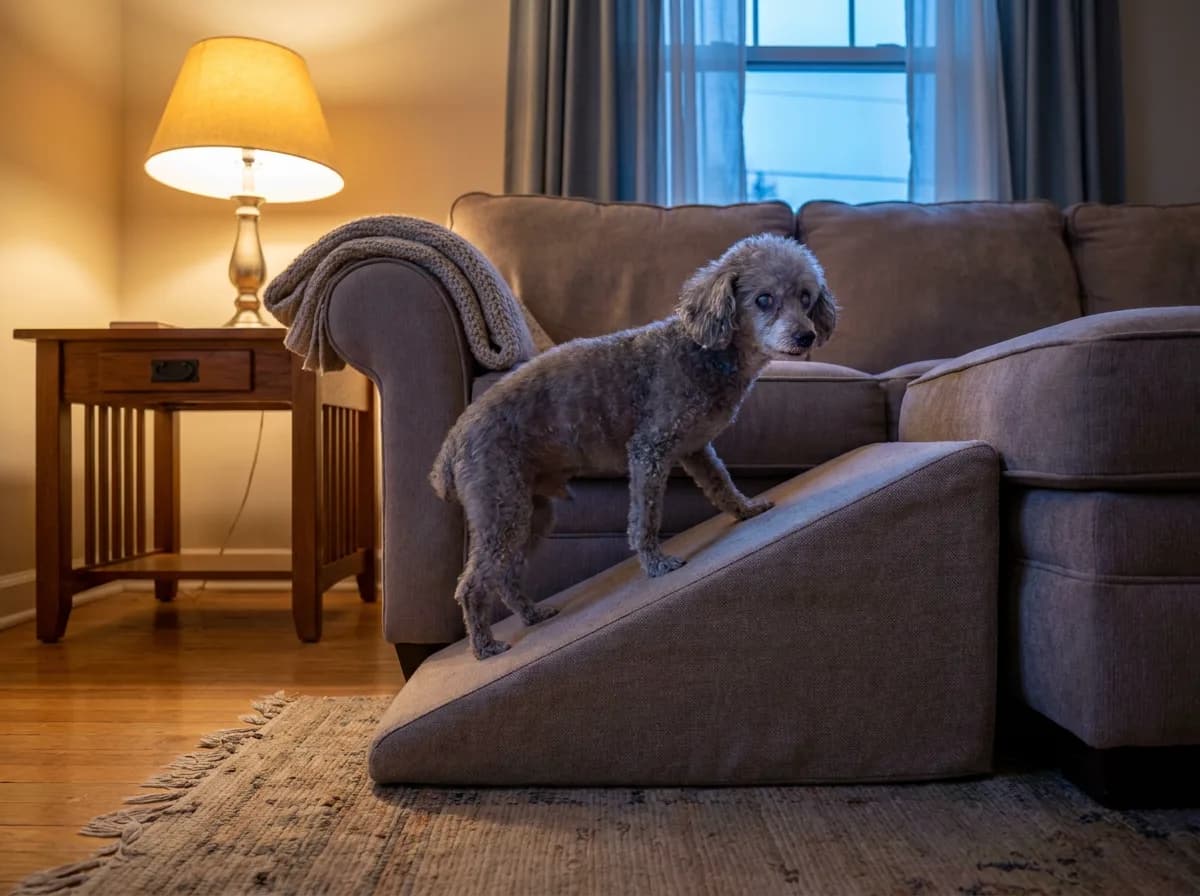
Common senior Poodle problems, and what they can mean:
- Losing hair or a thinning coat: can be normal aging, but it is also a sign of hypothyroidism and Cushing's disease, both on the Poodle health list.
- Weight loss or not eating: in an older Toy, this can signal dental pain, kidney disease or another illness, and it needs a checkup rather than a change of food.
- Cloudy eyes or bumping into things: cataracts and inherited retinal disease both cause vision loss in older Poodles, so have sight changes checked early.
- Seizures: inherited epilepsy usually starts before 6 years of age, so a first seizure in an older Poodle points to another cause, such as a metabolic or brain problem, and needs investigation.
- Confusion, night pacing or new clinginess: these can signal pain, failing sight or hearing, or cognitive dysfunction, a dementia-like condition that can make a dog suddenly clingy or avoidant. New clinginess in an older dog is different from a long-standing bond. Many Poodles do get attached to one person, usually whoever feeds, walks and plays with them most, while staying affectionate with the rest of the household, as our Poodle breed guide describes.
- Book a veterinary visit for weight loss, a change in appetite or thirst, new lumps, bad breath or loose teeth, a new cough, stiffness that shortens walks, confusion or a first seizure. Go to an emergency clinic for collapse, labored breathing, repeated seizures or a swollen abdomen.
Small changes at home help a slowing Poodle keep moving: a low ramp or steps up to the sofa, rugs on slippery floors, shorter and more frequent walks, and a warm, supportive bed away from drafts.
What age do Poodles start fading?
Most Poodles start fading in the later senior years rather than at a fixed birthday, often in the early teens for Toys and Miniatures and around 11 or 12 for Standards, the ages around each size's median lifespan. Fading means a steady loss of reserve: sleeping most of the day, eating less, losing muscle over the spine and hips, and struggling with stairs or house training. The AAHA guidelines call this final phase the end-of-life stage.
Keep a simple diary of good and bad days. When bad days outnumber good ones, or pain can no longer be controlled, talk with your vet about comfort care and when euthanasia would be kinder. A Poodle that fades suddenly at any age, over days rather than months, needs an exam first, because a treatable illness may be the cause.
Can a Poodle live 20 years?
A Poodle can come close to 20 years, but it is rare. The oldest Poodles in the 2004 UK survey died at 18 years 11 months (a Toy), 18 years 6 months (a Miniature) and 18 years (a Standard), so even the longest-lived dogs in that survey stopped short of 20. Guinness World Records lists no oldest-Poodle record at all; the oldest verified dog of any breed is Bluey, an Australian Cattle Dog who lived to 29 years 5 months.
When owners compare how long their Standard or Toy Poodle lived, reports of 16, 17 or 18 years come up, and the survey shows those ages do happen. They are the long tail of the range, not the norm: a 17- or 18-year-old Poodle has already outlived the median for every size by several years. Claims of the oldest living Poodle or the oldest Toy Poodle in the world circulate online without documentation, so treat them as stories rather than records.
Do male or female Poodles live longer?
Female dogs live slightly longer than males on average, but the gap is only a few months, and the large datasets do not report a Poodle-specific difference. In the 2024 UK study, females of all breeds had a median survival of 12.7 years against 12.4 years for males; in the US Banfield records, life expectancy at birth was 12.76 years for females and 12.63 years for males. Neither dataset reports Toy, Miniature or Standard Poodle lifespan by sex.
For a Poodle owner, sex matters less than other factors. Addison's disease, for example, affected male and female Standard Poodles equally in the 778-dog study, and in a large North American study, spaying or neutering was linked with a far bigger lifespan difference than the few months that separate the sexes (see the FAQs below).
How old is a Poodle in human years?
There is no Poodle-specific formula, and the old rule of multiplying by seven does not hold up. The best-known modern method comes from a 2020 study of 104 Labrador Retrievers that matched age-related DNA changes in dogs and people: human age equals 16 times the natural log of the dog's age, plus 31. By that formula, a 1-year-old dog is about 31 in human years and a 10-year-old about 68. The authors note that breeds with very different lifespans may age differently, so treat the figures for long-lived Toys and Miniatures as rough.
Use the table as a simple age calculator: find your Poodle's age, then read across for its life stage by size and the approximate human years.
| Poodle age | Toy life stage | Miniature life stage | Standard life stage | Approximate human years (Labrador-based formula) |
|---|---|---|---|---|
| 1 year | Young adult | Young adult | Young adult | About 31 human years |
| 2 years | Young adult | Young adult | Young adult | About 42 human years |
| 4 years | Mature adult | Mature adult | Mature adult | About 53 human years |
| 7 years | Mature adult | Mature adult | Mature adult | About 62 human years |
| 9 years | Mature adult | Mature adult | Senior | About 66 human years |
| 11 years | Senior | Senior | Senior | About 69 human years |
| 13 years | Senior | Senior | Senior | About 72 human years |
| 16 years | Senior | Senior | Senior | About 75 human years |
The life stages follow the AAHA definitions: a young adult has finished rapid growth, a mature adult has finished physical and social maturity (by about 3 to 4 years in most dogs), and a senior is in the last quarter of its expected life cycle. If you adopted an adult Poodle without records, a vet can only estimate its age from clues such as tooth wear, cloudy lenses, graying and muscle tone, and the estimate grows less precise after young adulthood.
How to help your Poodle live longer
The steps with the best evidence behind them are unglamorous, and most cost little:
- Keep your Poodle lean, using the body condition checks in the next section.
- Brush teeth daily and keep up with dental checkups, especially for Toys and Miniatures.
- Start senior screening on time: about 9 for Standards and 10 to 11 for smaller Poodles, then every 6 to 12 months.
- Ask about a preventive gastropexy for a Standard, often done during a spay or neuter, to stop the stomach twisting if bloat strikes.
- Know your dog's inherited risks from the parents' test results or a DNA panel, so problems such as Addison's disease or von Willebrand disease are recognized early.
- Keep vaccinations, parasite prevention and yearly exams current.
Exercise the mind as well as the body. Poodles rank second only to the Border Collie in Stanley Coren's widely cited ranking of working and obedience intelligence, and short training sessions, food puzzles and scent games keep an aging Poodle engaged. Our Poodle breed guide covers Poodle intelligence and temperament, and our list of the smartest dog breeds shows where other breeds rank.
For senior Toy care, the best advice is to protect teeth, weight and routine. Feeding a senior Poodle does not require a special formula: choose a complete diet suited to its age and body condition, measure every meal, split food into smaller meals if appetite drops, and keep water within easy reach. Weigh a Toy monthly on a kitchen or baby scale, because a loss of a few ounces is a real change for a 5-pound dog.
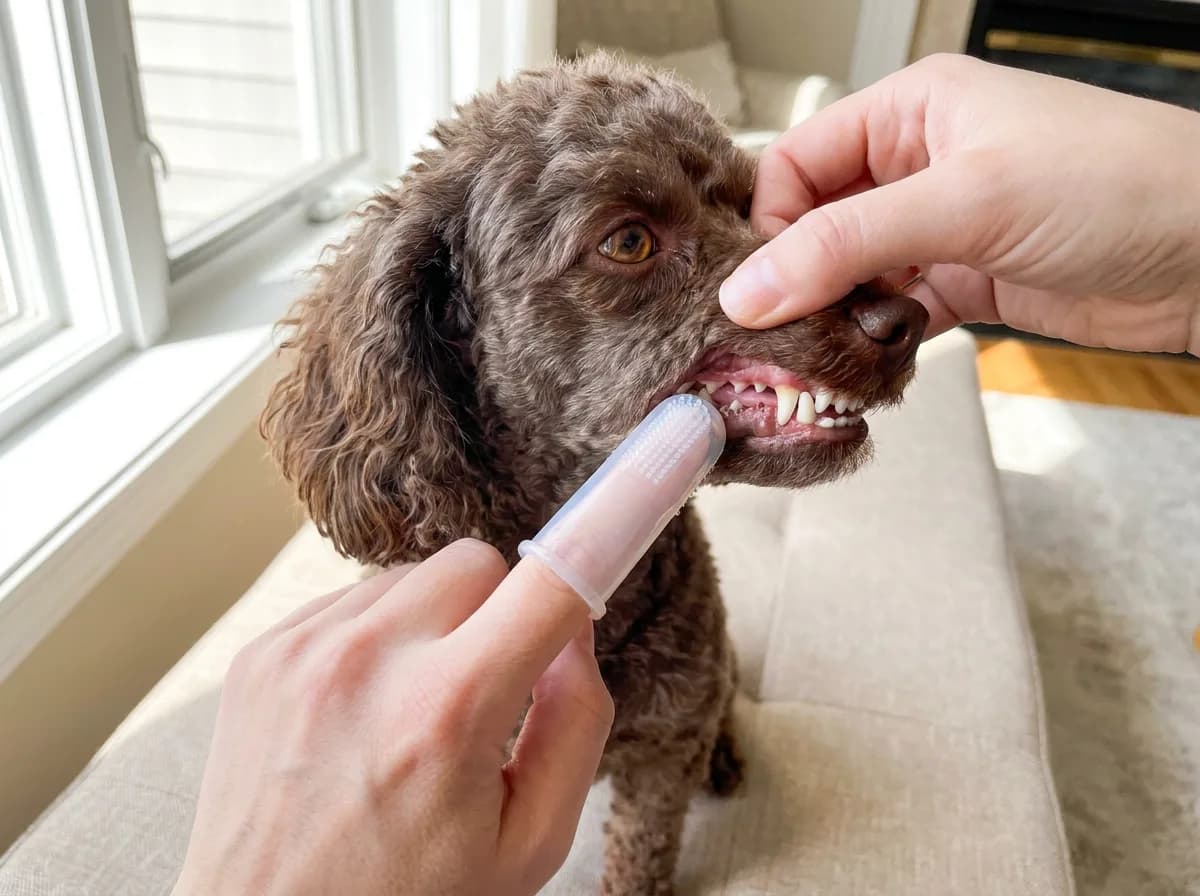
If your Poodle resists a handled toothbrush, start with a finger brush such as the Jasper 360 Dog Finger Toothbrush & Storage Case (2-count): a few seconds on the outer surfaces of the back teeth, then longer sessions as your dog relaxes. Pain, bleeding or a sudden refusal to have the mouth handled means it is time for a dental exam rather than firmer restraint.
Keep your Poodle at a healthy weight
Lean body condition is the longevity measure with the strongest evidence in dogs. In a lifetime feeding study of 48 Labrador Retrievers, dogs fed 25% less than their paired partners lived significantly longer and showed signs of chronic disease later, and in the US Banfield records, obese dogs had a life expectancy of 11.7 years compared with 13.2 years for dogs at an ideal weight.
A Poodle's coat can hide fat, so check body condition with your hands:
- You can feel the ribs easily with light pressure under a thin layer of fat.
- From above, the waist narrows behind the ribs.
- From the side, the belly tucks up behind the chest.
Adult Toy Poodles typically weigh 4 to 6 pounds, according to the American Kennel Club, but frame size varies, so judge your dog by body condition rather than a number on the scale. Our Toy Poodle guide covers healthy weight for Toys in more detail.
Poodle lifespan FAQs
Yes, on average. In the 2024 UK study, Poodles of all sizes combined had a median survival of 14.0 years, compared with 12.0 years for crossbreed dogs, 13.1 years for Labrador Retrievers and 13.2 years for Golden Retrievers, and their risk of dying at any given age was about 36% lower than that of crossbreeds. About a dozen of the 155 breeds in that study did better, led by the Lancashire Heeler at 15.4 years. Poodle crosses have their own figures, covered in our guides to Cockapoo lifespan and Maltipoo lifespan.
Possibly, but the evidence is observational. A study of more than 40,000 dogs in North American veterinary teaching hospital records found that sterilized dogs lived longer, with life expectancy 13.8% higher in males and 26.3% higher in females, but they were more likely to die of cancer and less likely to die of infectious disease. Because it compared groups of dogs rather than testing the surgery, it cannot prove that spaying and neutering themselves add years. The timing decision depends on your Poodle's size, sex and health, so discuss it with your vet; our spay and neuter guide covers the tradeoffs.
There is no published evidence that dietary supplements extend a Poodle's lifespan, so be skeptical of lifespan claims on labels. The measure with the best evidence is keeping a lean body condition, which lengthened median life in a lifetime feeding study of Labrador Retrievers. A supplement your vet recommends for a diagnosed problem, such as joint disease, is a treatment decision rather than a longevity plan, and it should be checked against your dog's other medicines.
Usually, yes, once it is diagnosed and stabilized. The Merck Veterinary Manual describes the long-term outlook as good with appropriate treatment and monitoring. That means lifelong treatment with hormone replacement given by mouth, by injection or both, regular monitoring of electrolytes with dose adjustments, and extra medication during illness or stress as your vet directs. The danger is in the undiagnosed dog: an Addisonian crisis, with weakness, collapse and severe vomiting, is an emergency.
BVMS, MRCVS
Dr. Pippa Elliott, BVMS, MRCVS, is a veterinarian with nearly 30 years of experience in companion animal practice. Dr. Elliott earned her Bachelor of Veterinary Medicine and Surgery from the University of Glasgow. She was also designated a Member of the Royal College of Veterinary Surgeons. Married with 2 grown-up kids, Dr. Elliott has a naughty Puggle named Poggle, 3 cats and a bearded dragon.
Sign up for expert-backed reviews and safety alerts all in one place.