Miniature Poodle: Size, Temperament, Cost, and Downsides
A Miniature Poodle stands over 10 and up to 15 inches tall and weighs about 10 to 15 pounds. See how it compares with the Toy and Standard, what it costs in time and money, and who it suits best.
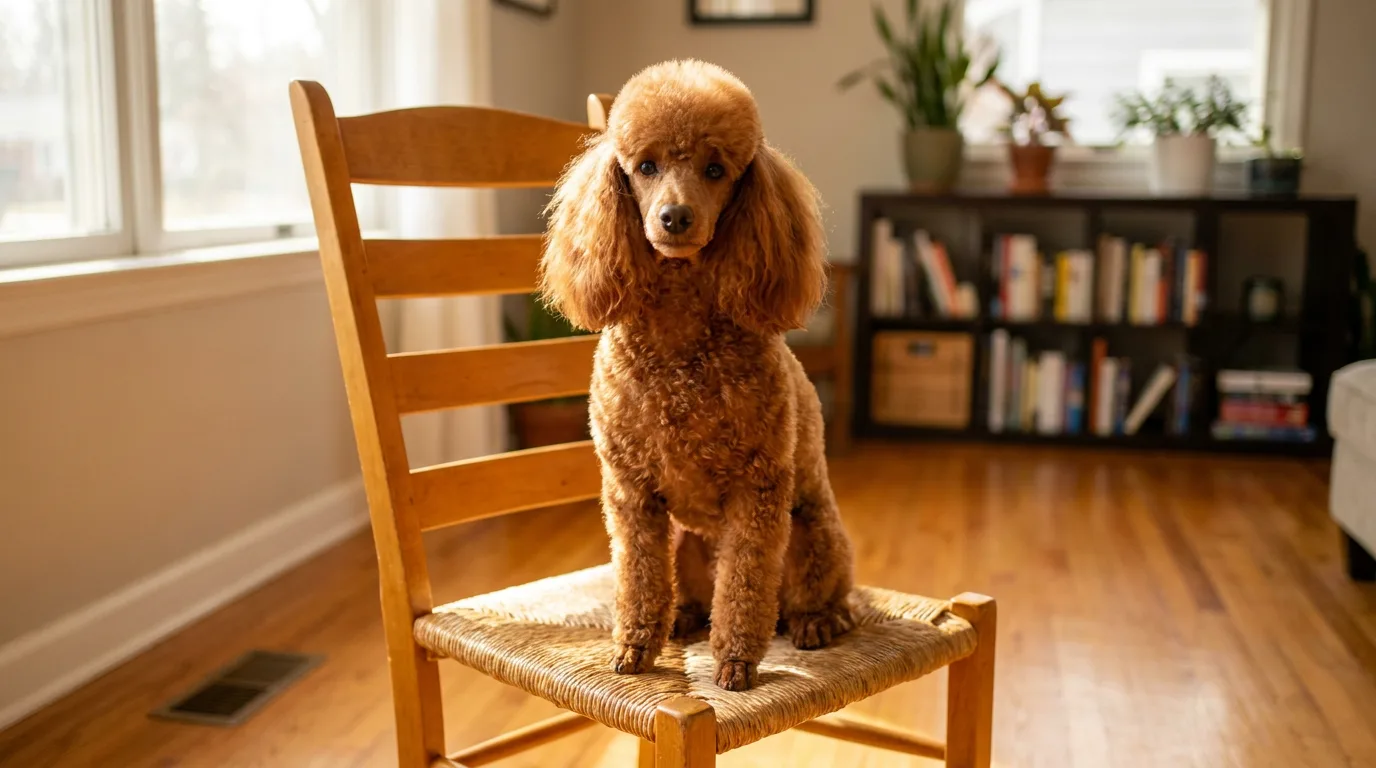
A Miniature Poodle stands over 10 and up to 15 inches at the shoulder and usually weighs 10 to 15 pounds, small enough to sit comfortably on a dining chair.
Petful is reader supported. As an affiliate of platforms like Amazon and Chewy, we may earn a commission when you buy through links on this page. There is no extra cost to you.
A Miniature Poodle is the middle of the three Poodle sizes: over 10 inches and no more than 15 inches tall at the shoulder, usually 10 to 15 pounds, with a life expectancy the American Kennel Club (AKC) puts at 10 to 18 years. It is a purebred Poodle held to the same breed standard as the Toy and the Standard, only in a smaller frame.
That size makes a Miniature easy to lift, travel with and keep in an apartment, but it does not make it a low-effort dog. It needs a professional clip every 4 to 6 weeks, about an hour of activity a day and company for most of the day, and it will announce every knock at the door. The quick verdict:
- Good match: people who are home much of the day, apartment dwellers who walk twice a day, active older owners with a backup caregiver, and families whose children can handle a small dog gently.
- Think twice: long workdays with no midday help, no budget for grooming, or a building where a barking dog would cause trouble.

Sign up for expert-backed reviews and safety alerts all in one place.
What is a Miniature Poodle?
- 1Shoulder height: over 10 inches and up to 15 inches under the AKC standard
- 2Adult weight: about 10 to 15 pounds (4.5 to 6.8 kg)
- 3Life expectancy: 10 to 18 years, per the AKC
- 4Breed group: Non-Sporting Group in the AKC, alongside the Standard Poodle
- 5Daily needs: about an hour of walks and play, regular brushing and a professional clip every 4 to 6 weeks
The Miniature Poodle is one of three size varieties of a single breed. The American Kennel Club judges Toy, Miniature and Standard Poodles against one breed standard and separates them only by height at the highest point of the shoulders: 10 inches or under is a Toy, over 10 and up to 15 inches is a Miniature, and over 15 inches is a Standard. All three share the same build and proportions. Miniatures and Standards compete in the Non-Sporting Group, while Toys are shown in the Toy Group. The AKC first recognized the Poodle in 1887.
Many people still call it a "French poodle" or a "mini French poodle," but there is no separate French breed. The Poodle is the national dog of France, yet the AKC traces its origin to Germany, where it worked as a water retriever, and the name comes from a German word for splashing in water. The Miniature was produced by breeding smaller Poodles, which is why a well-bred Miniature looks like a Standard in a smaller size rather than a different kind of dog.
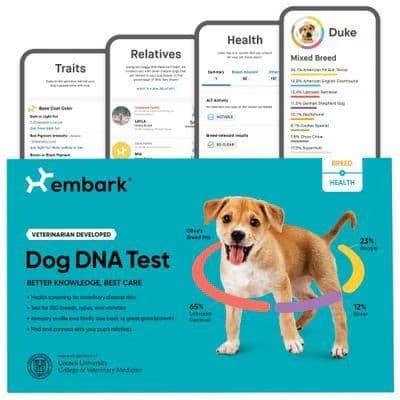
Is a mini poodle a purebred? A registered Miniature is, with a pedigree that traces back to Poodles only. The label gets murkier when a dog is sold or rehomed as a "mini poodle" without papers, because many small doodles look Poodle-like as puppies. A breed-identification DNA test can estimate ancestry, but it cannot establish registered purebred status: the Embark Breed & Health Dog DNA Test Kit estimates breed ancestry from a cheek swab and also screens for inherited conditions, including the prcd form of progressive retinal atrophy that Poodle breeders test for. It does not replace the hip, knee and eye exams a breeder should have done on the parents.
Petful may earn a commission when you click through to Chewy, at no extra cost to you.
Miniature Poodle mixes
Because it is small, smart and low-shedding, the Miniature is the Poodle parent behind many small crosses, including the Cavapoo, Cockapoo, Schnoodle and mini Goldendoodle. Those dogs are mixes, so their adult size, coat and temperament vary far more than a purebred Miniature's, and a "mini" label on a doodle does not mean the same thing as a Miniature Poodle. Our guide to Poodle mixes compares the popular small doodle types and what the Poodle parent contributes to each.
What does a Miniature Poodle look like?
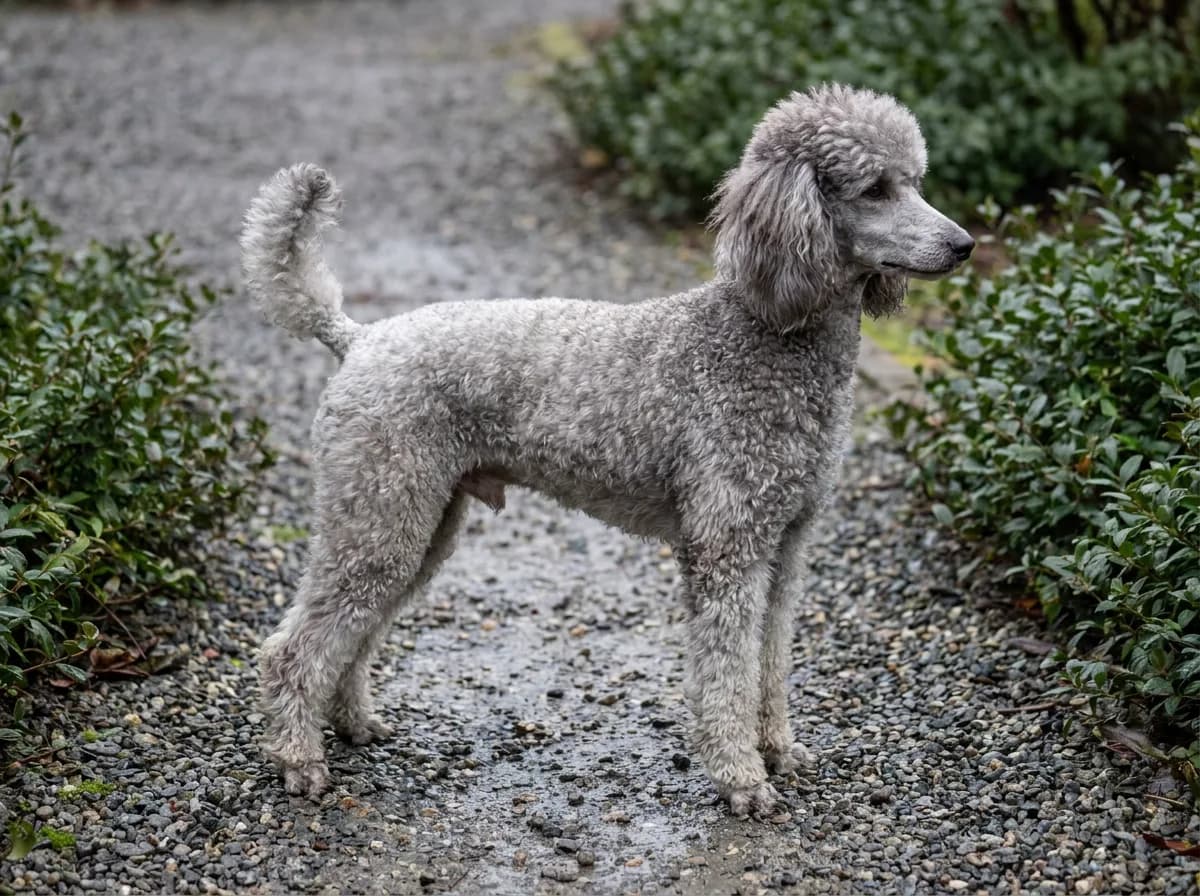
A Miniature Poodle is squarely built: the AKC breed standard calls for a body about as long, from breastbone to rump, as the dog is tall at the shoulder. Add a level back, a long and fine muzzle, very dark oval eyes and long, feathered ears that hang close to the head, and you have the outline that separates a well-bred Miniature from a small doodle whose proportions can vary widely.
The coat is dense and curly, with a naturally harsh texture, and it keeps growing instead of shedding out on a seasonal cycle. Left unbrushed it mats, and left to grow it can form cords. That is why most Miniature Poodle pictures are really pictures of haircuts: show dogs wear the dramatic Continental or English Saddle clip, while most pets wear a short sporting clip that follows the body's outline or a rounded teddy bear trim.
Things to look for in photos or when you meet a dog:
- Face: a long, straight muzzle, shaved clean in traditional clips and rounded in teddy bear trims.
- Eyes: very dark and oval; the standard treats round, protruding or very light eyes as a fault.
- Ears: set at or slightly below eye level, with long feathering.
- Tail: set high and carried up. The AKC standard still describes a docked tail, but natural tails are the norm where cosmetic docking is restricted, as in the UK, and an undocked tail may curl.
Miniature Poodle size: height and weight chart
A full-grown Miniature Poodle stands over 10 inches and up to 15 inches tall at the withers (the top of the shoulder blades) and usually weighs 10 to 15 pounds, which is about 25.5 to 38 centimeters and 4.5 to 6.8 kilograms. Height defines the variety; weight is a typical range, not a rule. A tall, lean Miniature can weigh a little more than 15 pounds and still be in good shape, so check body condition rather than chasing a number.
Registries outside the United States draw the line a little differently. The UK's Royal Kennel Club sets the Miniature at 28 to 38 centimeters (11 to 15 inches), and the FCI, which covers most of Europe, uses over 28 and up to 35 centimeters.
| Measure | Miniature Poodle | What it means |
|---|---|---|
| Shoulder height, AKC | Over 10 in, up to 15 in | 10 in or under is a Toy; over 15 in is a Standard |
| Shoulder height, metric | About 25.5 to 38 cm | Converted from the AKC limits |
| Royal Kennel Club (UK) | 28 to 38 cm (11 to 15 in) | Under 28 cm is not a Miniature in the UK |
| FCI (Europe) | Over 28 cm, up to 35 cm | 35 to 45 cm is the FCI Medium size |
| Adult weight | About 10 to 15 lb (4.5 to 6.8 kg) | AKC typical range; height still decides the variety |
| Growth in height | Usually finished by 6 to 8 months | AKC average for small breeds |
| Toy Poodle, for comparison | Up to 10 in, 4 to 6 lb | AKC figures |
| Standard Poodle, for comparison | Over 15 in, 40 to 70 lb | Females 40 to 50 lb, males 60 to 70 lb (AKC) |
When is a Miniature Poodle full grown? The AKC says small breeds typically stop growing by 6 to 8 months of age, so most Miniatures reach adult height well before their first birthday. Weight can keep creeping up after height stops, which is one more reason to watch the waistline.
Neither the AKC breed page nor the breed standard gives puppy weights by age, so be wary of any single "right" weight for an 8-week-old or a 3-month-old, and of online weight calculators that multiply a puppy's weight by a fixed factor. Puppies from 11-inch parents and 15-inch parents grow on different curves. The better predictors are the measured heights and weights of both parents and of grown puppies from earlier litters, so weigh your puppy every two weeks and ask your vet whether the curve looks steady.
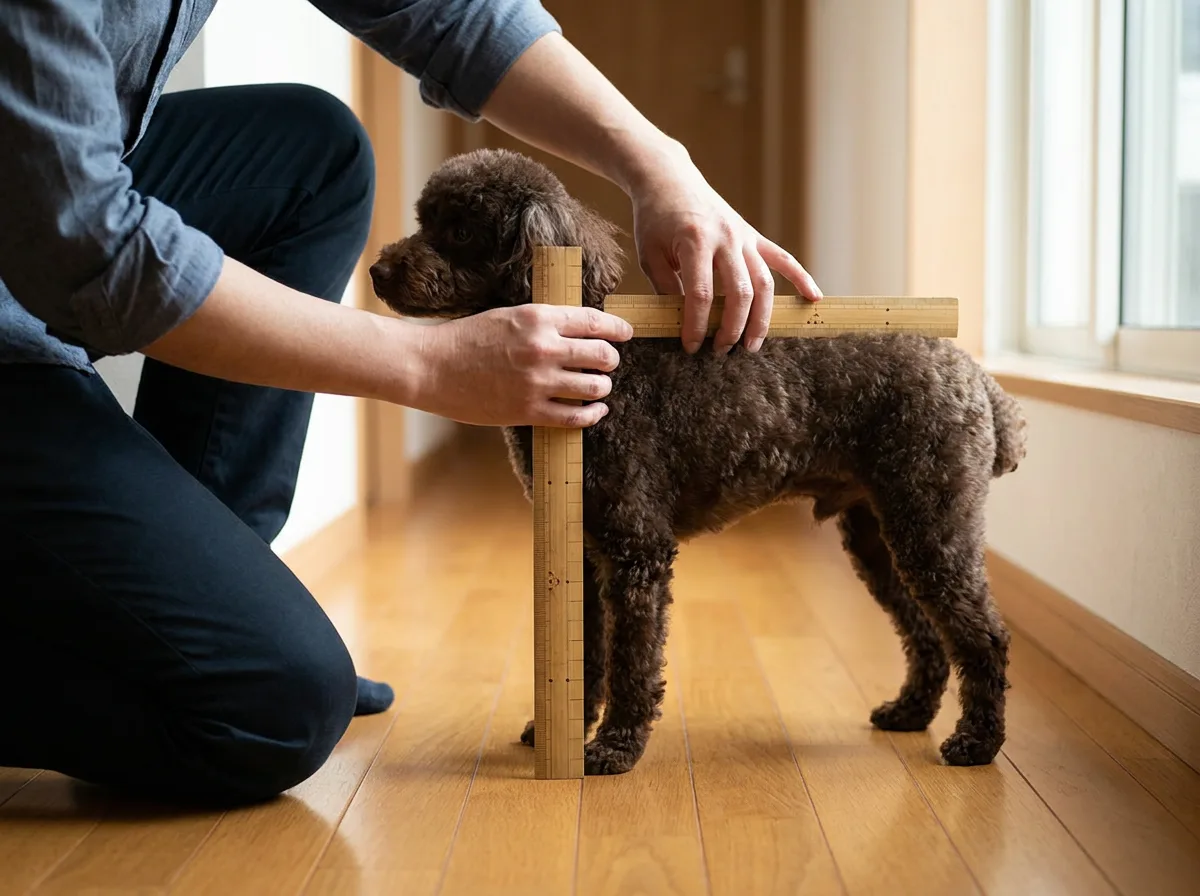
To measure withers height at home, you need two rigid rulers, or one rigid ruler and a carpenter's level:
- Stand your dog squarely on a hard, level floor with its head up in a natural position.
- Find the withers by running your fingers up the front of the shoulder to the highest point of the shoulder blades, just behind the neck.
- Lay a rigid ruler or level flat across the withers and measure straight down from its underside to the floor.
- Part the coat so you measure bone, not fluffy shoulder hair, and take three readings.
- Average them. A small Miniature is still over 10 inches; a reading of 10 inches or less means a Toy-sized dog, and more than 15 inches means a Standard-sized one.
What size crate and harness does a Miniature Poodle need?
Size gear from your own dog's measurements rather than the breed label. Measure standing height from the floor to the top of the head and body length from the nose to the base of the tail, then add 3 to 4 inches to each. The crate should let your dog stand, turn around and lie flat without leaving a spare corner to use as a bathroom. For example, a Miniature that measures 19 inches from nose to tail base and 17 inches to the top of its head needs a crate about 22 to 23 inches long and 20 to 21 inches tall, which a 24-inch crate with that interior height covers; a tall 15-inch dog may need the next size up.
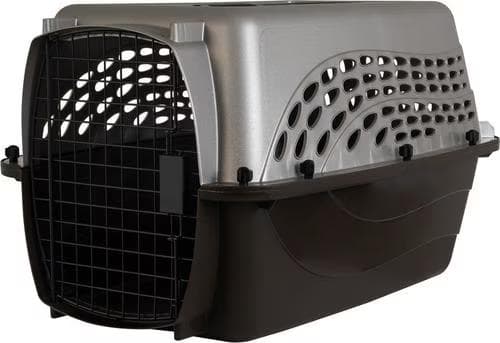
For car rides and vet visits, a carrier that opens from the top saves wrestling a nervous dog through a front door. The Petmate Two Door Top Load Dog & Cat Kennel is 24 inches long, opens from the top or the front and is rated for pets up to 15 pounds, which covers most Miniatures by weight. Compare its listed interior height with your dog's standing height before you buy, because the tallest Miniatures may need a larger kennel.
Petful may earn a commission when you click through to Chewy, at no extra cost to you.
Harness sizing works the same way. Measure chest girth around the widest part of the rib cage, just behind the front legs, and match that number, not the dog's weight, to the maker's size chart. Two fingers should slide under each strap, and the harness should not rub behind the elbows or ride up into the throat.
| What to measure | How to measure | How to use it for sizing |
|---|---|---|
| Body length | Nose to base of tail, dog standing | Crate length: add 3 to 4 inches |
| Standing height | Floor to top of head, head level | Crate height: add 3 to 4 inches |
| Chest girth | Around the widest part of the rib cage, behind the front legs | Harness sizing: use the maker's girth chart, with a two-finger fit |
| Neck girth | Where a flat collar sits | Collar size, with two fingers of slack |
| Weight | Weigh yourself holding the dog, then subtract your own weight | Carrier and kennel weight ratings |
| Withers height | Floor to the top of the shoulder blades | Confirms Miniature size: over 10 in, up to 15 in |
Miniature Poodle temperament and personality
Miniature Poodles are affectionate, alert and very bright, with more energy than their size suggests. The AKC calls Poodles eager, athletic and exceptionally smart, and its 1-to-5 trait ratings for the Miniature back that up: 5 for affection with family, trainability, playfulness and mental stimulation needs, 4 for energy and barking, and 3 for getting along with other dogs. The UK breed standard describes the temperament as lively and good-natured.
What those traits look like at home:
- People-focused: most Miniatures want to be in the same room as their people and do poorly with long daily isolation.
- Quick to learn: they pick up routines and cues fast, including ones you did not mean to teach, such as barking for attention.
- Sensitive: harsh corrections tend to backfire, and calm, reward-based handling gets better results.
- Alert rather than protective: the AKC rates watchdog tendencies 3 of 5, so expect a dog that announces visitors rather than guards against them.
- Playful and athletic: retrieving, swimming and agility suit a breed developed as a water retriever.
- Friendly once introduced: the AKC rates openness to strangers 5 of 5, although PetMD notes Miniatures can be anxious in new situations, so early socialization matters.
Barking deserves its own note. The AKC gives the Miniature a barking score of 4 out of 5, so expect a dog that tells you about the doorbell, footsteps in the hallway and dogs passing the window. The bark is manageable when you address the cause:
- Block the view of a busy street or corridor.
- Let one or two alert barks happen, then reward a pause and a look back at you.
- Give daily exercise and food puzzles so boredom has less fuel.
- Keep departures and arrivals calm if the barking starts when you leave, and watch for separation distress.
Is a Miniature Poodle a one-person dog?
Not by nature, but many Miniature Poodles attach most strongly to one person, usually whoever feeds, walks and trains them. The one-person dog reputation comes from that bonding pattern rather than from any coldness toward others: when care is shared, a Miniature is typically affectionate with the whole household and polite with regular visitors.
A common question in owner forums is whether a "velcro" Mini that follows one person from room to room has a problem. That closeness is normal. Distress is not:
- Normal attachment: follows you around, settles when you sit down, greets you with enthusiasm.
- Worth addressing: pacing, panting, howling or scratching at the door whenever one particular person leaves, even with others at home, or guarding that person from family members.
To spread the bond across the household:
- Rotate feeding, walks and short training sessions among adults and older children.
- Let the favorite person step back from the most exciting activities for a few weeks.
- Practice short separations from that person while other people are home.
How can you tell your Poodle loves you? Besides following you and greeting you at the door, a Poodle that loves you leans against you, brings you toys and holds a soft, relaxed gaze; in a 2015 study in the journal Science, gazing between dogs and their owners raised levels of oxytocin, a bonding hormone, in both. Our Poodle breed guide covers how Poodles show affection.
Male vs female Miniature Poodles
Neither a boy nor a girl Miniature Poodle is the better pet. The AKC gives the same height and weight ranges for male and female Miniatures, so sex makes less practical difference here than in Standards, where males typically weigh 60 to 70 pounds and females 40 to 50. For a pet home, the individual dog's temperament, the parents' behavior and whether the dog is spayed or neutered matter more than sex; an unspayed female has heat cycles to manage, and an intact male is more likely to mark with urine. The boy-versus-girl question is covered for all three sizes in our Poodle breed guide.
Are Miniature Poodles good pets?
Yes, for the right household. A Miniature Poodle is a good pet for people who are home for much of the day, want a trainable companion and will budget time and money for grooming. It is a poorer match for long daily absences, a no-grooming budget or a home where barking would cause trouble. Use this household fit table to check your situation against what the breed needs.
| Household | Fit | What the household must provide |
|---|---|---|
| Older owners | Good with a plan | Two daily walks, a groomer every 4 to 6 weeks and a named backup caregiver |
| Apartment living | Good | About an hour of daily exercise and steady work on alert barking |
| Children under 6 | Conditional | Constant supervision; a 10-pound dog can be hurt by falls or rough handling |
| School-age children | Good | Children who follow handling rules and can help with training |
| First-time owners | Good if committed | Reward-based training from day one and a grooming budget |
| Full-time workers | Poor without help | A midday walker, daycare or family help; the RSPCA advises no more than 4 hours alone |
| Allergy sufferers | Test first | Low shedding, but no dog is allergen-free; spend time around Poodles first |
| Homes with other dogs | Usually good | Slow introductions; the AKC rates the Miniature Poodle 3 of 5 with other dogs |
The AKC rates the Miniature 5 of 5 for being good with young children, and many are gentle with kids. The caution in the table is about size: a toddler who picks up or falls on a 10-pound dog can injure it, so supervision matters more than temperament.
How to choose a Miniature Poodle puppy or adult:
- Ask to see health screening of both parents, not just a vet check on the puppy; the health section below lists the specific tests.
- Meet the mother, and the father if possible, and see where the puppies are raised.
- Ask how the litter has been socialized to household noise, handling and grooming tools.
- Get a written contract that covers health guarantees and what happens if you cannot keep the dog.
- Consider an adult from a Poodle rescue if you want a known size, coat and temperament, and learn how to spot a puppy mill before paying a deposit.
Caring for a Miniature Poodle comes down to a routine you can picture before you commit:
- Daily: two walks plus play or training, about an hour in total, a quick brush of the areas that mat first (behind the ears and under the legs) and tooth brushing.
- Weekly: a full brush-out to the skin, an ear check and a look at the nails.
- Every 4 to 6 weeks: a professional bath and clip.
- Yearly: a veterinary exam, vaccines and a dental check.
Are Miniature Poodles good for seniors?
Often, yes, as long as a few conditions are met. For many seniors a Miniature Poodle is a good choice: at 10 to 15 pounds it is light enough to lift into a car, it sheds very little, it learns house rules quickly, and it is happy with neighborhood walks rather than long runs. The conditions are physical, practical and long-term:
- Daily activity: two walks a day in all weather, plus play, for the dog's whole life.
- Grooming logistics: getting to a groomer every 4 to 6 weeks, or finding a mobile groomer, plus brushing a few times a week.
- Fall risk: a small dog underfoot is easy to trip over. A CDC analysis of emergency department data estimated 86,629 fall injuries a year associated with dogs and cats, nearly 88 percent of them involving dogs. Tripping over the dog (31.3 percent) and being pushed or pulled by it (21.2 percent) were the most common dog-related circumstances, and injury rates were highest in people over 75.
- Lifespan: the AKC's 10-to-18-year life expectancy means a puppy adopted at 70 could still need care when its owner is in their late 80s.

Equipment can reduce that risk. A padded no-pull harness such as the EliteField Padded Reflective No Pull Dog Harness spreads leash pressure across the chest instead of the throat and gives an older handler steadier control than a collar alone, and its reflective trim helps on early-morning and evening walks. Check the Small size's girth range against your measurement, pair it with a fixed-length leash rather than a retractable one, and teach a reliable "wait" at doors and curbs.
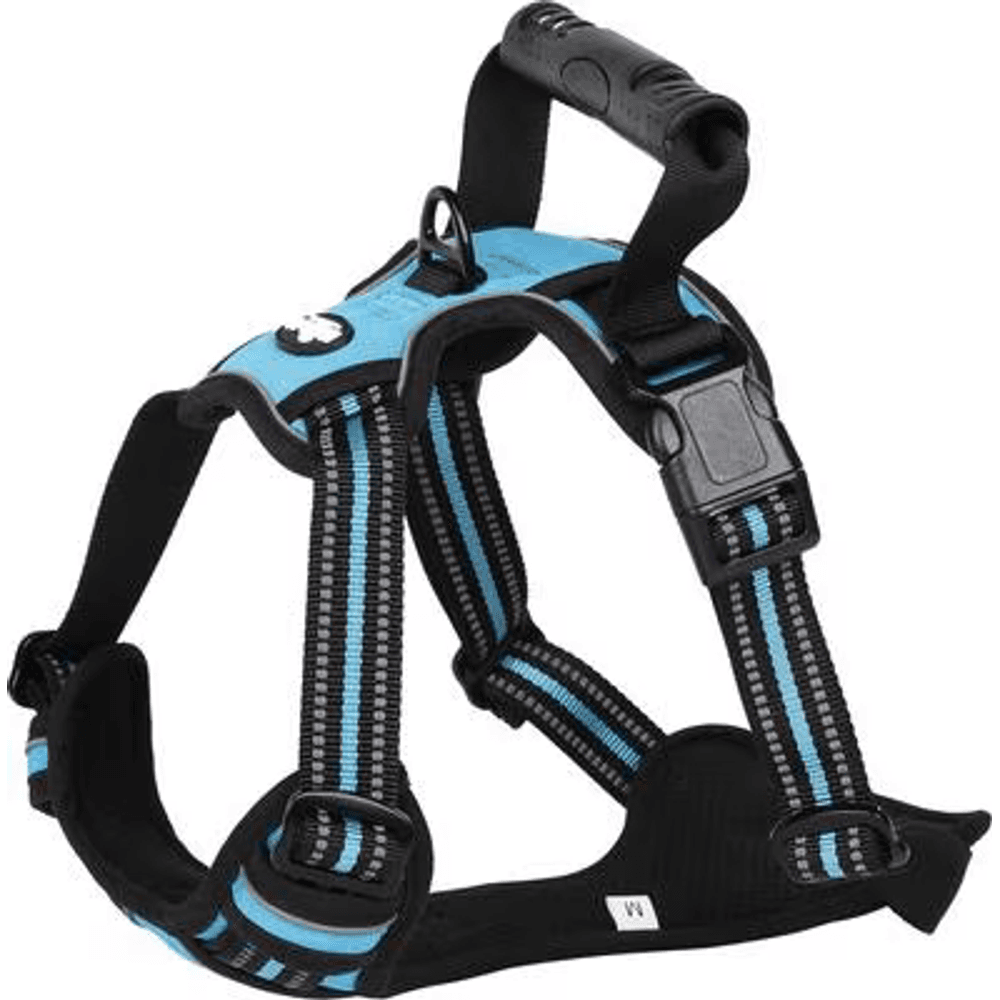
A padded, reflective no-pull harness that spreads leash pressure across the chest instead of the throat, the switch most vets recommend for a dog with a cough, a collapsing trachea, or any airway irritation so the leash never presses on
Petful may earn a commission when you click through to Chewy, at no extra cost to you.
- Choose a backup caregiver who has agreed to take the dog, put that agreement in writing, and give them a spare key, your veterinarian's details and the dog's feeding and grooming routine. Carry a wallet card saying a dog is at home alone. Include the dog in your will or a pet trust with money set aside for its care, and ask the breeder or rescue whether they will take the dog back if needed.
Should a 70-year-old get a Miniature Poodle?
Often, yes. The deciding factors are the dog's needs rather than the owner's age: whether you can give daily walks and care now, whether the dog's likely lifespan fits your plans or a backup caregiver is lined up, and whether the dog's size and energy suit your strength and balance. The benefits are measurable: in a 2017 BMC Public Health study that matched 43 older dog owners in the UK with 43 people of similar age without dogs, the owners walked about 22 minutes more a day, at a moderate pace, and took roughly 2,760 more steps. The main risks are falls and a dog that outlives its owner's ability to care for it.
For a healthy 70-year-old who walks every day and has a backup caregiver lined up, a Miniature Poodle is a strong match, and the bigger decision is puppy or adult. A puppy needs toilet trips every few hours (the AKC's rule of thumb is roughly one hour of bladder control per month of age), chews through its teething months, needs months of consistent training and could live past its owner's 85th birthday. An adult or senior Miniature from a rescue, or a breeder's retired dog, often arrives house-trained, with a known size, coat and temperament and a remaining lifespan that fits more comfortably with the owner's plans.
Before you commit, answer these honestly:
- Can I walk a dog twice a day for the next 10 to 15 years, or pay someone to?
- Who takes the dog tomorrow if I go into the hospital for a week?
- Can I lift 15 pounds, or will vet and grooming trips need help?
- Does my housing, whether a senior community, an HOA or a lease, allow a dog of this size?
- Does my budget cover professional grooming for the rest of the dog's life, not just the first year?
What are the downsides of Miniature Poodles?
The biggest downsides of Miniature Poodles are the grooming commitment, a strong dislike of long hours alone, alert barking and a clever mind that invents its own entertainment when under-exercised. None is a dealbreaker for the right home, but each carries a real time or money cost and rules out a certain kind of household:
- Professional grooming every 4 to 6 weeks. That is 9 to 13 appointments a year, plus brushing to the skin several times a week at home. Skip a month and mats can end in a shave-down. Rules out anyone who wants a wash-and-go dog or has no grooming budget.
- Separation distress. Poodles are people dogs and cope poorly with long daily absences; the time limits are below. Rules out 9-hour workdays with no walker, daycare or family help.
- Alert barking. Doorbells, hallway footsteps and passing dogs get announced (see the barking tips above). Rules out thin-walled homes unless you will train and manage it.
- A busy brain. A bored Miniature invents its own jobs, which can mean chewing, digging or more barking. Rules out owners who can offer walks but not training or games.
- Small-dog fragility. Falls from arms or furniture can injure a 10-pound dog, and the AKC notes that kneecap problems (patellar luxation) and Legg-Calve-Perthes disease are more likely in Toys and Miniatures than in Standards. Rules out homes where young children carry the dog around.
- A long commitment. A 10-to-18-year life expectancy means grooming, food and vet bills for a decade or more.
The same traits have a real upside: very little shedding, a dog you can carry and travel with, quick learning and a long life. Many common behavior problems in Miniatures, such as nuisance barking and chewing, trace back to too little exercise, training or company rather than to the breed itself.
How long can a Miniature Poodle be left alone? Plan on about four hours at a stretch for an adult, the RSPCA's recommended maximum, and less for a puppy, whose bladder cannot yet last that long. Build time alone gradually, starting with a few minutes, and video your dog now and then; the RSPCA notes that quiet signs of distress, such as pacing, trembling or whining, are easy to miss.
- A Miniature Poodle left alone for most of a workday can bark, howl, soil indoors or chew at doors and window frames. If nobody can be home or drop in partway through the day, arrange a dog walker or daycare before the dog arrives instead of hoping it adjusts.
How much does a Miniature Poodle cost?
Budget for two costs: the purchase and the upkeep. A September 2026 Dogster cost guide put Miniature Poodle puppies from breeders at about $1,500 to $3,500 and estimated ongoing care at roughly $205 to $860 a month, a wide range because it includes allowances for vet visits, medications, insurance and entertainment. The leaner budget in our price guide comes to about $165 to $355 a month after the first year because it allows less for vet care, entertainment and cleaning supplies. Poodle breed rescues charge adoption fees of about $150 to $600, and more for some puppies. Grooming is the biggest recurring line: at one appointment every 4 to 6 weeks, you pay for 9 to 13 grooms a year, so multiply a local quote by that number before you decide.
A price far below the typical range, or a big premium for a "rare" color, is a warning sign rather than a bargain; health testing of the parents is what a higher price should buy. Our Poodle price guide by size breaks down purchase prices for all three sizes, rescue fees, first-year setup, yearly costs and insurance.
Miniature Poodle exercise and training needs
Plan on about an hour of activity a day, split between two walks and some play or training; that is the figure ASPCA Pet Health Insurance's breed guide gives for Miniatures. The AKC rates the Miniature's energy 4 of 5 and its need for mental stimulation 5 of 5, so a walk alone rarely settles it. Daily exercise and mental stimulation work best together:
- Retrieving games: fetch uses the instincts of a breed developed as a water retriever.
- Swimming: in calm, safe water, with a dog life jacket for boats or open water.
- Scent work: hide part of a meal around the house or yard.
- Trick and obedience training: 5- to 10-minute sessions on new cues.
- Dog sports: the AKC notes Poodles do well in agility, obedience and tracking, and some compete in dock diving.
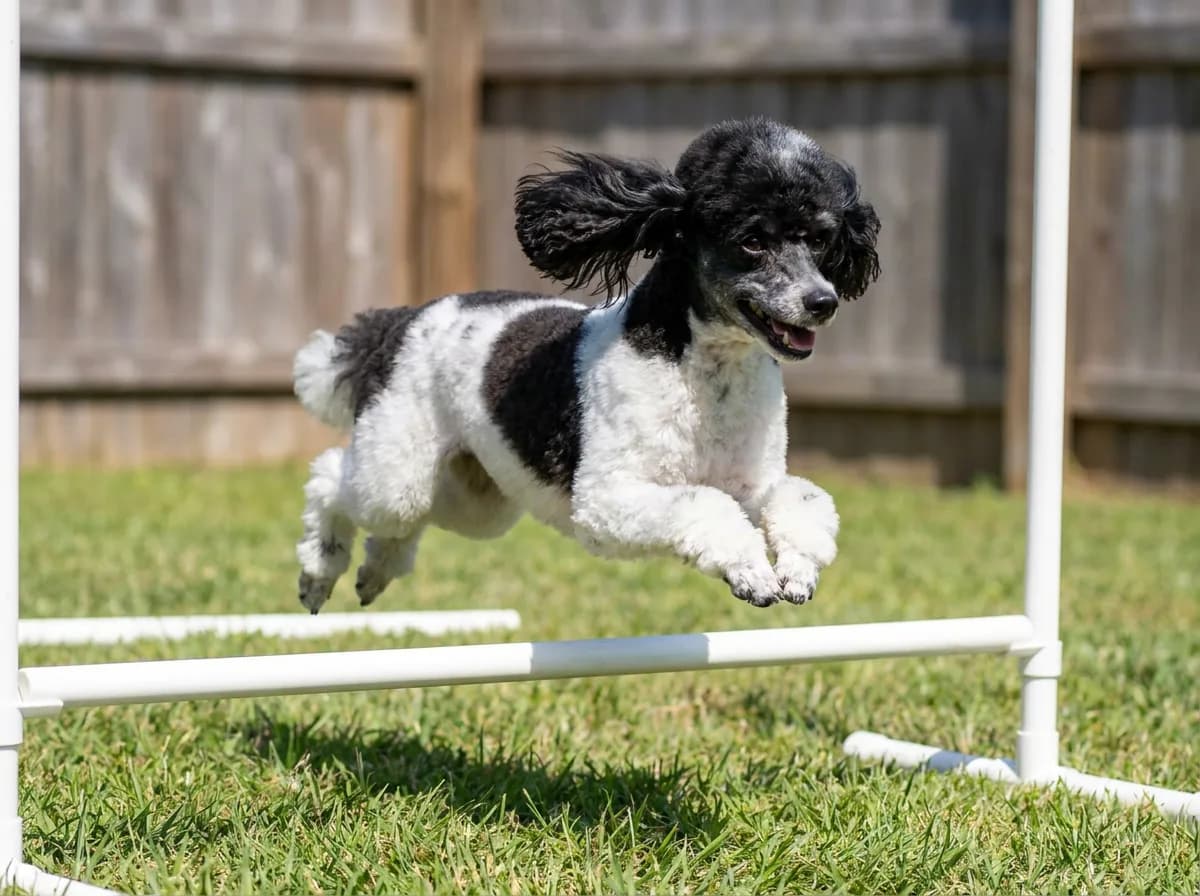
How far can a Miniature Poodle walk? There is no published distance limit for the breed. PetMD describes Miniatures as good companions for hikes and long walks, and a healthy adult that has been conditioned gradually can build up to longer outings. Add distance a little at a time, avoid hot pavement and keep puppy outings short and varied. Limping or skipping on a back leg after exercise can signal a kneecap problem and is worth a vet visit.
Training a Miniature Poodle is easy in one sense and tricky in another: the AKC gives the breed 5 of 5 for trainability, so it learns fast, including lessons you did not intend. Use reward-based training: mark the behavior you want and pay it with food, play or praise, keep sessions short, and keep house rules consistent across the household. Small, soft treats such as Zuke's Mini Naturals Chicken Recipe Pet Treats are easy to portion for a 10-pound dog; count them in the day's calories. The American Veterinary Society of Animal Behavior recommends reward-based methods and warns that aversive techniques can increase fear and aggression. Its puppy socialization statement also stresses that the first three months of life are the most important window for positive exposure to people, sounds, handling and grooming tools.
How to potty train a Miniature Poodle puppy:
- Take the puppy out first thing in the morning, last thing at night, and after waking, eating, drinking, playing and time in the crate.
- Use the AKC rule of thumb to space daytime trips: roughly one hour per month of age, so a 3-month-old needs a chance about every three hours.
- Go to the same spot, wait quietly and reward within seconds of the puppy finishing.
- Whenever you cannot watch the puppy, confine it to a crate or pen sized so it cannot sleep at one end and soil the other.
- Clean accidents with an enzymatic cleaner and skip punishment, which teaches a puppy to hide from you rather than to wait.
Grooming a Miniature Poodle
A Miniature Poodle's coat keeps growing and barely sheds, so hair that would fall out of other breeds tangles into the coat instead. That makes grooming non-negotiable: brushing all the way to the skin several times a week, and a professional bath, clip and nail trim every 4 to 6 weeks, the interval both the AKC and PetMD give. A short clip reduces the brushing, but not the trimming schedule.
What does a well-groomed Miniature Poodle look like?
- A metal comb glides through the coat to the skin without catching.
- The coat length is even and follows the dog's outline.
- The face and feet are shaved clean or neatly scissored, depending on the clip.
- The rear, belly and paw pads are tidy.
- The ears are clean and dry, and the nails are short enough not to click on the floor.
A freshly groomed Mini keeps that look for roughly a month, which is why the 4-to-6-week schedule exists. Stretch the gap to two or three months and the coat grows shaggy, and a longer coat mats faster unless you brush to the skin more often.
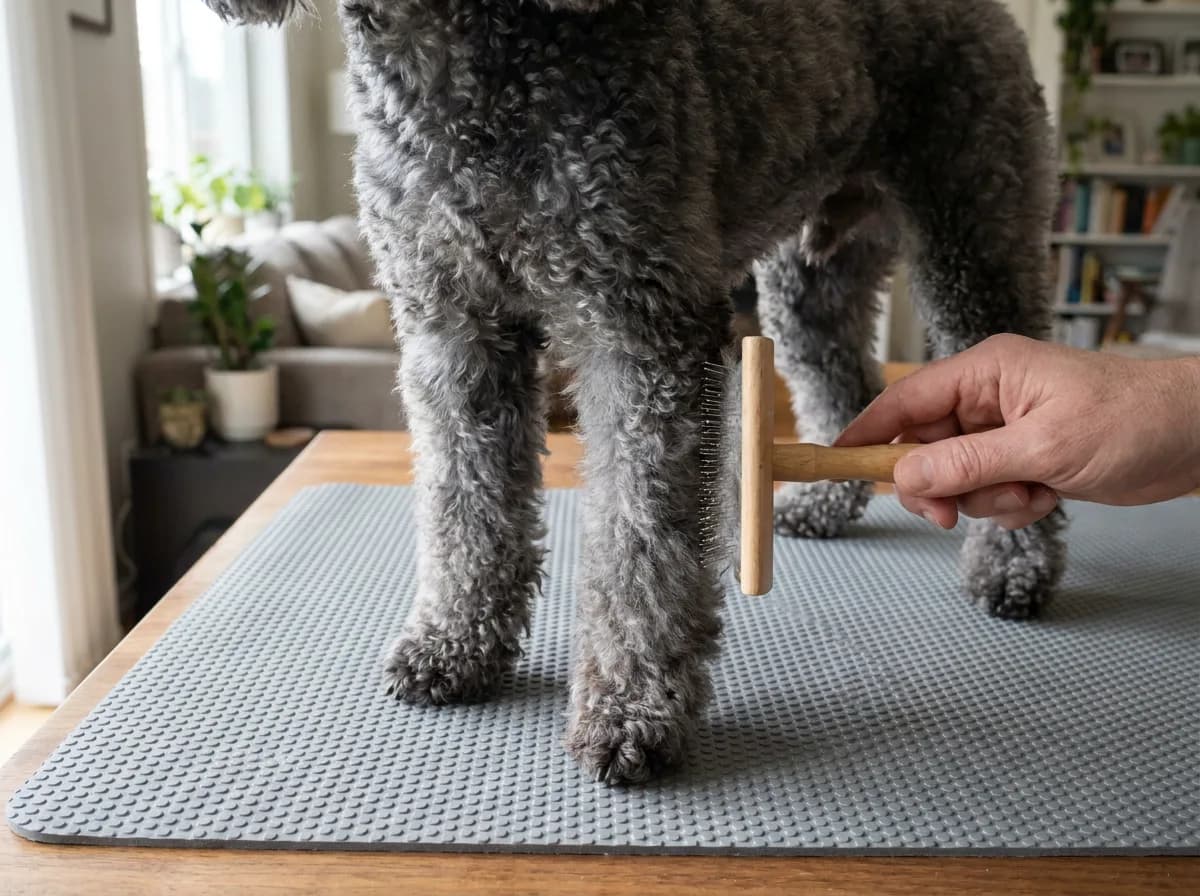
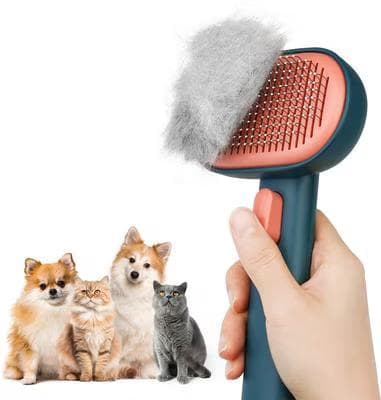
The tool that does most of the work at home is a slicker brush. A self-cleaning model such as the aumuca Self Cleaning Slicker Brush releases the collected hair at the push of a button, which speeds up a full-body brush-out. Use a light touch, because slicker pins can scratch skin if you scrub.
Petful may earn a commission when you click through to Chewy, at no extra cost to you.
How to groom a Miniature Poodle at home between appointments:
- Line-brush: part the coat in small sections and brush each one from the skin outward, working up the legs and body.
- Comb-check: run a metal comb through each section, and brush again anywhere it catches.
- Bathe after brushing, never before: water tightens existing mats.
- Dry completely: a damp curly coat mats and can smell, so blow-dry while brushing.
- Finish the details: trim nails every few weeks with small-dog clippers such as the Frisco Nail Clippers for Cats & Small Dogs, check the ears weekly and dry them after swims, and brush teeth daily.
How often should you bathe a Miniature Poodle? Most get a bath at each grooming appointment, and PetMD suggests about once a month. Bathe more often only when the dog is dirty, and always brush out tangles first.
Popular Miniature Poodle haircuts
Most pet Miniatures wear one of a few practical looks. A sporting clip keeps a short, even coat that follows the body, with a shaved face and feet. A puppy or teddy bear cut leaves one length all over with a rounded face, and a lamb cut pairs a shorter body with fuller legs. The AKC standard requires the Continental or English Saddle clip for adult Poodles in regular show classes, which is why show photos look so different from pet dogs. Shorter cuts mean less brushing but the same trim schedule. Our Poodle haircuts guide shows each cut with pictures, what to ask your groomer for and how long each look lasts.
Do Miniature Poodles shed or smell?
Miniature Poodles shed very little. The AKC rates shedding 1 of 5, because loose hairs stay caught in the curls until brushing removes them. That helps some people with allergies, but no dog is truly hypoallergenic: allergens also come from saliva and skin dander, so spend time around Poodles before you commit.
A clean, dry, well-brushed Miniature should not smell much. A persistent odor usually points to one of these, and each is worth a vet check:
- A damp or matted coat that has trapped moisture.
- An ear infection, often after baths or swims.
- Dental disease.
- A skin problem.
The Poodle breed guide covers shedding, allergies and odor for all three sizes.
Feeding a Miniature Poodle
Feed a complete and balanced diet for your dog's life stage, in measured portions, and adjust by body condition rather than by the feeding chart alone. For a Miniature Poodle, the best dog food is less about a brand than about three checks on the label:
- A nutritional adequacy statement showing the food meets AAFCO nutrient profiles for growth (puppies), adult maintenance or all life stages.
- A kibble size a small mouth can handle comfortably, which small-breed formulas make easy.
- The calories per cup or per can, which you need to portion correctly.
How much should a Miniature Poodle eat? The Merck Veterinary Manual gives the standard formula for resting energy needs, 70 multiplied by body weight in kilograms raised to the 0.75 power, and a multiplier of 1.6 for a typical neutered adult. That works out to roughly 350 calories a day for a 10-pound Miniature, 400 for a 12-pound dog and 470 for a 15-pound dog. Intact adults need about an eighth more (a 1.8 multiplier), while weight-prone dogs need less. Divide by the calories per cup on your food's label: at 400 calories per cup, a 12-pound neutered adult needs about one cup a day, split into two meals.
Treats and training rewards count too, and AAHA's nutrition guidelines keep them under about 10 percent of daily calories. These small-breed diet portions are starting points, so check body condition every few weeks: you should be able to feel the ribs under a thin layer of fat without pressing and see a waist from above. If you cannot, trim portions slightly and recheck.
| Age | Meals per day | Food and portion checks |
|---|---|---|
| 8 weeks to 6 months | 3 to 4 puppy meals | Growth or all-life-stages food; weigh every two weeks and do not let a young puppy skip meals |
| 6 to 12 months | 3 meals | Growth slows and portions level off; move to 2 meals around the first birthday |
| Adult, 1 year and up | 2 meals | Adult maintenance food; weigh monthly and check ribs and waist |
| Senior | 2 meals | Recheck calories as activity drops; ask your vet before switching to a senior formula |
For a Miniature Poodle puppy, the best food is a complete and balanced growth or all-life-stages formula, and a small-breed puppy kibble is easier to chew. AAFCO's large-size growth claims apply to dogs expected to reach 70 pounds or more as adults, so a Miniature does not need a large-breed puppy food. PetMD's breed guide recommends three or four meals a day for Miniature puppies, dropping to two meals a day at the first birthday.
Miniature Poodle health and lifespan
Miniature Poodles are generally long-lived. The AKC lists a life expectancy of 10 to 18 years, and in a 2004 UK Kennel Club health survey the median age at death for Miniatures was 13 years 11 months, with old age the most common recorded cause. That survey counted only 23 Miniature deaths, so treat it as a rough guide. These health concerns matter most for Miniatures. The AKC notes that Legg-Calve-Perthes disease and slipping kneecaps are more likely in Toys and Miniatures than in Standards, and the Poodle Club of America names Toy and Miniature Poodles among the breeds affected by progressive retinal atrophy:
- Progressive retinal atrophy (PRA): an inherited retinal disease that leads to blindness; a DNA test identifies the prcd form.
- Patellar luxation: a kneecap that slips out of place, often seen as skipping on a back leg.
- Legg-Calve-Perthes disease: breakdown of the head of the thigh bone in young dogs, causing hip pain and lameness.
- Hip dysplasia: abnormal development of the hip joint.
- Breed-wide conditions on the Poodle Club of America's list: epilepsy, Addison's disease, Cushing's disease, hypothyroidism and von Willebrand's disease, plus hereditary cataracts, which PetMD notes affect Miniatures.
Health screening of both parents is the best protection a buyer has. The Poodle Club of America's CHIC requirements for Miniatures are a DNA test for prcd-PRA, a yearly eye exam by a board-certified veterinary ophthalmologist, and patella and hip evaluations, and the results can be checked in the OFA's public database. The PCA Foundation also strongly recommends a DNA test for osteochondrodysplasia, an inherited form of dwarfism that about 10 percent of Miniatures carry. Small dogs also tend to need more dental care: a 2021 UK study of veterinary records found the Toy Poodle had the highest odds of periodontal disease of the breeds studied, so plan on daily tooth brushing for a Miniature too, with a small-headed brush such as the Virbac C.E.T. Dual-Ended Dog & Cat Toothbrush.
Our veterinarian-written guide to how long Poodles live compares lifespan by size and explains each condition and screening test in detail.
Miniature Poodle vs Standard Poodle
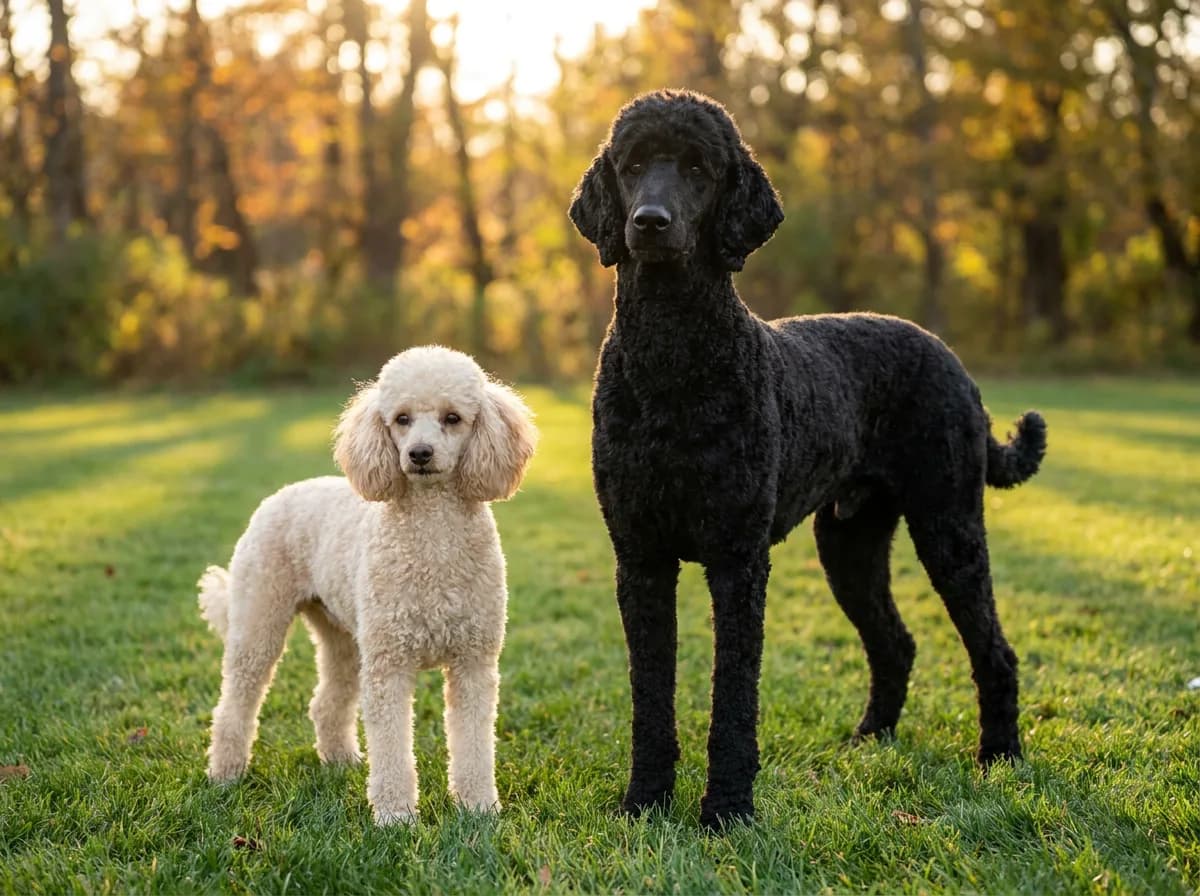
The Miniature and the Standard are the same breed in two sizes, so the choice comes down to how much dog you want to carry, feed, groom and exercise. A Standard stands over 15 inches at the shoulder and typically weighs 40 to 70 pounds; a Miniature stands 10 to 15 inches and weighs 10 to 15 pounds. The size difference is easiest to judge side by side.
| Comparison point | Miniature Poodle | Standard Poodle |
|---|---|---|
| Shoulder height | Over 10 in, up to 15 in | Over 15 in |
| Typical weight | 10 to 15 lb | 40 to 50 lb (females), 60 to 70 lb (males) |
| AKC life expectancy | 10 to 18 years | 10 to 18 years |
| Exercise | About an hour a day | At least as much; the stronger running and hiking partner |
| Grooming time | Less coat to brush and clip; small-dog groom prices | Much more coat; longer sessions and higher groom fees |
| Space and travel | Fits small homes, laps and many in-cabin carriers | Needs more floor space; travels in a car crate |
| Health risks more common in this size | Patellar luxation, Legg-Calve-Perthes disease | Bloat (GDV), sebaceous adenitis |
| Breeder health tests (CHIC) | PRA DNA test, eye exam, patella and hips | Hips and eye exam, plus thyroid, skin or heart |
Choose the Standard if you want a running or hiking partner, have room for a 50-pound dog and can budget for its larger food, grooming and veterinary bills. Choose the Miniature if you live in a smaller space, travel often or want a dog you can lift easily. Temperament differs less than size: the AKC describes the Standard as the most athletic of the three varieties, but both are bright, people-oriented and need daily work for their minds.
Medium (Moyen) Poodles and the other Poodle sizes
You will also see "moyen" (French for medium) Poodles advertised. The FCI recognizes four sizes: Toy (about 24 to 28 cm), Miniature (over 28 up to 35 cm), Medium (over 35 up to 45 cm, about 14 to 18 inches) and Standard (over 45 up to 60 cm). The AKC recognizes only three, so the FCI Medium overlaps the top of the AKC Miniature range: a 14-inch dog is a Medium in Europe but a Miniature in the United States, while anything over 15 inches is an AKC Standard. The Poodle breed guide compares every Poodle size and type.
Miniature Poodle vs Toy Poodle
The Toy is the smaller dog: 10 inches or under at the shoulder and about 4 to 6 pounds, according to the AKC, compared with over 10 and up to 15 inches and 10 to 15 pounds for a Miniature. Both share one breed standard, coat and grooming routine, but the Toy is shown in the AKC Toy Group and the Miniature in the Non-Sporting Group. How the difference plays out day to day:
- Sturdiness: a Miniature copes better with a busy household and older children, while a Toy is more easily hurt by falls and rough play.
- Portability: a Toy fits an under-seat carrier with room to spare; many Miniatures fit too, but the tallest may not.
- Is my poodle a toy or miniature? Measure at the withers: 10 inches or under is a Toy, and anything over 10 inches up to 15 is a Miniature.
For Toy size, temperament and care in detail, read our Toy Poodle size and temperament guide.
Are teacup Miniature Poodles real?
No. "Teacup," "micro mini" and "tiny toy" are sales labels, not recognized sizes; the AKC recognizes only the Toy, Miniature and Standard. A dog sold as a teacup Miniature is either an unusually small Toy or a mislabeled dog, and breeding for extreme smallness raises the risk of health problems. Read our guide to teacup poodle realities before paying a teacup premium.
Miniature Poodle colors
Miniature Poodles come in every Poodle color. The AKC lists 11 standard colors for the variety, and the nose and eye color that go with each matter as much as the coat:
- Black points (black nose, eye rims and lips): black, blue, gray, silver, cream and white, and red is usually black-pointed too.
- Liver points (brown nose and dark amber eyes): brown, often called chocolate, plus cafe au lait and silver beige, a faded brown.
- Either: apricot, where black points are preferred but liver points are permitted.
Two-color dogs, such as black and white or brown and white partis and black and tan phantoms, can be registered with the AKC under alternate color codes, but they are disqualified from conformation shows, which require an even, solid color at the skin. A pink nose on a white or cream Miniature is a pigment fault in the show ring, though it does not affect temperament, and unpigmented skin sunburns more easily. Names like gold, tan or multi are not AKC color names, so ask which registered color or pattern a puppy will be listed under.
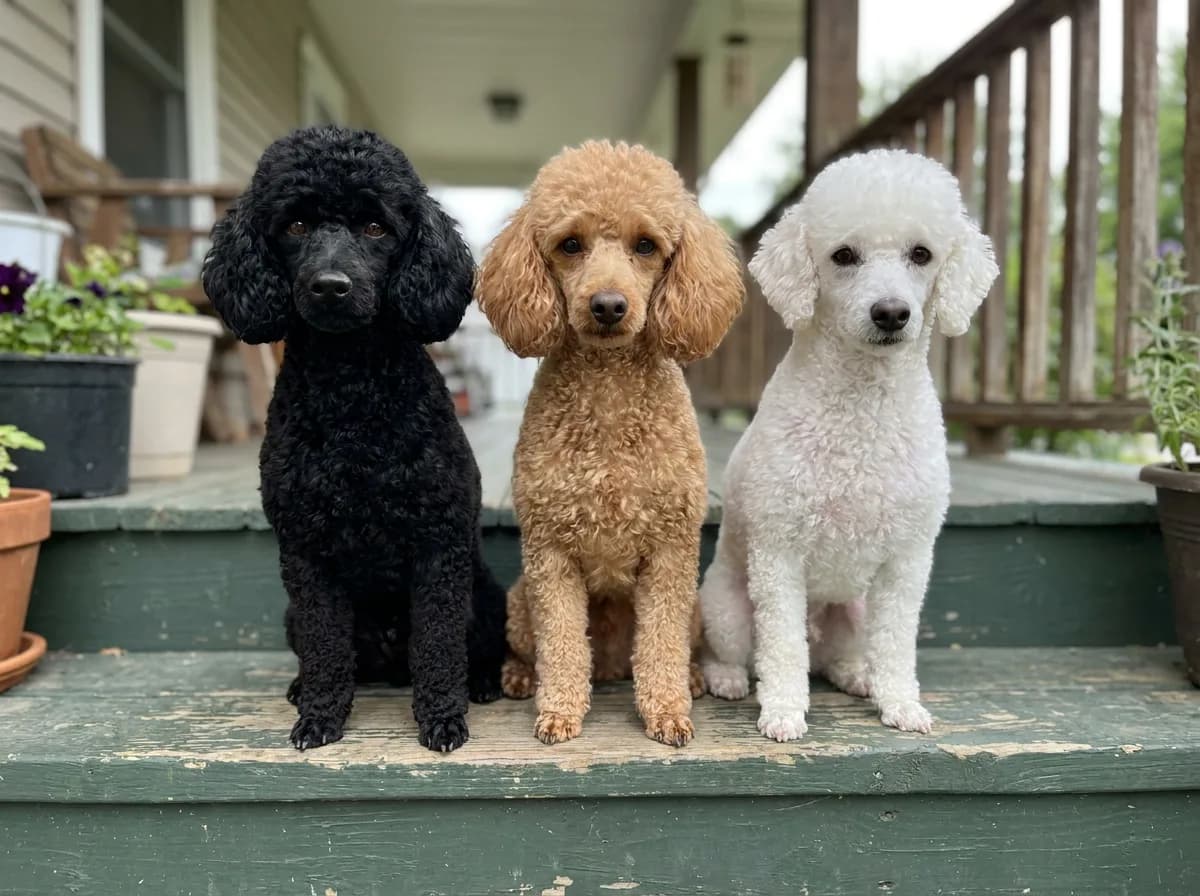
Puppy coats often change color, so the shade you see at 8 weeks is not always the adult color:
- Black to blue, silver or gray: these colors are born black and clear with age, often showing lighter hair on the face and feet first.
- Red to apricot: a red puppy commonly lightens, so a full-grown red Miniature may be a shade softer than it was at 8 weeks.
- Brown to cafe au lait: chocolate puppies can fade toward a milky light brown.
- Cream to near-white: cream puppies can look white, and the two are easy to confuse until the coat matures.
Most clearing is finished by 18 to 24 months. Ask to see both parents, and grown puppies from earlier litters, because they predict adult color better than a young puppy's coat does.
| Color | Adult coat | Nose and eye pigment | Puppy to adult | AKC status |
|---|---|---|---|---|
| Black | Solid jet black coat | Black nose, very dark eyes | Stays black unless it carries a fading gene | Standard color |
| White | Bright white coat | Black points; a pink nose is a fault | Hard to tell from cream until the coat matures | Standard color |
| Cream | Ivory, just off white | Black points | Often mistaken for white as a puppy | Standard color |
| Apricot | Pale orange-tan apricot coat | Black preferred, liver allowed | Often lightens with age | Standard color |
| Red | Rust to deep mahogany | Black points | Commonly fades toward apricot | Standard color |
| Brown | Dark chocolate brown | Liver nose, dark amber eyes | May fade toward cafe au lait | Standard color |
| Cafe au lait, silver beige | Milky light brown to pale beige | Liver points | Born darker, clears with age | Standard colors |
| Blue | Slate blue-gray | Black points | Born black, clears slowly | Standard color |
| Silver, gray | Pale silver to medium gray | Black points | Born black; face and feet lighten first | Standard colors |
| Parti (black and white, brown and white, red and white) | White with solid patches, a multi-color look | Matches the patch color | Pattern set at birth | Alternate color; disqualified in AKC shows |
| Phantom (black and tan, brown and apricot) | Solid coat with tan points on face, chest and legs | Matches the main color | Markings visible from puppyhood | Alternate color; disqualified in AKC shows |
| Merle (blue merle, chocolate merle) | Marbled patches of diluted color | Varies | Pattern set at birth | Not an AKC Poodle color; not in UK or FCI standards |
Merle needs a closer look. It is not among the AKC's standard or alternate Poodle colors, the UK standard accepts only solid colors, and the FCI's 2024 standard lists parti, phantom-style and brindle patterns but not merle. Most Poodle authorities treat a merle coat as a sign of another breed somewhere in the pedigree, and breeding two merles together can produce double-merle puppies at high risk of deafness and blindness. Our guide to merle dogs explains the genetics.
Poodle colors across all sizes
Every Poodle size shares the same color genetics, so wanting a particular color rarely forces a size compromise; what differs is which colors breeders of each size happen to produce. Premiums for "rare" colors are pricing decisions rather than signs of quality, and the parents' health testing matters far more. For the full palette, how fading works and which color tends to cost the most, see our guide to Poodle colors by size.
Miniature Poodle FAQs
Yes. Under the Americans with Disabilities Act, a service animal is a dog individually trained to perform a task related to a person's disability, and the ADA definition covers any breed and any size of dog. A task-trained service dog can be a Miniature Poodle; the training and temperament qualify it, not the breed. Dogs whose presence simply provides comfort, including emotional support animals, do not meet the ADA definition.
Often, if the dog fits the airline's rules. Cabin policies vary by airline, but a dog that flies in the cabin generally has to ride in an under-seat carrier that fits beneath the seat in front of you and lets it stand and turn around, and some airlines add an airline weight limit for pet plus carrier. A small Miniature usually fits more easily than a 15-inch dog, which may not be able to stand in a low carrier, so compare the exact carrier dimensions and weight rules with your dog's measurements before you book.
How long it can hold its bladder depends mostly on age. A puppy can wait roughly one hour per month of age, the AKC's rule of thumb, so a 3-month-old needs a break about every three hours during the day, and puppy bladder control improves steadily through the first year. For adults, plan adult bathroom breaks at least every four hours or so when you are out; the RSPCA advises against leaving a dog alone longer than four hours, partly so it can go to the toilet.
Yes. Its size, low shedding and trainability suit apartment living, provided it gets about an hour of exercise a day and you work on alert barking, which neighbors can hear through shared walls. Plan for elevator or stair trips for puppy toilet breaks, and teach a calm response to hallway noise early.
Many do. The Poodle was developed as a water retriever, and the AKC notes that most Poodles love the water. Introduce swimming gradually in calm, shallow water, use a dog life jacket on boats and in open water, and rinse off chlorine or salt afterward. Dry the ears thoroughly after every swim, since trapped moisture can lead to ear infections.

Coreen Saito is a pet writer and longtime shelter volunteer with more than a decade in animal rescue. She covers cat behavior, breed care, and the small, ordinary science of sharing a life with companion animals, with a particular focus on honest takes about the products and decisions that actually matter. At home in Arizona, she's outranked by Mac (a dog with the loudest opinion in the house), Rebel (a cat who governs by quiet authority), and Meri (an orange tabby who runs the late shift and the laundry basket). She writes about all three, plus the rescues that keep coming through her life, at LifeWithMinty.com.
Sign up for expert-backed reviews and safety alerts all in one place.