Teacup Poodle: Size, Care, and Health Realities
A teacup Poodle is a very small Toy Poodle sold under a marketing label, not an official size. See how big they really get, the health risks of extreme smallness, real costs and safer options.
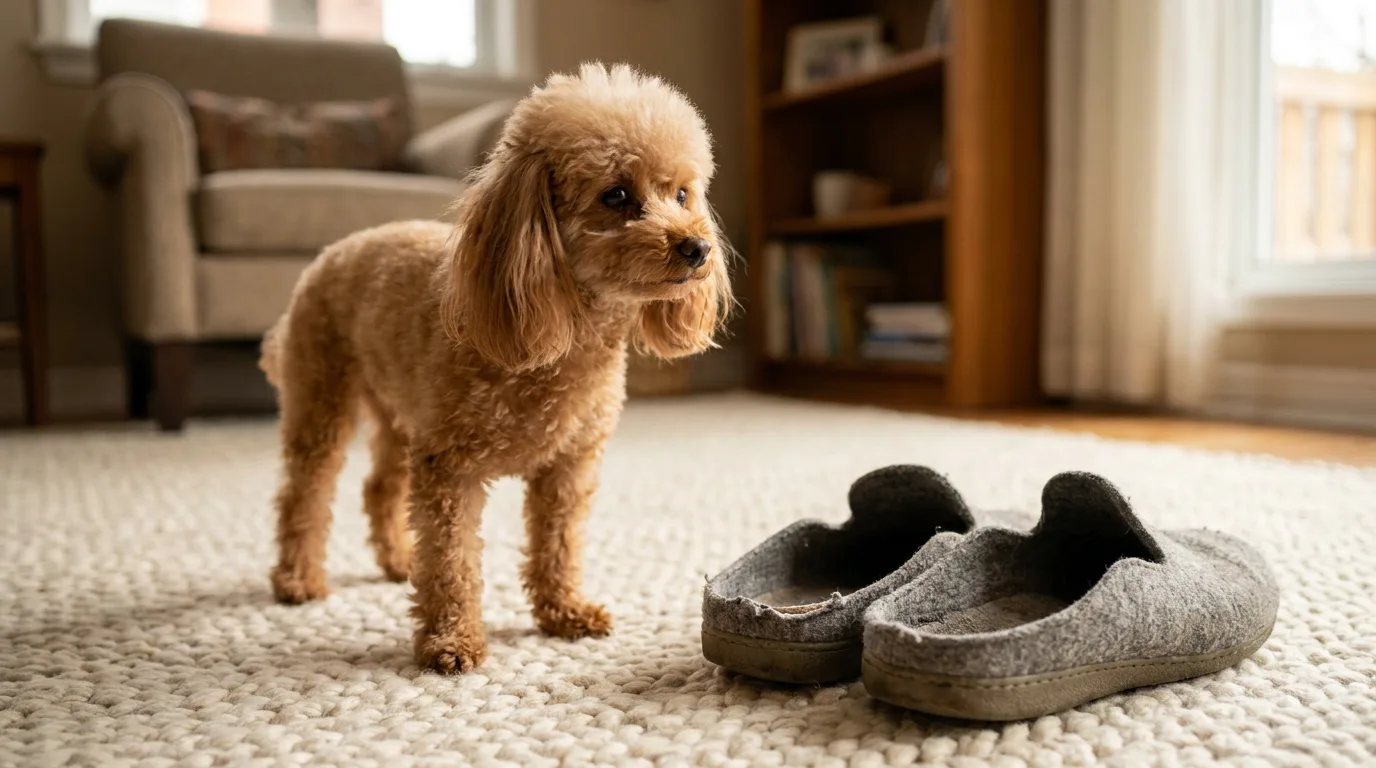
Most dogs sold as teacup Poodles are small adult Toy Poodles like this one, shown next to house slippers for scale.
Petful is reader supported. As an affiliate of platforms like Amazon and Chewy, we may earn a commission when you buy through links on this page. There is no extra cost to you.
A teacup Poodle is a very small Toy Poodle sold under a marketing name, not a separate breed or an official size. The American Kennel Club (AKC) recognizes three Poodle varieties, and the smallest, the Toy, stands 10 inches or under at the shoulder and typically weighs 4 to 6 pounds. Sellers use "teacup" for puppies they forecast to finish at the small end of the Toy range or below it, from under 4 pounds to as much as 6, and charge a premium for the forecast.
Smaller is not a harmless upgrade. The size that makes a teacup appealing also makes it more likely to suffer dangerous drops in blood sugar as a puppy, break a leg in an ordinary fall and develop crowded, diseased teeth. And no breeder can promise how small a puppy will stay, so the extra money buys a prediction, not a guarantee.
- 1"Teacup" is not a recognized size. The AKC Toy standard (10 inches or under at the shoulder) defines the smallest Poodle, and no major registry lists a teacup.
- 2The AKC gives 4 to 6 pounds as a typical Toy Poodle weight, and many puppies sold as teacups grow into that ordinary range.
- 3Extreme smallness brings real risks: low blood sugar in young puppies, broken legs from falls, crowded teeth, slipping kneecaps and a weak windpipe.
- 4No breeder can guarantee adult size. The safest route to a small Poodle is an adult Toy with a known adult weight, a health-tested puppy from a breeder who does not sell teacups, or a Poodle rescue.

Sign up for expert-backed reviews and safety alerts all in one place.
What is a teacup Poodle?
A teacup Poodle is a Toy Poodle at the small end of the Toy range, or below it, marketed as though it were a separate size. It is not a recognized size in any major registry. The AKC's Poodle standard, published by the Poodle Club of America, defines three varieties by height at the highest point of the shoulders: the Standard is over 15 inches, the Miniature is 15 inches or under but over 10 inches, and the Toy is 10 inches or under. The United Kennel Club also sets the Toy at 10 inches or under and lists nothing smaller.
Because no teacup class exists, a registered "teacup" is simply a registered Poodle. AKC or UKC papers can document a puppy's parentage, but they cannot certify how small it will be. The same goes for "French Poodle," a common nickname for the same breed rather than a separate type or size. For the breed's history, temperament and the three recognized sizes side by side, see our Poodle breed guide.
Sellers and searchers spell the label several ways, and none of the spellings changes the dog:
- Teacup Poodle: the most common listing term.
- Tea cup or tea-cup Poodle: the same label with a space or a hyphen.
- Mini tea cup or miniature tea cup Poodle: a label that borrows the name of the Miniature, a real variety that is larger than the Toy (more on these size labels below).
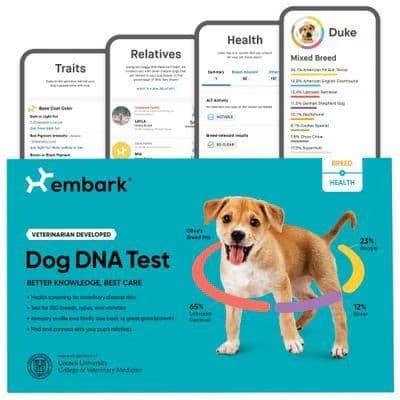
If you already have a dog sold as a purebred teacup and want to know what you have, a breed-and-health DNA test such as the Embark Breed & Health Dog DNA Test Kit can estimate its Poodle ancestry (some "teacups" turn out to be crosses), without proving a pedigree. It also screens for inherited disease variants, including PRA-prcd, the form of progressive retinal atrophy the Poodle Club of America asks Toy breeders to test for. Its report includes a predicted adult weight, but that is an estimate, not a guarantee, and no DNA test replaces health results on the parents before you buy.
Petful may earn a commission when you click through to Chewy, at no extra cost to you.
What does a teacup Poodle look like?
An adult teacup Poodle looks like any small adult Poodle: a square, fine-boned body, a long and straight muzzle, dark oval eyes, long ears that hang close to the head, and a dense, curly coat with a slightly harsh texture. A full coat makes the dog look bigger than it is. Clipped short, or wet from a bath, a teacup shows how slight the frame underneath really is, with fine legs and a narrow chest.
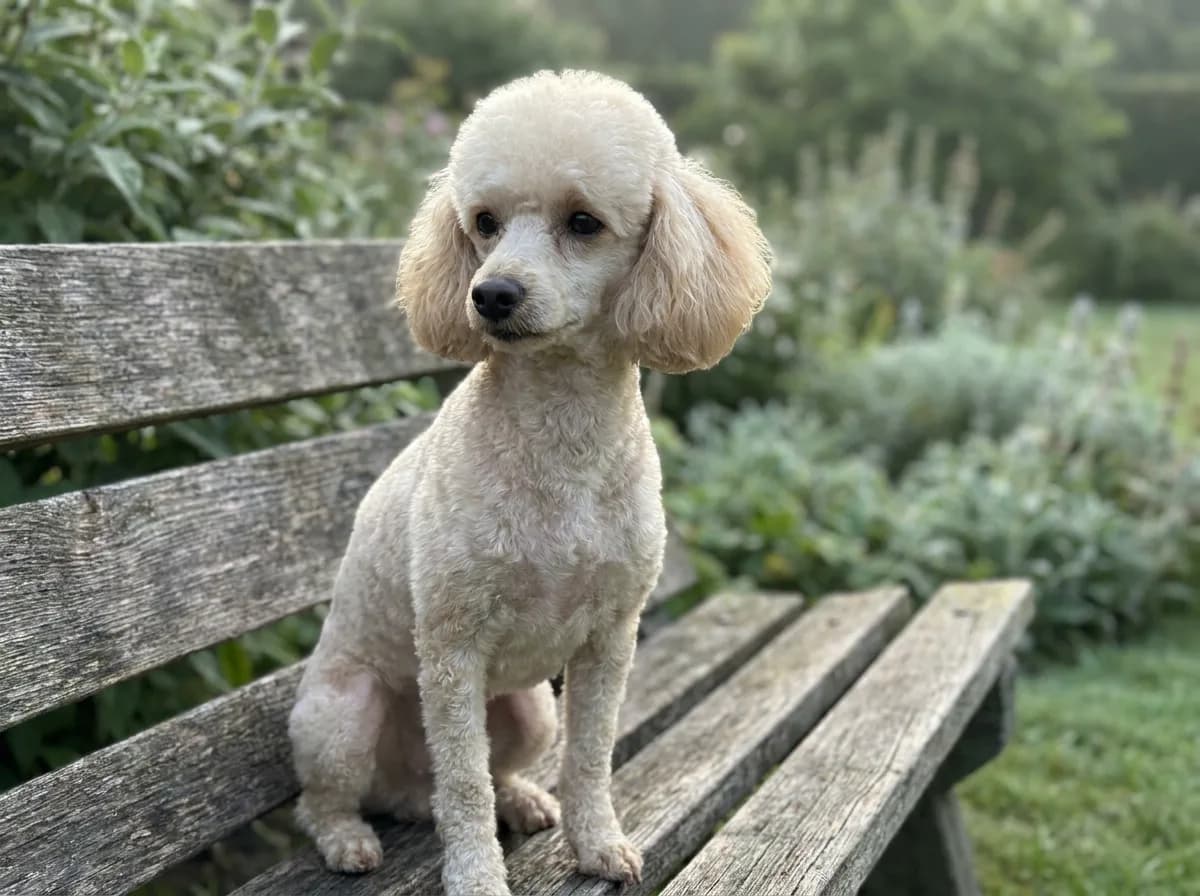
Be careful with pictures. The classic listing photo of a puppy sitting in a teacup shows a baby of 8 to 12 weeks, and almost any Toy puppy that age can be posed in a cup, so the photo says nothing about adult size. When you compare teacup Poodle photos, look for dogs at least a year old, ideally pictured next to something of known size, and ask the seller for recent photos of both parents as adults.
Coat color does not change the build (shades are covered in the next section). Some dogs sold as teacup Poodles are actually crosses, most often the teacup Maltipoo or another small cross from our guide to Poodle mixes, which is one more reason to confirm parentage before you pay a purebred price.
Teacup Poodle colors
Teacup Poodles come in exactly the same colors as other Poodles, because they are Poodles. The AKC standard calls for an even, solid color at the skin and names shades from black, white and cream through apricot, brown, café au lait, silver, gray and blue, and red is also widely bred in Toys. Natural shading within one color is not a fault. What the standard rules out is the parti-color (white with patches of another color), which is disqualified in the show ring but makes no difference to a pet's health.
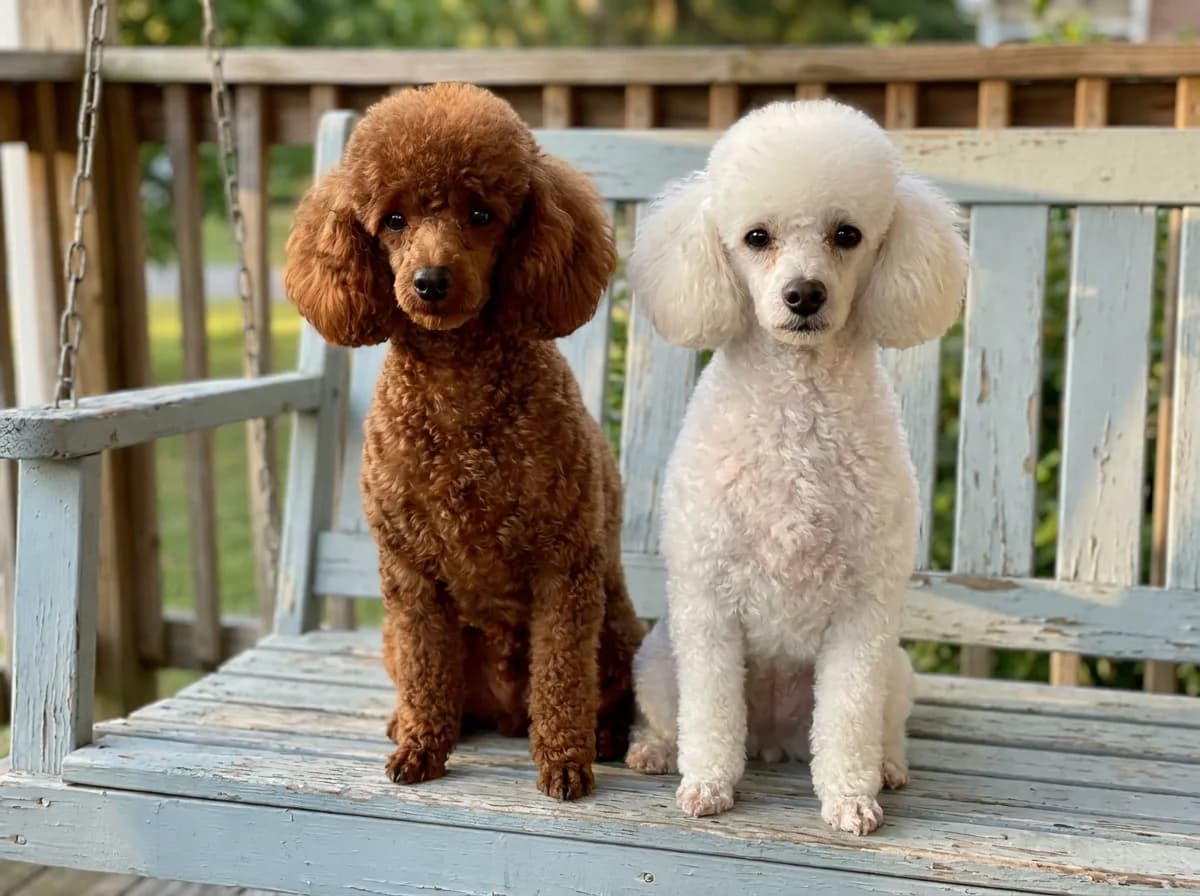
When a listing leads with color, a few facts save money and disappointment:
- Fancy names are usually ordinary shades. Cinnamon, caramel, ginger and chocolate describe reds, apricots and browns, not rare colors.
- Puppy color can change. Silver Poodles are born dark and clear to silver as they mature, and many reds and apricots lighten with age, so judge the adult color rather than a 10-week-old photo.
- Merle is not a Poodle color. It appears nowhere in the breed standard, and the UK's Kennel Club (now the Royal Kennel Club) stopped registering merle Poodles in January 2020 because the pattern has no documented history in the breed. A merle teacup sold at a premium is a reason to ask for DNA and parentage records.
- Phantoms and black-and-white partis are the same dogs in different markings. Neither is more "teacup" than a solid red or white puppy.
Because color says nothing about size or health, it is a poor reason to pay more for a pet. For every Poodle shade, the rarest colors and how color affects price, see our Poodle colors guide.
Teacup vs. toy Poodle: what is the difference?
A teacup Poodle is a Toy Poodle, so there is no difference in breed, temperament or basic care. "Toy" is the recognized variety, defined by height at the shoulder. "Teacup" is a seller's word for a Toy at the smallest end of the Toy range or below it, usually advertised at 9 inches or under and anywhere from about 2.5 to 6 pounds.
In practice, many teacups are simply Toys at the light end of the range, and some listings even predict adult weights inside the ordinary Toy range (the price section shows examples). Where a dog really does stay far below 4 pounds, the difference is not a bonus: it is the fragility, blood sugar and dental risk covered in the health section below.
| Variety or label | Height at shoulder | Typical adult weight | Registry status | What the name promises |
|---|---|---|---|---|
| Miniature Poodle | Over 10 inches, up to 15 inches | 10 to 15 pounds | Recognized variety (AKC and UKC) | A real size class, larger than the Toy |
| Toy Poodle | 10 inches or under | 4 to 6 pounds | Recognized variety under the Toy Poodle standard | The smallest recognized Poodle |
| Teacup (seller label) | Advertised at 9 inches or under | Advertised at about 2.5 to 6 pounds | Not recognized by any major registry | A forecast that the puppy will stay small |
| Micro, nano, pocket or tiny toy (seller labels) | Not defined | Not defined; used for a seller's smallest puppies | Not recognized | A stronger size promise with nothing behind it |
If you are weighing an ordinary Toy against a teacup, start with our Toy Poodle guide, which covers the full-grown size, temperament and daily care of a typical Toy. The rest of this page covers what changes when the dog is smaller still.
Micro, mini, and tiny teacup labels
Once "teacup" became a selling point, other labels followed for even smaller puppies. None has a definition, a registry or a measurement standard behind it:
- Micro teacup or micro Poodle: the label for a seller's very smallest puppies.
- Nano and pocket: marketing words for the same idea, with no agreed weight.
- Tiny toy or tiny teacup: a description of the puppy's current size, not a variety.
- Mini teacup or miniature teacup: the most confusing label, because it borrows the name of the Miniature Poodle, a real variety that stands over 10 and up to 15 inches and typically weighs 10 to 15 pounds.
So what is a micro teacup Poodle? In practice it is a Toy Poodle puppy that a seller expects to stay smaller than its teacups, and the smaller the promise, the higher the health risk if it comes true. If you want a small Poodle that is sturdier than a Toy, the real option is the Miniature Poodle, whose size is set by the breed standard rather than a sales page.
How big does a teacup Poodle get?
A teacup Poodle usually ends up somewhere between the seller's forecast and the ordinary Toy range. Listings Petful reviewed in U.S. search results on September 26, 2026 claimed adult weights from about 2.5 pounds to "up to 6 pounds," with heights of 9 inches or under at the shoulder, and some of those forecasts fall inside the ordinary Toy range, while the AKC's Toy Poodle stands 10 inches or under and typically weighs 4 to 6 pounds (about 1.8 to 2.7 kilograms). No study measures teacups as a group, and many puppies sold under a teacup label grow into an ordinary Toy.
Height decides the variety, not weight. A Poodle's size class is set by height at the withers, the top of the shoulders, and two dogs of the same height can differ by a pound or more depending on bone and body condition. When a seller quotes only a weight, ask for heights too, for the puppy and both parents.
Four things decide how big a teacup Poodle gets:
- The parents' adult size: the best available predictor, which is why a seller should be able to give both parents' measured adult weights and heights.
- Early nutrition: an underfed puppy can be stunted, which is a health problem rather than a smaller type of Poodle.
- Health: some conditions, including a liver shunt, stunt growth, so an unusually tiny puppy deserves a veterinary exam, not a premium price.
- Normal variation: puppies from the same litter can finish at noticeably different sizes.
At the extreme, one breeder's site in the same September 2026 snapshot listed an adult dog born in 2020 at 2 pounds 7 ounces and 6.5 inches tall. At that size, every risk in the health section is magnified.
For trips to the veterinarian, choose a stable carrier that lets your dog stand, turn, and lie down comfortably. The Sherpa Original Deluxe carrier below is one small-dog option; compare its interior dimensions and weight limit with your actual dog rather than a seller's teacup label. Keep the carrier level and support its base when lifting.
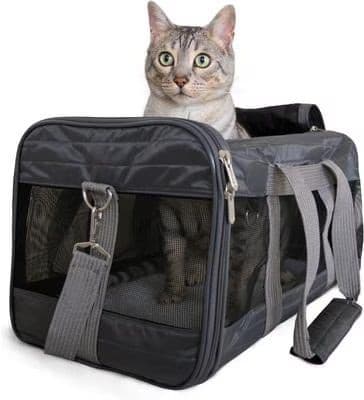
An airline-approved soft-sided carrier with mesh ventilation windows, a top-rated travel pick for cats and small dogs.
Petful may earn a commission when you click through to Chewy, at no extra cost to you.
Full-grown teacup Poodle height and weight
A full-grown teacup Poodle is sold with a predicted adult weight anywhere from under 4 pounds to "up to 6 pounds," against an AKC Toy Poodle size of 4 to 6 pounds at 10 inches or under. When you buy a puppy, that adult weight is a forecast. Small breeds typically stop growing by 6 to 8 months, according to the AKC, and may fill out a little more by their first birthday, so the number you pay for is not a measurement until then.
| Weight and growth chart | Weight | Height at shoulder | What it tells you |
|---|---|---|---|
| Seller teacup label | From under 4 pounds to "up to 6 pounds" | 9 inches or under | A forecast, not a measurement |
| Seller micro or tiny teacup label | The smallest puppies; one advertised adult at 2 pounds 7 ounces | One advertised adult at 6.5 inches | The smaller the promise, the higher the health risk |
| AKC Toy range | 4 to 6 pounds (1.8 to 2.7 kg) | 10 inches or under | The recognized adult Toy Poodle size |
| Growth checkpoint: 8 to 12 weeks, the usual age at sale | Changes week to week | Changes week to week | Too early to know adult size |
| Growth checkpoint: 6 to 8 months | Close to adult weight | Close to adult height | Most small breeds stop growing by now (AKC) |
| Growth checkpoint: 12 months | Adult weight | Adult height | Size is now a fact, not a promise |
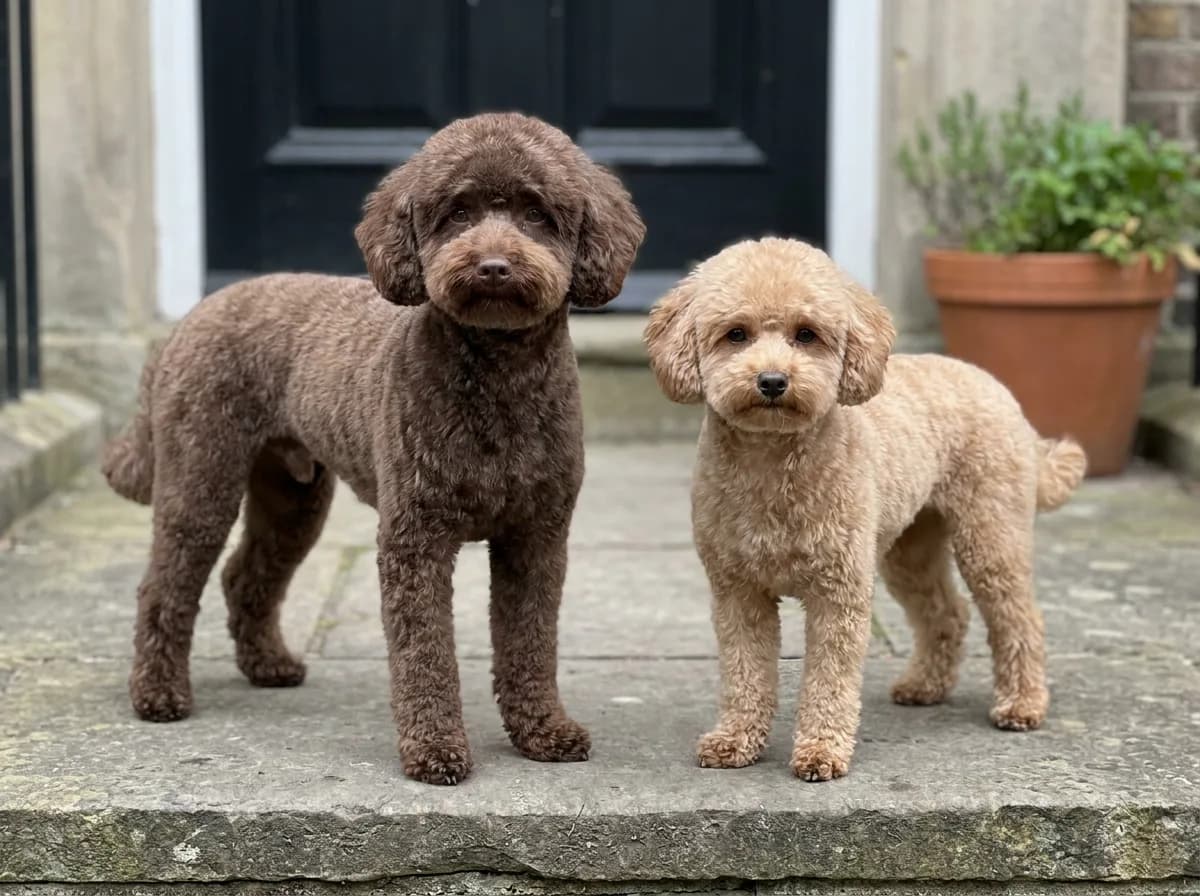
Photographed side by side at the same distance, a standard Toy Poodle and a smaller adult Poodle sold as a teacup often differ by only a pound or two. No breeder can guarantee adult size: genetics sets a range, and early nutrition, health and normal variation move each puppy within it. If a precise size matters to you, the only certain way to get it is to choose a dog that has already finished growing.
How breeders produce teacup Poodle puppies
There is no teacup gene and no teacup line with its own standard. Very small Poodle puppies come from a handful of practices, and a buyer should know which one produced the puppy in front of them:
- Breeding the smallest to the smallest. Veterinarian Jennifer Coates describes teacup breeding for PetMD as pairing the smallest females with the smallest males to sell tiny puppies at high prices. Selecting for size alone ignores everything else a breeding dog passes on.
- Runt-to-runt breeding. Runts were once held back as less desirable, but teacup breeders deliberately breed the smallest puppies from each litter, according to veterinarian Catherine Barnette writing for PetsRadar. A runt is sometimes small because of an underlying problem, such as a liver shunt that stunts growth, and breeding it passes on risk rather than healthy small size.
- Underfeeding. Barnette also notes that some breeders limit puppies' food to keep them small. A puppy stunted this way is not a teacup by nature, and it is more prone to hypoglycemia.
- Selling young puppies as teacups. Nearly any Toy puppy looks teacup-sized at 8 weeks, and the Better Business Bureau warns that sellers use "teacup" to make misleading promises that a dog will stay smaller than normal for its breed.
Tiny puppies also come out of high-volume commercial operations, often called puppy mills, where buyers rarely get to meet the parents; our guide explains how to recognize one.
Tiny mothers pay a price too. Small breeds have small litters: a study of 10,810 Norwegian Kennel Club litters across 224 breeds found the smallest breeds averaged about 3.5 puppies per litter, against 5.4 across all breeds (Borge and colleagues, 2011). Giving birth is also riskier at the extremes of body size. In a UK study of nearly 19,000 female dogs, those under 10 kilograms (about 22 pounds) had 1.6 times the odds of a difficult birth of females in the study's reference weight group (O'Neill and colleagues, 2017), and a difficult birth can end in an emergency cesarean section.
So how many puppies can a teacup Poodle have? Expect a small litter (the smallest breeds average three to four puppies), from a mother at higher risk of needing help to deliver it. Responsible Toy breeders do the opposite of teacup breeding: they breed to the standard rather than below it, health-test both parents, and do not advertise puppies as teacups.
Teacup Poodle health problems
Toy Poodles are generally long-lived, but breeding a dog below its variety's normal size concentrates the problems toy breeds already face. Veterinarians' lists of concerns for teacup dogs include hypoglycemia, broken bones, kneecap and windpipe problems, dental disease, liver shunts and hydrocephalus, along with trouble handling cold, medication doses and anesthesia. Here is what matters most for a very small Poodle. None of it replaces an exam, so call your veterinarian about anything that worries you.
Low blood sugar. Hypoglycemia is the most urgent risk in a young teacup. The AKC's chief veterinarian, Dr. Jerry Klein, notes that affected puppies are often under 12 weeks old, newly acquired and toy-sized, and that a tiny puppy can use up its glucose between meals, especially when it is active, cold or stressed. The move to a new home, a skipped meal or intestinal parasites can all tip it over.
Prevention is mostly routine: small, frequent meals, a warm and calm first week, and deworming on your veterinarian's schedule (the feeding section below has a checklist). Our guide to puppy hypoglycemia explains causes and prevention in more depth.
- Weakness, wobbling, trembling, unusual sleepiness, a glassy stare or a seizure can mean low blood sugar. If the puppy is conscious, rub a little corn syrup or honey on its gums, then call your veterinarian or an emergency clinic and take the puppy in right away. If it is unconscious or having a seizure, get it to a veterinarian or emergency clinic immediately. Never pour liquid into the mouth of a puppy that cannot swallow.
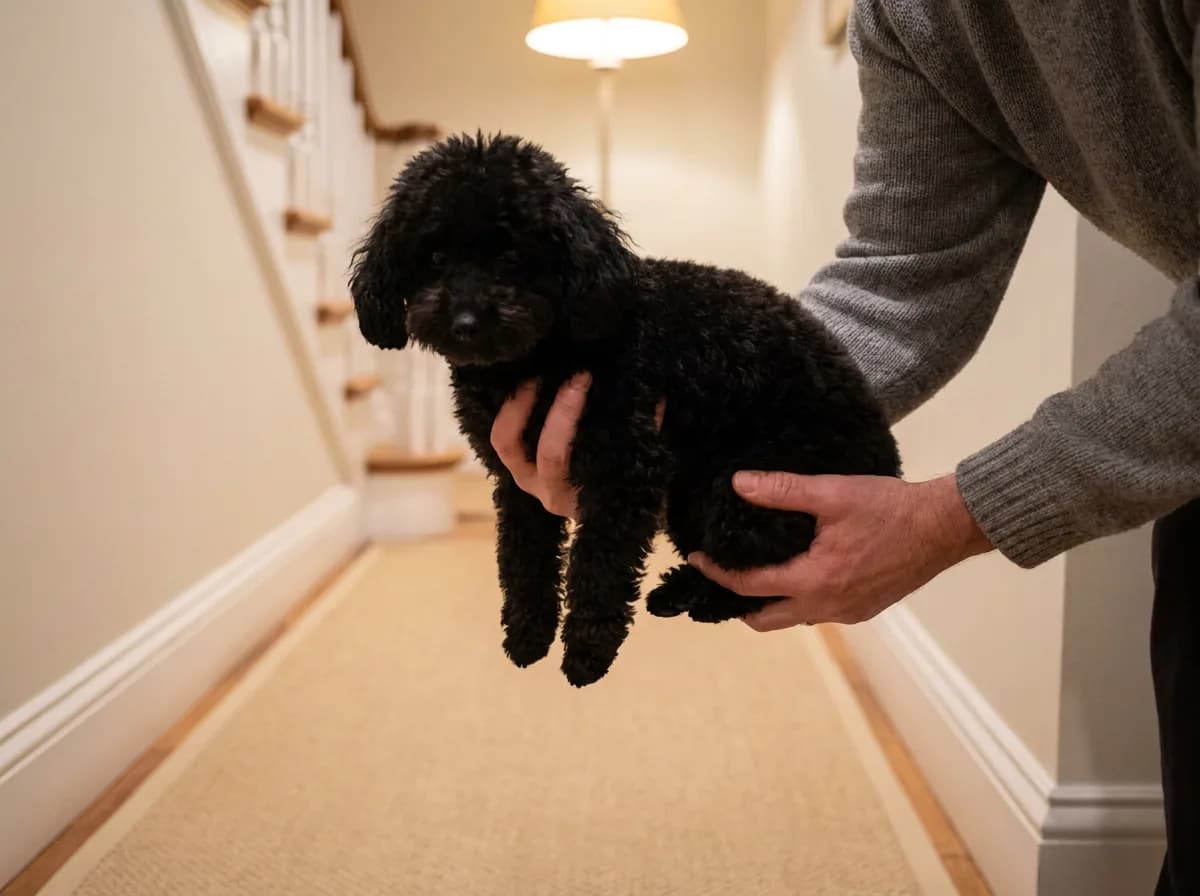
Broken bones. Fractures are the injury tiny dogs are known for. Breaks of the forearm (the radius and ulna) after a fall are among the most common problems veterinarians treat in toy breeds, and the cause is usually ordinary: a jump off a couch or a leap out of someone's arms, according to Dr. Lucas Beierer, writing for the AO Foundation's veterinary group. The lower forearm of a toy dog also has a poorer blood supply, so these fractures can be slow to heal. Lift a teacup with two hands, one under the chest and one under the hindquarters, give it steps up to furniture, and keep it out of children's arms.
Slipping kneecaps. Patellar luxation, a kneecap that slides out of its groove, mainly affects small dogs, and the American College of Veterinary Surgeons (ACVS) names Miniature Poodles among the typical breeds. The classic sign is a few skipping steps with one hind leg held up, and our guide to luxating patella covers grades and treatment.
A weak windpipe. Tracheal collapse, a windpipe that flattens as its cartilage weakens, causes a harsh cough that sounds like a goose honk and is seen particularly in Yorkshire Terriers, Pomeranians, Poodles and Chihuahuas, according to the ACVS. Walking a teacup on a harness and keeping it lean both reduce strain, and our collapsed trachea guide explains treatment.
Other problems to know about:
- A soft spot in the skull. An open fontanel that persists past 3 to 4 months is common in some tiny breeds. Most are harmless, but the brain is less protected from a knock, and occasionally the soft spot comes with hydrocephalus, according to VCA Animal Hospitals.
- Liver shunt. A blood vessel that bypasses the liver can cause small body size and wobbliness or dullness that is often more noticeable after meals, per the ACVS. An unusually small, slow-growing puppy should be checked for it.
- Inherited eye disease. Toy Poodles can inherit progressive retinal atrophy, a gradual loss of vision, and a DNA test identifies the PRA-prcd form.
- Cold, drugs and anesthesia. A 2- or 3-pound dog chills quickly and leaves little margin for error with medication doses and anesthesia, so a veterinarian experienced with tiny patients matters.
- Heart and hips. Degenerative mitral valve disease and Legg-Calvé-Perthes disease, a hip condition of small breeds, also appear on veterinarians' lists for teacup dogs.
Before you buy, ask for both parents' results on the three CHIC health tests (Canine Health Information Center) that the Poodle Club of America requires of Toy Poodles:
- A DNA test for PRA-prcd from an OFA-approved laboratory.
- An eye exam by a board-certified veterinary ophthalmologist, repeated yearly.
- A patellar luxation evaluation.
CHIC results are public, so you can look up a registered parent on the OFA website. A seller who offers only a "vet check" has not done this screening.
Crowded teeth. A large UK study singles out the Toy Poodle for dental disease. Toy breeds have small mouths but relatively large teeth, and baby teeth that fail to fall out make the crowding worse, as veterinarian Kevin Fitzgerald explains for the AKC. In a UK study of 22,333 dogs, the Toy Poodle had the highest odds of periodontal disease of any breed, almost four times the odds of crossbred dogs (O'Neill and colleagues, 2021). Start brushing in puppyhood: a kit such as the Petsmile Professional Rotisserie Chicken Toothpaste + Toothbrush makes a daily habit easier, and your veterinarian can check for baby teeth that need removing.
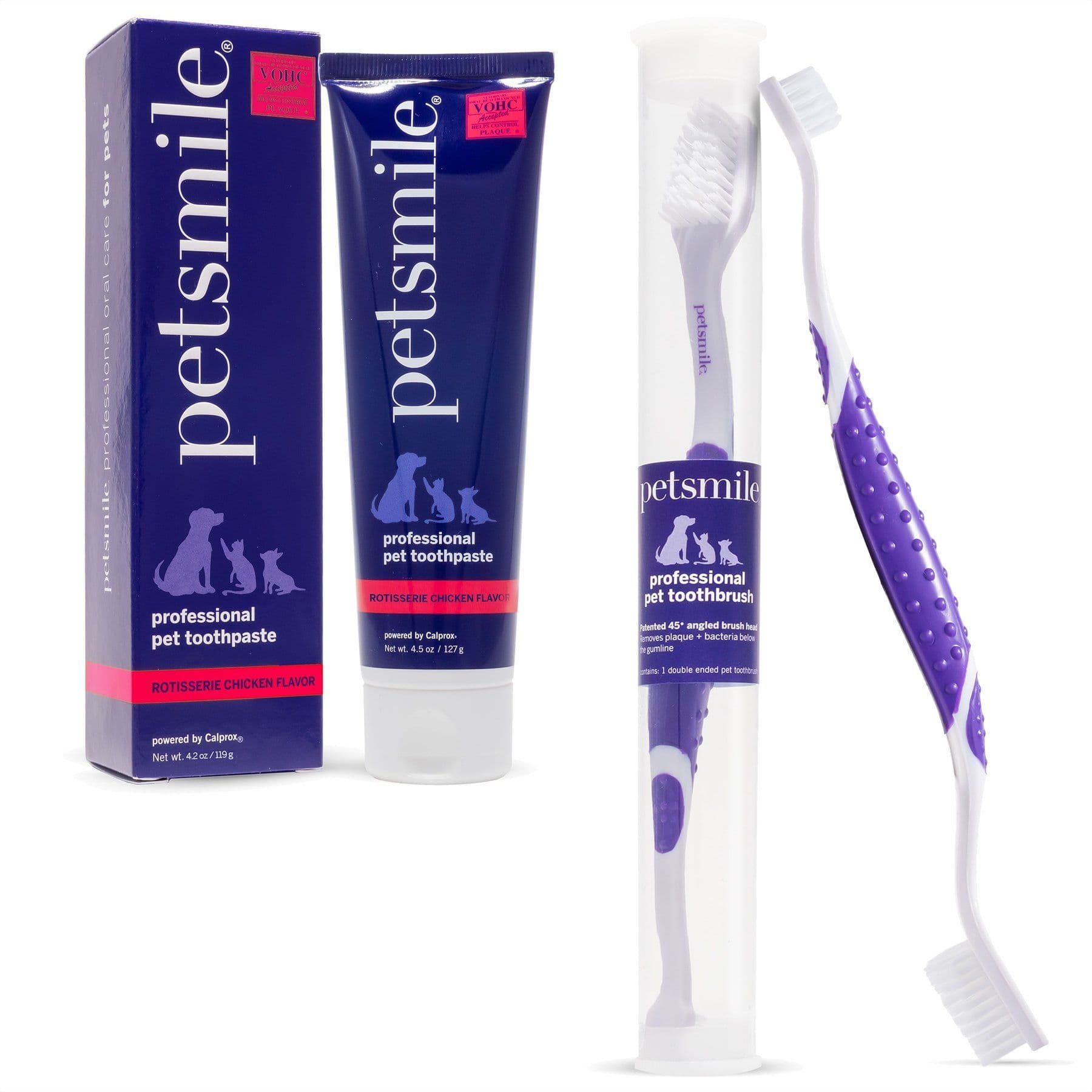
VOHC-accepted 4.2-ounce pet toothpaste paired with a dual-ended toothbrush.
Petful may earn a commission when you click through to Chewy, at no extra cost to you.
Do teacup Poodles live long?
They can, but nobody knows how long teacups live as a group, because no lifespan study tracks them. What is known is that Toy Poodles are among the longer-lived dogs: the AKC puts Toy Poodle life expectancy at 10 to 18 years. A teacup carries the same genes plus the added risks of extreme small size, and a broken leg, a low-blood-sugar crisis in puppyhood, early dental disease or an undiagnosed liver shunt can shorten a life that might otherwise reach the late teens.
What helps a small Poodle reach old age:
- Health-tested parents, with clear PRA-prcd, eye and kneecap results.
- A lean body, because extra weight adds strain to a weak windpipe and to the knees.
- Daily tooth brushing, plus the professional cleanings your veterinarian recommends.
- A fall-proof home, with steps, gates and two-handed lifting.
- Regular checkups, moving to twice-yearly visits once the dog is a senior.
Age at adoption matters too: a teacup-sized Toy that has reached 2 or 3 years old is already past the riskiest puppy months. For life expectancy by Poodle size, the most common causes of death and senior care, see our guide to how long Poodles live.
How much does a teacup Poodle cost?
Teacup Poodles, also listed as "tea cup" Poodles, carried asking prices of $3,200 to $7,800 in U.S. search results on September 26, 2026, and one seller priced puppies from "celebrity bloodlines" at $8,975 and up. A large puppy marketplace's teacup Toy Poodle listings spanned $950 to $8,000. A price far below that range is a warning sign rather than a bargain, as the red flags section explains.
What drives the price is mostly marketing: the size forecast, "rare" colors and show-line claims. At least two sellers in the same snapshot described their teacups as 4 to 5 pounds or up to 6 pounds as adults, which is the AKC's ordinary Toy range, so the teacup premium often buys a word rather than a smaller or healthier dog. For what a health-tested Toy, Miniature or Standard Poodle costs from a breeder, see our Poodle price by size guide.
Because a single emergency visit can run $300 to $4,000 depending on testing and overnight care, price pet insurance before a tiny puppy comes home. Policies generally exclude conditions noted before coverage begins, so compare how each plan treats accidents, hereditary problems such as slipping kneecaps, and waiting periods. Lemonade pet insurance is one option to quote alongside others.

Pet insurance
Compare accident-and-illness protection and optional preventative benefits for your puppy’s first year.
- Compare benefits as well as the monthly price
- Review waiting periods and exclusions
- Confirm availability directly with Lemonade
Eligibility, waiting periods, limits and exclusions apply.
Petful may earn a commission when you click through to Lemonade, at no extra cost to you.
| Asking prices and first-year costs | Typical range | What to know |
|---|---|---|
| Teacup Poodle asking prices, September 26, 2026 | $3,200 to $7,800; one seller $8,975 and up | Seller prices for a size forecast |
| Marketplace teacup Toy Poodle listings | $950 to $8,000 | Very low prices can signal a scam |
| Upfront costs of bringing a dog home | $1,195 to $4,650 | Exam, vaccines, spay or neuter, microchip, supplies and an adoption fee, but not a breeder's price |
| First year of care for a puppy | $1,460 to $6,745 | Food, vet visits, preventatives, training, dental care and insurance |
| Pet insurance in the puppy year | $175 to $880 | Buy before any problem is diagnosed |
| Professional grooming for a Poodle-type coat | $300 to $975 a year | A clip every few weeks; tiny dogs may cost less per visit |
| One emergency vet visit | $300 to $4,000 | Depending on testing and overnight care |
The costs after purchase are the same order of magnitude as the purchase itself. Rover's 2026 cost report puts the upfront cost of bringing a dog home at $1,195 to $4,650 and a puppy's first year of care at $1,460 to $6,745. A 4-pound dog eats less than a big one, but exams, vaccines and emergency care do not shrink with the dog.
Buying a teacup Poodle: red flags and puppy scams
The word "teacup" in an advertisement is itself a warning sign. The Better Business Bureau (BBB) lists it as a red flag in the 2025 update to its puppy scam study, noting that sellers use the term to make misleading promises that a dog will stay smaller than normal for its breed. The median loss reported to the BBB was $600 in 2025 (through September), down from $750 in 2022, and the BBB warns that the puppy in an online ad may not exist at all.
Red flags in teacup Poodle for-sale listings:
- "Teacup," "micro" or a guaranteed adult weight in the ad.
- A price far below the going rate, such as teacup Poodles for sale under $500.
- A seller who will not meet in person or take a live video call.
- Extra charges for a crate, vaccinations, shipping or "insurance" after you have paid.
- Pressure to pay immediately, especially through a payment app such as Zelle or Venmo.
- Photos that turn up on other websites in a reverse image search.
- No health-test results for the parents, only a "vet check."
Use this teacup claim check before you pay a deposit. It pairs each common listing claim with what it really means and the document to ask for.
| Teacup claim check | What it really means | Ask for this before any deposit |
|---|---|---|
| "Teacup" or "micro" | A size forecast; no registry recognizes either word | Both parents' measured adult weights and heights |
| "Guaranteed to stay tiny" or a guaranteed adult weight | No one can guarantee adult size | A written health guarantee, or an adult dog if size matters |
| "AKC registered" or "full papers" | Papers record parentage, not size or health | Registration numbers for the puppy and both parents |
| "Health tested" or "vet checked" | A basic exam is not CHIC screening | Both parents' PRA-prcd DNA, eye exam and patella results |
| "Rare" merle or cinnamon color at a premium | Merle is not a Poodle color, and fancy names describe ordinary shades | DNA results for color and parentage |
| "We ship nationwide" with extra fees | Shipping, crate and insurance fees are a BBB red flag | A live video call with the puppy and its mother, then a visit |
| A price far below market | Low prices are the bait in many reported scams | The seller's full name, physical address and references |
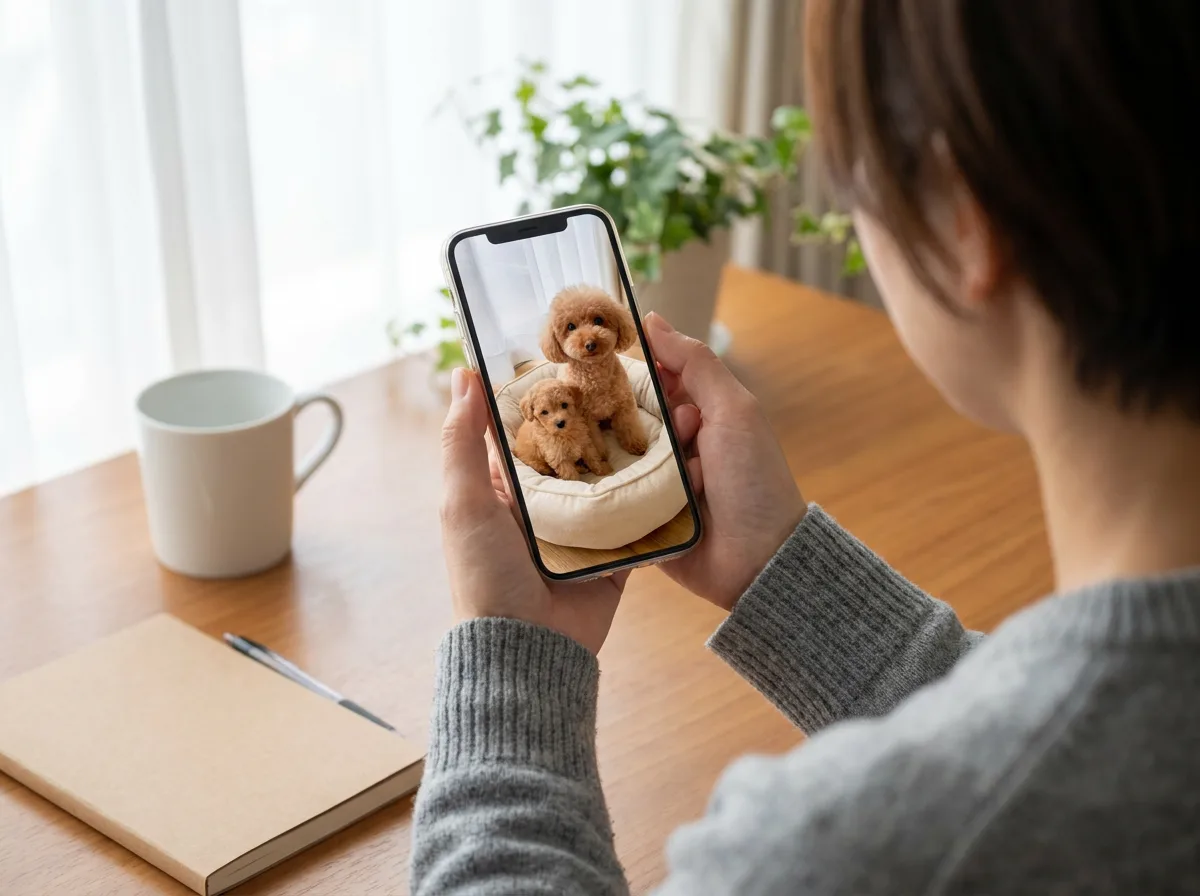
Before any money changes hands, ask for a live video call that shows the puppy with its mother, and visit in person if you can. Ask for both parents' adult weights and heights, their registration numbers and their CHIC or OFA results, and read the contract for what happens if the puppy has a congenital problem. Petful's list of questions to ask a breeder covers the rest. A reputable breeder will answer all of it, while a scammer or volume seller will push you toward payment instead.
Is a teacup Poodle a good pet?
A teacup Poodle can be a good pet for the right home: adults, or families with older and gentle children, who are home most of the day, handle the dog carefully and can keep to a feeding schedule. It is a poor match for households with toddlers or young children, people who work long days away from home, and anyone who wants a sturdy dog for hiking or rough play. Weigh the pros and cons honestly:
- Easy to carry and travel with in a carrier
- Low-shedding curly coat
- Fits small homes and eats very little
- Bright, trainable and devoted to its people
- Can live into the teens with good care
- Fragile bones break in falls from furniture or arms
- Needs professional clipping every few weeks
- A tiny bladder makes housetraining slower
- Needs small, frequent meals and company, so long workdays are hard
- Feels the cold, and drugs and anesthesia leave less margin for error
Temperament is Poodle temperament: clever, alert, people-focused and quick to learn. A frightened tiny dog may snap to protect itself, so gentle handling and early socialization matter. Only adults should lift the dog, and the FAQ below covers safe play with young children.
Housetraining takes longer because a tiny bladder fills fast. Take a young teacup out after every meal, nap and play session, and consider an indoor potty area for rain and cold, since a 3-pound dog chills quickly outside. Bladder control improves with age and size. By the AKC's rule of thumb, a Miniature Poodle puppy can hold it for roughly one hour per month of age, so a 3-month-old needs a trip out about every three hours during the day, and an adult Miniature should get a bathroom break at least every four hours, the longest the RSPCA advises leaving any dog alone. Our Miniature Poodle guide covers how long a mini Poodle can typically hold it.
A teacup puppy should not go a full workday without a midday meal and a potty break, and 8 hours alone, twice the RSPCA's four-hour limit, is too long for most adult Toys as well. For how long an adult Toy can be left alone, and the everyday downsides of Toy Poodles in general, see our Toy Poodle guide. Many Poodles love to sleep close to their people, a breed-wide trait covered in our Poodle breed guide, but a teacup should stay off high beds unless there are pet steps, because a jump down can break a leg.
How to care for a teacup Poodle
Caring for a teacup Poodle is ordinary Poodle care scaled down, plus three habits that matter more at this size: feeding on a schedule, protecting fragile bones and the windpipe, and keeping the coat and teeth clean. Set these routines up before the puppy comes home, because the first days in a new home, when stress, travel and a missed meal can combine, are the riskiest.
Feeding and blood sugar
Feed small, frequent meals of a complete puppy food made for toy or small breeds, with kibble small enough for a tiny mouth. The AKC's general puppy schedule is four meals a day from 6 to 12 weeks, three from 3 to 6 months and two from 6 months, and small breeds can move to adult food at 7 to 9 months. For teacup puppies, veterinarian Catherine Barnette advises feeding every four to six hours and warns that going just six or eight hours without food can cause life-threatening hypoglycemia (PetsRadar). Veterinarian Jennifer Coates adds that owners may need to feed a teacup puppy every two hours, even overnight, until it is 1 year old (PetMD). A teacup may need extra meals or a slower step-down, so set the schedule with your veterinarian and weigh portions, because a few extra grams are a big share of a 3-pound dog's day.
Keep an emergency sugar source, such as corn syrup or honey, at home and in your travel bag, and ask your veterinarian at the first visit exactly when and how to use it. The warning signs are listed in the health section above.
A daily feeding checklist for a teacup puppy:
- Weigh the puppy weekly and call the vet about a stall or drop in weight.
- Keep meals on time during busy days, travel and the first week home.
- Deworm on your veterinarian's schedule, since intestinal parasites can trigger low blood sugar.
- Keep the puppy warm, because a chilled puppy burns through its glucose faster.
If you work away from home, plan the midday meal before the puppy arrives: a person who can drop in, or, for an older puppy or adult that already eats reliably, a programmable feeder with a camera, such as the Petlibro Granary WIFI Automatic Cat & Dog Feeder with Camera, which dispenses small scheduled portions of dry food and lets you check that the meal was eaten. A feeder does not replace a person for a young puppy that is still prone to low blood sugar.
Harness, clothing, and a safe home
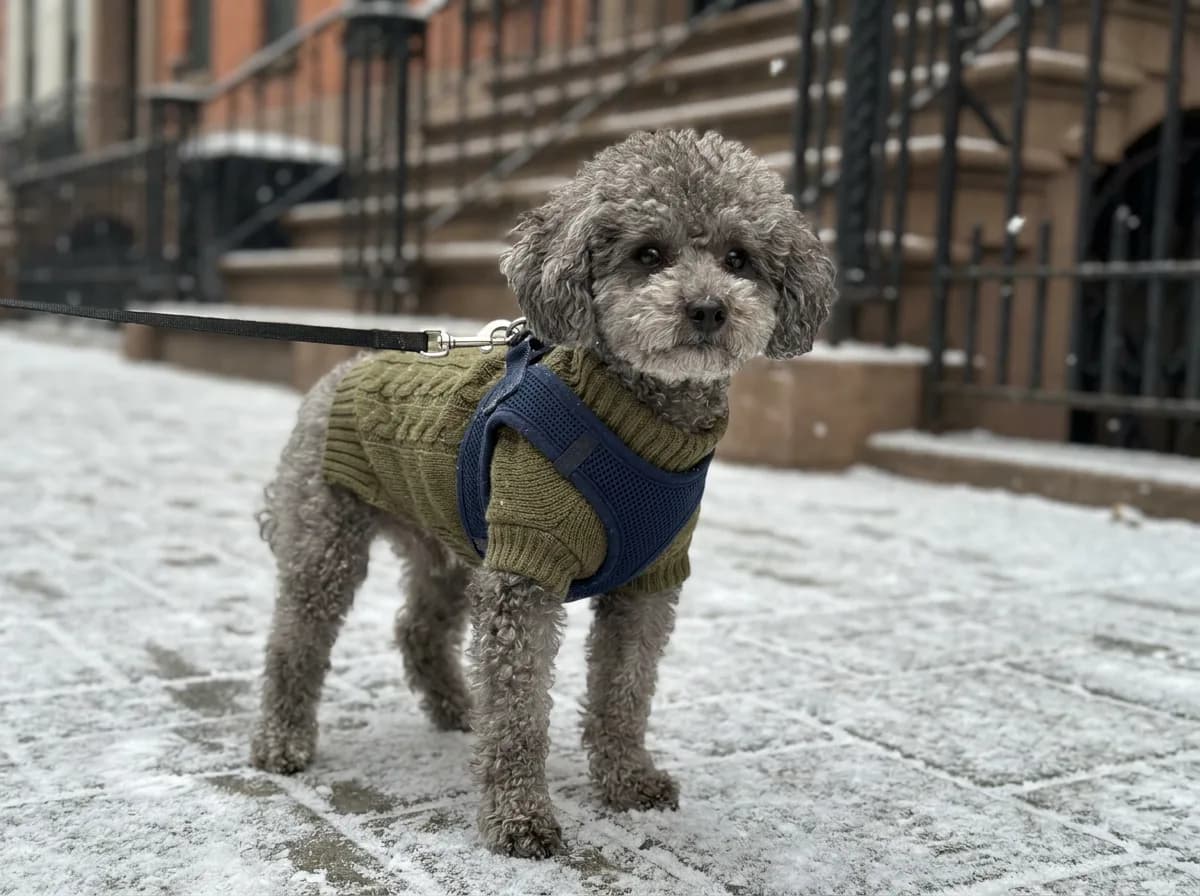
Walk a teacup Poodle on a harness, never a collar, because pressure on the neck is exactly what a fragile windpipe does not need. Measure the chest just behind the front legs and buy the size that fits, usually an extra-small made for Toy breeds, because a harness sized for a 10-pound dog will slip off a 4-pound one. In winter, teacup Poodle clothes are practical rather than decorative: a close-fitting sweater or coat keeps a dog this small from chilling on cold walks.
A teacup-proof home and supplies checklist:
- Pet steps or ramps up to sofas and beds, and a firm no-jumping rule for getting down.
- Baby gates across stairs and balcony doors.
- A soft-sided carrier, such as the Sherpa Original Deluxe Airline-Approved Dog & Cat Carrier Bag, for vet visits and errands, so the dog is not carried loose in your arms.
- Rugs or runners on slippery floors.
- A warm, draft-free bed and a routine of checking before you sit down, close a door or recline a chair.
- Toys too big to swallow and a leash that clips to the harness.
Grooming a teacup Poodle
A teacup has the same dense, curly Poodle coat, just less of it. Because loose hair stays trapped in the curls rather than shedding, the coat mats unless you keep up with it. Choose a groomer used to tiny dogs, and never leave a 3-pound dog alone on a grooming table or under a hot dryer.
A grooming routine for a teacup Poodle:
- Brush down to the skin a few times a week with a slicker brush, then check with a comb.
- Book a professional clip every few weeks.
- Keep the hair around the eyes short enough that it does not poke the eyes or hold tear staining.
- Trim nails, check ears and brush teeth as part of the same routine.
- Handle paws, ears and mouth gently every day from the first week, so clipping and tooth brushing become routine rather than a struggle.
For clip styles, from the puppy clip to the teddy bear, see our Poodle haircuts guide.
Better alternatives to a teacup Poodle
If what you want is a very small Poodle, there are safer ways to get one than paying for a teacup forecast:
- Adopt an adult Toy Poodle. A dog of 1 to 3 years has finished growing, so its size, coat and personality are known, and breeders sometimes rehome retired adults.
- Choose a health-tested Toy puppy from a breeder who does not sell teacups. Look for CHIC results on both parents and a breeder who breeds to the standard rather than below it.
- Look for a small adult through Poodle rescue groups. The Poodle Club of America Rescue Foundation connects adopters with member rescue groups across the U.S. that place Poodles of every size.
- Consider a naturally small breed. Several breeds are small by standard rather than by stunting, and our guide to the smallest dog breeds compares them.
- An adult Toy Poodle with a known adult weight, a health-tested Toy from a breeder who breeds to the standard, or a small adult from a Poodle rescue group gives you the size you can see instead of the size someone predicts. Ask about health history, temperament and daily routine, then meet the dog before you commit.
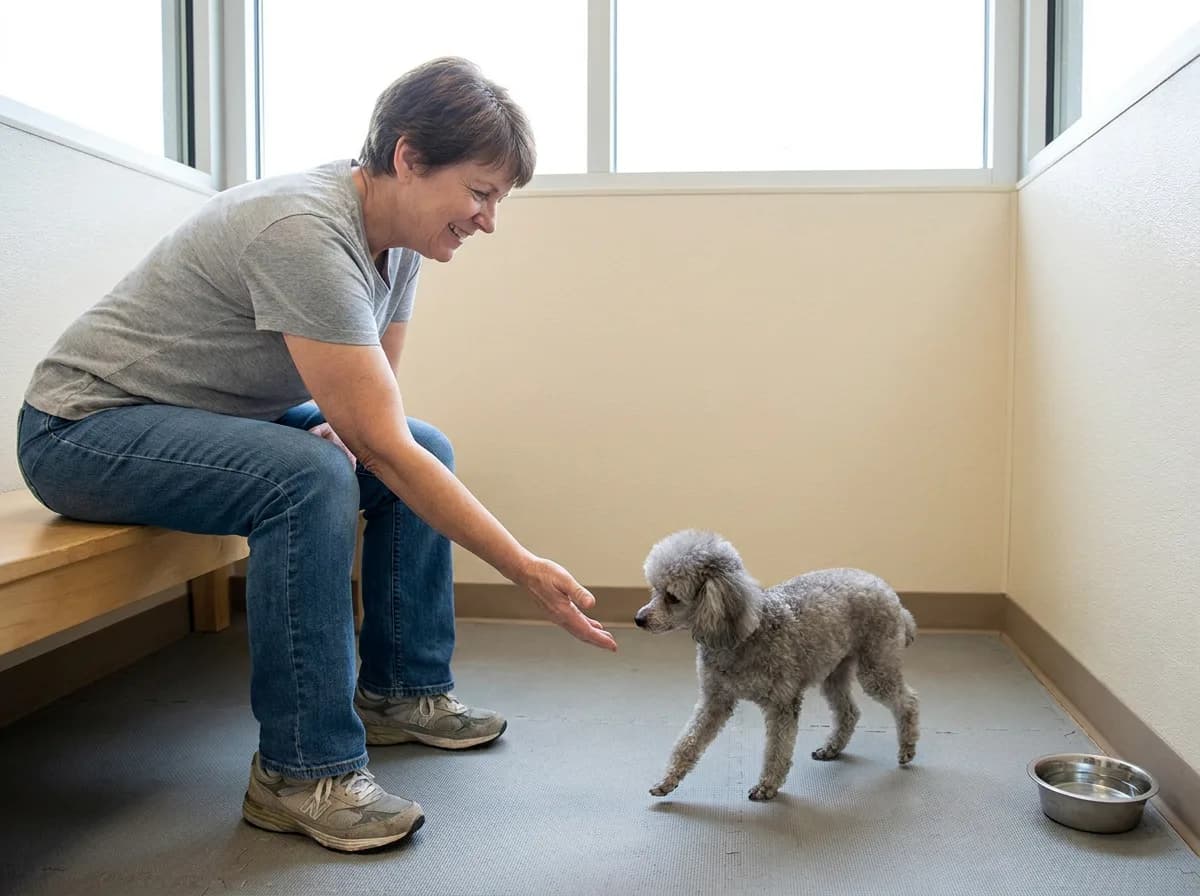
Rescue has two more advantages. A foster home can tell you how the dog handles stairs, strangers, other pets and time alone, which no puppy listing can. And the price gap is large: Rover's 2026 cost report puts adoption fees at $50 to $500, often including spay or neuter surgery, a microchip and first vaccinations, against teacup asking prices in the thousands. If you do buy a puppy, bring the teacup claim check above, and be ready to walk away from any seller who cannot answer it.
Teacup Poodle FAQ
Teacup Poodles shed very little. They have the same low-shedding curly coat as any Poodle, so loose hairs catch in the curls instead of landing on your floor. That is why regular brushing and clipping matter: skip them and the trapped hair turns into mats close to the skin.
No dog is fully hypoallergenic. The proteins that trigger dog allergies are in saliva, dander and urine, and the American College of Allergy, Asthma and Immunology says no dog breed is allergen-free. A low-shedding Toy Poodle may leave less hair around the house, and some people react less to one dog than another, so spend time with an adult Poodle before you commit.
Many do some alert barking, announcing visitors, doorbells and noises outside, as other small Poodles do. Barking becomes a problem mainly when the dog is bored, anxious or accidentally rewarded for it. Give daily play and puzzle games, teach a cue for quiet, and reward quiet behavior rather than shouting over the noise.
No breeder can guarantee it. A breeder can estimate from both parents' adult weights and earlier litters, but diet, health and normal genetic variation still decide the final size, and the BBB warns that sellers use "teacup" to promise a dog will stay smaller than normal. If you need a dog of a certain size, buy an adult dog whose weight is already known.
Not without close supervision, and usually not with toddlers. Falls and rough handling are a common cause of broken legs in tiny dogs, and a 3-pound dog cannot absorb a squeeze, a drop or a trip. If you have young children, stick to supervised floor-level play with the children seated, and let only adults lift the dog.
Only a few hours at a time, especially as a puppy. Young puppies eat about four times a day, a teacup needs small frequent meals to keep its blood sugar steady, and its tiny bladder cannot wait long. A full workday needs a midday check-in from a person who can feed the dog and let it out, and even a healthy adult teacup should not be left alone all day.

Coreen Saito is a pet writer and longtime shelter volunteer with more than a decade in animal rescue. She covers cat behavior, breed care, and the small, ordinary science of sharing a life with companion animals, with a particular focus on honest takes about the products and decisions that actually matter. At home in Arizona, she's outranked by Mac (a dog with the loudest opinion in the house), Rebel (a cat who governs by quiet authority), and Meri (an orange tabby who runs the late shift and the laundry basket). She writes about all three, plus the rescues that keep coming through her life, at LifeWithMinty.com.
Sign up for expert-backed reviews and safety alerts all in one place.