Maltipoo Size: Full Grown Weight and Height (With Chart)
How big does a Maltipoo get? See toy vs. mini Maltipoo weight and height, a month-by-month puppy growth chart, and the factors (poodle parent, generation, genetics) that set your dog's full-grown size.
Petful is reader supported. As an affiliate of platforms like Amazon and Chewy, we may earn a commission when you buy through links on this page. There is no extra cost to you.
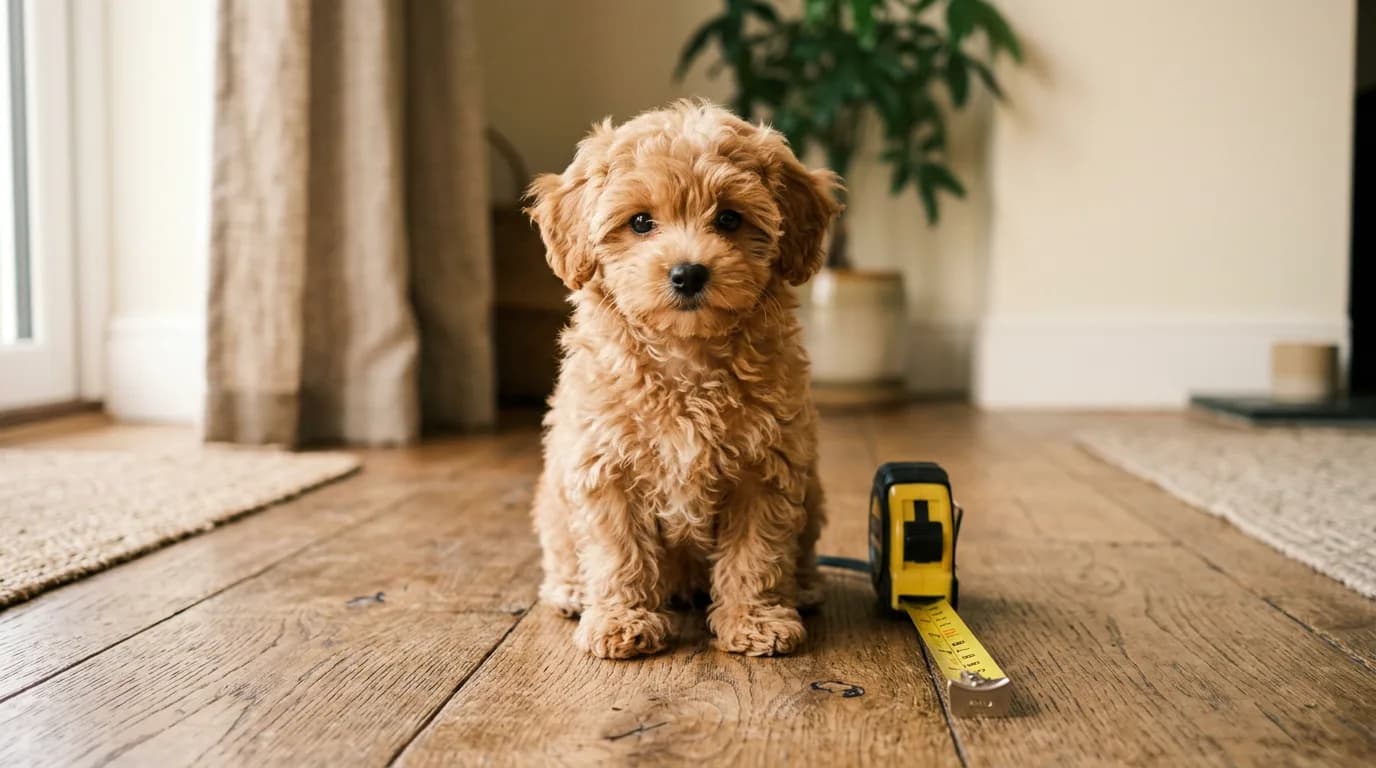
A full grown Maltipoo size typically lands between 8 and 14 inches tall at the shoulder and 5 to 20 pounds, depending on whether the poodle parent was a toy or a miniature. Most Maltipoos finish growing by 8 to 12 months of age, and the single biggest predictor of how big yours will get is the size of the poodle used in the cross. This guide breaks the numbers down by size class, walks you through a month-by-month growth chart, and explains exactly what drives the difference between a 6-pound lap dog and a sturdy 18-pound companion.
- 1Full grown Maltipoos range from about 5 to 20 pounds and 8 to 14 inches tall, split into two informal classes: toy and mini
- 2The poodle parent (toy vs. miniature) is the strongest driver of adult size, followed by generation and individual genetics
- 3Most Maltipoos reach their adult weight between 8 and 12 months, with smaller toy lines finishing first

Sign up for expert-backed reviews and safety alerts all in one place.
How Big Is a Full Grown Maltipoo?
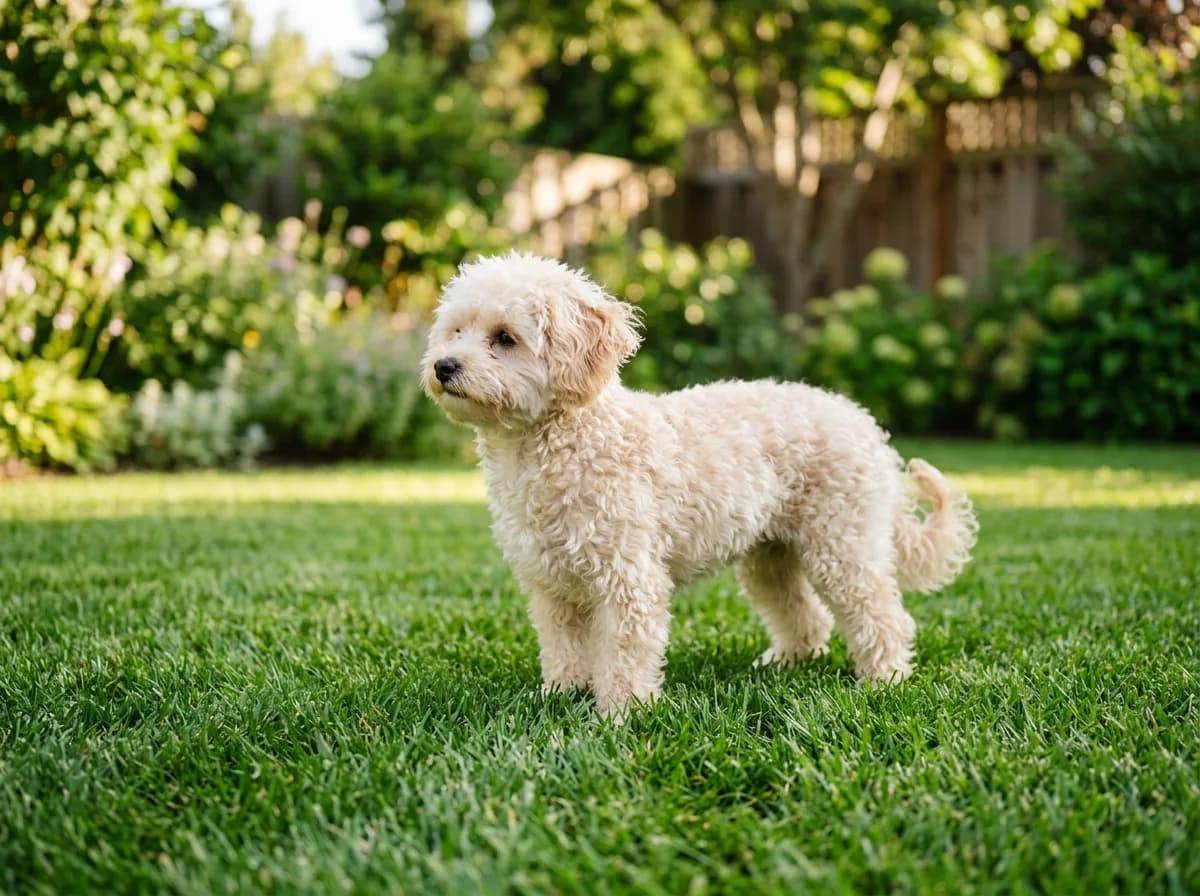
A full grown Maltipoo weighs roughly 5 to 20 pounds and stands about 8 to 14 inches tall at the shoulder. Because the Maltipoo is a cross between a Maltese and a Poodle rather than a standardized purebred, there is no official breed standard setting a fixed size. Instead, breeders and owners describe two broad size groups based on which poodle variety was in the mix.
The Maltese parent is fairly consistent, usually weighing under 7 pounds according to the American Kennel Club breed standard. The variation almost always comes from the poodle side, which ranges from a tiny toy poodle to a mid-sized miniature poodle. That is why two Maltipoo puppies from different litters can grow into noticeably different-sized adults even though they share the same breed name.
Here is how the size classes typically break down at maturity.
| Size Type | Height at Shoulder | Adult Weight | Poodle Parent |
|---|---|---|---|
| Toy Maltipoo | 8–10 in | 5–10 lb | Toy Poodle |
| Mini Maltipoo | 11–14 in | 10–20 lb | Miniature Poodle |
| Teacup Maltipoo (unofficial) | under 8 in | under 5 lb | Smallest toy poodle |
Keep in mind these are ranges, not guarantees. A toy Maltipoo can push past 10 pounds if it takes after the poodle side, and a mini can stay on the lighter end if it favors the Maltese. If exact adult size matters to you, ask the breeder about the measured weight of both parents rather than relying on the label alone.
Petful may earn a commission when you click through to Chewy, at no extra cost to you.
Toy vs. Mini Maltipoo: The Two Size Classes
The terms "toy" and "mini" (short for miniature) are marketing conventions, not kennel-club categories. Still, they are useful shorthand because they map directly to the poodle parent and give you a realistic expectation of adult size.
Toy Maltipoo
A toy Maltipoo is produced by crossing a Maltese with a toy poodle. These are the small, ultra-portable Maltipoos most people picture: 8 to 10 inches tall and 5 to 10 pounds full grown. They fit comfortably in a lap, travel easily, and are well suited to apartment living. Because both parents are small, toy Maltipoos tend to have the most predictable adult size of the two classes, though the lightest individuals can be delicate and need careful handling around young children.
Mini (Miniature) Maltipoo

A mini Maltipoo comes from a Maltese crossed with a miniature poodle. Expect 11 to 14 inches tall and 10 to 20 pounds at maturity. Minis are still small dogs, but they are sturdier and a bit more robust, which many families with kids or active lifestyles actually prefer. The tradeoff is slightly more space, food, and exercise than a toy. If you want a designer companion with a little more substance, a mini Maltipoo splits the difference between a toy and a small standard poodle mix.
- Because "toy," "mini," and "teacup" are not official kennel-club terms, one breeder's "mini" can be another's "standard." Always confirm the actual weight of both parent dogs and ask to see them in person rather than trusting the size name on a listing.
Maltipoo Growth Chart by Age (Puppy to Adult)
Maltipoo puppies grow fastest in their first four months, then the curve flattens as they approach their adult weight. The chart below shows typical weight ranges by age for both toy and mini Maltipoos, plus roughly how much of their adult size they have reached at each stage. Use it as a general guide, not a diagnosis: healthy puppies from the same litter can sit at different points on the range.
| Age | Toy Maltipoo Weight | Mini Maltipoo Weight | Approx. % of Adult Size |
|---|---|---|---|
| 8 weeks | 1.5–2.5 lb | 2.5–4 lb | ~25% |
| 3 months | 2.5–4 lb | 4–7 lb | ~40% |
| 4 months | 3–5 lb | 5–9 lb | ~50% |
| 6 months | 4–7 lb | 8–14 lb | ~70% |
| 8 months | 5–8 lb | 10–17 lb | ~85% |
| 10 months | 5–9 lb | 11–19 lb | ~95% |
| 12 months | 5–10 lb | 12–20 lb | ~100% |
Reading the chart, notice that a Maltipoo is roughly half its adult weight by four months. That midpoint is one of the most useful checkpoints for estimating final size, a method we come back to further down. You can also see that toy lines plateau earlier and lower, while mini lines keep adding weight closer to the one-year mark.
If your puppy is tracking well above or below both columns for its age, that is worth a conversation with your veterinarian. Steady, gradual gain is the goal. Rapid weight gain or a puppy that seems to stall for weeks can both signal a feeding or health issue worth checking.
When Do Maltipoos Stop Growing?
Most Maltipoos reach their full adult height by 8 to 10 months and finish filling out in weight by about 12 months. Toy Maltipoos, being smaller, often reach their final size closer to 8 or 9 months. Larger mini Maltipoos may keep adding a small amount of muscle and body weight until 12 to 14 months. Height (skeletal growth) generally finishes before the dog reaches its final weight, so a lanky-looking adolescent will usually broaden and firm up rather than get taller.

Soft-sided travel safety carrier that keeps a stressed cat secure and well-ventilated on the way to the vet, with mesh panels for airflow and a seat-belt loop.
Petful may earn a commission when you click through to Chewy, at no extra cost to you.
Do Maltipoos Stay Small?
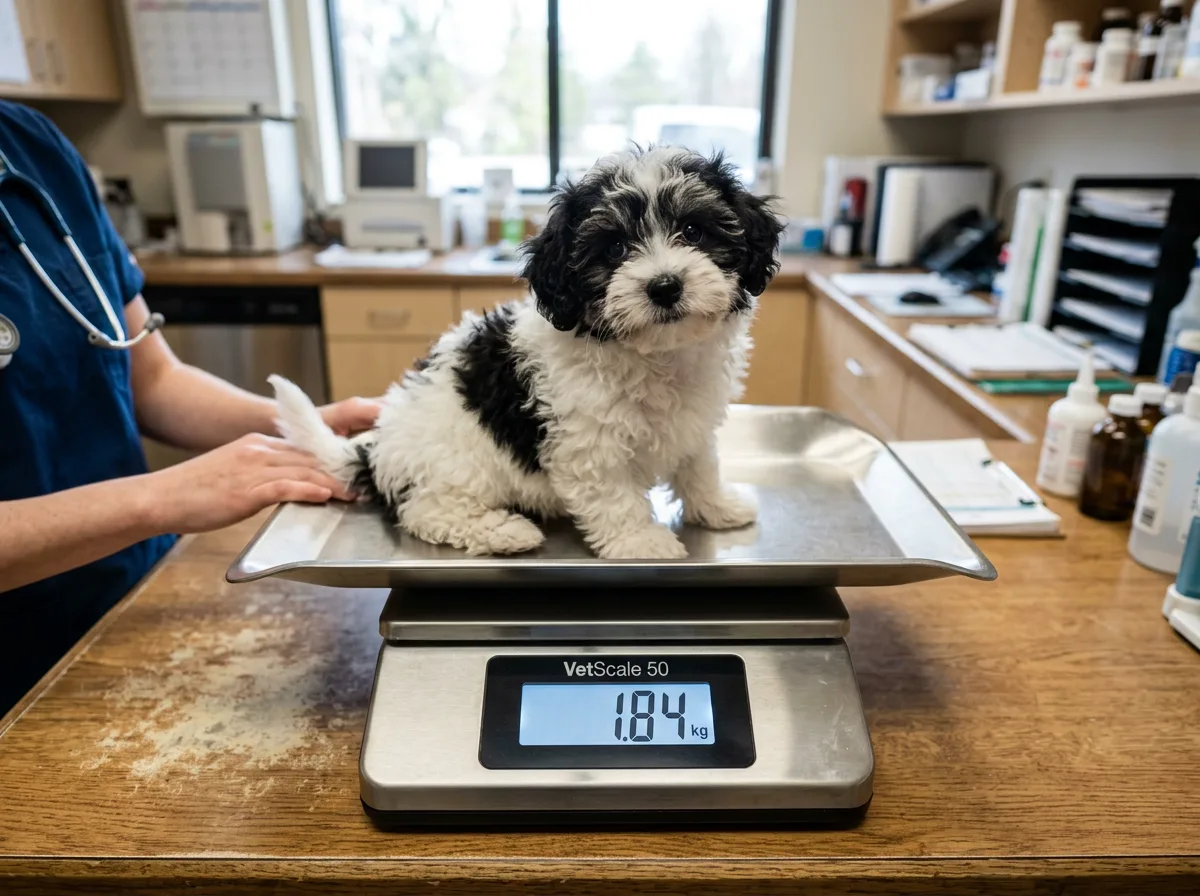
Yes, Maltipoos stay small for their entire lives. Even the largest mini Maltipoos top out around 20 pounds, which keeps them firmly in the small-dog category. Toy Maltipoos stay smaller still, often under 10 pounds as adults. They do not have a large-breed growth spurt waiting in adolescence, so the size you see at maturity is the size you keep.
That lifelong small stature is a big part of the breed's appeal for apartment dwellers, seniors, and anyone who wants a dog they can pick up, travel with, and keep comfortably indoors. It also means their care needs, from portion sizes to gear, stay in the small-dog range for life. Just remember that "small" is not the same as "fragile for no reason." A well-built mini Maltipoo is a durable, playful companion, not a decoration.
What Determines a Maltipoo's Adult Size
If you want to predict how big a specific Maltipoo will get, look at these factors in order of influence.
The Poodle Parent (Toy vs. Miniature)
This is the number one driver. The Maltese side stays small and consistent, so the poodle variety used in the cross sets the ceiling. A toy poodle parent points toward a toy Maltipoo; a miniature poodle parent points toward a mini. Reputable breeders will tell you which poodle variety they use and can show you both parents. The American Kennel Club recognizes toy, miniature, and standard poodles as distinct size varieties, and that same size spread carries straight into their Maltipoo puppies.
Generation (F1, F1b, F2, and Multigen)
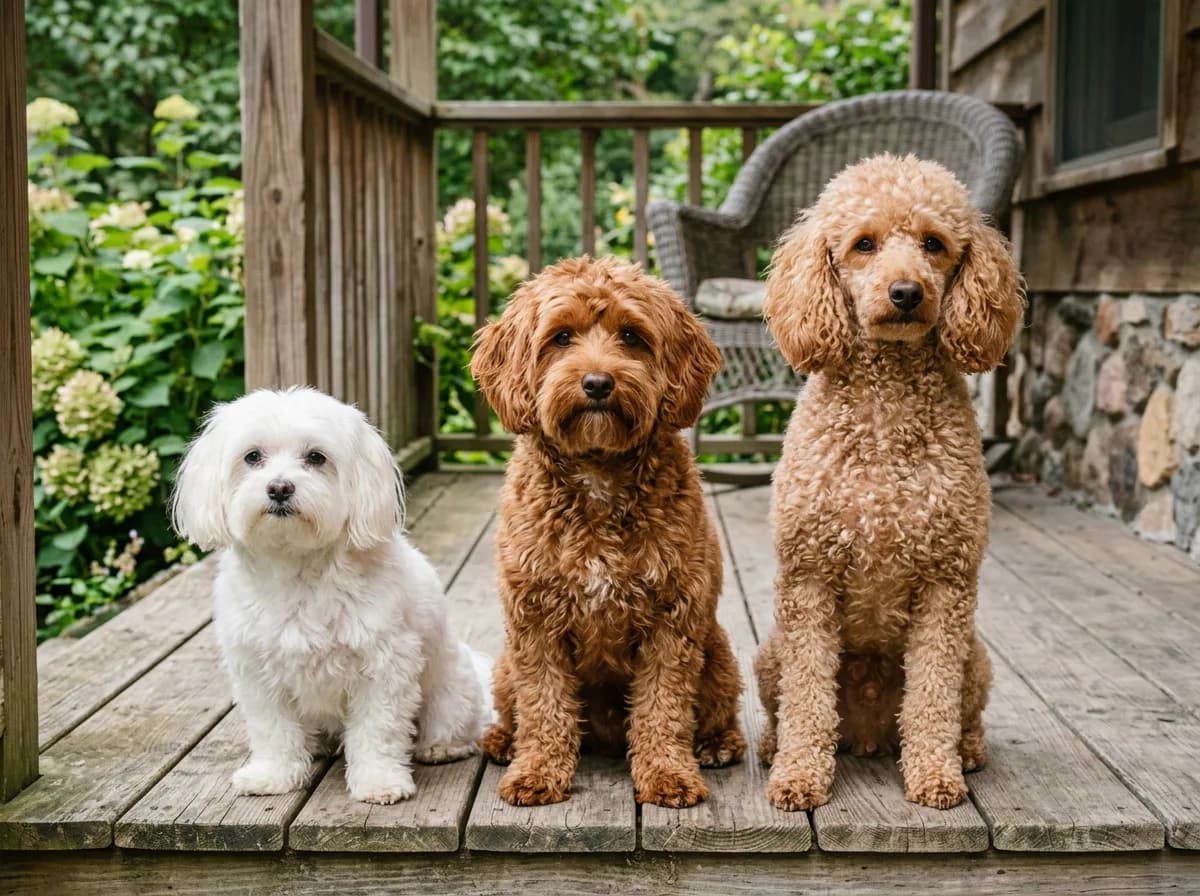
Generation describes how the Maltipoo was bred, and it influences both size predictability and coat. Here is how the common generations compare. Petful’s guide to Maltipoo haircuts shows the popular cuts with grooming tips.
| Generation | Cross | Adult Size Tendency | Coat and Shedding Note |
|---|---|---|---|
| F1 | Maltese x Poodle | Most size variation | Wavy coat, low to moderate shedding |
| F1b | F1 Maltipoo x Poodle | Often smaller, leans poodle | Curlier coat, lowest shedding |
| F2 | Maltipoo x Maltipoo | Least predictable size | Coat and shed vary widely |
| Multigen | Multigen Maltipoo x Maltipoo | More consistent per line | More consistent coat type |
An F1 (first generation) Maltipoo is a direct Maltese-poodle cross and shows the widest size range. F1b puppies are bred back to a poodle, so they often trend a little smaller and curlier. Multigenerational lines, where breeders have selected for the same size over several generations, tend to produce the most predictable adults. If tight size predictability matters to you, ask whether the breeder works with a multigen line and what the typical adult weight of their puppies has been.
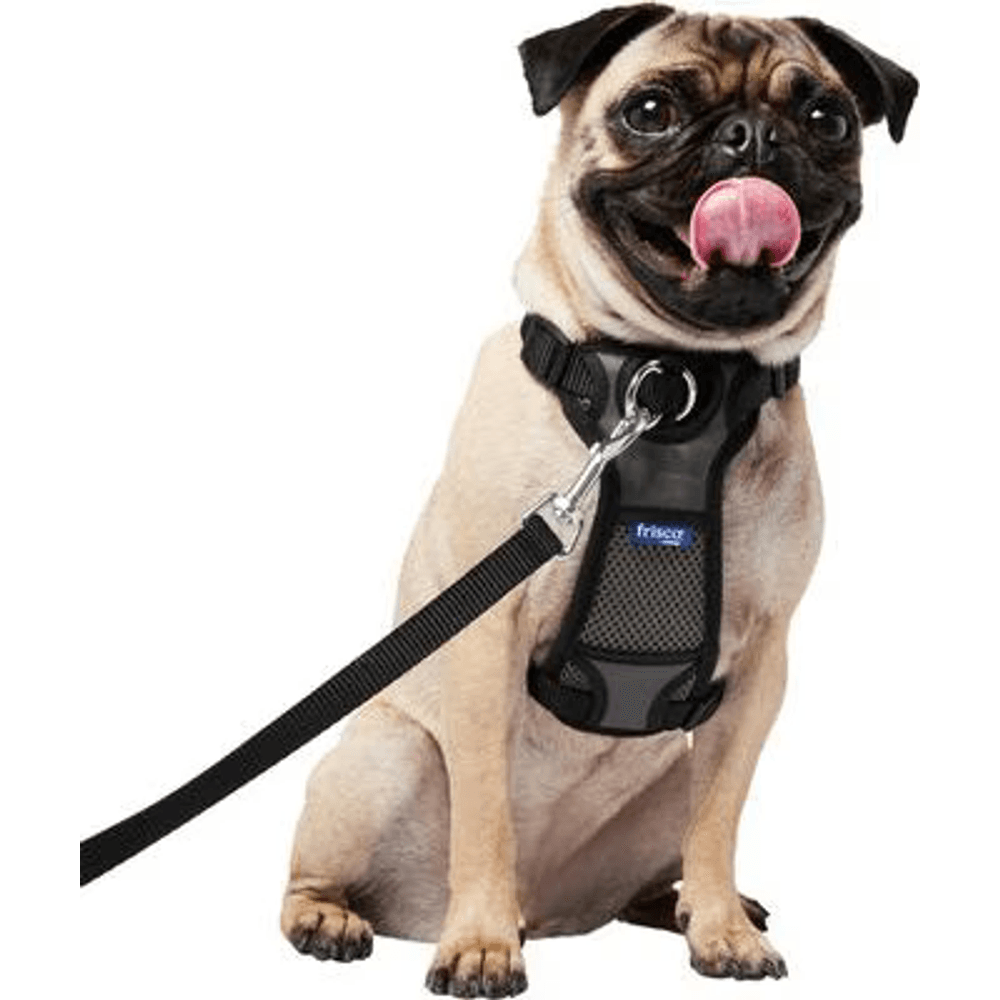
A budget-friendly padded no-pull harness that keeps leash pressure off a coughing dog's neck and windpipe by distributing it across the chest. A simple, affordable way to protect an irritated airway or a collapsing trachea on every walk.
Petful may earn a commission when you click through to Chewy, at no extra cost to you.
Genetics, Sex, and Individual Variation
Even within one litter, individual puppies inherit their own mix of parent traits. Males often run slightly heavier than females, though the difference is usually only a pound or two in a breed this small. Nutrition and overall health during puppyhood also matter: a puppy kept at a healthy body condition reaches its genetically programmed size, while over- or under-feeding distorts the picture. You cannot out-feed a toy Maltipoo into a mini, and you should not try. Aim for lean, steady growth and let genetics set the final number.
Teacup Maltipoos: A Word of Caution
You will see "teacup Maltipoo" advertised for the very smallest puppies, usually under 5 pounds full grown. Teacup is not a real size class or a separate breed. It simply describes an undersized toy Maltipoo, often the runt of a litter or the product of deliberately breeding the two smallest dogs available.
Extreme small size can come with real health tradeoffs, including fragile bones, dental crowding, low blood sugar (hypoglycemia), and a higher risk of injury from ordinary jumps and falls. If you are drawn to the tiniest end of the spectrum, read our dedicated guide to the teacup Maltipoo before you commit, and choose a breeder who screens for health rather than chasing the lowest possible weight.
- Deliberately breeding for teacup size can concentrate health problems. Ask any breeder promoting "teacup" or "micro" puppies for health testing on the parents, and expect a frank conversation about the risks of extreme small stature rather than a sales pitch.
How Size Affects Care: Feeding, Exercise, and Home Setup
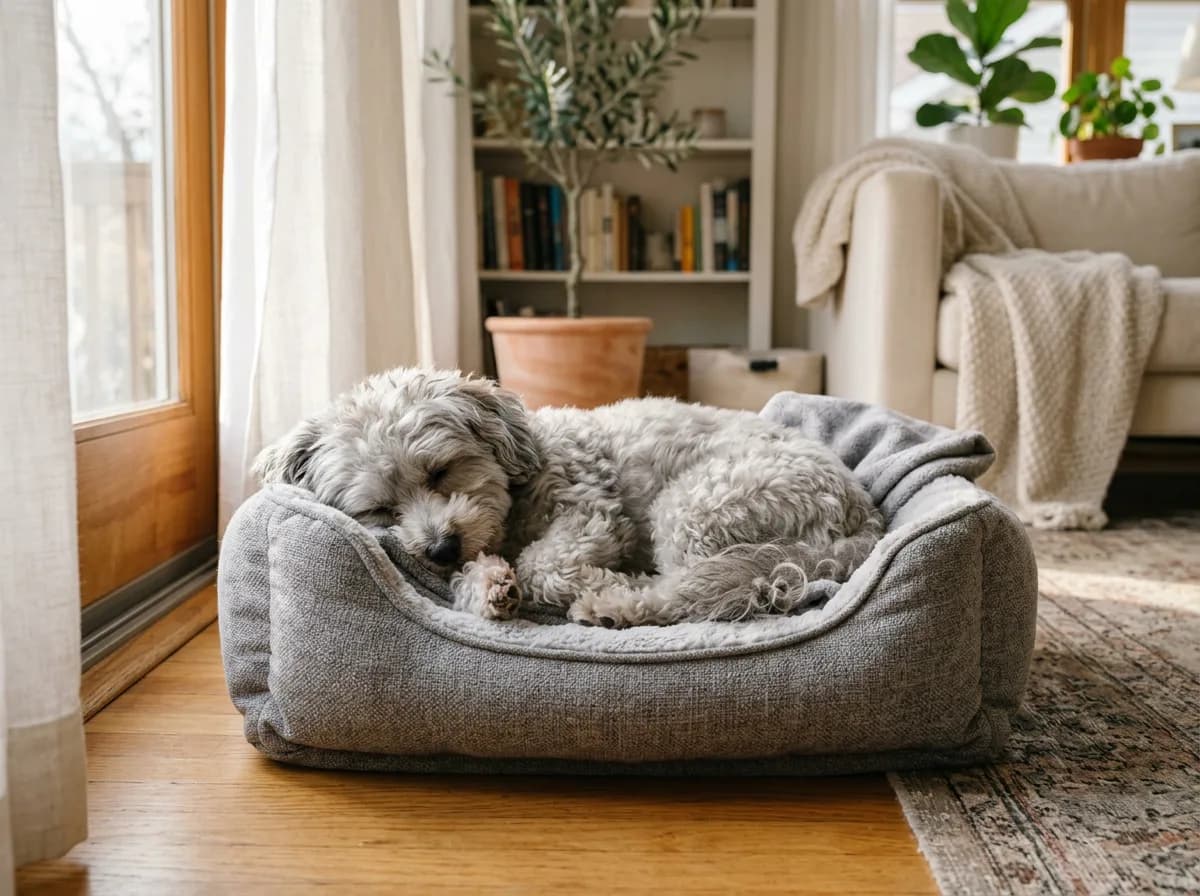
A Maltipoo's small size shapes almost every part of daily care. Getting the details right keeps a toy or mini at a healthy weight and protects those small joints and teeth for the long haul.
Feeding a Maltipoo by Size
Portion size scales with body weight, so a 6-pound toy eats a fraction of what an 18-pound mini needs. Choose a quality small-breed formula with appropriately sized kibble, and measure meals rather than free-feeding, since even a few extra ounces of body fat is a lot on a dog this small. Toy Maltipoos, especially young puppies, can be prone to low blood sugar, so smaller and more frequent meals early in life help keep energy stable. Your veterinarian can give you a target body condition score to aim for, which matters more than any number on the bag.
Exercise Needs
Both size classes are moderate-energy dogs that do well with two short walks and some indoor play each day. Minis have a little more stamina and enjoy a longer stroll or a game of fetch, while toys are satisfied with less. Avoid repetitive high-impact jumping onto and off of furniture, which is hard on small joints. If your dog loves the couch, a ramp or steps protects knees and back over time.
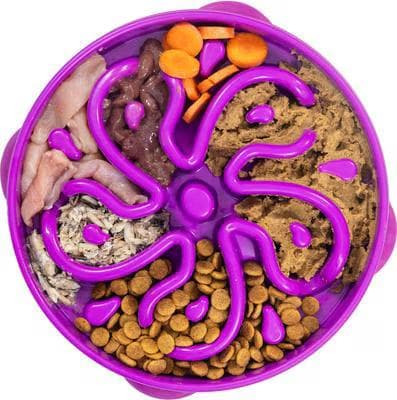
A maze-pattern slow-feeder bowl that makes fast eaters work for each bite, reducing the gulping and swallowed air that trigger regurgitation and vomiting. Holds up to 4 cups.
Petful may earn a commission when you click through to Chewy, at no extra cost to you.
Home and Gear

Small dogs need appropriately scaled gear. A harness rather than a collar protects a delicate trachea, small-breed bowls sit at a comfortable height, and a properly sized crate or bed gives them a secure spot to rest. Because Maltipoos are companion dogs that bond closely, they are happiest with their gear (and their people) close by rather than tucked away in a distant room.
Estimating Your Maltipoo Puppy's Adult Size
You cannot know a puppy's exact adult weight in advance, but a few simple methods get you close.
- The four-month doubling method: a Maltipoo is roughly half its adult weight at 4 months. Weigh your puppy at 16 weeks and double it for a ballpark adult weight.
- The paw and parent check: oversized paws relative to the body hint at more growing to come, and the measured weight of both parents brackets the likely range better than any formula.
- The growth-chart cross-reference: find your puppy's current age and weight on the chart above and follow that column to 12 months.
- A DNA and health panel: a breed-and-health DNA test can confirm the poodle variety in the mix and flag genetic conditions, which helps set realistic size and care expectations. Organizations like the Orthopedic Foundation for Animals track heritable conditions worth screening for in small designer breeds.
No single method is exact, so treat the results as a range. If you want the fullest picture of temperament, grooming, and health alongside size, our main Maltipoo breed guide pulls it all together, and fans of small doodle crosses often compare the Maltipoo with the similarly sized cavapoo when choosing a breed.
Is Your Maltipoo a Healthy Weight for Its Size?
Because Maltipoos are so small, even a little extra weight has an outsized effect on their joints, heart, and lifespan. Rather than fixating on a single target number, judge your dog by body condition. You should be able to feel the ribs easily under a light layer of fat without pressing hard, see a visible waist when you look down from above, and notice a slight tummy tuck from the side. If the ribs are buried and the waist has disappeared, your Maltipoo is carrying too much. For more, see Petful’s guide to Maltipoo lifespan.
Use the growth chart as a guide to the expected range for your dog's size class, then let body condition fine-tune it. A lean toy Maltipoo might sit at 6 pounds while a well-muscled mini sits at 16, and both can be perfectly healthy. Small breeds are also prone to dental disease and knee problems (luxating patella), and excess weight makes both worse. Weigh your dog every few months, keep treats to roughly 10 percent of daily calories, and ask your veterinarian to confirm an ideal weight at each checkup. Catching a slow creep upward early is far easier than reversing it later.
Maltipoo Size Compared to Other Small Doodle Breeds
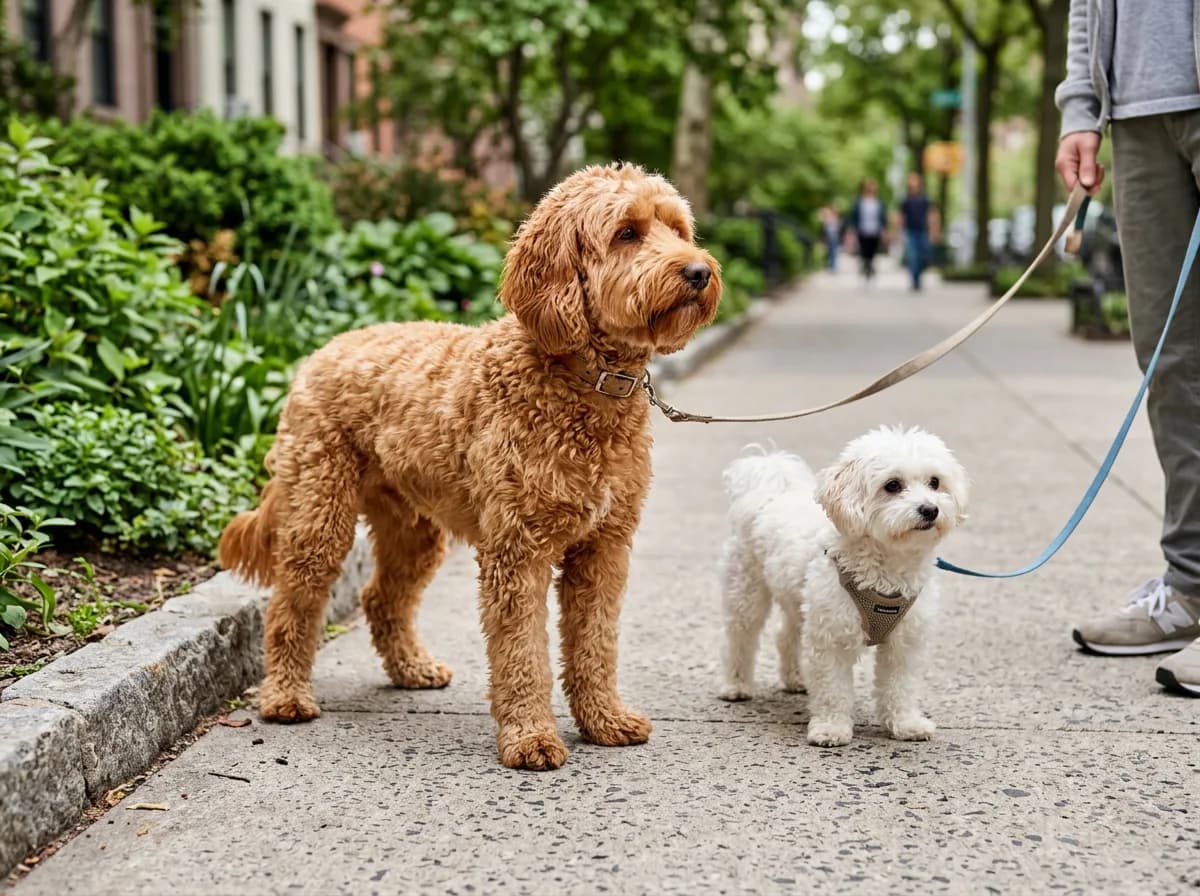
Seeing where the Maltipoo sits next to its cousins helps set expectations, especially if you are deciding between designer crosses. The Maltese parent keeps the Maltipoo on the smaller end of the doodle family, while breeds crossed with larger spaniels tend to run bigger.
A toy Maltipoo at 5 to 10 pounds is one of the most compact doodle crosses you can get, comparable to a toy poodle or a Maltese itself. A mini Maltipoo at 10 to 20 pounds overlaps with the smaller end of the cavapoo (a Cavalier King Charles Spaniel and poodle mix), which more often lands around 12 to 25 pounds. The cockapoo, a cocker spaniel and poodle cross, is usually a step up again, commonly 12 to 25 pounds and sometimes more when a larger spaniel or miniature poodle is in the mix. In short, if your priority is the smallest possible adult dog, the toy Maltipoo is hard to beat, while a mini Maltipoo, cavapoo, or cockapoo gives you a small-but-sturdy companion.
Because all of these are crossbreeds, their ranges overlap and individual dogs vary. Two small doodle puppies from different breeds can easily mature to the same weight. The takeaway is to shop by the measured size of the actual parents in front of you, not by the breed name on the listing.
Toy or Mini Maltipoo: Which Size Fits Your Home?
Choosing between a toy and a mini Maltipoo is less about looks and more about lifestyle. Both are affectionate, people-oriented companions, but the size difference changes the day to day.
A toy Maltipoo suits apartment living, frequent travel, and households where a truly tiny, easy-to-carry dog is the goal. It needs less food, less exercise, and less space, but it also calls for gentler handling and extra care around toddlers or larger pets, since a 6-pound dog is easy to injure. Toys can also be more prone to the low-blood-sugar and dental issues common at the smallest sizes, so they reward attentive, hands-on owners.
A mini Maltipoo fits families that want a small dog with a bit more durability. At 10 to 20 pounds, a mini can keep up with children, longer walks, and active play without feeling fragile, while still being small enough for a condo or a car seat. If you have young kids, a busy household, or you simply want a companion you do not have to constantly watch underfoot, the mini is often the more practical pick.
Whichever size you choose, temperament, training, and health testing matter more than a couple of pounds either way. A well-bred, well-socialized Maltipoo of either size makes a devoted, low-shedding companion for years.
Frequently Asked Questions About Maltipoo Size
Is There a Standard or "Large" Maltipoo?
You will occasionally see a puppy advertised as a "standard Maltipoo" or "large Maltipoo," which causes a lot of confusion. In practice, almost every Maltipoo comes from a toy or miniature poodle. Crossing a Maltese (under 7 pounds) directly with a standard poodle (40 to 70 pounds) is rarely done, because the size gap between the parents makes natural breeding impractical and risky.
So when a dog is marketed as "large," it is usually one of two things: a mini Maltipoo sitting near the top of the 10 to 20 pound range, or a multigenerational line carrying a bit more poodle influence. There is no separate standard-size class for Maltipoos the way there is for poodles. If you see one advertised well above 20 pounds, ask exactly which poodle variety and generation produced it, and confirm with the measured weights of both parents rather than trusting the label.
Why Your Maltipoo Looks Bigger Than It Weighs
A Maltipoo's coat exaggerates its size, and this trips up a lot of owners. The soft, low-shedding coat grows continuously and traps air, so a fully groomed-out adult can look a pound or two heavier than the actual frame underneath.
Two everyday moments reveal the real size. At bath time, a wet Maltipoo visibly shrinks as the coat collapses against the body. And after a short "puppy cut," the same dog can look noticeably smaller overnight without losing a single ounce. Because of this, never judge your Maltipoo's weight by its silhouette. Confirm body condition by feel (ribs, waist, and a tummy tuck) instead, and re-check the fit of the harness and collar after every major haircut, since gear that fit the fluff may be loose on the freshly trimmed dog.
Will a Maltipoo Fit in an Airline Cabin?
For flying, size is the whole question. Most airlines allow a dog in the cabin only if the pet plus its carrier fits fully under the seat in front of you, typically a soft carrier around 18 x 11 x 11 inches, and many cap the combined pet-and-carrier weight near 20 pounds.
A toy Maltipoo at 5 to 10 pounds clears that limit easily, which makes it one of the more travel-friendly small breeds. A mini near the top of its range (close to 20 pounds) can be borderline once you add the weight of the carrier itself, so weigh both together before you book. Carrier dimensions and weight caps vary by airline and route, so always confirm the exact rules with your specific carrier before buying a ticket.
- Airline limits count the pet AND the bag. Put your Maltipoo in the empty carrier, step on a scale holding both, then subtract your own weight to get the true travel total before you book.
What Size Crate, Collar, and Bed Does a Maltipoo Need?
Most Maltipoos are comfortable in a 22 to 24 inch crate, wear a collar sized to an 8 to 14 inch neck, and rest well on a small bed of about 18 to 24 inches. Because the breed spans roughly 5 to 20 pounds, size the gear to your individual dog rather than to the breed name.
Match the crate to the size class
- Toy Maltipoo (5 to 10 pounds): a 19 to 22 inch crate is plenty. The dog should be able to stand, turn around, and lie down flat without so much spare room that it uses one corner as a bathroom.
- Mini Maltipoo (10 to 20 pounds): a 24 inch crate fits most, and a larger mini near 20 pounds may prefer a 30 inch. If you are crate-training a puppy that is still growing, buy the adult size and use a divider panel to shrink it for now.
Collar, harness, and bed
- Measure the neck at its base with a soft tape, then leave room for two fingers to slide underneath. Most Maltipoos land between 8 and 14 inches, so one small adjustable collar covers the range.
- For a harness, measure the chest girth just behind the front legs; a small or extra-small usually fits.
- A correctly sized crate lets your Maltipoo stand without ducking its head, turn a full circle, and stretch out on its side. Much bigger than that and a puppy may soil one end; much smaller and it cannot settle.
How a Maltipoo's Size Compares to Its Parent Breeds
A Maltipoo usually finishes between or just above its two parent breeds. A purebred Maltese stays under about 7 pounds, a toy poodle runs roughly 4 to 9 pounds, and a miniature poodle reaches 10 to 20 pounds, so a Maltipoo lands somewhere across that same spread depending on the poodle used in the cross.
- Maltese vs. Maltipoo: The Maltese is the small, steady parent, standing about 7 to 9 inches and weighing 4 to 7 pounds under the AKC standard. A toy Maltipoo mirrors that closely at 5 to 10 pounds, while a mini Maltipoo outgrows the Maltese because of the poodle side.
- Toy poodle vs. Maltipoo: A toy poodle stands no taller than 10 inches and typically weighs 4 to 9 pounds. Cross it with a Maltese and you get a toy Maltipoo in the same weight class, which is why toy lines are the most size-predictable.
- Miniature poodle vs. Maltipoo: A miniature poodle at 10 to 15 inches and 10 to 20 pounds is the reason mini Maltipoos are sturdier. The Maltese trims a few pounds off the average, so a mini Maltipoo often sits at the lighter end of the miniature-poodle range.
The practical takeaway is that the poodle variety in the cross tells you far more about adult size than the Maltese side, which barely changes from dog to dog.
Does a Maltipoo's Coat Color Affect Its Size?
No. Coat color and adult size are controlled by different genes, so a black Maltipoo, an apricot one, and a white one all follow the same toy and mini size ranges. If you searched for the full grown size of a black (or apricot, cream, or parti) Maltipoo, the numbers are identical to any other Maltipoo in the same size class. Petful’s guide to Maltipoo colors has the full breakdown.
- A black Maltipoo full grown still lands at 5 to 10 pounds as a toy or 10 to 20 pounds as a mini. A dark, solid coat can make a dog look a touch heavier, but that is the eye, not the scale.
- Rarer colors like parti (two-tone), phantom, and merle are also independent of size. A breeder charging a premium for an unusual color is pricing the coat, not a different body.
What actually sets the size is the same thing it always is: the poodle variety in the cross and the measured weight of both parents. Choose your color for looks, then confirm the likely adult size from the parents rather than assuming a color runs bigger or smaller.
How Many Puppies Are in a Maltipoo Litter?
A Maltipoo litter is usually 4 to 6 puppies, though litters from a toy-poodle-line mother often run smaller, closer to 2 to 4. Litter size is a different question from body size, but it comes up often enough among prospective owners to be worth clearing up.
- The mother's size drives the number. A tiny toy dam has less room to carry puppies, so toy Maltipoo litters skew small, while a mini dam can carry a fuller litter of 5 or 6.
- First litters tend to be smaller than a dam's later ones.
- Very small dams carry real risk. Toy and teacup mothers are more likely to need a cesarean section and to face birthing complications, which is one more reason responsible breeders avoid pairing the two smallest dogs available.
If a listing advertises unusually large litters from a very small mother, treat it as a reason to ask more questions about how the dogs are bred, not as a selling point.
A full grown Maltipoo is about 8 to 14 inches tall and 5 to 20 pounds. Toy Maltipoos (toy poodle parent) run 5 to 10 pounds, while mini Maltipoos (miniature poodle parent) run 10 to 20 pounds. Most reach adult size between 8 and 12 months.
Yes. Maltipoos stay small their whole lives, topping out around 20 pounds even at the largest. They have no large-breed growth spurt, so the size at maturity is the size you keep.
Bathe a Maltipoo about every 3 to 4 weeks, or when it looks or smells dirty. Their low-shedding coat mats easily, so pair baths with regular brushing and use a gentle dog shampoo to avoid drying out the skin. Over-bathing can strip natural oils.
Maltipoos can be moderately vocal. They often bark to alert you to visitors or noises and may bark from boredom or separation anxiety if left alone too long. Early training, socialization, and enough companionship keep barking manageable.
Very much. Maltipoos are affectionate companion dogs bred for closeness and typically love lap time, snuggling, and following their people around the house. That strong bonding is part of why they dislike being left alone for long stretches.
Solid black is considered the rarest Maltipoo color, since the Maltese parent is almost always white and dilutes darker shades. Other uncommon looks include true parti (two-color) patterns and phantom markings. The most common colors are white, cream, and apricot.
Brush a Maltipoo's teeth daily if you can, and at least 3 times a week at minimum. Small breeds are prone to dental crowding and periodontal disease, so use a dog-safe toothpaste and pair home brushing with regular veterinary dental checks.
For breed-standard details on the parent breeds and poodle size varieties, the American Kennel Club (akc.org) is the authoritative reference, and the Orthopedic Foundation for Animals (ofa.org) is the standard source for the health screenings responsible small-breed breeders should complete. For nutrition and growth questions specific to your dog, your own veterinarian remains the best guide. If you are weighing a Maltipoo against other small doodle crosses, the cockapoo is another popular option with a slightly different size and coat profile.

Coreen Saito is a pet writer and longtime shelter volunteer with more than a decade in animal rescue. She covers cat behavior, breed care, and the small, ordinary science of sharing a life with companion animals, with a particular focus on honest takes about the products and decisions that actually matter. At home in Arizona, she's outranked by Mac (a dog with the loudest opinion in the house), Rebel (a cat who governs by quiet authority), and Meri (an orange tabby who runs the late shift and the laundry basket). She writes about all three, plus the rescues that keep coming through her life, at LifeWithMinty.com.
Sign up for expert-backed reviews and safety alerts all in one place.