Calico Cat Guide: Genetics, Personality and Rare Males
Calico cats are not a breed: they wear one of the most striking coat patterns in the feline world. Learn the genetics that make 99.9% of calicos female, how rare male calicos really are, and whether the famous calico attitude is fact or myth.
Petful is reader supported. As an affiliate of platforms like Amazon and Chewy, we may earn a commission when you buy through links on this page. There is no extra cost to you.
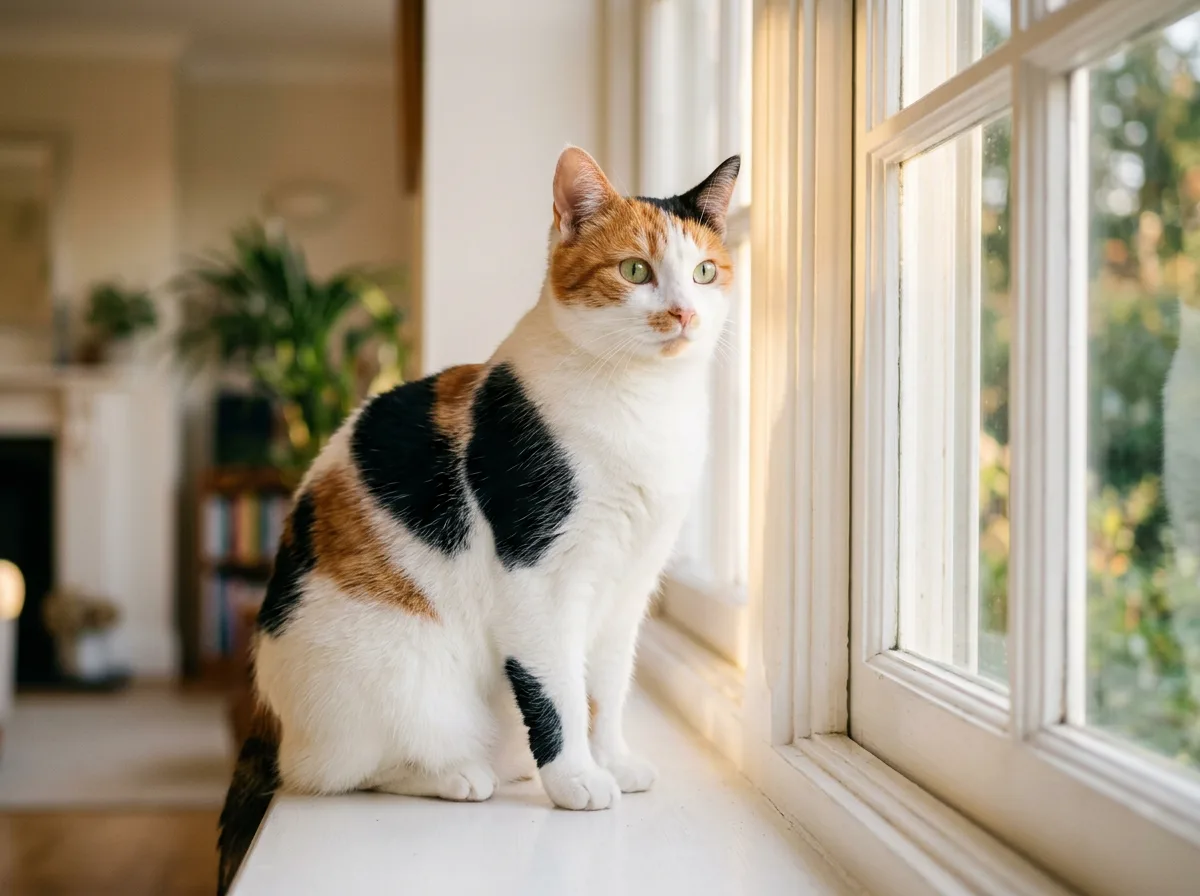
A calico cat is not a breed but a striking tricolor coat pattern, and the Cat Fanciers' Association (CFA) accepts calico coloring in more than a dozen pedigreed breeds, while roughly 99.9% of all calico cats are born female. That lopsided statistic is written directly into feline DNA, and in 2025 scientists finally identified the exact gene responsible for the orange patches that define the pattern. From the genetics that make almost every calico a girl to the truth about "calico-tude," this guide covers everything: how to identify each calico variation, how rare male calicos really are, what a calico costs to adopt or buy, and why several cultures treat these patchwork cats as living good-luck charms.
- 1Calico is a coat pattern (white with distinct orange and black patches), not a breed
- 2Roughly 99.9% of calico cats are female because the orange gene sits on the X chromosome
- 3Male calicos occur about 1 in 3,000 and are almost always sterile
- 4"Calico-tude" is owner-reported, not scientifically proven; individual personality varies far more than coat color does
- 5Shelter adoption typically runs $50-200, while pedigreed cats that happen to be calico follow their breed's pricing

Sign up for expert-backed reviews and safety alerts all in one place.
What Is a Calico Cat? (Hint: It's Not a Breed)
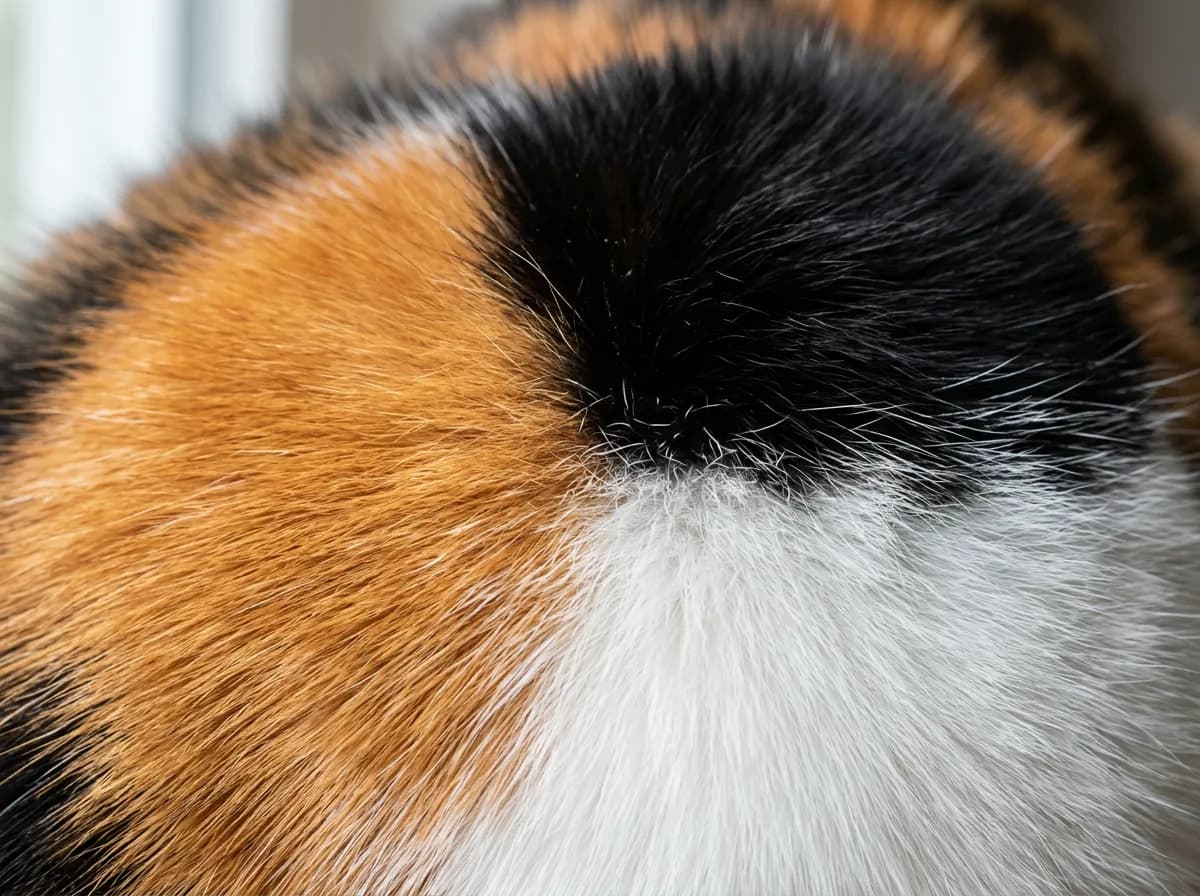
Ask a cat registry and the answer is unambiguous: calico describes a coat, not a breed. Both the Cat Fanciers' Association (CFA) and The International Cat Association (TICA) treat calico as a color class that can appear within many different breeds, the same way "black" or "tabby" can. A calico coat is predominantly white with separate, well-defined patches of orange and black scattered across the body. In dilute calicos, those same patches soften to blue-gray and cream.
The name comes from calico cloth, a brightly printed cotton fabric that traces back to Calicut, India. When the multicolored fabric became popular, the patchwork cats that matched it inherited the name. In Japan the same cats are called mi-ke, meaning "triple fur," and in the show world you will hear them described simply as tricolors.
Because calico is a pattern rather than a breed, two calico cats can have completely different body types, coat lengths, and temperaments. A calico Persian is still a Persian; a calico Maine Coon is still a Maine Coon. The pattern shows up in random-bred domestic shorthairs and longhairs more often than anywhere else, simply because there are more of them. What every calico shares is the genetic recipe underneath the coat, and that recipe is one of the most interesting stories in animal genetics.
Calico Cat Genetics: Why 99.9% of Calicos Are Female
The calico pattern is a live demonstration of X-chromosome biology. The gene that produces orange fur sits on the X chromosome. The orange version of the gene makes phaeomelanin, the red-orange pigment, and it masks the black pigment eumelanin wherever it is active.
Here is the key: a female cat has two X chromosomes, while a male has one X and one Y. If a female inherits orange on one X and non-orange on the other, her body cannot use both copies at once. Early in development, each cell randomly switches off one of its two X chromosomes, a process called X-inactivation or lyonization, first described by geneticist Mary Lyon in 1961. Cells that silence the non-orange X grow orange fur; cells that silence the orange X grow black fur. The result is a living mosaic of orange and black, which is the tortoiseshell pattern.
Add one more ingredient, the white-spotting gene (a KIT-related piebald gene), and the picture changes from a fine brindle to bold, separate color blocks. White spotting pushes pigment cells apart during development, so the orange and black areas clump into the large, distinct patches on a white background that define a calico. That is also why a female calico cat is not rare at all: any female who inherits both orange and non-orange plus white spotting can be calico. It is the males who are the statistical oddity, because one X chromosome normally means one color choice, never both.
- In 2025, two independent research teams, one led by Greg Barsh at HudsonAlpha and Stanford and one led by Hiroyuki Sasaki at Kyushu University, identified the long-sought orange gene as a regulatory deletion affecting ARHGAP36, published in Current Biology. Every orange, calico, and tortoiseshell cat tested carried the same deletion, suggesting all of them descend from a single ancestral cat.
The randomness of X-inactivation means no two calicos are ever identical, even clones. Each cat's patches are a one-time genetic event, as individual as a fingerprint. If you enjoy this kind of feline genetics trivia, polydactyl cats and their extra toes are another inherited curiosity with a story to tell.
Male Calico Cats: How Rare Are They Really?
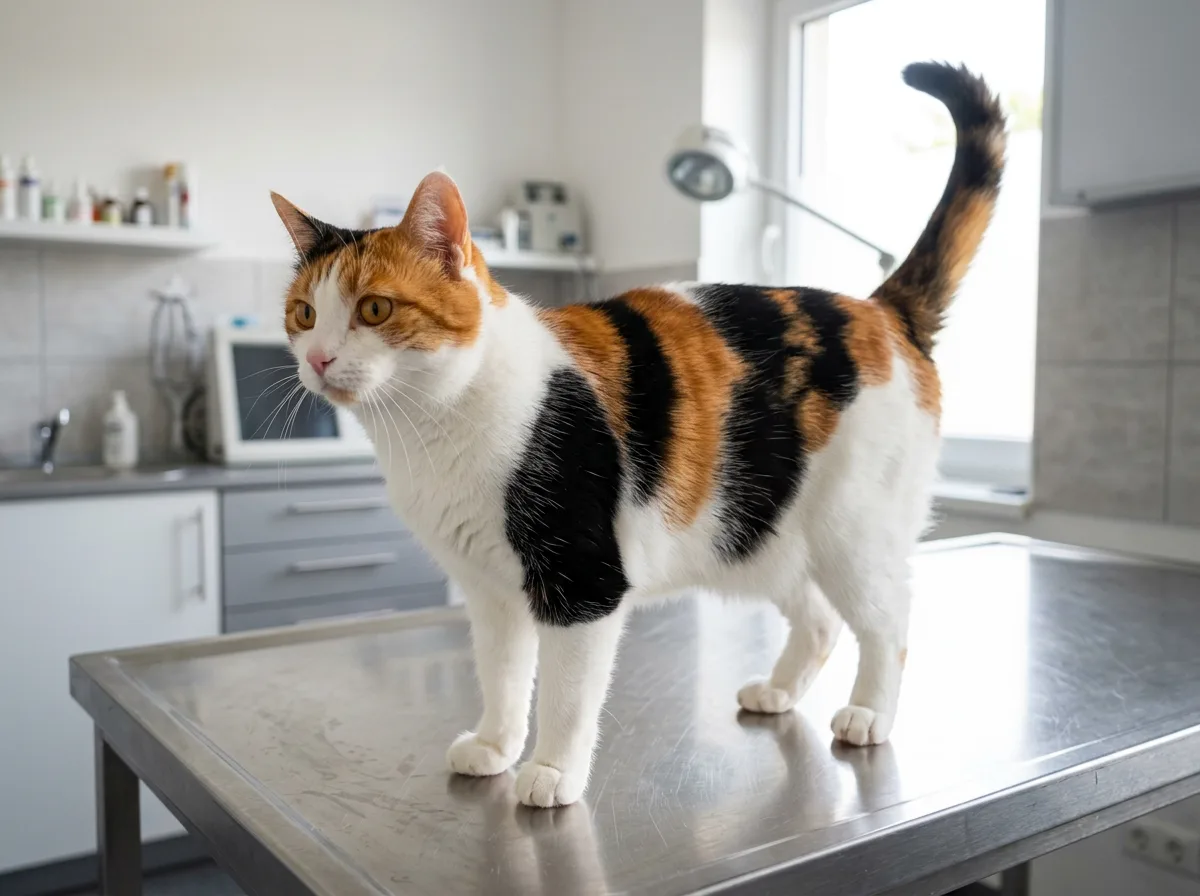
Male calico cats exist, but they are genuine rarities. The most commonly cited figure, from a University of Missouri College of Veterinary Medicine study, puts the odds at about 1 in 3,000 calico cats. For a male to display both orange and black, he needs two X chromosomes plus a Y, or another genetic workaround entirely.
There are three known routes to a male calico:

Never Scoop Again® with the Whisker Litter-Robot, the smart self-cleaning automatic litter box. Monitor visits and track weights for better overall care in the Whisker® app. Multi-cat friendly.
Petful may earn a commission when you click through to Whisker, at no extra cost to you.
- XXY (Klinefelter syndrome). The most common cause. An extra X chromosome lets the cat carry both orange and non-orange genes. XXY males are almost always sterile and often face related health issues.
- Chimerism. Two embryos fuse into one cat early in development, producing an animal with two distinct cell populations. Chimeric male calicos can occasionally be fertile.
- Somatic mosaicism. A mutation during development gives some cells a different color instruction than others.
- XXY male calicos are prone to health problems linked to Klinefelter syndrome, including a higher risk of obesity, joint issues, and cognitive or developmental difficulties, and they often have shorter lifespans than typical males. If you share your home with a male calico, schedule regular veterinary checkups and keep his weight in a healthy range.
One important correction to a popular myth: male calicos are not "worth" thousands of dollars. Because nearly all of them are sterile, they have no breeding value, and no reputable registry assigns a premium to them. A male calico is a fascinating conversation starter and a beloved pet, not an investment.
Types of Calico Cats (With Photos)
All calicos are tricolor, but the pattern comes in several distinct variations. Here is how to tell each one apart.
Standard (Classic) Calico
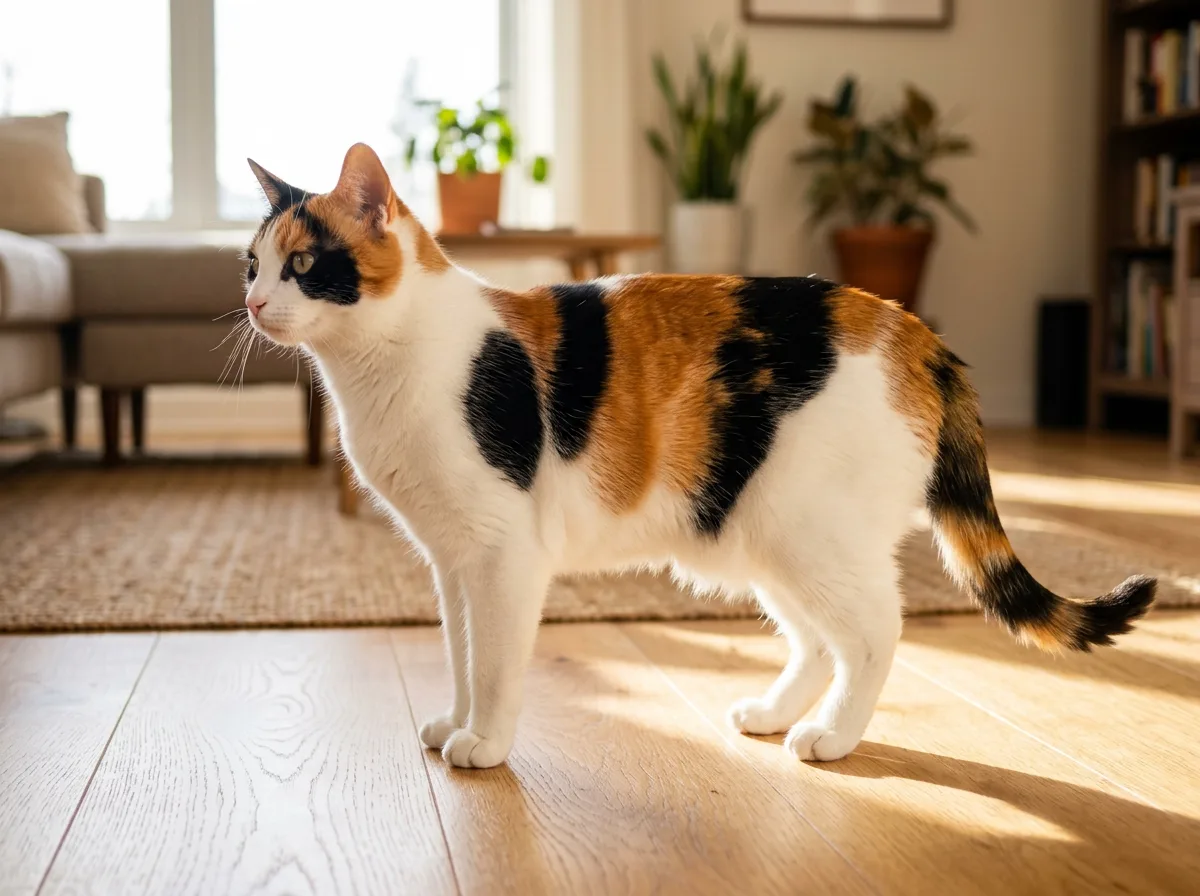
The classic look: a mostly white coat with crisp patches of bright orange and jet black. The white usually dominates the chest, belly, and legs, while the color patches concentrate along the back, head, and tail.
Dilute Calico
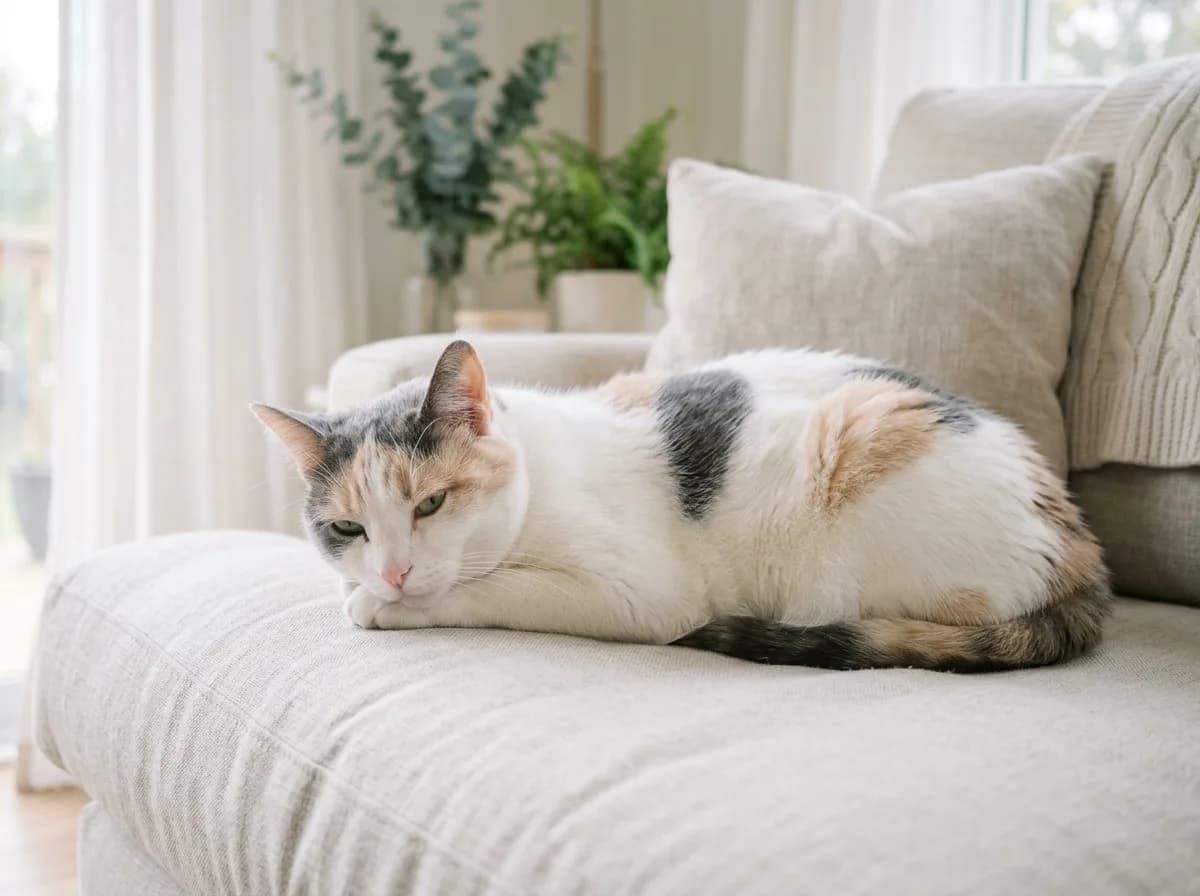
A dilute calico carries two copies of the dilution gene (MLPH), which softens black to smoky blue-gray and orange to pale cream. The result looks like a classic calico viewed through a pastel filter. Dilution works the same way across breeds and patterns; you can see the identical effect in the blue and cream coats among Maine Coon colors.
Calico Tabby (Caliby)
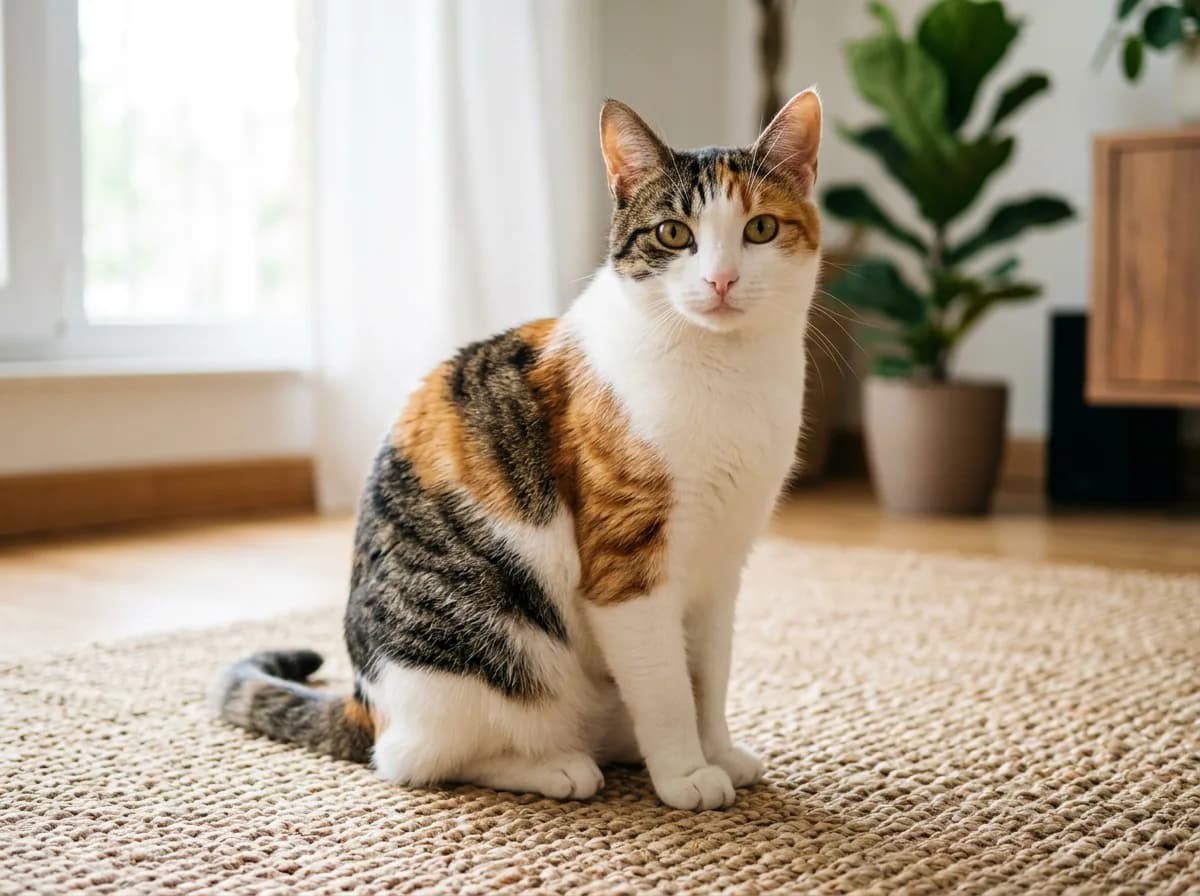
When the orange or black patches carry tabby stripes, the cat is a calico tabby, affectionately called a "caliby" or "tabico." Look closely at the colored patches: if you see striping, spotting, or the classic tabby "M" on the forehead, you have a caliby. The stripes come from the same pattern genes behind all the different types of tabby cats.
Tortico (Tortoiseshell With White)
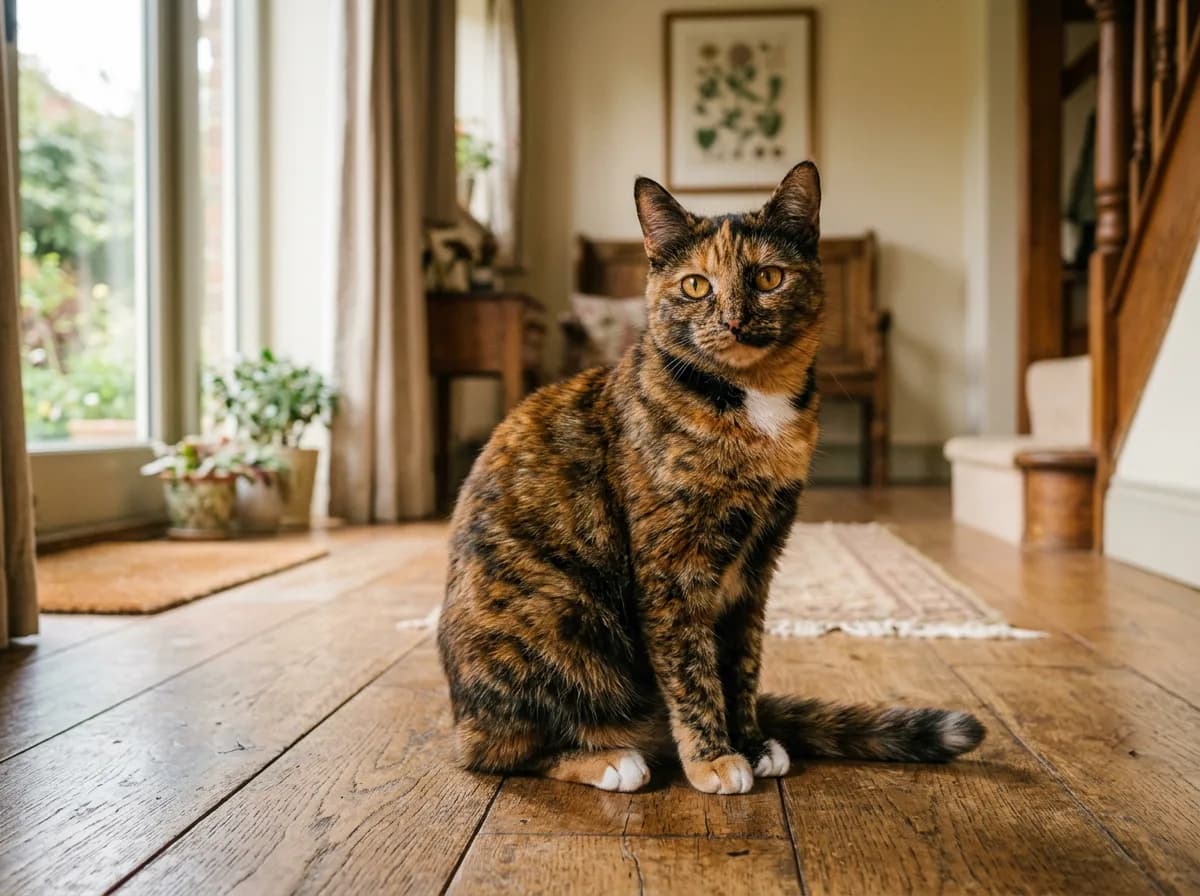
A tortico sits between calico and tortoiseshell: the orange and black are brindled together like a tortie, but the cat also has a small amount of white, often a chest locket, bib, or white paws. Less white spotting means the colors stay interwoven rather than separating into patches.
Long-Haired Calico
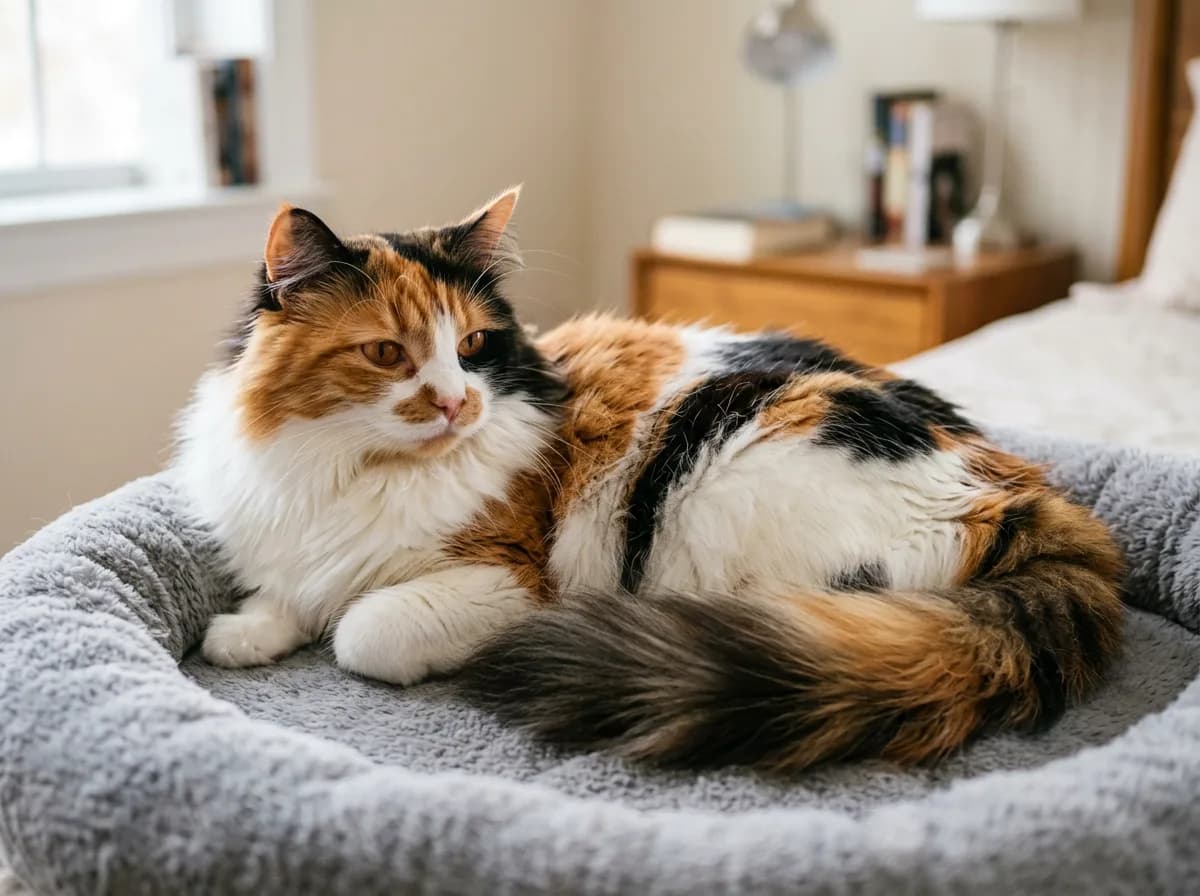
Any longhaired breed or domestic longhair can wear the calico pattern, and the flowing coat blurs the patch edges into a watercolor effect. Persians, Maine Coons, and Norwegian Forest Cats all produce spectacular long-haired calicos.
Calico vs. Tortoiseshell vs. Caliby: How to Tell Them Apart
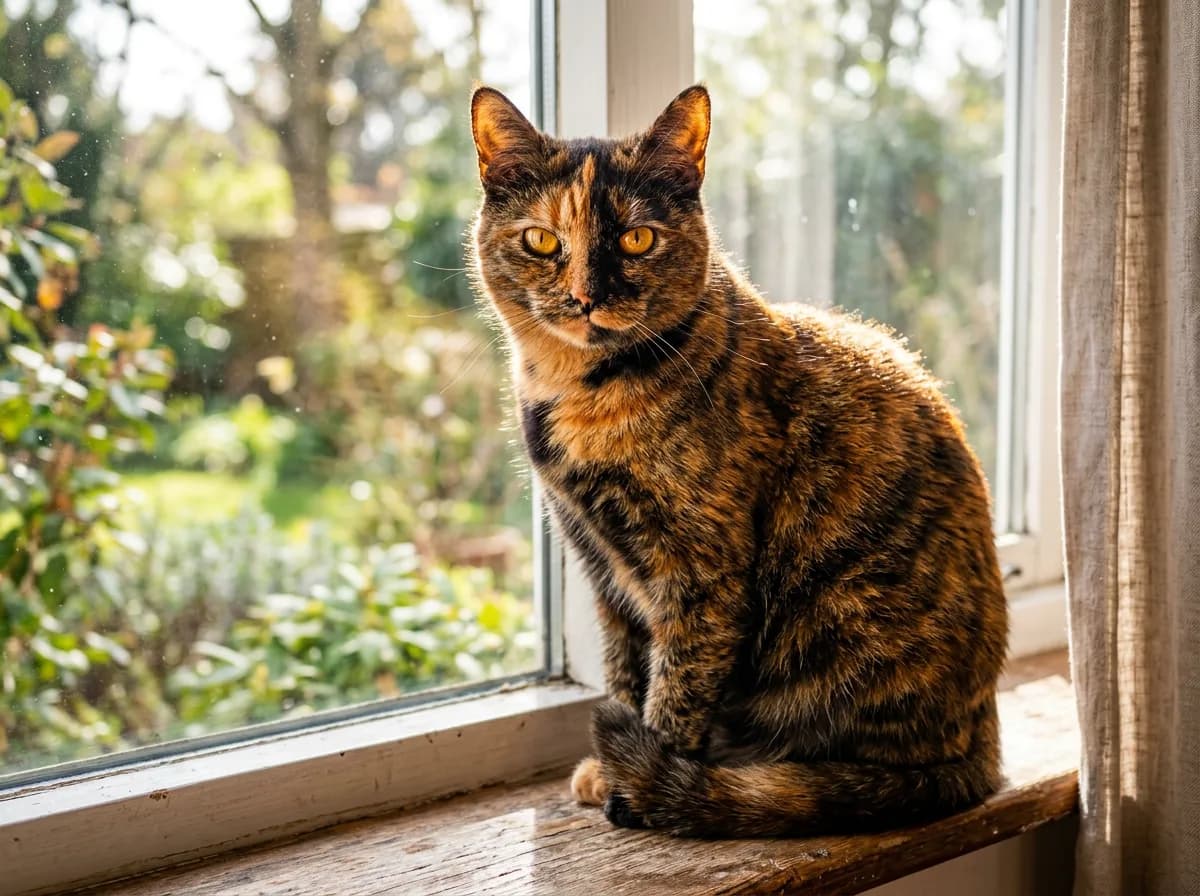
The tricolor family confuses almost everyone, so here is the rule of thumb: white is the deciding factor. A calico is a white cat with distinct orange and black patches. A tortoiseshell is an orange-and-black cat with little or no white, the two colors woven together in a brindled mix. The caliby adds tabby stripes to a calico's patches, and the torbie adds them to a tortie's brindle.
| Pattern | Color Layout | Amount of White | Quick Tell |
|---|---|---|---|
| Calico | Distinct orange and black patches on white | High, often a quarter to three-quarters of the coat | Big separate color blocks on a white base |
| Dilute calico | Blue-gray and cream patches on white | High | Same patchwork in pastel shades |
| Tortoiseshell | Orange and black brindled together | Little to none | Colors interwoven, no large white areas |
| Dilute tortie | Blue-gray and cream brindled together | Little to none | Muted swirl with no white base |
| Caliby (calico tabby) | Calico patches with tabby stripes inside | High | Stripes or an M marking inside the patches |
| Torbie | Tortie brindle with tabby striping | Little to none | Striped brindle, no white base |
Both calico and tortoiseshell coats come from the same X-linked genetics, which is why both are overwhelmingly female. The white-spotting gene simply decides whether the colors separate into patches (calico) or stay mingled (tortie).
Is My Cat a Calico? A Quick Identification Guide
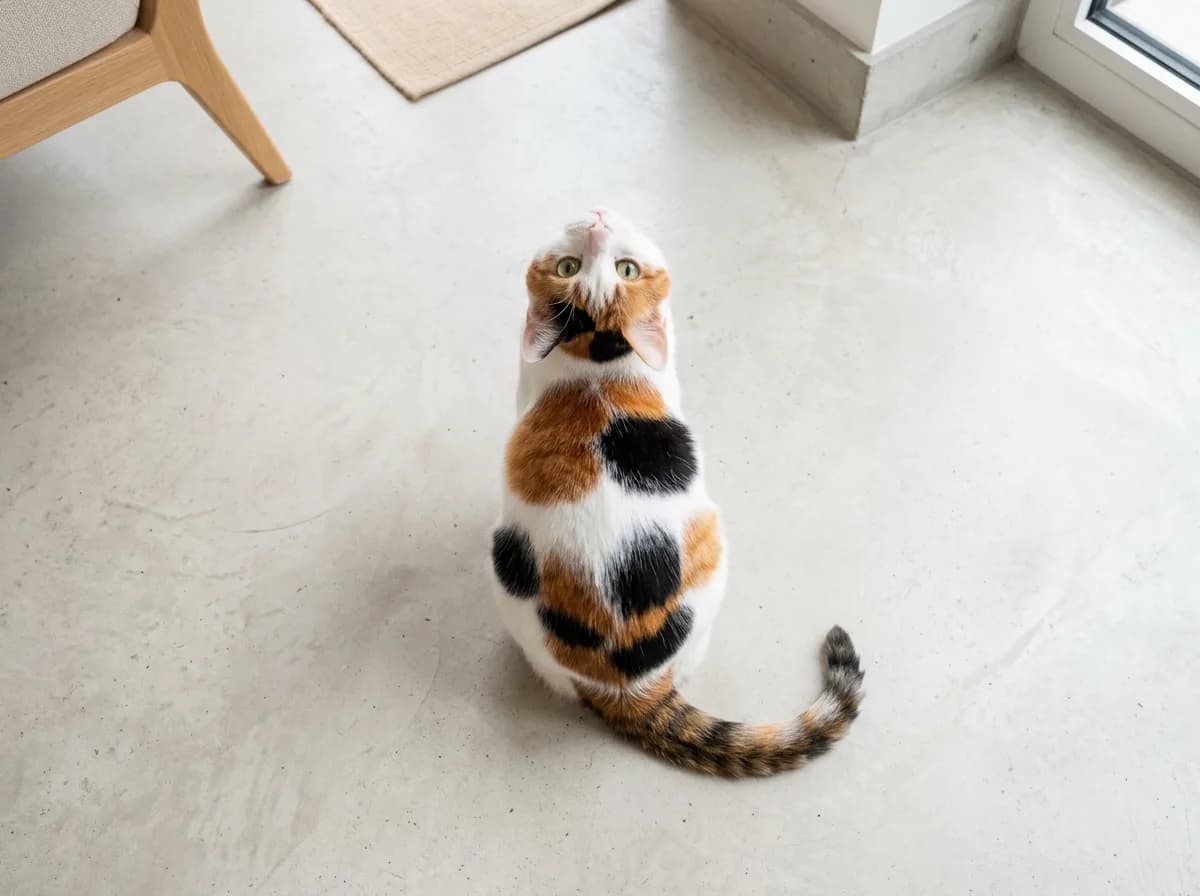
Plenty of owners genuinely are not sure what to call their tricolor cat. Run through this quick flow:
1. Count the colors. Do you see three: white plus orange and black, or white plus blue-gray and cream? If there are only two colors with no white, you likely have a tortoiseshell.
2. Check the white. Is white a major part of the coat, with the colors sitting in separate, well-defined patches? That is a calico. If white is limited to a small locket or toes and the colors are swirled together, think tortico or tortie.
3. Inspect the patches. Solid orange and black patches mean a standard calico. Stripes inside the patches mean a caliby. Pale gray and cream instead of black and orange mean a dilute calico.
4. Ignore coat length and eye color. Calico is strictly about color and distribution; long or short fur and any eye color can come with the pattern.

63-inch multi-level cat tree with scratch posts, hammock, plush perches, and dangling toys. Vertical territory is non-negotiable for high-energy climbing breeds like the Bengal.
Petful may earn a commission when you click through to Chewy, at no extra cost to you.
- Stand back and look at your cat from across the room. If you mostly see a white cat decorated with separate color blocks, she is a calico. If you mostly see a dark cat with flecks of orange woven through, she is a tortoiseshell. Distance makes the white-base difference obvious in seconds.
For breed-specific color context, see the Japanese Bobtail colors guide for mi-ke, solid, bicolor, tabby, smoke, pointed, and pedigree boundaries.
Cat Breeds That Can Be Calico
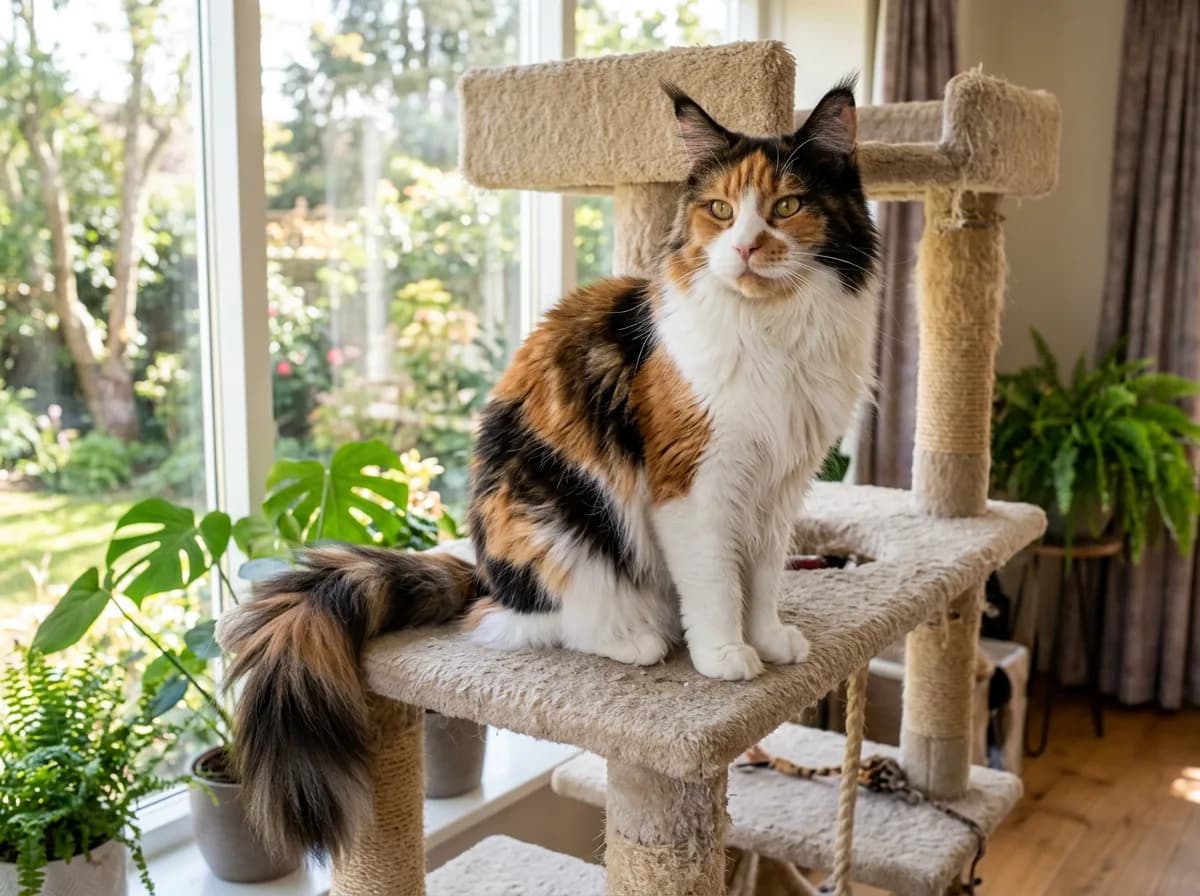
Because purebred status comes from the breed, not the pattern, the question is really which breeds allow calico in their show standards. The list is long. Breeds that can be calico include the Persian, Maine Coon, Manx, American Shorthair, British Shorthair, Japanese Bobtail, Exotic Shorthair, Devon Rex, Norwegian Forest Cat, and Turkish Van, among others.
A few standouts:
- Maine Coon. The gentle giant produces dramatic long-haired calicos; the Maine Coon breed profile covers what to expect from the breed beneath the pattern.
- Japanese Bobtail. The breed most associated with the calico pattern; the tricolor mi-ke Bobtail is the model for Japan's famous beckoning-cat figurines.
- British Shorthair. Better known for solid blue coats, but the British Shorthair standard also accepts tricolor coats on that plush, teddy-bear body.
- Turkish Van. Its trademark pattern (color confined to the head and tail) is itself an extreme form of white spotting, so calico vans are right at home genetically.
If you fall in love with a calico coat and a specific breed personality, you can usually have both. Just expect to wait: because the pattern depends on chance X-inactivation, even an experienced breeder cannot order up a calico kitten on demand.
Calico Cat Personality: Is "Calico-tude" Real?
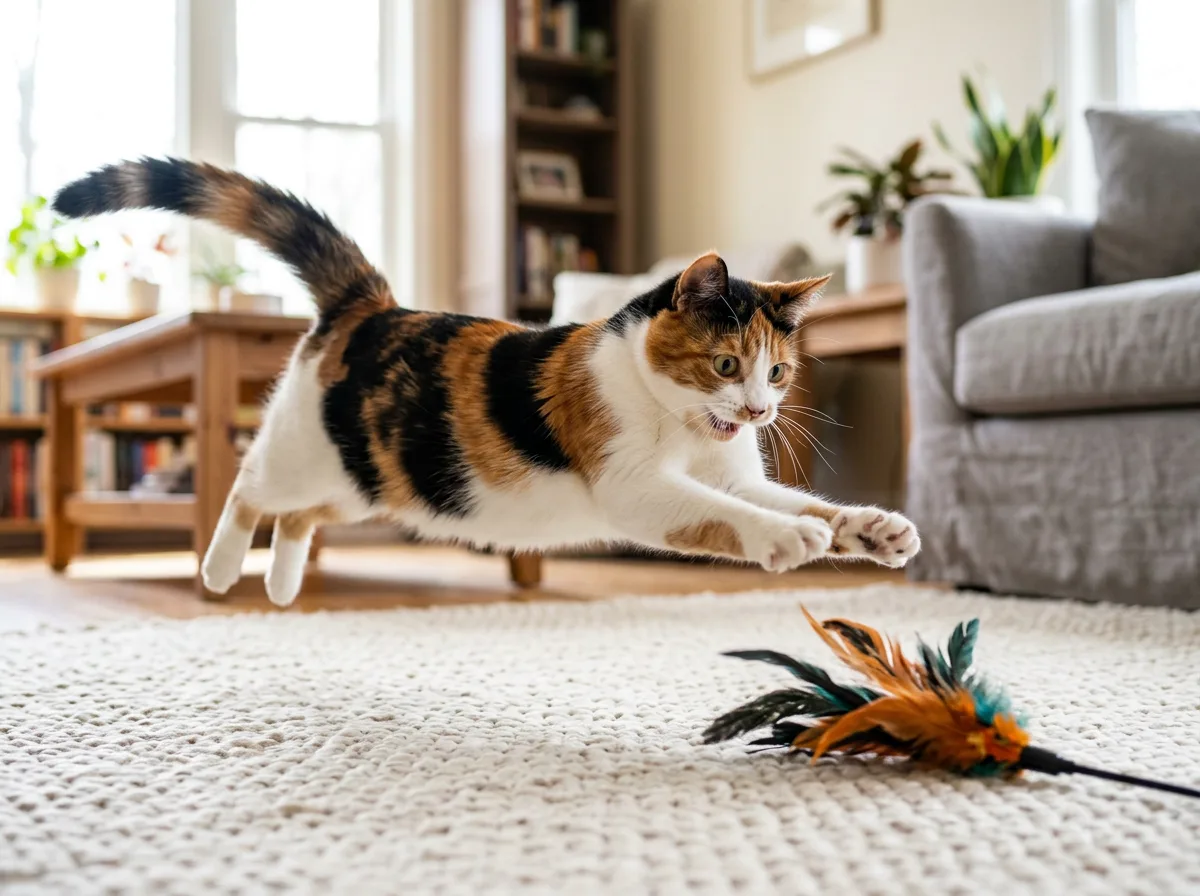
Owners swear by it: the sassy, opinionated, drama-prone "calico-tude" (or "tortitude" for tortoiseshells). Science is far more cautious. There is no established causal link between coat color and personality, and because calico is a pattern spread across many breeds, calico personalities span the full feline spectrum.
The study everyone cites is a University of California, Davis veterinary survey (Stelow, Bain, and Kass, published 2016 in the Journal of Applied Animal Welfare Science). More than 1,200 cat owners scored their cats' behaviors, and tricolor cats (calicos and torties) were reported slightly more likely to hiss, swat, or resist handling than some other colors. Two caveats matter. First, the data is owner-reported, not observed in controlled conditions, so expectation bias is baked in: people who believe in calico-tude may notice and report it more. Second, the differences were modest, and the researchers themselves stressed that individual variation dwarfs any color effect.
What actually shapes a calico's temperament is the same as any cat: breed background, early socialization, environment, and plain individual personality. A calico Persian will likely lounge; a calico Devon Rex will likely orbit you like a small satellite. Treat the famous attitude as folklore with a wink of survey data behind it, not a personality guarantee.
Calico Cat Health and Lifespan
Here is the good news: the calico pattern itself has no effect on health or lifespan for the 99.9% of calicos that are female. A healthy indoor calico typically lives 12-16 years, and plenty reach their late teens or even 20 with good care. The pattern is purely cosmetic; what matters medically is the cat underneath it.
That means a calico's health outlook tracks her breed or mix. A calico Persian cat inherits Persian concerns such as polycystic kidney disease and tear-duct issues; a calico Maine Coon should be screened for hypertrophic cardiomyopathy like any Maine Coon; a random-bred calico domestic shorthair enjoys the general hardiness of mixed ancestry.
The notable exception is the rare XXY male calico. Klinefelter males face a genuinely elevated risk of health problems, including obesity, diabetes-related issues, joint trouble, and developmental difficulties, and they often live shorter lives. Sterility is nearly universal in XXY males, which is why veterinarians still recommend neutering them: the surgery removes hormone-driven behaviors and eliminates testicular disease risk even though the cat cannot sire kittens.
One practical note for any calico who enjoys sunbathing or outdoor time: white fur offers little protection against ultraviolet light, and cats with white ears and noses have a higher risk of sunburn and squamous cell carcinoma. Keeping cats indoors, or limiting strong midday sun exposure, protects those bright white patches.

108-oz stainless steel pet fountain with quiet pump and water-level window. Bengals are notoriously water-obsessed; a flowing fountain encourages hydration and pulls them away from sinks and toilets.
Petful may earn a commission when you click through to Chewy, at no extra cost to you.
Caring for a Calico Cat
Care for a calico cat the way you would care for any cat of her breed and coat length, with a few pattern-specific notes:
- Grooming. Short-haired calicos need a weekly brushing; long-haired calicos need brushing several times a week to prevent mats, especially behind the ears and in the breeches. Regular grooming also keeps the white areas bright.
- Nutrition. Feed a complete, balanced diet appropriate for the cat's life stage, and measure portions. Coat color does not change nutritional needs, but obesity shortens lives across every pattern, and it is a particular risk for XXY males.
- Enrichment. Whatever your calico's personality, daily play sessions, vertical territory, and scratching outlets prevent the boredom behaviors that owners sometimes blame on calico-tude.
- Veterinary care. Annual exams (twice yearly for seniors), dental care, parasite prevention, and vaccinations are the backbone of those 16-plus-year lifespans.
- Spay or neuter. Spaying a female calico prevents heat cycles, unwanted litters, and mammary and uterine disease. Neutering a male calico is still recommended despite near-universal sterility.
Indoor living deserves a special mention. Indoor cats consistently outlive outdoor cats, and a calico's high-contrast coat offers no camouflage from traffic or predators, so the safest place for that show-stopping pattern is on your sofa.
Calico Cats in History and Culture: Lucky Cats Around the World
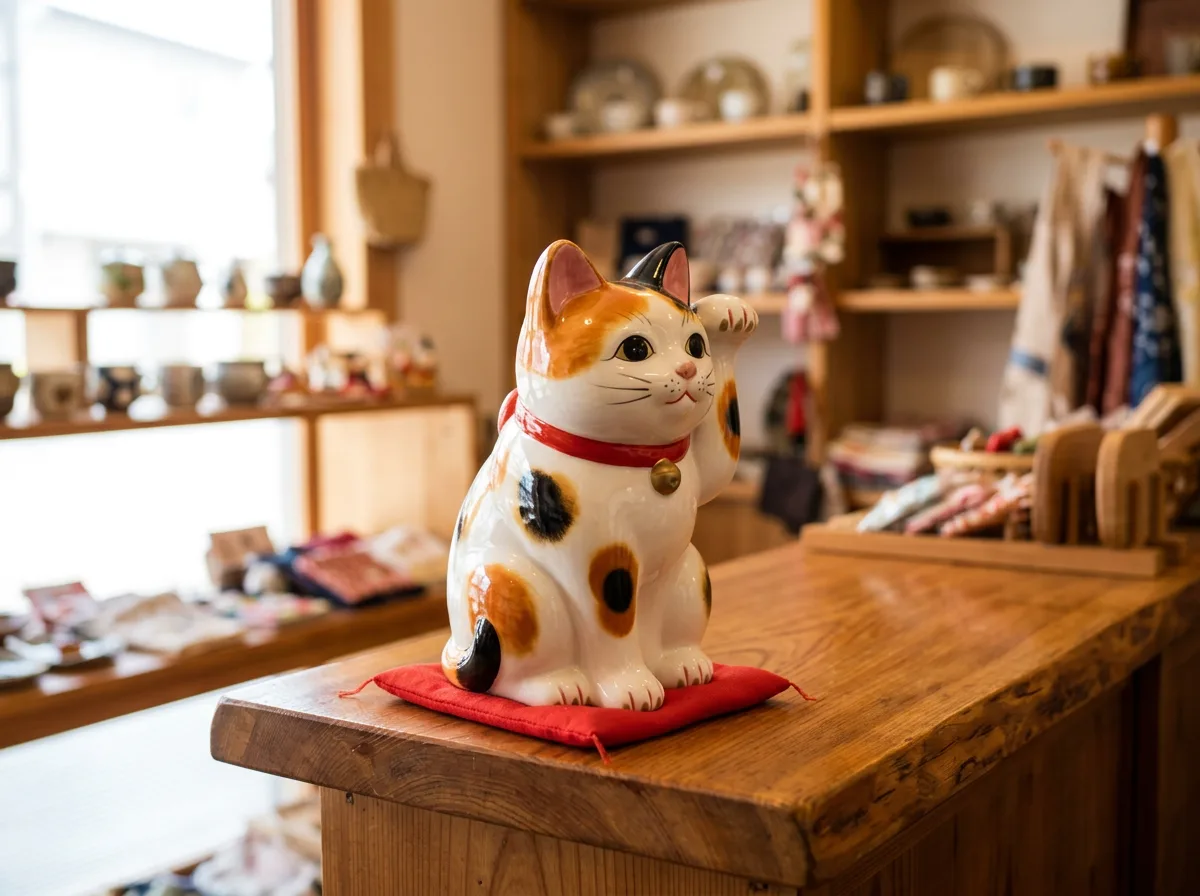
Few coat patterns carry as much cultural cargo as the calico. In Japan, the mi-ke ("triple fur") cat has been a symbol of good fortune for centuries. The maneki-neko, the beckoning-cat figurine raising a paw in shop windows around the world, is traditionally modeled on a calico Japanese Bobtail. Japanese sailors prized calico ships' cats, believing the tricolor coat protected the vessel from storms and angry spirits; maritime folklore across several countries echoes the same idea, which is why calicos are sometimes called "money cats" in parts of the United States.
The pattern even holds public office. On October 1, 2001, the calico became the official state cat of Maryland, chosen because its orange, black, and white coloring matches the Baltimore oriole (the state bird) and the Baltimore checkerspot butterfly (the state insect). Only a handful of U.S. states have an official cat at all, and Maryland's is defined by pattern rather than breed.
Calico folklore stretches further: in some traditions a calico cat on the doorstep signals coming luck, while Irish and German folk beliefs assigned tricolor cats healing or protective powers. None of it survives scientific scrutiny, of course, but the consistency is striking: across unrelated cultures, the rare-looking patchwork coat kept being read as a blessing.

Color-changing crystal litter that flags pH shifts in your cat's urine, an early warning sign of UTIs, kidney issues, and more.
Petful may earn a commission when you click through to Chewy, at no extra cost to you.
How Much Does a Calico Cat Cost? Adoption and Buying Guide
Because calico is a pattern, there is no "calico price." What you pay depends entirely on where the cat comes from and what breed she is.
| Source | Typical Cost | What Is Usually Included | Notes |
|---|---|---|---|
| Shelter or rescue adoption | $50-200 | Spay or neuter, core vaccines, often a microchip | The best value and where most calicos are found |
| Purebred breeder (calico within a recognized breed) | $800-2,500 for most pedigreed kittens | Pedigree papers, early vetting, breeder support | You are paying for the breed, not the pattern |
| So-called rare male calico | No legitimate premium | Nothing extra | Almost always sterile, so there is no breeding value to price in |
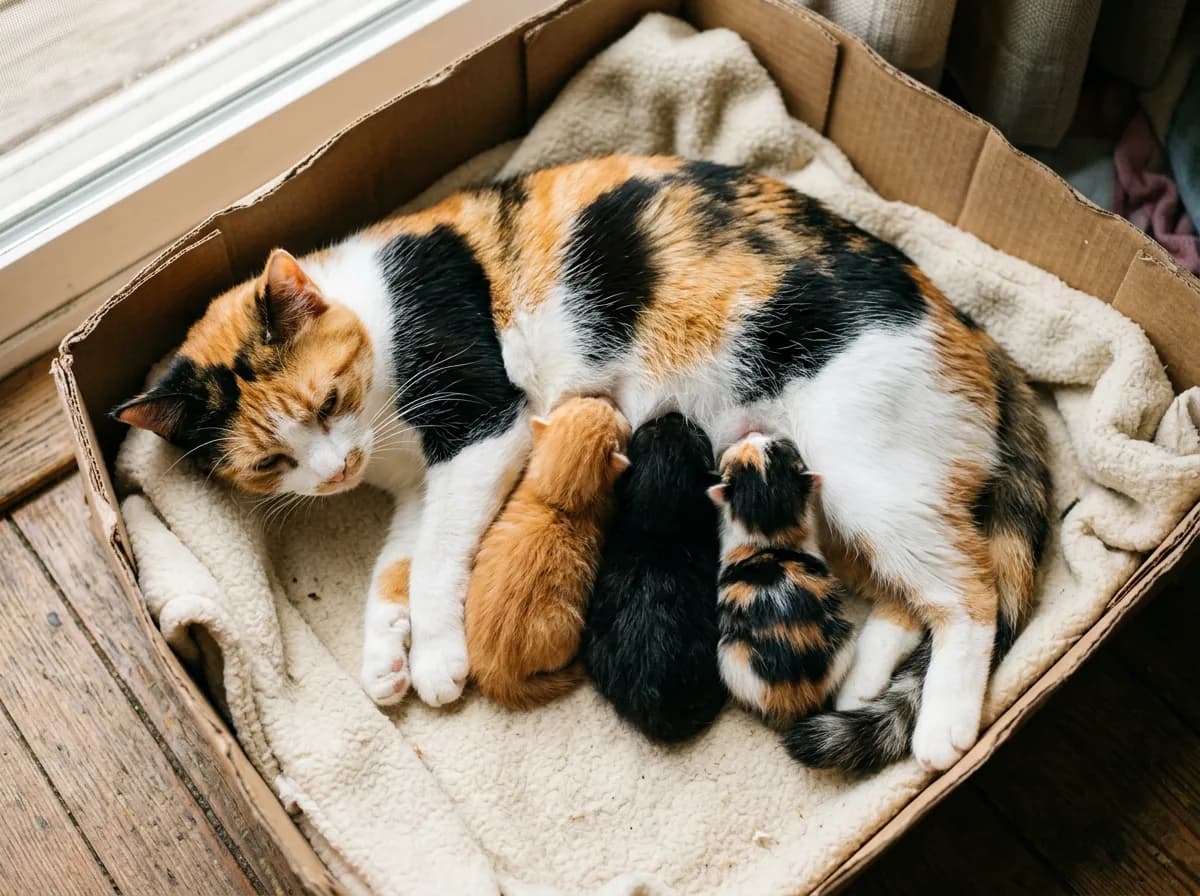
Shelter adoption is the smart first stop. Calicos are common in shelter populations, adoption fees typically run $50-200, and that fee usually bundles hundreds of dollars of veterinary work. If you want a calico of a specific breed, expect to pay that breed's going rate, roughly $800-2,500 for most pedigreed kittens, and expect a wait, since breeders cannot guarantee the pattern in any given litter.
- Shelters fill with kittens from late spring through early fall, and tricolor girls are usually among them. If your heart is set on a calico kitten, visit during kitten season; if you are open to an adult, winter visits often come with reduced adoption fees.
Famous Calico Cats (and Favorite Calico Cat Names)
The most famous calico of modern times is Tama, the calico who served as honorary stationmaster of Kishi Station in Wakayama, Japan. Appointed in 2007 complete with a custom stationmaster's cap, Tama drew so many tourists that she is widely credited with saving the struggling rail line, and she received a Shinto-style memorial when she died in 2015. She follows a long tradition: the maneki-neko legend itself is tied to a tricolor temple cat said to have beckoned a feudal lord out of a lightning storm.
Calicos also turn up as library cats, shop cats, and mascots around the world, and the pattern's patchwork looks have made it a favorite in children's books and animation.
Naming a patchwork cat is half the fun. Popular calico cat names lean into the coat: Callie, Patches, Pumpkin, Clementine, Autumn, Marble, Penny, Amber, Maple, Mosaic, Trixie, and Harlequin all suit a tricolor girl. For a nod to the pattern's Japanese heritage, Mi-ke, Tama, Suki, or Koban (the gold coin the maneki-neko holds) are charming choices.
Frequently Asked Questions About Calico Cats
Quick answers to the questions owners ask most about calico cats.
Calico cats are walking genetics lessons. Their tricolor coat requires two X chromosomes plus the white-spotting gene, which is why roughly 99.9% are female, and random X-inactivation means no two calicos are ever identical, even clones. Add centuries of good-luck folklore in Japan and maritime tradition, and the calico is one of the most celebrated coats in the cat world.
Calico is a pattern rather than a breed, so clinginess depends on the breed underneath the coat. Breeds most often described as velcro cats include the Siamese, Ragdoll, Sphynx, and Burmese. Among breeds that can be calico, the Persian and Exotic Shorthair are devoted lap cats, while the Japanese Bobtail is sociable and people-focused.
For pet cats, the biggest threats are everyday hazards rather than dramatic predators. Unsupervised outdoor access tops the list because of traffic, coyotes and other predators, poisons, and infectious disease. Indoors, obesity and boredom quietly shorten more feline lives than anything else, which is why portion control and daily play matter so much.
Almost. About 99.9% of calico cats are female because displaying both orange and black normally requires two X chromosomes. Rare males do exist, usually due to an extra X chromosome (XXY, called Klinefelter syndrome), chimerism, or somatic mosaicism.
Not rare at all. Female calicos are the standard: nearly every calico you meet is a girl, and the pattern is common in shelters and mixed-breed populations. It is the male calico that is the rarity, at roughly 1 in 3,000.
Yes, but only about 1 in 3,000 calicos is male, a figure traced to a University of Missouri College of Veterinary Medicine study. Most male calicos are XXY (Klinefelter syndrome) and sterile, while a small number result from chimerism or mosaicism.
No. Calico is a coat pattern that appears across many breeds, including the Persian, Maine Coon, Manx, American Shorthair, British Shorthair, Japanese Bobtail, Exotic Shorthair, Devon Rex, Norwegian Forest Cat, and Turkish Van, as well as countless mixed-breed cats.
White. A calico has a predominantly white coat with distinct, separate patches of orange and black. A tortoiseshell has orange and black woven together in a brindled mix with little or no white. Both patterns share the same X-linked genetics, which is why both are overwhelmingly female.
The pattern itself does not change lifespan. Healthy indoor calicos typically live 12-16 years, and many reach their late teens or 20. Lifespan tracks the cat's breed, lifestyle, and care, with one exception: rare XXY male calicos often have more health problems and shorter lives.
Shelter adoption typically costs $50-200 and usually includes spay or neuter surgery and vaccines. Purebred cats that happen to be calico follow their breed's pricing, roughly $800-2,500 for most pedigreed kittens. There is no legitimate price premium for the pattern itself or for rare males.
Many cultures say yes. In Japan the tricolor mi-ke cat inspired the maneki-neko beckoning-cat figurine, sailors kept calico ships' cats to ward off storms, and Americans once called them money cats. The luck is folklore, but it is remarkably consistent folklore across unrelated cultures, and Maryland made the calico its official state cat in 2001.
A dilute calico carries two copies of the dilution gene (MLPH), which softens the classic colors: black becomes blue-gray and orange becomes cream. The result is the same white-based patchwork pattern in muted pastel shades.
Almost never. The majority of male calicos are XXY (Klinefelter syndrome) and sterile. The rare fertile male calico is usually a chimera or somatic mosaic rather than XXY. Either way, male calicos have no breeding value, and veterinarians still recommend neutering them for health and behavioral reasons.

Coreen Saito is a pet writer and longtime shelter volunteer with more than a decade in animal rescue. She covers cat behavior, breed care, and the small, ordinary science of sharing a life with companion animals, with a particular focus on honest takes about the products and decisions that actually matter. At home in Arizona, she's outranked by Mac (a dog with the loudest opinion in the house), Rebel (a cat who governs by quiet authority), and Meri (an orange tabby who runs the late shift and the laundry basket). She writes about all three, plus the rescues that keep coming through her life, at LifeWithMinty.com.
Sign up for expert-backed reviews and safety alerts all in one place.