British Shorthair: Personality, Size, Cost, and Care Guide
A complete British Shorthair breed guide covering personality, cost, size and weight, colors, grooming, health risks like HCM and PKD, and whether this calm, plush "British Blue" cat is the right fit for your home.
Petful is reader supported. As an affiliate of platforms like Amazon and Chewy, we may earn a commission when you buy through links on this page. There is no extra cost to you.
The British Shorthair is the plush, round faced cat behind the famous "British Blue," a calm and quietly affectionate breed that the Cat Fanciers' Association says carries more hairs per square inch than any other cat. Bred from Britain's everyday working cats into a pedigree show animal, this is a sturdy, easygoing companion that can weigh up to 17 pounds and live well into its teens. If you want a steady, low drama cat that prefers to sit beside you rather than on you, the British Shorthair earns its reputation as one of the most popular cats in the world.
- 1The British Shorthair is a stocky, dense coated cat famous for the blue-grey "British Blue" with copper eyes
- 2Expect a calm, independent personality: affectionate and people-oriented, but often not a constant lap cat
- 3Males can reach 12-17 lb and the breed typically lives 12-16 years, maturing slowly over 3-5 years
- 4Grooming is easy (weekly brushing, more during seasonal sheds), but the breed needs portion control to avoid weight gain
- 5Responsible buyers should ask breeders for HCM and PKD screening of the parent cats

Sign up for expert-backed reviews and safety alerts all in one place.
British Shorthair at a Glance
Before the deep dive, here is the quick profile. These figures reflect the breed standards published by the Cat Fanciers' Association (CFA) and The International Cat Association (TICA), plus widely cited veterinary breed data.
| Trait | Detail |
|---|---|
| Origin | Great Britain (pedigree of the native British domestic cat) |
| Weight | Males 12-17 lb, females 7-12 lb |
| Lifespan | About 12-16 years |
| Coat | Short, dense, plush double coat (no long fur) |
| Best known color | Blue-grey "British Blue" with copper-orange eyes |
| Temperament | Calm, easygoing, affectionate, independent, quiet |
| Energy level | Low to moderate; not a climber or a chronic zoomies cat |
| Grooming | Weekly brushing; more during spring and fall sheds |
| Good with | Families, seniors, busy owners, other calm pets |
| Time to full size | 3-5 years |
- Many people use "British Blue" and "British Shorthair" interchangeably, but blue is simply the most famous of dozens of recognized colors. The same breed comes in black, white, cream, tabby, tortoiseshell, colorpoint, and more.
History and Origin
The British Shorthair traces back to the ordinary domestic cats that lived across the British Isles, working cats kept on farms and in homes to control rodents. According to breed historians, their ancestors may stretch as far back as cats brought to Britain around the time of the Romans, which is why the CFA calls the breed "the modern embodiment of the ancient Roman cats."
The shift from common housecat to pedigree breed began in the late 1800s. The artist and cat fancier Harrison Weir is credited with organizing the first formal cat show at London's Crystal Palace in 1871, where sturdy native shorthairs were shown and judged. Breeders began selecting for the rounded head, dense coat, and stocky build that define the cat today.
The breed nearly disappeared in the 20th century. Numbers fell sharply through the World Wars, and breeding stock became critically rare. To rebuild the population, breeders carefully outcrossed surviving British Shorthairs to Persians and other shorthairs, which helped restore type and is part of why the modern cat has such a round face and thick coat. By the late 1970s the breed had earned full recognition from the major cat registries, and a surge of popularity followed in the 1980s.
Never Scoop Again® with the Whisker Litter-Robot, the smart self-cleaning automatic litter box. Monitor visits and track weights for better overall care in the Whisker® app. Multi-cat friendly.
Petful may earn a commission when you click through to Whisker, at no extra cost to you.
- A breed with deep pedigree records means reputable breeders can show you generations of health history. Ask to see the parents' registration and screening results, not just a cute kitten photo.
Appearance and the Signature British Blue
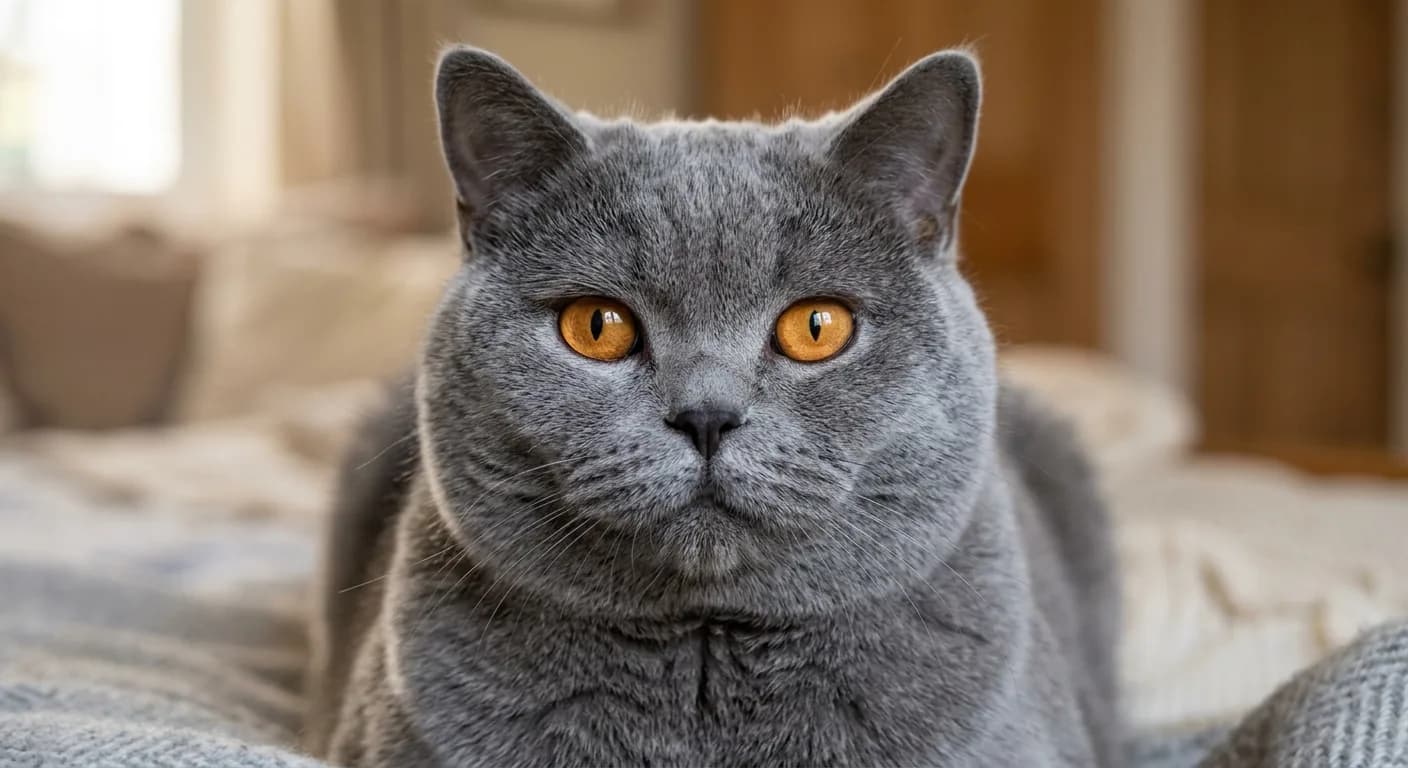
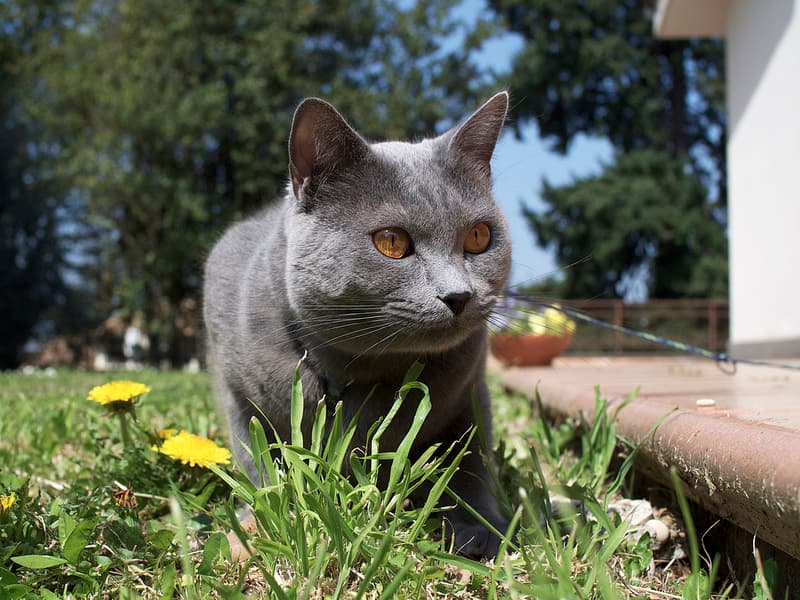
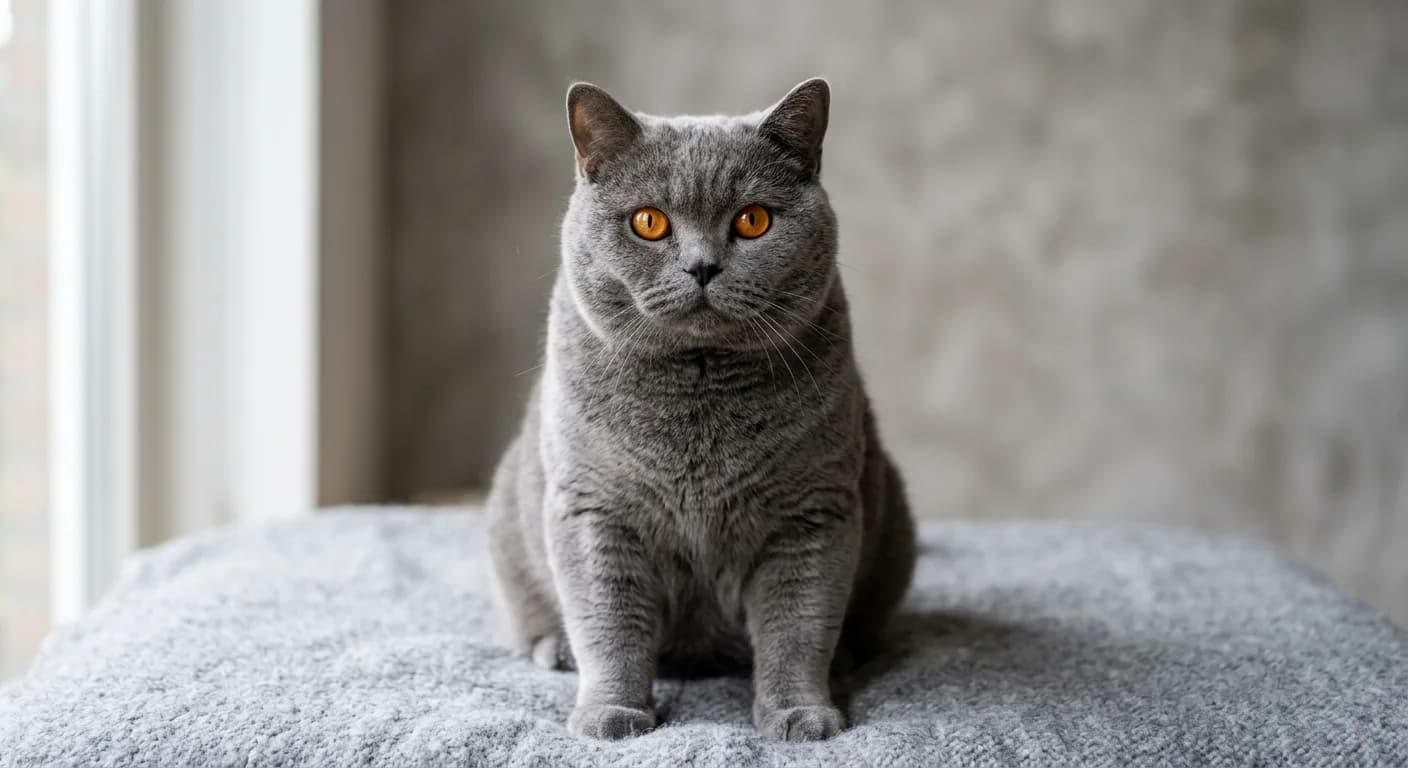
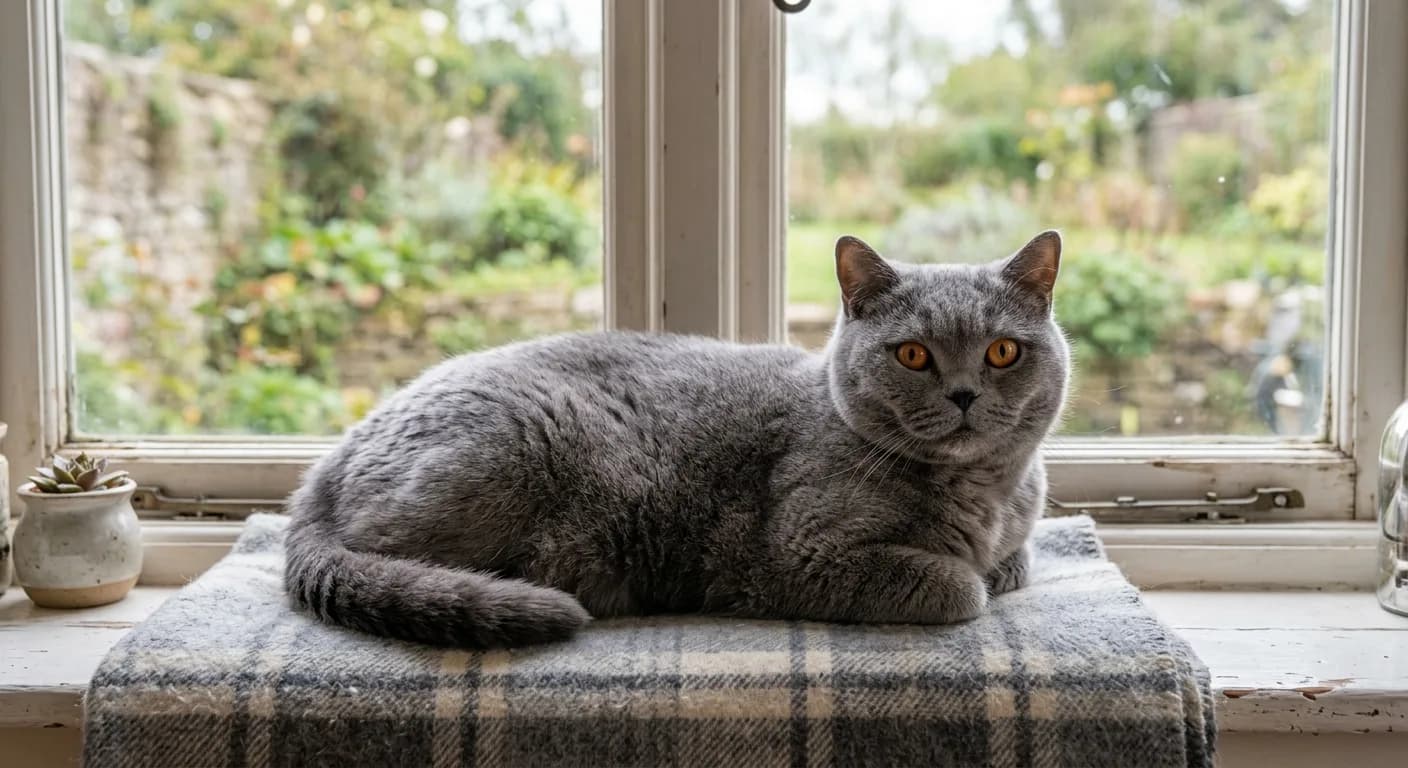
The British Shorthair is built like a compact tank. It has a broad chest, short sturdy legs, a thick neck, and a deep, rounded body that feels heavier than it looks. The head is large and round with full cheeks (especially in mature males), a short broad nose, and big round eyes set wide apart. That combination is exactly why people call them "teddy bear" cats.
The coat is the breed's signature feature. It is short but extraordinarily dense, standing slightly away from the body with a crisp, plush texture. The CFA states this coat "contains more hairs per square inch than any other breed, making it luxuriously rich to the touch yet easy to care for."
The most iconic version is the British Blue: a solid blue-grey coat paired with warm copper-orange eyes. This is the look most people picture when they hear the breed name, and it remains the most popular color worldwide. Originally the breed was even registered simply as the "British Blue" before the color range officially expanded.
- They have short, thick legs relative to their broad body, but they are not a dwarf or "short legged" breed like the Munchkin. The stocky proportions just make the legs look stubby next to all that plush coat.
Colors and Patterns
While blue is the headliner, the British Shorthair comes in a wide palette. Registries recognize solid colors, shaded and tipped varieties, tabby patterns, bicolors, tortoiseshells, and colorpointed cats. Eye color shifts with the coat: solid cats usually have gold or copper eyes, silver and shaded cats often have green to blue-green eyes, and odd-eyed whites can have one blue and one gold eye.
| Category | Examples |
|---|---|
| Solid | Blue, black, white, cream, chocolate, lilac, cinnamon, fawn |
| Tabby | Classic, mackerel, and spotted in silver, brown, and red |
| Bicolor | Any solid color paired with white |
| Tortoiseshell | Black/red and blue/cream "tortie" blends, with or without white |
| Shaded and tipped | Silver shaded, golden shaded, smoke |
| Colorpoint | Darker points on the face, ears, legs, and tail with blue eyes |
- Trendy varieties such as golden, lilac, and colorpoint British Shorthairs often carry a premium over the classic blue. Color does not change the cat's personality or health, so choose the look you love and the breeder you trust.
Size and Weight
The British Shorthair is a medium to large breed, and males in particular can get impressively heavy. Because the breed is slow to mature, a kitten may not reach its full adult size and weight until it is 3 to 5 years old, so do not be surprised if your young cat keeps filling out for years.
| Measure | Male | Female |
|---|---|---|
| Weight | 12-17 lb | 7-12 lb |
| Height (at shoulder) | 12-14 in | 12-14 in |
| Body type | Cobby, broad, muscular | Cobby, slightly smaller |
| Full maturity | 3-5 years | 3-5 years |
- British Shorthairs are naturally stocky, which makes it easy to miss real weight gain under that thick coat. Feel for the ribs and waist rather than trusting the scale alone, and ask your vet to score body condition at checkups.
Personality and Temperament: Are They Cuddly?
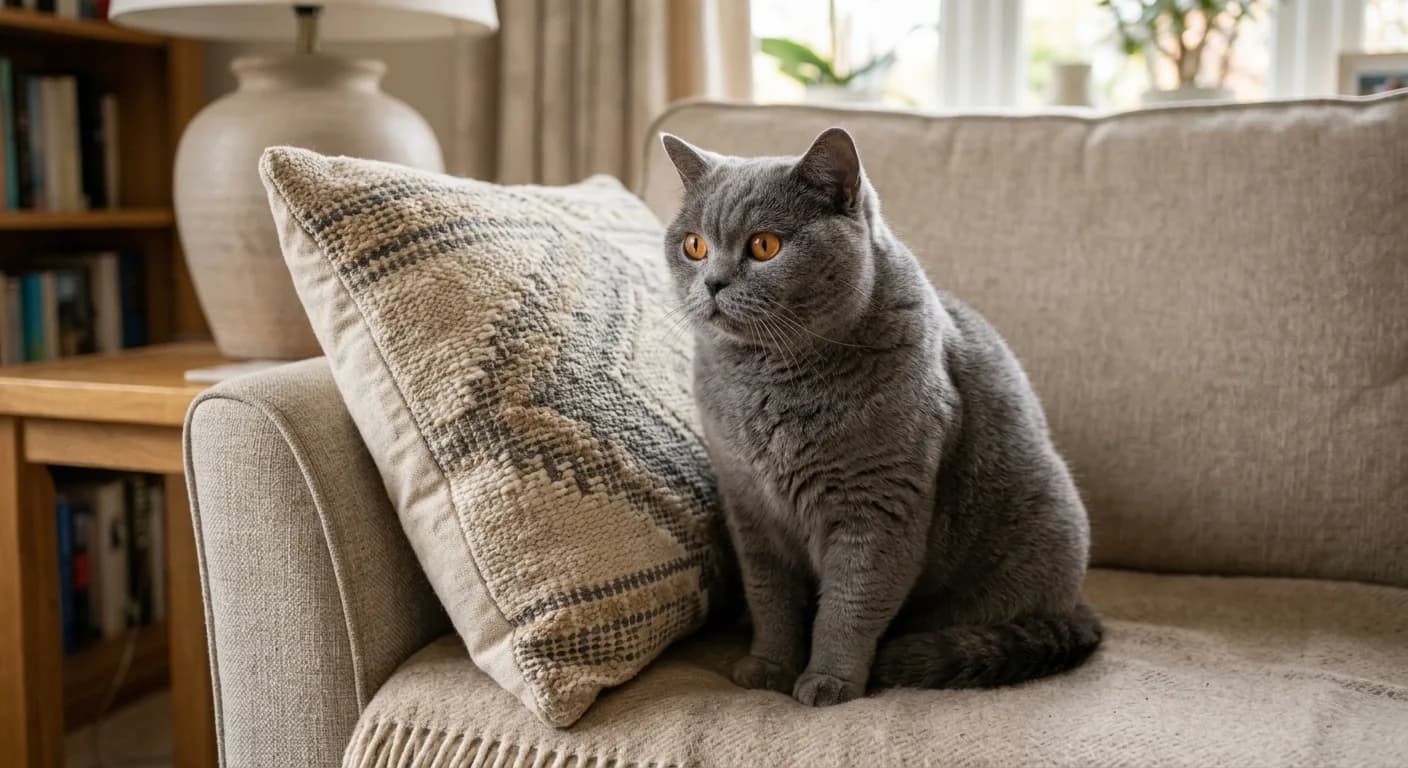
Here is where expectations and reality often part ways. British Shorthairs are affectionate and deeply people-oriented, but they tend to show love on their own terms. They are famous for being calm, dignified, and undemanding. Many will follow you from room to room and settle nearby, yet a large number dislike being picked up, carried, or held tightly. That is why so many owners search whether the breed is "cuddly" and come away surprised.
This is not coldness, it is independence. The breed bonds with the whole household rather than fixating on one person, and it generally tolerates being alone better than clingier breeds. They are quiet cats with soft voices, low to moderate energy, and a reputation for being gentle with children and other calm pets. Petful’s guide to cats attach to only one person has the full breakdown.
If your dream is a cat that sprawls across your lap for hours, the British Shorthair may or may not deliver, it varies by individual. If you want a steady, low drama companion that radiates contentment from the cushion beside you, this breed is hard to beat. For other famously even-tempered, undemanding cats, it is worth comparing the British Shorthair with the Russian Blue, another reserved blue-grey breed that bonds closely but values its independence.
When it comes to exercise, the British Shorthair is a relaxed, low to moderate energy cat rather than an athletic climber or a constant ball of motion. It will not scale your curtains, but it does need daily interactive play to stay fit and mentally engaged. A couple of short play sessions with a wand toy or a few food-puzzle feeders go a long way, and because this breed gains weight so easily, that routine play doubles as weight management.

63-inch multi-level cat tree with scratch posts, hammock, plush perches, and dangling toys. Vertical territory is non-negotiable for high-energy climbing breeds like the Bengal.
Petful may earn a commission when you click through to Chewy, at no extra cost to you.
- They are affectionate but physically independent. Most prefer sitting beside you to being scooped up, and being held can make them feel restrained. Respect their space and many warm up to gentle, on-their-terms contact over time.
Grooming and Shedding
The good news for busy owners: that famous dense coat is surprisingly low maintenance. A thorough brushing once or twice a week is usually enough to remove loose hair, prevent mats, and keep the coat plush. The British Shorthair does not have long fur to tangle, so daily grooming is not required.
The exception is shedding season. Twice a year, typically in spring and fall, the breed drops a noticeable amount of that thick undercoat, and brushing every day or two during those weeks helps keep fur off your furniture and out of your cat's stomach. Bathing is rarely needed, and most cats only need a bath every several weeks at most.
Beyond the coat, standard cat care applies: trim nails regularly, check ears, and prioritize dental care, since dental disease is one of the most common health issues in all cats.
- Owners are often shocked at how much a British Shorthair sheds in spring and fall. Step up to daily brushing during those windows and consider a fine slicker or grooming comb to reach the dense undercoat.
Health and Lifespan
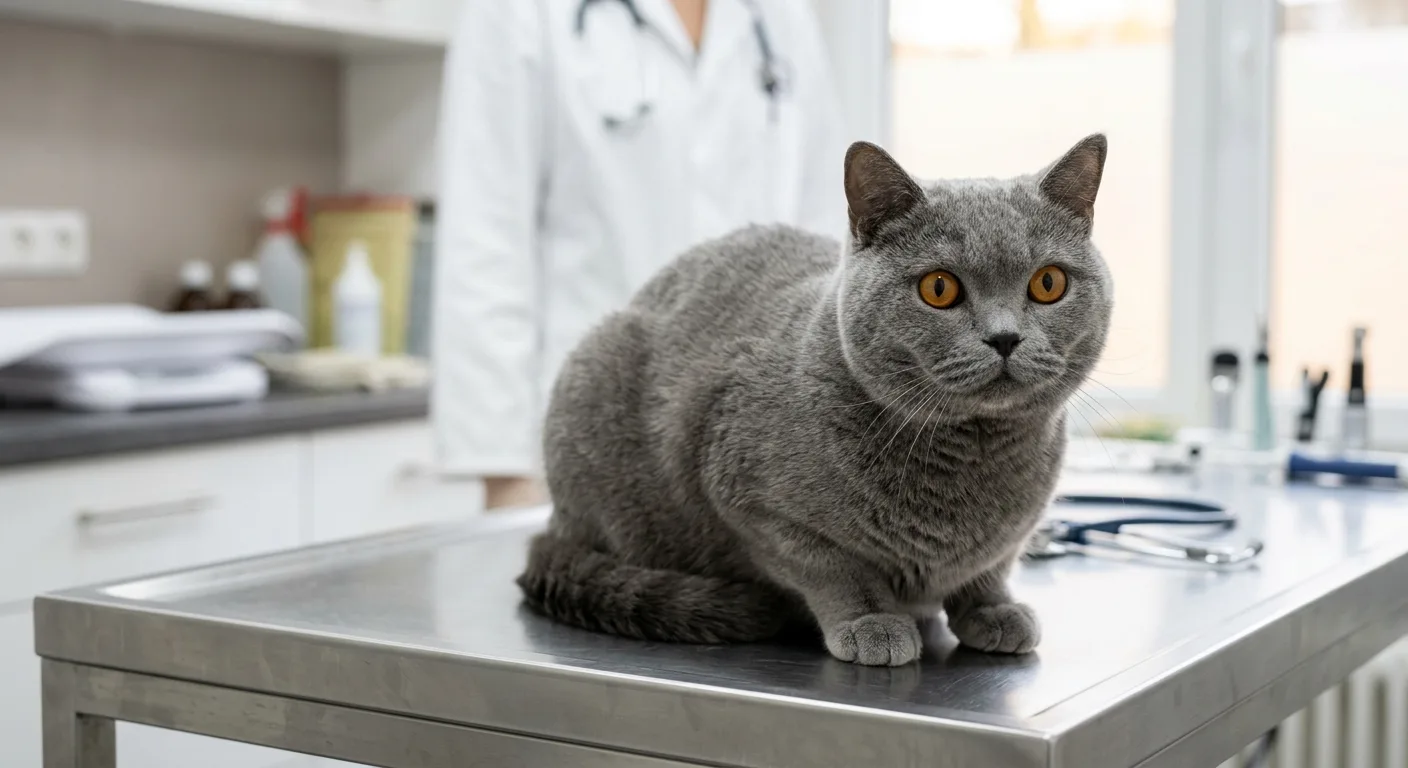
British Shorthairs are generally robust, and many live 12 to 16 years or longer with good care. As with any pedigree breed, there are a few inherited conditions responsible buyers should understand. This overview is educational and is not a substitute for veterinary advice; always consult your veterinarian about your individual cat.
The most important condition to know is hypertrophic cardiomyopathy (HCM), a thickening of the heart muscle that is the most commonly diagnosed heart disease in cats and is documented in the breed. The breed is also considered at higher risk for polycystic kidney disease (PKD), an inherited condition in which cysts develop in the kidneys, and veterinary sources list hemophilia B (a blood clotting disorder) among breed-associated concerns. Because British Shorthairs are stocky and food motivated, obesity is a very real everyday health risk that owners can directly control.
- Reputable British Shorthair breeders screen breeding cats for heart and kidney disease and can share results. If a breeder cannot or will not discuss health testing of the parents, treat that as a red flag.
Routine wellness exams, a measured diet, dental care, and keeping your cat at a healthy weight are the highest impact things an owner can do. Pet insurance is also worth considering for a breed with known cardiac and kidney risks, since diagnostics and treatment for those conditions can be costly.
How Much Does a British Shorthair Cost?
A British Shorthair is not a budget cat. From a reputable breeder in the United States, kittens commonly run from roughly $1,500 to $3,000, with rare colors (such as golden or colorpoint), show-quality lines, and high-demand bloodlines pushing prices higher. Pet-quality kittens sit at the lower end of that range, while breeding or show prospects cost more.

108-oz stainless steel pet fountain with quiet pump and water-level window. Bengals are notoriously water-obsessed; a flowing fountain encourages hydration and pulls them away from sinks and toilets.
Petful may earn a commission when you click through to Chewy, at no extra cost to you.
That sticker price is only the start. Budget for first-year essentials and ongoing care: vaccinations and spay or neuter, food, litter, a carrier, scratching posts, and routine veterinary visits. Given the breed's known health risks, many owners also factor in pet insurance.
- Prices far below the typical range often signal a kitten mill, an unregistered mixed cat, or no health screening. Paying less up front can mean far higher vet bills and heartbreak later.
- That figure refers to ultra-rare hybrid breeds like the Ashera, not the British Shorthair. A British Shorthair is a premium but attainable pedigree cat, typically in the low thousands of dollars, not the tens of thousands.
Is a British Shorthair Right for You?
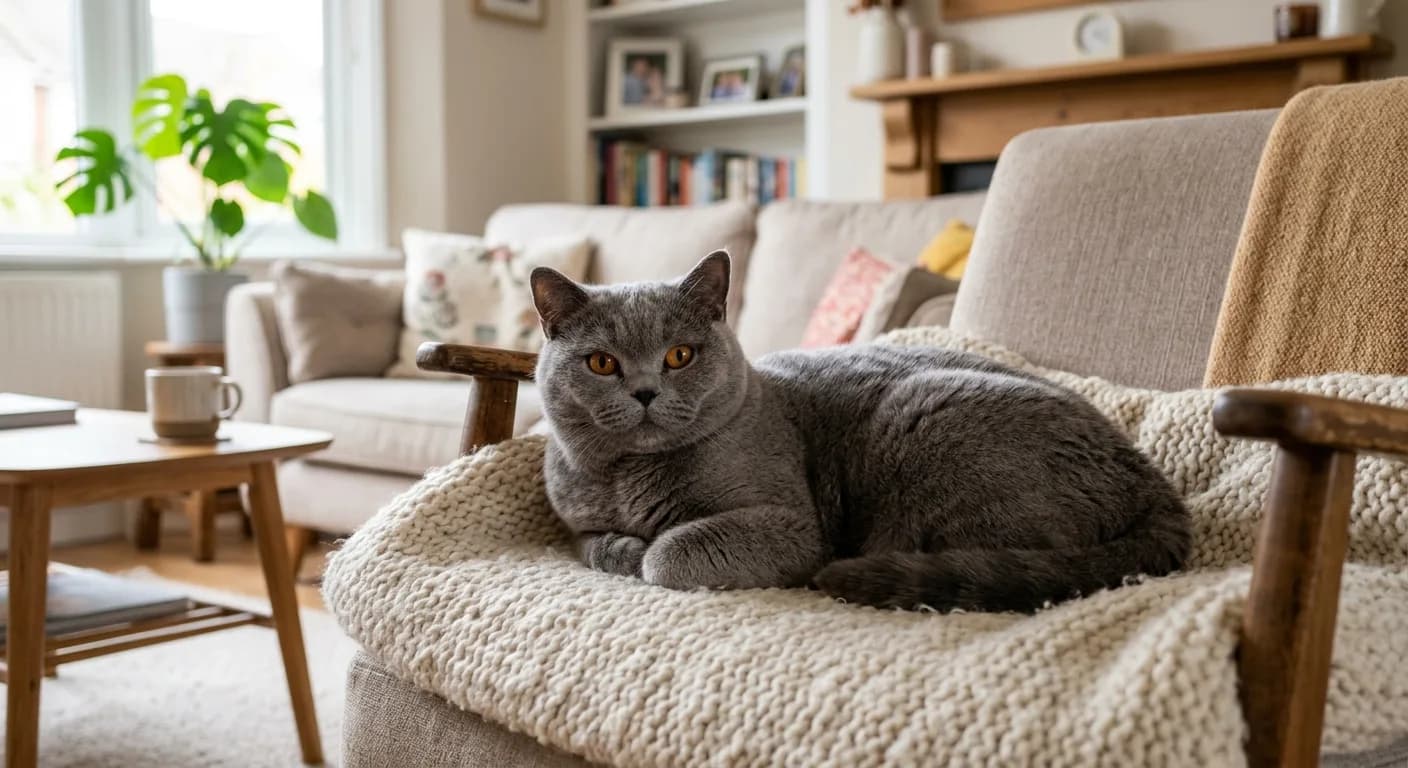
The British Shorthair suits a very specific (and very common) kind of owner: someone who wants an affectionate, well mannered, independent cat without the noise, neediness, or chaos of more demanding breeds. They are an excellent match for families, first-time cat owners, seniors, and people who work but still want feline company at home. They are less ideal if you specifically want a velcro lap cat that begs to be carried everywhere.
| Pros | Cons |
|---|---|
| Calm, quiet, and low drama | Often dislikes being picked up or held |
| Affectionate with the whole family | Slow to mature (3-5 years) |
| Easy, low maintenance grooming | Heavy seasonal shedding twice a year |
| Tolerates alone time well | Prone to weight gain without portion control |
| Generally healthy and sturdy | Inherited risks (HCM, PKD) need breeder screening |
| Good with kids and calm pets | Higher upfront cost than a mixed-breed cat |
So what are the real downsides of a British Shorthair? The honest list is short: they are not natural cuddlers in the carry-me sense, they shed hard for a few weeks each season, they gain weight easily if free fed, and they carry breed-specific health risks that make buying from a screening breeder essential. None of those are dealbreakers for most homes, but they are worth knowing before you commit.
If you are weighing a few quiet, low-key breeds against each other, the Scottish Fold is a close cousin in temperament and rounded looks (and shares some of the same cautions around responsible breeding), which makes it a natural breed to compare side by side. If you want a much larger cat instead, the Maine Coon is North America's biggest breed, though it needs far more grooming than the easy-care British Shorthair.
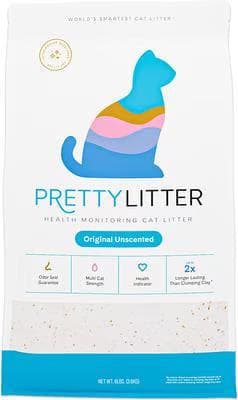
Color-changing crystal litter that flags pH shifts in your cat's urine, an early warning sign of UTIs, kidney issues, and more.
Petful may earn a commission when you click through to Chewy, at no extra cost to you.
British Shorthair Kittens and Buying Tips
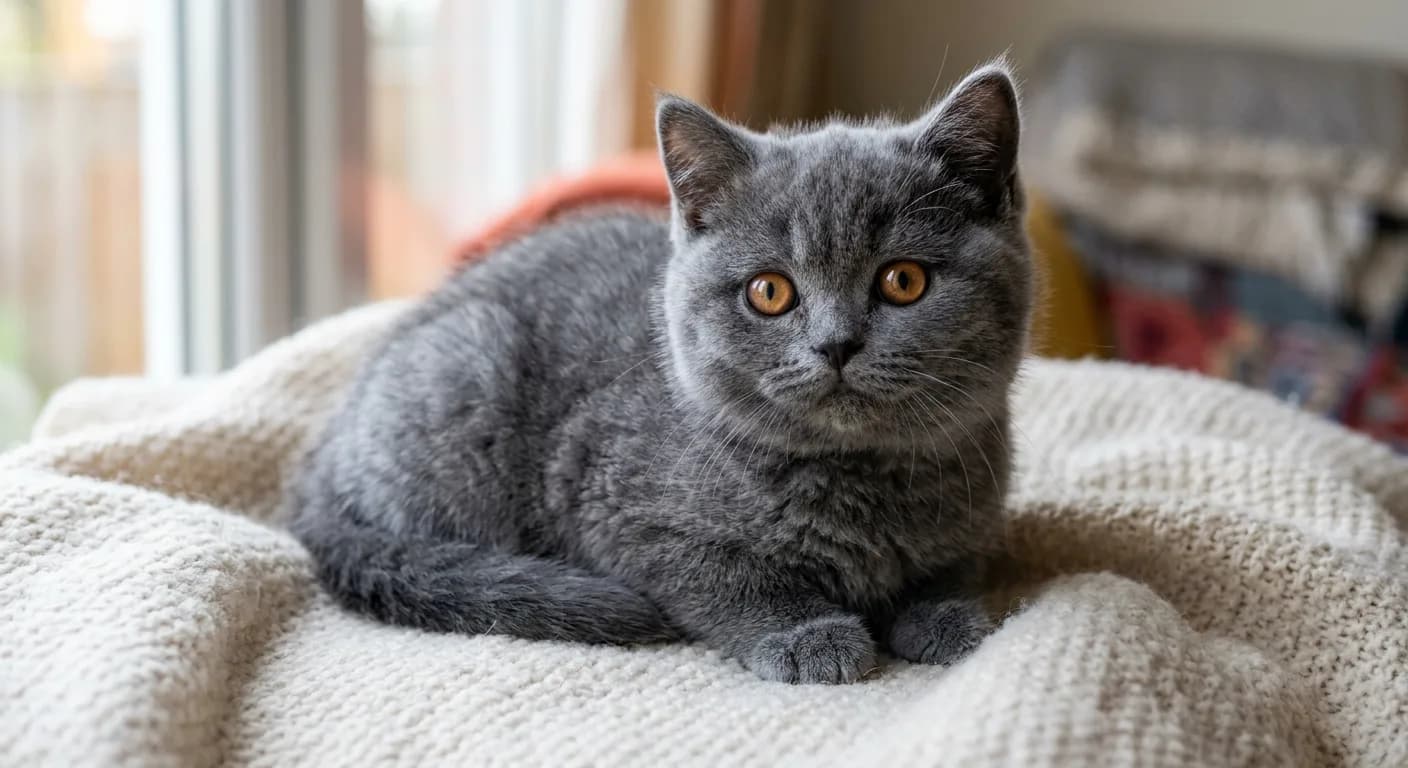
If you decide a British Shorthair is your cat, how you acquire one matters as much as the breed itself. Kittens are slow developers, so a responsible breeder typically keeps them with mom until at least 12 weeks so they are properly socialized, weaned, and vaccinated.
Look for a breeder who screens for HCM and PKD, registers their cats with a recognized body such as the CFA or TICA, lets you meet the parents and see the environment, and provides a written health guarantee. Be patient: good breeders often have waiting lists, and that wait is a feature, not a bug.
Adoption and rescue are also real options. Purebred British Shorthairs and British Shorthair mixes do turn up in shelters and breed-specific rescues, and a calm adult cat can be a wonderful, lower cost way to bring this temperament home.
- Ask for: parent health screening (HCM and PKD), registration papers, kittens kept to 12+ weeks, first vaccinations, a health guarantee, and the chance to meet the mother cat. A confident, transparent breeder will welcome every one of these questions.
Frequently Asked Questions
From a reputable breeder in the United States, British Shorthair kittens typically cost about $1,500 to $3,000. Rare colors such as golden or colorpoint, plus show-quality and high-demand bloodlines, can push prices higher. Prices far below this range are a warning sign of poor breeding or no health screening.
British Shorthairs are affectionate but physically independent. Most prefer to sit beside you rather than be picked up or held, and being restrained can make them uncomfortable. It is a sign of their dignified, undemanding nature rather than a lack of affection, and many warm up to gentle contact on their own terms.
The main downsides are that they often dislike being held, they shed heavily during spring and fall, they gain weight easily without portion control, they mature slowly over 3-5 years, and they carry inherited health risks such as HCM and PKD that make buying from a health-screening breeder essential. They also cost more upfront than a mixed-breed cat.
The British Shorthair is frequently named among the calmest cat breeds, along with the Ragdoll, Persian, Russian Blue, and Scottish Fold. British Shorthairs are prized for their quiet voices, low to moderate energy, and easygoing, low drama temperament that suits relaxed households.
Yes. British Shorthairs are gentle, patient, and tolerant, which makes them well suited to families with children and to homes with other calm pets. They bond with the whole household rather than one person and handle alone time better than clingier breeds, making them a good fit for busy families.
British Shorthairs typically live about 12 to 16 years, and many reach their late teens with good care. A healthy weight, routine veterinary checkups, dental care, and screening for breed-related conditions like HCM and PKD all support a long life.
They have a dense double coat and shed moderately year round, with two heavier shedding periods in spring and fall. Weekly brushing keeps loose hair under control most of the year, and daily brushing during the seasonal sheds helps reduce hair around the home and hairballs.
Beyond the famous blue-grey "British Blue," British Shorthairs come in many colors and patterns, including black, white, cream, chocolate, lilac, and cinnamon solids, plus tabby, bicolor, tortoiseshell, shaded, smoke, and colorpoint varieties. Eye color ranges from copper and gold to green and blue depending on the coat.
The Bottom Line
The British Shorthair is one of the most rewarding cats you can own if you understand what it is: a calm, plush, dignified companion that loves you steadily and quietly rather than dramatically. Give it weekly brushing, a portion-controlled diet, routine vet care, and a breeder who screens for HCM and PKD, and you will have a sturdy, affectionate friend by your side, usually on the cushion next to you, for well over a decade.
A British Shorthair is a real investment, so a free MyPetID profile is worth setting up early to keep your cat's microchip number, vaccination records, and proof of ownership in one place, with a QR tag to help a lost cat get home fast.
Set up a free MyPetID profileExplore the British Shorthair family in more detail: the British Longhair, British Shorthair colors, British Shorthair price, the golden British Shorthair, and British Shorthair temperament.

Melissa Smith has been researching and writing about pet behaviors for several years. Her work has been recognized with Certificates of Excellence from both the Dog Writers Association of America and the Cat Writers’ Association. A longtime animal lover, Melissa is a professional pet sitter on Cape Cod through her company, Fresh Start Services.
Sign up for expert-backed reviews and safety alerts all in one place.