Ragdoll Cat: Personality, Colors, Size, Price and Care
The complete Ragdoll cat breed guide: origin and history, the 3 coat patterns and 6 point colors, size, temperament, health (HCM and PKD), diet, price, and an honest pros-and-cons look at this docile "puppy cat."
Petful is reader supported. As an affiliate of platforms like Amazon and Chewy, we may earn a commission when you buy through links on this page. There is no extra cost to you.
The Ragdoll cat is one of the largest domestic breeds in the world, with males commonly reaching 15 to 20 pounds, and the Cat Fanciers' Association (CFA) ranks it among the most popular pedigreed cats in the United States year after year. Named for its habit of going limp and relaxed when picked up, this blue-eyed, colorpointed beauty has earned a reputation as the ultimate "puppy cat": a gentle, people-following lap companion that thrives on human company. This complete guide walks through everything a current or future owner needs, from origin and appearance to temperament, health, diet, price, and an honest look at the pros and cons.
- 1Ragdolls are large, semi-longhaired, colorpointed cats with always-blue eyes, developed by Ann Baker in 1960s Riverside, California
- 2Temperament is famously docile, affectionate, and dog-like, which is why they are nicknamed the "puppy cat"
- 3The breed comes in 3 main patterns (colorpoint, mitted, bicolor) and 6 point colors (seal, blue, chocolate, lilac, red, cream) plus lynx and tortie variations
- 4Hypertrophic cardiomyopathy (HCM) is the top health concern, and responsible breeders DNA-test their cats for the breed-linked gene before breeding

Sign up for expert-backed reviews and safety alerts all in one place.
What Makes a Ragdoll Cat Special
Ask any breeder what sets this cat apart and you will hear the same word: temperament. Most cats tense up or wriggle free when lifted, but a Ragdoll tends to melt into your arms, which is exactly how the breed got its name. Pair that floppy, easygoing nature with striking sapphire eyes, a silky coat, and a large, substantial body, and you get a cat that looks like a show-stopper and behaves like a devoted shadow.
Three things, taken together, make the Ragdoll genuinely distinctive:
- The "go-limp" relaxation trait. Many (though not all) Ragdolls relax their muscles and go pleasantly slack when held, a quirk that feels almost dog-like.
- Always-blue eyes. A purebred, pointed Ragdoll has deep blue oval eyes for life. Green or gold eyes are a sign the cat is not a pedigreed Ragdoll.
- People-oriented, "puppy cat" behavior. Ragdolls greet you at the door, follow you room to room, and often learn to play fetch.
- "Ragdoll" refers to the breed's tendency to go limp and relaxed when picked up. It is a behavior trait, not a guarantee, so do not be alarmed if your individual cat stays more alert in your arms.
If you want the deep dive on behavior, our Ragdoll cat personality guide breaks down the traits, the quirks, and how to tell a true Ragdoll temperament from marketing hype.
Ragdoll Cat at a Glance
Before the detail, here is the fast snapshot of the breed's vital statistics, drawn from CFA and TICA breed information and widely reported breeder data.
| Attribute | Detail |
|---|---|
| Size | Large to very large; one of the biggest domestic breeds |
| Weight | Males 15-20 lb, females 10-15 lb |
| Lifespan | Typically 12-17 years, many reach 15+ with good care |
| Coat | Semi-long, silky, plush, low-matting single coat |
| Patterns | Colorpoint, mitted, bicolor (plus van) |
| Point colors | Seal, blue, chocolate, lilac, red, cream (plus lynx and tortie) |
| Eye color | Always deep blue |
| Temperament | Docile, affectionate, people-oriented, "puppy cat" |
| Shedding | Moderate, heavier in spring and fall |
| Price range | Pet quality 1,000-2,800 USD from a reputable breeder; adoption 75-600 USD |
| Origin | Riverside, California, United States (1960s) |
Origin and History: Ann Baker and Josephine
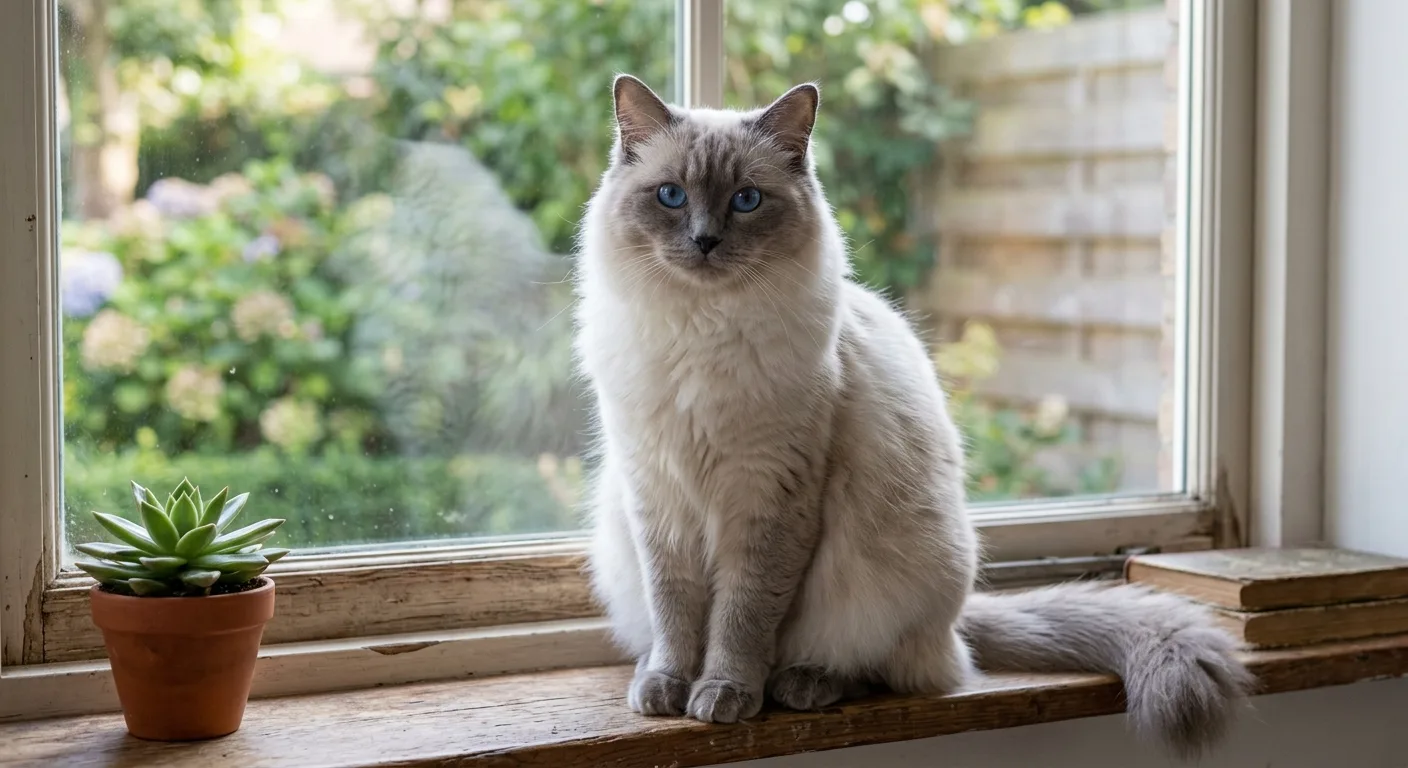
The Ragdoll story begins in the 1960s in Riverside, California, with a breeder named Ann Baker. Baker started the line from a white domestic longhaired cat named Josephine, who carried the colorpoint gene, and bred her with other longhaired cats (the early program is widely believed to have drawn on Persian and Birman-type cats) to fix a calm temperament and a pointed, semi-long coat.
Baker built a now-famous myth around the breed, claiming that a car accident gave Josephine's later kittens their docile, "limp" nature. That is folklore, not genetics: a cat's temperament comes from selective breeding, not from an injury to a parent. What is true is that Baker selected hard for gentleness, and the result was a strikingly placid cat.
In 1975, breeders Denny and Laura Dayton broke away from Baker's private registry (the IRCA) to gain mainstream recognition for the breed through the major cat associations. The work paid off: the Ragdoll was accepted for registration by the Cat Fanciers' Association (CFA) in 1993 and advanced to full championship status in 2000. Today the breed is recognized by CFA, The International Cat Association (TICA), and other registries worldwide, and it consistently ranks at or near the top of CFA's most-popular-breed lists.
Never Scoop Again® with the Whisker Litter-Robot, the smart self-cleaning automatic litter box. Monitor visits and track weights for better overall care in the Whisker® app. Multi-cat friendly.
Petful may earn a commission when you click through to Whisker, at no extra cost to you.
- Ragdoll kittens are born almost pure white and develop their points and full coat color slowly. Full color can take up to 2 years, and full body size up to about 4 years, so the kitten you bring home will keep changing for a while.
Appearance: Size, Coat, and the Signature Blue Eyes
How Big Do Ragdolls Get
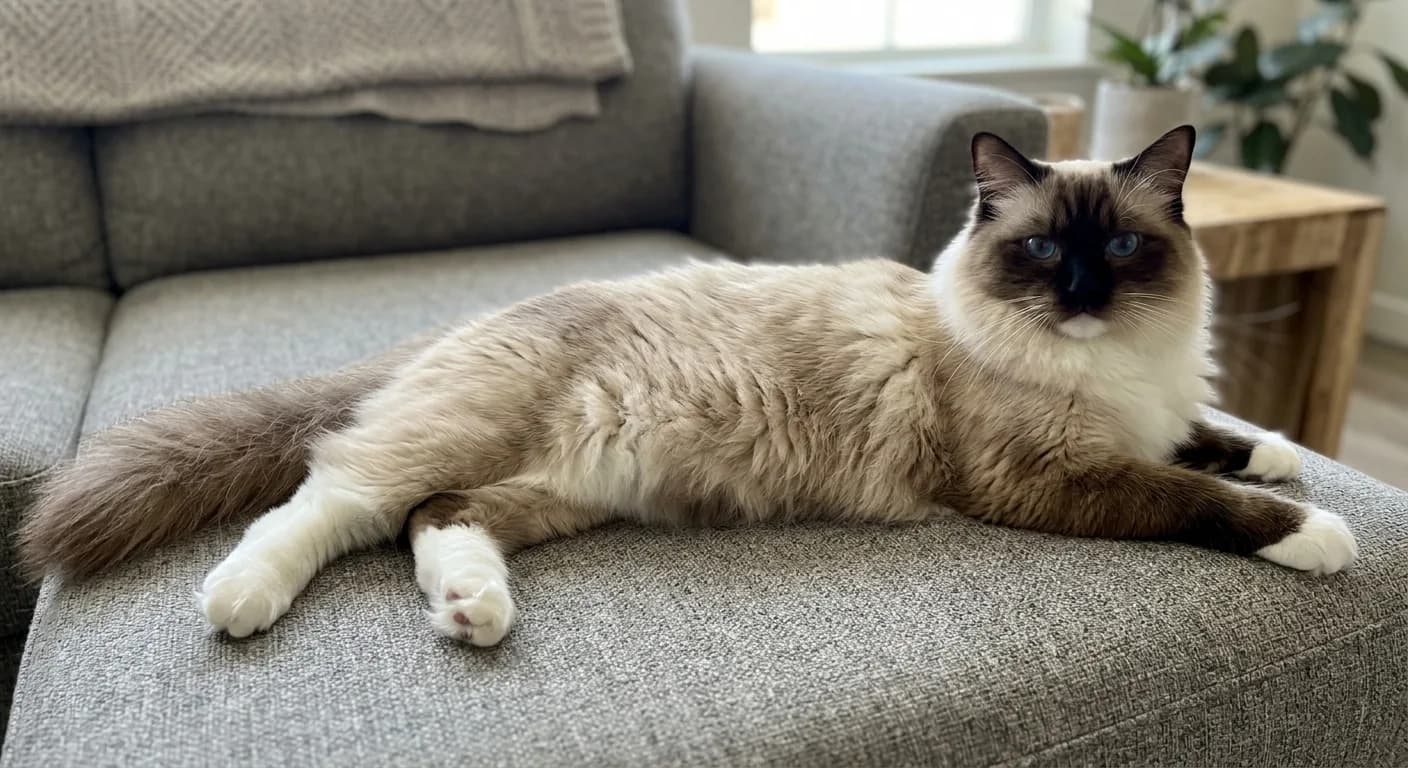
Ragdolls are one of the largest domestic cat breeds, rivaled mainly by the Maine Coon. Adult males commonly weigh 15 to 20 pounds, and females generally land between 10 and 15 pounds. They are not just heavy, they are long and substantial, with a broad chest, sturdy legs, and a long, plumed tail. Because they are a slow-maturing breed, Ragdolls often do not reach their full adult size until around 4 years of age.
For the full size-and-growth breakdown, including a month-by-month weight guide, see our dedicated Ragdoll cat size guide. If you are weighing this breed against the other gentle giant, our Ragdoll vs Maine Coon comparison lays the two side by side.
The Coat
The Ragdoll wears a semi-long, silky coat that is plush and soft to the touch, more rabbit-like than the dense double coat of a Persian or Maine Coon. Because it is essentially a single coat with little undercoat, it mats less than you might expect for its length, which makes grooming refreshingly manageable.
Patterns and Colors
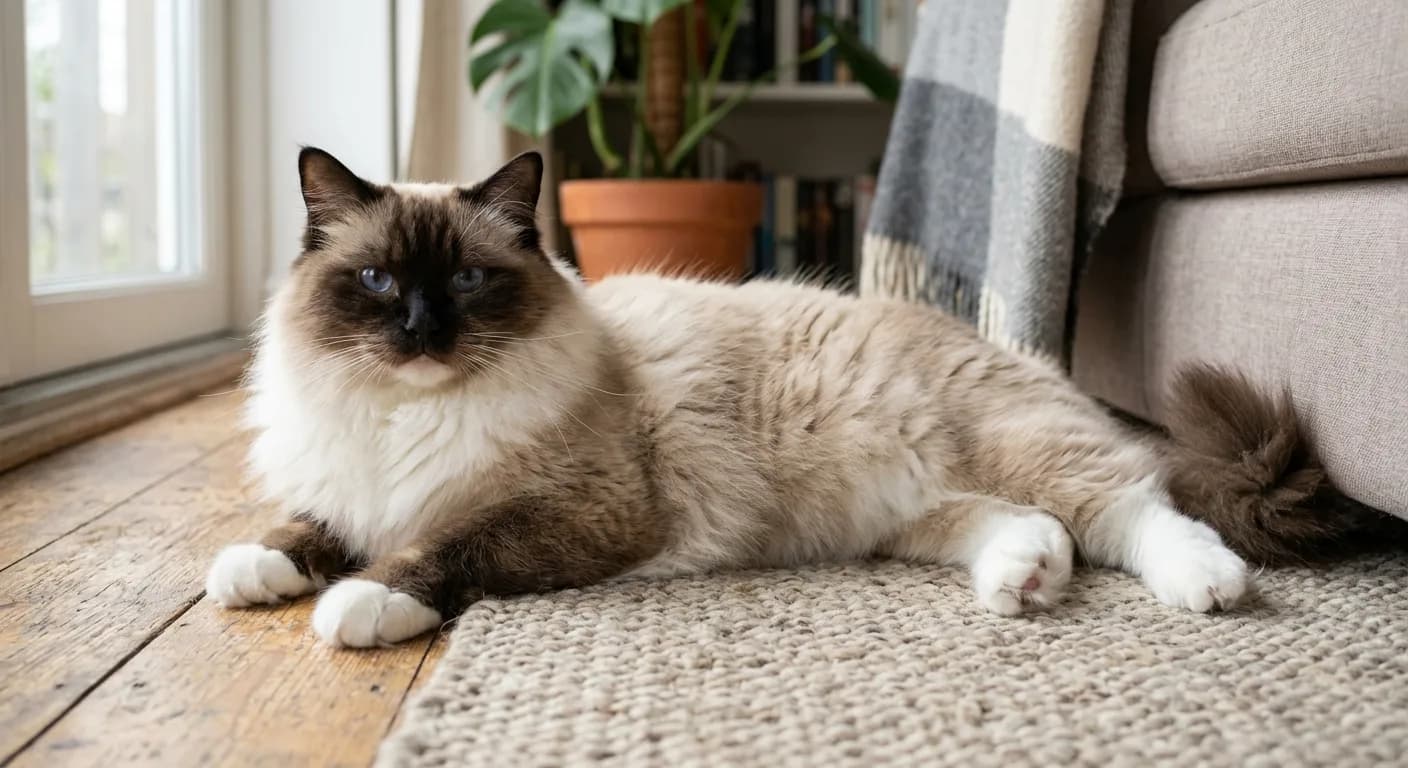
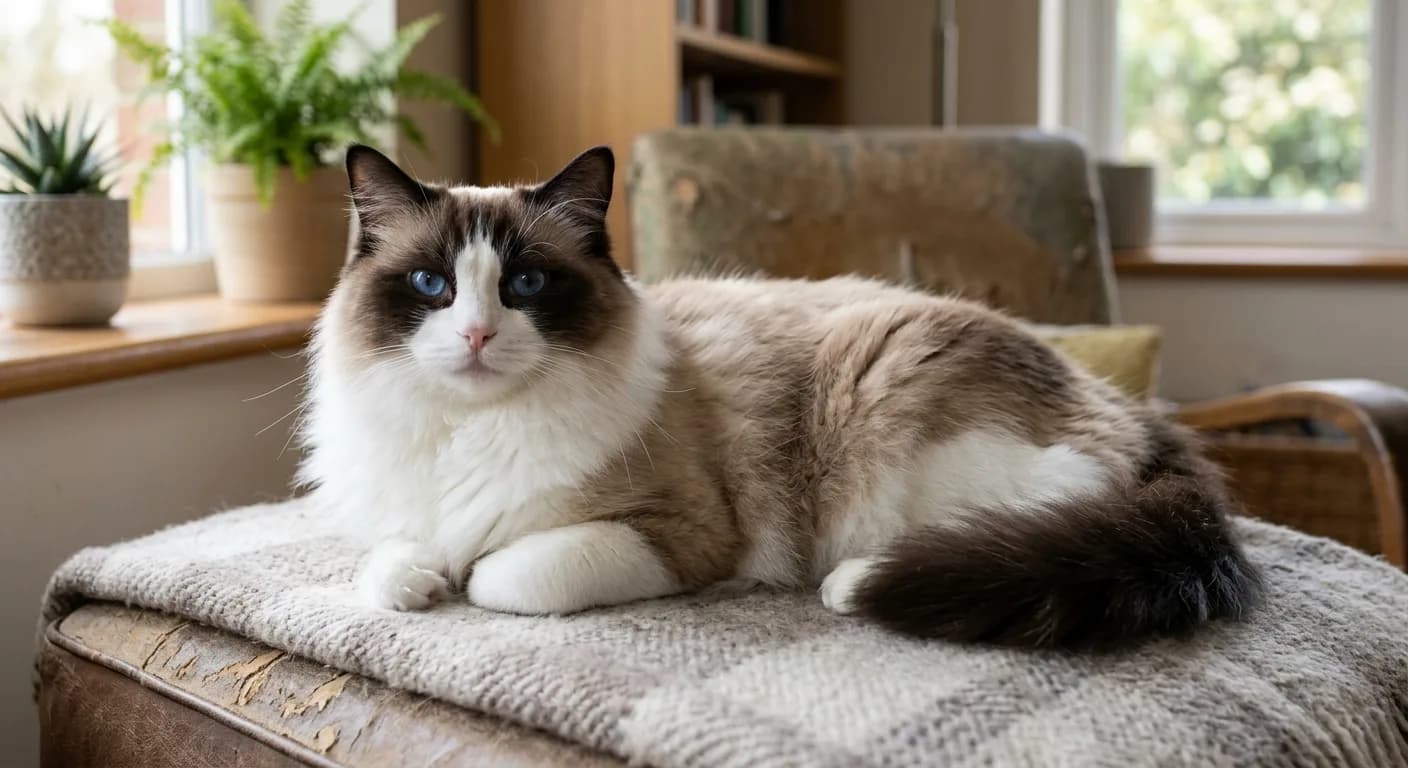
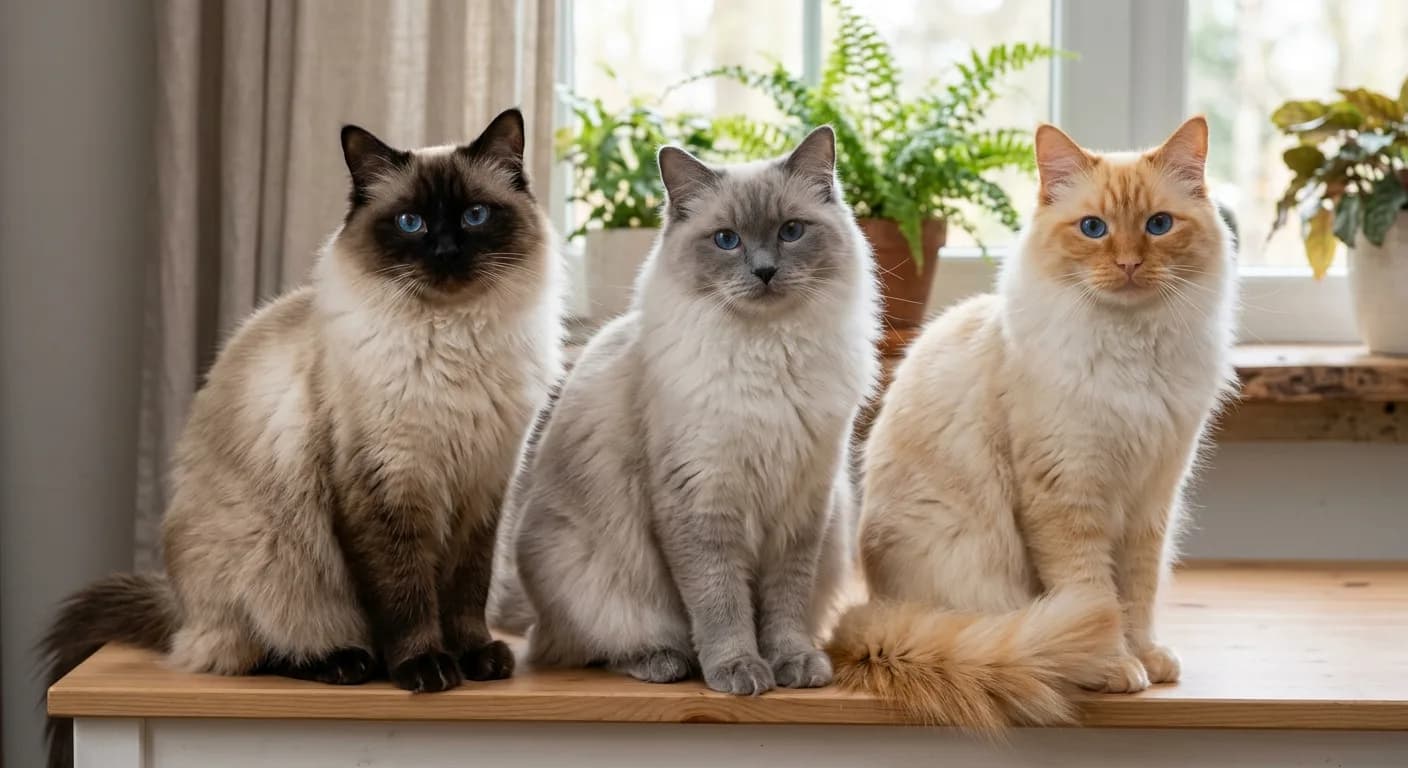
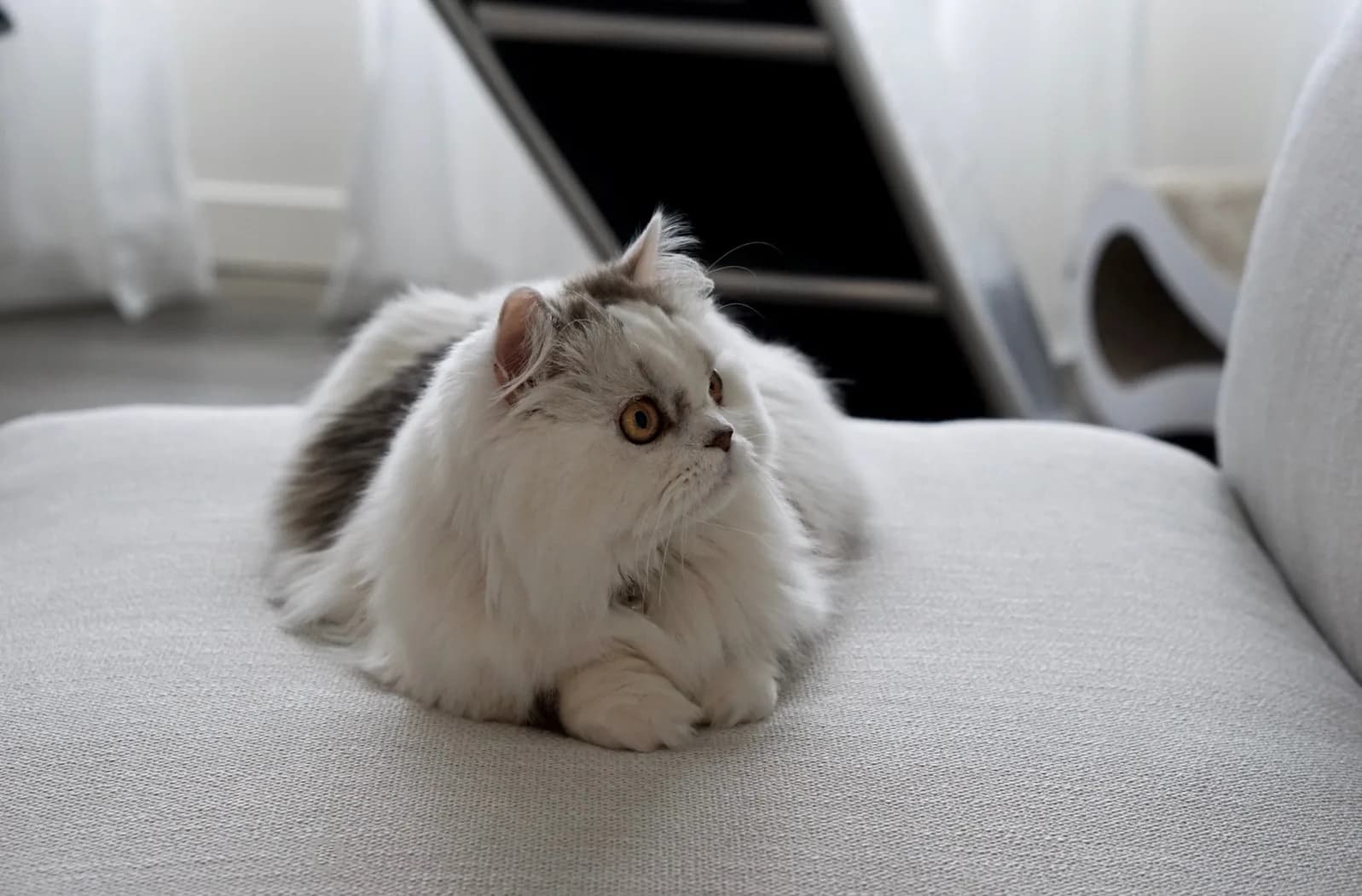
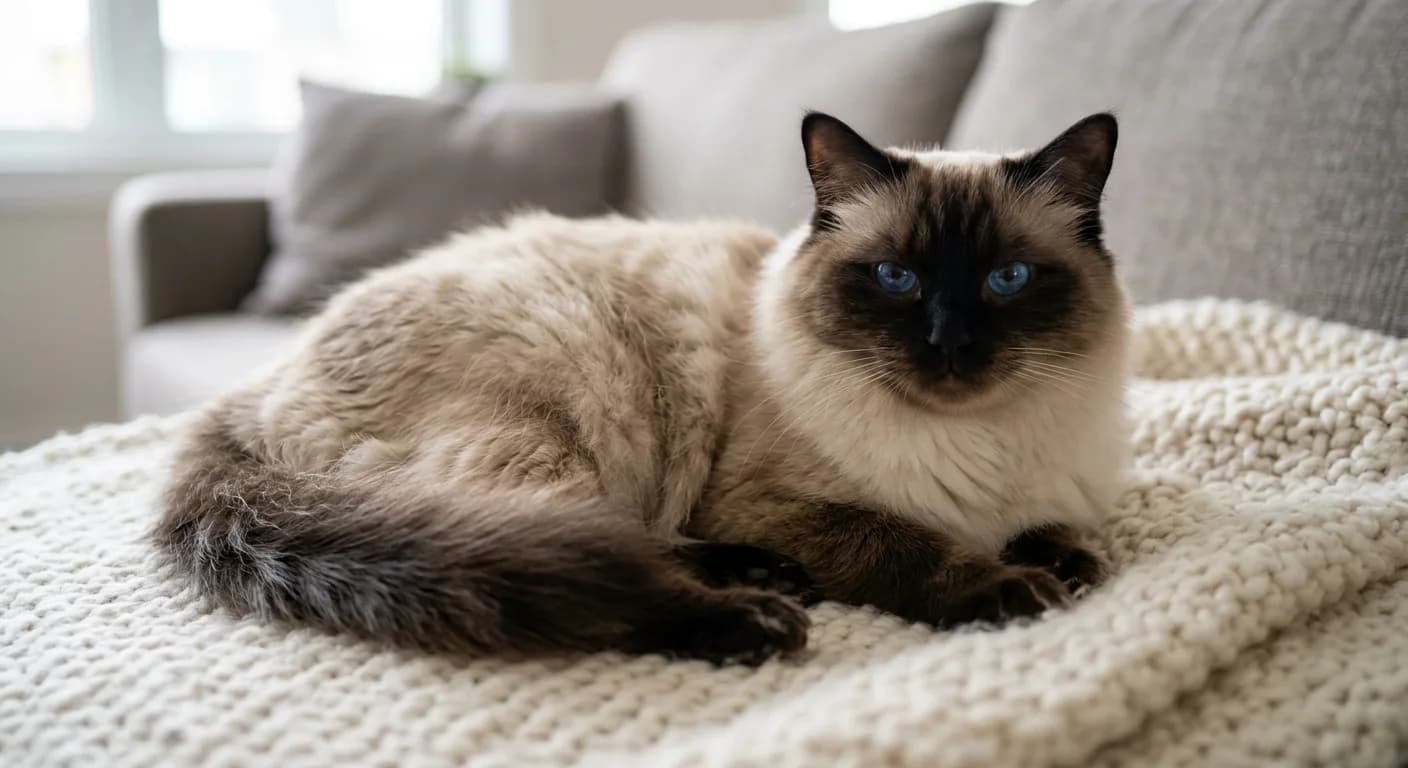
This is where the breed gets visually rich. A Ragdoll's coat is pointed, meaning the face (mask), ears, legs, and tail are darker than the body. Within that, there are three main patterns plus a fourth (van) seen less often:
- Colorpoint: classic pointed look with no white anywhere. Darker mask, ears, legs, and tail over a lighter body.
- Mitted: colorpoint plus white "mittens" on the front paws, white "boots" up the back legs, a white chin, and a white belly stripe.
- Bicolor: an inverted white "V" over the face, white legs, white underside, and a colored "saddle" over the back.
- Van: color restricted mostly to the ears, tail, and a bit of the mask, with the rest of the cat white (the rarest pattern).
Those patterns come in six recognized point colors: seal (dark brown), blue (slate gray), chocolate (warm milk-chocolate), lilac (pale frosty gray-pink), red/flame (orange), and cream (pale buff). Each can also appear with lynx (tabby-striped points) or tortie (mottled tortoiseshell points) markings, which multiplies the possible looks dramatically.
One constant runs through every pattern and color: the eyes are always a deep, vivid blue. If you see a "Ragdoll" with green, gold, or copper eyes, it is a mixed-breed or a different breed entirely. Our full Ragdoll cat colors guide shows every pattern and point color with photos, and explains which are show-standard versus pet-quality.
- Three tells separate a purebred Ragdoll from a longhaired lookalike: always-blue eyes, a pointed (not solid or all-over) coat, and large, substantial size. Anything with non-blue eyes is not a pedigreed Ragdoll.
Temperament: The Original "Puppy Cat"
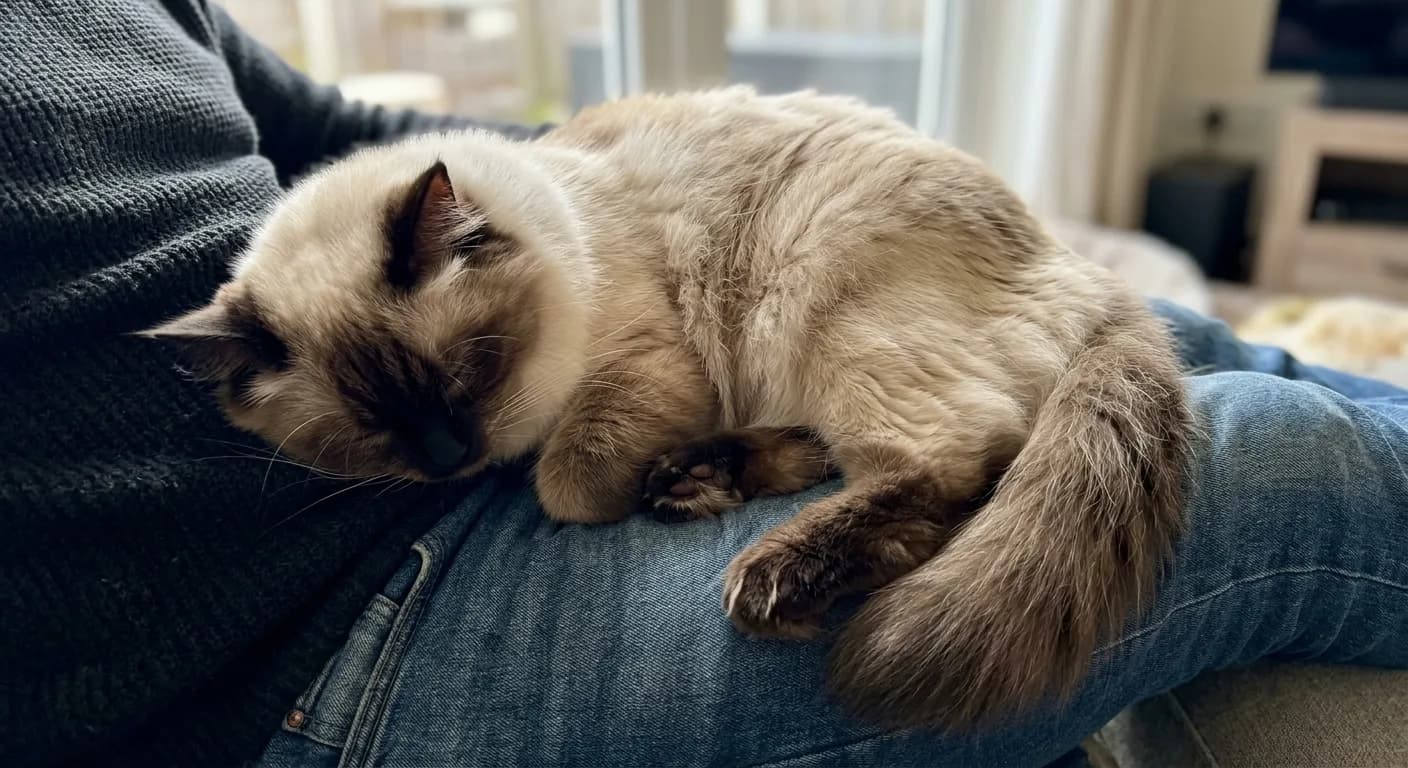
If looks draw people in, temperament is what keeps Ragdoll owners loyal. This is one of the most docile, mellow, and affectionate cat breeds you can own, and the descriptors are remarkably consistent across CFA, TICA, and decades of owner reports: gentle, calm, sociable, placid, and devoted.
Ragdolls are routinely called "dog-like" or "puppy cats" because they:
- Follow their people from room to room and want to be wherever you are.
- Often greet you at the door when you come home.
- Frequently learn to play fetch and respond to their name.
- Tolerate handling, cuddling, and even gentle dress-up far better than the average cat.
- Tend to stay close to the floor rather than launching onto high shelves and curtains.
That sociability has a flip side: Ragdolls genuinely dislike being left alone for long stretches. They can get lonely and under-stimulated in an empty house all day, so many breeders recommend a second pet or a schedule that does not leave them solo from morning to night.
- Ragdolls are easygoing, but they are social and moderately playful, not low-effort. Plan on real daily interaction and play. They reward attention with deep, dog-like devotion, but they notice when they are ignored.
Are Ragdolls Good Family Pets
Yes, and this is one of their strongest selling points. Their patience and low aggression make them a good match for households with respectful children and other pets, including cat-friendly dogs. They are not skittish or high-strung, and sudden changes in routine usually do not rattle them the way they might a more nervous breed.

63-inch multi-level cat tree with scratch posts, hammock, plush perches, and dangling toys. Vertical territory is non-negotiable for high-energy climbing breeds like the Bengal.
Petful may earn a commission when you click through to Chewy, at no extra cost to you.
Care and Daily Life
Grooming
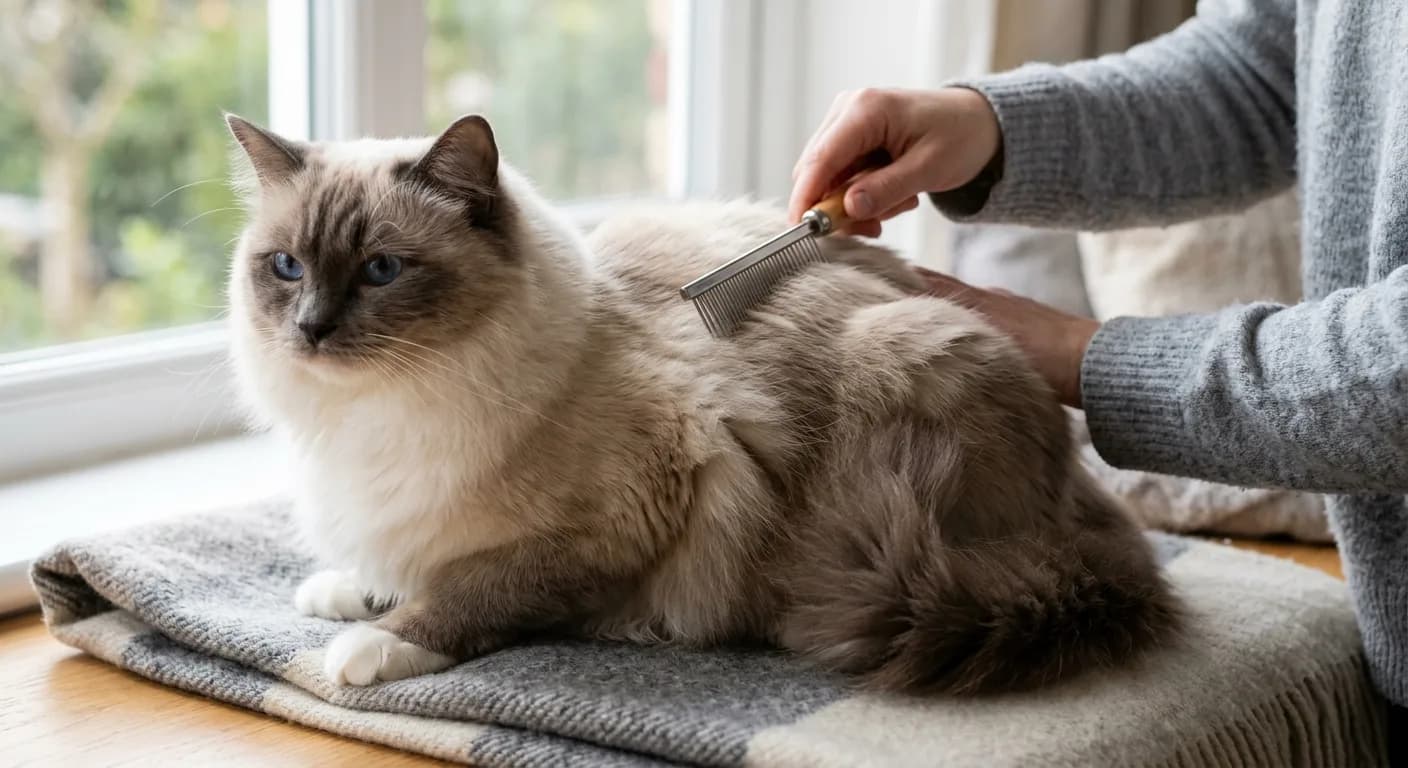
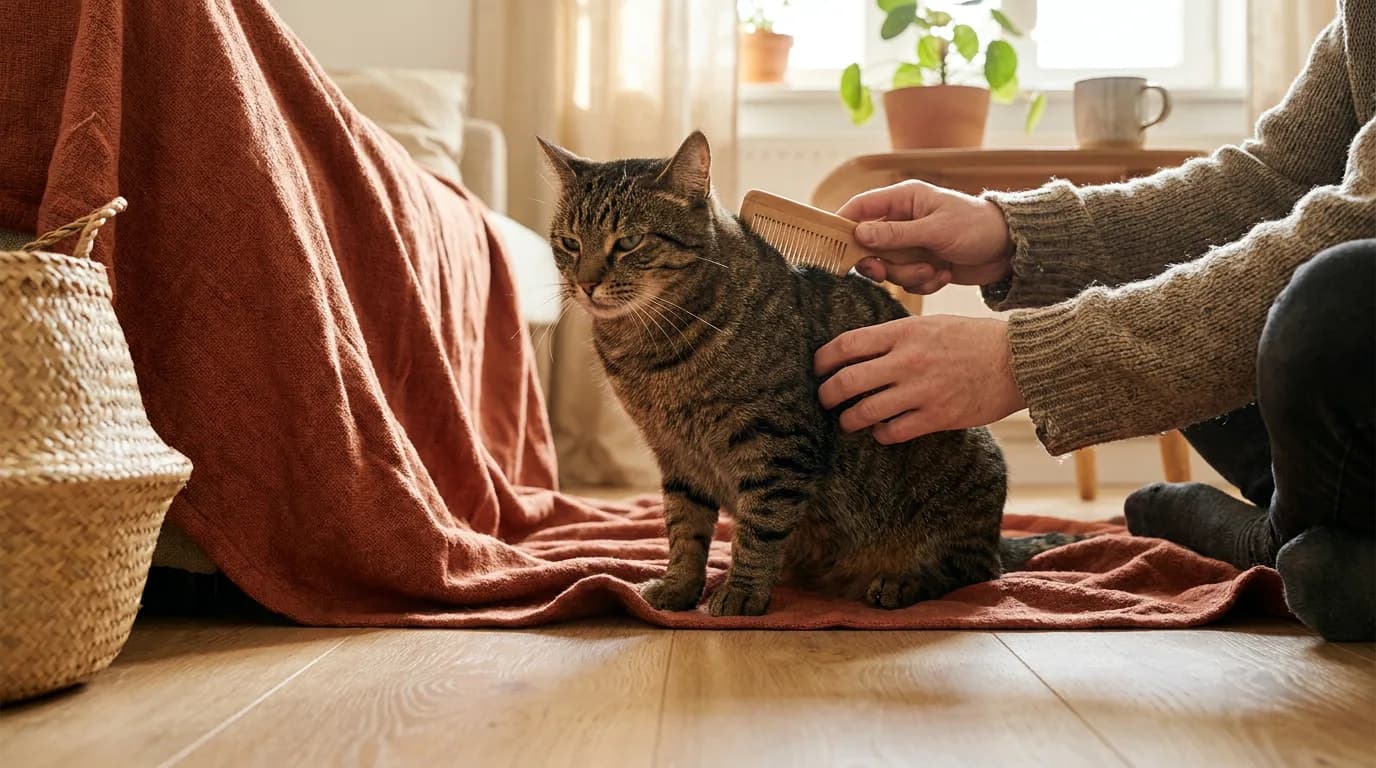
For a longhaired cat, the Ragdoll is low-maintenance. Because the coat lacks a heavy undercoat, brushing two or three times a week is usually enough to prevent tangles and keep it silky, with a bit more attention during the heavier spring and fall sheds. A stainless-steel comb works well for the longer fur around the ruff, britches, and belly, where mats are most likely to form. An occasional bath is fine but rarely necessary if you brush consistently.
Indoor Living, Leashes, and Enrichment
Because Ragdolls are trusting, non-aggressive, and valuable, nearly every breeder and welfare group recommends keeping them indoors only. Their docile nature makes them poorly equipped to defend themselves outdoors or to flee from traffic and predators. The good news: that trainable temperament means many Ragdolls happily accept a harness and leash for supervised outdoor time, and they take readily to a catio.
Indoors, give them what their busy minds want: a sturdy cat tree, puzzle feeders, wand toys for interactive play, and a window perch for bird-watching. A bored, lonely Ragdoll is a recipe for overeating and mischief.
- A Ragdoll's trusting, gentle nature is a liability outdoors. They are easy targets for theft, traffic, and predators, and they rarely fight back. Indoor living, ideally with harness walks or a catio for fresh air, is the safe choice and is what reputable breeders require in their contracts.
Do Ragdolls Shed and Are They Hypoallergenic
Ragdolls do shed, moderately, with bigger seasonal blowouts in spring and fall. Their lack of a dense undercoat means shedding is more manageable than a Maine Coon's or Persian's, but they are not a non-shedding breed.
They are also not hypoallergenic. No cat truly is. All cats produce the Fel d 1 protein (mostly in saliva and skin) that triggers cat allergies, and the Ragdoll is no exception. Some allergy sufferers do report tolerating individual cats better than others, but that is highly personal and not a breed guarantee. For the full breakdown of what "hypoallergenic" really means for this breed and how to reduce allergens at home, read our Ragdoll hypoallergenic guide.
- You may see kittens advertised as "shorthair Ragdolls." A true Ragdoll is semi-longhaired by standard, so a genuinely short coat usually points to a mix. Our shorthair Ragdoll explainer covers what those cats actually are and what to ask a breeder.
For what those short-coated cats really are and what to ask a breeder, read our shorthair Ragdoll explainer.
Health: What Every Ragdoll Owner Should Watch
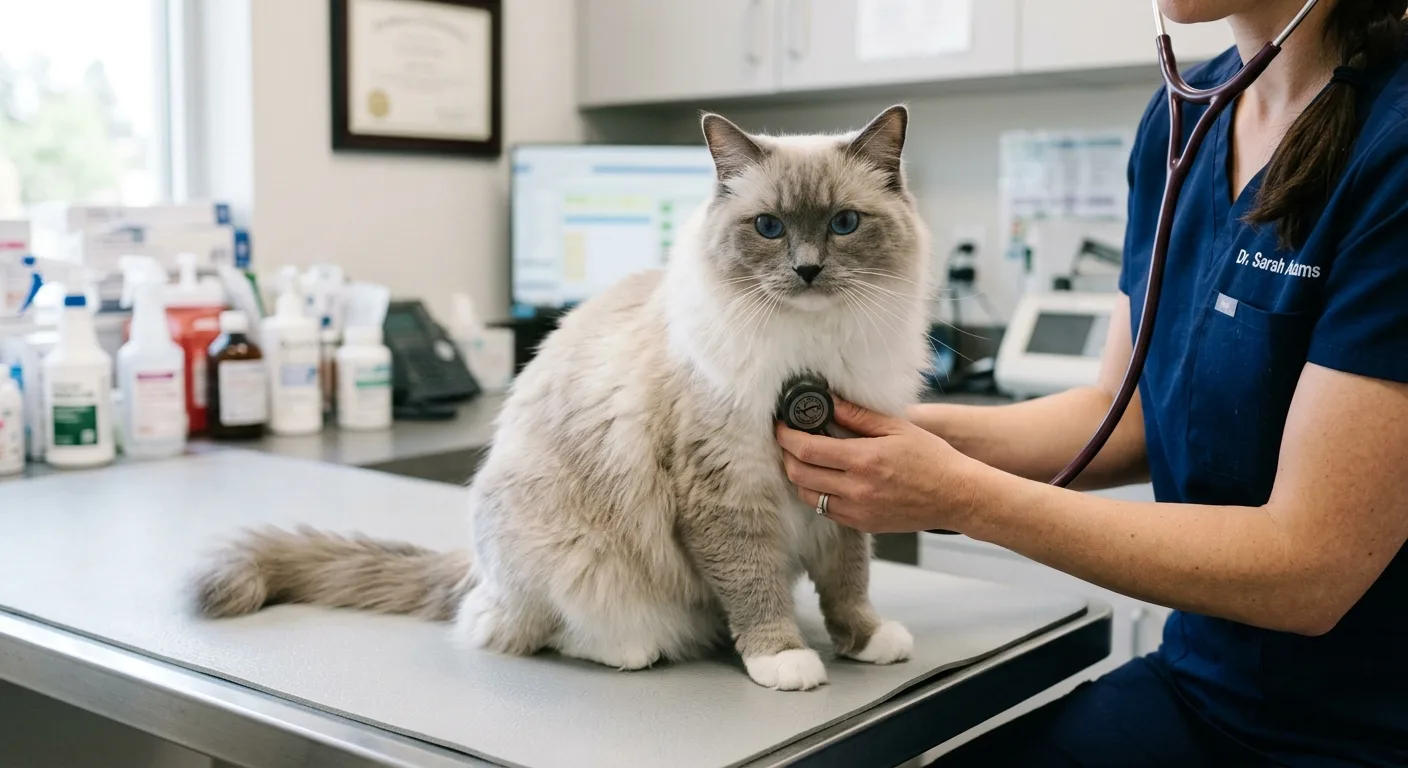
Ragdolls are generally robust, but like all pedigreed breeds they carry a few known health risks. Buying from a breeder who DNA-tests and screens their cats is the single best thing you can do to stack the odds in your favor.
Hypertrophic Cardiomyopathy (HCM)
HCM, a thickening of the heart muscle, is the number-one health concern in the breed. Ragdolls have a known breed-associated genetic mutation linked to HCM (the R820W variant of the MYBPC3 gene), and a simple DNA test can identify carriers. Responsible breeders test their breeding cats and screen with periodic heart ultrasounds (echocardiograms). Not every cat with the gene develops disease, and not every case is genetic, but the test meaningfully reduces risk. Ask any breeder for proof of HCM DNA testing on the parents.
- Before you buy a Ragdoll kitten, ask the breeder to show DNA test results (for the HCM-linked gene) and ideally echocardiogram screening on the parent cats. A reputable breeder will have this paperwork ready. If they dodge the question, walk away.
Polycystic Kidney Disease (PKD)
PKD, an inherited condition that causes fluid-filled cysts in the kidneys, is also seen in the breed. As with HCM, a DNA test exists, and breeders can screen their lines to avoid passing it on.

108-oz stainless steel pet fountain with quiet pump and water-level window. Bengals are notoriously water-obsessed; a flowing fountain encourages hydration and pulls them away from sinks and toilets.
Petful may earn a commission when you click through to Chewy, at no extra cost to you.
Bladder Stones and FLUTD
Ragdolls can be prone to feline lower urinary tract disease (FLUTD) and bladder stones, which cause straining, frequent urination, or blood in the urine. Plenty of fresh water, a moisture-rich diet, and clean, accessible litter boxes all help. Any straining to urinate (especially in males) is a medical emergency and warrants an immediate vet visit.
Obesity
The Ragdoll's laid-back nature and hearty appetite make it prone to weight gain, and the breed naturally carries a small fatty pad on the lower belly that should not be mistaken for, or allowed to become, true obesity. Measured portions, interactive play, and routine weigh-ins keep a Ragdoll trim.
- Ragdolls love food and love lounging, a combination that leads to obesity if you free-feed. Extra weight strains the heart and joints and worsens urinary issues. Feed measured meals and keep them moving with daily play.
Studies and breed surveys suggest these conditions appear more often in Ragdolls than in the general cat population, but exact prevalence figures vary by study and registry, so treat any single percentage with caution. The practical takeaway is steady: buy from a health-testing breeder, keep your cat lean, and keep up with annual veterinary exams. For the full picture on longevity and what shortens or extends it, see our Ragdoll lifespan guide.
Diet and Feeding
A Ragdoll does best on a complete, balanced, protein-forward cat food appropriate for its life stage, fed as measured meals rather than an always-full bowl. Because the breed is large and slow to mature, many owners keep kittens on a quality kitten formula longer than usual to support that extended growth, then transition to adult food around 12 months under a vet's guidance.
Two priorities matter most for this breed specifically: weight control (portion to your cat's ideal body condition, not to the bag's generous suggestion) and hydration (a mix of wet food, water fountains, and multiple water stations supports urinary health). If you ever notice your Ragdoll straining in the litter box, eating much less, or gaining weight quickly, loop in your veterinarian.
How Much Does a Ragdoll Cat Cost
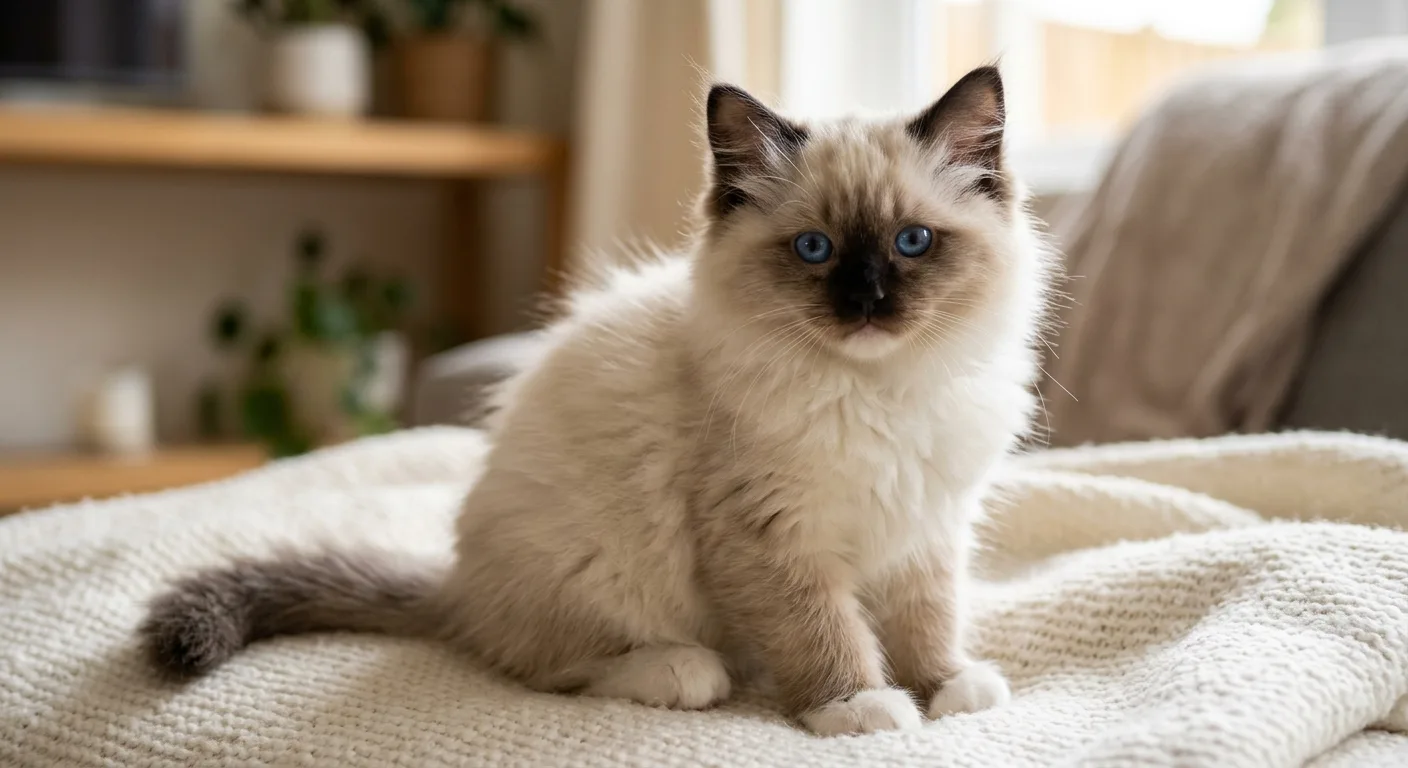
A pet-quality Ragdoll kitten (spayed or neutered) from a reputable, registered, health-testing breeder typically runs 1,000 to 2,800 USD, with most landing between 1,500 and 2,500 USD. Rare colors or patterns such as lynx, lilac, or bicolor sit at the top of that range, and show or breeding quality kittens with breeding rights run 3,000 to 5,000 USD and up. If you adopt through a breed rescue or shelter instead, fees usually fall between 75 and 600 USD. That breeder price reflects HCM and PKD DNA testing, early vet care, vaccinations, registration, and the breeder's investment in temperament and health, all of which protect you from far larger vet bills later.
Shelters and rescues legitimately charge less because they are not breeders, so a few-hundred-dollar adoption fee is normal and not a warning sign. What should make you pause is a kitten advertised as a registered, health-tested Ragdoll for well under 1,000 USD from a "breeder": that is a classic red flag for a backyard operation or an outright scam that skipped the testing. And remember the sticker price is only the start: budget for high-quality food, litter, enrichment, routine veterinary care, and pet insurance over a 12-to-17-year lifespan.
For current pricing by color and pattern, regional differences, and a full cost-of-ownership breakdown, see our detailed Ragdoll cat price guide.
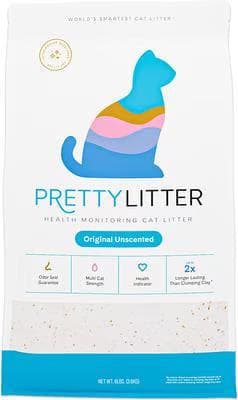
Color-changing crystal litter that flags pH shifts in your cat's urine, an early warning sign of UTIs, kidney issues, and more.
Petful may earn a commission when you click through to Chewy, at no extra cost to you.
- You do not have to buy from a breeder. Ragdolls and Ragdoll mixes turn up in breed-specific rescues and shelters. Adoption fees are typically a few hundred dollars, and you may give a wonderful cat a second home.
Ragdoll vs Similar Breeds
Shoppers often cross-shop the Ragdoll against other big, fluffy, sweet-natured cats. The quick contrasts:
- Ragdoll vs Maine Coon: both are gentle giants, but the Maine Coon has a shaggier double coat, a more rugged look, and any eye color, while the Ragdoll is pointed with always-blue eyes and a silkier coat. Full breakdown in our Ragdoll vs Maine Coon guide, and you can also read our standalone Maine Coon profile.
- Birman vs Ragdoll: the Birman is smaller and always mitted with white "gloves," while the Ragdoll comes in more patterns and grows much larger. See our Birman vs Ragdoll comparison.
- Ragamuffin vs Ragdoll: close cousins that split from Ann Baker's program. The Ragamuffin comes in many more colors and eye colors, while the Ragdoll is pointed and blue-eyed. Details in our Ragamuffin vs Ragdoll guide.
- Ragdoll vs Persian: the Persian has a flatter face and a denser, higher-maintenance coat; compare with our Persian cat profile.
Pros and Cons of Owning a Ragdoll Cat
No breed is perfect for every home. Here is the honest balance sheet.
| Pros | Cons |
|---|---|
| Exceptionally docile, affectionate, and people-oriented | Dislikes being left alone for long periods |
| Dog-like: follows you, greets you, often plays fetch | Large size means more food and bigger litter boxes |
| Great with kids and other pets | Sheds moderately and is not hypoallergenic |
| Coat mats less than other longhairs, easy grooming | Known risk of HCM and PKD; needs a health-testing breeder |
| Calm, quiet voice, adapts well to apartments | Prone to obesity without portion control |
| Striking blue eyes and a show-stopping look | Kitten cost is high (pet quality 1,000-2,800 USD) |
In short: a Ragdoll is close to ideal if you want a loving, low-drama companion and you are home enough (or have another pet) to keep it company. It is a weaker fit if you are gone 12 hours a day, want a zero-shedding cat, or cannot commit to a health-tested kitten and routine vet care.
Frequently Asked Questions
A pet-quality Ragdoll kitten from a reputable, health-testing breeder typically costs 1,000 to 2,800 USD, with most between 1,500 and 2,500 USD and show or breeding quality kittens at 3,000 to 5,000 USD and up. The price reflects HCM and PKD DNA testing, vaccinations, and registration. Adoption through a rescue or shelter usually costs 75 to 600 USD.
Ragdolls are special for their docile, dog-like temperament (they often go limp when held, hence the name), their large size, their silky pointed coat in many patterns and colors, and their signature deep blue eyes. They follow their owners around and are famously affectionate.
Pros: very affectionate, people-oriented, great with kids and pets, easy-to-groom coat, calm and quiet. Cons: dislikes being left alone, sheds moderately and is not hypoallergenic, has known risks of HCM and PKD, can become obese, and costs more upfront than a typical cat.
Yes. Ragdolls are highly people-oriented and most love to sleep in or near their owner's bed, curling up against you for warmth and companionship. Their attachment to their humans is a defining trait of the breed.
Ragdolls typically live about 12 to 17 years, and many indoor, well-cared-for cats reach 15 years or more. Keeping them indoors, feeding a measured diet, maintaining a healthy weight, and using a health-testing breeder all support a long life.
No. Ragdolls are not hypoallergenic. Like all cats they produce the Fel d 1 allergen in their saliva and skin. Some allergy sufferers tolerate individual cats better than others, but no cat breed, including the Ragdoll, is truly allergy-free.
Ragdolls are one of the largest domestic breeds. Males commonly weigh 15 to 20 pounds and females 10 to 15 pounds. They are slow to mature and often do not reach full adult size until around 4 years of age.
Ragdolls shed moderately, with heavier seasonal shedding in spring and fall. Because they lack a dense undercoat, their shedding and matting are more manageable than a Maine Coon's or Persian's, but they are not a non-shedding breed.
The 3-3-3 rule is a general guideline for helping any newly adopted cat adjust: about 3 days to decompress and feel safe, 3 weeks to settle into a routine and learn the household, and 3 months to feel fully at home and bonded. It applies to Ragdolls as much as any other cat.
The main downsides are that they dislike being left alone, they shed and are not hypoallergenic, they have breed-linked risks of HCM and PKD that require a health-testing breeder, they are prone to obesity, and their kittens are relatively expensive.
Taylor Swift owns two Scottish Fold cats (Meredith Grey and Olivia Benson) and a Ragdoll named Benjamin Button. So while she is famously associated with Scottish Folds, one of her cats, Benjamin Button, is indeed a Ragdoll.
Yes. Ragdolls are one of the best breeds for first-time cat owners. Their docile, easygoing temperament, low aggression, and forgiving nature make them simple to handle, and their grooming needs are modest for a longhaired cat. The main commitments are companionship (they dislike being left alone all day), portion control to prevent obesity, and buying from a health-testing breeder.
Ragdolls are generally quiet, soft-spoken cats. They are not as chatty as breeds like the Siamese, and when they do vocalize it is usually a gentle, sweet-sounding meow to greet you or ask for attention or food. Sudden, persistent, or loud vocalizing is worth a vet check, since it can signal discomfort.
Yes. Ragdolls are famously dog-friendly. Their calm, sociable, "puppy cat" nature means they usually do well with cat-friendly dogs, and many enjoy the company. Introduce them slowly and supervise early meetings, and a gentle dog and an easygoing Ragdoll often become close companions.
The Bottom Line
The Ragdoll earns its popularity honestly. Few cats combine this much beauty (the silky pointed coat, the substantial size, those unmistakable blue eyes) with a temperament this gentle and devoted. If you can offer companionship, measured meals, and a kitten from a breeder who tests for HCM and PKD, you will likely get a calm, loving, dog-like friend for 12 to 17 years. Use the linked spoke guides above to go deeper on price, colors, size, lifespan, personality, and the breed comparisons before you decide.

Kristine Lacoste has been researching dog and cat breeds for nearly a decade and has observed the animals up close at dog shows in both the United States and the United Kingdom. She is the author of the book One Unforgettable Journey, which was named as a finalist for a Maxwell Award from the Dog Writers Association of America, and was host of a weekly pet news segment on the National K-9 Academy Radio Show. In addition, she was the New Orleans coordinator for Dogs on Deployment, a nonprofit that helps military members and their pets, for 3 years. Kristine has researched and written about pet behaviors and care for many years. She holds a bachelor’s degree in psychology, another bachelor’s degree in English and a Master of Business Administration degree.
Sign up for expert-backed reviews and safety alerts all in one place.