Balinese Cat: The Elegant Long-Haired Siamese with Sapphire Eyes
The balinese cat is the long-haired Siamese: single-layer silky coat, deep sapphire-blue eyes, and a vocal, dog-like personality. Full breed profile covering temperament, health, grooming, and care.
Petful is reader supported. As an affiliate of platforms like Amazon and Chewy, we may earn a commission when you buy through links on this page. There is no extra cost to you.
The balinese cat is one of the most stunning and misunderstood breeds in the feline world: a long-haired Siamese by genetics, a natural dancer by temperament, and one of the few low-shedding silky-coated breeds recognized by both the Cat Fanciers' Association (CFA) and The International Cat Association (TICA). Despite the exotic name, the Balinese was born in America, developed from spontaneous long-haired mutations in purebred Siamese litters and refined into a distinct breed through careful selective breeding beginning in the 1950s. Today this breed commands loyalty from owners who describe their cat as part shadow, part comedian, and entirely devoted.
- 1Balinese cats are long-haired Siamese carrying a natural recessive gene, NOT a separate Asian breed
- 2Their single-layer silky coat sheds less than double-coated breeds and rarely mats
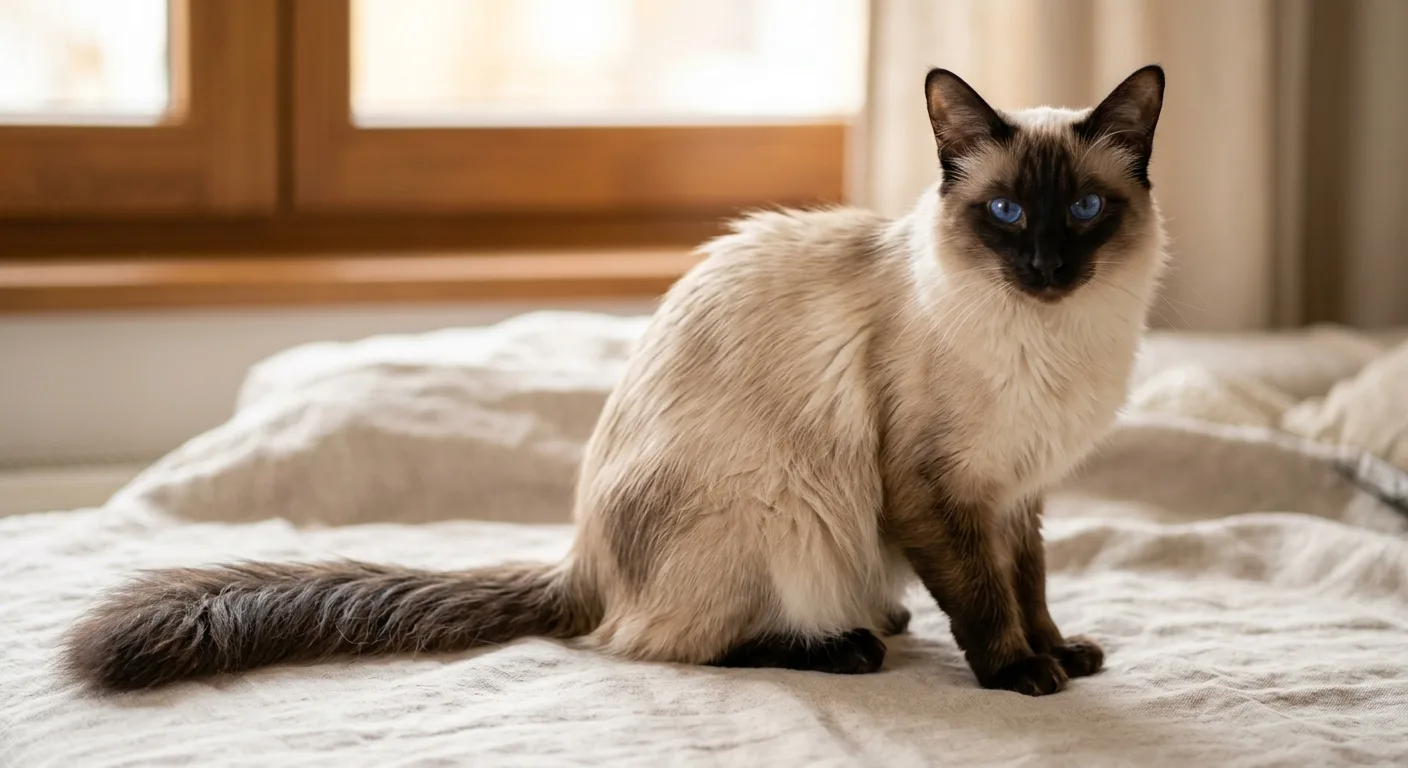
- 3Deep sapphire-blue almond eyes and a plumed tail distinguish them from all other pointed cats
- 4Highly vocal, dog-like in attachment, and ranked among the most people-oriented breeds by both CFA and TICA
- 5Lifespan of 12-20 years makes them a long-term commitment

Sign up for expert-backed reviews and safety alerts all in one place.
Balinese Cat at a Glance
| Trait | Detail |
|---|---|
| Also Known As | Long-haired Siamese / Javanese (certain color classes) |
| Origin | United States (1950s-1960s) |
| CFA Group | Siamese Breed Council division |
| TICA Recognition | Full championship |
| Height | 8-10 inches |
| Weight | 6-11 lbs (females lighter) |
| Lifespan | 12-20 years |
| Coat Type | Single-layer, silky semi-long; NO downy undercoat |
| Coat Colors | Seal, blue, chocolate, lilac points (traditional); lynx, red, cream, tortie points (Javanese in some registries) |
| Eye Color | Deep sapphire blue (always) |
| Energy Level | High |
| Shedding Level | Low-moderate (less than double-coated breeds) |
| Grooming Needs | Low (weekly comb, no mat risk) |
| Vocality | Very high |
| Good with Kids | Yes |
| Good with Dogs | Yes |
| Hypoallergenic Rating | Low-moderate (reduced Fel d 1 compared to most breeds) |
Origin and History: A Siamese in a Ball Gown
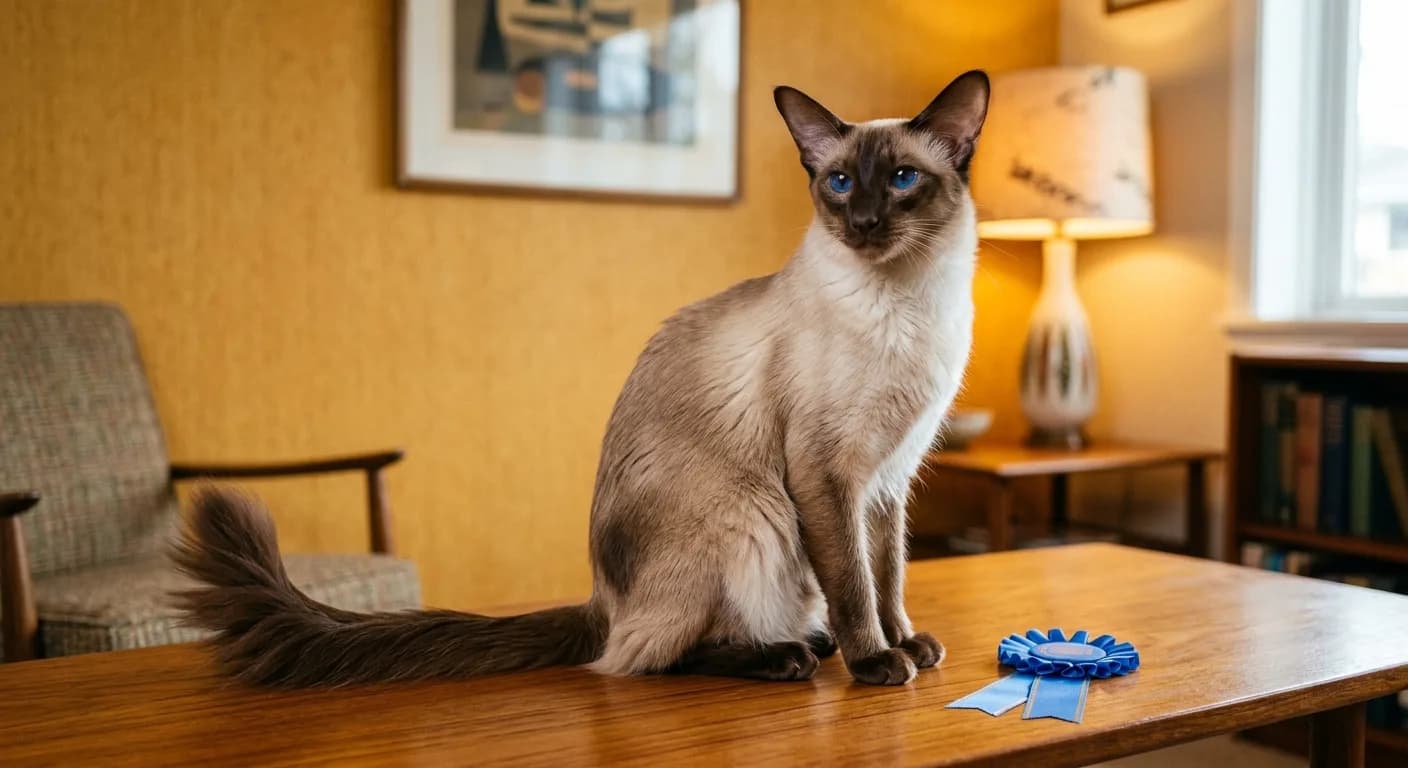
The Balinese story begins not in Bali, Indonesia, but in the living rooms of American Siamese breeders during the 1940s and 1950s. Long-haired kittens had appeared sporadically in purebred Siamese litters for decades, likely the product of a spontaneous recessive mutation in the gene responsible for coat length. For most of that time, breeders quietly retired these kittens as undesirable departures from the Siamese standard.
Two breeders changed that trajectory. Helen Smith of New York and Sylvia Holland of California independently recognized that these silky-coated cats possessed the same razor-sharp Siamese temperament and point coloration wrapped in a longer, flowing coat. Smith is widely credited with naming the breed "Balinese," choosing the name not because of any geographic connection to Bali but because the breed's flowing movement and graceful carriage reminded her of the elegant dancers of Balinese traditional performance art.
The CFA accepted the Balinese for championship competition in 1970. TICA followed, and the GCCF (Governing Council of the Cat Fancy) in the United Kingdom also recognizes the breed. In certain registries, particularly in North America, Balinese cats displaying the traditional four point colors (seal, blue, chocolate, lilac) carry the Balinese name, while those showing the wider color palette of lynx points, red points, cream points, and tortie points are classified as "Javanese." TICA groups all color variants under the Balinese name.
- In the CFA registry, "Balinese" refers strictly to seal, blue, chocolate, and lilac points. Extended colors (lynx, red, cream, tortie) are called "Javanese." TICA uses "Balinese" for all color combinations. Always check which standard applies when registering or showing your cat.
Physical Characteristics: Built for Elegance
Body Structure
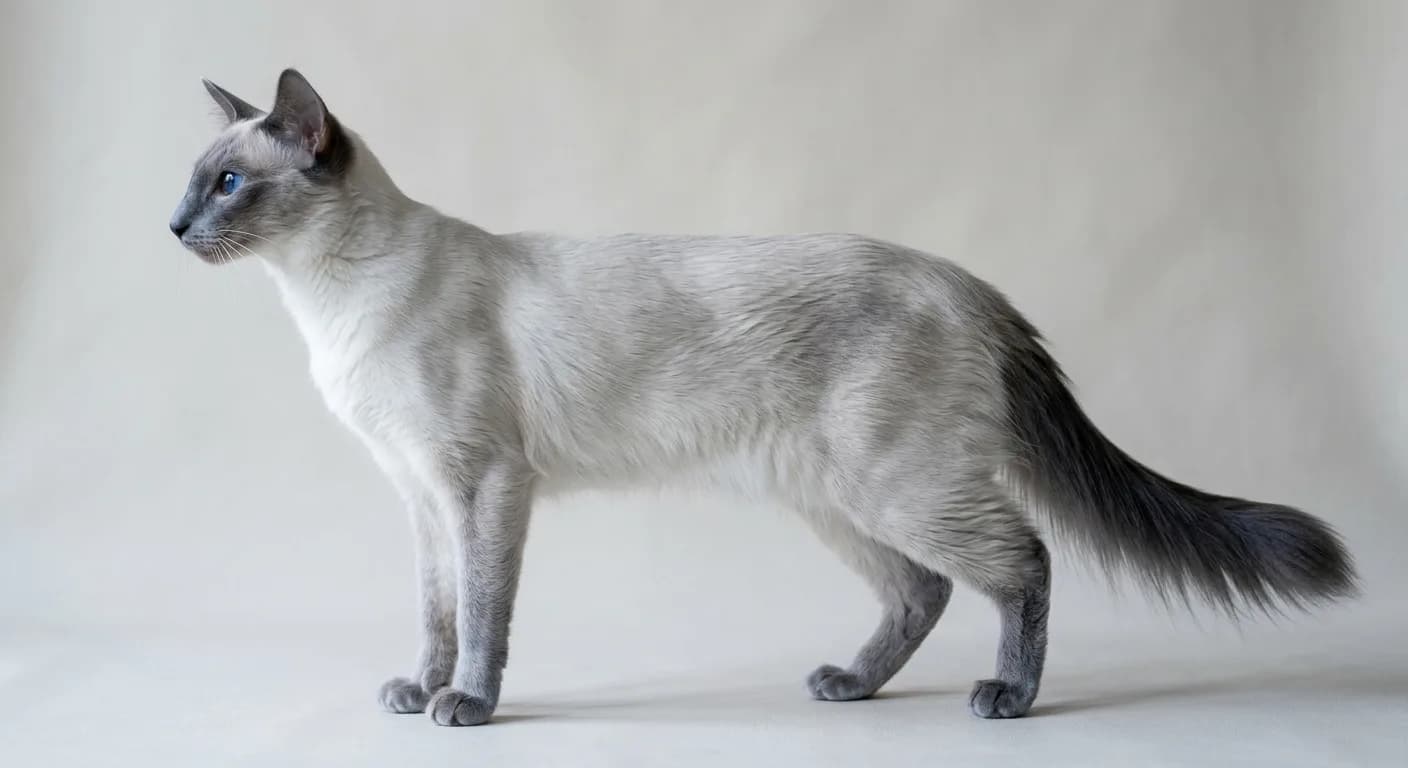
The Balinese body is a study in refined athleticism. The breed standard calls for a medium-sized, tubular body that is long and svelte, supported by fine-boned legs. Despite the delicate appearance, the musculature underneath is surprisingly firm and strong. The head is a long tapering wedge, widening from the narrow muzzle to the tips of the large, wide-based ears. The overall impression is of a cat shaped by evolution for speed and agility rather than mass.
Males typically weigh 8-11 lbs; females run lighter at 6-9 lbs. The cat sits low on fine legs, with small oval paws. The neck is long and slender, carrying the wedge-shaped head with an aristocratic tilt.
The Signature Coat
The coat is what makes the Balinese instantly recognizable among the Siamese family. Unlike every other long-haired breed, the Balinese carries a single-layer coat with no downy undercoat. This is the genetic signature that makes the coat behave so differently from breeds like the Persian or Maine Coon:
- No undercoat = the coat lies flat and silky rather than puffing out
- No mat formation under normal conditions (a rare trait for a semi-long coat)
- Lower shed volume than double-coated breeds
- Texture is fine and silky, described by the CFA standard as lying close to the body
The longest fur appears on the tail, forming a magnificent plume that can measure up to 5 inches. The CFA Balinese breed standard specifies the coat should be fine and silky, without the mass of a Persian, and should flow with the body lines.
Never Scoop Again® with the Whisker Litter-Robot, the smart self-cleaning automatic litter box. Monitor visits and track weights for better overall care in the Whisker® app. Multi-cat friendly.
Petful may earn a commission when you click through to Whisker, at no extra cost to you.
- Because there is no undercoat, a stainless steel comb or slicker brush once or twice a week is sufficient. The Balinese coat does not form mats the way double-coated breeds do. Avoid overbrushing, which can cause static and coat breakage. A light misting of water before combing helps smooth the coat.
Eyes: The Sapphire Standard
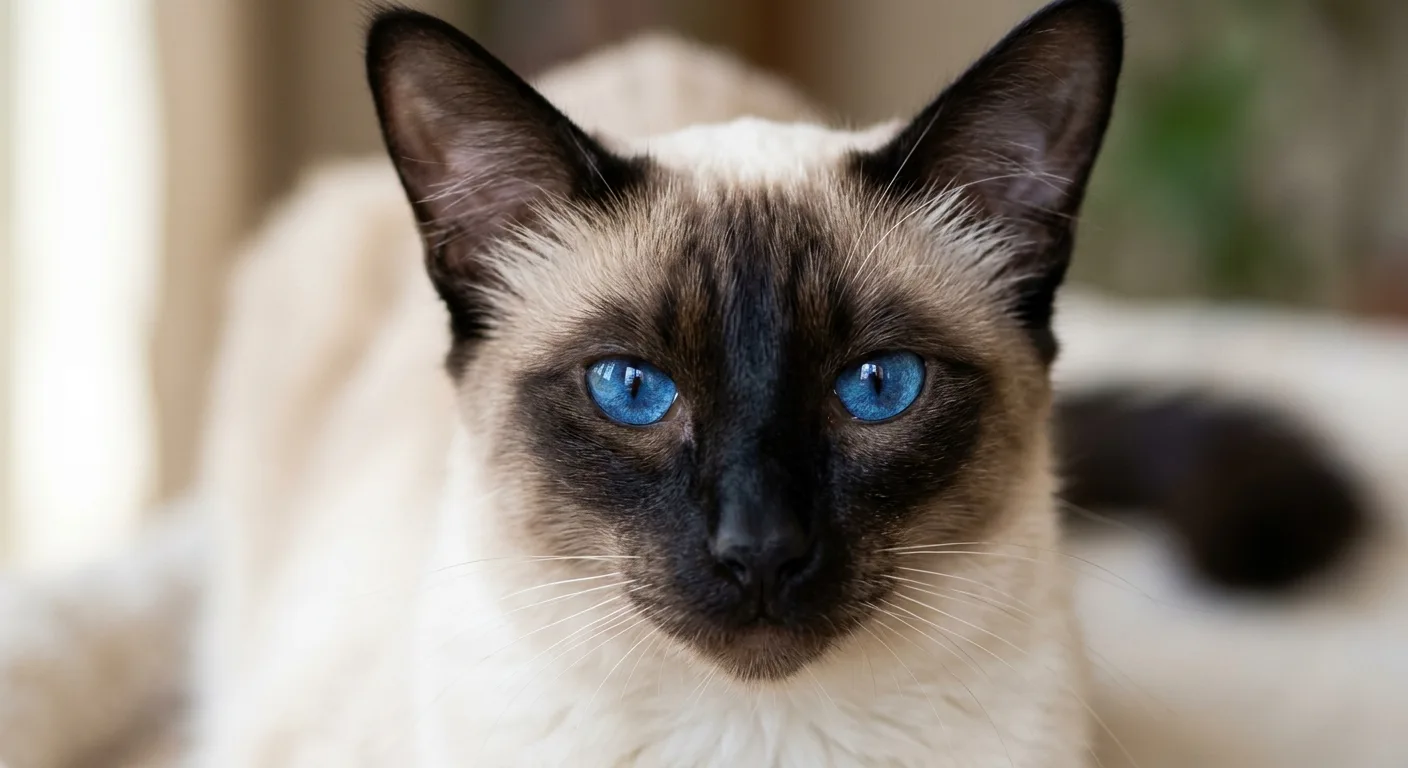
The Balinese eye is arguably the breed's most arresting feature. The CFA and TICA standards both require deep vivid blue eyes, the intensity of which increases with age into full adulthood. The shape is almond, slanting toward the nose in perfect alignment with the wedge of the head and the line of the ears. Yellow, green, or odd-colored eyes are a disqualification in the show ring, and a paler shade of blue is considered a fault. The eye color is genetically tied to the point pigmentation: the same gene that restricts pigment to the cooler extremities also prevents full melanin development in the iris, producing the characteristic blue.
Point Colors
| Color Name | Description | Registry Classification |
|---|---|---|
| Seal Point | Dark brown-black points on cream/fawn body | Balinese (CFA + TICA) |
| Blue Point | Blue-gray points on white-blue body | Balinese (CFA + TICA) |
| Chocolate Point | Warm milk-chocolate points on ivory body | Balinese (CFA + TICA) |
| Lilac Point | Pinkish-gray points on glacial white body | Balinese (CFA + TICA) |
| Lynx Point (all colors) | Tabby striping visible in the points | Javanese (CFA) / Balinese (TICA) |
| Red Point | Red/orange points on white body | Javanese (CFA) / Balinese (TICA) |
| Cream Point | Pale cream points on white body | Javanese (CFA) / Balinese (TICA) |
| Tortie Point (all colors) | Mottled red/cream mixed with base point color | Javanese (CFA) / Balinese (TICA) |
Temperament and Personality: The Dog of the Cat World
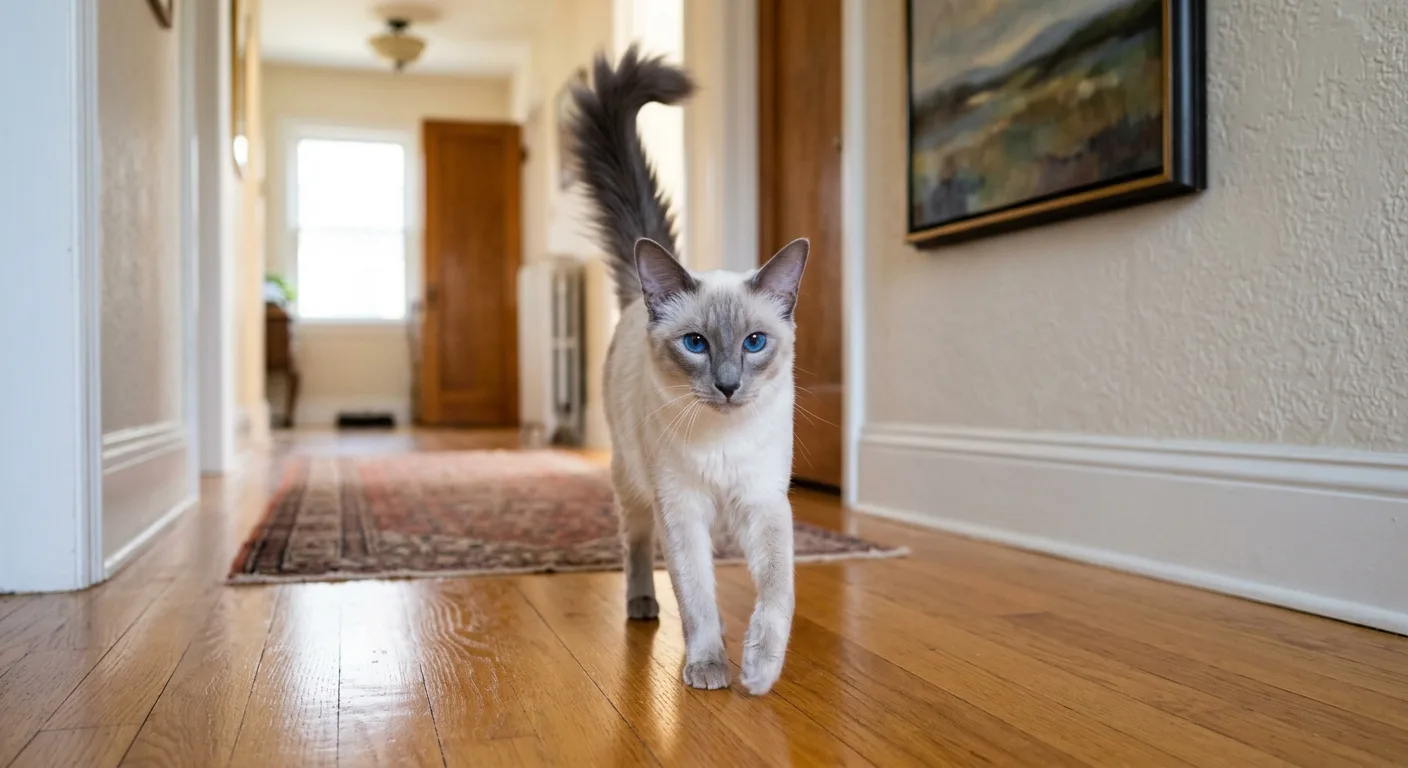
If you want a quiet, independent lap ornament, the Balinese is the wrong choice. If you want a conversational, highly bonded companion who will follow you from room to room, greet your guests at the door, and tell you at length what you did wrong today, the Balinese may be exactly right.
Vocality
The Balinese voice is legendary in the fancy. The breed inherited the Siamese vocal tradition but expresses it with what many owners describe as a softer, more melodic quality than the classic Siamese. Expect a running commentary on your activities, meowing when you leave, greeting you when you return, and expressing opinions about meal timing with considerable volume and persistence. The GCCF breed profile notes that Balinese are "known for their chatty personalities."
- The Balinese is one of the most vocal breeds in existence. Apartment dwellers should consider whether noise-sensitive neighbors will be an issue. Owners who dislike being "talked to" by their cat consistently report frustration. This is not a breed that quiets down with age.
Attachment and Social Behavior
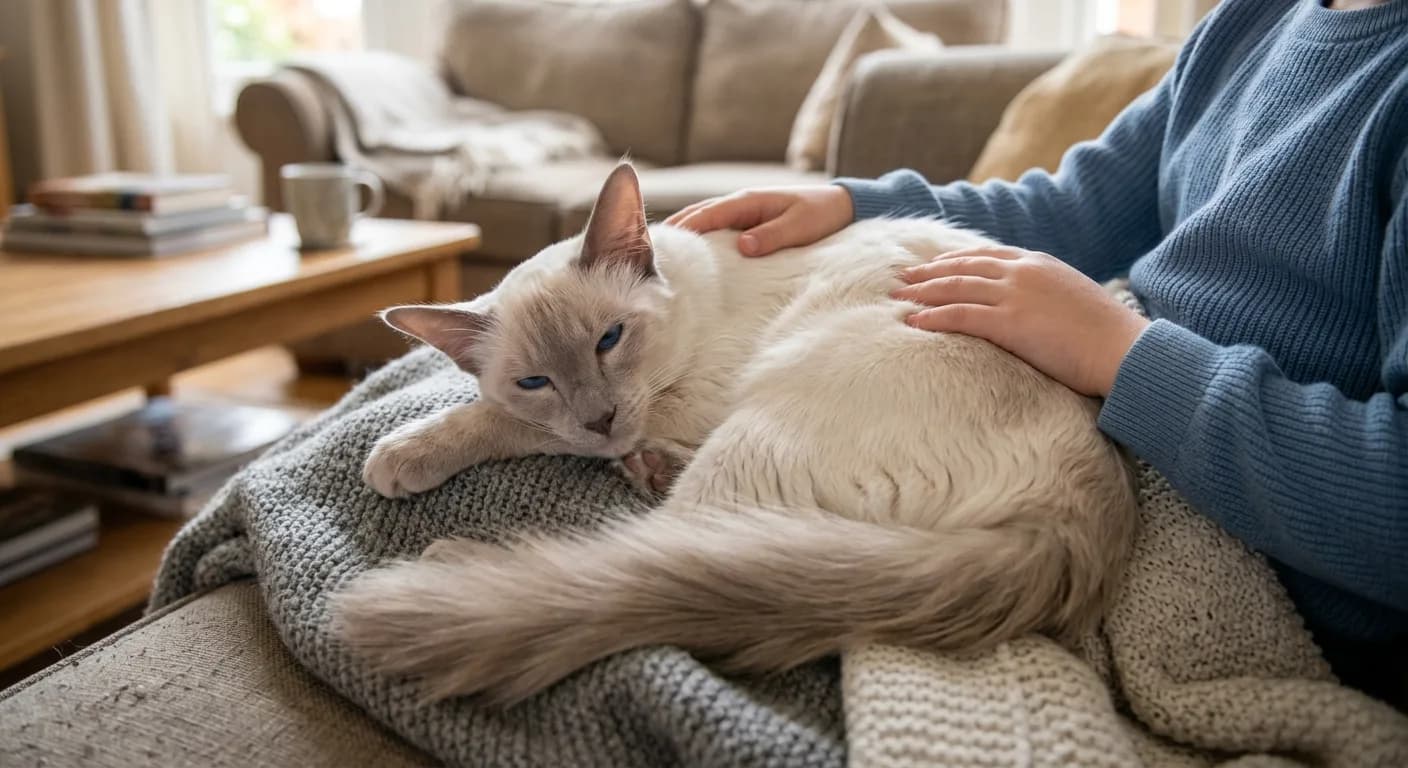
The Balinese bonds deeply with its primary person. Owners routinely describe the experience as having a cat with dog-like loyalty: the Balinese will learn your schedule, wait at the door, sleep in your bed (specifically on your pillow), and show measurable distress when left alone for extended periods. This attachment makes them excellent therapy-type companions but poor candidates for households where the cat would be alone all day.
The CFA breed profile describes Balinese as "people-oriented to an extreme." Both cats and dogs are accepted readily once proper introductions are made, and Balinese generally integrate well into multi-pet households, provided they receive adequate attention.
Intelligence and Play
Among the most intelligent domestic cat breeds, the Balinese learns quickly, retains routines, and can be taught tricks. Puzzle feeders, interactive wand toys, and fetch games (yes, some Balinese retrieve objects on command) are strongly recommended. Mental stimulation is as important as physical play. Boredom in a Balinese manifests as excessive vocalization, destructive behavior, or attention-seeking in progressively dramatic ways.
- Rotate toys weekly to maintain novelty. Install at least one tall cat tree with sight lines to windows and outdoor birds. Puzzle feeders replace some of the hunting challenge. A second social cat (another Balinese, Siamese, or similarly active breed) significantly reduces boredom if the household is away for work hours.
Caring for a Balinese Cat
Grooming
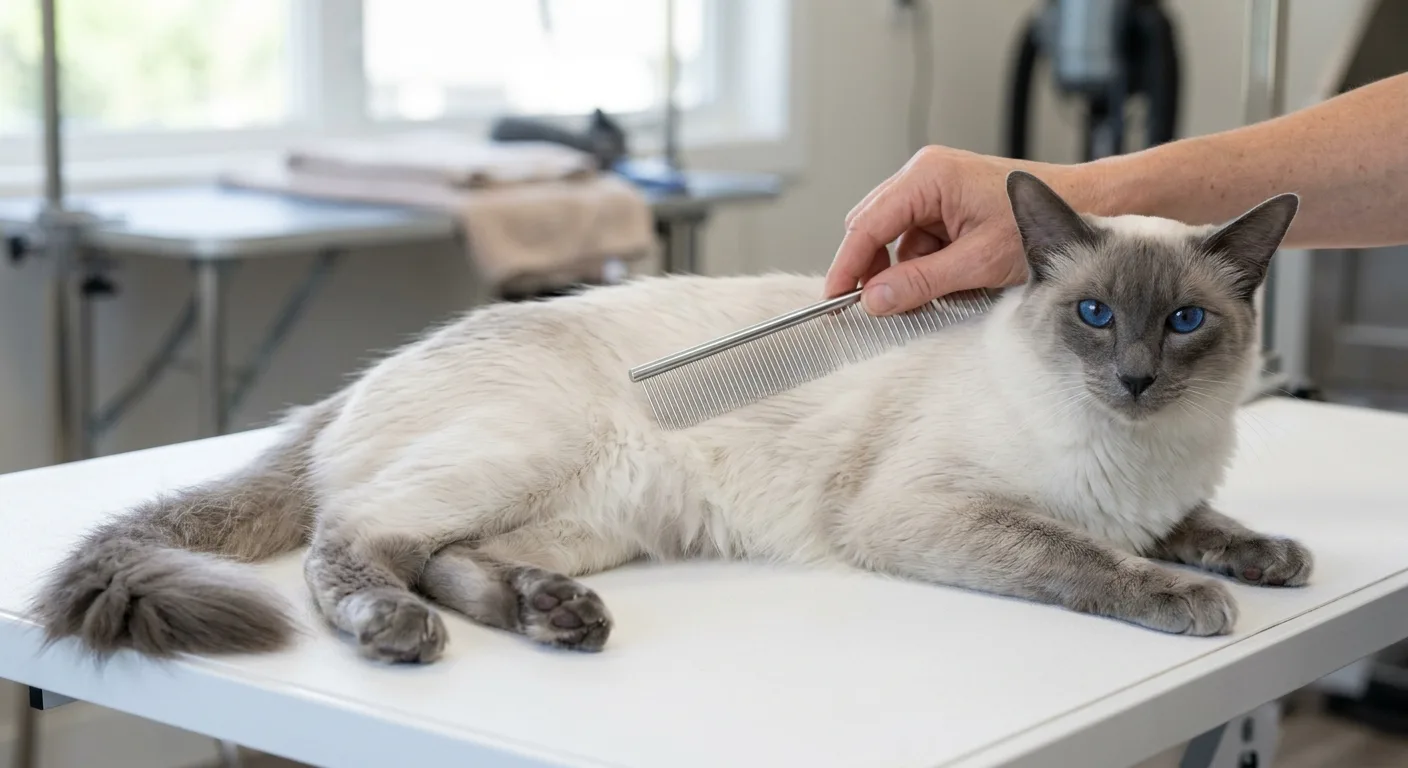
The single-layer silky coat is genuinely low-maintenance by long-haired cat standards. Weekly combing is adequate for most Balinese. The absence of a downy undercoat means shed hair is minimal and the coat does not knot or ball up. Seasonal shedding is present but moderate.
- Brushing frequency: 1-2 times per week
- Bathing: Occasional only; the coat dries quickly due to its fine texture
- Ear cleaning: Monthly with a veterinarian-approved solution
- Nail trimming: Every 2-3 weeks
- Dental care: Daily brushing recommended (dental disease is a documented breed risk)
Nutrition
Balinese cats are athletic and metabolically active. They rarely trend toward obesity the way less active breeds can, but quality nutrition matters for coat condition and longevity. Key considerations:
- Protein: High-quality animal protein as the first ingredient
- Hydration: Wet food or a cat water fountain helps with kidney health (relevant given amyloidosis risk in the Siamese family)
- Portion control: Despite high activity, free-feeding is not recommended as dental disease risk increases with constant grazing
Exercise and Activity
The Balinese is a genuinely athletic cat. Vertical space (tall cat trees, wall shelves) and interactive daily play sessions of 15-20 minutes are important. The breed retains playful kitten-like behavior well into adulthood. Owners who do not provide sufficient stimulation often find the Balinese creates its own entertainment at the expense of furniture, bookshelves, or the contents of kitchen counters.
Litter Box Preferences
Like most Siamese-family cats, the Balinese can be fastidious about litter box cleanliness. A covered box with low dust litter is often preferred. Provide one box per cat plus one extra in multi-cat households.
Health Considerations: What Every Owner Should Know
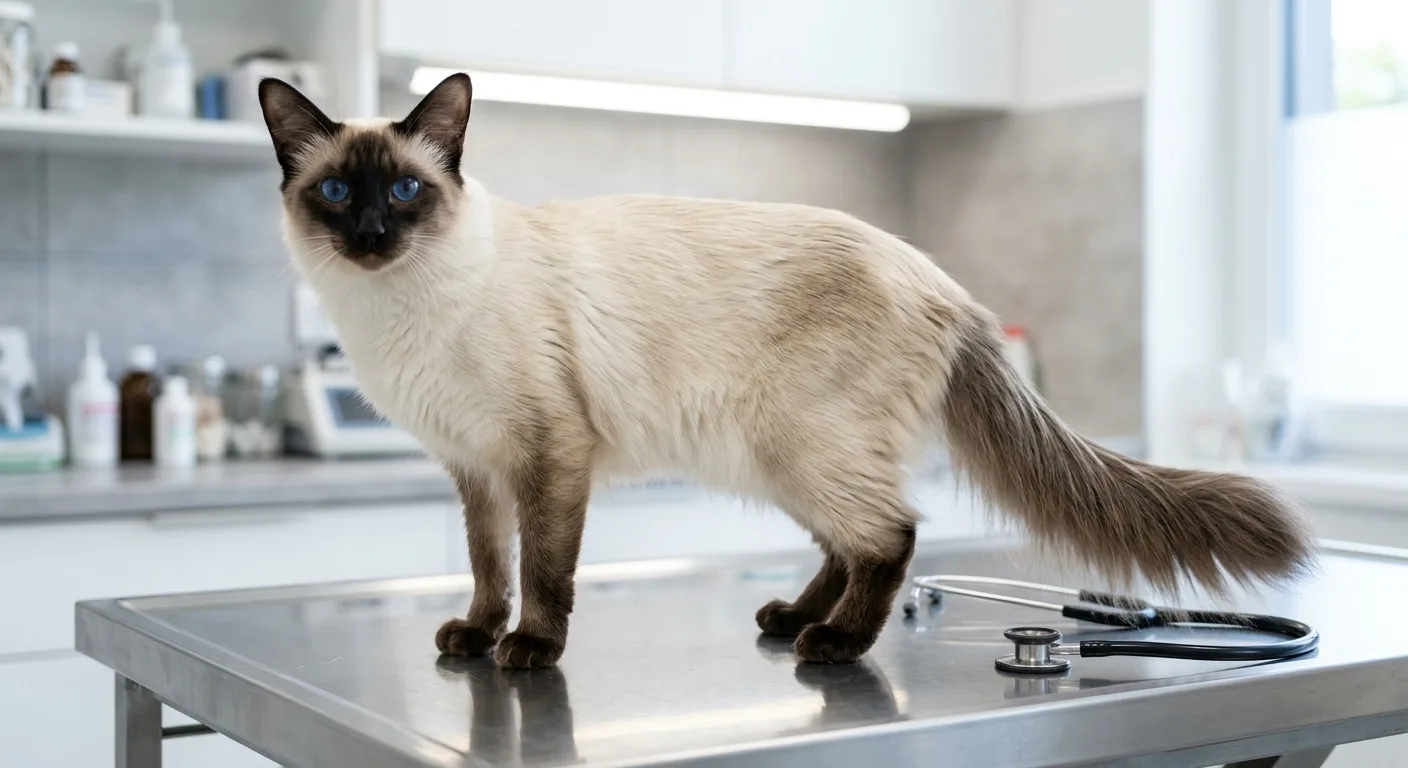
The Balinese shares its genetic heritage with the Siamese and carries a similar health profile. Overall the breed is hardy and long-lived, with lifespans of 12-20 years documented. Responsible breeders screen for the conditions below.
| Condition | Risk Level | Notes |
|---|---|---|
| Progressive Retinal Atrophy (PRA) | Moderate | Gradual vision loss; genetic test available |
| Amyloidosis | Moderate | Protein deposits in organs (liver in Siamese family); no cure, monitor with bloodwork |
| Hypertrophic Cardiomyopathy (HCM) | Moderate | Cardiac wall thickening; echo screening recommended |
| Dental Disease | High | Shared with Siamese; daily brushing critical |
| Feline Asthma | Moderate | Respiratory sensitivity; avoid aerosol sprays and dusty litter |
| Crossed Eyes (strabismus) | Low-moderate | Historically common in Siamese lines; less prevalent in modern Balinese |
| Kinked Tail | Low | Recessive trait from Siamese ancestry; cosmetic only |
Progressive Retinal Atrophy (PRA)
PRA causes progressive degeneration of the retina, eventually leading to blindness. The Siamese family carries a known form of the condition. A DNA test is available through several veterinary genetics labs. Ask your breeder for documentation of PRA-clear status on both parents.
Amyloidosis
Hepatic amyloidosis involves the deposition of amyloid protein in the liver and can cause liver failure. It is documented in Siamese-related breeds. There is no cure, but routine bloodwork (every 6-12 months in adults over 7 years) allows early detection and management.
- Ask any Balinese breeder for documentation of PRA genetic clear status and HCM echo results on breeding cats. Annual wellness exams with bloodwork starting at age 5 are recommended for Siamese-family cats given amyloidosis and cardiac risks. Do not skip dental cleanings: dental disease in this breed can progress quickly.
Hypertrophic Cardiomyopathy (HCM)
The most common cardiac disease in cats, HCM involves thickening of the heart muscle wall. Cardiac ultrasound (echocardiogram) screening of breeding cats is the current best practice. No gene test is yet available for Balinese specifically, unlike in Maine Coons and Ragdolls.

63-inch multi-level cat tree with scratch posts, hammock, plush perches, and dangling toys. Vertical territory is non-negotiable for high-energy climbing breeds like the Bengal.
Petful may earn a commission when you click through to Chewy, at no extra cost to you.
Feline Asthma
Respiratory sensitivity appears in Siamese-family lines. Avoid aerosol cleaning products, scented candles, heavily perfumed litter, and cigarette smoke around Balinese cats. Signs of asthma include crouching close to the floor while coughing or wheezing.
Are Balinese Cats Hypoallergenic?
This is one of the most common questions about the breed, and the honest answer is nuanced. No cat is 100% hypoallergenic. The Balinese is sometimes listed among lower-allergen breeds for two reasons:
1. Single coat structure: Less fur overall means less surface area carrying dried allergen-laden saliva
2. Anecdotal Fel d 1 data: Some sources suggest Balinese produce lower levels of Fel d 1 (the primary cat allergen protein) than the average domestic cat, though peer-reviewed studies specifically on Balinese are limited
People with mild-to-moderate cat allergies sometimes tolerate Balinese better than other breeds. People with severe cat allergies should not assume the Balinese is safe. Spending time with the specific cat before committing to adoption is the only reliable test.
- If you are allergic, ask a reputable breeder to send a used bedding item before a visit. Arrange at least two visits of 30+ minutes. Your reaction to one Balinese may not predict your reaction to another, since Fel d 1 levels vary by individual cat.
Balinese vs. Siamese: Key Differences
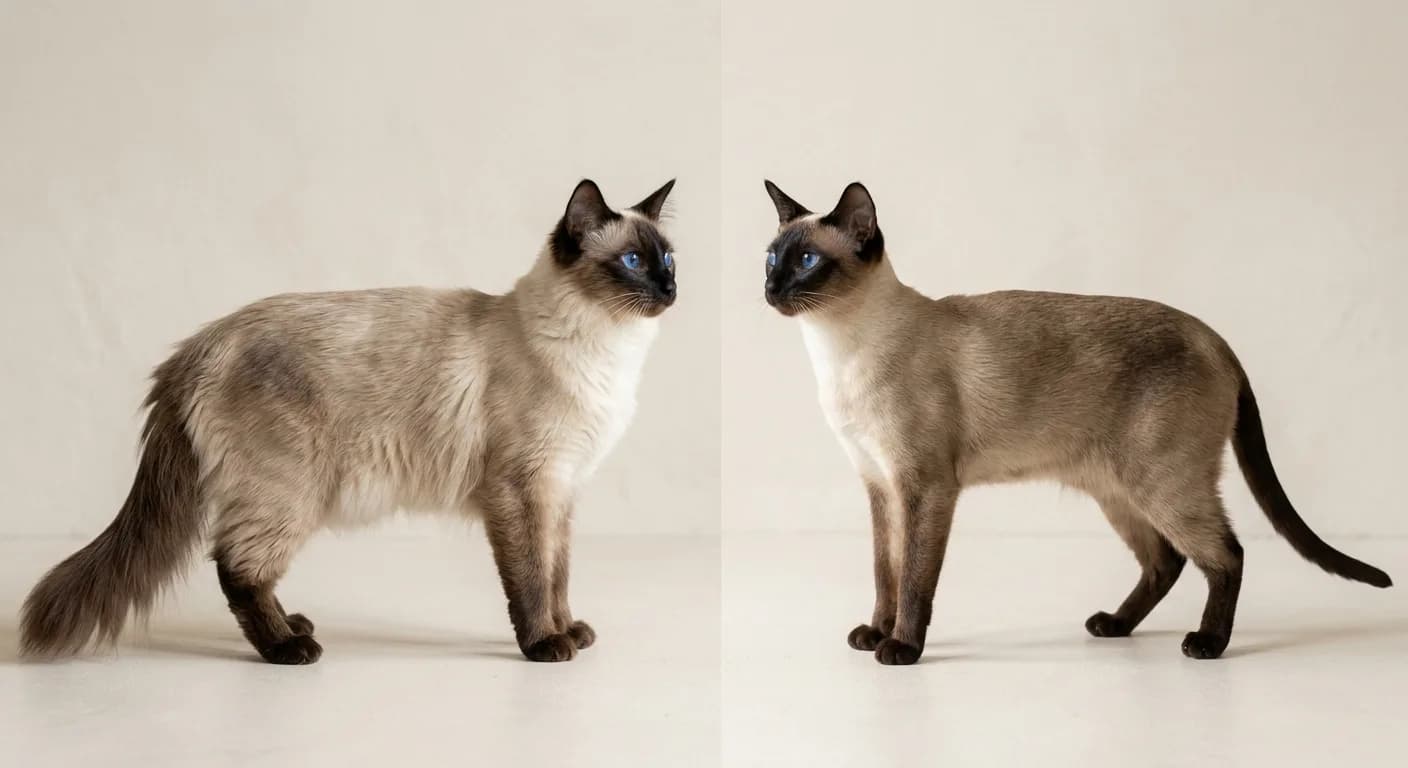
Owners regularly arrive at the breed profile having already researched Siamese cats. The two breeds share genetics, personality, and health profiles but differ in coat and, in some opinions, temperament intensity.
For a deep dive into the comparison, see our full guide to Balinese vs. Siamese cats.
Key differences at a glance:
- Coat: Siamese has a short, close-lying single coat. Balinese has a semi-long, flowing single coat with plume tail.
- Grooming: Balinese requires slightly more grooming (weekly vs. minimal for Siamese)
- Temperament: Both are highly vocal and social. Some owners describe Balinese as slightly less intense than Siamese, though individual variation is wide.
- Registry naming: In CFA, extended color variants of Balinese are called Javanese; extended color variants of Siamese are called Oriental Shorthair/Longhair.
- Confused with: Birman (white-gloved paws, silkier coat, different body type) and Ragdoll (much larger, floppy temperament) are not related. Do not confuse a Balinese with either. Petful’s guide to Birman vs Ragdoll has the full breakdown.
Balinese vs. Birman vs. Ragdoll: Don't Confuse These Pointed Cats
All three breeds have point coloration and long-ish coats, which creates confusion. Here is how to tell them apart:
- Birman: White "gloves" on all four paws. Rounder head and body. Quieter temperament. Not related to Siamese.
- Ragdoll: Much larger (15-20 lbs). Goes limp when held ("floppy"). Less vocal. Not Siamese-derived.
- Balinese: No white gloves. Wedge head. Highly vocal. Slim, fine-boned Siamese body.
Finding a Balinese Cat: Breeders and Adoption
Reputable Breeders
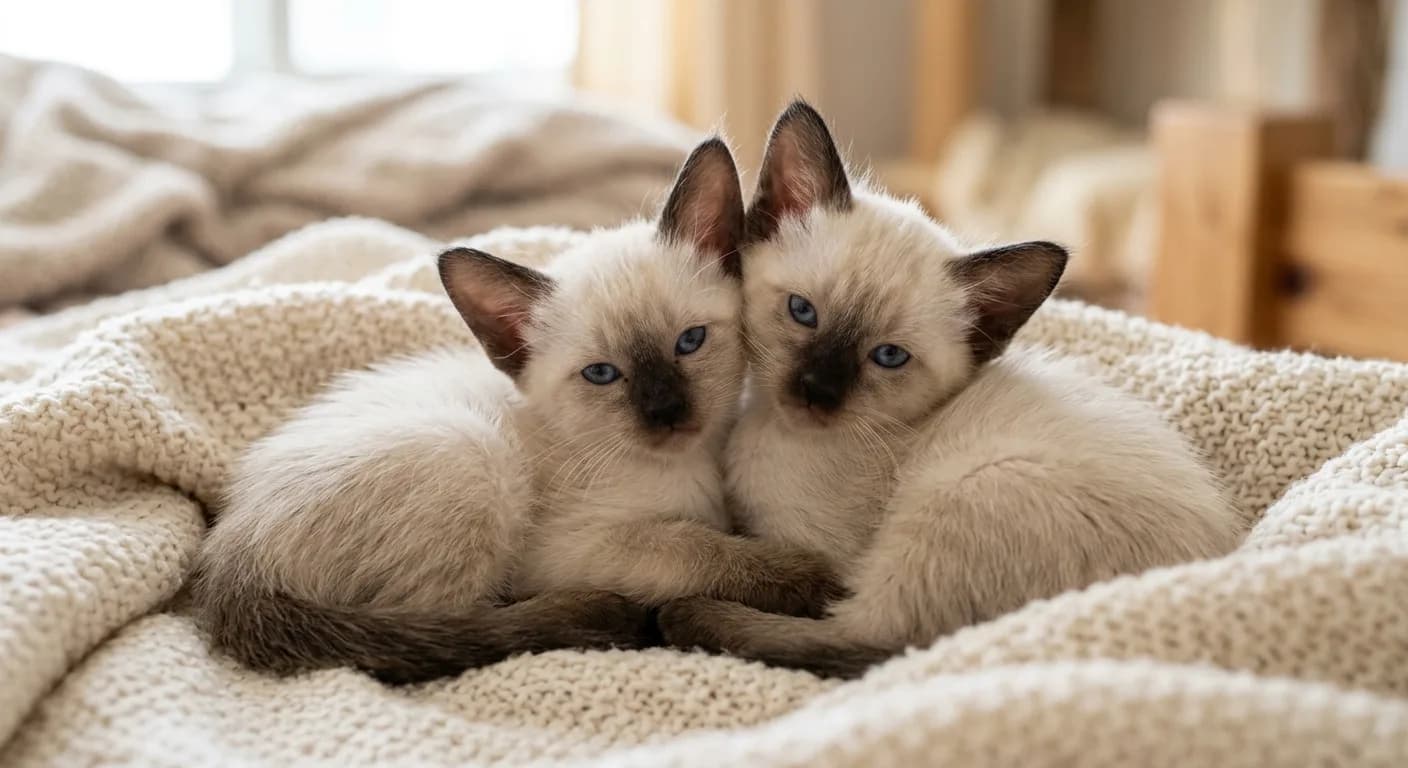
Purchase from breeders registered with the CFA, TICA, or GCCF. Responsible breeders provide:

108-oz stainless steel pet fountain with quiet pump and water-level window. Bengals are notoriously water-obsessed; a flowing fountain encourages hydration and pulls them away from sinks and toilets.
Petful may earn a commission when you click through to Chewy, at no extra cost to you.
- PRA genetic test documentation (both parents clear)
- HCM echo screening results on breeding cats
- Health guarantee for genetic conditions
- Willingness to take the cat back at any point in its life
- Photos and video of the kitten with its mother in a home environment
The CFA maintains a breeder referral program and TICA publishes a breeder directory on its website. The GCCF publishes an approved breeder list for UK buyers.
Adoption
Adult Balinese occasionally become available through breed-specific rescue organizations. Because of the vocal and demanding temperament, some owners surrender Balinese who were not prepared for the intensity of the breed. An adult rescue Balinese can be an excellent choice for an experienced owner: temperament is known, and the cat skips the destructive kitten phase.
See our cat breeds directory for profiles on related breeds including Siamese cat breed profile and Persian cat.
Price
Balinese cats from registered breeders typically cost $1,000-$1,500 for a pet-quality kitten. Show-quality kittens from proven lineages can reach $2,500 or more. Rescue adoption fees are typically $100-$400. For a detailed breakdown of costs including ongoing expenses, see our Balinese cat price guide.
Is a Balinese Cat Right for You?
The Balinese is a deeply rewarding breed for the right owner. Ask yourself:
You are a good match if you:
- Work from home or have flexible schedules
- Want a cat that is actively engaged with your life rather than decorative
- Enjoy conversation (the cat will provide its half)
- Have experience with Siamese-family breeds or other vocal, social cats
- Are prepared for a 15-20 year relationship
Consider a different breed if you:
- Work 8-10 hours away from home with no one else in the household

Color-changing crystal litter that flags pH shifts in your cat's urine, an early warning sign of UTIs, kidney issues, and more.
Petful may earn a commission when you click through to Chewy, at no extra cost to you.
- Have noise-sensitive neighbors or living situations
- Prefer a calm, quiet, independent cat
- Have severe cat allergies (always test first regardless of breed)
- Balinese cats do best with at least one feline companion, particularly if the household is regularly empty for work hours. Another Balinese, an Oriental Shorthair, or a similarly active and social breed makes an ideal pair. A single Balinese left alone all day is a recipe for vocalization and behavioral problems.
Siamese Cat Colors and Related Breeds
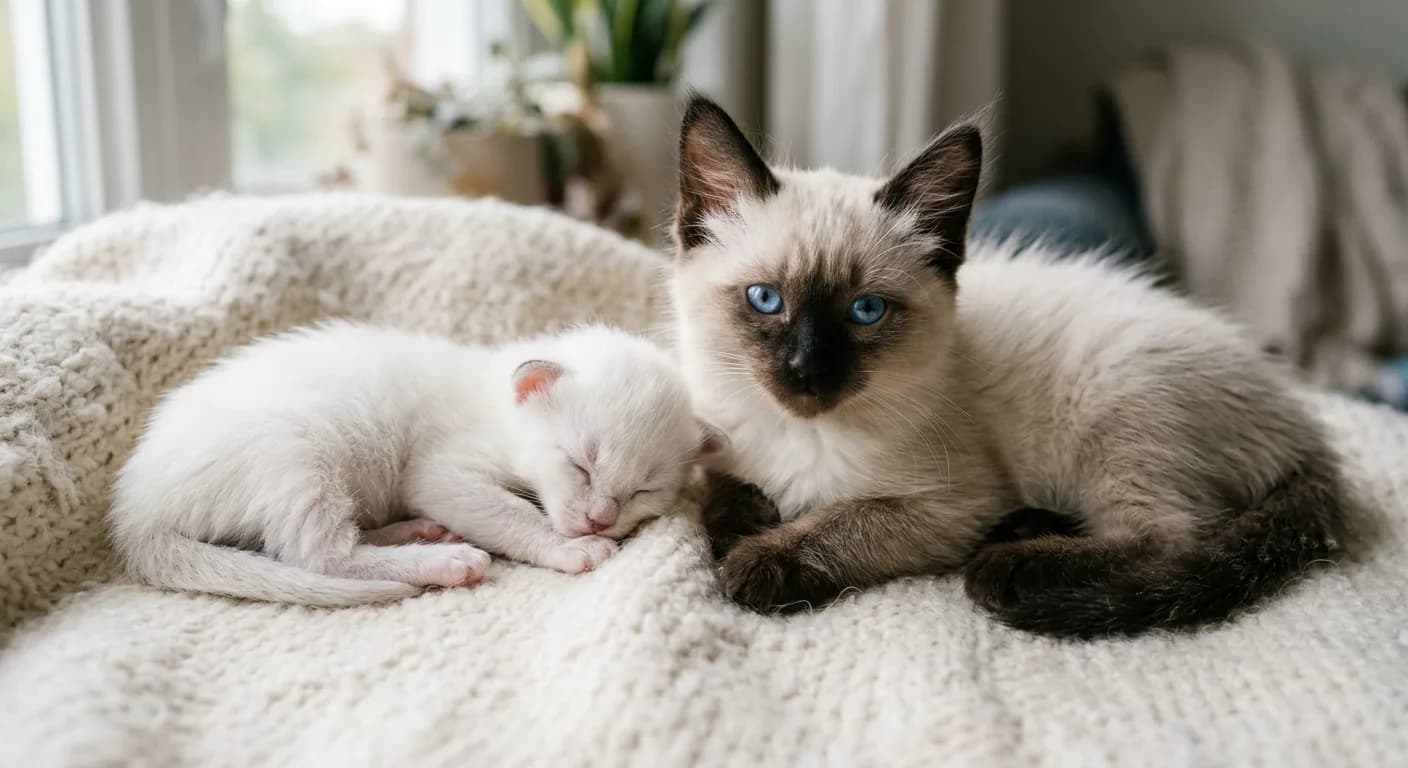
The Balinese color genetics are inseparable from Siamese color genetics. The colorpoint pattern (also called Himalayan pattern or cs allele) restricts pigment to the body's cooler extremities: face mask, ears, legs, and tail. Kittens are born white and develop visible points over the first few weeks as body temperature gradients establish. Full point color depth is not reached until approximately 12-18 months. Petful’s guide to Himalayan cat colors has the full breakdown.
For more on the color genetics and variety within the Siamese family, see our guides on Siamese cat colors and whether Balinese cats are truly hypoallergenic.
Living With a Balinese: Owner Experiences
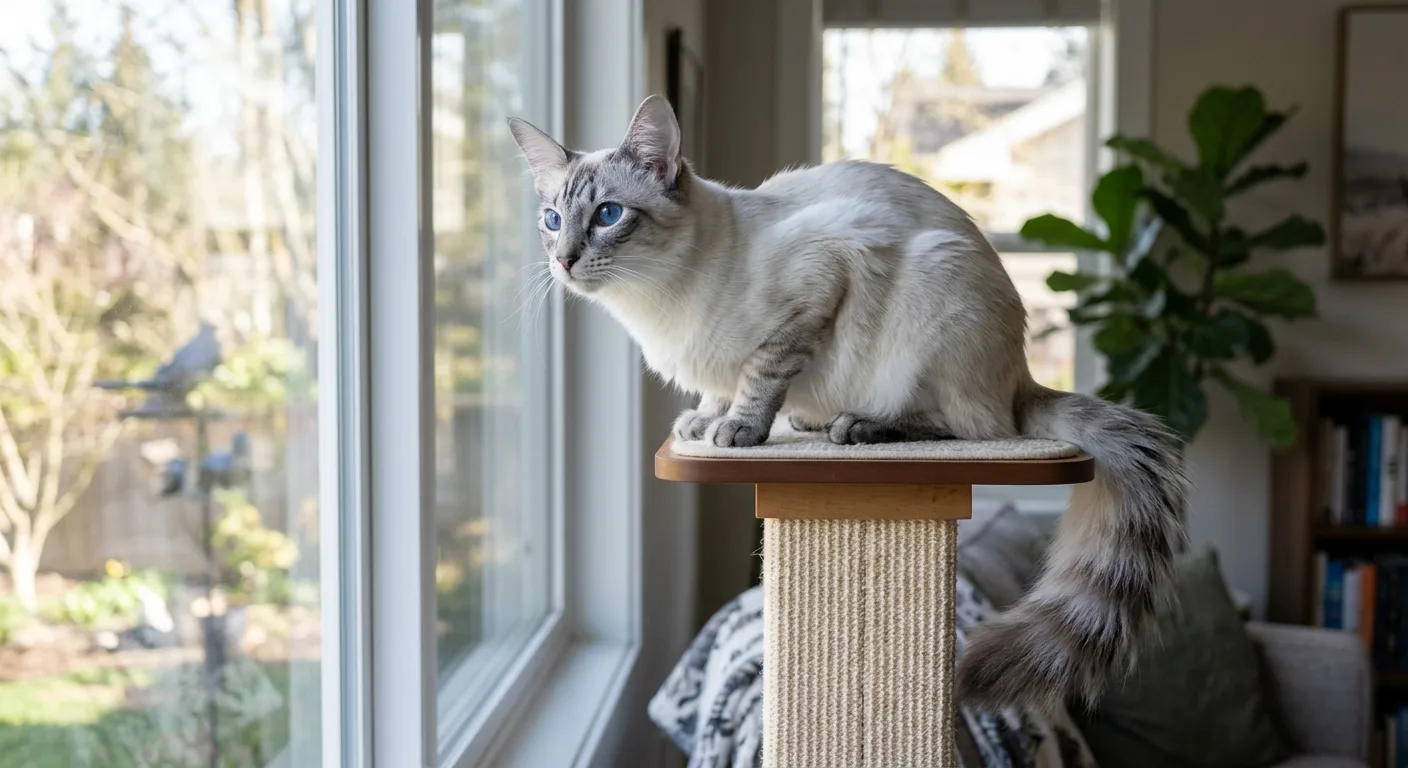
Owners describe life with a Balinese in consistent terms: it is not a cat you live with so much as a cat that lives alongside you. They greet at the door. They supervise cooking. They express opinions about television programming. They steal socks. They are entirely convinced they are the most important person in any room. For the right household, this intensity is exactly the appeal.
Common owner adaptations include:
- Accepting that certain surfaces (counters, bookshelves, tops of refrigerators) are now shared
- Keeping a wand toy within reach for when the cat requests entertainment at an inconvenient moment
- Installing window bird feeders to keep the cat occupied during work calls
- Accepting that the bed is no longer exclusively yours
Quick Reference: Balinese Cat Characteristics Summary
| Factor | Rating | Notes |
|---|---|---|
| Affection Level | 5/5 | Extremely people-oriented, bonds deeply |
| Vocality | 5/5 | Very talkative, daily conversation guaranteed |
| Activity Level | 4/5 | High energy, needs daily play |
| Independence | 1/5 | Does not do well alone for long periods |
| Grooming Ease | 4/5 | Single coat; less work than most long-haired breeds |
| Kid-Friendliness | 5/5 | Social and gentle with children |
| Dog-Friendliness | 4/5 | Adapts well with proper introduction |
| Apartment-Suitability | 3/5 | Yes if noise and activity needs are met |
| Hypoallergenic | 3/5 | Reduced allergens, not allergen-free |
Pet-quality Balinese kittens from CFA or TICA registered breeders typically cost $1,000-$1,500. Show-quality kittens from titled lineages can reach $2,500 or more. Rescue and shelter adoption fees typically run $100-$400 for adults. Ongoing costs include premium food, annual vet exams, dental cleanings (especially important for this breed), and enrichment supplies.
No cat is completely hypoallergenic. Balinese are sometimes better tolerated by allergy sufferers because their single-layer coat sheds less and some individual Balinese may produce lower levels of the Fel d 1 allergen protein. Peer-reviewed studies specifically measuring Fel d 1 in Balinese are limited. If you have cat allergies, spend at least two 30-minute sessions with the specific cat before adopting. Severe allergy sufferers should consult an allergist first.
Yes, for the right owner. The Balinese is affectionate, highly intelligent, playful, and deeply loyal. It is not well-suited for households where the cat would be alone for 8-10 hours daily, or for owners who prefer a quiet, independent cat. For active households that want genuine companionship, the Balinese is exceptional.
The key difference is coat length. Siamese cats have a short, close-lying coat with no visible plume on the tail. Balinese cats have a semi-long, silky coat (longest on the tail, forming a plume) with no downy undercoat. Both have the same wedge-shaped head, almond blue eyes, and color-pointed pattern. A DNA test can confirm breed genetics if you are uncertain.
Technically yes, but it is not ideal for this breed. The Balinese bonds intensely with its people and does not tolerate extended solitude as well as more independent breeds like the British Shorthair. If you work full-time away from home, providing a feline companion and enrichment (puzzle feeders, window perches, rotating toys) significantly reduces stress. Coming home to a Balinese that has been alone all day typically involves a lengthy vocal report.
The Balinese, Siamese, Burmese, and Ragdoll are frequently cited as the most people-dependent cat breeds. Of these, Balinese and Siamese rank highest in vocality combined with attachment. The Balinese is often described as the most dog-like of the three due to the combination of following behavior, greetings at the door, and training responsiveness.
The 3-3-3 rule is an adoption adjustment guideline: a newly adopted cat may need 3 days to decompress and hide, 3 weeks to learn the household routine and begin showing its true personality, and 3 months to fully settle and feel at home. For a Balinese, this rule applies but the breed's social nature often means the bonding phase accelerates, especially if the household is actively engaging with the cat during the first weeks.

Kristine Lacoste has been researching dog and cat breeds for nearly a decade and has observed the animals up close at dog shows in both the United States and the United Kingdom. She is the author of the book One Unforgettable Journey, which was named as a finalist for a Maxwell Award from the Dog Writers Association of America, and was host of a weekly pet news segment on the National K-9 Academy Radio Show. In addition, she was the New Orleans coordinator for Dogs on Deployment, a nonprofit that helps military members and their pets, for 3 years. Kristine has researched and written about pet behaviors and care for many years. She holds a bachelor’s degree in psychology, another bachelor’s degree in English and a Master of Business Administration degree.
Sign up for expert-backed reviews and safety alerts all in one place.