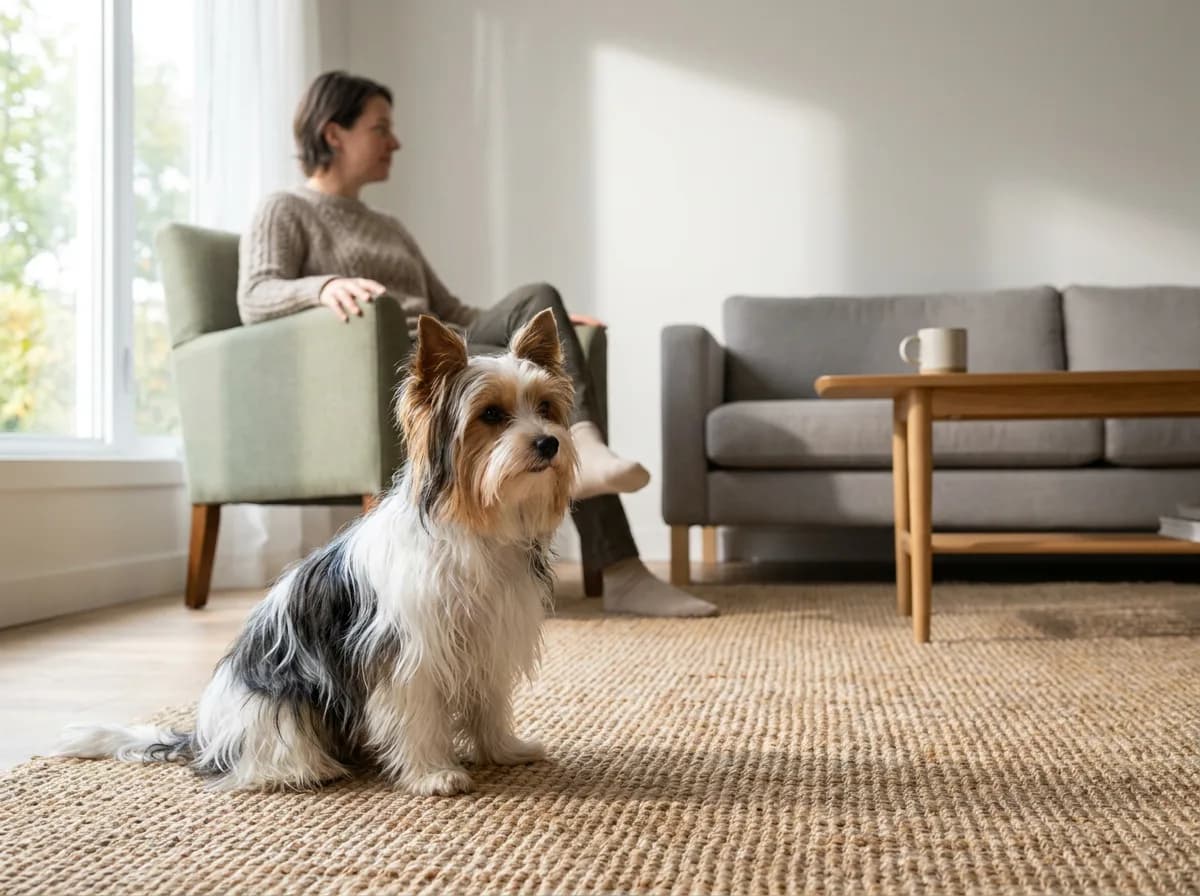
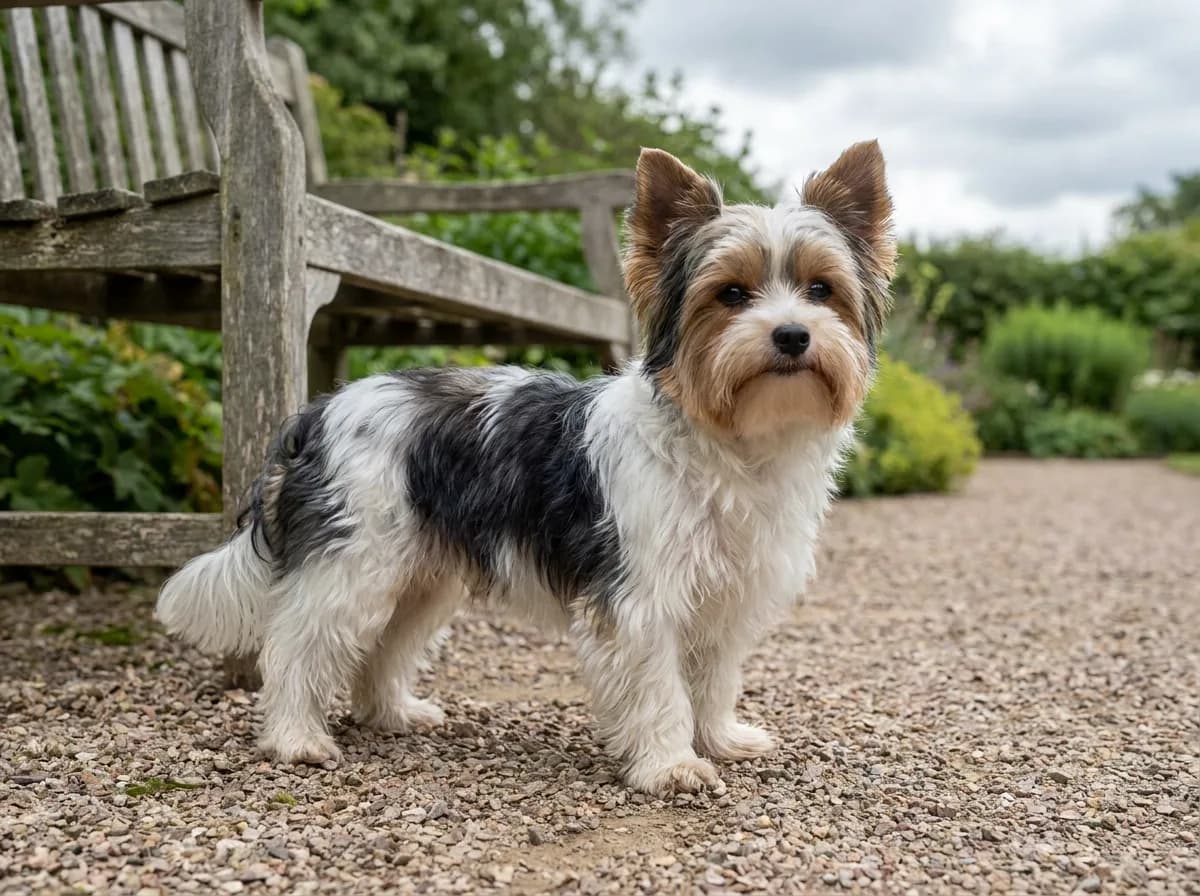
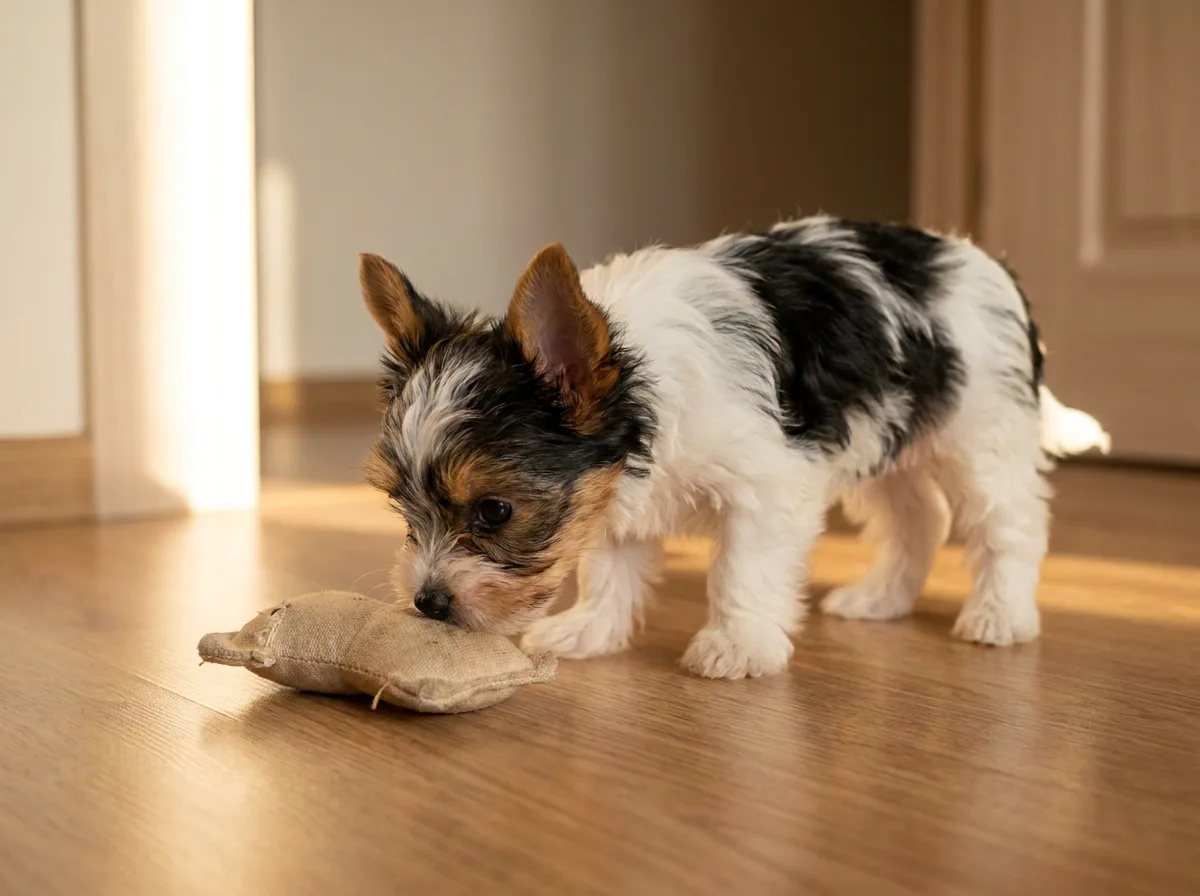
Shiba Inu Mixes: Crosses, Traits, and Care
Shiba Inu Mixes: Crosses, Traits, and Care with evidence-based guidance on daily fit, care, costs, training, grooming, health, and the individual decisions that matter most.
Petful is reader supported. As an affiliate of platforms like Amazon and Chewy, we may earn a commission when you buy through links on this page. There is no extra cost to you.
A Shiba Inu mix can inherit any combination of traits from both sides of its family. Coat, adult size, sociability, prey drive, trainability, body shape, and health risk do not divide neatly into predictable halves, even among littermates.
This guide profiles popular crosses while keeping that variation visible. Use a label to build a wider list of questions, then plan from the individual dog's measured body, observed behavior, veterinary findings, history, and actual response to daily life.

Sign up for expert-backed reviews and safety alerts all in one place.
Shiba Inu mixes: what can vary
Do not assume a Shiba Inu mix will land at the midpoint of two breed descriptions. Plan for the wider plausible range in size, coat, exercise, handling, prey interest, sociability, and health, then narrow the plan with direct observation and veterinary evidence as the dog matures.
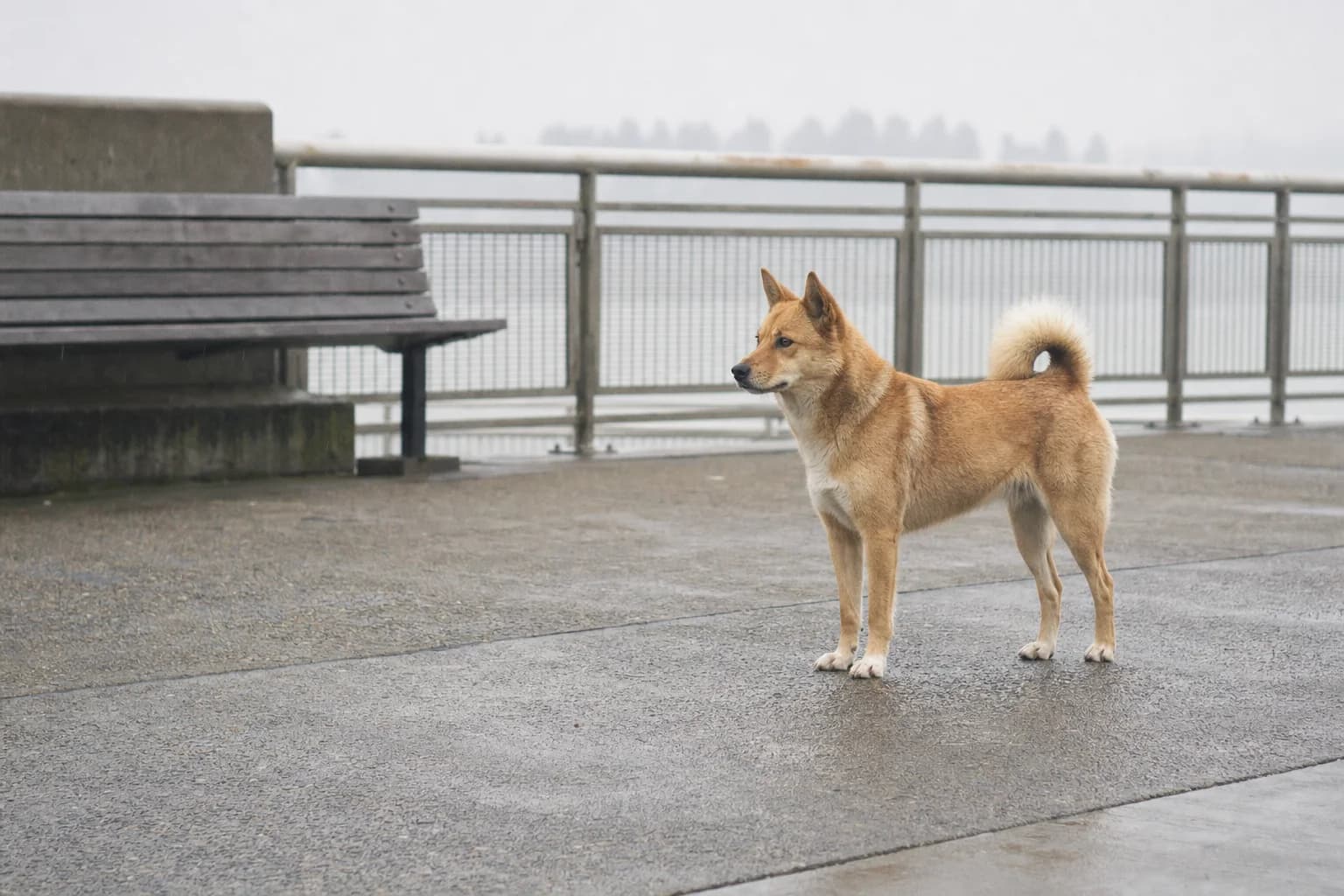
The Shiba standard describes a compact, agile dog with a dense double coat, erect ears, and an alert, independent character. A cross may inherit some of that outline and none of the expected behavior, or display strong Shiba-like behavior without looking much like a Shiba. Visible similarity cannot prove parentage.
Mixed inheritance creates several layers of uncertainty:
- Size: puppies can mature closer to either parent, outside the midpoint, or at different sizes within one litter.
- Coat: length, density, texture, color, shedding, and grooming needs may combine in ways that change with age.
- Behavior: prey interest, sociability, vocal style, motivation, guarding, and recovery depend on genetics plus learning and environment.
- Structure: leg length, back length, muzzle shape, joint angles, and body mass influence safe exercise and equipment fit.
- Health: mixing does not automatically erase concerns from either lineage; screening and individual veterinary care still matter.
Direct answers about Shiba crosses
- What is a Shiba Inu mixed with? There is no single other breed. “Shiba Inu mix” is a broad description for a dog reported or identified as having Shiba ancestry with any other breed or mixed population. Common labels include Shibsky, Corgi Inu, Shibador, Shiba Shepherd, Shiba Chi, and many others. Records or DNA may inform ancestry, but the dog still needs individual assessment.
- Are Shiba Inus good house dogs? A purebred or mixed Shiba can live well in a house or apartment when exercise, noise, doors, coat care, and other animals are managed. The second lineage may raise or lower space, activity, grooming, and social needs. Housing fit depends less on the label than on the dog's size, recovery, behavior, and the household's ordinary schedule.
- What are the three types of Shiba Inu? The modern Shiba Inu is one recognized breed, not three current size or temperament varieties. Historical accounts may mention regional Japanese strains that contributed to the breed's development. Red, black and tan, and sesame are recognized colors, not separate types. Crossbreed names are informal descriptions and should not be presented as recognized Shiba varieties.
The official Shiba standard and the National Shiba Club of America provide a baseline for one side of the family. Build the same evidence file for the other reported parent, then update it with what the individual dog actually shows.
- Separate ancestry evidence from care evidence | DNA results, parent records, or a shelter label may inform ancestry, but they do not measure the dog's current body condition, pain, recovery, sociability, chase behavior, or coat maintenance. Keep both records and let direct observations drive the daily plan.
How to assess a mixed-breed dog
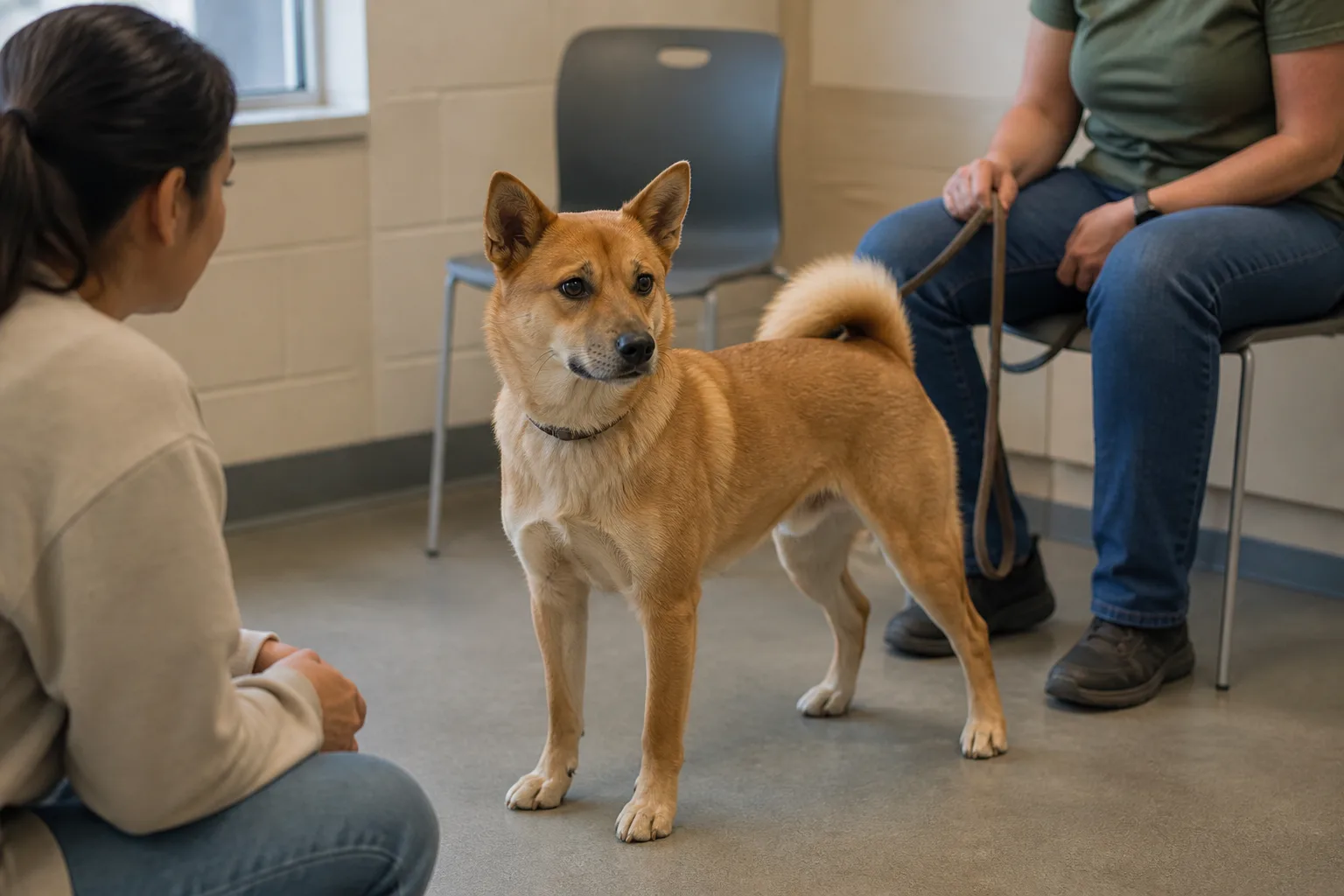
Start with facts that do not depend on ancestry. Measure weight, height, chest, neck, and body length. Ask a veterinarian to demonstrate body-condition scoring. Photograph the dog standing naturally from the side, front, and above. Record coat texture, undercoat, shedding, and any areas that mat or hold moisture.
Then observe behavior across several settings:
- Response to an unfamiliar person entering the home.
- Recovery after a noise, surprise, or exciting event.
- Interest in wildlife, cats, fast movement, food, toys, and scent.
- Comfort with collar holds, paw checks, brushing, and veterinary positioning. For low-pressure introductions, compare the Four Paws Magic Coat All-In-One Wet & Dry Dog Glove & Curry Brush for coat contact and the Jasper 360 Dog Finger Toothbrush for mouth handling only after the dog accepts the preceding easier step.
- Ability to rest after exercise and cope with brief separation.
- Play style, guarding, and disengagement around compatible dogs.
Label each statement as documented, directly observed, professionally assessed, or reported. “The rescue was told the father was a Husky” is reported. “The dog weighs 38 pounds and has a dense undercoat” is observed. “The veterinarian found patellar instability” is a professional finding. The categories should not be treated as equally certain.
Petful may earn a commission when you click through to Chewy, at no extra cost to you.
Where DNA testing helps and where it stops
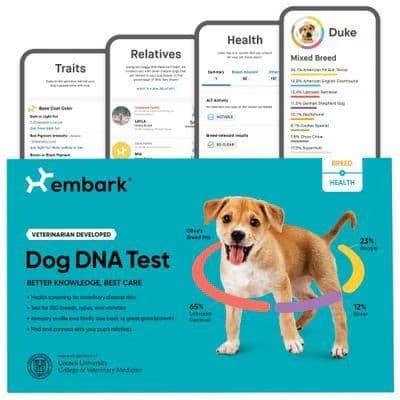
A consumer DNA result may provide an ancestry estimate and, depending on the product, selected health-variant information. It cannot predict adult personality, certify responsible breeding, replace an examination, or capture every possible disease risk. Database coverage and algorithms also differ among companies.
The Wisdom Panel Essential Breed Identification DNA Test is one ancestry option to compare by sample process, database, privacy policy, result detail, and limitations. If walking equipment is needed, a Frisco Padded No Pull Dog Harness should be chosen from current measurements and tested for shoulder freedom and escape resistance rather than ordered from a guessed breed size.
Keep the result as one record in a larger file. Health decisions still come from the dog's history, veterinary findings, both parent populations where known, and changes over time.
Build a seven-day baseline
For a newly adopted adult, spend the first week collecting low-pressure observations instead of testing every prediction attached to the label. Keep the routine simple enough that the dog can sleep and recover. Record the setting and distance around each behavior so “good with dogs” or “high energy” becomes information you can use.
A baseline can include:
- Time of meals, amount eaten, water intake, stool quality, and toileting pattern.
- Sleep location, total quiet time, and whether ordinary household movement interrupts rest.
- Response to collar and harness handling, paws, coat, mouth, and entering a vehicle.
- Walking pace, pulling, scanning, sniffing, wildlife interest, and recovery after a trigger.
- Behavior behind a gate during visitors, food preparation, and another pet's movement. A configurable option such as the Frisco Steel 8-Panel Configurable Dog Gate and Playpen should be assessed for the adult dog's height, strength, climbing, squeezing, and pushing behavior.
- Ability to take food, play, and respond to a familiar cue in several environments. For supervised food or object play, a correctly sized KONG Classic Dog Toy is one option to compare and remove if it becomes damaged.
Do not create risky tests to fill the sheet. “Unknown with cats” should remain unknown unless a qualified placement professional has a safe reason and plan to assess it. Direct access to a small animal is not an acceptable experiment.
At the end of the week, choose one or two management changes and one trainable skill. Recheck after another week. This produces a clearer care plan than trying to decide whether every action came from the Shiba side or the other parent.
Popular Shiba Inu mixes
| Shibsky or Shiba Husky | Medium size, dense shedding coat, high exploration and activity possible | Heat tolerance, recall management, vocal behavior, recovery after exercise |
|---|---|---|
| Corgi Inu | Small-to-medium body with highly variable leg and back proportions | Safe jumping, stairs, weight control, herding or chase behavior |
| Shibador | Medium size, food motivation and sociability can vary widely | Adult weight, retrieving interest, guarding, swimming and joint comfort |
| Shiba Shepherd | Medium-to-large range with substantial training and handling needs possible | Stranger response, joint health, arousal, equipment strength |
| Shiba Poodle mix | Coat may shed, mat, or combine both traits rather than becoming reliably hypoallergenic | Coat texture, grooming interval, sound sensitivity, exercise and handling |
Cross names are convenient shorthand, not standardized breeds. The same label may describe a planned first-generation pairing, a dog with several generations of mixed ancestry, or a visual guess made after intake. Ask what evidence supports the label before attaching detailed expectations to it.
The most searched crosses tend to combine the Shiba with another visually distinctive or popular breed. That does not make them common, ethically produced, or easy to find through a responsible source. It also does not make one pairing inherently healthier than another.
Use popularity as a prompt to investigate, not a buying signal:
- What work or temperament was each parent breed developed for?
- How wide is the plausible adult size and coat range?
- Which health screening is recommended for both sides?
- Can the source document identities, tests, rearing, and a return commitment?
- What will the household do if the puppy matures at the difficult end of the predicted range?
Replace the fifty-fifty story with ranges
Many descriptions imagine a perfect midpoint: half the Shiba's compact body, half the other breed's social style, and only the most convenient coat traits. Inheritance does not select by marketing category. A puppy can resemble one parent in size, the other in coat, and neither breed summary in behavior.
For every trait that matters, write three columns:
- Lower-demand outcome: the easier end the household hopes for.
- Higher-demand outcome: the plausible end that needs more space, grooming, exercise, training, or cost.
- Evidence available now: measurements, parent records, behavior observations, or unknown.
For a Shibsky, the high-demand column might include a larger adult, dense coat, heat limits, vocal behavior, and persistent escape attempts. For a Shiba Poodle mix, it might include a coat that both sheds and mats, plus regular professional grooming. For a Shiba Shepherd, it may include adult strength and stranger management.
Choose only if the higher-demand column is supportable. The exercise is not pessimistic. It prevents a dog from losing a home because the pleasant midpoint never appeared.
Small companion crosses
Pairings with Chihuahua, Maltese, Pug, Pomeranian, or Dachshund are often promoted as apartment-sized companions. Small size can make transport and space easier, but it does not guarantee low exercise, quiet behavior, easy handling, or safe interaction with children. A compact dog can still have strong prey interest and fast escape behavior.
Body proportions deserve attention. A puppy may inherit a longer back, shorter legs, a broader chest, a finer frame, or a muzzle unlike either idealized parent photo. Those differences affect stairs, jumping, harness shape, heat tolerance, dental crowding, and the way weight is carried.
For a small cross, assess:
- Whether the dog can be lifted safely and whether lifting is tolerated.
- Neck and chest proportions for secure walking equipment.
- Knee, back, and gait comfort on household surfaces.
- Dental development and the feasibility of home tooth care.
- Play style around larger dogs and young children.
- Barking triggers, recovery, and comfort with time alone.
Do not assume “smaller” means less expensive. Dental care, professional grooming, behavior support, or medical needs may outweigh modest savings in food. Likewise, a low body weight does not make a dog a teacup variety or justify breeding for fragility.
Spitz and northern crosses
Shibsky, Shibakita, Shiba Samoyed, Shiba American Eskimo, and Shiba Spitz labels combine breeds that may share erect ears, curled tails, dense coats, or a sharp outline. Similar silhouettes can make photos look predictable, but the daily-care range is broad. Adult size, coat volume, sociability, vocal behavior, heat tolerance, and exercise can shift substantially.
Containment deserves early planning. Both the Shiba and several northern or spitz breeds may be persistent explorers. A dog that climbs, digs, backs out of loose equipment, or surges after wildlife needs management that works before recall is tested in the open.
Coat questions include:
- Is there a dense undercoat, and how much is released seasonally?
- Does the outer coat lie straight or become longer and prone to tangling?
- Can the skin be reached and dried after bathing?
- How does the dog tolerate brushing, dryers, nail care, and restraint?
- What happens to exercise tolerance in warm, humid weather?
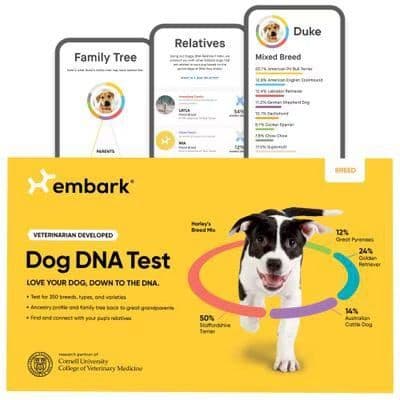
For ancestry and selected health information, compare the scope of the Embark Breed and Health Dog DNA Test Kit with the separate Embark Breed Identification Dog DNA Test Kit. A test choice should match the question being asked. Neither product replaces parent records, physical examination, or the health-screening recommendations for both reported breeds.
Petful may earn a commission when you click through to Chewy, at no extra cost to you.
Sporting and working crosses
- Similar energy labels can hide different needs | A dog may inherit chase, retrieval, guarding, herding, scenting, or environmental vigilance in different combinations. More exercise alone does not resolve fear, frustration, guarding, or inability to settle.
Labrador, Golden Retriever, German Shepherd, Border Collie, Australian Shepherd, and Boxer crosses can mature much larger than a Shiba. They may also bring different social expectations, working drives, body shapes, and training styles. The household should prepare for the larger plausible adult rather than buy equipment for the appealing puppy-size estimate.
Activity planning should include:
- Daily movement appropriate to age and joint condition.
- Scenting, retrieving, herding-style games, or task work only when the individual enjoys them safely.
- Impulse-control practice around movement, people, food, and other dogs.
- Protected sleep and a deliberate transition from activity to rest. For a defined resting place, compare a removable-cover option such as the FurHaven Velvet Waves Perfect Comfort Orthopedic Sofa Cat & Dog Bed by usable dimensions, edge height, wash instructions, and the individual dog's preferred sleeping position.
- Strength and coordination on non-slip surfaces rather than repetitive high impact.
Working and sporting ancestry does not guarantee an easy dog-sport partner. A Shiba-like independent style may combine with intense motion sensitivity or high endurance. Conversely, a cross may be moderate and socially easygoing. Test motivation and recovery in small steps instead of committing to an athletic identity before the dog matures.
Larger crosses also change practical handling. Price adult-size crates, gates, vehicle restraints, food, medication doses, boarding, and emergency transport. The Shiba Inu cost guide provides a framework that can be widened for the second lineage and actual adult body.
Likely grooming differences
- A mixed coat is not automatically low shedding | A Shiba crossed with a curl-coated, long-coated, or single-coated breed may still shed, mat, hold moisture, or require professional grooming. Judge the coat that grows on the individual dog.
The Shiba coat is short, dense, and double layered. Another parent can alter length, curl, undercoat density, feathering, face furnishings, skin visibility, drying time, and the way shed hair releases. A Shiba Poodle mix, for example, is not reliably hypoallergenic and may combine shedding undercoat with hair that traps loose fibers and mats.
Build a coat map by checking:
- Behind ears, under collar and harness areas, armpits, groin, thighs, and tail.
- Whether a comb reaches skin after brushing. A tool such as the aumuca Self Cleaning Slicker Brush can be compared by pin length, pressure, coat reach, and skin response before deciding it belongs in the routine.
- How quickly tangles return and which activities create them.
- Time required to rinse and dry dense areas completely.
- Skin redness, odor, flakes, broken hair, pain, or abnormal hair loss.
Straight double coats often need more work during seasonal coat blow. Longer or mixed-texture coats may require frequent combing and professional trimming. Short coats can still shed heavily or reveal skin problems quickly. Nail, ear, and dental care remain necessary regardless of coat.
Do not shave a healthy double coat merely to stop shedding. For the purebred coat baseline, see Do Shiba Inus shed?. If the mixed coat behaves differently, ask a skilled groomer to demonstrate tools and frequency on the actual dog.
Test the coat-care workload
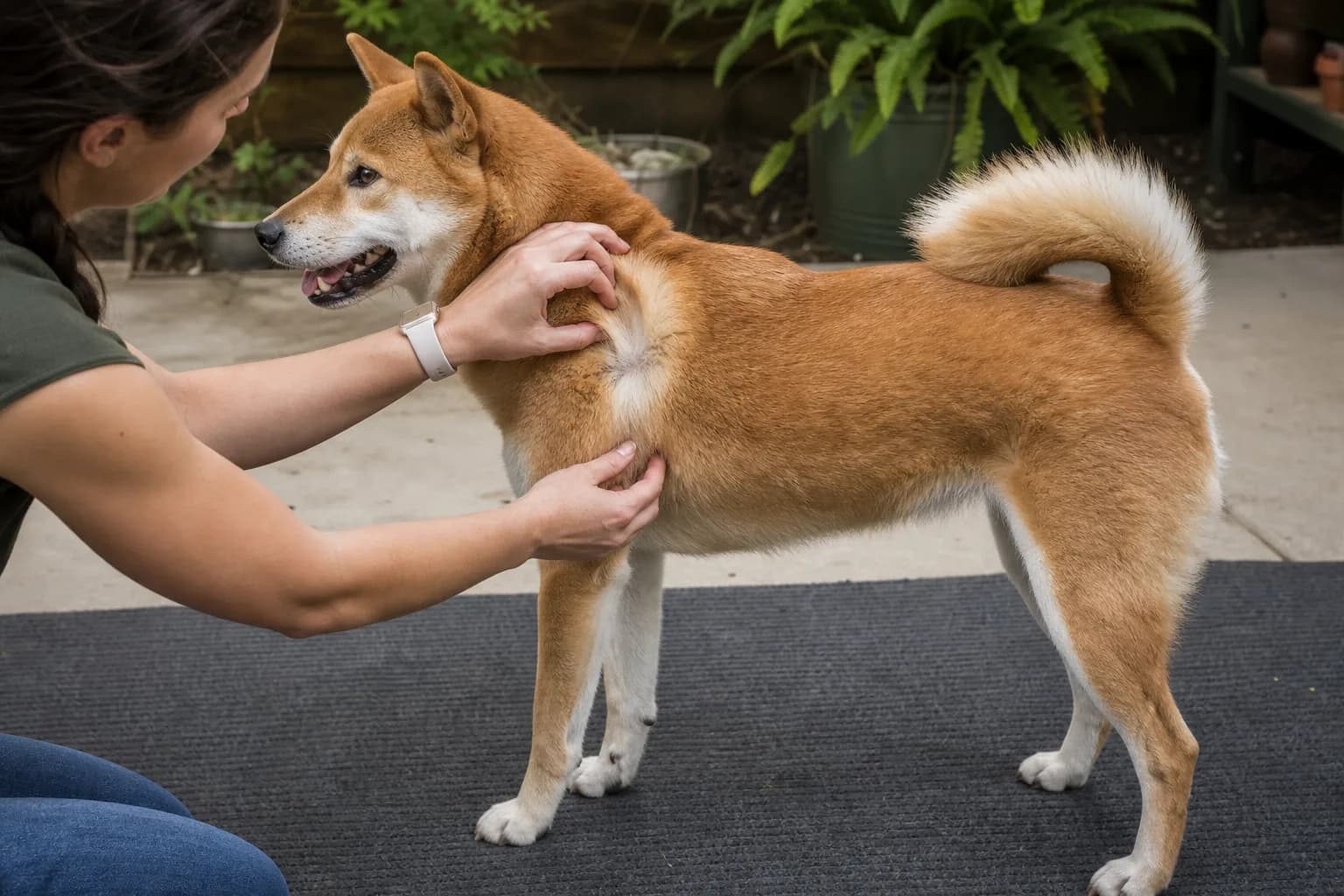
Before deciding that home grooming will be easy, time one complete, gentle session. Begin only when the dog is comfortable and stop before distress. Brush in small sections, then use an appropriate comb to see whether loose hair and tangles remain near the skin. Record the areas the dog avoids and the minutes required.
Use the result to choose a plan:
- A short double coat may need brief weekly checks and much more time during seasonal coat blow.
- A long coat may need frequent line combing behind ears, under legs, and around the tail.
- A curl-and-undercoat combination may need professional intervals short enough to prevent hidden mats.
- A sparse or short single-looking coat still needs skin inspection and protection from extremes.
- A dog that fears tools may need cooperative-care training before coat condition becomes urgent.
Bathing adds a separate workload. Dense mixed coats can require prolonged rinsing and drying, while skin folds or a shortened muzzle can change safe technique. If the coat remains damp at the skin, odor and irritation may follow. Price professional help based on the adult dog, not the puppy's current coat.
Keep coat observations separate from ancestry conclusions. Groom what is present; investigate abnormal hair loss, itching, odor, pain, or sudden texture change with a veterinarian.
Exercise and training range
Exercise needs cannot be calculated by averaging two breed summaries. Age, structure, health, conditioning, weather, and arousal matter. Start with a repeatable routine of walking, sniffing, play, short training, and rest, then adjust from the dog's recovery and next-day comfort.
Useful observations include:
- Willingness to begin and continue activity.
- Coordination, gait, breathing, and heat response.
- Ability to disengage from wildlife or fast movement.
- Interest in food, toys, scent, social play, or access to the environment.
- Time needed to settle after an outing.
- Stiffness, limping, reluctance to rise, or a drop in normal enthusiasm.
Training should make the desired response easy and worth repeating. Use management while door waits, recall games, leash skills, trading, cooperative care, and settling develop. A dog with Shiba independence plus the stamina or sensitivity of another working breed may need especially thoughtful reinforcement and short sessions.
The Wisdom Panel Essential Breed Identification DNA Test may help investigate ancestry, but training decisions should follow current behavior. Recheck a Frisco Padded No Pull Dog Harness against actual chest and neck measurements, coat thickness, gait, and escape risk rather than a breed-size chart.
Adjust one variable at a time
When a dog seems restless or exhausted, changing everything at once hides the cause. Keep a one-week activity record, then adjust one variable such as walk duration, sniffing time, training difficulty, social exposure, or recovery. Compare sleep, appetite, gait, behavior at home, and next-day willingness before making another change.
Separate physical work from arousal. A crowded market may be a short walk but a major emotional load. A quiet scent trail may take longer while leaving the dog relaxed. Fast fetch can create more repetitive impact than a longer self-paced exploration.
A balanced week may include:
- Ordinary leash walks with permission to sniff.
- One or two longer explorations suited to weather and conditioning.
- Brief skill sessions at doors, in the car, and around everyday distractions.
- Food searches, chewing, or puzzle work with supervision. One supervised puzzle format to compare by difficulty, cleaning, frustration, and chewing behavior is the Outward Hound Lick N' Flip Treat Puzzle & Slow Feeder.
- Play that can pause without conflict or frantic grabbing.
- Deliberate low-demand days and uninterrupted sleep.
If the dog remains unable to settle, investigate fear, pain, separation distress, and environmental triggers rather than simply adding mileage. If exercise causes limping, stiffness, breathing difficulty, or an unusual drop in energy, stop and seek veterinary advice.
Size and handling range
Purebred Shibas are compact, but their crosses can range from toy-companion size to large working-dog size. Even known first-generation parentage does not guarantee a midpoint. Sex, family size distribution, body proportions, nutrition, and health all affect the mature result.
Track the dog rather than chasing a predicted number:
- Weigh on the same scale when possible and record the date.
- Measure height at the withers on level ground.
- Recheck neck, chest, body length, and vehicle-restraint fit.
- Feel ribs, waist, abdominal tuck, and muscle instead of judging through coat.
- Photograph a relaxed standing view at useful growth intervals.

Petful may earn a commission when you click through to Chewy, at no extra cost to you.
Handling requirements change with both size and shape. A long-backed small cross may need different stair and jumping management than a square-bodied dog of the same weight. A large Shiba Shepherd or Shibador may require stronger barriers and two-person emergency transport. A short-muzzled cross may be less tolerant of heat or intense exertion.
Growth charts are observation records, not deadlines. Sudden weight change, poor growth, persistent digestive signs, pain, weakness, altered gait, or loss of muscle should be discussed with a veterinarian. The Shiba Inu size and weight guide explains the purebred reference and measurement process, which can be adapted without treating it as the mixed dog's target.
Health questions for both parent breeds
Mixed ancestry can increase genetic diversity, but it does not guarantee freedom from inherited or structural disease. A puppy can inherit risk variants, body proportions, or predispositions from either side. Responsible planning begins with the recommended screening for both reported parent breeds, not a claim that “mixed dogs are healthier.”
For the Shiba side, the National Shiba Club of America's health information discusses breed concerns, and the OFA CHIC program provides a framework for breed-specific health screening. Obtain the corresponding current recommendations for the other parent through its national breed club and established screening organizations.
Ask a source for:
- Registered or otherwise traceable identities for both parents where known.
- Original results with dates, test type, and the organization reporting them.
- An explanation of what was not tested and why.
- Puppy veterinary records, medications, parasite care, and any illness or injury.
- A written return commitment if health or placement fails.
A consumer DNA panel may test selected variants, but it cannot replace hip, eye, cardiac, patellar, or other physical screening when those evaluations are recommended. “Clear DNA” is not a universal health clearance.
Rank health evidence by what it proves
Health language becomes confusing when unlike records are treated as equivalent. Organize the file from strongest identity-bound evidence to broad background information:
- Individual diagnosis or examination: findings from a veterinarian who assessed this dog.
- Original parent screening: named dog, exact test, date, result, and reporting organization.
- Laboratory variant result: a defined genetic variant with stated interpretation and limitations.
- Family history: documented conditions in related dogs, with relationship and source.
- Breed prevalence or guidance: useful background that does not diagnose the individual.
- Seller statement or social post: reported information until supported by a record.
Ask what action each item changes. An orthopedic screening result on a parent informs inherited-risk discussion, while the mixed dog's current limp still needs its own examination. A negative result for one DNA variant does not rule out other causes of the same clinical problem. A breed-club list guides questions but cannot tell you whether this dog is affected.
For puppies, obtain the parents' complete recommended screening before purchase rather than accepting a panel selected for convenience. For adults with incomplete history, create current baselines in mobility, eyes, skin, teeth, heart and lungs as the veterinarian advises, weight, and behavior. Repeat or expand assessment when signs appear.
Keep emergency planning outside ancestry debate. A known cross and an unknown mixed dog need the same prompt response to collapse, breathing difficulty, seizure, severe pain, uncontrolled bleeding, or rapidly worsening distress.
- For an adopted adult with unknown parentage: Focus on a thorough examination, baseline weight and mobility, dental and skin assessment, age-appropriate preventive care, and prompt investigation of change. Seek urgent help for breathing difficulty, collapse, seizures, repeated unproductive retching, uncontrolled bleeding, inability to urinate, severe trauma, or rapidly worsening distress.
Make a one-page health handoff
Mixed-breed uncertainty becomes harder during an emergency when records are scattered. Keep one current summary that can travel with the dog to a sitter, boarding facility, urgent clinic, or new veterinarian. The summary should report facts without turning a suspected ancestry into a diagnosis.
Include:
- The dog's name, microchip number, age estimate, current weight, and usual clinic.
- Medications, supplements, known reactions, diet, and the date each item was last updated.
- Diagnosed conditions and important prior procedures, with the original records attached separately.
- Normal mobility, appetite, elimination, breathing, sleep, and behavior baselines.
- Handling needs, fear triggers, bite risk, escape risk, and the safest restraint approach.
- Emergency contacts, insurance details if applicable, and consent arrangements for caregivers.
Add ancestry results only as background and name the source, such as shelter report, parent records, or a specific DNA product. Do not write “Shiba heart problem” or “Husky hips” when no diagnosis exists. Precise wording helps the veterinary team focus on current signs while still considering family risk.
Review the page after every examination, medication change, move, or new behavior concern. A concise accurate handoff is more valuable than a long folder no one can interpret quickly.
Choosing a responsible source
A responsible source is transparent about uncertainty. It does not guarantee an exact adult look, personality, size, or low-shedding coat from a young puppy. It can document identities, health screening, early veterinary care, living conditions, socialization, placement process, and a meaningful return policy.
Avoid sources that:
- Produce many unrelated “designer” combinations without breed-specific knowledge.
- Use rare-color, miniature, hypoallergenic, or perfect-family claims as proof.
- Refuse to show original parent screening or explain missing tests.
- Keep buyers from seeing how puppies and the dam live.
- Push irreversible payment before contract and identity checks.
- Offer no lifetime path for a dog whose placement fails.
Rescue can be a responsible route even when ancestry is unknown. A foster-based observation of house manners, handling, other pets, and recovery may be more useful than a speculative cross label. Ask which situations have been tested and keep unknowns visible.
Questions for a planned mixed litter
A planned cross should have a welfare reason more specific than producing a fashionable appearance. Ask why these two individual parents were chosen, what difficult traits may combine, and how the source selects homes. The answer should acknowledge uncertainty rather than promising the “best of both breeds.”
Review the litter plan:
- Both parents have traceable identities and the recommended screening for their respective breeds.
- Their temperaments are described from repeated observation, not titles or slogans alone.
- The source can explain pregnancy, birth, neonatal, and emergency veterinary arrangements.
- Puppies are raised with safe household exposure, handling, rest, and individual records.
- Placement does not occur at an inappropriately early age or through anonymous shipping.
- The contract covers health disclosures and return at any point in the dog's life.
Ask how the source would support a puppy that matures larger, more vocal, more predatory, less social, or harder to groom than expected. A responsible answer includes matching, education, referrals, and return support. A sales answer changes the subject back to color or rarity.
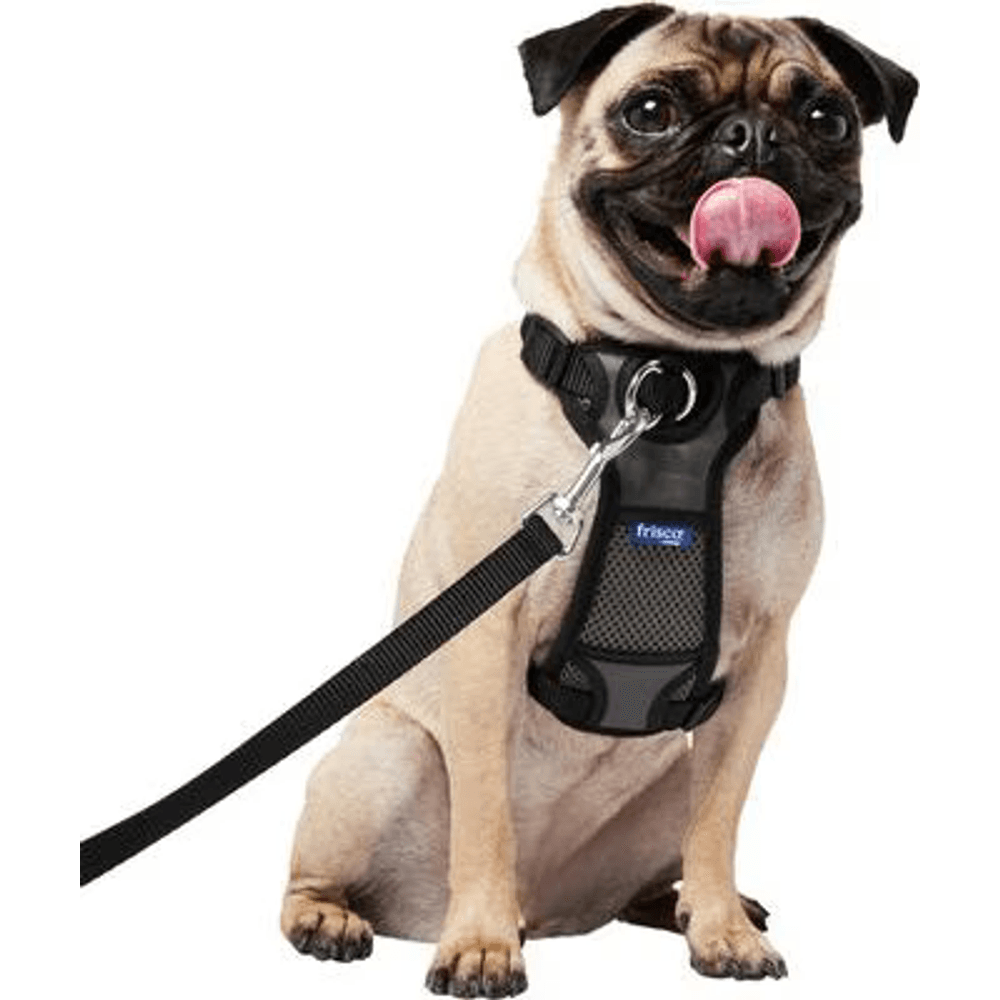
A budget-friendly padded no-pull harness that keeps leash pressure off a coughing dog's neck and windpipe by distributing it across the chest. A simple, affordable way to protect an irritated airway or a collapsing trachea on every walk.
Petful may earn a commission when you click through to Chewy, at no extra cost to you.
Which Shiba Inu mix fits your home?
Fit is a comparison between the individual dog's needs and the household's real capacity. Do not choose only by face shape, size estimate, or resemblance to a favorite breed. Write the weekday plan before committing.
Household scorecard
- Containment: Can doors, fencing, walking equipment, vehicle travel, and identification handle the dog's likely size and escape behavior?
- Activity: Is there time for movement, scenting, training, and rest even on busy days?
- Grooming: Can the household reach skin, prevent mats, dry the coat, and pay for professional help if needed?
- Social setting: Are children, visitors, dogs, cats, and small pets managed with separation and supervision?
- Handling: Can adults build cooperative care and safely move the dog in an emergency?
- Health and cost: Is there veterinary access, a local emergency plan, and room for the wider mixed-breed uncertainty?
The Shiba Inu temperament guide covers behavior questions, while the puppy guide covers first-year development. Use the Shiba Inu colors guide only for the breed's color terminology, not to infer ancestry from appearance.
A good plan works if the dog matures larger, sheds more, needs more training, or becomes less socially easy than hoped. If the match depends on the most convenient outcome in every category, it is not yet a safe match.
Puppy uncertainty versus adult evidence
A puppy offers time to build routines early, but adult size, coat, health, and social behavior are still developing. Parent records and source observations narrow some uncertainty without eliminating it. The household must be able to support the wider range through adolescence.
An adult may arrive with incomplete ancestry while providing better evidence about mature body, coat, activity, handling, and home behavior. Foster observations can be especially useful when they describe specific situations and recovery. Adult behavior can still change after decompression, pain treatment, training, or a new environment.
Neither age is automatically easier. Choose the evidence profile and care demands the household can support. A label-rich puppy with vague records may be less predictable than an ancestry-unknown adult with weeks of clear foster notes.
- Recheck the fit: Revisit the scorecard after settling in, adolescence, a health change, or a move. New evidence should change the plan without changing the dog's worth.
Individual Shiba Inu mix profiles
The profiles below describe planning possibilities, not guaranteed recipes. Cross names are informal, and an individual dog may have additional ancestry. Each profile therefore highlights the most important observations to make rather than promising a fixed result.
Shibsky: Shiba Inu and Siberian Husky
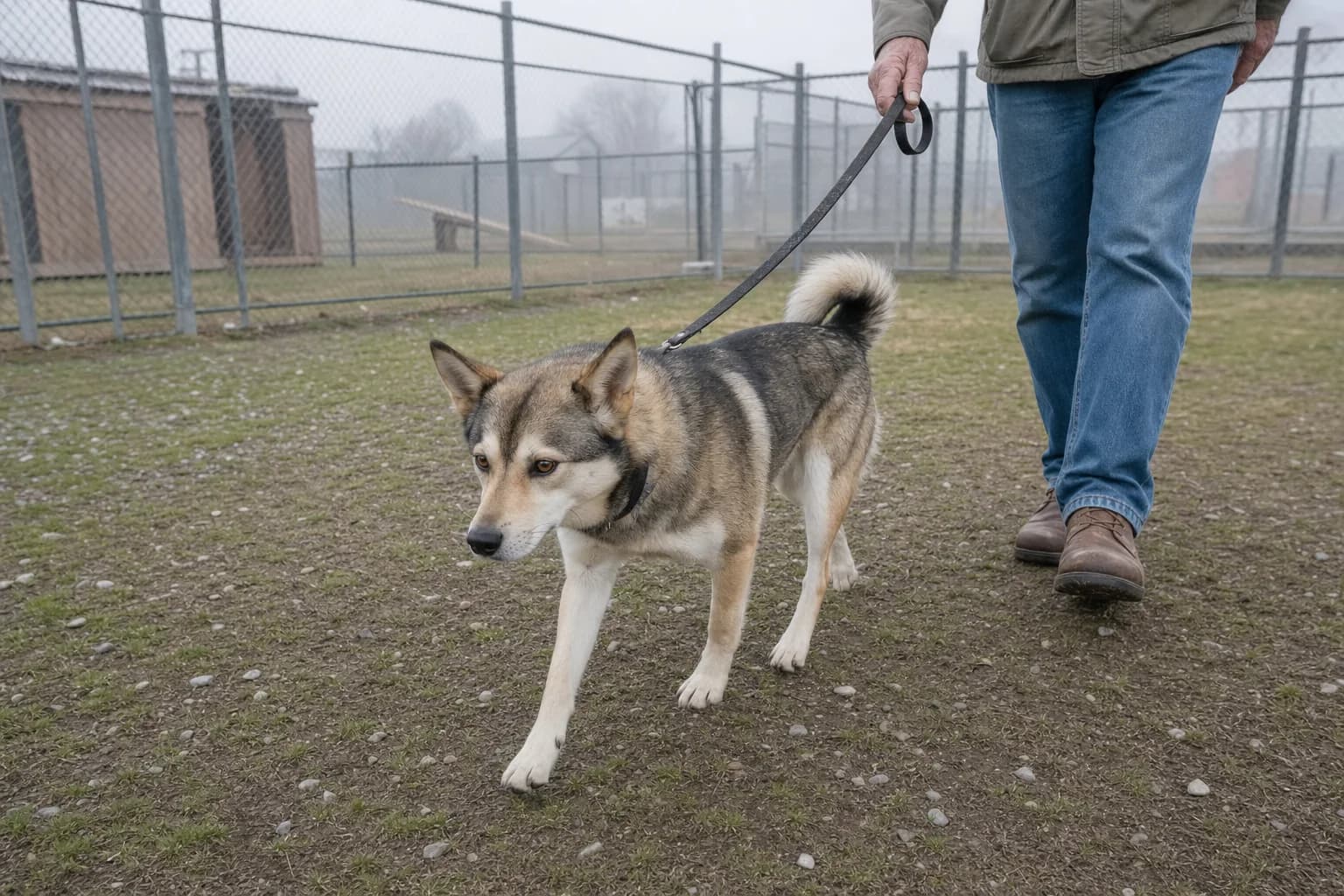
The Shibsky, also searched as a Shiba Inu Husky mix, Husky and Shiba, Shiba Husky, or Shiba Inu Husky, may mature as a medium dog with a substantial double coat. Exploration, chase, vocal behavior, and endurance can be strong, making secure doors, fencing, leash equipment, and identification priorities. For close control around doors and transitions, compare the Frisco Traffic Leash with Dual Padded Handles by hardware, handle comfort, and the individual dog's strength.
Watch heat response, recovery after exercise, comfort with time alone, and whether activity produces a settled dog or escalating arousal. Coat volume and seasonal shedding may exceed the purebred Shiba baseline. Do not assume blue eyes, markings, or erect ears prove the cross.
Corgi Inu: Shiba Inu and Pembroke Welsh Corgi
A Corgi Shiba mix may combine a dense coat with highly variable leg length, back length, chest depth, and adult weight. The cute low outline shown in some listings is not guaranteed, and deliberately selecting exaggerated proportions can create practical mobility concerns.
Keep the dog lean, use non-slip surfaces, and monitor comfort on stairs and after jumping. Movement sensitivity, alert barking, herding-style nipping, and prey interest may occur in different combinations. Choose harnesses and vehicle restraints from the actual body rather than the “Corgi Inu” label.
Shibador: Shiba Inu and Labrador Retriever
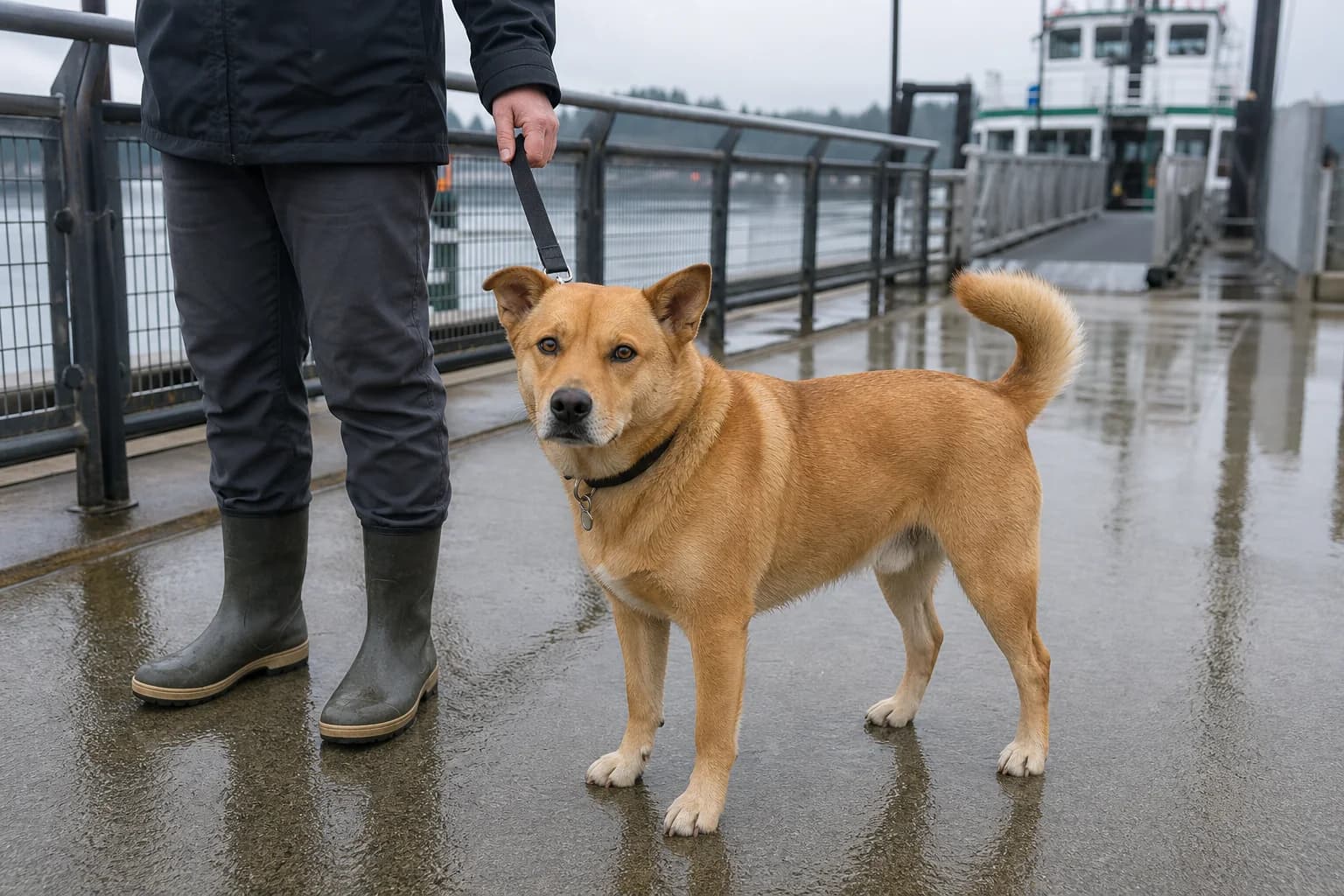
A Shiba Inu Lab mix, Labrador Shiba Inu mix, or Shibador can range from compact medium to substantially larger than a Shiba. Food motivation, retrieving interest, sociability, water enthusiasm, prey behavior, and independence can all vary. Prepare for the larger plausible crate, gate, food, and transport needs. For transport planning, compare the Frisco Travel Safety Dog & Cat Carrier, Medium only when the individual dog can stand, turn, and lie comfortably within the current dimensions and limits.
Observe guarding around food and objects instead of assuming Labrador friendliness eliminates it. Protect growing joints from excessive repetitive impact, maintain a measured body condition, and ask for the health-screening evidence recommended for both reported parents.
Golden Shiba: Shiba Inu and Golden Retriever
A Golden Shiba may inherit a longer or more feathered coat that sheds and tangles, especially around ears, tail, thighs, and harness areas. Social interest can range from outgoing to selective, so the Golden Retriever reputation should not be used as a temperament guarantee.
Plan for medium size, regular coat checks, and daily activity with recovery. Watch how the dog greets strangers, carries objects, handles frustration, and disengages from wildlife. A friendly puppy still needs secure doors and patient recall training.
Shiba Shepherd: Shiba Inu and German Shepherd Dog
A Shiba German Shepherd mix may become a powerful medium-to-large dog with substantial environmental awareness. Stranger response, motion sensitivity, guarding, chase, and vocal alerts need early, careful observation. The household should be capable of managing the larger parent range without relying on force.
Prioritize neutral visitor routines, leash skills, cooperative veterinary handling, and the ability to settle after activity. Ask for parent identities and the recommended orthopedic and other screening evidence from both breed sides. A shepherd-like outline does not establish ancestry or working ability.
Shiba Chi: Shiba Inu and Chihuahua
A Chihuahua and Shiba Inu mix can be small, but the size range and frame may be wider than expected. Handling preference matters because small dogs are often picked up without warning. Teach a cue for lifting, support the body, and let the dog move away from nonessential contact.
Track knee comfort, dental care, temperature tolerance, barking triggers, and safety around larger dogs or young children. A Shiba Chi may be bold, cautious, highly attached, independent, or some changing combination. Plan alone-time skills from observed response rather than a toy-dog stereotype.
Shibakita: Shiba Inu and Akita
A Shibakita may mature much larger and stronger than a Shiba while retaining a dense coat and reserved social style. Adult dog compatibility, stranger handling, resource management, and secure containment deserve particular attention. Puppy sociability does not guarantee adult tolerance.
Use reward-based training, avoid crowded forced greetings, and build veterinary handling before strength becomes a barrier. Prepare for heavy shedding, larger food and medication costs, and equipment suited to the mature body. Ask for documented screening from both parent lines.
Shiba Poodle mix: Shiba Inu and Poodle
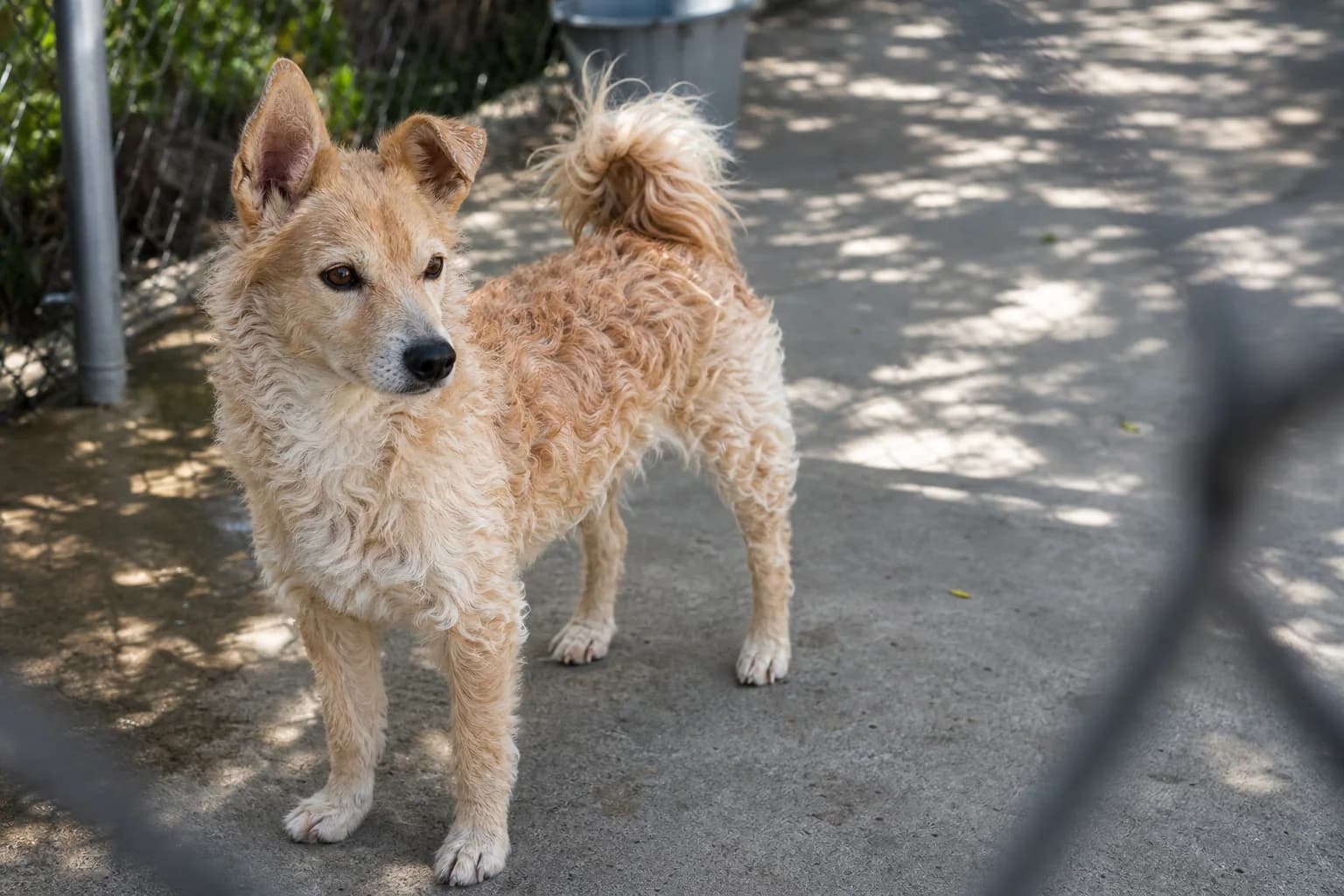
A Shiba Inu Poodle mix may have straight, wavy, curly, or mixed-texture coat with or without undercoat. It is not reliably non-shedding or hypoallergenic. Loose undercoat can become trapped in curl and create mats even when little hair appears on furniture.
Begin combing, dryer exposure, foot handling, and professional grooming visits early and gently. Size depends greatly on the Poodle parent and other ancestry, so “Shibapoo” is not enough for equipment planning. Watch sound sensitivity, social style, retrieving, and motivation without assuming Poodle traits will override Shiba independence.
Shiba Beagle mix: Shiba Inu and Beagle
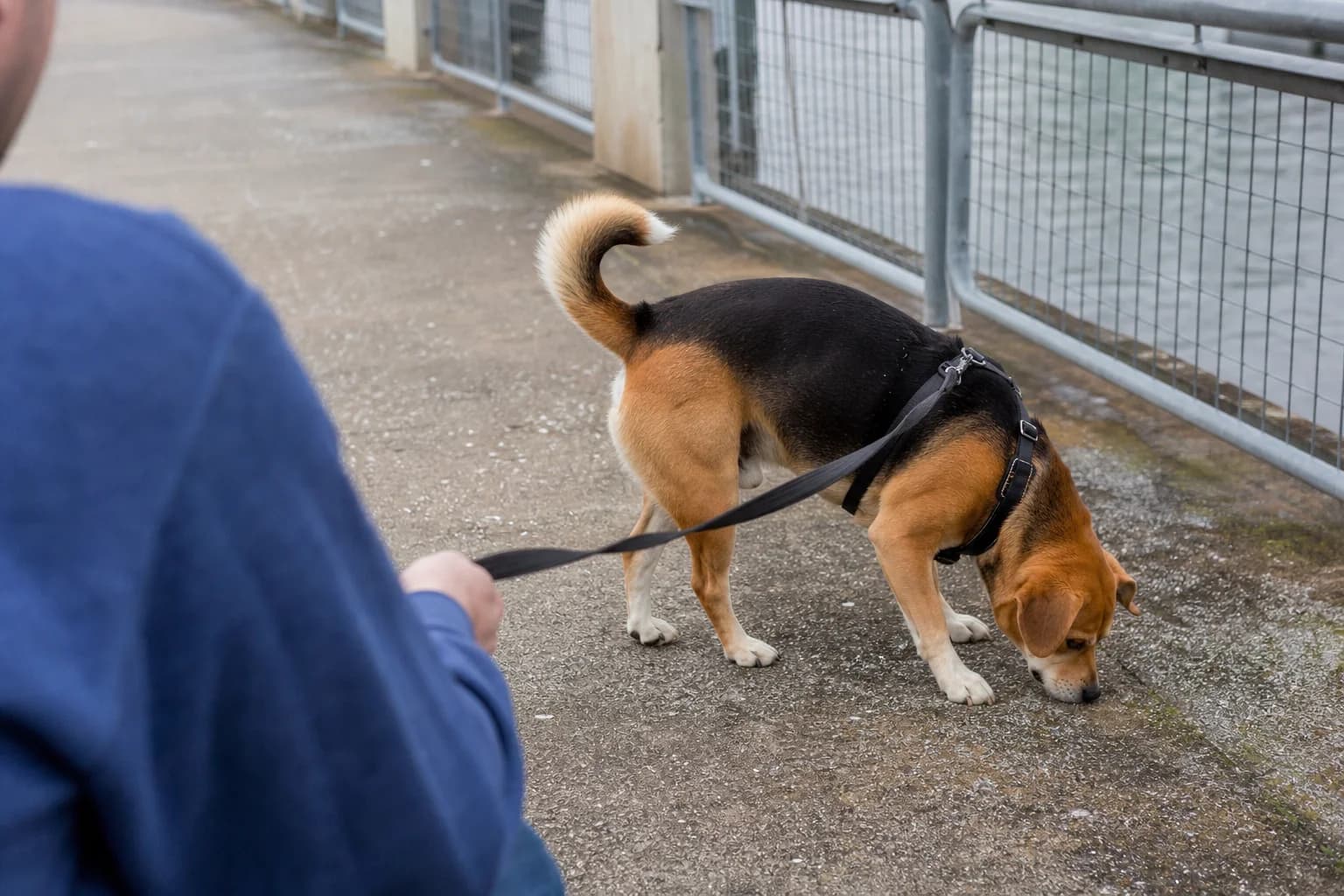
A Shiba Beagle mix may combine visual scanning with persistent scent interest. Secure leashes and fencing are important because a dog following odor can tune out familiar cues. Vocal behavior may include alert barks, bays, protest, or a quieter individual pattern.
Scent games can provide appropriate enrichment, but food access and body condition need management. Practice check-ins and emergency turns at easy distances before expecting them near wildlife. Ask about ear care, mobility, and screening relevant to both reported parents.
Shiba Pug mix: Shiba Inu and Pug
A Shiba Pug mix can inherit a muzzle and airway shape that changes heat and exercise tolerance. Do not assume the Shiba side protects against breathing difficulty, and do not push a dog through noisy or labored respiration. A veterinarian should assess airway, eyes, skin folds where present, weight, and movement.
Use a harness that avoids neck pressure, keep the dog lean, and choose activity from comfort rather than a breed-average schedule. Coat may still shed heavily. Independence, sociability, and handling tolerance remain individual.
Shiba Border Collie mix: Shiba Inu and Border Collie
This cross may combine intense attention to movement with fast learning and strong environmental sensitivity. That can support training, but it can also produce chasing, stalking, spinning, barking, or difficulty resting if every alert is converted into more activity.
Reward disengagement and calm observation, not only high-speed performance. Provide varied mental work, protected sleep, and age-appropriate physical exercise. The dog does not need to become a sport prospect to have a satisfying life, and a Border Collie-like stare does not prove ancestry.
Shiba Australian Shepherd mix: Shiba Inu and Australian Shepherd
A Shiba Australian Shepherd mix may be medium sized with a dense or longer coat and significant motion sensitivity. Herding-style behaviors, guarding, stranger caution, or high social enthusiasm can appear in different combinations. Merle appearance, when present, should not be used as proof of a particular cross without records.
Teach a settle, manage chasing of children or pets, and create structured visitor routines. Ask for complete health-screening evidence on both sides and accurate color information. Coat behind ears, legs, and tail may require more combing than a short Shiba coat.
Shiba Samoyed mix: Shiba Inu and Samoyed
This pairing may produce a medium dog with a very dense coat, substantial seasonal shedding, and poor tolerance for warm-weather intensity. Coat color can range beyond the popular pale social-media image. Drying to the skin and checking for packed undercoat may require time and professional equipment.
Vocal communication, sociability, prey interest, and independence should be observed separately. Plan secure containment and gradual alone-time practice. Exercise in heat should follow the individual dog's breathing, gait, recovery, and veterinary guidance.
Shiba American Eskimo mix: Shiba Inu and American Eskimo Dog
A Shiba American Eskimo mix may be alert, quick to learn, and ready to announce changes around the home. The dog could also be reserved, highly social, or sensitive to noise. Reward quiet reorientation and teach a visitor routine instead of punishing every alert.
Expect a dense coat that may lengthen around the neck, tail, and legs. Comb to the skin, introduce grooming cooperatively, and monitor warm-weather comfort. Adult size depends on the actual American Eskimo lineage and the individual family, not the label alone.
Shiba Spitz mix: Shiba Inu and Japanese Spitz
A Shiba and Japanese Spitz cross may share erect ears, curled tail, and double-coat traits, making visual guesses especially unreliable. Coat length, white presentation, shedding, vocal behavior, sociability, and body size can still differ considerably.
Assess confidence around strangers and dogs rather than assuming a companion-spitz temperament. Secure doors and reward-based recall remain important. If formal ancestry matters, use records or testing while keeping the dog's current care needs independent of the result.
Shiba Basenji mix: Shiba Inu and Basenji
Both breeds are sometimes described as quiet or catlike, but a Shiba Basenji mix is not guaranteed to be silent, clean, independent, or easy indoors. Vocalizations may simply differ from ordinary barking. Escape behavior, chase, frustration, and comfort with handling need direct observation.
Use secure fencing and leashes, build gradual alone time, and provide scenting and movement with a clear path to rest. Coat may be shorter and lower volume, but skin, nails, teeth, and seasonal change still require routine care.
Shiba Dachshund mix: Shiba Inu and Dachshund
A Shiba Dachshund mix may inherit a longer back, shorter legs, or a more moderate shape. Weight control, stair use, jumping, and safe lifting deserve attention even when the dog looks athletic. Use ramps or environmental changes when recommended for the individual body.
Scent interest, digging, alert barking, and prey behavior can be persistent. Train leash and trade skills without forcing the spine or neck. Ask the veterinarian to assess gait, body condition, and any pain, weakness, or reluctance to move.
Shiba Jack Russell mix: Shiba Inu and Russell Terrier
This small-to-medium cross may be fast, tenacious, and highly interested in movement or digging. A compact body does not equal modest activity. Safe outlets can include scent searches, tug with rules, exploration, and short problem-solving sessions, followed by deliberate recovery.
Management around small animals is essential. Practice disengagement at distances where the dog can still respond, and do not test prey compatibility through direct access. Check knee, eye, and other screening evidence relevant to the documented parents.
Shiba Sheltie mix: Shiba Inu and Shetland Sheepdog
A Shiba Sheltie mix may inherit a longer coat, sensitivity to movement or sound, and strong alert behavior. Coat around ears, chest, legs, and tail can tangle while undercoat sheds beneath it. Regular combing and cooperative handling should begin before mats form.
Use distance and rewards around fast children, bicycles, and visitors rather than allowing repeated barking and chasing. Some individuals may be highly responsive to training; others may understand quickly but work selectively. Recovery remains more informative than a broad intelligence label.
Shiba Pit Bull-type mix: Shiba Inu and pit bull-type dog
Searches such as Shiba Inu Pit mix, pitbull Shiba Inu mix, pitbull and Shiba Inu mix, Shiba Pitbull mix, or Shiba Inu Pitbull mix breed can refer to many different dogs because “pit bull-type” is not one uniform ancestry. Size, coat, sociability, strength, and dog compatibility cannot be predicted from the label.
Assess the individual without stigma or false reassurance. Use sturdy equipment, active supervision, gradual dog introductions, and separate high-value resources. Housing and insurance rules may apply based on appearance or reported ancestry, so check them before placement.
Shiba Chow mix: Shiba Inu and Chow Chow
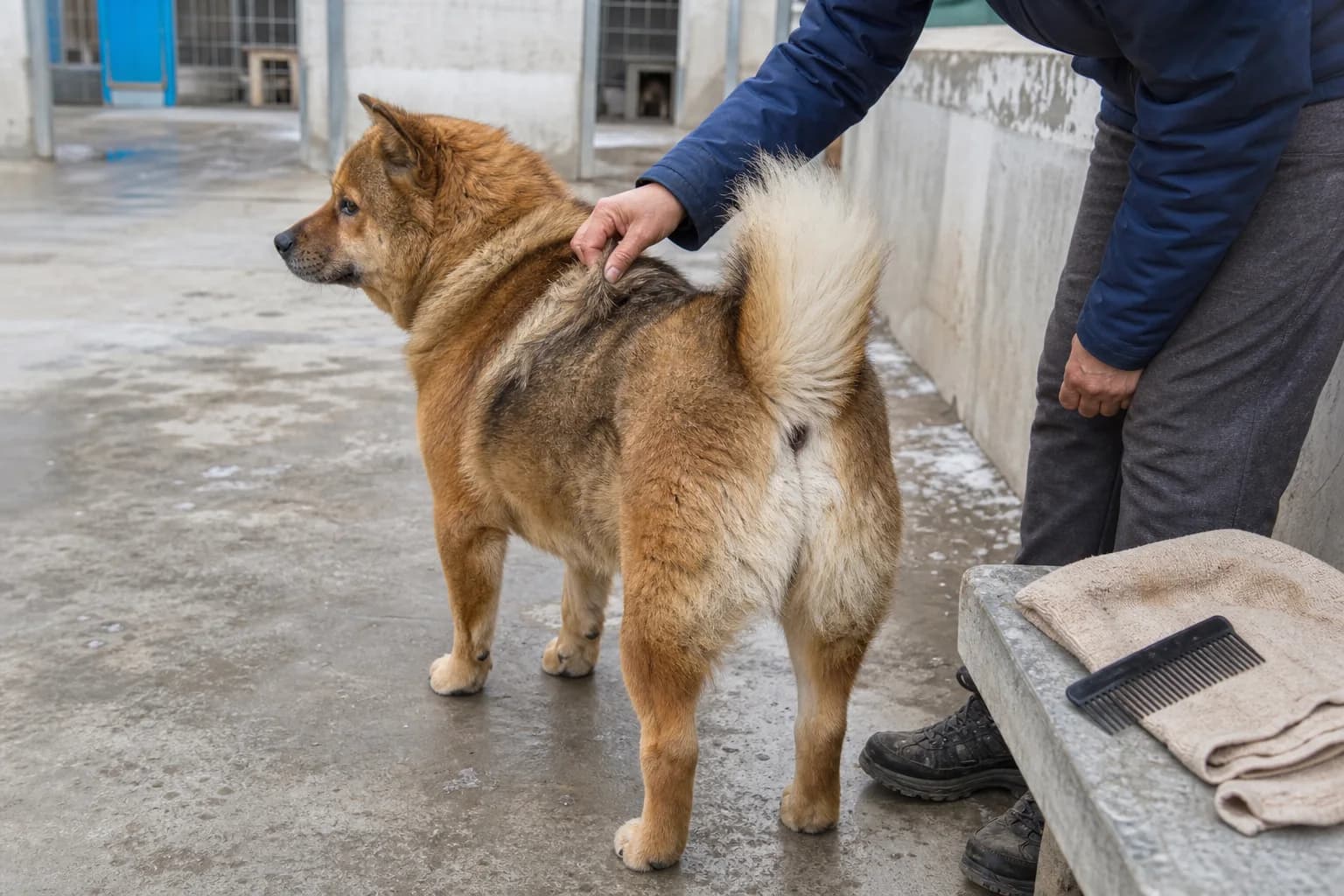
A Shiba Chow mix may have a very dense coat, substantial adult strength, and a reserved response to unfamiliar people or dogs. Coat can hide skin problems and body-condition change, while neck shape may complicate harness fit. Build handling and veterinary positioning with consent from an early stage.
Do not force greetings to make the dog social. Create neutral routines, allow distance, and reward calm choices. Ask for eye, joint, and other screening evidence recommended for both reported breeds.
Shiba Boxer mix: Shiba Inu and Boxer
A Shiba Boxer mix may be medium-to-large, athletic, and physically expressive, with a muzzle and heat tolerance that vary. Some inherit bouncy social play, while others remain selective or independent. Manage jumping and rough play around children rather than expecting maturity to solve it.
Protect growing joints from repetitive impact, maintain a lean body condition, and watch breathing and recovery in warm weather. Secure doors remain important even when the dog appears people-oriented.
Shiba Maltese mix: Shiba Inu and Maltese
A Shiba Maltese mix may remain small, but coat can range from short double coat to longer hair that mats. White or pale presentation does not make the dog a cream purebred Shiba. Face, feet, ears, and harness areas may require frequent combing and stain or skin assessment.
Teach gentle tooth care and handling, provide safe separation from large dogs and young children, and track knee comfort. The dog may be highly attached, independent, vocal, quiet, playful, or cautious, so alone-time and visitor plans should follow observed behavior.
Shiba Pomeranian mix: Shiba Inu and Pomeranian
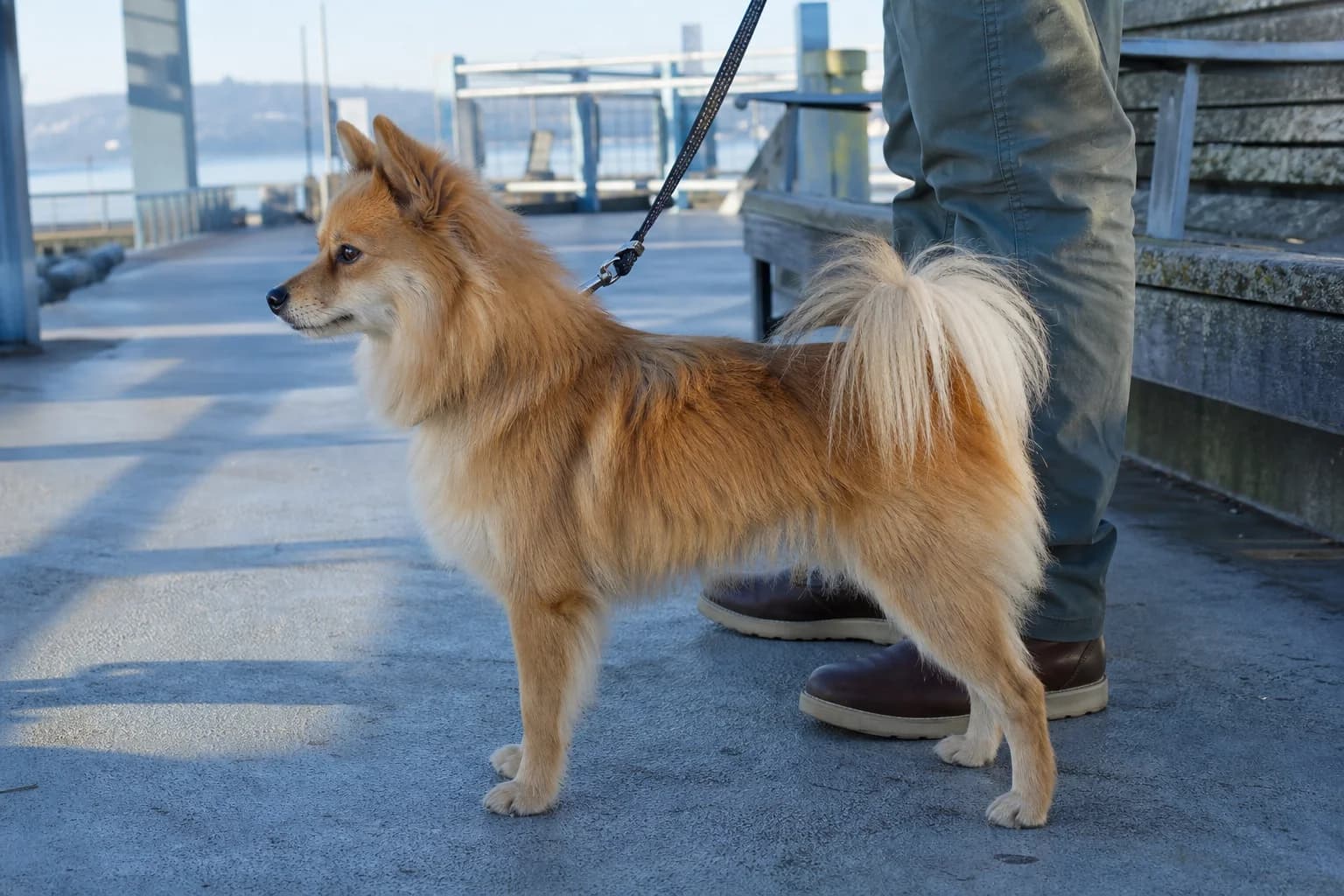
This cross may be small with a plush double coat, but adult size, muzzle, leg structure, and coat volume are variable. Heavy seasonal shedding can combine with longer hair that tangles. Use a comb to check skin and introduce grooming without prolonged restraint.
Alert barking, environmental scanning, escape behavior, and a strong attachment to one person may occur, but none is guaranteed. Secure equipment, careful child supervision, dental care, body-condition monitoring, and gradual alone-time practice are sensible starting points.
Related Shiba Inu guides
- Shiba Inu Breed Profile: Essential Facts
- Shiba Inu Dog Price and Cost: Puppy and Lifetime Expenses
- Shiba Inu Colors: Coat Shades, Markings, and Standards
- Shiba Inu Puppies: Growth, Training, and First-Year Care
- Shiba Inu Temperament: Personality, Training, and Family Fit
- Shiba Inu Lifespan and Health: What Owners Should Know
- Shiba Inu Size and Weight: Growth and Adult Measurements
- Do Shiba Inus Shed? Coat Care and Grooming Guide
Frequently asked questions about shiba inu mix
A Shiba Inu can be mixed with any other breed or mixed population; there is no single standard cross. Labels such as Shibsky, Corgi Inu, Shibador, or Shiba Chi describe reported ancestry, not a guaranteed package of traits. Ask for parent records when they exist, use DNA results cautiously, and assess the individual dog's measured size, coat, health, behavior, and recovery. A visual resemblance alone cannot confirm parentage or predict household fit.
How big a Shiba Inu mix gets depends on both parents, extended family, sex, body proportions, health, and additional ancestry. A cross can mature closer to either parent and need not land at the midpoint. Use the larger plausible range for early crate, barrier, harness, and travel planning, then track height, weight, body condition, and growth with a veterinarian. For an adult rescue, take direct measurements because the cross label may be incomplete or incorrect.
When records are limited, create an evidence file that another caregiver could understand. Include dated measurements, standing photos, veterinary findings, current food, medication, grooming interval, behavior triggers, recovery time, equipment fit, and successful management. Update the file after growth, a move, surgery, a coat change, or a meaningful behavior shift. This does not turn uncertainty into a breed prediction. It gives the household a practical baseline for noticing change, sharing accurate information with professionals, and avoiding repeated purchases or training plans based only on the mix name.

Coreen Saito is a pet writer and longtime shelter volunteer with more than a decade in animal rescue. She covers cat behavior, breed care, and the small, ordinary science of sharing a life with companion animals, with a particular focus on honest takes about the products and decisions that actually matter. At home in Arizona, she's outranked by Mac (a dog with the loudest opinion in the house), Rebel (a cat who governs by quiet authority), and Meri (an orange tabby who runs the late shift and the laundry basket). She writes about all three, plus the rescues that keep coming through her life, at LifeWithMinty.com.
Sign up for expert-backed reviews and safety alerts all in one place.