Shiba Inu Puppies: Growth, Training, and First-Year Care
Shiba Inu Puppies: Growth, Training, and First-Year Care with evidence-based guidance on daily fit, care, costs, training, grooming, health, and the individual decisions that matter most.
Petful is reader supported. As an affiliate of platforms like Amazon and Chewy, we may earn a commission when you buy through links on this page. There is no extra cost to you.
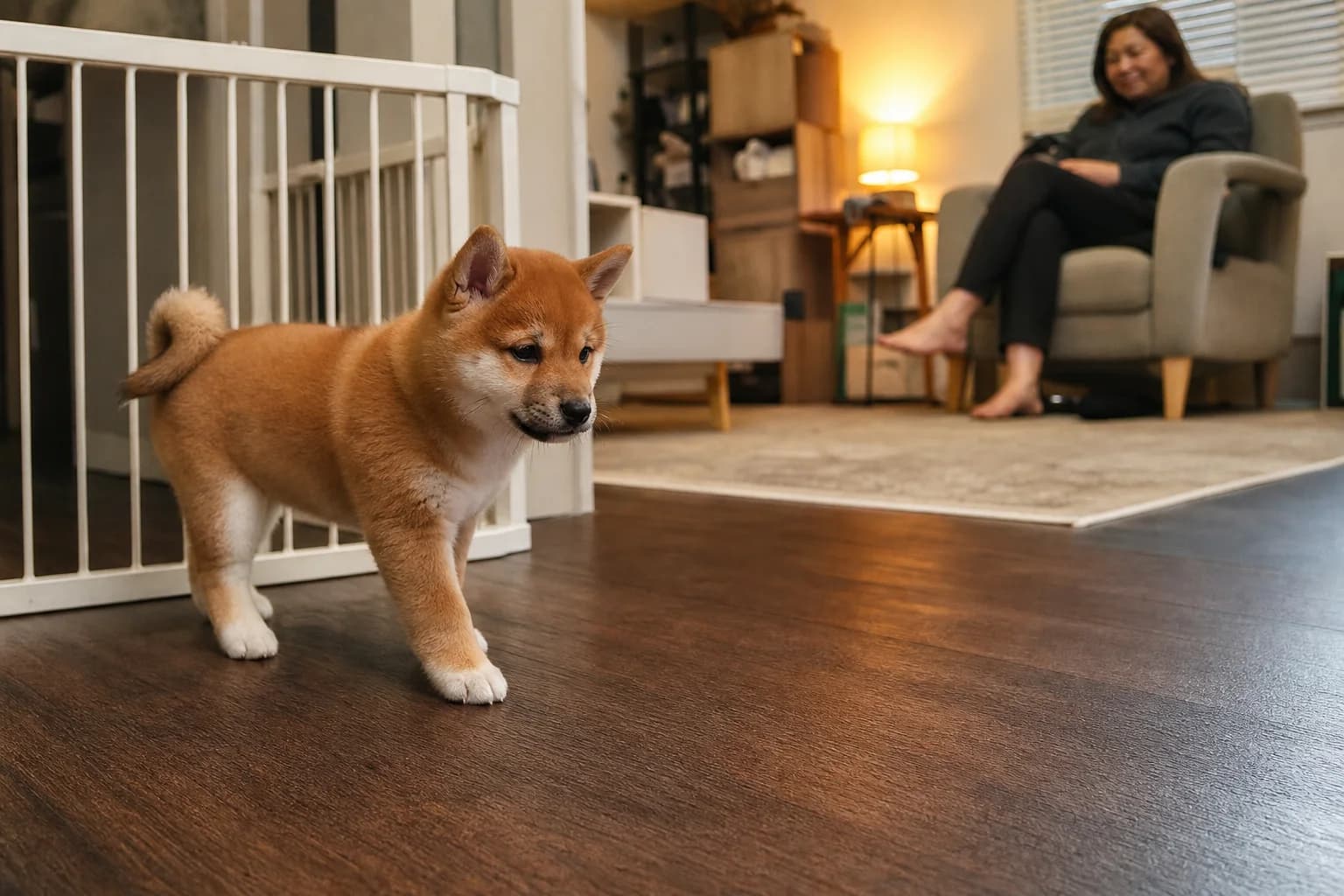
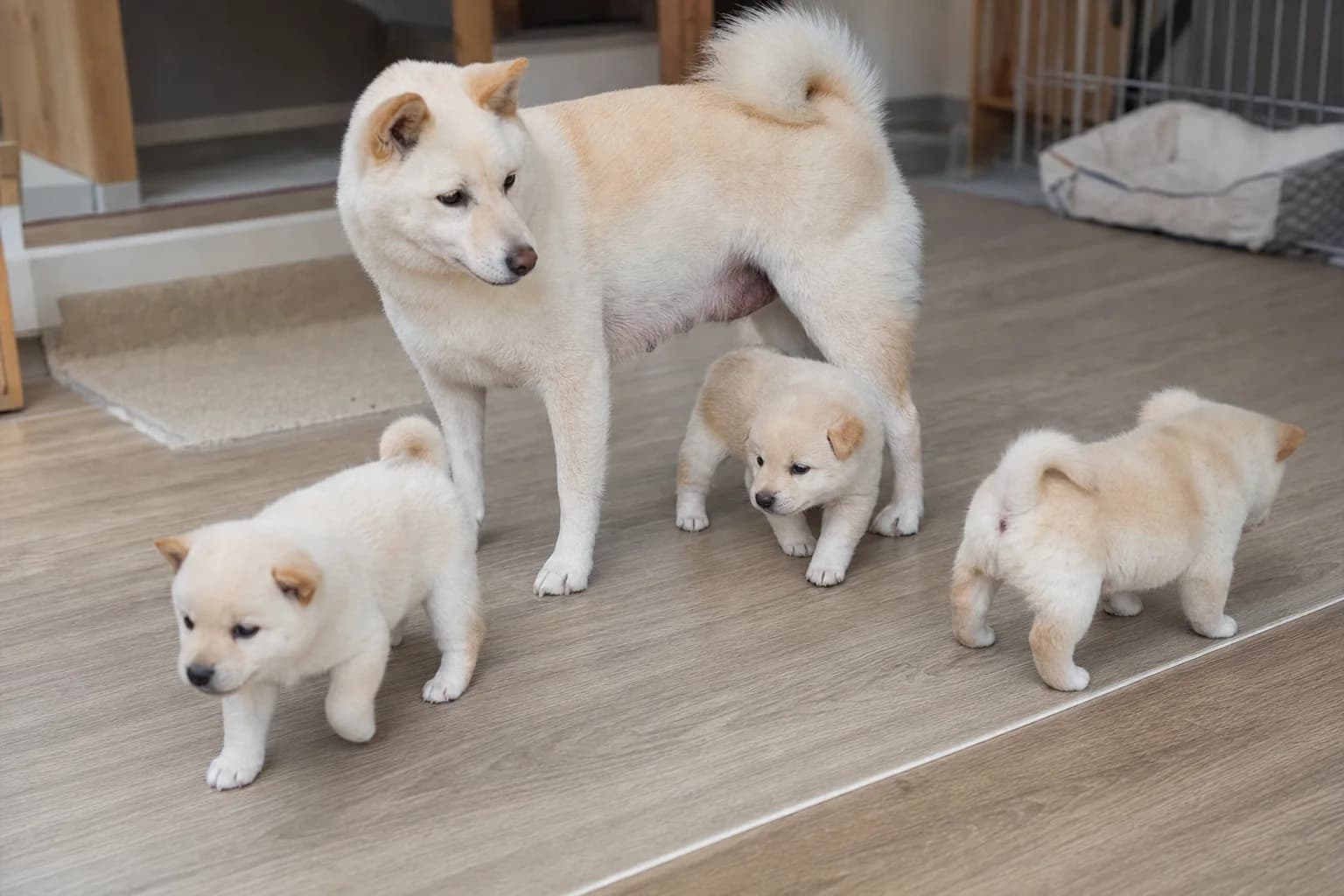
Shiba Inu puppies are bright, observant, and quick to learn which behaviors work. Their first year goes more smoothly when secure door habits, gentle handling, socialization, sleep, house training, and veterinary care are planned before the puppy arrives.
This guide follows the first year from source selection through adolescent training. It uses breed tendencies to prepare, but it does not treat every puppy as identical. Age, health, early experience, confidence, and the household's daily follow-through shape the dog in front of you.

Sign up for expert-backed reviews and safety alerts all in one place.
Shiba Inu puppies at a glance
Prepare secure exits, a quiet sleep area, veterinary and training contacts, and an age-appropriate daily rhythm before pickup day. A Shiba puppy needs reward-based practice, careful socialization with choice, cooperative handling, and realistic expectations through adolescence.
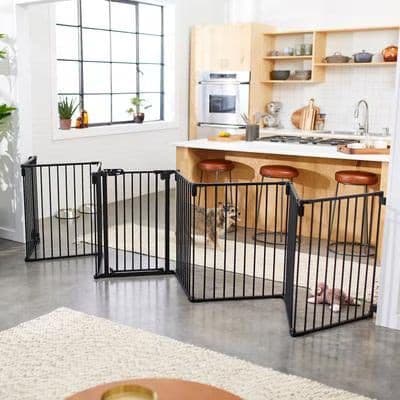
A Shiba puppy is small enough to slip through a loose gate yet confident enough to test one repeatedly. Management comes first: use barriers, leashes, and adult supervision so escaping, chasing, grabbing household objects, or harassing another pet does not become a rehearsed habit.
The first-year priorities are straightforward:
- Build trust through predictable meals, sleep, play, toilet trips, and handling.
- Teach name response, door waits, leash skills, trading, recall games, and settling. For ordinary close-control practice, compare the Frisco Traffic Leash with Dual Padded Handles only after checking hardware, handle comfort, and the puppy's size; it is not a long line.
- Introduce people, surfaces, sounds, travel, grooming, and veterinary handling without flooding the puppy.
- Protect growing joints from repetitive impact and exhaustion.
- Track weight and body condition without forcing a puppy to match a generic chart.
- Keep medical records and call the veterinarian promptly when behavior or health changes.
How much should a Shiba Inu puppy cost? There is no reliable national amount. Adoption and breeder fees vary by location, included veterinary work, parent screening, transport, early care, and support. A high price does not prove responsible breeding, and a low fee does not reveal the full first-year cost. Use the Shiba Inu price guide to compare local acquisition, setup, recurring care, and emergency planning.

Soft-sided travel safety carrier that keeps a stressed cat secure and well-ventilated on the way to the vet, with mesh panels for airflow and a seat-belt loop.
Petful may earn a commission when you click through to Chewy, at no extra cost to you.
Are Shiba Inus good house dogs? They can be, especially when the home provides exercise, enrichment, respectful handling, and secure containment. Many Shibas are naturally clean and settle indoors, but house manners are taught, not inherited. A puppy still needs frequent toilet opportunities, gradual alone-time practice, protection from unsafe chewing, and adults who manage doors rather than trusting impulse control too soon.
A useful readiness test is to write the first 14 days hour by hour. Include sleep, toilet trips, meals, medication if needed, supervised exploration, training, quiet time, travel, and who is responsible when work or school changes the schedule. Add a backup caregiver who understands the same door, leash, feeding, and handling rules. This plan helps prevent exhaustion from being mistaken for stubbornness and keeps the puppy from practicing unsafe behavior while the household improvises. It also reveals whether pickup timing should change before a deposit, trip, or work deadline makes the decision harder to reverse.
Breed origin, group context, and coat colors
The Shiba developed in Japan as a small hunting dog able to work through dense cover and mountainous terrain. The National Shiba Club of America describes hunting by sight and scent. In a modern puppy, that history may appear as fast attention to movement, persistence, environmental scanning, or a strong desire to investigate.
History does not dictate personality, but it suggests what to practice early:
- Turning toward the handler when the puppy's name is called.
- Moving away from wildlife, food, and found objects for a worthwhile reward.
- Remaining behind a barrier while a door opens.
- Exploring new places on secure equipment instead of being carried into every experience.
- Resting after excitement rather than receiving constant stimulation.
The official breed standard recognizes red, black and tan, and sesame with urajiro markings. Puppy coat can lighten, darken, or change in contrast as adult guard hairs develop. Color does not predict temperament, health, or quality, and an exact adult shade cannot be guaranteed from one early image. The dedicated Shiba Inu colors guide explains standard terms and puppy coat change.
Listings for a “teacup mini Shiba Inu” should be approached carefully. The standard already describes a compact breed with a defined adult height range; a tiny marketing label is not a separate recognized variety or proof of health.
Choosing an ethical source or adoption route
| Identity and records | Parent and puppy identities match original screening and veterinary documents | Dog identity, veterinary history, microchip, and source history are disclosed where known |
|---|---|---|
| Behavior information | Early handling and socialization are described with specific observations | Foster or shelter observations are separated from unknown situations |
| Placement support | Written contract, realistic matching, and lifetime return commitment | Clear adoption terms, support contacts, and return process |
| Unknowns | Adult temperament and final appearance cannot be guaranteed | Prior history, parentage, or behavior in an untested setting may remain unknown |
An ethical source welcomes verification. For a breeder, ask for registered identities where applicable and original health-screening results for both parents. The OFA CHIC program explains how breed-specific screening information is organized. A routine “vet check” is valuable, but it is not a substitute for every recommended parent test.
Observe how puppies and the dam live. The area should be clean without being socially barren. Puppies need safe exposure to normal household life, varied surfaces, gentle handling, and individual rest. Ask what has actually occurred rather than accepting a generic claim that puppies are “fully socialized.”
For adoption, learn which facts come from a foster home, a shelter observation, prior records, or an assumption. Ask about handling, confinement, eating, toilet habits, other animals, children, sounds, travel, and recovery after stress. Unknown does not mean bad, but it should shape the transition plan.
Petful may earn a commission when you click through to Chewy, at no extra cost to you.
- Walk away when: identity is vague, payment is rushed, parent results cannot be verified, or a return commitment is missing. Choose the puppy whose needs fit the home, not the photograph that creates the strongest urgency. If you search for Shiba Inu puppies for sale or a Shiba Inu rescue, treat the listing as the start of verification rather than proof of source quality, availability, health, or fit.
The first week at home
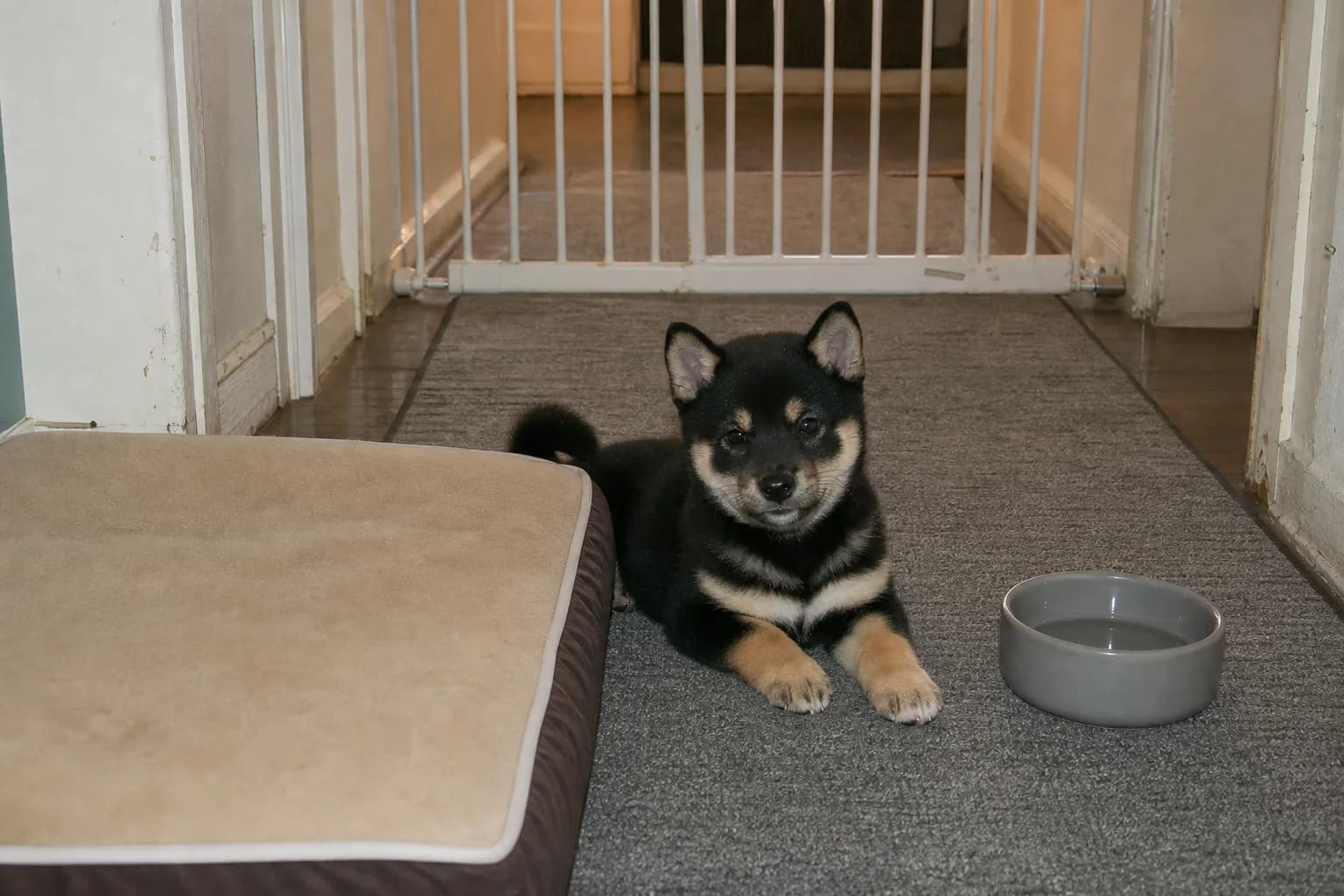
The first week should be quieter than many families imagine. A puppy has lost familiar dogs, scents, surfaces, and routines. Keep the world small enough to understand: one sleeping area, one toilet route, a limited set of rooms, short play, gentle handling, and plenty of uninterrupted sleep.
Prepare before arrival:
- Remove cords, toxic foods, medications, small objects, and valuable chew targets.
- Check fence gaps, door latches, balcony access, and spaces behind furniture.
- Choose a crate, pen, gate, or puppy-safe room for gradual separation.
- Continue the current food initially unless the veterinarian advises a change.
- Book the first veterinary visit and bring every record from the source.
- Decide which adults handle night trips, mornings, training, and emergencies.
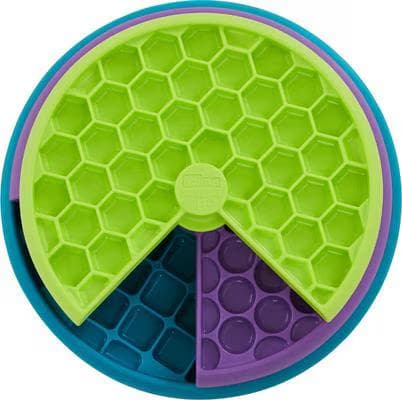
A Frisco Padded No Pull Dog Harness is one walking option to compare after measuring the puppy and confirming that the neck, chest, and shoulders move comfortably. The Outward Hound Lickin Layers Puzzle and Slow Feeder may provide supervised food enrichment once its size, difficulty, and cleaning needs suit the puppy.
Introduce the name, toilet area, resting place, and household members without demanding performance. Reward voluntary approaches and calm check-ins. Visitors can wait. A secure puppy who is allowed to sleep and observe will learn more than one passed from person to person all day.
What to record during the transition
A brief first-week log helps the veterinarian and trainer distinguish a pattern from one stressful moment. Record meal amounts, water intake, toilet trips, stool quality, sleep, play, vomiting, medication, and any event that frightened the puppy. Add the time and what happened just before a behavior rather than writing only “good” or “bad.”
Behavior notes should stay descriptive:
- “Backed away when a hand reached over the head, then approached when the person turned sideways.”
- “Whined for two minutes after the gate closed, ate the food toy, and slept.”
- “Grabbed the leash at the front step after a loud truck passed.”
- “Would not eat breakfast and seemed unusually quiet after vomiting overnight.”
The first three examples can guide training and setup. The last example deserves prompt veterinary contact because appetite and energy changes in a young puppy can become important quickly. The log is not a scoring system; it is a way to communicate accurately and notice change.
Puppy growth and adult size
Growth is a trend, not a race toward one number. The standard lists adult males at 14.5 to 16.5 inches at the withers and females at 13.5 to 15.5 inches, with approximate preferred-size weights of 23 and 17 pounds. Those figures describe mature reference points, not weekly puppy targets.
Track useful information at consistent intervals:
- Weight on the same scale when practical.
- Body condition, including ribs, waist, abdominal tuck, and muscle.
- Appetite and the measured amount actually eaten.
- Stool quality, vomiting, thirst, and energy changes.
- Gait, willingness to rise, and comfort after activity.
A sudden plateau, rapid change, persistent diarrhea, vomiting, poor appetite, potbelly, weakness, or abnormal movement needs veterinary guidance. Do not add calories or supplements simply because an online chart shows a heavier puppy of the same age. The Shiba Inu size and weight guide explains measurement and body condition in more detail.
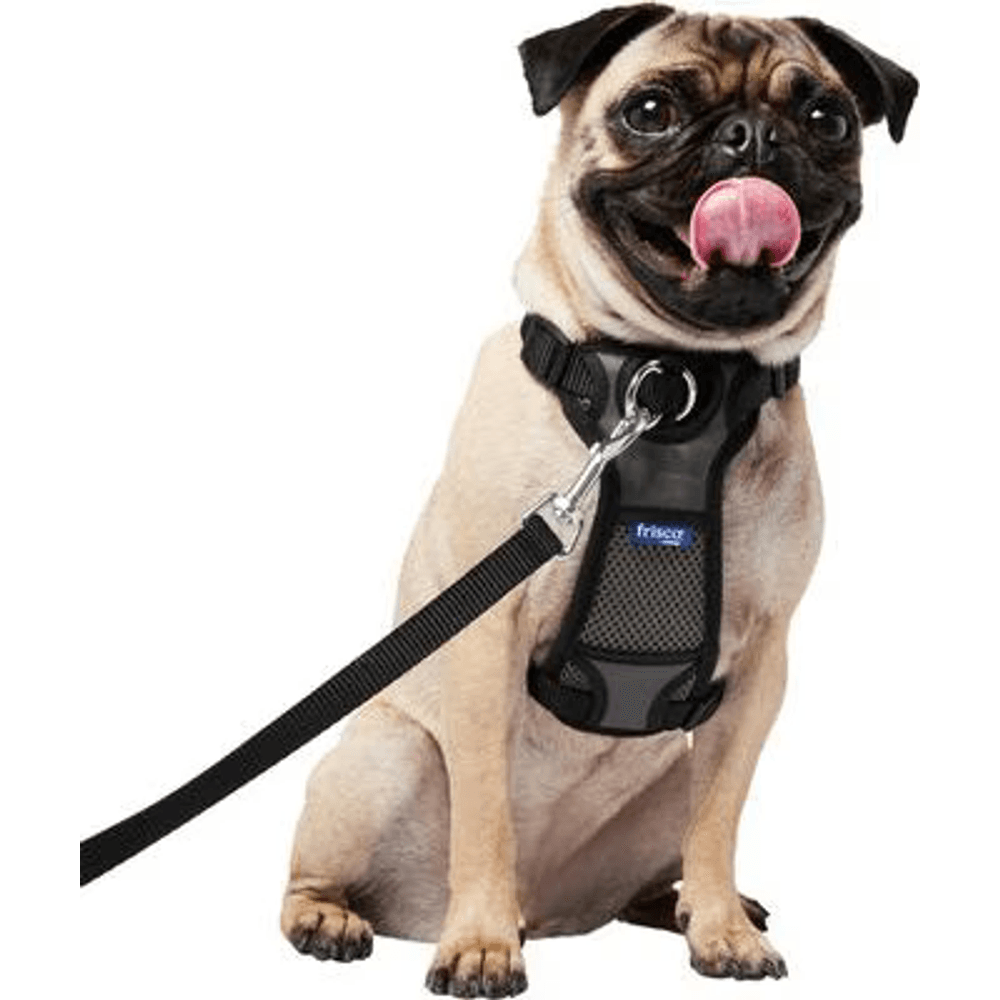
A budget-friendly padded no-pull harness that keeps leash pressure off a coughing dog's neck and windpipe by distributing it across the chest. A simple, affordable way to protect an irritated airway or a collapsing trachea on every walk.
Petful may earn a commission when you click through to Chewy, at no extra cost to you.
For safe transport, a Frisco Travel Safety Dog and Cat Carrier, Medium is one carrier to compare against the puppy's current measurements and the manufacturer's fit limits; it should not be used if the puppy cannot stand, turn, and lie comfortably. A Frisco Steel Configurable Dog Gate and Playpen may suit some layouts when it is stable, correctly spaced, and supervised.
Puppy exercise and safe play
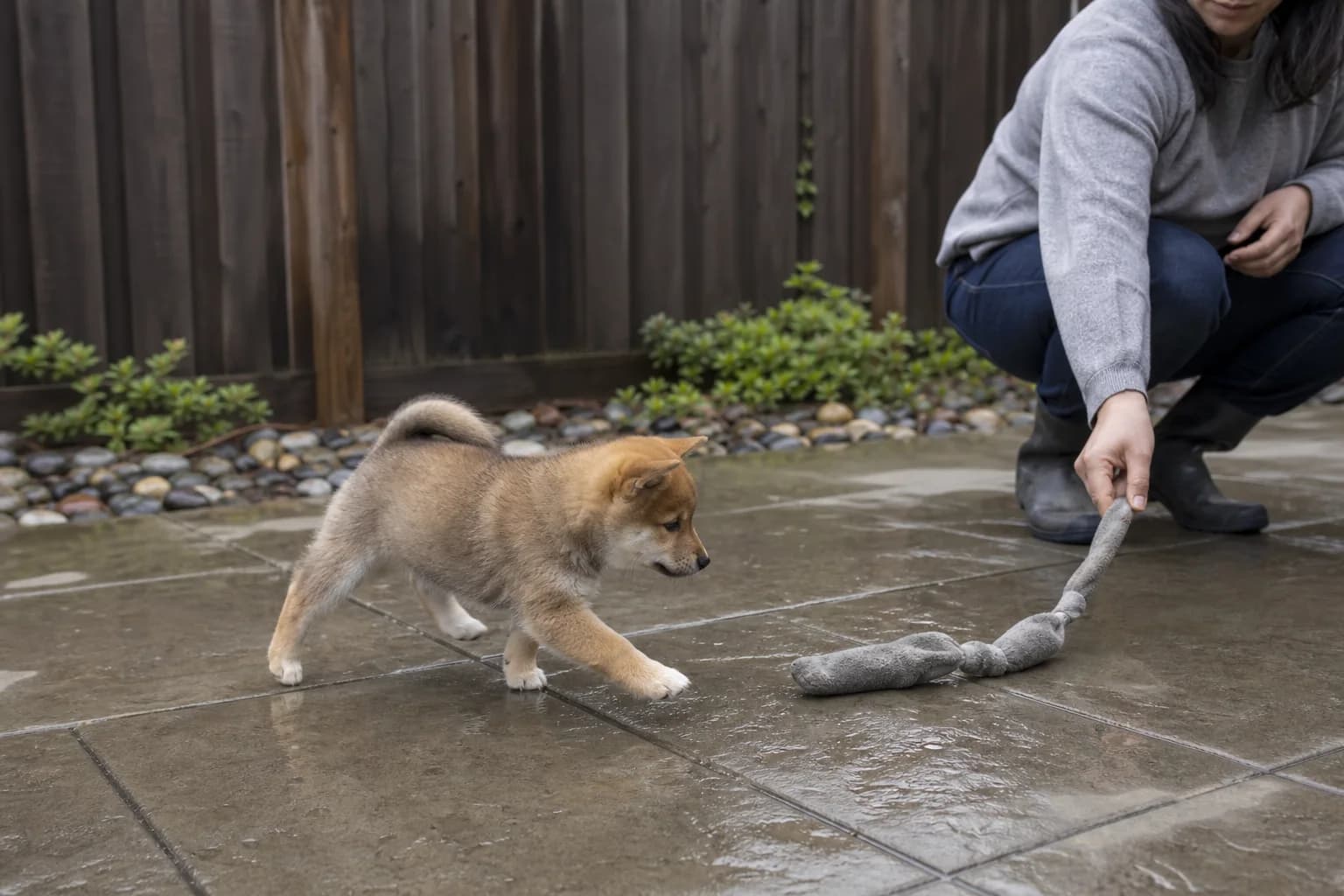
- Fatigue can look like “more energy” | An overtired puppy may become mouthy, frantic, vocal, or unable to settle. End structured play while movement is still comfortable, provide a quiet toilet break, and protect sleep instead of escalating exercise to wear the puppy out.
Puppy exercise should be varied and self-paced rather than repetitive. Short walks, sniffing, gentle play, exploring safe surfaces, and a few minutes of training build coordination and confidence. Long forced runs, repeated high jumps, slippery floors, and endless ball chasing can overload a growing body.
Use the puppy's response as feedback:
- Movement remains coordinated rather than sloppy or frantic.
- The puppy can disengage from play and take food gently. If food rewards are appropriate, the Blue Buffalo Nudges Grillers Steak Dog Treats are one option to compare by ingredient list, piece size, calorie load, and the puppy's diet.
- Breathing and behavior settle after activity.
- There is no limping, stiffness, reluctance to rise, or next-day soreness.
- The puppy still gets substantial sleep across the day.
Play between dogs needs matched size, style, and frequent pauses. Interrupt if one puppy repeatedly pins, chases, hides, or tries to leave. Dog parks are not required for social development and can expose a young puppy to uncontrolled behavior and health risks. Ask the veterinarian when and where public exposure is appropriate based on local disease conditions and the puppy's care.
Temperament and household fit
Shiba puppies often combine curiosity with strong preferences. One may investigate every visitor, another may observe from a distance, and another may become social after a warm-up. Avoid labeling a cautious puppy stubborn or an excited puppy dominant. Describe the behavior, setting, distance, recovery, and what happened immediately before and after it.
Family fit depends on daily management:
- Adults control doors, food, high-value items, and contact with other pets.
- Children invite interaction instead of chasing, hugging, lifting, or disturbing sleep.
- The puppy has an undisturbed retreat and predictable quiet periods.
- Other animals keep separate food, beds, and escape routes during introductions.
- Everyone uses the same cues and rewards rather than correcting inconsistently.
The Shiba Inu temperament guide covers independence, affection, prey drive, barking, and family compatibility. Use it to prepare, then judge the individual puppy across several ordinary settings. A source's temperament description is helpful, but behavior will continue developing through adolescence.
Socialization without overwhelm
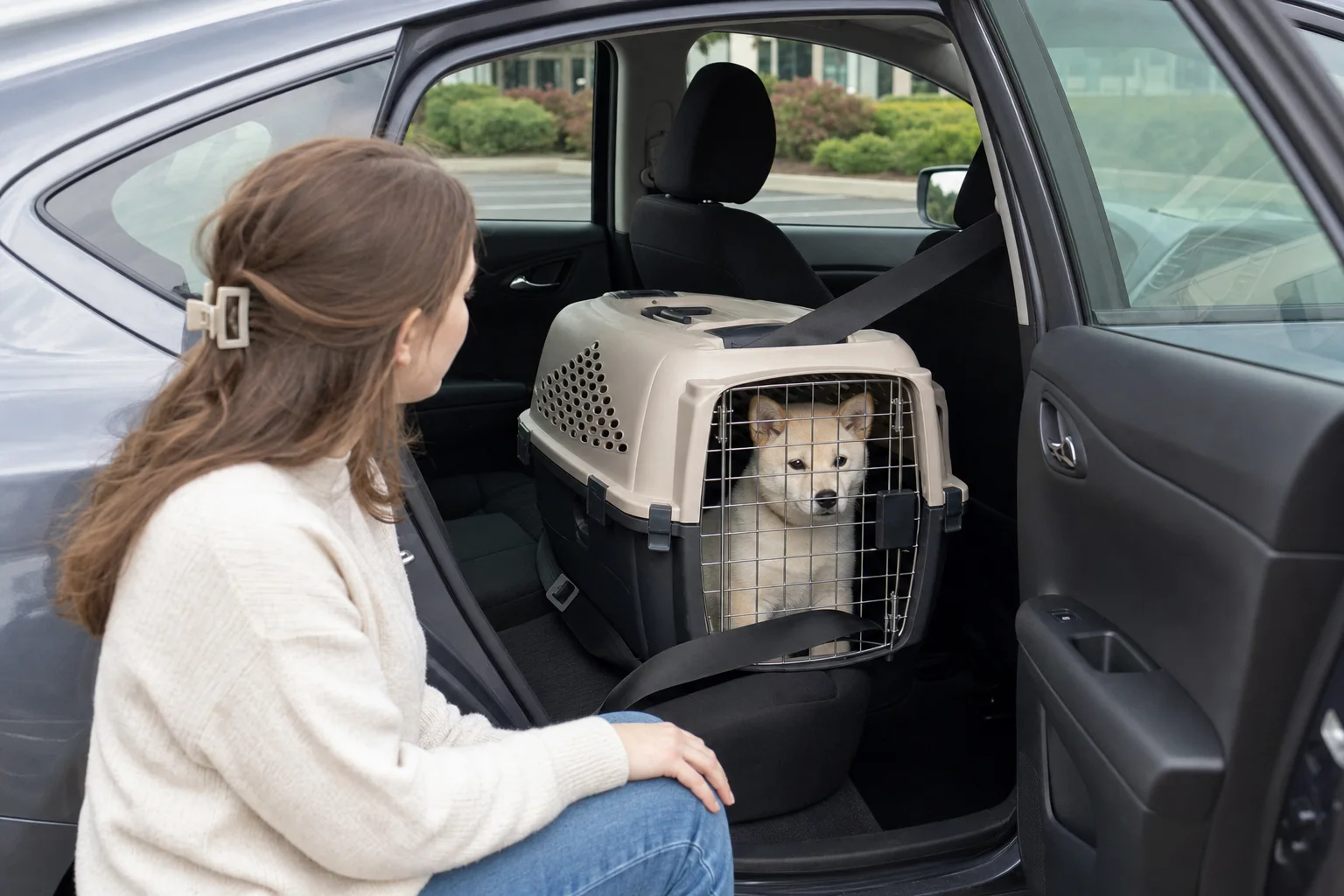
Socialization means helping the puppy feel safe and capable around the world, not forcing contact with every person, dog, or object. Good exposure happens at a distance where the puppy can observe, eat, play, and leave. The goal is flexible recovery, not nonstop excitement.
Create a varied but gentle plan:
Petful may earn a commission when you click through to Chewy, at no extra cost to you.
- People of different ages, appearances, and movement styles who follow the puppy's choice.
- Calm, healthy dogs selected for appropriate behavior rather than random greetings.
- Traffic, household sounds, grooming noises, surfaces, weather, and short car rides.
- Brief handling of paws, ears, collar, mouth, and coat paired with something pleasant.
- Quiet observation outside shops, schools, clinics, or parks without entering a crowd.
Move farther away or end the session if the puppy freezes, hides, refuses familiar food, struggles to escape, or cannot recover. Flooding may create the appearance of exposure while making the underlying fear worse.
For secure outings, recheck the Frisco Padded No Pull Dog Harness as the puppy grows, and stop using it if it rubs or restricts movement. Food-based enrichment such as the Outward Hound Lickin Layers Puzzle and Slow Feeder can support calm time at home when supervised and cleaned after use.
House training and alone-time skills
House training depends on opportunity and supervision. Take the puppy to the chosen toilet area after waking, eating, drinking, play, and active investigation, plus at intervals the puppy can realistically manage. Reward immediately after elimination. If an accident happens, clean it thoroughly and change the schedule instead of punishing the puppy.
Watch for subtle signals such as disengaging from play, sniffing, circling, moving toward an exit, or becoming suddenly restless. Keep a simple log of meals, water, sleep, toilet trips, and accidents for several days. Patterns appear faster on paper than in memory.
Alone time should also be taught gradually:
- Begin after needs are met and the puppy is calm.
- Use a safe area the puppy already associates with rest and food. A removable-cover option such as the FurHaven Velvet Waves Perfect Comfort Orthopedic Sofa Cat & Dog Bed should be compared by usable dimensions, edge height, wash instructions, chewing risk, and the puppy's observed rest habits.
- Step away for a duration that does not trigger escalating distress.
- Return quietly, then repeat at varied easy intervals.
- Increase difficulty in small steps rather than making the next absence dramatically longer.
Persistent howling, drooling, frantic escape attempts, self-injury, elimination linked to panic, or inability to eat when alone needs qualified help. A camera can show what happens, but it does not solve the emotion.
Feeding and body condition
Feed a complete and balanced food appropriate for growth, using the source's current diet as a starting point unless the veterinarian recommends a change. Transition gradually when possible. Measure portions, include training treats in the daily total, and adjust from body condition and growth trend rather than bowl behavior alone.
Useful feeding habits include:
- Regular meal times that make appetite and toilet patterns easier to notice.
- Separate feeding from other pets to prevent conflict and measure intake.
- Slow-feeding or enrichment only when it does not cause frustration or unsafe chewing. A stuffable option such as the KONG Classic Dog Toy should be sized, filled, and supervised for the individual puppy, then removed if pieces loosen or chewing becomes unsafe.
- No unplanned supplements, calcium, or restrictive diet without veterinary guidance.
- Prompt contact with the clinic for repeated vomiting, persistent diarrhea, marked appetite loss, weakness, or suspected toxin exposure.
You should be able to feel ribs beneath a light covering without pressing hard, while seeing a waist from above and an abdominal tuck from the side. Thick puppy coat can hide gradual change. Ask the veterinary team to demonstrate body-condition scoring on your own puppy.
Coat, nails, and dental habits
The easiest grooming routine starts before it is urgently needed. Practice one or two seconds of touch, reward, and release. Build from shoulder to leg to paw rather than grabbing a foot and holding through panic. The same approach works for ears, collar handling, tooth brushing, and brief coat checks. For coat handling, the Four Paws Magic Coat All-In-One Wet & Dry Dog Glove & Curry Brush is one glove format to introduce on a small area. For mouth handling, the Jasper 360 Dog Finger Toothbrush is one finger-brush format to introduce only after comfortable lip touch.
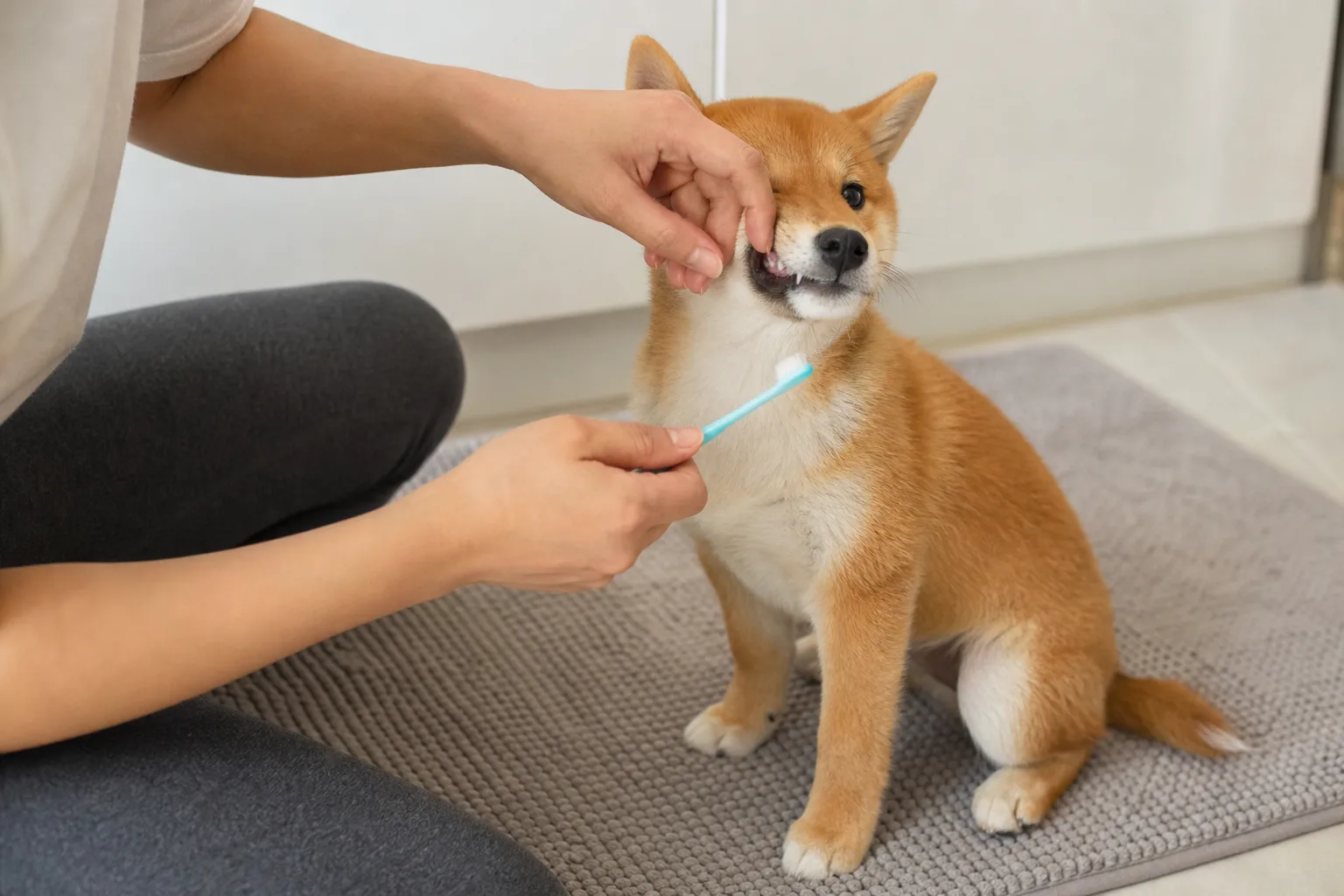
Plan the routine:
- Brush gently and stop if a tool scratches skin or pulls.
- Introduce nail equipment without trimming every nail in one session.
- Use dog-safe toothpaste and begin with comfortable mouth contact. A dog-safe option to compare after veterinary guidance is the Virbac C.E.T. Enzymatic Dog & Cat Toothpaste; human toothpaste is not a substitute.
- Bathe only as needed, rinse completely, and dry dense coat to the skin.
- Check for redness, odor, parasites, pain, broken hair, or unusual hair loss.
Shibas shed year-round and may release much more undercoat seasonally. Do not shave a healthy double coat as a shortcut. If the puppy cannot be handled safely, seek a skilled reward-based groomer or trainer before restraint becomes a repeated fight. The Shiba shedding guide gives a fuller coat-care plan.
Veterinary milestones and warning signs
Bring source records to the first examination and let the veterinary team create an individual plan for vaccines, parasite control, nutrition, dental care, sterilization decisions, and follow-up. Timing depends on age, prior care, health, local disease risk, lifestyle, and the products already used. Do not restart or skip care based only on an online schedule.
Keep a record of:
- Examination findings, weight, body condition, and growth trend.
- Vaccine and medication product names, dates, and due dates.
- Parasite tests and preventive products.
- Microchip number and current registration contact information.
- Diet, reactions, illnesses, and any behavior change around handling.
Seek urgent veterinary help for trouble breathing, collapse, seizures, uncontrolled bleeding, suspected toxin ingestion, repeated unproductive retching, severe trauma, inability to urinate, or rapidly worsening distress. Call promptly for persistent vomiting or diarrhea, poor appetite in a young puppy, marked lethargy, painful movement, or signs of dehydration. Online advice cannot assess a sick puppy.
A realistic first-year plan
A realistic first-year plan is not a checklist that ends at six months. Adolescence can bring stronger exploration, selective responses, renewed sensitivity, and more physical ability to act on an impulse. Continue using management while cues are practiced in gradually harder settings.
Turn the plan into a shared handoff sheet that every caregiver can follow. Record current meals, toilet timing, sleep needs, safe equipment, door rules, veterinary contacts, medication, training cues, useful rewards, known fears, and the next review date. Note what the puppy can do reliably at home and what still requires a barrier, leash, or quieter setting. Update the sheet after growth, illness, travel, a schedule change, or a new behavior pattern. This prevents one successful week from being mistaken for finished training and keeps temporary caregivers from testing skills in unsafe situations. The aim is steady capability with backup management, not an adolescent dog expected to make adult decisions without support.
A simple timeline
- Before arrival: verify source records, puppy-proof the home, choose safe confinement, schedule veterinary care, and assign adult responsibilities.
- First days: protect sleep, establish toilet and meal rhythms, build trust, and keep social demands modest.
- Early months: expand socialization carefully, teach cooperative handling, practice doors and leashes, and track growth.
- Adolescence: reinforce skills around real distractions, revisit equipment fit, preserve calm recovery, and seek help early for fear or conflict.
- Toward maturity: update the cost plan, health baseline, exercise routine, and household rules for the adult dog.
Use the Shiba Inu mixes guide only when mixed ancestry is relevant, and the health, size, colors, temperament, and shedding guides for their owned questions. The best first-year plan is one the household can repeat on a busy weekday, with enough flexibility to respond to the puppy actually developing.
Related Shiba Inu guides
- Shiba Inu Breed Profile: Essential Facts
- Shiba Inu Dog Price and Cost: Puppy and Lifetime Expenses
- Shiba Inu Colors: Coat Shades, Markings, and Standards
- Shiba Inu Temperament: Personality, Training, and Family Fit
- Shiba Inu Mixes: Crosses, Traits, and Care
- Shiba Inu Lifespan and Health: What Owners Should Know
- Shiba Inu Size and Weight: Growth and Adult Measurements
- Do Shiba Inus Shed? Coat Care and Grooming Guide
Frequently asked questions about shiba inu puppies
How much a Shiba Inu puppy should cost depends on location, transport, early veterinary care, registration, parent screening, puppy raising, and support; there is no reliable national price. A high price does not prove quality, and a low fee does not reveal future expenses. Verify records, contract terms, and return support, then build a local first-year budget for veterinary care, food, secure equipment, training, grooming, insurance or emergency savings, and pet care before comparing sources.
You should not let a Shiba Inu off leash in an unsecured area as the default because chase motivation and independent decision-making can overpower a practiced recall. Use a fenced area or secure long line while training recall with valuable reinforcement and increasing difficulty gradually. Do not treat success indoors as proof of safety near traffic, wildlife, or unfamiliar dogs. Follow leash laws, maintain current identification, and use redundant door and gate habits because management protects the puppy when training is not enough.

Coreen Saito is a pet writer and longtime shelter volunteer with more than a decade in animal rescue. She covers cat behavior, breed care, and the small, ordinary science of sharing a life with companion animals, with a particular focus on honest takes about the products and decisions that actually matter. At home in Arizona, she's outranked by Mac (a dog with the loudest opinion in the house), Rebel (a cat who governs by quiet authority), and Meri (an orange tabby who runs the late shift and the laundry basket). She writes about all three, plus the rescues that keep coming through her life, at LifeWithMinty.com.
Sign up for expert-backed reviews and safety alerts all in one place.