Shiba Inu Weight and Size: Growth and Adult Measurements
Shiba Inu Size and Weight: Growth and Adult Measurements with evidence-based guidance on daily fit, care, costs, training, grooming, health, and the individual decisions that matter most.
Petful is reader supported. As an affiliate of platforms like Amazon and Chewy, we may earn a commission when you buy through links on this page. There is no extra cost to you.
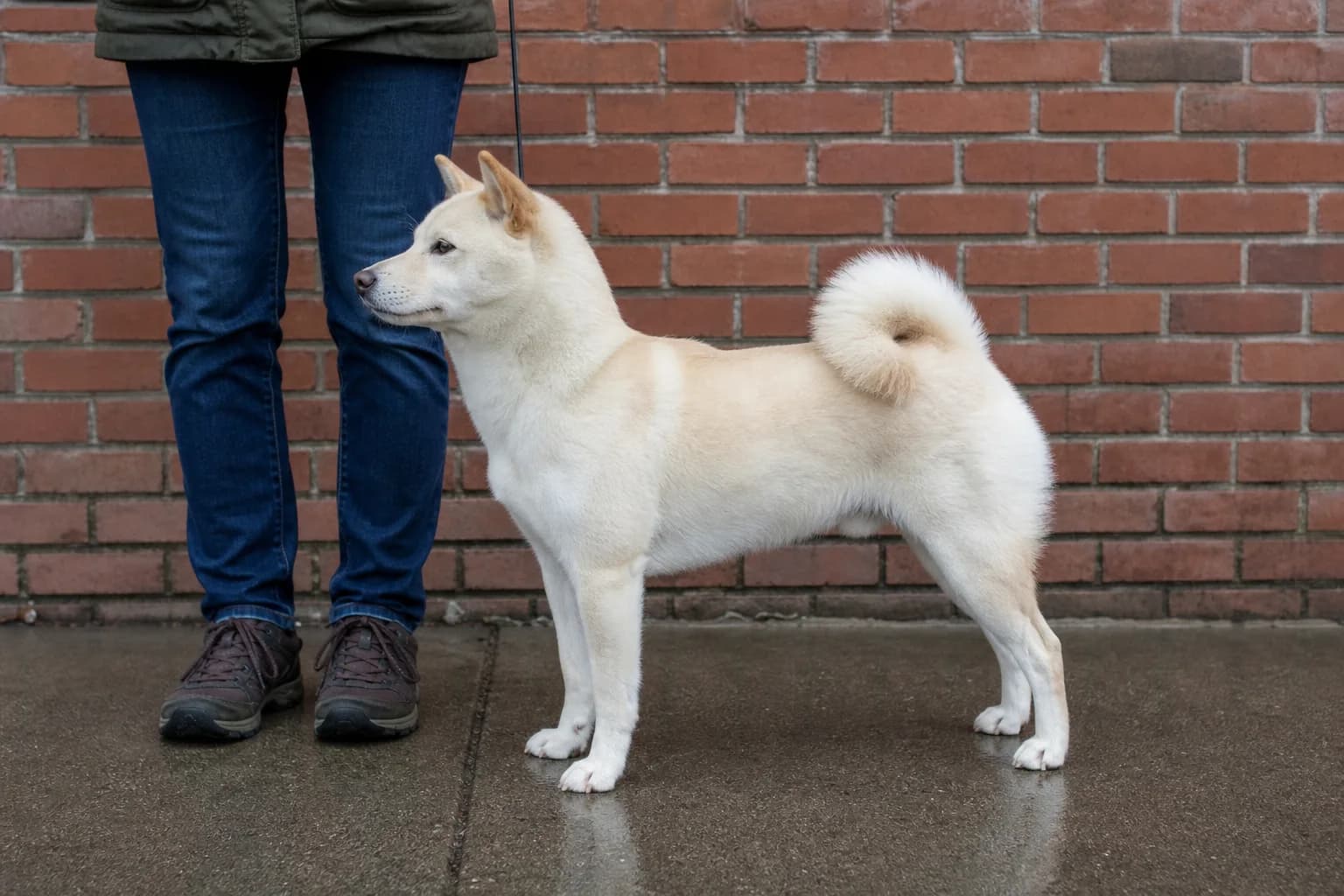
Shiba Inu weight is best understood as a range, not a single number every dog must reach. The breed standard describes adult males at 14.5 to 16.5 inches at the withers and adult females at 13.5 to 15.5 inches. Approximate preferred-size weights are 23 pounds for males and 17 pounds for females, but a healthy individual may differ while still having an appropriate body condition.
This guide explains what full-grown Shiba Inu measurements mean, how to follow a puppy's growth, and how to tell a useful trend from normal day-to-day variation. A scale reading becomes much more informative when it is recorded with age, body condition, appetite, activity, and the method used to take the measurement.

Sign up for expert-backed reviews and safety alerts all in one place.
Shiba Inu size and weight at a glance
- 1A full-grown Shiba Inu is a compact small-to-medium dog, not a large breed.
- 2The standard lists males at 14.5 to 16.5 inches and females at 13.5 to 15.5 inches at the withers.
- 3Approximate preferred-size weights are 23 pounds for males and 17 pounds for females.
- 4Judge an individual dog's weight with body condition, muscle, health, and its own trend rather than forcing it to match an average.
How big is a Shiba Inu full grown? Under the American Kennel Club breed standard, an adult male stands 14.5 to 16.5 inches and an adult female stands 13.5 to 15.5 inches at the highest point of the shoulders. The standard gives approximate preferred-size weights of 23 pounds for a male and 17 pounds for a female. Those figures are reference points for breed type, not a prescription for feeding a dog up or down to a particular number.
Is a Shiba a small or medium dog? There is no universal weight boundary used by every veterinarian, airline, landlord, or product maker. In ordinary pet-size language, the Shiba sits around the small-to-medium boundary. It is substantially more compact than a large dog, so the answer to “Is a Shiba Inu a large dog?” is no. For a carrier, harness, medication, or housing rule, use the provider's stated measurements instead of the broad label.
Soft-sided travel safety carrier that keeps a stressed cat secure and well-ventilated on the way to the vet, with mesh panels for airflow and a seat-belt loop.
Petful may earn a commission when you click through to Chewy, at no extra cost to you.
The AKC's Shiba Inu overview lists a life expectancy of 13 to 16 years. Lifespan does not determine adult size, and a compact frame does not guarantee a particular longevity. Health screening, preventive care, body condition, accidents, and individual disease all matter. Our Shiba Inu lifespan and health guide owns that larger question.
The standard in practical terms
Use this compact reference when reviewing an adult dog:
- Height at the withers: 14.5 to 16.5 inches for a male and 13.5 to 15.5 inches for a female. Measure on level ground with the dog standing naturally.
- Approximate preferred-size weight: 23 pounds for a male and 17 pounds for a female. Compare the figure with body condition and build, not in isolation.
- Overall impression: Compact and well muscled. Look for proportion, comfortable movement, and an appropriate fat cover.
Three distinctions prevent most size-chart mistakes:
- Height is skeletal and changes little after growth plates close. Adult weight can still change with fat, muscle, illness, diet, and activity.
- Breed averages describe a population. Your dog's dated measurements show what is happening to that individual.
- A thick double coat changes the silhouette. Hands-on body assessment is more reliable than judging a Shiba from a photograph.
Adult height and weight
Adult height is measured to the withers, the ridge over the shoulder blades, rather than to the top of the head or ears. A Shiba can raise its head, crouch, lean, or stand on uneven ground, which is why estimates from photos are unreliable. If a precise number matters, repeat the measurement after the dog has relaxed and record both attempts.
Adult weight has a wider practical meaning. Two dogs can have the same height and different healthy weights because one has a broader frame or more muscle. Conversely, two dogs can weigh the same while one carries excess fat and the other is lean and athletic. The preferred-size figures in the standard should never override a veterinarian's assessment of the actual dog.
For a useful adult baseline, record:
- date, age, and whether the dog had recently eaten or eliminated
- scale and location, especially if comparing a home scale with a clinic scale
- weight to the precision the scale can reliably provide
- height at the withers, once the dog is mature and able to stand comfortably
- body condition score and any visible or palpable muscle change
- recent changes in food, treats, exercise, medication, appetite, stool, or health
The practical goal is consistency. Weighing monthly on the same scale may reveal more than several readings taken on unrelated machines in one week. For a healthy adult whose weight has been stable, a measurement at routine veterinary visits plus periodic home checks may be enough. Puppies, dogs on a weight plan, and dogs with medical concerns may need a schedule set by the veterinary team.
Product sizes deserve their own measurements. A Sherpa Original Deluxe Airline-Approved Dog and Cat Carrier should be compared with the dog's current length, standing height, and ability to turn and settle, not only the product's weight limit. “Airline approved” does not guarantee acceptance on every route, so confirm the carrier rules with the airline before travel.
Likewise, choose a Frisco Padded No Pull Dog Harness from the maker's live neck and chest chart. Slide fingers under the straps, check the armpits for rubbing, and watch shoulder movement. A 20-pound Shiba with a deep chest may need a different adjustment than another dog of the same weight.
Petful may earn a commission when you click through to Chewy, at no extra cost to you.
A practical puppy growth timeline
| Age or stage | What to record | What the record can reveal |
|---|---|---|
| 8 to 12 weeks | Weight, appetite, stool, food amount, and adjustment to the new home | Whether the puppy is settling and continuing an upward trend |
| 3 to 6 months | Weight every one to two weeks, body condition, dental changes, illness, and diet changes | Growth spurts, scale variation, and departures from the puppy's own pattern |
| 6 to 12 months | Monthly weight, waist and rib feel, exercise, first heat if applicable, and muscle development | Slowing skeletal growth and changing energy needs |
| 12 to 18 months | Adult baseline, height at the withers, body condition, and stable routine | A practical mature range for future comparison |
A puppy growth chart should describe what happened, not dictate what must happen next. Shiba Inu puppies do not gain an identical amount each week. Sex, parent size, litter history, food intake, illness, parasites, activity, and the timing of growth spurts all affect the curve. Online charts that promise an exact adult weight from one early measurement create false precision.
Start with the records that already exist. A responsible breeder or rescue may have birth information, weights, deworming dates, veterinary findings, food details, and notes about appetite or illness. Add the date the puppy came home, because stress, a food transition, travel, and changes in activity can briefly affect eating and the scale.
The first four months at home
During the early growth period, weigh often enough to notice a pattern without turning every ounce into an emergency. Once every one or two weeks is a practical home rhythm for many healthy puppies, but the veterinarian may recommend more frequent checks for a small, ill, underconditioned, or slow-growing puppy.
Keep each entry short and repeatable:
- Weigh on the same scale at a similar time of day.
- Note the daily food amount and the major treats or chews.
- Record appetite, stool quality, vomiting, energy, and any medication.
- Add a body-condition observation rather than relying on weight alone.
- Flag events such as vaccination, travel, food changes, heat cycles, or illness.
One lower reading can result from a different scale, an empty stomach, or normal measurement error. A flat or falling trend paired with poor appetite, diarrhea, vomiting, low energy, or a visibly thin body deserves a prompt veterinary call.
Six months through physical maturity
Many Shibas approach adult height during the first year, then continue to fill out as muscle and adult proportions develop. Growth is not a switch that flips on the first birthday. An adolescent may look leggy or narrow for a time, and the same dog's calorie needs may fall as rapid growth slows.
Review portions as the puppy matures rather than continuing an early puppy ration automatically. Feed a complete diet appropriate for the dog's life stage, count training rewards as part of daily intake, and ask the veterinarian when to transition from puppy food. The right time depends on the individual and the diet, not only the calendar. If food rewards fit the diet, the Blue Buffalo Nudges Grillers Steak Dog Treats are one option to compare by ingredient list, piece size, and calories before using small training portions.
At roughly 12 to 18 months, establish a mature baseline if the dog is healthy. Record weight, body condition, and a height measurement taken in a calm natural stance. That baseline makes later changes easier to recognize, even if the final number does not match the breed's approximate preferred-size weight exactly.
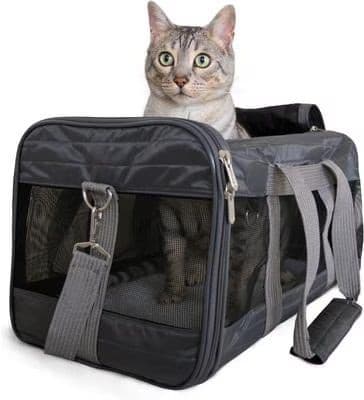
An airline-approved soft-sided carrier with mesh ventilation windows, a top-rated travel pick for cats and small dogs.
Petful may earn a commission when you click through to Chewy, at no extra cost to you.
How to measure height and weight
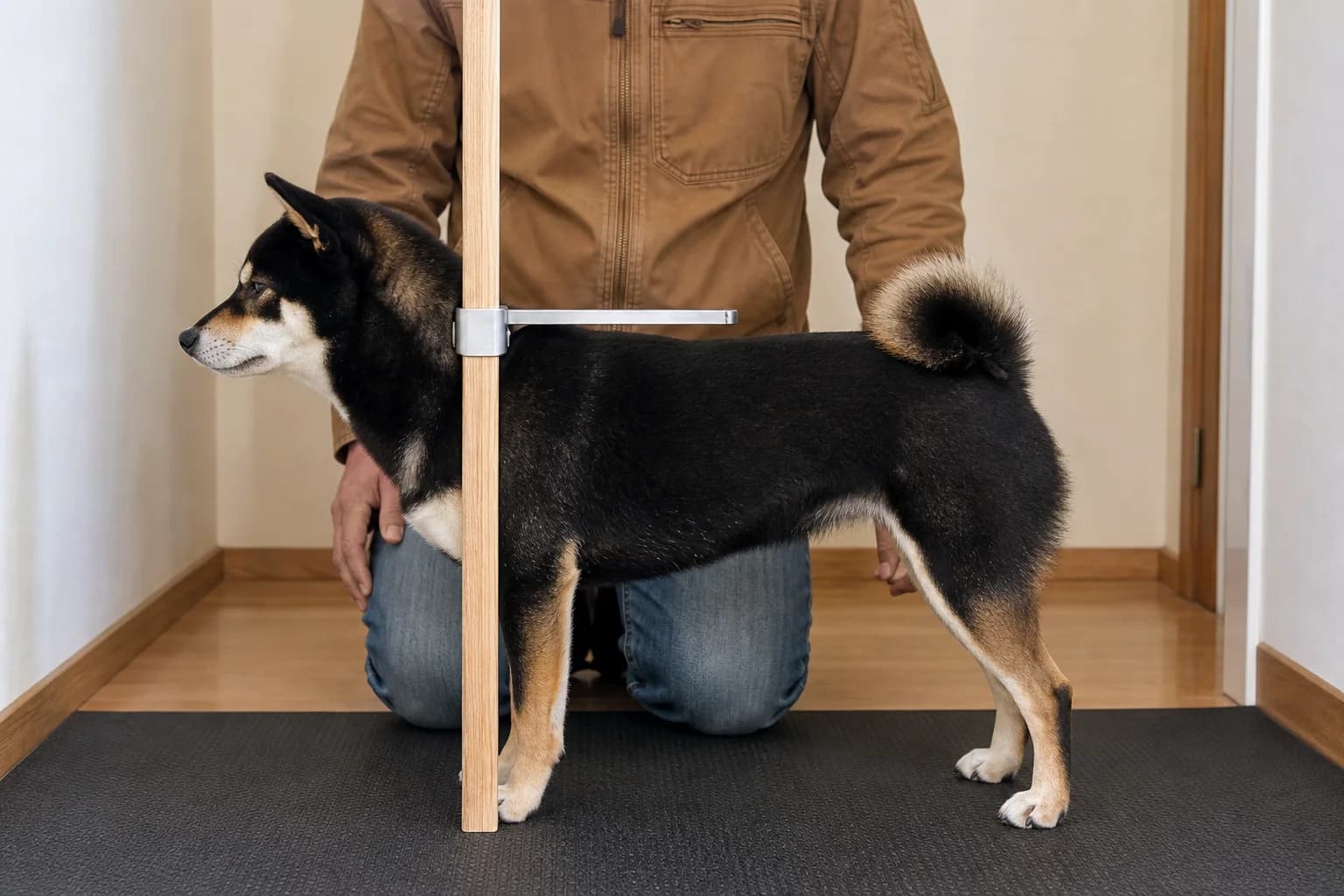
Accurate measurement should be calm, brief, and repeatable. Do not wrestle a worried dog into position for the sake of a perfect number. A rough measurement taken without fear is more useful than a supposedly exact result produced by force.
Measuring height at the withers
You will need a level floor, a wall or doorframe, a carpenter's level or rigid book, and a tape measure. A second person can quietly deliver small treats while the first person measures.
- Let the Shiba stand squarely on all four feet with the head in a neutral position.
- Find the top of the shoulder blades by touch. The ear tips and head do not count.
- Place the level or book horizontally across the withers so it meets the wall at a right angle.
- Mark the wall lightly or hold the intersection point.
- Measure vertically from the floor to that point.
- Repeat once after the dog takes a short break, then record the date and method.
Long nails, a crouched posture, thick carpet, or a tilted book can change the result. If the two readings differ substantially, stop and try on another day rather than averaging obviously poor measurements.
Weighing safely at home
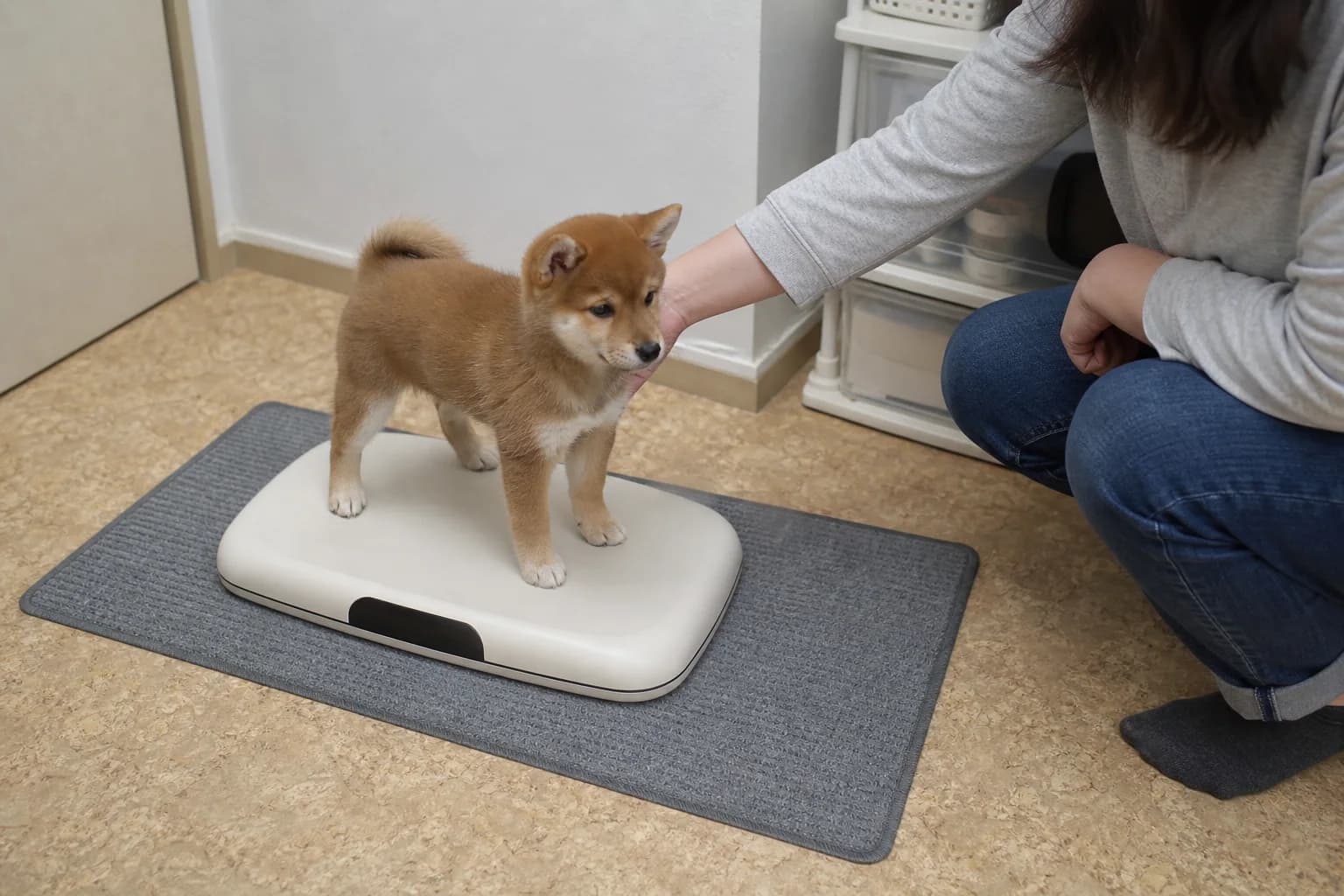
A Shiba that fits securely on a pet scale can be weighed directly. Put the scale on a hard level surface, zero it, and reward the dog for stepping on and standing still. Never place a dog on a high platform without guarding against a fall.
For a puppy or smaller adult, another option is to weigh yourself, then weigh yourself while holding the dog and subtract the first number. This method is less precise because human scales round differently and both bodies move. Use it for trends, not medication dosing or a clinical decision that requires an accurate current weight.
Write down the unit. A pounds-versus-kilograms mix-up can create a dramatic false change. If you switch scales, take an overlapping reading on both when possible so the log shows whether the equipment introduced a difference.
Body condition versus scale weight
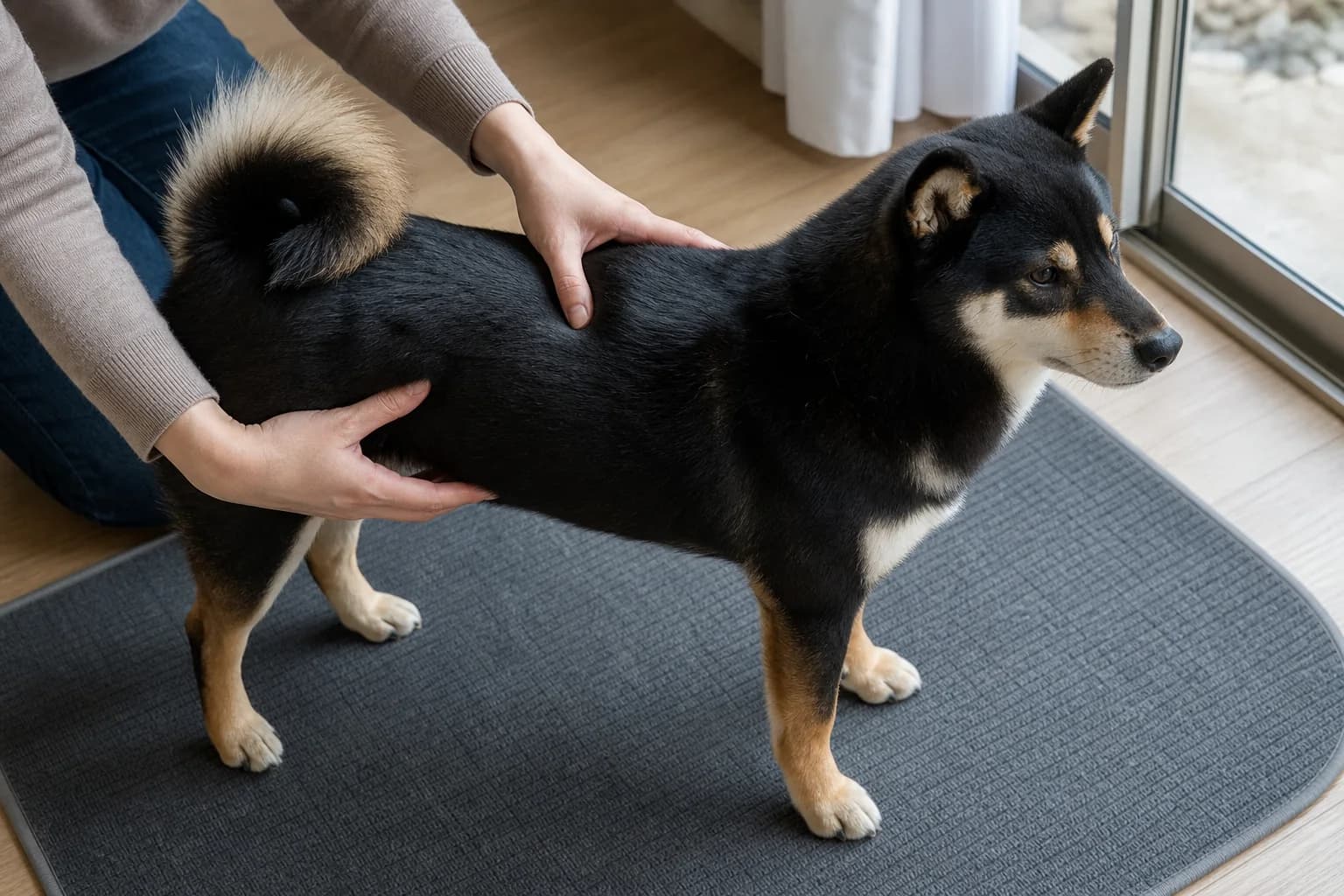
Body condition estimates fat cover, while scale weight combines bone, muscle, organs, water, food, and fat. This is why a number alone cannot show whether a Shiba is too thin, in an appropriate condition, or carrying excess fat. The WSAVA nutrition resources include a nine-point canine body-condition chart; scores 4 and 5 are generally described as ideal, but owners should learn the assessment with their veterinary team.
The Shiba's stand-off double coat can hide the waist and soften the outline. Use sight and touch:
- Run flat fingers over the ribs without pressing hard. In an ideal range, the ribs should be easy to feel beneath a modest fat covering, not sharply protruding and not buried.
- Look from above for a waist behind the ribs. Coat can obscure it, so confirm with your hands.
- Look from the side for an abdominal tuck. Compare the same stance over time.
- Feel along the spine, shoulders, hips, and thighs for muscle as well as fat. A senior dog can lose muscle while the scale stays unchanged.
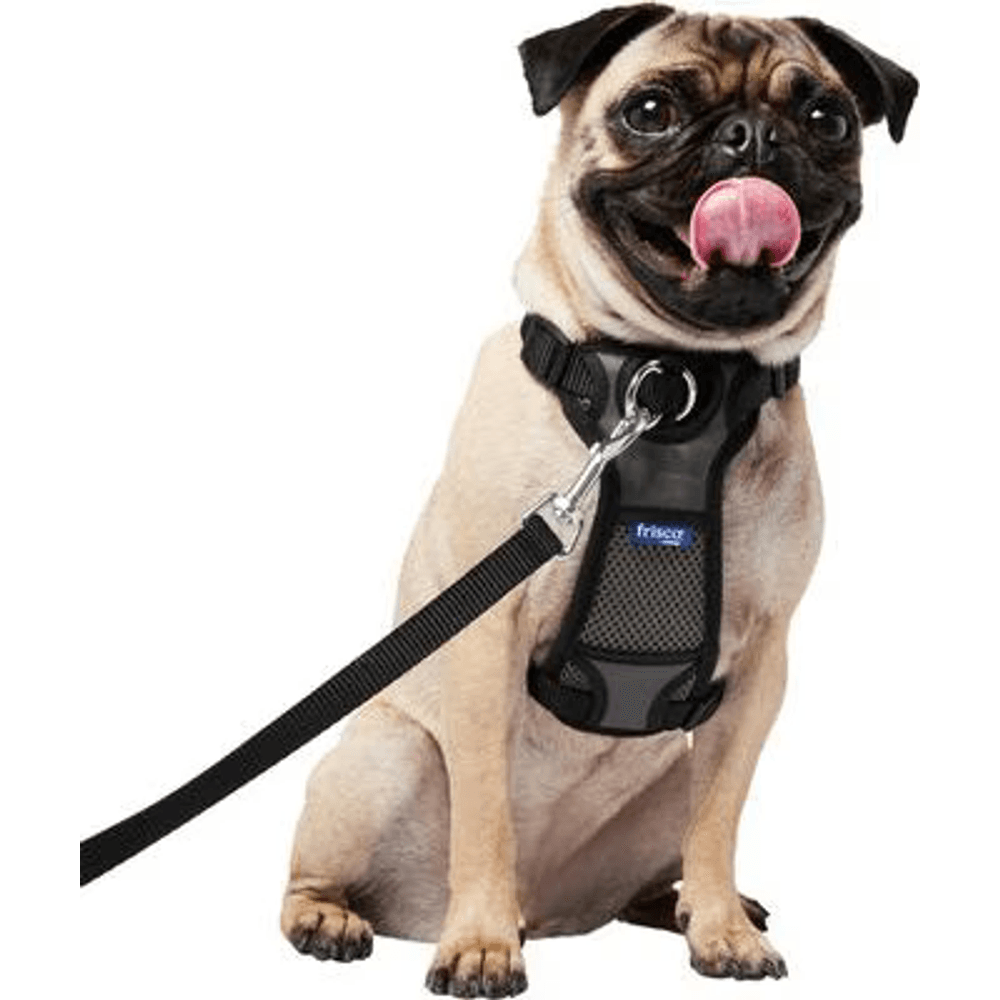
A budget-friendly padded no-pull harness that keeps leash pressure off a coughing dog's neck and windpipe by distributing it across the chest. A simple, affordable way to protect an irritated airway or a collapsing trachea on every walk.
Petful may earn a commission when you click through to Chewy, at no extra cost to you.
A sudden scale increase is not automatically fat gain. A full stomach, constipation, fluid retention, pregnancy, and differences between scales can all affect weight. A gradual increase accompanied by a fading waist and harder-to-feel ribs is more consistent with excess fat, but the veterinarian should evaluate unexpected change or possible illness.
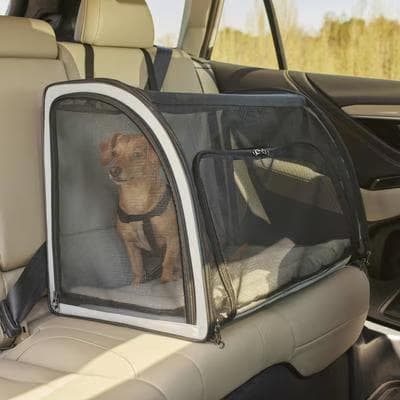
Use equipment dimensions, not breed labels, when planning the home. A Frisco Travel Safety Dog and Cat Carrier, Medium should be compared with the individual dog's current height, length, weight, and the manufacturer's fit limits; the dog must be able to stand without crouching, turn around, and lie comfortably before it is used for transport.
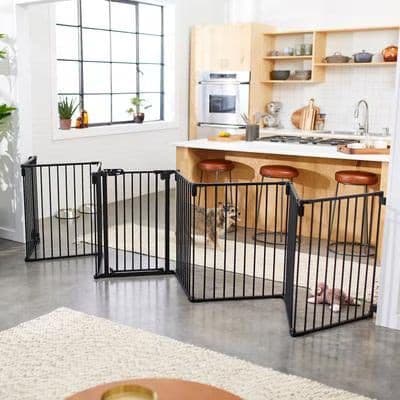
The same principle applies to a Frisco Steel Configurable Dog Gate and Playpen. Compare panel height and bar spacing with the actual dog's climbing, jumping, and squeezing behavior. A compact dog can still be athletic, and a gate is management equipment rather than a substitute for supervision or training.
Sex and individual variation
- Compare the dog with its own evidence | Males are larger on average under the breed standard, but the male and female ranges overlap. Sex, frame, muscle, health, age, reproductive status, diet, and activity can all affect an individual's weight. A number outside an average is a reason to assess the whole dog, not a diagnosis.
The standard's sex-specific ranges are useful when describing breed type, yet they do not create two uniform body shapes. A female near the top of her range can be taller than a male near the bottom of his. Dogs of the same sex can also differ in bone, chest width, muscle, and coat while remaining recognizably Shiba Inu.
Reproductive status can coincide with changes in energy needs, appetite, and routine. It does not provide a target weight by itself. After spay or neuter, monitor portions, treats, activity, and body condition with the veterinarian instead of assuming weight gain is unavoidable.
Age changes interpretation too. A growing puppy needs an upward trend and adequate nutrition, an active adult may carry more muscle, and an older dog may lose lean tissue even when the scale barely moves. For seniors, record ease of rising, walking, stairs, appetite, and muscle over the back and hindquarters alongside weight.
How to compare consistently
Individual variation is most useful when the method stays stable. Compare measurements from the same scale, body-condition system, and observer when possible. If a groom makes the dog suddenly look slimmer, confirm with hands and the log before changing food.
Marketing labels and undersized dogs
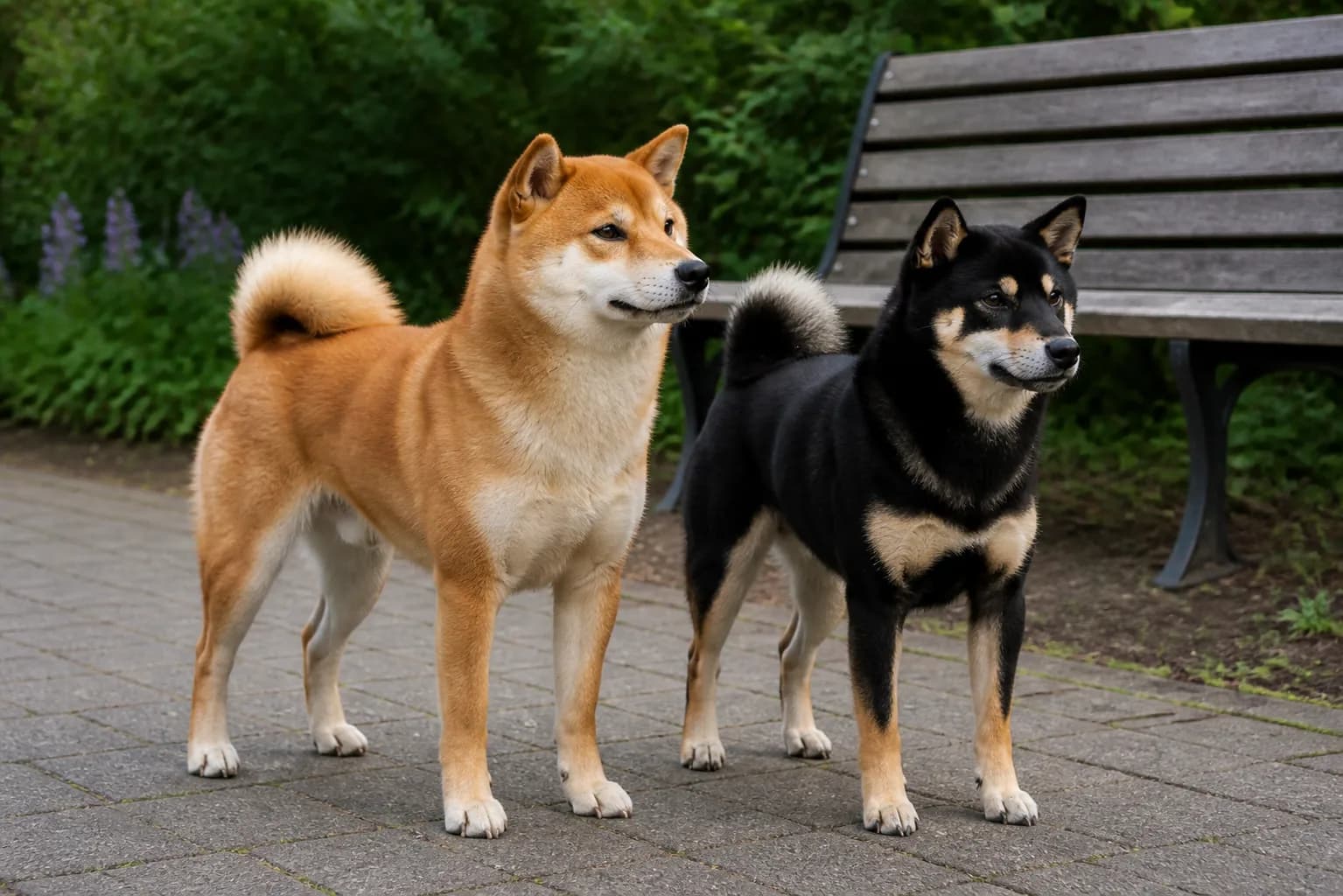
“Mini,” “micro,” “teacup,” and similar labels are not size varieties recognized in the AKC Shiba Inu standard. “Mame Shiba” may also be used to market a smaller dog, but the label does not tell a buyer how the dog was bred, what health screening was completed, or what its adult weight will be. Novel wording should never replace records.
A breeder cannot guarantee an exact adult weight for a young puppy. Parent measurements and past litters may inform an estimate, but genetics and development still produce a range. Be cautious when very small size is the main sales claim, especially if health records, parent access, or transparent answers are missing.
Before considering a puppy promoted as undersized, ask for:
- the sire's and dam's measured adult height and weight
- dated weights for the puppy rather than a single current number
- the registered names and health-screening results for both parents
- veterinary records, vaccination and deworming history, and any diagnosed condition
- the breeder's contract, return policy, and plan if a health problem emerges
- an explanation of breeding goals beyond producing the smallest possible dog
Small size does not prove poor health, and standard size does not guarantee good health. The concern is selection that prioritizes novelty over structure, genetic diversity, temperament, and documented screening. The National Shiba Club of America is a useful starting point for the breed standard, breeder education, and health context.
Households should also consider practical consequences. An unusually small dog may be easier to injure through falls, rough handling, or interactions with larger animals. Medication, anesthesia, feeding, and temperature management still require individualized professional guidance. Buy equipment only after measuring the actual puppy and expect to replace items during growth.
When growth or weight needs veterinary advice
Call the veterinary team when a puppy stops following its established upward trend, an adult changes weight without an intended diet or activity change, or body condition moves away from the dog's normal range. The combination of a measurement change and new symptoms is more urgent than a minor isolated fluctuation.
Prompt advice is warranted for signs such as:
- repeated vomiting or diarrhea, poor appetite, trouble swallowing, or difficulty keeping food down
- low energy, weakness, collapse, trembling, or unusual reluctance to move
- a visibly thin body, prominent bones, muscle loss, or a swollen abdomen
- rapid gain, a suddenly enlarged abdomen, swelling, or breathing difficulty
- increased thirst or urination, new accidents, or a major appetite change
- pain, limping, stiffness, or reduced ability to chew and eat
- a growing puppy that is not gaining, is losing weight, or is falling behind its own prior curve
Collapse, breathing difficulty, repeated unproductive retching, a tense rapidly enlarging abdomen, severe weakness, or inability to keep water down can be emergencies. Contact an emergency veterinary service rather than waiting for the next scheduled weigh-in.
Bring a concise record to the appointment. Include dated weights, scale type, body-condition observations, exact food and treat amounts, supplements, medications, appetite, stool, vomiting, drinking, urination, activity, and recent routine changes. Photos taken from above and the side in a consistent stance may help document change, but they do not replace an examination.
Refit equipment after growth or weight change
If a growing dog travels in the Sherpa Original Deluxe Airline-Approved Dog and Cat Carrier, remeasure length and standing height before each trip and verify the current airline rules. Replace or retire a carrier that restricts posture, has damaged mesh or fasteners, or no longer allows comfortable settling. For water during travel, the Frisco Silicone Collapsible Travel Bowl with Carabiner is one collapsible format to compare by capacity, cleaning, attachment, and the dog's ability to drink comfortably.
Recheck the fit of the Frisco Padded No Pull Dog Harness after a growth spurt, coat blow, or weight change. Watch for rubbing, hair breakage, altered gait, coughing, or reluctance to wear it. Product fit can reveal that a measurement changed, but discomfort still needs an appropriate training, fit, or veterinary response. Pair walking equipment with a leash such as the Frisco Traffic Leash with Dual Padded Handles only after checking hardware, handle comfort, and the current dog's strength.
Related Shiba Inu guides
- Shiba Inu Breed Profile: Essential Facts
- Shiba Inu Dog Price and Cost: Puppy and Lifetime Expenses
- Shiba Inu Colors: Coat Shades, Markings, and Standards
- Shiba Inu Puppies: Growth, Training, and First-Year Care
- Shiba Inu Temperament: Personality, Training, and Family Fit
- Shiba Inu Mixes: Crosses, Traits, and Care
- Shiba Inu Lifespan and Health: What Owners Should Know
- Do Shiba Inus Shed? Coat Care and Grooming Guide
Frequently asked questions about shiba inu weight
Shibas sit near the small-to-medium boundary in everyday labels. The breed standard is more useful: preferred adult height is 14.5 to 16.5 inches for males and 13.5 to 15.5 inches for females, with approximate preferred weights of 23 and 17 pounds. Measure the individual dog and use actual chest, neck, length, body condition, and movement for equipment, housing, and health decisions instead of relying on one retail size category.
A Shiba typically remains compact when full grown. The breed standard lists males at 14.5 to 16.5 inches and females at 13.5 to 15.5 inches at the withers, with approximate preferred-size Shiba Inu weight references of 23 pounds for males and 17 pounds for females. Individuals vary with sex, family, structure, health, and body condition, and adult height may stabilize before the chest and muscle finish maturing. Track direct measurements and body condition over time rather than forcing a puppy to match one chart.
A reliable Shiba Inu weight record is simple enough to maintain: one consistent scale, a date, a body-condition check, and a note about anything that could explain change. Use the breed range for context, then let the individual dog's trend and veterinary assessment guide feeding, equipment, and care.

Coreen Saito is a pet writer and longtime shelter volunteer with more than a decade in animal rescue. She covers cat behavior, breed care, and the small, ordinary science of sharing a life with companion animals, with a particular focus on honest takes about the products and decisions that actually matter. At home in Arizona, she's outranked by Mac (a dog with the loudest opinion in the house), Rebel (a cat who governs by quiet authority), and Meri (an orange tabby who runs the late shift and the laundry basket). She writes about all three, plus the rescues that keep coming through her life, at LifeWithMinty.com.
Sign up for expert-backed reviews and safety alerts all in one place.