Shiba Inu Temperament: Personality, Training, and Family Fit
Shiba Inu Temperament: Personality, Training, and Family Fit with evidence-based guidance on daily fit, care, costs, training, grooming, health, and the individual decisions that matter most.
Petful is reader supported. As an affiliate of platforms like Amazon and Chewy, we may earn a commission when you buy through links on this page. There is no extra cost to you.
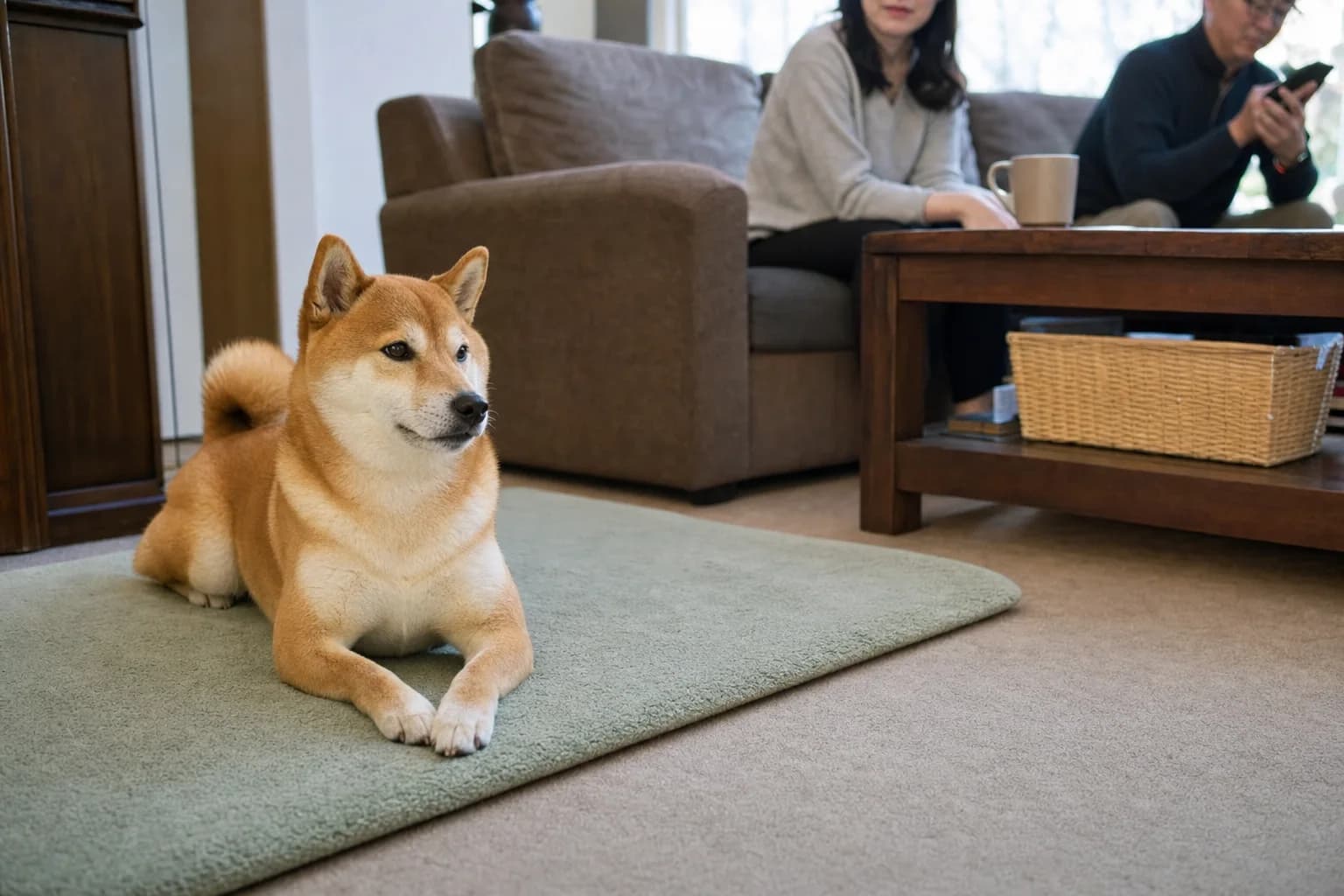
Shiba Inu temperament is often described as confident, alert, independent, and spirited. Those words are useful preparation, but they cannot tell you how one dog handles children, visitors, restraint, frustration, prey, or time alone.
The practical way to judge a Shiba Inu personality is to observe behavior in context: what triggered it, what the dog did, how intense it became, and how quickly the dog recovered. This guide turns common labels into training, management, and household-fit decisions without stereotyping every Shiba.

Sign up for expert-backed reviews and safety alerts all in one place.
Shiba Inu temperament: the short answer
A typical Shiba may be observant, self-directed, selective about touch, and quick to notice movement. Good family fit depends on secure management, reward-based training, respectful handling, and the individual's recovery around children, visitors, dogs, and other animals.
Shibas are not automatically aggressive, unfriendly, or impossible to train. Many live as affectionate, entertaining companions. The challenge is that affection may be subtle, motivation can change with context, and a dog bred to notice and pursue movement may make decisions before a person reacts.
Look for patterns in ordinary life:
- Does the dog recover after a door slams or remain distressed?
- Can the dog disengage from a squirrel, food item, visitor, or another dog?
- What happens when petting stops, a paw is touched, or a collar is held?
- Can excitement settle into rest without hours of pacing or demand behavior?
- Does the dog seek help from a person when uncertain?
- Which environments make behavior easier or harder?
Petful may earn a commission when you click through to Chewy, at no extra cost to you.
Direct answers about family fit
- Is a Shiba Inu a good family dog? A Shiba can be a good family dog when adults actively supervise children, respect the dog's need for space, manage doors and food, and provide training and exercise. The answer depends on the individual dog and family, not the breed label alone. A home that expects children to prevent escapes or tolerate unwanted handling is not a safe match.
- Are Shiba Inus difficult dogs? They can feel difficult to someone expecting automatic off-leash reliability, eagerness for repetition, or friendliness with every person and dog. They are often quick learners, but they need worthwhile rewards and strong management. A household that enjoys observing behavior, practicing in small steps, and preventing unsafe rehearsals may find them engaging rather than difficult.
- What are the pros and cons of a Shiba Inu? Common strengths include compact size, alertness, cleanliness, athleticism, and a close bond expressed without constant dependence. Challenges can include escape risk, prey drive, selective sociability, shedding, vocal protest, and sensitivity to restraint. Whether those are manageable depends on housing, schedule, children, other animals, training interest, and access to qualified help.
- Is a Shiba Inu clingy? Some follow a favorite person closely, while others rest in a separate room and reconnect on their own terms. Clinginess is not a reliable breed rule. Track whether proximity looks relaxed or anxious. A dog that panics when a person leaves needs an alone-time plan, even if the same dog appears independent during normal household activity.
Independence, confidence, and affection
Independence can mean making choices without waiting for direction, ending contact by walking away, or deciding that a cue is less valuable than the environment. It does not mean the dog lacks attachment or intelligence. A Shiba may show affection by checking in on a walk, bringing a toy, sleeping nearby, greeting one person enthusiastically, or choosing brief physical contact. For dogs that choose object play, a properly sized KONG Classic Dog Toy is one toy to compare under supervision and retire if damaged.
The National Shiba Club of America is a useful starting point for breed-specific education, but general breed descriptions still need to be tested against the individual dog's observable behavior and recovery in context.
Confidence is also easy to misread. A dog that rushes toward a trigger while barking may be frightened, frustrated, or over-aroused rather than secure. A truly useful confidence observation includes recovery. Can the dog pause, take food, respond to a familiar cue, move away, and return to normal behavior?
- Recovery is more informative than one reaction | Record how quickly the Shiba can disengage, eat, move normally, rest, or reconnect after a surprise. Repeated recovery in the relevant setting is stronger fit evidence than labeling one approach as confident or one retreat as fearful.
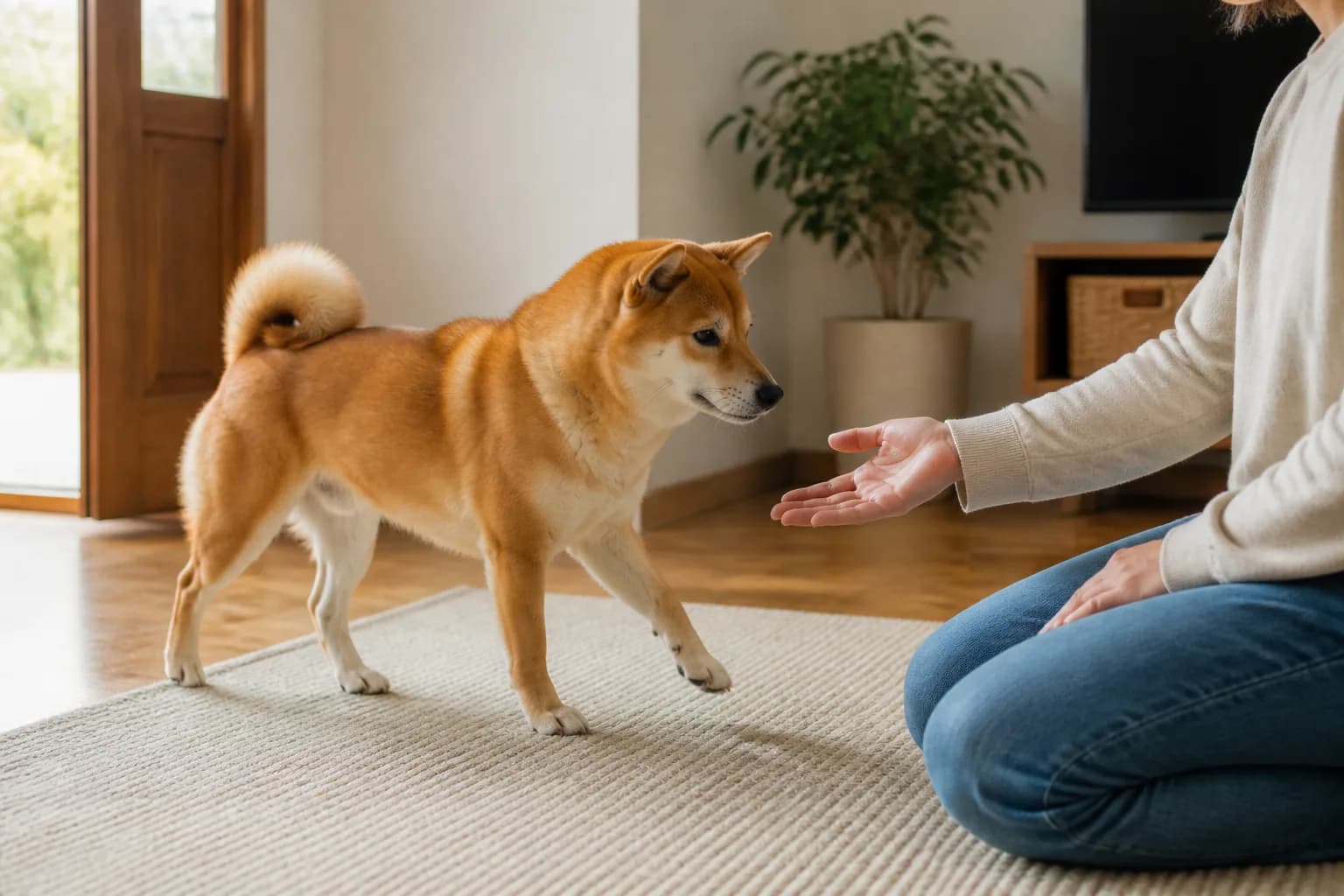
Respecting consent improves handling. Invite rather than grab, and pair brief touch with something the dog values. Teach predictable routines for collar holds, paw checks, brushing, tooth care, and veterinary positioning. If the dog turns away, stiffens, freezes, growls, or tries to leave, lower the difficulty instead of punishing communication. Once brief mouth touch is comfortable, the Jasper 360 Dog Finger Toothbrush is one finger-brush format to compare without turning the session into restraint.
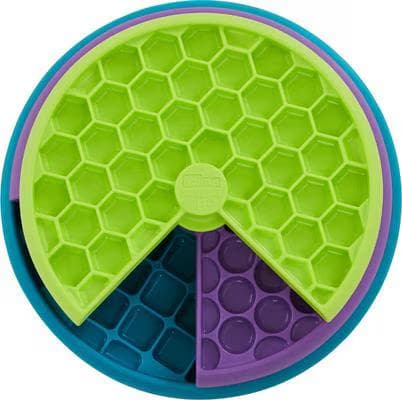
- Equipment should support choice: For outings, a Frisco Padded No Pull Dog Harness is one option to compare after measuring the individual dog and checking shoulder movement, escape resistance, and skin contact. An Outward Hound Lickin Layers Puzzle and Slow Feeder may provide supervised food enrichment when the size and difficulty fit the dog.
Affection versus separation distress
A dog can be independent while people are home and still struggle when the house empties. Watch what happens after departure rather than assuming a Shiba is naturally fine alone. Relaxed rest, eating, and normal movement differ from escalating vocalization, pacing, drooling, destruction around exits, elimination linked to panic, or self-injury.
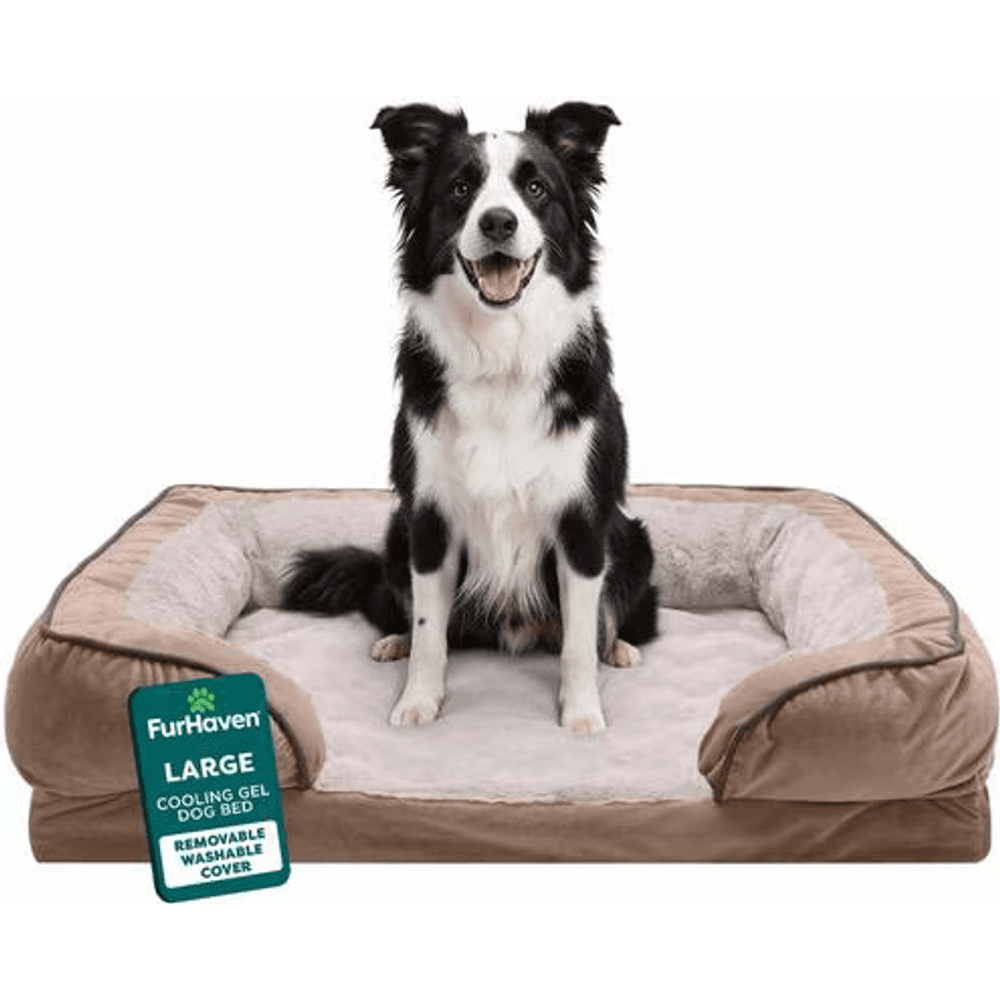
An orthopedic sofa bed with three bolstered sides for dogs who like to rest their head and joints against a cushion. The supportive foam base cradles hips and elbows, a comforting spot for an older or shaky dog to settle.
Petful may earn a commission when you click through to Chewy, at no extra cost to you.
Teach easy absences after exercise, toileting, and other needs are met. Start with a safe area the dog already likes, leave for a duration that stays comfortable, and return without creating a dramatic event. Increase time in small, varied steps. A camera can reveal the response, but it is an observation tool, not treatment.
If distress appears, shorten the absence and seek qualified help before rehearsing it daily. Do not use confinement that triggers frantic escape. Pain, noise sensitivity, schedule changes, and prior experience can all affect the behavior, so a veterinarian may need to be part of the plan.
Activity and enrichment needs
| Trigger or need | What you may observe | Management first | Skill to teach |
|---|---|---|---|
| Movement or wildlife | Staring, pulling, stalking, sudden chase | Distance, secure leash, visual barrier | Check-in, turn away, follow handler |
| Visitor arrival | Barking, rushing, hiding, prolonged scanning | Gate, leash, quiet retreat | Settle, mat, approach by choice |
| Frustration | Vocal protest, grabbing, jumping, refusal | Reduce difficulty, prevent rehearsal | Wait briefly, trade, alternate behavior |
| Under-stimulation | Scavenging, restlessness, attention seeking | Add planned sniffing and food work | Search games, settle after activity |
Activity should support regulation rather than create a dog who needs constant entertainment. A typical adult benefits from daily walks, sniffing, play, brief training, and protected rest. The exact amount changes with age, health, weather, conditioning, and the individual response.
Use several forms of enrichment:
- Scent: scatter feeding, simple searches, and time to investigate on walks.
- Movement: walking, controlled play, varied terrain, and age-appropriate strength.
- Thinking: short shaping games, household skills, and problem solving with an easy exit.
- Social choice: time with trusted people or compatible dogs without forced greetings.
- Rest: a location where the dog is not touched, crowded, or continually stimulated.
More exercise is not always the answer to barking, mouthing, or frantic behavior. Fatigue, pain, fear, and inability to settle can look like excess energy. Watch breathing, coordination, recovery, sleep, and next-day comfort. A sudden change in stamina or movement belongs with a veterinarian, not an assumption that the dog has become lazy.
Find the right activity dose
Start with a repeatable weekday rather than an exceptional hike. Record the type and length of activity, the dog's behavior during it, time needed to settle, sleep afterward, and comfort the next morning. Increase one element at a time. A longer walk, harder terrain, intense play, and a crowded environment all add different loads.
Signs the plan may need adjustment include:
- Persistent restlessness despite opportunities to toilet, sniff, and rest.
- Frantic behavior or biting that appears late in an overfull day.
- Reluctance to continue, lagging, altered gait, or soreness afterward.
- A dog who stays highly aroused for hours after every outing.
- Loss of interest in activities the dog normally enjoys.
The best routine leaves the Shiba satisfied and able to relax. It also includes days when weather, health, or the household schedule requires quieter scent games and training instead of strenuous exercise.
Training and motivation
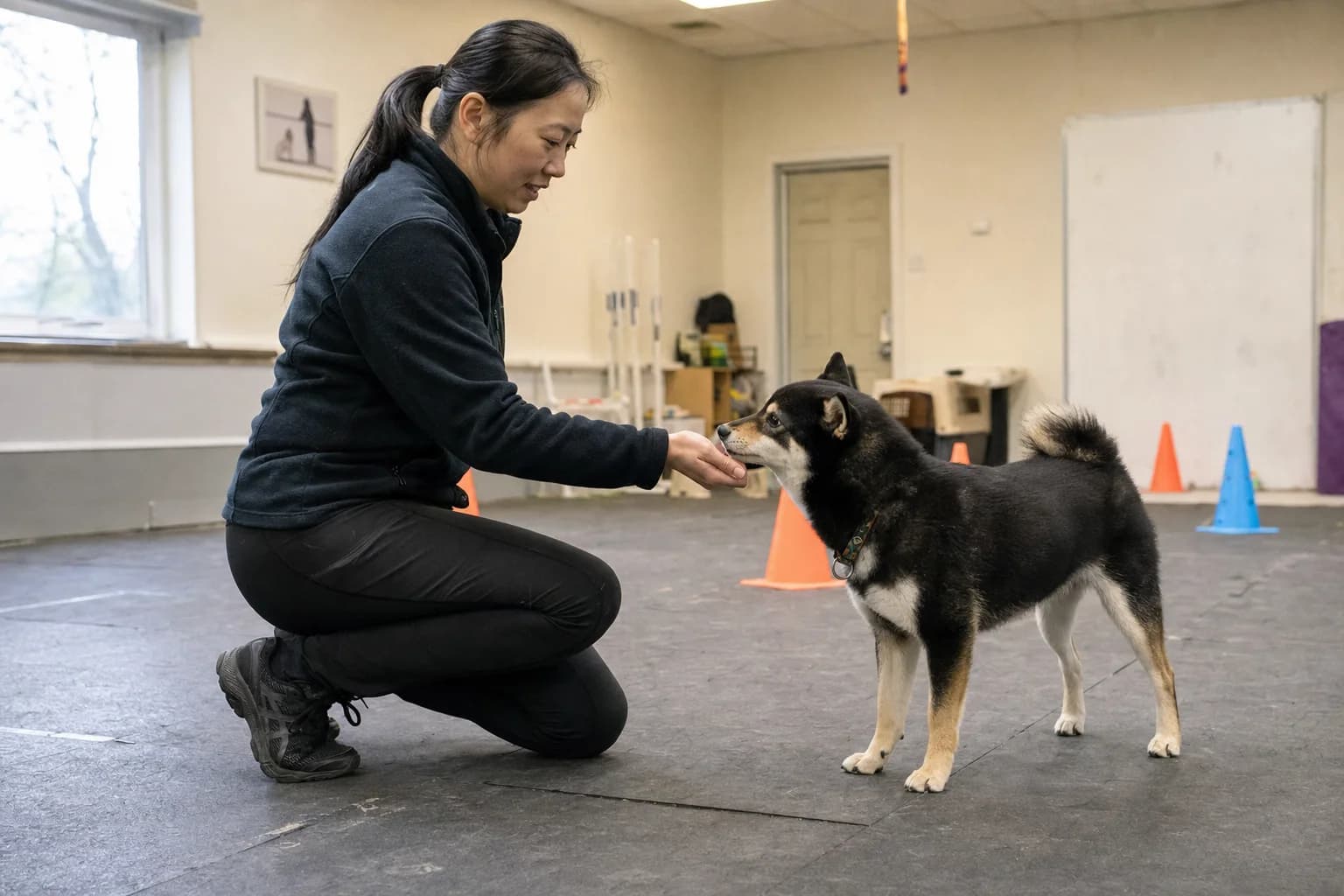
Shibas can learn rapidly, but understanding a cue is different from performing it under every distraction. Motivation changes with hunger, stress, environment, reinforcement history, and the competing reward. A squirrel may be worth more than ordinary kibble, while a frightened dog may be unable to eat at all. When food rewards fit the dog's diet, the Blue Buffalo Nudges Grillers Steak Dog Treats are one option to compare by ingredient list, piece size, and calories before using tiny training portions.
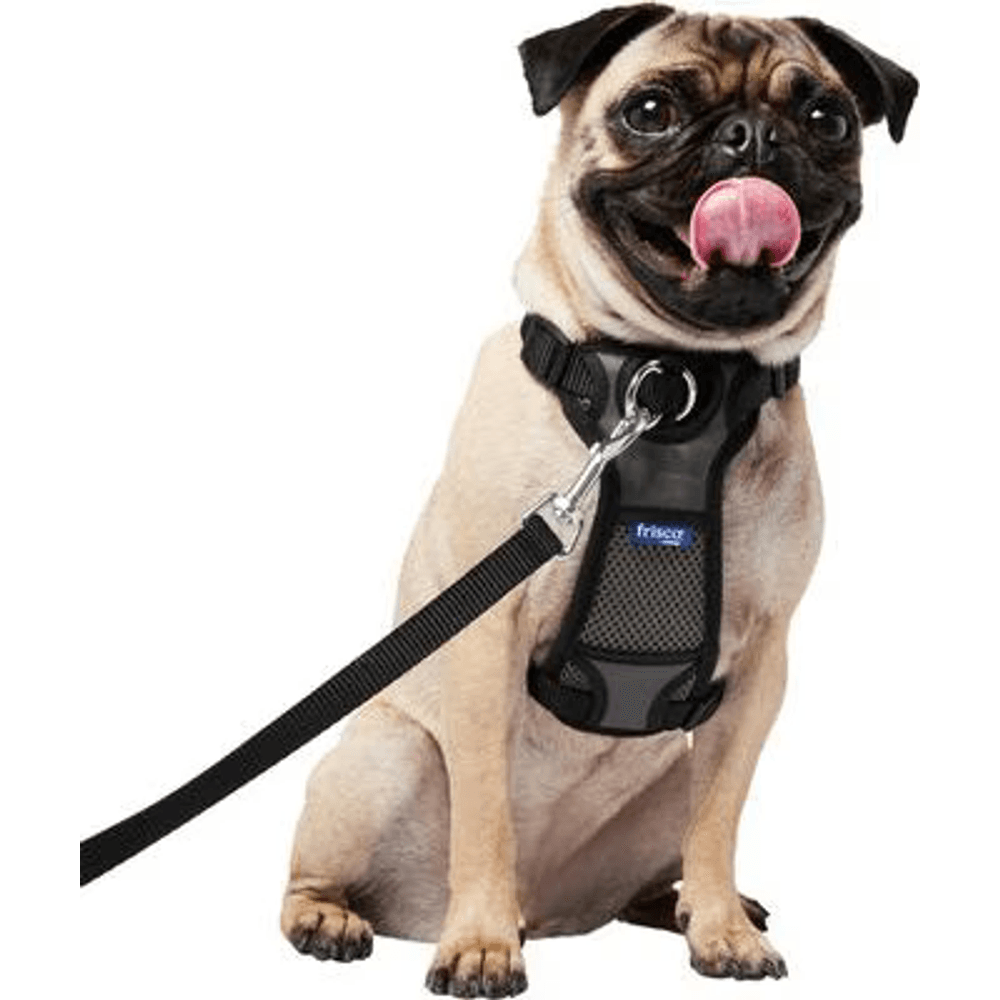
A budget-friendly padded no-pull harness that keeps leash pressure off a coughing dog's neck and windpipe by distributing it across the chest. A simple, affordable way to protect an irritated airway or a collapsing trachea on every walk.
Petful may earn a commission when you click through to Chewy, at no extra cost to you.
Build reliable behavior in layers:
- Teach the skill in a quiet setting with a clear reward.
- Practice short successful repetitions rather than drilling to boredom.
- Change one difficulty at a time: distance, duration, distraction, or location.
- Prevent the unwanted behavior from paying off while the new response develops.
- Use high-value reinforcement for high-consequence choices such as leaving wildlife or turning from an open door.
Prioritize name response, door waits, leash pressure, recall games, trading, cooperative care, and settling. Recall practice is worthwhile, but it does not make every unfenced environment safe. Use a secure long line or fenced area and follow leash laws. For ordinary close-control walks, compare the Frisco Traffic Leash with Dual Padded Handles by hardware and handle comfort; it does not replace the long line or fenced setup described here.
When looking for Shiba Inu trainers, ask about qualifications, methods, referrals, and how fear or aggression is handled. Avoid anyone who promises a guaranteed cure, relies on intimidation, or discourages veterinary assessment for a sudden behavior change. Pain, sensory loss, gastrointestinal discomfort, and other health problems can alter behavior.
What “refusal” can mean
When a Shiba does not respond, check the training setup before calling the dog stubborn. The cue may be unclear, the reward may be too weak, the surface may feel unsafe, or the environment may be far harder than the place where the skill was learned. Fear and pain can also make a familiar task impossible in that moment.
Use a short troubleshooting sequence:
- Reduce distance from the handler and increase distance from the distraction.
- Ask for an easier version the dog has successfully performed.
- Improve the reward and deliver it promptly.
- Check footing, equipment, weather, fatigue, and signs of discomfort.
- End with a simple success instead of repeating a failed cue many times.
This approach preserves information. Forcing the response might produce compliance once while hiding the reason the behavior changed.
Barking, prey drive, and impulse control
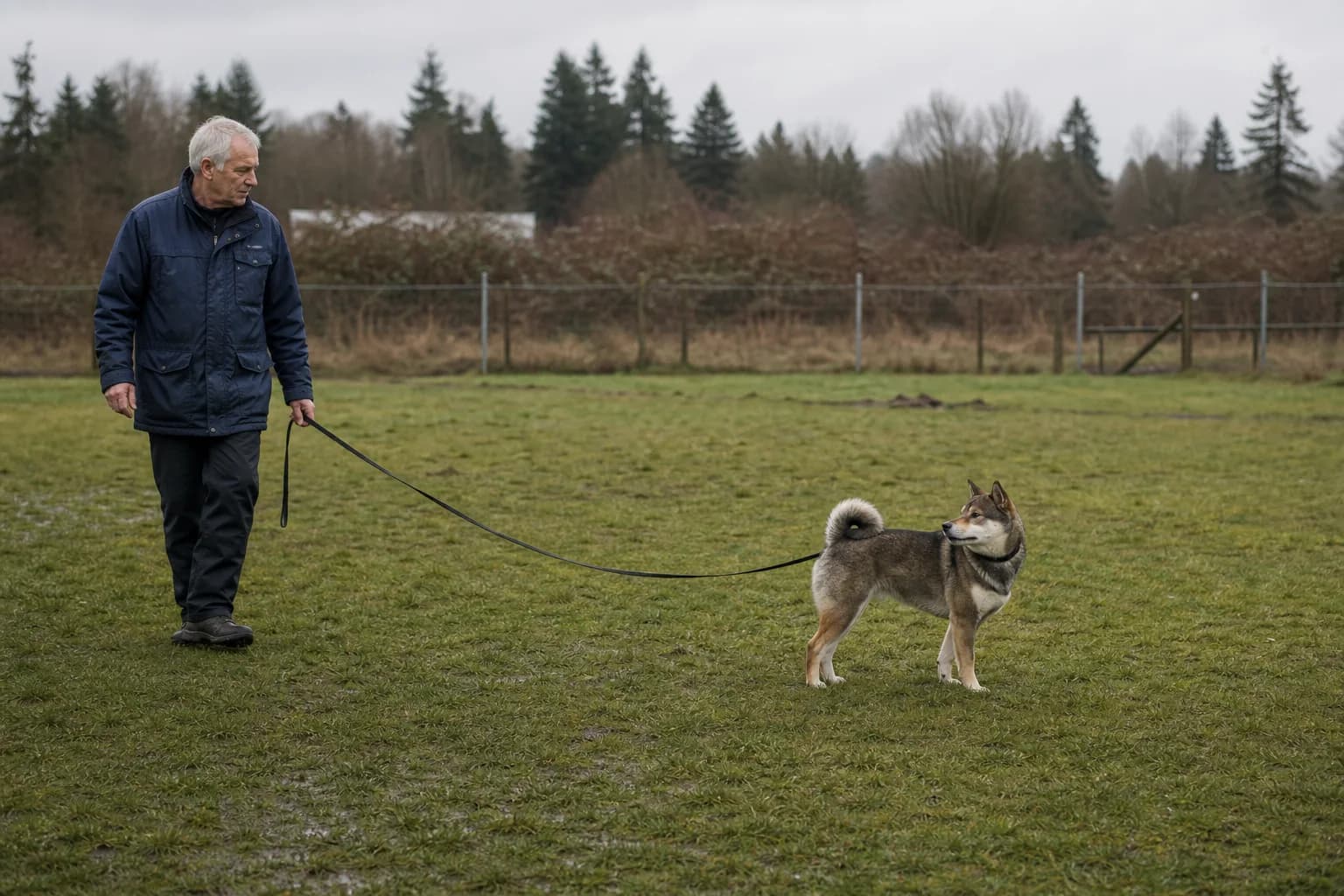
Shiba Inu barking varies. Some are quiet except for alerts; others bark from excitement, fear, frustration, isolation, or learned attention seeking. The dramatic vocal protest popularly called a Shiba scream can also occur around restraint or distress. Sound describes the output, not the cause.
Record the barking sequence:
- What happened immediately before it?
- Where was the trigger and how close was it?
- Was the dog's body loose, forward, frozen, tucked, or trying to escape?
- Could the dog eat, turn away, or respond to a familiar cue?
- How long did recovery take after the trigger left?
An “angry Shiba” or “angry Shiba Inu” caption often strips away that context. Teeth, growling, staring, or lunging can signal fear, guarding, pain, frustration, conflict, or intent to increase distance. Do not punish a growl and assume the risk is gone. Create space, prevent another rehearsal, and get qualified help when biting or escalating Shiba Inu aggressive behavior is possible.
Petful may earn a commission when you click through to Chewy, at no extra cost to you.
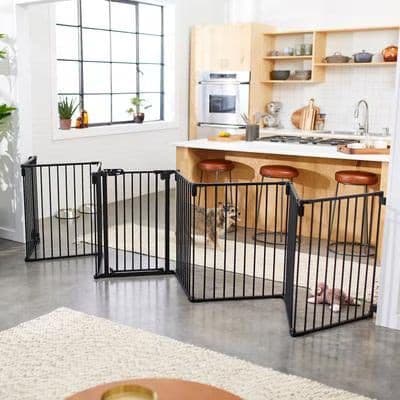
Prey drive requires physical management even while impulse control improves. Use secure leashes, check gates, block access to small pets, and reward voluntary check-ins around movement. A Frisco Steel Configurable Dog Gate and Playpen is one barrier to compare by stability, spacing, attachment, and the dog's ability to climb or push it. A resting option such as the FurHaven Velvet Waves Orthopedic Sofa Cat and Dog Bed can support a settle routine when placed away from traffic and left undisturbed.
When a behavior change needs more than training
New irritability, avoidance, house soiling, sleep disruption, staring, vocalization, or reluctance to move can accompany a medical problem. So can a sudden “aggressive” response when a particular body area is touched. Record when the change began, what triggers it, medications, appetite, elimination, movement, and any recent injury or illness.
Create space and prevent bites while arranging veterinary assessment. Training can help rebuild safe behavior after medical needs are addressed, but it should not be used to argue a dog through pain. Emergency signs such as collapse, seizures, breathing difficulty, severe trauma, or rapidly worsening distress need urgent care.
Children, visitors, and other pets
- Supervision must be active | An adult should be close enough to interrupt grabbing, chasing, food conflict, crowding, or an unsafe door opening. A child and dog occupying the same room without attentive adult involvement is not meaningful supervision.
Shibas can be good family dogs, but compatibility is individual. Children must learn to invite contact, leave sleeping and eating dogs alone, and never climb on, hug, corner, or lift the dog. The dog needs a retreat that children cannot enter, while adults remain responsible for every door and high-value resource.
Visitor plans should match the dog's comfort. Options include a gate and food activity, a quiet room, a leash at a safe distance, or a choice to approach after the person is seated and ignoring the dog. A successful visit does not require petting. If the dog cannot settle, create more distance rather than repeating introductions until behavior worsens.
For another dog, begin with space and parallel movement when safe. Separate food, chews, toys, beds, and tight doorways until both animals show a stable pattern. Consider size, play style, guarding history, and recovery after excitement. “Raised with dogs” does not guarantee comfort with every dog.
- Cats and small animals need special caution: A Shiba may live peacefully with a familiar cat and still chase an unfamiliar one outdoors. Gates, closed doors, leashes, elevated escape routes, and adult supervision reduce risk, but they cannot make prey drive disappear.
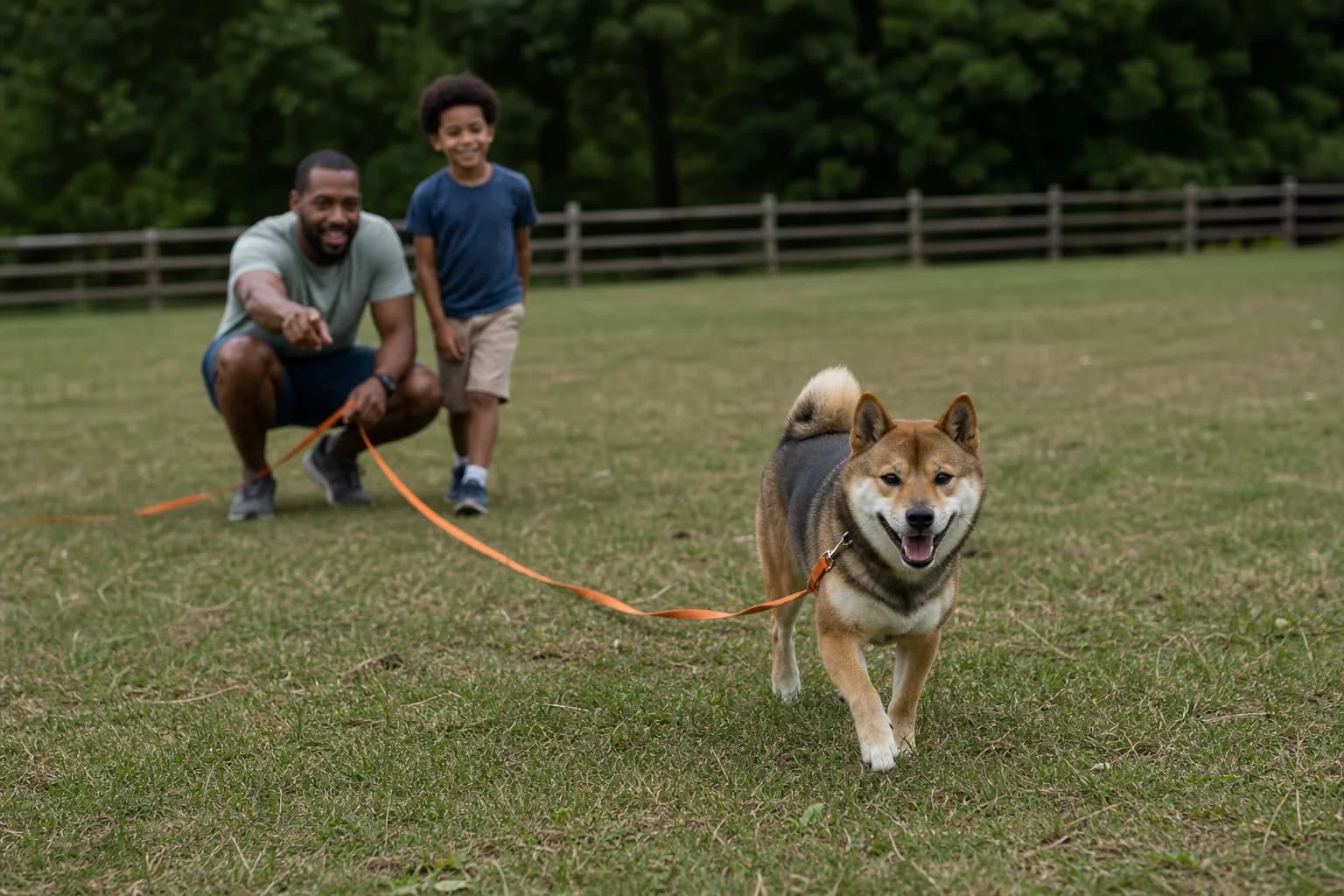
How puppies become stable adults
Stable adult behavior grows from genetics, maternal and litter experience, health, early rearing, socialization, training, and what the puppy repeatedly practices. No puppy test can guarantee the final personality. A bold eight-week-old may enter a sensitive phase later, while a cautious puppy may gain confidence through safe, voluntary experience.
Focus the first year on skills that remain useful:
- Recovering after a surprise and returning attention to the handler.
- Accepting brief, predictable handling with the ability to pause.
- Resting alone for gradually increasing, comfortable periods.
- Moving past people, dogs, and wildlife without requiring contact.
- Trading objects and leaving food without conflict.
- Waiting behind doors, gates, and vehicle openings.
Adolescence can produce selective responses, stronger exploration, and renewed sensitivity. Keep management in place while practicing familiar skills in more difficult settings. The Shiba Inu puppies guide covers sourcing, socialization, growth, care, and the first-year sequence.
If fear, guarding, separation distress, or aggressive behavior is increasing, do not wait for the dog to “grow out of it.” Veterinary assessment and qualified behavior help can prevent a difficult pattern from becoming more entrenched.
The household fit scorecard
A useful scorecard measures what the home can do, not whether a Shiba passes a personality test. Rate each category as ready, workable with a named change, or not currently safe. Write the change and who owns it.
Fit questions
- Containment: Are doors, gates, fencing, travel, leash handling, and identification secure?
- Training: Will adults practice reward-based skills and prevent unsafe rehearsals every day?
- Activity: Can the schedule provide walks, sniffing, enrichment, and quiet recovery on weekdays?
- Handling: Can the household respect consent and build grooming and veterinary skills gradually?
- Children and pets: Are supervision, separation, retreats, and resource rules realistic?
- Noise and visitors: Can the home give the dog distance without requiring social performance?
- Care access: Is there a budget for veterinary care, training, grooming help, and pet sitting?
Use sibling guides for the questions they own: Shiba Inu dog price, Shiba Inu colors, Shiba Inu mixes, Shiba Inu lifespan, Shiba Inu weight, and whether Shibas shed. Appearance and averages cannot replace the temperament observed in the individual dog.
Recheck equipment as the body and coat change. The Frisco Padded No Pull Dog Harness should be measured and inspected rather than assumed to keep fitting. The Outward Hound Lickin Layers Puzzle and Slow Feeder is one enrichment item to compare by current size, cleaning, supervision, and whether it helps the dog settle rather than increasing frustration.
Conditions that should pause the match
A “workable with changes” answer needs a named person, action, cost, and deadline. It is not a polite substitute for “no.” Pause acquisition or placement when the home cannot create secure separation, adults disagree about humane training, children cannot follow contact rules, a small pet has no protected area, or required veterinary and behavior care is financially inaccessible.
Also pause when the plan depends on guarantees no source can give: perfect recall, instant cat safety, no shedding, no barking, or a puppy temperament that will never change. A different individual dog or breed may fit better. Choosing against a match before commitment can be responsible, not a failure.
Run the scorecard again after a trial meeting or foster period using observed examples rather than impressions. Note what happened before a bark, retreat, chase, handling refusal, or successful recovery; how long the dog needed to settle; and what management changed the result. One calm greeting does not prove universal sociability, and one stressed response in an unfamiliar setting does not define the dog. Repeated observations across relevant contexts give a household, rescue, trainer, or veterinarian better evidence for deciding whether the fit is safe and workable.
Related Shiba Inu guides
- Shiba Inu Breed Profile: Essential Facts
- Shiba Inu Dog Price and Cost: Puppy and Lifetime Expenses
- Shiba Inu Colors: Coat Shades, Markings, and Standards
- Shiba Inu Puppies: Growth, Training, and First-Year Care
- Shiba Inu Mixes: Crosses, Traits, and Care
- Shiba Inu Lifespan and Health: What Owners Should Know
- Shiba Inu Size and Weight: Growth and Adult Measurements
- Do Shiba Inus Shed? Coat Care and Grooming Guide
Frequently asked questions about shiba inu temperament
A Shiba can be a good family dog when adults actively supervise children, protect rest and food, manage every exterior door, and teach respectful contact. The decision depends on the individual dog's history, recovery, guarding, chase behavior, and comfort with the actual household. Children should never be responsible for containment or conflict prevention. Use gates and planned separation, and pause the match if adults cannot enforce the same safety rules consistently.
Some Shibas enjoy leaning, lap time, or sleeping against a trusted person, while others prefer brief petting, play, or resting nearby. Within normal Shiba Inu temperament, affection style varies with the individual, context, age, pain, and trust. Invite contact, support the body securely, and let the dog leave. Forced cuddling can damage confidence and make grooming or veterinary handling harder. A sudden change in touch tolerance deserves attention because discomfort or fear can look like independence.

Coreen Saito is a pet writer and longtime shelter volunteer with more than a decade in animal rescue. She covers cat behavior, breed care, and the small, ordinary science of sharing a life with companion animals, with a particular focus on honest takes about the products and decisions that actually matter. At home in Arizona, she's outranked by Mac (a dog with the loudest opinion in the house), Rebel (a cat who governs by quiet authority), and Meri (an orange tabby who runs the late shift and the laundry basket). She writes about all three, plus the rescues that keep coming through her life, at LifeWithMinty.com.
Sign up for expert-backed reviews and safety alerts all in one place.