Do Shiba Inus Shed? Coat Care and Grooming Guide
Do Shiba Inus Shed? Coat Care and Grooming Guide with evidence-based guidance on daily fit, care, costs, training, grooming, health, and the individual decisions that matter most.
Petful is reader supported. As an affiliate of platforms like Amazon and Chewy, we may earn a commission when you buy through links on this page. There is no extra cost to you.
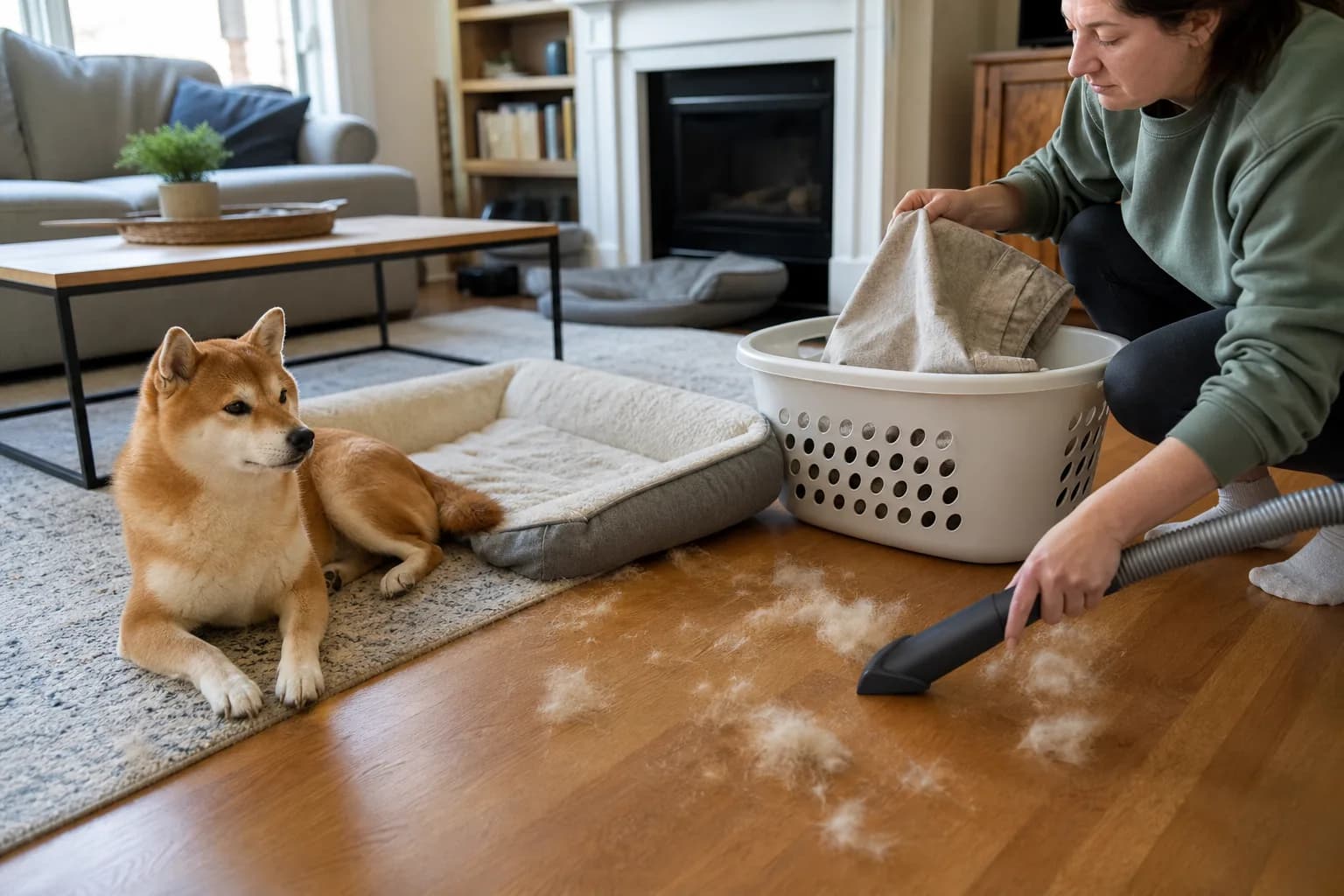
Do Shiba Inus shed? Yes. They release hair throughout the year and can shed very heavily when the dense undercoat changes seasonally. The short, tidy-looking coat is not a low-shed coat, and a Shiba Inu is not hypoallergenic.
The manageable part is that normal shedding follows a pattern. Gentle brushing, an occasional well-rinsed bath, complete drying, and routine household cleanup can control loose hair without damaging the protective double coat. This guide explains what to expect, which tools have a clear job, and when hair loss looks more like a skin or health problem than an ordinary coat blow.

Sign up for expert-backed reviews and safety alerts all in one place.
Do Shiba Inus shed? The short answer
- 1Shiba Inus shed some hair year-round and often release much more undercoat during seasonal coat changes.
- 2Their short double coat is not hypoallergenic.
- 3Brushing removes loose coat, but aggressive tools and routine shaving can injure skin or damage healthy hair.
- 4Bald spots, marked itching, sores, odor, or a sudden unexplained coat change need veterinary attention.
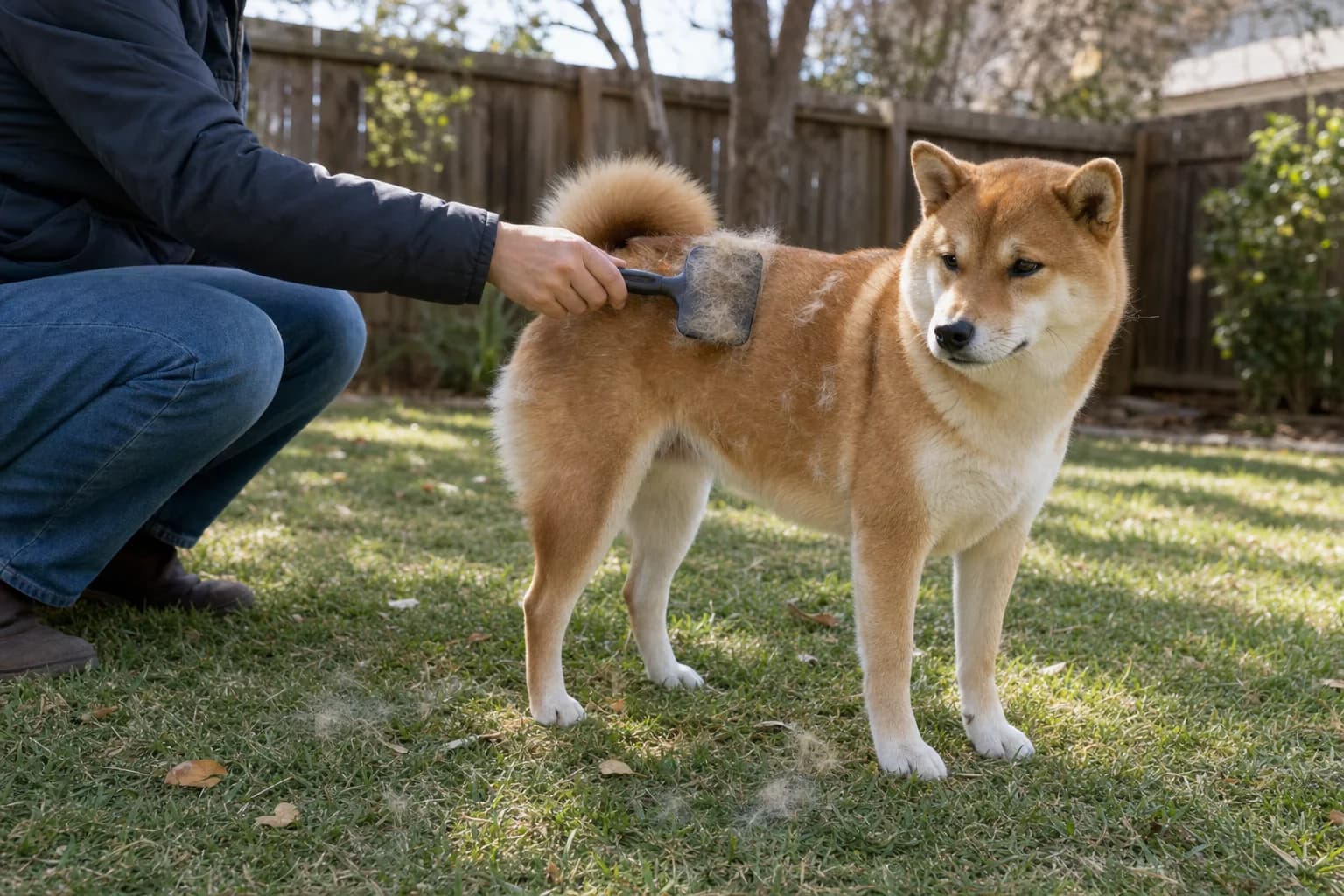
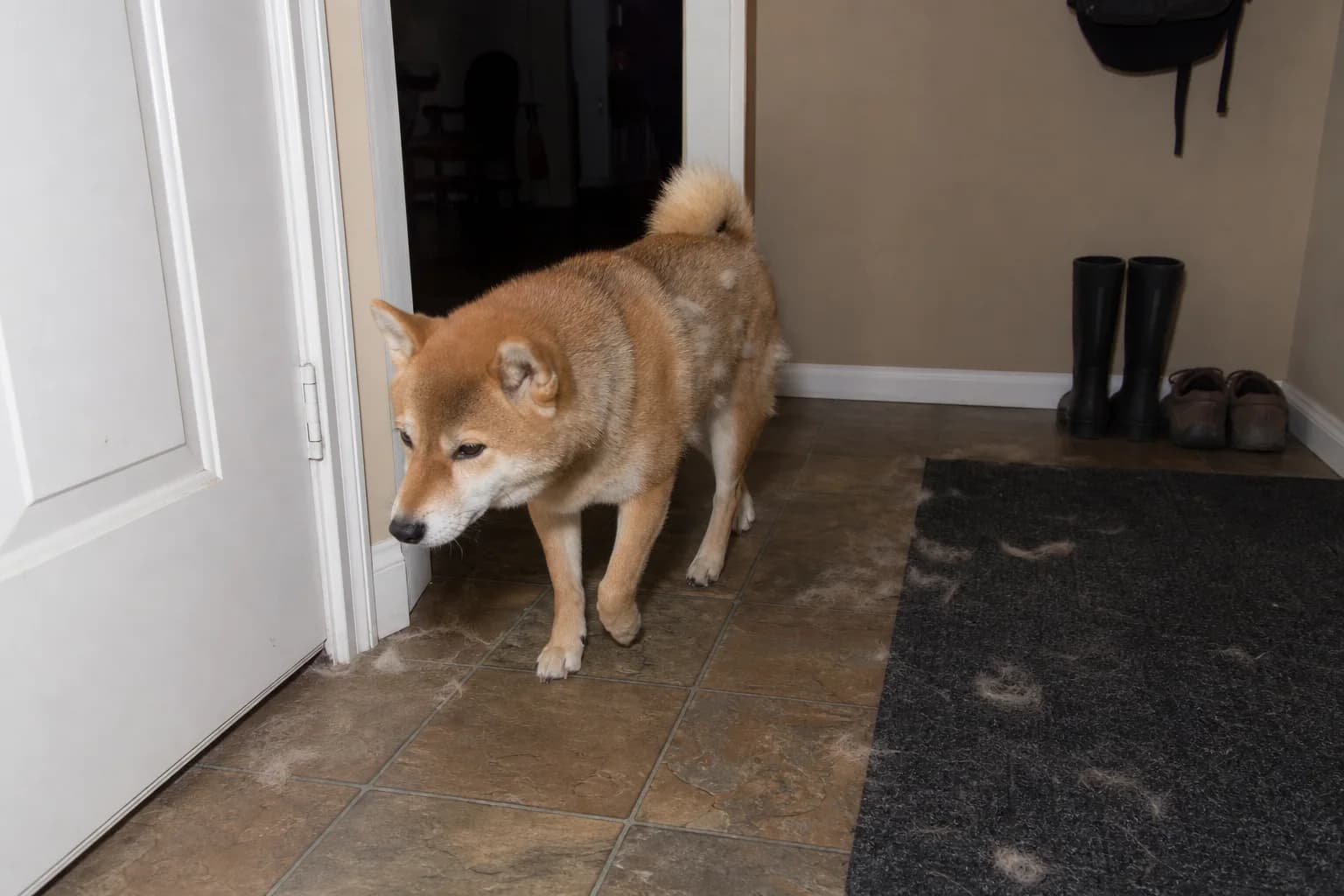
Shiba Inus have a straight, firm outer coat over a soft, dense undercoat. Loose guard hairs can appear on clothing and furniture at any time, while the undercoat may come out in visible tufts during a “coat blow.” A household should be prepared for more hair than the breed's compact size and clean appearance suggest.
How much a Shiba sheds varies with the individual, season, indoor climate, age, health, and reproductive cycle. There is no reliable cup-of-hair or hairs-per-day standard. A better baseline is the dog's usual brush yield, skin appearance, comfort, and the number of cleanup sessions the home needs during ordinary weeks versus peak weeks.
Is a Shiba Inu hypoallergenic? No. People with dog allergies generally react to proteins associated with dander, saliva, and urine, not just the visible hair. Shed hair can carry those allergens through a room. The American College of Allergy, Asthma & Immunology advises that no dog is truly nonallergenic, although an individual's reaction can vary.
Petful may earn a commission when you click through to Chewy, at no extra cost to you.
Shedding is only one fit question
Heavy shedding is one potential disadvantage of a Shiba Inu, especially for someone who wants a nearly hair-free home. Other common challenges, including independent decision-making, prey drive, escape risk, and selective tolerance for handling, belong to the broader Shiba Inu breed profile rather than the coat alone.
Why are some Shibas not cuddly? Many prefer contact on their own terms and may dislike restraint, even when they enjoy being near their people. That is a temperament and handling question, not an effect of shedding. A sudden new reluctance to be touched can indicate pain or skin discomfort; otherwise, the Shiba Inu temperament guide explains consent-based interaction in more depth.
Plan for these ordinary coat realities:
- fine hairs that work into fabric as well as obvious fluffy undercoat
- larger seasonal releases that can last days or weeks rather than one brushing
- more cleanup around bedding, car upholstery, baseboards, and fabric furniture
- short grooming sessions throughout the year instead of one annual overhaul
- skin checks during every session so hair loss is not automatically dismissed as “just shedding”
How the double coat works
The AKC Shiba Inu standard describes a double coat: the outer coat is stiff and straight, while the undercoat is soft and thick. Guard hairs help shield the skin and give the coat its stand-off outline. The undercoat adds insulation and density. Tail hair is slightly longer and stands open, which is normal rather than an unbrushed plume.
Each hair follicle cycles through growth, transition, rest, and release. Not every follicle follows the same schedule, so some shedding continues even outside a dramatic seasonal change. Brushing can collect hairs that are already loose; it cannot permanently turn off the biological cycle.
Undercoat release versus damaged hair
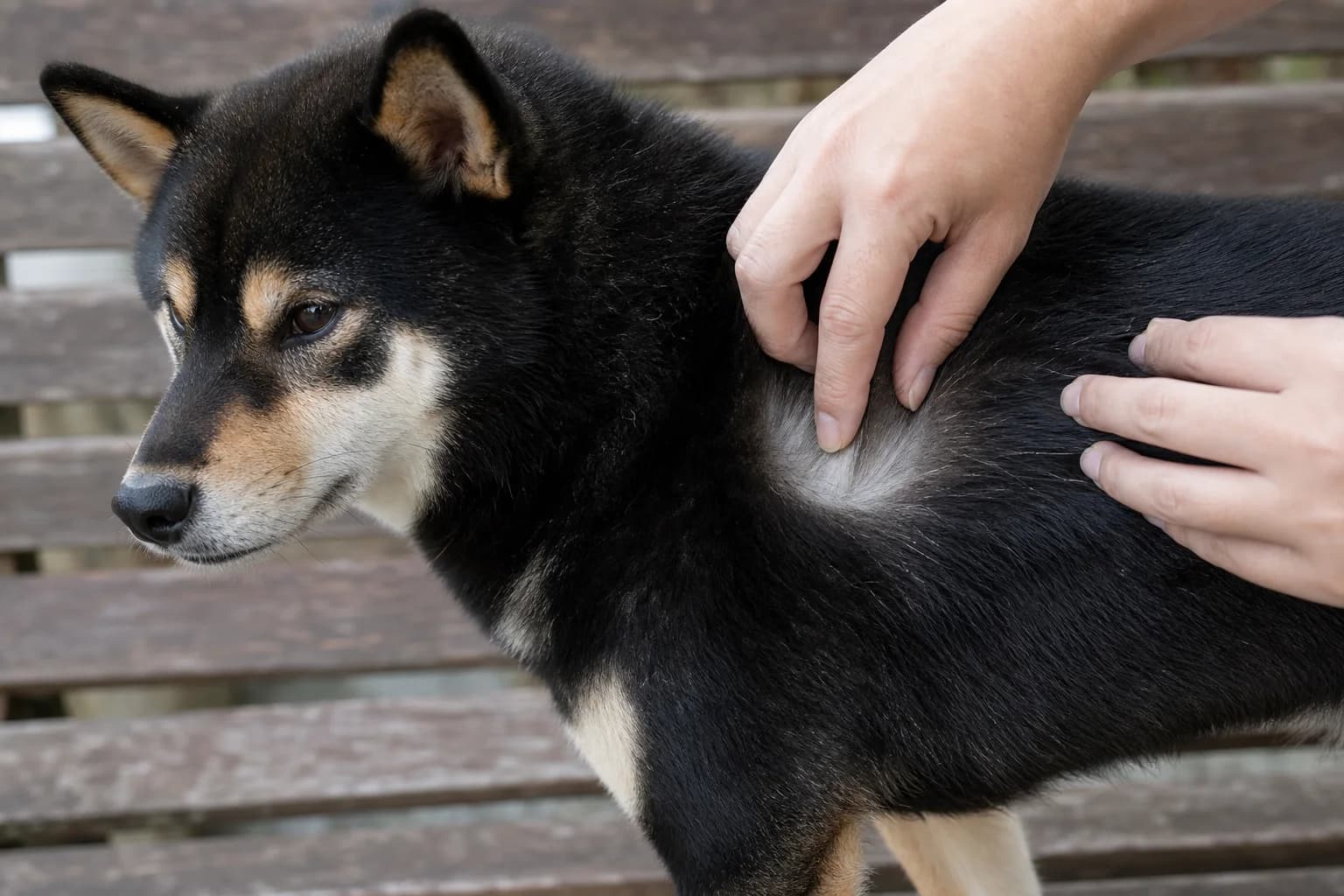
Healthy seasonal release is usually diffuse. Loose tufts may lift from the shoulders, sides, rump, and thighs while the skin underneath remains comfortable and intact. The dog should not develop raw areas simply because the undercoat is changing.
Breakage looks different from hair naturally releasing at the root. Excess pressure, repeated scraping, dull clipper blades, tight equipment, or friction can snap guard hairs and irritate the skin. Stop a session if the skin turns red, the dog flinches, the tool catches, or intact coat appears to be cut rather than lifted.
Let touch guide the routine
Part the coat in several places before choosing a tool. Check behind the ears, under the collar or harness, around the shoulders, at the back of the thighs, and near the tail. These areas experience different friction and density, so one technique may not suit the whole dog.
During a coat blow, a loose fitted harness can become looser as packed undercoat leaves, while a too-tight strap can rub fragile skin. Recheck the live size chart and fit of a Frisco Padded No Pull Dog Harness, keeping straps clear of the armpits and allowing normal shoulder movement.
An aumuca Self Cleaning Slicker Brush is one tool to compare for lifting loose surface coat. Test the pin tips against your forearm, start with very light pressure on a small area, and inspect the dog's skin after several strokes. A self-cleaning button makes hair removal easier, but it does not make repeated scraping safe.
When seasonal shedding peaks
| Coat stage | What you may notice | Useful response |
|---|---|---|
| Ordinary maintenance | Scattered guard hairs and a small amount of undercoat | Brush briefly once or twice a week and check the skin |
| Coat blow beginning | Tufts lift, brush yield rises, and cleanup becomes more frequent | Move to short daily or every-other-day sessions if the skin remains comfortable |
| Peak release | Loose undercoat returns quickly after brushing | Work in sections, avoid overbrushing one spot, and schedule bathing only when it can be rinsed and dried completely |
| Coat settling | Brush yield falls and the coat looks even again | Return gradually to the maintenance schedule and record how long the peak lasted |
A slicker brush for a Shiba Inu can lift loose surface coat during this period, but pin length, tip finish, pressure, and the dog's skin response matter more than the tool label. Work briefly in sections and stop if the skin reddens, the dog avoids contact, or repeated passes produce little new coat.
Petful may earn a commission when you click through to Chewy, at no extra cost to you.
Many double-coated dogs release more undercoat around spring and fall changes, but a calendar date cannot predict an individual Shiba perfectly. Day length, outdoor exposure, heated or air-conditioned indoor living, regional climate, reproductive status, age, and health can shift the timing and intensity. Some dogs have two obvious peaks; others shed more steadily with less dramatic transitions.
A coat blow often begins with small tufts that can be plucked away without resistance. The rear thighs, flanks, shoulders, and neck may release at different times. Resist the urge to pull attached hair or keep brushing until no hair appears. A healthy coat is always cycling, and overworking the skin creates a new problem without ending the shed.
Build a baseline in one minute
Once a week, note four simple observations:
- Brush yield: low, moderate, or high after the same length of session
- Skin: clear, flaky, red, oily, odorous, sore, or bumpy
- Comfort: relaxed, mildly restless, scratching, licking, flinching, or painful
- Distribution: diffuse loose hair, one friction area, a thin patch, or a distinct bald spot
Photos taken in similar lighting can document a suspected change, particularly when the dense coat hides the skin. Include the date and body location. A photo supports a veterinary history but cannot identify parasites, infection, allergy, hormonal disease, or another cause on its own.
A realistic coat-blow week
Break the job into brief sessions instead of trying to remove every loose hair at once. On day one, inspect the skin and brush one side of the body. Work the other side the next day, then address the chest, rear, and tail on later days. Stop while the dog is still comfortable. If bedding needs replacement, a removable-cover option such as the FurHaven Velvet Waves Perfect Comfort Orthopedic Sofa Cat & Dog Bed should be compared by usable dimensions, wash instructions, dry time, and the dog's rest habits.
Vacuum or sweep the grooming area after each session, wash the dog's bedding, and clean removable fabric covers. This routine catches allergen-carrying debris and prevents loose coat from becoming a single exhausting weekend task. Continue ordinary walks and enrichment so grooming does not consume all interaction with the dog.
If the coat is dirty, greasy, or holding large amounts of released undercoat, a well-managed bath may help. Do not bathe simply because the calendar says spring. Wait until you have time to rinse every product residue and dry the dense undercoat fully.
A practical brushing schedule
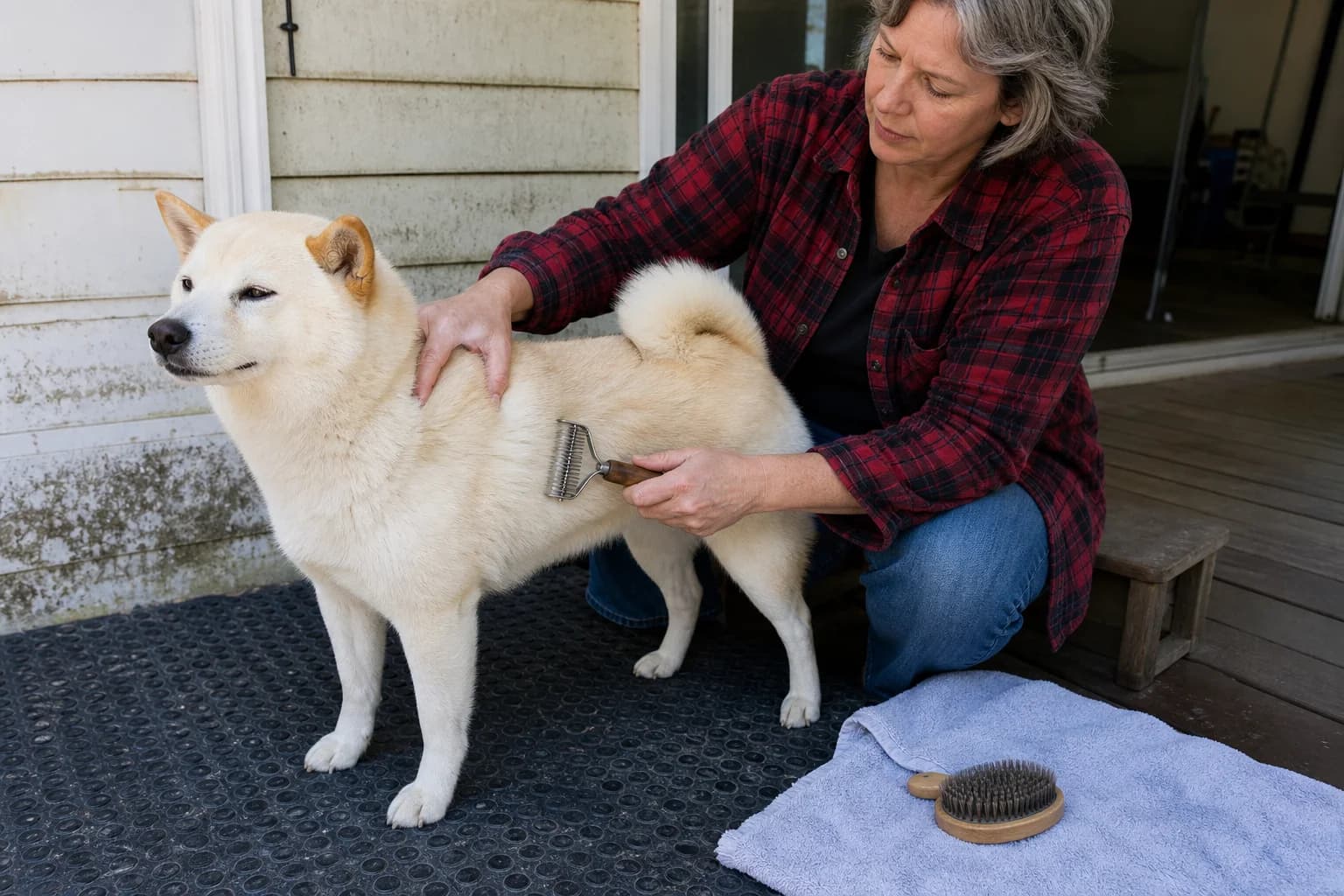
For many healthy Shibas, one or two short brushing sessions per week is a reasonable starting point outside peak shedding. During a coat blow, daily or every-other-day work may be useful if each session stays gentle and the skin remains normal. Frequency should fall again when the brush yield returns to baseline.
The best schedule is measured in comfortable cooperation, not minutes of nonstop brushing. Five calm minutes can be more productive than a long struggle that teaches the dog to avoid hands and tools.
Before the first stroke
Set up on a nonslip surface in a quiet room. Let the dog investigate the brush, pair its appearance with food, and touch the body with the back of the tool before brushing. A dog that moves away is asking for more distance or an easier step. When food rewards fit the dog's diet, tiny pieces from an option such as the Blue Buffalo Nudges Grillers Steak Dog Treats can help build a calm tool-introduction routine without extending the session past comfort.
Check for wounds, hot spots, scabs, lumps, ticks, tangles, and painful areas. Do not brush directly over an abnormal spot. If a mat is tight to the skin, do not insert scissors beneath it because folded skin is easy to cut.
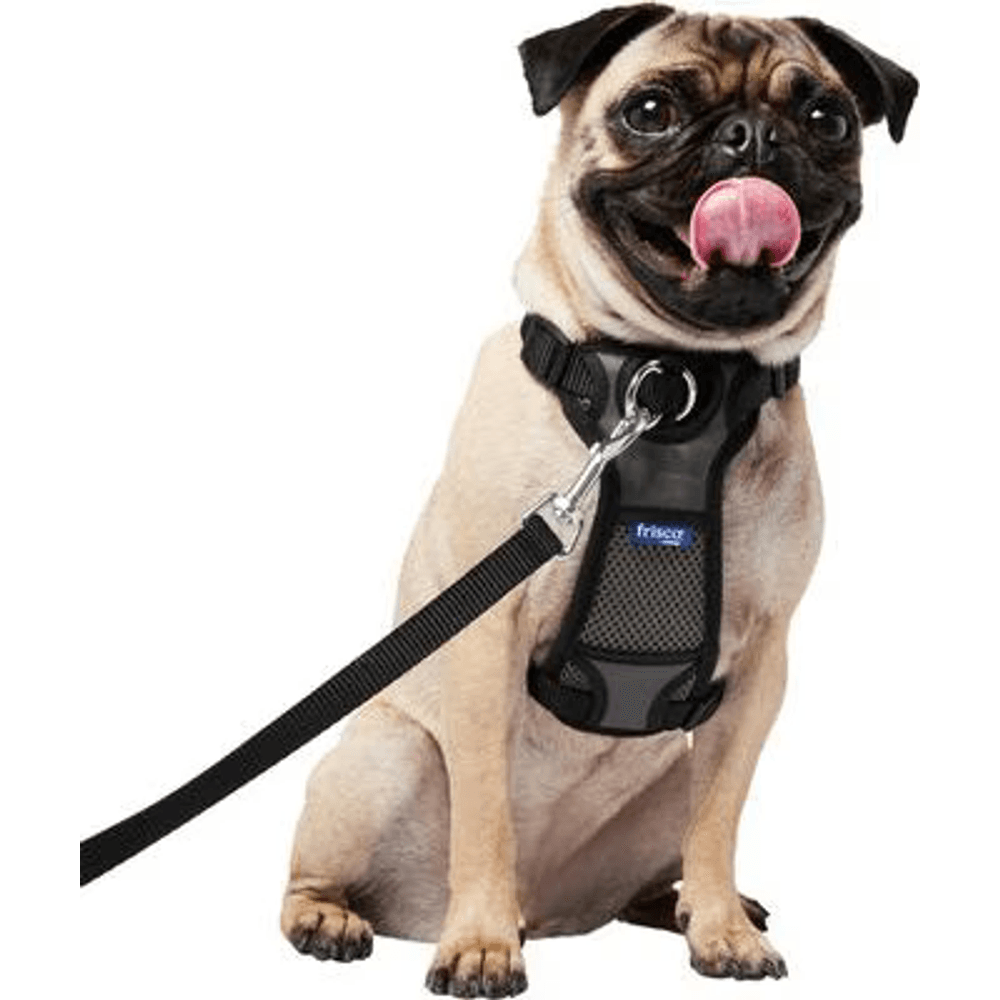
A budget-friendly padded no-pull harness that keeps leash pressure off a coughing dog's neck and windpipe by distributing it across the chest. A simple, affordable way to protect an irritated airway or a collapsing trachea on every walk.
Petful may earn a commission when you click through to Chewy, at no extra cost to you.
A section-by-section method
- Start at a shoulder or side where the dog comfortably accepts touch.
- Separate a small layer of hair so you can see how the tool meets the coat.
- Brush in the direction of growth with short, light strokes.
- Clear the tool often so it does not drag packed hair.
- Check the skin and your progress with fingers or a metal comb.
- Move to a new area before one patch becomes irritated.
- End with an easy body area and a reward.
The tail, trousers, neck, and dense shoulder coat may need extra attention, but they also deserve less pressure. Avoid scraping the belly, groin, genitals, face, or any thinly coated area with a stiff tool. Ask a groomer to demonstrate technique if you cannot tell whether the brush is lifting loose undercoat or cutting healthy coat.
Cooperative care develops outside shedding season. Practice one stroke, reward, and release. Gradually add strokes only while the Shiba stays loose-bodied and willing. A basket muzzle can be a useful safety tool when properly conditioned, but it should never be used to force a painful grooming procedure.
Tools for undercoat and topcoat
No single “best Shiba brush” suits every coat, body area, and handling tolerance. Choose the least aggressive tool that completes a defined job. Inspect teeth and pins before every use, discard damaged equipment, and keep all metal away from eyes and other sensitive tissue.
Use this job-based kit as a starting point:
- Rubber curry or grooming mitt: loosens surface hair and gives a light massage during ordinary maintenance. Stop if repeated rubbing creates static, friction, or discomfort. Two hand-contact options to compare on a small area are the Four Paws Magic Coat All-In-One Wet & Dry Dog Glove & Curry Brush and the Mr. Peanut's Hand Gloves Dog & Cat Grooming & Deshedding Aid; stop if friction, static, seams, or fit make the dog uncomfortable.
- Soft bristle brush: finishes the outer coat and moves surface debris. It will not reach deeply packed undercoat by itself.
- Slicker brush: lifts loose hair and separates denser areas when pin length and pressure suit the dog. Pins should not rake repeatedly across bare skin.
- Undercoat rake: can reach released undercoat during a peak, but tooth length, spacing, angle, and pressure matter. Avoid a sharp de-shedding blade that slices healthy coat.
- Metal comb: checks whether a small section is free of tangles after brushing. Never yank it through resistance.
- High-velocity dryer used by a professional: can move water and loose coat without scraping, but noise, air pressure, temperature, eye protection, and the dog's fear level all require active control.
A safe tool test
First examine the contact surface for burrs, bent pins, rust, or sharp edges. Test it lightly on your inner forearm, understanding that canine skin and coat are still different. Make two or three strokes on one small shoulder area, then part the coat and inspect for redness or scratches.
Increase neither pressure nor repetitions simply because hair keeps coming. Compare what the tool collects: fluffy released undercoat is expected during a blow; chopped guard hairs or broken shafts suggest the method is too aggressive. Stop immediately if the dog yelps, whips its head around, freezes, growls, or tries to escape.
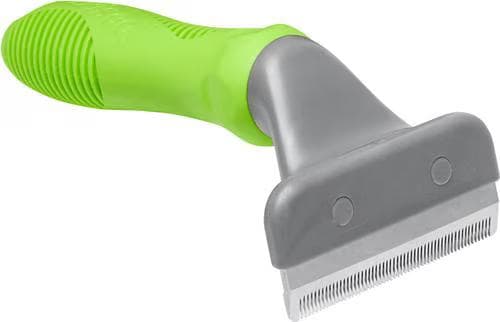
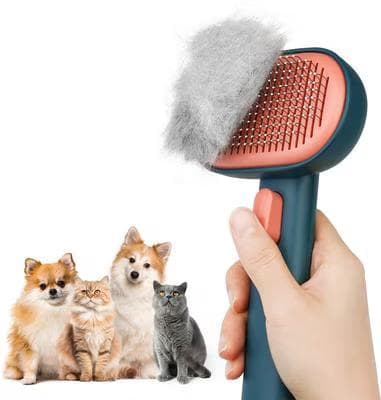
A Frisco Deshedding Cat and Dog Brush, Medium, Medium to Long Hair can help lift loose coat during a controlled brushing session. Use light pressure, follow the product directions, avoid repeatedly scraping one area, and stop if the skin becomes red or the dog is uncomfortable; shaving a healthy Shiba double coat is not routine shedding care.
Petful may earn a commission when you click through to Chewy, at no extra cost to you.
Bathing and drying safely
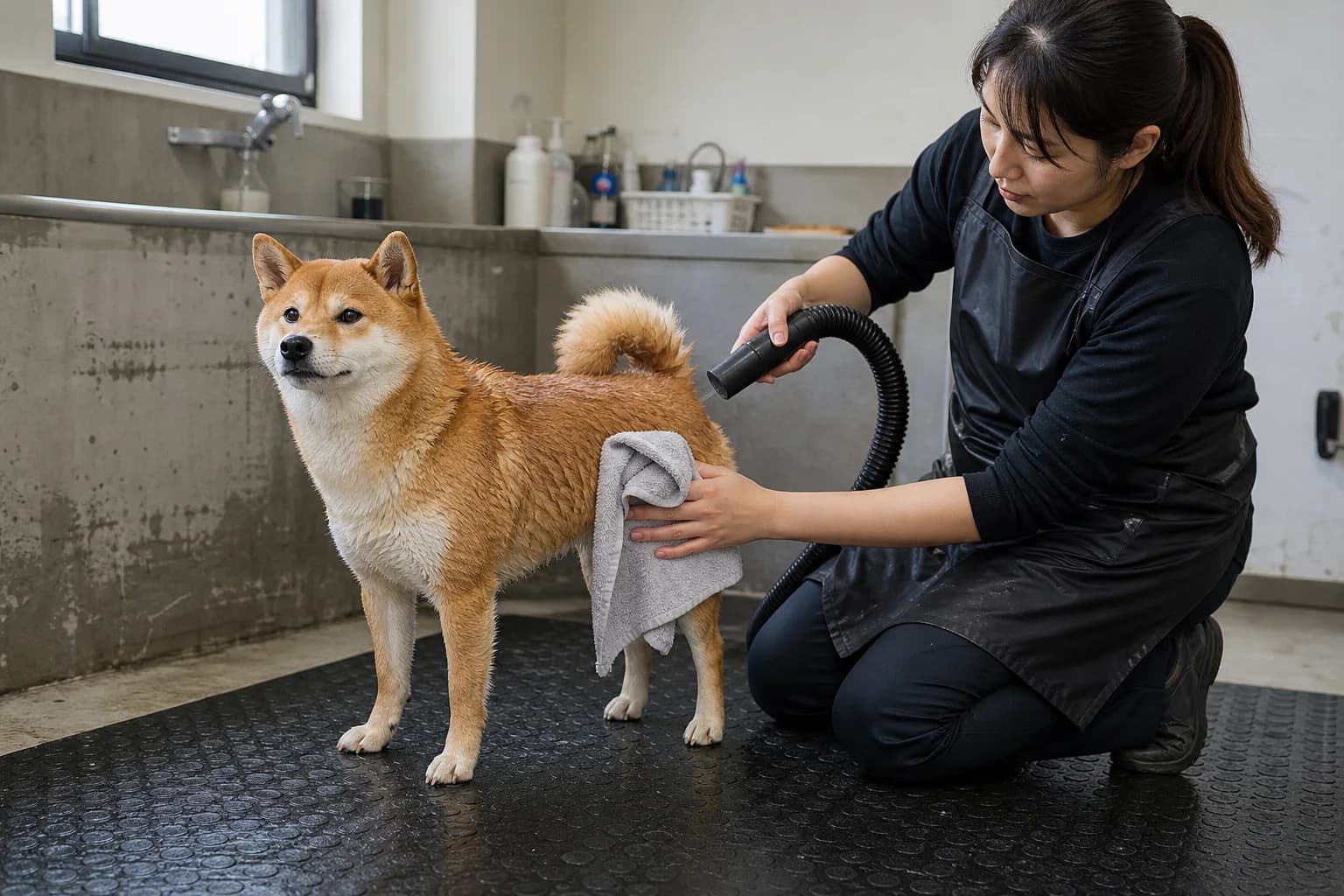
- Dry the undercoat, not just the surface | A Shiba can feel dry across the guard hairs while moisture remains close to the skin. Check the neck, armpits, groin, belly, rear thighs, and base of the tail. Persistent dampness, product residue, and excessive heat can all worsen irritation.
Healthy Shibas generally do not need frequent shampooing just to control hair. Bathe when the coat is dirty, odorous, exposed to something that must be removed, or when a coat-blow bath is practical for the individual. A veterinarian may prescribe a different schedule and product for skin disease.
Brush out easy loose coat before the bath, but do not abrade the skin. Place a nonslip mat in the tub, use lukewarm water, protect the eyes and ear canals, and follow the dilution and contact-time directions for the chosen dog shampoo. Human shampoo and unapproved essential-oil mixtures are not substitutes.
Rinse and dry in layers
- Wet through the outer coat gradually, using a hand to guide water toward the skin.
- Apply the product as directed without digging fingernails into the body.
- Rinse each area until the water is clear and the coat no longer feels slick.
- Press and blot with towels rather than rubbing the hair into tangles.
- Use comfortably cool or warm airflow if the dog tolerates a dryer, and keep it moving.
- Part dense areas to confirm the skin and undercoat are dry before the dog rests in a cool place.
Never use painfully hot air or leave a dog unattended in a heated drying enclosure. Stop if the Shiba is panicking, overheating, struggling to breathe, or becoming weak. A professional groomer experienced with primitive double coats may be the safer choice for a dog that cannot be bathed or dried cooperatively at home.
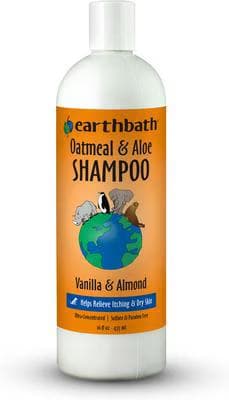
For a nonmedicated bath, Earthbath Oatmeal and Aloe Dog and Cat Shampoo is one product to compare with the dog's skin history and the current label. Do not use it over open wounds or in place of prescribed therapy. Rinse fully and discontinue it if redness, itching, swelling, or discomfort appears.
Why shaving is not a shedding solution
Shaving removes the visible hair shaft at one moment; it does not stop follicles from cycling or prevent future shed. A closely clipped Shiba can therefore resume releasing hair as the coat grows, while the skin has less physical coverage from sun, brush, and minor abrasion.
Regrowth may be slow, uneven, softer, or temporarily different in color and texture, particularly after a close clip or when health affects the hair cycle. The AKC's guidance on shaving dogs advises against shaving double-coated breeds as a cooling shortcut. Brushing, shade, water, climate control, and safe activity timing are more appropriate summer-management tools.
Medical clipping is different
There are legitimate exceptions. A veterinary team may clip a site for surgery, imaging, wound care, intravenous access, or treatment. A groomer may need to remove a tight mat that cannot be safely separated. Those are localized health and welfare decisions, not routine whole-body shedding control.
If a coat has already been shaved, protect the exposed skin as the veterinarian advises and document regrowth monthly. Do not repeatedly shave because the first regrowth looks unusual. Seek veterinary advice if the coat fails to return, the skin darkens or inflames, or other signs such as lethargy, weight change, increased thirst, or cold intolerance appear.
Allergy expectations
A low-allergen Shiba cannot be promised. Bathing and cleaning may reduce material in the environment, but neither makes the dog hypoallergenic. A person may react more strongly to one individual than another, and symptoms can change with exposure level, season, other allergens, and asthma control.
Someone with known or suspected dog allergy should speak with a physician or board-certified allergist before bringing a dog home. Short visits are not a guarantee, but spending meaningful time with the individual dog, ideally indoors and on more than one occasion, can provide more relevant information than choosing by coat length.
Practical exposure controls can include:
- keeping the dog out of the allergic person's bedroom
- using a properly sized HEPA air cleaner and a sealed HEPA vacuum
- washing hands after grooming or saliva contact
- washing pet bedding and removable covers regularly
- grooming in a ventilated area, preferably by a nonallergic household member
- following the person's medical plan instead of relying on the dog's shampoo schedule
Severe wheezing, breathing difficulty, throat swelling, faintness, or rapidly worsening symptoms require urgent medical help. Petful's grooming guidance cannot diagnose or treat a human allergy.
Skin and coat warning signs
Normal shedding leaves an even-looking coat and comfortable skin, even when the volume is impressive. Hair loss becomes more concerning when it is sudden, localized, asymmetrical, accompanied by inflammation, or paired with a change in the dog's general health.
Arrange veterinary evaluation for:
- bald circles, widening thin areas, broken hair, or a coat that does not regrow
- intense scratching, chewing, licking, rubbing, or head shaking
- redness, heat, swelling, scabs, pustules, open sores, or bleeding
- greasy scale, heavy dandruff, darkened skin, or a strong new odor
- fleas, flea dirt, attached ticks, or suspected mites
- pain during touch, grooming, harnessing, or ordinary movement
- appetite, weight, thirst, urination, energy, stool, or behavior changes with the coat problem
Possible causes include parasites, bacterial or fungal infection, allergy, friction, grooming injury, nutrition problems, and endocrine or other systemic disease. Similar-looking skin changes can need very different treatment. Avoid layering leftover antibiotics, steroid creams, flea products, essential oils, or human dandruff remedies before a professional identifies the problem.
What to bring to the appointment
Photograph the area before applying anything, note when it began, and list every food, treat, supplement, medication, parasite preventive, shampoo, spray, and grooming tool used recently. Include travel, boarding, wildlife contact, household changes, and whether people or other pets have skin signs. The Merck Veterinary Manual skin-disorder overview can help owners understand why a complete history matters, but the examination determines the next step.
Inspect friction points under the Frisco Padded No Pull Dog Harness whenever the coat changes. Wash and dry the harness according to its current instructions, loosen or remove it if it rubs, and seek veterinary advice for raw skin, swelling, pain, or persistent hair loss.
Clean the aumuca Self Cleaning Slicker Brush after use and examine its pins before the next session. Stop using a tool associated with scratches, broken hair, redness, or fear. Replacing the brush does not replace an evaluation when the skin remains abnormal.
Related Shiba Inu guides
- Shiba Inu Breed Profile: Essential Facts
- Shiba Inu Dog Price and Cost: Puppy and Lifetime Expenses
- Shiba Inu Colors: Coat Shades, Markings, and Standards
- Shiba Inu Puppies: Growth, Training, and First-Year Care
- Shiba Inu Temperament: Personality, Training, and Family Fit
- Shiba Inu Mixes: Crosses, Traits, and Care
- Shiba Inu Lifespan and Health: What Owners Should Know
- Shiba Inu Size and Weight: Growth and Adult Measurements
Frequently asked questions about do shiba inus shed
A Shiba Inu can be high maintenance during a seasonal coat blow, when short gentle brushing and frequent cleanup may be needed, although coat care is moderate during ordinary weeks. The breed can also be demanding in training, exercise, secure management, and cooperative handling, so “high maintenance” depends on more than grooming. Compare the full weekday workload, not only brushing, and use the individual dog's coat, skin, recovery, and behavior to set the routine.
A Shiba Inu is not hypoallergenic, and no dog is completely allergen-free. Allergens can come from dander, saliva, and urine as well as material carried on the coat, while individual people and dogs vary. Spend time with the specific dog before committing when allergies matter, discuss medical concerns with a qualified clinician, and make a realistic cleaning and bedroom plan. Shaving the double coat does not remove the underlying allergen sources.
Shiba shedding is normal, visible, and sometimes intense, but it should not make the dog itchy or leave bald skin. Establish the ordinary coat pattern, use tools lightly, and change course when the skin or the dog's comfort says the problem is more than loose undercoat.

Coreen Saito is a pet writer and longtime shelter volunteer with more than a decade in animal rescue. She covers cat behavior, breed care, and the small, ordinary science of sharing a life with companion animals, with a particular focus on honest takes about the products and decisions that actually matter. At home in Arizona, she's outranked by Mac (a dog with the loudest opinion in the house), Rebel (a cat who governs by quiet authority), and Meri (an orange tabby who runs the late shift and the laundry basket). She writes about all three, plus the rescues that keep coming through her life, at LifeWithMinty.com.
Sign up for expert-backed reviews and safety alerts all in one place.