Shiba Inu Dog Price and Cost: Puppy and Lifetime Expenses
Shiba Inu Dog Price and Cost: Puppy and Lifetime Expenses with evidence-based guidance on daily fit, care, costs, training, grooming, health, and the individual decisions that matter most.
Petful is reader supported. As an affiliate of platforms like Amazon and Chewy, we may earn a commission when you buy through links on this page. There is no extra cost to you.
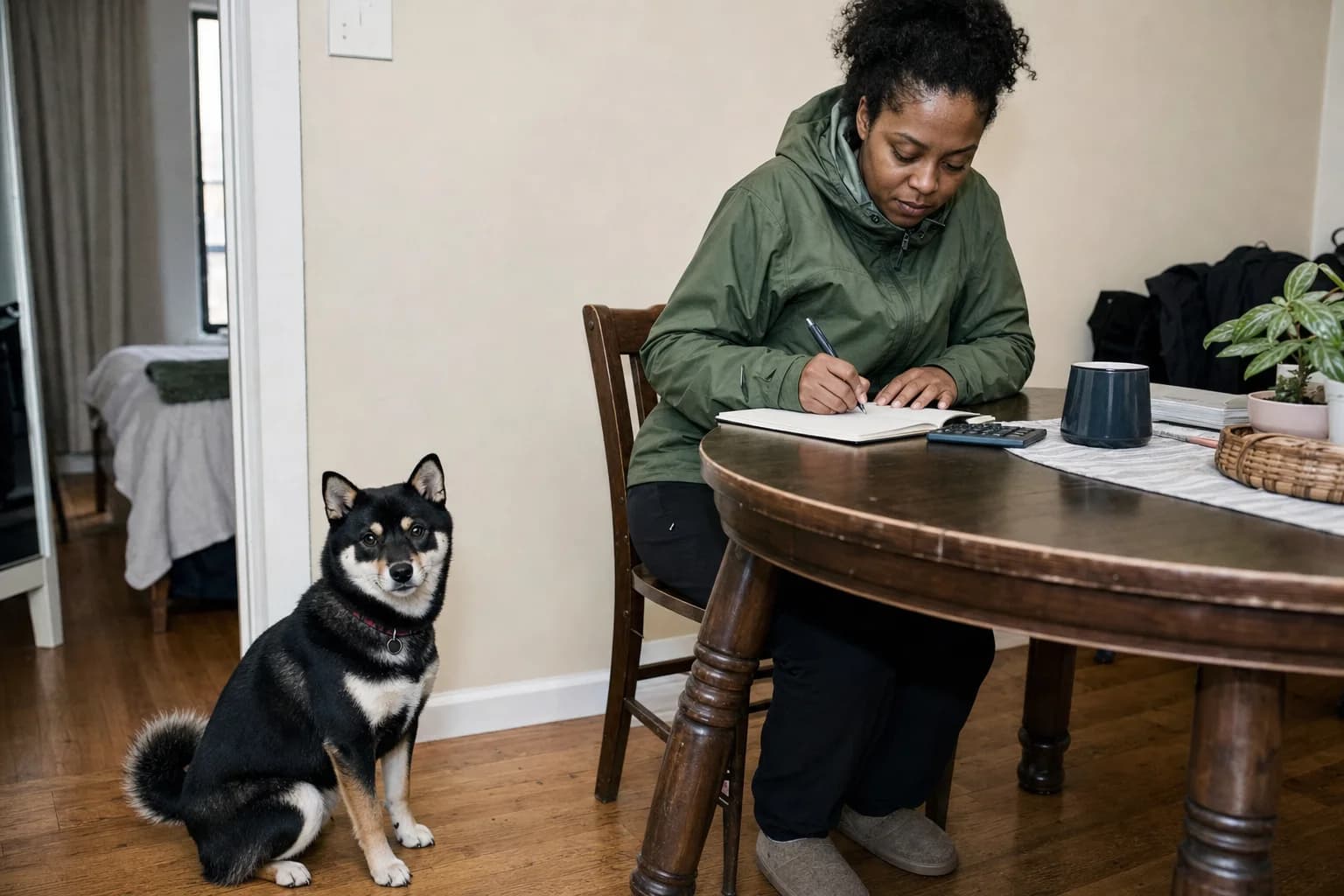
The Shiba Inu dog price advertised by a breeder or rescue is only the entry fee. A realistic budget also includes the first veterinary visit, secure walking and containment equipment, food, training, grooming supplies, preventive care, replacements, and a plan for illness or injury.
Because prices change by location and year, this guide does not pretend there is one national total. It shows how to collect current local figures, compare what each fee includes, and turn them into first-year, annual, and lifetime scenarios you can actually use.

Sign up for expert-backed reviews and safety alerts all in one place.
Shiba Inu price: the short answer
Treat acquisition, setup, recurring care, irregular professional help, and emergencies as separate budget lines. Compare local written estimates with dates and inclusions, and never use a high purchase price as proof of health, temperament, or responsible breeding.
There is no single Shiba Inu dog price that applies across the United States. Adoption fees and breeder prices vary, but the larger mistake is comparing those figures without asking what they include. A lower fee followed by unplanned transport, vaccines, supplies, or treatment may produce a higher first-month total than a more inclusive route.
Build the decision in five layers:
- Acquisition: adoption or purchase fee, transport, required deposits, and the first independent veterinary examination.
- Setup: harness, leash, collar and identification, crate or safe separation area, gates, bed, bowls, grooming tools, cleaning supplies, and initial training support.
- Recurring care: food, parasite prevention, routine veterinary care, licensing, dental care, replacements, and optional insurance premiums.
- Irregular services: training consultations, professional grooming help, boarding, pet sitting, travel, and age-related support.
- Risk protection: a funded emergency reserve, insurance that has been read closely, or a deliberate combination of both.

Soft-sided travel safety carrier that keeps a stressed cat secure and well-ventilated on the way to the vet, with mesh panels for airflow and a seat-belt loop.
Petful may earn a commission when you click through to Chewy, at no extra cost to you.
Four cost questions that need context
- Are Shiba Inu dogs good pets? They can be excellent pets for households that value an observant, independent companion and can manage secure doors, prey drive, coat care, and reward-based training. A good fit may reduce avoidable spending on damaged equipment, emergency escapes, or crisis training, but cost should never be the only reason to accept or reject the breed. Start with the full Shiba Inu profile.
- Why are Shibas so expensive? Breeder prices can reflect a small litter, documented health screening, careful pair selection, reproductive and neonatal veterinary care, early socialization, registration, and lifetime return support. Those costs do not prove that every high-priced puppy is responsibly bred. Verify parent identities, original test results, living conditions, contract terms, and what support is included.
- What is the life expectancy of a Shiba Inu? A range around 13 to 16 years is commonly cited, but no number predicts one dog's outcome. For budgeting, use multiple lifespan scenarios and plan for changing medical and support needs in later years. The Shiba Inu lifespan guide covers health screening and healthy-aging priorities.
- Why does my Shiba stare at me? Staring can mean attention, anticipation, uncertainty, a learned request, interest in food, or concern about something nearby. It is not a price issue, but it can reveal a training or welfare need. Read the whole body, context, and recent behavior before responding; a sudden fixed stare with distress or neurological signs needs veterinary advice.
The goal is not to predict every dollar. It is to make the predictable categories visible, expose assumptions, and leave room for change.
Adoption, rescue, and breeder costs
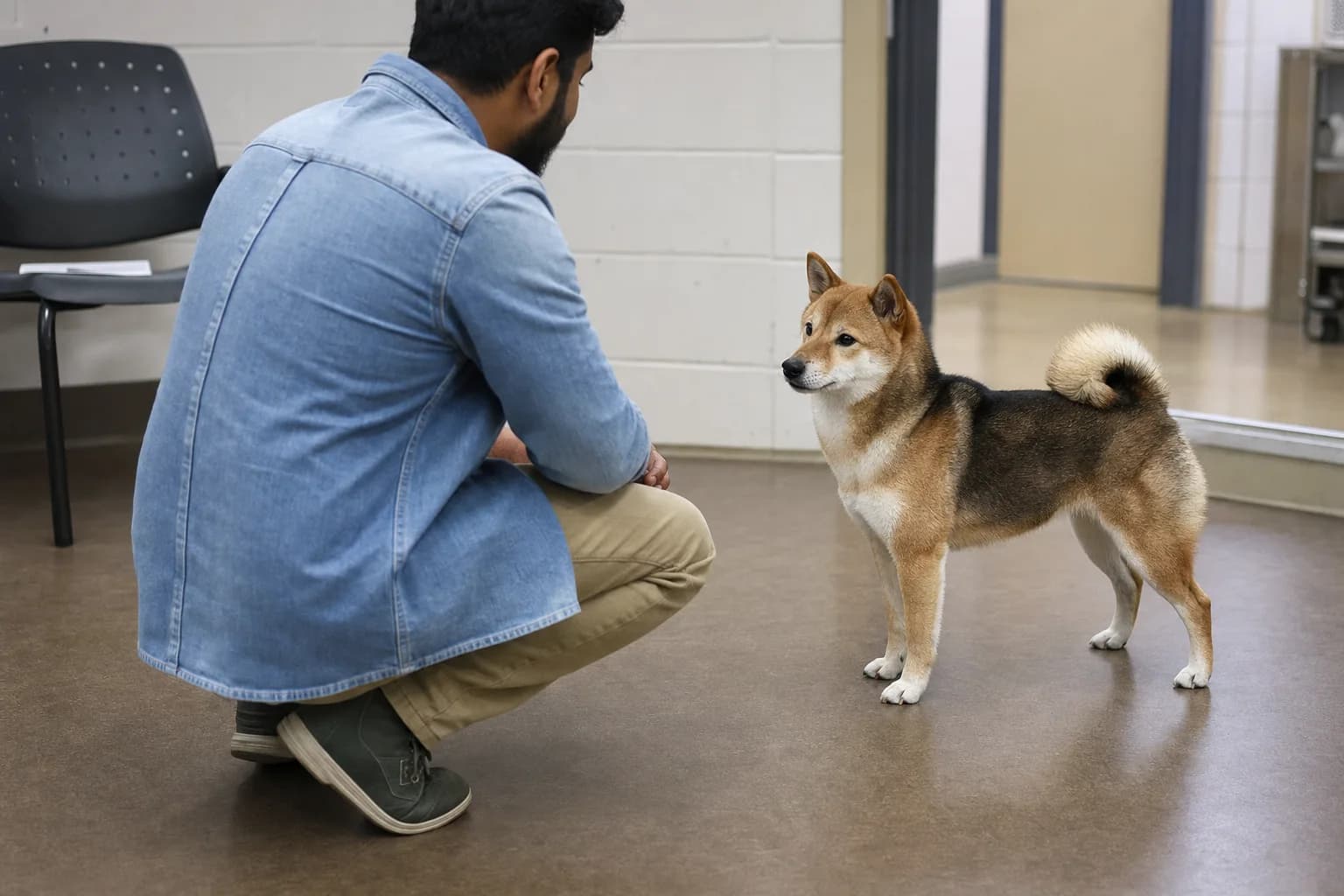
An adoption fee may include a veterinary examination, age-appropriate vaccines, parasite treatment, microchipping, and spay or neuter surgery. It may also come with foster-home observations about house training, handling, other animals, and time alone. Ask for the list in writing, because “fully vetted” can mean different things to different organizations.
A breeder's price may include early veterinary care, registration paperwork, a written contract, initial supplies, socialization, and a commitment to take the dog back if placement fails. Responsible breeding also has costs that are not visible in the puppy itself, such as health testing of both parents, travel for suitable pairings, reproductive care, around-the-clock litter care, and keeping puppies beyond the earliest legal transfer date.
Price alone cannot tell you which route is ethical. Use the same evidence standard for any source:
- Confirm the dog's identity and match names across contracts, veterinary records, and health tests.
- Ask which services have already been completed and which will become your responsibility immediately.
- Request original screening results for the actual parents rather than a verbal “clear” statement.
- Learn what the source has directly observed about behavior and what remains unknown.
- Read refund, return, support, and ownership-transfer terms before paying.
- Avoid irreversible payment sent under artificial urgency or secrecy.
Budget for an independent examination soon after placement even when records appear complete. That visit establishes a relationship with your veterinarian, checks the individual dog, and creates a baseline for future changes. Transport can add a meaningful amount, too. Include fuel, airline or ground transport, an appropriate carrier or restraint system, lodging, and any required health documentation.
Early purchases should solve known needs rather than fill a generic shopping list. An appropriately sized bed such as the FurHaven Velvet Waves Orthopedic Sofa Cat and Dog Bed may be useful when its dimensions, cover care, and return terms fit the dog. For walking equipment, compare the Frisco Padded No Pull Dog Harness only after measuring the chest and checking that the design allows comfortable shoulder movement.
Compare routes on the same worksheet
Create one row for every service that might be bundled into the acquisition fee: examination, vaccines, parasite treatment, microchip, spay or neuter status, registration, transport, supplies, and post-placement support. Enter the source's documented inclusion or a current local quote in each cell. Do not assume that a blank means free or unnecessary.
Then add the costs that apply only to one route. A young puppy may need more early veterinary visits, socialization support, and equipment changes as the body grows. An adult rescue may arrive with more completed care but need a behavior consultation, dental work, or a different containment setup. Neither pattern is automatic, which is why the individual records matter.
Petful may earn a commission when you click through to Chewy, at no extra cost to you.
Use three labels for every claim:
- Verified: supported by an original record, receipt, test result, or direct observation.
- Reported: stated by the source but not yet independently confirmed.
- Unknown: not assessed, not disclosed, or impossible to predict before placement.
Unknown does not always mean unsafe, but it does need a budget response. That may be an examination, a larger reserve, a slower introduction plan, or a decision to keep looking.
What changes the purchase price
| Adoption or rescue route | Initial veterinary work, microchip, foster observations, placement support | Exact services, dates, medical records, return policy |
|---|---|---|
| Responsible breeder route | Parent screening, early care, socialization, contract, registration context | Parent identities, original results, puppy records, lifetime support |
| Location and transport | Local demand, travel, carrier, documentation, lodging | A dated door-to-door estimate rather than the advertised fee |
| Age and individual needs | Mature behavior information or extra puppy setup and training | The dog's actual health, handling, and care requirements |
Legitimate costs can affect the purchase price, but marketing language often imitates them. A claim such as “health tested” is meaningful only when you can see which test was performed, on which dog, by which organization, and with what result. A routine veterinary examination is valuable but is not the same as breed-relevant orthopedic or ophthalmic screening.
Factors that may change a quoted price include:
- The source's location and the real cost of safe transport.
- Documented parent screening, reproductive care, and complications during pregnancy or delivery.
- Litter size and the amount of veterinary or hand-rearing support required.
- The puppy's age, completed veterinary care, and time spent in structured socialization.
- Contract terms, registration context, initial supplies, and lifetime return support.
- Local demand and the number of responsible sources in the region.
Other factors should trigger questions rather than automatic premiums. “Rare,” “teacup,” “mini,” “exclusive,” or unusually colored labels do not establish health or quality. The standard recognizes specific colors and size ranges, but a puppy's appearance does not replace parent screening, stable temperament, sound structure, or responsible placement. See the Shiba Inu colors guide before paying more for a color claim.
Keep every quote dated and record what is included. To compare two routes, add the missing services to each one. If one fee includes microchipping, an examination, and several weeks of support while another includes none of them, the advertised figures are not a like-for-like comparison.
First-year setup costs
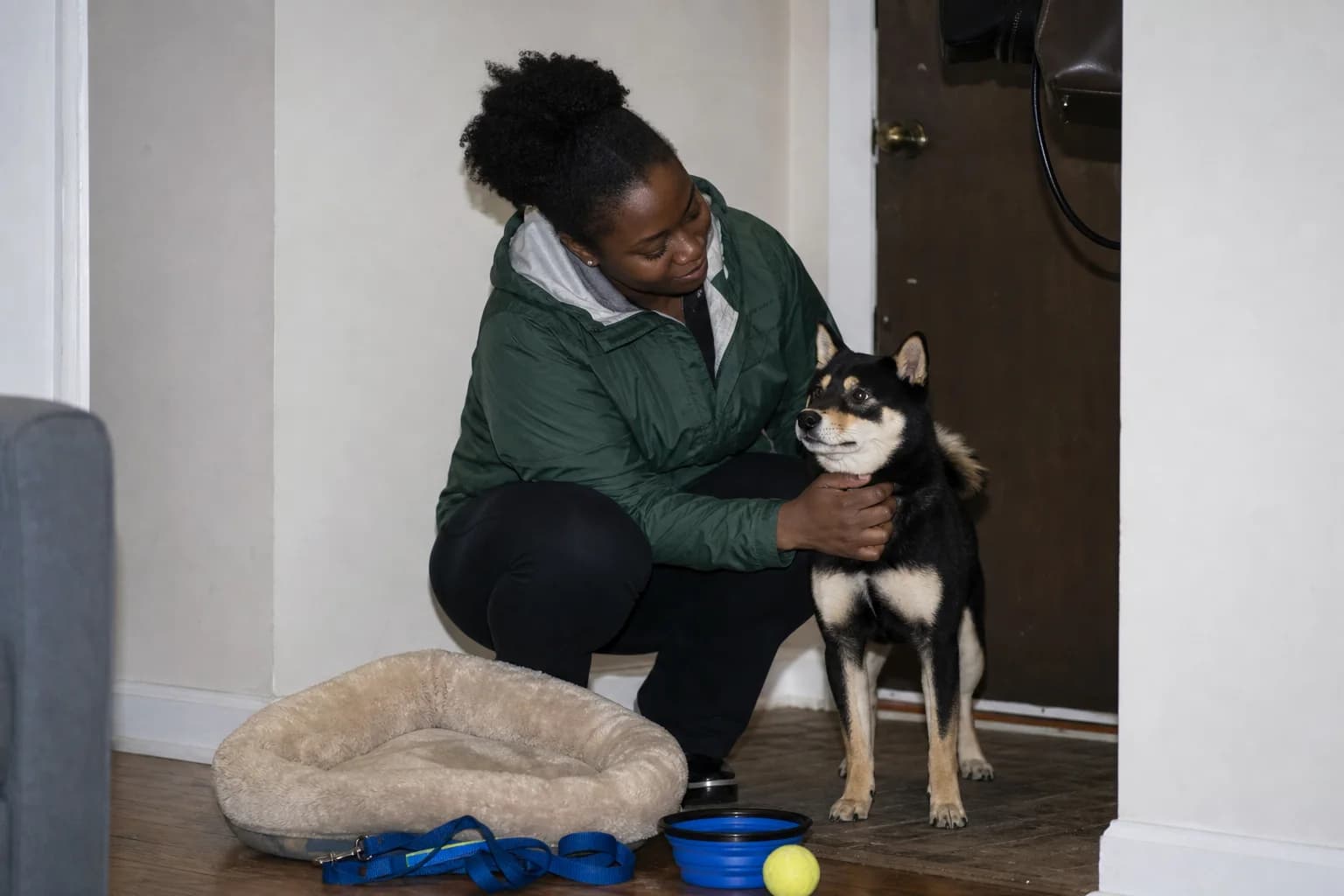
First-year setup should prioritize safety and fit. Shibas are compact, but their ability to slip through doors, back out of loose equipment, or chase movement makes containment a real budget category. Measure the dog, inspect the home, and buy the minimum safe setup first. Decorative extras can wait until you understand preferences and sizing.
Safety and daily-care setup
- A secure collar with current identification and a correctly fitted harness.
- A sturdy leash, plus a long line only for supervised practice in suitable areas. For a concrete leash-price benchmark, compare the Frisco Traffic Leash with Dual Padded Handles after checking length, hardware, handle comfort, and the dog's pulling strength.
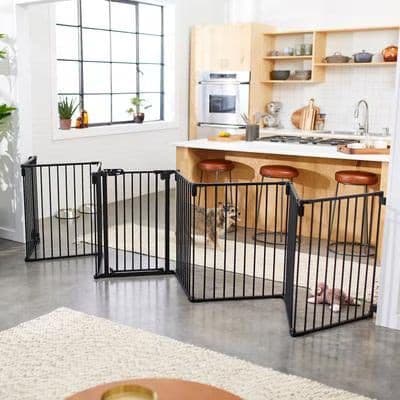
- A crate, pen, gates, or a dog-safe room for separation and gradual alone-time training. One barrier to price against the room is the Frisco Steel 8-Panel Configurable Dog Gate and Playpen; confirm panel stability, attachment, bar spacing, and climbing risk before relying on it.
- Food and water bowls that are stable, easy to clean, and appropriately sized.
- A washable bed and a quiet resting location. One removable-cover resting option to price by usable dimensions and care instructions is the FurHaven Velvet Waves Perfect Comfort Orthopedic Sofa Cat & Dog Bed.
- A brush, comb, nail-care plan, dog-safe toothbrush and toothpaste, towels, and cleaning supplies. For the coat-care line, the Four Paws Magic Coat All-In-One Wet & Dry Dog Glove & Curry Brush is one gentle-contact format to compare. For the dental line, price a dog-safe product such as Virbac C.E.T. Enzymatic Dog & Cat Toothpaste only after confirming flavor, ingredients, and veterinary guidance suit the dog.
- A carrier or vehicle restraint system that suits the dog's size and travel method. A medium option to compare against standing height, body length, weight, and vehicle setup is the Frisco Travel Safety Dog & Cat Carrier, Medium.
Create two columns in the setup budget: “needed before arrival” and “buy after assessment.” Food should match the source's current diet at first unless a veterinarian recommends otherwise. A specialized feeder, coat tool, or larger crate may be a poor purchase until you see how the dog eats, rests, and tolerates handling.
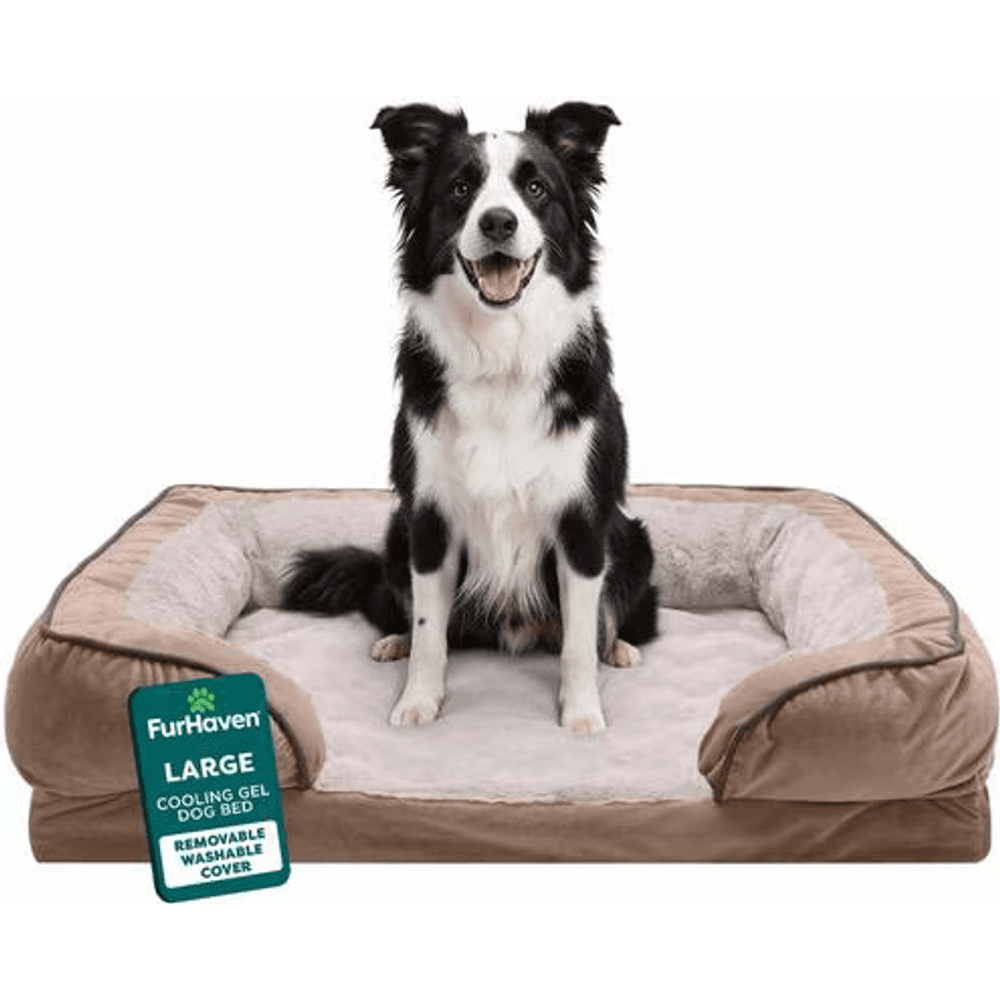
An orthopedic sofa bed with three bolstered sides for dogs who like to rest their head and joints against a cushion. The supportive foam base cradles hips and elbows, a comforting spot for an older or shaky dog to settle.
Petful may earn a commission when you click through to Chewy, at no extra cost to you.
Keep receipts and packaging through the return period, and test equipment indoors before relying on it outside. Check harness fit at the neck, chest, and shoulders. Make sure gates cannot be climbed, pushed aside, or opened by children. A crate should allow normal standing, turning, and resting, but it should not become a substitute for training or social contact.
Add initial professional costs to this category even though they are not physical supplies. A veterinary examination, a reward-based training consultation, licensing, microchip registration, and a grooming or cooperative-care lesson may be more valuable than a cart full of accessories.
Avoid false economies
The least expensive item is not a saving if it fails at the first pull, rubs the dog, cannot be cleaned, or must be replaced immediately. Compare usable life, safety, fit range, warranty, and return policy. On the other hand, a premium label does not make a product necessary. A simple, correctly fitted setup is often better than an elaborate one the dog cannot tolerate.
Plan for normal mistakes without treating them as unlimited spending. A puppy may outgrow a harness, reject a bed location, or need a different gate configuration once behavior is understood. Set a modest adjustment allowance and delay duplicate purchases until the first item has been tested.
Home preparation can also reduce avoidable costs:
- Repair fence gaps and confirm gate latches before arrival.
- Move toxic foods, medications, cords, and chewable valuables out of reach.
- Decide where the dog will rest, eat, and separate from visitors or other pets.
- Arrange identification and local license requirements promptly.
- Schedule the first veterinary and training contacts instead of shopping during a crisis.
These steps are not glamorous, but they protect the budget by preventing emergency improvisation.
Monthly and annual care
Recurring expenses are easier to manage when annual bills become monthly sinking funds. If a service is paid once a year, divide the current local quote by 12 and move that amount into the budget each month. This prevents routine care from feeling like an emergency simply because the invoice is infrequent.
Common recurring categories include:
- Complete and balanced food, with the amount adjusted for body condition and activity.
- Parasite prevention appropriate to local risk and veterinary advice.
- Routine examinations, vaccines selected with the veterinary team, and laboratory screening when indicated.
- Dental home care and professional dental treatment when needed.
- License renewal, identification updates, and replacement tags.
- Waste bags, cleaning supplies, grooming consumables, and worn equipment.
- Training refreshers, pet care during travel, and housing-related pet fees.
- Insurance premiums or regular contributions to a medical reserve. If insurance belongs in the plan, compare a current Lemonade pet insurance quote with exclusions, waiting periods, reimbursement, limits, and the cash needed before reimbursement.
Use real consumption rather than a package's marketing estimate. Record how long a bag of food, dental product, or preventive supply lasts for this dog. Review automatic shipments after the first three months so they do not create waste. If age, activity, health, or diet changes, update the figure rather than carrying an obsolete monthly average.
Transport equipment can still need replacement as a puppy grows. A Frisco Travel Safety Dog and Cat Carrier, Medium is one carrier to price only after confirming the individual dog fits its current dimensions and weight limits, the door is secure, and the dog can stand, turn, and lie comfortably. A configurable barrier such as the Frisco Steel Configurable Dog Gate and Playpen may suit some floor plans, but wall attachment, bar spacing, stability, and supervision should be assessed before use.
A simple receipt review
After 90 days, sort actual receipts into food, veterinary, training, grooming, equipment, services, and optional purchases. Compare the total with the original estimate. Increase the recurring figure where reality is higher, remove subscriptions that are not useful, and keep emergencies separate so one unusual invoice does not distort the normal monthly cost.

A budget-friendly padded no-pull harness that keeps leash pressure off a coughing dog's neck and windpipe by distributing it across the chest. A simple, affordable way to protect an irritated airway or a collapsing trachea on every walk.
Petful may earn a commission when you click through to Chewy, at no extra cost to you.
Calculate food and preventive care honestly
Package price is not the daily food cost. Record the bag or case size, the amount actually fed, and how many days it lasts. Use the dog's measured body condition and veterinary guidance rather than feeding extra simply because a label gives a broad range. Treats, chews, toppers, and training food belong in the same category because they can change both spending and calorie intake.
For preventive care, ask the clinic for a current estimate that separates the examination from vaccines, screening, parasite tests, and medication. Recommendations vary with age, health, lifestyle, travel, and local disease risk. A low online average from another state is less useful than a dated estimate from the clinic you can reach.
Review each recurring line for its real purpose:
- Is the product being used before it expires?
- Has the dog's dose, food amount, or equipment size changed?
- Does the subscription price still beat buying only what is needed?
- Is an annual service already included in a wellness plan or insurance add-on?
- Would a larger reserve be more useful than an optional monthly box?
This review keeps the plan responsive without cutting care that protects health or safety.
Training and grooming expenses
- Budget for help before a crisis | Early, qualified support for door rushing, handling fear, guarding, reactivity, or separation distress is usually easier and safer than waiting until the behavior is well rehearsed. Choose humane, reward-based professionals and ask how the plan will be practiced at home.
Training costs depend on the dog's needs and the household's experience. Group classes may suit foundational skills for a comfortable puppy or adult, while private sessions can be more appropriate for fear, escape behavior, handling difficulties, guarding, or a home-specific problem. Price the full plan, not only the first appointment: assessment, follow-up sessions, travel, equipment, and practice time all matter.
Ask a trainer:
- Which qualifications and continuing education support their work?
- What methods will be used, and what happens if the dog is afraid or over threshold?
- How many sessions are commonly needed for this type of problem?
- What management is required between appointments?
- When would the trainer refer to a veterinarian or veterinary behaviorist?
The coat is naturally double layered and often sheds heavily during seasonal coat changes. Many owners can handle routine brushing and bathing at home, but professional help may be useful for nail care, coat blow, handling practice, or a dog that cannot be groomed safely. Include tips, travel, and visit frequency when comparing local quotes.
Home grooming is not free after the initial purchase. Brushes wear, shampoo is consumed, towels and filters need cleaning, and a poor tool can damage coat or skin. Buy for the individual coat and handling tolerance rather than collecting every tool recommended online. The detailed shedding guide explains brushing, bathing, drying, and why shaving is not a routine solution. When a bath is appropriate, the Earthbath Oatmeal & Aloe Dog & Cat Shampoo is one product to compare by ingredients, dilution, rinse directions, skin response, and price per use.
Veterinary care and emergency reserves
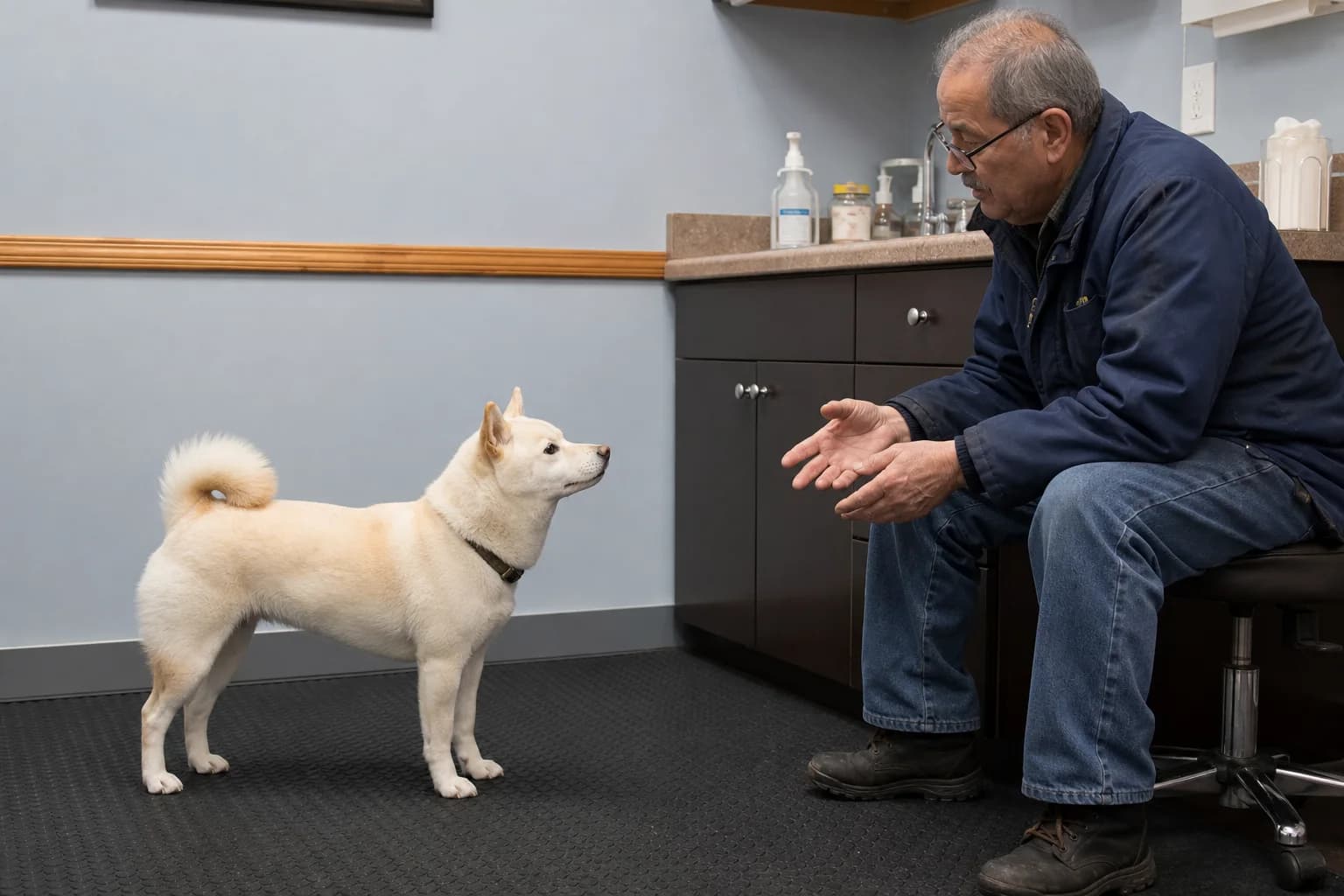
Routine veterinary care is predictable enough to estimate with local quotes. Ask what an examination includes, then price likely preventive services separately. Puppies may have more visits early in life, while mature and senior dogs may need more frequent monitoring, dental care, laboratory work, medication, or mobility support.
Emergency care is different. The timing, diagnosis, and treatment cannot be known in advance, so the plan must focus on access. Identify the nearest after-hours clinic, learn how long transport takes, and keep its contact information available. A reserve should not be mixed with the monthly food account or counted twice as routine savings.
If considering pet insurance, compare more than premiums:
- Waiting periods and the effective start date.
- Exclusions for pre-existing, hereditary, congenital, dental, or behavioral conditions.
- Deductible type, reimbursement percentage, annual or lifetime limits, and claims process.
- Whether examination fees, rehabilitation, prescriptions, or specialist care are included.
- How premiums may change with location, age, or renewal.
Read a sample policy before enrollment and save the version that applies. Insurance often reimburses after the owner pays the clinic, so a separate cash or credit-access plan may still be necessary. If self-funding, set a target based on local emergency estimates and automate contributions until the reserve reaches it.
The National Shiba Club of America's health page identifies breed health topics, and the OFA CHIC program explains documented screening. These sources help frame preventive questions, but only a veterinarian examining the individual dog can diagnose a problem or recommend care.
A realistic lifetime budget
A lifetime number should be a range, not a promise. Inflation, location, lifespan, health, diet, housing, travel, and the availability of family help can change it dramatically. The useful model has low, expected, and high scenarios built from the same categories, with assumptions written beside each figure.
Use this formula:
- Acquisition and setup: counted once, with a small replacement allowance for mistakes or growth.
- Annual recurring care: multiplied by several lifespan scenarios and adjusted periodically for inflation.
- Irregular services: training, grooming, boarding, and travel estimated by realistic frequency.
- Later-life support: a separate allowance for more monitoring, medication, dental work, mobility help, or home changes.
- Emergency protection: reserve contributions or insurance premiums, while avoiding double-counting money already included elsewhere.
Review the model after the first 90 days, at each annual planning point, and whenever health, housing, family schedule, or care arrangements change. A budget that works only while everything goes perfectly is not a reliable ownership plan.
Stress-test the expected scenario
Run the expected budget through ordinary disruptions. Add a week of boarding or pet sitting, a training refresher, replacement of one safety item, an urgent examination, and a temporary diet change. The exercise is not meant to predict disaster. It shows whether the plan has enough margin to absorb common changes without delaying care.
Also test the household's noncash capacity. Time away from work, transport to a specialist, administering medication, brushing during coat blow, and finding a sitter comfortable with the dog's behavior can affect the real burden even when an invoice is manageable. Write down who can help and what that help would cost if family support becomes unavailable.

Use decision points instead of a vague promise to “make it work”:
- The minimum reserve that must remain untouched.
- The premium or savings contribution that will be reviewed each year.
- The monthly total that would require cutting optional spending elsewhere.
- The care needs that would require professional help rather than home management.
- The housing or schedule change that would make ownership unsustainable.
A clear boundary protects both the dog and the household. If the expected scenario is already too tight, delay acquisition and build the reserve before bringing a Shiba home.
The sibling guides help localize the assumptions. Shiba Inu puppies clarifies first-year needs, the temperament guide identifies training and management demands, Shiba Inu mixes explains mixed-breed variation, and the size guide helps with equipment fit. Cost is not a reason to ignore health, but it is a reason to plan before commitment.
For long-term replacement planning, a washable bed such as the FurHaven Velvet Waves Orthopedic Sofa Cat and Dog Bed should be compared on usable dimensions, support, cover care, and return terms rather than appearance alone. A Frisco Padded No Pull Dog Harness should likewise be remeasured as body condition or coat changes, since an old purchase is not automatically a safe current fit.
Related Shiba Inu guides
- Shiba Inu Breed Profile: Essential Facts
- Shiba Inu Colors: Coat Shades, Markings, and Standards
- Shiba Inu Puppies: Growth, Training, and First-Year Care
- Shiba Inu Temperament: Personality, Training, and Family Fit
- Shiba Inu Mixes: Crosses, Traits, and Care
- Shiba Inu Lifespan and Health: What Owners Should Know
- Shiba Inu Size and Weight: Growth and Adult Measurements
- Do Shiba Inus Shed? Coat Care and Grooming Guide
Frequently asked questions about shiba inu dog price
Shibas can be expensive because an asking price may reflect local supply, demand, transport, early veterinary care, registration, parent health screening, puppy raising, and the breeder's ongoing support, but price alone proves none of those things. Ask for verifiable records and compare what is included. Responsible sourcing may cost more upfront, while unusually high rarity or color premiums deserve scrutiny. The complete budget must also include setup, training, routine care, insurance or emergency savings, and the dog's lifetime needs.
A first-year Shiba Inu budget should include separate lines for acquisition or adoption, travel, veterinary examinations, vaccines and parasite decisions, identification, food, secure walking equipment, gates, a resting area, training, grooming tools, licensing, boarding or pet care, insurance or emergency savings, and replacement items. Price each line locally and add a contingency instead of relying on a national total. Review actual spending after 30, 60, and 90 days so the ongoing monthly transfer reflects the individual dog.

Coreen Saito is a pet writer and longtime shelter volunteer with more than a decade in animal rescue. She covers cat behavior, breed care, and the small, ordinary science of sharing a life with companion animals, with a particular focus on honest takes about the products and decisions that actually matter. At home in Arizona, she's outranked by Mac (a dog with the loudest opinion in the house), Rebel (a cat who governs by quiet authority), and Meri (an orange tabby who runs the late shift and the laundry basket). She writes about all three, plus the rescues that keep coming through her life, at LifeWithMinty.com.
Sign up for expert-backed reviews and safety alerts all in one place.