LaPerm Cat: The Complete Guide to the Curly-Coated Breed
Everything about the LaPerm cat: the Oregon origin story, the signature curly coat and curly whiskers, low-shed reputation, affectionate clownish temperament, grooming the curls, colors, size, health, lifespan, and why kittens are born bald.
Petful is reader supported. As an affiliate of platforms like Amazon and Chewy, we may earn a commission when you buy through links on this page. There is no extra cost to you.
The LaPerm cat is the rare breed that started with a single bald barn kitten, and the Cat Fanciers' Association (CFA) traces every LaPerm alive today back to that one cat, named Curly, born on an Oregon cherry farm in 1982. What makes the LaPerm cat unforgettable is the coat: a springy mop of loose ringlets and corkscrew curls that looks hand-permed, complete with curly whiskers and a plumed, curly tail. It is a natural rex breed, meaning the curl came from a spontaneous genetic mutation rather than human engineering, and it has grown into one of the most affectionate, people-glued companion cats you can own. This guide covers the LaPerm's origin, that signature curly coat, the low-shed reputation, the clownish temperament, grooming the curls without ruining them, colors, size, health and lifespan, and the strange truth that LaPerm kittens are often born bald and grow their curls later.
- 1The LaPerm is a natural rex breed from Oregon (1982), descended from a single bald kitten named Curly
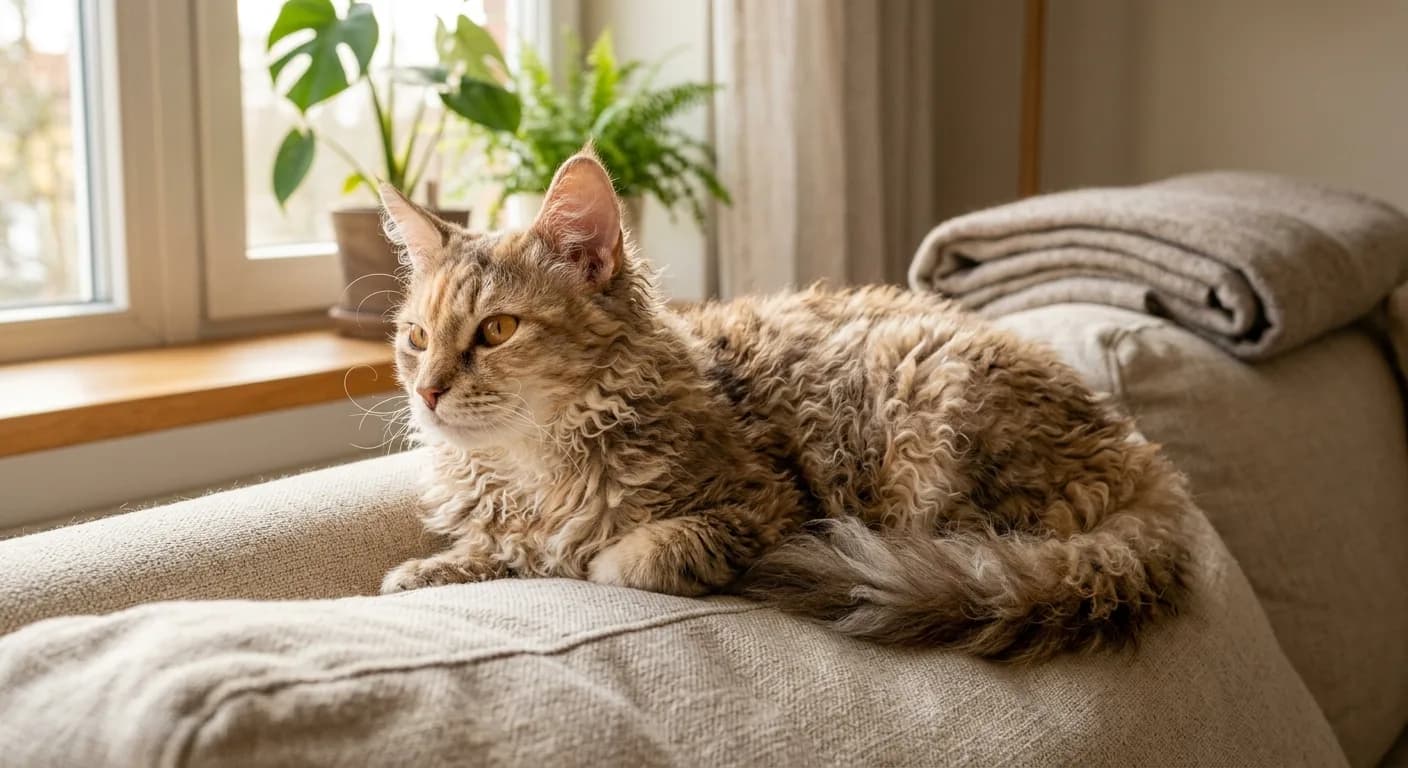
- 2The signature coat is curly all over, from soft waves to tight corkscrews, with curly whiskers and a curly, plumed tail
- 3They come in both shorthair and longhair, and in essentially every color and pattern
- 4Temperament is affectionate, gentle, clownish and intensely people-oriented, with many being shoulder-riders
- 5They shed lightly thanks to a sparse undercoat, but no cat is truly hypoallergenic
- 6Most LaPerms live 12 to 15 years and have no documented breed-specific genetic disease

Sign up for expert-backed reviews and safety alerts all in one place.
LaPerm cat at a glance
Before the deep dive, here is the quick-reference profile drawn from the CFA and TICA breed standards and from veterinary breed sources. Use it to see if the LaPerm fits your home, then read on for the detail behind each line.
| Trait | Detail |
|---|---|
| Origin | Dalles, Oregon, USA (1982) |
| Breed type | Natural rex (spontaneous curly-coat mutation) |
| Coat | Curly, shorthair or longhair, with curly whiskers |
| Weight | About 6 to 12 pounds (males larger than females) |
| Body | Medium, athletic, semi-foreign build |
| Lifespan | 12 to 15 years (some reach close to 20) |
| Shedding | Low to minimal |
| Temperament | Affectionate, gentle, clownish, people-oriented |
| Good with | Children, dogs, other cats, busy households |
| Colors | All colors and patterns accepted |
The origin of the LaPerm cat: a bald kitten named Curly
The LaPerm story is one of the most charming origin tales in the cat world, and it is genuinely accidental. In the spring of 1982, a barn cat belonging to Oregon cherry farmers Linda and Richard Koehl gave birth to a litter on their orchard in the Dalles. One kitten arrived completely bald, with oddly wide-set ears, looking nothing like her littermates. Linda Koehl named her Curly. Over the following weeks that bald kitten grew in a soft, curly coat, and within a few months she was covered in springy ringlets.
Because the farm cats roamed and bred freely, Curly passed the trait on, and more curly kittens appeared in following litters. Koehl eventually realized she was looking at a brand-new, naturally occurring breed rather than a one-off oddity, and she began a controlled breeding program in the 1980s. She coined the name LaPerm for the rippled, permed look of the coat (the prefix loosely evoking the French "la" plus "perm"). The CFA accepted the LaPerm for registration in 2000 and advanced it to full championship status in 2008, and TICA and other registries recognize it as well.
- A rex coat is a curly or wavy coat caused by a mutation in the hair structure. The LaPerm's mutation arose spontaneously in a barn cat, not in a lab, which is why it is called a natural rex. Its curl gene is dominant and unrelated to the genes behind the Cornish Rex or Devon Rex, so the breeds are not relatives despite the shared curly look.
The dominant nature of the LaPerm's curl gene is part of why the breed established so quickly. Unlike recessive traits that need two carrier parents, a single copy of the LaPerm gene can produce a curly cat, which let early breeders expand the gene pool by outcrossing to ordinary domestic cats and still get curly kittens. That wide foundation is also why LaPerms remain a fairly healthy, genetically diverse breed today. If you want to see how a different naturally curly breed developed, our profile on the Selkirk Rex covers a separate spontaneous curl mutation with its own distinct history.

Never Scoop Again® with the Whisker Litter-Robot, the smart self-cleaning automatic litter box. Monitor visits and track weights for better overall care in the Whisker® app. Multi-cat friendly.
Petful may earn a commission when you click through to Whisker, at no extra cost to you.
The signature curly coat: ringlets, corkscrews and curly whiskers
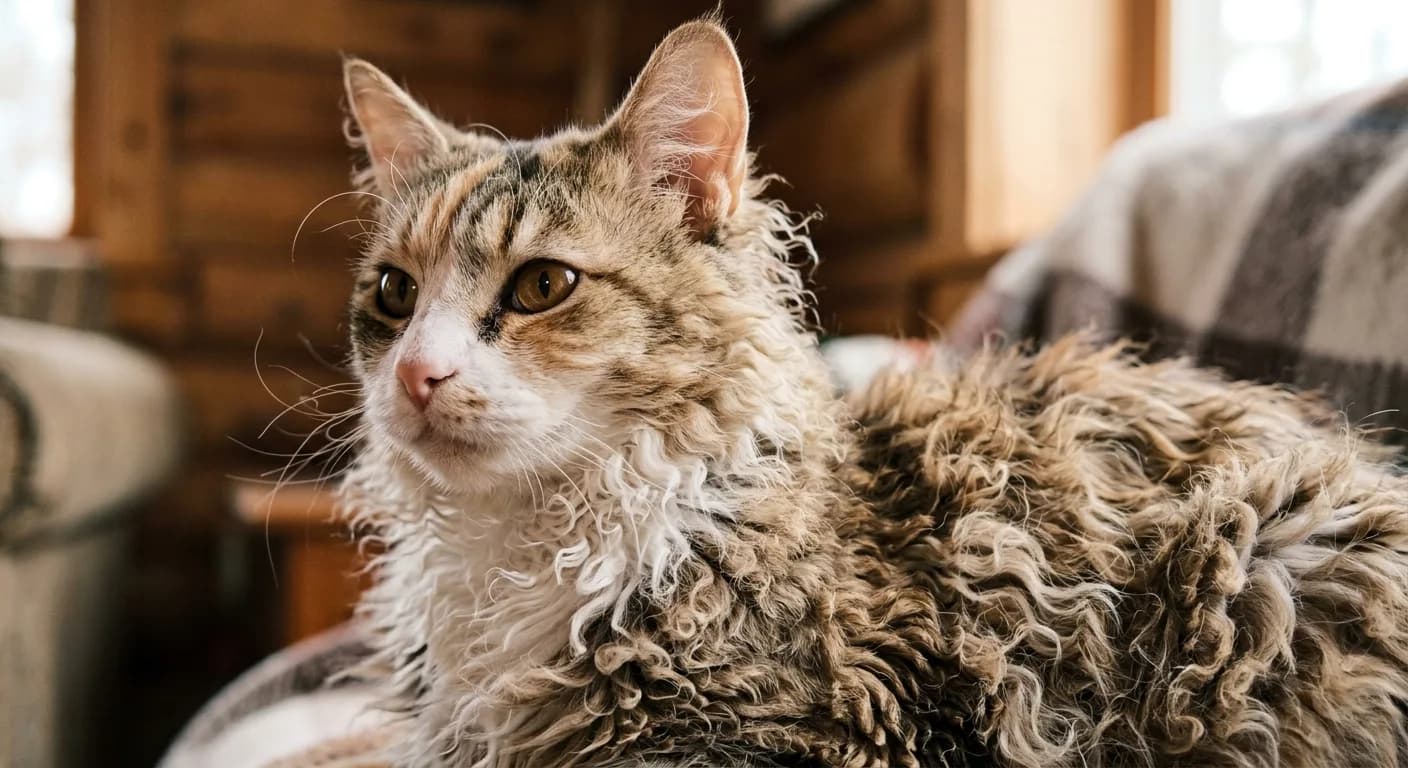
The coat is the whole point of the LaPerm, and it is unlike any other curly cat. According to the CFA breed standard, the texture is "springy, light and airy," with curls that range from "undulating waves to fine, tight ringlets or corkscrews." The curl is not uniform across the body. The tightest, most defined ringlets appear on the throat, the belly, and at the base of the ears, while the curls on the back and sides tend to be looser and more tousled. The overall effect is often described as a "gypsy shag" or mohair-like texture: deliberately disheveled, never sleek.
Two details set the LaPerm apart from every other rex breed. First, the whiskers are curly too, long and flexible and visibly bent or coiled, which is one of the quickest ways to confirm you are looking at a true LaPerm. Second, the breed comes in two coat lengths that look quite different:
- Longhair LaPerm: a semi-longhair coat with a full, curly ruff around the neck and a long, plumed, curly tail (sometimes likened to an ostrich plume). The curls are softer and more ringlet-like.
- Shorthair LaPerm: a shorter coat with crisper texture that tends to stand out from the body and often parts down the middle of the back. The tail looks more like a bottle brush than a plume.
- Look at the tail. A long, flowing, curly plume means longhair; a short, fuzzy "bottle brush" tail means shorthair. Both lengths have the same curly whiskers and the same springy ringlets on the throat and belly.
One of the most fascinating quirks of the breed is that the coat is not permanent in the way most cats' coats are. LaPerms can molt their entire coat (sometimes nearly to baldness) and regrow it, often curlier than before. Coat density and curl can also shift with season, hormones, and age, so the same cat can look fuller in winter and sparser after a heavy molt. This is normal and not a sign of illness.
Are LaPerm cats hypoallergenic? The low-shed reputation, honestly
LaPerms have a sparse undercoat, which means they shed less than most cats and rarely leave drifts of fur on the furniture. That low-shed quality is exactly why the breed is so often called hypoallergenic, and why allergy sufferers gravitate toward it. The honest answer, though, is that no cat is truly hypoallergenic. Cat allergies are triggered mainly by a protein called Fel d 1 found in saliva and skin oils, not by hair itself, and every cat (curly or not) produces it. What a low-shedding curly coat can do is trap dander and spread less of it around the room, which sometimes means fewer symptoms for mildly allergic owners, but never zero.
- If anyone in the home has cat allergies, spend real time with an adult LaPerm before buying or adopting. Reactions vary cat to cat, and a low-shed coat reduces airborne dander without eliminating the Fel d 1 protein that actually causes symptoms. Never assume "hypoallergenic" means safe.
We dig into the science, the realistic expectations, and the management tactics in our dedicated guide to whether the LaPerm is hypoallergenic, which is essential reading if allergies are driving your decision. The same Fel d 1 logic applies to every curly and sleek-coated breed alike, which is why coat length is not really what determines whether a cat triggers your allergies.
LaPerm temperament: the clownish, shoulder-riding lap cat
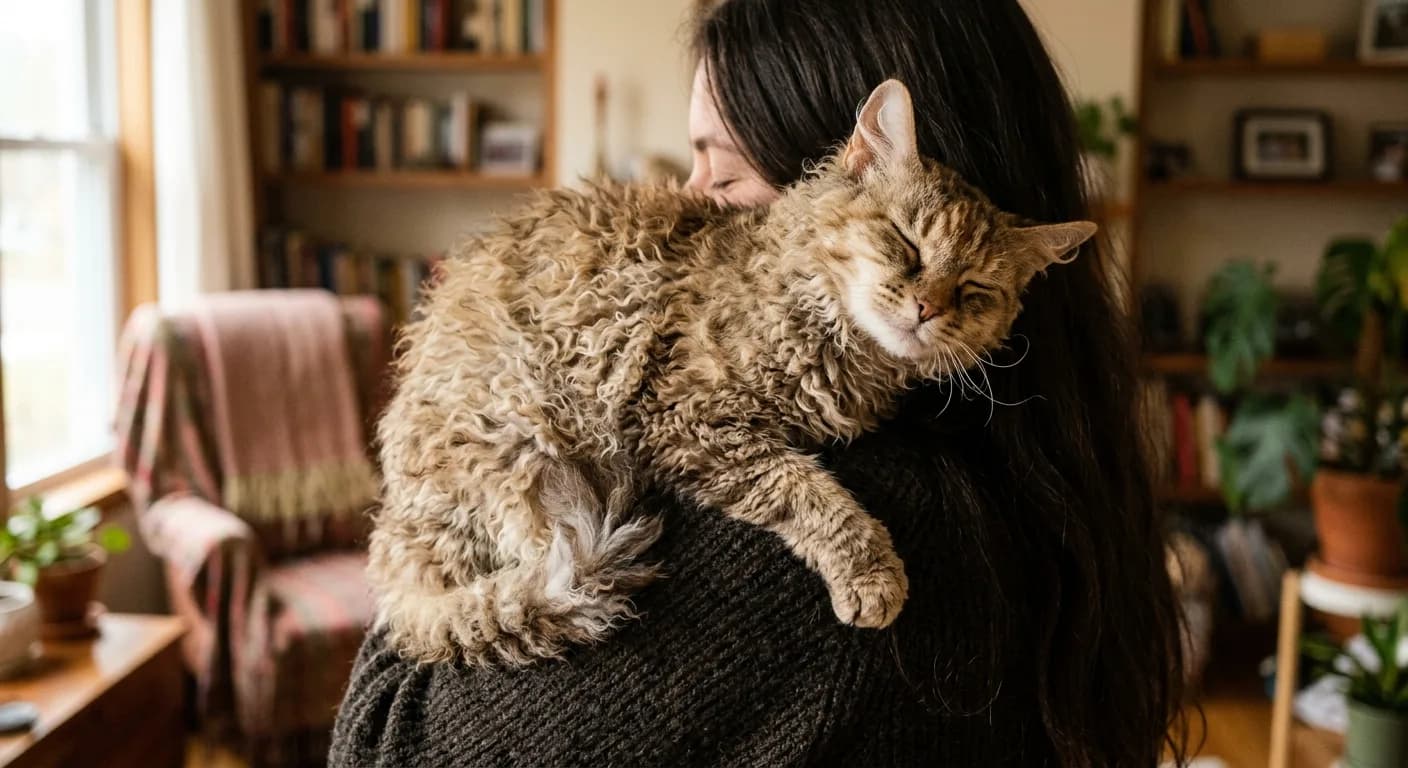
If the coat is what draws people in, the personality is what keeps them. LaPerms are intensely people-oriented, often described as affectionate, gentle, mischievous, and clownish. They form strong bonds with their humans and tend to follow you from room to room, supervise whatever you are doing, and reach a paw toward your face to get your attention. Many are notorious shoulder-riders who will climb up and drape themselves across you, and most are happy to settle into a lap and stay there once the activity winds down.
The breed blends two modes beautifully. On one hand the LaPerm retains the strong hunting instinct of its barn-cat ancestry, so it is active, curious, clever, and quick to learn games, puzzle feeders, and even simple tricks or fetch. On the other hand it is not hyperactive or demanding the way some active breeds are. It wants to be near you, not necessarily on the move constantly, and once it has had its play it is content to be a quiet lap companion. LaPerms are generally not very vocal, communicating more through closeness and gentle attention-seeking than loud meowing.
This combination makes them excellent family cats. They are typically patient and easygoing with children, sociable with cat-friendly dogs, and comfortable in multi-pet households. Their people-glued nature does mean they do not love being left completely alone for long stretches, so a companion pet or an enriched environment helps if you are out all day. If you are weighing the trade-offs of bringing one home, our honest rundown of cat ownership pros and cons is worth a read before you decide.
- LaPerms are usually quiet cats who "talk" through body language, head-bumps, and that signature paw-reach toward your face. If you want a curly cat with personality but without a constant running commentary, the LaPerm tends to be far more reserved vocally than a Siamese-type breed.
Grooming a LaPerm: less is more with the curls
Here is the counterintuitive part: despite the dramatic coat, the LaPerm is genuinely low-maintenance to groom, and the cardinal rule is do not over-brush. Vigorous or frequent brushing breaks up the ringlets, creates frizz, and can leave the coat looking fluffy and undefined instead of curly. The curls are also surprisingly tangle-resistant because the coat is light and the undercoat is sparse, so matting is uncommon when you leave the coat alone.

63-inch multi-level cat tree with scratch posts, hammock, plush perches, and dangling toys. Vertical territory is non-negotiable for high-energy climbing breeds like the Bengal.
Petful may earn a commission when you click through to Chewy, at no extra cost to you.
| Coat Length | Combing Frequency | Tool | Notes |
|---|---|---|---|
| Shorthair | About once a week | Wide-tooth comb | Comb gently in the direction of the curl; do not brush against the grain |
| Longhair | 2 to 3 times a week | Wide-tooth comb | Check the ruff and tail (plume) for the occasional tangle |
| Both | As needed | Fingers or light misting | Lightly misting with water can revive and re-define curls after handling |
| Both | Every few months | Mild cat shampoo | Bathe only when genuinely dirty; let the coat air-dry, do not blow-dry smooth |
The practical routine is simple. Use a wide-tooth comb rather than a brush, work gently in the direction the curls fall, and stop. For longhair LaPerms, check the neck ruff and the tail plume a couple of times a week for the rare tangle. If the coat looks a little flat or frizzy after petting or play, a light mist of water with your hands can spring the ringlets back. Beyond the coat, the usual feline basics apply: keep the ears clean and dry to prevent infection, brush the teeth or provide dental care to manage tartar, and trim the nails. Because the undercoat is sparse, you will spend far less time on de-shedding than you would with a dense double-coated breed.
- Comb, do not brush, and never overdo it. The LaPerm coat is designed to look tousled, and the worst thing you can do is fight it into smoothness. When in doubt, leave the curls alone and let them do their thing.
LaPerm colors and patterns
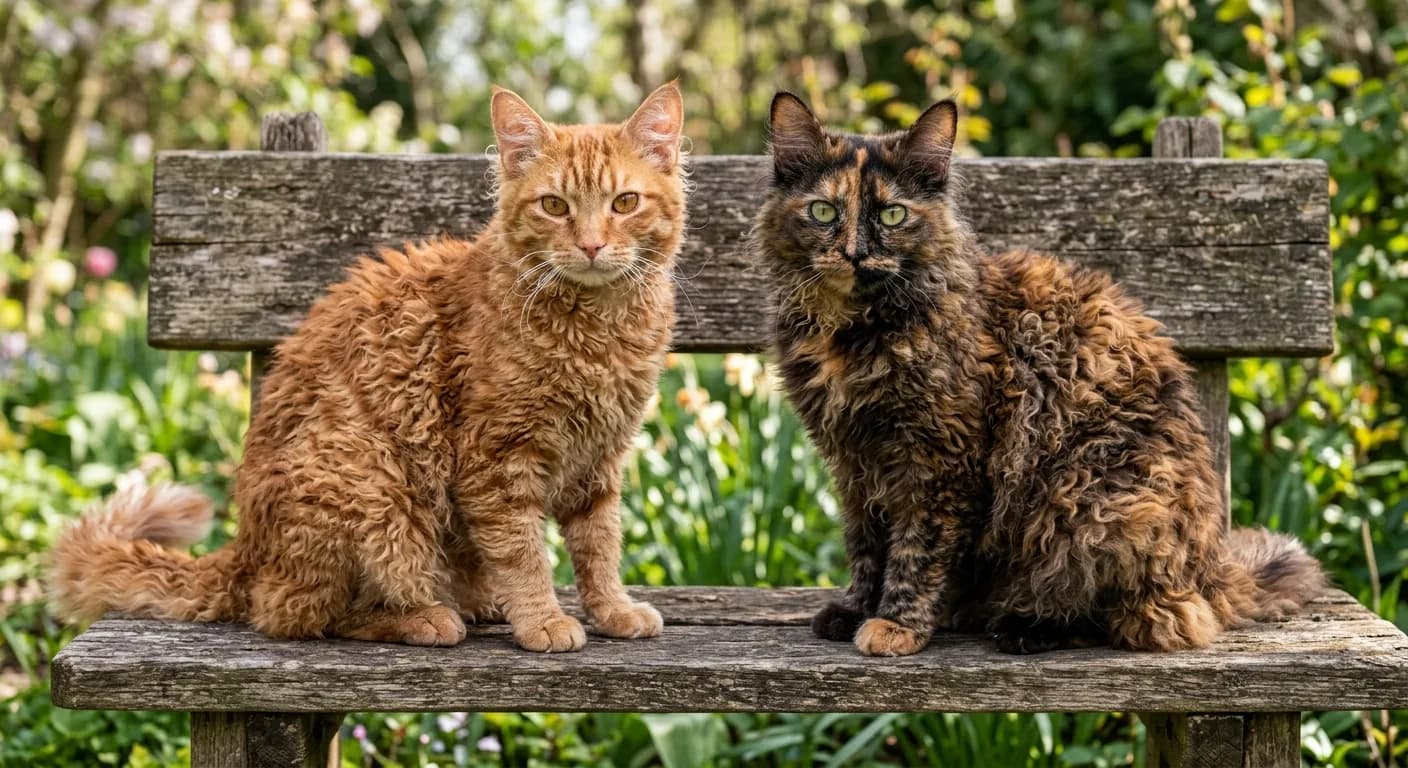
There is no "LaPerm color" because the breed accepts essentially every color and pattern a cat can genetically produce. The curl is the defining feature, not the color, so registries judge the coat texture and conformation and allow the full palette underneath. According to the CFA, that includes solid colors (white, black, blue, red, cream, chocolate, cinnamon, lavender), tabbies (classic, mackerel, spotted, ticked), tortoiseshells, calicos, bi-colors, smokes and shadeds, pointed (Siamese-style) patterns, mink, sepia, and a distinctive pattern called Karpati (a roan-like salt-and-pepper effect). Eye color is equally unrestricted: LaPerms can have blue, green, gold, copper, amber, or odd eyes, often related to the coat color.
That open standard means you might see a chocolate tortoiseshell LaPerm, a classic red tabby, a crisp black-and-white bicolor, or a delicate pointed cat that looks almost Siamese until you notice the curls. For a full visual breakdown of the shades, patterns, and which ones are most common, our guide to LaPerm cat colors walks through the whole range with examples.
Size, body type and appearance
The LaPerm is a medium-sized cat with an athletic, semi-foreign build: lean and muscular without being either delicate or chunky. Most adults weigh roughly 6 to 12 pounds, with males generally landing toward the heavier end and females toward the lighter. A defining structural quirk noted in the breed standard is that the hindquarters sit slightly higher than the shoulders, giving the cat a subtly raised-in-the-back stance.
The head is a modified, slightly rounded wedge with gentle contours, the ears are medium to large and continue the line of the wedge (often carrying ear tufts and "ear furnishings" that can themselves be curly), and the eyes are medium-large, expressive, and almond-shaped. None of the features are exaggerated. The look is balanced and natural, which suits a breed that arose by accident on a working farm rather than by aggressive selective breeding for an extreme type.

108-oz stainless steel pet fountain with quiet pump and water-level window. Bengals are notoriously water-obsessed; a flowing fountain encourages hydration and pulls them away from sinks and toilets.
Petful may earn a commission when you click through to Chewy, at no extra cost to you.
LaPerm health and lifespan
One of the best things about the LaPerm is that it is a robust, generally healthy breed with no documented breed-specific genetic diseases, a benefit usually credited to its wide, naturally outcrossed foundation gene pool. Veterinary breed sources and the major registries do not list an inherited disorder unique to the LaPerm, which is unusual and welcome among pedigreed cats. Most LaPerms live about 12 to 15 years, and it is not rare for a well-cared-for individual to approach 18 to 20.
- "No breed-specific disease" does not mean no health care. LaPerms are still susceptible to the common feline concerns: dental disease, obesity, kidney issues with age, and infectious diseases. Buy from a breeder who health-screens their lines, keep up with vet checkups and vaccines, and watch weight and teeth closely.
Because there is no single inherited condition to test for, responsible LaPerm care looks like responsible care for any cat: a high-quality diet to prevent obesity, routine dental care, regular wellness exams, parasite prevention, and core vaccinations. Keeping the ears clean matters a little more than average because the curly furnishings can trap debris. A reputable breeder should still provide a health guarantee and screen their breeding cats for the general feline conditions, even in the absence of a breed-specific test.
LaPerm kittens: born bald, curls develop later
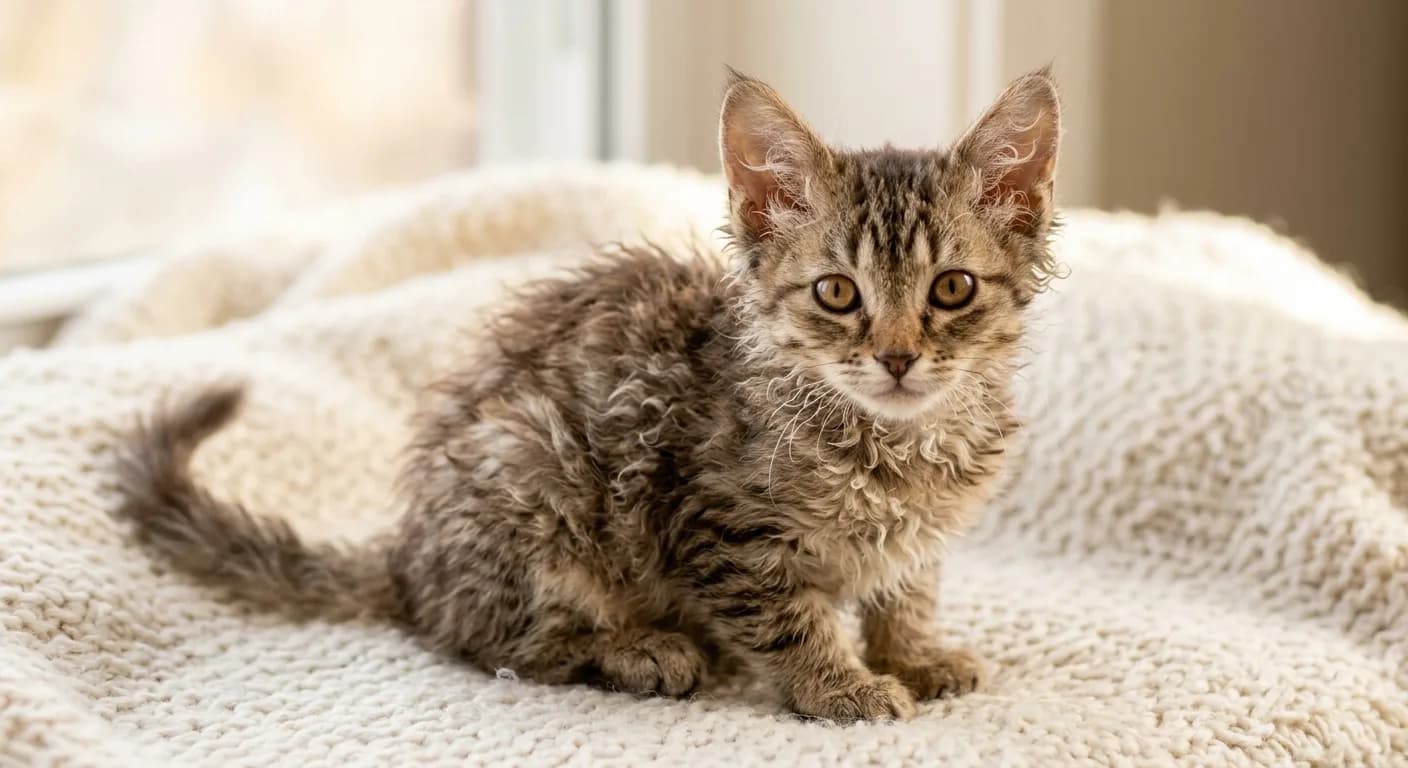
Few breeds have a stranger kittenhood than the LaPerm, and it is worth understanding before you bring one home so the early appearance does not alarm you. Many (though not all) LaPerm kittens are born either completely bald or with a thin, patchy coat, and some that are born with a bit of fuzz will actually shed it and go bald in the first couple of weeks. Bald or partially bald kittens are completely normal for this breed, and they are not sick or defective.
The coat then develops gradually. Curls usually start to come in over the first few months, and the texture continues to change and mature for a year or more, with the full adult curly coat typically settling by around two to three years of age. Along the way the coat can go through awkward, uneven, or sparse phases, and a kitten may even molt and regrow as the curl establishes. The upshot for buyers: do not judge a LaPerm's eventual coat from a young kitten photo, and do not panic if a kitten is bald or scruffy. Ask the breeder what the parents' adult coats look like, since that is a far better predictor of the curl you will end up with.
- Because kitten coats are unreliable predictors, ask to see photos of both adult parents, ask whether the line tends shorthair or longhair, and confirm the kitten has been raised underfoot (socialized in the home). A well-socialized LaPerm is the affectionate, people-glued cat the breed is famous for.
LaPerm vs other rex and curly breeds
The LaPerm is frequently confused with other curly-coated cats, but the breeds are genetically distinct and each curl came from a separate mutation. The LaPerm's curl is dominant; the Cornish Rex and Devon Rex curls are recessive and produce a much shorter, closer coat; and the Selkirk Rex (the other dominant-gene curly breed) is a plusher, heavier, more cobby cat. The quick table below sorts out the main differences.

Color-changing crystal litter that flags pH shifts in your cat's urine, an early warning sign of UTIs, kidney issues, and more.
Petful may earn a commission when you click through to Chewy, at no extra cost to you.
| Breed | Coat Curl | Curl Gene | Build |
|---|---|---|---|
| LaPerm | Loose ringlets to corkscrews, soft and shaggy, curly whiskers | Dominant | Medium, athletic, semi-foreign |
| Selkirk Rex | Plush, woolly, rounded curls | Dominant | Heavy, cobby, round |
| Cornish Rex | Short, tight, marcel waves close to the body | Recessive | Slender, fine-boned |
| Devon Rex | Short, loose, sometimes sparse waves | Recessive | Slender, large-eared, "pixie" look |
If you are deciding between curly breeds, it helps to read up on each. The differences between the Cornish Rex and Devon Rex explain the short-rex end of the spectrum, and our full Cornish Rex profile shows just how different a close, washboard-wave coat feels compared with the LaPerm's loose shag.
How much does a LaPerm cat cost?
LaPerms are a relatively uncommon breed, so they are not the cheapest cat to buy from a breeder, and prices vary widely by region, breeder reputation, coat, color, and whether the kitten is pet or show quality. Because the breed is rarer than mainstream cats, expect to join a waitlist and to pay a premium over a typical mixed-breed kitten. For a full, current breakdown of purchase prices, what reputable breeders include, adoption alternatives, and the real ongoing costs of owning one, see our detailed LaPerm cat price guide.
- 1Comb (never aggressively brush) the curls, about weekly for shorthairs and 2 to 3 times a week for longhairs
- 2LaPerms are robust with no known breed-specific genetic disease, but still need dental, weight, and routine veterinary care
- 3Kittens are often born bald and develop their curls over the first 2 to 3 years, so judge the coat by the parents
- 4Low shedding helps allergy sufferers but no cat is truly hypoallergenic
- 5The breed is people-glued, gentle, and clownish, ideal for families and multi-pet homes
Frequently asked questions about the LaPerm cat
LaPerms are an uncommon breed, so they typically cost more than a mixed-breed kitten and often involve a breeder waitlist. Exact prices vary widely by region, breeder, coat length, color, and pet versus show quality. For current price ranges and the full cost of ownership, see our dedicated LaPerm price guide.
The LaPerm is a natural rex breed with a one-of-a-kind curly coat of loose ringlets and corkscrews, plus curly whiskers and a curly tail. It descends from a single bald barn kitten born in Oregon in 1982, sheds very little, has no known breed-specific genetic disease, and is famous for an affectionate, clownish, shoulder-riding personality.
Very. LaPerms are among the most people-oriented cat breeds, known for being affectionate, gentle, social, and a little clownish. They bond closely with their families, follow their humans around, often ride on shoulders, and are typically excellent with children, dogs, and other cats.
LaPerms are considered a healthy, robust breed with no documented breed-specific genetic disease, thanks to a wide outcrossed gene pool. They are still prone to the common feline issues such as dental disease, obesity, and age-related kidney problems, so routine veterinary care, good diet, and dental hygiene remain important.
Most LaPerms live about 12 to 15 years, and with good care it is not unusual for one to reach 18 to 20. Their longevity is helped by the breed's general hardiness and lack of a known inherited disorder.
No cat is truly hypoallergenic, including the LaPerm. They do shed less than most cats because of a sparse undercoat, which can trap dander and mean fewer symptoms for some mildly allergic owners, but they still produce the Fel d 1 protein that causes cat allergies. Spend time with an adult LaPerm before committing if allergies are a concern.
Often, yes. Many LaPerm kittens are born completely bald or with a thin patchy coat, and some that have a little fuzz will shed it and go bald within the first couple of weeks. This is normal for the breed. The curly coat develops gradually and usually matures by about two to three years of age.
No, LaPerms are low shedders. Their sparse undercoat means they lose relatively little hair and rarely mat, which is part of why they appeal to allergy sufferers, though low shedding is not the same as being hypoallergenic.
Both are dominant-gene curly breeds, but the LaPerm has a lighter, shaggier coat of loose ringlets and corkscrews on a medium, athletic body, while the Selkirk Rex has a plush, woolly, rounded curl on a heavier, cobby, round-bodied frame. They come from separate, unrelated curl mutations.
Yes. Their easygoing, affectionate temperament, low grooming needs (just gentle weekly combing, never aggressive brushing), and general good health make LaPerms a forgiving and rewarding choice for first-time cat owners, provided you can give them the human companionship they crave.

Kristine Lacoste has been researching dog and cat breeds for nearly a decade and has observed the animals up close at dog shows in both the United States and the United Kingdom. She is the author of the book One Unforgettable Journey, which was named as a finalist for a Maxwell Award from the Dog Writers Association of America, and was host of a weekly pet news segment on the National K-9 Academy Radio Show. In addition, she was the New Orleans coordinator for Dogs on Deployment, a nonprofit that helps military members and their pets, for 3 years. Kristine has researched and written about pet behaviors and care for many years. She holds a bachelor’s degree in psychology, another bachelor’s degree in English and a Master of Business Administration degree.
Sign up for expert-backed reviews and safety alerts all in one place.