How to Trim Cat Nails Safely, Even If Your Cat Hates It
A vet-backed, step-by-step guide to trimming your cat's nails safely at home: how to find the quick, where to cut, the burrito method for squirmy cats, what to do if you nick the quick, and clip vs. grind.
Petful is reader supported. As an affiliate of platforms like Amazon and Chewy, we may earn a commission when you buy through links on this page. There is no extra cost to you.
This article was written by a veterinarian, Dr. Debora Lichtenberg, VMD. It was last reviewed on July 5, 2026.
If you have questions or concerns, call your vet, who is best equipped to ensure the health and well-being of your pet. This article is for informational purposes only and is not a substitute for professional medical advice, diagnosis or treatment. See additional information.
Learning how to trim cat nails is one of the most useful grooming skills a cat owner can master, and it is far easier than most people fear. With the right clippers, a calm setup, and a little practice, you can turn a dreaded wrestling match into a 60-second routine your cat tolerates and, eventually, ignores.
This guide walks you through everything: why regular trims matter, how to spot overgrown claws, exactly where to cut so you never hit the quick, and the gentle restraint tricks (including the famous "burrito" wrap) that groomers and vets use on the squirmiest cats. Whether you have a mellow lap cat or a feisty escape artist, there is a safe way through.
- 1Trim only the sharp, translucent tip and stay well clear of the pink quick to avoid pain and bleeding
- 2Most cats need a trim every 2 to 4 weeks; seniors and indoor cats often need it more often
- 3If your cat resists, work one or two nails at a time and use a towel wrap rather than forcing all four paws in one session

Sign up for expert-backed reviews and safety alerts all in one place.
Why Trimming Matters, and How Often to Do It
Trimming your cat's claws is not just cosmetic. Overgrown nails can curl back and grow into the paw pad, causing painful sores and infections, especially in older or less active cats who no longer wear their claws down naturally. Long claws also snag carpet and upholstery, get caught in blankets, and can tear painfully when your cat pulls free. Sharp tips do more damage to your skin, your furniture, and other pets in the house.
How often should you trim? For most healthy adult cats, every 2 to 4 weeks is the sweet spot. The right interval depends on your individual cat:
- Indoor cats wear their nails down less and usually need trims closer to every 2 weeks.
- Senior cats grow thicker, faster-growing nails and scratch less, so they often need more frequent attention.
- Kittens have fast-growing needle claws; start early to build lifelong tolerance.
- Active, outdoor-access cats may self-maintain the front claws but still need their back nails and dewclaws checked.
The dewclaw (the "thumb" claw higher up on the inner front leg) never touches the ground, so it never wears down. It is the nail most likely to overgrow and curl into the skin, so check it every single time.
Petful may earn a commission when you click through to Chewy, at no extra cost to you.
How to Tell If Your Cat's Claws Are Too Long or Overgrown
You do not need to wait for a trimming day to know something is wrong. There are clear physical and behavioral signs that your cat's nails have gone past healthy length, and knowing them protects your cat from painful complications.
How to Tell If Cat Claws Are Too Long
The easiest test is sound and sight. If you hear a distinct clicking or tapping on hard floors as your cat walks, the claws are hitting the ground, which means they are too long. Gently press the paw to extend the claws: a healthy claw ends in a curved point that stays clear of the pad, while an overlong claw begins to curl toward or past the pad. If the claw is starting to arc back on itself, it is overdue.
How Do I Tell If My Cat's Nails Are Overgrown
Overgrown goes a step beyond "too long." Look for these red flags:
- The claw has curled in a near-complete circle, sometimes touching or piercing the paw pad.
- Your cat is limping, licking one paw obsessively, or flinching when the paw is touched.
- Claws snag constantly on carpet, clothing, and bedding.
- You see redness, swelling, or discharge around the pad where a claw has grown in.
If a nail has already grown into the pad, do not try to fix it yourself. That is a veterinary visit: the vet will trim the embedded nail, treat any infection, and check for others. Catching it at the "too long" stage with a routine trim is exactly how you prevent the "overgrown" emergency. For more, see Petful’s guide to how to treat a torn cat nail.
- The inner dewclaw does not touch the ground and is the nail most likely to curl into the skin unnoticed, so inspect it at every trim even when the others look fine.
How Can I Trim My Cat's Nails By Myself, Step by Step
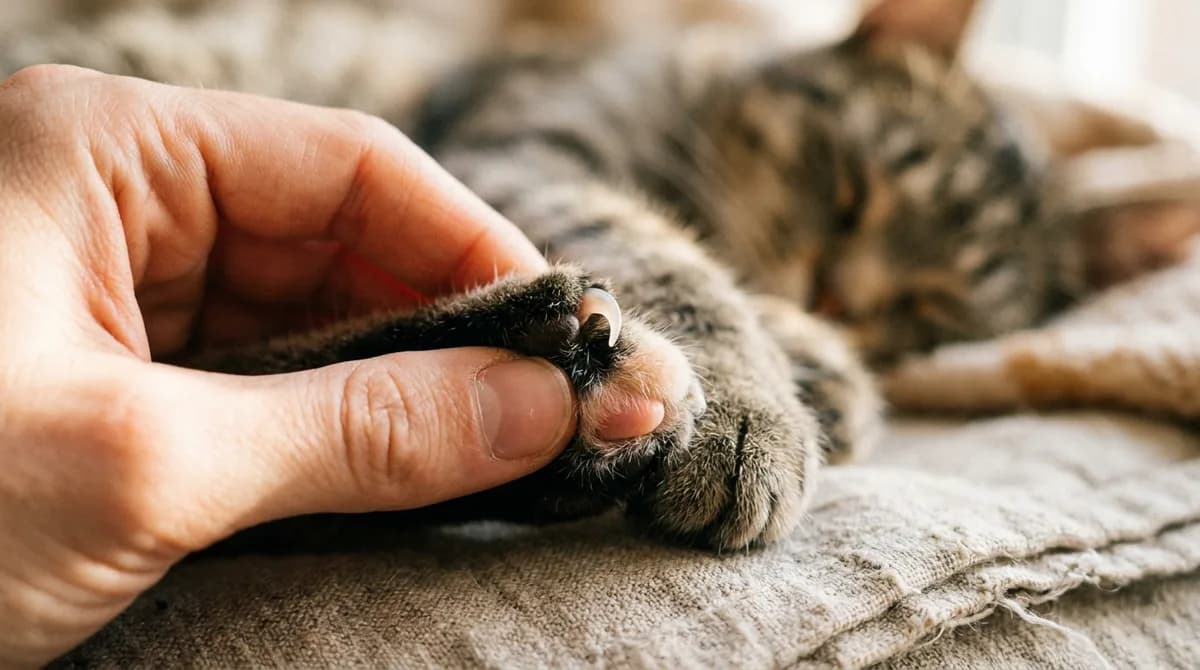
Yes, you can absolutely do this solo. The whole trick is a calm cat, good light, and cutting only the clear tip. Here is the step-by-step method vets teach for trimming your cat's nails by yourself at home.
Step 1: Set the scene. Pick a quiet time when your cat is sleepy, not right after play or a meal. Sit somewhere comfortable with good lighting. Many people work best with the cat settled in their lap, facing away, or gently held against their chest.
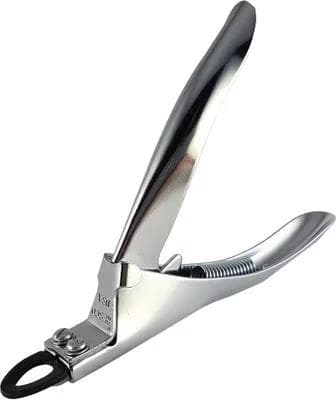
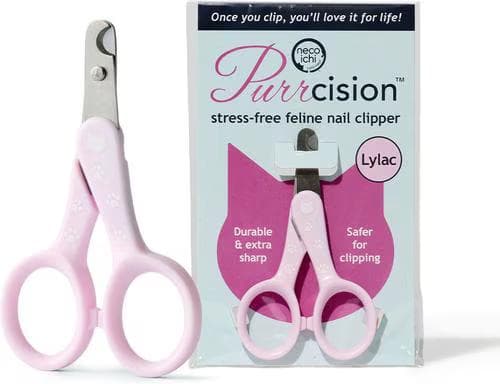
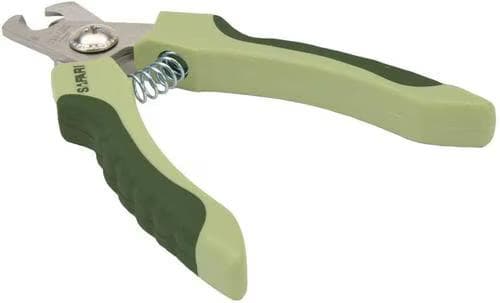
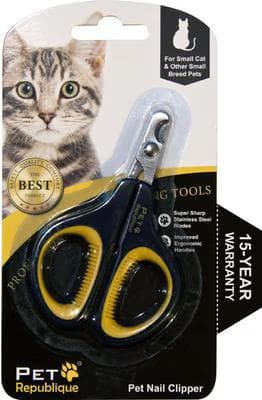
Step 2: Get the right tool ready. Use a proper cat nail clipper (scissor-style or a small guillotine style), not oversized dog clippers or dull household scissors that crush and split the nail. If you are still choosing a tool, our guide to the best cat nail clippers breaks down the safest picks for beginners and squirmy cats.
Petful may earn a commission when you click through to Chewy, at no extra cost to you.
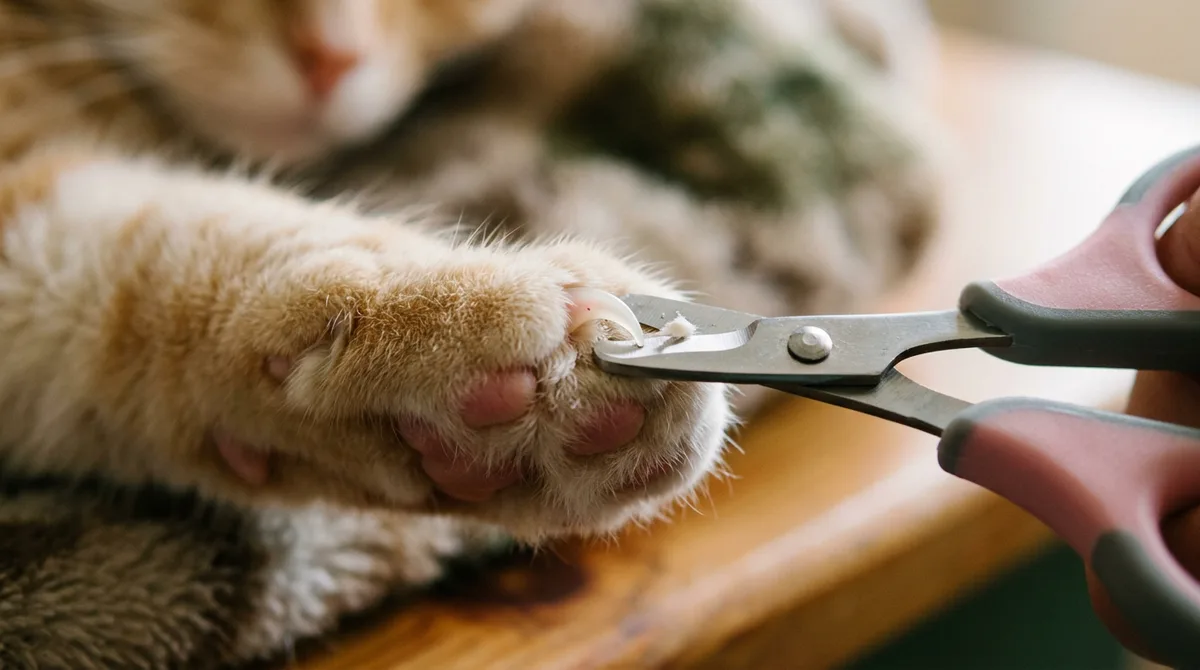
Step 3: Extend the claw. Hold a paw gently and place your thumb on top of the toe and your forefinger on the pad beneath. Press softly. The claw slides out into full view. Do not squeeze hard; steady, gentle pressure is all it takes.
Step 4: Find the quick. In a pale or clear nail, the quick is the pink section inside the nail; it holds the blood vessel and nerve. You are aiming to cut only the sharp, translucent hook well beyond it. On dark nails where you cannot see pink, cut only the very tip and trim small slivers at a time.
Step 5: Cut the tip. Position the clipper so you are removing just the pointed end, roughly 2 mm past the quick, and clip in one clean, confident motion. Hesitating produces a crush instead of a clean cut. Aim a little long rather than a little short; you can always take more off.
Step 6: Reward and repeat. Give a treat immediately, then move to the next claw. Do not forget the dewclaws. If your cat is still relaxed, keep going. If tension is rising, stop; a few nails today beats a fight that teaches your cat to hate the clippers.
| Nail Type | What You Can See | How to Cut It |
|---|---|---|
| Clear or pale nails | Pink quick is visible inside the nail | Cut 2 mm beyond the pink quick, tip only |
| Dark or black nails | Quick is hidden, no pink visible | Trim tiny slivers off the tip until you see a pale oval center, then stop |
| Overgrown curled nails | Nail arcs toward or into the pad | Do not clip at home; have a vet trim and check the pad |
The Burrito Method and Handling a Squirmy or Difficult Cat
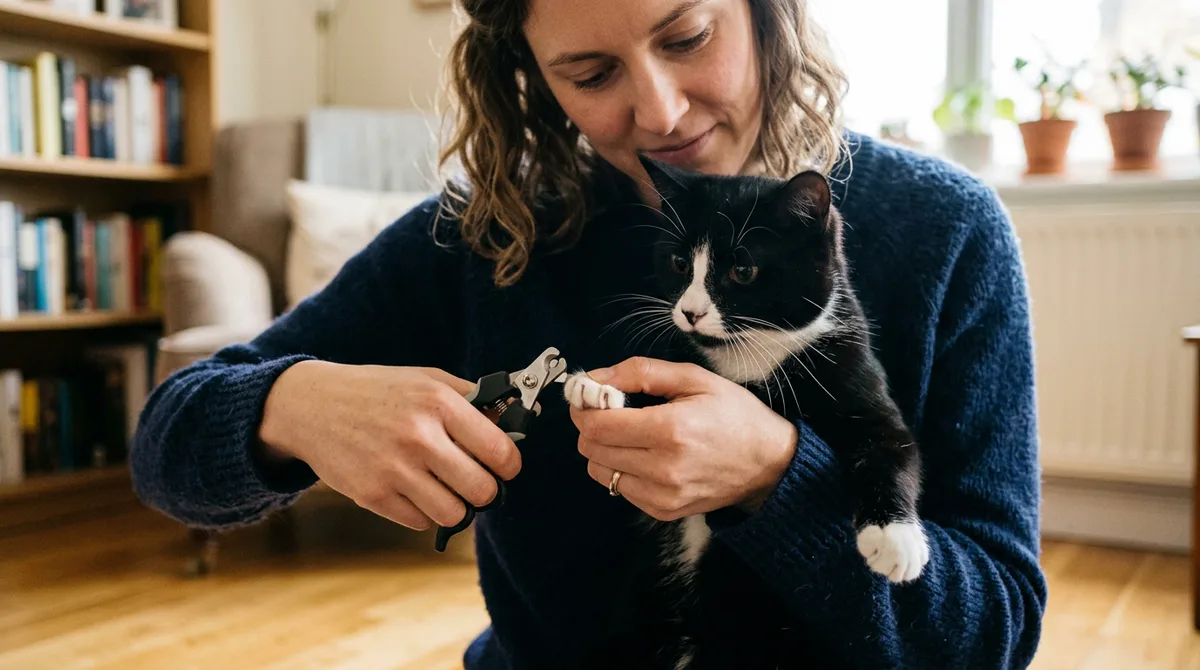
Some cats simply will not sit for a manicure, and forcing an anxious cat only makes the next trim harder. This is where gentle restraint and patience win. The goal is never to overpower your cat; it is to keep the cat feeling secure while you work quickly.
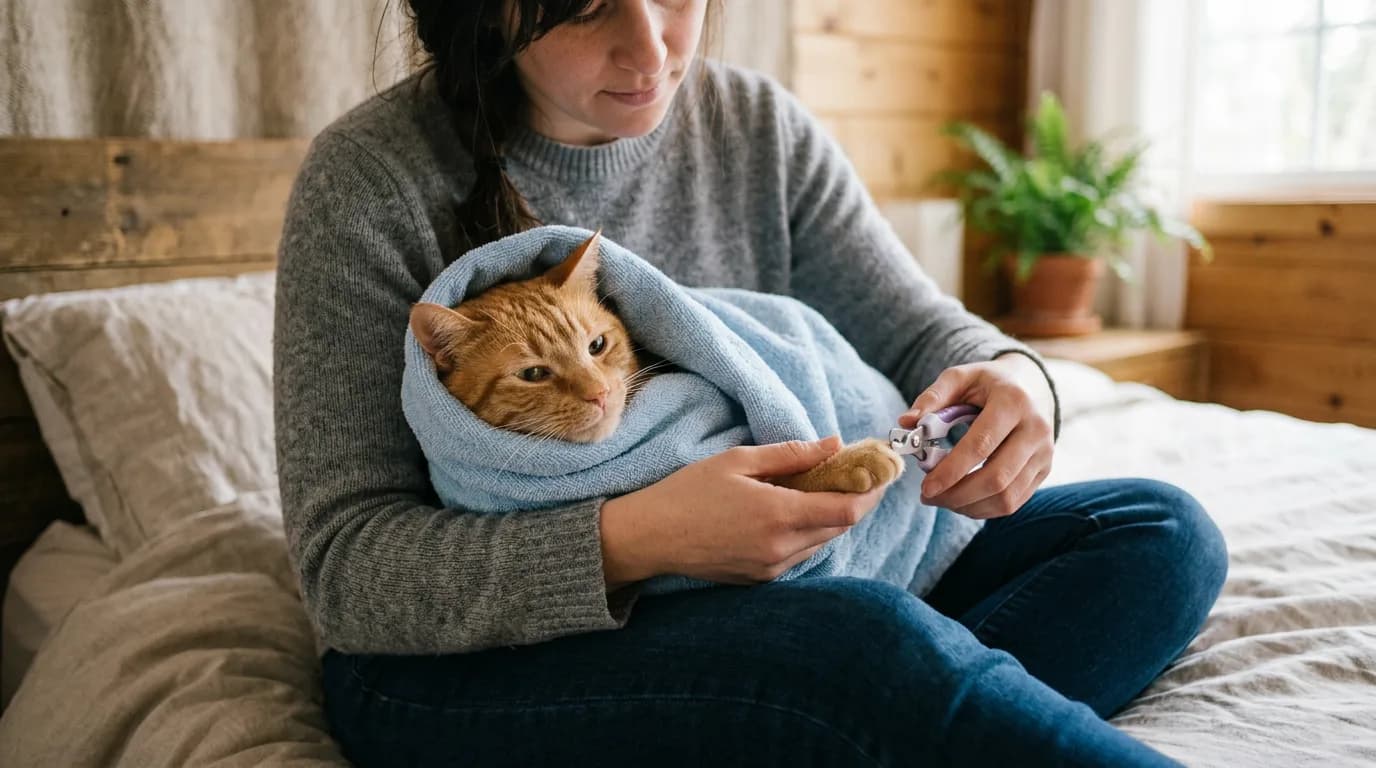
The burrito (towel wrap) method. Lay a towel flat, set your cat in the center, and wrap it snugly around the body so the cat is bundled like a burrito with only the head sticking out. Then gently free one paw at a time from the wrap, trim those claws, tuck it back, and rotate to the next paw. The snug wrap makes many cats feel held and calm rather than trapped, and it keeps back claws and teeth away from your hands.
More tactics for a difficult cat:
- Go one paw, or even one nail, at a time. You have days between trims. Do two nails now and two tonight if that is what keeps it peaceful.
- Trim during deep relaxation. A cat drowsing in your lap or mid-nap is far easier than an alert one.
- Enlist a helper. One person offers a lickable treat or scratches the chin while the other clips.
- Desensitize over weeks. Handle the paws daily with no clipping, then let the cat hear the clipper snap on a piece of dry spaghetti, then progress to one real nail. Pair every step with treats.
- Never punish or raise your voice. Fear is the single biggest cause of lifelong nail-trim battles.
- You do not have to finish all four paws in one sitting. Splitting a full trim across two or three short, low-stress sessions almost always works better than one long struggle, and it protects the trust that makes the next trim easier.
What Can I Use to Sedate My Cat So I Can Cut Her Nails
For the vast majority of cats, the honest answer is that you should not need to sedate at all: the towel wrap, one-nail-at-a-time pacing, and treats handle almost every case. Do not reach for human sedatives, over-the-counter sleep aids, or leftover medications; many are toxic to cats and dosing them at home is dangerous.
If your cat is so fearful or aggressive that trimming is genuinely impossible, that is a conversation for your veterinarian, not a home experiment. A vet can assess whether a prescribed anti-anxiety medication (such as gabapentin, commonly given before stressful vet or grooming visits) is appropriate, and at what dose for your cat's exact weight and health. Calming aids like pheromone sprays (feline facial pheromone products) or a calming treat may take the edge off milder anxiety, but sedation itself is a veterinary decision. When in doubt, let a professional do the trim.
How Do Cat Groomers Keep Cats Still
Professional groomers and vet techs rely on technique, not force. They read feline body language, work fast and confidently so the handling window is short, and use secure, low-stress holds: the towel wrap, a firm but gentle scruff-adjacent support, or holding the cat close against the body so it feels contained. They keep the environment calm and quiet, minimize the number of hands on the cat, and reward cooperation. In short, they do exactly what you can learn to do at home; they are just practiced at it. If your cat is a true fighter, a groomer or vet tech doing a quick professional trim every few weeks is a perfectly good option.
Petful may earn a commission when you click through to Chewy, at no extra cost to you.
What to Do If You Cut the Quick
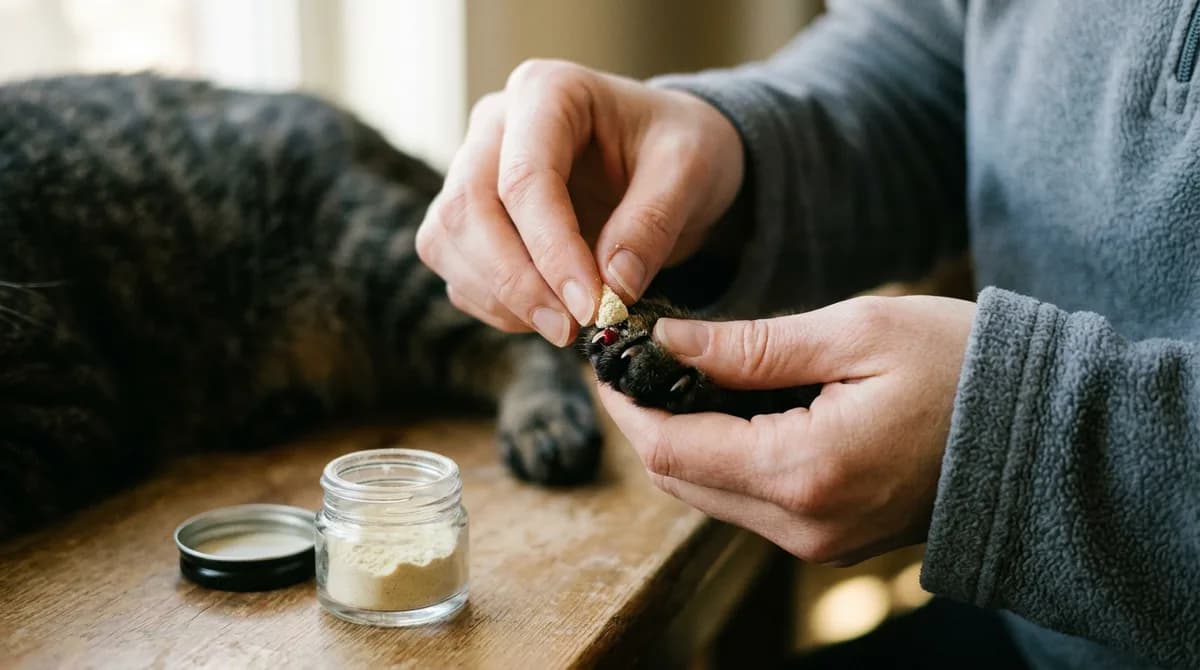
Even careful owners occasionally nick the quick, and it looks more dramatic than it is. Do not panic, and do not let it scare you off trimming for good. The nail will bleed and your cat will likely pull the paw back and protest, but it is rarely serious.
Here is how to handle it calmly:
- Apply styptic powder to the nail tip with gentle pressure; it stops bleeding fast. Keep a small pot in your grooming kit before you ever start.
- No styptic on hand? Press the nail into a small amount of cornstarch or plain flour, or hold firm pressure with a clean gauze pad for a couple of minutes.
- Keep the cat calm and confined for a few minutes so it does not track blood or lick the powder off before it works.
- Stop the session. End on a treat, and give it a day before you try again.
Watch the toe over the next day. A little bleeding that stops within a few minutes is normal. Call your vet if bleeding will not stop, or if the toe becomes swollen, hot, or the cat keeps limping, which can signal infection.
- Buying a small pot of styptic powder before your first trim means a nicked quick is a 30-second fix instead of a scare. Pressing the nail into cornstarch or flour works in a pinch if you run out.
Clip vs. Grind for Cats, and When to See a Groomer
Owners often ask whether a rotary nail grinder (the kind popular for dogs) is better than clippers for cats. For most cats, the answer is clear.
Is It Better to Grind or Clip Cat Nails
For cats, clipping is almost always the better choice. Cat claws are thin and retractable, so a sharp clipper removes the tip cleanly in a fraction of a second, which is exactly the short handling window a cat tolerates. Grinders, by contrast, are loud, vibrate, take longer, and can heat the nail; most cats hate the noise and the sensation, making an already tricky job harder. Grinding also throws nail dust and requires holding the paw still far longer than a quick snip.
- Clippers are fast, quiet, cheap, and precise
- A clean clip takes under a second per nail
- Ideal for the short window most cats tolerate
- Grinders are loud and vibrate, which frightens most cats
- Grinding heats the nail and takes much longer
- The dust and extended hold make squirmy cats worse
There are narrow exceptions. A grinder can smooth a sharp edge after clipping, and a few unusually calm cats accept one. But if you are choosing one tool to start with, choose good clippers.
Do Vets Recommend Cutting Cats' Nails, and Is It Necessary
Yes. Veterinarians widely recommend routine nail trims as basic preventive care, and organizations like the ASPCA and the Humane Society advise regular home trimming. It prevents ingrown nails, painful pad injuries, snagging accidents, and reduces damage from scratching. It is far gentler and safer than declawing, which is an amputation that veterinary bodies strongly discourage. Trimming keeps the claw healthy while leaving your cat fully equipped to stretch, balance, and scratch on appropriate surfaces.
When to see a groomer or vet instead of doing it yourself: if your cat becomes truly aggressive or panicked, if a nail has grown into the pad, if you cannot see the quick well and keep drawing blood, or if your own mobility or eyesight makes a precise cut hard. A professional trim every few weeks is inexpensive, safe, and completely reasonable. Pairing regular trims with a broader grooming routine helps too; our guide on how to groom a cat covers brushing, bathing, and handling that all make nail time easier.
Petful may earn a commission when you click through to Chewy, at no extra cost to you.
Yes, you can do it solo. Settle your cat in your lap when it is calm, gently press the toe to extend one claw, and clip only the sharp translucent tip about 2 mm beyond the pink quick. Reward after each nail, do the dewclaws too, and stop before your cat gets tense rather than forcing all four paws at once.
For most cats, yes. Regular trims prevent claws from curling into the paw pad, reduce painful snagging and tearing, and limit scratch damage. Indoor and senior cats especially need it because they wear their nails down far less than active outdoor cats.
Listen for clicking or tapping on hard floors, which means the claws are hitting the ground. Gently extend a claw: a healthy one ends in a point clear of the pad, while a too-long claw begins to curl toward or past the pad and is overdue for a trim.
Clipping is better for cats. A sharp clipper removes the tip cleanly in under a second, which suits the short window cats tolerate. Grinders are loud, vibrate, heat the nail, and take longer, so most cats hate them. A grinder is at best a way to smooth an edge after clipping.
Do not use human sedatives or over-the-counter aids; many are toxic to cats. For most cats a towel wrap, one-nail-at-a-time pacing, and treats are enough. If your cat is truly unmanageable, ask your vet about a prescribed calming medication like gabapentin at the correct dose, or have a vet or groomer do the trim.
Yes. Veterinarians and groups like the ASPCA and Humane Society recommend routine nail trims as basic preventive care. It prevents ingrown nails and pad injuries and is far safer and gentler than declawing, which is an amputation that veterinary bodies discourage.
Overgrown nails curl in a near-complete circle, sometimes touching or piercing the paw pad. Warning signs include limping, obsessive paw licking, flinching when the paw is touched, constant snagging, and redness or discharge around the pad. A nail grown into the pad needs a vet, not a home trim.
Groomers use technique, not force: they read body language, work fast during a short handling window, and use secure low-stress holds like a towel wrap or holding the cat close against the body. They keep the space calm and quiet, minimize the hands on the cat, and reward cooperation.

VMD
Dr. Debora Lichtenberg, VMD, is a small animal and exotics veterinarian who has been practicing medicine for over 30 years. A graduate of the University of Pennsylvania School of Veterinary Medicine, Dr. Lichtenberg also trained at the Philadelphia Zoo. She now practices in the New York City area and lives in the West Village with her husband and her rescued pets, Cocoa and OG. Dr. Lichtenberg has been writing for Petful for many years, and she has been recognized with Certificates of Excellence from both the Dog Writers Association of America and the Cat Writers Association of America.
Sign up for expert-backed reviews and safety alerts all in one place.