Can Dogs Eat Potatoes? Everything You Need To Know.
Can dogs eat potatoes? Yes, when they are fully cooked and served plain in small amounts. Our vet-reviewed guide covers safe serving sizes by weight, the solanine risk in raw and green potatoes, and exactly which potato dishes to skip.

Veterinarian · BVMS, MRCVS
Petful is reader supported. As an affiliate of platforms like Amazon and Chewy, we may earn a commission when you buy through links on this page. There is no extra cost to you.
- 1Cooked and plain only: boiled or baked potatoes with no butter, salt, oil, garlic, or onion are safe in small amounts.
- 2Never raw or green: raw, green, and sprouted potatoes plus the skins, leaves, and sprouts contain solanine, which is toxic to dogs.
- 3Follow the 90/10 rule: potatoes and all treats should stay under 10% of your dog's daily calories.
- 4Skip fries, chips, and instant mash: high salt, fat, and additives make these unsafe.
- 5Use caution with diabetic or overweight dogs: potatoes are carb-dense and spike blood sugar, so ask your vet first.
Can dogs eat potatoes? Yes, but only fully cooked and served completely plain, in moderation. The AKC notes that raw and green potatoes contain solanine, which is toxic to dogs. Skip butter, salt, and seasonings, peel them, and keep potatoes under 10% of daily calories.

Sign up for expert-backed reviews and safety alerts all in one place.
Are Potatoes Safe for Dogs?
Plain, fully cooked potatoes are safe for most dogs as an occasional treat. The white potato is a member of the nightshade family, the same group as tomatoes and eggplant, and like its relatives it carries a natural compound called solanine in its raw and green parts. Cooking a peeled potato thoroughly breaks most of that compound down, which is why veterinarians draw such a hard line between raw and cooked.
The safe version is simple: a peeled potato, boiled or baked until soft, with nothing added. No butter, no salt, no oil, no garlic or onion powder. Served that way, a small portion is a fine occasional snack. Potatoes are not the most nutrient-dense vegetable you can offer, though, so think of them as a treat rather than a daily staple. If you want more day-to-day variety, our guide to the best vegetables for dogs covers lower-calorie options like green beans and carrots.
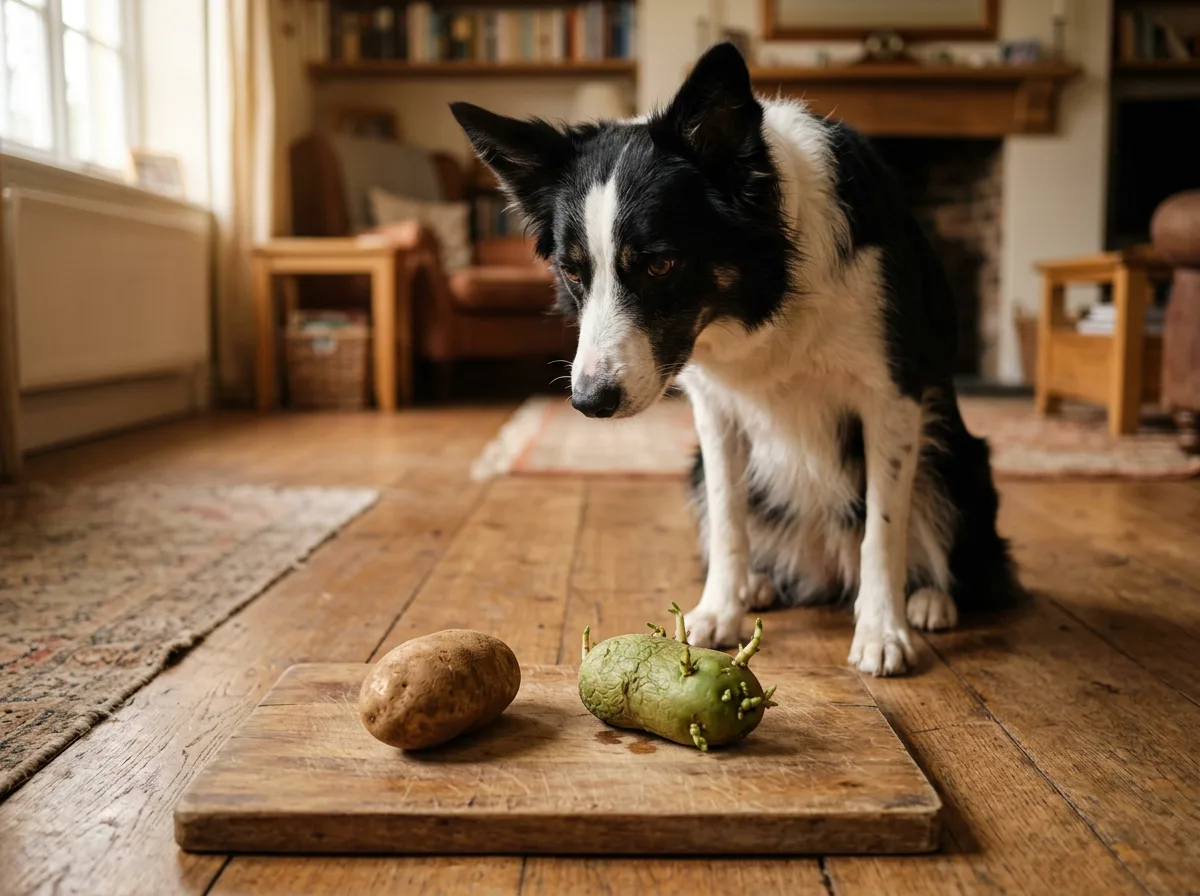
- Raw, green, and sprouted potatoes, along with potato skins, leaves, stems, and sprouts, contain solanine, a glycoalkaloid that is toxic to dogs. Cooking a peeled potato reduces solanine, but raw and green flesh keeps it. Signs of potato poisoning can include vomiting, diarrhea, lethargy, weakness, confusion, and a slowed heart rate. If your dog eats raw or green potato and shows any of these signs, call your vet or an emergency line right away.
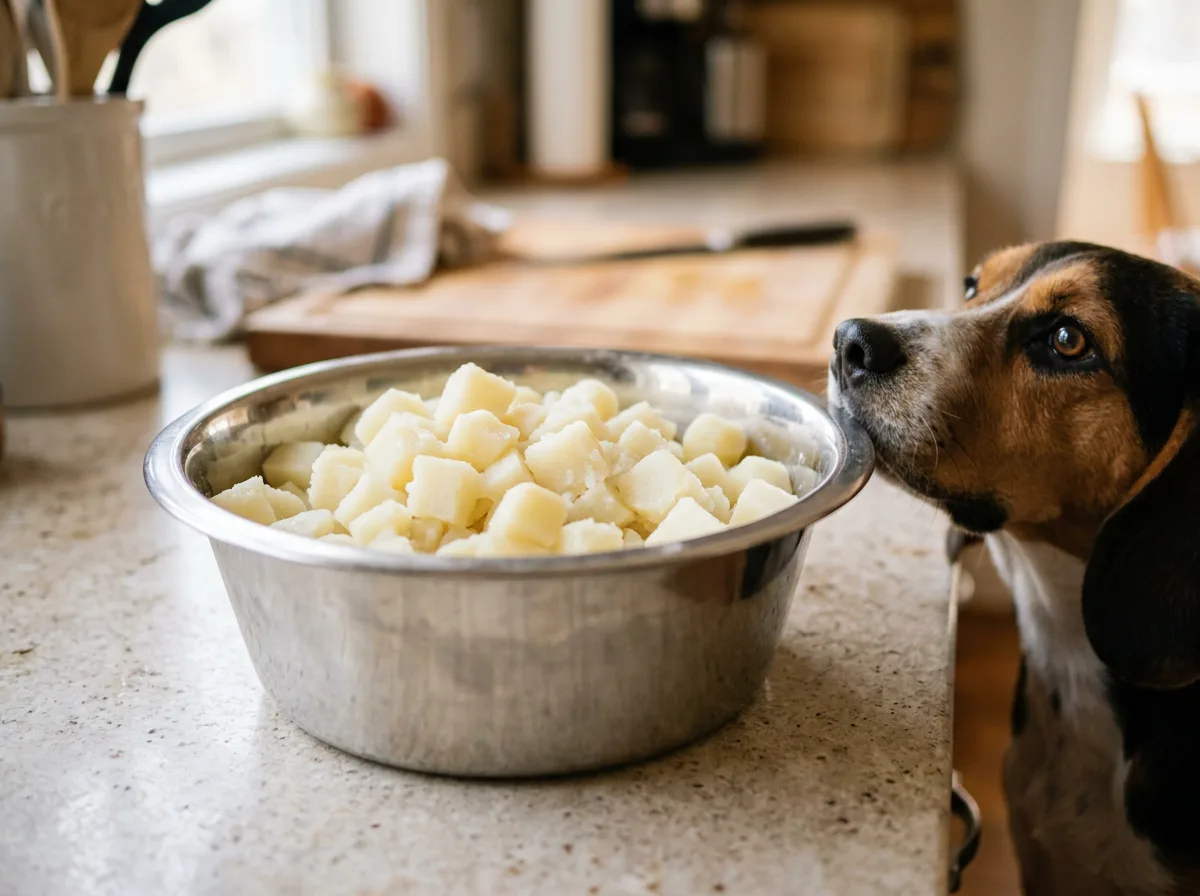
Can Dogs Have Potatoes? The Quick Yes-But Answer
Yes, dogs can have potatoes, but the word that matters is plain. The form you serve them in is the whole ballgame. A spoonful of plain boiled potato is harmless. The same potato turned into fries, chips, or buttery mashed potatoes is a different food entirely, loaded with the fat, salt, and seasonings that cause real problems. Below we break down every common way people serve potatoes so you know exactly what is safe and what to skip.
One more rule frames everything that follows: the 90/10 rule. At least 90% of your dog's daily calories should come from a complete, balanced dog food, and no more than 10% should come from treats and extras, potatoes included. Potatoes are carb-dense, so they eat into that 10% budget fast. If you are still choosing your dog's main diet, our guide on how to choose the best dog food is the place to start.
Soft, real-beef burger bites with bison, grain-free and sized for occasional training-treat sharing.
Petful may earn a commission when you click through to Chewy, at no extra cost to you.
Can Dogs Eat Cooked Potatoes?
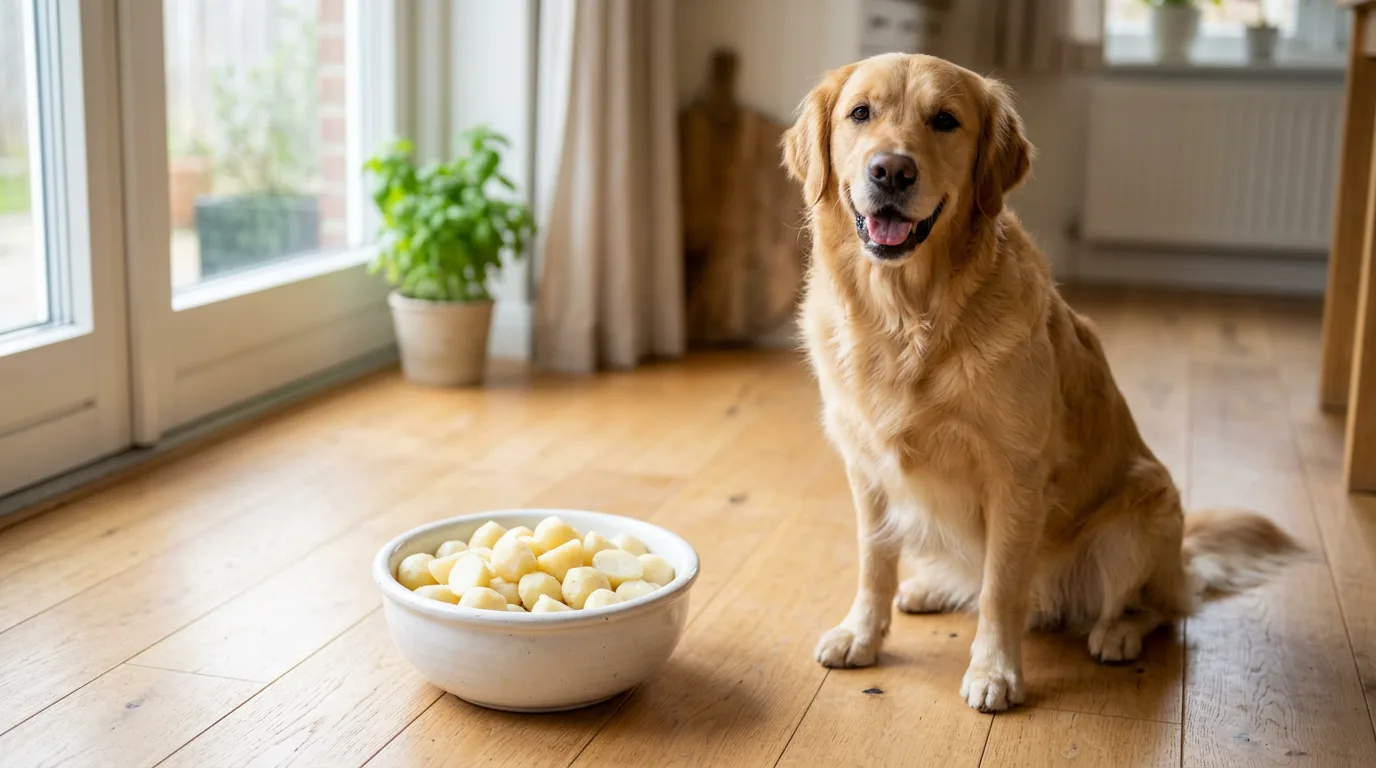
Yes, dogs can eat cooked potatoes, and cooking is exactly what makes them safer. Heat breaks down most of the solanine in a peeled potato and softens the starch so it is easier to digest. The safest cooking methods are boiling and baking with no added fat or seasoning. Cooked, plain, peeled potato served in small amounts is the version every vet signs off on.
What turns a safe cooked potato into an unsafe one is everything we tend to add in the kitchen: butter, sour cream, salt, oil, gravy, cheese, and especially garlic or onion. Keep the cooking method boring and your dog gets the benefit without the risk.
Can Dogs Eat Boiled Potatoes?
Boiled potatoes are one of the best ways to serve potato to a dog. Boiling a peeled potato in plain water until it is soft, with no salt added, gives you a bland, easily digestible food. Plain boiled potato is gentle enough that some vets suggest it (alongside plain rice or pumpkin) for dogs recovering from a mild stomach upset, though you should always check with your vet first.
Can dogs eat boiled potatoes with skin? It is safest to peel them. The skin holds more solanine and is harder to digest, so peeling removes the riskier part. A popular combination is boiled potato and carrots: both are dog-safe when cooked plain, and carrots add fiber and beta-carotene. Just dice everything small to avoid a choking hazard, and keep the total portion within the 10% treat budget.
Can Dogs Eat Baked Potatoes?
Yes, dogs can eat baked potatoes as long as they are plain. A baked potato with nothing on it is essentially the same safe food as a boiled one. The trouble with baked potatoes is the toppings we reach for automatically: butter, salt, sour cream, cheese, bacon bits, and chives. Chives and onions are part of the Allium family and are toxic to dogs, so a loaded baked potato is a genuine hazard.
Can dogs eat baked potatoes with skin? Skip the skin. Even on a baked potato, the skin is harder to digest and carries more solanine, so scoop out the soft flesh, let it cool, and serve a small amount on its own.
Can Dogs Eat Mashed Potatoes?
This is where most people slip up. Plain mashed potato made from nothing but boiled potato is technically fine, but almost nobody makes it that way. Why can't you give dogs mashed potatoes? Because standard mashed potatoes are made with butter, milk or cream, salt, and often garlic. That mix is high in fat and sodium, and garlic is toxic to dogs, so the classic holiday side dish is a no.
Mashed potatoes with gravy, butter, or milk are all off the table. Gravy is salty and fatty, butter adds fat that can trigger pancreatitis, and milk upsets many dogs who do not digest lactose well. Instant mashed potatoes are worse still: they are heavily processed with added salt, dairy powders, and flavorings. If you want to share mash, make a tiny plain batch with only potato and water set aside before you season the rest.
- The biggest potato risks are often not the potato itself but what gets added to it. Garlic and onion (including powders) belong to the Allium family and damage a dog's red blood cells, which can cause anemia. Butter and oil add fat that can trigger pancreatitis, a painful and sometimes serious inflammation of the pancreas. Large amounts of salt can cause sodium poisoning. Learn more about pancreatitis in dogs and read up on other foods that can harm your pet before you share any human dish.
Can Dogs Eat Raw Potatoes?
No, dogs should not eat raw potatoes. Raw potatoes contain solanine, the same toxic compound concentrated in green and sprouted potatoes, and the raw starch is also hard for dogs to digest. Are raw potatoes bad for dogs? Yes, both because of the solanine and because of the digestive upset they cause. Green-tinged or sprouting raw potatoes are the most dangerous of all and should never be offered.
If your dog grabs a small piece of plain raw potato off the floor, do not panic, but watch closely for vomiting, diarrhea, lethargy, or weakness, and call your vet if anything seems off. If your dog eats a green or sprouted potato, or a larger amount of raw potato, treat it as an emergency and contact your vet or a poison line. Our guide to pet poison emergencies walks through what to do while you call.
Can Dogs Eat Potato Skins?
It is best not to feed potato skins. The skin is where solanine concentrates most, especially if the potato is at all green, and the tough peel is harder to digest than the soft flesh. Large pieces of skin can also be a choking hazard or, in a small dog, contribute to a digestive blockage. The simplest safe rule is to peel every potato you cook for your dog.
This applies to baked-potato skins too, including the crispy restaurant kind that come loaded with cheese, bacon, and sour cream. Those toppings stack salt and fat on top of the solanine concern, making potato skins one of the clearer foods to avoid.
Can Dogs Eat French Fries, Chips, and Other Fried Potatoes?
No. French fries, potato chips, hash browns, potato wedges, and other fried or heavily processed potatoes are not safe for dogs. They are deep-fried in oil, coated in salt, and often dusted with seasonings, garlic powder, or onion powder. The combination of fat and sodium is exactly what raises the risk of pancreatitis and sodium poisoning, and the seasonings can be outright toxic.
That covers the whole fast-food family: McDonald's fries, Cane's fries, and any seasoned or cajun-style fries are all off-limits. A single dropped fry will not poison a healthy dog, but fries should never be a treat you offer on purpose, and they are especially risky for puppies whose systems are still developing. Roast potatoes cooked in oil and salt fall in the same category. Potato chips add the most salt of all and bring nothing nutritious. For more processed foods to keep away from your dog, see our roundup of worst dog food ingredients.
Pumpkin-flavored probiotic soft chews that support healthy gut flora and digestion in dogs.
Petful may earn a commission when you click through to Chewy, at no extra cost to you.
What Kinds of Potatoes Can Dogs Eat? Red, White, Russet, and More
The color or variety of potato matters far less than how you cook it. Red potatoes, white potatoes, russet, Yukon gold and yellow potatoes, and even purple potatoes are all safe when peeled, fully cooked, and served plain. None of these varieties is meaningfully more or less risky than the others once cooked. The same rules apply across the board: no green spots, no skins, no seasonings.
Sweet potatoes are a different vegetable entirely (they are not nightshades) and are often a more nutritious pick thanks to their fiber and Vitamin A. We cover them in a separate dedicated guide so this article can stay focused on white potatoes. Whatever variety you choose, peel it, cook it through, and keep the portion small.
How Much Potato Can a Dog Eat? Serving Size by Weight
How much potato a dog can eat depends on size, and the guiding principle is the 90/10 rule: treats and extras, potatoes included, should stay under 10% of daily calories. Potatoes are carb-dense, so a little goes a long way. The table below is conservative, occasional-treat guidance for healthy adult dogs. Diabetic, overweight, kidney-compromised, or senior dogs should have potatoes only with your vet's approval, since the carbohydrate load can spike blood sugar and add unwanted calories.
Always introduce potato slowly the first time and watch for any digestive upset. If your dog is managing weight, talk to your vet about whether potato fits at all, and read our notes on weight management for dogs for lower-calorie treat ideas.
| Dog Weight | Safe Plain Cooked Potato (Occasional Treat) | Frequency |
|---|---|---|
| Under 10 lbs | 1/2 to 1 teaspoon | Occasionally, 1 to 2 times per week |
| 10 to 25 lbs | 1 to 2 teaspoons | Occasionally, 1 to 2 times per week |
| 25 to 50 lbs | 1 to 2 tablespoons | Occasionally, 1 to 2 times per week |
| 50 to 100 lbs | 2 to 3 tablespoons | Occasionally, 1 to 2 times per week |
| Over 100 lbs | 2 to 3 tablespoons | Occasionally, 1 to 2 times per week |
Are Potatoes Good for Dogs? Nutritional Benefits
In moderation, plain cooked potatoes do offer some nutrition. They provide carbohydrates for energy, a modest amount of fiber that supports digestion, potassium for muscle and nerve function, vitamin C, vitamin B6, and a little iron and magnesium. A medium potato has roughly 160 calories, which is why portion control matters: those calories add up quickly for a small dog.
That said, potatoes are not a nutritional powerhouse compared with other dog-safe vegetables, and the carbohydrate load is high. They are best viewed as an occasional treat rather than a health food. A well-formulated complete dog food already supplies everything your dog needs, so potatoes are a bonus snack, not a dietary requirement.
Rice vs Potatoes for Dogs: Which Is Better?
Owners often ask which is better for dogs, rice or potatoes, usually when looking for a bland food for an upset stomach. Both plain white rice and plain boiled potato are gentle, easily digestible carbohydrates, and either can work as part of a vet-recommended bland diet. Rice is often the more common choice simply because it is even lower in fat and very easy to portion.
Neither is clearly superior for a healthy dog; both are starchy treats best kept small. The bigger point is that any bland-diet plan for a sick dog should come from your vet, who can rule out a more serious cause. If your dog has ongoing stomach trouble, read our guide on vomiting and diarrhea in dogs and call your vet rather than self-treating long term.
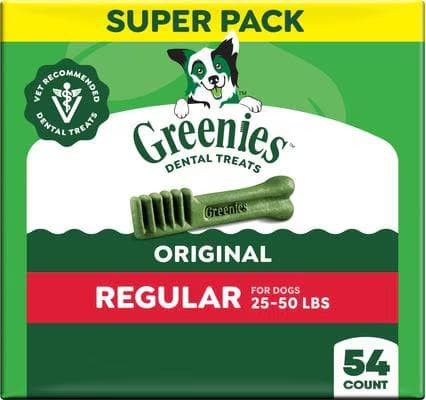
Daily dental chew that cleans teeth, freshens breath, and is accepted by the Veterinary Oral Health Council. Sized for dogs 25 to 50 lbs.
Petful may earn a commission when you click through to Chewy, at no extra cost to you.
Are Potatoes in Dog Food Bad? The Grain-Free and DCM Question
Potatoes appear in many grain-free dog foods as a carbohydrate source, and this has raised questions because of an FDA investigation. In 2018 the FDA began looking into a possible association between certain grain-free diets, often heavy in legumes and potatoes, and dilated cardiomyopathy (DCM), a serious heart condition. It is important to be precise here: the FDA has not concluded that potatoes cause DCM, and a clear cause-and-effect link has not been established.
In other words, a small plain potato treat is not the same thing as a diet built largely around potatoes and legumes. If your dog eats a grain-free food and you are concerned, the right move is to talk to your veterinarian about your specific food and your dog's heart health rather than reacting to headlines. Your vet can advise whether a diet change makes sense for your individual dog.
Potatoes and Diabetic or Overweight Dogs
Potatoes are relatively high on the glycemic index, meaning they can raise blood sugar quickly. For a healthy dog in moderation that is usually not a problem, but for a diabetic dog it can complicate blood-sugar control, and for an overweight dog the extra carbohydrate calories work against weight loss. For both groups, potatoes are best avoided or offered only in tiny amounts with your vet's explicit approval.
If you are managing your dog's weight or a metabolic condition, lean on lower-calorie, lower-carb treat options and let your vet guide what fits. The calories in even a small serving of potato can quietly undermine a careful feeding plan.
Can Dogs Be Allergic to Potatoes?
Potato allergies in dogs are uncommon but possible. As with any food, a dog can develop a sensitivity to potato over time. Signs of a food allergy can include itchy skin, excessive scratching or licking, recurring ear infections, skin infections, and digestive upset such as vomiting or diarrhea. These signs are not specific to potatoes, so they can be easy to misread.
If you notice these symptoms after introducing potato, stop feeding it and mention it to your vet. Diagnosing a true food allergy usually requires a vet-guided elimination diet. Our overview of dog food allergies explains how that process works and what to watch for.
Does Breed Matter, and Can Puppies Eat Potatoes?
The rules for feeding potatoes are the same for every breed, from a French Bulldog to a German Shepherd: plain, cooked, peeled, and in small amounts. What does change with breed and size is portion. A small breed needs a much smaller serving than a large one, and brachycephalic breeds like French Bulldogs should get potato cut into tiny pieces to reduce any choking risk.
Can puppies eat potatoes? A little plain cooked potato is generally fine for a healthy puppy, but puppies have sensitive, developing digestive systems and need most of their calories from a complete puppy food. Introduce any new food in very small amounts, one at a time, and check with your vet, especially for young or small-breed puppies.
How to Prepare Potatoes for Your Dog
Preparing potatoes for a dog is deliberately plain. Choose a firm potato with no green tint and no sprouts, peel it completely, and cut it into small, bite-sized pieces. Boil or bake it until fully soft with nothing added: no salt, butter, oil, milk, garlic, or onion. Let it cool fully before serving, and start with a small amount to make sure it agrees with your dog.
- Plain boiled potato: peel, dice, and boil in unsalted water until soft. Cool and serve a small portion as a topper or treat.
- Potato and carrot mash: boil peeled potato and carrot together until soft, mash with a little of the cooking water (no butter or milk), and serve cooled in a small amount.
- Potato and egg topper: mix a spoonful of plain cooked potato with a little plain scrambled or boiled egg (no salt, butter, or oil) for an occasional high-value treat.
Can dogs eat potatoes and eggs together? Yes, both are dog-safe when cooked plain, which makes the combination an easy occasional treat. Keep the total within the 10% treat budget and skip it for dogs on a weight or blood-sugar plan.
Frequently Asked Questions
Yes, plain cooked potatoes are okay for dogs in small amounts. Boil or bake a peeled potato until soft with no butter, salt, oil, garlic, or onion. Cooking breaks down most of the solanine that makes raw potatoes risky. Keep the serving small and treat it as an occasional snack, not a daily food, since potatoes are carb-dense.
Standard mashed potatoes are made with butter, milk or cream, salt, and often garlic. That mix is high in fat and sodium, and garlic is toxic to dogs. The fat can trigger pancreatitis and the salt can cause sodium issues. Plain mash made from only potato and water is fine, but the typical seasoned, buttery version is not safe to share.
A small bite of plain raw potato may cause only mild stomach upset, but raw, green, and sprouted potatoes contain solanine, which is toxic to dogs. Watch for vomiting, diarrhea, lethargy, weakness, or confusion. If your dog eats a green or sprouted potato, or a large amount of raw potato, contact your vet or a pet poison line right away.
It is safest to avoid potato skins. The skin holds the most solanine, especially if the potato is at all green, and it is harder to digest than the soft flesh. Large pieces can also be a choking hazard. Peel every potato you cook for your dog and serve only the plain, soft inside.
The 90/10 rule means at least 90% of your dog's daily calories should come from a complete, balanced dog food, and no more than 10% from treats and extras like potatoes. Because potatoes are carb-dense, even a small serving uses up much of that 10% treat budget, so portion control matters.
No. French fries, including McDonald's, Cane's, and seasoned fries, are deep-fried in oil and coated in salt, and many carry garlic or onion seasoning. The fat and sodium raise the risk of pancreatitis and sodium poisoning, and the seasonings can be toxic. One dropped fry will not poison a healthy dog, but fries should never be a treat you offer on purpose.

Carol Bryant is the founder FidoseofReality.com and SmartDogCopy.com. A pet product expert, Carol is the Past President of the Dog Writers Association of America (DWAA) and winner of Best Dog Blog. A dog lover of the highest order is how Gayle King introduced Carol when she appeared with her Cocker Spaniel on Oprah Radio’s Gayle King Show to dish dogs. She helps pet, animal, and lifestyle brands achieve copywriting and content marketing success using well-trained words that work and is well-known in the pet industry.
Veterinarian · BVMS, MRCVS
Dr. Pippa Elliott, BVMS, MRCVS, is a veterinarian with nearly 30 years of experience in companion animal practice. Dr. Elliott earned her Bachelor of Veterinary Medicine and Surgery from the University of Glasgow. She was also designated a Member of the Royal College of Veterinary Surgeons. Married with 2 grown-up kids, Dr. Elliott has a naughty Puggle named Poggle, 3 cats and a bearded dragon.
Sign up for expert-backed reviews and safety alerts all in one place.