Are Chow Chows Aggressive? Temperament and Training
Chow Chows are often reserved and independent, but tendencies do not predict one dog. Learn safe socialization, reward-based training, visitor and child management, cooperative handling, and when to seek professional help.
Petful is reader supported. As an affiliate of platforms like Amazon and Chewy, we may earn a commission when you buy through links on this page. There is no extra cost to you.
People asking are chow chows aggressive deserve more than a breed stereotype. Chow Chows are often independent, loyal, and reserved with unfamiliar people, but those population tendencies do not predict whether one dog will threaten, avoid, tolerate, or enjoy a situation.
The useful answer to are chow chows aggressive comes from the individual dog's history, body language, health, environment, and current behavior. Early socialization, reward-based training, management, and professional help can reduce risk without forcing the dog into unwanted contact.

Sign up for expert-backed reviews and safety alerts all in one place.
Are Chow Chows aggressive?
Are Chow Chows aggressive? They are not automatically aggressive. The breed is often described as reserved, independent, and protective of personal space, but individual dogs vary. Assess actual behavior, triggers, recovery, health, and handling history instead of using breed, color, or sex as a verdict.
The AKC profile and Chow Chow Club describe a dignified, reserved breed. That is a population tendency. An individual observation such as freezing when a visitor reaches overhead adds context, a documented behavior log shows patterns, and a professional finding from a qualified behavior specialist guides a plan.
| Breed tendency | What situations may deserve early preparation? | Every Chow will act the same |
|---|---|---|
| Body language | What does this dog communicate now? | A wag or growl tells the whole story |
| Behavior record | Which triggers, distances, and outcomes repeat? | One incident defines the dog's future |
| Professional assessment | Are pain, fear, learning, and environment involved? | A trainer can guarantee zero risk |
Use the evidence ladder in sequence. Breed references identify situations worth preparing for, direct observation shows what this dog communicates now, a dated behavior record reveals repeating triggers and recovery, and professional findings address pain, fear, learning, and risk. One calm greeting or one difficult episode cannot replace that combined record.
The broader Chow Chow breed profile covers ownership fit. Coat color is not a behavior category, as our Chow Chow colors guide explains.
How to weigh behavior evidence
Breed tendencies describe populations, not every individual dog, so reserve, independence, or loyalty cannot predict aggression in one Chow. Records, direct observation and professional findings answer different questions: an incident log captures context and recovery, observation reveals body language at a safe distance, and veterinary or qualified behavior findings address pain and risk. An article-specific evidence ladder for are chow chows aggressive that separates population tendencies, individual observations, records and professional findings. The page must give the reader a concrete decision framework rather than a generic fact list: distinguish avoidance from escalation, protect distance, reinforce voluntary choices, and involve qualified help before a bite. Documented records anchor that ladder when memory, labels, and current observation conflict.

Petful may earn a commission when you click through to Chewy, at no extra cost to you.
A Frisco configurable gate and playpen can create distance from visitors during training, but a 30-inch barrier is not escape-proof for every dog. Secure it, supervise, and provide enough space that the Chow does not feel trapped.
Independence, loyalty and reserve
Many Chows prefer a small circle, make deliberate choices, and do not seek constant physical contact. Independence is not defiance, and reserve is not aggression. Problems arise when people ignore avoidance signals, punish communication, or expect the dog to accept handling without preparation.
Chow Chow temperament and Chow Chow personality descriptions often use independent, loyal, aloof, or stubborn. A Chow Chow temperament stubborn label is less useful than recording the task, reward, environment, response, and recovery.
Practical checkpoint 1
Some Chows bond closely with one person, while others develop relationships with several household members. Build predictability through shared feeding, walks, quiet training, and consent-based handling rather than competing for a “favorite” role.
Read the whole body. WebVet's guide to dog body language can help owners notice head turns, lip licking, closed mouth, weight shift, freezing, hard staring, growling, and attempts to leave before escalation.
A Petlibro Granary Wi-Fi automatic feeder can keep dry-food meal timing consistent, but automated access does not build a relationship by itself. People should still provide calm training, monitor appetite, and prevent guarding around the machine.
Distinguish avoidance, fear, and threat
A dog who walks away from a visitor is making a safe choice. A dog who lowers the body, tucks the tail, pants when not hot, or scans for an exit may be afraid. A dog who freezes, shifts weight forward, hard-stares, growls, or snaps may be warning that distance is urgently needed.
These categories can overlap and change quickly. Do not wait for a bark to respect discomfort, and do not punish a growl. Increase distance, remove the trigger when safe, and write down what happened before, during, and after the response.
Practical checkpoint 2
Recovery matters. A Chow who can look away, take food gently, sniff, and return to normal activity may have remained under threshold. A dog who stays rigid, refuses food, paces, or redirects for a long time needs a lower-intensity plan and possibly professional help.
Pain can alter all three patterns. New irritability around touch, stairs, lying down, the mouth, or ears deserves veterinary evaluation even if the change looks like a training problem.
Early socialization without forcing contact
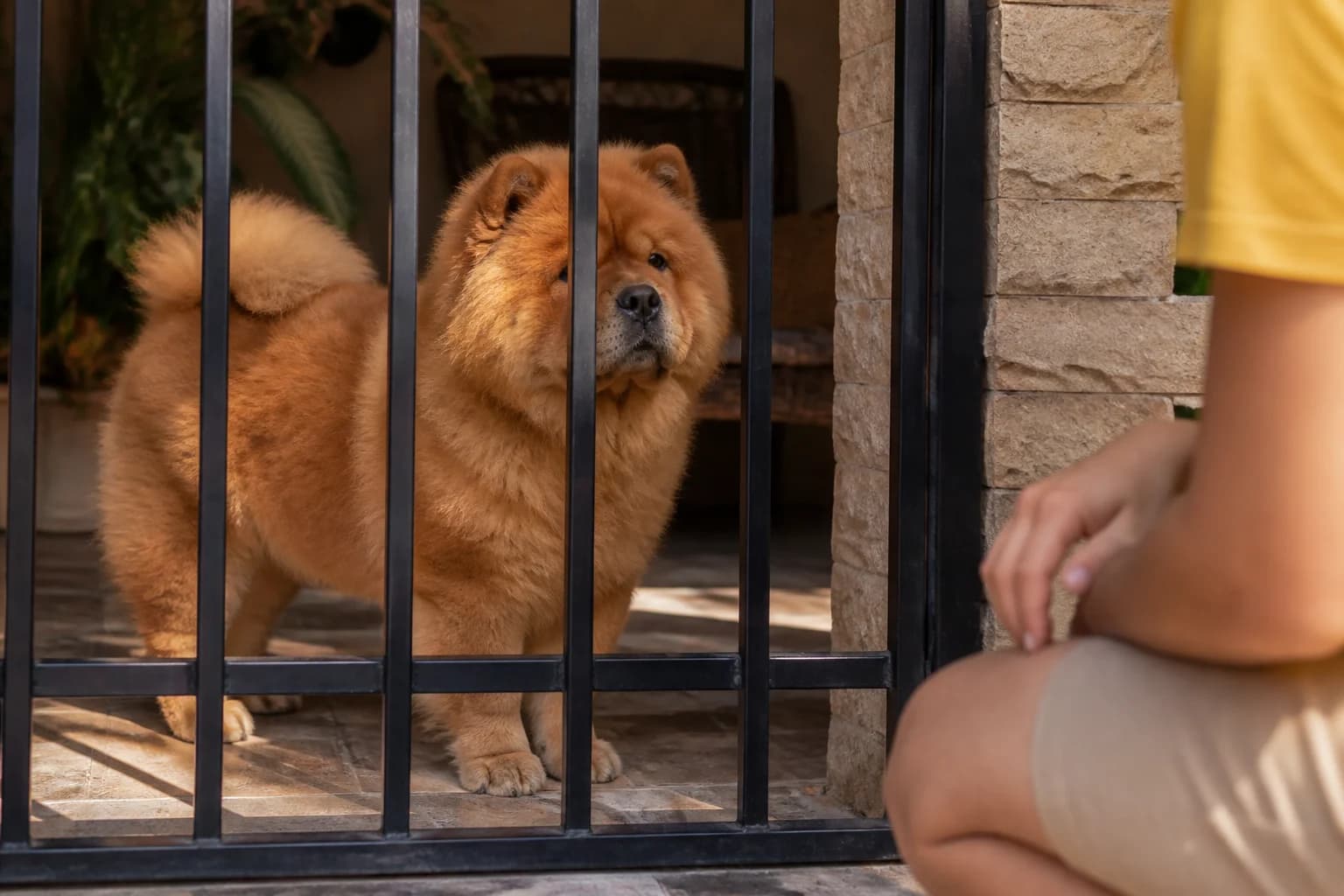
Socialization means safe, positive exposure and choice, not being passed among strangers. A puppy can learn that visitors, veterinary surfaces, grooming tools, traffic, dogs, and household sounds predict distance, food, play, or calm retreat.
Chow Chow socialization should let the dog retreat. To socialize a Chow Chow safely, adjust distance and intensity before the dog freezes, hides, lunges, or stops recovering.
Practical checkpoint 3
Keep exposures below the point where the puppy freezes, hides, lunges, refuses food, or cannot recover. Let the dog watch from a comfortable distance. Do not lure a worried puppy closer and then allow a person to touch.
Useful socialization steps include:
- Pair a new sight or sound with food at a tolerable distance.
- Give the puppy an open route back to a bed, crate, or quiet room.
- Ask visitors to ignore the dog until the dog chooses to approach.
- End while the puppy is relaxed rather than waiting for exhaustion.
- Record the setting, distance, response, and recovery for future sessions.
Build an exposure plan by category
List people, dogs, traffic, household sounds, surfaces, grooming tools, and veterinary handling separately. A puppy who is comfortable with men in the home may still need distance from children running outdoors or a dryer in a salon. WebVet's dog training schedule can help fit short exposures into a predictable routine.
For each category, write the starting distance, the reward, signs of comfort, early signs of stress, and an exit plan. Advance only when the dog can notice, take food gently when appropriate, disengage, and return to ordinary behavior.
Petful may earn a commission when you click through to Chewy, at no extra cost to you.
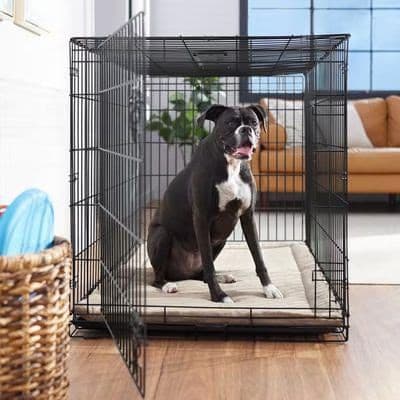
An X-large Frisco wire crate may serve as a quiet resting area if its interior dimensions fit the dog and the crate has been introduced positively. It should never be used to force visitor interaction or confine a panicking dog.
Reward-based training plan
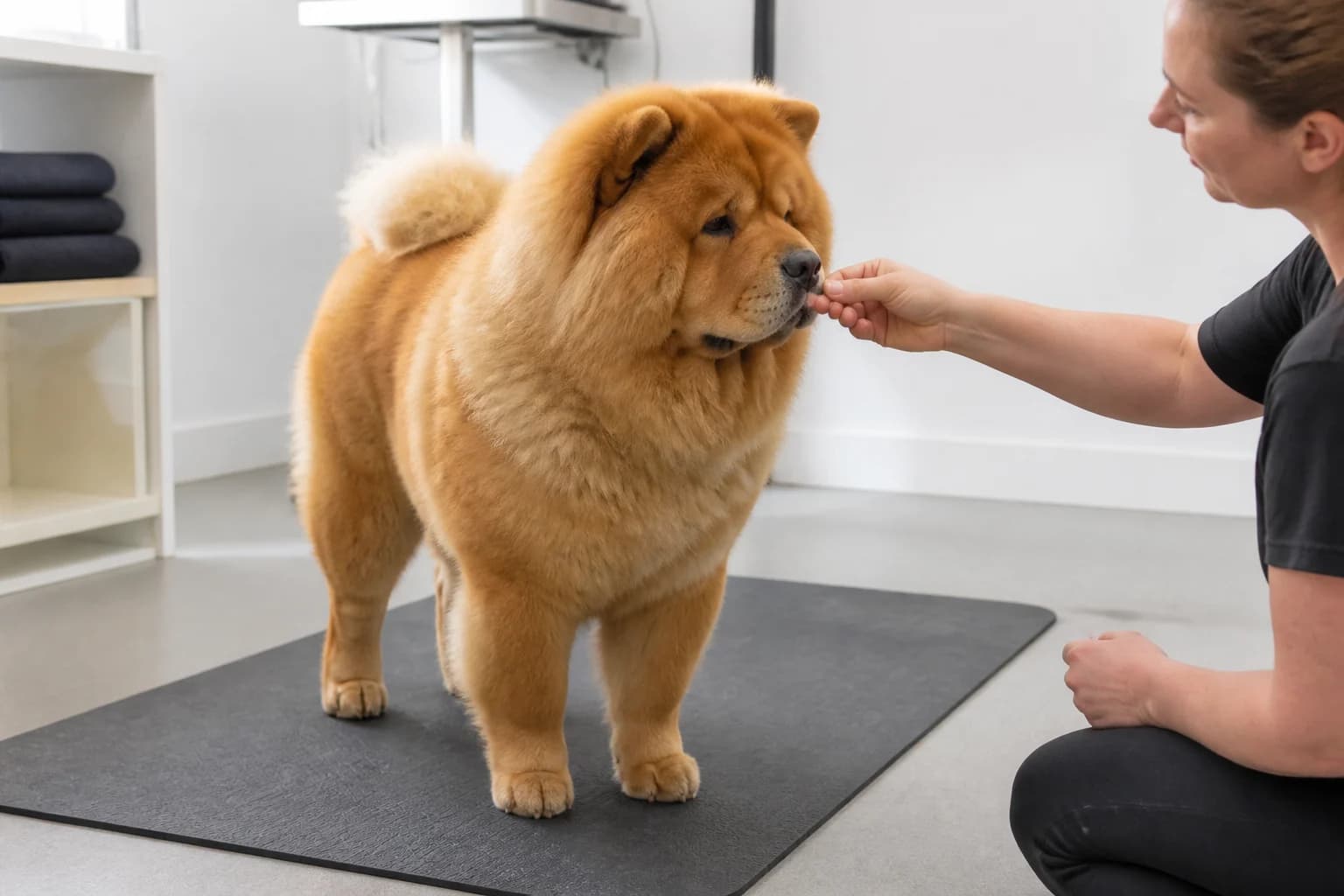
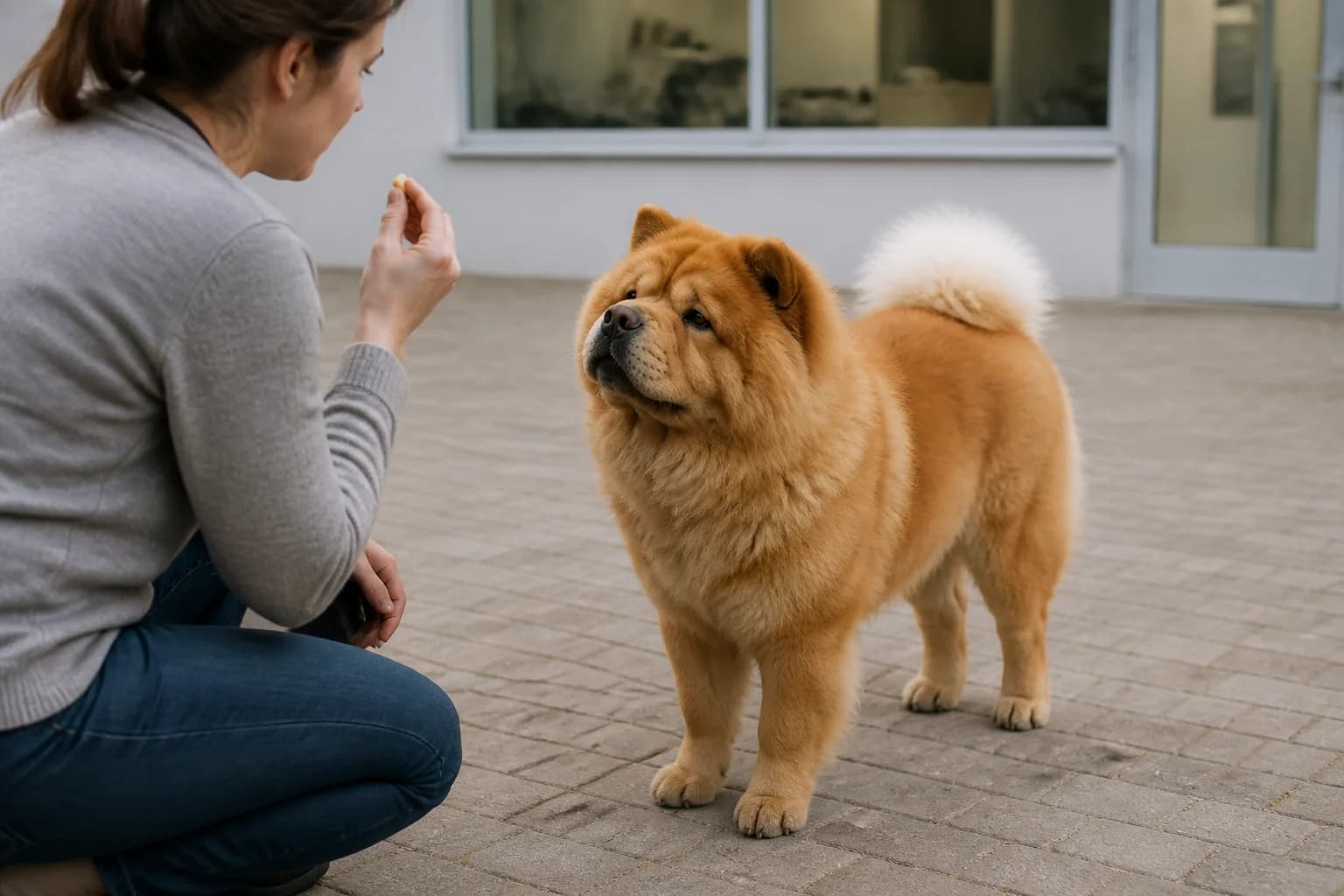
Short, clear sessions usually work better than repetition until the dog disengages. Identify a reward the individual values, teach one small step, mark success, and stop before frustration.
Chow Chow training does not require confrontation. To train a Chow Chow for practical Chow Chow obedience, reinforce observable skills such as check-ins, targeting, stationing, trades, leash turns, and cooperative handling.
A practical foundation includes:
- Name response and voluntary check-in
- Hand target for movement without collar grabbing
- Station on a mat away from doors or food preparation
- Trade and drop cues rather than forced removal
- Comfortable leash following and emergency U-turn
- Voluntary chin rest for handling
- Settle behind a barrier while visitors enter
- Avoid shock, prong, choke, intimidation, alpha rolls, or deliberate trigger exposure. Use humane, reward-based methods plus documented evidence and professional guidance because pain and fear can suppress warning signals or worsen risk without teaching the dog what to do.
The American Veterinary Society of Animal Behavior's position statements provide the professional-method context for choosing humane, reward-based training and avoiding aversive techniques.
Reinforce choices that reduce conflict
Useful training is not limited to obedience cues. Reward the dog for looking away from a visitor, moving behind a barrier, releasing an object, stepping onto a mat, and presenting a paw voluntarily. Those choices create safer options before pressure builds.
An Outward Hound Nina Ottosson Lick N' Flip Treat Puzzle Dog Toy & Slow Feeder can use part of a measured meal for supervised station work when the dog does not guard or destroy it. A puzzle cannot treat anxiety, replace exercise, or make visitor proximity safe.
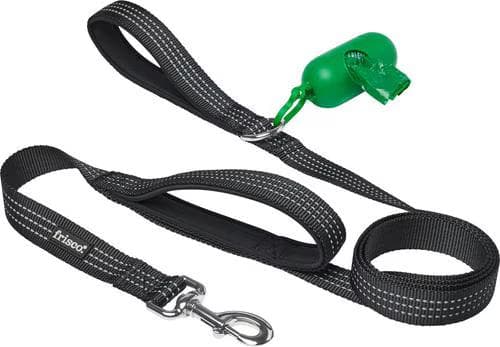
A Frisco six-foot traffic leash has a second padded handle for closer control in appropriate settings. It is not a substitute for a well-fitted harness, distance from triggers, or training, and the short handle should not be used to keep a worried dog continuously pinned close.
Handling, grooming and veterinary visits
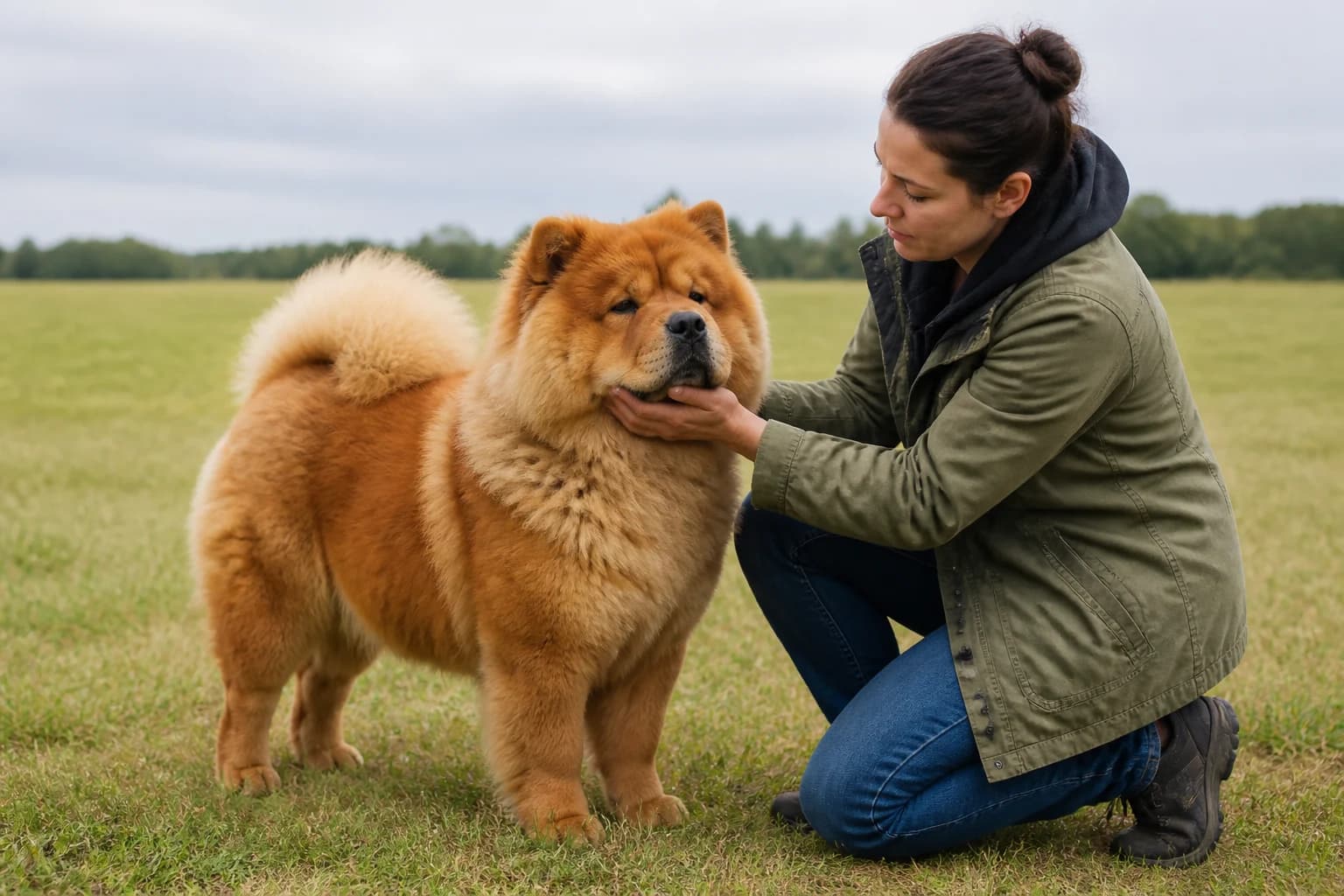
Dense coats require extensive handling, but tolerance must be taught. Start with a one-second shoulder touch, mark and reward, then progress to lifting a lip, touching a paw, separating coat, and hearing a dryer at low intensity.
The guide to Chow Chow grooming and shedding explains the coat workload. Tell groomers and veterinarians what the dog can and cannot yet tolerate. Pre-visit medication may be appropriate for some dogs, but only a veterinarian should prescribe it.
Break cooperative care into observable steps
Teach one step at a time: approach the mat, stand for one second, accept a shoulder touch, allow coat separation, present a paw, or rest the chin briefly. Record the dog's response and stop before avoidance becomes a struggle. Grooming and veterinary staff can then begin from skills the dog has actually demonstrated.
If the dog turns away, closes the mouth, lowers the body, freezes, growls, or tries to leave, pause. A growl is information. Punishing it can remove an early warning while leaving the underlying discomfort intact. Sudden loss of handling tolerance needs veterinary review before more practice.

Petful may earn a commission when you click through to Chewy, at no extra cost to you.
The Frisco gate and playpen can support cooperative grooming by separating the training area from household traffic. Use it only where the dog can retreat comfortably and cannot knock panels over.
For rest between sessions, the Frisco X-large crate may fit some adult Chows, but measure first. Crate doors should not be used to corner a dog for restraint.
Children, visitors and other pets
No dog should be left unsupervised with a young child. Teach children not to hug, climb on, wake, corner, or take items from the dog. Adults must recognize body language and intervene before either child or dog is overwhelmed.
Visitors can enter while the Chow remains behind a secure barrier with a chew or scatter of food. Once the room is calm, the dog may choose to observe or approach. A visitor does not need to pet the dog for the interaction to count as successful.
Compatibility with dogs and cats is individual. Introduce on neutral ground or through controlled barriers, avoid crowded face-to-face greetings, separate food and high-value items, and give each animal a safe resting area. Past behavior is more useful evidence than a broad claim that Chows are good or bad with other pets.
A visitor routine that reduces pressure
Before the door opens, place the dog in a prepared quiet area with water and an appropriate activity. Ask the visitor to enter, sit, and ignore the dog. Only consider bringing the dog into view once the household is settled and the dog is comfortable.
Use a gate or leash for distance, not forced proximity. The visitor should avoid staring, leaning over, reaching, or offering a hand to sniff. If the dog chooses to approach, the visitor can remain neutral while the owner rewards calm movement away as readily as movement closer.
Practical checkpoint 4
A successful visit may end with no physical contact. That is especially important for a reserved Chow. The goal is safety and predictable choice, not proving friendliness.
For children, establish physical zones adults can enforce. A dog bed or crate is a no-entry area. Food, chews, and sleeping dogs remain separated. Children should never hold the leash around triggers, intervene in dog conflict, or conduct grooming without direct adult control.
Leash skills, exercise and boundaries
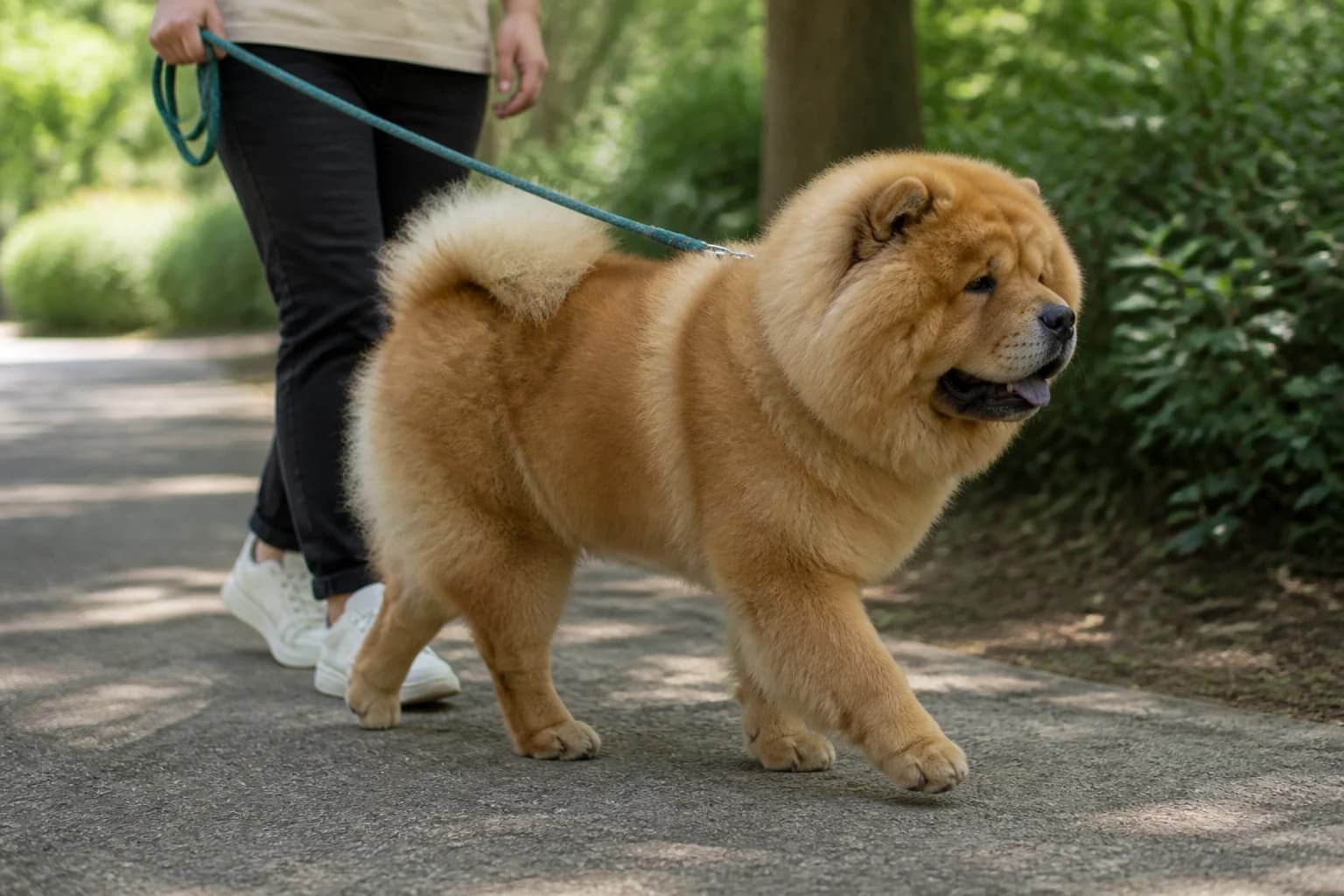
Teach loose-leash walking in a quiet area before adding dogs, traffic, or visitors. Reward the dog near you, turn away early from a trigger, and choose shaded routes because dense-coated Chows can overheat.
Recall can be trained, but no breed label or training level guarantees reliability around wildlife, dogs, or traffic. Use secure fencing and a leash where required. The Frisco traffic leash offers two hand positions for controlled walks, but it should remain slack whenever possible and be checked for wear.
A PetSafe Easy Walk Dog Harness, Red/Black, Medium/Large is one front-attachment option only when chest size, shoulder movement, and dense ruff allow a comfortable fit. It does not teach leash skills and should be checked for rubbing after every walk.
Petful may earn a commission when you click through to Chewy, at no extra cost to you.
The Petlibro automatic feeder can dispense part of a daily kibble allowance for station or settle practice when portions are coordinated. It cannot manage guarding, notice distress, or decide when food should be withheld for medical reasons.
Exercise should suit age, body condition, weather, joints, and interest. Sniffing, food searches, short training, and quiet exploration can be as valuable as distance. Exhaustion is not the goal.
Warning signs and professional help
Seek help before a bite. Repeated freezing, hard staring, stalking, guarding, lunging, snapping, inability to recover, or escalating reactions warrant a structured plan. Sudden behavior change also needs veterinary evaluation because pain, vision loss, neurologic disease, and other health problems can affect behavior.
- Individual evidence from repeated observations and written records supports a more accurate household fit decision
- Distance, barriers, and supervised routines reduce rehearsal while skills develop
- Reward-based training teaches observable alternatives and supports voluntary choices
- A behavior log identifies triggers, intensity, and recovery patterns
- Veterinary and behavior expertise can address health and learning together
- Breed tendencies cannot guarantee one dog's behavior
- Management alone does not change the underlying emotional response
- No training method can guarantee that a dog will never bite
- One observer may miss pain, context, or subtle warning signals
- Breed comparisons cannot assess one dog's individual risk
Choose a credentialed professional who uses humane methods, explains safety, and coordinates with your veterinarian. For serious aggression, a board-certified veterinary behaviorist can evaluate medical and behavioral factors.
Create a behavior log without labels
For each event, record date, location, people or animals present, distance, body language, what happened immediately before, the behavior itself, and recovery time. Include sleep disruption, illness, medication changes, pain signs, and unusual household events.
Use observable language. “Stiffened, closed mouth, stared for three seconds, then barked when the visitor moved closer” is stronger evidence than “was dominant.” Capture video only when it can be done without recreating risk.
Track progress through lower intensity, faster recovery, more voluntary disengagement, and fewer management failures. The goal is not forced friendliness.
Choose qualified help
Dog-training titles are not uniformly regulated. Ask about education, credentials, methods, safety planning, referral relationships, and experience with fear or aggression. Avoid practitioners who rely on dominance explanations, flooding, pinning, shock, or provoking the dog to display the problem.
Start with a veterinarian when behavior changes suddenly or pain may be involved. Severe fear, aggression, self-injury, compulsive behavior, or cases that may need medication can warrant a board-certified veterinary behaviorist.
Manage guarding without confrontation
Do not repeatedly take food or chews to prove control. Feed animals separately, keep children away, and trade with something of equal or greater value when an item must be removed.
- Manage access before a guarded item appears.
- Teach voluntary drop with low-value objects first.
- Stop informal tests if the dog stiffens, hovers, gulps, growls, or snaps.
- Seek veterinary and qualified behavior help for sudden or escalating guarding.
A KONG Classic Dog Toy, Large may suit supervised trade practice for an appropriately sized dog, but do not introduce it around children or other pets when guarding is possible. Remove damaged rubber and count any food toward the daily ration.
Use a muzzle as one safety layer
A well-fitted basket muzzle can add protection during veterinary care, transport, or a behavior plan while allowing panting and food delivery. Introduce it gradually with reinforcement and never use it to force the dog closer to a trigger.
Fit is individual, especially with a broad head and dense ruff. A muzzle does not replace barriers, distance, supervision, or treatment. Fabric restraint muzzles are not for routine walking or exercise.
A realistic goal is a household that can predict risk, notice early communication, provide safe distance, reinforce useful choices, and obtain help before escalation. Review the plan whenever health, caregivers, home layout, or routine changes.
Related Chow Chow topic owners
Chow Chow at a glance
Use the Chow Chow breed profile for history, appearance, care, and broad ownership fit. This page owns behavior and training.
Best dog food for Chow Chows at a glance
Use the Chow Chow food guide for chow chow food, chow chow the food, what is chow chow food, and food chow chow searches. That owner separates canine nutrition from similarly named human dishes and compares life-stage adequacy, calories, labels, formats, and veterinary boundaries. This behavior page mentions food only as measured reinforcement. A reward can support learning, but no formula diagnoses aggression, creates sociability, or replaces a safety plan.
Chow Chow puppy buying checklist
Use the Chow Chow puppy guide for sourcing and early records. This page applies those records to socialization and training.
Chow Chow colors at a glance
The Chow Chow colors guide owns appearance. Color cannot predict reserve, aggression, or trainability.
Chow Chow price at a glance
Use the Chow Chow price guide for acquisition and lifetime costs. Training support is individual, not one fixed breed expense.
Chow Chow mixes at a glance
The Chow Chow mixes guide owns ancestry and variable outcomes. A mix label cannot forecast behavior.
Why Chow Chows have blue-black tongues
The Chow Chow tongue guide owns pigment and oral-health decisions. Tongue color says nothing about temperament.
Full-grown Chow Chow size at a glance
Use the full-grown Chow Chow size guide for measurements and equipment. Size changes logistics, not personality.
Chow Chow lifespan at a glance
The Chow Chow health guide owns disease and senior care. Pain or illness can change behavior and needs veterinary evaluation.
Do Chow Chows shed?
The Chow Chow grooming guide owns coat technique. This page teaches voluntary participation and safe handling.
Chow Chow FAQs
Why groomers refuse Chow Chows varies by salon capacity and the individual dog's needs. Some salons lack the time, drying equipment, staffing, dense-coat experience, or behavior setup an individual Chow needs. That limitation does not answer are chow chows aggressive. The evidence points to one clear next step: full disclosure of medical and handling history, a Chow-experienced groomer, and cooperative brushing, paw, dryer, and restraint practice before urgent coat care is needed.
A breed ranking cannot answer are chow chows aggressive compared with pit bulls for one household. Individuals, reporting, health, development, environment, learning, and management differ too widely. Use the individual record to choose a clear next step: assessment of the actual dog's history, body language, triggers, distance, recovery, and professional findings rather than a stereotype-based comparison.
No simple breed comparison resolves are chow chows aggressive relative to Rottweilers. Both groups contain individuals with different genetics, development, health, training, and environments. Before deciding, use this clear next step: an individual risk assessment covering prior incidents, warning signals, trigger context, recovery, caregiver capacity, and veterinary or qualified behavior input when safety is uncertain.
Asking are chow chows aggressive often confuses reserve or avoidance with aggression. Chows are commonly described as independent and reserved, but those population tendencies do not predict one dog. For this household, choose a practical clear next step: to respect retreat, document actual triggers and recovery, rule out pain, and use humane professional help before concerning behavior escalates.
Trainability is separate from are chow chows aggressive. Many Chows are independent and may disengage from repetitive work, while force can increase fear and conflict. At that point, take this clear next step: short reward-based training for check-ins, targeting, mat station, trades, loose-leash movement, cooperative handling, and retreat, with sessions ending before frustration.
Some Chows form one especially close relationship, while others trust several household members. A strong bond does not answer are chow chows aggressive and should not become exclusive guarding. When uncertainty remains, choose the safest clear next step: shared calm feeding, walks, training, and respectful handling, with management and professional guidance if the dog begins controlling access to a person.
Some Chows live successfully with children, but are chow chows aggressive is not a family-fit test. The individual dog's history, handling tolerance, body language, resources, and adult supervision matter. The decision framework leads to a clear next step: strict separation around food and sleep, no hugging or climbing, a protected retreat, and direct adult supervision during every interaction.
Some can, while others are selective or incompatible, so are chow chows aggressive does not decide a pairing. History, introductions, resources, sex, age, health, and individual response all matter. After reviewing the evidence, keep the clear next step specific: gradual neutral-space or barrier introductions, separate food and rest areas, active supervision, and qualified help for tension or conflict.
Safe socialization does not force greetings to disprove are chow chows aggressive. It pairs people, animals, places, sounds, handling, and surfaces with choice and reinforcement below the dog's fear threshold. The dog's current record supports this clear next step: to work at a comfortable distance, allow retreat, record recovery, stop before overwhelm, and seek qualified help when reactions intensify.

Coreen Saito is a pet writer and longtime shelter volunteer with more than a decade in animal rescue. She covers cat behavior, breed care, and the small, ordinary science of sharing a life with companion animals, with a particular focus on honest takes about the products and decisions that actually matter. At home in Arizona, she's outranked by Mac (a dog with the loudest opinion in the house), Rebel (a cat who governs by quiet authority), and Meri (an orange tabby who runs the late shift and the laundry basket). She writes about all three, plus the rescues that keep coming through her life, at LifeWithMinty.com.
Sign up for expert-backed reviews and safety alerts all in one place.